AFP

Ad discrimination suit against McDonald's allowed to proceed

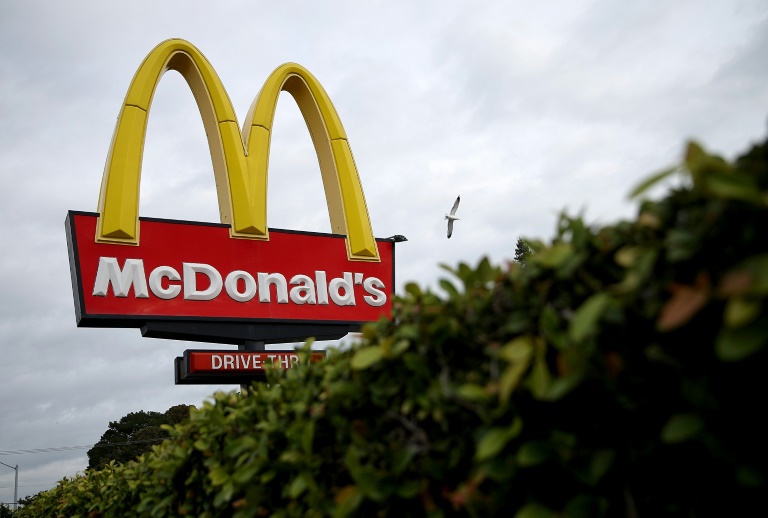
A federal judge has allowed a discrimination lawsuit to proceed that argues that McDonald’s refuses to advertise on Black-owned media networks.

Media entrepreneur Byron Allen, who is Black, has accused McDonald’s of instituting a “racially discriminatory contracting process” in a lawsuit first filed in May 2021.

As the owner of Entertainment Studios Networks and the Weather Group, which includes the Weather Channel, he sought $10 billion in damages alleging that McDonald’s established “a two-tiered, race based system and shut plaintiff out of the general market (i.e. white-owned media) tier.”

However, a federal judge dismissed the suit in December, saying that the allegations were not sufficiently supported.

Following a legal back-and-forth, the same judge on Friday denied a request by McDonald’s to dismiss the case, thereby allowing it to proceed.

Allen alleged that were his company white-owned it “would have received tens of millions of dollars in advertising revenue from McDonald’s on an annual basis.”

He also alleged that McDonald’s contracts with a separate advertising agency for “African-American media” with an aim of spending a budget that “is de minimis compared to the general market budget.”

Allen argues his company had programming geared towards a variety of viewers, especially after its 2018 purchase of the Weather Channel, and that McDonald’s has advertised on “similarly situated, white-owned networks.”

Loretta Lynch, the former US attorney general who is now a partner at law firm Paul, Weiss representing McDonald’s, said Allen’s complaint was “about revenue, not race.”

The “plaintiffs’ groundless allegations ignore both McDonald’s legitimate business reasons for not investing more on their channels and the company’s long-standing business relationships with many other diverse-owned partners,” she said.

Social media greenwashing by fossil fuel interests 'rampant': study

A commercial plane photoshopped with the tail of a shark, hashtags that misleadingly evoke sustainability, tokenistic use of minorities to distract and to signal virtue: a Harvard report published Tuesday highlights rampant greenwashing by leading companies on social media.

The investigation, commissioned by Greenpeace Netherlands, involved analyzing the text and images of 2,300 posts by 22 of Europe’s largest carmakers, fossil fuel producers and airlines this June and July.

“During this summer of record temperatures and wildfires in Europe, these fossil fuel interests have remained explicitly silent on the topic of climate change, and instead, they engage in what we interpret to be strategic brand positioning,” lead author Geoffrey Supran told AFP.

Entitled “Three Shades of Green(washing),” the report released during New York’s Climate Week found that only one in five “green” car ads actually present a product for sale, while the rest simply promote the brand as green.

One in five posts by oil, car and airline companies center on sports, fashion or social causes that direct attention away from their core businesses.

Two-thirds of companies’ social media posts painted a “green innovation” sheen on their operations, the report found, with automakers generating by far the most compared with airlines and oil and gas firms.

While there was already some awareness around these trends, Supran said the strength of the new study was its use of peer-reviewed social science methods to lend more quantitative weight.

A key feature of the companies’ posts was how often they were about their sponsorship of sports events or charity, as opposed to talking about what they sell.

“In principle those kinds of activities should be applauded. The issue becomes when corporate philanthropy slips into corporate social responsibility washing, things like greenwashing, sportswashing, and wokewashing,” Supran said.

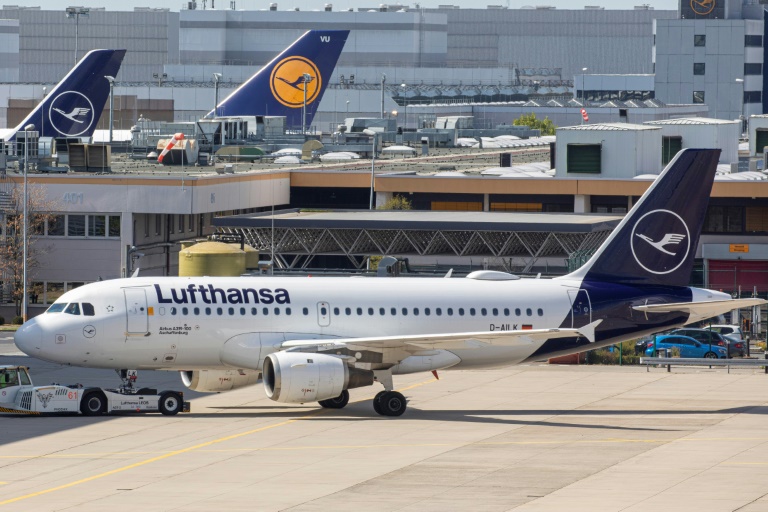
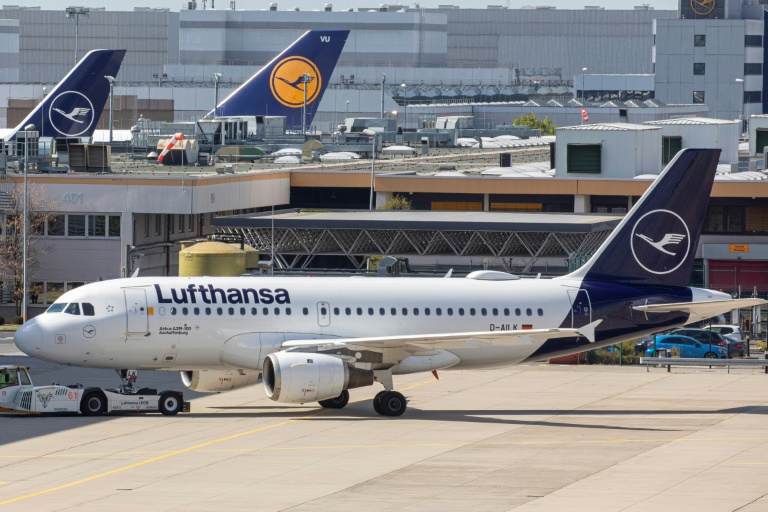
Examples of greenwashing include an Instagram post by Lufthansa where a plane blends into the body of a shark swimming in the ocean. 

The post was to highlight a coating modeled off shark skin that is applied to the plane’s body to improve airflow and reduce fuel consumption.

Tweets by Air France-KLM and Lufthansa promoted their use of biofuel on some routes using the hashtag “SustainableAviationFuel.”

Those posts omit the fact that such fuels constitute only a tiny fraction of overall fuel used by the industry, and not all experts are yet convinced it can power climate-safe air travel, the report said.

– ‘Pretty insidious’ –

Green posts also tend to feature more women, non-binary people and non-Caucasian people — for example, a tweet by Wizz Air on World Environment Day shows an elderly Black woman, who appears to be part tree, part person, standing in a lush green forest.

Not only does the post appear tokenistic, the report said, it also promotes an article about how to reduce personal energy consumption. 

This is a widespread corporate practice researchers call “redirecting responsibility” in which individual behavior, rather than the actions of governments and companies, is placed at the center of climate action.

A YouTube video by Fiat meanwhile features a group of attractive youths sailing and driving through beautiful mountains in the Italian countryside.

“Behavioral psychologists have observed significant affective responses from consumers exposed to nature imagery,” explained Supran. 

“It can make a company seem greener actually in a unique way that does the subtle work of overriding even the most critical observers in a pretty insidious way.”

Silvia Pastorelli, a Greenpeace campaigner, said in a statement that the report highlighted techniques that had been “hiding in plain sight.”

“This is a systematic greenwashing effort that must be addressed with a legal ban on all fossil fuel advertising and sponsorship across Europe, just as happened with tobacco,” she added.

Social media greenwashing by fossil fuel interests 'rampant': study

A commercial plane photoshopped with the tail of a shark, hashtags that misleadingly evoke sustainability, tokenistic use of minorities to distract and to signal virtue: a Harvard report published Tuesday highlights rampant greenwashing by leading companies on social media.

The investigation, commissioned by Greenpeace Netherlands, involved analyzing the text and images of 2,300 posts by 22 of Europe’s largest carmakers, fossil fuel producers and airlines this June and July.

“During this summer of record temperatures and wildfires in Europe, these fossil fuel interests have remained explicitly silent on the topic of climate change, and instead, they engage in what we interpret to be strategic brand positioning,” lead author Geoffrey Supran told AFP.

Entitled “Three Shades of Green(washing),” the report released during New York’s Climate Week found that only one in five “green” car ads actually present a product for sale, while the rest simply promote the brand as green.

One in five posts by oil, car and airline companies center on sports, fashion or social causes that direct attention away from their core businesses.

Two-thirds of companies’ social media posts painted a “green innovation” sheen on their operations, the report found, with automakers generating by far the most compared with airlines and oil and gas firms.

While there was already some awareness around these trends, Supran said the strength of the new study was its use of peer-reviewed social science methods to lend more quantitative weight.

A key feature of the companies’ posts was how often they were about their sponsorship of sports events or charity, as opposed to talking about what they sell.

“In principle those kinds of activities should be applauded. The issue becomes when corporate philanthropy slips into corporate social responsibility washing, things like greenwashing, sportswashing, and wokewashing,” Supran said.

Examples of greenwashing include an Instagram post by Lufthansa where a plane blends into the body of a shark swimming in the ocean. 

The post was to highlight a coating modeled off shark skin that is applied to the plane’s body to improve airflow and reduce fuel consumption.

Tweets by Air France-KLM and Lufthansa promoted their use of biofuel on some routes using the hashtag “SustainableAviationFuel.”

Those posts omit the fact that such fuels constitute only a tiny fraction of overall fuel used by the industry, and not all experts are yet convinced it can power climate-safe air travel, the report said.

– ‘Pretty insidious’ –

Green posts also tend to feature more women, non-binary people and non-Caucasian people — for example, a tweet by Wizz Air on World Environment Day shows an elderly Black woman, who appears to be part tree, part person, standing in a lush green forest.

Not only does the post appear tokenistic, the report said, it also promotes an article about how to reduce personal energy consumption. 

This is a widespread corporate practice researchers call “redirecting responsibility” in which individual behavior, rather than the actions of governments and companies, is placed at the center of climate action.

A YouTube video by Fiat meanwhile features a group of attractive youths sailing and driving through beautiful mountains in the Italian countryside.

“Behavioral psychologists have observed significant affective responses from consumers exposed to nature imagery,” explained Supran. 

“It can make a company seem greener actually in a unique way that does the subtle work of overriding even the most critical observers in a pretty insidious way.”

Silvia Pastorelli, a Greenpeace campaigner, said in a statement that the report highlighted techniques that had been “hiding in plain sight.”

“This is a systematic greenwashing effort that must be addressed with a legal ban on all fossil fuel advertising and sponsorship across Europe, just as happened with tobacco,” she added.

ECB determined to stop inflation becoming 'embedded'

The European Central Bank is determined to stop soaring inflation becoming the norm, its president said Tuesday, as the coronavirus pandemic and the Russian invasion of Ukraine put lasting pressure on prices.

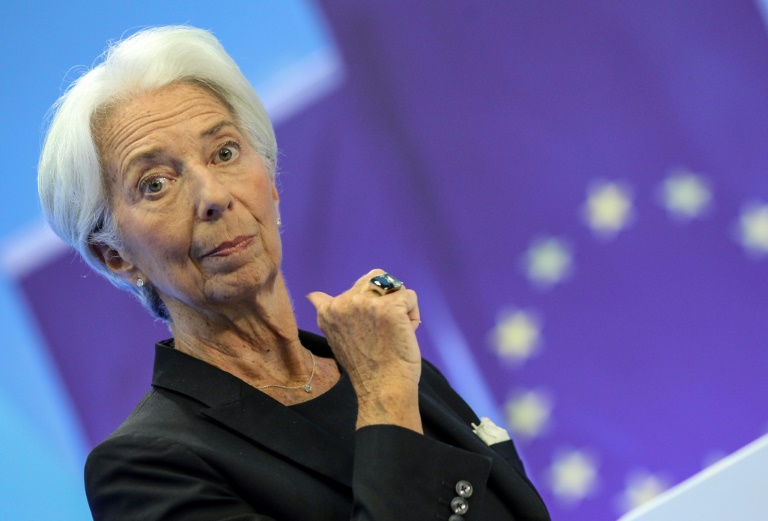
The twin shocks have led to consumer price rises that are “much higher and more persistent” than expected, Christine Lagarde said in a speech in Frankfurt, adding that the central bank had to ensure sky-high inflation does not become “embedded”.

“This is what the ECB is doing,” Lagarde said.

Inflation in the eurozone climbed to 9.1 percent in August, an all time high, with analysts predicting the rate could reach double digits by the end of the year.

At its last meeting earlier this month the ECB raised its interest rates by a record large 75 basis points, as it sought to tame the surge in consumer prices.

The shock decision came just a few weeks after the bank had hiked rates for the first time in over a decade, bringing an end to a period of negative interest rates.

The aggressive moves had been a “key tool to signal our determination” to bring inflation back to the ECB’s two-percent target, Lagarde said.

Looking ahead, the ECB expected to “raise interest rates further over the next several meetings”, she said. 

How fast and how far rates would rise would depend on the “inflation outlook”, she added.

Soaring inflation rates were driven by the economic shocks of the coronavirus pandemic and the Russian invasion of Ukraine, which has sent the price of energy soaring, Lagarde said.

The cuts to Russian gas imports would “have ramifications for several years”, keeping energy prices elevated, while pandemic bottlenecks would lead supply chains to be restructured at higher cost, she said.

The constraints on supply in both cases were “likely to last longer than in the past”, Lagarde said, meaning it was “taking longer for the inflationary effects of those shocks to fade out.”

Annaud returns to Hollywood with 'Notre-Dame on Fire' festival premiere

Perhaps more than any other French director, Jean-Jacques Annaud has always felt at home making films in Hollywood, with the American movie capital’s flair for the epic and the spectacular.

Now, the 78-year-old Oscar-winner behind “The Name of the Rose,” “Seven Years in Tibet” and “Enemy at the Gates” is returning to Tinseltown with his latest film, “Notre-Dame On Fire” (“Notre-Dame Brule”) — a thriller about the real-life blaze at the beloved cathedral in Paris.

Annaud spoke to AFP via phone from France’s capital as organizers of next month’s The American French Film Festival (TAFFF) announced Tuesday that his movie will be their opening night Los Angeles gala premiere.

“I’m close to Notre-Dame now and far away from Los Angeles. But part of my heart remains in Los Angeles,” said Annaud.

The story of the inferno that engulfed Paris’ 12th-century Gothic landmark in 2019 was “a great drama that only a crazy Hollywood screenplay writer could imagine,” he said.

“Notre-Dame on Fire” dramatizes the story of firefighters who risked their lives to extinguish flames before the entire cathedral was destroyed — and the mistakes and misfortunes that delayed the initial response.

The movie merges real archive footage of the fire with scenes shot by Annaud recreating the disaster.

It follows a security guard who accidentally checked the wrong cathedral attic for flames when the first alarm sounded, the fire engines stuck in Paris traffic and the supervisor who couldn’t get his self-service “Velib” bicycle to work as he rushed to the scene.

“I had the feeling when I was writing the screenplay that I had a goldmine… it was so bizarre, so incredible,” said Annaud.

Released in Europe earlier this year, the film shows how millions around the world watched in horror as the cathedral’s famous spire collapsed and much of its ancient roof was destroyed.

Notre-Dame cathedral typically welcomed nearly 12 million global visitors a year and Americans have been prolific contributors to an international fundraising drive to rebuild the landmark.

“Everywhere around the world, this cathedral was far more than a symbol of Paris, or France, or even Catholicism or Christianity,” said Annaud. 

“It was far above that. It was, in a way, sort of the fear, the metaphor of the collapse of Western culture… it was a symbol of permanence.”

– ‘Spectacular’ –

Next month’s festival appearance continues Annaud’s love affair with Hollywood, which he said often diverges from French film traditions in scale and budget.

“In America, I realized that the investment is to try to make the best thing you can and the most spectacular, the more appealing, the more attractive,” he said.

Unlike the French New Wave movement, which emerged in the 1950s from theater and novels and emphasized dialogue, American filmmaking focuses more on movement and the visual, said Annaud.

“The art of cinema is to tell exciting stories visually. If not, it’s a televised radio show, it’s another game, it’s something else,” he said.

“If we have the privilege to be seen on the big screen, it is to fill up this big screen and not to have only people who talk like on the television shows,” he added.

“I would not have done the movies that I’ve done without the full support and friendship of American production companies and major studios.”

– ‘Final Cut’ – 

Among other films playing this year at TAFFF, which runs October 10-16, will be “Final Cut” (“Coupez!”) from Michel Hazanavicius, the Oscar-winning director of “The Artist.”

Also on show will be two films recently named on a shortlist of French movies for submission to next year’s Oscars — “The Worst Ones” (“Les Pires”) and “Full Time” (“A Plein Temps”).

Amazon Prime’s “Hawa” from Maimouna Doucoure, whose previous movie “Cuties” was released by Netflix and stirred international controversy over allegations of hypersexualizing young girls, will also feature.  

The festival closes with Dominik Moll’s “The Night of the 12th” (“La Nuit du 12”) and a theatrical screening of HBO French-American miniseries “Irma Vep,” created by Olivier Assayas and based on his 1996 film of the same name.

FBI facing 'flood' of threats encouraged by Trump: US Senate

US senators on Tuesday condemned threats of violence against the FBI, blaming former president Donald Trump for a barrage of abuse against federal agents in the month since a raid at his south Florida beach club.

The resolution came a month after agents found thousands of pages of documents, including dozens marked “secret” or “top secret,” at Mar a Lago, where Trump has lived since leaving office in 2020. 

Trump, who has accused the FBI of bias against him since early in his presidency, has railed against the “illegal” raid, which was approved by a magistrate who agreed there was likely evidence of law-breaking at the resort involving mishandling of White House documents.

“I have repeatedly made clear that violence against law enforcement is never — never — acceptable, no matter what ideology motivates it,” said Dick Durbin, the Democratic chairman of the powerful judiciary committee.

“But here is the reality: in the past month, following the FBI’s execution of a search warrant at Donald Trump’s Mar-a-Lago resort, the FBI has faced a flood of threats against its employees and its facilities — and these threats have been egged on by the former president and his allies.”

The FBI and the Department of Homeland Security last month detailed an increase in threats and acts of violence against federal law enforcement officials following the August 8 search. 

Durbin said he was unable to share specifics from a briefing the agencies gave senators behind closed doors last week but he told colleagues on the Senate floor the escalation was “shocking.”

The Senate passed a resolution condemning the threats and noting statements from Republican members of Congress to “defund” the FBI and likening the Florida raid to “the actions of the Nazi Gestapo.”

It also called out “repeated attacks from the former president, who has called FBI officials, among other insults, ‘vicious monsters.'”

The resolution described some of the intimidation attempts aimed at federal agents, which it said included a pledge to place a “dirty bomb” outside of FBI headquarters and calls for “civil war” and “armed rebellion.”

It recalled a widely-reported incident in which a man armed with an AR15 rifle and nail gun attempted to get into the FBI’s Cincinnati field office on August 11.

The resolution also noted that a man was indicted five days later for “threatening to murder everyone at the FBI, from the director, to agents, to the custodial staff” and that another man jumped a fence and threw rocks at the agency’s Chicago field office on August 25.

The resolution passed by unanimous consent, meaning no member on either side objected.

Trump’s office did not respond immediately to a request for comment.

US Fed opens policy meeting with steep rate hike on the table

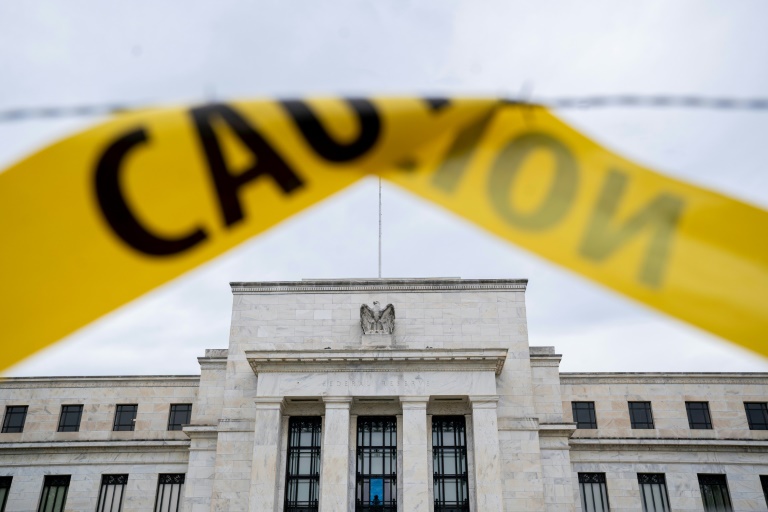
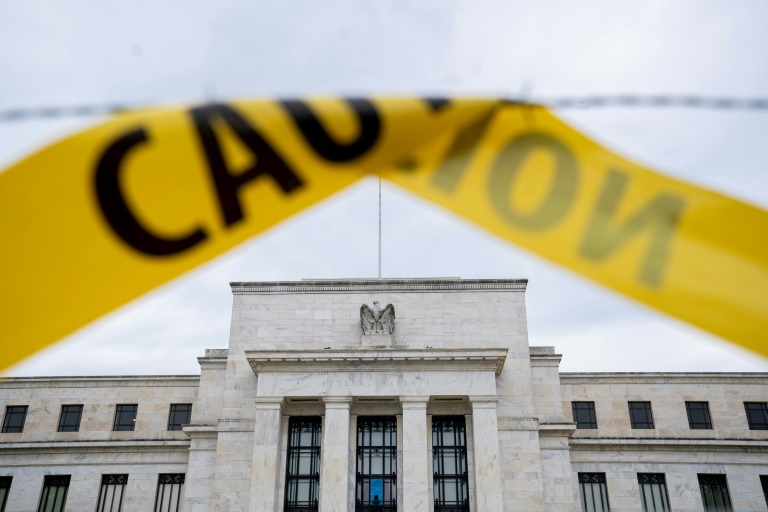
US central bankers opened their two-day policy meeting on Tuesday with another steep interest rate hike seen as a near certainty amid stubbornly high inflation.

American families have felt the squeeze of soaring prices, which have risen at the fastest pace since the early 1980s, and Federal Reserve Chair Jerome Powell has made it clear officials will continue to act aggressively to cool the economy.

Many economists are expecting a third straight three-quarter point rate hike when the meeting concludes Wednesday, an unprecedented action in recent decades.

Fed officials have been united in the message that the US central bank cannot risk letting inflation take hold due to the damaging impact on workers and businesses, but analysts warn that the risks of recession are rising.

“The inflation rate will continue to call the tune for the path of monetary policy, despite rising risks of a recession in 2023,” said Kathy Bostjancic of Oxford Economics, who projects a downturn early next year. 

“We see higher-for-longer inflation, more aggressive Fed monetary policy tightening, and negative spillover effects from a weakening global backdrop combining to push the US economy into a mild recession in H1 2023.”

The Fed’s policy-setting Federal Open Market Committee (FOMC) is scheduled to announce its decision at 1600 GMT Wednesday.

Markets have been roiled in recent days by the decidedly hawkish statements from central bankers, and closed lower again Tuesday after a brief bounce Monday.

Investors and analysts will pay close attention to Powell’s press conference after the meeting for information on what he thinks the next steps will be and how high rates could go.

– More hikes coming? –

Despite the welcome drop in gasoline prices at the pump in recent weeks, the disappointing consumer price report for August, released last week, showed housing, food and medical costs continued to rise. And when volatile food and energy prices are stripped out, so-called core inflation accelerated.

It is not just current high inflation that concerns policymakers, but the fear that consumers and businesses begin to expect rising prices will become a permanent feature, which could set off a dangerous spiral and a phenomenon called stagflation.

That fear has driven the Fed to front-load its rate hikes, rather than pursuing the more customary course of small, gradual steps over a longer period. 

The US central bank has cranked up the benchmark lending rate four times this year, including two straight three-quarter-point hikes in June and July.

The aim is to raise the cost of borrowing and cool demand — and it is having an impact: Home mortgage rates have now topped six percent for the first time since 2008.

And recent statements from Fed officials indicate more rate hikes are coming, and no cuts until inflation is under control — dousing hopes that had built up in markets following the July policy meeting.

The FOMC also will release the quarterly forecasts from members, which will show how they feel about the direction of the economy and the impact of the policy moves, and how soon inflation will come down.

US Fed opens policy meeting with steep rate hike on the table

US central bankers opened their two-day policy meeting on Tuesday with another steep interest rate hike seen as a near certainty amid stubbornly high inflation.

American families have felt the squeeze of soaring prices, which have risen at the fastest pace since the early 1980s, and Federal Reserve Chair Jerome Powell has made it clear officials will continue to act aggressively to cool the economy.

Many economists are expecting a third straight three-quarter point rate hike when the meeting concludes Wednesday, an unprecedented action in recent decades.

Fed officials have been united in the message that the US central bank cannot risk letting inflation take hold due to the damaging impact on workers and businesses, but analysts warn that the risks of recession are rising.

“The inflation rate will continue to call the tune for the path of monetary policy, despite rising risks of a recession in 2023,” said Kathy Bostjancic of Oxford Economics, who projects a downturn early next year. 

“We see higher-for-longer inflation, more aggressive Fed monetary policy tightening, and negative spillover effects from a weakening global backdrop combining to push the US economy into a mild recession in H1 2023.”

The Fed’s policy-setting Federal Open Market Committee (FOMC) is scheduled to announce its decision at 1600 GMT Wednesday.

Markets have been roiled in recent days by the decidedly hawkish statements from central bankers, and closed lower again Tuesday after a brief bounce Monday.

Investors and analysts will pay close attention to Powell’s press conference after the meeting for information on what he thinks the next steps will be and how high rates could go.

– More hikes coming? –

Despite the welcome drop in gasoline prices at the pump in recent weeks, the disappointing consumer price report for August, released last week, showed housing, food and medical costs continued to rise. And when volatile food and energy prices are stripped out, so-called core inflation accelerated.

It is not just current high inflation that concerns policymakers, but the fear that consumers and businesses begin to expect rising prices will become a permanent feature, which could set off a dangerous spiral and a phenomenon called stagflation.

That fear has driven the Fed to front-load its rate hikes, rather than pursuing the more customary course of small, gradual steps over a longer period. 

The US central bank has cranked up the benchmark lending rate four times this year, including two straight three-quarter-point hikes in June and July.

The aim is to raise the cost of borrowing and cool demand — and it is having an impact: Home mortgage rates have now topped six percent for the first time since 2008.

And recent statements from Fed officials indicate more rate hikes are coming, and no cuts until inflation is under control — dousing hopes that had built up in markets following the July policy meeting.

The FOMC also will release the quarterly forecasts from members, which will show how they feel about the direction of the economy and the impact of the policy moves, and how soon inflation will come down.

US plans funds for new Atlantic grouping on ocean health, security

The United States on Tuesday led an initiative of 18 Atlantic nations to step up cooperation in the ocean, putting another $100 million on the table to support the environment and maritime security, while curbing rampant illegal fishing.

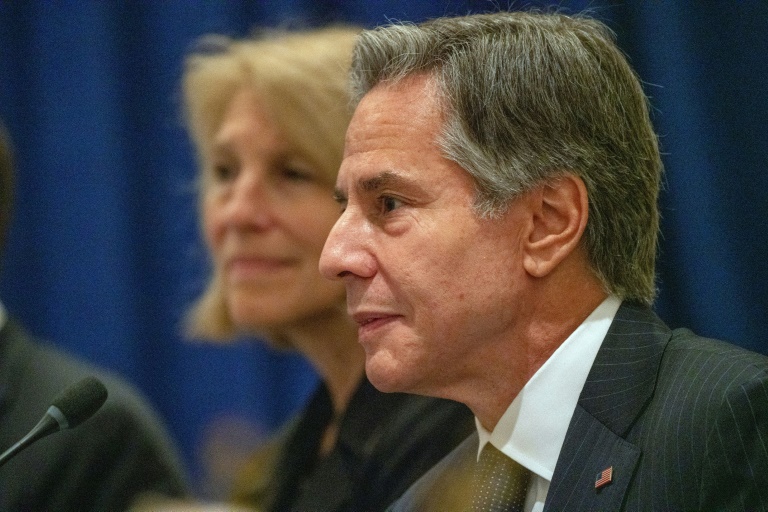
On the sidelines of the UN General Assembly in New York, Secretary of State Antony Blinken met jointly with the foreign ministers of Angola, Brazil, Ghana, Portugal and Senegal in what he said was the product of a year of diplomacy.

The nations will work together to “imagine together what greater cooperation across the entire Atlantic Ocean — both North and South — might look like,” Blinken said at the meeting.

“We know we can’t take for granted the free and open maritime trade that employs so many of our citizens, the undersea cables that connect us, the fish stocks and wildlife that sustain us,” he said.

“Only together can we address rising challenges and threats to our Atlantic future.”

The White House released a joint statement of 18 nations that also included Britain, Canada, Spain and Norway, as they explore forming the grouping.

The statement called for action together against piracy, unregulated fishing and the impacts of pollution and climate change.

“The Atlantic Ocean also offers untapped economic potential, from natural resources to new technologies,” it said. “No country alone can solve the cross-boundary challenges in the Atlantic region or fully address the opportunities before us.”

Subject to congressional approval, President Joe Biden’s administration will devote another $100 million next year to the effort, in addition to around $400 million already spent each year on maritime initiatives in the Atlantic, a senior US official said.

– ‘Shared approach’ –

Jake Sullivan, Biden’s national security advisor, said on Twitter that the nations were coming together “to develop a shared approach to Atlantic Ocean issues.”

“We look forward to continuing the dialogue and exploring opportunities to partner in the Atlantic region,” Sullivan said.

According to UN figures, one in five fish caught in the Atlantic comes from illegal fishing, translating into losses of up to $23 billion per year.

“That harms coastal communities that rely on sustainable fish stocks for their income, for food.  It fuels corruption. It threatens the health and biodiversity of our oceans,” Blinken said.

The initiative comes as the Biden administration puts a growing focus on environmental cooperation around the world, including on the health of the oceans.

The administration has already put a high priority on the Pacific, seen as an area of potential conflict amid the rapid rise of China.

And in the Arctic, the United States has stepped up diplomacy, including by appointing an envoy, in the face of concerns about Russia and China as waterways long inaccessible to ships open up due to climate change.

The joint statement said that the new Atlantic grouping will look to develop a “sustainable ocean economy” and improve cooperation on search and rescue operations and fighting piracy.

The initiative involves Brazil weeks ahead of elections in the Atlantic power, where President Jair Bolsonaro — an ally of business who has long been skeptical on climate — is trailing in polls as he seeks another term.

Israeli researchers find opium residue in 3,500-year-old pottery

Israeli archaeologists said Tuesday they had discovered opium residue in 3,500-year-old pottery pieces, providing evidence to support the theory that the drug was used in ancient burial rituals.

The joint investigation by the Israel Antiquities Authority and Weizmann Institute of Science began in 2012 when excavations in the central Israeli town of Yehud revealed a series of Late Bronze Age graves.

Researchers found pottery vessels at the site that resembled poppy flowers — from which opium is derived — dating back to the 14th century BC.

They then examined whether they had served as containers for the drug, which earlier writing had suggested was used in burial rituals in Canaan, and found “opium residue in eight vessels”, the researchers said in a statement.

These were likely “placed in graves for ceremonial meals, rites and rituals performed by the living for their deceased family members”, said Ron Be’eri, an archaeologist with the antiquities authority.

During these ceremonies, “family members or a priest on their behalf” would “attempt to summon the spirit of their dead relatives… and enter an ecstatic state by using opium”, Be’eri said.

But he acknowledged that much remained unknown about its use in ancient times. “We can only speculate what was done with opium,” he said.

Close Bitnami banner
Bitnami