AFP

UN chief warns of 'winter of discontent' as war and climate worsen

The head of the United Nations warned Tuesday of an upcoming “winter of global discontent” from rising prices, a warming planet and deadly conflicts as world leaders sought ways forward on Ukraine and Iran.

The UN General Assembly, the annual gathering of world leaders that clogs Midtown Manhattan, returned in person after two years of pandemic restrictions with only one leader allowed to appear virtually — Ukrainian President Volodymyr Zelensky.

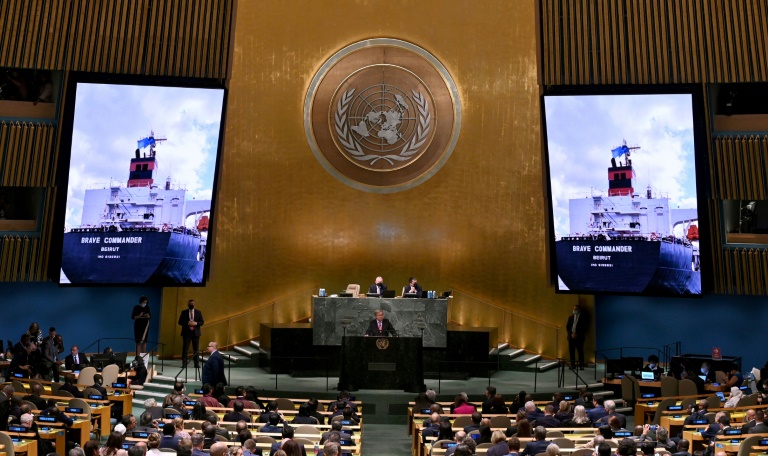
UN Secretary-General Antonio Guterres opened the summit with an image of a ship carrying grain out of Ukraine, a symbol of successful diplomacy, but he warned of a dire state of the planet. 

“A winter of global discontent is on the horizon,” Guterres said. 

“Trust is crumbling, inequalities are exploding, our planet is burning. People are hurting — with the most vulnerable suffering the most.”

With global temperatures rising and a chunk of Pakistan the size of the United Kingdom recently under water, Guterres lashed out at fossil fuel companies and the “suicidal war against nature.”

“Let’s tell it like it is — Our world is addicted to fossil fuels. It’s time for an intervention. We need to hold fossil fuel companies and their enablers to account,” Guterres said.

He called on all developed economies to tax profits from fossil fuels and dedicate the funds both to compensate for damage from climate change and to help people struggling with high prices.

“Polluters must pay,” Guterres said.

– Warnings on Ukraine –

The summit still saw disruption due to the death of Queen Elizabeth II, with President Joe Biden of the United States, by tradition the second speaker on the opening day, instead due to speak on Wednesday.

Just as leaders huddled at the United Nations about the war in Ukraine, Russian-backed forces announced they were going ahead with a move the West had long warned against — referendums on annexation by Moscow.

German Chancellor Olaf Scholz called the votes, to be conducted in the coming days in Russian-occupied Ukrainian territory, a “sham” that were part of “imperialist aggression” by Moscow.

The war in Ukraine, a major grain producer, has sent global food prices spiraling, hitting developing nations especially hard.

Senegalese President Macky Sall, the current chair of the African Union, urged a “negotiated solution” in Ukraine to “avoid the catastrophic risk of a potentially global conflict.”

Turkish President Recep Tayyip Erdogan, who has fashioned himself as a mediator and played a key role in arranging the grain shipments, called for an end to the war that recognizes Ukraine’s sovereignty and territorial integrity.

“Together, we need to find a reasonably practical diplomatic solution that will give both sides a dignified way out of the crisis,” Erdogan told the General Assembly.

Western leaders led by the United States have made clear they do not want the summit to focus exclusively on the Ukraine war itself, mindful of resentment in the developing world to the billions of dollars sent in weapons.

“The brutality of Russia’s war of aggression and its threat to the peace order in Europe have not blinded us to the fact that its dramatic effects are also clearly being felt in many other regions of the world,” German Foreign Minister Annalena Baerbock said.

US Secretary of State Antony Blinken will head a meeting on food security, and Guterres on Monday launched a bid to step up funding for education, badly affected by the pandemic.

– Criticism on Iran –

Among leaders who headed to New York was Iranian President Ebrahim Raisi, a hardliner who took office last year and faced noisy demonstrations on the streets of Manhattan.

While talks with Iran at the United Nations will once again focus on the fate of a 2015 nuclear accord, Raisi traveled as protests grip his country following the death of a young woman arrested by “morality police.”

Chilean President Gabriel Boric, a leftist former student leader, in his UN speech paid tribute to 22-year-old Mahsa Amini, who was arrested by the unit responsible for enforcing the Islamic republic’s strict dress code for women.

Boric called for “an end to abuses by the powerful everywhere,” including Russia’s “unjust war in Ukraine” and “violence against women” in Iran and elsewhere.

Iranian dissidents announced that they had filed a new lawsuit in US courts against Raisi over his role as a judge following the Islamic revolution in which thousands were sentenced to death.

Raisi went ahead with meetings including with French President Emmanuel Macron, who is seeking to revive the nuclear accord trashed by former US president Donald Trump.

Biden supports the accord, under which Iran drastically scaled back nuclear work in return for sanctions relief.

But Raisi has called for “guarantees” a future US leader will not ditch the deal, a promise the Biden administration considers impossible.
China should do more to help avoid debt crisis: US official

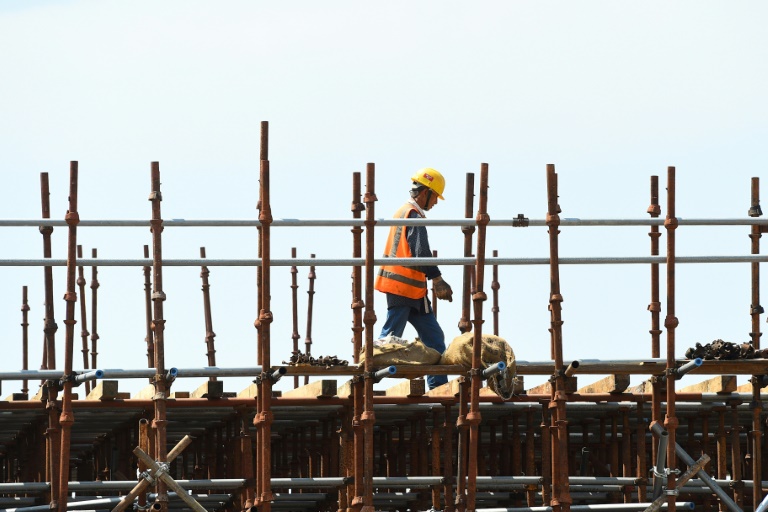
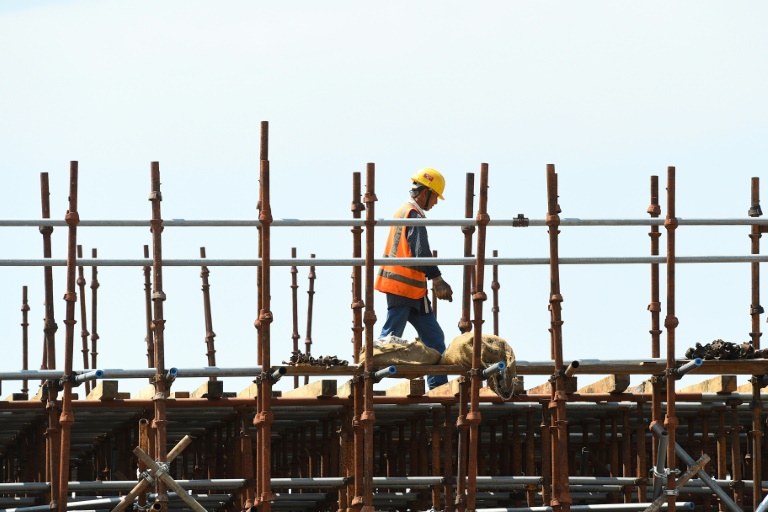
The “enormous scale” of Chinese lending to developing nations makes it critical Beijing do more to participate in restructurings to avoid a new international debt crisis, a senior US Treasury official said Tuesday.

In the wake of the pandemic, many countries are facing debt distress, and China has delayed or failed to participate in multinational efforts to try to work out those borrowing loads, said Brent Neiman, counselor to the Treasury Secretary.

“China’s enormous scale as a lender means its participation is essential,” Neiman said in a speech to the Peterson Institute for International Economics.

He noted that estimates of the total of outstanding Chinese official loans, while uncertain due to a lack of transparency, range widely to as much as $1 trillion.

“China became the world’s largest official creditor in 2017, surpassing the claims of the World Bank, IMF, and all Paris Club official creditors combined,” he said.

The high borrowing, outflow of funds from developing nations and strong US dollar amid rising interest rates have increased the pain for debtor countries, and “these ingredients all but assure debt distress in a number of countries,” he said.

“Failure to act on these debts could imply years of ongoing difficulties with the servicing of debts and with underinvestment and lower growth in low and middle income countries.”

In a now familiar message, repeated by government officials as well as the International Monetary Fund and World Bank, Neiman called on China to end the “enormous delays” in participating in the international efforts to provide relief.

The G20 has agreed on a “common framework” for debt restructuring for the poorest countries, but to date only three have qualified, and only one, Zambia, has received assurances from China of debt restructuring, allowing it to secure an IMF aid package.

Neiman warned the delays “may discourage others from requesting needed treatments, and preclude the best outcomes.”

Middle income countries have fared no better in debt workouts with Chinese creditors, he said, and crisis-hit countries like Sri Lanka are not eligible for the common framework.

He called on Beijing to take steps to speed the workouts, including setting up a single entity to deal with bad loans, and providing more transparency on the terms and lending amounts.

China should do more to help avoid debt crisis: US official

The “enormous scale” of Chinese lending to developing nations makes it critical Beijing do more to participate in restructurings to avoid a new international debt crisis, a senior US Treasury official said Tuesday.

In the wake of the pandemic, many countries are facing debt distress, and China has delayed or failed to participate in multinational efforts to try to work out those borrowing loads, said Brent Neiman, counselor to the Treasury Secretary.

“China’s enormous scale as a lender means its participation is essential,” Neiman said in a speech to the Peterson Institute for International Economics.

He noted that estimates of the total of outstanding Chinese official loans, while uncertain due to a lack of transparency, range widely to as much as $1 trillion.

“China became the world’s largest official creditor in 2017, surpassing the claims of the World Bank, IMF, and all Paris Club official creditors combined,” he said.

The high borrowing, outflow of funds from developing nations and strong US dollar amid rising interest rates have increased the pain for debtor countries, and “these ingredients all but assure debt distress in a number of countries,” he said.

“Failure to act on these debts could imply years of ongoing difficulties with the servicing of debts and with underinvestment and lower growth in low and middle income countries.”

In a now familiar message, repeated by government officials as well as the International Monetary Fund and World Bank, Neiman called on China to end the “enormous delays” in participating in the international efforts to provide relief.

The G20 has agreed on a “common framework” for debt restructuring for the poorest countries, but to date only three have qualified, and only one, Zambia, has received assurances from China of debt restructuring, allowing it to secure an IMF aid package.

Neiman warned the delays “may discourage others from requesting needed treatments, and preclude the best outcomes.”

Middle income countries have fared no better in debt workouts with Chinese creditors, he said, and crisis-hit countries like Sri Lanka are not eligible for the common framework.

He called on Beijing to take steps to speed the workouts, including setting up a single entity to deal with bad loans, and providing more transparency on the terms and lending amounts.

Fiona, a Category 3 hurricane, batters Turks and Caicos

Hurricane Fiona, a powerful Category 3 storm, was battering the Turks and Caicos islands on Tuesday after leaving two people dead and triggering major flooding and power outages in the Caribbean.

“Hurricane Fiona has proven to be an unpredictable storm,” Anya Williams, the deputy governor of the British Overseas Territory, said in a broadcast.

Williams said no casualties or serious injuries had been reported in the Turks and Caicos overnight as heavy rain and strong winds lashed the islands but she urged residents to continue to shelter in place.

Blackouts had been reported on Grand Turk and several other islands in the archipelago and 165 people had been admitted to shelters, she said, adding that Britain’s Royal Navy and the US Coast Guard are standing by provide assistance if needed.

The US National Hurricane Center (NHC) said Fiona was packing maximum winds nearing 115 miles (185 kilometers) per hour, making it a major hurricane, and is expected to become even stronger.

“Heavy rains around the center of Fiona impacts the Turks and Caicos through this afternoon with continued life-threatening flooding,” the NHC said.

Fiona has left two people dead so far: one man whose home was swept away in the French overseas department of Guadeloupe and another in the Dominican Republic who died while cutting down a tree.

Dominican Republic President Luis Abinader has declared three eastern provinces to be disaster zones: La Altagracia — home to the popular resort of Punta Cana — El Seibo and Hato Mayor.

Several roads were flooded or cut off by falling trees or electric poles around Punta Cana where the power was knocked out.

Footage from local media showed residents of the east coast town of Higuey waist-deep in water trying to salvage personal belongings.

“It came through at high speed,” Vicente Lopez, in the Punta Cana beach of Bibijagua told AFP, bemoaning the destroyed businesses in the area.

The NHC said “heavy rainfall and localized life-threatening flash flooding” would continue over part of the Dominican Republic on Tuesday.

US President Joe Biden has meanwhile declared a state of emergency in Puerto Rico — where the storm hit a day earlier — authorizing the Federal Emergency Management Agency to provide assistance in the US island territory.

Governor Pedro Pierluisi said the storm had caused catastrophic damage since Sunday, with some areas receiving more than 30 inches (76 centimeters) of rain.

– ‘I have food and water’ –

Across Puerto Rico, Fiona caused landslides, blocked roads and toppled trees, power lines and bridges, Pierluisi said.

A man was killed as an indirect result of the power blackout — burned to death while trying to fill his generator, according to authorities.

On Monday afternoon, Nelly Marrero made her way back to her home in Toa Baja, in the north of Puerto Rico, to clear out the mud that surged inside after she evacuated.

“Thanks to God, I have food and water,” Marrero — who lost everything when Hurricane Maria devastated Puerto Rico five years ago — told AFP by telephone.

Fiona knocked out power to much of Puerto Rico, an island of three million people, but electricity had been restored for some customers on Monday, the governor said.

The hurricane has also left around 800,000 people without drinking water as a result of power outages and flooded rivers, officials said.

After years of financial woes and recession, Puerto Rico in 2017 declared the largest bankruptcy ever by a local US administration. 

Later that year, the double hit from two Hurricanes, Irma and Maria, added to the misery, devastating the electrical grid on the island — which has suffered from major infrastructure problems for years.

The grid was privatized in June 2021 in an effort to resolve the problem of blackouts, but the issue has persisted, and the entire island lost power earlier this year.

Fiona, a Category 3 hurricane, batters Turks and Caicos

Hurricane Fiona, a powerful Category 3 storm, was battering the Turks and Caicos islands on Tuesday after leaving two people dead and triggering major flooding and power outages in the Caribbean.

“Hurricane Fiona has proven to be an unpredictable storm,” Anya Williams, the deputy governor of the British Overseas Territory, said in a broadcast.

Williams said no casualties or serious injuries had been reported in the Turks and Caicos overnight as heavy rain and strong winds lashed the islands but she urged residents to continue to shelter in place.

Blackouts had been reported on Grand Turk and several other islands in the archipelago and 165 people had been admitted to shelters, she said, adding that Britain’s Royal Navy and the US Coast Guard are standing by provide assistance if needed.

The US National Hurricane Center (NHC) said Fiona was packing maximum winds nearing 115 miles (185 kilometers) per hour, making it a major hurricane, and is expected to become even stronger.

“Heavy rains around the center of Fiona impacts the Turks and Caicos through this afternoon with continued life-threatening flooding,” the NHC said.

Fiona has left two people dead so far: one man whose home was swept away in the French overseas department of Guadeloupe and another in the Dominican Republic who died while cutting down a tree.

Dominican Republic President Luis Abinader has declared three eastern provinces to be disaster zones: La Altagracia — home to the popular resort of Punta Cana — El Seibo and Hato Mayor.

Several roads were flooded or cut off by falling trees or electric poles around Punta Cana where the power was knocked out.

Footage from local media showed residents of the east coast town of Higuey waist-deep in water trying to salvage personal belongings.

“It came through at high speed,” Vicente Lopez, in the Punta Cana beach of Bibijagua told AFP, bemoaning the destroyed businesses in the area.

The NHC said “heavy rainfall and localized life-threatening flash flooding” would continue over part of the Dominican Republic on Tuesday.

US President Joe Biden has meanwhile declared a state of emergency in Puerto Rico — where the storm hit a day earlier — authorizing the Federal Emergency Management Agency to provide assistance in the US island territory.

Governor Pedro Pierluisi said the storm had caused catastrophic damage since Sunday, with some areas receiving more than 30 inches (76 centimeters) of rain.

– ‘I have food and water’ –

Across Puerto Rico, Fiona caused landslides, blocked roads and toppled trees, power lines and bridges, Pierluisi said.

A man was killed as an indirect result of the power blackout — burned to death while trying to fill his generator, according to authorities.

On Monday afternoon, Nelly Marrero made her way back to her home in Toa Baja, in the north of Puerto Rico, to clear out the mud that surged inside after she evacuated.

“Thanks to God, I have food and water,” Marrero — who lost everything when Hurricane Maria devastated Puerto Rico five years ago — told AFP by telephone.

Fiona knocked out power to much of Puerto Rico, an island of three million people, but electricity had been restored for some customers on Monday, the governor said.

The hurricane has also left around 800,000 people without drinking water as a result of power outages and flooded rivers, officials said.

After years of financial woes and recession, Puerto Rico in 2017 declared the largest bankruptcy ever by a local US administration. 

Later that year, the double hit from two Hurricanes, Irma and Maria, added to the misery, devastating the electrical grid on the island — which has suffered from major infrastructure problems for years.

The grid was privatized in June 2021 in an effort to resolve the problem of blackouts, but the issue has persisted, and the entire island lost power earlier this year.

Twitter to depose Elon Musk ahead of buyout deal trial

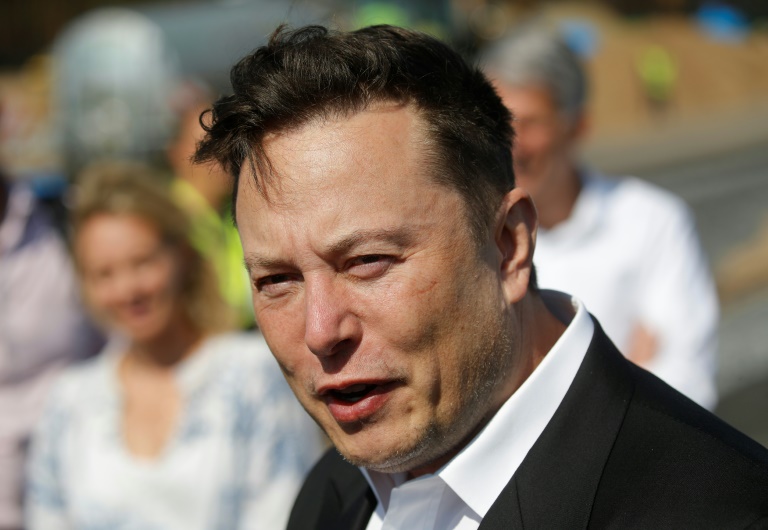
Twitter’s lawyers will question Elon Musk next week as they gather evidence in a legal battle to hold him to his $44 billion buyout deal, a Tuesday court filing said.

The Tesla chief will be deposed under oath for two days and maybe even a third if needed, in sessions that are to be recorded by “stenographic, sound and visual means,” according to the filing.

Musk’s deposition is set to take place privately in law offices, and comes as part of an evidence gathering phase ahead of a five-day trial scheduled to begin October 17 in the Court of Chancery in the state of Delaware.

The long list of those being asked for documents or to answer questions in the case includes Twitter co-founder and former chief Jack Dorsey, who was to be deposed Tuesday by Musk’s lawyers.

Musk, the world’s richest man, said in a letter in April that he was canceling the deal because he was misled by Twitter concerning the number of bot accounts on its platform, allegations rejected by the company.

He later added accusations made in a whistleblower complaint made by a former head of security at Twitter to his reasons for walking away from the deal.

Twitter has stood by its assessment of user numbers, and portrayed the whistleblower as a “disgruntled former employee” whose allegations are without merit.

Germany in 'final discussions' over Uniper nationalisation

German gas company Uniper said Tuesday it was on the brink of being nationalised as Berlin stepped in to prop up the energy sector amid a crisis triggered by the Russian invasion of Ukraine.

Uniper was in “final discussions” over a deal with the German government and its majority shareholder, the Finnish state-owned energy company Fortum, it said in a statement.

Under the plan being discussed, the German government would “acquire the Uniper shares currently held by Fortum” and “obtain a significant majority stake in Uniper”, the company said.

The German government would also inject eight billion euros ($8 billion) in cash to prop up the struggling energy company, Uniper said.

“The final agreement has not yet been concluded,” it added.

One of the biggest importers of Russian gas, Uniper has been squeezed as Moscow has reduced supplies to the continent in the wake of its invasion of Ukraine in February.

Missing deliveries have had to be replaced with expensive supplies from the open market, where prices for gas have skyrocketed.

The German state had already agreed in July to take a 30 percent stake in Uniper as part of an initial bailout agreement.

But Uniper announced earlier this month that the two sides were exploring a possible nationalisation as the energy crisis showed no signs of abating.

– Trading stop –

Majority shareholder Fortum separately confirmed that discussions over the bailout deal were in their “final stages” and that it was set to be reimbursed for the support it extended to Uniper earlier this year.

Fortum provided an eight-billion-euro loan to Uniper in January as the price of gas had already begun to climb amid tensions with Moscow before the invasion of Ukraine.

The Finnish company held a near-80-percent stake in Uniper, which would have been cut to around 56 percent under the July bailout plan.

The Helsinki stock exchange earlier on Tuesday announced a halt to trading of shares in Fortum amid the talk of an imminent deal on the nationalisation of Uniper.

Shares in Fortum were up 9.5 percent to 12.10 euros before the suspension, while Uniper rose 3.8 percent to 4.18 euros on the Frankfurt Stock Exchange at the close of trading.

The Finnish minister responsible for state companies said the Nordic country would “not accept nationalisation without compensation.”

“We think it is important that Fortum gets back the eight billion it paid to Uniper and, in general, that Finnish taxpayers do not incur any undue costs in resolving this crisis,” minister Tytti Tuppurainen said in Brussels on Tuesday.

– Energy dependence –

Earlier in September, the German government entered into discussions with another gas supplier, VNG, over a possible bailout package.

Russia’s war in Ukraine has triggered an earthquake on European energy markets, cranked up the pressure on suppliers and raised fears of possible shortages over the winter.

Germany has found itself particularly exposed due to its previous heavy reliance on Russian energy imports.

Since the outbreak of the war, Berlin has worked to wean itself off Russian gas and secure alternative supplies.

Officials have seized key pieces of energy infrastructure which were in the hands of Russian energy companies and mandated gas stores to be filled.

Germany has also taken the radical step of restarting mothballed coal power plants and granting an extension to nuclear facilities, which were due to go offline at the end of the year under a long-planned energy transition.

Any nationalisation could further call into question plans for a gas surcharge to be imposed on consumers, of which Uniper was set to be one of the main beneficiaries.

The levy, set to come into force on October 1, was designed to support the energy market by allowing struggling companies to pass on rising costs.

But it has sparked outrage when it emerged that even highly profitable energy companies with little exposure to gas have applied to receive the levy.

How the new bivalent Covid vaccines work

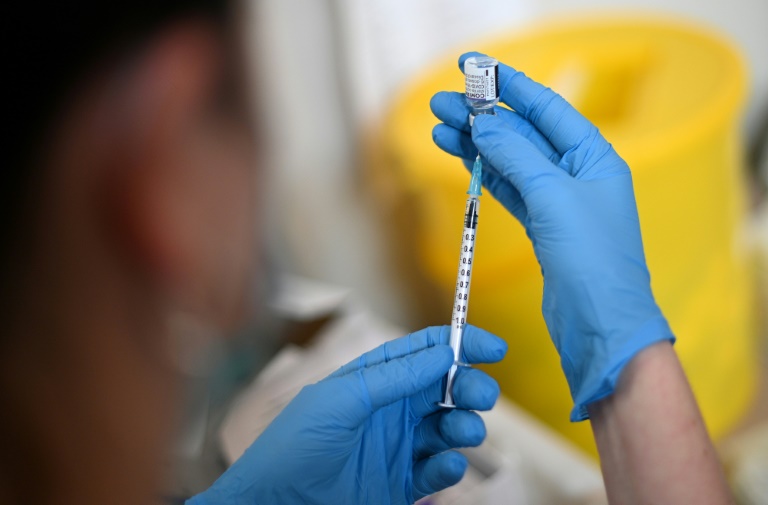
France became the latest country on Tuesday to authorise new Covid-19 vaccines that have been updated to target Omicron subvariants ahead of autumn booster campaign. 

Here’s what you need to know about these “bivalent” vaccines, which means they also still target the original strain that emerged in the Chinese city of Wuhan in 2019.

– Mutating to evade immunity –

Two of the first vaccines developed to fight the original strain were made by the US-German team of Pfizer-BioNTech and by US firm Moderna, both using new mRNA technology.

While traditional vaccines use a weakened or inactivated germ to prepare the body for a future attack from the real virus, mRNA deploys snippets of genetic material that carry instructions showing the body’s cells how to produce a protein — in this case, Covid’s famous spike protein. 

The body’s immune system then triggers antibodies to fight off that spike protein, making it ready for when the real coronavirus comes knocking.

However, the Covid virus has mutated throughout the pandemic, growing new spikes to help it evade the immune response built up by the original vaccines.

The Omicron variant, which has milder symptoms but is more infectious, has become dominant across the world this year — particularly in recent months its subvariants BA.4 and BA.5.

Vaccine makers have been racing to catch up, aiming to provide updated booster shots ahead of an expected new wave of Covid cases in the northern hemisphere’s winter.

– Aiming for BA.4 and BA.5 –

Pfizer-BioNTech and Moderna first tweaked their original vaccines to include the spike protein seen in the BA.1 subvariant, while also still targeting the original strain.

Then both vaccines were further tweaked to include the spike proteins on the BA.4 and BA.5 subvariants. 

The US Food and Drug Administration approved both BA.4/5 vaccines late last month, and officials there hope millions of Americans will receive bivalent boosters throughout September.

The European Union’s medicines watchdog EMA approved Moderna and Pfizer-BioNTech’s BA.1 vaccines at the start of this month.

The EMA then approved Pfizer-BioNTech’s BA.4/5 last week, saying its recommendation was based on clinical data from the older BA.1 version.

Canada meanwhile authorised Moderna’s BA.1 vaccine at the start of September.

Clinical trial data remains sparse for the newest BA.4/5 vaccines, which the US approved based on animal studies showing they produced a greater immune response and lowered levels of the virus in the lungs, compared to older shots.

Antoine Flahault, director of the Institute of Global Health at the University of Geneva, said he was “still not convinced” about the superior efficacy of the BA.4/5 vaccines because there had not yet been clinical trials into their effectiveness.

However, the vaccines are “very promising” and have no new safety concerns, Flahault told AFP, adding that there would be much more data in the coming weeks as the US bivalent booster campaign gains steam.

The concept of adapting a new vaccine without carrying out full clinical trials every time is not a new one.

Influenza vaccines are updated annually, and are now quadrivalent, targeting components of two influenza A and two influenza B viruses.

US health officials have said that in the future newly updated Covid boosters could be recommended every year, similar to influenza vaccines — unless drastically different variants emerge.

– Other bivalent vaccines –

On Tuesday France’s National Authority for Health gave the green light for three bivalent vaccines — Moderna and Pfizer-BioNTech’s jabs targeting BA.1, as well as Pfizer’s against BA.4/5.

The French health authority recommended that those at risk of severe disease or caregivers get any one of the three vaccines as soon as they become available as part of an autumn booster campaign.

France has already ordered several million doses of bivalent vaccines from Pfizer-BioNTech and Moderna, the health ministry told AFP.

There are already signs of a Covid resurgence in France, where the number of cases jumped by more than 65 percent last week after two months of decline.

Other vaccine makers are working on bivalent jabs, including one from France’s Sanofi and Britain’s GSK that targets the earlier Delta and Beta strains.

The EMA is reviewing that vaccine as well as another from the Spanish pharma firm HIPRA targeting the Alpha and Beta strains.

Stocks drop as jumbo Swedish rate hike fans Fed fears

Stocks retreated Tuesday as Sweden’s jumbo interest rate hike, aimed at tackling inflation, stoked expectations of more increases this week from the US Federal Reserve and the Bank of England.

The Swedish central bank sprang its biggest rise in three decades, ramping up its policy rate by a full percentage point to 1.75 percent.

The news sent the region’s markets into reverse as tighter global borrowing costs bear down on economic activity.

Frankfurt equities ended the day down 1.0 percent as news of rocketing German producer prices further fanned inflation fears, and the government appeared close to nationalising the energy company Uniper, which has been brought low by the spike in gas prices.

London fell after reopening following the funeral of Queen Elizabeth II on Monday.

The US dollar rose against rivals as the Fed’s almost certain interest rate hike approached, while oil prices slid.

Wall Street’s main stocks indices fell, with the Dow down 1.1 percent in late morning trading.

– ‘Nerves jangling again’ –

“European stocks rallied at the open — but a jumbo rate hike from Sweden’s central bank sent the nerves jangling again as investors worry about what’s in store from global central banks,” Markets.com analyst Neil Wilson told AFP.

The Fed’s decision has been the main focus for the markets after figures last week showed consumer prices are still rising at a pace not seen since the early 1980s.

With Fed officials vowing to hike rates sufficiently to bring inflation down, expectations were strengthened that it will raise its key interest rate by another 0.75 percentage points on Wednesday.

Some observers now speculate over a possible one-percentage-point move.

On Thursday, the Bank of England (BoE) is predicted to deliver another sizeable increase in British borrowing costs.

“The (Swedish) hike underlined just how serious central banks are taking the inflation threat and with 75 basis point hikes from the Bank of England and Federal Reserve looking like slam-dunk certainties, the early optimism in the markets quickly evaporated,” added Wilson.

“The reality of central bank tightening… is keeping a lid on stocks and will continue to act as a headwind for risk.”

Sentiment on Wall Street was also dampened by data showing a drop in housing construction permits, although housing starts increased 12.2 percent month-on-month in August.

“The key takeaway from the report is that the weakness in the permits data suggests the strength in starts is not sustainable, especially when also taking into account that mortgage rates have risen since the July-August period,” said analyst Patrick O’Hare at Briefing.com.

Asian markets meanwhile enjoyed a much-needed bounce Tuesday, tracking Wall Street’s late Monday rally.

Elsewhere on Tuesday, the British pound remained under pressure, even as the BoE lines up another rate hike, after sliding on Friday to a 1985 low at $1.1351.

Oil prices continued their march lower.

“A strong US dollar, rising yields and concerns over demand as the global economy slows is weighing on crude oil prices again,” said market analyst Michael Hewson at CMC Markets.

– Key figures at around 1530 GMT –

New York – Dow: DOWN 1.1 percent at 30,690.39 points

EURO STOXX 50: DOWN 0.9 percent at 3,467.09

London – FTSE 100: DOWN 0.6 percent at 7,192.66 (close)

Frankfurt – DAX: DOWN 1.0 percent at 12,670.83 (close)

Paris – CAC 40: DOWN 1.4 percent at 5,979.47 (close)

Tokyo – Nikkei 225: UP 0.4 percent at 27,688.42 (close)

Hong Kong – Hang Seng Index: UP 1.2 percent at 18,781.42 (close)

Shanghai – Composite: UP 0.2 percent at 3,122.41 (close)

Euro/dollar: DOWN at $0.9987 from $1.0024 on Monday

Dollar/yen: UP at 143.74 yen from 143.21 yen

Pound/dollar: DOWN at $1.1415 from $1.1431

Euro/pound: DOWN at 87.57 pence from 87.70 pence 

Brent North Sea crude: DOWN 1.4 percent at $90.74 per barrel

West Texas Intermediate: DOWN 1.6 percent at $84.04 per barrel

burs-rl/kjm

Stocks drop as jumbo Swedish rate hike fans Fed fears

Stocks retreated Tuesday as Sweden’s jumbo interest rate hike, aimed at tackling inflation, stoked expectations of more increases this week from the US Federal Reserve and the Bank of England.

The Swedish central bank sprang its biggest rise in three decades, ramping up its policy rate by a full percentage point to 1.75 percent.

The news sent the region’s markets into reverse as tighter global borrowing costs bear down on economic activity.

Frankfurt equities ended the day down 1.0 percent as news of rocketing German producer prices further fanned inflation fears, and the government appeared close to nationalising the energy company Uniper, which has been brought low by the spike in gas prices.

London fell after reopening following the funeral of Queen Elizabeth II on Monday.

The US dollar rose against rivals as the Fed’s almost certain interest rate hike approached, while oil prices slid.

Wall Street’s main stocks indices fell, with the Dow down 1.1 percent in late morning trading.

– ‘Nerves jangling again’ –

“European stocks rallied at the open — but a jumbo rate hike from Sweden’s central bank sent the nerves jangling again as investors worry about what’s in store from global central banks,” Markets.com analyst Neil Wilson told AFP.

The Fed’s decision has been the main focus for the markets after figures last week showed consumer prices are still rising at a pace not seen since the early 1980s.

With Fed officials vowing to hike rates sufficiently to bring inflation down, expectations were strengthened that it will raise its key interest rate by another 0.75 percentage points on Wednesday.

Some observers now speculate over a possible one-percentage-point move.

On Thursday, the Bank of England (BoE) is predicted to deliver another sizeable increase in British borrowing costs.

“The (Swedish) hike underlined just how serious central banks are taking the inflation threat and with 75 basis point hikes from the Bank of England and Federal Reserve looking like slam-dunk certainties, the early optimism in the markets quickly evaporated,” added Wilson.

“The reality of central bank tightening… is keeping a lid on stocks and will continue to act as a headwind for risk.”

Sentiment on Wall Street was also dampened by data showing a drop in housing construction permits, although housing starts increased 12.2 percent month-on-month in August.

“The key takeaway from the report is that the weakness in the permits data suggests the strength in starts is not sustainable, especially when also taking into account that mortgage rates have risen since the July-August period,” said analyst Patrick O’Hare at Briefing.com.

Asian markets meanwhile enjoyed a much-needed bounce Tuesday, tracking Wall Street’s late Monday rally.

Elsewhere on Tuesday, the British pound remained under pressure, even as the BoE lines up another rate hike, after sliding on Friday to a 1985 low at $1.1351.

Oil prices continued their march lower.

“A strong US dollar, rising yields and concerns over demand as the global economy slows is weighing on crude oil prices again,” said market analyst Michael Hewson at CMC Markets.

– Key figures at around 1530 GMT –

New York – Dow: DOWN 1.1 percent at 30,690.39 points

EURO STOXX 50: DOWN 0.9 percent at 3,467.09

London – FTSE 100: DOWN 0.6 percent at 7,192.66 (close)

Frankfurt – DAX: DOWN 1.0 percent at 12,670.83 (close)

Paris – CAC 40: DOWN 1.4 percent at 5,979.47 (close)

Tokyo – Nikkei 225: UP 0.4 percent at 27,688.42 (close)

Hong Kong – Hang Seng Index: UP 1.2 percent at 18,781.42 (close)

Shanghai – Composite: UP 0.2 percent at 3,122.41 (close)

Euro/dollar: DOWN at $0.9987 from $1.0024 on Monday

Dollar/yen: UP at 143.74 yen from 143.21 yen

Pound/dollar: DOWN at $1.1415 from $1.1431

Euro/pound: DOWN at 87.57 pence from 87.70 pence 

Brent North Sea crude: DOWN 1.4 percent at $90.74 per barrel

West Texas Intermediate: DOWN 1.6 percent at $84.04 per barrel

burs-rl/kjm

Close Bitnami banner
Bitnami