AFP

Flowers left for Queen Elizabeth to be composted, re-used in parks

The sea of floral tributes left in London’s parks for Queen Elizabeth II will be composted and re-used on planting projects, the city’s Royal Parks said Tuesday.

A huge volume of flowers have been left in parks across London following the death of Britain’s longest-serving monarch, who was laid to rest on Monday.

Work to remove the bunches of flowers will begin next Monday, a week after the state funeral for the late sovereign, who died on September 8 aged 96 after 70 years on the throne.

Well-wishers will still be able to leave tributes but bunches of flowers which have already deteriorated will be taken away.

The Royal Parks include well-known London green spaces such as Hyde Park, Kensington Gardens and Green Park, which is the scene of the main floral tribute site.

The compost will be used on landscaping projects and shrubberies across the parks.

“Our priority at the moment is to manage the huge volume of flowers and tributes that are being left in the Green Park Floral Tribute Garden,” a Royal Parks spokesperson said.

“We will store any teddies and artefacts that have been left and will work closely with our partners to agree what we do with them over the next few months with discretion and sensitivity.”

Fiona, now a Category Three hurricane, reaches Turks and Caicos

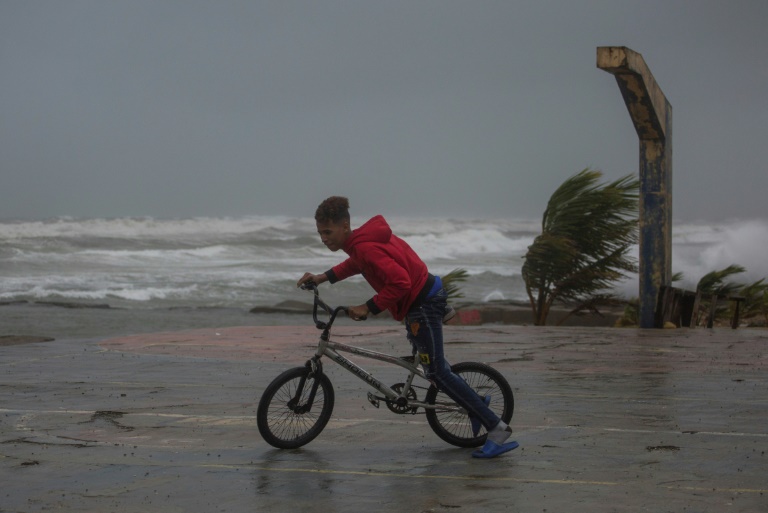
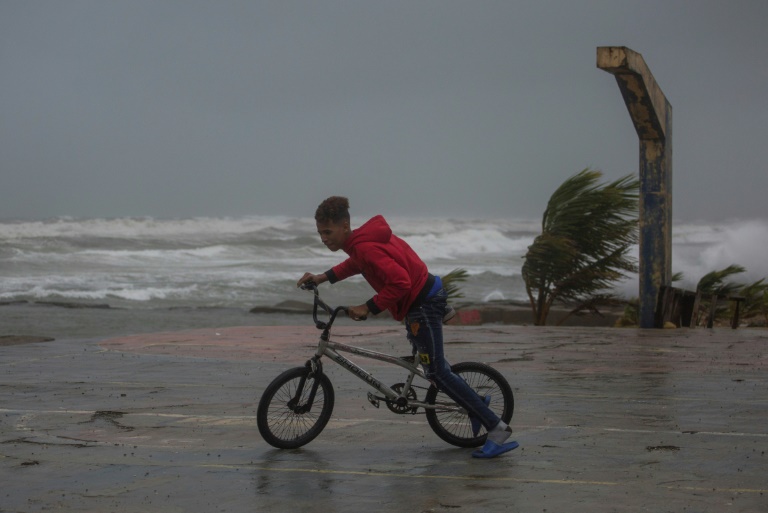
Fiona strengthened into a powerful Category Three hurricane on Tuesday as it headed toward the Turks and Caicos islands after leaving two dead and triggering major flooding and blackouts in the Caribbean.

With maximum winds nearing 115 miles (185 kilometers) per hour, the storm is already bringing hurricane conditions to the British overseas territory and is expected to become even stronger, the US National Hurricane Center (NHC) said.

“Heavy rains around the center of Fiona impacts the Turks and Caicos through this afternoon with continued life-threatening flooding,” the NHC said in an advisory, adding that the storm was expected to pass near the island chain within hours.

Fiona has left two people dead so far: one man whose home was swept away in the French overseas department of Guadeloupe and another in the Dominican Republic who died while cutting down a tree to protect against the storm.

Dominican Republic President Luis Abinader has declared three eastern provinces to be disaster zones: La Altagracia — home to the popular resort of Punta Cana — El Seibo and Hato Mayor.

Several roads were flooded or cut off by falling trees or electric poles around Punta Cana where the power was knocked out, an AFP journalist on the scene said.

Footage from local media showed residents of the east coast town of Higuey waist-deep in water, trying to salvage personal belongings.

“It came through at high speed,” Vicente Lopez, in the Punta Cana beach of Bibijagua told AFP, bemoaning the destroyed businesses in the area.

The NHC said “heavy rainfall and localized life-threatening flash flooding” would continue over part of the Dominican Republic on Tuesday.

US President Joe Biden has meanwhile declared a state of emergency in Puerto Rico — where the storm hit a day earlier — authorizing the Federal Emergency Management Agency to provide assistance in the US island territory.

Governor Pedro Pierluisi said the storm had caused catastrophic damage since Sunday, with some areas facing more than 30 inches (76 centimeters) of rainfall.

– ‘Unprecedented’ flooding –

Across Puerto Rico, Fiona caused landslides, blocked roads and toppled trees, power lines and bridges, Pierluisi said.

A man was killed as an indirect result of the power blackout — burned to death while trying to fill his generator, according to authorities.

On Monday afternoon, Nelly Marrero made her way back to her home in Toa Baja, in the north of Puerto Rico, to clear out the mud that surged inside after she evacuated.

“Thanks to God, I have food and water,” Marrero — who lost everything when Hurricane Maria devastated Puerto Rico five years ago — told AFP by telephone.

Fiona knocked out power to much of Puerto Rico, an island of three million people, but electricity had been restored for some customers on Monday, the governor said.

The hurricane has also left around 800,000 people without drinking water as a result of power outages and flooded rivers, officials said.

After years of financial woes and recession, Puerto Rico in 2017 declared the largest bankruptcy ever by a local US administration. 

Later that year, the double hit from two Hurricanes, Irma and Maria, added to the misery, devastating the electrical grid on the island — which has suffered from major infrastructure problems for years.

The grid was privatized in June 2021 in an effort to resolve the problem of blackouts, but the issue has persisted, and the entire island lost power earlier this year.

Fiona, now a Category Three hurricane, reaches Turks and Caicos

Fiona strengthened into a powerful Category Three hurricane on Tuesday as it headed toward the Turks and Caicos islands after leaving two dead and triggering major flooding and blackouts in the Caribbean.

With maximum winds nearing 115 miles (185 kilometers) per hour, the storm is already bringing hurricane conditions to the British overseas territory and is expected to become even stronger, the US National Hurricane Center (NHC) said.

“Heavy rains around the center of Fiona impacts the Turks and Caicos through this afternoon with continued life-threatening flooding,” the NHC said in an advisory, adding that the storm was expected to pass near the island chain within hours.

Fiona has left two people dead so far: one man whose home was swept away in the French overseas department of Guadeloupe and another in the Dominican Republic who died while cutting down a tree to protect against the storm.

Dominican Republic President Luis Abinader has declared three eastern provinces to be disaster zones: La Altagracia — home to the popular resort of Punta Cana — El Seibo and Hato Mayor.

Several roads were flooded or cut off by falling trees or electric poles around Punta Cana where the power was knocked out, an AFP journalist on the scene said.

Footage from local media showed residents of the east coast town of Higuey waist-deep in water, trying to salvage personal belongings.

“It came through at high speed,” Vicente Lopez, in the Punta Cana beach of Bibijagua told AFP, bemoaning the destroyed businesses in the area.

The NHC said “heavy rainfall and localized life-threatening flash flooding” would continue over part of the Dominican Republic on Tuesday.

US President Joe Biden has meanwhile declared a state of emergency in Puerto Rico — where the storm hit a day earlier — authorizing the Federal Emergency Management Agency to provide assistance in the US island territory.

Governor Pedro Pierluisi said the storm had caused catastrophic damage since Sunday, with some areas facing more than 30 inches (76 centimeters) of rainfall.

– ‘Unprecedented’ flooding –

Across Puerto Rico, Fiona caused landslides, blocked roads and toppled trees, power lines and bridges, Pierluisi said.

A man was killed as an indirect result of the power blackout — burned to death while trying to fill his generator, according to authorities.

On Monday afternoon, Nelly Marrero made her way back to her home in Toa Baja, in the north of Puerto Rico, to clear out the mud that surged inside after she evacuated.

“Thanks to God, I have food and water,” Marrero — who lost everything when Hurricane Maria devastated Puerto Rico five years ago — told AFP by telephone.

Fiona knocked out power to much of Puerto Rico, an island of three million people, but electricity had been restored for some customers on Monday, the governor said.

The hurricane has also left around 800,000 people without drinking water as a result of power outages and flooded rivers, officials said.

After years of financial woes and recession, Puerto Rico in 2017 declared the largest bankruptcy ever by a local US administration. 

Later that year, the double hit from two Hurricanes, Irma and Maria, added to the misery, devastating the electrical grid on the island — which has suffered from major infrastructure problems for years.

The grid was privatized in June 2021 in an effort to resolve the problem of blackouts, but the issue has persisted, and the entire island lost power earlier this year.

Opening summit, UN chief warns of 'winter of discontent'

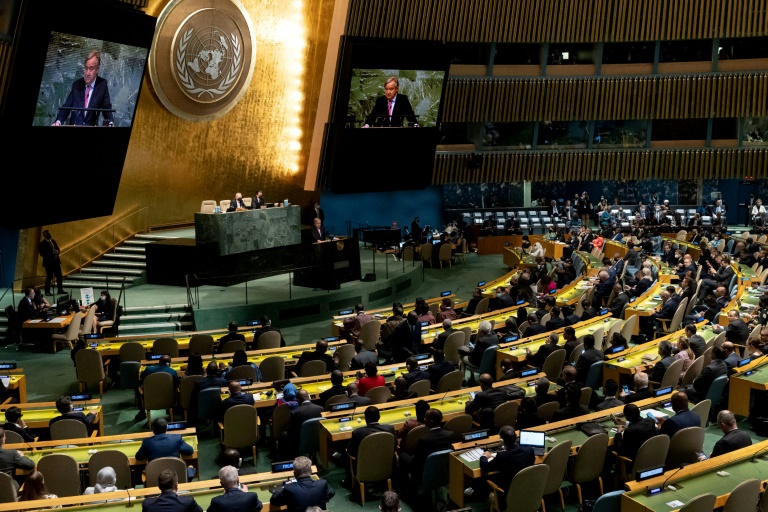
The United Nations’ massive global summit returned Tuesday with a stark warning from the world body’s chief of an upcoming “winter of global discontent” from rising prices, a warming planet and deadly conflicts.

After two years of pandemic restrictions and video addresses, the UN General Assembly again asked leaders to come in person if they wish to speak — with a sole exception made for Ukrainian President Volodymyr Zelensky.

UN Secretary-General Antonio Guterres, while saluting efforts for global cooperation, warned of a dire state of the planet.

“A winter of global discontent is on the horizon,” Guterres said as he opened the annual General Assembly. 

“Trust is crumbling, inequalities are exploding, our planet is burning. People are hurting — with the most vulnerable suffering the most.”

With global temperatures rising and a chunk of Pakistan the size of the United Kingdom recently under water, Guterres lashed out at fossil fuel companies and the “suicidal war against nature.”

“Let’s tell it like it is — Our world is addicted to fossil fuels. It’s time for an intervention. We need to hold fossil fuel companies and their enablers to account,” Guterres said.

He called on all developed economies to tax profits from fossil fuels and dedicate the funds both to compensate for damage from climate change and to help people struggling with high prices.

“Polluters must pay,” Guterres said.

– Ukraine in focus –

The summit was disrupted after the death of Queen Elizabeth II, with President Joe Biden of the United States, by tradition the second speaker on the opening day, instead due to speak on Wednesday.

Day one features French President Emmanuel Macron and German Chancellor Olaf Scholz, the leaders of the two largest economies of the European Union, which has mobilized to impose tough sanctions over Russia’s invasion of Ukraine.

“This year, Ukraine will be very high on the agenda. It will be unavoidable,” top EU diplomat Josep Borrell told reporters in New York.

“There are many other problems, we know. But the war in Ukraine has been sending shock waves around the world.”

German Foreign Minister Annalena Baerbock vowed to support countries hardest hit by the fallout from the war as she headed to the General Assembly on Tuesday.

“The brutality of Russia’s war of aggression and its threat to the peace order in Europe have not blinded us to the fact that its dramatic effects are also clearly being felt in many other regions of the world,” Baerbock said.

Russian Foreign Minister Sergei Lavrov was visiting despite a hostile reaction from the United States.

With the Ukraine war leading to a global grain crisis, hunger is another major issue on the agenda. More than 200 NGOs called for urgent action from leaders gathered for the General Assembly to “end the spiraling global hunger crisis.”

“Around the world, 50 million people are on the brink of starvation in 45 countries,” they said, adding that as many as 19,700 people are estimated to be dying of hunger every day, which translates to one person every four seconds.

– Talks between rivals –

Other leaders to speak Tuesday include Turkish President Recep Tayyip Erdogan, who has staked out ground as a broker between Russia and Ukraine, including through a deal to ship out badly needed grain to the world.

Erdogan is also expected to meet in New York with Israeli Prime Minister Yair Lapid, a dramatic rebound in relations after the Turkish leader’s strident criticism of the Jewish state’s treatment of Palestinians.

In the type of last-minute diplomacy common at previous UN sessions, US Secretary of State Antony Blinken convened a first meeting of the foreign ministers of Azerbaijan and Armenia since a flare-up in fighting.

Also high on the agenda for the UN week will be Iran, whose hardline president, Ebrahim Raisi, is traveling to the General Assembly for the first time and met Tuesday with France’s Macron.

In a US television interview ahead of his arrival, Raisi said Iran wanted “guarantees” before returning to a nuclear deal that former president Donald Trump trashed in 2018.

Biden supports a return to the 2015 agreement, under which Iran drastically scaled back nuclear work in return for promises of sanctions relief.

Stock markets drop on jumbo Swedish rate hike

Stocks retreated Tuesday as Sweden’s jumbo interest rate hike, aimed at tackling inflation, stoked expectations of more increases this week from the US Federal Reserve and the Bank of England.

The Swedish central bank sprang the biggest rise in three decades, ramping up its rate by a full percentage point to 1.75 percent.

The news sent the region’s markets into reverse as tighter global borrowing costs bear down on economic activity.

Frankfurt equities dropped about 0.8 percent as news of rocketing German producer prices further fanned inflation fears.

London fell after reopening following the funeral of Queen Elizabeth II on Monday.

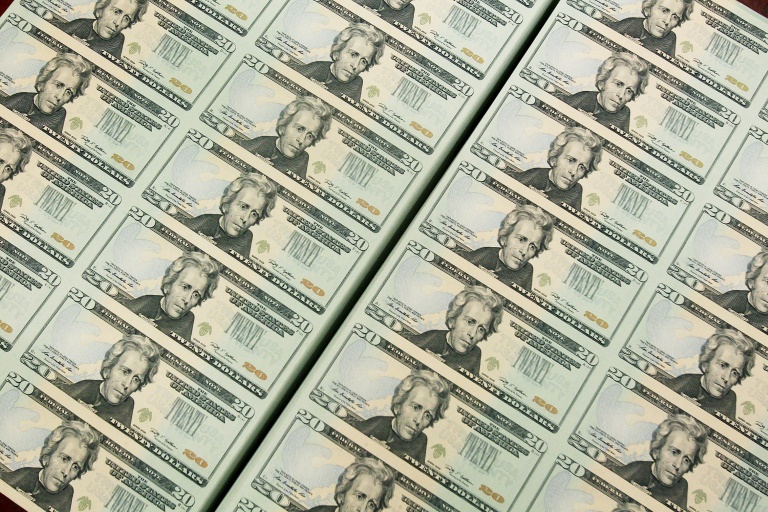
The euro dipped against main rivals after Monday’s surge, while oil prices slid on the stronger dollar.

Wall Street’s main stocks indices all fell by 0.8 percent as trading got underway.

– ‘Nerves jangling again’ –

“European stocks rallied at the open — but a jumbo rate hike from Sweden’s central bank sent the nerves jangling again as investors worry about what’s in store from global central banks,” Markets.com analyst Neil Wilson told AFP.

The Fed’s decision is the main markets focus after figures last week showed consumer prices are still rising at a pace not seen since the early 1980s.

The US Federal Reserve is forecast Wednesday to hike its key interest rate by another 0.75 percentage points.

Some observers have even speculated over a possible one-percentage-point move.

One day later, the Bank of England (BoE) is predicted to deliver another sizeable increase in British borrowing costs.

“The (Swedish) hike underlined just how serious central banks are taking the inflation threat and with 75 basis point hikes from the Bank of England and Federal Reserve looking like slam-dunk certainties, the early optimism in the markets quickly evaporated,” added Wilson.

“The reality of central bank tightening… is keeping a lid on stocks and will continue to act as a headwind for risk.”

Sentiment on Wall Street was also dampened by data showing drop in housing construction permits, although housing starts increased 12.2 percent month-on-month in August.

“The key takeaway from the report is that the weakness in the permits data suggests the strength in starts is not sustainable, especially when also taking into account that mortgage rates have risen since the July-August period,” said analyst Patrick O’Hare at Briefing.com.

Asian markets meanwhile enjoyed a much-needed bounce Tuesday, tracking Wall Street’s late rally as investors gird themselves for another big Fed hike, though fears of a recession remain elevated.

Elsewhere on Tuesday, the British pound remained under pressure, even as the BoE lines up another rate hike, after sliding on Friday to a 1985 low at $1.1351.

– Key figures at around 1330 GMT –

London – FTSE 100: DOWN 0.4 percent at 7,207.87 points

Frankfurt – DAX: DOWN 0.8 percent at 12,696.14

Paris – CAC 40: DOWN 1.2 percent at 5,991.86

EURO STOXX 50: DOWN 0.8 percent at 3,470.70

New York – Dow: DOWN 0.8 percent at 30,775.29

Tokyo – Nikkei 225: UP 0.4 percent at 27,688.42 (close)

Hong Kong – Hang Seng Index: UP 1.2 percent at 18,781.42 (close)

Shanghai – Composite: UP 0.2 percent at 3,122.41 (close)

Euro/dollar: DOWN at $0.9960 from $1.0024 on Monday

Dollar/yen: UP at 143.85 yen from 143.21 yen

Pound/dollar: UP at $1.1384 from $1.1431

Euro/pound: DOWN at 87.51 pence from 87.70 pence 

Brent North Sea crude: DOWN 0.6 percent at $91.46 per barrel

West Texas Intermediate: UP 0.8 percent at $84.64 per barrel

burs-rl/lth

Stock markets drop on jumbo Swedish rate hike

Stocks retreated Tuesday as Sweden’s jumbo interest rate hike, aimed at tackling inflation, stoked expectations of more increases this week from the US Federal Reserve and the Bank of England.

The Swedish central bank sprang the biggest rise in three decades, ramping up its rate by a full percentage point to 1.75 percent.

The news sent the region’s markets into reverse as tighter global borrowing costs bear down on economic activity.

Frankfurt equities dropped about 0.8 percent as news of rocketing German producer prices further fanned inflation fears.

London fell after reopening following the funeral of Queen Elizabeth II on Monday.

The euro dipped against main rivals after Monday’s surge, while oil prices slid on the stronger dollar.

Wall Street’s main stocks indices all fell by 0.8 percent as trading got underway.

– ‘Nerves jangling again’ –

“European stocks rallied at the open — but a jumbo rate hike from Sweden’s central bank sent the nerves jangling again as investors worry about what’s in store from global central banks,” Markets.com analyst Neil Wilson told AFP.

The Fed’s decision is the main markets focus after figures last week showed consumer prices are still rising at a pace not seen since the early 1980s.

The US Federal Reserve is forecast Wednesday to hike its key interest rate by another 0.75 percentage points.

Some observers have even speculated over a possible one-percentage-point move.

One day later, the Bank of England (BoE) is predicted to deliver another sizeable increase in British borrowing costs.

“The (Swedish) hike underlined just how serious central banks are taking the inflation threat and with 75 basis point hikes from the Bank of England and Federal Reserve looking like slam-dunk certainties, the early optimism in the markets quickly evaporated,” added Wilson.

“The reality of central bank tightening… is keeping a lid on stocks and will continue to act as a headwind for risk.”

Sentiment on Wall Street was also dampened by data showing drop in housing construction permits, although housing starts increased 12.2 percent month-on-month in August.

“The key takeaway from the report is that the weakness in the permits data suggests the strength in starts is not sustainable, especially when also taking into account that mortgage rates have risen since the July-August period,” said analyst Patrick O’Hare at Briefing.com.

Asian markets meanwhile enjoyed a much-needed bounce Tuesday, tracking Wall Street’s late rally as investors gird themselves for another big Fed hike, though fears of a recession remain elevated.

Elsewhere on Tuesday, the British pound remained under pressure, even as the BoE lines up another rate hike, after sliding on Friday to a 1985 low at $1.1351.

– Key figures at around 1330 GMT –

London – FTSE 100: DOWN 0.4 percent at 7,207.87 points

Frankfurt – DAX: DOWN 0.8 percent at 12,696.14

Paris – CAC 40: DOWN 1.2 percent at 5,991.86

EURO STOXX 50: DOWN 0.8 percent at 3,470.70

New York – Dow: DOWN 0.8 percent at 30,775.29

Tokyo – Nikkei 225: UP 0.4 percent at 27,688.42 (close)

Hong Kong – Hang Seng Index: UP 1.2 percent at 18,781.42 (close)

Shanghai – Composite: UP 0.2 percent at 3,122.41 (close)

Euro/dollar: DOWN at $0.9960 from $1.0024 on Monday

Dollar/yen: UP at 143.85 yen from 143.21 yen

Pound/dollar: UP at $1.1384 from $1.1431

Euro/pound: DOWN at 87.51 pence from 87.70 pence 

Brent North Sea crude: DOWN 0.6 percent at $91.46 per barrel

West Texas Intermediate: UP 0.8 percent at $84.64 per barrel

burs-rl/lth

EU hopes for trade pact with Indonesia within two years

The European Union hopes to strike a free-trade agreement with Indonesia within two years despite disputes with Southeast Asia’s largest economy over palm oil and nickel, the bloc’s trade commissioner said Tuesday.

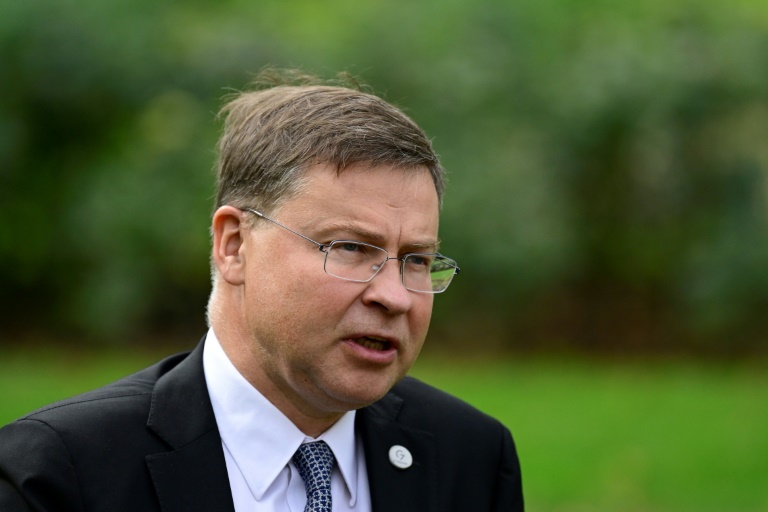
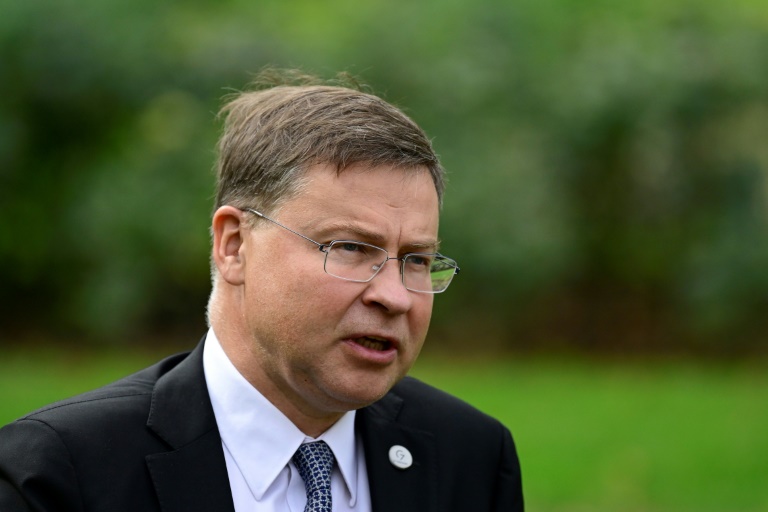
“We think it is feasible by mid-2024” to conclude a comprehensive economic partnership agreement, Valdis Dombrovskis told reporters in the Indonesian capital Jakarta. 

“We see there is some renewed momentum and we hope to build on that.”

The two sides opened bilateral negotiations on a trade deal in 2016 but progress has been stalled over EU restrictions on the use of palm oil-based biofuels and an Indonesian embargo on nickel exports.

Dombrovskis said the disputes needed to be resolved through negotiation and the World Trade Organization.

Indonesia and Malaysia have filed appeals at the WTO over the biofuels dispute.

As part of its “Red II” directive, the EU has decided that biofuels based on palm oil will not count towards its targets for the use of renewable energy by 2030 and it is looking to phase out their use.

The EU has filed its own WTO challenge against Indonesia over a temporary embargo imposed by Jakarta on exports of raw materials used in stainless steel, including nickel.

The trade commissioner is in Indonesia for a G20 ministerial meeting. He is also due to brief Indonesian officials on a proposed European law aimed at banning imports to the EU that contribute to deforestation.

The law’s text, which is not yet final, will affect several Indonesian sectors, including wood, palm oil and rubber.

“Of course there are questions being raised by the Indonesian side, so we’re going to explain how it will work and reassure the Indonesian side that it’s an environmental measure and not a measure to hinder access to the EU market,” Dombrovskis said.

Trade in goods between the EU and Indonesia amounted to $24.7 billion last year.

EU hopes for trade pact with Indonesia within two years

The European Union hopes to strike a free-trade agreement with Indonesia within two years despite disputes with Southeast Asia’s largest economy over palm oil and nickel, the bloc’s trade commissioner said Tuesday.

“We think it is feasible by mid-2024” to conclude a comprehensive economic partnership agreement, Valdis Dombrovskis told reporters in the Indonesian capital Jakarta. 

“We see there is some renewed momentum and we hope to build on that.”

The two sides opened bilateral negotiations on a trade deal in 2016 but progress has been stalled over EU restrictions on the use of palm oil-based biofuels and an Indonesian embargo on nickel exports.

Dombrovskis said the disputes needed to be resolved through negotiation and the World Trade Organization.

Indonesia and Malaysia have filed appeals at the WTO over the biofuels dispute.

As part of its “Red II” directive, the EU has decided that biofuels based on palm oil will not count towards its targets for the use of renewable energy by 2030 and it is looking to phase out their use.

The EU has filed its own WTO challenge against Indonesia over a temporary embargo imposed by Jakarta on exports of raw materials used in stainless steel, including nickel.

The trade commissioner is in Indonesia for a G20 ministerial meeting. He is also due to brief Indonesian officials on a proposed European law aimed at banning imports to the EU that contribute to deforestation.

The law’s text, which is not yet final, will affect several Indonesian sectors, including wood, palm oil and rubber.

“Of course there are questions being raised by the Indonesian side, so we’re going to explain how it will work and reassure the Indonesian side that it’s an environmental measure and not a measure to hinder access to the EU market,” Dombrovskis said.

Trade in goods between the EU and Indonesia amounted to $24.7 billion last year.

Israeli researchers find opium residue in 3,500-year-old pottery

Israeli archaeologists said Tuesday they had discovered opium residue in 3,500-year-old pottery pieces, providing evidence to support the theory that the hallucinogenic drug was used in ancient burial rituals.

The joint investigation by the Israel Antiquities Authority and Weizmann Institute of Science began in 2012 when excavations in the central Israeli town of Yehud revealed a series of Late Bronze Age graves.

Researchers found pottery vessels at the site that resembled poppy flowers — from which opium is derived — dating back to the 14th century BC.

They then examined whether they had served as containers for the drug, which earlier writing had suggested was used in burial rituals in Canaan, and found “opium residue in eight vessels”, the researchers said in a statement.

These were likely “placed in graves for ceremonial meals, rites and rituals performed by the living for their deceased family members”, said Ron Be’eri, an archaeologist with the antiquities authority.

During these ceremonies, “family members or a priest on their behalf” would “attempt to summon the spirit of their dead relatives… and enter an ecstatic state by using opium”, Be’eri said.

But he acknowledged that much remained unknown about its use in ancient times. “We can only speculate what was done with opium,” he said.

McDonald's re-opens in war-torn Ukraine, only delivers for now

McDonald’s in Kyiv re-opened on Tuesday for the first time since Russia’s invasion, a sign that life was returning to normal in the capital after nearly seven months of war.

The US burger chain said in a statement earlier that “after talks with Ukrainian officials, security specialists and suppliers” it would re-open at first for delivery only.

A queue of delivery company employees formed outside one of restaurants waiting to collect orders on Tuesday.

“I think there will be a lot of excitement,” one of the delivery men told AFP while sitting on his motorbike. 

“I’m not going to rest today,” added Maksym Khadap, 19, yellow thermal backpack on his shoulders.

A customer said that he came to pick up his order from a deliveryman right outside the restaurant. 

“I made it to please my girlfriend, she is now at work, and I will bring it to her,” 24-year-old Oleksandr Khodarkovskyi told AFP with a smile on his face.

“She likes McDonald’s a lot, I’m giving her a surprise,” he said.

McDonald’s suspended operations in Ukraine on February 24 after Russia invaded.

“In October, these three restaurants will fully re-open along with McDrive and express windows,” the company said in its statement on Monday.

“As part of the phased reopening program, seven more stores in Kyiv will open, followed by additional restaurants in the capital and other cities in the west of the country,” it added.

With the chain shuttered in Russia, the highly anticipated relaunch was seen by many Ukrainians as a symbolic show of support.

McDonald’s earlier this year sold its Russian restaurants to businessman Alexander Govor after announcing a complete exit from the country.

It said continuing to work in Russia was “no longer tenable, nor is it consistent with McDonald’s values”.

video-dg/pmu/lth

Close Bitnami banner
Bitnami