AFP

Biden warns China and Russia, hedges on seeking reelection

President Joe Biden issued forceful warnings to China and Russia on Sunday and expressed optimism over the US economic rebound, but surprised many by hedging on whether he’ll seek reelection.

In a rare, wide-ranging interview with the CBS “60 Minutes” program, Biden went back on repeated assertions by the White House that he is sure to run in 2024.

Biden, who turns 80 in November, told interviewer Scott Pelley that reelection is his “intention.”

“But is it a firm decision that I run again? That remains to be seen,” he said.

“It’s much too early,” Biden said, calling himself “a great respecter of fate.”

Surveying the state of the world’s largest economy, Biden was optimistic.

He declared the Covid-19 pandemic in the United States “over” and predicted that his administration would tame inflation — the main reason for his weak approval ratings and the reason Republicans believe they can take control of Congress in the upcoming November midterms.

“We’re going to get control of inflation,” he said.

– Troops to Taiwan? –

In another surprise moment, Biden once again appeared to challenge decades of US policy on Taiwan with a vow that he would send troops to defend the self-ruled island if China tried to invade.

“Yes,” he said, adding that this would happen if there was “an unprecedented attack” — possibly referring to something beyond the frequent saber rattling conducted by Chinese military forces around Taiwan.

While Washington does arm Taiwan, it has long maintained a policy of “strategic ambiguity” on whether it would intervene militarily if Beijing were to invade. The policy is designed to dissuade both China from invading and Taiwan from formally declaring independence.

The White House said that Biden’s latest remarks did not indicate a change but Beiing condemned the comments on Monday during a daily foreign ministry press briefing. 

“The US remarks… severely violate the important commitment the US made not to support Taiwan independence, and sends a seriously erroneous signal to Taiwanese separatist independence forces,” spokesperson Mao Ning said.

However, Taiwan’s Ministry of Foreign Affairs expressed its “sincere gratitude” for Biden’s support. 

“In the face of China’s military expansion and provocative actions, our government will continue to strengthen self-defense capabilities to firmly resist the expansion and aggression of authoritarianism, and at the same time deepen the close Taiwan-US security partnership,” the ministry said in a statement. 

– ‘Consequential’ nuclear response –

In another tough message to the United States’ biggest economic and geopolitical rival, Biden said he had warned President Xi Jinping not to support Russia militarily in its invasion of Ukraine.

He said he told Xi that US and other foreign investment in China would be disrupted and to think otherwise would be “a gigantic mistake.”

He also said that if Russian President Vladimir Putin uses nuclear or other non-conventional weapons against Ukraine the US response will be “consequential.”

When asked what he would tell Putin if the Russian leader was mulling such a move, he said: “Don’t. Don’t. Don’t.”

Biden praised the Ukrainians for their gritty fight against the huge Russian invasion and said “they’re defeating Russia.”

Asked how to define victory for Kyiv, he said “winning the war in Ukraine is to get Russia out of Ukraine completely.”

But given the scale of human suffering and destruction inflicted in resisting the Russian onslaught, “it’s awful hard to count that as winning,” he added.

– ‘More to give’ –

Despite his poor ratings and polls showing Democrats likely to lose control of at least one chamber of Congress, Biden said he is upbeat. 

Noting that employment is booming and the economy is strong, Biden said “we hope we can have, as they say, a soft landing.”

On whether at his age he is physically and mentally able to continue in the grueling job, Biden said: “watch me.”

“It’s a matter of, you know, that old expression — ‘the proof of the pudding is in the eating.'”

When asked his source of inspiration when times get tough, Biden mentioned his son Beau who died in 2015 but also his parents’ exhortation to “just get up.”

Biden said he had “a lot more to give.”
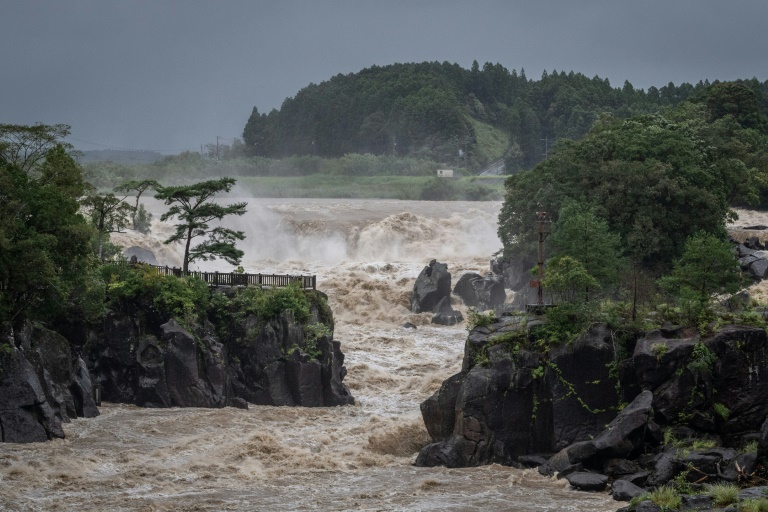
One dead after typhoon slams into Japan

One person was confirmed dead in Japan on Monday after Typhoon Nanmadol slammed into the country, injuring dozens, but authorities downgraded warnings as the storm weakened after landfall.

The storm system, which made landfall in southern Kyushu’s Kagoshima on Sunday night, was moving off the western coast of Japan by Monday afternoon.

Nearly six million people were still under evacuation warnings and authorities said in some areas “even a tiny amount of additional rainfall” could trigger flooding and landslides.

In Miyazaki prefecture, some areas saw more rainfall in 24 hours than they normally receive in all of September. 

A man in his sixties from Miyakonojo city was confirmed dead after being found in a submerged car on farmland, authorities in Miyazaki told AFP.

In western Fukuoka region, officials said they were investigating whether an additional death was linked to the storm.

Prime Minister Fumio Kishida, who had been scheduled to leave Monday for the United Nations General Assembly, announced he would delay his trip by a day to assess the damage.

But given the intensity of the storm, which came ashore packing gusts of up to 234 kilometres (145 miles) per hour, damage appeared relatively limited.

“The typhoon has all but disappeared today and the rain and wind are also subsiding now,” an official in charge of crisis management in Miyazaki’s Saito city told AFP.

– ‘I didn’t feel safe at home’ –

In the town of Izumi in Kagoshima prefecture, 30-year-old Yasuta Yamaguchi spent the night in a local hotel to shelter from the storm.

“I came to the hotel to shelter myself because it was windy and I thought it was dangerous,” he told AFP.

“I didn’t feel safe at home.”

By Monday afternoon, over 240,000 households in Kyushu and neighbouring Chugoku region were without power, utilities said. Hundreds of flights had been cancelled, and many train services throughout the affected regions were also halted.

By 4:00 pm (0700GMT), the typhoon was moving north-northeast off the coast of Shimane prefecture on the western side of Japan, with maximum gusts of around 162 kilometres per hour, according to the JMA.

“The thick cloud and eye area around the typhoon’s centre have already disappeared and it is weakening rapidly,” Ryuta Kurora, the head of the JMA’s forecast unit, told reporters.

Japan is currently in its typhoon season and faces around 20 such storms a year, routinely seeing heavy rains that cause landslides or flash floods.

In 2019, Typhoon Hagibis smashed into Japan as it hosted the Rugby World Cup, claiming the lives of more than 100 people. 

A year earlier, Typhoon Jebi shut down Kansai Airport in Osaka and left 14 people dead in its wake.

Scientists say climate change is increasing the severity of storms and causing extreme weather such as heat waves, droughts and flash floods to become more frequent and intense.

Power out in Puerto Rico, 'catastrophic' damage in several areas from Fiona

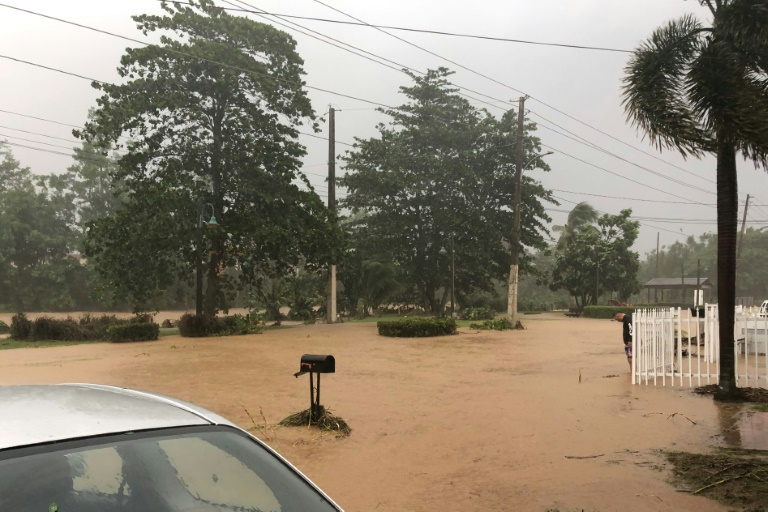
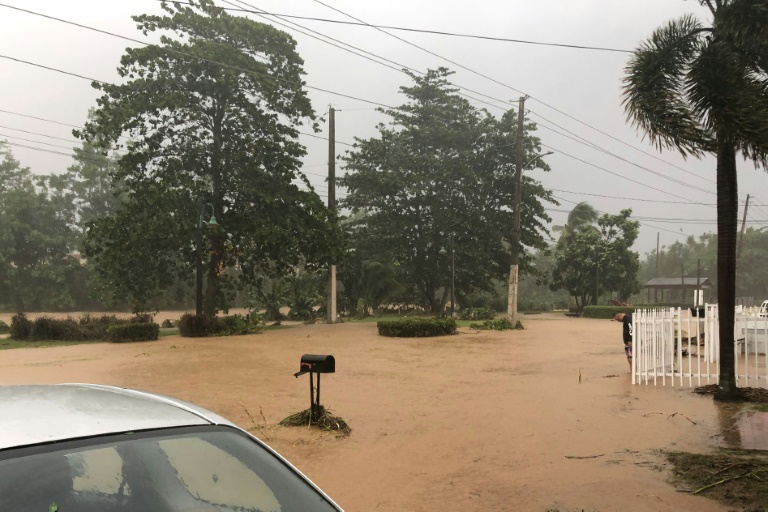
Hurricane Fiona smashed into Puerto Rico on Sunday, knocking out the US island territory’s power while dumping torrential rain and wreaking catastrophic damage before spinning off towards the Dominican Republic.

Landslides, blocked roads, fallen trees and power lines, as well as a collapsed bridge in the town of Utuado in the central mountainous region were among the destruction already levied by Fiona, Governor Pedro Pierluisi told an evening press conference.

The entire territory of more than three million people lost power as the hurricane neared, with Pierluisi reporting the electrical system out of service.

Although the hurricane’s eye is now off the territory’s coast, destructive rain and devastating flash floods are expected to buffet the islands overnight before hitting the Dominican Republic on Monday.

As of 0600 GMT, Fiona was carrying sustained maximum winds of 85 miles (137 kilometers) per hour toward the southeastern coast of the Dominican Republic, the US National Hurricane Center (NHC) said in its latest advisory. 

Continued rainfall would “produce catastrophic life-threatening flash floods and urban flooding” as well as “mudslides and landslides in areas of higher terrain” across Puerto Rico and parts of the Dominican, the NHC said.

Fiona will go down as a “catastrophic event due to the impacts of flooding” in Puerto Rico’s central mountainous region, east and south, Pierluisi tweeted, adding that 9-13 inches (23-33 centimeters) of rain had fallen in just five hours.

The hurricane has also left around 196,000 people without drinking water as a result of power outages and flooded rivers, officials said.

Ahead of Fiona’s arrival in the Dominican Republic, President Luis Abinader suspended work on Monday.

The storm made landfall in Puerto Rico on Sunday afternoon as a Category One hurricane, at the lowest end of the five-tier Saffier-Simpson scale.

Fiona is expected to grow stronger, turning into a “major hurricane” before it heads north into the open waters of the Atlantic Ocean, according to the NHC.

– ‘Extremely delicate’ –

In the town of Utuado, one family saw the zinc roof of their house — already replaced after 2017’s Hurricane Maria — torn off yet again, according to local media.

“This is an extremely delicate and sad situation. The damage we are seeing is catastrophic in several areas,” Pierluisi told reporters at the Sunday press conference.

“The entire island is experiencing a large accumulation of rain. Multiple cases of severe damage have been reported in many towns.”

The storm has caused one fatality — a man who was killed after his house was swept away by flooding in the French overseas department of Guadeloupe, when Fiona was still classified as a tropical storm.

Utuado resident Fernando Vera told US broadcaster NPR that his family has never fully recovered from Hurricane Maria. 

“We still struggle from the consequences of Maria and it’s kind of difficult knowing we’re going to probably have to start over again,” he said.

US President Joe Biden declared a state of emergency for Puerto Rico on Sunday, authorizing the Federal Emergency Management Agency to provide assistance.

The NHC also said tropical storm conditions are expected in the Turks and Caicos Islands and the southeastern Bahamas by late Monday or early Tuesday.

– ‘Stay in their homes’ –

Puerto Ricans were advised “to stay in their homes or seek refuge if they need it,” Pierluisi told reporters.

The island — which has suffered from major infrastructure problems for years — was hit by hurricanes Irma and Maria in 2017, devastating its electrical grid.

The grid was privatized in June 2021 in an effort to resolve the problem of blackouts, but the issue has persisted, and the entire island lost power earlier this year.

The former Spanish colony became a US territory in the late 19th century before gaining the status of associated free state in 1950.

After years of financial woes and recession, the island in 2017 declared the largest bankruptcy ever by a local US administration. Later that year, two hurricanes added to the misery and sparked a feud between San Juan and Washington.

Then-president Donald Trump’s administration was widely accused of failing to provide sufficient federal aid to Puerto Rico after Hurricane Maria struck.

Footage of him tossing paper towels to survivors during a visit drew criticism, and Trump later claimed the storm’s death toll had been inflated by Democrats to “make me look as bad as possible.”

Power out in Puerto Rico, 'catastrophic' damage in several areas from Fiona

Hurricane Fiona smashed into Puerto Rico on Sunday, knocking out the US island territory’s power while dumping torrential rain and wreaking catastrophic damage before spinning off towards the Dominican Republic.

Landslides, blocked roads, fallen trees and power lines, as well as a collapsed bridge in the town of Utuado in the central mountainous region were among the destruction already levied by Fiona, Governor Pedro Pierluisi told an evening press conference.

The entire territory of more than three million people lost power as the hurricane neared, with Pierluisi reporting the electrical system out of service.

Although the hurricane’s eye is now off the territory’s coast, destructive rain and devastating flash floods are expected to buffet the islands overnight before hitting the Dominican Republic on Monday.

As of 0600 GMT, Fiona was carrying sustained maximum winds of 85 miles (137 kilometers) per hour toward the southeastern coast of the Dominican Republic, the US National Hurricane Center (NHC) said in its latest advisory. 

Continued rainfall would “produce catastrophic life-threatening flash floods and urban flooding” as well as “mudslides and landslides in areas of higher terrain” across Puerto Rico and parts of the Dominican, the NHC said.

Fiona will go down as a “catastrophic event due to the impacts of flooding” in Puerto Rico’s central mountainous region, east and south, Pierluisi tweeted, adding that 9-13 inches (23-33 centimeters) of rain had fallen in just five hours.

The hurricane has also left around 196,000 people without drinking water as a result of power outages and flooded rivers, officials said.

Ahead of Fiona’s arrival in the Dominican Republic, President Luis Abinader suspended work on Monday.

The storm made landfall in Puerto Rico on Sunday afternoon as a Category One hurricane, at the lowest end of the five-tier Saffier-Simpson scale.

Fiona is expected to grow stronger, turning into a “major hurricane” before it heads north into the open waters of the Atlantic Ocean, according to the NHC.

– ‘Extremely delicate’ –

In the town of Utuado, one family saw the zinc roof of their house — already replaced after 2017’s Hurricane Maria — torn off yet again, according to local media.

“This is an extremely delicate and sad situation. The damage we are seeing is catastrophic in several areas,” Pierluisi told reporters at the Sunday press conference.

“The entire island is experiencing a large accumulation of rain. Multiple cases of severe damage have been reported in many towns.”

The storm has caused one fatality — a man who was killed after his house was swept away by flooding in the French overseas department of Guadeloupe, when Fiona was still classified as a tropical storm.

Utuado resident Fernando Vera told US broadcaster NPR that his family has never fully recovered from Hurricane Maria. 

“We still struggle from the consequences of Maria and it’s kind of difficult knowing we’re going to probably have to start over again,” he said.

US President Joe Biden declared a state of emergency for Puerto Rico on Sunday, authorizing the Federal Emergency Management Agency to provide assistance.

The NHC also said tropical storm conditions are expected in the Turks and Caicos Islands and the southeastern Bahamas by late Monday or early Tuesday.

– ‘Stay in their homes’ –

Puerto Ricans were advised “to stay in their homes or seek refuge if they need it,” Pierluisi told reporters.

The island — which has suffered from major infrastructure problems for years — was hit by hurricanes Irma and Maria in 2017, devastating its electrical grid.

The grid was privatized in June 2021 in an effort to resolve the problem of blackouts, but the issue has persisted, and the entire island lost power earlier this year.

The former Spanish colony became a US territory in the late 19th century before gaining the status of associated free state in 1950.

After years of financial woes and recession, the island in 2017 declared the largest bankruptcy ever by a local US administration. Later that year, two hurricanes added to the misery and sparked a feud between San Juan and Washington.

Then-president Donald Trump’s administration was widely accused of failing to provide sufficient federal aid to Puerto Rico after Hurricane Maria struck.

Footage of him tossing paper towels to survivors during a visit drew criticism, and Trump later claimed the storm’s death toll had been inflated by Democrats to “make me look as bad as possible.”

Evacuation warnings after typhoon makes landfall in Japan

Millions of people in Japan were under evacuation warnings on Monday as Typhoon Nanmadol brought strong winds and heavy rain to the southwest of the country after making landfall overnight.

The powerful system has weakened since arriving on land Sunday evening around Kagoshima city in the southwestern region of Kyushu, but it has still uprooted trees, smashed windows and left rivers close to overflowing.

National broadcaster NHK said one person had been killed and 50 others injured as the storm passed through Kyushu. There was no immediate confirmation of the figures from authorities.

Prime Minister Fumio Kishida, who had been scheduled to leave Monday for the United Nations General Assembly, will delay his trip by a day to check on damage from the storm, his office confirmed.

Officials from the Japan Meteorological Agency warned that in Miyazaki prefecture, where some areas saw more rainfall in 24 hours than they normally receive in all of September, river levels were high. 

“Even a tiny amount of additional rainfall could cause the water level to increase, so please remain vigilant about flooding and landslides,” Yoshiyuki Toyoguchi from the land ministry told reporters. 

Still, given the intensity of the storm, which came ashore packing gusts of up to 234 kilometres (145 miles) an hour, damage appeared relatively limited so far.

“The typhoon has all but disappeared today and the rain and wind are also subsiding now,” an official in charge of crisis management in Miyazaki’s Saito city told AFP.

“But power is out in some places… we’re also hearing from many residents that electrical wires have been severed and trees have been toppled,” he said, declining to be named.

“Flooding is affecting some areas as well,” he added, saying that officials “believe there are still many details of the damage we’re yet to grasp”.

Rare “special warnings” for Kagoshima and Miyazaki prefectures, issued only when weather events seen every few decades are forecast, have been downgraded.

But evacuation warnings of various levels remained in place for 9.6 million people on the last day of a holiday weekend in Japan.

The warnings are not mandatory, and authorities have at times struggled to convince residents to leave their homes during extreme weather events.

– ‘I didn’t feel safe at home’ –

In the town of Izumi in Kagoshima prefecture, 30-year-old Yasuta Yamaguchi spent the night in a local hotel to shelter from the storm.

“I came to the hotel to shelter myself because it was windy and I thought it was dangerous,” he told AFP.

“I didn’t feel safe at home.”

By Monday morning, nearly 313,000 households in Kyushu and neighbouring Chugoku region were without power, utilities said. Hundreds of flights had been cancelled, NHK said, and many train services throughout the affected regions were also halted.

As of 11:00 am (0200 GMT), the typhoon was spiralling north-northeast near Kitakyushu, Kyushu island’s northernmost city, with maximum gusts of around 162 kilometres per hour, according to the JMA.

“The thick cloud and eye area around the typhoon’s centre have already disappeared and it is weakening rapidly,” Ryuta Kurora, the head of the JMA’s forecast unit, told reporters.

“The typhoon is still weakening, and from 9:00 am (0000 GMT) it has been downgraded from a category strong and large typhoon to a large typhoon,” he said.

Japan is currently in typhoon season and faces around 20 such storms a year, routinely seeing heavy rains that cause landslides or flash floods.

In 2019, Typhoon Hagibis smashed into Japan as it hosted the Rugby World Cup, claiming the lives of more than 100 people. 

A year earlier, Typhoon Jebi shut down Kansai Airport in Osaka, and left 14 people dead in its wake.

2018 was a particularly bad year, with floods and landslides killing more than 200 people in western Japan during the country’s annual rainy season.

Scientists say climate change is increasing the severity of storms and causing extreme weather such as heat waves, droughts and flash floods to become more frequent and intense.

Evacuation warnings after typhoon makes landfall in Japan

Millions of people in Japan were under evacuation warnings on Monday as Typhoon Nanmadol brought strong winds and heavy rain to the southwest of the country after making landfall overnight.

The powerful system has weakened since arriving on land Sunday evening around Kagoshima city in the southwestern region of Kyushu, but it has still uprooted trees, smashed windows and left rivers close to overflowing.

National broadcaster NHK said one person had been killed and 50 others injured as the storm passed through Kyushu. There was no immediate confirmation of the figures from authorities.

Prime Minister Fumio Kishida, who had been scheduled to leave Monday for the United Nations General Assembly, will delay his trip by a day to check on damage from the storm, his office confirmed.

Officials from the Japan Meteorological Agency warned that in Miyazaki prefecture, where some areas saw more rainfall in 24 hours than they normally receive in all of September, river levels were high. 

“Even a tiny amount of additional rainfall could cause the water level to increase, so please remain vigilant about flooding and landslides,” Yoshiyuki Toyoguchi from the land ministry told reporters. 

Still, given the intensity of the storm, which came ashore packing gusts of up to 234 kilometres (145 miles) an hour, damage appeared relatively limited so far.

“The typhoon has all but disappeared today and the rain and wind are also subsiding now,” an official in charge of crisis management in Miyazaki’s Saito city told AFP.

“But power is out in some places… we’re also hearing from many residents that electrical wires have been severed and trees have been toppled,” he said, declining to be named.

“Flooding is affecting some areas as well,” he added, saying that officials “believe there are still many details of the damage we’re yet to grasp”.

Rare “special warnings” for Kagoshima and Miyazaki prefectures, issued only when weather events seen every few decades are forecast, have been downgraded.

But evacuation warnings of various levels remained in place for 9.6 million people on the last day of a holiday weekend in Japan.

The warnings are not mandatory, and authorities have at times struggled to convince residents to leave their homes during extreme weather events.

– ‘I didn’t feel safe at home’ –

In the town of Izumi in Kagoshima prefecture, 30-year-old Yasuta Yamaguchi spent the night in a local hotel to shelter from the storm.

“I came to the hotel to shelter myself because it was windy and I thought it was dangerous,” he told AFP.

“I didn’t feel safe at home.”

By Monday morning, nearly 313,000 households in Kyushu and neighbouring Chugoku region were without power, utilities said. Hundreds of flights had been cancelled, NHK said, and many train services throughout the affected regions were also halted.

As of 11:00 am (0200 GMT), the typhoon was spiralling north-northeast near Kitakyushu, Kyushu island’s northernmost city, with maximum gusts of around 162 kilometres per hour, according to the JMA.

“The thick cloud and eye area around the typhoon’s centre have already disappeared and it is weakening rapidly,” Ryuta Kurora, the head of the JMA’s forecast unit, told reporters.

“The typhoon is still weakening, and from 9:00 am (0000 GMT) it has been downgraded from a category strong and large typhoon to a large typhoon,” he said.

Japan is currently in typhoon season and faces around 20 such storms a year, routinely seeing heavy rains that cause landslides or flash floods.

In 2019, Typhoon Hagibis smashed into Japan as it hosted the Rugby World Cup, claiming the lives of more than 100 people. 

A year earlier, Typhoon Jebi shut down Kansai Airport in Osaka, and left 14 people dead in its wake.

2018 was a particularly bad year, with floods and landslides killing more than 200 people in western Japan during the country’s annual rainy season.

Scientists say climate change is increasing the severity of storms and causing extreme weather such as heat waves, droughts and flash floods to become more frequent and intense.

Rattled Taiwan hit by more aftershocks

Aftershocks struck southeastern Taiwan on Monday, including a 5.5-magnitude earthquake that was felt in the capital Taipei, a day after a more powerful tremor killed one person and injured around 150 others.

The latest quake hit around 10 am (0200 GMT), 66 kilometres (41 miles) south-southwest of the coastal city of Hualien at a depth of 13 kilometres, the United States Geological Survey (USGS) said.

Taiwan’s central weather bureau put the magnitude at 5.9.

Rural and sparsely populated southeastern Taiwan has been rattled by a series of jolts since Saturday.

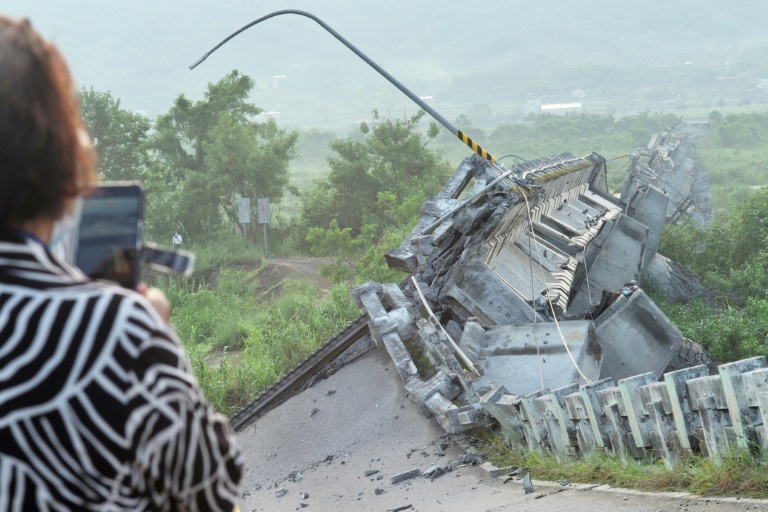
The most powerful, a 6.9-magnitude quake, struck on Sunday afternoon, tearing up roads and bringing down a handful of houses in the town of Yuli where at least one person was killed.

Four others were rescued from a collapsed building, while authorities said a total of 146 suffered injuries. 

Taiwan is regularly hit by quakes and most cause minimal damage but the island also has a long history of deadly disasters. 

Hualien, a tourist hotspot, was struck by a 6.4-magnitude earthquake in 2018 that killed 17 people and injured nearly 300. 

In September 1999, a 7.6-magnitude quake killed around 2,400 people in the deadliest natural disaster in the island’s history.

Asian markets extend losses as traders brace for Fed hike

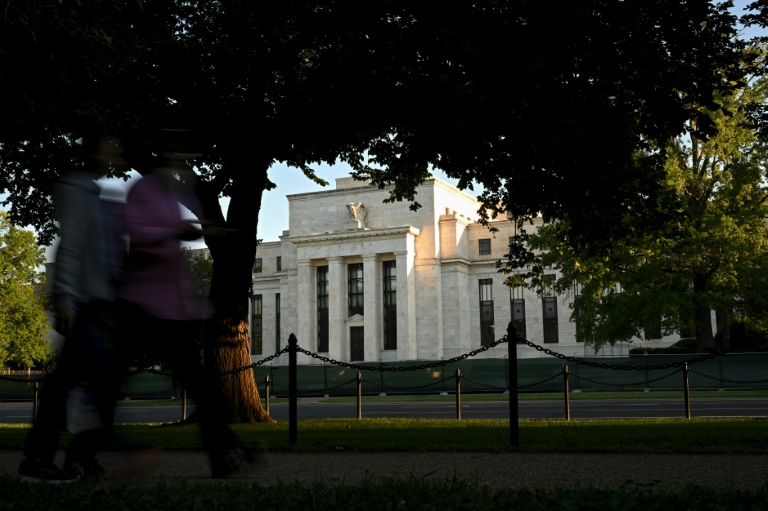
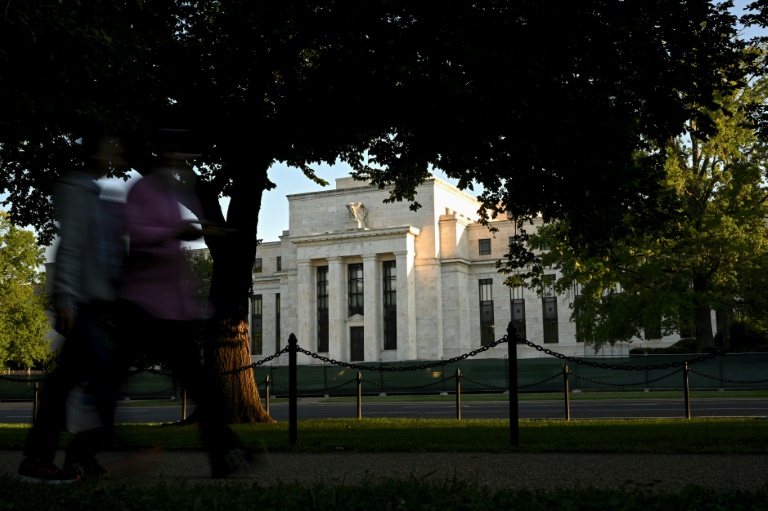
Asian markets fell Monday as traders extended last week’s rout across risk assets, with expectations high that the Federal Reserve will this week announce another outsized interest rate hike.

With recent data showing US inflation rooted at four-decade highs, investors are increasingly pessimistic about the outlook for the global economy.

Many observers have warned of a sharp recession in many countries caused by the huge rate increases, which are hitting families in the pocket.

And with uncertainty rife owing to a range of issues, including Russia’s war in Ukraine and China’s lockdown-induced slowdown, equities are in danger of revisiting the lows they hit in June.

Several central banks are due to make rate announcements this week, with Japan and Britain among the biggest, though the main event is Wednesday’s Fed decision.

There had been a hope that after two 75 basis point increases in a row, and economic data showing weakness, officials would take their foot off the pedal this month.

But last Tuesday’s disappointing consumer price figures shocked traders and ramped up bets for a third successive 75-point rise, while some have predicted a whole percentage point move.

Policymakers, including Fed boss Jerome Powell, have said time and again their ultimate aim is to bring inflation under control, even if that means sending the economy into recession.

“It is clear that the Fed will project hawkish messaging, once again reiterating that it will bring down inflation unconditionally,” said Vasileios Gkionakis at Citigroup.

Wall Street’s worst week since June ended with more losses after FedEx reported Thursday that it shipped fewer packages than expected over the summer owing to weakness in the global economy.

That came as CEO Raj Subramaniam said he expects a global recession.

Asian equity investors continued the selling on Monday.

Hong Kong lost more than one percent, even after reports of the city’s government considering ending hotel quarantine rules.

Shanghai was also down despite news that megacity Chengdu was ending a two-week Covid lockdown that saw 21 million people shut away.

Sydney, Seoul, Singapore, Taipei, Manila and Wellington were also in the red. Tokyo was closed for a holiday.

The prospect of more big Fed rate hikes is also keeping the dollar at multi-decade highs against its major peers, with the yen feeling most of the pressure as the Bank of Japan refuses to tighten policy.

“Speculative selling of the yen is readily justified by the ongoing widening in US-Japan yield differentials,” said Ray Attrill, of National Australia Bank.

“Until or unless something happens to arrest or reverse this spread widening, the yen is susceptible to additional selling pressure.”

The Japanese unit last week hit a fresh 24-year low of 144.99 to the dollar, though it has bounced slightly after comments from BoJ officials that signalled they were ready to intervene to provide support.

Oil prices rose on the news out of Chengdu, which lifted demand hopes, though the gains were capped by the growing fear of recession around the world.

– Key figures at around 0230 GMT –

Hong Kong – Hang Seng Index: DOWN 1.1 percent at 18,559.45

Shanghai – Composite: DOWN 0.2 percent at 3,119.55

Tokyo – Nikkei 225: Closed for holiday

Pound/dollar: DOWN at $1.1400 from $1.1423 on Friday

Euro/pound: UP at 87.70 pence from 87.00 pence 

Euro/dollar: DOWN at $1.0000 from $1.0018

Dollar/yen: UP at 143.13 yen from 142.91 yen

West Texas Intermediate: UP 0.8 percent at $85.79 per barrel

Brent North Sea crude: UP 0.9 percent at $92.17 per barrel

New York – Dow: DOWN 0.5 percent at 30,822.42 (close)

London – FTSE 100: DOWN 0.6 at 7,236.68 (close)

Asian markets extend losses as traders brace for Fed hike

Asian markets fell Monday as traders extended last week’s rout across risk assets, with expectations high that the Federal Reserve will this week announce another outsized interest rate hike.

With recent data showing US inflation rooted at four-decade highs, investors are increasingly pessimistic about the outlook for the global economy.

Many observers have warned of a sharp recession in many countries caused by the huge rate increases, which are hitting families in the pocket.

And with uncertainty rife owing to a range of issues, including Russia’s war in Ukraine and China’s lockdown-induced slowdown, equities are in danger of revisiting the lows they hit in June.

Several central banks are due to make rate announcements this week, with Japan and Britain among the biggest, though the main event is Wednesday’s Fed decision.

There had been a hope that after two 75 basis point increases in a row, and economic data showing weakness, officials would take their foot off the pedal this month.

But last Tuesday’s disappointing consumer price figures shocked traders and ramped up bets for a third successive 75-point rise, while some have predicted a whole percentage point move.

Policymakers, including Fed boss Jerome Powell, have said time and again their ultimate aim is to bring inflation under control, even if that means sending the economy into recession.

“It is clear that the Fed will project hawkish messaging, once again reiterating that it will bring down inflation unconditionally,” said Vasileios Gkionakis at Citigroup.

Wall Street’s worst week since June ended with more losses after FedEx reported Thursday that it shipped fewer packages than expected over the summer owing to weakness in the global economy.

That came as CEO Raj Subramaniam said he expects a global recession.

Asian equity investors continued the selling on Monday.

Hong Kong lost more than one percent, even after reports of the city’s government considering ending hotel quarantine rules.

Shanghai was also down despite news that megacity Chengdu was ending a two-week Covid lockdown that saw 21 million people shut away.

Sydney, Seoul, Singapore, Taipei, Manila and Wellington were also in the red. Tokyo was closed for a holiday.

The prospect of more big Fed rate hikes is also keeping the dollar at multi-decade highs against its major peers, with the yen feeling most of the pressure as the Bank of Japan refuses to tighten policy.

“Speculative selling of the yen is readily justified by the ongoing widening in US-Japan yield differentials,” said Ray Attrill, of National Australia Bank.

“Until or unless something happens to arrest or reverse this spread widening, the yen is susceptible to additional selling pressure.”

The Japanese unit last week hit a fresh 24-year low of 144.99 to the dollar, though it has bounced slightly after comments from BoJ officials that signalled they were ready to intervene to provide support.

Oil prices rose on the news out of Chengdu, which lifted demand hopes, though the gains were capped by the growing fear of recession around the world.

– Key figures at around 0230 GMT –

Hong Kong – Hang Seng Index: DOWN 1.1 percent at 18,559.45

Shanghai – Composite: DOWN 0.2 percent at 3,119.55

Tokyo – Nikkei 225: Closed for holiday

Pound/dollar: DOWN at $1.1400 from $1.1423 on Friday

Euro/pound: UP at 87.70 pence from 87.00 pence 

Euro/dollar: DOWN at $1.0000 from $1.0018

Dollar/yen: UP at 143.13 yen from 142.91 yen

West Texas Intermediate: UP 0.8 percent at $85.79 per barrel

Brent North Sea crude: UP 0.9 percent at $92.17 per barrel

New York – Dow: DOWN 0.5 percent at 30,822.42 (close)

London – FTSE 100: DOWN 0.6 at 7,236.68 (close)

Biden hedges on seeking reelection

President Joe Biden issued forceful warnings to China and Russia on Sunday and expressed optimism over the US economic rebound, but surprised many by hedging on whether he’ll seek reelection.

In a rare, wide-ranging interview with the CBS “60 Minutes” program, Biden went back on repeated assertions by the White House that he is sure to run in 2024.

Biden, who turns 80 in November, told interviewer Scott Pelley that reelection is his “intention.”

“But is it a firm decision that I run again? That remains to be seen,” he said.

“It’s much too early,” Biden said, calling himself “a great respecter of fate.”

Surveying the state of the world’s largest economy, Biden was optimistic.

He declared the Covid pandemic in the United States “over” and predicted that his administration would tame inflation — the main reason for his weak approval ratings and the reason Republicans believe they can take control of Congress in the upcoming November midterms.

“We’re going to get control of inflation,” he said.

– Troops to Taiwan? –

In another surprise moment, Biden once again appeared to challenge decades of US policy on Taiwan with a vow that he would send troops to defend the self-ruling island if China tried to invade.

“Yes,” he said, adding that this would happen if it were “an unprecedented attack” — possibly referring to something beyond the frequent saber rattling conducted by Chinese military forces around Taiwan.

Under US policy known as “strategic ambiguity,” Washington recognizes Chinese sovereignty but opposes any forceful attempt to end Taiwan’s de facto self-rule. While Washington does arm Taiwan, there is no clear promise of direct US military support.

The White House said that Biden’s latest remarks do not indicate a change.

In another tough message to the United States’ biggest economic and geopolitical rival, Biden said he had warned President Xi Jinping not to support Russia militarily in its invasion of Ukraine.

He said he told Xi that US and other foreign investment in China would be disrupted and to think otherwise would be “a gigantic mistake.”

He also said that if Russian President Vladimir Putin uses nuclear or other non-conventional weapons against Ukraine the US response will be “consequential.”

When asked what he would tell Putin if the Russian leader was mulling such a move, he said: “Don’t. Don’t. Don’t.”

Biden praised the Ukrainians for their gritty fight against the huge Russian invasion force and said “they’re defeating Russia.”

Asked how to define victory for Kyiv, he said “winning the war in Ukraine is to get Russia out of Ukraine completely.”

But given the scale of human suffering and destruction inflicted in resisting the Russian onslaught, “it’s awful hard to count that as winning,” he added.

– ‘More to give’ –

Despite his poor ratings and polls showing Democrats likely to lose control of at least one chamber of Congress, Biden said he is upbeat. 

Noting that employment is booming and the economy is strong, Biden said “we hope we can have, as they say, a soft landing.”

On questions whether at his age he is physically and mentally able to continue in the grueling job, Biden said: “watch me.”

“It’s a matter of, you know, that old expression — ‘the proof of the pudding is in the eating.'”

When asked his source of inspiration when times get tough, Biden mentioned his son Beau who died in 2015 but also his parents’ exhortation to “just get up.”

Biden said he had “a lot more to give.”
Close Bitnami banner
Bitnami