AFP

'Extremely rare' Rameses II-era burial cave found in Israel

Israeli archaeologists on Sunday announced the “once-in-a-lifetime” discovery of a burial cave from the time of ancient Egyptian Pharaoh Rameses II, filled with dozens of pottery pieces and bronze artefacts.

The cave was uncovered on a beach Tuesday, when a mechanical digger working at the Palmahim national park hit its roof, with archaeologists using a ladder to descend into the spacious, man-made square cave.

In a video released by the Israel Antiquities Authority, gobsmacked archaeologists shine flashlights on dozens of pottery vessels in a variety of forms and sizes, dating back to the reign of the ancient Egyptian king who died in 1213 BC.

Bowls — some of them painted red, some containing bones — chalices, cooking pots, storage jars, lamps and bronze arrowheads or spearheads could be seen in the cave.

The objects were burial offerings to accompany the deceased on their last journey to the afterlife, found untouched since being placed there about 3,300 years ago.

At least one relatively intact skeleton was also found in two rectangular plots in the corner of the cave.

“The cave may furnish a complete picture of the Late Bronze Age funerary customs,” said Eli Yannai, an IAA Bronze Age expert.

It is an “extremely rare… once-in-a-lifetime discovery”, Yannai said, pointing to the extra fortune of the cave having remained sealed until its recent uncovering.

– ‘Like an Indiana Jones movie’ –

The findings date to the reign of Rameses II, who controlled Canaan, a territory that roughly encompassed modern day Israel and the Palestinian territories. 

The provenance of the pottery vessels — Cyprus, Lebanon, northern Syria, Gaza and Jaffa — is testimony to the “lively trading activity that took place along the coast”, Yannai said in an IAA statement.

Another IAA archaeologist, David Gelman, theorised as to the identity of the skeletons in the cave, located in what is today a popular beach in central Israel.

“The fact that these people were buried along with weapons, including entire arrows, shows that these people might have been warriors, perhaps they were guards on ships — which may have been the reason they were able to obtain vessels from all around the area,” he said.

Regardless of who the inhabitants of the cave were, the find was “incredible,” said Gelman.

“Burial caves are rare as it is, and finding one that hasn’t been touched since it was first used 3,300 years ago is something you rarely ever find,” he said.

“It feels like something out of an Indiana Jones movie: just going into the ground and everything is just laying there as it was initially -– intact pottery vessels, weapons, vessels made out of bronze, burials just as they were.”

The cave has been resealed and is under guard while a plan for its excavation is being formulated, the IAA said. 

It noted that “a few items” had been looted from it in the short period of time between its discovery and closure. 

Power out in Puerto Rico, 'catastrophic' damage in several areas from Fiona

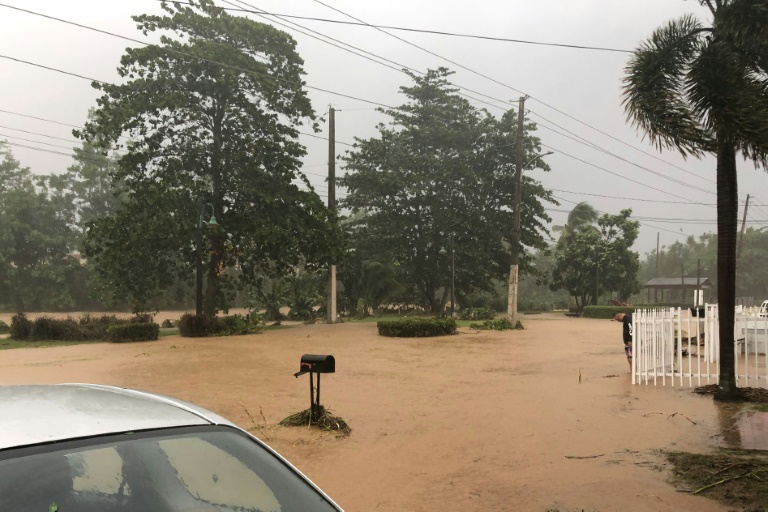
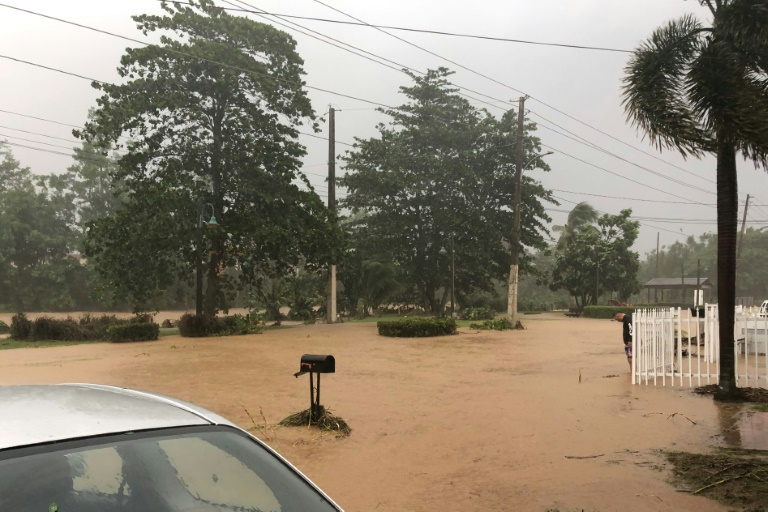
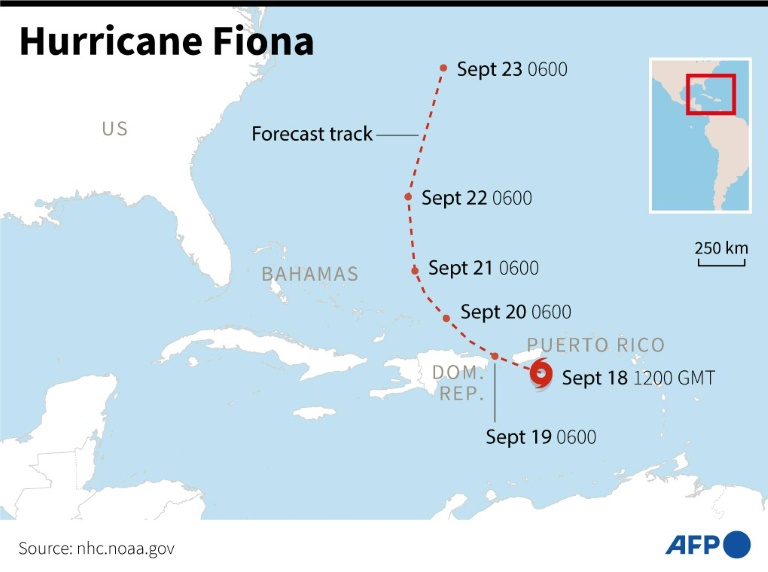
Hurricane Fiona knocked out power across Puerto Rico Sunday before making landfall, dumping torrential rain and wreaking “catastrophic” damage in several areas of the US island territory before spinning off towards the Dominican Republic.

Landslides, blocked roads, fallen trees and power lines, as well as a collapsed bridge in the town of Utuado in the central mountainous region were among the destruction already levied by Fiona, Governor Pedro Pierluisi told an evening press conference.

In addition, the entire territory of more than three million people lost power as the hurricane neared, with Pierluisi reporting the electrical system out of service.

Although the hurricane’s eye is now off the territory’s coast, destructive rain and devastating flash floods are expected to buffet the islands overnight before dealing a blow to the Dominican Republic on Monday.

Fiona will go down as a “catastrophic event due to the impacts of flooding” in Puerto Rico’s central mountainous region, east and south, Pierluisi tweeted, adding that 9-13 inches (23-33 centimeters) of rain had fallen in just five hours.

“Rainfall amounts will produce catastrophic life-threatening flash floods and urban flooding across Puerto Rico and portions of the eastern Dominican Republic, along with mudslides and landslides in areas of higher terrain,” the US National Hurricane Center (NHC) said.

The hurricane has also left some 196,000 people without drinking water as a result of power outages and flooded rivers, officials said.

Ahead of Fiona’s arrival in the Dominican Republic, President Luis Abinader suspended work in the public and private sectors for Monday.

It had made landfall in Puerto Rico Sunday afternoon as a Category One hurricane packing sustained winds of 85 miles (140 kilometers) per hour, at the lowest end of the five-tier Saffier-Simpson scale.

Fiona is expected to grow stronger, turning into a “major hurricane” before it heads north into the open waters of the Atlantic Ocean, according to the NHC.

– ‘Extremely delicate’ –

In the town of Utuado, a family saw the zinc roof of its house — ripped off in 2017 by Hurricane Maria, then replaced — torn off yet again, according to local media.

“This is an extremely delicate and sad situation. The damage we are seeing is catastrophic in several areas,” Pierluisi told reporters at the Sunday press conference.

“The entire island is experiencing a large accumulation of rain. Multiple cases of severe damage have been reported in many towns.”

The storm has already caused a fatality, with a man left dead when his house was swept away by flooding in the French overseas department of Guadeloupe, when Fiona was still classified as a tropical storm.

US President Joe Biden declared a state of emergency for Puerto Rico on Sunday, authorizing the Federal Emergency Management Agency to provide assistance.

The NHC also said tropical storm conditions are expected in the Turks and Caicos Islands and the southeastern Bahamas by late Monday or early Tuesday.

– ‘Stay in their homes’ –

Pierluisi told reporters that officials were reiterating “the request to our people, which the majority have heeded, to stay in their homes or seek refuge if they need it.”

The island — which has suffered from major infrastructure problems for years — was hit by hurricanes Irma and Maria in 2017, devastating its electrical grid.

The grid was privatized in June 2021 in an effort to resolve the problem of blackouts, but the issue has persisted, and the entire island lost power earlier this year.

The former Spanish colony became a US territory in the late 19th century before gaining the status of associated free state in 1950.

After years of financial woes and recession, in 2017 the island declared the largest bankruptcy ever by a local US administration. Later that year, hurricanes Irma and Maria added to the island’s misery, and sparked a feud between San Juan and Washington.

Then-president Donald Trump’s administration was widely accused of failing to provide sufficient federal aid to Puerto Rico after Hurricane Maria struck.

Footage of him tossing paper towels to survivors during a visit to the island drew criticism, and Trump later claimed the storm’s death toll had been inflated by Democrats to “make me look as bad as possible.”

Power out in Puerto Rico, 'catastrophic' damage in several areas from Fiona

Hurricane Fiona knocked out power across Puerto Rico Sunday before making landfall, dumping torrential rain and wreaking “catastrophic” damage in several areas of the US island territory before spinning off towards the Dominican Republic.

Landslides, blocked roads, fallen trees and power lines, as well as a collapsed bridge in the town of Utuado in the central mountainous region were among the destruction already levied by Fiona, Governor Pedro Pierluisi told an evening press conference.

In addition, the entire territory of more than three million people lost power as the hurricane neared, with Pierluisi reporting the electrical system out of service.

Although the hurricane’s eye is now off the territory’s coast, destructive rain and devastating flash floods are expected to buffet the islands overnight before dealing a blow to the Dominican Republic on Monday.

Fiona will go down as a “catastrophic event due to the impacts of flooding” in Puerto Rico’s central mountainous region, east and south, Pierluisi tweeted, adding that 9-13 inches (23-33 centimeters) of rain had fallen in just five hours.

“Rainfall amounts will produce catastrophic life-threatening flash floods and urban flooding across Puerto Rico and portions of the eastern Dominican Republic, along with mudslides and landslides in areas of higher terrain,” the US National Hurricane Center (NHC) said.

The hurricane has also left some 196,000 people without drinking water as a result of power outages and flooded rivers, officials said.

Ahead of Fiona’s arrival in the Dominican Republic, President Luis Abinader suspended work in the public and private sectors for Monday.

It had made landfall in Puerto Rico Sunday afternoon as a Category One hurricane packing sustained winds of 85 miles (140 kilometers) per hour, at the lowest end of the five-tier Saffier-Simpson scale.

Fiona is expected to grow stronger, turning into a “major hurricane” before it heads north into the open waters of the Atlantic Ocean, according to the NHC.

– ‘Extremely delicate’ –

In the town of Utuado, a family saw the zinc roof of its house — ripped off in 2017 by Hurricane Maria, then replaced — torn off yet again, according to local media.

“This is an extremely delicate and sad situation. The damage we are seeing is catastrophic in several areas,” Pierluisi told reporters at the Sunday press conference.

“The entire island is experiencing a large accumulation of rain. Multiple cases of severe damage have been reported in many towns.”

The storm has already caused a fatality, with a man left dead when his house was swept away by flooding in the French overseas department of Guadeloupe, when Fiona was still classified as a tropical storm.

US President Joe Biden declared a state of emergency for Puerto Rico on Sunday, authorizing the Federal Emergency Management Agency to provide assistance.

The NHC also said tropical storm conditions are expected in the Turks and Caicos Islands and the southeastern Bahamas by late Monday or early Tuesday.

– ‘Stay in their homes’ –

Pierluisi told reporters that officials were reiterating “the request to our people, which the majority have heeded, to stay in their homes or seek refuge if they need it.”

The island — which has suffered from major infrastructure problems for years — was hit by hurricanes Irma and Maria in 2017, devastating its electrical grid.

The grid was privatized in June 2021 in an effort to resolve the problem of blackouts, but the issue has persisted, and the entire island lost power earlier this year.

The former Spanish colony became a US territory in the late 19th century before gaining the status of associated free state in 1950.

After years of financial woes and recession, in 2017 the island declared the largest bankruptcy ever by a local US administration. Later that year, hurricanes Irma and Maria added to the island’s misery, and sparked a feud between San Juan and Washington.

Then-president Donald Trump’s administration was widely accused of failing to provide sufficient federal aid to Puerto Rico after Hurricane Maria struck.

Footage of him tossing paper towels to survivors during a visit to the island drew criticism, and Trump later claimed the storm’s death toll had been inflated by Democrats to “make me look as bad as possible.”

EU wants to suspend Hungary financing as it awaits reforms

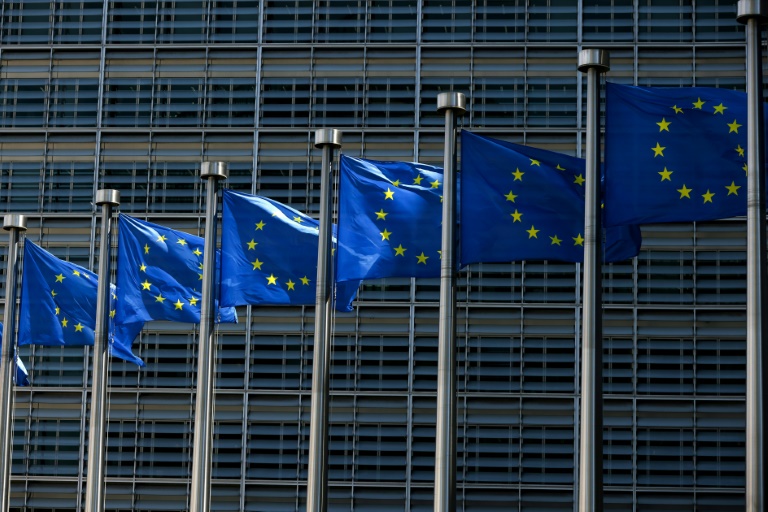
The European Union’s executive arm on Sunday proposed suspending 7.5 billion euros in financing for Hungary, as it awaited potential “game changer” anti-corruption reforms from Budapest.

Hungarian Prime Minister Viktor Orban’s government also came under renewed fire for its close ties with Moscow, accused of having dragged its feet on freezing Russian assets since the invasion of Ukraine.

The European Union and Hungary have been at loggerheads for months, with Brussels suspecting the government led by nationalist leader Orban of undercutting the rule of law and using EU money to enrich its cronies.

The European Commission’s budget commissioner, Johannes Hahn, told journalists Sunday that the EU’s executive had proposed suspending funding “amounting to (an) estimated amount of 7.5 billion euros ($7.5 billion)”.

On Saturday, Hungary’s government said that MPs would vote next week on a series of laws aimed at easing the conflict.

The measures are expected to include setting up independent anti-corruption watchdogs to monitor the use of EU funds as well as steps to make the legislative process more transparent.

Hahn said he was “very confident that… we will see significant reforms in Hungary, which indeed will be a game changer”.

Hungary had committed to “fully inform” the commission about implementing measures to address their concerns by November 19, he added.

– ‘Trojan horse’ –

Poland — another eastern EU member accused of flouting the rule of law — said it would fully oppose any measure depriving Hungary of the funds.

Nationalist Prime Minister Mateusz Morawiecki told journalists Sunday that such a move would be “absolutely unauthorised”.

The EU’s Justice Commissioner Didier Reynders added to the tensions between Brussels and Hungary on Sunday as he said the government’s friendliness with the Kremlin was potentially behind its foot-dragging on implementing anti-Russian sanctions.

Reynders said that while the bloc had frozen assets worth 14.5 billion euros following Russia’s invasion of Ukraine, Hungary had only contributed just over than 3,000 euros to the total.

“We must put a lot of pressure” on Hungary because “we can assume that its very close ties with Russia are perhaps preventing it from acting”, he told television channel LCI.

In Ukraine meanwhile, presidential advisor Mykhaylo Podolyak described Hungary as a “Trojan horse seeking the collapse of (the) EU at the expense of European taxpayers.

“Let’s call a spade a spade… Orban hates Ukraine and dreams of (a) ‘Russian world’ in Europe. Should (the) EU finance these diversions?” he wrote on Twitter.

– Orban’s ‘last chance’? –

Orban’s administration has struck a more emollient tone towards Brussels recently. 

Justice Minister Judit Varga reacted to the Commission’s proposal by acknowledging that “we still have work to do” to end the row, while insisting: “We are moving in the right direction.

“We are working to ensure that the Hungarian people receive the resources they are entitled to!” Varga commented on her Facebook page Sunday.

Tibor Navracsics, the Hungarian minister in charge of negotiations with the EU, told reporters on Sunday he was confident that “we can conclude these negotiations before the end of the year and sign the related agreements” to enable the release of the funds.

But German MEP Daniel Freund told AFP that although the freezing of funds to Hungary was not enough to “stop Orban and his cronies from stealing EU funds”.

“Those are good measures, and they should be adopted, but they are not sufficient to stop corruption, let alone to make Hungary a functioning democracy,” he said.

French European Parliament member Valerie Hayer tweeted that this was the “last chance” for Orban.

“The time for discussions is over,” she said.

The final decision on the proposal will be taken by the EU Council.

Gergely Gulyas, Orban’s chief of staff, told reporters on Saturday that MPs would vote within days on measures designed to allay concerns about graft and a lack of transparency in public procurement.

The conciliatory move from Budapest comes as the Hungarian economy faces increasing pressure from a weakening local currency and fast-rising inflation. Both have hit new records this year.

On Thursday, the European Parliament declared that Hungary was no longer a “full democracy” a symbolic vote that infuriated Budapest.

Fossil fuel reserves contain 3.5 tn tonnes of CO2: database

Burning the world’s remaining fossil fuel reserves would unleash 3.5 trillion tonnes of greenhouse gas emissions — seven times the remaining carbon budget to cap global heating at 1.5C — according to the first public inventory of hydrocarbons released Monday.

Human activity since the Industrial Revolution, largely powered by coal, oil and gas, has led to just under 1.2 degrees Celsius of warming and brought with it ever fiercer droughts, floods and storms supercharged by rising seas. 

The United Nations estimates that Earth’s remaining carbon budget — how much more pollution we can add to the atmosphere before the 1.5C temperature goal of the Paris Agreement is missed — to be around 360 billion tonnes of CO2 equivalent, or nine years at current emission levels.

The UN’s annual Production Gap assessment last year found that governments plan to burn more than twice the fossil fuels by 2030 that would be consistent with a 1.5C world. 

But until now there has been no comprehensive global inventory of countries’ remaining reserves. 

The Global Registry of Fossil Fuels seeks to provide greater clarity on oil, gas and coal reserves to fill knowledge gaps about global supply and to help policymakers better manage their phaseouts. 

Containing more than 50,000 fields across 89 countries, it found that some countries on their own held reserves containing enough carbon to blow through the entire world’s carbon budget. 

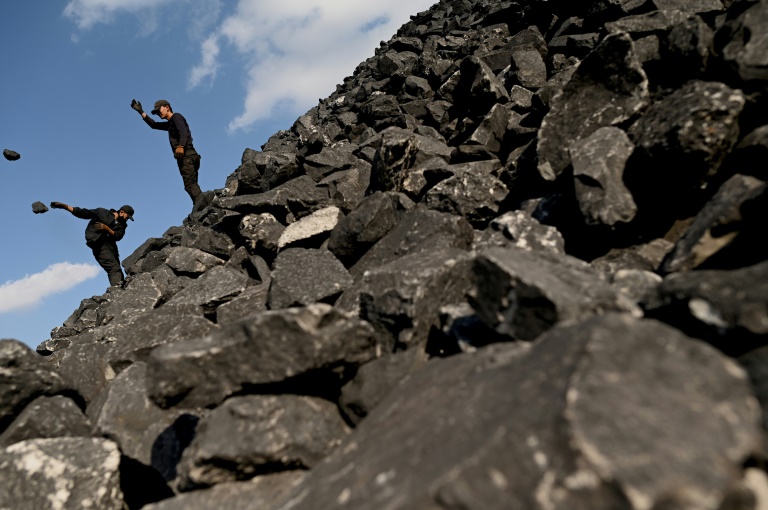
For example, US coal reserves embed 520 billion tonnes of CO2 equivalent. China, Russia and Australia all hold enough reserves to miss 1.5C, it found. 

All told, the remaining fossil fuel reserves contain seven times the emissions of the carbon budget for 1.5C.

“We have very little time to address the remaining carbon budget, said Rebecca Byrnes, deputy Director of Fossil Fuel Non-Proliferation Treaty, who helped compile the registry.

“As long as we’re not measuring what is being produced, it’s incredibly hard to measure or regulate that production,” she told AFP. 

– Transparency, accountability –

The registry has emissions data for individual oil, gas or goal projects.

Of the 50,000 fields included, the most potent source of emissions is the Ghawar oil field in Saudi Arabia, which churns out some 525 million tons of carbon emissions each year. 

The top 12 most polluting sites were all in the Gulf or Russia, according to the database.

Byrnes said that the inventory could help apply investor pressure in countries with large hydrocarbon reserves but saw little prospect of popular pressure to shift away from fossil fuels.

“This just demonstrates that it is a global challenge and many countries that are major producers but aren’t as democratic as the US for example — that’s where transparency comes in,” she told AFP. 

“We’re not kidding ourselves that the registry will overnight result in sort of a massive governance regime on fossil fuels. But it sheds a light on where fossil fuel production is happening to investors and other actors to hold their governments to account.”

The inventory also highlighted large variability in the price of carbon between countries, with taxes on emissions generating nearly $100 per tonne in Iraq but just $5 per tonne in Britain.

Simon Kofe, Tuvalu’s foreign minister, said the database could “assist in effectively ending coal, oil and gas production”.

“It will help governments, companies, and investors make decisions to align their fossil fuel production with the 1.5C temperature limit and, thus, concretely prevent the demise of our island homes, as well as all countries throughout our global community.”

King Charles thanks public ahead of Queen Elizabeth's funeral

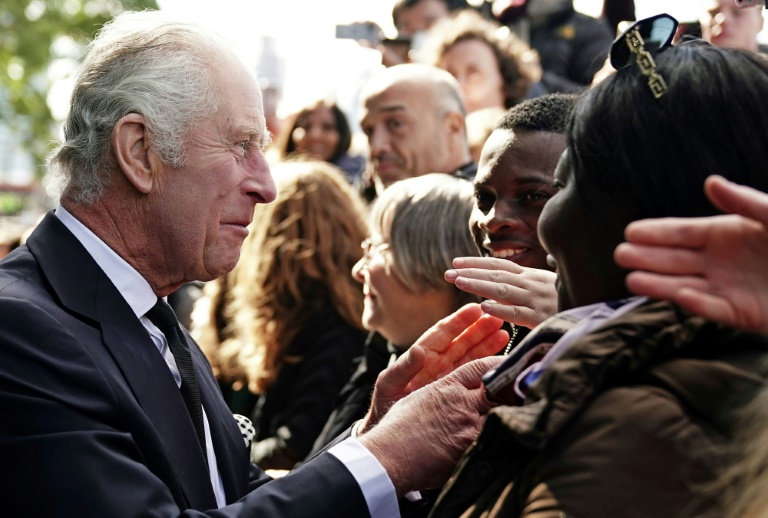
Britain’s King Charles III said Sunday he had been “moved beyond measure” by the outpouring of public sympathy following the death of his mother Queen Elizabeth II in a message of thanks on the eve of her grand state funeral.

King Charles said that he and his wife Queen Consort Camilla had been “so deeply touched” by messages of condolence and support from Britain and around the world.

Britain held a minute’s silence on Sunday in a tribute to Queen Elizabeth before Monday’s farewell.

“We were moved beyond measure by everyone who took the trouble to come and pay their respects to the lifelong service of my dear mother, The late Queen,” he said in a statement.

“As we all prepare to say our last farewell, I wanted simply to take this opportunity to say thank you to all those countless people who have been such a support and comfort to my family and myself in this time of grief.”

Queen Elizabeth’s coffin has been lying in state on a catafalque in London’s historic Westminster Hall since Wednesday evening.

US President Joe Biden and Japan’s Emperor Naruhito were among the stream of dignitaries who paid tribute at the late monarch’s casket, Biden crossing himself and touching his heart as he stood on a gallery in the mediaeval hall.

Others who paid their last respects included French President Emmanuel Macron, King Harald V of Norway, Queen Margrethe II of Denmark, King Letsie III of Lesotho and Grand Duke Henri of Luxembourg.

– Final queue to see coffin –

The last of the estimated hundreds of thousands of public mourners who have flocked to see the queen’s coffin queued along the banks of the River Thames into Monday morning.

The queue to attend the lying-in-state “is at final capacity and is now closed to new entrants”, the culture ministry said late Sunday on its live queue tracker on YouTube.

“Please do not attempt to join the queue.”

Waiting times peaked at more than 25 hours early Saturday.

The public viewing will end at 6:30 am (0530 GMT). Troops have kept a round-the-clock vigil.

Queen Elizabeth reigned for a record-breaking 70 years until her death on September 8 aged 96.

She was on the throne since 1952 and was the only sovereign most Britons alive today have ever known.

Andy Sanderson, 46, a supermarket area manager, was among those who had finally made it to parliament after braving the miles of queues.

“She was the glue that kept the country together,” he said.

– ‘All about service’: Biden –

Biden said Queen Elizabeth was “decent, honourable, and all about service”.

“All the people of the United Kingdom: our hearts go out to you, and you were fortunate to have had her for 70 years; we all were. The world is better for her,” Biden said after signing a book of condolence.

The US president then attended a reception hosted by King Charles and the royal family for around 500 visiting dignitaries.

They included Emperor Naruhito, King Felipe VI of Spain, Brazilian President Jair Bolsonaro, King Abdullah II of Jordan and Queen Margrethe.

The minute of silence was held at 8:00 pm (1900 GMT) to honour the late queen’s life of service.

Prime Minister Liz Truss stood in a black dress outside her 10 Downing Street official residence for the “national moment of reflection” before the eyes of world focus on the British capital for the queen’s send-off. 

Members of the public have camped out in advance to catch a glimpse of the grand farewell at Westminster Abbey, which is expected to bring London to a standstill and be watched by billions of viewers across the globe.

E. J. Kelly, a 46-year-old schoolteacher from Northern Ireland, secured a prime spot with friends on the route the procession will take after the funeral.

“Watching it on television is wonderful but being here is something else,” she told AFP, equipped with camping chairs, warm clothing and extra socks.

“I will probably feel very emotional when it comes to it, but I wanted to be here to pay my respects.”

Crowds also thronged around Windsor Castle, west of London, where the queen’s coffin will be driven after the service for a private burial alongside her late husband Prince Philip, her parents and her sister.

“I’ve lived here my whole life and I’ve never seen it this busy,” said Donna Lumbard, 32, a manager at a local restaurant. 

– ‘Reassuring presence’ –

Australia’s anti-monarchy Prime Minister Anthony Albanese, who viewed the lying-in-state and met King Charles on Saturday, told Sky News Australia that the queen was “a constant reassuring presence”.

There was also a private audience at Buckingham Palace for New Zealand PM Jacinda Ardern, which, like Australia, Britain and 12 other Commonwealth realms, now has King Charles as its sovereign.

But in an indication of the challenges ahead for the new king, Ardern told BBC television that she expected New Zealand to shed its constitutional monarchy “over the course of my lifetime”.

Queen Elizabeth’s state funeral, the first in Britain since the death of her first prime minister Winston Churchill in 1965, will take place Monday at Westminster Abbey at 11:00 am.

Reflecting on the queen’s wishes for the hour-long ceremony, the former archbishop of York, John Sentamu, told BBC television she “did not want what you call long, boring services”.

Leaders from Russia, Afghanistan, Myanmar, Syria and North Korea were not invited to join the 2,000 guests.

As their private grief has played out in the glare of global attention, a fresh opinion poll from YouGov showed the royal family’s popularity has risen in the UK.

William and his wife Kate topped the ranking of most popular royals, while Charles saw his approval ratings rise 16 points since May.

Pelosi condemns 'illegal' Azerbaijan attack on Armenia

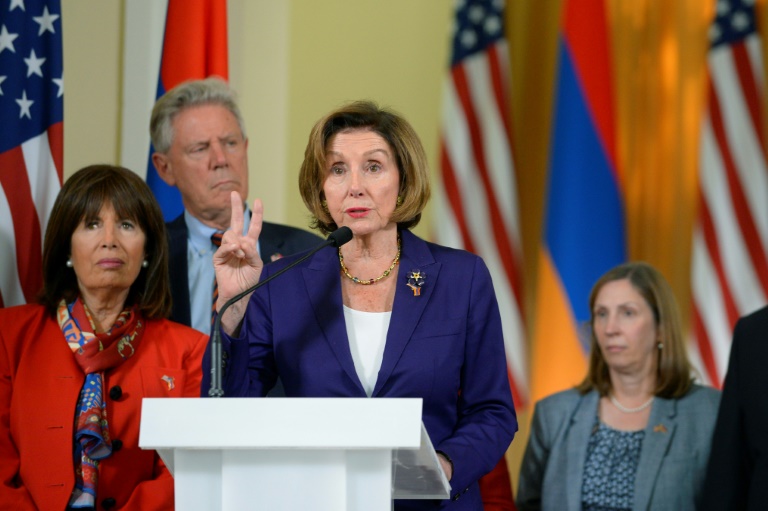
US House Speaker Nancy Pelosi on Sunday condemned what she described as an “illegal” attack by Azerbaijan on Armenia that sparked the worst fighting since their 2020 war.

Baku and Yerevan have accused each other of starting Tuesday’s border clashes, which claimed the lives of more than 200 people.

“We strongly condemn those attacks — on behalf of Congress — which threaten (the) prospects of the much-needed peace agreement,” Pelosi told journalists in Yerevan.

“Armenia has particular importance to us because of the focus on security following an illegal and deadly attack by Azerbaijan on the Armenian territory.”

The attack was an “assault on (the) sovereignty of Armenia”, she added.

Hostilities between the Caucasus arch foes ended overnight on Thursday thanks to mediation by the United States, Armenian parliament speaker Alen Simonyan said. 

Earlier attempts by Russia to broker a truce failed.

“We are grateful to the United States for the agreement of the fragile ceasefire reached by their mediation,” he told journalists alongside Pelosi.

US Secretary of State Antony Blinken on Sunday also spoke with Azerbaijan’s President Ilham Aliyev, according to a State Department readout of their call.

Blinken “urged President Aliyev to adhere to the ceasefire, disengage military forces, and work to resolve all outstanding issues between Armenia and Azerbaijan through peaceful negotiations,” said spokesman Ned Price.

– US-Armenia rapprochement –

Pelosi’s visit marks a growing closeness between Washington and Yerevan where frustration is brewing over the lack of support from Armenia’s traditional ally Moscow which is distracted by its nearly seven-month war in Ukraine.

Russia — which has a treaty obligation to defend Armenia in the event of foreign invasion, but which also has close ties with Baku — did not rush to help Yerevan despite a formal demand for military help.

“We asked for military help and our demand was not accepted. Obviously, we are not happy,” Armenia’s security council chairman, Artyom Grigoryan, said Friday.

Pelosi, who arrived in Yerevan on Saturday for a three-day visit, is the highest-ranking US official to travel to Armenia since the tiny nation gained independence from the Soviet Union in 1991.

On Sunday morning, a tearful Pelosi laid flowers at Yerevan’s hilltop memorial of the 1.5 million Armenians killed in the Ottoman Empire during World War I.

Armenia has long sought international recognition of the bloodletting as genocide — a claim fiercely rejected by Turkey but supported by many other countries.

Pelosi said she was “proud” to travel to Yerevan after US President Joe Biden formally acknowledged the Armenian genocide last year.

“It is the moral duty of all to never forget: an obligation that has taken on heightened urgency as atrocities are perpetrated around the globe, including by Russia against Ukraine,” Pelosi said on Saturday.

Armenia and Azerbaijan have fought two wars — in the 1990s and in 2020 — over the contested region of Nagorno-Karabakh, an Armenian-populated enclave of Azerbaijan.

Pelosi said: “In the Congress, in the bipartisan way, we hold (Baku’s ally) Turkey responsible — as well as Azerbaijan — for the conflict that exists in Nagorno-Karabakh.”

– Decades-long talks –

Together with France and Russia, the US co-chairs the Minsk Group of mediators, which had led decades-long peace talks between Baku and Yerevan under the aegis of the Organisation for Security and Cooperation in Europe.

The Minsk Group has been largely defunct as Moscow faces growing isolation on the world stage following its February invasion of Ukraine.

The European Union had taken a lead role in mediating the Armenia-Azerbaijan normalisation process.

Analysts have said the hostilities have largely undone Western efforts to bring Baku and Yerevan closer to a peace deal.

The six-week war in 2020 claimed the lives of more than 6,500 troops from both sides and ended with a Russian-brokered ceasefire.

Under the deal, Armenia ceded swathes of territory it had controlled for decades, and Moscow deployed about 2,000 Russian peacekeepers to oversee the fragile truce.

Ethnic Armenian separatists in Nagorno-Karabakh broke away from Azerbaijan when the Soviet Union collapsed in 1991. The ensuing conflict claimed around 30,000 lives.

Puerto Rico without power as Hurricane Fiona approaches

Hurricane Fiona barreled toward Puerto Rico’s coast on Sunday, knocking out all power and threatening to cause “catastrophic flooding” in the US island territory.

Packing winds of 85 miles (140 kilometers) per hour, Fiona is forecast to strengthen further in the next 48 hours as it moves toward Puerto Rico and the Dominican Republic before heading north into the open waters of the Atlantic Ocean.

The US National Hurricane Center (NHC) said the eye of the storm was approaching the southwest coast of Puerto Rico, and that “catastrophic flooding” was expected there and in the Dominican Republic, an island nation to the west.

“Additional strengthening is forecast during the next 48 hours while Fiona moves near Puerto Rico, the Dominican Republic and over the southwestern Atlantic,” the NHC said.

The National Weather Service’s San Juan office also warned on Twitter of “life-threatening flash flooding of streams, highways and streets, as well as urban, low-lying and poorly drained areas.”

The island lost power as Fiona neared Puerto Rico, Governor Pedro Pierluisi said in a statement posted on Twitter.

“Due to the effect of the hurricane, the electrical system is currently out of service,” he said, adding that flooding has been reported in various parts of the island.

The storm has already caused a fatality, with a man left dead when his house was swept away by flooding in the French overseas department of Guadeloupe, when Fiona was still classified as a tropical storm.

US President Joe Biden declared a state of emergency for Puerto Rico on Sunday as Fiona approached the island, authorizing the Federal Emergency Management Agency to provide assistance.

– ‘Go to shelters’ –

Pierluisi told a news conference the previous day that “we are asking residents not to leave their homes and to go to shelters if they are in areas prone to landslides and flooding.”

The island — which has suffered from major infrastructure problems for years — was hit by hurricanes Irma and Maria in 2017, devastating its electrical grid.

The grid was privatized in June 2021 in an effort to resolve the problem of blackouts, but the issue has persisted, and the entire island lost power earlier this year.

Power outages were hitting Puerto Rico even before the full force of Hurricane Fiona struck, with more than 388,000 people without electricity, according to tracking website poweroutage.us.

The former Spanish colony became a US territory in the late 19th century before gaining the status of associated free state in 1950.

After years of financial woes and recession, in 2017 the island declared the largest bankruptcy ever by a local US administration. Later that year, hurricanes Irma and Maria added to the island’s woes, and sparked a feud between San Juan and Washington.

Then-president Donald Trump’s administration was widely accused of failing to provide sufficient federal aid to Puerto Rico after Hurricane Maria struck.

Footage of him tossing paper towels to survivors during a visit to the island drew criticism, and Trump later claimed the storm’s death toll had been inflated by Democrats to “make me look as bad as possible.”

'Woman King' rules N.American box office

“The Woman King,” an epic about an all-female army of African warriors, easily topped the North American box office this weekend with an estimated take of $19 million, industry watcher Exhibitor Relations reported Sunday.

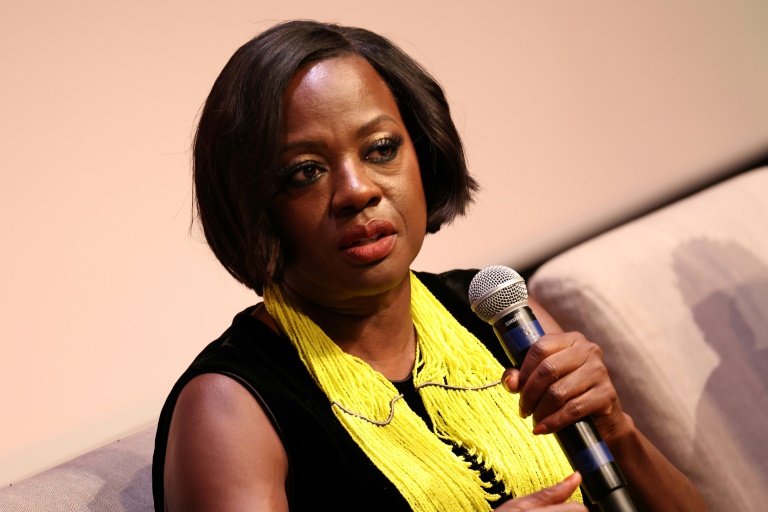
The new Sony release, loosely based on a true historical episode, stars Oscar-winner Viola Davis as the fierce general who leads an army known as the Agojie as it protects the 18th-century kingdom of Dahomey. 

Days earlier, Davis told AFP that she felt “conflicted” because if the Black-led, woman-dominated film fell short, it would unfairly damage the prospects for future such endeavors.

Instead, boosted by a favorable critical reception — “Reviews are sensational,” said the FranchiseRe website — it exceeded analysts’ expectations, more than tripling the ticket sales of the next-highest finisher, 20th Century’s “Barbarian.”

That horror film tells the story of a woman (Georgina Campbell) who checks into an AirBnB rental in a sketchy Detroit neighborhood only to find it has also been booked by an oh-so-creepy Bill Skarsgard. “Barbarian” took in $6.3 million for the Friday-through-Sunday period.

In third place was a slasher film, “Pearl,” a new low-budget release from A24, with ticket sales just over $3.1 million. Mia Goth stars in a blood-soaked tale that involves the brutal use of both an axe and a pitchfork, on animals and humans. Enough said.

Searchlight’s comic mystery “See How They Run” placed fourth in its opening weekend, at $3.1 million.

Sam Rockwell stars as an often-inebriated Scotland Yard detective, Saoirse Ronan as his eager but hapless assistant, and Adrien Brody as a sleazy Hollywood director in London to make a film version of Agatha Christie classic “The Mousetrap” — until fate intervenes. 

And in fifth place was Sony action thriller “Bullet Train,” starring Brad Pitt, at $2.5 million.

Rounding out the top 10 were:

“Top Gun: Maverick” ($2.2 million)

“DC League of Super-Pets” ($2.2 million)

“The Invitation” ($1.7 million)

“Minions: The Rise of Gru” ($1.3 million)

“Moonage Daydream” ($1.2 million)

King greets world leaders as UK counts down to queen's funeral

King Charles III welcomed world leaders to Buckingham Palace on Sunday ahead of the funeral of Queen Elizabeth II, as US President Joe Biden paid a final tribute to the late monarch.

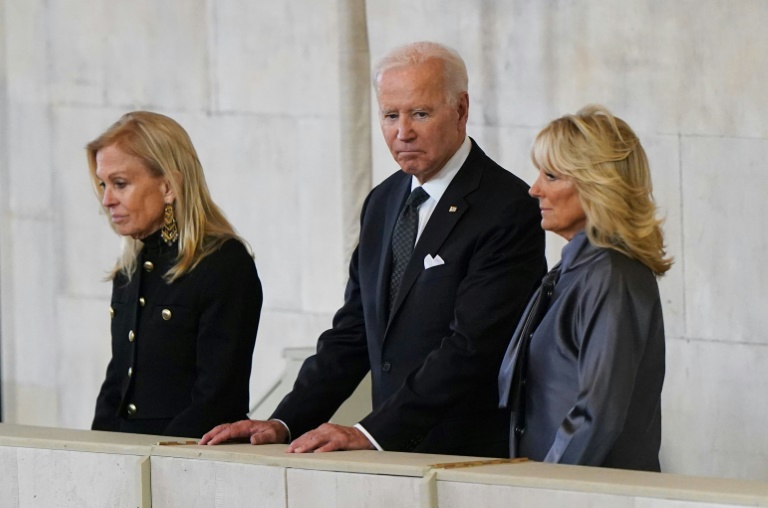
Biden crossed himself and put his hand on his heart while he stood with his wife Jill on a gallery overlooking the flag-draped casket in London’s cavernous Westminster Hall.

Members of the public filed by as time ticked down for them to pay their last respects to the only sovereign most Britons have ever known before she is laid to rest on Monday. 

Biden said the queen, who reigned for a record-breaking 70 years until her death on September 8 aged 96, exemplified the “notion of service”.

“To all the people of England, all the people of the United Kingdom, our hearts go out to you, and you were fortunate to have had her for 70 years, we all were. The world’s better for her,” Biden said after signing a book of condolences.

The US president then headed to Buckingham palace for a reception hosted by Charles for the dozens of leaders from Japan’s reclusive Emperor Naruhito to France’s Emmanuel Macron attending the funeral.   

Australia’s anti-monarchy Prime Minister Anthony Albanese, who viewed the lying-in-state and met Charles on Saturday, told Sky News Australia that the queen was “a constant reassuring presence”.

There was also a private audience at Buckingham Palace for Prime Minister Jacinda Ardern of New Zealand, which like Australia and 12 other Commonwealth realms now counts Charles as its sovereign.

“You could see that it meant a huge amount (to Charles) to have seen the sheer scale and outpouring of people’s love and affection for her late Majesty,” she told BBC television Sunday.

But in a sign of challenges ahead for the new king, Ardern added that she expected New Zealand to ditch the UK monarchy “over the course of my lifetime”.

Members of the public were already camping out in advance to catch a glimpse of Monday’s grand farewell at Westminster Abbey, which is expected to bring London to a standstill and be watched by billions of viewers worldwide.

– Country’s ‘glue’ –

E.J. Kelly, a 46-year-old schoolteacher from Northern Ireland, secured a prime spot with friends on the route the procession will take after the funeral.

“Watching it on television is wonderful but being here is something else,” she told AFP, equipped with camping chairs, warm clothing and extra socks.

“I will probably feel very emotional when it comes to it, but I wanted to be here to pay my respects.”

Crowds also thronged around Windsor Castle, west of London, where the queen’s coffin will be driven after the service for a private burial to lay her to rest alongside her late husband Prince Philip, her parents and her sister.

“I’ve lived here my whole life and I’ve never seen it this busy,” said Donna Lumbard, 32, a manager at a local restaurant. 

Starting with a single toll from Big Ben, British Prime Minister Liz Truss will lead a national minute’s silence at 8:00 pm (1900 GMT) on Sunday to reflect on the “life and legacy” of the queen.

Near the Scottish town of Falkirk, 96 lanterns were to be lowered into a “pool of reflection” at the foot of the Queen Elizabeth II Canal, before wreaths are placed in the water.

Those wanting to view the flag-draped casket have until 6:30 am (0530 GMT) on Monday to make it into Westminster Hall opposite the abbey.

As the queue continued to snake for miles along the River Thames on Sunday, the waiting time stood at more than nine hours, and the line is likely to be closed by the evening.

“To avoid disappointment please do not set off to join the queue,” the government said.

Andy Sanderson, 46, a supermarket area manager, was in the line and finally reaching parliament.

“She was the glue that kept the country together,” he said.

“She doesn’t have an agenda whereas politicians do, so she can speak for the people.”

– Grandchildren’s vigil –

As mourners slowly filed by on Saturday evening, Prince William and his estranged younger brother Prince Harry led the queen’s eight grandchildren in a 12-minute vigil around the coffin.

Harry — who did two tours with the British Army in Afghanistan — wore the uniform of the Blues and Royals cavalry regiment in which he served.

The move appeared to be the latest olive branch offered by Charles towards Harry and his wife Meghan after they quit royal duties and moved to North America, later accusing the royal family of racism.

Queen Elizabeth’s state funeral, the first in Britain since the death of her first prime minister Winston Churchill in 1965, will take place Monday at Westminster Abbey at 11:00 am.

Reflecting on the queen’s wishes for the hour-long ceremony, the former archbishop of York, John Sentamu, said she “did not want what you call long, boring services”.

“The hearts and people’s cockles will be warmed,” he told BBC television.

– Tributes from Camilla, Andrew –

Leaders from Russia, Afghanistan, Myanmar, Syria and North Korea were not invited to join the 2,000 guests.

Moscow’s foreign ministry last week called the decision “deeply immoral”, and “blasphemous” to the queen’s memory. China will attend at the abbey but was barred by parliamentary leaders from the lying-in-state.

As their private grief has played out in the glare of global attention, a fresh opinion poll from YouGov showed the royal family’s popularity has risen in the UK. 

William and his wife Kate topped the ranking of most popular royals while Charles saw his approval ratings rise 16 points since May.

The queen’s second son Prince Andrew, in disgrace over his links to billionaire US paedophile Jeffrey Epstein, paid tribute Sunday to the queen’s “knowledge and wisdom infinite, with no boundary or containment”.

Camilla gave her first public comments as the new queen consort, recalling her mother-in-law’s smile and “wonderful blue eyes”. 

“It must have been so difficult for her being a solitary woman” in a world dominated by men, Charles’s wife said in televised comments.

“There weren’t women prime ministers or presidents. She was the only one, so I think she carved her own role.”

Close Bitnami banner
Bitnami