AFP

Oscars Academy makes amends over 1973 Native American protest

Almost five decades after she refused an Oscar on behalf of Marlon Brando over the treatment of Native Americans by the US film industry, Sacheen Littlefeather was honored Saturday by the Academy of Motion Picture Arts and Sciences.

In a moving ceremony in Los Angeles filled with singing and dancing, the Academy publicly apologized to Littlefeather, who was feted by activists in the wake of her protest, but blackballed by the movie world.

Littlefeather, who is Apache and Yaqui, was booed at the 1973 Academy Awards — the first to be broadcast live around the world — while explaining on Brando’s behalf why he would not accept his best actor Oscar for “The Godfather.” 

On Saturday she told a packed audience at the Academy’s newly-opened museum how she had arrived at the ceremony just minutes before she took the stage because Brando had taken so long writing his non-acceptance speech.

“I went up there, like a proud Indian woman with dignity, with courage, with grace, and with humility,” she said.

“I knew that I had to speak the truth. Some people may accept it. And some people may not.”

She was greeted on stage by Norwegian actress Liv Ullmann and “James Bond” star Roger Moore, who proffered the statuette she refused to accept.

Under strict instructions from Academy managers not to give an acceptance speech longer than 60 seconds, she delivered instead a dignified impromptu address.

“I said okay, and I had made this promise to Marlon (Brando) not to touch the Oscar. And so I wasn’t under any pressure that night,” Littlefeather quipped.

She said veteran Western star John Wayne had to be restrained from physically assaulting her as she left the stage.

Littlefeather, a member of the Screen Actors’ Guild, subsequently found it difficult to get work in Hollywood, with casting directors warned not to employ her.

– ‘Courage’ –

Former Academy president David Rubin, who penned the apology earlier this year, took to the stage to read his words, which invoked “the emotional burden” Littlefeather bore and “the cost to your own career.” 

“For too long the courage you showed has been unacknowledged. For this, we offer both our deepest apologies and our sincere admiration.”

Rubin’s apology comes as the movie industry reckons with what many view as a culture of sexism, racism and impunity.

“The academy and our industry finds itself at an inflection point,” Rubin said on Saturday. “We are actively examining our past and focusing on how best we can facilitate healing.”

The museum, which opened last September, has pledged to confront the Oscars’ “problematic history” including racism. One display already tackles the harassment of Littlefeather.

The Academy has also moved to confront accusations of a lack of racial diversity in recent years.

In 2019, “Last of the Mohicans” star Wes Studi became the first Native American actor to receive an Oscar, with an honorary Academy Award recognizing his career.

Its museum has also previously hosted events on women who achieved historic Oscars milestones including a talk with Buffy Sainte-Marie — the first Indigenous person to win an Oscar, for best original song in 1983.

Asked by reporters ahead of the ceremony how she felt about having to wait so long to hear the word “sorry”, Littlefeather was philosophical. 

“It’s never too late for an apology,” she said.

“It’s never too late for forgiveness.” 

Steep Fed rate hike seen as certainty after ugly inflation data

The Federal Reserve is poised to unleash another massive interest rate increase this week after the latest data showed a worrying US inflation picture, which confirmed the need for the central bank to continue to act aggressively.

Soaring prices have pushed annual inflation to a 40-year high, inflicting pain on American consumers and businesses, despite the welcome drop in gasoline prices at the pump in recent weeks.

The disappointing consumer price report for August, released last week, showed housing, food and medical costs continued to rise. And when volatile food and energy prices are stripped out, so-called core inflation accelerated.

Families have been struggling with rising prices sparked initially by high demand as the world’s largest economy emerged from the pandemic amid supply chain snarls. The situation has been exacerbated by Covid lockdowns in China and surging energy and food prices due to Russia’s war in Ukraine.

It is not just current high inflation that concerns policymakers, but the fear that consumers and businesses begin to expect rising prices will become a permanent feature, which could set off a dangerous spiral and a phenomenon called stagflation.

That fear has driven the Fed to front-load its rate hikes, rather than pursuing the more customary course of small, gradual steps over a longer period. 

The US central bank has cranked up the benchmark lending rate four times this year, including two straight three-quarter-point hikes in June and July.

The aim is to raise the cost of borrowing and cool demand — and it is having an impact: home mortgage rates have now topped six percent for the first time since 2008.

A third massive increase is expected Wednesday at the conclusion of the Fed’s two-day policy meeting. And some people are raising the possibility the US central bank could take an even bigger step.

But concerns are rising that the aggressive action could tip the US economy into recession, which would reverberate around the globe.

“The sizzling-hot, core inflation figures that came out this week for August have upped the pressure on the Federal Reserve to raise rates a full percentage point instead of 0.75% at the upcoming meeting,” Diane Swonk, chief economist at KPMG US, said in an analysis.

“This will be one of the hardest and most politically charged of decisions. It marks the Federal Reserve’s first move toward an actual recession.”

– Avoiding a repeat of the 1970s –

Fed Chair Jerome Powell has made it clear that a recession is a risk he is willing to take. In fact, it is a risk the central bank must take to avoid an even more dire outcome: a repeat of the damaging, runaway inflation of the 1970s and early 1980s.

“We need to act now forthrightly, strongly as we have been doing and we need to keep at it until the job is done,” Powell said in his last public comments before the policy meeting.

Powell’s predecessor from the last high-inflation era, Paul Volcker, had to take extreme measures after rising prices became entrenched, resurging and surpassing the peak of the mid-1970s after repeated failed efforts to tame them.

That led to a deep recession and unemployment over 10 percent.

The Fed’s aim is to avoid “the kind of very high social costs” of the Volcker era, and maintain public confidence in the central bank’s commitment to fighting inflation.

“The clock is ticking,” Powell warned.

While the latest data showed US annual inflation slowed slightly to 8.3 percent in August — from a peak of 9.1 percent in June — prices actually accelerated slightly in the month, reflecting widespread price increases.

Central bankers have the luxury of a strong job market, low unemployment and a resilient US consumer, but many economists now see a recession as likely.

Former US Treasury secretary Lawrence Summers is among those warning that joblessness will have to rise to get inflation under control.

He also favors more aggressive Fed action.

“If I had to choose between 100 basis points in September and 50 basis points, I would choose a 100 basis points move to reinforce credibility,” Summers said in a recent tweet.

Steep Fed rate hike seen as certainty after ugly inflation data

The Federal Reserve is poised to unleash another massive interest rate increase this week after the latest data showed a worrying US inflation picture, which confirmed the need for the central bank to continue to act aggressively.

Soaring prices have pushed annual inflation to a 40-year high, inflicting pain on American consumers and businesses, despite the welcome drop in gasoline prices at the pump in recent weeks.

The disappointing consumer price report for August, released last week, showed housing, food and medical costs continued to rise. And when volatile food and energy prices are stripped out, so-called core inflation accelerated.

Families have been struggling with rising prices sparked initially by high demand as the world’s largest economy emerged from the pandemic amid supply chain snarls. The situation has been exacerbated by Covid lockdowns in China and surging energy and food prices due to Russia’s war in Ukraine.

It is not just current high inflation that concerns policymakers, but the fear that consumers and businesses begin to expect rising prices will become a permanent feature, which could set off a dangerous spiral and a phenomenon called stagflation.

That fear has driven the Fed to front-load its rate hikes, rather than pursuing the more customary course of small, gradual steps over a longer period. 

The US central bank has cranked up the benchmark lending rate four times this year, including two straight three-quarter-point hikes in June and July.

The aim is to raise the cost of borrowing and cool demand — and it is having an impact: home mortgage rates have now topped six percent for the first time since 2008.

A third massive increase is expected Wednesday at the conclusion of the Fed’s two-day policy meeting. And some people are raising the possibility the US central bank could take an even bigger step.

But concerns are rising that the aggressive action could tip the US economy into recession, which would reverberate around the globe.

“The sizzling-hot, core inflation figures that came out this week for August have upped the pressure on the Federal Reserve to raise rates a full percentage point instead of 0.75% at the upcoming meeting,” Diane Swonk, chief economist at KPMG US, said in an analysis.

“This will be one of the hardest and most politically charged of decisions. It marks the Federal Reserve’s first move toward an actual recession.”

– Avoiding a repeat of the 1970s –

Fed Chair Jerome Powell has made it clear that a recession is a risk he is willing to take. In fact, it is a risk the central bank must take to avoid an even more dire outcome: a repeat of the damaging, runaway inflation of the 1970s and early 1980s.

“We need to act now forthrightly, strongly as we have been doing and we need to keep at it until the job is done,” Powell said in his last public comments before the policy meeting.

Powell’s predecessor from the last high-inflation era, Paul Volcker, had to take extreme measures after rising prices became entrenched, resurging and surpassing the peak of the mid-1970s after repeated failed efforts to tame them.

That led to a deep recession and unemployment over 10 percent.

The Fed’s aim is to avoid “the kind of very high social costs” of the Volcker era, and maintain public confidence in the central bank’s commitment to fighting inflation.

“The clock is ticking,” Powell warned.

While the latest data showed US annual inflation slowed slightly to 8.3 percent in August — from a peak of 9.1 percent in June — prices actually accelerated slightly in the month, reflecting widespread price increases.

Central bankers have the luxury of a strong job market, low unemployment and a resilient US consumer, but many economists now see a recession as likely.

Former US Treasury secretary Lawrence Summers is among those warning that joblessness will have to rise to get inflation under control.

He also favors more aggressive Fed action.

“If I had to choose between 100 basis points in September and 50 basis points, I would choose a 100 basis points move to reinforce credibility,” Summers said in a recent tweet.

Tunisian 'hanging garden' farms cling on despite drought

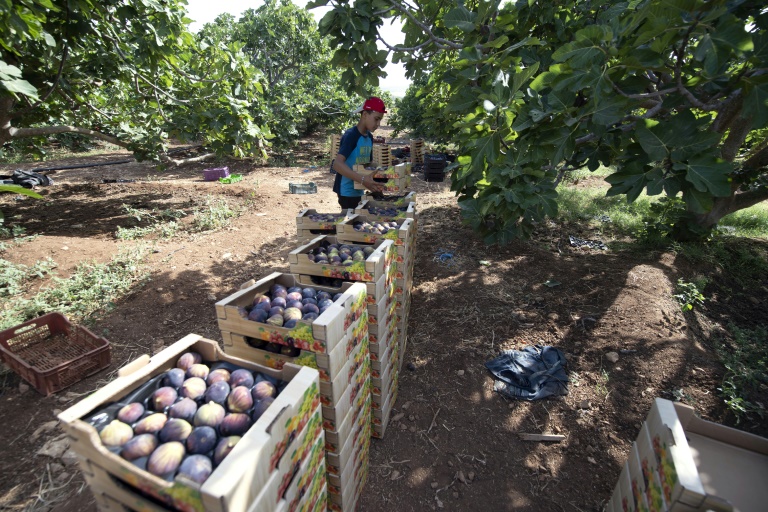
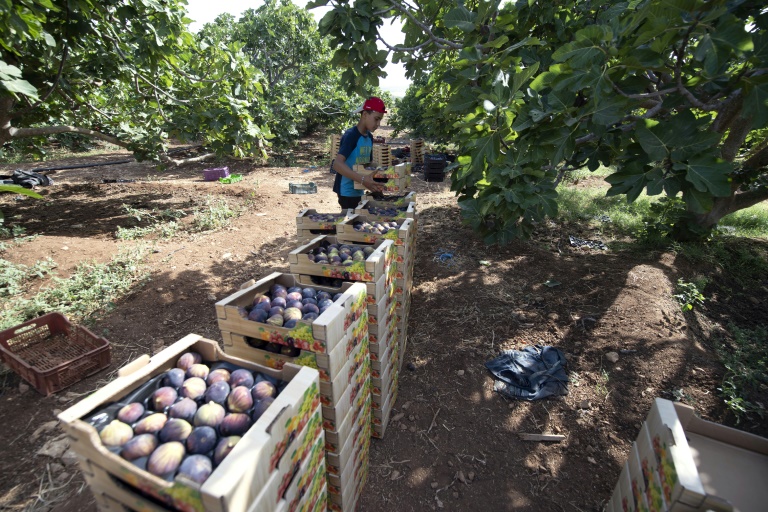
High in the hills of northwestern Tunisia, farmers are tending thousands of fig trees with a unique system of terracing they hope will protect them from ever-harsher droughts.

But the “hanging gardens” of Djebba El Olia have been put to the test this year as the North African country sweltered through its hottest July since the 1950s.

That has exacerbated a long drought that has left Tunisia’s reservoirs at just a third of their capacity.

The gardens are supplied with water from two springs high in the mountains.

The water is fed into the orchards by a network of canals that are opened and shut at set times, according to the size of the orchard.

Crucially, a wide variety of crops provides resilience and in-built pest control, unlike the monocultures that dominate modern agriculture and require huge inputs of pesticides to survive.

“We grow figs but also other trees like quinces, olives and pomegranates, and beneath them we plant a wide range of greens and legumes,” said activist Farida Djebbi as insects buzzed between thyme, mint and rosemary flowers.

Djebbi pointed out some of the channels, which irrigate the area’s 300 hectares (740 acres) of steeply sloping orchards.

In 2020, the Food and Agriculture Organization recognised the system as an example of “innovative and resilient agroforestry”, adding it to an elite list of just 67 “Globally Important Agricultural Heritage Systems”.

The system “has been able to adapt and take advantage of an inhospitable topography”, the UN agency said.

“Through the use of natural geological formations and the use of stones, local communities have been able to transform the landscape into fertile and productive lands.”

The FAO praised the diversity of local crop varieties grown by the area’s farmers, as well as their use of wild plants to repel potential pests and of livestock to “plough” and fertilise the soil.

– Growing up with figs –

While nobody knows exactly how old the system is, human habitation in the area predates the Carthaginian civilisation founded in the ninth century BC.

But while it may have endured for generations, the system is under threat as climate change kicks in.

Activist Tawfiq El Rajehi, 60, says the flow of water from springs irrigating the area has dropped off noticeably, particularly in the past two years.

Unlike in previous years, the surrounding peaks no longer get covered in snow each winter, and the leaves of many of the trees in the lower part of Djebba are yellowing and sick.

Rajehi, a teacher at the local school, said climate change and low rainfall were compounded by another factor: farmers favouring cash crops.

“Some farmers have moved to growing more figs instead of less water-intensive crops because figs have become more profitable in recent years,” he said.

“We need to keep a good balance and variety of plants.”

Nevertheless, residents say they are proud of their heritage.

Farmer Lotfi El Zarmani, 52, said there was also growing demand for Djebba figs, which were given a protected designation of origin by the agriculture ministry in 2012 — still the only Tunisian fruit to enjoy the certification.

“They’re getting a reputation, plus exporting them has become easier, plus they bring higher prices,” Zarmani said, adding that most exports go to the Gulf or neighbouring Libya.

Rajehi’s daughter, university student Chaima, put on protective gloves as she set out to harvest the fruit from her family’s small lot.

“Figs are more than a fruit for us. We’re born here among the fig trees and we grow up with them, we learn from a young age how to look after them,” the 20-year-old said.

Djebbi is working to persuade farmers to preserve traditional ways of processing the products harvested in the area.

She is working with 10 other women on a cooperative that distils essence from wildflowers, dries figs, and produces fig and mulberry jam.

“Products we learnt how to make from our mothers and grandmothers are becoming popular because they’re of such high quality,” she said.

Tunisian 'hanging garden' farms cling on despite drought

High in the hills of northwestern Tunisia, farmers are tending thousands of fig trees with a unique system of terracing they hope will protect them from ever-harsher droughts.

But the “hanging gardens” of Djebba El Olia have been put to the test this year as the North African country sweltered through its hottest July since the 1950s.

That has exacerbated a long drought that has left Tunisia’s reservoirs at just a third of their capacity.

The gardens are supplied with water from two springs high in the mountains.

The water is fed into the orchards by a network of canals that are opened and shut at set times, according to the size of the orchard.

Crucially, a wide variety of crops provides resilience and in-built pest control, unlike the monocultures that dominate modern agriculture and require huge inputs of pesticides to survive.

“We grow figs but also other trees like quinces, olives and pomegranates, and beneath them we plant a wide range of greens and legumes,” said activist Farida Djebbi as insects buzzed between thyme, mint and rosemary flowers.

Djebbi pointed out some of the channels, which irrigate the area’s 300 hectares (740 acres) of steeply sloping orchards.

In 2020, the Food and Agriculture Organization recognised the system as an example of “innovative and resilient agroforestry”, adding it to an elite list of just 67 “Globally Important Agricultural Heritage Systems”.

The system “has been able to adapt and take advantage of an inhospitable topography”, the UN agency said.

“Through the use of natural geological formations and the use of stones, local communities have been able to transform the landscape into fertile and productive lands.”

The FAO praised the diversity of local crop varieties grown by the area’s farmers, as well as their use of wild plants to repel potential pests and of livestock to “plough” and fertilise the soil.

– Growing up with figs –

While nobody knows exactly how old the system is, human habitation in the area predates the Carthaginian civilisation founded in the ninth century BC.

But while it may have endured for generations, the system is under threat as climate change kicks in.

Activist Tawfiq El Rajehi, 60, says the flow of water from springs irrigating the area has dropped off noticeably, particularly in the past two years.

Unlike in previous years, the surrounding peaks no longer get covered in snow each winter, and the leaves of many of the trees in the lower part of Djebba are yellowing and sick.

Rajehi, a teacher at the local school, said climate change and low rainfall were compounded by another factor: farmers favouring cash crops.

“Some farmers have moved to growing more figs instead of less water-intensive crops because figs have become more profitable in recent years,” he said.

“We need to keep a good balance and variety of plants.”

Nevertheless, residents say they are proud of their heritage.

Farmer Lotfi El Zarmani, 52, said there was also growing demand for Djebba figs, which were given a protected designation of origin by the agriculture ministry in 2012 — still the only Tunisian fruit to enjoy the certification.

“They’re getting a reputation, plus exporting them has become easier, plus they bring higher prices,” Zarmani said, adding that most exports go to the Gulf or neighbouring Libya.

Rajehi’s daughter, university student Chaima, put on protective gloves as she set out to harvest the fruit from her family’s small lot.

“Figs are more than a fruit for us. We’re born here among the fig trees and we grow up with them, we learn from a young age how to look after them,” the 20-year-old said.

Djebbi is working to persuade farmers to preserve traditional ways of processing the products harvested in the area.

She is working with 10 other women on a cooperative that distils essence from wildflowers, dries figs, and produces fig and mulberry jam.

“Products we learnt how to make from our mothers and grandmothers are becoming popular because they’re of such high quality,” she said.

China doubles down on coal as energy crunch bites

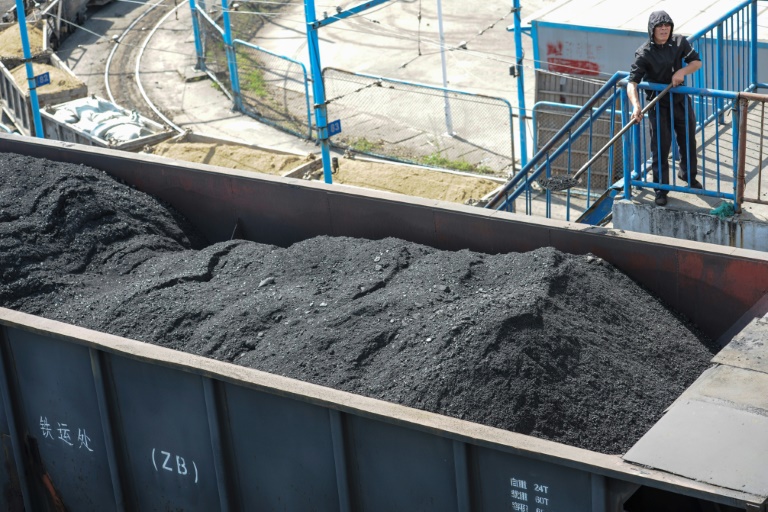
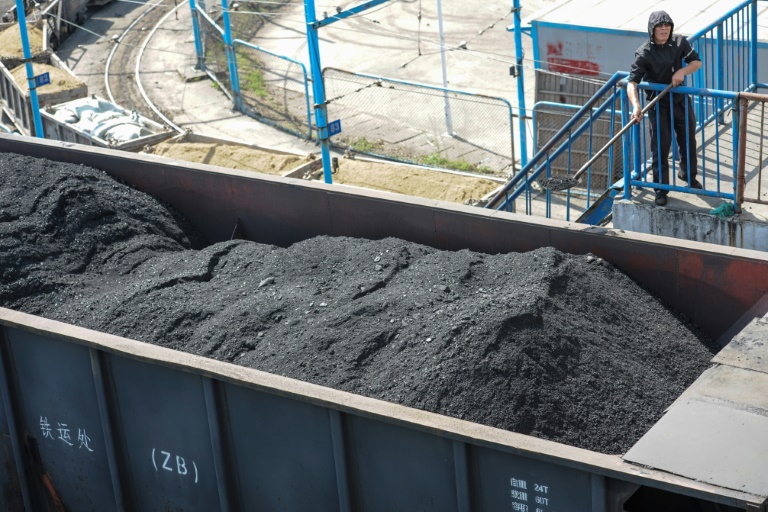
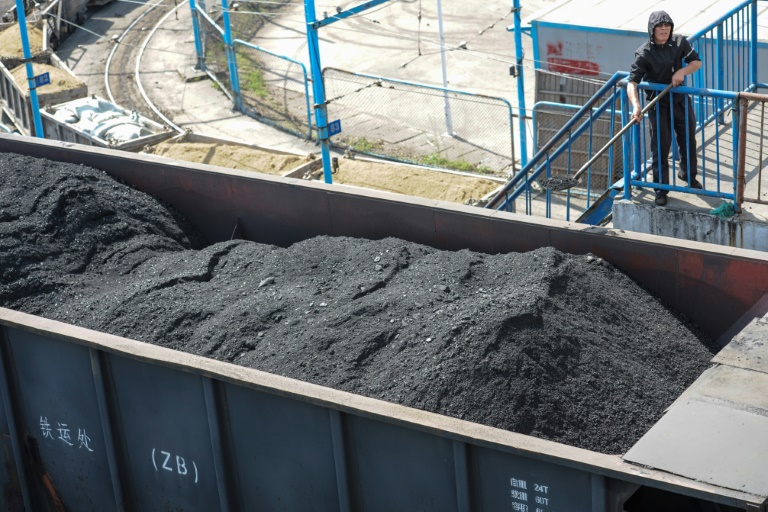
China has stepped up spending on coal in the face of extreme weather, a domestic energy crunch and rising global fuel prices — raising concerns Beijing’s policies may hinder the fight against climate change.

The country is the world’s biggest emitter of the greenhouse gases driving global warming, and President Xi Jinping has vowed to reduce coal use from 2026 as part of a broad set of climate promises.

Beijing has committed to peaking its carbon emissions by 2030 and achieving carbon neutrality by 2060. 

Overall carbon emissions in China have fallen for four consecutive quarters on the back of an economic slowdown, research reported by climate monitor Carbon Brief showed in early September.

But at the same time, slowing growth has led authorities to rely on smokestack industries in an effort to boost the economy.

The push to shore up coal power — which still makes up most of China’s energy supply — has alarmed analysts who warn that it will make an eventual transition to a renewables-dominated energy mix more difficult.

Spooked by an energy shortage last autumn, Chinese authorities in spring ordered coal producers to add 300 million tonnes of mining capacity this year — the equivalent of an extra month of coal production for the country.

In just the first quarter of 2022, regulators endorsed the equivalent of half the entire coal-fired power plant capacity approved in 2021, according to Greenpeace.

– Inefficiencies –

Authorities have also burned and mined more coal in recent weeks in order to meet increased air conditioning demand and make up for shrunken hydropower dams during China’s hottest-ever summer.

Premier Li Keqiang in June called for “releasing advanced coal capacity, as much as possible, and implementing long-term coal supply”.

The independent Climate Action Tracker warns that even the “most binding” climate targets laid out by Beijing would be in line with global warming of between three and four degrees Celsius before the end of the century — well above the Paris Agreement’s goal to limit global warming to 1.5C.

To meet that goal, it said, China would “need to reduce emissions as early as possible and well before 2030” — as well as “decrease coal and other fossil fuel consumption at a much faster rate than currently planned”.

Beijing’s unwillingness to let go of coal stems partly from inefficiencies in its power grid that prevent surplus energy from being transported across regions.

Coal and gas give local officials a ready source of energy and are, in practice, “the only way for local officials to avoid power shortages”, energy researcher Lauri Myllyvirta wrote in a Carbon Brief report.

– ‘Politically crucial year’ –

China has made real progress in building up renewable energy capacity.

The current operating solar capacity in the country accounts for nearly half the global total, according to San Francisco-based non-governmental organisation Global Energy Monitor (GEM).

But unlike wind or sunlight, stockpiles of coal and gas can be held for long periods of time and deployed as needed, giving local authorities a sense of security.

Yet, building more coal facilities means less focus on fixing problems with the grid, Myllyvirta said in comments to AFP, warning plant owners would be motivated to “slow down the transition as they will have an interest in making use of their brand-new assets”.

At the same time, the central government wants to “avoid large-scale blackouts, which we witnessed last winter in the northeastern provinces, in this politically crucial year for Xi”, Byford Tsang, senior policy adviser at climate think-tank E3G, told AFP.

President Xi is expected to secure an unprecedented third term in power at a major Communist Party meeting next month.

Tsang said skyrocketing international energy prices driven by the Russian invasion of Ukraine also pushed Beijing to shore up domestic coal production, pointing to a 17.5 percent drop in coal imports in the first half of this year compared to a year earlier.

Expanding coal capacity as a quick fix, however, goes against “immediate annual cuts in coal use that the UN and leading research organisations have called for”, GEM analysts said.

GEM said all of China’s proposed new mines could together emit as much as six million tonnes of the greenhouse gas methane each year once operational. That is roughly equivalent to the annual methane emissions of Austria, according to World Bank data.

“The more coal China builds now, the harder it becomes to finance and deliver renewable energy projects later,” Wu Jinghan, climate and energy project leader for Greenpeace East Asia, told AFP.

“The longer we wait to transition, the steeper the transition pathway becomes,” Wu said. “That means more disruptive and higher risk, financially and environmentally.”

China doubles down on coal as energy crunch bites

China has stepped up spending on coal in the face of extreme weather, a domestic energy crunch and rising global fuel prices — raising concerns Beijing’s policies may hinder the fight against climate change.

The country is the world’s biggest emitter of the greenhouse gases driving global warming, and President Xi Jinping has vowed to reduce coal use from 2026 as part of a broad set of climate promises.

Beijing has committed to peaking its carbon emissions by 2030 and achieving carbon neutrality by 2060. 

Overall carbon emissions in China have fallen for four consecutive quarters on the back of an economic slowdown, research reported by climate monitor Carbon Brief showed in early September.

But at the same time, slowing growth has led authorities to rely on smokestack industries in an effort to boost the economy.

The push to shore up coal power — which still makes up most of China’s energy supply — has alarmed analysts who warn that it will make an eventual transition to a renewables-dominated energy mix more difficult.

Spooked by an energy shortage last autumn, Chinese authorities in spring ordered coal producers to add 300 million tonnes of mining capacity this year — the equivalent of an extra month of coal production for the country.

In just the first quarter of 2022, regulators endorsed the equivalent of half the entire coal-fired power plant capacity approved in 2021, according to Greenpeace.

– Inefficiencies –

Authorities have also burned and mined more coal in recent weeks in order to meet increased air conditioning demand and make up for shrunken hydropower dams during China’s hottest-ever summer.

Premier Li Keqiang in June called for “releasing advanced coal capacity, as much as possible, and implementing long-term coal supply”.

The independent Climate Action Tracker warns that even the “most binding” climate targets laid out by Beijing would be in line with global warming of between three and four degrees Celsius before the end of the century — well above the Paris Agreement’s goal to limit global warming to 1.5C.

To meet that goal, it said, China would “need to reduce emissions as early as possible and well before 2030” — as well as “decrease coal and other fossil fuel consumption at a much faster rate than currently planned”.

Beijing’s unwillingness to let go of coal stems partly from inefficiencies in its power grid that prevent surplus energy from being transported across regions.

Coal and gas give local officials a ready source of energy and are, in practice, “the only way for local officials to avoid power shortages”, energy researcher Lauri Myllyvirta wrote in a Carbon Brief report.

– ‘Politically crucial year’ –

China has made real progress in building up renewable energy capacity.

The current operating solar capacity in the country accounts for nearly half the global total, according to San Francisco-based non-governmental organisation Global Energy Monitor (GEM).

But unlike wind or sunlight, stockpiles of coal and gas can be held for long periods of time and deployed as needed, giving local authorities a sense of security.

Yet, building more coal facilities means less focus on fixing problems with the grid, Myllyvirta said in comments to AFP, warning plant owners would be motivated to “slow down the transition as they will have an interest in making use of their brand-new assets”.

At the same time, the central government wants to “avoid large-scale blackouts, which we witnessed last winter in the northeastern provinces, in this politically crucial year for Xi”, Byford Tsang, senior policy adviser at climate think-tank E3G, told AFP.

President Xi is expected to secure an unprecedented third term in power at a major Communist Party meeting next month.

Tsang said skyrocketing international energy prices driven by the Russian invasion of Ukraine also pushed Beijing to shore up domestic coal production, pointing to a 17.5 percent drop in coal imports in the first half of this year compared to a year earlier.

Expanding coal capacity as a quick fix, however, goes against “immediate annual cuts in coal use that the UN and leading research organisations have called for”, GEM analysts said.

GEM said all of China’s proposed new mines could together emit as much as six million tonnes of the greenhouse gas methane each year once operational. That is roughly equivalent to the annual methane emissions of Austria, according to World Bank data.

“The more coal China builds now, the harder it becomes to finance and deliver renewable energy projects later,” Wu Jinghan, climate and energy project leader for Greenpeace East Asia, told AFP.

“The longer we wait to transition, the steeper the transition pathway becomes,” Wu said. “That means more disruptive and higher risk, financially and environmentally.”

China doubles down on coal as energy crunch bites

China has stepped up spending on coal in the face of extreme weather, a domestic energy crunch and rising global fuel prices — raising concerns Beijing’s policies may hinder the fight against climate change.

The country is the world’s biggest emitter of the greenhouse gases driving global warming, and President Xi Jinping has vowed to reduce coal use from 2026 as part of a broad set of climate promises.

Beijing has committed to peaking its carbon emissions by 2030 and achieving carbon neutrality by 2060. 

Overall carbon emissions in China have fallen for four consecutive quarters on the back of an economic slowdown, research reported by climate monitor Carbon Brief showed in early September.

But at the same time, slowing growth has led authorities to rely on smokestack industries in an effort to boost the economy.

The push to shore up coal power — which still makes up most of China’s energy supply — has alarmed analysts who warn that it will make an eventual transition to a renewables-dominated energy mix more difficult.

Spooked by an energy shortage last autumn, Chinese authorities in spring ordered coal producers to add 300 million tonnes of mining capacity this year — the equivalent of an extra month of coal production for the country.

In just the first quarter of 2022, regulators endorsed the equivalent of half the entire coal-fired power plant capacity approved in 2021, according to Greenpeace.

– Inefficiencies –

Authorities have also burned and mined more coal in recent weeks in order to meet increased air conditioning demand and make up for shrunken hydropower dams during China’s hottest-ever summer.

Premier Li Keqiang in June called for “releasing advanced coal capacity, as much as possible, and implementing long-term coal supply”.

The independent Climate Action Tracker warns that even the “most binding” climate targets laid out by Beijing would be in line with global warming of between three and four degrees Celsius before the end of the century — well above the Paris Agreement’s goal to limit global warming to 1.5C.

To meet that goal, it said, China would “need to reduce emissions as early as possible and well before 2030” — as well as “decrease coal and other fossil fuel consumption at a much faster rate than currently planned”.

Beijing’s unwillingness to let go of coal stems partly from inefficiencies in its power grid that prevent surplus energy from being transported across regions.

Coal and gas give local officials a ready source of energy and are, in practice, “the only way for local officials to avoid power shortages”, energy researcher Lauri Myllyvirta wrote in a Carbon Brief report.

– ‘Politically crucial year’ –

China has made real progress in building up renewable energy capacity.

The current operating solar capacity in the country accounts for nearly half the global total, according to San Francisco-based non-governmental organisation Global Energy Monitor (GEM).

But unlike wind or sunlight, stockpiles of coal and gas can be held for long periods of time and deployed as needed, giving local authorities a sense of security.

Yet, building more coal facilities means less focus on fixing problems with the grid, Myllyvirta said in comments to AFP, warning plant owners would be motivated to “slow down the transition as they will have an interest in making use of their brand-new assets”.

At the same time, the central government wants to “avoid large-scale blackouts, which we witnessed last winter in the northeastern provinces, in this politically crucial year for Xi”, Byford Tsang, senior policy adviser at climate think-tank E3G, told AFP.

President Xi is expected to secure an unprecedented third term in power at a major Communist Party meeting next month.

Tsang said skyrocketing international energy prices driven by the Russian invasion of Ukraine also pushed Beijing to shore up domestic coal production, pointing to a 17.5 percent drop in coal imports in the first half of this year compared to a year earlier.

Expanding coal capacity as a quick fix, however, goes against “immediate annual cuts in coal use that the UN and leading research organisations have called for”, GEM analysts said.

GEM said all of China’s proposed new mines could together emit as much as six million tonnes of the greenhouse gas methane each year once operational. That is roughly equivalent to the annual methane emissions of Austria, according to World Bank data.

“The more coal China builds now, the harder it becomes to finance and deliver renewable energy projects later,” Wu Jinghan, climate and energy project leader for Greenpeace East Asia, told AFP.

“The longer we wait to transition, the steeper the transition pathway becomes,” Wu said. “That means more disruptive and higher risk, financially and environmentally.”

'Crowns of the forest': Indonesian helps orchids bloom again

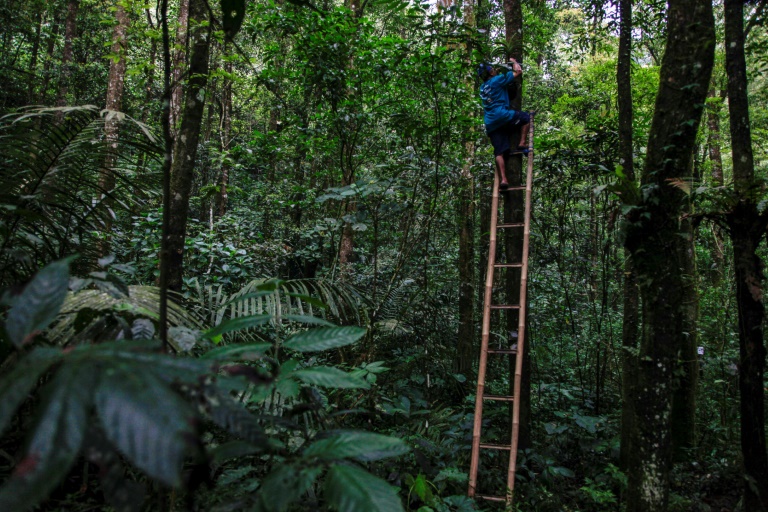
Orchids in hand and a bamboo ladder on his shoulder, farmer Musimin scans the forest at the foot of Indonesia’s most active volcano to point out clusters of the indigenous flowers he has been salvaging for years.

The 56-year-old, who goes by one name like many Indonesians, is a self-taught conservationist with no formal background in botanics. 

He has dedicated his career to cultivating plants he compares to gemstones, and has been on a one-man mission to save the exotic blooms unique to the land on the outskirts of Yogyakarta on Java island.

His work began after lava and ash ripped through the area from the powerful eruptions of Mount Merapi, the last major one in 2010.

“I remember orchids used to be abundant in the forest,” he said.

“Locals from surrounding villages could take any orchids they wanted, and they sold the flowers at nearby tourist destinations.”

But many were destroyed by the ash clouds that fell on the land below the volcano. 

So he set about saving their wilting fortunes, over the years building two bamboo greenhouses where he could preserve the most special kinds of orchids.

The volcano killed about 60 people when it erupted in 1994, destroying thousands of hectares of forest. 

Another eruption in 2010 left more than 300 dead, while also wreaking havoc on the land.

“The forest near my house was burnt dry and the orchids I used to easily find were gone. I regretted not keeping one or two of them,” said Musimin of the 1994 tragedy.

That encouraged him to join the local government’s effort to find the surviving orchids as he and his neighbours explored what remained.

They managed to revive at least 90 varieties of orchids that would also end up surviving the 2010 eruption, he said.

– ‘Pioneer of orchid conservation’ – 

Now Musimin mostly works alone and wants those who enter the forest to leave the orchids to blossom instead of trying to profit from them.

“A lot of people now choose to pick and sell orchids from the forest. I personally think the orchids are better off in their habitat, where they can live as the crowns of the forest,” he said.

Other orchid centres run by locals who learned about conservation from Musimin have sprung up in the forest around the volcano, said Mount Merapi National Park spokesperson Akhmadi.

“He is, indeed, the pioneer of orchid conservation in Mount Merapi. His work has become an example for other groups we are working with, that have emulated and further developed his programmes,” he said. 

With others now taking Musimin’s lead, the father of two wants to continue his orchid-saving legacy by passing down his self-taught botanical knowledge to his grandchild, whom he often takes into the forest. 

“I am showing him orchids as early as possible,” he said.

“Who knows, he could be my successor.”

Wanted crypto founder Do Kwon says 'not on the run'

Do Kwon, the wanted South Korean founder of the failed cryptocurrency Terra, denied Sunday he was on the run after the Singapore police said he was not in the city-state as had been believed.

Kwon’s whereabouts have been thrown into question after the Singapore Police Force (SPF) statement late Saturday, and his tweets did not reveal where he was.

The collapse of Terraform Labs earlier this year wiped out about $40 billion of investors’ money.

A South Korean court on Wednesday issued an arrest warrant for Kwon.

Early Sunday he said on Twitter: “I am ‘not on the run’ or anything similar”, but did not reveal where he was.

“For any agency that has shown interest to communicate, we are in full cooperation and we don’t have anything to hide,” he added.

“We are in the process of defending ourselves in multiple jurisdictions… and look forward to clarifying the truth over the next few months.”

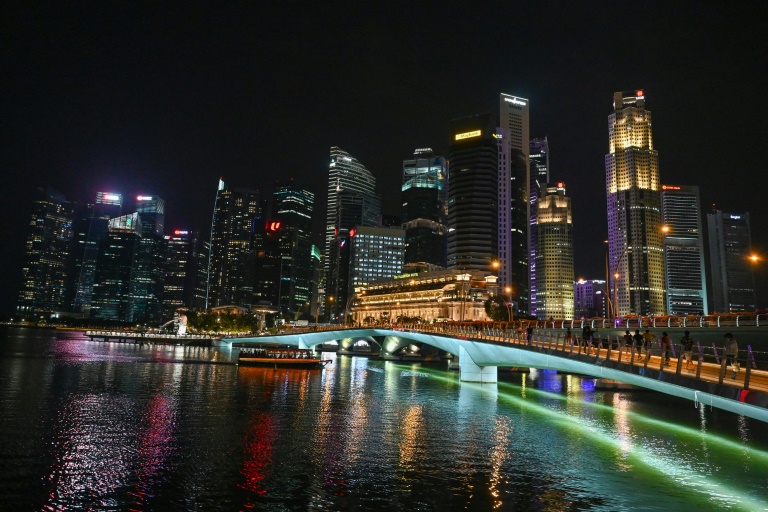
The 31-year-old was earlier believed to be in Singapore, where last month he gave his first media interview since the crypto operator folded in May.

Late Saturday, the SPF said in an email response to an AFP query that “Do Kwon is currently not in Singapore”.

“SPF will assist the Korean National Police Agency (KNPA) within the ambit of our domestic legislation and international obligations,” said the brief statement, which gave no further details.

Singapore’s Straits Times newspaper has reported that Kwon’s work permit in the city-state was due to expire on December 7, but his application for a renewal could be at risk now.

South Korean prosecutors have also issued arrest warrants for five other people — who were not named — linked to stablecoin TerraUSD and its sister token Luna.

Kwon’s Terra/Luna system disintegrated in May, with the price of both tokens plummeting to near zero, and the fallout hitting the wider crypto market. Its collapse sparked more than $500 billion in losses.

Stablecoins are designed to have a relatively stable price and are usually pegged to a real-world commodity or currency.

TerraUSD, however, was algorithmic — using code to maintain its price at around one US dollar.

Many investors lost their life savings when Luna and Terra entered a death spiral, and South Korean authorities have opened multiple criminal probes into the crash.

Close Bitnami banner
Bitnami