AFP

Alaskans assess damage as powerful storm rumbles north

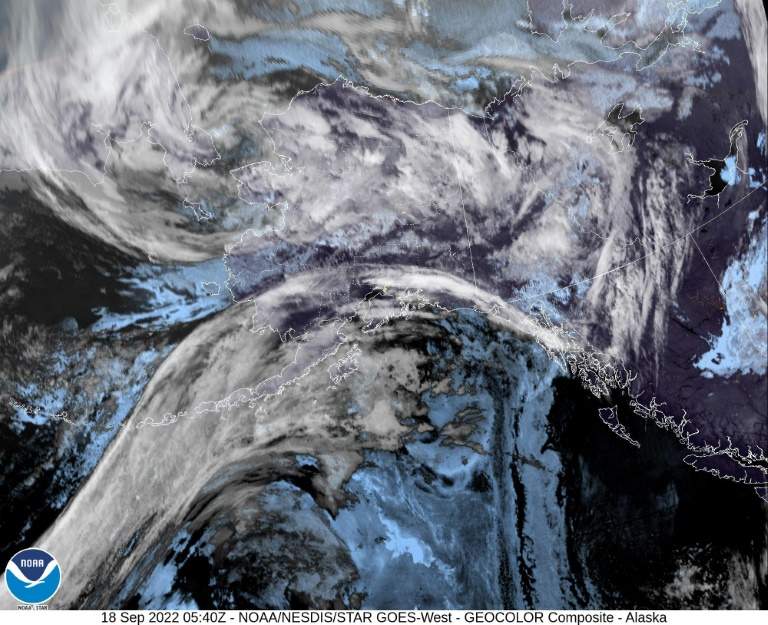
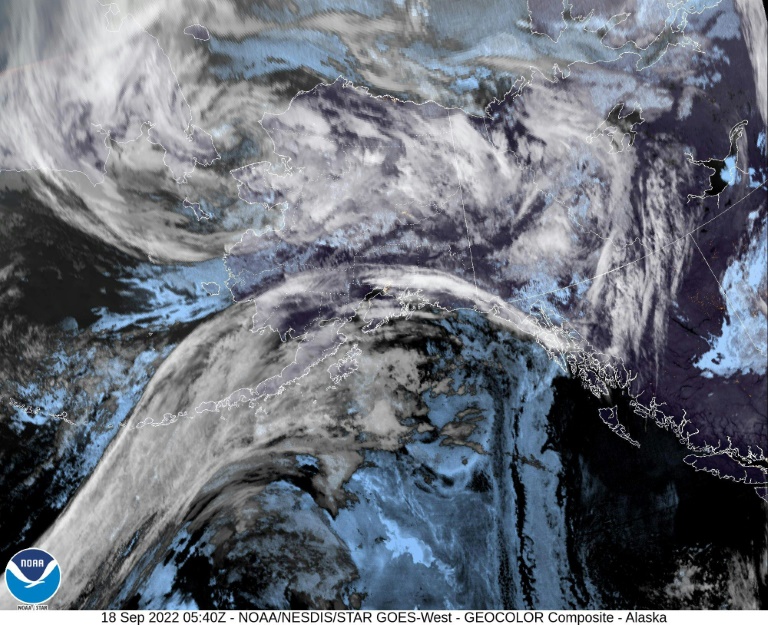
Residents in towns and villages on Alaska’s western coast were beginning Sunday to assess the damage from one of the most powerful storms to hit the region in decades.

The vast remains of Typhoon Merbok battered coastal towns as it rumbled northward, and by Sunday morning it had largely moved into the Chukchi Sea, north of the Bering Strait.

But coastal towns in that northern region remained under flood warnings Sunday, the National Weather Service (NWS) Fairbanks office tweeted.

The storm has hammered a vast stretch of Alaska’s lengthy coastline, bringing powerful winds, tidal surges and what the NWS described as “angry seas,” with waves of 50 feet (15 meters) or more.

Governor Mike Dunleavy has issued a disaster declaration.

Because of the remoteness of many coastal villages, and with communications limited, a full picture of the damage is expected to emerge slowly.

But officials and local residents said the destruction was severe. 

“So many communities I have visited, from Bethel, Unalakleet, Quinahgak, Hooper Bay and up to Nome and Teller, have been inundated by the storm,” Lisa Murkowski, one of Alaska’s US senators, tweeted Sunday.

“I am heartsick at the devastation.”

The state Emergency Operations Center said it had received “reports from multiple communities of power disruptions, damaged homes…flooding and infrastructure damage,” but no reports of injuries. 

Low-lying coastal areas were hardest hit, according to meteorologists and local news reports, with schools and airports flooded and some roads washed away. 

One small town — Golovin, on the Norton Sound — saw houses float away.

“We’ve had flooding in the past a few times, but it was never this severe,” Clarabelle Lewis, a tribal official with the Chinik Eskimo Community, told the Anchorage Daily News. “We’ve never had homes moved from their foundations.”

In Shaktoolik, a village of some 220 people on a gravelly spit between the Tagoomenik River and Norton Sound, Mayor Lars Sookiayak said that a berm built to protect the town from the sea — which had withstood many previous storms — had been wiped out.

“We’re pretty heartbroken,” he told Alaska Public Media News. “We’re almost becoming an island.”

Alaskans assess damage as powerful storm rumbles north

Residents in towns and villages on Alaska’s western coast were beginning Sunday to assess the damage from one of the most powerful storms to hit the region in decades.

The vast remains of Typhoon Merbok battered coastal towns as it rumbled northward, and by Sunday morning it had largely moved into the Chukchi Sea, north of the Bering Strait.

But coastal towns in that northern region remained under flood warnings Sunday, the National Weather Service (NWS) Fairbanks office tweeted.

The storm has hammered a vast stretch of Alaska’s lengthy coastline, bringing powerful winds, tidal surges and what the NWS described as “angry seas,” with waves of 50 feet (15 meters) or more.

Governor Mike Dunleavy has issued a disaster declaration.

Because of the remoteness of many coastal villages, and with communications limited, a full picture of the damage is expected to emerge slowly.

But officials and local residents said the destruction was severe. 

“So many communities I have visited, from Bethel, Unalakleet, Quinahgak, Hooper Bay and up to Nome and Teller, have been inundated by the storm,” Lisa Murkowski, one of Alaska’s US senators, tweeted Sunday.

“I am heartsick at the devastation.”

The state Emergency Operations Center said it had received “reports from multiple communities of power disruptions, damaged homes…flooding and infrastructure damage,” but no reports of injuries. 

Low-lying coastal areas were hardest hit, according to meteorologists and local news reports, with schools and airports flooded and some roads washed away. 

One small town — Golovin, on the Norton Sound — saw houses float away.

“We’ve had flooding in the past a few times, but it was never this severe,” Clarabelle Lewis, a tribal official with the Chinik Eskimo Community, told the Anchorage Daily News. “We’ve never had homes moved from their foundations.”

In Shaktoolik, a village of some 220 people on a gravelly spit between the Tagoomenik River and Norton Sound, Mayor Lars Sookiayak said that a berm built to protect the town from the sea — which had withstood many previous storms — had been wiped out.

“We’re pretty heartbroken,” he told Alaska Public Media News. “We’re almost becoming an island.”

Spielberg's 'The Fabelmans' wins Toronto festival top prize

Steven Spielberg’s deeply personal new movie “The Fabelmans” secured its position as an early Oscars frontrunner Sunday by winning the top prize at the Toronto International Film festival.

“The Fabelmans,” out in theaters in November, is a semi-autobiographical drama based on Spielberg’s childhood, covering his parents’ troubled marriage, anti-Semitic bullying and his early efforts directing zero-budget movies with his teenage friends.

It earned a raucous standing ovation from the audience at its world premiere last weekend at the Toronto festival, known as TIFF.

“As I said on stage the other night, above all I’m glad I brought this film to Toronto,” Spielberg said in a statement Sunday.

“This is the most personal film I’ve made and the warm reception from everyone in Toronto made my first visit to TIFF so intimate and personal for me and my entire ‘Fabelman’ family.”

Voted for by audiences, the People’s Choice Award at North America’s biggest film festival has become something of an early Oscars bellwether, predicting eventual Academy Award best-picture winners such as “Nomadland” in 2020.

Spielberg, considered one of Hollywood’s greatest living directors, has won three Academy Awards: best picture and best director for “Schindler’s List,” and best director again for “Saving Private Ryan.”

He has been nominated for 19 Oscars to date, and will be expected to add to that tally at next year’s Academy Awards, on March 12 in Los Angeles.

The last 10 winners of the Toronto People’s Choice Awards were all nominated for best picture at the Academy Awards, with three winning the Oscar, including 2019’s surprise victor “Green Book.”

“12 Years a Slave” (2013), “The King’s Speech” (2010) and “Slumdog Millionaire” (2008) all began their journeys to Oscar glory with the Toronto prize.

At its premiere last weekend, Spielberg told a rapturous audience how he had long wanted to make such a deeply personal movie, but had eventually been motivated by the “fear” of the pandemic.

“I don’t think anybody knew in March or April of 2020 what was going to be the state of the art, the state of life, even a year from then,” said Spielberg.

“I just felt that if I was going to leave anything behind, what was the thing that I really need to resolve and unpack about my mom and my dad and my sisters?” 

“It wasn’t now or never, but it almost felt that way,” said the 75-year-old director.

Toronto runners-up included “Women Talking” by Sarah Polley and “Glass Onion: A Knives Out Mystery” by Rian Johnson.

The top documentary prize went to Hubert Davis’s “Black Ice,” a Canadian movie about historic racism in the world of professional ice hockey.

The Toronto festival, known for its large cinephile crowds and A-list stars, was hit badly by the pandemic, but this year saw the return of packed audiences and red carpets.

Spielberg's 'The Fabelmans' wins Toronto festival top prize

Steven Spielberg’s deeply personal new movie “The Fabelmans” secured its position as an early Oscars frontrunner Sunday by winning the top prize at the Toronto International Film festival.

“The Fabelmans,” out in theaters in November, is a semi-autobiographical drama based on Spielberg’s childhood, covering his parents’ troubled marriage, anti-Semitic bullying and his early efforts directing zero-budget movies with his teenage friends.

It earned a raucous standing ovation from the audience at its world premiere last weekend at the Toronto festival, known as TIFF.

“As I said on stage the other night, above all I’m glad I brought this film to Toronto,” Spielberg said in a statement Sunday.

“This is the most personal film I’ve made and the warm reception from everyone in Toronto made my first visit to TIFF so intimate and personal for me and my entire ‘Fabelman’ family.”

Voted for by audiences, the People’s Choice Award at North America’s biggest film festival has become something of an early Oscars bellwether, predicting eventual Academy Award best-picture winners such as “Nomadland” in 2020.

Spielberg, considered one of Hollywood’s greatest living directors, has won three Academy Awards: best picture and best director for “Schindler’s List,” and best director again for “Saving Private Ryan.”

He has been nominated for 19 Oscars to date, and will be expected to add to that tally at next year’s Academy Awards, on March 12 in Los Angeles.

The last 10 winners of the Toronto People’s Choice Awards were all nominated for best picture at the Academy Awards, with three winning the Oscar, including 2019’s surprise victor “Green Book.”

“12 Years a Slave” (2013), “The King’s Speech” (2010) and “Slumdog Millionaire” (2008) all began their journeys to Oscar glory with the Toronto prize.

At its premiere last weekend, Spielberg told a rapturous audience how he had long wanted to make such a deeply personal movie, but had eventually been motivated by the “fear” of the pandemic.

“I don’t think anybody knew in March or April of 2020 what was going to be the state of the art, the state of life, even a year from then,” said Spielberg.

“I just felt that if I was going to leave anything behind, what was the thing that I really need to resolve and unpack about my mom and my dad and my sisters?” 

“It wasn’t now or never, but it almost felt that way,” said the 75-year-old director.

Toronto runners-up included “Women Talking” by Sarah Polley and “Glass Onion: A Knives Out Mystery” by Rian Johnson.

The top documentary prize went to Hubert Davis’s “Black Ice,” a Canadian movie about historic racism in the world of professional ice hockey.

The Toronto festival, known for its large cinephile crowds and A-list stars, was hit badly by the pandemic, but this year saw the return of packed audiences and red carpets.

King to host world leaders as UK counts down to queen's funeral

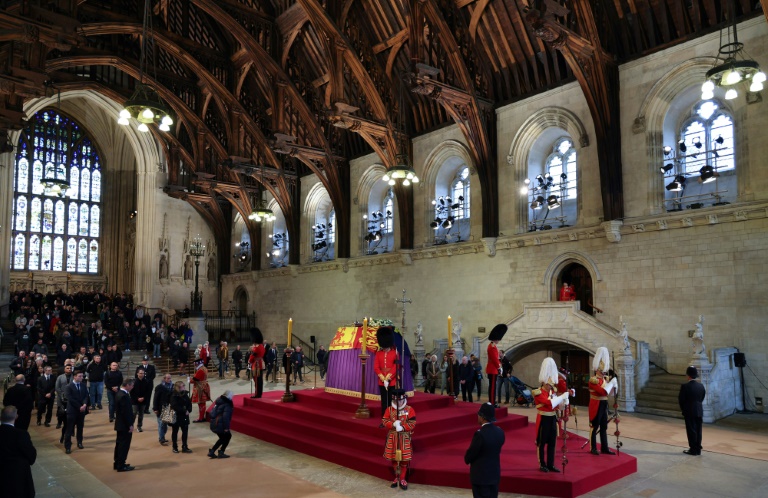
US President Joe Biden was to pay his last respects in London to Queen Elizabeth II on Sunday, as ordinary mourners waiting in marathon lines were warned that time was running out to view her coffin lying in state. 

After witnessing the sombre scene in parliament’s Westminster Hall, Biden, Japan’s Emperor Naruhito and other world leaders were due to attend a reception with King Charles III.

Biden, who flew in late Saturday, has said that Charles’s mother “defined an era” after she reigned for a record-breaking 70 years leading up to her death on September 8, aged 96.

Australia’s anti-monarchy Prime Minister Anthony Albanese, who viewed the lying-in-state and met Charles on Saturday, told Sky News Australia that the queen was “a constant reassuring presence”.

There was also a private audience at Buckingham Palace for Prime Minister Jacinda Ardern of New Zealand, which like Australia and 12 other Commonwealth realms now counts Charles as its sovereign.

“You could see that it meant a huge amount (to Charles) to have seen the sheer scale and outpouring of people’s love and affection for her late Majesty,” she told BBC television Sunday.

But in a sign of challenges ahead for the new king, Ardern added that she expected New Zealand to ditch the UK monarchy “over the course of my lifetime”.

Members of the public were already camping out in advance to catch a glimpse of Monday’s grand farewell at Westminster Abbey, which is expected to bring London to a standstill and be watched by billions of viewers worldwide.

– Country’s ‘glue’ –

E.J. Kelly, a 46-year-old school teacher from Northern Ireland, secured a prime spot with friends on the route the procession will take after the funeral.

“Watching it on television is wonderful but being here is something else,” she told AFP, equipped with camping chairs, warm clothing and extra socks.

“I will probably feel very emotional when it comes to it, but I wanted to be here to pay my respects.”

Crowds also thronged around Windsor Castle, west of London, where the queen’s coffin will be driven after the service for a private burial to lay her to rest alongside her late husband Prince Philip, her parents and her sister.

“I’ve lived here my whole life and I’ve never seen it this busy,” said Donna Lumbard, 32, a manager at a local restaurant. 

Starting with a single toll from Big Ben, British Prime Minister Liz Truss will lead a national minute’s silence at 8:00 pm (1900 GMT) on Sunday to reflect on the “life and legacy” of the queen.

Near the Scottish town of Falkirk, 96 lanterns were to be lowered into a “pool of reflection” at the foot of the Queen Elizabeth II Canal, before wreaths are placed in the water.

Those wanting to view the flag-draped casket have until 6:30 am (0530 GMT) on Monday to make it into the cavernous Westminster Hall opposite the abbey.

As the queue continued to snake for miles (kilometres) along the River Thames on Sunday, the waiting time stood at more than nine hours, and the line is likely to be closed by the evening.

“To avoid disappointment please do not set off to join the queue,” the government said.

Andy Sanderson, 46, a supermarket area manager, was in the line and finally reaching parliament.

“She was the glue that kept the country together,” he said.

“She doesn’t have an agenda whereas politicians do, so she can speak for the people.”

– Grandchildren’s vigil –

As mourners slowly filed by on Saturday evening, Prince William and his estranged younger brother Prince Harry led the queen’s eight grandchildren in a 12-minute vigil around the coffin.

Harry — who did two tours with the British Army in Afghanistan — wore the uniform of the Blues and Royals cavalry regiment in which he served.

The move appeared to be the latest olive branch offered by Charles towards Harry and his wife Meghan after they quit royal duties and moved to North America, later accusing the royal family of racism.

Queen Elizabeth’s state funeral, the first in Britain since the death of her first prime minister Winston Churchill in 1965, will take place Monday at Westminster Abbey at 11:00 am.

Reflecting on the queen’s wishes for the hour-long ceremony, the former archbishop of York, John Sentamu, said she “did not want what you call long, boring services”.

“The hearts and people’s cockles will be warmed,” he told BBC television.

– Tributes from Camilla, Andrew –

Leaders from Russia, Afghanistan, Myanmar, Syria and North Korea were not invited to join the 2,000 guests.

Moscow’s foreign ministry last week called the decision “deeply immoral”, and “blasphemous” to the queen’s memory. China will attend at the abbey, but was barred by parliamentary leaders from the lying-in-state.

As their private grief has played out in the glare of global attention, a fresh opinion poll from YouGov showed the royal family’s popularity has risen in the UK. 

William and his wife Kate topped the ranking of most popular royals while Charles saw his approval ratings rise 16 points since May.

The queen’s second son Prince Andrew, in disgrace over his links to billionaire US paedophile Jeffrey Epstein, paid tribute Sunday to the queen’s “knowledge and wisdom infinite, with no boundary or containment”.

Camilla gave her first public comments as the new queen consort, recalling her mother-in-law’s smile and “wonderful blue eyes”. 

“It must have been so difficult for her being a solitary woman” in a world dominated by men, Charles’s wife said in televised comments.

“There weren’t women prime ministers or presidents. She was the only one so I think she carved her own role.”

King to host world leaders as UK counts down to queen's funeral

US President Joe Biden was to pay his last respects in London to Queen Elizabeth II on Sunday, as ordinary mourners waiting in marathon lines were warned that time was running out to view her coffin lying in state.

After witnessing the sombre scene in parliament’s Westminster Hall, Biden, Japan’s Emperor Naruhito and other world leaders were due to attend a reception with King Charles III.

Biden, who flew in late Saturday, has said that Charles’s mother “defined an era” after she reigned for a record-breaking 70 years leading up to her death on September 8, aged 96.

Australia’s anti-monarchy Prime Minister Anthony Albanese, who viewed the lying-in-state and met Charles on Saturday, told Sky News Australia that the queen was “a constant reassuring presence”.

There was also a private audience at Buckingham Palace for Prime Minister Jacinda Ardern of New Zealand, which like Australia and 12 other Commonwealth realms now counts Charles as its sovereign.

“You could see that it meant a huge amount (to Charles) to have seen the sheer scale and outpouring of people’s love and affection for her late Majesty,” she told BBC television Sunday.

But in a sign of challenges ahead for the new king, Ardern added that she expected New Zealand to ditch the UK monarchy “over the course of my lifetime”.

The first members of the public were already camping out in advance to catch a glimpse of Monday’s grand farewell at Westminster Abbey, which is expected to bring London to a standstill and be watched by billions of viewers worldwide.

– Country’s ‘glue’  –

E.J. Kelly, a 46-year-old school teacher from Northern Ireland, secured a prime spot with friends on the route the procession will take after the funeral.

“Watching it on television is wonderful but being here is something else,” she told AFP, equipped with camping chairs, warm clothing and extra socks.

“I will probably feel very emotional when it comes to it, but I wanted to be here to pay my respects.”

Fiona Ogilvie, 54, who served in the Royal Air Force, had taken up position outside Westminster Abbey.

“When you join the RAF you swear an allegiance to the queen, and that kind of stays with you,” she said.

“She was still doing her duty up to two days before she died, and you can’t ask more than that,” Ogilvie added, after the queen appointed Liz Truss as her 15th prime minister in one of her last official acts.

Starting with a single toll from Big Ben, Britain will hold a minute’s silence at 8:00 pm (1900 GMT) on Sunday to reflect on the “life and legacy” of the queen.

Near the Scottish town of Falkirk, 96 lanterns were to be lowered into a “pool of reflection” at the foot of the Queen Elizabeth II Canal, before wreaths are placed in the water.

Those wanting to view the flag-draped casket have until 6:30 am (0530 GMT) on Monday to make it into the cavernous Westminster Hall opposite the abbey.

As the queue continued to snake for miles (kilometres) along the River Thames on Sunday, the waiting time stood at more than 13 hours, and the line is likely to be closed by the evening.

“To avoid disappointment please do not set off to join the queue,” the government said.

Andy Sanderson, 46, a supermarket area manager, was in the line and finally reaching parliament.

“She was the glue that kept the country together,” he said.

“She doesn’t have an agenda whereas politicians do, so she can speak for the people.”

– Grandchildren’s vigil –

As mourners slowly filed by on Saturday evening, Prince William and his estranged younger brother Prince Harry led the queen’s eight grandchildren in a 12-minute vigil around the coffin.

Harry — who did two tours with the British Army in Afghanistan — wore the uniform of the Blues and Royals cavalry regiment in which he served.

The move appeared to be the latest olive branch offered by Charles towards Harry and his wife Meghan after they quit royal duties and moved to North America, later accusing the royal family of racism.

Queen Elizabeth’s state funeral, the first in Britain since the death of her first prime minister Winston Churchill in 1965, will take place Monday at Westminster Abbey in London at 11:00 am.

Reflecting on the queen’s wishes for the hour-long ceremony, the former archbishop of York, John Sentamu, said she “did not want what you call long, boring services”.

“The hearts and people’s cockles will be warmed and at the same time, there will be a moment of saying this is a funeral service that is glorious in its setting,” he told BBC television.

– Tributes from Camilla, Andrew –

Leaders from Russia, Afghanistan, Myanmar, Syria and North Korea were not invited to join the 2,000 guests.

Moscow’s foreign ministry last week called the decision “deeply immoral”, and “blasphemous” to the queen’s memory. China will attend at the abbey, but was barred by parliamentary leaders from the lying-in-state.

After the funeral, the queen’s coffin will be driven to Windsor Castle, west of London, for a private burial when she will be laid to rest alongside her late husband Prince Philip, her parents and her sister.

The Queen’s second son Prince Andrew, in disgrace over his links to billionaire US paedophile Jeffrey Epstein, paid tribute Sunday to the queen’s “knowledge and wisdom infinite, with no boundary or containment”.

Camilla gave her first public comments as the new queen consort, recalling her mother-in-law’s smile and “wonderful blue eyes”. 

“It must have been so difficult for her being a solitary woman” in a world dominated by men, Charles’s wife said in televised comments.

“There weren’t women prime ministers or presidents. She was the only one so I think she carved her own role.”
'Dangerous' Typhoon Nanmadol slams into Japan

Typhoon Nanmadol made landfall in southwestern Japan on Sunday night, as authorities urged millions of people to take shelter from the powerful storm’s high winds and torrential rain.

The storm officially made landfall around 7 pm local time (1000 GMT) as its eyewall arrived near Kagoshima city, the Japan Meteorological Agency (JMA) said.

It was packing gusts of up to 234 kilometres (146 miles) per hour and had already dumped up to 500 mm of rain in less than 24 hours on parts of southwestern Kyushu region.

At least 20,000 people were spending the night in shelters in Kyushu’s Kagoshima and Miyazaki prefectures, where the JMA has issued a rare “special warning” — an alert that is issued only when it forecasts conditions seen once in several decades.

National broadcaster NHK, which collates information from local authorities, said more than seven million people had been told to move to shelters or take refuge in sturdy buildings to ride out the storm.

The evacuation warnings are not mandatory, and authorities have at times struggled to convince people to move to shelters before extreme weather.

They sought to drive home their concerns about the weather system throughout the weekend.

“Please stay away from dangerous places, and please evacuate if you feel even the slightest hint of danger,” Prime Minister Fumio Kishida tweeted after convening a government meeting on the storm.

“It will be dangerous to evacuate at night. Please move to safety while it’s still light outside.”

The JMA has warned the region could face “unprecedented” danger from high winds, storm surges and torrential rain and called the storm “very dangerous.”

“Areas affected by the storm are seeing the sort of rain that has never been experienced before,” Hiro Kato, the head of the Weather Monitoring and Warning Centre, told reporters Sunday.

“Especially in areas under landslide warnings, it is extremely probable that some kinds of landslides are already happening.”

He urged “maximum caution even in areas where disasters do not usually happen.”

By Sunday evening, utility companies said nearly 200,000 homes across the region were without power.

Trains, flights and ferry runs were cancelled until the passage of the storm, and even some convenience stores — generally open all hours and considered a lifeline in disasters — were shutting their doors.

– ‘Highest caution possible’ –

“The southern part of the Kyushu region may see the sort of violent wind, high waves and high tides that have never been experienced before,” the JMA said Sunday, urging residents to exercise “the highest caution possible”.

On the ground, an official in Kagoshima’s Izumi city said conditions were deteriorating rapidly by Sunday afternoon.

“The wind has become extremely strong. Rain is falling hard too,” he told AFP. “It’s a total white-out outside. Visibility is almost zero.”

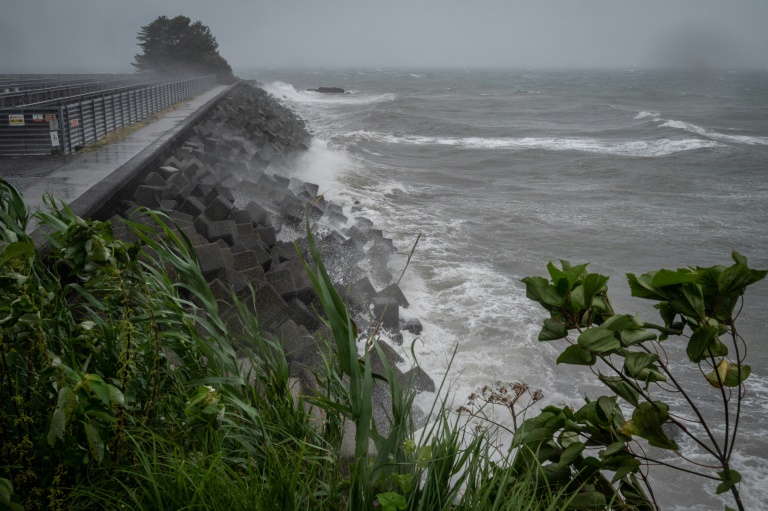
In Kyushu’s Minamata city, fishing boats tied up for safety bobbed on the waves, as spray from the sea and bands of rain sluiced the boardwalk.

The storm, which has weakened slightly as it approached land, is expected to turn northeast and sweep up across Japan’s main island through early Wednesday.

Japan is currently in typhoon season and faces around 20 such storms a year, routinely seeing heavy rains that cause landslides or flash floods.

In 2019, Typhoon Hagibis smashed into Japan as it hosted the Rugby World Cup, claiming the lives of more than 100 people. 

A year earlier, Typhoon Jebi shut down Kansai Airport in Osaka, killing 14 people.

And in 2018, floods and landslides killed more than 200 people in western Japan during the country’s annual rainy season.

Scientists say climate change is increasing the severity of storms and causing extreme weather such as heat waves, droughts and flash floods to become more frequent and intense.

King to host world leaders as UK counts down to queen's funeral

US President Joe Biden was Sunday to pay his last respects in London to Queen Elizabeth II, as ordinary mourners waiting in marathon lines were warned that time was running out to view her coffin lying in state.

After witnessing the sombre scene in parliament’s Westminster Hall, Biden, Japan’s Emperor Naruhito and other world leaders were due to attend a reception with the late queen’s successor, King Charles III.

Biden, who flew in late Saturday, has said that Elizabeth “defined an era” after she reigned for a record-breaking 70 years leading up to her death on September 8, aged 96.

Australia’s anti-monarchy Prime Minister Anthony Albanese, who viewed the lying-in-state and met Charles on Saturday, told Sky News Australia that the queen was “a constant reassuring presence”.

There was also a private audience at Buckingham Palace for Prime Minister Jacinda Ardern of New Zealand, which like Australia and 12 other Commonwealth realms now counts Charles as its sovereign.

“You could see that it meant a huge amount (to Charles) to have seen the sheer scale and outpouring of people’s love and affection for her late Majesty,” she told BBC television Sunday.

Commonwealth leaders were among dozens of heads of state and government in attendance, as Britain stages its biggest-ever policing operation.

The first members of the public were already camping out in advance to catch a glimpse of Monday’s grand farewell at Westminster Abbey, which is expected to bring London to a standstill and be watched by billions of viewers worldwide.

– ‘The nation’s granny’ –

“We wanted to have a good spot to see the procession,” said Royal Navy veteran Bill Parry, 59, as he waited in camping chairs with two other former servicemen.

“It’s not much to ask to sleep outside considering everything the queen did for us: 70 years of duty,” he told AFP.

Britain will hold a minute’s silence at 8:00 pm (1900 GMT) on Sunday to reflect on the “life and legacy” of the queen ahead of her funeral. 

Eurostar said it would observe the moment on its cross-Channel trains.

Near the Scottish town of Falkirk, 96 lanterns were to be lowered into a “pool of reflection” at the foot of the Queen Elizabeth II Canal, before wreaths are placed in the water.

Those wanting to view the flag-draped casket have until 6:30 am (0530 GMT) on Monday to make it into the cavernous Westminster Hall opposite the abbey.

As the queue continued to snake for miles (kilometres) along the River Thames Sunday morning, the waiting time stood at more than 13 hours, and the line is likely to be closed by the evening.

“To avoid disappointment please do not set off to join the queue,” the government said.

IT worker Shaun Mayo, 27, was among those relieved to have made it to Westminster Hall after queueing for 14 hours to pay his respects.

“It was incredibly emotional. She was like the nation’s granny,” he said.

“We’ll all miss her.”

A man who was arrested after approaching the casket on Friday has been charged with a public-order offence, police said.

– Grandchildren’s vigil –

As mourners slowly filed by on Saturday evening, Prince William and his estranged younger brother Prince Harry led the queen’s eight grandchildren in a 12-minute vigil around the coffin.

Harry — who did two tours with the British Army in Afghanistan — wore the uniform of the Blues and Royals cavalry regiment in which he served.

The move appeared to be the latest olive branch offered by Charles towards Harry and his wife Meghan after they quit royal duties and moved to North America, later accusing the royal family of racism.

The king and his eldest son William, the new heir to the throne, had earlier surprised those standing in line along the Thames by staging an unscheduled walkabout to shake their hands and thank them for coming.

Queen Elizabeth’s state funeral, the first in Britain since the death of her first prime minister Winston Churchill in 1965, will take place Monday at Westminster Abbey in London at 11:00 am (1000 GMT).

Reflecting on the queen’s wishes for the hour-long ceremony, the former archbishop of York, John Sentamu, said she “did not want what you call long, boring services”.

“The hearts and people’s cockles will be warmed and at the same time, there will be a moment of saying this is a funeral service that is glorious in its setting,” he told BBC television.

– Russia says ‘immoral’ –

Leaders from Russia, Afghanistan, Myanmar, Syria and North Korea were not invited to join the 2,000 guests.

Moscow’s foreign ministry last week called the decision “deeply immoral”, and “blasphemous” to the queen’s memory. China will attend at the abbey, but was barred by parliamentary leaders from the lying-in-state.

After the funeral, the queen’s coffin will be driven to Windsor Castle, west of London, for a private burial when she will be laid to rest alongside her late husband Prince Philip, her parents and her sister.

Camilla gave her first public comments as the new queen consort, recalling her mother-in-law’s smile and “wonderful blue eyes”. 

“It must have been so difficult for her being a solitary woman” in a world dominated by men, Charles’s wife said in televised comments.

“There weren’t women prime ministers or presidents. She was the only one so I think she carved her own role.”

Strong quake strikes eastern Taiwan, tsunami threat lifted

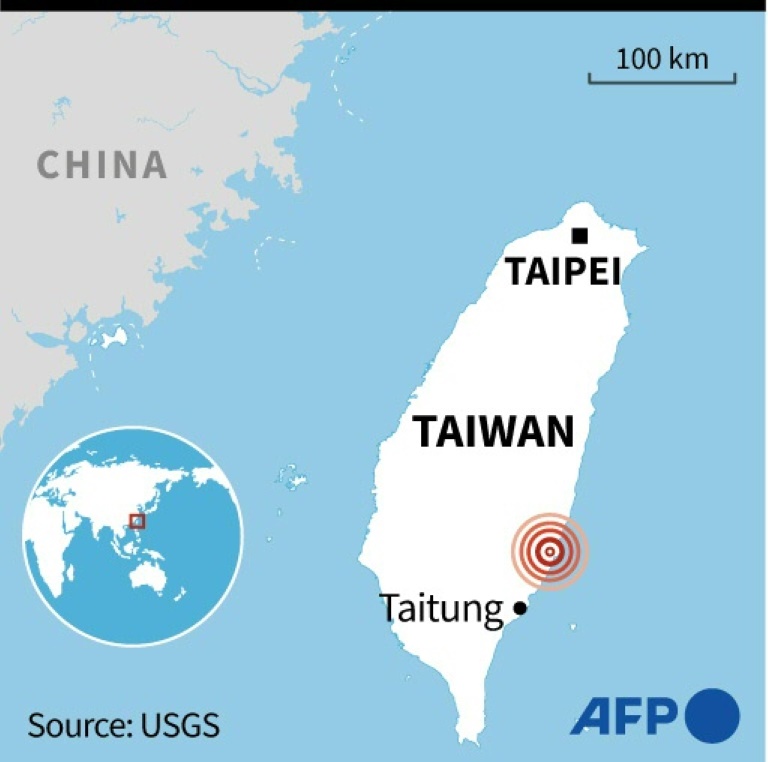
A strong earthquake struck southeastern Taiwan, bringing at least one building down in a small town and tearing up roads as forecasters said the threat of a regional tsunami had passed.

The quake hit at 2:44 pm (0644 GMT) about 50 kilometres (30 miles) north of the city of Taitung at a depth of 10 kilometres, the United States Geological Survey said.

Its initial strength was given as magnitude 7.2 but USGS later downgraded it to a 6.9-magnitude quake. Taiwan’s weather bureau recorded it as 6.8-magnitude. 

Japan’s Meteorological Agency and the Pacific Tsunami Warning Center issued tsunami advisories shortly after the quake, but both later sent updated bulletins saying there was no longer a threat of high waves.

In the Taiwanese town of Yuli, a building that hosted a 7/11 convenience store on the ground floor collapsed.

Video footage posted by Taiwan’s Central News Agency showed panicked residents running towards the building, which had caved in and sent up a thick cloud of dust.

Taiwan Railways Administration (TRA) said a train derailed in Dongli station in Hualien after it was hit by concrete from an overhead canopy that came loose during the quake.

Photographs released by CNA showed the train’s six carriages leaning at an angle in the station. 

TRA said the 20 onboard passengers were evacuated and no injuries were reported. 

Shaking was also felt in the capital Taipei and the southwestern city of Kaohsiung, with residents posting videos of chandeliers and paintings swaying on social media.

Taiwan’s President Tsai Ing-wen urged people to be vigilant for further aftershocks in the coming hours. 

“Water and electricity supplies in some areas are also affected by the earthquake,” she wrote on Facebook. “The related disaster relief work is in full swing.”

– Broken bridge, swimming pool waves –

Many expressed the kind of resilience that comes with living on an island that frequently experiences earthquakes.

In one video posted online, a man said he was trapped on a bridge where the road at either end had collapsed into a twisted mess of tarmac and concrete.

“This is troublesome,” he could be heard saying. “The whole bridge is broken”. 

In another Facebook post, Ou Chin Te shared footage from the swimming pool on the 60th floor of The One — a skyscraper in Kaohsiung and Taiwan’s fourth-highest building. 

The tremors had turned the pool into a wobbly mass of waves. 

“It’s shaking super big, I’m on 60th floor, it’s so scary,” a laughing man could be heard saying in the video.

A 6.6-magnitude quake hit the same region on Saturday and there have been multiple tremors since, with minimal damage in what is a mountainous and sparsely populated rural region. 

But Sunday’s quake was much stronger.

The China Earthquake Network Centre said tremors were felt in coastal areas including Fujian, Guangdong, Jiangsu and Shanghai.

Taiwan is regularly hit by earthquakes as the island lies near the junction of two tectonic plates.

The mountainous island sits on the “Ring of Fire”, an arc of intense seismic activity that stretches through Southeast Asia and across the Pacific basin.

Most of Taiwan’s population lives on the flat western coast and in the capital Taipei.

The scenic eastern coast is more remote and less populated but a major tourist draw.

There are few international tourists in Taiwan these days because the island maintains mandatory Covid quarantine for most arrivals.  

Taiwan is regularly hit by quakes and most cause minimal damage but the island also has a long history of deadly tremors. 

Hualien, a tourist hotspot, was struck by a 6.4-magnitude earthquake in 2018 that killed 17 people and injured nearly 300. 

In September 1999, a 7.6-magnitude quake killed around 2,400 people in the deadliest natural disaster in the island’s history.

Thousands in shelters as 'dangerous' typhoon hits Japan

Thousands of people took refuge in shelters in southwestern Japan on Sunday as powerful Typhoon Nanmadol churned towards the region, prompting authorities to urge over four million residents to evacuate.

The Japan Meteorological Agency (JMA) has issued a rare “special warning” for Kagoshima and Miyazaki in the Kyushu region — an alert that is issued only when it forecasts conditions seen once in several decades.

By Sunday morning, heavy rain and high winds lashed the area on Japan’s southern island, with nearly 98,000 households in Kagoshima, Kumamoto, Nagasaki and Miyazaki already without power.

Trains, flights and ferry runs were cancelled until the passage of the storm, and even some convenience stores — generally open all hours and considered a lifeline in disasters — were shutting their doors.

“Please stay away from dangerous places, and please evacuate if you feel even the slightest hint of danger,” Prime Minister Fumio Kishida tweeted after convening a government meeting on the storm.

“It will be dangerous to evacuate at night. Please move to safety while it’s still light outside,” he added.

The JMA has warned the region could face “unprecedented” danger from high winds, storm surges and torrential rain.

“Maximum caution is required,” Ryuta Kurora, head of the JMA’s forecast unit said on Saturday.

“It’s a very dangerous typhoon.”  

“The wind will be so fierce that some houses might collapse,” Kurora told reporters, also warning of flooding and landslides.

National broadcaster NHK, which collates local warnings, said more than four million people across Kyushu were issued evacuation warnings, with officials in Kagoshima and Miyazaki saying over 15,000 people were in local shelters by Sunday afternoon.

The evacuation warnings call on people to move to shelters or alternative accommodation that can withstand extreme weather.

But they are not mandatory, and during past extreme weather events authorities have struggled to convince residents to take shelter quickly enough.

Kurora urged people to move before the worst of the storm arrived and warned that even in sturdy buildings residents would need to take precautions.

“Please move into sturdy buildings before violent winds start to blow and stay away from windows even inside sturdy buildings,” he told a late-night press conference.

– ‘Highest caution possible’ –

By Sunday morning, bullet train operations in the area were halted, and NHK said hundreds of flights had been cancelled.

“The southern part of the Kyushu region may see the sort of violent wind, high waves and high tides that have never been experienced before,” the JMA said Sunday, urging residents to exercise “the highest caution possible”.

On the ground, an official in Kagoshima’s Izumi city said conditions were deteriorating rapidly.

“The wind has become extremely strong. Rain is falling hard too,” he told AFP. “It’s a total white-out outside. Visibility is almost zero.”

On the coast in Kyushu’s Minamata city, fishing boats tied up for safety bobbed on the waves, as spray from the sea and bands of rain sluiced the boardwalk.

As of 1 pm (0400 GMT), the typhoon was located above tiny Yakushima island, packing gusts up to 234 kilometres (146 miles) per hour.

It is expected to make landfall in Kyushu on Sunday evening, before turning northeast and sweeping up across Japan’s main island through early Wednesday.

Japan is currently in typhoon season and faces around 20 such storms a year, routinely seeing heavy rains that cause landslides or flash floods.

In 2019, Typhoon Hagibis smashed into Japan as it hosted the Rugby World Cup, claiming the lives of more than 100 people. 

A year earlier, Typhoon Jebi shut down Kansai Airport in Osaka, killing 14 people.

And in 2018, floods and landslides killed more than 200 people in western Japan during the country’s annual rainy season.

Scientists say climate change is increasing the severity of storms and causing extreme weather such as heat waves, droughts and flash floods to become more frequent and intense.

Close Bitnami banner
Bitnami