AFP

Hong Kongers rush to learn new skills ahead of life abroad

Inside the bowels of a Hong Kong industrial building, Eric Pun was among two dozen people crammed into a classroom learning to drill holes — acquiring a new set of skills before heading abroad.

Savvy businesses have started offering crash courses in subjects like home repair and hairdressing, capitalising on a wave of people departing Hong Kong as China cracks down on dissent and strict pandemic rules upend the economy.

For Pun, a 35-year-old nurse emigrating to Australia with his family, taking the home repair class was both a practical cost-saving measure and a way to prepare mentally for the unknown.

“In Hong Kong, if there is a problem you can go to the property management office or hire someone from the mall… but when my family lives in a house, I’ll have to rely on myself,” he told AFP.

Spending a day at Renobro, one of the handful of companies offering home-repair lessons, costs HK$1,980 ($250) and courses are fully booked weeks in advance, according to company co-founder and instructor Lau Chun-yu.

“More than a thousand people have participated in our course,” Lau said.

“When we first started, we didn’t expect so many people would be emigrating.” 

Lau said his students, who are mostly in their thirties and include doctors and teachers, race through a one-day syllabus of more than 40 skills, such as caulking, plastering and rewiring appliances.

“Most of them aren’t well-prepared, but… they hope to go over as soon as possible,” he said, citing fears that foreign countries may tighten immigration controls in the long run.

– Brain drain –

Hong Kong is currently experiencing an exodus of local and foreign talent.

Many residents have baulked at Beijing’s sweeping crackdown on dissent following huge and sometimes violent democracy protests three years ago.

Stringent zero-Covid rules also remain in place two and half years into the pandemic, restricting daily life and isolating the city internationally.

Latest census figures showed a record dip in Hong Kong’s population, which fell 1.6 percent to 7.29 million compared with a year earlier. The labour force has plunged to 3.75 million, the lowest in nearly a decade.

Many of those leaving are families with school-aged children. 

Official primary school figures released earlier this month showed there were 70 fewer classes across 60 schools this academic year. More than 4,000 teachers have left their jobs in the past school year.

The United Kingdom became one of the most popular destinations for Hong Kongers after it announced a visa scheme that provided a pathway to citizenship, arguing Beijing had abandoned its pre-handover promise to allow residents key freedoms and autonomy. 

So far more than 140,000 people have applied under the British scheme since it was launched in January 2021.

Other common choices for relocation include Canada, Australia and the United States, mirroring a similar wave of emigration that occurred ahead of Hong Kong’s 1997 handover from Britain.

– ‘I want to be equipped’ –

Despite their optimism for life overseas, many would-be emigrants told AFP they were worried about job prospects and wanted to learn more skills as insurance.

Fashion retailer Kimi Chau, 35, took a series of hairdressing classes in preparation for her move to Britain along with her husband and five-year-old.

“I want to be equipped for a job after I’ve arrived… If I could learn more skills before I leave, then if the opportunity came along for me to open up a business, I would be more confident,” she told AFP.

Chau said her concerns about Hong Kong’s education system amid a shifting political climate drove her to leave.

“Because I have a kid, the issue felt closer to home and I didn’t take a long time to decide.” 

On a sweltering August afternoon, Chau and other hairdressing students brought along friends and family members to the salon where they took their classes for an informal graduation ceremony and a bittersweet farewell.

Instructor Jason Yip said the hairdressing industry has a relatively low entry threshold and Hong Kongers can get a job quickly, adding that roughly one-third of his students plan to emigrate.

Yip added that many of his students appreciate the social dimension of hairdressing, as a way to stay close to family members and to connect with like-minded Hong Kongers.

“For them, (hairdressing) can become a kind of hobby, and they are quite happy to have it after arriving in a new place,” Yip said. 

“That kind of joy is shared and there is a sense of achievement.”
Indonesian gig drivers fear hardship after fuel price hike

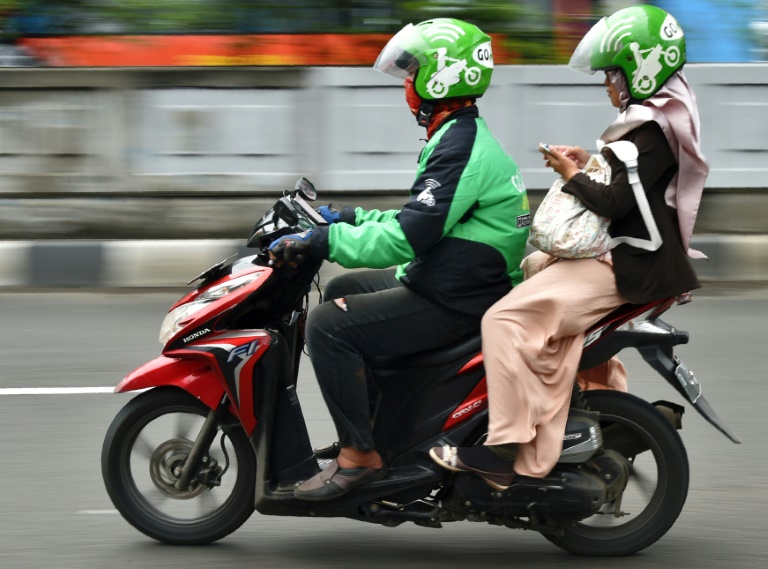
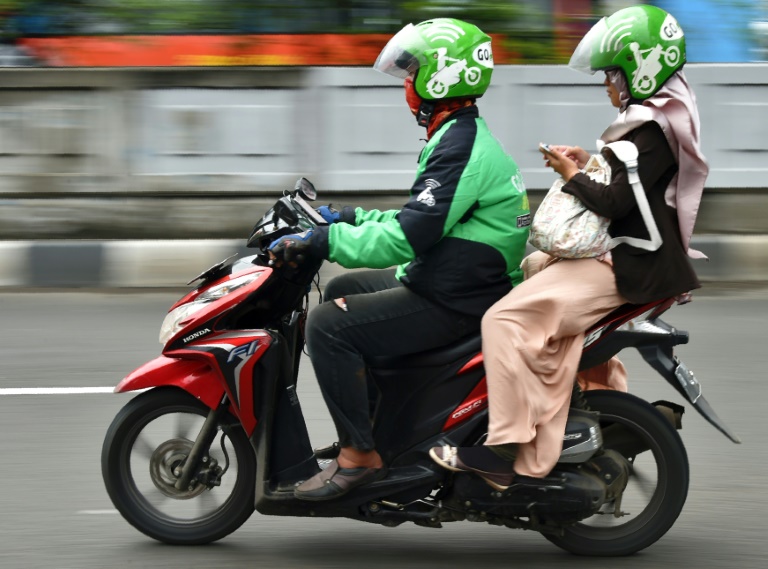
Sitting on the side of a Jakarta road anxiously waiting for his phone to ping, driver Muhammad Ridwan says it is now barely worth hurtling through thick smog every day to ferry passengers.

A 30 percent hike in fuel prices spurred hundreds of drivers of the most popular ride-hailing apps to hold protests across Indonesia as they struggle to make ends meet.

“I sometimes don’t eat a proper meal the whole day to allocate my cash for fuel. If I don’t have fuel, how can I work?,” asked Ridwan, a contractor for Gojek — which alongside Singapore’s Grab is among Asia’s most valuable start-ups.

The drivers operate in an unregulated market and critics say the firms exploit them as “partners” or contractors, taking large cuts of their daily income.

To cut Indonesia’s deficit during rising global inflation and soaring energy prices due to the war in Ukraine, President Joko Widodo slashed fuel subsidies.

It pushed the price of Petralite — Indonesia’s cheapest fuel choice — from about 7,650 rupiah (50 cents) to 10,000 (67 cents) per litre.

– ‘Cannot accept’ cost –

On-demand drivers say the two ride-hailing giants have only hiked fares slightly — to the tune of 800 rupiah (5 cents) per kilometre — to cover the additional costs.

Both Gojek and Grab told AFP they imposed a rate change in line with government regulation.

Gojek, which earlier this year merged with e-commerce platform Tokopedia in a multibillion-dollar deal, said the objective of the rate change was to “support driver partners”.

Grab said it was “designed to protect and maintain our driver-partners’ welfare”.

They both declined to disclose the rate increase but union leaders said it fell short of drivers’ expectations.

“Drivers across Indonesia cannot accept the fare adjustment,” said Igun Wicaksono, who heads a union of more than 100,000 drivers.

On a good day, drivers can earn up to 150,000 rupiah ($10). But where a re-fuelling stop once cost 20,000 rupiah ($1.35), it can now cost up to 35,000 rupiah ($2.35).

Drivers sometimes have to refuel twice in a shift, leaving them with a threadbare profit.

– ‘Don’t just throw promises’ –

More competition from cheaper delivery apps is adding further pressure on Gojek and Grab drivers, leading to fears they won’t be able to provide for their families.

“It significantly burdens me whenever I buy fuel these days,” said 38-year-old Grab driver Iwan Nur Akbar, who had waited an hour for an order to ping on his phone.

“Thankfully I can still afford food for my family as we regularly get rice from government schemes,” he said.

The gig economy, with its complex rewards-based system, has been in the spotlight globally in recent years with workers in several countries holding protests against their tech employers. 

Anger was already bubbling in Indonesia before the fuel price hike with claims of unfair practices and poor working conditions.

In July, one driver sewed his lips shut to signal how drivers’ concerns on go unheard.

Gig drivers warn that the lack of action could result in mass protests across the country. So far, protests have been limited to a few hundred, and met with a huge deployment of around 8,000 police officers in Jakarta.

With Grab and Gojek accounting for more than four million drivers, that is a daunting prospect for the government.

“Don’t just throw promises,” said Gojek driver Saiful Ridwan, 38, referring to government assurances of help as he waited outside Jakarta’s Pasar Senen wholesale market.

“Don’t let poor people become poorer.”  

Indonesian gig drivers fear hardship after fuel price hike

Sitting on the side of a Jakarta road anxiously waiting for his phone to ping, driver Muhammad Ridwan says it is now barely worth hurtling through thick smog every day to ferry passengers.

A 30 percent hike in fuel prices spurred hundreds of drivers of the most popular ride-hailing apps to hold protests across Indonesia as they struggle to make ends meet.

“I sometimes don’t eat a proper meal the whole day to allocate my cash for fuel. If I don’t have fuel, how can I work?,” asked Ridwan, a contractor for Gojek — which alongside Singapore’s Grab is among Asia’s most valuable start-ups.

The drivers operate in an unregulated market and critics say the firms exploit them as “partners” or contractors, taking large cuts of their daily income.

To cut Indonesia’s deficit during rising global inflation and soaring energy prices due to the war in Ukraine, President Joko Widodo slashed fuel subsidies.

It pushed the price of Petralite — Indonesia’s cheapest fuel choice — from about 7,650 rupiah (50 cents) to 10,000 (67 cents) per litre.

– ‘Cannot accept’ cost –

On-demand drivers say the two ride-hailing giants have only hiked fares slightly — to the tune of 800 rupiah (5 cents) per kilometre — to cover the additional costs.

Both Gojek and Grab told AFP they imposed a rate change in line with government regulation.

Gojek, which earlier this year merged with e-commerce platform Tokopedia in a multibillion-dollar deal, said the objective of the rate change was to “support driver partners”.

Grab said it was “designed to protect and maintain our driver-partners’ welfare”.

They both declined to disclose the rate increase but union leaders said it fell short of drivers’ expectations.

“Drivers across Indonesia cannot accept the fare adjustment,” said Igun Wicaksono, who heads a union of more than 100,000 drivers.

On a good day, drivers can earn up to 150,000 rupiah ($10). But where a re-fuelling stop once cost 20,000 rupiah ($1.35), it can now cost up to 35,000 rupiah ($2.35).

Drivers sometimes have to refuel twice in a shift, leaving them with a threadbare profit.

– ‘Don’t just throw promises’ –

More competition from cheaper delivery apps is adding further pressure on Gojek and Grab drivers, leading to fears they won’t be able to provide for their families.

“It significantly burdens me whenever I buy fuel these days,” said 38-year-old Grab driver Iwan Nur Akbar, who had waited an hour for an order to ping on his phone.

“Thankfully I can still afford food for my family as we regularly get rice from government schemes,” he said.

The gig economy, with its complex rewards-based system, has been in the spotlight globally in recent years with workers in several countries holding protests against their tech employers. 

Anger was already bubbling in Indonesia before the fuel price hike with claims of unfair practices and poor working conditions.

In July, one driver sewed his lips shut to signal how drivers’ concerns on go unheard.

Gig drivers warn that the lack of action could result in mass protests across the country. So far, protests have been limited to a few hundred, and met with a huge deployment of around 8,000 police officers in Jakarta.

With Grab and Gojek accounting for more than four million drivers, that is a daunting prospect for the government.

“Don’t just throw promises,” said Gojek driver Saiful Ridwan, 38, referring to government assurances of help as he waited outside Jakarta’s Pasar Senen wholesale market.

“Don’t let poor people become poorer.”  

Away game: Qatar World Cup looms as money-spinner for Dubai

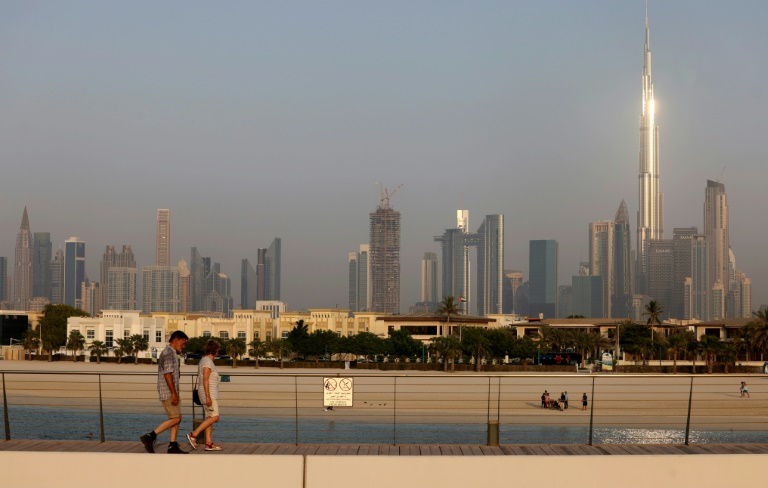
The United Arab Emirates did not qualify for the Qatar World Cup but it will be a winner anyway if an overspill of fans floods its hotels, restaurants and planes.

With little investment the UAE, and in particular Dubai, stands to gain if, as expected, supporters opt to stay in the tourism hotspot instead of tiny Gulf neighbour Qatar during the November-December tournament.

High accommodation prices in the Qatari capital Doha and Dubai’s more permissive environment — including a wider availability of alcohol — could entice fans, experts say.

Budget airline flydubai will run at least 30 return flights a day to Doha, just an hour away, part of a daily airlift of 160 shuttle services from cities in the resource-rich Gulf.

Dubai “has relatively relaxed social standards with respect to certain aspects of culture, such as alcohol consumption and clothing codes”, said James Swanston, a Middle East and North Africa economist at Capital Economics.

Any economic windfall, and reflected glory from the first World Cup on Arab soil, will come less than two years after Doha and the UAE were daggers-drawn over a regional blockade that isolated Qatar from its neighbours.

Dubai Sports Council has estimated about a million World Cup fans could arrive in the city. Given that Qatar is expecting a similar number, the prediction may be ambitious.

Nonetheless, Dubai is gearing up with fan zones announced at parks, beaches and in the financial centre, while hotels are offering special packages.

Such deals include shuttle flights and transport to the airport and fan zones.

The UAE is also offering multiple-entry visas at the nominal fee of 100 dirhams ($27) to people with tickets for World Cup matches.

– World Cup commuters –

Visiting fans won’t be Dubai’s only World Cup commuters. Firas Yassin, a French-Lebanese Dubai resident, booked a day-trip to see France’s opening game after being “shocked” by the price of Doha hotel rooms.

Yassin will fly in with his wife five hours before the clash with Denmark on November 26, and leave a few hours after the final whistle having realised a life-long dream to see “Les Bleus” play live.

“I’m going to visit the city, watch the match and then go back to my place in Dubai,” the 34-year-old told AFP.

Expat Sport, which is licensed by FIFA to sell match hospitality packages for the games in Doha, noted that “convenience” was a key factor in people choosing to stay in Dubai. 

It cited “the regular shuttle flights operating between the two cities and it only being an hour flight”.

One Dubai hotel, on the man-made, frond-shaped Palm island, will be given over entirely to football fans.

“We have had a surge of bookings from Mexico, UK, Europe and India,” Expat Sport said. “Room nights are going fast and we expect to be fully booked at this rate.”

The UAE’s hotel occupancy this year is already more than 40 percent higher than Covid-hit 2019, with a “strong tourism performance” expected this winter, Dubai emir and UAE Vice President Sheikh Mohammed bin Rashid Al Maktoum said on Sunday.

As of May, Dubai had 769 hotels with more than 140,000 rooms, a significant rise from early 2019, according to official figures.

Shuttle flights will also run from Saudi Arabia, Kuwait and Oman to relieve pressure on accommodation in Doha, a city of 2.4 million.

But “relative to other Gulf states, Dubai does hold an advantage with its standing as a major tourist destination already”, Swanston said.

Asian stocks open lower as all eyes on Fed decision next week

Asian markets dropped at the open on Friday, tracking Wall Street losses as investors continue to exhibit concern over persistently high global inflation and the likelihood of further interest rate hikes.

Major markets in Tokyo, Shanghai, Hong Kong and Sydney opened lower, in line with overall market sentiment ahead of a decision from the United States Federal Reserve next week.

Asian stocks look set to extend their weekly declines into a fifth straight week, following on from continuing weakness in US and European equities.

Wall Street’s three main indices rallied briefly on Thursday, but the gains fizzled, with traders taking little comfort from US President Joe Biden’s announcement of a tentative deal to avert a potentially damaging railroad strike.

The broad-based S&P 500 fell 1.1 percent Thursday and London rose less than a tenth of a percent, but both Frankfurt and Paris fell.

The Nasdaq was particularly weighed down by Adobe, which dropped a precipitous 16.9 percent after agreeing to acquire Figma, an Internet-based collaborative design platform, for $20 billion in cash and stock.

All eyes remain on the Fed, which has already instituted two consecutive 75-basis-point hikes and is widely expected to carry out a third. 

On Thursday, US retail sales data showed a surprising increase in August, but the report also downgraded sales in the month prior, tempering the good news.

Weekly US jobless claims retreated once again, and industrial production fell modestly in August.

The new data was not enough, however, to offset the widespread bearish sentiment following higher-than-expected US inflation data released earlier in the week, which showed yearly inflation slowing by less than forecast and monthly inflation rising.

– Fed expectations –

Analysts expect the Fed to continue raising interest rates, in a bid to cool an overheating economy and combat sky-high inflation, which remains near decades-highs in major economies.

“Because of the dramatic rise in Treasury yields, the Fed is going to have to keep raising rates beyond (next week),” said prominent investor Louis Navellier in his podcast on Thursday.

“I think they might now raise rates in November just before the (US) midterm elections and possibly December.”

Other commentators echoed that view, with OANDA’s senior market analyst Edward Moya addressing the concern that further hikes could send the world’s largest economy into a recession.

“The latest round of data suggest the Fed can stick to aggressive rate hikes as the labour market remains strong and as the economy slowly softens,” he said.

“The risks of the Fed sending the economy into a severe recession are growing but right now the data doesn’t support that argument.”

Now that the data is in, markets are fully focused on the Fed’s decision as their next potential pivot, said Fiona Cincotta, senior financial markets analyst at City Index.

“This is a market waiting for the next catalyst,” she told Bloomberg News. 

“What we saw in the selloff on Tuesday is the repricing of expectations of the Fed. Until we really hear from the Fed we are not going to get a very clear direction.”

– Key figures at around 0230 GMT –

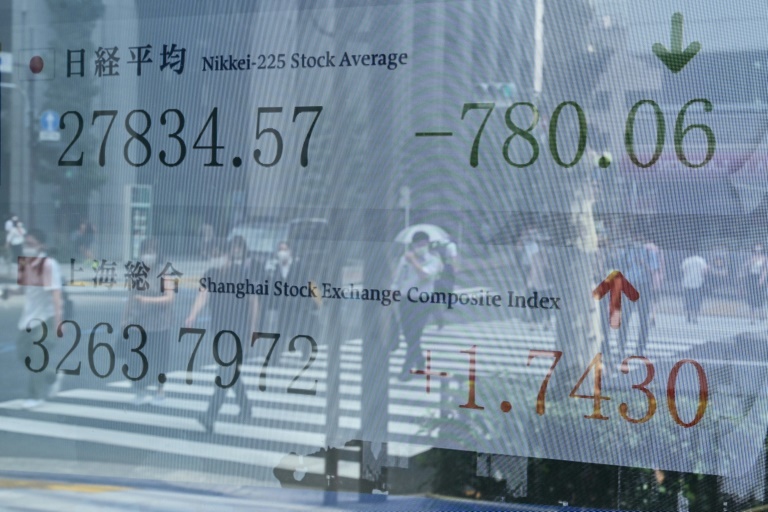
Tokyo – Nikkei 225: DOWN 1.1 percent at 27,567.75 

Hong Kong – Hang Seng Index: DOWN 0.7 percent at 18,798.57

Shanghai – Composite: DOWN 0.9 percent at 3,169.73

New York – Dow: DOWN 0.6 percent to 30,961.82 points (close)

London – FTSE 100: DOWN less than 0.1 percent at 7,274.08 (close)

Euro/dollar: DOWN at $0.9995 from $0.9997 

Pound/dollar: DOWN $1.1461 at from $1.1472 

Euro/pound: UP 87.22 pence from 87.14 pence 

Dollar/yen: DOWN at 143.29 yen from 143.45 yen 

Brent North Sea crude: UP 0.3 percent at $91.13 per barrel

West Texas Intermediate: UP 0.3 percent to $85.33 per barrel

Asian stocks open lower as all eyes on Fed decision next week

Asian markets dropped at the open on Friday, tracking Wall Street losses as investors continue to exhibit concern over persistently high global inflation and the likelihood of further interest rate hikes.

Major markets in Tokyo, Shanghai, Hong Kong and Sydney opened lower, in line with overall market sentiment ahead of a decision from the United States Federal Reserve next week.

Asian stocks look set to extend their weekly declines into a fifth straight week, following on from continuing weakness in US and European equities.

Wall Street’s three main indices rallied briefly on Thursday, but the gains fizzled, with traders taking little comfort from US President Joe Biden’s announcement of a tentative deal to avert a potentially damaging railroad strike.

The broad-based S&P 500 fell 1.1 percent Thursday and London rose less than a tenth of a percent, but both Frankfurt and Paris fell.

The Nasdaq was particularly weighed down by Adobe, which dropped a precipitous 16.9 percent after agreeing to acquire Figma, an Internet-based collaborative design platform, for $20 billion in cash and stock.

All eyes remain on the Fed, which has already instituted two consecutive 75-basis-point hikes and is widely expected to carry out a third. 

On Thursday, US retail sales data showed a surprising increase in August, but the report also downgraded sales in the month prior, tempering the good news.

Weekly US jobless claims retreated once again, and industrial production fell modestly in August.

The new data was not enough, however, to offset the widespread bearish sentiment following higher-than-expected US inflation data released earlier in the week, which showed yearly inflation slowing by less than forecast and monthly inflation rising.

– Fed expectations –

Analysts expect the Fed to continue raising interest rates, in a bid to cool an overheating economy and combat sky-high inflation, which remains near decades-highs in major economies.

“Because of the dramatic rise in Treasury yields, the Fed is going to have to keep raising rates beyond (next week),” said prominent investor Louis Navellier in his podcast on Thursday.

“I think they might now raise rates in November just before the (US) midterm elections and possibly December.”

Other commentators echoed that view, with OANDA’s senior market analyst Edward Moya addressing the concern that further hikes could send the world’s largest economy into a recession.

“The latest round of data suggest the Fed can stick to aggressive rate hikes as the labour market remains strong and as the economy slowly softens,” he said.

“The risks of the Fed sending the economy into a severe recession are growing but right now the data doesn’t support that argument.”

Now that the data is in, markets are fully focused on the Fed’s decision as their next potential pivot, said Fiona Cincotta, senior financial markets analyst at City Index.

“This is a market waiting for the next catalyst,” she told Bloomberg News. 

“What we saw in the selloff on Tuesday is the repricing of expectations of the Fed. Until we really hear from the Fed we are not going to get a very clear direction.”

– Key figures at around 0230 GMT –

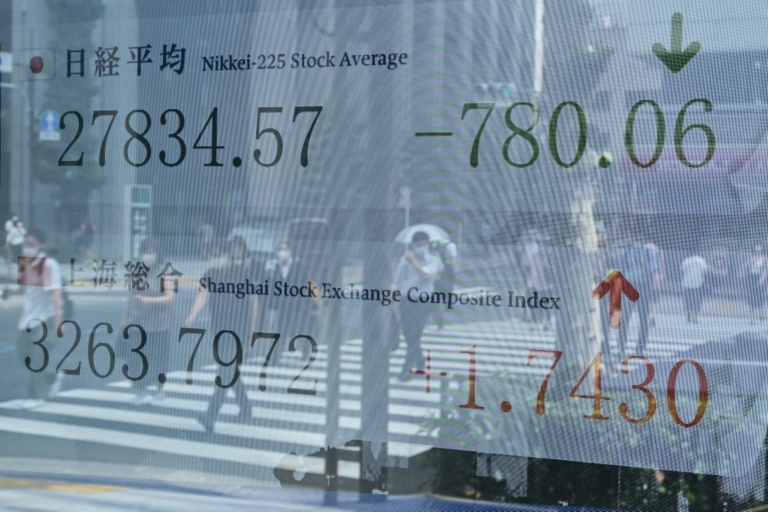
Tokyo – Nikkei 225: DOWN 1.1 percent at 27,567.75 

Hong Kong – Hang Seng Index: DOWN 0.7 percent at 18,798.57

Shanghai – Composite: DOWN 0.9 percent at 3,169.73

New York – Dow: DOWN 0.6 percent to 30,961.82 points (close)

London – FTSE 100: DOWN less than 0.1 percent at 7,274.08 (close)

Euro/dollar: DOWN at $0.9995 from $0.9997 

Pound/dollar: DOWN $1.1461 at from $1.1472 

Euro/pound: UP 87.22 pence from 87.14 pence 

Dollar/yen: DOWN at 143.29 yen from 143.45 yen 

Brent North Sea crude: UP 0.3 percent at $91.13 per barrel

West Texas Intermediate: UP 0.3 percent to $85.33 per barrel

Plastic garbage covers Central American rivers, lakes and beaches

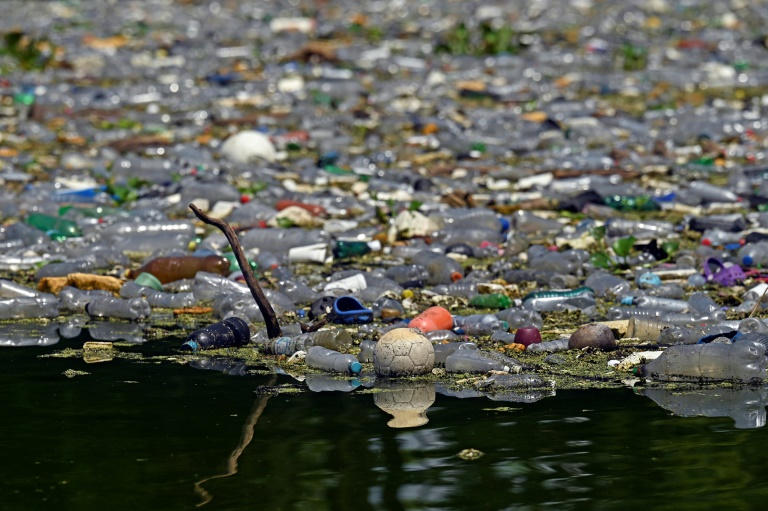
A blanket of multi-colored plastic waste flowing in from tributaries covers Lake Suchitlan in El Salvador.

It is a sorry scene that has also become an all too common sight on the Caribbean beaches of Honduras, where thousands of tons of rubbish arrive from neighboring Guatemala.

Fizzy drink bottles, medication packets, tattered flipflops: all sorts of plastic rubbish can be found floating on  13,500-hectare (52 square mile) Lake Suchitlan, which serves as a reservoir for a power plant and is considered by UNESCO to be a wetland of international importance.

Local fishermen say the pollution forces tilapia and cichlid fish deeper into the artificial lake — the largest body of freshwater in the country — where they cannot be reached with fishing nets.

“It has been more than two months since we’ve been able to fish,” angler Luis Penate, 25, told AFP.

To make ends meet he has started ferrying around tourists in a boat owned by another fisherman.

Ducks clear paths through the rubbish, little tortoises climb on top of floating bottles to sunbathe and skinny horses wade into the lake to drink the contaminated water.

This contamination is unprecedented,  says Jacinto Tobar, the mayor of Potonico, a small village 100 kilometers north of San Salvador in Chalatenango department.

“The fauna and flora are suffering a lot” and there are ever fewer tourists, he said.

The fishermen must also compete with 1.5 million black cormorants that inhabit the lake, according to Tobar, who says they have become a type of plague since arriving as migratory birds and then staying put.

With a population of 2,500, Potonico is the most affected of 15 riverside villages.

The state body that administers the reservoir employs dozens of workers to clean the lake by hand.

Some locals also help out with the task, which Tobar says will take three to four months to complete.

“What can we hope for in the future if we don’t look after our environment, if we soil our streets, rivers, lakes, forests and beaches,” said President Nayib Bukele earlier this week at the launch of a “Zero Rubbish” campaign.

Environment minister Fernando Lopez said the country generates 4,200 tons of waste a day, of which 1,200 tons end up in rivers, beaches and streets.

– ‘Unable to stop it’ –

One of the worst affected areas of the Central American Caribbean coast is the beaches of the Omoa region in Honduras.

It is a beautiful coastline with abundant vegetation and palm trees, some 200 kilometers (120 miles) north of Tegucigalpa.

But in some places the sand is almost entirely covered with plastic waste of all sorts, including syringes.

“This rubbish comes from the Motagua river on the Guatemalan side, they weren’t able to stop it,” said Candido Flores, 76, a local resident.

“As the river rises, it returns again.”

It has created islands of floating waste that have been denounced by local authorities and activists, and has even caused tensions between the two countries.

Every year, some 20,000 tons of plastic waste comes through the Las Vacas river, a tributary of the Motagua, according to The Ocean Cleanup, a Dutch NGO.

Most of that comes from a landfill in the Guatemalan capital. 

Environmental activists say the problem must be tackled at its source.

“We must attack where the main flow of rubbish comes from,” said Eduardo Arguera, 29, an architecture student at the University of El Salvador, who has launched several clean up campaigns.

To contain plastic waste and prevent it from reaching rivers and lakes, he suggests fencing it in at strategic points.

Ricardo Navarro, president of the Center of Appropriate Technology, says only 30 percent of the waste floats; the rest sinks to the bottom of the bodies of water.

Meaning what is visible, quite literally, is just the tip of the iceberg.

The United Nations Environment Programme says 11 million metric tons of plastic enters the world’s oceans every year, and warns that number could triple in the next 20 years.

US jogger's death sparks emotional outcry and political debate

Eliza Fletcher left her home in Memphis, Tennessee for an early morning jog two weeks ago when she disappeared.

Her body was found a few days later, and since then, the tragedy has rekindled two distinct debates: one on women’s public safety, the other over racial tensions in the United States.

Authorities said the 34-year-old kindergarten teacher and mother of two was “abducted” around 4:20 am on September 2, by a man who forced her into his vehicle.

Her alleged attacker was arrested the next day, but Fletcher wasn’t found until September 5, behind an abandoned building.

The case has sparked a nationwide outpouring of sadness and anger.

Last week in cities across the country, hundreds of joggers met at the same morning hour Fletcher was kidnapped, to “finish her run” in her honor and make clear that “women should be able to run safely any time of day,” organizers said.

To those who say Fletcher was tempting fate by going out alone so early, in a city considered unsafe, “it’s time to stop blaming women for getting murdered while running,” said Christa Sgobba in a story in Self Magazine.

Melissa A. Sullivan, a marathon runner, described in The Washington Post how she was tired of constantly having to be on alert.

“Like so many other women, I’m angry. I’m frustrated. I’m exhausted by the expectation that the onus to prevent the harassment and intimidation of female runners is, should be and always will be on us,” she wrote in an op-ed.

– Culture wars –

The violent death of Fletcher, a mother with a big smile who has been described as an exemplary Christian, was quickly branded by some right-wing commentators as a sign of social decay under the left’s leadership.

Tucker Carlson, a star anchor at conservative-favored Fox News, made Fletcher an allegory for “the fall of Memphis, law and order.”

Conservative influencer Candace Owens, known for denouncing “wokeness” among other things to her four million Instagram followers, urged Fox News viewers living in inner city areas to flee, insisting those neighborhoods are infested with criminals.

“This is not a joke,” she said. “Do not wait for politicians to rescue you. Rescue yourself, and get out of these Democrat-controlled cities.”

For some conservatives, Fletcher’s case is a reflection of the “culture wars” brewing in the United States in the wake of the 2020 Black Lives Matter movement.

Fletcher was white, but her suspected killer, Cleotha Henderson — also known as Cleotha Abston — is Black.

– Violence against Black women ‘habitual’ –

Some internet users, insisting that Fletcher’s murder did not get enough attention because she was not Black, have taken up a traditional Black Lives Matter rallying cry: “Say her name.”

These words are often chanted at anti-racism rallies to remember the Black victims of police brutality.

Right-wing commentator Ann Coulter charged in her newsletter that the mainstream media has a policy of “no stories that would make Black people — or more to the point, white liberals — feel uncomfortable.”

But this belief grossly misinterprets the situation, argues Kari J. Winter, an American studies professor at the University at Buffalo.

“Anyone who imagines that Eliza Fletcher’s murder would have received more attention if she had been Black or brown is living in a fantasy world radically disconnected from the real world,” she told AFP.

“In the United States, violence against Black and brown women is far more habitual, extreme and ignored than violence against white women.”

Apart from these debates, Fletcher’s death has also resurfaced a recurring problem in the United States: a DNA sample from an unrelated rape case turned out to match Henderson.

The rape occurred in September 2021, but the sexual assault kit was only processed in June.

Without the delay, it’s possible that Henderson and Fletcher might never have crossed paths.

Climate-fueled hunger more than doubles in worst-hit countries: report

From record droughts to catastrophic floods, the world’s worst climate hotspots are seeing a surge in acute hunger, according to an Oxfam report that called on rich nations to drastically cut their emissions and compensate low-income countries.

The analysis, “Hunger in a heating world,” found that acute hunger had risen 123 percent over six years in the ten most-affected nations, defined by the most number of UN weather appeals.

“The effects of severe weather events are already being felt,” Lia Lindsey, Oxfam America’s senior humanitarian policy advisory told AFP, adding the report was timed to pressure world leaders at the UN General Assembly to act.

The countries — Somalia, Haiti, Djibouti, Kenya, Niger, Afghanistan, Guatemala, Madagascar, Burkina Faso and Zimbabwe — have repeatedly been battered by extreme weather over the last two decades. 

An estimated 48 million people across those countries suffer acute hunger, defined as hunger resulting from a shock and causing risks to lives and livelihoods and based on reports compiled by the World Food Programme.

That figure is up from 21 million people in 2016; 18 million people are on the brink of starvation.

The report acknowledges the complexity surrounding the causes of global hunger, with conflict and economic disruption — including those from the Covid-19 pandemic — remaining key drivers. 

“However, these new and worsening weather extremes are increasingly peeling away the abilities of poor people particularly in low-income countries to stave off hunger and cope with the next shock,” it said.

Somalia, for example, is facing its worst drought on record, forcing one million people to flee their homes. 

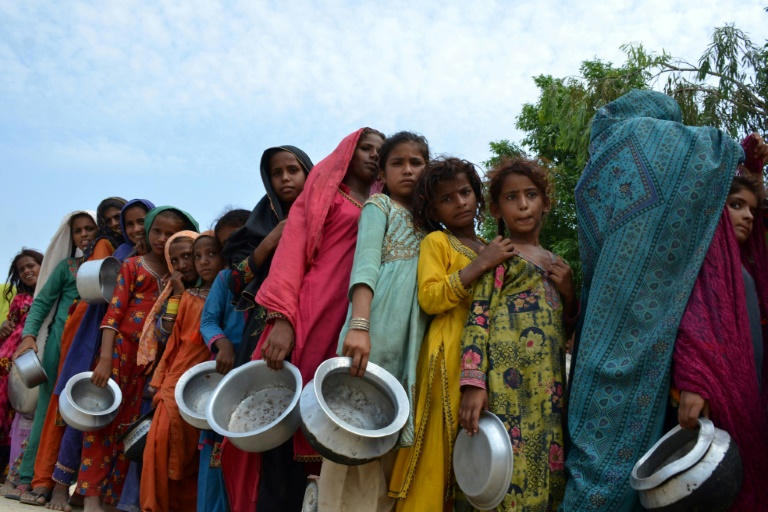
Climate change is also causing more frequent and intense heat waves and other extreme weather including floods, which covered one-third of Pakistan, washing away crops and topsoil and destroying farming infrastructure.

In Guatemala, weather conditions have contributed to the loss of close to 80 percent of the maize harvest, as well as causing a “coffee crisis” in the region that has hit vulnerable communities hardest and forced many to migrate to the United States. 

– ‘Obligation, not charity’ –

Oxfam stressed that climate-fueled hunger is a “stark demonstration of global inequality,” with the countries least responsible for the crisis suffering most from its impact.

Polluting industrialized nations such as those of the G20 are responsible for more than three-quarters of the world’s carbon emissions, while the 10 climate hotspots are collectively responsible for just 0.13 percent.

“Leaders especially of rich polluting countries must live up to their promises to cut emissions,” said Gabriela Bucher, Oxfam International executive director, in a statement. 

“They must pay for adaptation measures and loss-and-damage in low-income countries, as well as immediately inject lifesaving funds to meet the UN appeal to respond to the most impacted countries.”

The UN humanitarian appeal for 2022 comes to $49 billion, which Oxfam noted was equivalent to less than 18 days of profit for fossil fuel companies, when looking at average daily profits over the last 50 years.

Canceling debt can also help governments free up resources, said Bucher, with rich countries holding a moral responsibility to compensate poorer, most-affected countries. 

“This is an ethical obligation, not charity,” she said.

Florida governor flies migrants to wealthy Martha's Vineyard

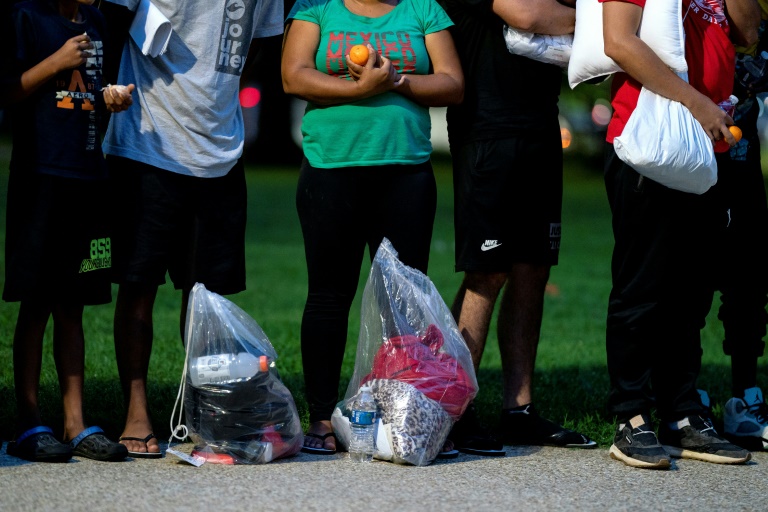
Florida Governor Ron DeSantis took credit Thursday for sending two planeloads of undocumented Venezuelans from Texas to wealthy Martha’s Vineyard, Massachusetts, as Republicans play up immigration issues before November midterm elections.

Around 50 of the migrants, including children, landed Wednesday on the island, where Democratic presidents from John F. Kennedy to Bill Clinton have summered, and former president Barack Obama owns an estate.

“Immigrants are being dropped off on Martha’s Vineyard by chartered flights from Texas. Many don’t know where they are. They say they were told they would be given housing and jobs,” said Dylan Fernandes, a local state legislator. 

Half-a-day later two buses also from Texas deposited dozens of migrants in front of the Washington residence of Vice President Kamala Harris, part of a five-month-old operation by Texas Republican Governor Greg Abbott to pressure Democrats on the immigration issue.

“We are not a sanctuary state. . . We will help facilitate that transport for you to be able to go to greener pastures,” DeSantis said at an official event in Florida Thursday.

“In Florida, we take what is happening at the southern border seriously,” he said.

President Joe Biden slammed the moves as Republicans “playing politics with human beings.” 

“What they’re doing is simply wrong,” said Biden at a Congressional Hispanic Caucus event Thursday evening. “It’s un-American. It’s reckless.” 

– Busing thousands of migrants –

The moves came as DeSantis and Abbott, two of the country’s most prominent and combative Republican governors, have sought to highlight the issue of tens of thousands of migrants trying to cross the southern border into the United States each month.

Abbott, whose state is the first destination for most of the migrants crossing from Mexico, has since April sent about 10,000 of them northward, mainly to Washington, Chicago and New York. These cities have declared themselves “sanctuaries” for migrants — meaning they will not be arrested solely for not having legal immigrant status.

Yet most of those being transported have been permitted to stay in the country by border officials after officially requesting asylum until their cases are reviewed.

The Texas governor, who is seeking re-election in November, said Thursday that Vice President Harris claims the border is secure and denies the existence of an immigration crisis.

“We’re sending migrants to her backyard to call on the Biden administration to do its job & secure the border,” he tweeted.

– Immigration politics –

DeSantis, also in a re-election battle, has supported Abbott, and is also a top contender to run for president under the Republican banner in 2024.

Charlie Crist, the Democrat challenging DeSantis for the Florida governorship, said sending the migrants to Martha’s Vineyard was a wholly political move.

“Florida is spending $12 million to fly innocent migrant children out of our state when that money could be spent on fighting to help Floridians and lower costs,” Crist said on Twitter.

“Everything Ron DeSantis does is to score political points and feed red meat to his base in his thinly veiled attempt to run for president.”

Christina Pushaw, a spokesperson for DeSantis, taunted the Martha’s Vineyard community, which announced efforts to house and feed the migrants.

“Residents of Martha’s Vineyard overwhelmingly support illegal immigration and call for more diversity. Governor DeSantis was kind enough to grant their wishes,” she wrote on Twitter.

“There may be space at the Obamas’ mansion for a few dozen illegal aliens,” she said.

Close Bitnami banner
Bitnami