AFP

US judge appoints 'special master' in Trump document case

A US judge on Thursday named an independent arbiter to sort through thousands of documents seized from Donald Trump’s Florida estate and determine if any of them are protected by executive privilege.

This so-called special master will be Raymond Dearie, a federal judge in New York, Judge Aileen Cannon ruled.

The US Justice Department last week accepted this choice of candidate by Trump, who is behind the drive for a special master in the unprecedented case of the August 8 FBI raid on his seaside mansion.

Cannon last week issued an injunction that barred the Justice Department from using any of the documents — including the ones marked classified — for its investigation while the special master conducted their review.

The department argued that a smaller set of 100 or so classified documents that are part of the reams of papers taken from Mar-a-Lago should first be given to criminal prosecutors investigating Trump, before they go to the special master. 

The department filed suit to be able to resume looking at the classified papers right away.

But in her ruling Thursday, Cannon refused to lift any part of her injunction. 

She rejected the Justice Department’s argument that her injunction freezing the probe harmed national security.

Trump is facing mounting legal pressure, with the Justice Department saying top-secret documents were “likely concealed” to obstruct an FBI probe into his potential mishandling of classified materials.

He has denied all wrongdoing, saying the raid was “one of the most egregious assaults on democracy in the history of our country.”

Government attorneys previously opposed Trump’s special master request altogether, arguing that an independent screening for privileged material could harm national security, and was also unnecessary as a team had already completed a screening.

In addition to the documents probe, Trump faces investigations in New York into his business practices, as well as legal scrutiny over his efforts to overturn results of the 2020 election, and for the January 6, 2021, attack on the US Capitol by his supporters. 

Long lost moon could have been responsible for Saturn's rings

Discovered by Galileo 400 years ago, the rings of Saturn are about the most striking thing astronomers with small telescopes can spot in our solar system.

But even today, experts cannot agree on how or when they formed.

A new study published Thursday in the prestigious journal Science sets out to provide a convincing answer.

Between 100-200 million years ago, an icy moon they named Chrysalis broke up after getting a little too close to the gas giant, they conclude.

While most of it made impact with Saturn, its remaining fragments broke into small icy chunks that form the planet’s signature rings.

“It’s nice to find a plausible explanation,” Jack Wisdom, professor of planetary sciences at MIT and lead author of the new study, told AFP.

Saturn, the sixth planet from the Sun, was formed four and a half billion years ago, at the beginning of the solar system. 

But a few decades ago, scientists suggested that Saturn’s rings appeared much later: only about 100 million years ago.

The hypothesis was reinforced by observations made by the Cassini probe, which orbited Saturn from 2004 to 2017.

“But because no one could think of a way to make the rings 100 million years ago, some people have been questioning the reasoning that led to that deduction,” said Wisdom.

By constructing complex mathematical models, Wisdom and colleagues found an explanation that both justified the timeline, and allowed them to better understand another characteristic of the planet, its tilt.

Saturn has a 26.7 degree tilt. Being a gas giant, it would have been expected that the process of accumulating matter that led to its formation would have prevented tilt.

– Gravitational interactions –

Scientists recently discovered that Titan, the largest of Saturn’s 83 moons, is migrating away from the planet, at a rate of 11 centimeters a year.

This changes the rate at which Saturn’s axis of tilt loops around the vertical — the technical term is “precession.” Think of a spinning top drawing circles. 

Around a billion years ago, this wobble frequency came into sync with Neptune’s wobbly orbit, creating a powerful gravitational interaction called “resonance.” 

In order to maintain this lock, as Titan kept moving out, Saturn had to tilt, scientists argued.

But that explanation hinged on knowing how mass was distributed in the planet’s interior, since the tilt would have behaved differently if it were concentrated more at its surface or the core.

In the new study, Wisdom and colleagues modeled the planet’s interior using gravitational data gathered by Cassini during its close approach “Grand Finale,” its last act before plunging into Saturn’s depths.

The model they generated found Saturn is now slightly out of sync with Neptune, which necessitated a new explanation — an event powerful enough to cause the drastic disruption.

Working through the mathematics, they found a lost moon fit the bill.

“It’s pulled apart into a bunch of pieces and those pieces subsequently get pulled apart even more, and gradually rolls into the rings.”

The missing Moon was baptized Chrysalis by MIT’s Wisdom, likening the emergence of Saturn’s rings to a butterfly emerging from a cocoon.

The team thinks Chrysalis was a bit smaller than our own Moon, and about the size of another Saturn satellite, Iapetus, which is made entirely of water ice.

“So it’s plausible to hypothesize that Chrysalis is also made of water ice, and that’s what it needs to make the rings, because the rings are almost pure water.

Asked whether he felt the mystery of Saturn’s rings stood solved, Wisdom replied, soberly, “We’ve made a good contribution.” 

The Saturn satellite system still holds “a variety of mysteries,” he added.

Climate change likely worsened Pakistan floods: study

Human-caused climate change likely contributed to the deadly floods that submerged parts of Pakistan in recent weeks, according to a rapid analysis on Thursday looking at how much global heating was to blame.

An international team of climate scientists at the World Weather Attribution group said that rainfall in the worst-hit regions had increased as much as 75 percent in recent decades and concluded that manmade activity likely boosted record levels of August precipitation in Sindh and Balochistan provinces. 

The resulting flooding affected over 33 million people, destroyed 1.7 million homes and killed nearly 1,400 people.

To determine what role global heating played in the downpours, the scientists analysed weather data and computer simulations of today’s climate to determine the likelihood of such an event occurring at the roughly 1.2 degrees Celsius of warming that human activity has caused since the Industrial era.

They then compared that likelihood to data and simulations of conditions in the climate of the past — that is, 1.2C cooler than currently. 

They found that climate change likely increased the 5-day total rainfall for Sindh and Balochistan by up to 50 percent. 

The analysis showed that there was a roughly one percent chance of such an event occurring in any given year in our current climactic conditions.

“The same event would probably have been much less likely in a world without human-induced greenhouse gas emissions, meaning climate change likely made the extreme rainfall more probable,” the team said. 

The authors of the study however stressed that due to large variations in seasonal monsoon rainfall over Pakistan historically, it was not possible to conclude that manmade warming contributed significantly to 60-day total rainfall levels.

“What we saw in Pakistan is exactly what climate projections have been predicting for years,” said Friederike Otto, senior lecturer in Climate Science at Imperial College London’s Grantham Institute. 

“It’s also in line with historical records showing that heavy rainfall has dramatically increased in the region since humans started emitting large amounts of greenhouse gases into the atmosphere.” 

– Finance needed –

Otto said while it was hard to put a precise figure on the extent to which manmade emissions drove the rainfall, “the fingerprints of global warming are evident”.

The World Meteorological Organization this week said that weather-related disasters such as Pakistan’s had increased five-fold over the last 50 years, killing 115 people each day on average. 

The warning came as nations are gearing up for the COP27 climate summit in Egypt in November, where at-risk countries are demanding that rich, historic polluters compensate them for the climate-drive loss and damage already battering their economies and infrastructure. 

Fahad Saeed, researcher at the Center for Climate Change and Sustainable Development in Islamabad, said the floods showed the need for richer nations to radically ramp up funding to help others adapt to climate change — another key ask at COP27.

“Pakistan must also ask developed countries to take responsibility and provide adaptation plus loss and damage support to the countries and populations bearing the brunt of climate change,” he said.

Kanye West ends Gap partnership, aims to open own boutiques

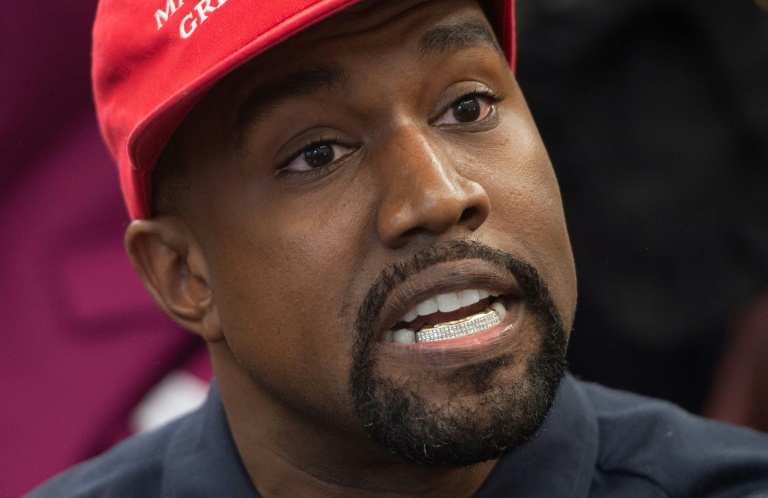
Kanye West and retail brand Gap announced an end to their partnership on Thursday, with the artist now known as Ye saying he plans to open his own stores.

“GAP left Ye no choice but to terminate their collaboration agreement because of GAP’s substantial noncompliance,” wrote the artist’s lawyer, Nicholas Gravante, in a letter, elements of which were seen by AFP.

The rapper, producer, fashion designer and mercurial personality inked a much-touted deal with Gap in 2020, with plans to marry the struggling retailer’s clothing classics with West’s Yeezy designs.

In a letter to employees on Thursday, a copy of which was obtained by AFP, Gap brand CEO Mark Breitbard said that management had decided to “wind down the partnership” with West.

“While we share a vision of bringing high-quality, trend-forward, utilitarian design to all people… how we work together to deliver this vision is not aligned,” he said.

Breitbard clarified that several Yeezy Gap branded products already in development before the breakup would continue to be released, “as planned.”

Wall Street took the news badly, with Gap shares dropping nearly three percent by around 1700 GMT.

The announcement caps months of social media complaints from West, which include accusations that he’s been left out of the creative process and criticisms of marketing delays.

Gravante said West has “diligently” tried to work through issues with the company but “he has gotten nowhere.”

“GAP’s substantial noncompliance with its contractual obligations has been costly,” he continued. “Ye will now promptly move forward to make up for lost time by opening Yeezy retail stores.”

Gap had been expecting $1 billion from Yeezy products alone within five years of the ten-year signed partnership, according to The New York Times.

West saw the collaboration as a way to increase the accessibility of his products, having previously put out limited series at high price points with financing from the German brand Adidas — which the rapper has also criticized in recent months.

His collection, launched in 2022, echoed West’s own style — dark, baggy clothes and variations on the hooded sweatshirt that was once Gap’s signature garment.

Gap Inc also owns the Banana Republic, Old Navy and Athleta brands.

Fading in popularity for years, the company has closed some 350 Gap and Banana Republic stores since October 2020.

Kanye West ends Gap partnership, aims to open own boutiques

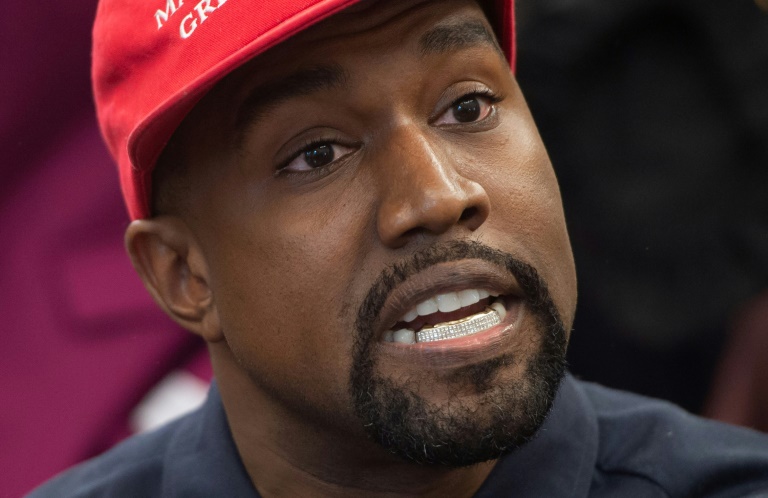
Kanye West and retail brand Gap announced an end to their partnership on Thursday, with the artist now known as Ye saying he plans to open his own stores.

“GAP left Ye no choice but to terminate their collaboration agreement because of GAP’s substantial noncompliance,” wrote the artist’s lawyer, Nicholas Gravante, in a letter, elements of which were seen by AFP.

The rapper, producer, fashion designer and mercurial personality inked a much-touted deal with Gap in 2020, with plans to marry the struggling retailer’s clothing classics with West’s Yeezy designs.

In a letter to employees on Thursday, a copy of which was obtained by AFP, Gap brand CEO Mark Breitbard said that management had decided to “wind down the partnership” with West.

“While we share a vision of bringing high-quality, trend-forward, utilitarian design to all people… how we work together to deliver this vision is not aligned,” he said.

Breitbard clarified that several Yeezy Gap branded products already in development before the breakup would continue to be released, “as planned.”

Wall Street took the news badly, with Gap shares dropping nearly three percent by around 1700 GMT.

The announcement caps months of social media complaints from West, which include accusations that he’s been left out of the creative process and criticisms of marketing delays.

Gravante said West has “diligently” tried to work through issues with the company but “he has gotten nowhere.”

“GAP’s substantial noncompliance with its contractual obligations has been costly,” he continued. “Ye will now promptly move forward to make up for lost time by opening Yeezy retail stores.”

Gap had been expecting $1 billion from Yeezy products alone within five years of the ten-year signed partnership, according to The New York Times.

West saw the collaboration as a way to increase the accessibility of his products, having previously put out limited series at high price points with financing from the German brand Adidas — which the rapper has also criticized in recent months.

His collection, launched in 2022, echoed West’s own style — dark, baggy clothes and variations on the hooded sweatshirt that was once Gap’s signature garment.

Gap Inc also owns the Banana Republic, Old Navy and Athleta brands.

Fading in popularity for years, the company has closed some 350 Gap and Banana Republic stores since October 2020.

US targets Russia tech industry, proxies in Ukraine with sanctions

The US slapped sanctions Thursday on a long list of Russian officials and companies, ramping up pressure over the invasion of Ukraine and hoping to hobble any attempt to rebuild its heavily damaged defense sector.

Top officials overseeing Russian securities markets operations, a neo-Nazi fighter group, Russian and pro-Russian officials in occupied parts of Ukraine, and a children’s rights official who allegedly directs the removal of Ukrainian children to Russia were all named to the US sanctions blacklist.

The GRU intelligence agency and a top economic advisor to President Vladimir Putin, Maxim Oreshkin, were placed on sanctions lists.

In a parallel action, US sanctions were targeted at Russian space, computing and technology firms, in an effort to cripple Russia’s technology development and stifle its ability to refurbish and modernize its military after broad losses in Ukraine.

And five Russian officials were blacklisted for allegedly supporting or enabling the theft by Russians of Ukrainian grain.

“The United States continues to hold the Russian government to account for its war against Ukraine,” said Secretary of State Antony Blinken.

“Those designated today — from perpetrators of violence to an official facilitating the purposeful removal of children from Ukraine — provide examples of the behavior that has become synonymous with the Government of Russia’s unprovoked war,” he said.

US Treasury sanctions aim to freeze any assets those designated might have under US jurisdiction and forbid any US individuals or companies — including international banks with US operations — to do business with them, effectively limiting their access to global financial networks.

The sanctions singled out justice officials in occupied Crimea and members of Chechen Republic leader Ramzan Kadyrov’s family, including three of his wives.

The Treasury blacklisted Maria Alexeyevna Lvova-Belova, Russia’s Presidential Commissioner for Children’s Rights. 

Working directly under Putin, the Treasury said, Lvova-Belova has overseen the deportation of thousands of Ukrainian children to Russia.

“Lvova-Belova’s efforts specifically include the forced adoption of Ukrainian children into Russian families, the so-called ‘patriotic education’ of Ukrainian children, legislative changes to expedite the provision of Russian Federation citizenship to Ukrainian children, and the deliberate removal of Ukrainian children by Russia’s forces,” it said.

The Treasury also put sanctions on Task Force Rusich, a neo-Nazi paramilitary group fighting in Ukraine and associated with the Wagner mercenary army controlled by close Putin advisor Yevgeny Prigozhin.

– Targeting Russian tech industry –

The United States also stepped up its efforts to cut off Russian industry and particularly high-technology entities from the global market, seeking to deprive them of capital and components from abroad.

The State Department named 31 companies to its sanctions list, including three involved in building space instrumentation, satellites and space-defense equipment.

Others on the list are involved in semiconductor development, nanotechnologies, quantum computing and engine technologies, 

In addition, the US Commerce and Treasury departments issued bans on the export of quantum computing technology and related software and hardware to Russia and Belarus.

The Treasury said that would degrade Moscow’s ability to rebuild its military after heavy losses in the continuing war.

“As Ukraine presses forward with defending its freedom, today we’re taking steps to further degrade Russia’s ability to rebuild its military, hold perpetrators of violence accountable, and further financially isolate Putin,” said Treasury Secretary Janet Yellen in a statement.

In the Russian financial sector, sanctions included the heads of key institutions including NSPK, which runs the Mir payment card network; the National Settlement Depository; CCP NCC, which manages settlement for the Moscow stock exchange; and the Deposit Insurance Agency.

Biden appeals for unity in anti-extremism 'summit'

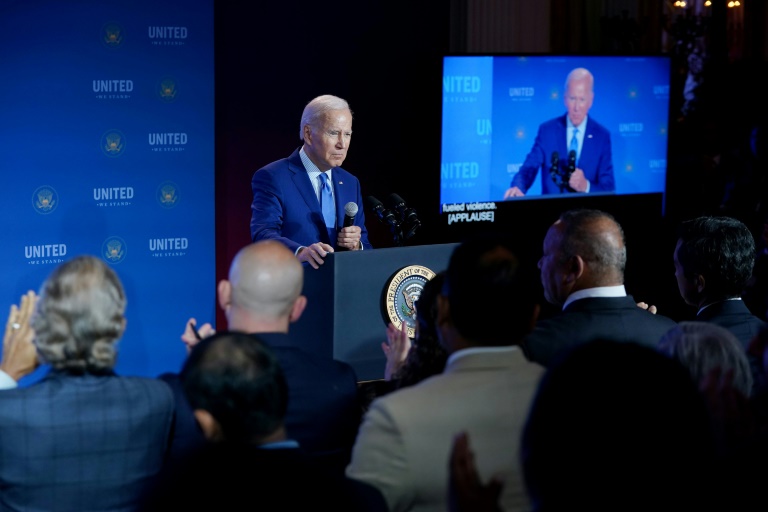
US President Joe Biden appealed Thursday for a united front against hate-crimes and political violence in a speech building on his bid to present himself as champion of moderate values at a time of rising extremism.

“We have to face the good, the bad and the truth. That’s what great nations do and we’re a great nation,” Biden told a packed hall at the White House’s United We Stand Summit. “You must choose to be a nation of hope, unity and optimism — or a nation of fear and division and hate.”

Biden recounted, as often before, how he took the decision to challenge then president Donald Trump in the 2020 election after the Republican initially declined to condemn a 2017 neo-Nazi march in Charlottesville, Virginia.

“Charlottesville changed everything, because I believe our story is to unite as people in one nation, in one America.”

But he said that a spate of racist violence — including a deadly attack on a Black church in Charleston, South Carolina, in 2015, a mass shooting targeting Latinos in El Paso, Texas, in 2019, and another gun massacre, this time targeting African Americans, in Buffalo, New York, in May — had left the country reeling.

“Many of you have lost part of your heart and soul,” he told the audience, which included a cross-section of civil rights activists, religious leaders, academics and elected officials.

The White House described the day-long conference, with Biden giving the keynote speech, as a chance to highlight “the corrosive effects of hate-fueled violence on our democracy and public safety.”

The summit comes just eight weeks ahead of midterm elections in which Republicans are seeking to take control of Congress.

It also comes two weeks after Biden delivered a fiery speech denouncing the “extreme ideology” of Trump, whose supporters overran the Capitol to try to overturn the 2020 election and who continues to promote far-right conspiracy theories.

A White House official told reporters that Thursday’s event, which featured a panel with both Republican and Democratic mayors, was not political and would “demonstrate that we can unite across partisan lines.”

However, Republicans have painted Biden as a divider for calling out Trump supporters, noting that the former president remains hugely popular with the party’s voters.

Biden defended himself in his White House speech, saying he was right to speak up.

“There are those who say that when we bring this up we divide the country,” he said. But “silence is complicity.”

Among some of the practical measures discussed at the conference was Biden’s suggestion that Congress should “get rid of special immunity for social media companies and impose much strong transparency requirements on all of them” regarding extremist content.

The provision known as Section 230 shields platforms from liability for content and has long been targeted by some in Congress.

Donations surge for US teen ordered to pay rapist's family

Donations poured in on Thursday for a teenager in the midwestern US state of Iowa who killed her accused rapist and was ordered by a court to pay $150,000 to his family.

Pieper Lewis, 17, was sentenced in Polk County earlier this week to five years of probation and community service for the June 2020 stabbing death of Zachary Brooks.

Lewis, who was 15 at the time and had run away from home, accused the 37-year-old Brooks of raping her repeatedly.

She was initially charged with murder but pleaded guilty to manslaughter.

Judge David Porter delivered the probation sentence on Lewis but also ordered her to pay $150,000 in restitution to Brooks’ family, saying state law gave him no other choice.

The ruling provoked an uproar and a former teacher of Lewis, Leland Schipper, organized a GoFundMe to raise funds for the former student.

“A child who was raped, under no circumstances, should owe the rapist’s family money,” Schipper said in an online post.

As of Thursday afternoon, the GoFundMe had raised nearly $390,000.

Schipper said the funds will be used to pay off the $150,000 debt and $4,000 due to the state.

The additional money will be used to “remove financial barriers for Pieper in pursuing college/university or starting her own business,” Schipper said.

Large part of Ukraine grain storage lost in war: report

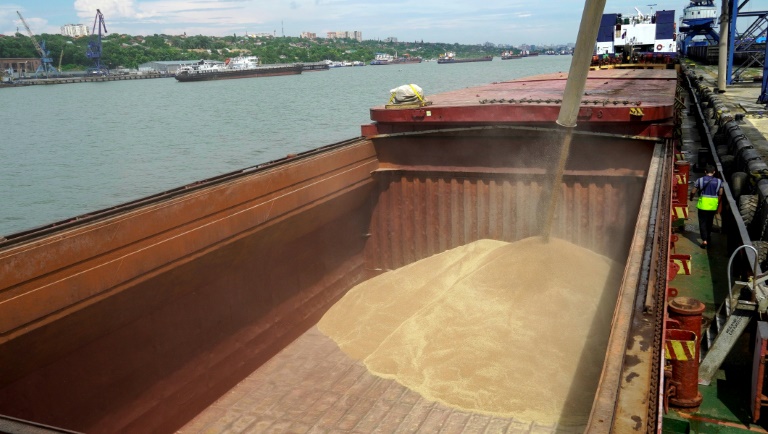
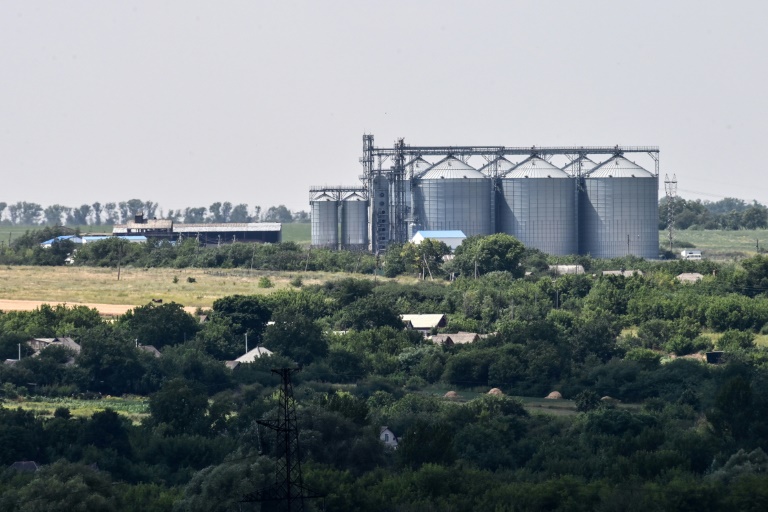
Ukraine has lost nearly 15 percent of its grain storage capacity in the war with Russia, threatening its role as a key food supplier to the world, a new report said Thursday.

The US government-backed Conflict Observatory said Russians had seized 6.24 million tonnes’ worth of food storage capacity, and that another 2.25 million tonnes of capacity in Ukrainian hands had been destroyed.

In total, the war has removed around 8.5 million of Ukraine’s 58-million-tonne storage capacity, threatening the country’s future ability to get crucial supplies of wheat, corn and sunflower oil to the world market, according to the report.

As a result, farmers are running out of room to store their output for shipment, which could discourage plantings for the next crop, especially winter wheat, the report said.

“Russia and Russia-aligned forces’ damage and seizure of Ukrainian crop storage capacity threatens to turn Ukraine’s current agricultural crisis into catastrophe,” the report said.

“Millions of people around the world rely on Ukrainian agricultural products and are directly impacted by price spikes in global commodities markets caused by shortages linked to Russia’s invasion of Ukraine.”

The report, which was drawn up for the Conflict Observatory by the humanitarian research lab at Yale University’s School of Public Health and the government’s Oak Ridge National Laboratory, used satellite photography and object detection algorithms to assess the damage of storage facilities such as silos and grain elevators across Ukraine.

It noted that even partial damage at a facility can spoil stored crops.

Most of the captured and damaged facilities are in Mykolayiv, Zaporizhzhia and Donetsk Oblast, and the largest parts were near transportation hubs, suggesting they were damaged in deliberately targeted attacks.

“Indiscriminate targeting of crop storage infrastructure can constitute a war crime and a crime against humanity under international law,” the report said.

Patagonia founder Yvon Chouinard, the reluctant businessman

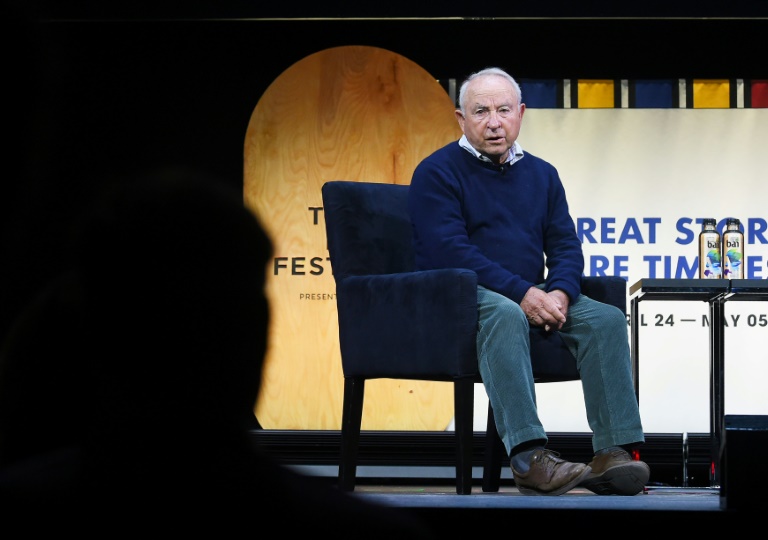
Yvon Chouinard built an empire with his outdoor gear brand Patagonia, but the nature enthusiast has never done business like anyone else. And now, aged 83, he’s just taken his most drastic step: he has decided to give away the company to fight climate change.

It’s an unusual move in the United States, a thoroughly capitalist society, but it’s completely on brand for the California resident.

“I’ve been a businessman for almost sixty years,” Chouinard wrote in a book in 2006. “It’s as difficult for me to say those words as it is for someone to admit being an alcoholic or a lawyer.”

“Yet business can produce food, cure disease, control population, employ people, and generally enrich our lives. And it can do these good things and make a profit without losing its soul.”

Chouinard has worked hard to make Patagonia a socially responsible enterprise.

The company has given the equivalent of one percent of its sales to environmental groups every year since 1985, and it was one of the first clothing brands to switch entirely to organic cotton in 1996.

Patagonia also became the first to adopt California’s public benefit corporation status in 2012, meaning it became a company structured for charitable purposes, not private gain. 

In 2018, Patagonia made saving the planet its official purpose.

And now, almost 50 years after launching the company, Chouinard agreed with his wife and their two children to transfer 100 percent of their stock shares to a trust dedicated to making sure their values are respected, and a nonprofit dedicated to fighting climate change and protecting nature.

The latter will receive all of Patagonia’s profits, which are currently valued at about $100 million per year.

“Earth is now our only shareholder,” Chouinard said in a letter posted on the Patagonia website.

– Unwavering vision –

Kristine McDivitt Tompkins, a member of Patagonia’s board of directors, has known Chouinard since he was 24. And since then, “his vision has never wavered,” she said in a statement announcing Patagonia’s next phase.

“While he is in good health now, he wanted to have a plan in place for the future of the company and the future of the planet.”

Chouinard was born in 1938 in the northeastern US state of Maine, to a French-Canadian father from Quebec and a mother he described as “adventurous.” He moved to California in 1946.

It was there, in a falcon-watching club, that a few years later he discovered his passion for rock climbing.

He began making his own pitons, metal anchors for climbing ropes, and learned some metalworking in the process. Other climbers began to want their own.

And so, his business began, even if it barely brought in enough money to live on in the first few years.

He created Chouinard Equipment in 1965 with a partner, which quickly became a reference group in the climbing world.

During a trip to Scotland, Chouinard bought a rugby jersey for climbing. The fabric was strong, and the shirt’s collar helped protect his neck from the ropes.

Back in the United States, others asked where they could get one. Sensing another opportunity, he began to sell rugby shirts, among other clothing items. Patagonia officially launched in 1973.

The group has since diversified, with subsidiaries in food, media, surfboards, investments in like-minded startups and recycling used clothes.

Forbes magazine recently put Chouinard’s net worth at $1.2 billion.

But the entrepreneur drives a beat-up old Subaru. He doesn’t own a computer or cell phone and splits his time between two modest houses in California and Wyoming, The New York Times reported.

Speaking about his latest decision, Chouinard told the paper: “Hopefully this will influence a new form of capitalism that doesn’t end up with a few rich people and a bunch of poor people.”

Close Bitnami banner
Bitnami