AFP

TikTok adds authenticity feature that mirrors BeReal

TikTok on Thursday added an authenticity feature that has been a winner for French app BeReal, taking a page from Meta’s playbook by copying a rival.

The social media giant described its TikTok Now feature as “a daily photo and video experience to share your most authentic moments” using a smartphone’s front and rear cameras simultaneously.

“You’ll receive a daily prompt to capture a 10-second video or a static photo to easily share what you’re up to,” TikTok said in a post.

TikTok said the Now feature was available on the app in the United States and will be rolled out worldwide in coming weeks.

People have been flocking to BeReal, a new social network app that calls on users to share true glimpses of their lives rather than cherry-picked moments.

Once a day, BeReal prompts users to take photos of what they are doing, giving them two minutes to post. 

The app uses front and rear facing cameras on phones, putting “selfies” into context.

The approach is a sharp contrast to the carefully curated images common on Instagram and Facebook.

“The ideal of BeReal is you are just in a moment — where are you and what are you doing right now,” said Jennifer Stromer-Galley, a professor at Syracuse University’s School of Information Studies in the United States.

“Our lived lives, not our best lives — maybe you are walking the dog or in your pajamas eating cereal.”

Launched two years ago by French entrepreneurs, BeReal has seen its popularity surge in recent months.

BeReal’s rise signals that people are tired of polished online images that don’t reflect actual life, Creative Strategies tech analyst Carolina Milanesi told AFP.

Stromer-Galley, however, questioned whether the authenticity factor alone would be enough to keep people loyal to BeReal, as other social networks vie for their attention.

Instagram told AFP it has worked internally on a BeReal-like prototype feature but is not testing it.

Instagram-parent Meta has a history of copying features such as ephemeral photos and live streaming video that proved hits with users of rival apps, bolstering the appeal of its platform while fending off competition.
Florida flies migrants to wealthy Martha's Vineyard

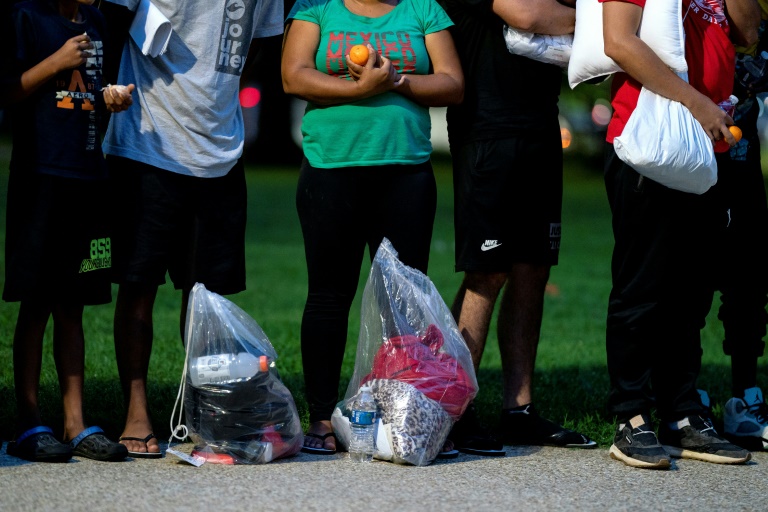
Florida Governor Ron DeSantis took credit Thursday for sending two planeloads of undocumented Venezuelans to wealthy Martha’s Vineyard, Massachusetts, as Republicans play up immigration issues before November mid-term elections.

Around 50 of the migrants, including children, landed Wednesday on the island, where Democratic presidents from John F. Kennedy to Bill Clinton and Barack Obama have summered.

According to Dylan Fernandes, a local state legislator, they were flown on chartered flights.

On Thursday two buses reportedly also from Texas deposited dozens of migrants in front of the Washington residence of Vice President Kamala Harris, the latest of such moves by Texas Republican Governor Greg Abbott.

“Immigrants are being dropped off on Martha’s Vineyard by chartered flights from Texas. Many don’t know where they are. They say they were told they would be given housing and jobs,” Fernandes wrote on Twitter.

“Republicans who call themselves Christians have been plotting for some time to use human lives — men, women, and children — as a political pawns. It is evil and inhumane,” he said.

– Anti-immigration politics –

The moves came as DeSantis and Abbott, two of the country’s most prominent and combative Republican governors, have sought to highlight the issue of tens of thousands of migrants trying to cross the southern border into the United States each month.

Abbott, whose state is the first destination for most of the migrants crossing from Mexico, has been sending buses of them northward, mainly to Washington, Chicago and New York, since April. 

Most of the migrants have been permitted to stay in the country by border officials after officially requesting asylum.

Some 10,000 have been bused across the country by Texas, and Abbott says the action is to provide relief to border communities.

The Texas governor, who is seeking relection in November, said Thursday that Vice President Harris claims the border is secure and denies the existence of an immigration crisis.

“We’re sending migrants to her backyard to call on the Biden administration to do its job & secure the border,” he tweeted.

DeSantis has supported Abbott, and his aides said he was behind the flight to Martha’s Vineyard.

While his state is not on the southwest border, it is a destination for many migrants entering the country legally and illegally.

DeSantis is also seeking reelection in the November midterm vote, and is also a top contender to run for president under the Republican banner in 2024.

“We are not a sanctuary state. . . We will help facilitate that transport for you to be able to go to greener pastures,” DeSantis said at an official event in Florida Thursday.

“In Florida, we take what is happening at the southern border seriously.”

Charlie Crist, the Democrat challenging DeSantis for the Florida governorship, said sending the migrants to Martha’s Vineyard was a wholly political move.

“Florida is spending $12 million to fly innocent migrant children out of our state when that money could be spent on fighting to help Floridians and lower costs,” Crist said on Twitter.

“Everything Ron DeSantis does is to score political points and feed red meat to his base in his thinly veiled attempt to run for president.”

US rail companies, unions reach 'tentative' deal to avert strike

A jubilant President Joe Biden announced a tentative deal Thursday to avoid a crippling strike by railroad unions following all-night talks as the clock ran down on threats to disrupt US supply chains in the run-up to midterm elections.

“It feels good!” Biden told a tired-looking group of negotiators invited into the Oval Office after their sleepless night. “They should be home in bed,” he said.

Biden, who was personally calling into the negotiations as late as 9:00 pm on Wednesday, issued a pre-dawn statement announcing the preliminary resolution, which allows for a 24 percent wage increase between 2020 and 2024, including an immediate payout.

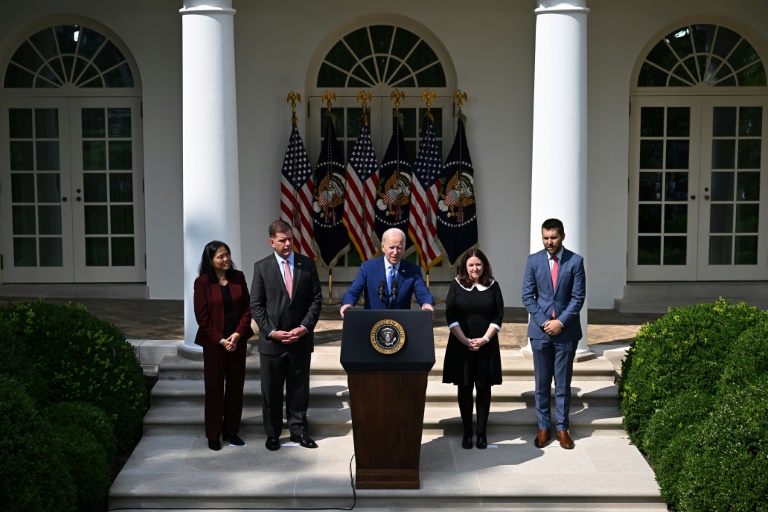
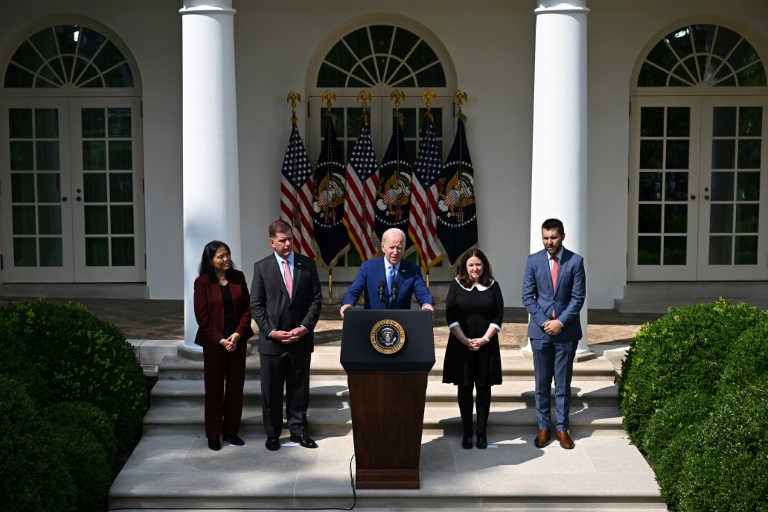
At a hastily organized celebration in the Rose Garden, Biden called the agreement “a big win for America” and said the “dignity” of railroad workers had been honored.

The deal was a relief after worries that a Friday deadline would trigger nationwide stoppages, snarling critical supplies to an economy in the midst of a jittery recovery from the Covid-era shutdown.

For Biden personally, a strike would have been politically damaging as he tries to steer his Democratic party’s uphill bid to hold on to Congress in November, with Republicans focusing heavily on high inflation.

Biden, in his initial statement, said “the hard work done to reach this tentative agreement means that our economy can avert the significant damage any shutdown would have brought.”

“These rail workers will get better pay, improved working conditions, and peace of mind around their health care costs: all hard-earned.”

The Association of American Railroads, which represents the nation’s freight railroads, welcomed the deal.

Major freight carrier Union Pacific said it “looks forward to the unions ratifying these agreements and working with employees as we focus on restoring supply chain fluidity.”

– All-nighter –

In the West Wing, exhausted staffers recounted an all-nighter which saw cabinet secretaries huddle with union leaders and rail executives at the Labor Department building.

“There were 20 plus hours in negotiations. At no point did anyone ever get to go home,” a senior official told reporters.

At 9:00 pm Wednesday, Biden called in and “his message was we have to get agreement — a shutdown is unacceptable — and that they need to respond in good faith to each other.”

Agriculture Secretary Tom Vilsack and Transport Secretary Pete Buttigieg made calls “throughout the day and night” and at 2:00 am, Labor Secretary Marty Walsh “called the White House and said it looks like a deal is coming together,” the official said.

Final details were ironed out, one of the union boards was woken at 3:00 am and two hours later the deal was announced.

“Failure was not an option,” the official said.

– Inflation fears –

Polls show voters are worried about soaring prices in the post-pandemic economy, where supply chain issues have been a constant scourge and annual inflation has surged to a 40-year high.

The Association of American Railroads had warned that a strike would bring 7,000 trains to a halt, costing $2 billion a day.

Farmers and retailers had warned that a strike would hit US supply chains already battered by the Covid-19 pandemic.

“There is no real substitute for moving agricultural goods,” warned American Farm Bureau Federation president Zippy Duvall.

Recognizing the danger, Biden had appointed an arbitration panel back in July to facilitate the negotiations. Asked by reporters in the Rose Garden what Americans should do about rapidly rising food prices and other inflation, he said the railroad deal would bring relief.

“Rail’s moving and (inflation) is not going to go up,” Biden said.

Amtrak, the US rail passenger operator, which had announced plans to cancel long-distance train services if freight workers went on strike, said it would immediately get trains rolling again.

“Amtrak is working to quickly restore canceled trains and reaching out to impacted customers to accommodate on first available departures,” it said in a statement.

US rail companies, unions reach 'tentative' deal to avert strike

A jubilant President Joe Biden announced a tentative deal Thursday to avoid a crippling strike by railroad unions following all-night talks as the clock ran down on threats to disrupt US supply chains in the run-up to midterm elections.

“It feels good!” Biden told a tired-looking group of negotiators invited into the Oval Office after their sleepless night. “They should be home in bed,” he said.

Biden, who was personally calling into the negotiations as late as 9:00 pm on Wednesday, issued a pre-dawn statement announcing the preliminary resolution, which allows for a 24 percent wage increase between 2020 and 2024, including an immediate payout.

At a hastily organized celebration in the Rose Garden, Biden called the agreement “a big win for America” and said the “dignity” of railroad workers had been honored.

The deal was a relief after worries that a Friday deadline would trigger nationwide stoppages, snarling critical supplies to an economy in the midst of a jittery recovery from the Covid-era shutdown.

For Biden personally, a strike would have been politically damaging as he tries to steer his Democratic party’s uphill bid to hold on to Congress in November, with Republicans focusing heavily on high inflation.

Biden, in his initial statement, said “the hard work done to reach this tentative agreement means that our economy can avert the significant damage any shutdown would have brought.”

“These rail workers will get better pay, improved working conditions, and peace of mind around their health care costs: all hard-earned.”

The Association of American Railroads, which represents the nation’s freight railroads, welcomed the deal.

Major freight carrier Union Pacific said it “looks forward to the unions ratifying these agreements and working with employees as we focus on restoring supply chain fluidity.”

– All-nighter –

In the West Wing, exhausted staffers recounted an all-nighter which saw cabinet secretaries huddle with union leaders and rail executives at the Labor Department building.

“There were 20 plus hours in negotiations. At no point did anyone ever get to go home,” a senior official told reporters.

At 9:00 pm Wednesday, Biden called in and “his message was we have to get agreement — a shutdown is unacceptable — and that they need to respond in good faith to each other.”

Agriculture Secretary Tom Vilsack and Transport Secretary Pete Buttigieg made calls “throughout the day and night” and at 2:00 am, Labor Secretary Marty Walsh “called the White House and said it looks like a deal is coming together,” the official said.

Final details were ironed out, one of the union boards was woken at 3:00 am and two hours later the deal was announced.

“Failure was not an option,” the official said.

– Inflation fears –

Polls show voters are worried about soaring prices in the post-pandemic economy, where supply chain issues have been a constant scourge and annual inflation has surged to a 40-year high.

The Association of American Railroads had warned that a strike would bring 7,000 trains to a halt, costing $2 billion a day.

Farmers and retailers had warned that a strike would hit US supply chains already battered by the Covid-19 pandemic.

“There is no real substitute for moving agricultural goods,” warned American Farm Bureau Federation president Zippy Duvall.

Recognizing the danger, Biden had appointed an arbitration panel back in July to facilitate the negotiations. Asked by reporters in the Rose Garden what Americans should do about rapidly rising food prices and other inflation, he said the railroad deal would bring relief.

“Rail’s moving and (inflation) is not going to go up,” Biden said.

Amtrak, the US rail passenger operator, which had announced plans to cancel long-distance train services if freight workers went on strike, said it would immediately get trains rolling again.

“Amtrak is working to quickly restore canceled trains and reaching out to impacted customers to accommodate on first available departures,” it said in a statement.

Kerry urges rich-poor unity on climate effort ahead of UN talks

US climate envoy John Kerry on Thursday urged African countries to help overcome divisions between rich and poor nations at the upcoming UN COP27 talks.

Meeting African environment ministers, Kerry acknowledged the historic role of wealthy countries in stoking climate change but said tackling today’s emissions was a global problem.

“There are some folks unfortunately who are willing to sort of allocate responsibility in a sort of historical… way,” he said at talks in the Senegalese capital Dakar.

“(They are) pointing a finger at us — ‘what you guys created, you guys need to clear’,” Kerry said.

“Well, guess what: Mother Nature does not measure where the emissions come from — they don’t have a label of one country or another.”

The United States is the world’s richest country and its second biggest emitter of heat-trapping carbon dioxide.

But the first place goes to China, which joins developing economies in a negotiating bloc at the UN climate talks.

Kerry pointed to the worsening impact from climate change on Africa. 

“(The) climate crisis here in Africa is more acute than it is in some other parts of the world,” Kerry said.

“This year has seen devastating floods in South Africa, Mozambique and Uganda that just killed hundreds and displaced tens of thousands.

“Meanwhile, the Horn of Africa is in its fourth year of drought, with more than 18 million suffering from food insecurity as a consequence.”

– Money and emissions –

COP27 — the 27th Conference of the Parties to the UN Framework Convention on Climate Change (UNFCCC) — will take place at the Egyptian resort of Sharm el-Sheikh from November 6-18.

The annual climate parlays are dominated by often fierce debate on national pledges on emissions curbs and on funding.

Wealthy countries have previously promised billions of dollars to help poorer nations avert carbon emissions and build resilience against climate change.

On Wednesday, a bloc of the world’s poorest countries said they would urge COP27 to push ahead with another envisioned area of climate finance — a fund to compensate vulnerable nations for damage such as floods and rising seas.

Ministers and experts from the 46-nation Least Developed Countries (LDC) bloc, also meeting in Dakar, said setting up a funding mechanism for the proposed fund was of “crucial importance.”

Kerry took a swing at former president Donald Trump, who ditched the UN’s landmark 2015 agreement on climate change.

“President (Joe) Biden has brought unprecedented resources to the table, joining the Paris Agreement again on Day One after the miserable decision of a president who didn’t know the science,” he said.

Kerry, a former secretary of state, also pointed to the United States’ help for Africa, which last year amounted to $8.2 billion in humanitarian and climate adaptation aid.

“I will say to you bluntly: the developed world needs to do more… but we need you to also be at the table to do the things that make the difference to be able to deploy the funding and make it work,” he said.

US blacklists Russian neo-Nazi fighters, children's rights head

The US Treasury placed top Russian finance officials, a neo-Nazi fighter group, and a children’s rights official who allegedly directs the removal of Ukrainian children to Russia on its sanctions blacklist Thursday.

Some 22 individuals and two entities were added to the Treasury’s blacklist, including justice officials in occupied Crimea and members of Chechen Republic leader Ramzan Kadyrov’s family.

In a parallel move, the Treasury and US Commerce Department banned the export of quantum computing services, hardware and software to Russia and Belarus in a move the Treasury said would degrade Moscow’s ability to rebuild its military after heavy losses in the continuing war with Ukraine.

“As Ukraine presses forward with defending its freedom, today we’re taking steps to further degrade Russia’s ability to rebuild its military, hold perpetrators of violence accountable, and further financially isolate (Russian President Vladimir) Putin,” said Treasury Secretary Janet Yellen in a statement.

The new sanctions took aim at the heads of key Russian financial institutions including NSPK, which runs the Mir payment card network; the National Settlement Depository; CCP NCC, which manages settlement for the Moscow stock exchange; and the Deposit Insurance Agency.

The Treasury blacklisted Maria Alexeyevna Lvova-Belova, the Presidential Commissioner for Children’s Rights. 

Working directly under Putin, the Treasury said, Lvova-Belova has overseen the deportation of “thousands” of Ukrainian children to Russia.

“Lvova-Belova’s efforts specifically include the forced adoption of Ukrainian children into Russian families, the so-called ‘patriotic education’ of Ukrainian children, legislative changes to expedite the provision of Russian Federation citizenship to Ukrainian children, and the deliberate removal of Ukrainian children by Russia’s forces,” it said.

The Treasury also put sanctions on Task Force Rusich, a neo-Nazi paramilitary group fighting in Ukraine associated with the Wagner mercenary army controlled by close Putin advisor Yevgeny Prigozhin.

US Treasury sanctions aim to freeze any assets those designated might have under US jurisdiction and forbid any US individuals or companies — including international banks with US operations — to do business with them, effectively limiting their access to global financial networks.

UK probes Microsoft's $69 bn bid for gaming giant

Britain on Thursday announced an “in-depth investigation” into Microsoft’s planned $69-billion takeover of US gaming giant Activision Blizzard, citing UK competition concerns.

US technology giant Microsoft in January announced a bid to create the world’s third biggest gaming company by revenue, behind China’s Tencent and Japan’s Sony, by purchasing the owner of hit games “Candy Crush” and “Call Of Duty”.

The proposed deal, already controversial owing to allegations of sexual harassment against women at Activision, now faces a probe by Britain’s Competition and Markets Authority.

“The CMA has referred the anticipated acquisition by Microsoft Corporation of Activision Blizzard, Inc. for an in-depth investigation,” a statement said. 

It added that the “merger may be expected to result in a substantial lessening of competition within a market or markets in the United Kingdom”.

Activision Blizzard’s portfolio also includes the popular game “World Of Warcraft”.

Sorcha O’Carroll, senior director of mergers at the CMA, previously expressed concern that Microsoft could use its control over Call Of Duty and World Of Warcraft “to harm rivals, including recent and future rivals in multi-game subscription services and cloud gaming”.

Sony has expressed concerns that Call of Duty might no longer be accessible on its PlayStation console.

Microsoft dismissed such a suggestion, however, saying in a statement Thursday that “it makes zero business sense… to remove Call of Duty from PlayStation given its market leading console position”.

UK probes Microsoft's $69 bn bid for gaming giant

Britain on Thursday announced an “in-depth investigation” into Microsoft’s planned $69-billion takeover of US gaming giant Activision Blizzard, citing UK competition concerns.

US technology giant Microsoft in January announced a bid to create the world’s third biggest gaming company by revenue, behind China’s Tencent and Japan’s Sony, by purchasing the owner of hit games “Candy Crush” and “Call Of Duty”.

The proposed deal, already controversial owing to allegations of sexual harassment against women at Activision, now faces a probe by Britain’s Competition and Markets Authority.

“The CMA has referred the anticipated acquisition by Microsoft Corporation of Activision Blizzard, Inc. for an in-depth investigation,” a statement said. 

It added that the “merger may be expected to result in a substantial lessening of competition within a market or markets in the United Kingdom”.

Activision Blizzard’s portfolio also includes the popular game “World Of Warcraft”.

Sorcha O’Carroll, senior director of mergers at the CMA, previously expressed concern that Microsoft could use its control over Call Of Duty and World Of Warcraft “to harm rivals, including recent and future rivals in multi-game subscription services and cloud gaming”.

Sony has expressed concerns that Call of Duty might no longer be accessible on its PlayStation console.

Microsoft dismissed such a suggestion, however, saying in a statement Thursday that “it makes zero business sense… to remove Call of Duty from PlayStation given its market leading console position”.

Stocks sag as inflation fears persist

Stock markets retreated on Thursday as investors fret over red-hot inflation and the prospect of tighter monetary policy.

Wall Street’s three main indices spent part of the morning in positive territory, but then sank lower.

If the Dow was off only marginally, the broader S&P 500 shed 0.6 percent and the tech-heavy Nasdaq Composite fell 1.1 percent.

London dipped less than a tenth of a percent, but both Frankfurt and Paris fell further.

“The markets remain skittish following recent hot inflation readings that led to a sharp selloff on Tuesday,” analysts at US firm Schwab said in a note.

The data showed US annual consumer price inflation slowing by 8.3 percent in August from 8.5 percent in July but markets had expected a bigger fall.

The reading sparked a rout on equities as it stoked concern of more hefty Federal Reserve interest rate hikes.

While higher borrowing costs help to cool inflation, they can also put a brake on economic growth.

Global consumer prices have soared this year on Russia’s invasion of Ukraine — which has hiked energy and food costs — and because of supply chain strains worsened by Covid lockdowns in China.

Investors were also tracking US government data on Thursday which showed a surprise, 0.3 percent bounce in retail sales in August.

But while the headline gain was much better than the flat result economists had projected, the figure for July was revised down to show a 0.4 percent drop, so the August increase means the total remains below the level in June.

“The key takeaway from the report is that it does not connote much vigor in retail spending activity in August,” said analyst Patrick O’Hare at Briefing.com.

First-time jobless claims also fell last week, indicating the US labour market remains tight, and giving Fed policymakers more latitude to continue aggressively raising interest rates.

“Today’s US data dump did little to change the market’s view of what the Fed might do next week,” said Forex.com analyst Fawad Razaqzada.

“Investors are confident the US central bank will tighten monetary policy by 75 basis points on Wednesday, something which could push the economy into slowdown and cause earnings to decline.”

– Oil, yen tumble –

Razaqzada said in this economic environment investors are finding it difficult to hold onto stocks which pay low dividends and are taking profits when they can.

Eventually, though, equities will “price in” or reflect the expectations of interest rate hikes. 

“Until this happens, it is unlikely that the stock market will be able to shine very brightly,” said Razaqzada.

Asian bourses mostly logged cautious gains Thursday, but Shanghai and Seoul dipped.

The yen was under pressure as weak Japanese data further fuelled speculation of possible intervention from the Bank of Japan to support the unit.

Crude prices tumbled nearly four percent following a warning from the International Energy Agency that growth in demand could halt in the final months of this year. 

– Key figures at around 1530 GMT –

New York – DOWN less than 0.1 percent at 31,124.96 points

EURO STOXX 50: DOWN 0.9 percent at 3,534.08

London – FTSE 100: DOWN less than 0.1 percent at 7,274.08 (close)

Frankfurt – DAX: DOWN 0.7 percent at 12,937.69 (close)

Paris – CAC 40: DOWN 1.2 percent at 6,147.37 (close)

Tokyo – Nikkei 225: UP 0.2 percent at 27,875.91 (close) 

Hong Kong – Hang Seng Index: UP 0.4 percent at 18,930.38 (close)

Shanghai – Composite: DOWN 1.2 percent at 3,199.92 (close)

Dollar/yen: UP at 143.43 yen from 143.08 yen late Wednesday

Euro/dollar: UP at $0.9992 from $0.9981

Pound/dollar: DOWN at $1.1493 from $1.1539

Euro/pound: UP at 86.97 pence from 86.49 pence 

Brent North Sea crude: DOWN 3.8 percent at $90.74 per barrel

West Texas Intermediate: DOWN 3.8 percent at $85.09 per barrel

burs-rl/lth

Stocks sag as inflation fears persist

Stock markets retreated on Thursday as investors fret over red-hot inflation and the prospect of tighter monetary policy.

Wall Street’s three main indices spent part of the morning in positive territory, but then sank lower.

If the Dow was off only marginally, the broader S&P 500 shed 0.6 percent and the tech-heavy Nasdaq Composite fell 1.1 percent.

London dipped less than a tenth of a percent, but both Frankfurt and Paris fell further.

“The markets remain skittish following recent hot inflation readings that led to a sharp selloff on Tuesday,” analysts at US firm Schwab said in a note.

The data showed US annual consumer price inflation slowing by 8.3 percent in August from 8.5 percent in July but markets had expected a bigger fall.

The reading sparked a rout on equities as it stoked concern of more hefty Federal Reserve interest rate hikes.

While higher borrowing costs help to cool inflation, they can also put a brake on economic growth.

Global consumer prices have soared this year on Russia’s invasion of Ukraine — which has hiked energy and food costs — and because of supply chain strains worsened by Covid lockdowns in China.

Investors were also tracking US government data on Thursday which showed a surprise, 0.3 percent bounce in retail sales in August.

But while the headline gain was much better than the flat result economists had projected, the figure for July was revised down to show a 0.4 percent drop, so the August increase means the total remains below the level in June.

“The key takeaway from the report is that it does not connote much vigor in retail spending activity in August,” said analyst Patrick O’Hare at Briefing.com.

First-time jobless claims also fell last week, indicating the US labour market remains tight, and giving Fed policymakers more latitude to continue aggressively raising interest rates.

“Today’s US data dump did little to change the market’s view of what the Fed might do next week,” said Forex.com analyst Fawad Razaqzada.

“Investors are confident the US central bank will tighten monetary policy by 75 basis points on Wednesday, something which could push the economy into slowdown and cause earnings to decline.”

– Oil, yen tumble –

Razaqzada said in this economic environment investors are finding it difficult to hold onto stocks which pay low dividends and are taking profits when they can.

Eventually, though, equities will “price in” or reflect the expectations of interest rate hikes. 

“Until this happens, it is unlikely that the stock market will be able to shine very brightly,” said Razaqzada.

Asian bourses mostly logged cautious gains Thursday, but Shanghai and Seoul dipped.

The yen was under pressure as weak Japanese data further fuelled speculation of possible intervention from the Bank of Japan to support the unit.

Crude prices tumbled nearly four percent following a warning from the International Energy Agency that growth in demand could halt in the final months of this year. 

– Key figures at around 1530 GMT –

New York – DOWN less than 0.1 percent at 31,124.96 points

EURO STOXX 50: DOWN 0.9 percent at 3,534.08

London – FTSE 100: DOWN less than 0.1 percent at 7,274.08 (close)

Frankfurt – DAX: DOWN 0.7 percent at 12,937.69 (close)

Paris – CAC 40: DOWN 1.2 percent at 6,147.37 (close)

Tokyo – Nikkei 225: UP 0.2 percent at 27,875.91 (close) 

Hong Kong – Hang Seng Index: UP 0.4 percent at 18,930.38 (close)

Shanghai – Composite: DOWN 1.2 percent at 3,199.92 (close)

Dollar/yen: UP at 143.43 yen from 143.08 yen late Wednesday

Euro/dollar: UP at $0.9992 from $0.9981

Pound/dollar: DOWN at $1.1493 from $1.1539

Euro/pound: UP at 86.97 pence from 86.49 pence 

Brent North Sea crude: DOWN 3.8 percent at $90.74 per barrel

West Texas Intermediate: DOWN 3.8 percent at $85.09 per barrel

burs-rl/lth

Close Bitnami banner
Bitnami