AFP

Patagonia founder Yvon Chouinard, the reluctant businessman

Yvon Chouinard built an empire with his outdoor gear brand Patagonia, but the nature enthusiast has never done business like anyone else. And now, aged 83, he’s just taken his most drastic step: he has decided to give away the company to fight climate change.

It’s an unusual move in the United States, a thoroughly capitalist society, but it’s completely on brand for the California resident.

“I’ve been a businessman for almost sixty years,” Chouinard wrote in a book in 2006. “It’s as difficult for me to say those words as it is for someone to admit being an alcoholic or a lawyer.”

“Yet business can produce food, cure disease, control population, employ people, and generally enrich our lives. And it can do these good things and make a profit without losing its soul.”

Chouinard has worked hard to make Patagonia a socially responsible enterprise.

The company has given the equivalent of one percent of its sales to environmental groups every year since 1985, and it was one of the first clothing brands to switch entirely to organic cotton in 1996.

Patagonia also became the first to adopt California’s public benefit corporation status in 2012, meaning it became a company structured for charitable purposes, not private gain. 

In 2018, Patagonia made saving the planet its official purpose.

And now, almost 50 years after launching the company, Chouinard agreed with his wife and their two children to transfer 100 percent of their stock shares to a trust dedicated to making sure their values are respected, and a nonprofit dedicated to fighting climate change and protecting nature.

The latter will receive all of Patagonia’s profits, which are currently valued at about $100 million per year.

“Earth is now our only shareholder,” Chouinard said in a letter posted on the Patagonia website.

– Unwavering vision –

Kristine McDivitt Tompkins, a member of Patagonia’s board of directors, has known Chouinard since he was 24. And since then, “his vision has never wavered,” she said in a statement announcing Patagonia’s next phase.

“While he is in good health now, he wanted to have a plan in place for the future of the company and the future of the planet.”

Chouinard was born in 1938 in the northeastern US state of Maine, to a French-Canadian father from Quebec and a mother he described as “adventurous.” He moved to California in 1946.

It was there, in a falcon-watching club, that a few years later he discovered his passion for rock climbing.

He began making his own pitons, metal anchors for climbing ropes, and learned some metalworking in the process. Other climbers began to want their own.

And so, his business began, even if it barely brought in enough money to live on in the first few years.

He created Chouinard Equipment in 1965 with a partner, which quickly became a reference group in the climbing world.

During a trip to Scotland, Chouinard bought a rugby jersey for climbing. The fabric was strong, and the shirt’s collar helped protect his neck from the ropes.

Back in the United States, others asked where they could get one. Sensing another opportunity, he began to sell rugby shirts, among other clothing items. Patagonia officially launched in 1973.

The group has since diversified, with subsidiaries in food, media, surfboards, investments in like-minded startups and recycling used clothes.

Forbes magazine recently put Chouinard’s net worth at $1.2 billion.

But the entrepreneur drives a beat-up old Subaru. He doesn’t own a computer or cell phone and splits his time between two modest houses in California and Wyoming, The New York Times reported.

Speaking about his latest decision, Chouinard told the paper: “Hopefully this will influence a new form of capitalism that doesn’t end up with a few rich people and a bunch of poor people.”
New UNICEF ambassador seeks to give louder voice to climate change victims

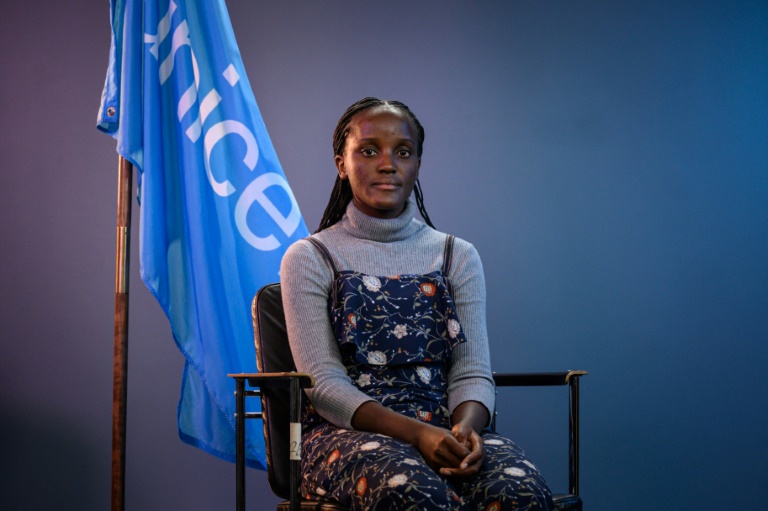
Ugandan climate activist Vanessa Nakate recently traveled to the drought-ravaged Horn of Africa to hear from children suffering from starvation. The next day she learned that one of the boys she met had died.

It is for such children, whose lives have been shattered by the global climate crisis, that Nakate, UNICEF’s newest Goodwill Ambassador, has set out to make their voices heard.

“I’m hoping to continue doing the same thing to amplify, and really platform, the stories of the children … that are suffering, because of the climate crisis,” Nakate, who is 25, told AFP in an interview.

Inspired by Sweden’s climate crusader Greta Thunberg, several years ago Nakate founded the Rise Up Climate Movement in her native Uganda and has spoken at prestigious international climate events.

On Thursday, she was appointed the newest Goodwill Ambassador for UNICEF, the United Nations’ children’s agency, joining recent high-profile supporters such as actor Priyanka Chopra Jonas, singer Katy Perry and Syrian refugee and education activist Muzoon Almellehan.

“In my journey of activism, I’ve always told myself, and I’ve always believed that every activist has a story to tell,” Nakate said. “And every story has a solution to give and every solution has a life to change.”

The activist says children and women suffer the most from global warming and her mission is make their voices heard — but not to speak on their behalf.

“I cannot say that I can give a voice to anyone, because I believe everyone has their own distinct voice,” she added.

“But the question is, who is listening to what we are saying? Who is paying attention?”

– ‘Roof for all of us’ –

Last week, Nakate visited UNICEF-run hospitals and nutrition centers in Turkana, a Kenyan region in the Horn of Africa hit by devastating drought.

There she witnessed the tragedy firsthand.

“I got to meet many children suffering from severe, acute malnutrition, because of this drought,” Nakate said of the trip. “One of the children that I got to meet that day, I got to learn the following morning that he had passed.”

UNICEF says about half of the world’s children — roughly 1 billion — live in one of 33 countries classified as “extremely high risk” due to climate change impacts.

Scientists say that droughts, floods, storms and heat waves will only get stronger and more frequent due to global warming, and Nakate is frustrated that governments around the world, busy with the war in Ukraine and the Covid-19 pandemic, are not doing enough to save the planet.

“It can be discouraging to see that the world is not paying the attention that it should to climate issues, it can be very frustrating,” said the activist.

“Leaders especially need to understand that Earth is a home for all of us, is like that roof for all of us. And we have to ensure that the entire roof is well and no part is leaking,” Nakate said. “Because any leak in a part of a roof will eventually affect everyone in that house.”

Biden administration seeks to tap into offshore wind

The Biden administration announced plans on Thursday to expand the use of wind energy by building floating offshore wind platforms.

The Interior Department said the objective is to deploy 15 gigawatts of floating offshore wind capacity by 2035, enough to power more than five million homes.

It seeks to reduce the cost of floating offshore wind energy by more than 70 percent by 2035.

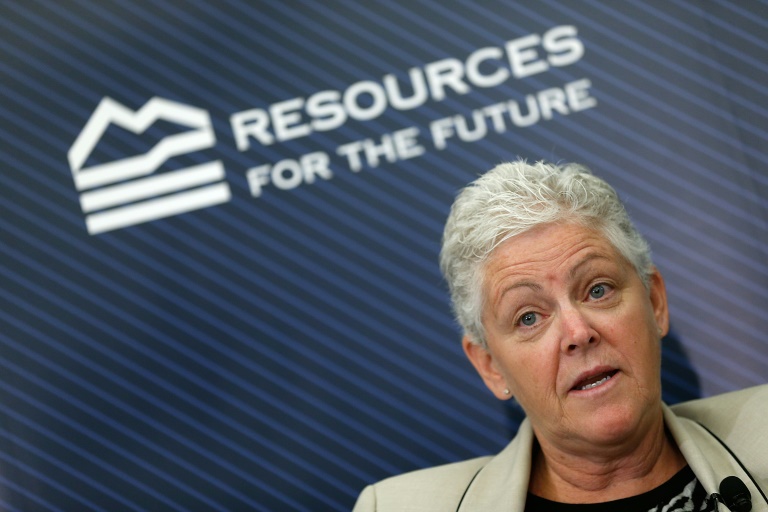
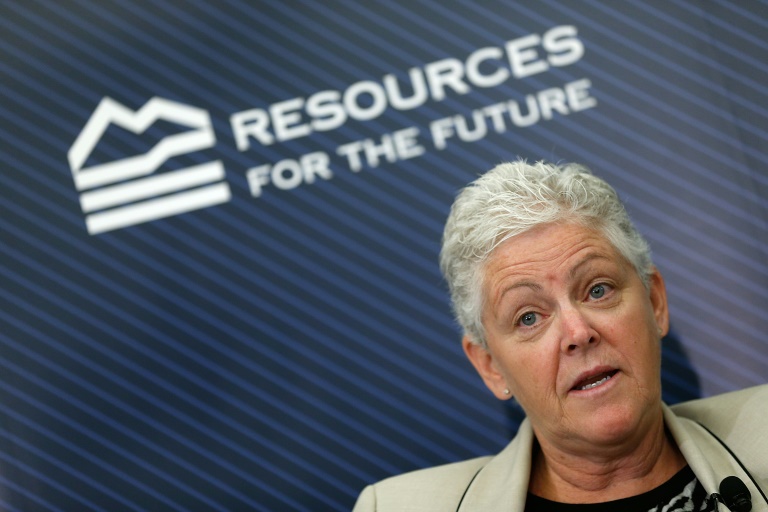
“We’re launching efforts to seize a new opportunity — floating offshore wind,” White House National Climate Advisor Gina McCarthy said at a briefing for reporters.

McCarthy said the technology “will let us build in deepwater areas where turbines can’t be secured directly to the seafloor, but where there are strong winds that we can now harness.”

The Biden administration has previously announced a goal of deploying 30 gigawatts of offshore wind energy by 2030.

Two-thirds of America’s offshore wind energy potential is in deep-water areas such as off the coast of California and Oregon that require floating platforms, officials said.

To kick off the program, the administration announced nearly $50 million in funding for research and development.

Energy Secretary Jennifer Granholm said her department will coordinate with the Interior Department “to ensure that floating offshore wind can coexist with wildlife and with fishing.”

Biden administration seeks to tap into offshore wind

The Biden administration announced plans on Thursday to expand the use of wind energy by building floating offshore wind platforms.

The Interior Department said the objective is to deploy 15 gigawatts of floating offshore wind capacity by 2035, enough to power more than five million homes.

It seeks to reduce the cost of floating offshore wind energy by more than 70 percent by 2035.

“We’re launching efforts to seize a new opportunity — floating offshore wind,” White House National Climate Advisor Gina McCarthy said at a briefing for reporters.

McCarthy said the technology “will let us build in deepwater areas where turbines can’t be secured directly to the seafloor, but where there are strong winds that we can now harness.”

The Biden administration has previously announced a goal of deploying 30 gigawatts of offshore wind energy by 2030.

Two-thirds of America’s offshore wind energy potential is in deep-water areas such as off the coast of California and Oregon that require floating platforms, officials said.

To kick off the program, the administration announced nearly $50 million in funding for research and development.

Energy Secretary Jennifer Granholm said her department will coordinate with the Interior Department “to ensure that floating offshore wind can coexist with wildlife and with fishing.”

Michael Jordan 'Last Dance' jersey sells for $10.1 mn

A jersey worn by basketball legend Michael Jordan during Game 1 of the 1998 NBA Finals, his last title victory, sold for a record $10.1 million Thursday, Sotheby’s said.

The iconic red Chicago Bulls jersey, with Jordan’s number 23 on the back, went for the highest amount of any game-worn sports memorabilia ever, the auction house said, and set a new record for a basketball jersey at auction.

The final sum was twice Sotheby’s high estimate, and the jersey drew a total of 20 bids.

The Jordan swag beat a record set in May for the most expensive sports memorabilia ever sold, which had been Diego Maradona’s “Hand of God” jersey.

The previous record for a game-worn basketball jersey was for one autographed by Kobe Bryant, who wore it in 1996-97. That piece of NBA memorabilia went for $3.7 million, according to Sotheby’s.

The Jordan jersey is only the second worn by the star during his six championships to be sold at auction.

Most of Jordan’s NBA Finals jerseys remain in private hands, according to Sotheby’s, although he has donated one to the Smithsonian National Museum of African American History and Culture.

Jordan, now 59, spent the bulk of his basketball career with the Bulls, with whom he won all six of his titles, but came out of retirement in 2001 to play two seasons with the Washington Wizards.

His final season with the Bulls was detailed in the hit ESPN/Netflix documentary “The Last Dance” released in 2020.

Brahm Wachter, head of streetwear and modern collectables at Sotheby’s, said in a statement that the sale “solidifies Michael Jordan as the undisputed GOAT, proving his name and incomparable legacy is just as relevant as it was nearly 25 years ago.”

The New York auction house, owned since 2019 by French-Israeli telecom magnate Patrick Drahi, previously sold a pair of Jordan’s sneakers for nearly $1.5 million.

The retired basketball star currently owns the Charlotte Hornets, located in his childhood home of North Carolina, and reportedly still earns millions in royalties each year from sales of Nike’s Air Jordan brand of sneakers.

New UNICEF ambassador seeks to give louder voice to climate change victims

Ugandan climate activist Vanessa Nakate recently traveled to the drought-ravaged Horn of Africa to hear from children suffering from starvation. The next day she learned that one of the boys she met had died.

It is for such children, whose lives have been shattered by the global climate crisis, that Nakate, UNICEF’s newest Goodwill Ambassador, has set out to make their voices heard.

“I’m hoping to continue doing the same thing to amplify, and really platform, the stories of the children … that are suffering, because of the climate crisis,” Nakate, who is 25, told AFP in an interview.

Inspired by Sweden’s climate crusader Greta Thunberg, several years ago Nakate founded the Rise Up Climate Movement in her native Uganda and has spoken at prestigious international climate events.

On Thursday, she was appointed the newest Goodwill Ambassador for UNICEF, the United Nations’ children’s agency, joining recent high-profile supporters such as actor Priyanka Chopra Jonas, singer Katy Perry and Syrian refugee and education activist Muzoon Almellehan.

“In my journey of activism, I’ve always told myself, and I’ve always believed that every activist has a story to tell,” Nakate said. “And every story has a solution to give and every solution has a life to change.”

The activist says children and women suffer the most from global warming and her mission is make their voices heard — but not to speak on their behalf.

“I cannot say that I can give a voice to anyone, because I believe everyone has their own distinct voice,” she added.

“But the question is, who is listening to what we are saying? Who is paying attention?”

– ‘Roof for all of us’ –

Last week, Nakate visited UNICEF-run hospitals and nutrition centers in Turkana, a Kenyan region in the Horn of Africa hit by devastating drought.

There she witnessed the tragedy firsthand.

“I got to meet many children suffering from severe, acute malnutrition, because of this drought,” Nakate said of the trip. “One of the children that I got to meet that day, I got to learn the following morning that he had passed.”

UNICEF says about half of the world’s children — roughly 1 billion — live in one of 33 countries classified as “extremely high risk” due to climate change impacts.

Scientists say that droughts, floods, storms and heat waves will only get stronger and more frequent due to global warming, and Nakate is frustrated that governments around the world, busy with the war in Ukraine and the Covid-19 pandemic, are not doing enough to save the planet.

“It can be discouraging to see that the world is not paying the attention that it should to climate issues, it can be very frustrating,” said the activist.

“Leaders especially need to understand that Earth is a home for all of us, is like that roof for all of us. And we have to ensure that the entire roof is well and no part is leaking,” Nakate said. “Because any leak in a part of a roof will eventually affect everyone in that house.”

Cardi B pleads guilty to two charges in strip club brawl case

Cardi B on Thursday pleaded guilty to two misdemeanor charges in New York court, avoiding jail time in a deal that closes a years-long case alleging her involvement in a strip club brawl.

On August 29, 2018, Cardi B was in the Angels Strip Club in Queens when her group reportedly lobbed bottles, chairs and a hookah pipe, which police said bruised a female employee’s legs.

Cardi B allegedly ordered an attack on two sisters working at the club because one of them slept with her husband, the rapper Offset.

The superstar rapper’s admission of guilt to assault and reckless endangerment allows the mother of two to avoid a trial and potential jail time. The 10 other charges she faced were dismissed.

The artist born Belcalis Almanzar strode into the courthouse in Queens in a fitted white dress with matching Louboutins and her signature extra-long nail extensions.

The two misdemeanors will be conditionally discharged as soon as Cardi B completes 15 days of community service. She must also pay court fees, and stay away from the two women who made the accusations for three years.

Returning to her luxury SUV following the proceedings, the rapper, asked how she was feeling, quipped to reporters that “I’m feeling like I look good.”

Later in the afternoon she posted upbeat Instagram stories from the annual Feast of San Gennaro festival in Manhattan’s Little Italy.

– ‘Move on’ –

The swift denouement followed four years of back-and-forth between her legal team and state prosecutors, proceedings drawn out, like so many court cases, by the pandemic.

She risked a far more serious fate.

Initially facing only misdemeanor charges, the Bronx rapper rejected an initial plea deal from the Queens district attorney’s office.

Then in June 2019 a grand jury indicted Cardi B on charges including two felonies. If convicted, she faced jail time.

The rapper invited Drew Findling — the so-called #BillionDollarLawyer who has made a name for himself representing hip-hop stars in Georgia, and more recently was hired by Donald Trump to represent him in an election interference probe — to join her legal team.

On Thursday Findling was all smiles, sporting his signature Wayfarer sunglasses as he let reporters know he was wearing an Armani suit with Versace shoes.

“She’ll be able to move on,” he said of Cardi. “There are too many things that she has planned for her family, for her career, and for the community, and she just felt quite honestly that a three-week jury trial was going to be a distraction from the things that we felt were most important.”

Asked about the lengthy legal process, his fellow attorney Jeff Kern told reporters “it’s like anything else in life.”

“Like doing your term paper in college, you get it done at the last minute,” he said. “Nature of the situation, nature of the beast.”

Cardi B must complete the community service by January 2023 or face jail time.

Raised in the Bronx by a Dominican father and Trinidadian mother, Cardi B’s meteoric rise began on social media during her days as a stripper, which she alludes to in her breakout smash “Bodak Yellow.”

Mars rover sees hints of past life in latest rock samples

NASA’s Perseverance Mars rover has detected its highest concentrations yet of organic molecules, in a potential signal of ancient microbes that scientists are eager to confirm when the rock samples are eventually brought to Earth.

While organic matter has been found on the Red Planet before, the new discovery is seen as especially promising because it came from an area where sediment and salts were deposited into a lake — conditions where life could have arisen.

“It is very fair to say that these are going to be, these already are, the most valuable rock samples that have ever been collected,” David Shuster, a Perseverance return sample scientist, told reporters during a briefing.

Organic molecules — compounds made primarily of carbon that usually include hydrogen and oxygen, but also at times other elements — are not always created by biological processes.

Further analysis and conclusions will have to wait for the Mars Sample Return mission — a collaboration between NASA and the European Space Agency (ESA) to bring back the rocks that is set for 2033.

Nicknamed Percy, the rover landed on Mars’ Jezero Crater in February 2021, tasked with caching samples that may contain signs of ancient life, as well as characterizing the planet’s geology and past climate.

The delta it is exploring formed 3.5 billion years ago. The rover is currently there investigating sedimentary rocks, which came about from particles of various sizes settling in the then watery environment.

Percy cored two samples from a rock called “Wildcat Ridge,” which is about three feet (one meter) wide, and on July 20 abraded some of its surface so it could be analyzed with an instrument called SHERLOC that uses ultraviolet light.

The results showed a class of organic molecules called aromatics, which play a key role in biochemistry.

“This is a treasure hunt for potential signs of life on another planet,” NASA astrobiologist Sunanda Sharma said. 

“Organic matter is a clue and we’re getting stronger and stronger clues…I personally find these results so moving because it feels like we’re in the right place, with the right tools, at a very pivotal moment.”

There have been other tantalizing clues about the possibility of life on Mars before, including repeated detections of methane by Perseverance’s predecessor, Curiosity.

While methane is a digestive byproduct of microbes here on Earth, it can also be generated by geothermal reactions where no biology is at play.

Typhoon Muifa lashes eastern China, forcing 1.6 million from their homes

High winds and heavy rain lashed China’s densely populated east coast on Friday, after Typhoon Muifa forced around 1.6 million people to leave their homes and grounded most flights at Shanghai’s main airports.

Muifa is the strongest tropical cyclone to hit Shanghai — home to more than 25 million people — since record-keeping began in 1949, state broadcaster CCTV said.

However, there were no immediate reports of any deaths or casualties.

At least 426,000 people were evacuated in Shanghai and another 1.2 million people were taken to temporary shelters in neighbouring Zhejiang province, CCTV added. 

Heavy rainfall led to traffic tailbacks and floods in several areas of the Yangtze river delta region, a major global manufacturing hub.

Giant waves were seen crashing onto the coastline in Hangzhou bay, to the south of Shanghai, and national radio reported a landslide in Ninghai County in Zhejiang province.

Packing winds of up to 82 kilometres (50 miles) per hour, the storm made landfall at around 12:00 am Friday (1600 GMT Thursday) in coastal areas of Qingdao, state news agency Xinhua reported.

Muifa previously hit the city of Zhoushan in Zhejiang on Wednesday and Shanghai’s Fengxian district on Thursday.

It also led to the cancellation of all flights to China’s biggest financial hub.

Air travel slowly resumed in Shanghai as the storm moved north, but most flights from the city’s two main airports were cancelled Thursday morning, according to aviation data provider Flightradar24.

Operations at some of Asia’s largest container shipping ports in Shanghai and neighbouring Ningbo that were halted because of the typhoon were scheduled to resume Thursday, according to statements from port officials. 

Officials ordered all fishing vessels in the Yellow Sea and Bohai Sea to anchor in ports as northeast China braced for the typhoon.

The storm came soon after Typhoon Hinnamnoor hit Shanghai and its neighbouring region last week, causing the suspension of Shanghai ferry services and school closures in parts of Zhejiang.

Muifa is the 12th typhoon to hit China this year, according to state media.

Tropical storms, which are expected to increase as the planet warms, were sharply up in 2021, a report by the US National Oceanic and Atmospheric Administration said earlier this month.

World Bank warns recession risk rising amid higher interest rates

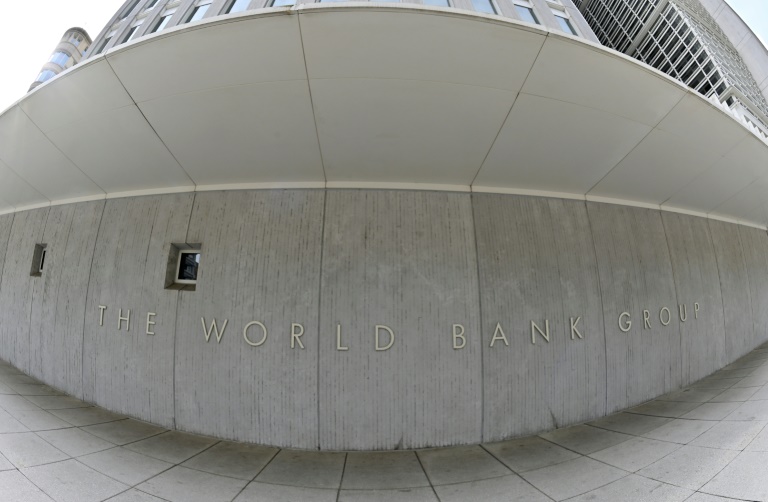
The threat of a global recession is growing as central banks focus on bringing down soaring inflation rates, the World Bank warned Thursday, calling on governments to help boost supply to ease the constraints behind rising prices.

Inflation worldwide has been rising at the fastest pace seen in decades, due to supply constraints amid high demand as countries emerged from the pandemic. It has been exacerbated this year by the Russian invasion of Ukraine and Covid lockdowns in China.

Major central banks have responded forcefully, raising borrowing costs to cool demand and douse red-hot inflation.

But in a new paper, World Bank economists warned that the actions may not be enough to bring high prices under control, leading to a need for more interest rate hikes, which in turn will put the brakes on growth.

Many countries will not be able to avoid a recession, but the worldwide slowdown and tightening monetary policy “could give rise to significant financial stress and trigger a global recession in 2023,” the paper said.

In that scenario, global GDP growth would slow to 0.5 percent in 2023 — a 0.4 percent contraction in per capita growth, meeting the technical definition of a global recession.

“Global growth is slowing sharply, with further slowing likely as more countries fall into recession,” World Bank President David Malpass said in a statement. 

“My deep concern is that these trends will persist, with long-lasting consequences that are devastating for people in emerging market and developing economies.”

He urged policymakers to “shift their focus from reducing consumption to boosting production.”

The World Bank in early June slashed its forecast for global growth to 2.9 percent, more than a full point lower than the estimate in January.

– Not all doom and gloom –

Indermit Gill, the newly installed chief economist at the Washington-based development lender, said his biggest concern is that because of the slowdown and pandemic crisis, “poverty reduction has stopped.”

But he expressed some optimism as well.

“It’s not an all doom and gloom story,” he told reporters, noting that because of work done to improve economic policies and management before the pandemic, countries are better able to protect the poor.

“I have the feeling that we will come out on the right side of this because the world has changed now and you know, there’s a lot more capability around,” he said.

The worst case scenario described in the paper Thursday would entail a recession in advanced economies and sharp declines in growth in emerging and developing economies.

“The global economy is now in its steepest slowdown following a post-recession recovery since 1970,” the World Bank said. 

“Under the circumstances, even a moderate hit to the global economy over the next year could tip it into recession.”

Close Bitnami banner
Bitnami