AFP

Health groups call for fossil fuel non-proliferation treaty

Around 200 health organisations and more than 1,400 health professionals on Wednesday called for governments to establish a binding international treaty on phasing out fossil fuels, which they said pose “a grave and escalating threat to human health”.

A letter proposing the “fossil fuel non-proliferation treaty” said it could work similarly to the World Health Organization’s Framework Convention on Tobacco Control — except this time the harmful controlled substances would be coal, oil and gas. 

The WHO was among the health organisations from around the world who signed the letter. 

“The modern addiction to fossil fuels is not just an act of environmental vandalism. From the health perspective, it is an act of self-sabotage,” WHO chief Tedros Adhanom Ghebreyesus said in a statement.

The letter called on national governments to develop and implement a legally binding mechanism that would immediately stop all future fossil fuel expansion, as well as phasing out existing production.

It emphasised that the transition should be carried out in “a fair and equitable manner,” and that high-income countries should support lower-income nations to ensure the change “reduces poverty rather than exacerbating it”.

Air pollution, mostly from burning fossil fuels, has been linked to the deaths of seven million people a year.

Climate change has also spurred more frequent and severe extreme weather events, which can have a lasting impact on health even beyond those initially affected by the disasters, including smoke from wildfires and diseases spread after floods. 

The letter also pointed to the heightened health risks faced by the workers who extract, refine, transport and distribute fossil fuels and related products.

Phasing out fossil fuels would prevent 3.6 million deaths a year from air pollution alone, the letter said, adding that “the same cannot be said for proposed false solutions, such as carbon capture and storage”.

– Either fossil fuels or health –

Diarmid Campbell-Lendrum, the head of the WHO’s climate change unit, said that “from a health point of view, you can’t fix a disease without calling out what is causing it”.

The call for a treaty was important because it did not “try to use false accounting or imaginary solutions to continue to prop up the burning of fossil fuels,” he told AFP.

“We can either have fossil fuels or we can have health — we can’t have both.”

Courtney Howard, an emergency physician in Canada’s sub-Arctic region who signed the letter, said that the city of Yellowknife had some of the worst air quality in the world when it was ringed by wildfires in 2014.

“We had a doubling of emergency department visits for asthma, a 50 percent increase in pneumonia and one of our pharmacies ran out of one of the breathing medicines,” Howard told AFP.

She said that phasing out fossils fuels is “something we need to do for everybody — for everybody’s kids.”

Jeni Miller, the executive director of the Global Climate and Health Alliance which helped coordinate the letter, called for international dialogue and negotiation to make the treaty a reality.

“The costs of inaction are increasing,” she said.
Foxconn strikes $19.4 bn deal to make chips in India

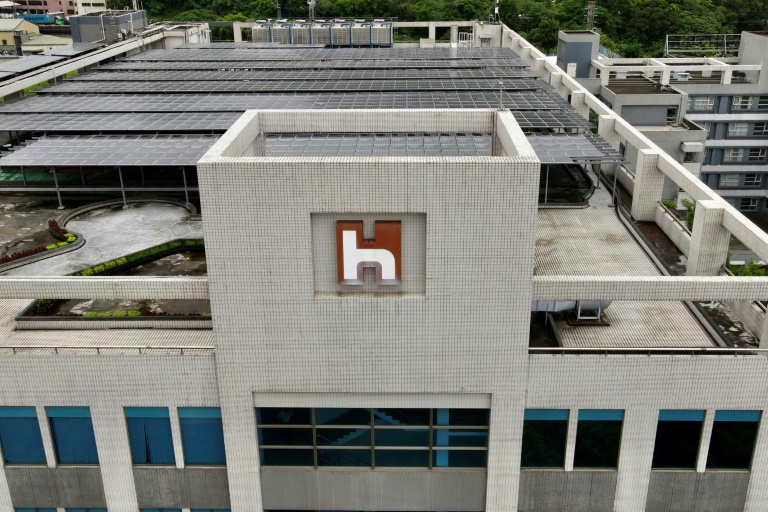
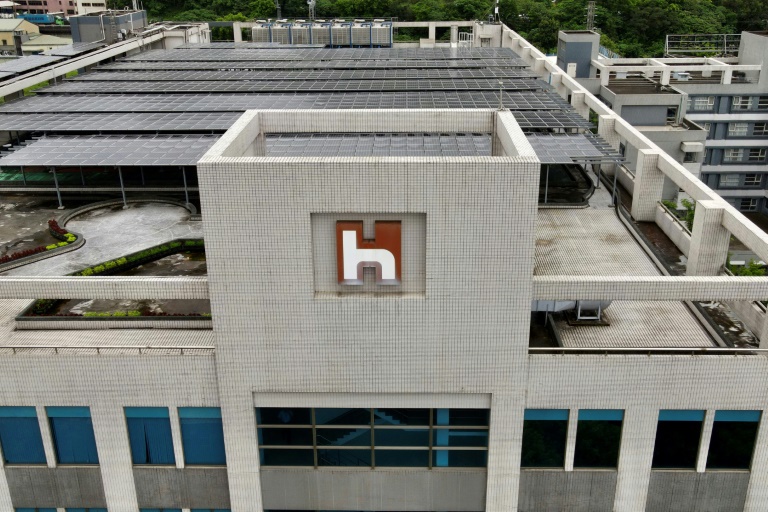
Taiwanese electronics giant Foxconn will invest $19.4 billion to make semiconductors in India with local conglomerate Vedanta, backed by New Delhi’s push to boost tech self-reliance after a global chip shortage.

Semiconductors are an essential component of nearly all modern electronics, from smartphones to kitchen appliances and cars, but the coronavirus pandemic kneecapped global production and leading manufacturers are still struggling to meet demand.

India approved a $10 billion incentive plan last December to kickstart its own domestic industry by covering up to half of all project costs.

The deal announced Tuesday is the scheme’s most ambitious investment to date and will see a manufacturing facility built in Prime Minister Narendra Modi’s home state of Gujarat.

“India’s own Silicon Valley is a step closer now,” Vedanta group chairman Anil Agarwal tweeted on Tuesday, thanking the government for helping “tie things up so quickly”.

Vedanta, one of India’s biggest mining companies, will take a 60 percent share in the joint venture for its first step into chip-making.

Foxconn, the world’s top iPhone assembler, will take the minority stake.

“The improving infrastructure and the government’s active and strong support increases confidence in setting up a semiconductor factory,” Foxconn vice president Brian Ho said in a statement.

The facilities will be operational by 2024 and will also manufacture display screens for phones and tablets, the companies said.

Shares in Vedanta rose six percent in Mumbai a day after the announcement.

India has sought to boost its domestic production capacity in a range of strategic sectors, including military hardware and advanced technology. 

“In the current geopolitical scenario, trusted sources of semiconductors… are key to the security of critical information infrastructure,” India’s technology ministry said earlier.

The government’s semiconductor incentive scheme has already successfully wooed several investors, with Singapore’s IGSS Ventures announcing $3.2 billion in July to make chips in Tamil Nadu state.

Another partnership between NextOrbit of the UAE and Israel’s Tower Semiconductor signed on in May for a $2.9 billion plant in Karnataka state.

The vast majority of the world’s top chips are made by just two companies — TSMC of Taiwan and South Korea’s Samsung — both of which are running at full capacity to alleviate the ongoing global shortage.

Foxconn strikes $19.4 bn deal to make chips in India

Taiwanese electronics giant Foxconn will invest $19.4 billion to make semiconductors in India with local conglomerate Vedanta, backed by New Delhi’s push to boost tech self-reliance after a global chip shortage.

Semiconductors are an essential component of nearly all modern electronics, from smartphones to kitchen appliances and cars, but the coronavirus pandemic kneecapped global production and leading manufacturers are still struggling to meet demand.

India approved a $10 billion incentive plan last December to kickstart its own domestic industry by covering up to half of all project costs.

The deal announced Tuesday is the scheme’s most ambitious investment to date and will see a manufacturing facility built in Prime Minister Narendra Modi’s home state of Gujarat.

“India’s own Silicon Valley is a step closer now,” Vedanta group chairman Anil Agarwal tweeted on Tuesday, thanking the government for helping “tie things up so quickly”.

Vedanta, one of India’s biggest mining companies, will take a 60 percent share in the joint venture for its first step into chip-making.

Foxconn, the world’s top iPhone assembler, will take the minority stake.

“The improving infrastructure and the government’s active and strong support increases confidence in setting up a semiconductor factory,” Foxconn vice president Brian Ho said in a statement.

The facilities will be operational by 2024 and will also manufacture display screens for phones and tablets, the companies said.

Shares in Vedanta rose six percent in Mumbai a day after the announcement.

India has sought to boost its domestic production capacity in a range of strategic sectors, including military hardware and advanced technology. 

“In the current geopolitical scenario, trusted sources of semiconductors… are key to the security of critical information infrastructure,” India’s technology ministry said earlier.

The government’s semiconductor incentive scheme has already successfully wooed several investors, with Singapore’s IGSS Ventures announcing $3.2 billion in July to make chips in Tamil Nadu state.

Another partnership between NextOrbit of the UAE and Israel’s Tower Semiconductor signed on in May for a $2.9 billion plant in Karnataka state.

The vast majority of the world’s top chips are made by just two companies — TSMC of Taiwan and South Korea’s Samsung — both of which are running at full capacity to alleviate the ongoing global shortage.

Shares in Chinese conglomerate Fosun dive on report of watchdog scrutiny

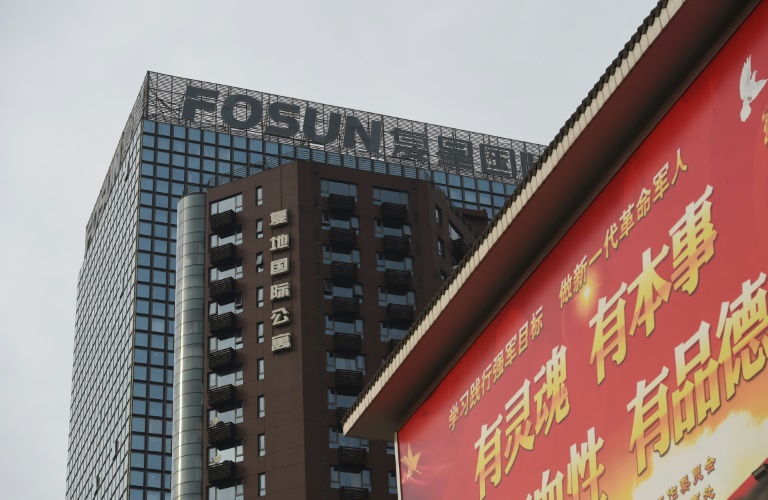
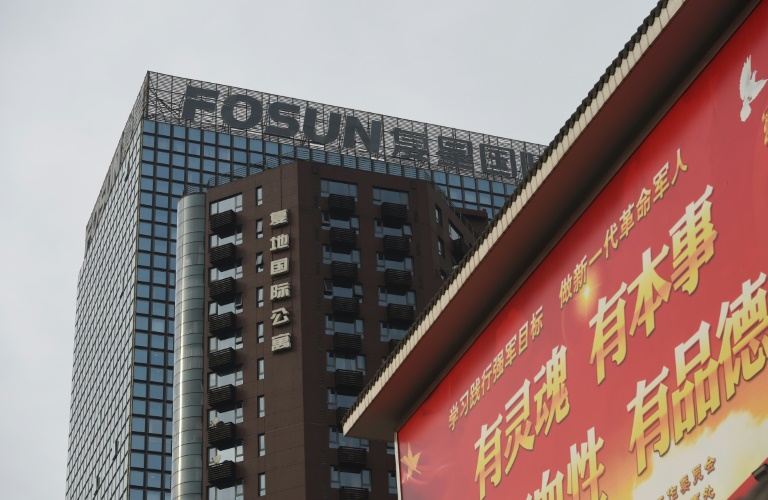
Club Med owner Fosun, one of China’s largest private-sector conglomerates, saw billions wiped off its value on Wednesday as jittery investors reacted to a media report that the group was under regulatory scrutiny.

There has been growing concern about the debts of Chinese companies, particularly after a run of high-profile defaults in the property sector last year that rippled through the wider economy.

Bloomberg News on Tuesday cited unnamed sources as saying that regulators, including China’s banking watchdog and the local commission overseeing state investments, have told large lenders and state-owned enterprises to closely examine their exposure to Fosun.

Shares in Fosun International Limited, the conglomerate’s flagship company, slid as much as 9.6 percent in Hong Kong to HK$4.41 on Wednesday, the lowest level since November 2012.

Fosun’s Chief Financial Officer Alex Gong rejected the Bloomberg report as “completely false”.

“Neither the China Banking and Insurance Regulatory Commission (CBIRC) nor the Shanghai Banking and Insurance Regulatory Commission have asked commercial banks to find out about Fosun’s financial exposure, and those institutions have not received any notice of this,” Gong told the South China Morning Post.

The public had a “one-sided interpretation” of Fosun’s recent reductions in shareholdings and divestments and failed to see that they were part of a long-term financial strategy, the Shanghai-based company added in a statement.

– Circus and football –

Co-founded by tycoon Guo Guangchang in 1992 during the heady days of China’s initial “reform and opening” period, Fosun started off in pharmaceuticals and real estate but has since built a sprawling business empire that includes tourism and finance. 

A prolific buyer of global assets, Fosun owns French brand Club Med and has a controlling stake in the fashion house Lanvin.

It owns English Premier League football club Wolverhampton Wanderers and has a major stake in Canadian circus producer Cirque du Soleil.

In 2020, Fosun struck a deal with Germany’s BioNTech to manufacture its coronavirus vaccine in China and later became its exclusive distributor to the Greater China region.

Chinese companies have faced growing scrutiny over their debt exposure, especially those in the property sector. 

Multiple construction giants, including Evergrande, have defaulted on debts and been forced into major restructuring.

Beijing has also launched regulatory investigations in multiple sectors, including education and technology businesses, clipping their growth.

In recent months China’s economy has been reeling from a debt crisis in its massive property sector, mortgage boycotts, as well as disruptions from coronavirus lockdowns in finance and manufacturing hubs.

Fosun faces as much as $8 billion in bond repayments through 2023, according to Bloomberg News.

The CBIRC’s request to banks to check their exposure to Fosun debt does not mean it wants lenders to change their financing, and the regulator’s move may not result in any action, Bloomberg reported.

The Beijing branch of the State-owned Assets Supervision and Administration Commission was also among the regulators who asked institutions it oversees for closer scrutiny regarding Fosun, the report added.

Fosun’s debt stood at 261 billion yuan ($37.7 billion) as of June 30, up from 237 billion yuan at the end of last year, according to an earnings report last month.

Moody’s last month downgraded Fosun, citing weak liquidity and a weakening portfolio amid asset sales.

Shares in Chinese conglomerate Fosun dive on report of watchdog scrutiny

Club Med owner Fosun, one of China’s largest private-sector conglomerates, saw billions wiped off its value on Wednesday as jittery investors reacted to a media report that the group was under regulatory scrutiny.

There has been growing concern about the debts of Chinese companies, particularly after a run of high-profile defaults in the property sector last year that rippled through the wider economy.

Bloomberg News on Tuesday cited unnamed sources as saying that regulators, including China’s banking watchdog and the local commission overseeing state investments, have told large lenders and state-owned enterprises to closely examine their exposure to Fosun.

Shares in Fosun International Limited, the conglomerate’s flagship company, slid as much as 9.6 percent in Hong Kong to HK$4.41 on Wednesday, the lowest level since November 2012.

Fosun’s Chief Financial Officer Alex Gong rejected the Bloomberg report as “completely false”.

“Neither the China Banking and Insurance Regulatory Commission (CBIRC) nor the Shanghai Banking and Insurance Regulatory Commission have asked commercial banks to find out about Fosun’s financial exposure, and those institutions have not received any notice of this,” Gong told the South China Morning Post.

The public had a “one-sided interpretation” of Fosun’s recent reductions in shareholdings and divestments and failed to see that they were part of a long-term financial strategy, the Shanghai-based company added in a statement.

– Circus and football –

Co-founded by tycoon Guo Guangchang in 1992 during the heady days of China’s initial “reform and opening” period, Fosun started off in pharmaceuticals and real estate but has since built a sprawling business empire that includes tourism and finance. 

A prolific buyer of global assets, Fosun owns French brand Club Med and has a controlling stake in the fashion house Lanvin.

It owns English Premier League football club Wolverhampton Wanderers and has a major stake in Canadian circus producer Cirque du Soleil.

In 2020, Fosun struck a deal with Germany’s BioNTech to manufacture its coronavirus vaccine in China and later became its exclusive distributor to the Greater China region.

Chinese companies have faced growing scrutiny over their debt exposure, especially those in the property sector. 

Multiple construction giants, including Evergrande, have defaulted on debts and been forced into major restructuring.

Beijing has also launched regulatory investigations in multiple sectors, including education and technology businesses, clipping their growth.

In recent months China’s economy has been reeling from a debt crisis in its massive property sector, mortgage boycotts, as well as disruptions from coronavirus lockdowns in finance and manufacturing hubs.

Fosun faces as much as $8 billion in bond repayments through 2023, according to Bloomberg News.

The CBIRC’s request to banks to check their exposure to Fosun debt does not mean it wants lenders to change their financing, and the regulator’s move may not result in any action, Bloomberg reported.

The Beijing branch of the State-owned Assets Supervision and Administration Commission was also among the regulators who asked institutions it oversees for closer scrutiny regarding Fosun, the report added.

Fosun’s debt stood at 261 billion yuan ($37.7 billion) as of June 30, up from 237 billion yuan at the end of last year, according to an earnings report last month.

Moody’s last month downgraded Fosun, citing weak liquidity and a weakening portfolio amid asset sales.

Google, Meta face record fines in South Korea over privacy violations

South Korea has fined Google and Meta more than $71 million collectively for gathering users’ personal information without consent for tailored ads, regulators said Wednesday, the country’s highest-ever data protection fines.

Investigations into the two US tech giants found they had been “collecting and analysing” data on their users, and monitoring their use of websites and applications, the Personal Information Protection Commission said.

The data was used to “infer the users’ interests or used for customised online advertisements”, it said, adding that neither Google nor Meta had clearly informed South Korean users of this practice or obtained their consent in advance.

As a result, Google was fined 69.2 billion won ($49.7 million) and Meta 30.8 billion won ($22.1 million).

“It is the largest fine for the violation of the Personal Information Protection Act,” the commission said in a statement.

Regulators said the majority of the users in South Korea — 82 percent for Google and 98 percent for Meta — had unknowingly allowed them to collect data on their online use.

“It can be said that the possibility and the risk of infringement of the rights of the users are high,” the statement said.

Last year, South Korea fined Google nearly $180 million for abusing its dominance in the mobile operating systems and app markets, saying it was hampering market competition.

Giant US tech companies are regularly criticised for dominating markets by elbowing out rivals, with multiple governments globally seeking to rein them in.

The European Union has slammed Google with record antitrust penalties, and also gone after Apple and Microsoft.

Google, Meta face record fines in South Korea over privacy violations

South Korea has fined Google and Meta more than $71 million collectively for gathering users’ personal information without consent for tailored ads, regulators said Wednesday, the country’s highest-ever data protection fines.

Investigations into the two US tech giants found they had been “collecting and analysing” data on their users, and monitoring their use of websites and applications, the Personal Information Protection Commission said.

The data was used to “infer the users’ interests or used for customised online advertisements”, it said, adding that neither Google nor Meta had clearly informed South Korean users of this practice or obtained their consent in advance.

As a result, Google was fined 69.2 billion won ($49.7 million) and Meta 30.8 billion won ($22.1 million).

“It is the largest fine for the violation of the Personal Information Protection Act,” the commission said in a statement.

Regulators said the majority of the users in South Korea — 82 percent for Google and 98 percent for Meta — had unknowingly allowed them to collect data on their online use.

“It can be said that the possibility and the risk of infringement of the rights of the users are high,” the statement said.

Last year, South Korea fined Google nearly $180 million for abusing its dominance in the mobile operating systems and app markets, saying it was hampering market competition.

Giant US tech companies are regularly criticised for dominating markets by elbowing out rivals, with multiple governments globally seeking to rein them in.

The European Union has slammed Google with record antitrust penalties, and also gone after Apple and Microsoft.

Google, Meta face record fines in South Korea over privacy violations

South Korea has fined Google and Meta more than $71 million collectively for gathering users’ personal information without consent for tailored ads, regulators said Wednesday, the country’s highest-ever data protection fines.

Investigations into the two US tech giants found they had been “collecting and analysing” data on their users, and monitoring their use of websites and applications, the Personal Information Protection Commission said.

The data was used to “infer the users’ interests or used for customised online advertisements”, it said, adding that neither Google nor Meta had clearly informed South Korean users of this practice or obtained their consent in advance.

As a result, Google was fined 69.2 billion won ($49.7 million) and Meta 30.8 billion won ($22.1 million).

“It is the largest fine for the violation of the Personal Information Protection Act,” the commission said in a statement.

Regulators said the majority of the users in South Korea — 82 percent for Google and 98 percent for Meta — had unknowingly allowed them to collect data on their online use.

“It can be said that the possibility and the risk of infringement of the rights of the users are high,” the statement said.

Last year, South Korea fined Google nearly $180 million for abusing its dominance in the mobile operating systems and app markets, saying it was hampering market competition.

Giant US tech companies are regularly criticised for dominating markets by elbowing out rivals, with multiple governments globally seeking to rein them in.

The European Union has slammed Google with record antitrust penalties, and also gone after Apple and Microsoft.

Japan central bank conducts 'rate check' as yen sinks: reports

Japan’s central bank on Wednesday conducted an operation often seen as a precursor to currency intervention, local media said, as the yen continues to crater against a strengthening dollar.

The financial daily Nikkei and other local media said the Bank of Japan (BoJ) carried out a “rate check”. A Bank spokesman contacted by AFP declined to comment.

A rate check involves asking market participants about their foreign exchange trading, said Toshikazu Horiuchi of IwaiCosmo Securities.

“Basically it’s a warning, which is the next best thing to an intervention when the exchange rate is fluctuating,” he told AFP.

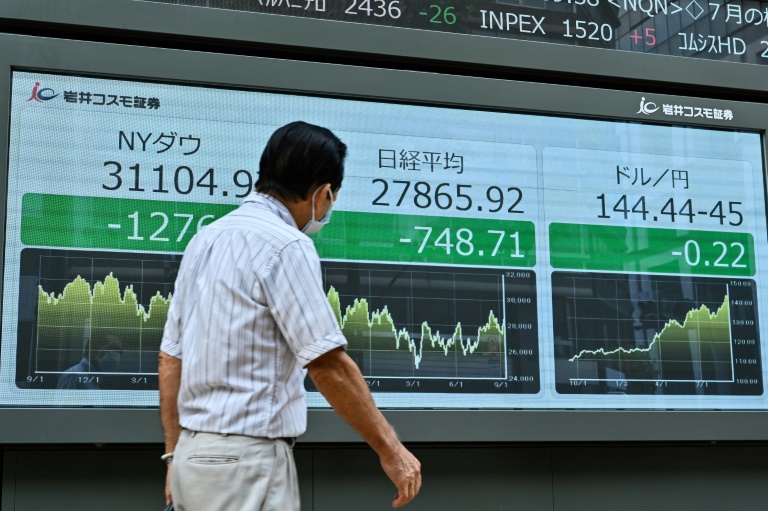
The yen has tumbled from around 115 per dollar in March to lower than 140 in recent weeks, as the BoJ maintains its monetary easing policies despite sometimes sharp rate hikes elsewhere, including from the Federal Reserve, to tackle inflation.

In early Tokyo trade, a dollar fetched 144.94 yen, after worse-than-expected US inflation data raised the prospect of even steeper US rate hikes to tame prices.

The rate check reports saw the yen strengthen quickly, with the dollar touching a low of 143.53 within an hour.

Earlier Wednesday, Japanese government officials sought to calm the waters by insisting they were monitoring the currency swings and would not rule out any option to prevent further falls.

Masato Kanda, vice finance minister for international affairs, told reporters that the yen’s move was “rapid” and “concerning”.

“When a rate check is conducted, sometimes it evolves into an intervention, so that’s why the market reacts very sensitively,” Horiuchi said.

“But its actual impact hinges on whether an intervention is really possible.”

A weaker yen can help Japanese companies to sell products overseas, but the levels seen in recent weeks are starting to put pressure on households and businesses due to higher import prices.

Inflation more broadly has risen to seven-year highs in Japan, partly due to the impact of the war in Ukraine on energy prices, though it is still less severe than in many major economies.

Japan’s central bank has been in no hurry to shift course on its ultra-loose monetary policy, viewing the measures as necessary to achieve its long-standing goal of sustained two percent inflation.

The bank sees recent price increases as temporary, and linked to exceptional factors like the Ukraine conflict and pandemic-related supply chain issues.

Gripes over electric car tax credit as Biden visits Detroit show

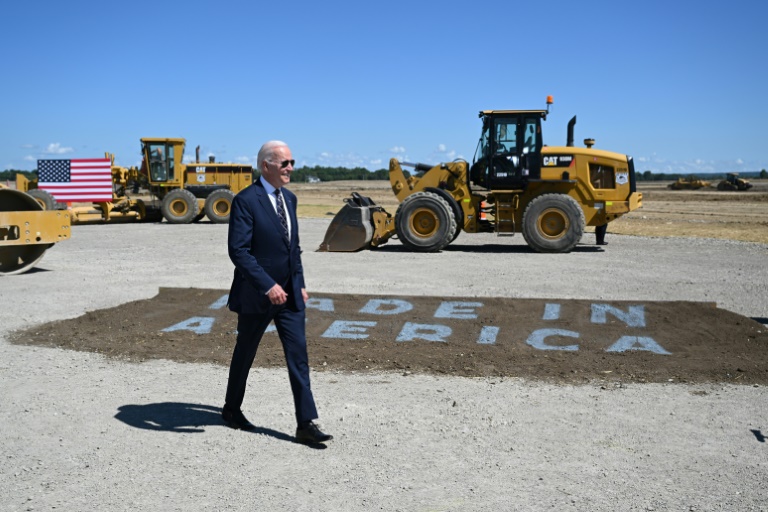
Fresh off of recent legislative triumphs aimed at supporting US manufacturing, President Joe Biden is set for an upbeat appearance Wednesday at the first Detroit Auto Show since the pandemic.

After months of inaction in Congress, Biden capped the summer by signing into law major new investments in semiconductor production and combatting climate change, lending the US president’s Democratic Party some momentum heading into the November midterm elections.

But not far below the celebratory surface, the auto industry is grumbling over a change in the consumer EV tax credit policy that industry officials warn could slow the transition to emission-free vehicles.

At issue are sourcing requirements in the recently passed Inflation Reduction Act meant to prod automakers into using EV batteries produced in North America as well as critical materials sourced from North America or countries with which the United States has a free trade agreement.

The restrictions come as Washington seeks to wean its economic dependence on Russia and China, and as pandemic-induced shortages underscored the vulnerability of having far-flung supply chains.

But auto industry officials and EV experts worry the measure — which affects a consumer tax credit of up to $7,500 on EVs — will slow their adoption in the United States.

“You’re going to see a stalling in the rate of growth,” said John Eichberger, executive director of the Fuels Institute, a nonprofit research group which is funded by a range of energy and transportation companies but does not engage in policy advocacy.

– ‘Missed opportunity’ –

A self-professed “car guy,” Biden has made previous presidential visits to tour General Motors and Ford plants in Michigan — a key electoral swing state.

Biden’s appearance Wednesday at the Detroit Auto Show lends some shine to the revived event following a three-year pandemic hiatus.

Since the last show in 2019, Detroit’s “Big 3” — GM, Ford and Chrysler (now called Stellantis) — have announced tens of billions of dollars in EV investment and unveiled numerous new offerings.

Last Thursday, GM unveiled the Equinox EV, a model with a starting price of $30,000, less than half the average price of EVs now available in the market.

On the same day, Stellantis brand Jeep showed images of two new electric SUVs and confirmed that its all-electric SUV for Europe would launch in 2023. 

The arrival of EV versions of popular models like the Ford F-150 has meant that EV sales in the United States surged more than 66 percent in the second quarter compared with the period a year ago, according to Cox Automotive. 

EVs comprised 5.6 percent of the total US market, according to Cox.

Still, a meaningful transition to EVs from the internal combustion engine faces several challenges, including shortfalls of lithium and other key battery materials and doubts over consumer demand, in part because of lofty price tags — something the $7,500 tax credit aims to combat.

The Alliance for Automotive Innovation, a Washington trade group representing big automakers, highlighted fine print around the tax credit that it said would derail EV growth.

One of those is the requirement that automakers gradually increase minimum levels for choice materials through 2026.

The alliance praised tax credits in the bill for EV manufacturing plants, but said they were offset by the consumer provisions.

– ‘A bumpy road’ –

“Unfortunately, the EV tax credit requirements will make most vehicles immediately ineligible for the incentive,” said John Bozzella, president of the lobby group.

“That’s a missed opportunity at a crucial time and a change that will surprise and disappoint customers in the market for a new vehicle,” he added.

Alan Amici, chief executive of the Center for Automotive Research in Ann Arbor, Michigan, said the industry sees economic benefits to sourcing locally in light of the issues that surfaced during the pandemic.

But it takes time to adjust supply chains, he said.

“The industry needs to figure that out,” said Amici, adding that companies are studying the measure and hoped Washington officials might show flexibility in implementing the policy.

Eichberger cited analysis showing that, in certain years, only a few EV models would qualify for the credit under the standard.

He warned that a leveling off or decline in EV sales in the next couple of years could kill momentum for a transition that remains at an early stage.

“It’s going to be a bumpy road, and this is another bump,” Eichberger said.

Close Bitnami banner
Bitnami