AFP

Shares in Chinese conglomerate Fosun dive on report of watchdog scrutiny

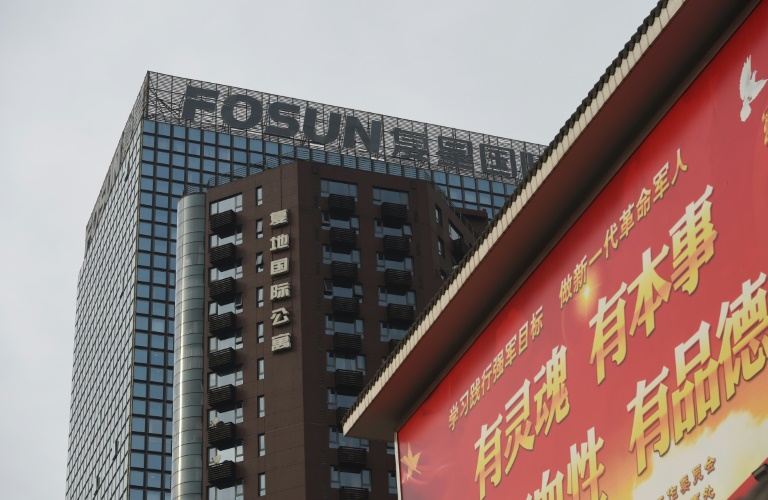
Club Med owner Fosun, one of China’s largest private-sector conglomerates, saw billions wiped off its value on Wednesday as jittery investors reacted to a media report that the group was under regulatory scrutiny.

There has been growing concern about the debts of Chinese companies, particularly after a run of high-profile defaults in the property sector last year that rippled through the wider economy.

Bloomberg News on Tuesday cited unnamed sources as saying that regulators, including China’s banking watchdog and the local commission overseeing state investments, have told large lenders and state-owned enterprises to closely examine their exposure to Fosun.

Shares in Fosun International Limited, the conglomerate’s flagship company, slid as much as 9.6 percent in Hong Kong on Wednesday. 

They later pared some of those losses, ending the day down 6.6 percent at HK$4.56, the lowest level since late 2012.

Fosun’s Chief Financial Officer Alex Gong rejected the Bloomberg report as “completely false”.

“Neither the China Banking and Insurance Regulatory Commission (CBIRC) nor the Shanghai Banking and Insurance Regulatory Commission have asked commercial banks to find out about Fosun’s financial exposure, and those institutions have not received any notice of this,” Gong told the South China Morning Post.

The public had a “one-sided interpretation” of Fosun’s recent reductions in shareholdings and divestments and failed to see that they were part of a long-term financial strategy, the Shanghai-based company added in a statement.

– Circus and football –

Co-founded by tycoon Guo Guangchang in 1992 during the heady days of China’s initial “reform and opening” period, Fosun started off in pharmaceuticals and real estate but has since built a sprawling business empire that includes tourism and finance. 

A prolific buyer of global assets, Fosun owns French brand Club Med and has a controlling stake in the fashion house Lanvin.

It owns English Premier League football club Wolverhampton Wanderers and has a major stake in Canadian circus producer Cirque du Soleil.

In 2020, Fosun struck a deal with Germany’s BioNTech to manufacture its coronavirus vaccine in China and later became its exclusive distributor to the Greater China region.

Chinese companies have faced growing scrutiny over their debt exposure, especially those in the property sector. 

Multiple construction giants, including Evergrande, have defaulted on debts and been forced into major restructuring.

Beijing has also launched regulatory investigations in multiple sectors, including education and technology businesses, clipping their growth.

In recent months China’s economy has been reeling from a debt crisis in its massive property sector, mortgage boycotts, as well as disruptions from coronavirus lockdowns in finance and manufacturing hubs.

Fosun faces as much as $8 billion in bond repayments through 2023, according to Bloomberg News.

Fosun’s dollar bonds also fell by as much as six cents on Wednesday, adding to declines a day earlier that were the biggest since a rout in June.

The CBIRC’s request to banks to check their exposure to Fosun debt does not mean it wants lenders to change their financing, and the regulator’s move may not result in any action, Bloomberg reported.

The Beijing branch of the State-owned Assets Supervision and Administration Commission was also among the regulators who asked institutions for closer scrutiny regarding Fosun, the report added.

Fosun’s debt stood at 261 billion yuan ($37.7 billion) as of June 30, up from 237 billion yuan at the end of last year, according to an earnings report last month.

Moody’s last month downgraded Fosun, citing weak liquidity and a weakening portfolio amid asset sales.

— Bloomberg News contributed to this story —
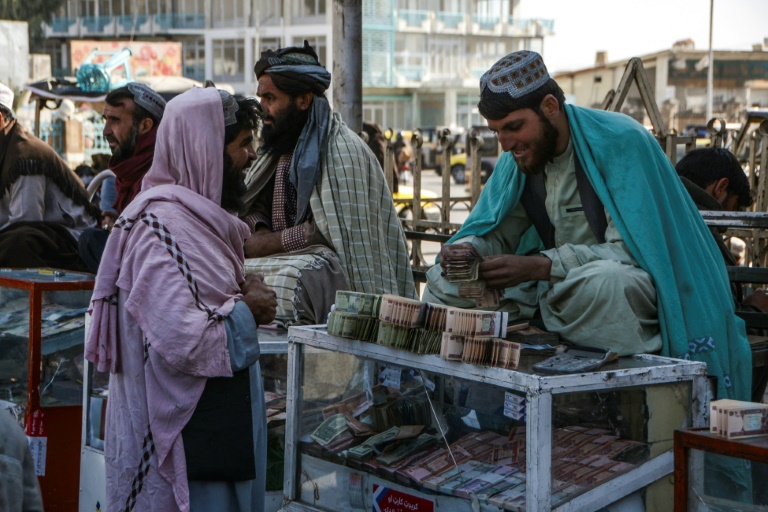
US sets up fund for Afghan money after Taliban talks flop

The United States said Wednesday it was setting up an outside, professionally-run fund to manage $3.5 billion in Afghanistan’s reserves, concluding it cannot trust the Taliban leadership with the country’s money.

The new Afghan Fund, based in Geneva, will be put in charge of core central bank functions such as paying Afghanistan’s international arrears and for its electricity imports and potentially for future necessities such as printing currency.

The decision comes after talks between the Taliban and the United States failed to convince President Joe Biden’s administration that it should hand over assets frozen when the Islamist militants returned to power 13 months ago, despite the dire humanitarian needs in Afghanistan.

In a letter to Afghanistan’s central bank, US Deputy Treasury Secretary Wally Adeyemo voiced regret that it had not addressed US concerns including demonstrating independence from the Taliban, enforcing pre-Taliban commitments against counter-terrorism funding and money laundering, and bringing in a reputable outside monitor.

“There is currently no institution in Afghanistan that can guarantee that these funds would be used only for the benefit of the people of Afghanistan, including DAB,” he wrote, using the acronym of the central Da Afghanistan Bank.

“Until these conditions are met, sending assets to DAB would place them at unacceptable risk and jeopardize them as a source of support for the Afghan people,” he wrote in a letter obtained by AFP.

The Afghan Fund will be incorporated in Switzerland with a board of two appointed Afghan economists unaffiliated with the Taliban and representatives of both the US and Swiss governments.

It will maintain an account with the Bank for International Settlements, which is owned by the world’s central banks, and also pay for key functions such as Afghanistan’s access to the global SWIFT banking payment system.

The United States expects the bulk of the reserves to be preserved and “responsibly managed” until the situation changes, a senior official said.

– Dim US view of Taliban –

The United States froze $7 billion in Afghan assets maintained in New York in August 2021 when the two-decade-old Western-backed government swiftly collapsed with Biden’s pullout of US troops.

Biden in February said that half of the assets would be made available to victims of the September 11, 2001 attacks, which prompted the US invasion of Afghanistan that toppled the Taliban, who had given sanctuary to Al-Qaeda.

The decision outraged the Taliban but the militants later opened talks with the United States on a way forward, with momentum building after Afghanistan suffered a devastating earthquake in June.

Then in August, the United States killed Al-Qaeda’s leader Ayman al-Zawahiri in a strike on his home in Kabul. Secretary of State Antony Blinken declared that the Taliban had violated promises to reject terrorism made during a deal with former president Donald Trump to withdraw US troops.

The new fund will not go to assistance. In a statement, Deputy Secretary of State Wendy Sherman said that the United States has contributed $814 million in humanitarian aid since the Taliban takeover, channeled through international agencies and aid groups and not given to the Taliban.

The Afghan Fund will help “reduce suffering and improve economic stability for the people of Afghanistan while continuing to hold the Taliban accountable,” Sherman said.

A World Bank survey conducted late last year found that 70 percent of Afghans said they cannot cover their basic needs including food, up from 35 percent who said so shortly before the Taliban takeover.

A senior US official, speaking on condition of anonymity, said the administration concluded that increasing liquidity in the central bank would not improve the humanitarian situation.

The official said that the United States was still open to “pragmatic engagement” with the Taliban, including on the central bank.

Another $2 billion in Afghan assets have been blocked by Britain, Germany and the United Arab Emirates. Another US official said the other nations could also send the Afghan reserves to the new fund.

Google handed setback as EU court upholds record fine

The European Union’s second-highest court on Wednesday overwhelmingly upheld the EU’s record fine against Google over its Android operating system for mobile phones, slightly reducing the fee for technical reasons.

In a statement, the EU’s General court said it “largely confirms the commission’s decision that Google imposed unlawful restrictions on manufacturers of Android mobile devices” in order to benefit its search engine.

The court, however, said the fine should be slightly reduced to 4.125 billion euros ($4.1 billion), instead of the 4.3 billion euros decided by the commission in 2018, after reviewing the duration of the infringement. 

The levy remains the EU’s biggest ever despite Google’s arguments that the commission’s case was unfounded and falsely relied on accusations it imposed its search engine and Chrome browser on Android phones.

The company also pushed the case that the EU was unfairly blind to the strength of Apple, which imposes or gives clear preference to its own services such as Safari on iPhones

“We are disappointed that the Court did not annul the decision in full,” a Google spokesperson said in a short statement. 

“Android has created more choice for everyone, not less, and supports thousands of successful businesses in Europe and around the world,” it added.

The complainants welcomed the decision as it confirmed that Google “can no longer impose its will on phone makers”, said Thomas Vinje, a lawyer representing the industry group FairSearch, whose original complaint launched the case in 2013.

“This shows the European Commission got it right,” he added.

The commission said it “took note” of the decision and “will carefully study the judgement and decide on possible next steps”.

The decision by the General Court is not necessarily the end of the story. Both sides can turn to the EU’s highest court, the European Court of Justice, for a final say on the fine, which was the equivalent of $5 billion when levied.

– Global action –

The Android case was the third of three major cases brought against Google by the EU’s competition czar Margrethe Vestager, whose legal challenges were the first worldwide to directly take on the Silicon Valley giants.

Since then, global regulators have followed suit, with Google facing a barrage of cases in the United States and Asia based on similar accusations.

Last year, South Korea fined Google nearly $180 million for abusing its dominance in a similar case targetting Android.

Vestager has already won against Google in its appeal of a separate case, a 2.4-billion-euro fine for the company for abusing its search engine dominance. As expected, the tech giant appealed that setback to the high court.

The EU, however, has lost recent cases involving the microchip industry. 

Vestager’s team lost an appeal against a $1 billion fine imposed on Qualcomm in the same court in June. 

That followed another setback in January when the EU lost the court’s backing for a 1.06-billion-euro fine on Intel.

Frustrated at the length of time it takes to pursue competition cases, Brussels has since adopted the Digital Markets Act (DMA), which puts a much tighter leash on the way Big Tech can do business. 

The new law, set to come into force next year, would set up a rulebook of do’s and don’ts for Big Tech companies such as Google and Facebook. 

The DMA includes specific bans or limits on Google, Apple and other gatekeepers from promoting their own services on platforms.

Lufthansa back in private hands as govt sells rescue stake

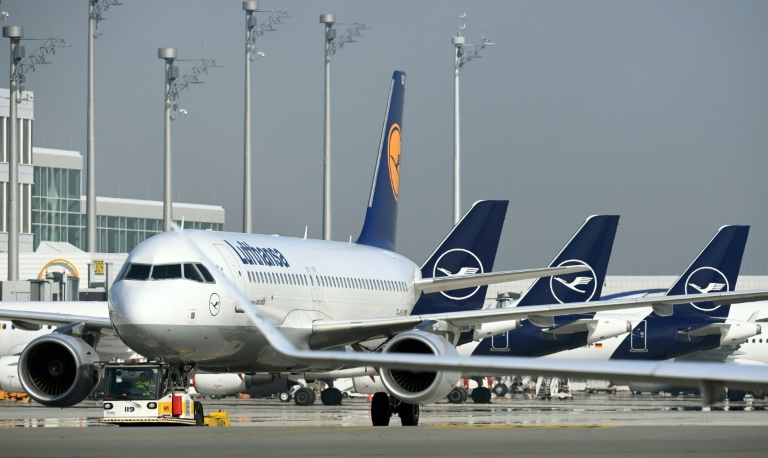
Lufthansa said Wednesday the German state had sold the stake it took in the airline as part of a rescue package at the peak of the Covid pandemic, and booked a healthy profit in the process.

In the spring of 2020, borders were shutting worldwide, forcing airlines everywhere to ground planes and put staff put on forced leave.

To save Lufthansa from bankruptcy, the German government took a 20-percent stake in the group under a nine-billion-euro (dollar) state aid package.

Under the deal, the government agreed to sell the stake by October 2023.

But with the airline’s finances stabilising as travel resumed, Berlin was able to start selling its holdings as early as November last year.

Lufthansa said the remaining 6.2 percent of the share capital was sold on Tuesday.

“This brings the stabilisation of Lufthansa to a successful conclusion,” said Carsten Spohr, its CEO.

“The stabilisation of Lufthansa was successful, and is also paying off financially for the German government and thus for the taxpayer,” he added.

The state paid 306 million euros for the stake and sold it for 1.07 billion euros — a profit of 760 million.

“With this gratifying balance, the WSF’s (Economic Stabilisation Fund’s) participation comes to an end and the company is once again in private hands,” said Jutta Doenges, who ran the fund.

Lufthansa in August reported its first net profit since the pandemic, booking 259 million euros in earnings for the second quarter as it benefited from pent-up demand for travel.

The group — which includes Eurowings, Austrian, Swiss and Brussels Airlines — made huge net losses of 6.7 billion euros in 2020 and 2.2 billion euros in 2021 as the pandemic shut down large parts of the airline industry.

Europe's battle with Big Tech: billions in fines and tough laws

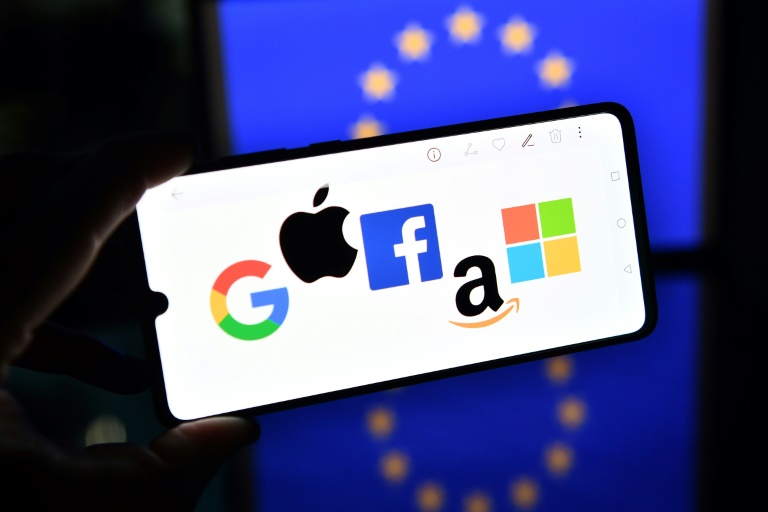
The European Union is on a mission to rein in US tech giants, which have been accused of tax avoidance, stifling competition, raking in billions from news without paying for it and spreading misinformation.

In the past few years, the EU has slapped eye-watering fines on Apple and Google in tax and competition cases, and drawn up a landmark law to curb the market dominance of Big Tech. Brussels has also toughened its code of conduct on disinformation and hate speech.

As a European court on Wednesday rejected Google’s appeal against a 4.3-billion-euro antitrust fine ($5 billion at the time it was levied), we look at the battle between Brussels and Silicon Valley:

– Stifling competition –

The digital giants are regularly criticised for dominating markets by elbowing out rivals.

In July, the European Parliament adopted the Digital Markets Act to curb the market dominance of Big Tech, with violations punishable with fines of up to 10 percent of a company’s annual global sales.

Brussels has slapped over eight billion euros in fines on Google alone for abusing its dominant market position. 

In 2018, the company was fined 4.3 billion euros — the biggest ever antitrust penalty imposed by the EU — for abusing the dominant position of its Android mobile operating system to promote Google’s search engine. 

Google lost its appeal against that decision on Wednesday, though the fine was reduced to 4.1 billion euros.

The firm is also challenging a 2.4-billion-euro fine from 2017 for abusing its power in online shopping and a separate 1.5-billion-euro fine from 2019 for “abusive practices” in online advertising. 

The EU has also gone after Apple, accusing it of blocking rivals from its contactless iPhone payment system, and fined Microsoft 561 million euros in 2013 for imposing its search engine Internet Explorer on users of Windows 7.

Italy joined in the action last year, hitting Amazon with a 1.1-billion-euro antitrust fine for abusing its dominance to push its logistics business.

– Taxation – 

The EU has had less success in getting US tech companies to pay more taxes in Europe, where they are accused of funnelling profits into low-tax economies like Ireland and Luxembourg.

In one of the most notorious cases, the European Commission in 2016 found that Ireland granted illegal tax benefits to Apple and ordered the company pay 13 billion euros in back taxes.

But the EU’s General Court later overturned the ruling, saying there was no evidence the company broke the rules.

The Commission also lost a similar case involving Amazon, which it had ordered to repay 250 million euros in back taxes to Luxembourg.

Frustrated by the lack of progress, France, Italy and several other European nations forged ahead with their own taxes on tech companies while waiting for a global agreement on the issue.

That came in October 2021 when the G20 group of nations agreed on a minimum 15 percent corporate tax rate. Nearly 140 countries signed up to the deal.

– Personal data –

Tech giants are regularly criticised over how they gather and use personal data.

The EU has led the charge to rein them in with its 2018 General Data Protection Regulation, which has since become an international reference.

Companies must now ask for consent when they collect personal information and may no longer use data collected from several sources to profile users against their will.

Amazon was fined 746 million euros by Luxembourg in 2021 for flouting the rules.

Earlier this month, Irish authorities fining Instagram, a Meta subsidiary, 405 million euros for breaching EU regulations on the handling of children’s data. 

– Fake news and hate speech –

Social networks, particularly Facebook and Twitter, are often accused of failing to tackle disinformation and hate speech.

In July, the European Parliament approved a Digital Services Act that forces big online companies to reduce risks linked to disinformation or face fines of up to six percent of their global turnover.

– Paying for news –

Google and other online platforms are also accused of making billions from news without sharing the revenue with those who gather it.

To tackle this, an EU law in 2019 created a form of copyright called “neighbouring rights” allowing for print media to demand compensation for use of their content. 

France was the first country to implement the directive.

After initial resistance, Google and Facebook agreed to pay French media, including AFP, for articles shown in web searches.

That did not stop the company being fined half-a-billion euros by France’s competition authority in July 2021 for failing to negotiate “in good faith”, a ruling Google has appealed.

Facebook has also agreed to pay for some French content.

EU plans 'comprehensive reform' of electricity market

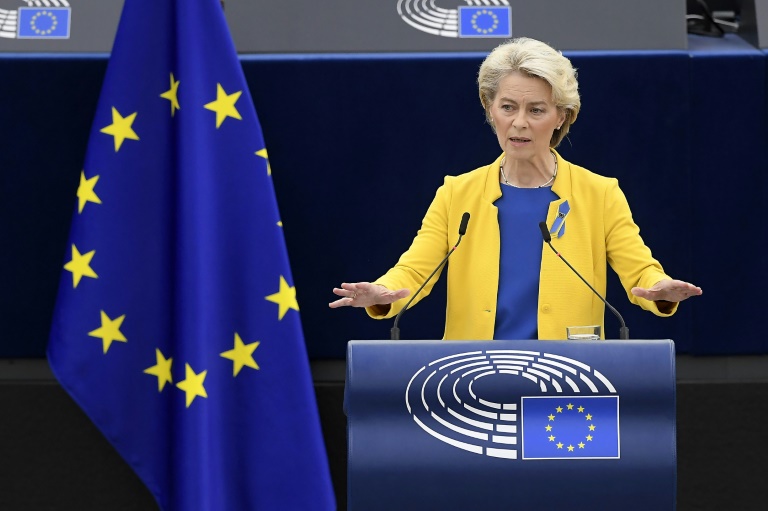
The EU plans a “deep and comprehensive” reform of the electricity market to cope with an energy crisis sparked by Russia’s war in Ukraine, European Commission chief Ursula von der Leyen said Wednesday.

The measures include a cap on electricity producers’ profits that would raise 140 billion euros ($140 billion) and “cushion” consumers from high prices, she said in her annual State of the European Union address.

Other steps involve rationing energy, temporary state aid and decoupling the prices of gas and electricity.

She also announced the creation of a new bank designed to spur investment of up to three billion euros in hydrogen as a Green alternative to fossil fuels.

The measures were in response to soaring energy costs as Europe painfully unhitches its decades-long dependency on Russian fossil fuels.

Sanctions on Russia and retaliation by Moscow by cutting off gas supplies have sent prices skyrocketing, leaving Europe to confront a difficult coming winter.

“Russia keeps on actively manipulating our energy market. They prefer to flare the gas than to deliver it,” von der Leyen said.

“This market is not functioning any more.”

– Gas reserves –

To partly prepare for a tough winter, the bloc has hastily stockpiled gas reserves, hitting 84 percent of capacity well ahead of an October deadline, von der Leyen said.

But the hole left by missing Russian supplies will still hurt.

The idea to tax profits by non-gas electricity providers is to divert the money to households and businesses to weather the situation.

“These companies are making revenues they never accounted for, they never even dreamt of,” von der Leyen said.

“In these times it is wrong to receive extraordinary record profits benefiting from war and on the back of consumers,” she said.

She said “major oil, gas and coal companies” would also “have to give a crisis contribution”.

At the same time, von der Leyen highlighted that the EU is pivoting to “reliable suppliers”, naming the United States, Norway and Algeria among them.

Longer-term, the EU wants greater reliance on renewable energies, von der Leyen said, hammering a key promise of her mandate. The hydrogen investment bank proposal is another step towards that future.

– Kyiv trip –

Another announcement made by von der Leyen was planned legislation to secure critical raw materials for the EU as it shifts towards greater use of electric vehicles and other more environmentally friendly technologies.

In her speech, she highlighted the stranglehold China has over resources such as lithium that are key to the energy transition.

“Today, China controls the global processing industry. Almost 90 percent of rare earths and 60 percent of lithium are processed in China,” she said in her annual State of the European Union address.

The proposed law would identify “strategic projects all along the supply chain” and “build up strategic reserves where supply is at risk,” she said.

As for Russia, the EU chief signalled that the bloc would maintain its sanctions pressure on Russia as long as it waged its war in Ukraine.

“I want to make it very clear, the sanctions are here to stay. This is the time for us to show resolve, not appeasement,” she said.

Ukraine’s first lady Olena Zelenska attended the gathering in Strasbourg, receiving a standing ovation from lawmakers.

Von der Leyen told MEPs that she would travel to Kyiv to meet Ukrainian President Volodymyr Zelensky, her third trip to the Ukrainian capital since the war started.

“I will travel to Kiev today to meet President Zelensky” to discuss “in detail” the continuation of European aid, she said in her major annual political address.

“For the first time in its history, this Parliament is debating the state of our Union while war is raging on European soil,” said von der Leyen, dressed in Ukrainian colours.

Google loses appeal against record EU antitrust fine

The European Union’s second-highest court on Wednesday overwhelmingly upheld the EU’s record fine against Google over its Android operating system for mobile phones, slightly reducing the fee for technical reasons.

In a statement, the EU’s General court said it “largely confirms the commission’s decision that Google imposed unlawful restrictions on manufacturers of Android mobile devices” in order to benefit its search engine.

The court, however, said the fine should be slightly reduced to 4.125 billion euros ($4.1 billion), instead of the 4.3 billion euros decided by the commission in 2018 after reviewing the duration of the infringement. 

The levy remains the EU’s biggest ever despite Google’s arguments that the commission’s case was unfounded and falsely relied on accusations it imposed its search engine and Chrome browser on Android phones.

The company also pushed the case that the EU was unfairly blind to the strength of Apple, which imposes or gives clear preference to its own services such as Safari on iPhones.

Google insisted that downloading rival apps was only a click away and that customers were in no way tied to Google products on Android.

The EU and complainants responded that Google used contracts with phone makers in the early days of Android to stifle rivals.

“This shows the European Commission got it right,” said Thomas Vinje, a lawyer representing FairSearch, whose original complaint launched the case in 2013.

“Google can no longer impose its will on phone makers. Now they may open their devices to competition in search and other services, allowing consumers to benefit from increased choice,” he added. 

The decision by the General Court is not necessarily the end of the story. Both sides can turn to the EU’s highest court, the European Court of Justice, for a final say on the fine, which was the equivalent of $5 billion when levied.

– Global action –

The Android case was the third of three major cases brought against Google by the EU’s competition czar Margrethe Vestager, whose legal challenges were the first worldwide to directly take on the Silicon Valley giants.

Since then, global regulators have followed suit, with Google facing a barrage of cases in the US and Asia based on similar accusations.

Last year, South Korea fined Google nearly $180 million for abusing its dominance in a similar case.

Vestager has already won against Google in its appeal of a separate case, a 2.4-billion-euro fine for the company for abusing its search engine dominance. As expected, the tech giant appealed that setback to the high court.

The EU, however, has lost recent cases involving the microchip industry. 

Vestager’s team lost an appeal against a $1 billion fine imposed on Qualcomm in the same court in June. 

That followed another setback in January when the EU lost the court’s backing for a 1.06-billion-euro fine on Intel.

Frustrated at the length of time it takes to pursue competition cases, Brussels has since adopted the Digital Markets Act (DMA), which puts a much tighter leash on the way Big Tech can do business. 

The new law, set to come into force next year, would set up a rulebook of do’s and don’ts for Big Tech companies such as Google and Facebook. 

The DMA includes specific bans or limits on Google, Apple and other gatekeepers from promoting their own services on platforms.

Asian stocks slump, tracking US losses after inflation report

Asian markets dropped on Wednesday, tracking losses in the United States and Europe as traders responded negatively to higher-than-expected US inflation data that raised fears of a prolonged period of interest rate hikes.

Tokyo, Hong Kong, Shanghai, Seoul, Taipei and Sydney were all lower, reversing gains made in recent days due to positive market expectations from the US labour department’s consumer price index (CPI) report.

On Tuesday, US government data showed the annual increase in CPI had slowed slightly in August to 8.3 percent, but that prices continued to rise month-on-month, increasing by 0.1 percent.

The news shook equity markets, where there had been widespread expectations of US year-on-year inflation being around eight percent, with a decrease in prices compared with July.

Tokyo led the day’s losses in Asia, with the Nikkei 225 plunging 2.8 percent.

In Hong Kong, stocks closed down more than two percent, with Chinese conglomerate Fosun seeing billions wiped off its value as jittery investors reacted to media reports that the group was under regulator scrutiny.

Major European bourses followed the trend, with London, Frankfurt and Paris opening lower. 

– ‘Scorching hot’ inflation –

The United States and other economies have been battling sky-high price increases for months, with US yearly inflation hitting a 40-year high of 9.1 percent in June.

Wall Street shares plunged following the CPI news, with the Dow losing nearly 1,300 points and the S&P 500 falling 4.3 percent on Tuesday.

The data will have dashed hopes of a slowdown in the US Federal Reserve’s campaign of increasing interest rates to cool the overheating economy.

The Fed has already instituted two consecutive 75-basis-point hikes, and there are widespread expectations it will make a similarly sized increase at its meeting next week.

After Tuesday’s data, however, some investors are now predicting the next Fed hike could be by a full percentage point.

Of concern to the Fed will be the fact that “core” US CPI, which excludes volatile food and energy prices, accelerated sharply, rising 6.3 percent on a year ago, higher than the 5.9 percent seen in July and June.

Despite welcome relief from falling gasoline prices, food, housing and medical care costs continued to rise.

“Core inflation was scorching hot, coming in double expectations,” said senior market analyst Edward Moya at OANDA.

“The Fed will likely have to be even more aggressive with raising rates and that is bad news for risky assets.”

Investor Louis Navellier warned that persistently high interest rates to control inflation could lead to a US recession.

“Stocks are taking it very hard as forecasts are rising for Fed Funds to get higher and stay there longer resulting in a discount of future earnings multiples and increasing recession fears,” he said in a note.

In Britain, new data Wednesday showed inflation eased in August, but it remains close to the previous month’s 40-year peak as the country battles a cost-of-living crisis.

– Yen stabilises –

The dollar, which had earlier this week fallen against its major rivals in anticipation of slowing inflation, surged in Asian trade.

The yen plunged to 144.94 against the US currency, before recovering sharply following reports that the Japanese central bank had conducted a “rate check”, an exercise often seen as a precursor to currency intervention. 

The yen returned to 143.53 to the dollar within an hour of those reports. 

The euro also lost ground on Wednesday, dropping back below parity with the US currency once again.

The dollar’s rise is partly because the Fed has moved more aggressively with interest rate hikes than central banks in other major economies.

The European Central Bank raised its key rate by 75 basis points this month, with officials indicating a similarly sized increase could come at the next meeting in October.

Inflation has soared around the globe this year owing to extremely high energy and food bills.

This has been caused to a large extent by supply constraints after economies reopened from coronavirus pandemic lockdowns, and in the wake of Russia’s invasion of Ukraine.

– Key figures at around 0730 GMT –

Tokyo – Nikkei 225: DOWN 2.8 percent at 28,818.62 (close) 

Hong Kong – Hang Seng Index: DOWN 2.5 percent at 18,847.10 (close)

Shanghai – Composite: DOWN 0.8 percent at 3,237.54 (close)

New York – Dow: DOWN 3.9 percent at 31,104.97 (close)

London – FTSE 100: DOWN 0.9 percent at 7,321.47 

Frankfurt – DAX: DOWN 0.3 percent at 13,148.25 

Paris – CAC 40: DOWN 0.3 percent at 6,229.08 

EURO STOXX 50: DOWN 0.25 percent at 3,577.35

Euro/dollar: UP at $1.000 from $0.9974 

Pound/dollar: UP at $1.1547 from $1.1500  

Euro/pound: DOWN at 86.61 pence from 86.74 pence  

Dollar/yen: DOWN at 143.07 yen from 144.43 yen 

Brent North Sea crude: DOWN 0.02 percent at $93.15 per barrel

West Texas Intermediate: UP 0.1 percent at $87.42 per barrel

burs-aha/axn

Asian stocks slump, tracking US losses after inflation report

Asian markets dropped on Wednesday, tracking losses in the United States and Europe as traders responded negatively to higher-than-expected US inflation data that raised fears of a prolonged period of interest rate hikes.

Tokyo, Hong Kong, Shanghai, Seoul, Taipei and Sydney were all lower, reversing gains made in recent days due to positive market expectations from the US labour department’s consumer price index (CPI) report.

On Tuesday, US government data showed the annual increase in CPI had slowed slightly in August to 8.3 percent, but that prices continued to rise month-on-month, increasing by 0.1 percent.

The news shook equity markets, where there had been widespread expectations of US year-on-year inflation being around eight percent, with a decrease in prices compared with July.

Tokyo led the day’s losses in Asia, with the Nikkei 225 plunging 2.8 percent.

In Hong Kong, stocks closed down more than two percent, with Chinese conglomerate Fosun seeing billions wiped off its value as jittery investors reacted to media reports that the group was under regulator scrutiny.

Major European bourses followed the trend, with London, Frankfurt and Paris opening lower. 

– ‘Scorching hot’ inflation –

The United States and other economies have been battling sky-high price increases for months, with US yearly inflation hitting a 40-year high of 9.1 percent in June.

Wall Street shares plunged following the CPI news, with the Dow losing nearly 1,300 points and the S&P 500 falling 4.3 percent on Tuesday.

The data will have dashed hopes of a slowdown in the US Federal Reserve’s campaign of increasing interest rates to cool the overheating economy.

The Fed has already instituted two consecutive 75-basis-point hikes, and there are widespread expectations it will make a similarly sized increase at its meeting next week.

After Tuesday’s data, however, some investors are now predicting the next Fed hike could be by a full percentage point.

Of concern to the Fed will be the fact that “core” US CPI, which excludes volatile food and energy prices, accelerated sharply, rising 6.3 percent on a year ago, higher than the 5.9 percent seen in July and June.

Despite welcome relief from falling gasoline prices, food, housing and medical care costs continued to rise.

“Core inflation was scorching hot, coming in double expectations,” said senior market analyst Edward Moya at OANDA.

“The Fed will likely have to be even more aggressive with raising rates and that is bad news for risky assets.”

Investor Louis Navellier warned that persistently high interest rates to control inflation could lead to a US recession.

“Stocks are taking it very hard as forecasts are rising for Fed Funds to get higher and stay there longer resulting in a discount of future earnings multiples and increasing recession fears,” he said in a note.

In Britain, new data Wednesday showed inflation eased in August, but it remains close to the previous month’s 40-year peak as the country battles a cost-of-living crisis.

– Yen stabilises –

The dollar, which had earlier this week fallen against its major rivals in anticipation of slowing inflation, surged in Asian trade.

The yen plunged to 144.94 against the US currency, before recovering sharply following reports that the Japanese central bank had conducted a “rate check”, an exercise often seen as a precursor to currency intervention. 

The yen returned to 143.53 to the dollar within an hour of those reports. 

The euro also lost ground on Wednesday, dropping back below parity with the US currency once again.

The dollar’s rise is partly because the Fed has moved more aggressively with interest rate hikes than central banks in other major economies.

The European Central Bank raised its key rate by 75 basis points this month, with officials indicating a similarly sized increase could come at the next meeting in October.

Inflation has soared around the globe this year owing to extremely high energy and food bills.

This has been caused to a large extent by supply constraints after economies reopened from coronavirus pandemic lockdowns, and in the wake of Russia’s invasion of Ukraine.

– Key figures at around 0730 GMT –

Tokyo – Nikkei 225: DOWN 2.8 percent at 28,818.62 (close) 

Hong Kong – Hang Seng Index: DOWN 2.5 percent at 18,847.10 (close)

Shanghai – Composite: DOWN 0.8 percent at 3,237.54 (close)

New York – Dow: DOWN 3.9 percent at 31,104.97 (close)

London – FTSE 100: DOWN 0.9 percent at 7,321.47 

Frankfurt – DAX: DOWN 0.3 percent at 13,148.25 

Paris – CAC 40: DOWN 0.3 percent at 6,229.08 

EURO STOXX 50: DOWN 0.25 percent at 3,577.35

Euro/dollar: UP at $1.000 from $0.9974 

Pound/dollar: UP at $1.1547 from $1.1500  

Euro/pound: DOWN at 86.61 pence from 86.74 pence  

Dollar/yen: DOWN at 143.07 yen from 144.43 yen 

Brent North Sea crude: DOWN 0.02 percent at $93.15 per barrel

West Texas Intermediate: UP 0.1 percent at $87.42 per barrel

burs-aha/axn

EU plans 'comprehensive reform' of electricity market

The EU plans a “deep and comprehensive” reform of the electricity market to cope with an energy crisis spurred by Russia’s war in Ukraine, European Commission chief Ursula von der Leyen said Wednesday.

The measures include a cap on electricity producers’ profits that would raise 140 billion euros ($140 billion) and “cushion” consumers from high prices, she said in her annual State of the European Union address.

Other steps involve rationing energy, temporary state aid and decoupling the prices of gas and electricity.

She also announced the creation of a new bank designed to spur investment of up to three billion euros in hydrogen as a Green alternative to fossil fuels.

The measures were in response to soaring energy costs as Europe painfully unhitches its decades-long dependency on Russian fossil fuels.

Sanctions on Russia and Moscow retaliation cutting off gas supplies have sent prices skyrocketing, leaving Europe to confront a difficult coming winter.

“Russia keeps on actively manipulating our energy market. They prefer to flare the gas than to deliver it,” von der Leyen said.

“This market is not functioning any more.”

– Gas reserves –

To partly prepare for a tough winter, the bloc has hastily stockpiled gas reserves, hitting 84 percent of capacity well ahead of an October deadline, von der Leyen said.

But the hole left by missing Russian supplies will still hurt.

The idea to tax profits by non-gas electricity providers is to divert the money to households and businesses to weather the situation.

“These companies are making revenues they never accounted for, they never even dreamt of,” von der Leyen said.

“In these times it is wrong to receive extraordinary record profits benefiting from war and on the back of consumers,” she said.

She said “major oil, gas and coal companies” would also “have to give a crisis contribution”.

At the same time, von der Leyen highlighted that the EU is pivoting to “reliable suppliers”, naming the United States, Norway and Algeria among them.

Longer-term, the EU wants greater reliance on renewable energies, von der Leyen said, hammering a key promise of her mandate. The hydrogen investment bank proposal is another step towards that future.

– Kyiv trip –

Another announcement made by von der Leyen was planned legislation to secure critical raw materials for the EU as it shifts towards greater use of electric vehicles and other more environmentally friendly technologies.

In her speech, she highlighted the stranglehold China has over resources such as lithium that are key to the energy transition.

“Today, China controls the global processing industry. Almost 90 percent of rare earths and 60 percent of lithium are processed in China,” she said in her annual State of the European Union address.

The proposed law would identify “strategic projects all along the supply chain” and “build up strategic reserves where supply is at risk,” she said.

As for Russia, the EU chief signalled that the bloc would maintain its sanctions pressure on Russia as long as it waged its war in Ukraine.

“I want to make it very clear, the sanctions are here to stay. This is the time for us to show resolve, not appeasement,” she said.

Ukraine’s first lady Olena Zelenska attended the gathering in Strasbourg, receiving a standing ovation from lawmakers.

Von der Leyen told MEPs that she would travel to Kyiv to meet Ukrainian President Volodymyr Zelensky, her third trip to the Ukrainian capital since the war started.

“I will travel to Kiev today to meet President Zelensky” to discuss “in detail” the continuation of European aid, she said in her major annual political address.

“For the first time in its history, this Parliament is debating the state of our Union while war is raging on European soil,” said von der Leyen, dressed in Ukrainian colours.

Close Bitnami banner
Bitnami