AFP

Tokyo stocks open higher tracking US gains

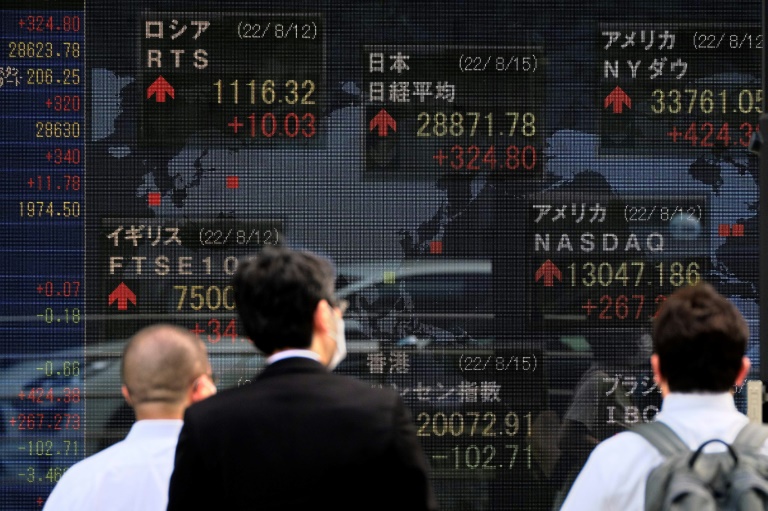
Tokyo stocks opened higher on Tuesday, tracking gains on Wall Street, as investors priced in the expectation of further interest rate hikes to tame inflation.

The benchmark Nikkei 225 index was up 0.14 percent, or 40.60 points, at 28,582.71 in early trade, while the broader Topix index was up 0.15 percent, or 2.96 points, at 1,983.18.

“Investors felt encouraged to buy Japan stocks by rallies in the US market, but a wait-and-see attitude may emerge in later trade ahead of the release of the US consumer price index,” Mizuho Securities said in a commentary. 

Wall Street stocks ended with solid gains, continuing an upswing that snapped a three-week losing streak.

Investors are looking ahead to a critical release Tuesday on US consumer prices, followed by Thursday’s report on retail sales — the last major data ahead of the Federal Reserve’s interest rate move next week.

While inflation is expected to have eased in August, largely due to falling gasoline prices, it seems unlikely it will be enough to stave off a third consecutive three-quarter point rate hike from the Fed.

However, National Australia Bank analyst Tapas Strickland believes that “there appears to be a growing consensus that inflation has peaked in the US”.

The dollar fetched 142.62 yen in early Asian trade, against 142.82 yen in New York late Monday.

Among individual equities, game giant Nintendo soared 5.11 percent to 61,970 yen after it said domestic sales of its Splatoon 3 game for Nintendo Switch consoles surpassed 3.45 million in the three days since its September 9 launch.

That marks the best domestic sales level for any Switch software in the three days after launch, Nintendo said.

Sony Group barely moved after it said its music business has fully withdrawn from Russia, trading up just 0.04 percent at 10,765 yen about 40 minutes after the opening bell.

“As the war continues to have a devastating humanitarian impact in Ukraine, and sanctions on Russia continue to increase, we can no longer maintain a presence in Russia, effective immediately,” the company said in a statement sent to AFP.

Automaker Nissan was down 1.34 percent at 545.5 yen after it said Monday night that it would extend by three months a halt to production at its Saint Petersburg plant in Russia.

The decision means production will be on hold until the end of December, with the firm citing ongoing logistical difficulties for the move.

Airlines continued to rally following reports the Japanese government could significantly loosen Covid-linked border controls, with ANA Holdings trading up 2.83 percent at 2,778.5 and Japan Airlines up 2.04 percent at 2,653 yen.

Toyota was down 0.82 percent at 2,053 yen and Honda was off 2.02 percent at 3,639 yen, after a brokerage firm downgraded its estimate of the shares’ performances.

Tokyo stocks open higher tracking US gains

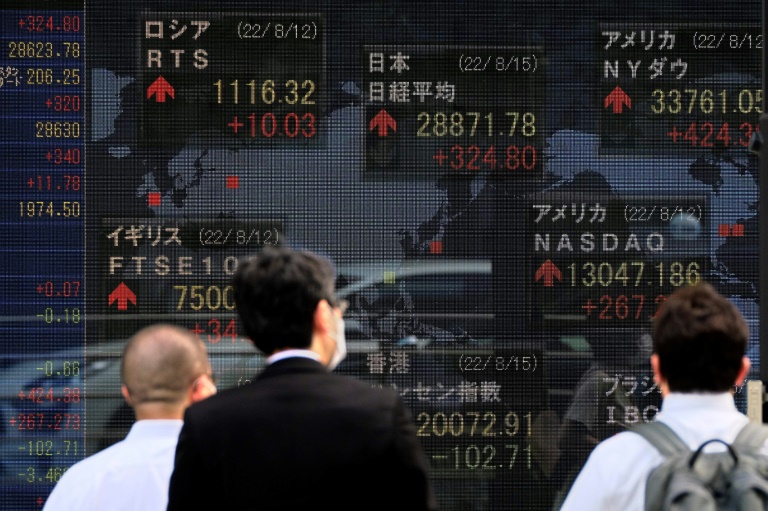
Tokyo stocks opened higher on Tuesday, tracking gains on Wall Street, as investors priced in the expectation of further interest rate hikes to tame inflation.

The benchmark Nikkei 225 index was up 0.14 percent, or 40.60 points, at 28,582.71 in early trade, while the broader Topix index was up 0.15 percent, or 2.96 points, at 1,983.18.

“Investors felt encouraged to buy Japan stocks by rallies in the US market, but a wait-and-see attitude may emerge in later trade ahead of the release of the US consumer price index,” Mizuho Securities said in a commentary. 

Wall Street stocks ended with solid gains, continuing an upswing that snapped a three-week losing streak.

Investors are looking ahead to a critical release Tuesday on US consumer prices, followed by Thursday’s report on retail sales — the last major data ahead of the Federal Reserve’s interest rate move next week.

While inflation is expected to have eased in August, largely due to falling gasoline prices, it seems unlikely it will be enough to stave off a third consecutive three-quarter point rate hike from the Fed.

However, National Australia Bank analyst Tapas Strickland believes that “there appears to be a growing consensus that inflation has peaked in the US”.

The dollar fetched 142.62 yen in early Asian trade, against 142.82 yen in New York late Monday.

Among individual equities, game giant Nintendo soared 5.11 percent to 61,970 yen after it said domestic sales of its Splatoon 3 game for Nintendo Switch consoles surpassed 3.45 million in the three days since its September 9 launch.

That marks the best domestic sales level for any Switch software in the three days after launch, Nintendo said.

Sony Group barely moved after it said its music business has fully withdrawn from Russia, trading up just 0.04 percent at 10,765 yen about 40 minutes after the opening bell.

“As the war continues to have a devastating humanitarian impact in Ukraine, and sanctions on Russia continue to increase, we can no longer maintain a presence in Russia, effective immediately,” the company said in a statement sent to AFP.

Automaker Nissan was down 1.34 percent at 545.5 yen after it said Monday night that it would extend by three months a halt to production at its Saint Petersburg plant in Russia.

The decision means production will be on hold until the end of December, with the firm citing ongoing logistical difficulties for the move.

Airlines continued to rally following reports the Japanese government could significantly loosen Covid-linked border controls, with ANA Holdings trading up 2.83 percent at 2,778.5 and Japan Airlines up 2.04 percent at 2,653 yen.

Toyota was down 0.82 percent at 2,053 yen and Honda was off 2.02 percent at 3,639 yen, after a brokerage firm downgraded its estimate of the shares’ performances.

Webb telescope captures 'breathtaking' images of Orion Nebula

The wall of dense gas and dust resembles a massive winged creature, its glowing maw lit by a bright star as it soars through cosmic filaments.

An international research team on Monday revealed the first images of the Orion Nebula captured with the James Webb Space Telescope, leaving astronomers “blown away.”

The stellar nursery is situated in the constellation Orion, 1,350 light-years away from Earth, in a similar setting in which our own solar system was birthed more than 4.5 billion years ago.

Astronomers are interested in the region to better understand what happened during the first million years of our planetary evolution.

The images were obtained as part of the Early Release Science program and involved more than 100 scientists in 18 countries, with institutions including the French National Centre for Scientific Research (CNRS), Western University in Canada, and the University of Michigan.

“We are blown away by the breathtaking images of the Orion Nebula,” Western University astrophysicist Els Peeters said in a statement.

“These new observations allow us to better understand how massive stars transform the gas and dust cloud in which they are born,” she added.

Nebulas are obscured by large amounts of dust that made it impossible to observe with visible light telescopes, such as the Hubble Space Telescope, Webb’s predecessor. 

Webb however operates primarily in the infrared spectrum, penetrating the dust.

This revealed numerous spectacular structures, down to the scale of 40 astronomical units, or the size of our solar system.

These include dense filaments of matter, which could birth new generations of stars, as well as forming stellar systems that consist of a central proto-star surrounded by a disc of dust and gas, in which planets form.

“We hope to gain understanding about the entire cycle of star birth,” said Edwin Bergin, University of Michigan chair of astronomy and a member of the international research team. 

“In this image we are looking at this cycle where the first generation of stars is essentially irradiating the material for the next generation. The incredible structures we observe will detail how the feedback cycle of stellar birth occurs in our galaxy and beyond.”

Webb is the most powerful space telescope ever built, boasting a primary mirror measuring 6.5 meters (more than 21 feet) that is made up of 18 hexagonal, gold-coated segments, as well as a five-layer sunshield the size of a tennis court.

US inflation likely eased in August — but not enough

US inflation likely slowed in August, largely thanks to falling gasoline prices, but not enough to satisfy policymakers, especially President Joe Biden, as high prices continue to inflict pain on American families and businesses. 

The consumer price index (CPI), a key measure of inflation, is expected to have fallen in August compared to the prior month — the first decline since November 2020. The Labor Department is due to release the latest data Tuesday.

The annual inflation pace also is likely to have improved to 8.0 percent, according to a MarketWatch consensus forecast, from the blistering 9.1 percent rate in June — the highest in 40 years.

Prices have been soaring for months, exacerbated by the Russian invasion of Ukraine, which has impacted energy and food prices, as well as ongoing supply chain snarls amid Covid lockdowns in China.

While Americans will welcome relief at the pump, from the steady drop in gasoline prices, high costs for food and housing continue to strain family budgets.

“Risks remain skewed to the upside, due to an uncertain outlook for key inputs, including agricultural and energy commodities, as well as the pass-through of wage gains in a tight labor market,” according to Barclays US analysts Pooja Sriram and Jonathan Hill.

They project a one percent increase in food prices in the month, with housing up 0.6 percent.

Inflation also has become a hot political issue just weeks away from key midterm congressional elections, and Biden has made fighting high prices his top domestic priority, so any relief will be welcomed at the White House.

“Inflation is way too high, and it’s essential that we bring it down,” Treasury Secretary Janet Yellen said Sunday, echoing a comment she and other administration officials have made repeatedly to show their sympathy with the plight faced by consumers and firms.

– Recession risk –

The Federal Reserve views inflation as the biggest risk to the world’s largest economy, and has moved aggressively to cool demand, increasing the benchmark lending rate four times this year, with a third consecutive three-quarter point hike widely expected next week.

The Fed actions increase the cost of borrowing for homebuyers and businesses, which tends to cool investment and spending.

Fed Chair Jerome Powell has said the central bank will do whatever it takes to ensure high prices do not become entrenched, even at the risk of tipping the economy into a recession.

“The clock is ticking,” Powell warned Friday, pledging to “keep at it until the job is done.”

Yellen acknowledged that there is “certainly a risk” of an economic downturn amid the rising lending costs, but she noted the US job market is “exceptionally strong” with nearly two vacancies for every worker looking for a job.

And she cautioned that “we can’t have a strong labor market without inflation under control.”

Fed officials have said they are encouraged by easing price pressures, but not satisfied. A survey released Monday by the New York Federal Reserve Bank showed consumer inflation expectations fell sharply in August.

The strong job market — the unemployment rate was 3.7 percent in August — also provides some comfort, giving policymakers room to maneuver, and potentially quell inflation without a steep increase in joblessness.

But the worker shortage remains a concern since it could fuel a dangerous wage-spiral.

And many economists are skeptical the Fed can achieve the desired “soft-landing.”

“It is unlikely, but not impossible,” for the Fed to achieve that goal, according to Laurence Ball of Johns Hopkins University and Daniel Leigh and Prachi Mishra of the International Monetary Fund.

In a paper published last week they warned that “the small increase in unemployment the Fed projects won’t be enough” to bring inflation down.

Peiter 'Mudge' Zatko: The wild card in Musk's clash with Twitter

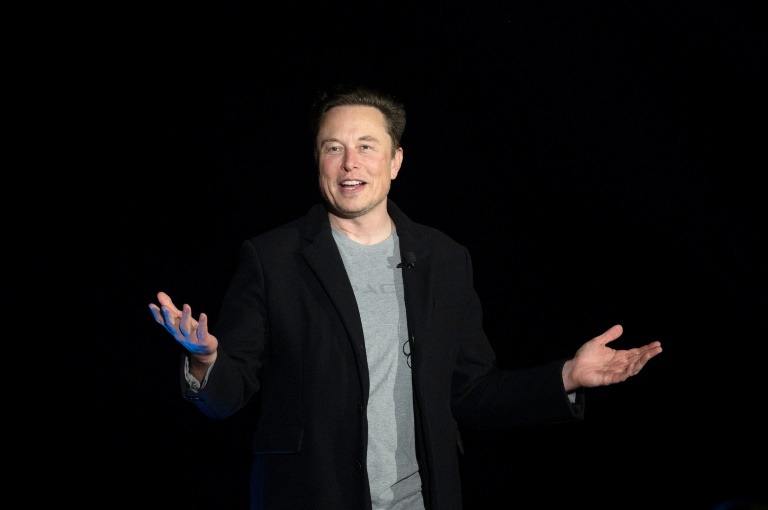
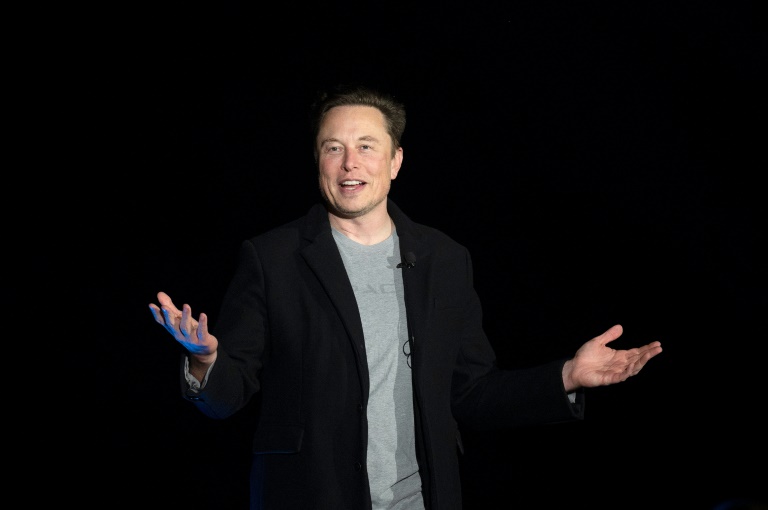
Respected in cybersecurity circles, former Twitter security chief Peiter “Mudge” Zatko is a wild card in Elon Musk’s legal gambit to break a $44 billion deal to buy the social network.

Zatko’s whistleblower complaint of “extreme, egregious deficiencies” in Twitter defenses against hackers and “meager efforts to fight spam” plays into Musk’s quest to convince a judge that he was duped when he foisted his unsolicited offer on the company.

Twitter has dismissed 51-year-old Zatko’s complaint as being without merit, and vowed to show it did nothing wrong at an October trial in a Delaware court.

If the court focuses on the fact that the world’s richest man declined to do fact gathering typically associated with big-money mergers, Zatko’s allegations could wind up being moot.

He is to testify on Tuesday before a US Senate committee looking into whether security practices at Twitter were dangerously lax.

Zatko first testified before Congress 24 years ago, when he was a long-haired hacker determined to warn about the perils of poorly protected government computer systems.

This time, he will be called on to provide details about his accusations that Twitter hid flaws in its security as well as its fight against accounts run by spammers or software instead of genuine users.

Musk has listed the number of inauthentic accounts on Twitter as among reasons to justify walking away from the buyout deal he made in April.

“Once both parties step into court its a high risk/high reward scenario for both parties with the major X variable now being the Zatko whistleblower claims,” Wedbush analyst Dan Ives said in a note to investors.

“We continue to view the Zatko situation as a Pandora’s Box scenario for Twitter.”

If Twitter prevails at trial, the judge could order the Tesla chief to pay billions of dollars to the company, or even complete the purchase.

Twitter shareholders are expected to endorse the buyout deal in a special vote Tuesday.

– ‘Big problems’ –

“If  Mudge says Twitter has cybersecurity problems, Twitter has big problems,” said Vectra cybersecurity firm chief technology officer Aaron Turner, who says he has known Zatko since the 1980s.

A son of scientists, Zatko grew up in the US states of Alabama and Pennsylvania, his passions including music and software.

In 1996, he joined a hacker collective called L0pht. He and other members of the group testified before Congress two years later.

“It was the first time the U.S. government publicly referenced ‘hackers’ in a positive context,” Zatko said in a 2019 tweet marking an anniversary of the testimony.

Zatko has done stints at Google and online payment services company Stripe, and also at Pentagon research arm DARPA.

Twitter founder and former chief Jack Dorsey recruited Zatko in July 2020 after a spectacular hack of the accounts of celebrities and political figures including Barack Obama, Musk and Kim Kardashian.

US President Joe Biden’s team offered Zatko a position as White House security director early last year but he declined the job, believing he had work left to do at Twitter, his attorneys said.

-House of cards? –

Twitter fired Zatko in January, citing “ineffective leadership and poor performance.”

Zatko’s lawyers rejected Twitter’s claim, contending instead that he was terminated after a clash with top executives who refused to acknowledge his concerns about platform security.

“Mr Zatko put his career on the line because of his concerns about Twitter users, the public and the company’s shareholders,” his attorneys said.

Andrew Hay, director of operations at the Lares cybersecurity consulting firm, said “those in the industry who know Mudge know that his intentions have historically been honorable, non-partisan, and designed to benefit the world.”

Zatko’s whistleblower complaint, filed just days after Twitter agreed to give him a multi-million dollar severance package, is not necessarily evidence that the company misrepresented user numbers, according to analysts.

Musk’s lawyers will “try to prove that Twitter tried to sell him a house of cards,” but security flaws would have to be “really serious,” said University  of California, Berkeley law school professor Adam Badawi.

Peiter 'Mudge' Zatko: The wild card in Musk's clash with Twitter

Respected in cybersecurity circles, former Twitter security chief Peiter “Mudge” Zatko is a wild card in Elon Musk’s legal gambit to break a $44 billion deal to buy the social network.

Zatko’s whistleblower complaint of “extreme, egregious deficiencies” in Twitter defenses against hackers and “meager efforts to fight spam” plays into Musk’s quest to convince a judge that he was duped when he foisted his unsolicited offer on the company.

Twitter has dismissed 51-year-old Zatko’s complaint as being without merit, and vowed to show it did nothing wrong at an October trial in a Delaware court.

If the court focuses on the fact that the world’s richest man declined to do fact gathering typically associated with big-money mergers, Zatko’s allegations could wind up being moot.

He is to testify on Tuesday before a US Senate committee looking into whether security practices at Twitter were dangerously lax.

Zatko first testified before Congress 24 years ago, when he was a long-haired hacker determined to warn about the perils of poorly protected government computer systems.

This time, he will be called on to provide details about his accusations that Twitter hid flaws in its security as well as its fight against accounts run by spammers or software instead of genuine users.

Musk has listed the number of inauthentic accounts on Twitter as among reasons to justify walking away from the buyout deal he made in April.

“Once both parties step into court its a high risk/high reward scenario for both parties with the major X variable now being the Zatko whistleblower claims,” Wedbush analyst Dan Ives said in a note to investors.

“We continue to view the Zatko situation as a Pandora’s Box scenario for Twitter.”

If Twitter prevails at trial, the judge could order the Tesla chief to pay billions of dollars to the company, or even complete the purchase.

Twitter shareholders are expected to endorse the buyout deal in a special vote Tuesday.

– ‘Big problems’ –

“If  Mudge says Twitter has cybersecurity problems, Twitter has big problems,” said Vectra cybersecurity firm chief technology officer Aaron Turner, who says he has known Zatko since the 1980s.

A son of scientists, Zatko grew up in the US states of Alabama and Pennsylvania, his passions including music and software.

In 1996, he joined a hacker collective called L0pht. He and other members of the group testified before Congress two years later.

“It was the first time the U.S. government publicly referenced ‘hackers’ in a positive context,” Zatko said in a 2019 tweet marking an anniversary of the testimony.

Zatko has done stints at Google and online payment services company Stripe, and also at Pentagon research arm DARPA.

Twitter founder and former chief Jack Dorsey recruited Zatko in July 2020 after a spectacular hack of the accounts of celebrities and political figures including Barack Obama, Musk and Kim Kardashian.

US President Joe Biden’s team offered Zatko a position as White House security director early last year but he declined the job, believing he had work left to do at Twitter, his attorneys said.

-House of cards? –

Twitter fired Zatko in January, citing “ineffective leadership and poor performance.”

Zatko’s lawyers rejected Twitter’s claim, contending instead that he was terminated after a clash with top executives who refused to acknowledge his concerns about platform security.

“Mr Zatko put his career on the line because of his concerns about Twitter users, the public and the company’s shareholders,” his attorneys said.

Andrew Hay, director of operations at the Lares cybersecurity consulting firm, said “those in the industry who know Mudge know that his intentions have historically been honorable, non-partisan, and designed to benefit the world.”

Zatko’s whistleblower complaint, filed just days after Twitter agreed to give him a multi-million dollar severance package, is not necessarily evidence that the company misrepresented user numbers, according to analysts.

Musk’s lawyers will “try to prove that Twitter tried to sell him a house of cards,” but security flaws would have to be “really serious,” said University  of California, Berkeley law school professor Adam Badawi.

Television's A-listers ooze glamour on Emmys red carpet

Television’s biggest stars on Monday hit the red carpet — well, the gold carpet — for the Emmys, for the first full-fledged gala honoring the best of the small screen in the age of Covid-19.

After a virtual ceremony in 2020 and a scaled-back show last year, gowns and tuxedos were de rigueur at the Microsoft Theater in downtown Los Angeles, where the glitterati arrived in bright sunshine.

Here are some takeaways about who wore what at the Emmys: strapless dresses were big, as were metallics.

– Pretty in pink – 

For the first major Tinseltown awards show since the Oscars earlier this year, some of Hollywood’s A-list fashionistas opted for classic pretty in pink vibes.

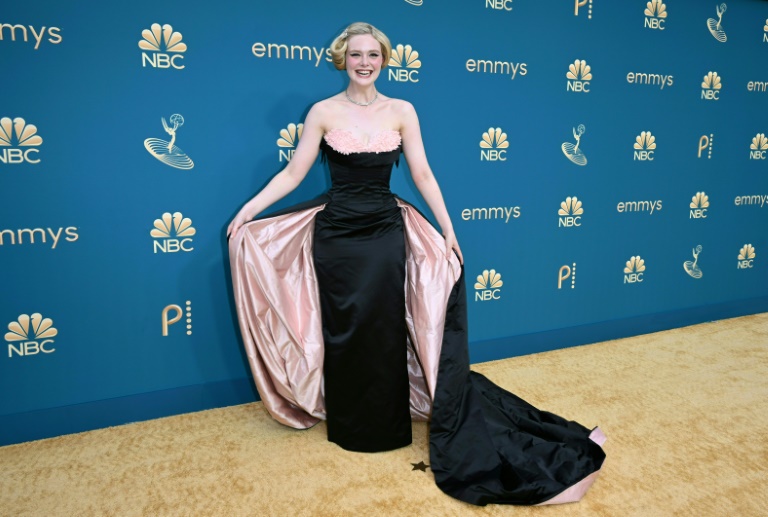
Fashion house darling Elle Fanning, who is nominated for her work as Catherine the Great on “The Great,” wowed onlookers in a black strapless Sharon Long gown with a pink ruffled neckline and dramatic sweeping train with a pink lining.

Hannah Waddingham, a winner last year and nominee this year for comedy smash hit “Ted Lasso,” also embraced baby pink in a structured strapless Dolce & Gabbana corset dress that exploded in a puff of a full-length tulle skirt. 

And Connie Britton, one of the many acting nominees for HBO’s breakout dark comedy “The White Lotus,” rocked a floaty salmon-colored Monique Lhuillier gown with matching cape. 

– Shimmering metallics –

Glittering metallic fabrics are always a winner when one is hoping to end the night with a golden Emmys statuette.

Britain’s Lily James, who disappeared into the role of bombshell actress Pamela Anderson for the limited series “Pam and Tommy,” wore a skin-tight bronze Versace gown with ruching at the waist.

Quinta Brunson, a multiple nominee for producing, writing and starring in her breakout ABC sitcom “Abbott Elementary,” stunned the red carpet in a strapless brown Dolce & Gabbana gown with a bronze skirt and a daring thigh-high slit.

And Sandra Oh, nominated for the final season of “Killing Eve,” slayed in a sequined sparkling purple suit with a matching blouse open to the navel.

“I want to channel my inner rock star, and I love Prince, and I love the color purple,” she told Variety on the red carpet.

Not to be left out, “Euphoria” star Colman Domingo — who has already won an Emmy for best guest actor in a drama, an award handed out before Monday’s main event — was on trend in a patterned D&G gold suit with a black see-through shirt.

– Classic elegance –

Zendaya, widely tipped to repeat as best actress in a drama for raw teen series “Euphoria,” went for basic black — a strapless Valentino gown with a sweeping ball skit and pockets. Accessories? Diamonds and a black headband.

Andrew Garfield, Seth Rogen, “Succession” star Nicholas Braun and singer John Legend all looked quite dapper in white — a bold look for a big return to Emmys red carpet style.

NASA's Moon mission pushed back, again

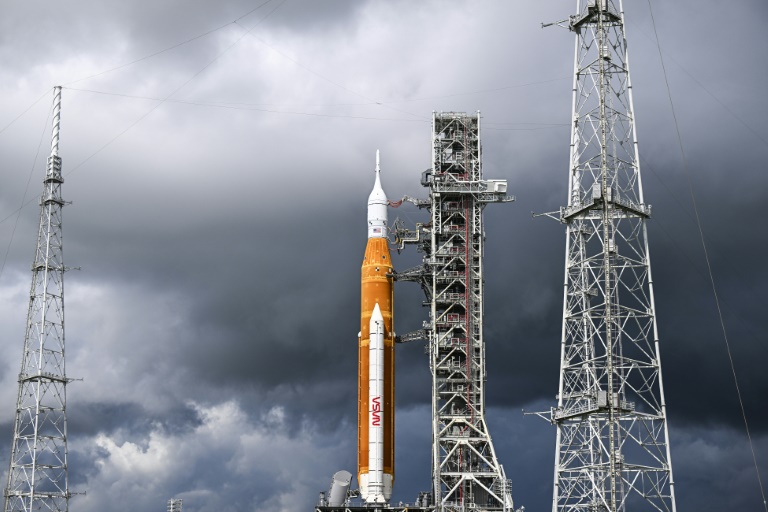
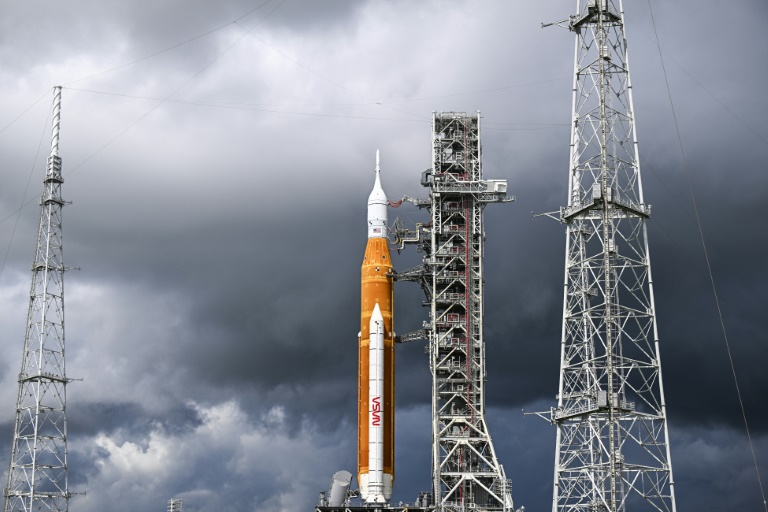
NASA is now targeting September 27 as the earliest possible launch date for its uncrewed Artemis 1 mission to the Moon, the agency said in a blog post Monday.

The date would depend on engineering teams successfully carrying out a test to fuel up the Space Launch System rocket, and receive a waiver to avoid retesting batteries on an emergency flight system that is used to destroy the rocket if it strays from its designated range.

If it does not receive the waiver, the rocket will have to be wheeled back to its assembly building, pushing the timeline back several weeks.

For the September 27 date, a “70-minute launch window opens at 11:37 am EDT,” while the mission would end with an ocean splashdown of the Orion capsule on November 5.

A potential next date comes on October 2.

The Artemis 1 space mission hopes to test the SLS as well as the unmanned Orion capsule that sits atop it, in preparation for future Moon-bound journeys with humans aboard.

Once launched, it will take several days for the spacecraft to reach the Moon, flying around 60 miles (100 kilometers) at its closest approach.

One of the trip’s main objectives is to test the capsule’s heat shield — which at 16 feet (five meters) in diameter is the largest ever built — when the ship re-enters the atmosphere.

The next mission, Artemis 2, will take astronauts to the Moon without landing on its surface, while the third — set for the mid-2020s — would see the first woman and person of color on lunar soil.

NASA wants to build a lunar space station called Gateway and keep a sustained presence on the Moon to gain insight into how to survive very long space missions, ahead of a mission to Mars in the 2030s.

NASA's Moon mission pushed back, again

NASA is now targeting September 27 as the earliest possible launch date for its uncrewed Artemis 1 mission to the Moon, the agency said in a blog post Monday.

The date would depend on engineering teams successfully carrying out a test to fuel up the Space Launch System rocket, and receive a waiver to avoid retesting batteries on an emergency flight system that is used to destroy the rocket if it strays from its designated range.

If it does not receive the waiver, the rocket will have to be wheeled back to its assembly building, pushing the timeline back several weeks.

For the September 27 date, a “70-minute launch window opens at 11:37 am EDT,” while the mission would end with an ocean splashdown of the Orion capsule on November 5.

A potential next date comes on October 2.

The Artemis 1 space mission hopes to test the SLS as well as the unmanned Orion capsule that sits atop it, in preparation for future Moon-bound journeys with humans aboard.

Once launched, it will take several days for the spacecraft to reach the Moon, flying around 60 miles (100 kilometers) at its closest approach.

One of the trip’s main objectives is to test the capsule’s heat shield — which at 16 feet (five meters) in diameter is the largest ever built — when the ship re-enters the atmosphere.

The next mission, Artemis 2, will take astronauts to the Moon without landing on its surface, while the third — set for the mid-2020s — would see the first woman and person of color on lunar soil.

NASA wants to build a lunar space station called Gateway and keep a sustained presence on the Moon to gain insight into how to survive very long space missions, ahead of a mission to Mars in the 2030s.

Ex-Google CEO says Ukraine proves value of IT in war

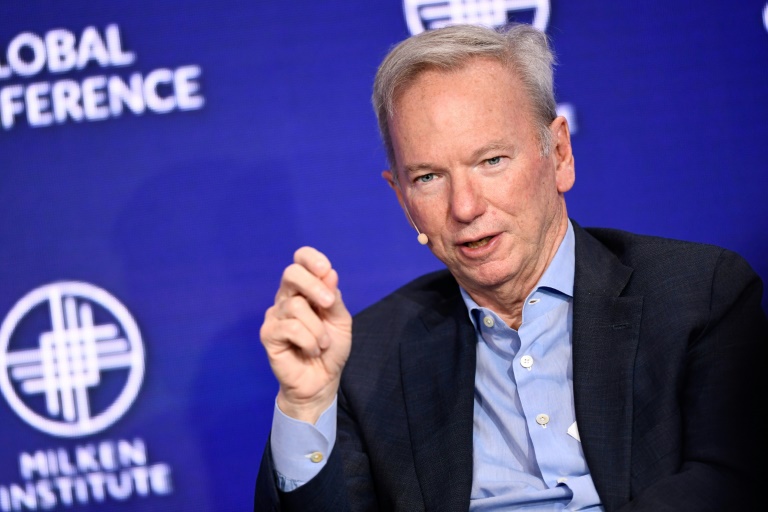
Ukraine has been a very effective proving ground for the use of contemporary information technology in war, from satellite dishes to smartphone apps, Eric Schmidt, the former Google chief executive, said Monday.

Schmidt, now a US government consultant on artificial intelligence, told reporters after a 36-hour visit to the country that the civilian tech sector has been crucial to Kyiv’s defense.

The proof came the day after Russian troops invaded on February 24. 

After a long stall, Ukraine’s legislature came together to agree on a crucial step to protect all the government’s data from Russian hackers and strikes.

“In one day, they had a meeting of the parliament and changed that law… they moved all their data from government servers in Kyiv to the cloud,” Schmidt said. 

“The war gave everybody a political excuse to do the right thing,” he said. 

The second crucial move came with US tech billionaire Elon Musk’s donation of access to his Starlink satellite-based broadband system, effectively insulating both the public and Ukrainian military from a Russian assault on telecommunications.

Musk and donors sent in some 20,000 ground terminals with small dish antennas that allowed everyday transmissions as well as helping fighters with targeting data. That stymied a key goal of the Russian attackers.

“Elon Musk is genuinely a hero here,” said Schmidt. “This allowed the strategy of shutting down the internet by the opposition to fail.”

– Field intelligence from citizen apps –

Two apps meanwhile got citizens directly involved, Schmidt said.

A function called “E-Enemy” was added to the popular Diia app used for government services that permitted people to report things such as damage from shelling, or Russian troop sightings.

And an encrypted Swiss chat service called Threema allowed users to send such data to the military without exposing their identities.

The military would get thousands of such reports every day, said Schmidt, and filter them with artificial intelligence programs.

“They would whittle them down to targets using computer intelligence and human intelligence and eventually go after them,” he said.

“So if you think about that, here’s what they had: they had an internet that stayed up, they had their government data protected,” and a way for citizens to give them intelligence information, he said.

Ukraine, long an incubator for programming as well as illegal hacking skills, has a deep IT workforce that has been able to launch cyberattacks against the Russia, breaking into their communications.

The country has also skillfully used biometric and facial recognition techniques to identify Russian troops involved in atrocities, such as the massacre in Bucha early in the war.

In addition, Ukrainian programmers have been skilled in making drones useful in the war.

“I can just report that based on my small amount of data, the Ukrainian tech industry really did make a contribution to the front,” said Schmidt.

Close Bitnami banner
Bitnami