AFP

Ex-Google CEO says Ukraine proves value of IT in war

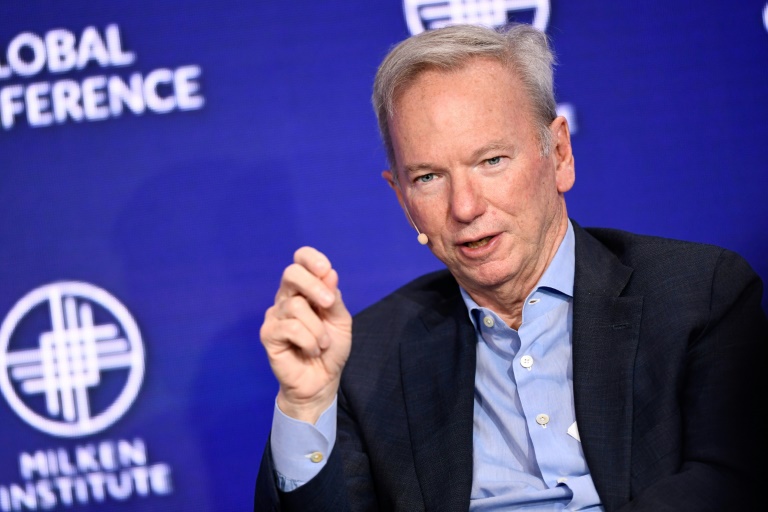
Ukraine has been a very effective proving ground for the use of contemporary information technology in war, from satellite dishes to smartphone apps, Eric Schmidt, the former Google chief executive, said Monday.

Schmidt, now a US government consultant on artificial intelligence, told reporters after a 36-hour visit to the country that the civilian tech sector has been crucial to Kyiv’s defense.

The proof came the day after Russian troops invaded on February 24. 

After a long stall, Ukraine’s legislature came together to agree on a crucial step to protect all the government’s data from Russian hackers and strikes.

“In one day, they had a meeting of the parliament and changed that law… they moved all their data from government servers in Kyiv to the cloud,” Schmidt said. 

“The war gave everybody a political excuse to do the right thing,” he said. 

The second crucial move came with US tech billionaire Elon Musk’s donation of access to his Starlink satellite-based broadband system, effectively insulating both the public and Ukrainian military from a Russian assault on telecommunications.

Musk and donors sent in some 20,000 ground terminals with small dish antennas that allowed everyday transmissions as well as helping fighters with targeting data. That stymied a key goal of the Russian attackers.

“Elon Musk is genuinely a hero here,” said Schmidt. “This allowed the strategy of shutting down the internet by the opposition to fail.”

– Field intelligence from citizen apps –

Two apps meanwhile got citizens directly involved, Schmidt said.

A function called “E-Enemy” was added to the popular Diia app used for government services that permitted people to report things such as damage from shelling, or Russian troop sightings.

And an encrypted Swiss chat service called Threema allowed users to send such data to the military without exposing their identities.

The military would get thousands of such reports every day, said Schmidt, and filter them with artificial intelligence programs.

“They would whittle them down to targets using computer intelligence and human intelligence and eventually go after them,” he said.

“So if you think about that, here’s what they had: they had an internet that stayed up, they had their government data protected,” and a way for citizens to give them intelligence information, he said.

Ukraine, long an incubator for programming as well as illegal hacking skills, has a deep IT workforce that has been able to launch cyberattacks against the Russia, breaking into their communications.

The country has also skillfully used biometric and facial recognition techniques to identify Russian troops involved in atrocities, such as the massacre in Bucha early in the war.

In addition, Ukrainian programmers have been skilled in making drones useful in the war.

“I can just report that based on my small amount of data, the Ukrainian tech industry really did make a contribution to the front,” said Schmidt.
Biden evokes US Moon mission in renewed cancer fight

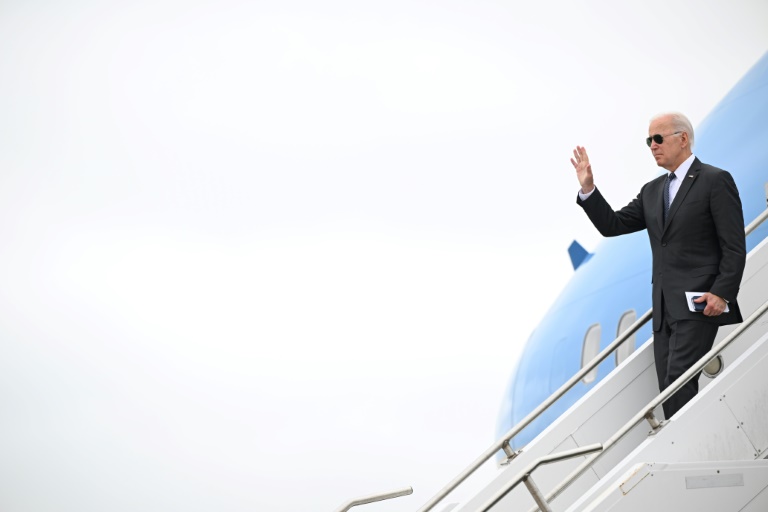
President Joe Biden on Monday invoked the national effort to land a man on the Moon 60 years ago in a speech touting his Cancer Moonshot initiative, which aims to slash cancer death rates across the United States by half.

The Democrat was in Boston for an address deliberately echoing John F. Kennedy’s famous 1962 “Moonshot speech” in which he called for landing an American on the lunar surface — something achieved in 1969, after his assassination.

This time, Biden is pushing government-backed efforts to coordinate and fund treatment of cancer, search for cures and generally to prevent the disease through better public health.

Cancer remains the number two cause of death after heart disease and Biden said his Cancer Moonshot can halve death rates over the next 25 years.

“I know we can do this together, because I know this: there’s nothing, nothing, nothing beyond our capacity or ability if we work together as the United States of America,” he said.

Biden said that as in 1962, when the country was in the thick of the Cold War and domestic tensions were high over civil rights, the United States today is at an “inflection point.”

And like Kennedy with his Moon program, Biden said he wanted to set “a national purpose that could rally the American people in a common cause.”

– Backing from JFK’s daughter –

Caroline Kennedy, daughter of the assassinated JFK and now US ambassador to Australia, said her father had defied the doubters in the 1960s, when “scientists weren’t sure even that a Moon landing on the surface of the Moon was possible.”

Kennedy, however, “understood the power of the idea” and saw the project as a way to unite the country. “No one embodies that spirit more than President Joe Biden,” she said. “As president, he has restored the soul of America.”

The battle against cancer is personal for Biden: his son Beau died of brain cancer in 2015 when Biden was vice president to Barack Obama.

Biden noted that cancer “does not discriminate…, it doesn’t care if you’re a Republican or Democrat.”

“I give you my word as a Biden: this Cancer Moonshot is one of the reasons why I ran for president.”

The linkage to the Moon program also sought to add to Democratic momentum ahead of November’s midterm congressional elections where the Democrats face the possibility of a Republican sweep in Congress, severely complicating the last two years of Biden’s first term.

– Change the trajectory –

Biden said his plan will push for cures and ways to manage cancer, turning “more cancers from death sentences into chronic diseases that people can live with.”

“We know we can change the trajectory,” he said.

The president said he was harnessing funding but also government expertise in high-tech research similar to the defense industry, where public-private partnerships drive innovations in weaponry and other military needs.

A new agency named Advanced Research Projects Agency for Health (ARPA-H) and the White House’s new “cancer cabinet” will “increase funding to break log jams and to speed breakthroughs,” while getting entrepreneurs support from cutting edge scientists with NASA, the Pentagon and the energy department.

The goal is to “use all the assets we have,” Biden said, and this “may require unusual partnerships.”

– Biotech boost –

Earlier, Biden signed an executive order meant to bolster the trailblazing US biotech sector’s efforts to take on growing commercial rivals in China.

The order brings federal support for “areas that will define US biotechnology leadership and our economic competitiveness in the coming decades,” a senior Biden administration official told reporters.

The official said that while US biotech research leads the world, the industrial applications are increasingly in the hands of other countries.

“Unless we translate biotechnology innovation into economic and societal benefits for all Americans, other countries, including and especially China, are aggressively investing in this sector,” posing a “risk,” the official said.

The White House says the US biotech industry is on the cutting edge of medical advances — recently seen in the rapid development of vaccines, tests and therapeutics to help manage the Covid-19 pandemic — but that the potential scope goes much further.

The official speaking to reporters cited studies suggesting that “before the end of the decade, engineering biology holds the potential to be used in manufacturing industry that accounts for more than one third of global output. That’s equivalent to almost $30 trillion in terms of value.”

Growing areas for biotech industry include new plastics and rubbers, jet fuel, and environmentally friendly fertilizers.

Oregon blaze latest major wildfire to engulf US West

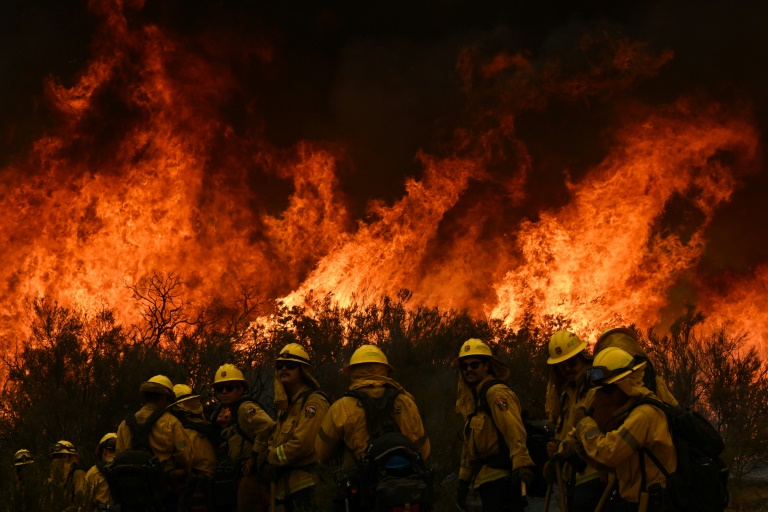
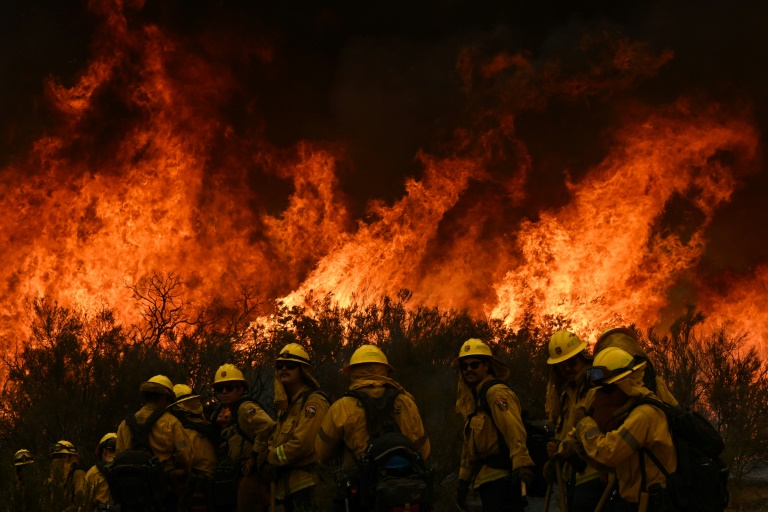
A massive wildfire burned out of control Monday in Oregon forcing residents to flee and threatening towns and thousands of homes, in the latest blaze to scorch the US West during a blistering summer.

Dozens of active infernos in California, Idaho, Oregon, Washington and other western states have ravaged more than 1,200 square miles (3,100 square kilometers), worsening air quality and highlighting the devastating effects of a historic two-decade-plus drought that has left the region parched.

The Cedar Creek fire east of the city of Eugene, Oregon experienced “extreme” growth over the weekend and has now consumed 86,734 acres (35,100 hectares) — roughly twice the size of the US capital Washington — with zero percent containment as of Monday, according to the National Wildfire Coordinating Group (NWCG).

More than 1,200 firefighters and other personnel have converged on the steep mountainous terrain, much of it in US national forest land and hard to reach.

“They have been constructing firelines away from the active fire edge, along roads and trails, where they have a better chance of successfully stopping the fire,” NWCG reported. 

Evacuations were ordered for Lane and Deschutes counties, and the Deschutes and Willamette national forests have been closed. More than 2,000 homes were under threat, authorities said.

Dense smoke has enveloped the region, and according to NWCG, “smoke has created unhealthy air quality for communities east of the fire as well, including Bend,” a town that serves as a gateway for outdoor tourism.

“Get out of here as fast as I can,” Herman Schimmel, who moved to the small town of Westfir only recently, told The Oregonian newspaper. “That’s all I was thinking about.”

Local media reported that cooler and calmer weather had improved conditions somewhat later on Monday, with officials easing evacuation instructions in some areas.

The western United States is more than two decades into a historic drought that scientists say is being worsened by human-made climate change.

Much of the countryside is parched, creating conditions for hot, fast and destructive wildfires.

– Homes threatened –

An even larger blaze was burning in northwestern Oregon Monday, in a more remote region. The Double Creek fire, first detected on August 30, has consumed 155,000 acres and was 15 percent contained.

According to the National Interagency Fire Center (NIFC), more than 90 fires were currently burning across seven states in the West: California, Idaho, Montana, Oregon, Utah, Washington and Wyoming.

More than 1,200 square miles in total was burning — an area larger that Yosemite National Park — NIFC reported Sunday.

The Mosquito Fire, California’s current largest blaze, has now swept through 46,500 acres in the Sierra Nevada Mountains, with several small nearby towns reportedly evacuated.

The official CalFire website said that while cooler temperatures — following more than a week of blistering heat — had somewhat slowed the fire’s progress, stronger winds were pushing it to the north and northeast, threatening hundreds of homes.

Meanwhile, firefighters were working to contain the major Fairview fire, south of Los Angeles, which has claimed two lives.

Firefighters have the blaze 53 percent under control, local media reported Monday, raising hopes it may be slowing down after rainfall and lower temperatures at the weekend.

Air quality alerts have been issued in Oregon, Washington and Idaho due to smoke from the blazes.

Oregon blaze latest major wildfire to engulf US West

A massive wildfire burned out of control Monday in Oregon forcing residents to flee and threatening towns and thousands of homes, in the latest blaze to scorch the US West during a blistering summer.

Dozens of active infernos in California, Idaho, Oregon, Washington and other western states have ravaged more than 1,200 square miles (3,100 square kilometers), worsening air quality and highlighting the devastating effects of a historic two-decade-plus drought that has left the region parched.

The Cedar Creek fire east of the city of Eugene, Oregon experienced “extreme” growth over the weekend and has now consumed 86,734 acres (35,100 hectares) — roughly twice the size of the US capital Washington — with zero percent containment as of Monday, according to the National Wildfire Coordinating Group (NWCG).

More than 1,200 firefighters and other personnel have converged on the steep mountainous terrain, much of it in US national forest land and hard to reach.

“They have been constructing firelines away from the active fire edge, along roads and trails, where they have a better chance of successfully stopping the fire,” NWCG reported. 

Evacuations were ordered for Lane and Deschutes counties, and the Deschutes and Willamette national forests have been closed. More than 2,000 homes were under threat, authorities said.

Dense smoke has enveloped the region, and according to NWCG, “smoke has created unhealthy air quality for communities east of the fire as well, including Bend,” a town that serves as a gateway for outdoor tourism.

“Get out of here as fast as I can,” Herman Schimmel, who moved to the small town of Westfir only recently, told The Oregonian newspaper. “That’s all I was thinking about.”

Local media reported that cooler and calmer weather had improved conditions somewhat later on Monday, with officials easing evacuation instructions in some areas.

The western United States is more than two decades into a historic drought that scientists say is being worsened by human-made climate change.

Much of the countryside is parched, creating conditions for hot, fast and destructive wildfires.

– Homes threatened –

An even larger blaze was burning in northwestern Oregon Monday, in a more remote region. The Double Creek fire, first detected on August 30, has consumed 155,000 acres and was 15 percent contained.

According to the National Interagency Fire Center (NIFC), more than 90 fires were currently burning across seven states in the West: California, Idaho, Montana, Oregon, Utah, Washington and Wyoming.

More than 1,200 square miles in total was burning — an area larger that Yosemite National Park — NIFC reported Sunday.

The Mosquito Fire, California’s current largest blaze, has now swept through 46,500 acres in the Sierra Nevada Mountains, with several small nearby towns reportedly evacuated.

The official CalFire website said that while cooler temperatures — following more than a week of blistering heat — had somewhat slowed the fire’s progress, stronger winds were pushing it to the north and northeast, threatening hundreds of homes.

Meanwhile, firefighters were working to contain the major Fairview fire, south of Los Angeles, which has claimed two lives.

Firefighters have the blaze 53 percent under control, local media reported Monday, raising hopes it may be slowing down after rainfall and lower temperatures at the weekend.

Air quality alerts have been issued in Oregon, Washington and Idaho due to smoke from the blazes.

Stock markets rally, as euro briefly surges

Stock markets rallied Monday, building on last week’s momentum as investors priced in the expectation of further interest rate hikes aimed at taming decades-high inflation.

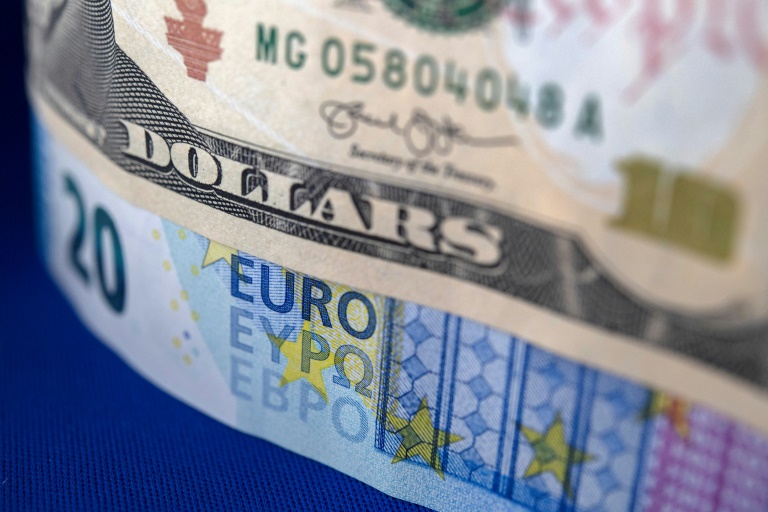
The euro surged against main rivals, a day after German central bank chief Joachim Nagel signaled that the European Central Bank (ECB) would probably continue raising its key interest rate, an echo of a similar statement from Federal Reserve Chair Jerome Powell on Friday.

Investors worldwide are awaiting key US consumer price data for August, due Tuesday, with the annual inflation pace expected to ease to eight percent — still well above the Fed’s target of two percent.

That will be welcome relief, but is unlikely to be enough to sway the Fed from an expected three-quarter percentage point interest rate hike next week, the third consecutive increase of that size.

The ECB raised its key rate by a historic 75 basis points last week, and markets expect a similar-sized move at the October policy meeting.

Wall Street stocks ended with solid gains Monday — the broad-based S&P 500 advanced 1.1 percent — continuing the upswing last week that snapped a three-week losing streak.

Equities have been volatile of late as speculation about whether the Fed might ease up on its aggressive rate hikes in the near future sparks alternating hopes and fears. 

Fed officials have more or less ended the debate, saying while the increases may become smaller, the benchmark lending rate will not be coming down any time soon.

– Dollar loses ground –

The European single currency rocketed more than 1.4 percent against the dollar and 1.6 percent versus the yen before trimming gains.

The US dollar also fell sharply against the pound sterling and the Swiss franc.

In equities, Frankfurt led the way, closing more than two percent higher, followed by Paris and London not far behind after data showed the British economy rebounded slightly in July.

Tokyo closed with a gain of more than one percent thanks to a weaker yen. Markets in Hong Kong, mainland China and South Korea were closed for a public holiday.

Oil prices gained Monday but remain pressured by the possibility of global demand weakening as growth slows and China’s harsh zero-Covid policy continues to sap economic activity.

– Key figures at around 2100 GMT –

New York – Dow: UP 0.7 percent at 32,381.34 (close)

New York – S&P 500: UP 1.1 percent at 4,110.41 (close)

New York – Nasdaq: UP 1.3 percent at 12,266.41 (close)

London – FTSE 100: UP 1.7 percent at 7,473.03 points (close)

Frankfurt – DAX: UP 2.4 percent at 13,402.27 points (close)  

Paris – CAC 40: UP 1.95 percent at 6,333.59 points (close)  

EURO STOXX 50: UP 2.1 percent at 3,646.51 points

Tokyo – Nikkei 225: UP 1.2 percent at 28,542.11 (close) 

Hong Kong – Hang Seng Index: closed for public holiday

Shanghai – Composite: closed for public holiday

Euro/dollar: UP at $1.0120 from $1.0046 

Pound/dollar: UP at $1.1680 from $1.1587 

Euro/pound: DOWN at 86.64 pence from 86.84 pence

Dollar/yen: DOWN at 142.82 yen from 142.56 yen 

Brent North Sea crude: UP 1.24 percent at $94.00 per barrel

West Texas Intermediate: UP 1.14 percent at $87.78. per barrel

Stock markets rally, as euro briefly surges

Stock markets rallied Monday, building on last week’s momentum as investors priced in the expectation of further interest rate hikes aimed at taming decades-high inflation.

The euro surged against main rivals, a day after German central bank chief Joachim Nagel signaled that the European Central Bank (ECB) would probably continue raising its key interest rate, an echo of a similar statement from Federal Reserve Chair Jerome Powell on Friday.

Investors worldwide are awaiting key US consumer price data for August, due Tuesday, with the annual inflation pace expected to ease to eight percent — still well above the Fed’s target of two percent.

That will be welcome relief, but is unlikely to be enough to sway the Fed from an expected three-quarter percentage point interest rate hike next week, the third consecutive increase of that size.

The ECB raised its key rate by a historic 75 basis points last week, and markets expect a similar-sized move at the October policy meeting.

Wall Street stocks ended with solid gains Monday — the broad-based S&P 500 advanced 1.1 percent — continuing the upswing last week that snapped a three-week losing streak.

Equities have been volatile of late as speculation about whether the Fed might ease up on its aggressive rate hikes in the near future sparks alternating hopes and fears. 

Fed officials have more or less ended the debate, saying while the increases may become smaller, the benchmark lending rate will not be coming down any time soon.

– Dollar loses ground –

The European single currency rocketed more than 1.4 percent against the dollar and 1.6 percent versus the yen before trimming gains.

The US dollar also fell sharply against the pound sterling and the Swiss franc.

In equities, Frankfurt led the way, closing more than two percent higher, followed by Paris and London not far behind after data showed the British economy rebounded slightly in July.

Tokyo closed with a gain of more than one percent thanks to a weaker yen. Markets in Hong Kong, mainland China and South Korea were closed for a public holiday.

Oil prices gained Monday but remain pressured by the possibility of global demand weakening as growth slows and China’s harsh zero-Covid policy continues to sap economic activity.

– Key figures at around 2100 GMT –

New York – Dow: UP 0.7 percent at 32,381.34 (close)

New York – S&P 500: UP 1.1 percent at 4,110.41 (close)

New York – Nasdaq: UP 1.3 percent at 12,266.41 (close)

London – FTSE 100: UP 1.7 percent at 7,473.03 points (close)

Frankfurt – DAX: UP 2.4 percent at 13,402.27 points (close)  

Paris – CAC 40: UP 1.95 percent at 6,333.59 points (close)  

EURO STOXX 50: UP 2.1 percent at 3,646.51 points

Tokyo – Nikkei 225: UP 1.2 percent at 28,542.11 (close) 

Hong Kong – Hang Seng Index: closed for public holiday

Shanghai – Composite: closed for public holiday

Euro/dollar: UP at $1.0120 from $1.0046 

Pound/dollar: UP at $1.1680 from $1.1587 

Euro/pound: DOWN at 86.64 pence from 86.84 pence

Dollar/yen: DOWN at 142.82 yen from 142.56 yen 

Brent North Sea crude: UP 1.24 percent at $94.00 per barrel

West Texas Intermediate: UP 1.14 percent at $87.78. per barrel

Uncrewed Blue Origin rocket crashes in setback for space tourism

An uncrewed Blue Origin rocket carrying research payloads crashed shortly after liftoff from Texas on Monday, but the capsule carrying experiments escaped and floated safely back to Earth.

The incident marked a setback for Amazon founder and executive chair Jeff Bezos’ company as well as the space tourism sector, though observers were encouraged by the fact that had people been aboard, they would have likely survived.

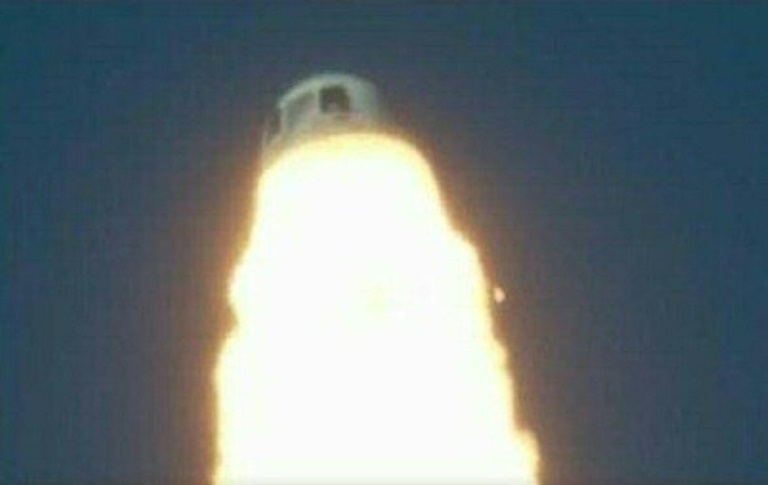
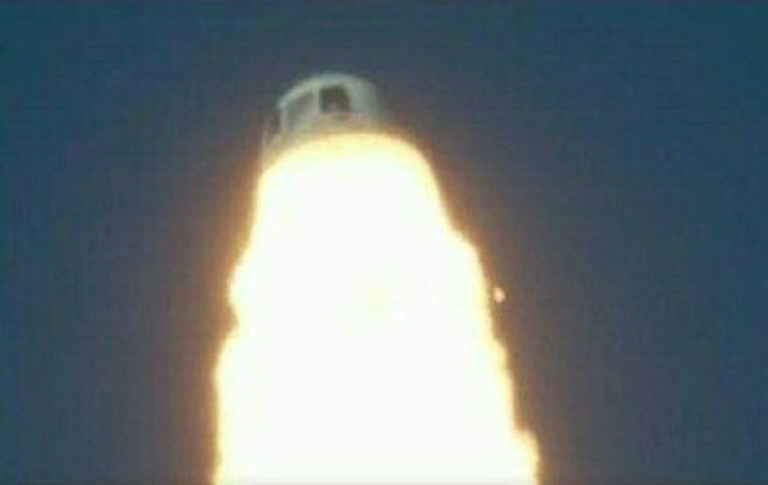
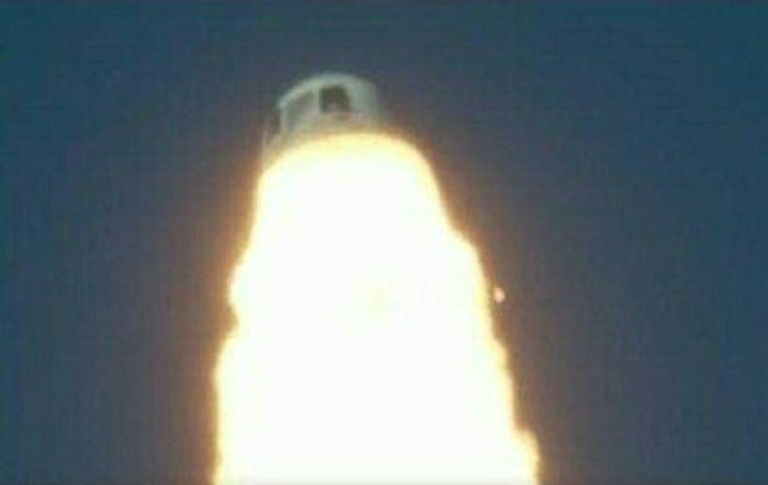
Blue Origin tweeted a short video clip showing the moment when the capsule fired emergency thrusters to separate itself from its booster rocket early, around a minute after launching from the company’s base in west Texas.

“Booster failure on today’s uncrewed flight. Escape system performed as designed,” Blue said on its website, noting the rocket “impacted the ground” instead of landing upright as it normally does. 

The New Shepard suborbital rockets have been grounded pending an investigation, the Federal Aviation Administration (FAA) said, which is standard procedure.

“The capsule landed safely and the booster impacted within the designated hazard area. No injuries or public property damage have been reported,” the FAA added.

It was the 23rd mission for the New Shepard rocket program, named after the first American in space, and the first to end in failure. 

NS-23, which had 36 experiments on board, was first set to launch in late August, but was delayed due to inclement weather.

The anomaly occurred as the rocket was climbing at 700 miles per hour (1,126 kilometers per hour) at an altitude of about 28,000 feet (8,500 meters).  The rocket appeared to stall as it experienced the technical issue.

The capsule then initiated its escape sequence and outsped the booster, which it engulfed in bright yellow flames.

The incident marks a setback for both Blue Origin and the nascent space tourism industry.

– ‘Escape system worked well’ –

But billionaire entrepreneur Jareed Isaacman, who chartered a private space mission with SpaceX last year, tweeted “looks like the launch escape system worked well.”

“With so many launches, so many vehicles, engines and boosters in development across the industry, it should not be that surprising to see events like this,” Isaacman added.

Blue Origin began flying humans to space on 10-minute there and back rides last year for an unspecified ticket price. 

In all it has flown 32 people — some as paying customers and others as guests. Notable passengers include founder Bezos and Star Trek icon William Shatner.

Passengers experience a few minutes’ weightlessness and observe the curve of the Earth before the capsule re-enters the atmosphere and floats down for a gentle desert landing.

Other companies offering tourism experiences include Virgin Galactic, which hasn’t flown since carrying its founder Richard Branson to the edge of space in July 2021.

While Virgin Galactic and Blue Origin offer short jaunts to the cosmos, Elon Musk’s SpaceX works with another company called Axiom Space to offer longer missions to the International Space Station. 

Uncrewed Blue Origin rocket crashes in setback for space tourism

An uncrewed Blue Origin rocket carrying research payloads crashed shortly after liftoff from Texas on Monday, but the capsule carrying experiments escaped and floated safely back to Earth.

The incident marked a setback for Amazon founder and executive chair Jeff Bezos’ company as well as the space tourism sector, though observers were encouraged by the fact that had people been aboard, they would have likely survived.

Blue Origin tweeted a short video clip showing the moment when the capsule fired emergency thrusters to separate itself from its booster rocket early, around a minute after launching from the company’s base in west Texas.

“Booster failure on today’s uncrewed flight. Escape system performed as designed,” Blue said on its website, noting the rocket “impacted the ground” instead of landing upright as it normally does. 

The New Shepard suborbital rockets have been grounded pending an investigation, the Federal Aviation Administration (FAA) said, which is standard procedure.

“The capsule landed safely and the booster impacted within the designated hazard area. No injuries or public property damage have been reported,” the FAA added.

It was the 23rd mission for the New Shepard rocket program, named after the first American in space, and the first to end in failure. 

NS-23, which had 36 experiments on board, was first set to launch in late August, but was delayed due to inclement weather.

The anomaly occurred as the rocket was climbing at 700 miles per hour (1,126 kilometers per hour) at an altitude of about 28,000 feet (8,500 meters).  The rocket appeared to stall as it experienced the technical issue.

The capsule then initiated its escape sequence and outsped the booster, which it engulfed in bright yellow flames.

The incident marks a setback for both Blue Origin and the nascent space tourism industry.

– ‘Escape system worked well’ –

But billionaire entrepreneur Jareed Isaacman, who chartered a private space mission with SpaceX last year, tweeted “looks like the launch escape system worked well.”

“With so many launches, so many vehicles, engines and boosters in development across the industry, it should not be that surprising to see events like this,” Isaacman added.

Blue Origin began flying humans to space on 10-minute there and back rides last year for an unspecified ticket price. 

In all it has flown 32 people — some as paying customers and others as guests. Notable passengers include founder Bezos and Star Trek icon William Shatner.

Passengers experience a few minutes’ weightlessness and observe the curve of the Earth before the capsule re-enters the atmosphere and floats down for a gentle desert landing.

Other companies offering tourism experiences include Virgin Galactic, which hasn’t flown since carrying its founder Richard Branson to the edge of space in July 2021.

While Virgin Galactic and Blue Origin offer short jaunts to the cosmos, Elon Musk’s SpaceX works with another company called Axiom Space to offer longer missions to the International Space Station. 

Uncrewed Blue Origin rocket crashes, capsule recovered

An uncrewed Blue Origin rocket carrying research payloads crashed shortly after liftoff on Monday, but the capsule carrying experiments escaped and floated safely back to Earth, Jeff Bezos’ space company said.

The company tweeted a short video clip showing the moment when the capsule fired emergency thrusters to separate from its booster rocket, around a minute after launching from Blue Origin’s base in west Texas.

“Booster failure on today’s uncrewed flight. Escape system performed as designed,” Blue said on its website, noting the rocket “impacted the ground” instead of landing upright as it normally does. 

The New Shepard suborbital rockets have been grounded pending an investigation, the Federal Aviation Administration said, which is standard procedure.

“The capsule landed safely and the booster impacted within the designated hazard area. No injuries or public property damage have been reported,” the FAA added.

It was the 23rd mission for the New Shepard rocket program, named after the first American in space, and the first to end in failure. 

NS-23, which had 36 experiments on board, was first set to launch in late August, but was delayed due to inclement weather.

The anomaly occurred as the rocket was climbing at 700 miles per hour (1,126 kilometers per hour) at an altitude of about 28,000 feet (8,500 meters).

The capsule then fired emergency thrusters to separate, engulfing the booster in a bright yellow flame.

The incident marks a setback for both Blue Origin and the nascent space tourism industry.

Blue Origin began flying humans to space on 10-minute rides last year for an unspecified ticket price. 

In all it has flown 32 people — some paying customers and others guests. Notable passengers include founder Jeff Bezos and Star Trek icon William Shatner.

Passengers experience a few minutes’ weightlessness and observe the curve of the Earth before the capsule re-enters the atmosphere and floats down for a gentle desert landing.

Webb telescope captures 'breathtaking' images of Orion Nebula

The wall of dense gas and dust resembles a massive winged creature, its glowing maw lit by a bright star as it soars through cosmic filaments.

An international research team on Monday revealed the first images of the Orion Nebula captured with the James Webb Space Telescope, leaving astronomers “blown away.”

The stellar nursery is situated in the constellation Orion, 1,350 light-years away from Earth, in a similar setting in which our own solar system was birthed more than 4.5 billion years ago.

Astronomers are interested in the region to better understand what happened during the first million years of our planetary evolution.

The images were obtained as part of the Early Release Science program and involved more than 100 scientists in 18 countries, with institutions including the French National Centre for Scientific Research (CNRS), Western University in Canada, and the University of Michigan.

“We are blown away by the breathtaking images of the Orion Nebula,” Western University astrophysicist Els Peeters said in a statement.

“These new observations allow us to better understand how massive stars transform the gas and dust cloud in which they are born,” she added.

Nebulas are obscured by large amounts of dust that made it impossible to observe with visible light telescopes, such as the Hubble Space Telescope, Webb’s predecessor. 

Webb however operates primarily in the infrared spectrum, penetrating the dust.

This revealed numerous spectacular structures, down to the scale of 40 astronomical units, or the size of our solar system.

These include dense filaments of matter, which could birth new generations of stars, as well as forming stellar systems that consist of a central proto-star surrounded by a disc of dust and gas, in which planets form.

“We hope to gain understanding about the entire cycle of star birth,” said Edwin Bergin, University of Michigan chair of astronomy and a member of the international research team. 

“In this image we are looking at this cycle where the first generation of stars is essentially irradiating the material for the next generation. The incredible structures we observe will detail how the feedback cycle of stellar birth occurs in our galaxy and beyond.”

Webb is the most powerful space telescope ever built, boasting a primary mirror measuring 6.5 meters (more than 21 feet) that is made up of 18 hexagonal, gold-coated segments, as well as a five-layer sunshield the size of a tennis court.

Close Bitnami banner
Bitnami