AFP

GM unveils electric SUV aimed at middle class

General Motors unveiled an electric sport utility vehicle Thursday with a starting price tag of $30,000, positioning the model for consumers priced out of the growing segment.

The 2024 Equinox EV, which will be available in fall 2023 has a starting price of $30,000, less than half the average price of EVs now available in the market.

“We are at a turning point where EVs will be the mainstream choice for the next generation of customers and Equinox EV will lead this charge for us,” said GM Chief Executive Mary Barra.

The launch is part of an aggressive EV build-out strategy by the auto giant amid a gradual industry-wide shift towards emission-free vehicles, which includes battery plants and massive investment under its Ultium banner.

“With the flexibility of GM’s Ultium Platform, we are bringing to market vehicles at nearly every price point and for every purpose.”

The gasoline version of the Equinox was GM’s second most popular vehicle in 2021 after the Chevrolet Silverado, a pickup truck. 

GM described the model as part of the “compact SUV segment,” where it will be “the most affordable EV in its class,” the company said in a news release.

However, GM’s initial affordable EV offering, the Chevy Bolt, suffered from recalls due to battery problems.

GM had previously disclosed that the Equinox would be intended for middle-income consumers, saying in January the vehicle would start at $30,000 at an event to launch the electric Silverado.

The average price of a new electric vehicles was nearly $67,000, according to a July 2022 Kelly Blue Book estimate.

Charles to inherit queen's private fortune

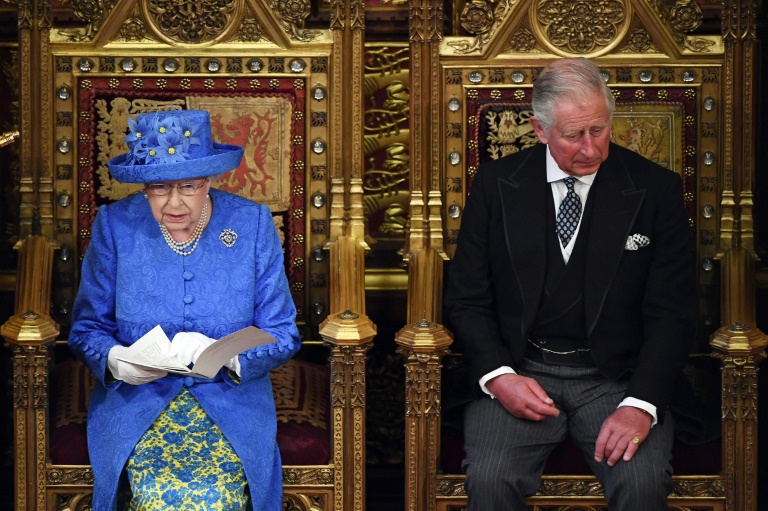
King Charles inherits not just the throne after the death of his mother, Queen Elizabeth II, but also her private fortune — without having to pay inheritance tax.

British monarchs are not required to reveal their private finances but according to the Sunday Times Rich List 2022, the queen was worth some £370 million ($426 million), up £5 million on the previous year.

The bulk of the late sovereign’s personal wealth will pass to Charles intact, without the British government getting a slice.

The real royal wealth — the Crown Estate lands and the Royal Collection of art and jewellery, plus official residences and the Royal Archives — is held by the monarchy as an institution.

As such, they will only pass to Charles in trust.

Similarly, The Crown Jewels, estimated to be worth at least £3 billion, only belonged symbolically to the queen and are automatically transferred to her successor.

The queen’s private wealth will be added to Charles’ own, which has been estimated at some $100 million by the site celebritynetworth.com.

In comparison, Elizabeth’s late husband, Prince Philip, left a more modest estate worth £10 million, including an art collection of some 3,000 works, most of which were given to family and friends, the Sunday Times reported.

A court in 2021 ordered his will to be sealed for 90 years.

As king, Charles inherits the Duchy of Lancaster, a private estate of commercial, agricultural and residential assets owned by royalty since the Middle Ages.

The monarch is entitled to use its income and largely uses it to meet official expenditure. In the financial year 2021-22, it delivered a net surplus of £24.0 million.

On the other hand, Charles will lose the Duchy of Cornwall, another private estate, in southwest England. It brought in a revenue surplus of some £23 million in 2021-22. 

The duchy, created in 1337 by Edward III for his son and heir, prince Edward, will go to Charles’ eldest son, Prince William, who is now heir to the throne.

– Grants and profits –

Charles will also receive the annual Sovereign Grant from the UK Treasury, which is set at 15 percent of the profits from the Crown Estate, and which the monarch surrenders to the government under a deal dating back to 1760.

The Sovereign Grant covers costs of official engagements for the monarch and other senior members of the royal family, paying the salaries of their staff and the upkeep of royal palaces.

In 2021-22, it was set at £86.3 million — equivalent to £1.29 per person in the UK — and included funding for the renovation of Buckingham Palace.

The Crown Estate’s portfolio includes commercial and retail properties, including prime locations in central London, as well as rural and coastal land across the country, and the waters around England and Wales.

That makes it one of Europe’s biggest property empires, with a huge commercial interest in areas such as developing offshore wind power generation.

In the financial year to March 2022, it posted a net revenue profit of £312.7 million, up from £269.3 million in 2020-21.

Inheritance tax in Britain is charged at 40 percent on estates above a £325,000 threshold.

But the new king will not pay inheritance tax on the personal wealth he will inherit from his mother due to rules drawn up in 1993.

Those assets passed from one sovereign, or a consort of a sovereign, to the next monarch, are exempt.

The rules were drawn up to avoid wiping out the royals’ private wealth in the event that a series of monarchs died in quick succession and their estate was reduced by 40 percent every time.

The rules, set out in a 2013 government memorandum of understanding, also ensure the monarch has his or her own private money and thus financial independence from the state.

Risk of climate tipping points escalates at 1.5C warming: study

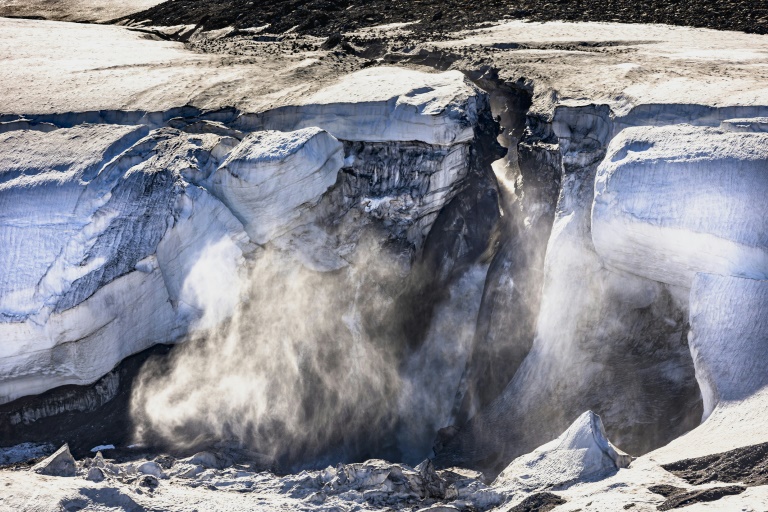
Failing to achieve the Paris agreement goal of limiting global warming to 1.5C could trigger multiple dangerous “tipping points” where changes to climate systems become self-sustaining, according to a major new study published in Science.

Even current levels of warming have already put the world at risk of five major tipping points — including the collapse of the Antarctic and Greenland ice sheets — but it’s not too late to change course, the authors stress.

“The way I think about it is it’ll change the face of the world — literally if you were looking at it from space,” given long term sea-level rise, rainforest death and more, senior author Tim Lenton of the University of Exeter told AFP.

Lenton authored the first major research on tipping points in 2008. 

These points are defined as a reinforcing feedback in a climate system that is so strong it becomes self-propelling at a certain threshold — meaning even if warming stopped, an ice sheet, ocean or rainforest would keep changing to a new state.

While early assessments said these would be reached in the range of 3-5C of warming, advances in climate observations, modeling and paleoclimate reconstructions of periods of warming in the deep past have found the thresholds much lower.

The new paper is a synthesis of more than 200 studies to produce new estimates for when common tipping points might happen.

It identifies nine global “core” tipping elements contributing substantially to planetary system functioning, and seven regional tipping points, which contribute substantially to human welfare, for a total of 16.

Five of the 16 may be triggered at today’s temperatures: the collapse of the Greenland and West Antarctic ice sheets; widespread abrupt permafrost thaw; collapse of convection in the Labrador Sea; and massive die-off of tropical coral reefs.

Four of these move from “possible” events to “likely” at 1.5C global warming, with five more becoming possible around this level of heating.

– 10 meters of sea rise –

Passing the tipping points for the Greenland and West Antarctic ice sheets is “making a commitment eventually to an extra 10 meters of global sea level,” said Lenton, though this particular change may take hundreds of years.

Coral reefs are already experiencing die-offs due to warming-induced bleaching, but at current temperatures they are also able to partly recover.

At a particular level of heating, recoveries would no longer be possible, devastating equatorial coral reefs and the 500 million people globally who depend on them.

The Labrador Sea convection is responsible for warming Europe and changes could result in much more severe winters, comparable to the “Little Ice Age” from the early 14th century through the mid-19th century.

Abrupt permafrost thaw — impacting Russia, Scandinavia, and Canada — would further amplify carbon emissions in addition to drastically altering landscapes.

Systems that may come into play around 1.5C also include the Atlantic Meridional Overturning Circulation, closely linked to sea levels on the US East Coast.

Starting from 2C, monsoon rains in West Africa and the Sahel could be severely disrupted, and the Amazon rainforest could face widespread “dieback,” turning to savanna. 

First author David Armstrong McKay stressed that even if the planet did hit 1.5C warming, much would depend on how long it stayed there, with the worst impacts coming if the temperature remained that hot for five or six decades.

Further, “these tipping points happening at 1.5 degrees don’t add a vast amount of global warming as a feedback — and that’s quite important because it means we’re not on a runaway train situation at 1.5C.”

That means humanity can still control further warming, and it’s “still worthwhile cutting emissions as fast as we possibly can,” he added.

Lenton said what gave him hope was the idea that human society might have its own “positive” tipping points, where years of incremental change are followed by urgent, widespread action.

“That’s how I can get out of bed in the morning… Can we transform ourselves and the way we live?” he said.

Amazon defends diverse casting in 'Lord of the Rings' prequel series

Streaming giant Amazon has defended the racially diverse casting of its big budget series “The Lord of the Rings: The Rings of Power,” which some fans say distorts the world of J.R.R. Tolkien.

Since the first two episodes of the series aired, social media has been awash with protests that the decision to cast Black and Latino actors in some roles was forcing diversity onto the original source material.

Among such characters is fan favorite dwarf princess Disa, played by Black actress Sophia Nomvete.

But other fans saw the diversity as a welcome development in the fantasy universe.

Amazon also defended the choice in a post on the show’s official Twitter account.

“JRR Tolkien created a world which, by definition, is multi-cultural. A world in which free peoples from different races and cultures join together, in fellowship, to defeat the forces of evil. Rings of Power reflects that,” the actors said in a joint statement, also released on the show’s Twitter.

“Our has never been all white, fantasy has never been all white. Middle-earth is not all white,” the statement said, referring to the medieval-inspired universe in which Tolkien’s story takes place, populated by humans, hobbits, dwarves and elves among others.

This is not the first time a popular fantasy series has had to defend its diverse casting choices. In June, Star Wars lead Ewan McGregor struck out at people targeting fellow “Obi-Wan Kenobi” actor Moses Ingram, who is Black, with racist abuse online.

Former Trump advisor Bannon charged with fraud in New York

Donald Trump’s former advisor Steve Bannon was charged with fraud Thursday over a scheme that misappropriated millions of dollars donated for the construction of a wall between the United States and Mexico.

Bannon, 68, a popular ideologue who was closely involved in Trump’s rise to the American presidency, turned himself in earlier in the day to face the charges in New York. Standing outside the Manhattan prosecutor’s office, he accused the judiciary of “persecuting” him.

Bannon and a nonprofit organization called We Build The Wall were charged with money laundering, conspiracy and fraud over what prosecutors said was a year-long fundraising scheme that netted more than $15 million from donors based on false promises.

“It is a crime to turn a profit by lying to donors, and in New York, you will be held accountable,” said Manhattan District Attorney Alvin Bragg as he announced the charges at a news conference.

Bannon was indicted in 2020 for financial fraud over the same allegations, but was pardoned by Trump before he could be brought to trial.

Building the wall on the Mexican border was a key campaign promise by Trump in his run to the presidency in 2016. 

– Multiple lawsuits –

CNN cited Bannon’s lawyer Robert Costello as saying the former advisor would plead not guilty.

In a statement released Tuesday, Bannon denounced “bogus lawsuits” against him 60 days before the November 8 midterm legislative elections.

He blasted “an armed partisan politicization of the criminal justice system.” 

The criminal indictment comes six weeks after Bannon was convicted in a federal court in Washington of obstructing the investigative powers of Congress. 

He had refused to cooperate with the House committee investigating the January 6, 2021 assault on Capitol Hill by Trump supporters.

Even after leaving the White House in August 2017, Bannon had remained close to Trump, speaking with him the day before the Capitol riot.

Trump is himself at the center of multiple probes, including an investigation in New York into his business practices, legal scrutiny over his efforts to overturn results of the 2020 election, and in connection with the January 6 attack on the US Capitol.

The FBI is also investigating Trump’s handling of classified materials, following a raid on his Florida home.

Ukraine claims battlefield breakthroughs as Blinken ramps up aid

Ukraine on Thursday claimed a military breakthrough in its counter-offensive against Russian invaders as US Secretary of State Antony Blinken, on a surprise visit to Kyiv, unveiled another $2.8 billion in military aid.

Ukraine said its forces made gains in the north, the south and the east, prying back land seized by Russia which had hoped for a swift victory when it attacked nearly seven months ago. 

In the area around Kharkiv, Ukraine’s second city, forces penetrated 50 kilometres (30 miles) beyond Russian lines and “liberated” more than 20 towns and villages, senior military official Oleksiy Gromov said.

Hoping to build the momentum, Blinken secretly travelled to Kyiv for his second trip during the war, passing through dark hallways with sandbags in the sealed presidential compound to meet President Volodymyr Zelensky.

“It’s very early, but we are seeing clear and real progress on the ground,” Blinken said after spending more than two hours with Zelensky.

Blinken vowed the United States would keep up assistance “until the aggression ceases and Ukraine is fully sovereign” and that pressure on Russia would keep getting “heavier and heavier”.

“You have our word — and our track record,” he told Zelensky.

Zelensky, clad in his now signature military-green T-shirt, presented a state award to Blinken as he voiced gratitude for the “enormous support” of the United States.

The aid “is a guarantee that we can return our territories,” Zelensky said.

The latest package includes $675 million to be shipped shortly in arms, ammunition and supplies and another $1 billion in longer-term loans and grants for Ukraine to buy more US equipment.

The State Department also approved $1.2 billion for 18 other nations seen as facing threats from Russia including Baltic states, Moldova and Georgia, which both have breakaway regions backed by Moscow.

A day after the United Nations said there were “credible reports” of Russia forcing Ukrainian children into its territory, Blinken started his trip by visiting toddlers injured in the war at a hospital. 

In a room with toy trucks and alien figurines, he arrived with a basket of stuffed animals, announcing, “I brought some friends.”

“The spirit of your children sends a very strong message around the world,” he said.

– ‘Accountability’ –

Blinken later toured Irpin on the capital’s outskirts where the deputy mayor described indiscriminate attacks during Russia’s 25-day occupation at the start of the war and said there were 30,000 open cases related to war crimes.

“There has to be accountability for those who committed atrocities,” Blinken said. 

In a coordinated display of resolve, President Joe Biden spoke by telephone with leaders of allies about Ukraine and Defence Secretary Lloyd Austin met his counterparts at Ramstein air base in Germany.

“Now, we’re seeing the demonstrable success of our common efforts on the battlefield,” Austin said.

Amid Ukraine’s reports of gains, Russia also trumpeted battlefield successes, saying it hit five command posts and downed 13 drones on Thursday.

Addressing a forum in Moscow, Prime Minister Mikhail Mishustin said Russia had withstood Western sanctions over the war better than expected, estimating that GDP had fallen just over one percent year-on-year in the first six months of 2022.

Russia’s central bank expects a contraction of four to six percent for the year, while Blinken cited an estimate of an even steeper drop.

“Unprecedented sanctions were imposed on our country. But their initiators did not achieve their main objective. They failed to undermine our financial stability,” Mishustin said. 

– Allies pledge support –

But as the war grinds on, both sides have increasingly been facing a crunch on military supplies with US officials saying Russia was buying drones from Iran and large quantities of rocket and artillery shells from North Korea.

Speaking at Ramstein, top US General Mark Milley said there was “significant consumption of munitions” by Ukraine that will need to be addressed by allies.

Norway offered 160 Hellfire missiles and night-vision equipment, Germany offered winter supplies and The Netherlands joined Germany with demining training.

The latest package by the United States — Ukraine’s largest supplier — includes 105mm howitzers, precision-guided GMLRS rockets and artillery ammunition. 

It brings  US military aid to Ukraine since the invasion to $15.2 billion.

Among the most efficient weapons sent by Washington are the HIMAR multiple rocket launch systems, which are paired with GMLRS rockets that can reach targets up to 80 kilometres (50 miles) away.

But Kyiv is seeking ATACMS — precision-guided, medium range tactical missiles capable of striking 300 kilometres.

The United States has so far refused as it fears the missiles could land in Russian territory, sparking an even bigger conflict.

“The range of the HIMARS is sufficient to meet the needs of the Ukrainians as they are currently fighting,” Milley said.

burs-sct/jbr/rox

Jeep's first electric SUV to arrive in Europe in 2023: CEO

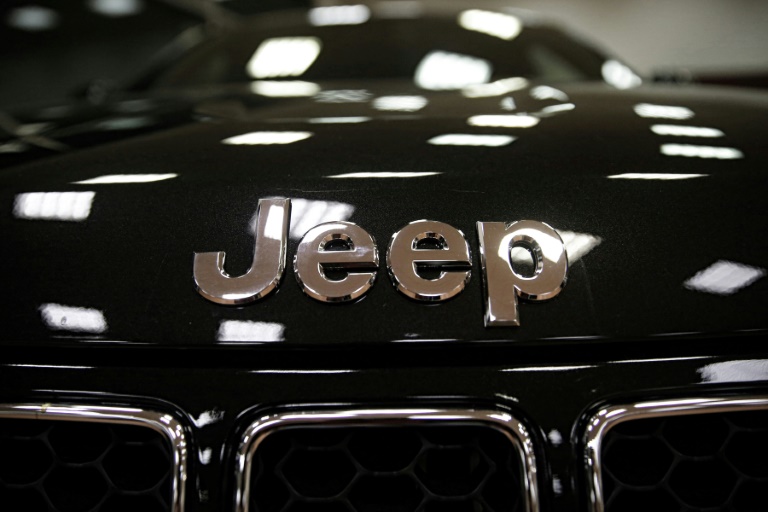
Jeep will launch its first all-electric SUV for Europe, the “Avenger”, next year, CEO Christian Meunier told AFP on Thursday, as its parent company Stellantis moves away from fossil fuel vehicles.

“We have very strong DNA — electrification is a means of reinforcing it,” the French director of the US automaker told AFP as the company presented its first electric models to the media.

Jeep plans to sell only electric vehicles in Europe by 2030 under the Dare Forward plans of its parent company, Stellantis, a US-European group whose other brands include Peugeot, Fiat, Chrysler and Alfa Romeo.

Battery electric vehicles will account for half of Stellantis car sales in the United States by the end of the decade.

The small and rugged Avenger has a range of 400 kilometres (250 miles) per charge.

Compared with petrol models it will be a “little heavier given its batteries, but the acceleration and the fun will be there,” Meunier said.

Another electric model adding to the Jeep line-up is the boxier, more off road-orientated “Recon”, replete with power-sliding roof and removable doors.

Recon will be launched in North America in 2024.

Jeep is also releasing an electric variant of its largest sport-utility vehicle, the 600-horsepower Wagoneer S, with a range of 600 kilometres.

– Made in Poland –

The Avenger is slated to debut at the Paris Motor Show on October 17 and appear in showrooms from the first half of next year.

Production is due to begin in Tychy, Poland, in November at the Stellantis factory which rolls out the Fiat 500.

“We are designing and developing the most capable and sustainable Jeep SUVs to date, on our path to becoming the leading zero-emission SUV brand in the world,” said Meunier.

“Electrification is great for our brand, making it even more capable, exciting, sustainable and fun,” he said.

The electric line-up aims to help Jeep gain a bigger market share in Europe, as North America accounts for 60 percent of its sales.

“The all-new Avenger will offer Jeep brand capability that is rightsized for the European market,” said Antonella Bruno, head of Jeep Europe at Stellantis.

It “will appeal to a growing set of customers who are looking for a capable, compact, modern and all-electric Jeep brand alternative to the current players.”

Meunier said the new models would enable the producer to grow its long-term profile similarly to its recent inroads in Italy, home to one of the group’s founders, Fiat, and where Jeep assembles the Renegade and Compass SUV models.

It has carved out a four-percent market share in Italy.

In contrast, it requires a rethink in China following the collapse of a joint venture with Guangzhou Automobile Group (GAC).

Globally, Meunier said that “two or three years ago, when we were talking about electrification that was unimaginable for Jeep fans”.

But today 25 percent of Wrangler sales are plug-in hybrids, he said.

NASA eyes two more dates in September for possible Moon launch

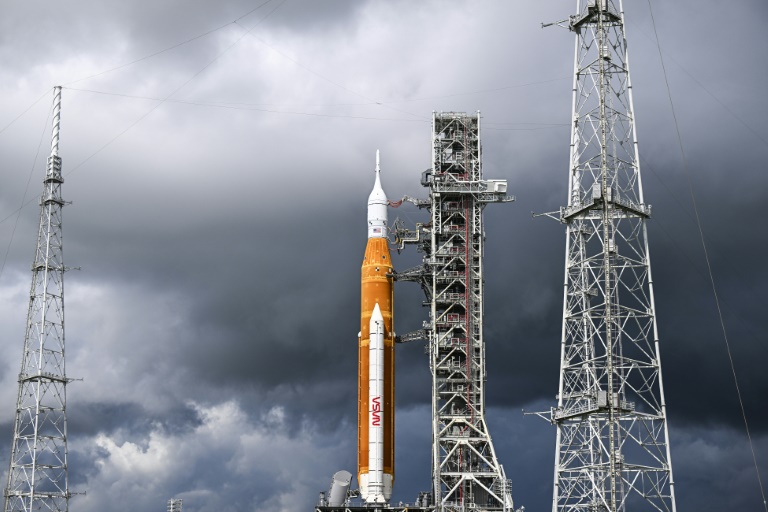
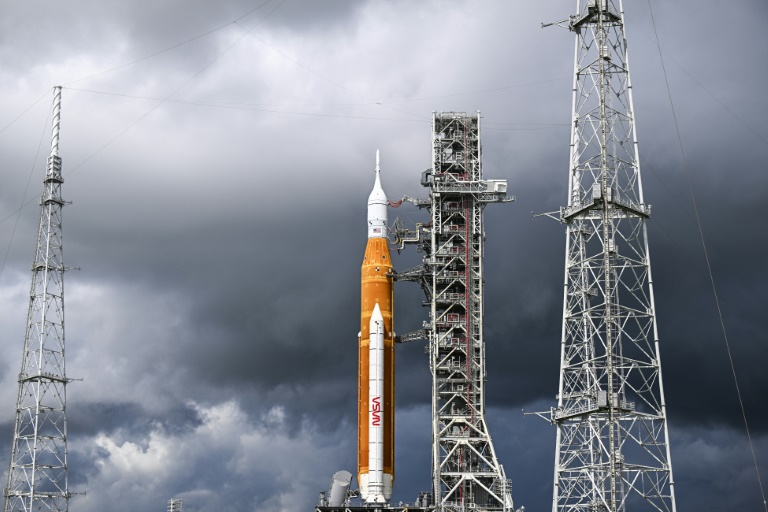
NASA is looking at September 23 and September 27 as possible dates for its next attempt at launching its Artemis 1 mission to the Moon, senior official Jim Free told reporters Thursday.

Two previous attempts were scrapped after the giant Space Launch System rocket experienced technical glitches including a fuel leak.

The launch window for the 23rd would open at 6:47am (1047 GMT), while the 27th would open at 11:37am (1537 GMT), added Free, associate administrator for the agency’s exploration systems development directorate.

The dates were chosen to avoid a conflict with the DART mission, in which a probe will strike an asteroid on September 26 to test its ability to divert the object. 

Both missions require use of an international array of antennas called the Deep Space Network.

The launch dates still depend, however, on NASA receiving a special waiver to avoid retesting batteries on an emergency flight system that is used to destroy the rocket if it strays from its designated range to a populated area.

If it does not receive the waiver, the rocket will have to be wheeled back to its assembly building, pushing the timeline back several weeks.

Mike Bolger, exploration ground systems manager, added that teams were working to replace seals to fix the hydrogen leak issue — work that could be completed by the end of Thursday, which would pave the way for a tanking test on September 17.

The Artemis 1 space mission hopes to test the SLS as well as the unmanned Orion capsule that sits atop, in preparation for future Moon-bound journeys with humans aboard.

Once launched, it will take several days for the spacecraft to reach the Moon, flying around 60 miles (100 kilometers) at its closest approach.

The capsule will fire its engines to get to a distant retrograde orbit (DRO) of 40,000 miles beyond the Moon, a record for a spacecraft rated to carry humans.

The trip is expected to last several weeks, and one of its main objectives is to test the capsule’s heat shield, which at 16 feet (5 meters) in diameter is the largest ever built.

Artemis is named after the twin sister of the Greek god Apollo, after whom the first Moon missions were named.

The next mission, Artemis 2, will take astronauts to the Moon without landing on its surface, while the third — set for the mid-2020s — would see the first woman and person of color on lunar soil.

NASA wants to build a lunar space station called Gateway and keep a sustained presence on the Moon to gain insight into how to survive very long space missions, ahead of a mission to Mars in the 2030s.

NASA eyes two more dates in September for possible Moon launch

NASA is looking at September 23 and September 27 as possible dates for its next attempt at launching its Artemis 1 mission to the Moon, senior official Jim Free told reporters Thursday.

Two previous attempts were scrapped after the giant Space Launch System rocket experienced technical glitches including a fuel leak.

The launch window for the 23rd would open at 6:47am (1047 GMT), while the 27th would open at 11:37am (1537 GMT), added Free, associate administrator for the agency’s exploration systems development directorate.

The dates were chosen to avoid a conflict with the DART mission, in which a probe will strike an asteroid on September 26 to test its ability to divert the object. 

Both missions require use of an international array of antennas called the Deep Space Network.

The launch dates still depend, however, on NASA receiving a special waiver to avoid retesting batteries on an emergency flight system that is used to destroy the rocket if it strays from its designated range to a populated area.

If it does not receive the waiver, the rocket will have to be wheeled back to its assembly building, pushing the timeline back several weeks.

Mike Bolger, exploration ground systems manager, added that teams were working to replace seals to fix the hydrogen leak issue — work that could be completed by the end of Thursday, which would pave the way for a tanking test on September 17.

The Artemis 1 space mission hopes to test the SLS as well as the unmanned Orion capsule that sits atop, in preparation for future Moon-bound journeys with humans aboard.

Once launched, it will take several days for the spacecraft to reach the Moon, flying around 60 miles (100 kilometers) at its closest approach.

The capsule will fire its engines to get to a distant retrograde orbit (DRO) of 40,000 miles beyond the Moon, a record for a spacecraft rated to carry humans.

The trip is expected to last several weeks, and one of its main objectives is to test the capsule’s heat shield, which at 16 feet (5 meters) in diameter is the largest ever built.

Artemis is named after the twin sister of the Greek god Apollo, after whom the first Moon missions were named.

The next mission, Artemis 2, will take astronauts to the Moon without landing on its surface, while the third — set for the mid-2020s — would see the first woman and person of color on lunar soil.

NASA wants to build a lunar space station called Gateway and keep a sustained presence on the Moon to gain insight into how to survive very long space missions, ahead of a mission to Mars in the 2030s.

Euro slides as Fed chief steals ECB's rate hike thunder

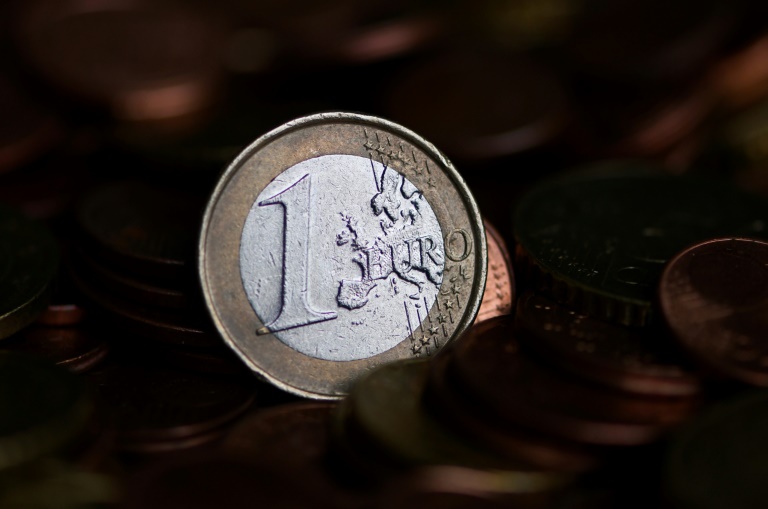
The euro slid on Thursday despite a record interest rate hike by the European Central Bank as US Fed chief Jerome Powell made hawkish comments.

Meanwhile, the pound remained close to a 37-year low against the dollar that was struck Wednesday, as new British Prime Minister Liz Truss announced that she will freeze domestic fuel bills for two years to help ease the burden of a UK cost-of-living crisis.

The ECB warned Thursday that inflation was “far too high” and likely to stay above target for “an extended period” as it announced its record 0.75 percentage point hike.

ECB chief Christine Lagarde made clear interest rates were far from where they need be to bring inflation down.

“We actually took the decision today that we would continue to raise interest rates… because we believe that we are far away from the rate at which we hope we’ll see inflation return to the two percent medium term target,” she said.

Lagarde also warned the eurozone risks recession if Russia completely cuts off gas, which it has nearly done.

But comments by Fed chief Jerome Powell were seen as even more hawkish than those by Lagarde.

“We need to act now forthrightly, strongly as we have been doing and we need to keep at it until the job is done to avoid … the kind of very high social costs” of the surge in inflation in the 1970s and 1980s, Powell told a US think tank.

– Greenback ‘more attractive’ –

Chris Beauchamp, chief market analyst at online trading platform IG, said “Investors clearly believe that the Fed is more committed to higher rates than the ECB, while the stronger economic performance of the US means the greenback and not the euro seems the more attractive prospect.”

The euro, which had broken back above parity with the dollar, slid down as far as $0.9934 before recovering some ground.

The Fed has made it clear it plans to continue to aggressively raise interest rates to rein in surging inflation, even at the cost of causing some economic pain.

The dollar has moved ever higher against its major peers in recent weeks as investors flood into the currency hoping for better returns as the Fed raises rates and as they seek a haven in the face of economic turmoil.

The euro on Wednesday touched a fresh 20-year dollar low.

The US unit is closing in on a 32-year peak against the yen owing to the Bank of Japan’s refusal to raise interest rates.

Observers expect the dollar to keep attracting strong interest as long as the Federal Reserve keeps ramping up US interest rates by sizeable amounts.

The Fed holds its next policy meeting on September 21, with a third successive 75-basis-point lift forecast.

In equities trading, eurozone stocks closed the day mostly higher, and Wall Street was also up in morning trading.

“It has been slow going, but stocks look like they are in a mood to continue yesterday’s rebound,” said IG’s Beauchamp.

“The selling of late August and early September seems to have been exhausted for now, although the broader outlook is still less than encouraging,” he added.

– Key figures at around 1530 GMT –

New York – Dow: UP 0.5 percent at 31,736.76 points

EURO STOXX 50: UP 0.3 percent at 3,512.38

London – FTSE 100: UP 0.3 percent at 7,262.06 (close) 

Frankfurt – DAX: DOWN less than 0.1 percent at 12,904.32 (close)

Paris – CAC 40: UP 0.3 percent at 6,125.90 (close)

Tokyo – Nikkei 225: UP 2.3 percent at 28,065.28 (close)

Hong Kong – Hang Seng Index: DOWN 1.0 percent at 18,854.62 (close)

Shanghai – Composite: DOWN 0.3 percent at 3,235.59 (close)

Euro/dollar: DOWN at $0.9960 from $1.0012 on Wednesday

Pound/dollar: DOWN at $1.1492 from $1.1535

Euro/pound: DOWN at 86.66 pence from 86.74 pence

Dollar/yen: UP at 143.94 yen from 143.79 yen 

West Texas Intermediate: UP 1.7 percent at $83.29 per barrel

Brent North Sea crude: UP 1.0 percent at $88.87 per barrel

burs-rl/cdw

Close Bitnami banner
Bitnami