AFP

Colombia's territorial battle between Indigenous and Black communities

Cattle nonchalantly graze near a dilapidated farm on partly charred and abandoned sugarcane fields.

In the fertile Cauca valley in Colombia’s southwest, Nasa Indigenous people have been forcibly occupying farmland, claiming to be putting to an end damaging monoculture in the country’s main sugarcane growing area.

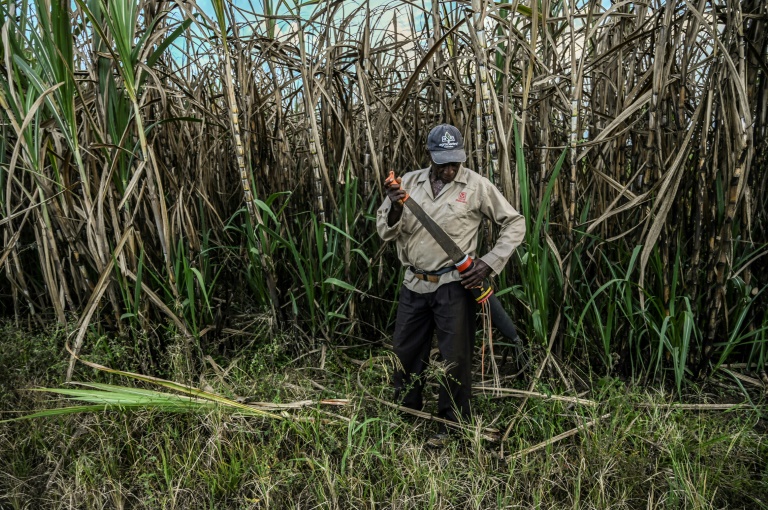
These sudden eruptions have provoked serious tensions with manual laborers from the sugarcane industry, who are often Black and find themselves chased off their land and out of work.

It seems that a new conflict is about to break out in the Corinto valley, where everyone is claiming “ancestral” lands.

“How can they (the Nasa) claim this land belongs to them if our ancestors lived here their whole lives,” one of the local Black leaders told AFP.

Many Black communities have lived in the region for more than a century.

The Nasa want to “build their houses on top of ours,” he added, hitting out at the “violence” brought by the occupiers.

Close to 2,500 people of African descent, “small- and medium-scale sugarcane producers, live in Severo Mulato, a village bordering several occupied areas. 

The Nasa don’t accept sugarcane plantations. They say these dry out the land and enrich only the sugar barons living in Cali, one of Colombia’s main cities.

– ‘Fighting with stones’ –

Since the June election of Gustavo Petro, the country’s first ever leftist president, Indigenous people have stepped up forceful occupations and confiscations of land in Cauca, which is already one of the worst affected areas by the violence brought by armed gangs and drug traffickers.

Police say there have been 30 occupations of farmland, including nine in the last month.

Hugely popular amongst Indigenous people, Petro has promised an “agrarian reform” to redistribute land in a country where a small landowning elite controls the majority of territory. 

Territorial access is at the heart of the bloody six-decade long conflict that has ravaged Colombia.

During the 1960s, it was the main factor motivating farmers in their armed struggle against the state.

In the following decades, right-wing paramilitaries violently displaced thousands of families in favor of major landowners and cattle ranchers.

Indigenous people have now occupied land in seven of Colombia’s 32 provinces.

It has been condemned by the government, which said the police would intervene.

The Nasa “cut down anything they like … they build cabins, burn” the sugarcane, and destroyed five hectares of crops, said the Black leader.

After the abolition of slavery in 1851, Black people bought land in exchange for their work.

Now, most of their descendents grow sugarcane to sell to the major exporters in the region.

“When we faced up to (the Indigenous people), we had to fight with stones because we didn’t have any other weapons,” he added.

– Getting the valley back –

Just a year ago, the Severo Mulato settlement lay next to a sugarcane farm.

Some 400 “landless” Indigenous families descended from the mountains and took over the land.

In the abandoned homes, infested with mosquitoes, Nasa women and children crowd around wood fires living off vegetables grown in small plots.

“We came and put our lives (at risk) for the right to a piece of land,” argues the group’s leader, his face masked for fear of persecution.

He said the large scale farmers had forced Indigenous people “into the mountains” by colonizing the cultivable land.

With a growing population, they had to cut down the forest to grow food, to the detriment of local fauna and flora.

That’s why they decided to “reclaim” the valley — and to destroy the sugarcane to plant bananas, rice and corn in its place.

Indigenous reserves account for 20 percent of Cauca.

But the Indigenous people complain that these lands are mostly uncultivable forest.

The Indigenous people have established a territory of 1.5 hectares, blocked off from police intervention by tree trunks.

The Black villages are nearby in the valley.

It is a powder keg.

The union of sugarcane exploiters has complained about the loss of “close to 6,000 jobs.”

The industry was responsible for “the development of these communities” according to Juan Carlos Agudelo, a spokesman for the sugarcane workers.

The poverty rate in Cauca of 58 percent is largely above the national average of 39.5 percent.

“Communities that have no schools, no homes, that have no running water. Where is the development?” asks the Indigenous leader.
Hurricane Kay hits northwest Mexico before weakening

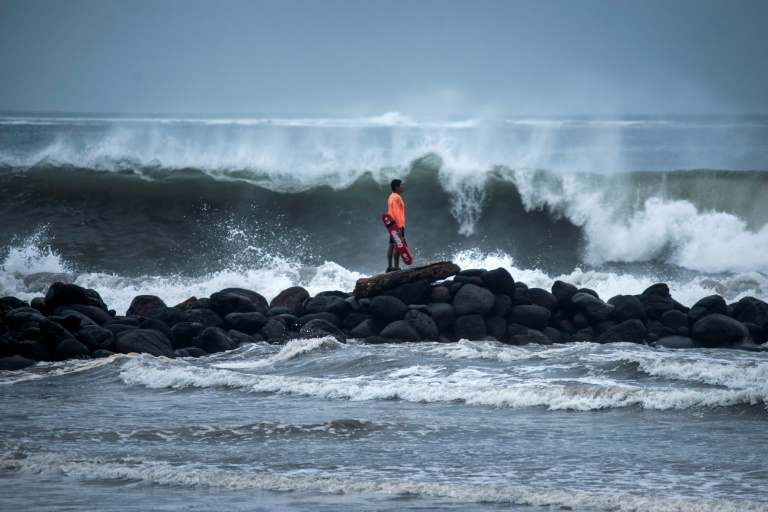
Hurricane Kay made landfall Thursday in northwestern Mexico before losing strength as it moved inland, bringing heavy rain to parts of the Baja California Peninsula, forecasters said.

Kay came ashore in a fairly sparsely populated area as a Category One hurricane — the lowest on a scale of five — and was later downgraded to a tropical storm.

At 0000 GMT Friday Kay was packing maximum sustained winds of 70 miles (110 kilometers) per hour and located about 30 miles east of Punta Eugenia, according to the US National Hurricane Center (NHC).

“Kay continues to bring very heavy rains to portions of the Baja California Peninsula,” it said.

Mexican authorities had earlier opened storm shelters and urged residents to take “extreme precautions” due to the danger of landslides and flooding.

Strong winds and heavy rain were also expected across parts of southern California and southwestern Arizona, the NHC said.

Mexico is regularly lashed by tropical storms on both its Pacific and Atlantic coasts, generally between the months of May and November.

This year was the first since 1997 that no tropical cyclones formed in the North Atlantic, Caribbean Sea or the Gulf of Mexico in August, according to the NHC.

The deadliest storm to hit Mexico last year was a Category Three hurricane called Grace that killed 11 people in the eastern states of Veracruz and Puebla in August.

Donkey domestication happened 7,000 years ago in Africa: DNA study

Despite transforming history as beasts of burden essential for transporting goods and people, the humble donkey has long been woefully understudied.

But scientists on Thursday took a big step towards clarifying the species’ origins with a comprehensive genomic analysis of 238 ancient and modern donkeys, finding they were likely domesticated in a single event in eastern Africa some 7,000 years ago.

The paper, published in the journal Science, was the result of an international collaboration led by Evelyn Todd at the Centre for Anthropobiology and Genomics of Toulouse, France.

“Donkeys subsequently spread into Eurasia from ~2500 BCE, and Central and Eastern Asian subpopulations differentiated ~2000 to 1000 BCE,” the team wrote.

Eventually, lineages from Europe and the Near East backbred into western African donkey populations.

Horses, their equid cousins, are believed on the other hand to have been domesticated twice — the first time around 6,000 years ago in the western Eurasian steppes.

The donkey DNA study included three jennies (females) and six jacks (males) from an ancient Roman site in France who were closely interbred.

The authors suggest that Romans bred improved donkey bloodlines to produce mules that were essential to sustaining the military and economic might of the empire.

Donkeys were vital to the development of ancient societies and remain important in middle and lower income countries, but lost their status and utility in modern industrial societies, perhaps explaining why they were neglected by science.

US Justice Dept appeals freeze on review of seized Trump documents

The US Justice Department said Thursday it was appealing a Florida judge’s order to freeze access to thousands of documents, including top secret files, seized from former president Donald Trump’s home.

The department said the order Monday by federal court Judge Aileen Cannon to sequester all the documents for review by an independent “special master” hindered its ability to conduct criminal investigation related to Trump’s possession of the classified documents.

It asked Cannon to set aside her freeze on just over 100 classified documents seized in the August 8 raid on Trump’s Florida home and to keep them from the hands of any special master named to examine the seized materials.

The papers are part of an ongoing FBI criminal investigation into unauthorized possession of national defense information, which comes under the Espionage Act, and Trump has no claim over them, the department said in its filing.

“The classified records are the very subject of the government’s ongoing investigation,” it said.

Last month’s unprecedented FBI raid on Trump’s Palm Beach, Florida Mar-a-Lago home saw thousands of government records, including the highly classified materials, retrieved.

Much of it was mixed together into dozens of boxes with Trump personal records and other things like clothing and media clippings.

Last week Trump asked Cannon to shield all of it from being examined or used in investigations, citing his executive privileges as a former president, attorney-client privileges over any personal legal documents in the trove, and also Constitutional protections from unjustified searches.

Cannon issued a freeze saying a special master could be named for an independent review of what Trump could in fact claim privilege over and what the government could keep.

The government has maintained that Trump has no right to any of the official government records, which belong to the National Archives, and especially not to the classified materials.

It has not detailed what is in the classified documents, but media reports say some are extremely restricted, and the Washington Post reported that one deals with a foreign country’s nuclear program and nuclear defenses.

The Justice Department cited the law on retaining defense materials and the law against destruction of government records for the raid.

It also cited obstruction of justice, after Trump and his attorneys told the FBI in June there were no more government or classified records in Mar-a-Lago.

In a social media posting Trump accused the FBI and Justice department of a “document hoax” and praised Cannon as “brilliant and courageous.”

Biden pays tribute to queen as 'stateswoman of unmatched dignity'

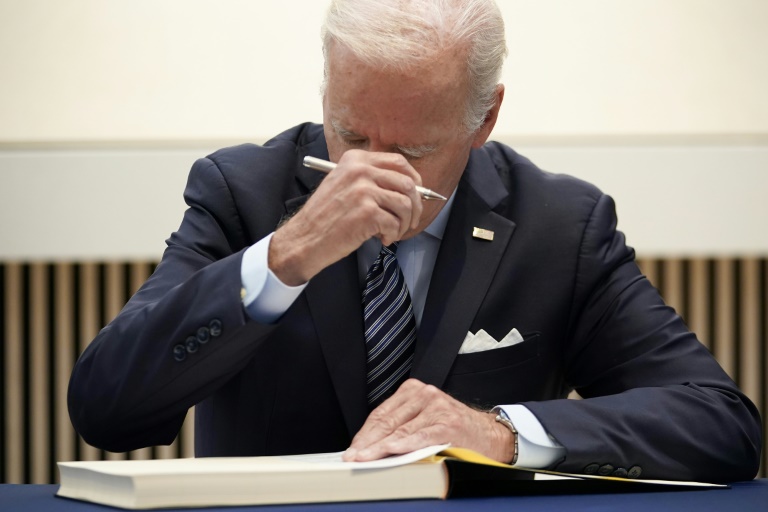
US President Joe Biden paid tribute Thursday to the late Queen Elizabeth II as a “stateswoman of unmatched dignity,” and said he looked forward to working with her son King Charles, noting their already “close friendship.”

Biden ordered flags at the White House and other federal buildings to be lowered to half-staff, and also visited the British embassy in Washington to sign a condolence book for the queen.

“Queen Elizabeth II was a stateswoman of unmatched dignity and constancy who deepened the bedrock alliance between the United Kingdom and the United States,” Biden and First Lady Jill Biden said in a statement. “She helped make our relationship special.”

At the embassy, Biden told staff the late queen was “a great lady” and that he was “so delighted I got to meet her.”  

Biden, 79, noted deep ties between the monarch and the United States, a former British colony.

“She stood in solidarity with the United States during our darkest days after 9/11, when she poignantly reminded us that ‘Grief is the price we pay for love,'” Biden said in his statement.

The five former living US presidents — Jimmy Carter, Bill Clinton, George W. Bush, Barack Obama, and Donald Trump — together with their wives all issued statements Thursday, paying tribute to the late monarch.

Setting aside their political divisions, now as deep as ever in America, the former US leaders were unanimous in their respect for the queen, praising her historic legacy as well as her personal traits.

Obama hailed “a reign defined by grace, elegance, and a tireless work ethic, defying the odds and expectations placed on women of her generation.”

– ‘Personal and immediate connection’ –

“She listened deeply, thought strategically and was responsible for considerable diplomatic successes,” he said in a statement.

Trump said the queen left an “extraordinary legacy of peace and prosperity for Great Britain.”

“Her leadership and enduring diplomacy secured and advanced alliances with the United States and countries around the world,” Trump said on his social network, Truth Social.

The Clintons remembered the queen for “the kindness she showed us,” while the Bushes noted that “tea with Her Majesty — and her Corgis — is among our fondest memories of the presidency.”

Biden said he first met the queen in 1982 when he was a US senator and last saw her in June 2021 during his first foreign trip as president — the 14th American president she had met.

“She was the first British monarch to whom people all around the world could feel a personal and immediate connection,” the Bidens said. “She, in turn, dedicated her whole life to their service.”

“In the years ahead, we look forward to continuing a close friendship with the king and the queen consort,” they said, referring to Elizabeth’s son and heir King Charles and his wife.

“Today, the thoughts and prayers of people all across the United States are with the people of the United Kingdom and the Commonwealth in their grief.”

Flags will also be lowered on US Navy vessels, at military posts and naval stations, and at all American embassies and other facilities abroad, a proclamation from the White House said. 

California wildfire doubles in size

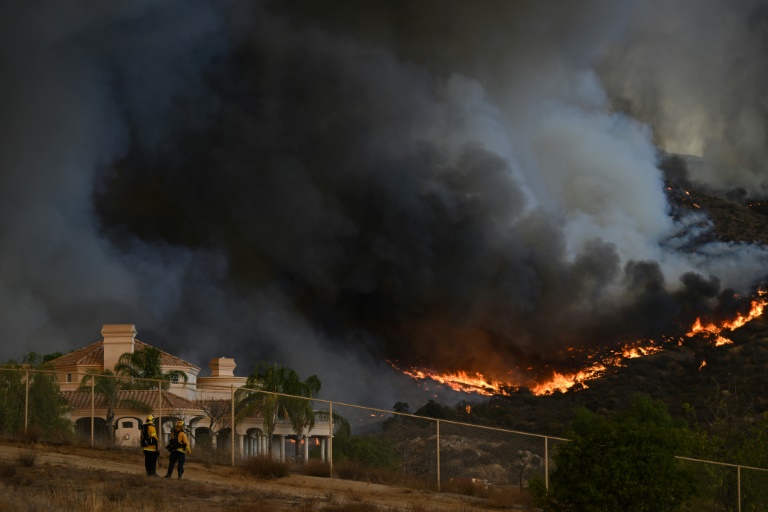
A wildfire burning outside Los Angeles has doubled in size in less than 24 hours, firefighters said Thursday as they endured yet another day of blistering heat in the western United States.

Thousands of people have been told to evacuate in the face of the growing Fairview Fire, which has now spread to 19,000 acres (7,700 hectares).

“Active fire behavior occurred in the east, south, and north portions of the incident,” Cal Fire said.

“Fire will become active with primary movement to the east. Steep drainages will aid the spread with the up canyon/up slope winds and heavy fuels.”

Two people are known to have died in the blaze, which erupted on Monday, the midpoint of a heat wave which has lasted more than a week and seen temperatures repeatedly exceed 110 Fahrenheit (43 Celsius) in parts of California, Nevada and Arizona.

The searing heat has put enormous strain on California’s electrical grid, as households crank up the air conditioning.

That has led to daily calls for consumers to conserve power to avoid blackouts, including text alerts sent to mobile phones.

The grid operator has hailed public co-operation which it said has helped keep the lights on throughout the state all week.

Another “Flex Alert” was issued Thursday, asking for thermostats to be raised, and major appliances to be switched off during peak hours.

Thursday’s call was of longer duration than previous alerts, with a request to conserve power between 3:00 pm and 10:00 pm — two hours longer.

“The state and much of the West is enduring an historically long and record-breaking heat wave, straining the grid from high electricity use,” California Independent Service Operator said.

“The Flex Alert is in effect for extended hours because of projected supply deficiencies during that time.”

Forecasters say the heat wave will begin to dissipate over the coming days, but warned California was not out of the woods yet.

“Dangerous heat also continues to impact the Golden State as high temperatures are once again forecast to reach well into the triple digits both today and Friday, particularly over interior valley regions,” the National Weather Service said.

Euro slides as Fed chief steals ECB's rate hike thunder

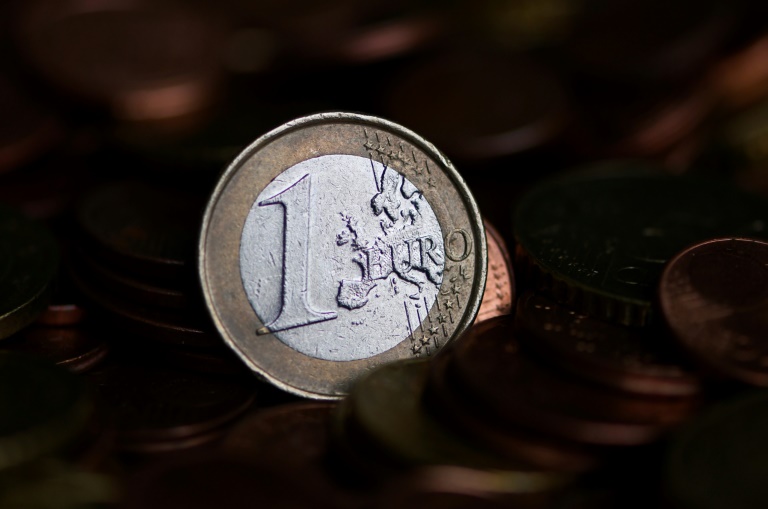
The euro slid on Thursday against the dollar despite a record interest rate hike by the European Central Bank as Federal Reserve chief Jerome Powell also signaled a tough approach against inflation.

Meanwhile, the pound remained close to a 37-year low against the dollar that was struck Wednesday, as new British Prime Minister Liz Truss announced that she will freeze domestic fuel bills for two years to help ease the burden of a UK cost-of-living crisis.

The British currency did not move significantly on news of the death of Queen Elizabeth II after a 70-year reign.

The ECB warned Thursday that inflation was “far too high” and likely to stay above target for “an extended period” as it announced its record 0.75 percentage point hike.

ECB chief Christine Lagarde made clear interest rates were far from where they need be to bring inflation down.

“We actually took the decision today that we would continue to raise interest rates… because we believe that we are far away from the rate at which we hope we’ll see inflation return to the two percent medium term target,” she said.

Lagarde also warned the eurozone risks recession if Russia completely cuts off gas, which it has nearly done.

But comments by Fed chief Jerome Powell were seen as even more hawkish than those by Lagarde.

“We need to act now forthrightly, strongly as we have been doing and we need to keep at it until the job is done to avoid … the kind of very high social costs” of the surge in inflation in the 1970s and 1980s, Powell told a US think tank.

– Greenback ‘more attractive’ –

Chris Beauchamp, chief market analyst at online trading platform IG, said “Investors clearly believe that the Fed is more committed to higher rates than the ECB, while the stronger economic performance of the US means the greenback and not the euro seems the more attractive prospect.”

The euro, which had broken back above parity with the dollar, slid down as far as $0.9934 before recovering some ground.

The Fed has made it clear it plans to continue to aggressively raise interest rates to rein in surging inflation, even at the cost of causing some economic pain.

The dollar has moved ever higher against its major peers in recent weeks as investors flood into the currency hoping for better returns as the Fed raises rates and as they seek a haven in the face of economic turmoil.

The euro on Wednesday touched a fresh 20-year dollar low.

The Fed holds its next policy meeting on September 21, with a third successive 75-basis-point lift forecast.

In equities trading, eurozone stocks closed the day mostly higher, and Wall Street equities pushed higher following a choppy session.

Analysts said the hawkish central bank policy was largely in line with expectations.

“The resilience was construed as a sign that a lot of bad news, and worries about near-term rate hikes, have been priced in already,” said Briefing.com. 

– Key figures at around 2130 GMT –

New York – Dow: UP 0.6 percent at 31,774.52 (close)

New York – S&P 500: UP 0.7 percent at 4,006.18 (close)

New York – Nasdaq: UP 0.6 percent at 11,862.13 (close)

London – FTSE 100: UP 0.3 percent at 7,262.06 (close) 

Frankfurt – DAX: DOWN less than 0.1 percent at 12,904.32 (close)

Paris – CAC 40: UP 0.3 percent at 6,125.90 (close)

EURO STOXX 50: UP 0.3 percent at 3,512.38 (close)

Tokyo – Nikkei 225: UP 2.3 percent at 28,065.28 (close)

Hong Kong – Hang Seng Index: DOWN 1.0 percent at 18,854.62 (close)

Shanghai – Composite: DOWN 0.3 percent at 3,235.59 (close)

Euro/dollar: DOWN at $1.0001 from $1.0006 on Wednesday

Pound/dollar: DOWN at $1.1500 from $1.1533

Euro/pound: UP at 86.93 pence from 86.76 pence

Dollar/yen: UP at 144.07 yen from 143.74 yen 

West Texas Intermediate: UP 2.0 percent at $83.54 per barrel

Brent North Sea crude: UP 1.3 percent at $89.15 per barrel

burs-jmb/st

Euro slides as Fed chief steals ECB's rate hike thunder

The euro slid on Thursday against the dollar despite a record interest rate hike by the European Central Bank as Federal Reserve chief Jerome Powell also signaled a tough approach against inflation.

Meanwhile, the pound remained close to a 37-year low against the dollar that was struck Wednesday, as new British Prime Minister Liz Truss announced that she will freeze domestic fuel bills for two years to help ease the burden of a UK cost-of-living crisis.

The British currency did not move significantly on news of the death of Queen Elizabeth II after a 70-year reign.

The ECB warned Thursday that inflation was “far too high” and likely to stay above target for “an extended period” as it announced its record 0.75 percentage point hike.

ECB chief Christine Lagarde made clear interest rates were far from where they need be to bring inflation down.

“We actually took the decision today that we would continue to raise interest rates… because we believe that we are far away from the rate at which we hope we’ll see inflation return to the two percent medium term target,” she said.

Lagarde also warned the eurozone risks recession if Russia completely cuts off gas, which it has nearly done.

But comments by Fed chief Jerome Powell were seen as even more hawkish than those by Lagarde.

“We need to act now forthrightly, strongly as we have been doing and we need to keep at it until the job is done to avoid … the kind of very high social costs” of the surge in inflation in the 1970s and 1980s, Powell told a US think tank.

– Greenback ‘more attractive’ –

Chris Beauchamp, chief market analyst at online trading platform IG, said “Investors clearly believe that the Fed is more committed to higher rates than the ECB, while the stronger economic performance of the US means the greenback and not the euro seems the more attractive prospect.”

The euro, which had broken back above parity with the dollar, slid down as far as $0.9934 before recovering some ground.

The Fed has made it clear it plans to continue to aggressively raise interest rates to rein in surging inflation, even at the cost of causing some economic pain.

The dollar has moved ever higher against its major peers in recent weeks as investors flood into the currency hoping for better returns as the Fed raises rates and as they seek a haven in the face of economic turmoil.

The euro on Wednesday touched a fresh 20-year dollar low.

The Fed holds its next policy meeting on September 21, with a third successive 75-basis-point lift forecast.

In equities trading, eurozone stocks closed the day mostly higher, and Wall Street equities pushed higher following a choppy session.

Analysts said the hawkish central bank policy was largely in line with expectations.

“The resilience was construed as a sign that a lot of bad news, and worries about near-term rate hikes, have been priced in already,” said Briefing.com. 

– Key figures at around 2130 GMT –

New York – Dow: UP 0.6 percent at 31,774.52 (close)

New York – S&P 500: UP 0.7 percent at 4,006.18 (close)

New York – Nasdaq: UP 0.6 percent at 11,862.13 (close)

London – FTSE 100: UP 0.3 percent at 7,262.06 (close) 

Frankfurt – DAX: DOWN less than 0.1 percent at 12,904.32 (close)

Paris – CAC 40: UP 0.3 percent at 6,125.90 (close)

EURO STOXX 50: UP 0.3 percent at 3,512.38 (close)

Tokyo – Nikkei 225: UP 2.3 percent at 28,065.28 (close)

Hong Kong – Hang Seng Index: DOWN 1.0 percent at 18,854.62 (close)

Shanghai – Composite: DOWN 0.3 percent at 3,235.59 (close)

Euro/dollar: DOWN at $1.0001 from $1.0006 on Wednesday

Pound/dollar: DOWN at $1.1500 from $1.1533

Euro/pound: UP at 86.93 pence from 86.76 pence

Dollar/yen: UP at 144.07 yen from 143.74 yen 

West Texas Intermediate: UP 2.0 percent at $83.54 per barrel

Brent North Sea crude: UP 1.3 percent at $89.15 per barrel

burs-jmb/st

Former Trump advisor Bannon charged with fraud in New York

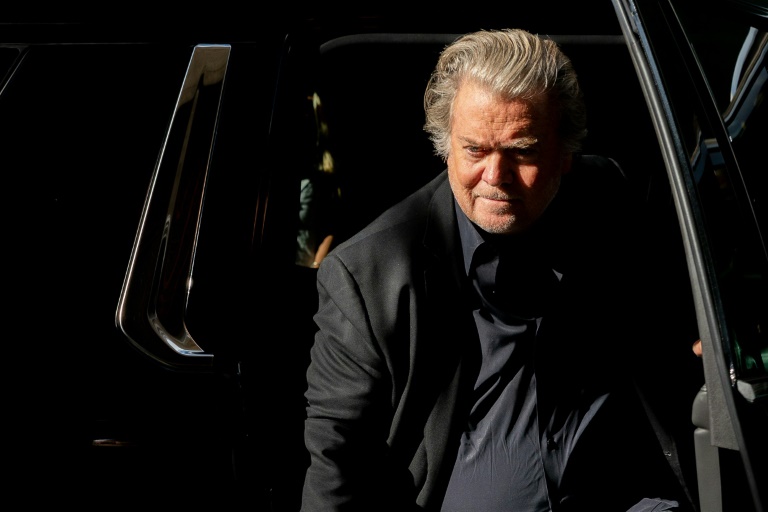
Donald Trump’s former advisor Steve Bannon was charged with fraud Thursday over a scheme that misappropriated millions of dollars donated for the construction of a wall between the United States and Mexico.

Bannon, 68, a far-right ideologue who was closely involved in Trump’s rise to the American presidency, turned himself in earlier in the day to face the charges in New York. 

Standing outside the Manhattan prosecutor’s office, he accused the judiciary of “persecuting” him.

Bannon and a nonprofit organization called We Build The Wall were charged with money laundering, conspiracy and fraud over what prosecutors said was a year-long fundraising scheme that netted more than $15 million from donors based on false promises.

“It is a crime to turn a profit by lying to donors, and in New York, you will be held accountable,” said Manhattan District Attorney Alvin Bragg as he announced the charges at a news conference.

Federal fraud charges were brought against Bannon in 2020 over the same allegations, but he was pardoned by Trump before he could be brought to trial.

Building a wall along the US-Mexico border was a key campaign promise by Trump in his run for the presidency in 2016. 

“There cannot be one set of rules for everyday people and another for the wealthy and powerful — we all must play by the same rules and must obey the law,” said Letitia James, New York’s state attorney general.

“Mr. Bannon took advantage of his donors’ political views to secure millions of dollars which he then misappropriated. Mr. Bannon lied to his donors to enrich himself and his friends.”

– ‘Never shut me up’ –

CNN cited Bannon’s lawyer Robert Costello as saying the former advisor would plead not guilty.

Walking handcuffed through the corridor into the courtroom, Bannon vowed that “they will never shut me up.”

“They’ll have to kill me first.”

That mood echoed a statement he released Tuesday, in which he denounced “bogus lawsuits” against him 60 days before the November 8 midterm legislative elections.

He blasted “an armed partisan politicization of the criminal justice system.”

The criminal indictment comes six weeks after Bannon was convicted in a federal court in Washington of obstructing the investigative powers of Congress. 

He had refused to cooperate with the House committee investigating the January 6, 2021 assault on Capitol Hill by Trump supporters.

Even after leaving the White House in August 2017, Bannon had remained close to Trump, speaking with him the day before the Capitol riot.

Trump is himself at the center of multiple probes, including an investigation in New York into his business practices, legal scrutiny over his efforts to overturn results of the 2020 election, and in connection with the January 6 attack on the US Capitol.

The FBI is also investigating Trump’s handling of classified materials, following a raid on his Florida home.

Ukraine claims battlefield breakthrough as Blinken ramps up aid

Ukraine on Thursday claimed a military breakthrough in its counter-offensive against Russian invaders as US Secretary of State Antony Blinken, on a surprise visit to Kyiv, unveiled another $2.8 billion in military aid.

Ukraine said its forces made gains in the north, the south and the east, prying back land seized by Russia which had hoped for a swift victory when it attacked nearly seven months ago.

“Our heroes have already liberated dozens of settlements. And today this movement continued,” said Ukraine President Volodymyr Zelensky in an address to the nation.

“In total, more than a thousand square kilometres (nearly 400 sq miles) have been liberated since September 1,” he said shortly after announcing the recapture of Balakliya in the eastern Kharkiv region, a town which fell to Russian forces in early March.

In the area around Kharkiv, Ukraine’s second city, forces penetrated 50 kilometres (30 miles) beyond Russian lines and “liberated” more than 20 towns and villages, senior military official Oleksiy Gromov said.

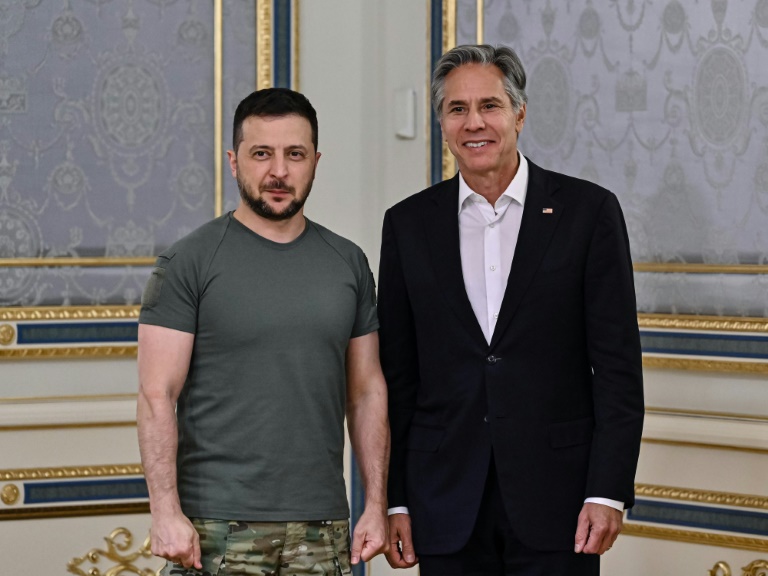
Hoping to build on the momentum, Blinken secretly travelled to Kyiv for his second trip during the war, passing through dark hallways with sandbags in the sealed presidential compound to meet President Volodymyr Zelensky.

“It’s very early, but we are seeing clear and real progress on the ground,” Blinken said after spending more than two hours with Zelensky.

Blinken vowed the United States would keep up assistance “until the aggression ceases and Ukraine is fully sovereign” and that pressure on Russia would keep getting “heavier and heavier”.

“You have our word — and our track record,” he told Zelensky.

Zelensky, clad in his now signature military-green T-shirt, presented a state award to Blinken as he voiced gratitude for the “enormous support” of the United States.

The aid “is a guarantee that we can return our territories,” Zelensky said.

The latest package includes $675 million to be shipped shortly in arms, ammunition and supplies and another $1 billion in longer-term loans and grants for Ukraine to buy more US equipment.

The State Department also approved $1.2 billion for 18 other nations seen as facing threats from Russia including Baltic states, Moldova and Georgia which both have breakaway regions backed by Moscow.

A day after the United Nations said there were “credible reports” of Russia forcing Ukrainian children into its territory, Blinken started his trip by visiting toddlers injured in the war at a hospital. 

In a room with toy trucks and alien figurines, he arrived with a basket of stuffed animals, announcing, “I brought some friends.”

“The spirit of your children sends a very strong message around the world,” he said.

– ‘Accountability’ –

Blinken later toured Irpin on the capital’s outskirts where the deputy mayor described indiscriminate attacks during Russia’s 25-day occupation at the start of the war and said there were 30,000 open cases related to war crimes.

“There has to be accountability for those who committed atrocities,” Blinken said. 

In a coordinated display of resolve, President Joe Biden spoke by telephone with allied leaders about Ukraine and Defence Secretary Lloyd Austin met his counterparts at Ramstein air base in Germany.

“Now, we’re seeing the demonstrable success of our common efforts on the battlefield,” Austin said.

Amid Ukraine’s reports of gains, Russia also trumpeted battlefield successes, saying it hit five command posts and downed 13 drones on Thursday.

Addressing a forum in Moscow, Prime Minister Mikhail Mishustin said Russia had withstood Western sanctions over the war better than expected, estimating that GDP had fallen just over one percent year-on-year in the first six months of 2022.

Russia’s central bank expects a contraction of four to six percent for the year, while Blinken cited an estimate of an even steeper drop.

“Unprecedented sanctions were imposed on our country. But their initiators did not achieve their main objective. They failed to undermine our financial stability,” Mishustin said. 

– Allies pledge support –

But as the war grinds on, both sides have increasingly been facing a crunch on military supplies with US officials saying Russia was buying drones from Iran and large quantities of rocket and artillery shells from North Korea.

Speaking at Ramstein, top US General Mark Milley said there was “significant consumption of munitions” by Ukraine that will need to be addressed by allies.

Norway offered 160 Hellfire missiles and night-vision equipment, Germany offered winter supplies and The Netherlands joined Germany with demining training.

The latest package by the United States — Ukraine’s largest supplier — includes 105mm howitzers, precision-guided GMLRS rockets and artillery ammunition. 

It brings  US military aid to Ukraine since the invasion to $15.2 billion.

Among the most efficient weapons sent by Washington are the HIMAR multiple rocket launch systems, which are paired with GMLRS rockets that can reach targets up to 80 kilometres (50 miles) away.

But Kyiv is seeking ATACMS — precision-guided, medium range tactical missiles capable of striking 300 kilometres.

The United States has so far refused as it fears the missiles could land in Russian territory, sparking an even bigger conflict.

“The range of the HIMARS is sufficient to meet the needs of the Ukrainians as they are currently fighting,” Milley said.

burs-sct-jbr/bp

Close Bitnami banner
Bitnami