AFP

Ancient skeleton reveals amputation surgery 31,000 years ago

A skeleton discovered in a remote corner of Borneo rewrites the history of ancient medicine and proves amputation surgery was successfully carried out about 31,000 years ago, scientists said Wednesday.

Previously, the earliest known amputation involved a 7,000-year-old skeleton found in France, and experts believed such operations only emerged in settled agricultural societies.

The finding also suggests that Stone Age hunter-gatherers living in what is now Indonesia’s East Kalimantan province had sophisticated medical knowledge of anatomy and wound treatment.

“It rewrites our understanding of the development of this medical knowledge,” said Tim Maloney, a research fellow at Australia’s Griffith University, who led the work. 

The skeleton was uncovered in 2020 in the imposing Liang Tebo cave known for its wall paintings dating back 40,000 years.

Surrounded by bats, terns and swiftlets, and interrupted by the occasional scorpion, scientists painstakingly removed sediment to reveal an astoundingly well-preserved skeleton.

It was missing just one notable feature: its left ankle and foot.

The base of the remaining leg bone had a surprising shape, with knobbly regrowth over an apparently clean break, strongly indicating that the ankle and foot were removed deliberately.

“It’s very neat and oblique, you can actually see the surface and shape of the incision through the bone,” Maloney told a press briefing.

Other explanations, like an animal attack, crushing injury, or fall, would have created bone fractures and healing different from those seen in the skeleton’s leg.

A tooth and surrounding sediment showed the skeleton is at least 31,000 years old and belongs to a person who died at around 20 years old.

Despite the incredible trauma of amputation, they appear to have survived six to nine years after the operation, based on the regrowth on the leg bone, and suffered no major post-operative infection.

That suggests “detailed knowledge of limb anatomy and muscular and vascular systems,” the research team wrote in a paper published Wednesday in the journal Nature.

“Intensive post-operative nursing and care would have been vital… the wound would have regularly been cleaned, dressed and disinfected.”

– ‘A hotspot of human evolution’ –

Humans have been operating on each other for centuries, pulling teeth and drilling skull holes in a process called trepanation.

But amputation is so complex that in the West it only became an operation people could reasonably hope to survive about a century ago.

The oldest previous example was a 7,000-year-old skeleton with a forearm found in France in 2010.

It appeared to confirm that humans only developed sophisticated surgery after settling in agricultural societies, freed from the daily grind of hunting food.

But the Borneo find demonstrates hunter-gatherers could also navigate the challenges of surgery, and did so at least 24,000 years earlier than once thought.

For all that the skeleton reveals, many questions remain: how was the amputation carried out and why? What was used for pain or to prevent infection? Was this operation rare or a more common practice?

The team speculates that a surgeon might have used a lithic blade, whittled from stone, and the community could have accessed rainforest plants with medicinal properties. 

The study “provides us with a view of the implementation of care and treatment in the distant past,” wrote Charlotte Ann Roberts, an archeologist at Durham University, who was not involved in the research.

It “challenges the perception that provision of care was not a consideration in prehistoric times,” she wrote in a review in Nature.

Further excavation is expected next year at Liang Tebo, with the hope of learning more about the people who lived there.

“This is really a hotspot of human evolution and archeology,” said Renaud Joannes-Boyau, an associate professor at Southern Cross University who helped date the skeleton.

“It’s certainly getting warmer and warmer, and the conditions are really aligned to have more amazing discoveries in the future.”

American woman killed by shark while snorkeling in Bahamas

An American mother was killed by a shark while snorkeling with her family in the Bahamas on a sideline excursion during their cruise, authorities said Wednesday.

The 58-year-old woman from the US state of Pennsylvania was attacked Tuesday afternoon in the waters of Green Cay, near the Bahamian capital Nassau, according to Bahamian police.

“Tour operators along with family members attempted to rescue the female,” police said in a statement.

“However, they were unsuccessful; which resulted in the female receiving serious injuries to the left side of her body.”

When she was brought to land, paramedics found she showed “no vital signs of life,” police added.

The family of five arrived early Tuesday in the Bahamas as part of a seven-night cruise aboard the Royal Caribbean International ship Harmony of the Seas.

The family was participating in what the cruise industry calls an “independent shore excursion,” not sponsored or organized by the cruise line.

Royal Caribbean, in confirming the death, said the company was “providing support and assistance” to the victim’s family.

In 2019, a young American woman died after being attacked by three sharks during a family dive in the same area of the Bahamas.

Western US heat wave to wane, but more fire danger ahead: forecast

A ferocious heat wave scorching the western United States could finally begin to wane in the coming days, forecasters said Wednesday, but they warned of dangerous fire conditions as howling winds sweep through the bone-dry region.

California and neighboring states have endured a week of triple digit temperatures that have already brought deadly wildfires and the daily threat of power blackouts as the electricity grid struggles to cope with soaring demand.

But a predicted cooling as a cold front barrels in from Canada looks set to bring its own dangers, the National Weather Service said.

“This cold front will also aid in producing gusty winds throughout the northern Great Basin and northern High Plains today. Combined with low relative humidity, conditions are likely to support the potential for new wildfires to start and existing fires to spread uncontrollably,” the NWS warned.

The Storm Prediction Center “has issued an Extremely Critical fire weather area over north-central Montana, where winds could gust up to 60 miles (95 kilometers) per hour.”

A number of wildfires are already burning all over the western United States, including two deadly blazes that erupted over the long Labor Day weekend.

The Mill Fire in northern California killed two people, and destroyed over 100 buildings as it tore through 4,000 acres (1,600 hectares) of Siskiyou County.

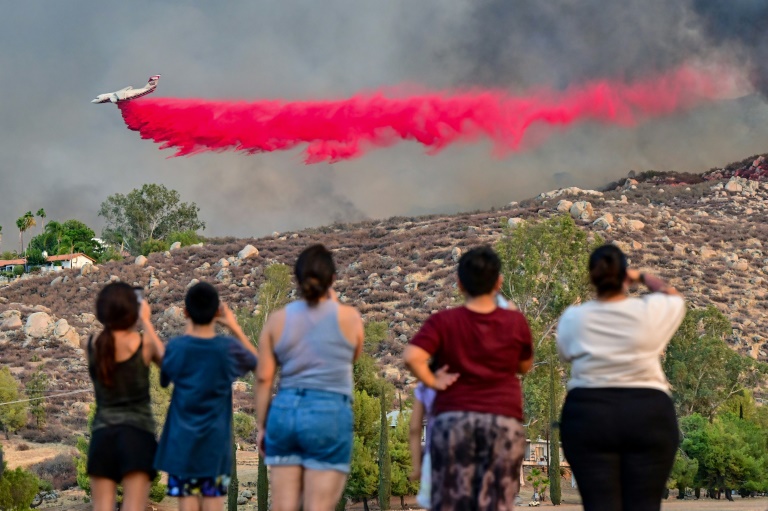
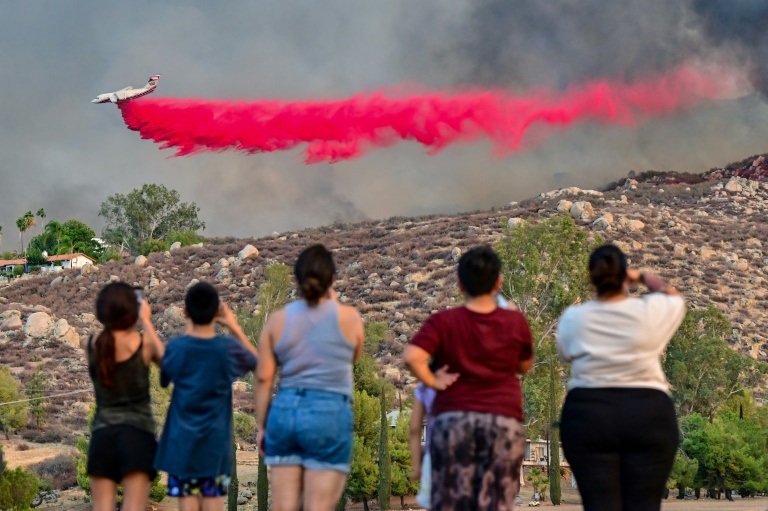
To the southeast of Los Angeles, the Fairview Fire was continuing to grow and remained out of control, fire officials said Wednesday.

Two people are known to have perished as they tried to flee the blaze, which exploded from a standing start during soaring temperatures on Monday. It has now consumed 7,000 acres.

Local fire chief Josh Janssen said efforts to dowse the inferno would expand after a difficult day that saw flames “outpace our efforts.”

The blaze continues to spread with “all sides of the fire still threatening several communities.”

More than 10,000 people have been told to evacuate, but the Riverside County Sheriff’s Department said not everyone had heeded the warnings — despite the deployment of dozens of deputies going door-to-door.

“You would think more people would take it seriously because it’s so fast-moving, and that’s why we try and do such a large evacuation area because the shift in winds, the weather is unpredictable, and fire moves fast,” department spokeswoman Brandi Swan told the Los Angeles Times.

– Weather whiplash –

More than two decades of drought has left the US West tinder dry and vulnerable to fast-moving fires that burn hotter and are more destructive.

Scientists say human-caused global warming is interfering with the natural weather cycle, amping up the hots and making the storms wetter and more unpredictable.

The kind of weather whiplash climatologists say is becoming more frequent could be on display later in the week, with forecasters predicting the heat wave in the southwest could give way to torrential rain.

While Wednesday and Thursday were expected to continue to be very hot, with the mercury topping 110 Fahrenheit (43 Celsius) in several places, a hurricane looming off the Pacific coast of Mexico looked set to bring up to six inches (15 centimeters) of rain to some parts of Arizona and California.

“This amount of rainfall is likely to produce scattered instances of flash flooding, particularly near recent burn scars,” the NWS said.

The soaring temperatures have put enormous pressure on California’s creaking power grid, with record demand for electricity to cool homes.

Rolling blackouts were narrowly avoided on Tuesday after the California Independent System Operator, which runs the grid, issued an emergency call to cell phone users for households to turn up their air conditioner thermostats and switch off unnecessary lights.

California ISO called again Wednesday for economising.

“The emergency alert has been declared to help the grid secure more supplies and urge market participants to lower demand on the system. The state and much of the West is enduring an historically long and record-breaking heat wave, straining the grid from high electricity use,” the body said.

California has abundant solar installations, including on homes, which typically provide for around a third of the state’s power requirements during daylight.

But when the sun goes down, that supply falls quickly, leaving traditional generation to plug the gap. The problem is particularly acute in the early evening when temperatures are still high, but solar starts dropping out of the power mix.

Oil tumbles on recession worries as US stocks rebound

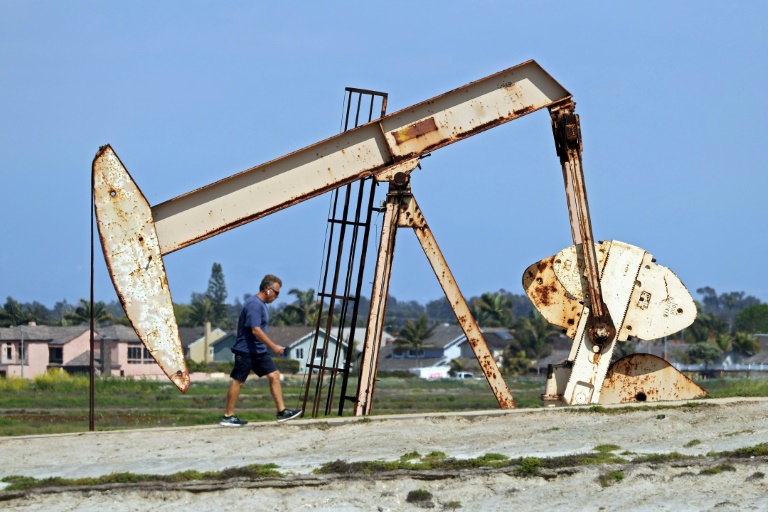
US oil prices finished Wednesday at their lowest level since January on growing recession fears, while US stocks rebounded after a weak stretch left the market “oversold,” as analysts put it.

Oil prices briefly climbed early on Wednesday as Russia’s President Vladimir Putin said his country would stop delivering oil and gas supplies to countries that introduce price caps.

But then oil prices then turned sharply lower, with Brent crude, the main international contract, passing under $90 per barrel for the first time since February.

US benchmark West Texas Intermediate slid 5.7 percent to end at $81.94, its lowest closing price since January.

“The oil market is a blood bath as the crude demand outlook took a major hit after Chinese and US trade data showed global demand is sharply weakening,” said Oanda’s Edward Moya. 

“It appears the risk of losing Russian energy supplies is no longer keeping oil prices supported and that has energy traders solely fixated on the demand side drivers.” 

Recession concerns also dampened sentiment towards equities, but Briefing.com analyst Patrick O’Hare said those worries were competing for investors’ attention with “the idea that the stock market is oversold on a short-term basis and due for a bounce”.

US stocks finished firmly higher, with the S&P 500 winning 1.8 percent.

On Wednesday, Federal Reserve Vice Chair Lael Brainard warned that the US central bank will stay the course on its aggressive fight against high inflation “for as long as it takes” to bring prices down.

She said interest rates need to rise further, again knocking down hopes of a rate cut next year as the economy slows.

The aggressive Fed posture has bolstered the dollar, which rose further against the Japanese yen even as it retreated against the euro.

“The reason that we are seeing this much strength in the dollar against the yen is purely because of the difference in two central banks’ policies,” noted Naeem Aslam, chief market analyst at AvaTrade. 

“The Fed is as hawkish as it can be, and the BoJ still doesn’t seem to be bothered much about inflation or changing its stance on monetary policy.”

Japan’s finance minister, Shunichi Suzuki, on Wednesday expressed concern about the yen’s drop.

“For now, we’re monitoring with a sense of urgency how it’s developing, but if this continues, it makes sense that we will take necessary measures,” he said, without detailing what the measures might be.

– Key figures at around 2110 GMT –

Brent North Sea crude: DOWN 5.2 percent at $88.00 per barrel

West Texas Intermediate: DOWN 5.7 percent at $81.94 per barrel

New York – Dow: UP 1.4 percent at 31,581.28 (close)

New York – S&P 500: UP 1.8 percent at 3,979.87 (close)

New York – Nasdaq: UP 2.1 percent at 11,791.90 (close)

London – FTSE 100: DOWN 0.9 percent at 7,237.83 (close)

Frankfurt – DAX: UP 0.4 percent at 12,915.97 (close)

Paris – CAC 40: FLAT at 6,105.92 (close)

EURO STOXX 50: UP 0.1 percent at 3,502.09 (close)

Tokyo – Nikkei 225: DOWN 0.7 percent at 27,430.30 (close)

Hong Kong – Hang Seng Index: DOWN 0.8 percent at 19,044.30 (close)

Shanghai – Composite: UP 0.1 percent at 3,246.29 (close)

Dollar/yen: UP at 143.79 yen from 142.80 yen on Tuesday

Euro/dollar: UP at $1.0012 from $0.9904 

Pound/dollar: UP at $1.1535 from $1.1520

Euro/pound: UP at 86.74 pence from 85.97 pence

burs-jmb/st

Oil tumbles on recession worries as US stocks rebound

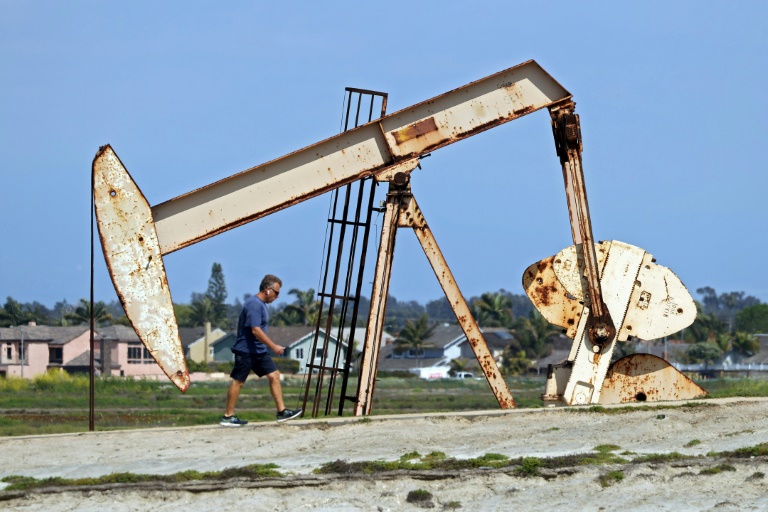
US oil prices finished Wednesday at their lowest level since January on growing recession fears, while US stocks rebounded after a weak stretch left the market “oversold,” as analysts put it.

Oil prices briefly climbed early on Wednesday as Russia’s President Vladimir Putin said his country would stop delivering oil and gas supplies to countries that introduce price caps.

But then oil prices then turned sharply lower, with Brent crude, the main international contract, passing under $90 per barrel for the first time since February.

US benchmark West Texas Intermediate slid 5.7 percent to end at $81.94, its lowest closing price since January.

“The oil market is a blood bath as the crude demand outlook took a major hit after Chinese and US trade data showed global demand is sharply weakening,” said Oanda’s Edward Moya. 

“It appears the risk of losing Russian energy supplies is no longer keeping oil prices supported and that has energy traders solely fixated on the demand side drivers.” 

Recession concerns also dampened sentiment towards equities, but Briefing.com analyst Patrick O’Hare said those worries were competing for investors’ attention with “the idea that the stock market is oversold on a short-term basis and due for a bounce”.

US stocks finished firmly higher, with the S&P 500 winning 1.8 percent.

On Wednesday, Federal Reserve Vice Chair Lael Brainard warned that the US central bank will stay the course on its aggressive fight against high inflation “for as long as it takes” to bring prices down.

She said interest rates need to rise further, again knocking down hopes of a rate cut next year as the economy slows.

The aggressive Fed posture has bolstered the dollar, which rose further against the Japanese yen even as it retreated against the euro.

“The reason that we are seeing this much strength in the dollar against the yen is purely because of the difference in two central banks’ policies,” noted Naeem Aslam, chief market analyst at AvaTrade. 

“The Fed is as hawkish as it can be, and the BoJ still doesn’t seem to be bothered much about inflation or changing its stance on monetary policy.”

Japan’s finance minister, Shunichi Suzuki, on Wednesday expressed concern about the yen’s drop.

“For now, we’re monitoring with a sense of urgency how it’s developing, but if this continues, it makes sense that we will take necessary measures,” he said, without detailing what the measures might be.

– Key figures at around 2110 GMT –

Brent North Sea crude: DOWN 5.2 percent at $88.00 per barrel

West Texas Intermediate: DOWN 5.7 percent at $81.94 per barrel

New York – Dow: UP 1.4 percent at 31,581.28 (close)

New York – S&P 500: UP 1.8 percent at 3,979.87 (close)

New York – Nasdaq: UP 2.1 percent at 11,791.90 (close)

London – FTSE 100: DOWN 0.9 percent at 7,237.83 (close)

Frankfurt – DAX: UP 0.4 percent at 12,915.97 (close)

Paris – CAC 40: FLAT at 6,105.92 (close)

EURO STOXX 50: UP 0.1 percent at 3,502.09 (close)

Tokyo – Nikkei 225: DOWN 0.7 percent at 27,430.30 (close)

Hong Kong – Hang Seng Index: DOWN 0.8 percent at 19,044.30 (close)

Shanghai – Composite: UP 0.1 percent at 3,246.29 (close)

Dollar/yen: UP at 143.79 yen from 142.80 yen on Tuesday

Euro/dollar: UP at $1.0012 from $0.9904 

Pound/dollar: UP at $1.1535 from $1.1520

Euro/pound: UP at 86.74 pence from 85.97 pence

burs-jmb/st

Obamas get their White House portraits after Trump snub

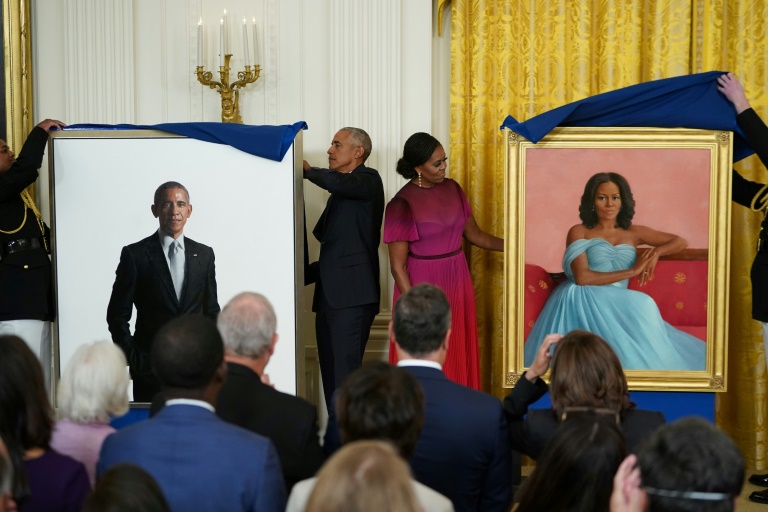
Former president Barack Obama and first lady Michelle Obama finally got their official White House portraits Wednesday, after four years of being snubbed by Donald Trump, in an emotional ceremony doubling as a rousing defense of American democracy.

The paintings, destined to hang alongside those of generations of previous first couples in the White House, were unveiled by the Obamas themselves.

Deafening cheers sounded through the packed East Room as they pulled up the plain blue cloths covering the art works.

Obama, the country’s first Black president, was depicted by Robert McCurdy looking straight out, hands in pockets, his dark suit contrasting against a startlingly white background, and shadow falling over half of his face.

Michelle, who was painted by Sharon Sprung, posed in a light blue gown, seated on a red sofa.

Obama joked that McCurdy’s signature precision and sharp lines meant he “refused to hide any of my grey hairs,” but said the directness of the style countered the tendency where presidents “often get airbrushed,” getting “mythical status, especially after you’ve gone and people forget all the stuff they didn’t like.”

The cheers kept coming during President Joe Biden’s speech kicking off the event and the volume rose further when the Obamas took the podium.

Michelle Obama veered into distinctly political territory with a powerful homage to US democracy and barely disguised criticism of Trump.

“Traditions like this matter,” she said, describing the portraits custom as part of the passing of the torch between successive, even opposing administrations.

“We hold an inauguration to ensure a peaceful transition of power,” she said in a barbed reminder of the way Trump refused to accept his 2020 defeat by Biden, stymied the incoming government’s preparations — then failed to invite the Obamas to unveil their official portraits.

Michelle Obama reduced the room to silence with her observation that growing up as a Black girl in Chicago she’d assumed “she was never supposed to be up there next to Jacqueline Kennedy” or other famous — always white — first ladies.

“Too often in this country, people feel like they have to look a certain way or act a certain way to fit in,” she said. 

“What we are seeing is a reminder that there’s a place for everyone in this country,” where “the two of us can end up on a wall in the most famous address in the world.”

“Our democracy is so much stronger than our differences,” she said.

“We love you,” a man in the crowd called out, prompting more cheers.

– Contempt –

Past presidents and first ladies have typically had their portraits hung in White House halls and corridors after ceremonies hosted by successors. Democrat Obama, for example, hosted George W. Bush, a Republican, and his wife Laura Bush at portrait unveilings in 2012.

However, Trump declined to invite the Obamas — amid undisguised contempt between both leaders in the wake of the Republican’s shock 2016 election win — and the tradition ground to a halt.

The norm-shredding Trump even reportedly ordered portraits of Bush and his predecessor Bill Clinton to be taken down from the walls of the Grand Foyer and put in storage. 

But a portrait of Hillary Clinton, the former first lady whom Trump had defeated in his presidential campaign, remained visible in a lower corridor through his tempestuous 2017-2021 term.

As for Trump, the Biden administration says it has no direct say on whether or when his own portrait could be hung up. It is not clear whether the ex-president, now in deep legal peril after the discovery of top-secret documents taken from the White House to his Florida estate, has even commissioned an official painting.

– Mutual praise –

Biden, who served as vice president throughout Obama’s two terms, poured praise on his former boss, recalling how they first took office in the wake of the 2008 financial crisis.

“We trusted him, all of you in this room. We believed in him, we counted on him. And I still do,” Biden said.

Obama returned the compliments, telling Biden “I was even luckier to have a chance to spend eight years working day and night with a man who became a true partner and a true friend.”

“Joe, it is now America’s good fortune to have you as president,” he said.

Talking of his own rise to the top job with defeat of Trump in 2020, Biden said “nothing could have prepared me more” for the presidency than working alongside Obama.

Apple unveils new gadgets despite supply chain woes

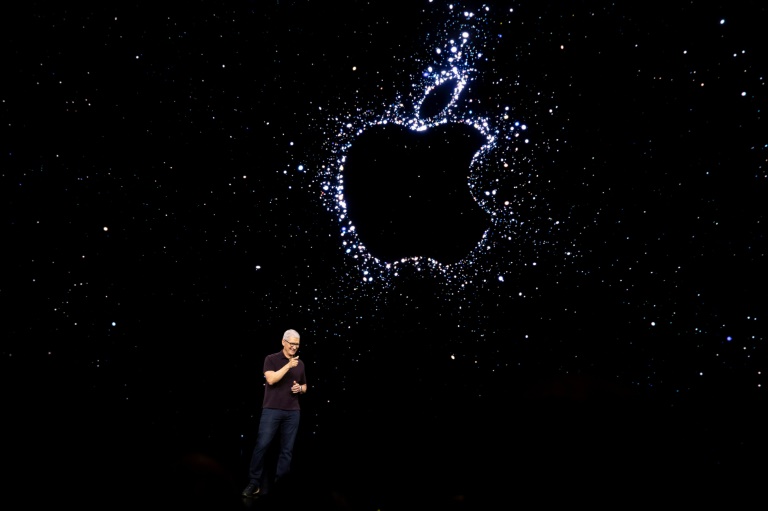
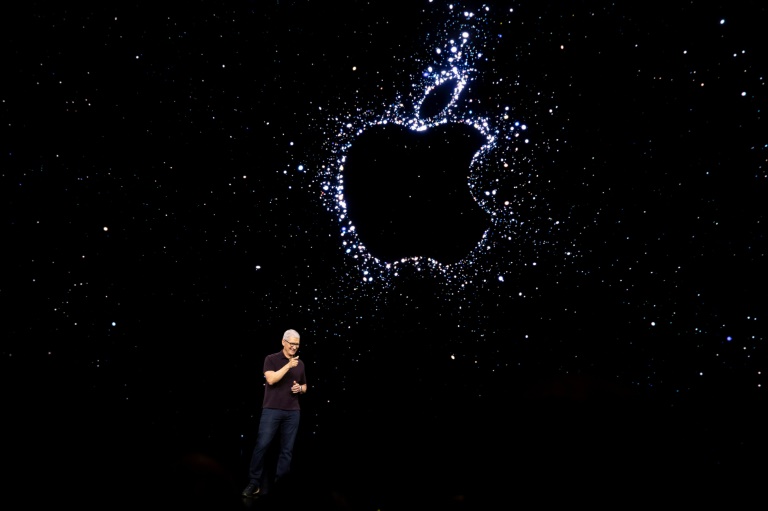
Apple launched new smartphones Wednesday at prices similar to recent models despite inflation and supply chain woes, while unveiling a premium digital watch with a price tag to match.

While a 90-minute presentation at the company’s California headquarters did not include any surprise reveals, the tech giant did unveil new digital identification system to obviate the need for a physical sim card.

The company’s newest smartphone, the iPhone 14, costs $799 for the base model — the same price as the current version, while a premium iPhone 14 Pro Max will go for $1,100.

The set of updated products, which also includes new earbuds, is designed to keep customers loyal to its lucrative technology ecosystem.

“Apple continued its strong growth in the first half of 2022, driven by robust demand for the iPhone 13 — which was the best-selling smartphone worldwide,” said Le Xuan Chiew, an analyst at Canalys.

The ability to keep the iPhone prices flat reflected the benefits of diversifying the supply chain to India after China’s zero-tolerance Covid policies crimped production there, the analyst said.

Wedbush analyst Dan Ives said the launch event underscored Apple’s logistics strength.

“Taking a step back, launching 3 new core hardware products within the Apple ecosystem despite the biggest supply chain crisis seen in modern history is a major feat for Cook & Co. especially with the zero Covid shutdowns in China seen in April/May,” Ives said.

Features of the new iPhone 14 include a more durable battery and new photographic capacities to capture “ultra wide” scenes and low-light settings.

The phones also contain an “emergency SOS” function to enable messaging to emergency services when outside of Wifi coverage.

The iPhone 14 Plus comes in a giant 6.7-inch (17-centimeter) screen that offers a better experience when playing games or watching videos.

Company officials touted new digital watch products with enhanced features. The Apple Watch Series 8 — which can monitor body temperature and other body functions — prices at $400.

The company also unveiled the Apple Watch Ultra, priced at $800, which includes a battery with enough lifespan for hardcore athletes “to complete a long-course triathlon,” according to an Apple press release.

Neil Saunders, analyst at GlobalData Retail, described the new offerings as having “incremental improvements rather than groundbreaking new innovations,” adding that the company “has done enough to drive demand by persuading consumers to upgrade and indulge in its new products.”

Apple unveils new gadgets despite supply chain woes

Apple launched new smartphones Wednesday at prices similar to recent models despite inflation and supply chain woes, while unveiling a premium digital watch with a price tag to match.

While a 90-minute presentation at the company’s California headquarters did not include any surprise reveals, the tech giant did unveil new digital identification system to obviate the need for a physical sim card.

The company’s newest smartphone, the iPhone 14, costs $799 for the base model — the same price as the current version, while a premium iPhone 14 Pro Max will go for $1,100.

The set of updated products, which also includes new earbuds, is designed to keep customers loyal to its lucrative technology ecosystem.

“Apple continued its strong growth in the first half of 2022, driven by robust demand for the iPhone 13 — which was the best-selling smartphone worldwide,” said Le Xuan Chiew, an analyst at Canalys.

The ability to keep the iPhone prices flat reflected the benefits of diversifying the supply chain to India after China’s zero-tolerance Covid policies crimped production there, the analyst said.

Wedbush analyst Dan Ives said the launch event underscored Apple’s logistics strength.

“Taking a step back, launching 3 new core hardware products within the Apple ecosystem despite the biggest supply chain crisis seen in modern history is a major feat for Cook & Co. especially with the zero Covid shutdowns in China seen in April/May,” Ives said.

Features of the new iPhone 14 include a more durable battery and new photographic capacities to capture “ultra wide” scenes and low-light settings.

The phones also contain an “emergency SOS” function to enable messaging to emergency services when outside of Wifi coverage.

The iPhone 14 Plus comes in a giant 6.7-inch (17-centimeter) screen that offers a better experience when playing games or watching videos.

Company officials touted new digital watch products with enhanced features. The Apple Watch Series 8 — which can monitor body temperature and other body functions — prices at $400.

The company also unveiled the Apple Watch Ultra, priced at $800, which includes a battery with enough lifespan for hardcore athletes “to complete a long-course triathlon,” according to an Apple press release.

Neil Saunders, analyst at GlobalData Retail, described the new offerings as having “incremental improvements rather than groundbreaking new innovations,” adding that the company “has done enough to drive demand by persuading consumers to upgrade and indulge in its new products.”

Western US heat wave to wane, but more fire danger ahead: forecast

A ferocious heat wave scorching the western United States could finally begin to wane in the coming days, forecasters said Wednesday, but they warned of dangerous fire conditions as howling winds sweep through the bone-dry region.

California and neighboring states have endured a week of triple digit temperatures that have already brought deadly wildfires and the daily threat of power blackouts as the electricity grid struggles to cope with soaring demand.

But a predicted cooling as a cold front barrels in from Canada looks set to bring its own dangers, the National Weather Service said.

“This cold front will also aid in producing gusty winds throughout the northern Great Basin and northern High Plains today. Combined with low relative humidity, conditions are likely to support the potential for new wildfires to start and existing fires to spread uncontrollably,” the NWS warned.

The Storm Prediction Center “has issued an Extremely Critical fire weather area over north-central Montana, where winds could gust up to 60 miles (95 kilometers) per hour.”

A number of wildfires are already burning all over the western United States, including two deadly blazes that erupted over the long Labor Day weekend.

The Mill Fire in northern California killed two people, and destroyed over 100 buildings as it tore through 4,000 acres (1,600 hectares) of Siskiyou County.

To the southeast of Los Angeles, the Fairview Fire was continuing to grow, and remained out of control, fire officials said Wednesday.

Two people are known to have perished in the blaze, which exploded from a standing start during soaring temperatures on Monday, and has now consumed 5,000 acres.

More than 10,000 people have been told to evacuate, but the Riverside County Sheriff’s Department said not everyone had heeded the warnings — despite the deployment of dozens of deputies going door-to-door.

“You would think more people would take it seriously because it’s so fast-moving, and that’s why we try and do such a large evacuation area because the shift in winds, the weather is unpredictable, and fire moves fast,” department spokeswoman Brandi Swan told the Los Angeles Times.

– Weather whiplash –

More than two decades of drought has left the US West tinder dry and vulnerable to fast-moving fires that burn hotter and are more destructive.

Scientists say human-caused global warming is interfering with the natural weather cycle, amping up the hots and making the storms wetter and more unpredictable.

The kind of weather whiplash climatologists say is becoming more frequent could be on display later in the week, with forecasters predicting the heat wave in the southwest could give way to torrential rain.

While Wednesday and Thursday were expected to continue to be very hot, with the mercury topping 110 Fahrenheit (43 Celsius) in several places, a hurricane looming off the Pacific coast of Mexico looked set to bring up to six inches (15 centimeters) of rain to some parts of Arizona and California.

“This amount of rainfall is likely to produce scattered instances of flash flooding, particularly near recent burn scars,” the NWS said.

The soaring temperatures have put enormous pressure on California’s creaking power grid, with record demand for electricity to cool homes.

Rolling blackouts were narrowly avoided on Tuesday after the California Independent System Operator, which runs the grid, issued an emergency call for households to turn up their air conditioner thermostats and switch off unnecessary lights.

“Consumer conservation played a big part in protecting electric grid reliability,” the body tweeted. “Thank you, California!”

California has abundant solar installations, including on homes, which typically provide for around a third of the state’s power requirements during daylight.

But when the sun goes down, that supply falls quickly, leaving traditional generation to plug the gap. The problem is particularly acute in the early evening when temperatures are still high, but solar starts dropping out of the power mix.

Western US heat wave to wane, but more fire danger ahead: forecast

A ferocious heat wave scorching the western United States could finally begin to wane in the coming days, forecasters said Wednesday, but they warned of dangerous fire conditions as howling winds sweep through the bone-dry region.

California and neighboring states have endured a week of triple digit temperatures that have already brought deadly wildfires and the daily threat of power blackouts as the electricity grid struggles to cope with soaring demand.

But a predicted cooling as a cold front barrels in from Canada looks set to bring its own dangers, the National Weather Service said.

“This cold front will also aid in producing gusty winds throughout the northern Great Basin and northern High Plains today. Combined with low relative humidity, conditions are likely to support the potential for new wildfires to start and existing fires to spread uncontrollably,” the NWS warned.

The Storm Prediction Center “has issued an Extremely Critical fire weather area over north-central Montana, where winds could gust up to 60 miles (95 kilometers) per hour.”

A number of wildfires are already burning all over the western United States, including two deadly blazes that erupted over the long Labor Day weekend.

The Mill Fire in northern California killed two people, and destroyed over 100 buildings as it tore through 4,000 acres (1,600 hectares) of Siskiyou County.

To the southeast of Los Angeles, the Fairview Fire was continuing to grow, and remained out of control, fire officials said Wednesday.

Two people are known to have perished in the blaze, which exploded from a standing start during soaring temperatures on Monday, and has now consumed 5,000 acres.

More than 10,000 people have been told to evacuate, but the Riverside County Sheriff’s Department said not everyone had heeded the warnings — despite the deployment of dozens of deputies going door-to-door.

“You would think more people would take it seriously because it’s so fast-moving, and that’s why we try and do such a large evacuation area because the shift in winds, the weather is unpredictable, and fire moves fast,” department spokeswoman Brandi Swan told the Los Angeles Times.

– Weather whiplash –

More than two decades of drought has left the US West tinder dry and vulnerable to fast-moving fires that burn hotter and are more destructive.

Scientists say human-caused global warming is interfering with the natural weather cycle, amping up the hots and making the storms wetter and more unpredictable.

The kind of weather whiplash climatologists say is becoming more frequent could be on display later in the week, with forecasters predicting the heat wave in the southwest could give way to torrential rain.

While Wednesday and Thursday were expected to continue to be very hot, with the mercury topping 110 Fahrenheit (43 Celsius) in several places, a hurricane looming off the Pacific coast of Mexico looked set to bring up to six inches (15 centimeters) of rain to some parts of Arizona and California.

“This amount of rainfall is likely to produce scattered instances of flash flooding, particularly near recent burn scars,” the NWS said.

The soaring temperatures have put enormous pressure on California’s creaking power grid, with record demand for electricity to cool homes.

Rolling blackouts were narrowly avoided on Tuesday after the California Independent System Operator, which runs the grid, issued an emergency call for households to turn up their air conditioner thermostats and switch off unnecessary lights.

“Consumer conservation played a big part in protecting electric grid reliability,” the body tweeted. “Thank you, California!”

California has abundant solar installations, including on homes, which typically provide for around a third of the state’s power requirements during daylight.

But when the sun goes down, that supply falls quickly, leaving traditional generation to plug the gap. The problem is particularly acute in the early evening when temperatures are still high, but solar starts dropping out of the power mix.

Close Bitnami banner
Bitnami