AFP

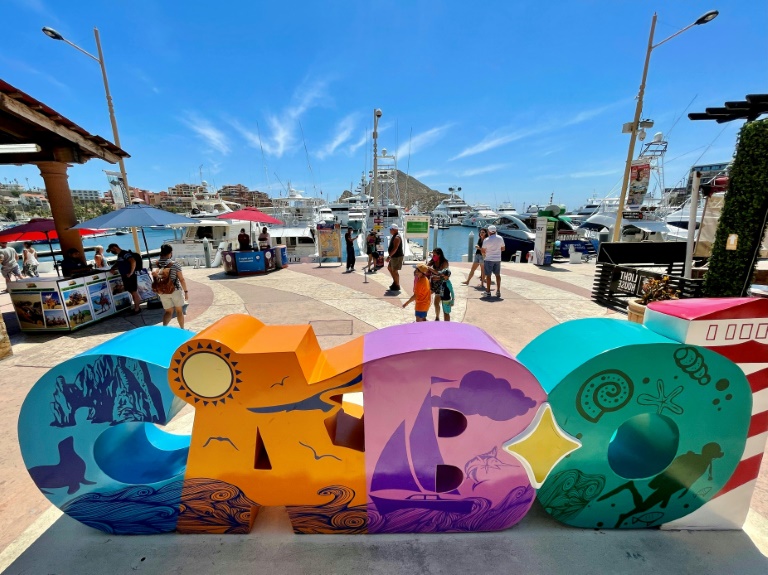
Mexico's Baja California braces for Hurricane Kay

Hurricane Kay gathered strength in the Pacific Ocean on Wednesday and was on course to bring strong winds and heavy rain to Mexico’s Baja California Peninsula, forecasters said.

The storm has become a Category Two hurricane — the second lowest on a scale of five, according to the US National Hurricane Center (NHC).

At 1800 GMT, Kay packed maximum sustained winds of around 105 miles (170 kilometers) per hour and was located about 210 miles southwest of Baja California’s southern tip, the NHC said.

Hurricane or tropical storm warnings were in effect for much of the peninsula’s coastline, and there was a risk of flash flooding, landslides and destructive waves, it said.

Authorities opened storm shelters in the state of Baja California Sur, home to several beach resorts including Cabo San Lucas.

The center of Kay was expected to pass to the west of southern Baja California on Wednesday before moving north close to the peninsula’s western coast,  the NHC said.

Heavy rain and large swells could also affect the US state of California in the coming days, it warned.

Mexico is regularly lashed by tropical storms on both its Pacific and Atlantic coasts, generally between the months of May and November.

This year was the first since 1997 that no tropical cyclones formed in the North Atlantic, Caribbean Sea or the Gulf of Mexico in August, according to the NHC.

France to send latest nuclear shipment to Japan

The departure of a shipment of reprocessed nuclear fuel from France to Japan has been delayed due to the breakdown of loading equipment, a French nuclear technology company announced Wednesday.

The setback came as environmental campaigners denounced the practice of transporting such highly radioactive materials.

The shipment arrived on two separate lorries under heavy security in the small hours of Wednesday morning at the French port city of Cherbourg. It was bound for Japan for use in a power plant.

But French nuclear technology group Orano, which is handling the transport, said Wednesday that the breakdown of one of its lifting gantries had prevented the loading of one of the two packages.

It would therefore be returned to the Orano site 20 kilometres (13 miles) from the port. 

The company was doing what it could to organise a fresh sea transport as soon as possible, Orano added.

The previous transport of Mox fuel to Japan, in September 2021, drew protests from environmental group Greenpeace. 

Yannick Rousselet of Greenpeace France had already denounced the latest planned shipment.

“Transporting such dangerous materials from a nuclear proliferation point of view is completely irresponsible,” he said.

He described the latest development, in which part of the shipment had had to be returned to the Orano facility as unprecedented.

“A boat loaded with Mox is going to circle in the water while they make a round trip (of 40 kilometres) with a container of Mox,” he said.

– Highly radioactive –

Japan lacks facilities to process waste from its own nuclear reactors and sends most of it overseas, particularly to France.

The load of highly radioactive Mox, a mixture of reprocessed plutonium and uranium, was transported overnight from a plant in the Hague in secure containers on two trucks, Orano said.

The convoy arrived around 3:45 am (0145 GMT) at the port surrounded by law enforcement vehicles, according to an AFP photographer. 

Shortly after 6:00 am, the first fuel package was loaded aboard a specially designed ship from British company PNTL, which has extensive experience with this type of transport, Orano said.

That ship has taken up a holding position out at sea, said the company. Armed British police were still on board the vessel, it added.

It will take a little more than two months for the ship to reach Japan, said Orano — the eighth such shipment from France since 1999. 

Mox is composed of 92 percent uranium oxide and eight percent plutonium oxide, according to Orano. 

The plutonium “is not the same as that used by the military,” it said.

Deal reached in 'Queen's Gambit' defamation suit against Netflix

Georgian former chess world champion Nona Gaprindashvili has resolved her legal dispute with Netflix after suing the streaming giant for defamation over its hit show “The Queen’s Gambit,” her attorney said Wednesday.

“I am pleased that the matter has been resolved,” Alexander Rufus-Isaacs told AFP.

A court filing the previous day said the case was dismissed with the agreement of all parties, and The Hollywood Reporter website also reported the two sides had reached a deal.

Gaprindashvili sued Netflix in September 2021 for $5 million, claiming a line in the series in which a character claims she had “never faced men” in her career was “grossly sexist and belittling.” 

Gaprindashvili had faced dozens of male competitors by 1968, the year in which the wildly popular limited series “The Queen’s Gambit” is mainly set.  

Lawyers for Netflix tried to have the suit dismissed on the grounds that the series is a work of fiction and therefore is covered by the First Amendment of the US Constitution, which protects free speech.

But a federal judge denied their motion, noting that “the fact that the series was a fictional work does not insulate Netflix from liability for defamation if all the elements of defamation are otherwise present.”

“The Queen’s Gambit,” starring Anya Taylor-Joy, is based on a 1983 novel by Walter Tevis and tells the story of a young orphan who becomes the world’s greatest chess player.

While central character Beth Harmon is fictional, the series features several real-life chess characters, including Gaprindashvili.

Gaprindashvili was the first woman to be awarded the International Chess Federation title of Grandmaster, in 1978.

Biden to evoke JFK's moon speech in cancer fight

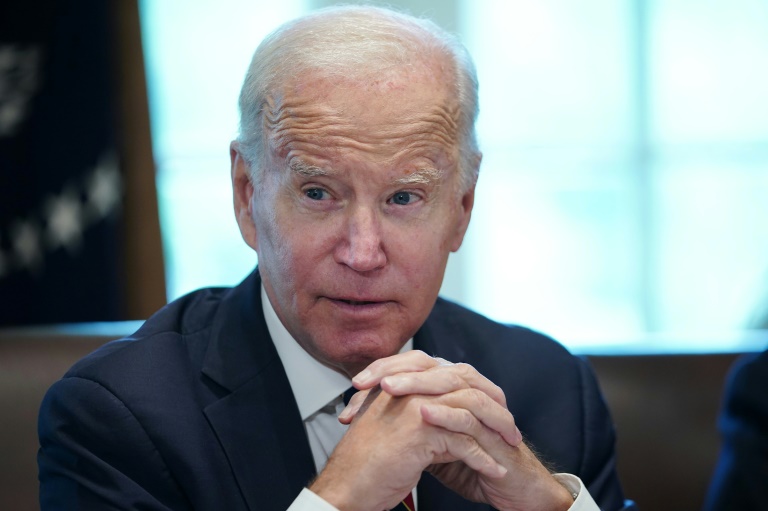
President Joe Biden will evoke John F. Kennedy’s famous 1962 speech on putting an American on the moon next week when he outlines his government’s goal of halving cancer deaths, the White House said Wednesday.

Biden will mark the 60th anniversary of JFK’s “Moonshot” speech with an event at the John F. Kennedy Library and Museum in Boston “to deliver remarks on the Cancer Moonshot and the goal of ending cancer as we know it,” the White House said.

While Kennedy used his speech to announce the program that ultimately put a human on the Moon for the first time in 1969, Biden will discuss what he calls the Cancer Moonshot initiative, which seeks to cut cancer death rates by half in the next 25 years.

Caroline Kennedy, the US ambassador to Australia and daughter of the assassinated JFK, told CNN she approved of the parallels drawn by Biden in the struggle to conquer space and the deadly disease.

“Sixty years after my father challenged Americans to land on the moon, President Biden is welcoming great challenges as new opportunities by setting us on a bold course to end cancer as we know it,” she said.

Biden’s son Beau died of brain cancer in 2015 when Biden was vice president to Barack Obama.

The following year, Obama asked Biden to lead the Cancer Moonshot plan. In February of this year, Biden relaunched the program, which seeks to provide government funding and support for everything from medical research to improving access to healthcare and better environmental conditions.

Biden’s focus on the cancer fight comes as NASA is once again looking to return to the Moon.

Two attempts to launch the agency’s huge Artemis 1 rocket from the Kennedy Space Center in Florida were shelved last week due to problems with a fuel leak. The next possible launch window is between September 19 and October 4.

The rocket is to carry an empty capsule in a test flight before an eventual crewed mission back to the lunar surface.

Biden to evoke JFK's moon speech in cancer fight

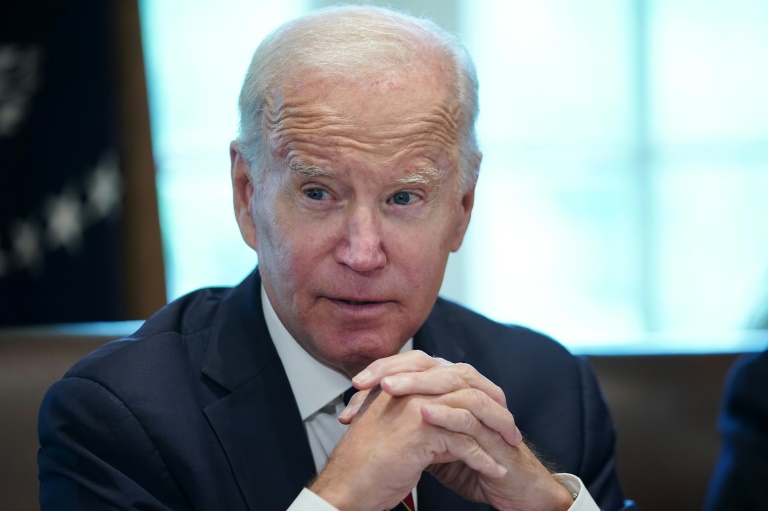
President Joe Biden will evoke John F. Kennedy’s famous 1962 speech on putting an American on the moon next week when he outlines his government’s goal of halving cancer deaths, the White House said Wednesday.

Biden will mark the 60th anniversary of JFK’s “Moonshot” speech with an event at the John F. Kennedy Library and Museum in Boston “to deliver remarks on the Cancer Moonshot and the goal of ending cancer as we know it,” the White House said.

While Kennedy used his speech to announce the program that ultimately put a human on the Moon for the first time in 1969, Biden will discuss what he calls the Cancer Moonshot initiative, which seeks to cut cancer death rates by half in the next 25 years.

Caroline Kennedy, the US ambassador to Australia and daughter of the assassinated JFK, told CNN she approved of the parallels drawn by Biden in the struggle to conquer space and the deadly disease.

“Sixty years after my father challenged Americans to land on the moon, President Biden is welcoming great challenges as new opportunities by setting us on a bold course to end cancer as we know it,” she said.

Biden’s son Beau died of brain cancer in 2015 when Biden was vice president to Barack Obama.

The following year, Obama asked Biden to lead the Cancer Moonshot plan. In February of this year, Biden relaunched the program, which seeks to provide government funding and support for everything from medical research to improving access to healthcare and better environmental conditions.

Biden’s focus on the cancer fight comes as NASA is once again looking to return to the Moon.

Two attempts to launch the agency’s huge Artemis 1 rocket from the Kennedy Space Center in Florida were shelved last week due to problems with a fuel leak. The next possible launch window is between September 19 and October 4.

The rocket is to carry an empty capsule in a test flight before an eventual crewed mission back to the lunar surface.

Kim Kardashian launches private equity firm

Reality TV star-turned-entrepreneur Kim Kardashian announced Wednesday she is branching into a new business arena with the launch of a private equity firm co-founded with a former partner at industry giant Carlyle.

“I’m pleased to announce the launch of @SKKYPartners with private equity veteran Jay Sammons as co-founder and co-managing partner,” Kardashian wrote on Twitter.

Kardashian said her mother, Kris Jenner, would also serve as partner.  

According to the new firm’s Instagram account, SKKY Partners will focus on investments in consumer and media companies in sectors including “consumer products, digital and e-commerce, consumer media, hospitality and luxury.” 

It is the latest of a series of business ventures for megastar Kardashian, who came to fame with the US reality show “Keeping Up With the Kardashians,” which tracked the lives of her family members in Los Angeles.

The 41-year-old has steadily built her business empire in recent years — most visibly with her apparel and beauty brands — and has a net worth of $1.8 billion, according to Forbes. 

Jay Sammons, who in the summer left his long-time role as head of consumer, media and retail at Carlyle — one of the top private equity companies in the world — told The Wall Street Journal he approached Kardashian and her mother about launching the firm this year.

Kardashian told the Journal she liked the idea of working closely with entrepreneurs to help them grow their vision.

“The exciting part is to sit down with these founders and figure out what their dream is,” Kardashian told the paper, adding the firm plans to make its first investment before the end of 2022.  

“I want to support what that is, not change who they are in their DNA, but just support and get them to a different level.”

SKKY did not immediately respond to AFP’s request for comment. 

Kim Kardashian launches private equity firm

Reality TV star-turned-entrepreneur Kim Kardashian announced Wednesday she is branching into a new business arena with the launch of a private equity firm co-founded with a former partner at industry giant Carlyle.

“I’m pleased to announce the launch of @SKKYPartners with private equity veteran Jay Sammons as co-founder and co-managing partner,” Kardashian wrote on Twitter.

Kardashian said her mother, Kris Jenner, would also serve as partner.  

According to the new firm’s Instagram account, SKKY Partners will focus on investments in consumer and media companies in sectors including “consumer products, digital and e-commerce, consumer media, hospitality and luxury.” 

It is the latest of a series of business ventures for megastar Kardashian, who came to fame with the US reality show “Keeping Up With the Kardashians,” which tracked the lives of her family members in Los Angeles.

The 41-year-old has steadily built her business empire in recent years — most visibly with her apparel and beauty brands — and has a net worth of $1.8 billion, according to Forbes. 

Jay Sammons, who in the summer left his long-time role as head of consumer, media and retail at Carlyle — one of the top private equity companies in the world — told The Wall Street Journal he approached Kardashian and her mother about launching the firm this year.

Kardashian told the Journal she liked the idea of working closely with entrepreneurs to help them grow their vision.

“The exciting part is to sit down with these founders and figure out what their dream is,” Kardashian told the paper, adding the firm plans to make its first investment before the end of 2022.  

“I want to support what that is, not change who they are in their DNA, but just support and get them to a different level.”

SKKY did not immediately respond to AFP’s request for comment. 

British cinema chain Cineworld files for US bankruptcy

Britain’s Cineworld, the world’s second biggest cinema chain, announced Wednesday that it has filed for bankruptcy protection in the United States as it seeks to restructure after facing low audience numbers.

The group, which operates hundreds of movie theatres in the United States, said in a statement that it filed for Chapter 11 at a bankruptcy court in Texas.

Chapter 11 of the US bankruptcy code is a court-supervised restructuring process that provides companies time to negotiate with its creditors to reach a settlement on the reduction of debts.

Cineworld said it “will seek to implement a de-leveraging transaction that will significantly reduce the Group’s debt, strengthen its balance sheet and provide the financial strength and flexibility to accelerate, and capitalise on, Cineworld’s strategy in the cinema industry.”

The statement said it hoped to emerge from bankruptcy proceedings in the first quarter of next year, and had $1.94 billion in financing from existing lenders to help it through that period.

The company also warned existing shareholders that their holdings would likely be considerably diluted as part of the bankruptcy process.

Cineworld’s shares had been sliding since the beginning of the year as the company’s position deteriorated when people didn’t return to cinemas in droves after Covid lockdowns were eased.

They plummeted last month when the company acknowledged it was considering filing for bankruptcy.

Cineworld shares rose 10 percent on Wednesday to 4.29 pence, but were still down 87 percent from the start of the year.

Analysts argue that Cineworld’s 2018 takeover of American peer Regal left it saddled with too much debt, putting it in a poor position to weather the pandemic.

British cinema chain Cineworld files for US bankruptcy

Britain’s Cineworld, the world’s second biggest cinema chain, announced Wednesday that it has filed for bankruptcy protection in the United States as it seeks to restructure after facing low audience numbers.

The group, which operates hundreds of movie theatres in the United States, said in a statement that it filed for Chapter 11 at a bankruptcy court in Texas.

Chapter 11 of the US bankruptcy code is a court-supervised restructuring process that provides companies time to negotiate with its creditors to reach a settlement on the reduction of debts.

Cineworld said it “will seek to implement a de-leveraging transaction that will significantly reduce the Group’s debt, strengthen its balance sheet and provide the financial strength and flexibility to accelerate, and capitalise on, Cineworld’s strategy in the cinema industry.”

The statement said it hoped to emerge from bankruptcy proceedings in the first quarter of next year, and had $1.94 billion in financing from existing lenders to help it through that period.

The company also warned existing shareholders that their holdings would likely be considerably diluted as part of the bankruptcy process.

Cineworld’s shares had been sliding since the beginning of the year as the company’s position deteriorated when people didn’t return to cinemas in droves after Covid lockdowns were eased.

They plummeted last month when the company acknowledged it was considering filing for bankruptcy.

Cineworld shares rose 10 percent on Wednesday to 4.29 pence, but were still down 87 percent from the start of the year.

Analysts argue that Cineworld’s 2018 takeover of American peer Regal left it saddled with too much debt, putting it in a poor position to weather the pandemic.

How Bellingcat became Russia's 'biggest nightmare'

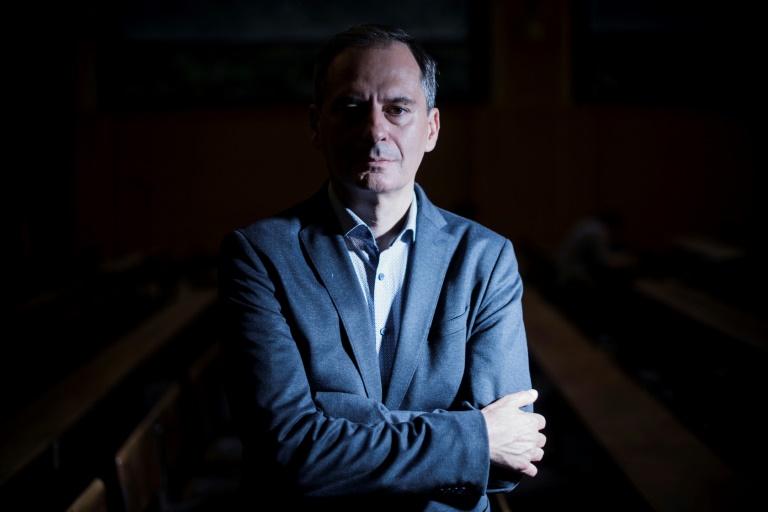
Digital investigators from the Bellingcat group have spent eight years exposing the lies of the powerful and gathering evidence of their crimes – work that has a grave human cost, the organisation’s chief told AFP in an interview.

Bulgarian journalist Christo Grozev said he and his colleagues received regular threats but he was driven to continue by “adrenalin” and “the feeling you can do something that law enforcement does not do”.

The investigative group has been closely associated with uncovering misdeeds by Russian agents across Europe, including intelligence involvement in the poisoning of opposition figure Alexei Navalny.

“When you get stopped in the street by Russian citizens, telling you thank you for what you are doing once a day, I think that it is enough to continue,” he said.

During a meeting in Paris earlier this week, he described the organisation as the “Kremlin’s biggest nightmare” though he stressed to AFP that Russia was not the main focus of their work.

“Russia today produces a lot of government crime and that’s why a lot of our investigations are focused on Russia,” he said.

“But we equally try to pay attention to bad actors from wherever they come.”

He cites investigations into the Syrian war, EU border agency Frontex and others focused on Greece, Turkey, Hungary and the far right in the United States and Europe.

– ‘Undesirable’ in Russia –

Bellingcat was founded in July 2014 by a British blogger, Eliot Higgins, along with a band of internet “nerds”, said Grozev, who joined later and brought a wealth of journalism experience from his career in the Bulgarian media.

They used information freely available to the public –- anything from satellite images to telephone directories -– to piece together evidence of wrongdoing.

Their work on the downing of Air Malaysia flight MH17 over Ukraine in 2014 — which killed 298 people and sparked global outrage — won plaudits around the world and brought the group to the attention of the Kremlin.

The investigators pieced together photos, videos and public documents that supported the theory that the plane was shot down by a Russian missile from an area controlled by pro-Russian separatists.

Since then, the group has identified Russian agents responsible for poisoning opposition figure Alexei Navalny and other dissidents, exposed alleged war crimes in Ukraine and helped uncover many more scandals.

One of its main focuses right now is the war in Ukraine, where it has a two-track approach.

Grozev said one approach uses journalistic methods to debunk false information, the other is more judicial, gathering evidence of war crimes for eventual use in the courts.

The Netherlands-based platform, which takes its name from a fable in which mice join forces to hang a bell around a cat’s neck, has rarely been out of the Kremlin’s firing line.

Russia recently described it as a security threat and deemed it “undesirable”.

– Legal challenges –

One of the main lines of attack has been to accuse Bellingcat of being funded by Western governments or NGOs, particularly the US National Endowment for Democracy.

Grozev said in its early years the group took some money from American NGOs for training, but later decided to stop.

He said it had not taken any money from governments since last year and relied instead on smaller funders.

“Most of our funders are individuals who spend 100 euros to 5,000 euros,” he said.

Beyond the financial constraints, Grozev pointed to the difficult legal environment.

“International law is handicapped because it assumes that governments look out for their citizens,” said Grozev.

Even a tribunal like the International Criminal Court, which seeks to hold individuals to account rather than countries, has long been hobbled by disagreements over its remit and powers of investigation.

And national governments are hamstrung by the idea of national sovereignty, so if a poisoning happens on Russian territory, only Russia can investigate.

It is precisely in this legal blackhole that Bellingcat finds the greatest need.

“We investigate generally bad actors, governments who commit crimes, because we think nobody else is investigating them,” said Grozev.

“There are no tribunals, no law enforcement agencies that investigate governments.”

Close Bitnami banner
Bitnami