AFP

Oil tumbles to pre-war level on recession fears

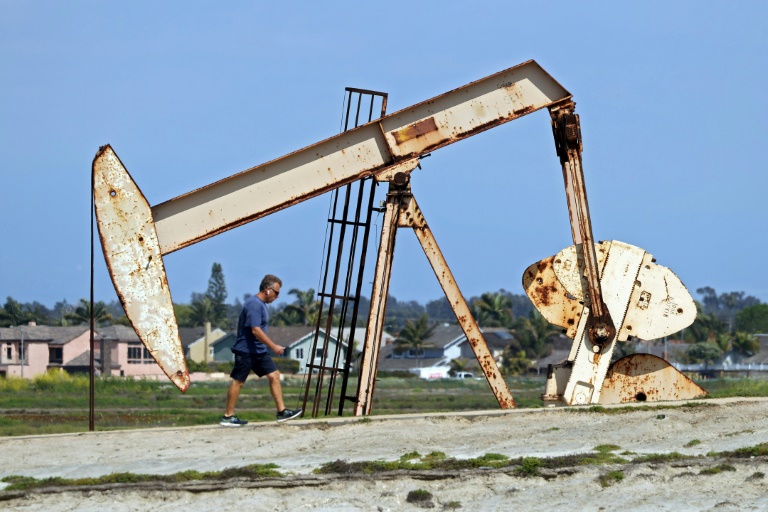
Oil prices tumbled back to pre-war levels Wednesday as recession fears returned to the forefront.

Stocks were also hit by the negative outlook for the global economy but perked up as energy prices and bond yields fell, while currency markets were gripped by the prospect for interest rate hikes.

Oil prices briefly climbed early on Wednesday as Russia’s President Vladimir Putin said his country would stop delivering oil and gas supplies to countries that introduce price caps.

G7 industrialised powers have vowed to move urgently towards implementing a price cap on Russian oil imports to cut off a major source of funding for Moscow’s military action in Ukraine.

But then oil prices then turned sharply lower, with Brent crude, the main international contract, passing under $90 per barrel for the first time since February.

OPEC and its allies earlier this week cut production targets for the first time in more than a year in a bid to lift prices.

“While the 100,000 barrel cut wasn’t fundamentally significant, it was clearly intended as a warning not to drive the price lower or face further cuts,” said OANDA trading platform analyst Craig Erlam.

“Unfortunately, it seems traders are in no mood to be told what to do and growth fears are instead dictating the price direction.”

Recession concerns also dampened sentiment towards equities, but Briefing.com analyst Patrick O’Hare said those worries were competing for investors’ attention with “the idea that the stock market is oversold on a short-term basis and due for a bounce”.

Recession fears have been driven in large part by central banks moving aggressively to rein in surging inflation.

The dollar continues to gain strength from expectations of a third-straight blockbuster hike to US interest rates later this month.

US Federal Reserve officials have lined up in recent weeks to say their main focus is bringing inflation down from four-decade highs, even if that means tipping the economy into recession.

The different pace in lifting rates taken by central banks is fuelling swings in currency values.

The European Central Bank is Thursday forecast to deliver another bumper rate increase, mirroring aggressive moves by the Fed and Bank of England.

Nevertheless, it has moved slower and the euro remains lodged below parity with the dollar.

Meanwhile, the dollar rose to 144.99 yen — the Japanese currency’s weakest showing since 1998.

“The reason that we are seeing this much strength in the dollar against the yen is purely because of the difference in two central banks’ policies,” noted Naeem Aslam, chief market analyst at AvaTrade. 

“The Fed is as hawkish as it can be, and the BoJ still doesn’t seem to be bothered much about inflation or changing its stance on monetary policy.”

Japan’s finance minister, Shunichi Suzuki, on Wednesday expressed concern about the yen’s drop.

“For now, we’re monitoring with a sense of urgency how it’s developing, but if this continues, it makes sense that we will take necessary measures,” he said, without detailing what the measures might be.

The greenback also struck a 37-year peak against sterling after a Bank of England official said plans by new PM Liz Truss to cap energy bills would reduce inflation pressures, leading markets to believe the central bank may let up on rate hikes. 

– Key figures at around 1530 GMT –

Brent North Sea crude: DOWN 3.4 percent at $89.80 per barrel

West Texas Intermediate: DOWN 3.8 percent at $83.55 per barrel

Dollar/yen: UP at 144.44 yen from 142.80 yen on Tuesday

Euro/yen: UP at 143.66 yen from 141.43 yen

Euro/dollar: UP at $0.9946 from $0.9905 

Pound/dollar: DOWN at $1.1444 from $1.1519

Euro/pound: UP at 86.72 pence from 85.97 pence

New York – Dow: UP 0.8 percent at 31,385.35 points

EURO STOXX 50: UP less than 0.1 percent at 3,502.09

London – FTSE 100: DOWN 0.9 percent at 7,237.83 (close)

Frankfurt – DAX: UP 0.4 percent at 12,915.97 (close)

Paris – CAC 40: FLAT at 6,105.92 (close)

Tokyo – Nikkei 225: DOWN 0.7 percent at 27,430.30 (close)

Hong Kong – Hang Seng Index: DOWN 0.8 percent at 19,044.30 (close)

Shanghai – Composite: UP 0.1 percent at 3,246.29 (close)

burs-rl/jj
Oil tumbles to pre-war level on recession fears

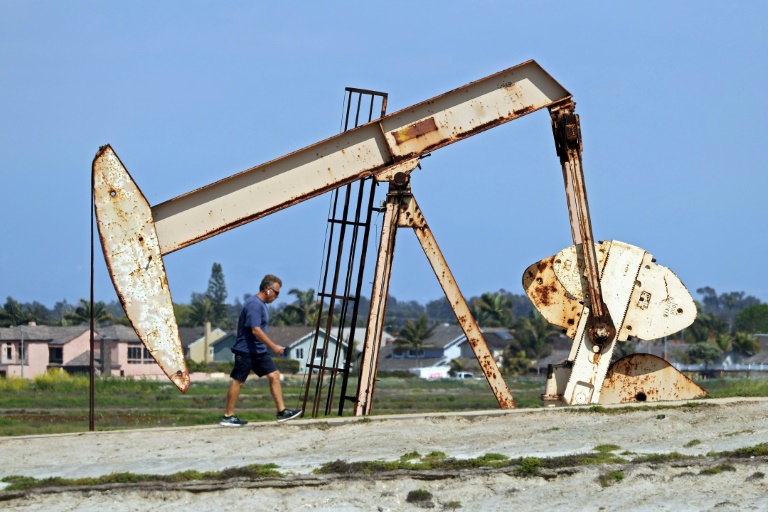
Oil prices tumbled back to pre-war levels Wednesday as recession fears returned to the forefront.

Stocks were also hit by the negative outlook for the global economy but perked up as energy prices and bond yields fell, while currency markets were gripped by the prospect for interest rate hikes.

Oil prices briefly climbed early on Wednesday as Russia’s President Vladimir Putin said his country would stop delivering oil and gas supplies to countries that introduce price caps.

G7 industrialised powers have vowed to move urgently towards implementing a price cap on Russian oil imports to cut off a major source of funding for Moscow’s military action in Ukraine.

But then oil prices then turned sharply lower, with Brent crude, the main international contract, passing under $90 per barrel for the first time since February.

OPEC and its allies earlier this week cut production targets for the first time in more than a year in a bid to lift prices.

“While the 100,000 barrel cut wasn’t fundamentally significant, it was clearly intended as a warning not to drive the price lower or face further cuts,” said OANDA trading platform analyst Craig Erlam.

“Unfortunately, it seems traders are in no mood to be told what to do and growth fears are instead dictating the price direction.”

Recession concerns also dampened sentiment towards equities, but Briefing.com analyst Patrick O’Hare said those worries were competing for investors’ attention with “the idea that the stock market is oversold on a short-term basis and due for a bounce”.

Recession fears have been driven in large part by central banks moving aggressively to rein in surging inflation.

The dollar continues to gain strength from expectations of a third-straight blockbuster hike to US interest rates later this month.

US Federal Reserve officials have lined up in recent weeks to say their main focus is bringing inflation down from four-decade highs, even if that means tipping the economy into recession.

The different pace in lifting rates taken by central banks is fuelling swings in currency values.

The European Central Bank is Thursday forecast to deliver another bumper rate increase, mirroring aggressive moves by the Fed and Bank of England.

Nevertheless, it has moved slower and the euro remains lodged below parity with the dollar.

Meanwhile, the dollar rose to 144.99 yen — the Japanese currency’s weakest showing since 1998.

“The reason that we are seeing this much strength in the dollar against the yen is purely because of the difference in two central banks’ policies,” noted Naeem Aslam, chief market analyst at AvaTrade. 

“The Fed is as hawkish as it can be, and the BoJ still doesn’t seem to be bothered much about inflation or changing its stance on monetary policy.”

Japan’s finance minister, Shunichi Suzuki, on Wednesday expressed concern about the yen’s drop.

“For now, we’re monitoring with a sense of urgency how it’s developing, but if this continues, it makes sense that we will take necessary measures,” he said, without detailing what the measures might be.

The greenback also struck a 37-year peak against sterling after a Bank of England official said plans by new PM Liz Truss to cap energy bills would reduce inflation pressures, leading markets to believe the central bank may let up on rate hikes. 

– Key figures at around 1530 GMT –

Brent North Sea crude: DOWN 3.4 percent at $89.80 per barrel

West Texas Intermediate: DOWN 3.8 percent at $83.55 per barrel

Dollar/yen: UP at 144.44 yen from 142.80 yen on Tuesday

Euro/yen: UP at 143.66 yen from 141.43 yen

Euro/dollar: UP at $0.9946 from $0.9905 

Pound/dollar: DOWN at $1.1444 from $1.1519

Euro/pound: UP at 86.72 pence from 85.97 pence

New York – Dow: UP 0.8 percent at 31,385.35 points

EURO STOXX 50: UP less than 0.1 percent at 3,502.09

London – FTSE 100: DOWN 0.9 percent at 7,237.83 (close)

Frankfurt – DAX: UP 0.4 percent at 12,915.97 (close)

Paris – CAC 40: FLAT at 6,105.92 (close)

Tokyo – Nikkei 225: DOWN 0.7 percent at 27,430.30 (close)

Hong Kong – Hang Seng Index: DOWN 0.8 percent at 19,044.30 (close)

Shanghai – Composite: UP 0.1 percent at 3,246.29 (close)

burs-rl/jj
Dutch city to ban meat ads in world first claim

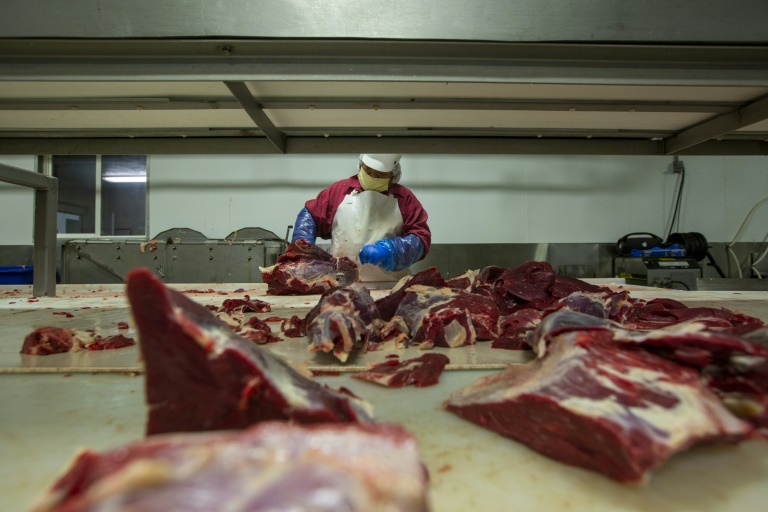
The Dutch city of Haarlem is set to become the first in the world to ban advertisements for most meat because of its impact on climate change, officials said Wednesday.

The city of 160,000 people near Amsterdam has agreed to outlaw ads for intensively farmed meat on public places like buses, shelters and screens from 2024.

The move was approved by the city council in November, but went unnoticed until last week when a councillor announced he had officially notified advertising agencies.

“It will be the first city in the Netherlands — and in fact Europe and indeed the world — to ban ‘bad’ meat ads in public places,” Ziggy Klazes, councillor for the GroenLinks (Green-Left) party who drafted the motion, told AFP.

She said it went against the city’s politics to “earn money by renting the city’s public space to products which accelerate global warming”.

The ban would target all “cheap meat from intensive farming”, Klazes said, adding, “as far as I’m concerned that includes ads from fast food chains.”

The city had not yet decided whether to outlaw ads for organic meat.

Amsterdam and The Hague have already banned ads for air travel, petrol-driven cars and fossil fuels but now Haarlem is set to add meat to that list.

The ban has been criticised by the Dutch meat industry and some political parties who see it as a form of censorship and stigmatisation of meat eaters.

“Banning ads for political reasons is nearly dictatorial,” Joey Rademaker, a Haarlem councillor for the right-wing BVNL party, said in a statement.

The Dutch meat industry body, the Centrale Organisatie voor de Vleessector, said Haarlem authorities were “going too far in telling people what’s best for them,” the Trouw newspaper said.

The sector recently launched its own campaign called “Netherlands Meatland” to promote meat-eating.

– ‘Going too far’ –

Haarlem’s ban comes at a sensitive time for the Netherlands, which has seen months of protests by farmers angry at government plans to cut nitrogen emissions to meet EU environmental targets.

The Dutch government wants to reduce the country’s herd of four million cows by nearly a third, and possibly shut some farms.

Angry farmers have blocked roads with manure and trash, set fires and held huge tractor rallies to protest — drawing support from right-wingers worldwide including former US President Donald Trump.

Meanwhile the legal status of the carnivorous crackdown is also uncertain.

A ban could be challenged as an attack on freedom of expression, administrative law professor Herman Broering of Groningen University told Trouw newspaper.

Haarlem council must still study the legal issues before the ban can come into force, added Ziggy Klazes.

“You can’t ban adverts for a business, but you can ban adverts for a group of products” for public health, she said.

“Take the example of cigarette ads.”

Agriculture contributes to deforestation, climate change and emissions of greenhouse gases, loss of biodiversity and ecosystems, and is a major user of fresh water.

The EU has suggested that people cut down on consumption of meat and dairy products.

Some 95 percent of Dutch people eat meat, including 20 percent every day, according to the Dutch central statistics office.

Other countries are banning advertising for certain types of food, including junk food, although for health reasons rather than climate.

Britain is banning television ads for foods that are high in fat, sugar and salt before 9:00 pm from 2023 to help cut child obesity.

Singapore has banned ads for the most unhealthy sugary drinks.

UK's new PM vows imminent action on energy crisis

At her first parliamentary grilling as British prime minister, Liz Truss on Wednesday confirmed plans to stem huge rises in the cost of energy that threaten to plunge her new government into a winter of discontent.

Jousting with opposition Labour chief Keir Starmer for the first time since she succeeded Boris Johnson, Truss also revelled in her status as the UK government’s third female prime minister, noting Labour has still to elect a woman leader.

Truss ruled out a windfall tax on energy firms’ gargantuan profits, but said details of her plan would be released on Thursday to ensure consumers and businesses can still afford heating in the coming months.

Whereas Johnson used the weekly session of “Prime Minister’s Questions” to theatrically attack Starmer, Truss was more business-like as she pledged a right-wing programme of tax cuts to revitalise the UK economy.

Starmer cast Truss as the inheritor of 12 years of Tory government leading up to the present crisis in inflation, which is tied to Russia’s war in Ukraine, and said there was “nothing new” about her policies.

“There’s nothing new about a Labour leader who is calling for more tax rises,” Truss retorted, earning roars of approval from Conservative MPs — most of whom had initially backed her leadership rival, Rishi Sunak.

Johnson’s predecessor Theresa May archly asked Truss why only the Conservatives had managed to elect women leaders — May herself, and Margaret Thatcher. One Tory backbencher shouted “3-0!”

Starmer’s deputy Angela Rayner looked on with a pained expression as Truss said it was “extraordinary” that Labour could not find a woman leader, or one who did not live in left-leaning North London.

– Historic diversity –

Earlier Wednesday, Truss convened her new-look cabinet, which includes the most diverse top team in British history: Kwasi Kwarteng as finance minister, James Cleverly as foreign secretary and Suella Braverman as interior minister.

Under the costly plans developed by Truss and Kwarteng, gas and electricity bills for both households and businesses are expected to be capped near current levels for the coming winter at least.

The government would lend or guarantee private-sector loans to energy providers to make up the difference they pay from soaring global wholesale prices, which have driven UK inflation above 10 percent.

The spike in inflation to 40-year highs has stoked a wave of strikes, including by railway workers and criminal lawyers, with more sectors threatening to walk out in an early challenge to Truss’s administration.

On the eve of Truss’s energy plan announcement, the British pound slumped to its lowest dollar level since 1985, tanking to $1.1406 at about 1400 GMT.

Along with the urgent issue of energy prices, Truss’s government must also navigate the combustible problem of post-Brexit trading arrangements in Northern Ireland. 

In her first contacts with foreign leaders, the new Conservative leader spoke late Tuesday by phone to Ukraine’s Volodymyr Zelensky and then US President Joe Biden.

– ‘Imbecile’ –

According to Downing Street, she agreed with Biden “on the importance of protecting” peace in Northern Ireland.

In parliament, Truss said she was “determined” to break through the impasse, and favoured a “negotiated settlement” with the EU.

To Zelensky, Truss vowed to maintain the full-throated support for Ukraine against Russia given by Johnson before he was forced out following a series of scandals.

Truss, 47, won an internal ballot of Tory members on Monday, securing 57 percent of the vote, after a gruelling contest against former finance minister Sunak that began in July.

She now faces a tough challenge reuniting the ruling Tories following the leadership battle, but observers noted that she had expelled almost every Sunak supporter from the cabinet.

Ex-soldier Johnny Mercer said he was “disappointed” to be sacked as veterans affairs minister.

His wife Felicity Cornelius-Mercer went further, calling Truss an “imbecile” as she tweeted a picture mocking the new prime minister as a dim-witted character from “The Muppets”.

The Times quoted one of her incoming ministers as saying: “I doubt she’ll last two years.”

Labour has a double-digit lead in the polls but may have to wait two years to test its popularity.

A general election is due by January 2025 at the latest. Truss on Wednesday again ruled out an early election, mindful perhaps that she needs time to win over a sceptical electorate after Johnson’s defenestration.

A new poll by Ipsos found just a third of people expect Truss to do a good job as prime minister, while another third say she will do a bad job.

US judge lets Musk amend Twitter claims, rejects delaying case

A US judge permitted Elon Musk to amend his complaint against Twitter on Wednesday, but rejected delaying the lawsuit over the disintegration of the billionaire’s deal to acquire the social media company.

In a mixed ruling, Kathaleen McCormick, the chancellor of the Delaware court, said Musk could add whistleblowing revelations from a Twitter ex-security chief that surfaced in August.

But she denied his request to push back the litigation, saying prolonging the suit “would risk further harm to Twitter too great to justify.”

Musk has been locked in a bitter legal battle with Twitter since announcing in July that he was pulling the plug on his $44 billion purchase of the company following a complex, volatile, months-long courtship.

Musk has said he canceled the deal because he was misled by Twitter concerning the number of bot accounts on its platform, allegations rejected by the company.

Revelations from Twitter former security chief Peiter Zatko criticizing Twitter’s security practices first became public in August following a report in the Washington Post.

In a hearing Tuesday, attorneys for Musk sought to amend his appeal and be granted additional time for document discovery to investigate Zatko’s assertions.

Twitter attorneys argued Musk’s request was another delay tactic designed to derail the takeover.

McCormick said Musk had cleared the relatively low legal bar to amend his complaint against Twitter, adding that she was “reticent” to weigh on the merits of Musk’s arguments “before they have been fully litigated.”

But she said Musk’s side would be permitted “only incremental discovery” to follow up on the new allegations in light of the need for a speedy resolution of the case.

“The longer the delay until trial, the greater the risk of irreparable harm to Twitter,” McCormick said, noting the company has suffered employee attrition while it “has been forced for months to manage under the constraints of a repudiated merger agreement.”

The five-day trial is due to go ahead beginning October 17 in the Delaware court. 

US judge lets Musk amend Twitter claims, rejects delaying case

A US judge permitted Elon Musk to amend his complaint against Twitter on Wednesday, but rejected delaying the lawsuit over the disintegration of the billionaire’s deal to acquire the social media company.

In a mixed ruling, Kathaleen McCormick, the chancellor of the Delaware court, said Musk could add whistleblowing revelations from a Twitter ex-security chief that surfaced in August.

But she denied his request to push back the litigation, saying prolonging the suit “would risk further harm to Twitter too great to justify.”

Musk has been locked in a bitter legal battle with Twitter since announcing in July that he was pulling the plug on his $44 billion purchase of the company following a complex, volatile, months-long courtship.

Musk has said he canceled the deal because he was misled by Twitter concerning the number of bot accounts on its platform, allegations rejected by the company.

Revelations from Twitter former security chief Peiter Zatko criticizing Twitter’s security practices first became public in August following a report in the Washington Post.

In a hearing Tuesday, attorneys for Musk sought to amend his appeal and be granted additional time for document discovery to investigate Zatko’s assertions.

Twitter attorneys argued Musk’s request was another delay tactic designed to derail the takeover.

McCormick said Musk had cleared the relatively low legal bar to amend his complaint against Twitter, adding that she was “reticent” to weigh on the merits of Musk’s arguments “before they have been fully litigated.”

But she said Musk’s side would be permitted “only incremental discovery” to follow up on the new allegations in light of the need for a speedy resolution of the case.

“The longer the delay until trial, the greater the risk of irreparable harm to Twitter,” McCormick said, noting the company has suffered employee attrition while it “has been forced for months to manage under the constraints of a repudiated merger agreement.”

The five-day trial is due to go ahead beginning October 17 in the Delaware court. 

Oil tumbles to pre-war level on recession fears

Oil prices tumbled back to pre-war levels Wednesday as recession fears returned to the forefront.

Stocks were also hit by the negative outlook for the global economy, while currency markets were gripped by the prospect for interest rate hikes.

Oil prices briefly climbed on Wednesday as Russia’s President Vladimir Putin said his country would stop delivering oil and gas supplies to countries that introduce price caps.

G7 industrialised powers have vowed to move urgently towards implementing a price cap on Russian oil imports to cut off a major source of funding for Moscow’s military action in Ukraine.

But oil prices then turned sharply lower, with Brent crude, the main international contract, passing under $90 per barrel for the first time since February.

OPEC and its allies earlier this week cut production targets for the first time in more than a year in a bid to lift prices.

“While the 100,000 barrel cut wasn’t fundamentally significant, it was clearly intended as a warning not to drive the price lower or face further cuts,” said OANDA trading platform analyst Craig Erlam.

“Unfortunately, it seems traders are in no mood to be told what to do and growth fears are instead dictating the price direction.”

Recession concerns also dampened sentiment towards equities, with European indices lower, although Wall Street managed small gains at the open.

“Investors appear reluctant to buy anything in this macro environment, where inflation is soaring, global growth is weakening, and central banks are tightening,” said City Index and FOREX.com analyst Fawad Razaqzada. 

“Something must fundamentally change before we see the onset of a serious recovery,” he added.

Recession fears are being driven in large part by central banks moving aggressively to rein in surging inflation.

The dollar continues to gain strength from expectations of a third-straight blockbuster hike to US interest rates later this month.

US Federal Reserve officials have lined up in recent weeks to say their main focus is bringing inflation down from four-decade highs, even if that means tipping the economy into recession.

The different pace in lifting rates taken by central banks is fuelling swings in currency values.

The European Central Bank is Thursday forecast to deliver another bumper rate increase, mirroring aggressive moves by the Fed and Bank of England.

Nevertheless, it has moved slower and the euro remains lodged below parity with the dollar.

Meanwhile, the dollar rose to 144.99 yen — the Japanese currency’s weakest showing since 1998.

“The reason that we are seeing this much strength in the dollar against the yen is purely because of the difference in two central banks’ policies,” noted Naeem Aslam, chief market analyst at AvaTrade. 

“The Fed is as hawkish as it can be, and the BoJ still doesn’t seem to be bothered much about inflation or changing its stance on monetary policy.”

Japan’s finance minister, Shunichi Suzuki, on Wednesday expressed concern about the yen’s drop.

“For now, we’re monitoring with a sense of urgency how it’s developing, but if this continues, it makes sense that we will take necessary measures,” he said, without detailing what the measures might be.

The greenback also struck 37-year peak against sterling, plagued by recession fears on the eve of new Prime Minister Liz Truss’s economic stimulus plan.

– Key figures at around 1330 GMT –

Brent North Sea crude: DOWN 3.1 percent at $89.92 per barrel

West Texas Intermediate: DOWN 3.5 percent at $83.86 per barrel

Dollar/yen: UP at 144.78 yen from 142.80 yen on Tuesday

Euro/yen: UP at 143.44 yen from 141.43 yen

Euro/dollar: UP at $0.9907 from $0.9905 

Pound/dollar: DOWN at $1.1478 from $1.1519

Euro/pound: UP at 86.65 pence from 85.97 pence

London – FTSE 100: DOWN 1.1 percent at 7,222.53 points

Frankfurt – DAX: DOWN 0.4 percent at 12,816.13

Paris – CAC 40: DOWN 0.6 percent at 6,066.06

EURO STOXX 50: DOWN 0.7 percent at 3,477.31

New York – Dow: DOWN 0.1 percent at 31,109.95

Tokyo – Nikkei 225: DOWN 0.7 percent at 27,430.30 (close)

Hong Kong – Hang Seng Index: DOWN 0.8 percent at 19,044.30 (close)

Shanghai – Composite: UP 0.1 percent at 3,246.29 (close)

burs-rl/lth

Oil tumbles to pre-war level on recession fears

Oil prices tumbled back to pre-war levels Wednesday as recession fears returned to the forefront.

Stocks were also hit by the negative outlook for the global economy, while currency markets were gripped by the prospect for interest rate hikes.

Oil prices briefly climbed on Wednesday as Russia’s President Vladimir Putin said his country would stop delivering oil and gas supplies to countries that introduce price caps.

G7 industrialised powers have vowed to move urgently towards implementing a price cap on Russian oil imports to cut off a major source of funding for Moscow’s military action in Ukraine.

But oil prices then turned sharply lower, with Brent crude, the main international contract, passing under $90 per barrel for the first time since February.

OPEC and its allies earlier this week cut production targets for the first time in more than a year in a bid to lift prices.

“While the 100,000 barrel cut wasn’t fundamentally significant, it was clearly intended as a warning not to drive the price lower or face further cuts,” said OANDA trading platform analyst Craig Erlam.

“Unfortunately, it seems traders are in no mood to be told what to do and growth fears are instead dictating the price direction.”

Recession concerns also dampened sentiment towards equities, with European indices lower, although Wall Street managed small gains at the open.

“Investors appear reluctant to buy anything in this macro environment, where inflation is soaring, global growth is weakening, and central banks are tightening,” said City Index and FOREX.com analyst Fawad Razaqzada. 

“Something must fundamentally change before we see the onset of a serious recovery,” he added.

Recession fears are being driven in large part by central banks moving aggressively to rein in surging inflation.

The dollar continues to gain strength from expectations of a third-straight blockbuster hike to US interest rates later this month.

US Federal Reserve officials have lined up in recent weeks to say their main focus is bringing inflation down from four-decade highs, even if that means tipping the economy into recession.

The different pace in lifting rates taken by central banks is fuelling swings in currency values.

The European Central Bank is Thursday forecast to deliver another bumper rate increase, mirroring aggressive moves by the Fed and Bank of England.

Nevertheless, it has moved slower and the euro remains lodged below parity with the dollar.

Meanwhile, the dollar rose to 144.99 yen — the Japanese currency’s weakest showing since 1998.

“The reason that we are seeing this much strength in the dollar against the yen is purely because of the difference in two central banks’ policies,” noted Naeem Aslam, chief market analyst at AvaTrade. 

“The Fed is as hawkish as it can be, and the BoJ still doesn’t seem to be bothered much about inflation or changing its stance on monetary policy.”

Japan’s finance minister, Shunichi Suzuki, on Wednesday expressed concern about the yen’s drop.

“For now, we’re monitoring with a sense of urgency how it’s developing, but if this continues, it makes sense that we will take necessary measures,” he said, without detailing what the measures might be.

The greenback also struck 37-year peak against sterling, plagued by recession fears on the eve of new Prime Minister Liz Truss’s economic stimulus plan.

– Key figures at around 1330 GMT –

Brent North Sea crude: DOWN 3.1 percent at $89.92 per barrel

West Texas Intermediate: DOWN 3.5 percent at $83.86 per barrel

Dollar/yen: UP at 144.78 yen from 142.80 yen on Tuesday

Euro/yen: UP at 143.44 yen from 141.43 yen

Euro/dollar: UP at $0.9907 from $0.9905 

Pound/dollar: DOWN at $1.1478 from $1.1519

Euro/pound: UP at 86.65 pence from 85.97 pence

London – FTSE 100: DOWN 1.1 percent at 7,222.53 points

Frankfurt – DAX: DOWN 0.4 percent at 12,816.13

Paris – CAC 40: DOWN 0.6 percent at 6,066.06

EURO STOXX 50: DOWN 0.7 percent at 3,477.31

New York – Dow: DOWN 0.1 percent at 31,109.95

Tokyo – Nikkei 225: DOWN 0.7 percent at 27,430.30 (close)

Hong Kong – Hang Seng Index: DOWN 0.8 percent at 19,044.30 (close)

Shanghai – Composite: UP 0.1 percent at 3,246.29 (close)

burs-rl/lth

Scientists fight to protect DR Congo rainforest as threats increase

A tower bristling with sensors juts above the canopy in northern Democratic Republic of Congo, measuring carbon dioxide emitted from the world’s second-largest tropical rainforest. 

Spanning several countries in central Africa, the Congo Basin rainforest covers an immense area and is home to a dizzying array of species. 

But there are growing concerns for the future of the forest, deemed critical for sequestering CO2, as loggers and farmers push ever deeper inside.

Scientists at the Yangambi Biosphere Reserve in the DRC’s Tshopo province are studying the rainforest’s role in climate change — a subject that received scant attention until recently.

Standing 55 metres tall, the CO2-measuring flux tower came online in 2020 in the lush reserve of 250,000 hectares (620,000 acres).

Yangambi was renowned for tropical agronomy research during the Belgian colonial era. 

This week, it also hosted scientists as part of meetings in the DRC dubbed pre-COP 27, ahead of the COP27 climate summit in Egypt in November.

Thomas Sibret, who runs the CongoFlux CO2 measuring project, said that flux towers are common worldwide.

But until one was set up in Yangambi, there had been none in Congo, which had “limited our understanding of this ecosystem”, he said.

Around 30 billion tonnes of carbon are stored across the Congo Basin, researchers estimated in a study in Nature in 2016. The figure is roughly equivalent to three years’ of global emissions.

Sibret said more time is required to draw definitive conclusions from the data gathered by DRC’s flux tower, but one thing is certain: The rainforest sequesters more greenhouse gases than it emits.

– ‘No more trees’ –

Paolo Cerutti, the head of the Center for International Forestry Research’s operations in Congo, said this was good news.

In Latin America, “we’re starting to see evidence that the Amazon (rainforest) is becoming more of an emitter,” he said.

“We’re betting a lot on the Congo Basin, especially the DRC, which has 160 million hectares of forest still capable of absorbing carbon.”

But Cerutti warned that slash-and-burn agriculture poses a particular threat to the future of the rainforest, pointing out that half a million hectares of forest were lost last year.

Slash-and-burn agriculture sees villagers cultivate lands until they become depleted, then clear forests to create new lands, and repeat the cycle. 

With the DRC’s population of about 100 million people set to expand, many worry the forest is in dire threat. 

Jean-Pierre Botomoito, the head of the Yanonge area about 40 kilometres (24 miles) from Yangambi, said that he once thought the forest was inexhaustible.

But “here, there are no trees,” he said.

Villagers in his once-forested region now have to travel long distances along narrow muddy paths to find tree-dwelling caterpillars — a local delicacy. 

Charcoal used for cooking in the absence of electricity and gas is similarly hard to obtain.

There are efforts to help farmers in the remote and impoverished region to make a living while sustaining the environment.

A largely EU-financed project, for example, trains farmers to rotate cassava and groundnut crops between fast-growing acacia trees. 

Farmers can harvest the acacia trees to make charcoal after six years.

Experts also encourage the use of more efficient kilns to produce more charcoal and teach loggers how to select which trees to fell.

– Vandalism –

Jean Amis, the head of a local farmers’ organisation, was enthusiastic about the project.

“We didn’t necessarily have the right practices” before, he said.

Others are too.

Helene Fatouma, the president of a women’s association, says fishponds on the edge of the forest now yield 1,450 kilos of fish in six months, as opposed to 30 previously.

But not all residents of the surrounding area support the various schemes.

Some people believe that the flux tower is stealing oxygen, for example, or that it is a prelude to land appropriation.

Researchers often find dendrometers — devices that measure tree dimensions — vandalised, and some traditional chiefs think the forest will grow back by itself without outside interference. 

The Indonesia-based Center for International Forestry Research says that resistance to the schemes can be overcome through raising awareness. 

Dieu Merci Assumani, the director of the DRC’s National Institute for Agricultural Research, agreed.

But he said there needs to be more financing for locals, who have seen little benefit from promised funds to protect the rainforest.

Assumani pointed as an example to the $500-million deal to protect the Congo Basin rainforest, signed by President Felix Tshisekedi and then British prime minister Boris Johnson in Glasgow last year.

“Commitments are all very well, but they need to be disbursed,” he said. 

US military test launches ICBM

The US military tested an unarmed intercontinental ballistic missile on Wednesday, the second in less than a month after a previous launch was delayed twice.

Washington announced the test in advance, an unusual move apparently aimed at heading off an escalation of tensions with Russia that are already heightened due to Moscow’s invasion of Ukraine.

“Air Force Global Strike Command Airmen launched an unarmed Minuteman III intercontinental ballistic missile equipped with three test re-entry vehicles” early on September 7 from the Vandenberg Space Force Base in California, the US Air Force said in a statement.

In a conflict, the re-entry vehicles would be armed with nuclear warheads.

“This test launch is part of routine and periodic activities intended to demonstrate that the United States’ nuclear deterrent is safe, secure, reliable and effective,” the statement said.

“This test is not the result of current world events,” it added.

The US Air Force successfully launched a Minutemen III ICBM on August 16, after having postponed the test twice to avoid stoking tensions over Ukraine and Taiwan.

The Minuteman III has been in service for 50 years, and is currently the only land-based ICBM in the US nuclear arsenal. The missiles are housed in silos on three US military bases in Wyoming, North Dakota and Montana. 

The US arsenal also includes Trident submarine-launched ballistic missiles and nuclear weapons carried by strategic bomber aircraft.

Close Bitnami banner
Bitnami