AFP

US forsees annual Covid boosters, just like flu: officials

Barring the emergence of drastically different variants, Covid boosters will likely be recommended annually in a similar manner to influenza vaccines, US health officials said Tuesday.

The announcement came after the Food and Drug Administration last week authorized updated bivalent shots against both the original strain of the coronavirus and the BA.4 and BA.5 lineages of the Omicron variant, which are predominant.

“We likely are moving towards a path with a vaccination cadence similar to that of the annual influenza vaccine, with annual updated Covid-19 shots matched to the currently circulating strains,” President Joe Biden’s chief medical advisor Anthony Fauci told reporters.

However, the elderly and immunocompromised may require more frequent shots — and the annual strategy would have to be reviewed in case of a “curveball” such as a dangerous new variant that differs dramatically from predictions.

Ashish Jha, the White House Covid coordinator, added the message was “simple” — if you are 12 or older, and have been previously vaccinated, now is the time to get boosted. 

If you were recently infected or vaccinated, “it’s reasonable to wait a few months,” he added.

People can get their Covid booster at the same time as the flu booster, he said. “I really believe this is why God gave us two arms, one for the flu shot and the other one for the Covid shot.”

Officials expect millions of people to receive their bivalent boosters, made by Pfizer and Moderna, in the month of September, and are focused especially on people aged 50 and up.

Centers for Disease Control and Prevention director Rochelle Walenksky said projections showed that uptake of Covid boosters at rates similar to annual flu coverage could prevent as many as 100,000 hospitalizations and 9,000 deaths.

The updated vaccines were recommended by the CDC last week on the basis of favorable animal data, which showed they produced a greater immune response and lowered levels of the virus in the lungs, compared to older shots.

The Omicron variant BA.4 and BA.5 lineages comprise 99 percent of circulating coronavirus in the United States and are predicted to continue to dominate this fall and winter.

US military announces plan to test ICBM

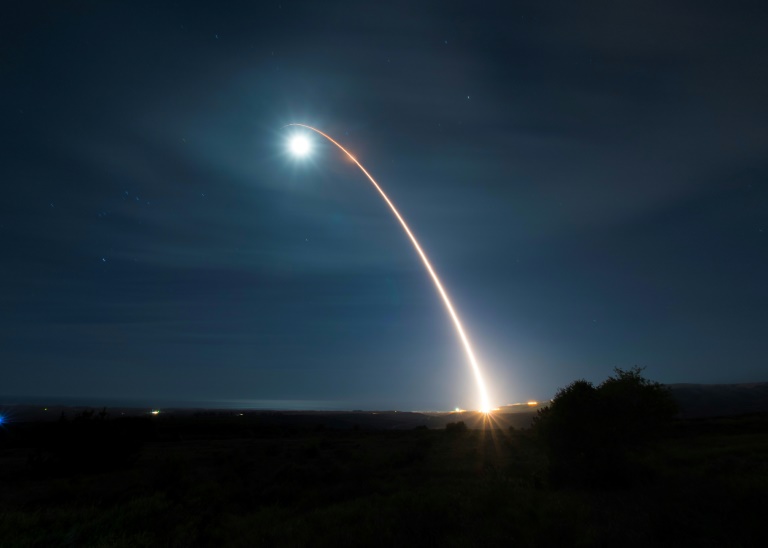
The US military will test-launch an intercontinental ballistic missile on Wednesday, the Pentagon announced, in the second such practice operation of the country’s nuclear defense in less than a month.

“There will be an operational test launch of an Air Force Global Strike command unarmed Minuteman III intercontinental ballistic missile early tomorrow morning, September 7, from Vandenberg Space Force Base in California,”  Pentagon spokesman Brigadier General Pat  Ryder said Tuesday.

The announcement ahead of the launch was unusual; the Pentagon has not confirmed recent tests until after they take place.

Ryder stressed the test would be “routine,” adding that it had been long-scheduled and that the US had notified Russia and other countries of the plans.

The aim of the test “is to demonstrate the readiness of US nuclear forces and provide confidence in the security and effectiveness of the nation’s nuclear deterrent,” Ryder told reporters.

The US Air Force successfully launched a Minutemen III ICBM August 16, after having postponed the test twice to avoid stoking tensions over Ukraine and Taiwan.

The missile carried a test re-entry vehicle, which in a strategic conflict could be armed with a nuclear warhead.

The re-entry vehicle traveled about 4,200 miles (6,760 kilometers) to the Kwajalein Atoll in the Marshall Islands in the western Pacific.

Ryder said the two tests were scheduled long in advance and are occurring close together because of the first one’s postponement.

Roots rock: Chimpanzees drum to their own signature beats

The drummers puff out their chests, let out a guttural yell, then step up to their kits and furiously pound out their signature beat so that everyone within earshot can tell who is playing.

The drum kit is the giant gnarled root of a tree in the Ugandan rainforest — and the drummer is a chimpanzee. 

A new study published Tuesday found that not only do chimpanzees have their own styles — some preferring straightforward rock beats while others groove to more freeform jazz — they can also hide their signature sound if they do not want to reveal their location.

The researchers followed the Waibira chimpanzee group in western Uganda’s Budongo Forest, recording the drum sessions of seven male chimps and analysing the intervals between beats. 

The chimps mostly use their feet, but also their hands to make the sound, which carries more than a kilometre through the dense rainforest. 

The drumming serves as a kind of social media, allowing travelling chimpanzees to communicate with each other, said Vesta Eleuteri, the lead author of the study published in the journal Animal Behaviour.

The PhD student said that after just a few weeks in the rainforest she was able to recognise exactly who was drumming.

“Tristan — the John Bonham of the forest — makes very fast drums with many evenly separated beats,” she said, referring to the legendarily hard-hitting drummer of rock band Led Zeppelin.

Tristan’s drumming “is so fast that you can barely see his hands”, Eleuteri said.

– Hiding their style –

But other chimps like Alf or Ila make a more syncopated rhythm using a technique in which both their feet hit a root at almost the same time, said British primatologist Catherine Hobaiter, the study’s senior author.

The research team was led by scientists from Scotland’s University of St Andrews, and several of the chimpanzees are named after Scottish single malt whiskies, including Ila — for Caol Ila — and fellow chimp Talisker.

Hobaiter, who started the habituation of the Waibira group in 2011, said it long been known that chimpanzees drummed.

“But it wasn’t until this study that we understood they’re using these signature styles when they’re potentially looking for other individuals — when they’re travelling, when they’re on their own or in a small group,” she told AFP.

The researchers also discovered that the chimps sometimes choose not to drum in their signature beat, to avoid revealing their location or identity.

“They have this wonderful flexibility to express their identity and their style, but also to sometimes keep that hidden,” Hobaiter said.

Michael Wilson, a specialist on chimpanzees at the University of Minnesota who was not involved in the research, said the study’s methodology was sound.

But he was not “completely convinced, though, that the drumming is sufficiently distinctive that you could reliably tell all individuals apart,” because some patterns seemed very similar, he said, calling for more research.

– ‘A sense of music’ –

While plenty of animals produce sounds we think of as music — such as birdsong — the research could open the door to the possibility that chimpanzees enjoy music on a level generally thought to only be possible for humans. 

“I do think that chimpanzees, like us, potentially have a sense of rhythmicity, a sense of music, something that touches them on an almost emotional level, in the way that we might have a sense of awe when we hear an amazing drum solo or another kind of dramatic musical sound,” Hobaiter said.

Most research on the culture of chimpanzees has looked at their tools or food, she said.

“But if we think about human culture we don’t think about the tools we use — we think about how we dress, the music we listen to,” she added.

Next the researchers plan to investigate how neighbouring and far-off communities of chimpanzees drum in their own differing styles.

Hobaiter has already been looking at chimpanzees in Guinea, where there are very few trees to drum in the open savannah.

“We’ve got early hints that they might be throwing rocks against rocks” to make sound, she said.

“Literal rock music in this case.”

G7 corporate climate plans spell 2.7C heating: analysis

The decarbonisation plans of some of the biggest corporations from G7 nations put Earth on course to heat a potentially catastrophic 2.7 degrees Celsius — blowing Earth well past the Paris Agreement temperature goals, analysis showed Tuesday.

As more and more firms announce their intention to become carbon neutral by mid-century at the latest, scrutinising corporate claims of green action is increasingly important to check whether they are aligned with the latest climate science. 

CDP, a non-profit that runs a global disclosure system for companies to manage their environmental impacts, looked at the climate plans of more than 4,000 firms across the world’s seven largest economies.

They found that current plans would lead to a world by 2100 that is 2.7C hotter than currently — a far cry from the temperature goals of the 2015 Paris deal, which enjoins nations to limit warming to “well below” 2C above pre-industrial levels. 

Europe was the best performer, with rapid action since 2021 likely to have “cooled” the temperature prediction some 0.3C, the analysis showed. 

Businesses in Canada, on the other hand, were the worst performing in terms of decarbonisation plans, with 88 percent of reported greenhouse gas emissions coming from firms that have no disclosed net zero plans.

Across all regions and sectors, only the European power generation sector achieved a temperature rating below 2C, driven by targets from renewable and nuclear energy companies.

Many companies have plans in place to reduce emissions directly produced from their business operations, such as vehicle exhausts and office heating.

Far fewer have plans covering emissions produced by the consumption or use of their products and which often count for most of their carbon footprints.

Companies in Germany, Italy and the Netherlands had policies to reduce their emissions across their entire value chain, which equated with a 2.2C temperature rise, according to the CDP.

“However, despite this progress, the average temperature ratings for corporates remain well above 1.5C across all major European economies,” it said.

G7 corporate climate plans spell 2.7C heating: analysis

The decarbonisation plans of some of the biggest corporations from G7 nations put Earth on course to heat a potentially catastrophic 2.7 degrees Celsius — blowing Earth well past the Paris Agreement temperature goals, analysis showed Tuesday.

As more and more firms announce their intention to become carbon neutral by mid-century at the latest, scrutinising corporate claims of green action is increasingly important to check whether they are aligned with the latest climate science. 

CDP, a non-profit that runs a global disclosure system for companies to manage their environmental impacts, looked at the climate plans of more than 4,000 firms across the world’s seven largest economies.

They found that current plans would lead to a world by 2100 that is 2.7C hotter than currently — a far cry from the temperature goals of the 2015 Paris deal, which enjoins nations to limit warming to “well below” 2C above pre-industrial levels. 

Europe was the best performer, with rapid action since 2021 likely to have “cooled” the temperature prediction some 0.3C, the analysis showed. 

Businesses in Canada, on the other hand, were the worst performing in terms of decarbonisation plans, with 88 percent of reported greenhouse gas emissions coming from firms that have no disclosed net zero plans.

Across all regions and sectors, only the European power generation sector achieved a temperature rating below 2C, driven by targets from renewable and nuclear energy companies.

Many companies have plans in place to reduce emissions directly produced from their business operations, such as vehicle exhausts and office heating.

Far fewer have plans covering emissions produced by the consumption or use of their products and which often count for most of their carbon footprints.

Companies in Germany, Italy and the Netherlands had policies to reduce their emissions across their entire value chain, which equated with a 2.2C temperature rise, according to the CDP.

“However, despite this progress, the average temperature ratings for corporates remain well above 1.5C across all major European economies,” it said.

Dollar weighs on yen and euro

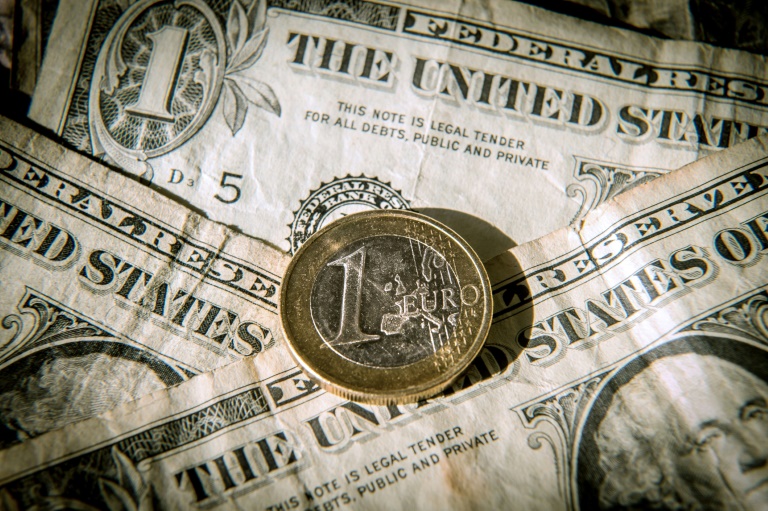
The euro and yen sunk new multi-year lows against the dollar on Tuesday as investors focused on central bank efforts to contain surging inflation and fears of an economic slowdown.

The dollar struck a 24-year high of $142.98 yen, while the euro sank to $0.9864, a level unseen since December 2002.

“Recession concerns around the world continue to boost the appetite for US dollar, even at these levels,” said City Index and FOREX.com analyst Fawad Razaqzada.

“Investors are becoming more and more convinced that the Fed is going to hike by 75 basis points this month and proceed with further aggressive hikes until inflation comes back under control,” he added.

The Fed has increased the key lending rate four times this year, including two supersized 75 basis points (0.75 percentage point) hikes in June and July, with Fed chief Jerome Powell indicating another similar increase is possible this month.

Yields on US government debt continue to rise as investors expect further hikes.

The Fed’s earlier start to raising interest rates, and pledge to continue to aggressively raise them until it has tamed surging inflation, has boosted the attractiveness of the dollar for investors.

The European Central Bank brought an end to eight years of negative interest rates with a surprisingly-aggressive 0.50 percentage point hike in July, and is expected to hike interest rates on Thursday by at least the same amount to tackle surging eurozone inflation.

Meanwhile the Bank of Japan has dug in its heels on its easy-money policies as it seeks to ensure inflation is here to stay after a long deflationary period. 

Wall Street stocks wobbled during morning trading after a three-day holiday weekend, with the Dow down 0.1 percent approaching midday.

European stocks ended the day higher despite poor German data, a day after tumultuous trading as Russia curbed gas supplies to Europe.

– ‘Wait-and-see mood’ –

Nevertheless, traders are still wary.

“Investors remain cautious amid worries about the slowing global economy,” noted Hargreaves Lansdown analyst Susannah Streeter.

“There is a wait-and-see mood hanging over markets.”

Russia’s decision over the weekend to halt gas supplies to Germany in retaliation for sanctions over Ukraine sent shock waves through European trading floors on Monday as it ramped up expectations of a painful recession in major economies.

That continues to bedevil the euro, as well as measures that European governments are taking to prop up their economies in face of the energy crisis.

Razaqzada said these measures are likely to fuel inflation even further. This would require the ECB to hike interest rates even more aggressively, meaning a sharper recession.

“So, it is a catch-22 situation for the ECB,” he said.

“For this reason, traders are reluctant to buy the euro.”

Similarly, the yield on 10-year British government bonds surged to the highest level since 2011 after Britain’s new Prime Minister Liz Truss unveiled a 130-billion-pound package to freeze consumer energy bills. 

“UK gilt yields have pushed above three percent for the first time since 2014, in anticipation that the Bank of England may have to adopt a slightly more aggressive rate posture,” said CMC Markets analyst Michael Hewson.

In Asia on Tuesday, Shanghai advanced after China unveiled fresh economy-boosting measures, but the overall picture was mixed.

Sydney dipped after the Reserve Bank of Australia lifted interest rates to a near eight-year high and warned of more pain ahead.

– Key figures at around 1530 GMT –

New York – Dow: DOWN 0.1 percent at 31,287.54 points

EURO STOXX 50: UP 0.2 percent at 3,496.77

London – FTSE 100: UP 0.2 percent at 7,300.44 (close) 

Frankfurt – DAX: UP 0.9 percent at 12,871.44 (close)

Paris – CAC 40: UP 0.2 percent at 6,104.61 (close)

Tokyo – Nikkei 225: FLAT at 27,626.51 (close)

Hong Kong – Hang Seng Index: DOWN 0.1 percent at 19,202.73 (close)

Shanghai – Composite: UP 1.4 percent at 3,243.45 (close)

Euro/dollar: DOWN at $0.9913 from $0.9929 on Monday

Pound/dollar: UP at $1.1532 from $1.1517

Dollar/yen: UP at 142.90 yen from 140.60 yen

Euro/pound: DOWN at 85.94 pence from 86.21 pence

West Texas Intermediate: DOWN 0.2 percent at $86.66 per barrel

Brent North Sea crude: DOWN 3.2 percent at $92.70 per barrel

burs-rl/rox

Dollar weighs on yen and euro

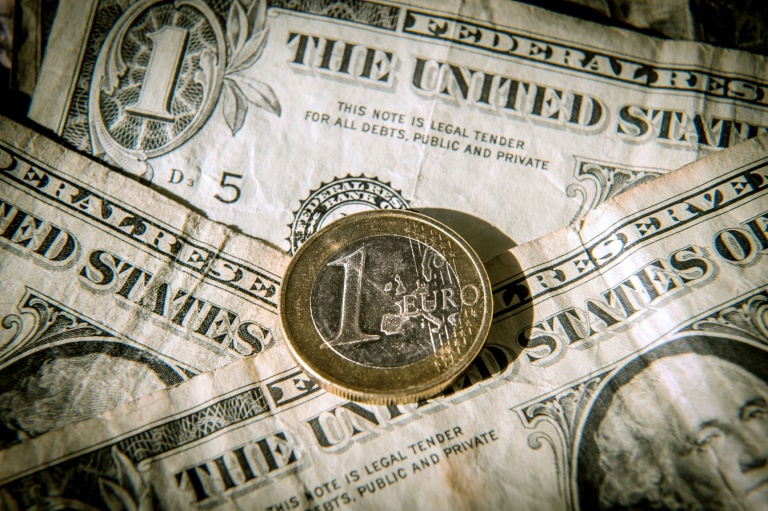
The euro and yen sunk new multi-year lows against the dollar on Tuesday as investors focused on central bank efforts to contain surging inflation and fears of an economic slowdown.

The dollar struck a 24-year high of $142.98 yen, while the euro sank to $0.9864, a level unseen since December 2002.

“Recession concerns around the world continue to boost the appetite for US dollar, even at these levels,” said City Index and FOREX.com analyst Fawad Razaqzada.

“Investors are becoming more and more convinced that the Fed is going to hike by 75 basis points this month and proceed with further aggressive hikes until inflation comes back under control,” he added.

The Fed has increased the key lending rate four times this year, including two supersized 75 basis points (0.75 percentage point) hikes in June and July, with Fed chief Jerome Powell indicating another similar increase is possible this month.

Yields on US government debt continue to rise as investors expect further hikes.

The Fed’s earlier start to raising interest rates, and pledge to continue to aggressively raise them until it has tamed surging inflation, has boosted the attractiveness of the dollar for investors.

The European Central Bank brought an end to eight years of negative interest rates with a surprisingly-aggressive 0.50 percentage point hike in July, and is expected to hike interest rates on Thursday by at least the same amount to tackle surging eurozone inflation.

Meanwhile the Bank of Japan has dug in its heels on its easy-money policies as it seeks to ensure inflation is here to stay after a long deflationary period. 

Wall Street stocks wobbled during morning trading after a three-day holiday weekend, with the Dow down 0.1 percent approaching midday.

European stocks ended the day higher despite poor German data, a day after tumultuous trading as Russia curbed gas supplies to Europe.

– ‘Wait-and-see mood’ –

Nevertheless, traders are still wary.

“Investors remain cautious amid worries about the slowing global economy,” noted Hargreaves Lansdown analyst Susannah Streeter.

“There is a wait-and-see mood hanging over markets.”

Russia’s decision over the weekend to halt gas supplies to Germany in retaliation for sanctions over Ukraine sent shock waves through European trading floors on Monday as it ramped up expectations of a painful recession in major economies.

That continues to bedevil the euro, as well as measures that European governments are taking to prop up their economies in face of the energy crisis.

Razaqzada said these measures are likely to fuel inflation even further. This would require the ECB to hike interest rates even more aggressively, meaning a sharper recession.

“So, it is a catch-22 situation for the ECB,” he said.

“For this reason, traders are reluctant to buy the euro.”

Similarly, the yield on 10-year British government bonds surged to the highest level since 2011 after Britain’s new Prime Minister Liz Truss unveiled a 130-billion-pound package to freeze consumer energy bills. 

“UK gilt yields have pushed above three percent for the first time since 2014, in anticipation that the Bank of England may have to adopt a slightly more aggressive rate posture,” said CMC Markets analyst Michael Hewson.

In Asia on Tuesday, Shanghai advanced after China unveiled fresh economy-boosting measures, but the overall picture was mixed.

Sydney dipped after the Reserve Bank of Australia lifted interest rates to a near eight-year high and warned of more pain ahead.

– Key figures at around 1530 GMT –

New York – Dow: DOWN 0.1 percent at 31,287.54 points

EURO STOXX 50: UP 0.2 percent at 3,496.77

London – FTSE 100: UP 0.2 percent at 7,300.44 (close) 

Frankfurt – DAX: UP 0.9 percent at 12,871.44 (close)

Paris – CAC 40: UP 0.2 percent at 6,104.61 (close)

Tokyo – Nikkei 225: FLAT at 27,626.51 (close)

Hong Kong – Hang Seng Index: DOWN 0.1 percent at 19,202.73 (close)

Shanghai – Composite: UP 1.4 percent at 3,243.45 (close)

Euro/dollar: DOWN at $0.9913 from $0.9929 on Monday

Pound/dollar: UP at $1.1532 from $1.1517

Dollar/yen: UP at 142.90 yen from 140.60 yen

Euro/pound: DOWN at 85.94 pence from 86.21 pence

West Texas Intermediate: DOWN 0.2 percent at $86.66 per barrel

Brent North Sea crude: DOWN 3.2 percent at $92.70 per barrel

burs-rl/rox

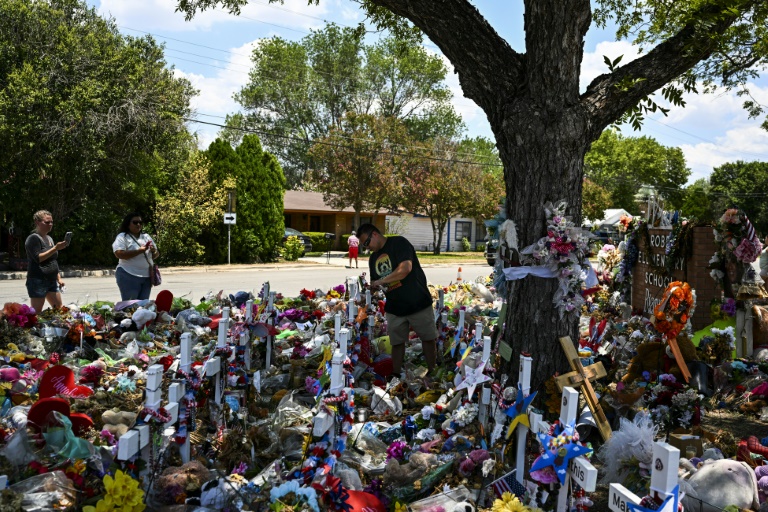
Texas school shooting survivors head back to class

Students from a Texas school that was hit by one of the worst mass shootings in US history returned to class Tuesday under tight security, American media reported.

The May massacre at Robb Elementary in Uvalde — in which an 18-year-old shot and killed 19 students and two teachers as police waited more than an hour to confront him — sent shockwaves throughout the country. 

Classes did not resume after the attack, and the start of the new school year was delayed by a month to allow still-traumatized students more time to prepare. 

The children will not be returning to the original Robb Elementary building and instead began their new classes at another school — still with the same name — about half a mile (one kilometer) away.  

In an effort to reassure shaken parents and families, administrators have implemented several security measures at the new building, including a perimeter fence, surveillance cameras and guards. 

The school has also said it is making mental health counselors available to students, and local media reported that 10 comfort dogs will be present at schools throughout the Uvalde district for the first few weeks of the year. 

Despite these efforts, some families remain wary, with several telling CNN they hesitated to send their kids back because the emotional pain of the last several months is still too strong. 

PSG face backlash over mockery of train travel option

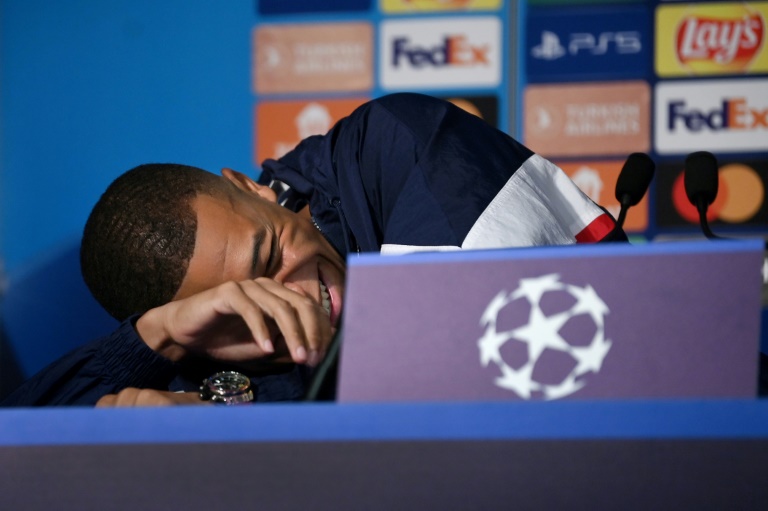
French football giants Paris Saint-Germain on Tuesday faced accusations of failing to take climate change seriously, after coach Christophe Galtier and star Kylian Mbappe mocked a suggestion that they should take the train rather than private planes for short-haul travel.

Galtier and Mbappe were asked at a press conference on Monday whether they had discussed an offer from the state railway group SNCF to provide travel for them to away games.

Galtier initially smirked at the idea while Mbappe bent double in laughter over the suggestion — with the clip quickly going viral on social media.

“We had a chat with our travel organisers earlier to see if we can travel by sand-yacht,” Galtier replied sarcastically, referring to sail-powered beach buggies that are popular on some French beaches.

Politicians, campaigners and even the prime minister weighed in on Tuesday, condemning both men for being out-of-touch and arrogant at a time when Europe faces an energy crisis and spiralling temperatures linked to climate change. 

“I think it’s important that they realise what world we live in, that they are aware that there is a climate crisis that is no longer a hypothesis about tomorrow but a reality today,” Prime Minister Elisabeth Borne told reporters while visiting a Paris police station. 

Economy Minister Bruno Le Maire called Galtier’s response “inappropriate” while Paris’ left-wing mayor Anne Hidalgo tweeted: “It’s not on to answer stuff like that???? Wake up guys??? This is Paris.”

– Private jets –

The controversy began over the weekend when PSG notched up an easy 3-0 away victory against Nantes to stay top of Ligue 1 on their trip to the French city, which is 380 kilometres (240 miles) west of Paris but located on a high-speed train line.

The side — owned by an investment fund of major gas producer Qatar — boasted on social media that they had made the return trip with shirt sponsors Qatar Airways, but their travel choice was publicly questioned due to its carbon footprint.

“Paris-Nantes is less than two hours by TGV,” Alain Krakovitch, the head of SNCF’s TGV high-speed passenger trains, wrote on Twitter afterwards.

“I renew our proposal for a TGV offer adapted to your specific needs in line with our common interests — safety, speed, services and eco-mobility,” he added.

The PSG team recently went by road to a clash with Lille, the club said, and may also take the coach for other upcoming matches.

The Qatar-owned club takes “security, public order, logistical problems and the environment” into consideration when planning travel, it said. 

The controversy comes against the background of a growing clamour in France from environmental campaigners for restrictions on private jet travel to reduce greenhouse gas emissions.

Pressure group Attac had on Friday pilloried PSG’s Argentinian star Lionel Messi for his use of private air travel.

“From June to August, Messi made 52 flights with his private jet, amounting to 1,502 tons of CO2 emissions. That’s as much as a single French person would be responsible for in 150 years,” it said.

Star French attacker Karim Benzema also faced criticism over the summer for posting a video from his holidays in Miami which flaunted his wealth — and carbon footprint — with sports cars, jet skis and motor boats.

Many teams in the top Spanish, Italian and English leagues, including Juventus and Liverpool, regularly travel by train.

– Role model? –

Communication experts said they were amazed at the insensitivity of the PSG manager’s reply on the same day that President Emmanuel Macron was urging French people to lower their air conditioning and heating to save electricity.

Europe faces an energy crunch this winter after Russia cut its gas deliveries to the continent.

The press conference behaviour was a rare faux pas for World Cup-winning posterboy Mbappe who has forged a reputation as a mature, socially-minded player despite his young age of just 23.

“I have no thoughts,” he replied in the press conference when asked for his view on the train travel option.

Contacted by AFP, his representatives declined to comment on Tuesday.

“It is a devastating blow to his image,” Frank Hocquemiller, an agent for several French international footballers, told AFP. “Footballers need to understand that if you are a role model, or in his case an icon, everything carries great importance.” 

French climatologist Valerie Masson-Delmotte said she wanted Mbappe to set an example.

“What he says, what he does, these things have an influence far beyond what scientists might say or do, because he inspires so many people,” she told France Inter radio.

burs-sjw-adp/pvh

Ex-Pentagon chiefs warn of political interference in military

Former Pentagon chiefs warned Tuesday that the deep divisions in US politics are putting unwanted pressure on the armed forces and expressed concern that civilian political interference in the military could worsen.

Eight former defense secretaries and five ex-joint chiefs chairmen signed a statement on 16 “Best Practices of Civil-Military Relations” that came after several years — particularly under former president Donald Trump — in which the Pentagon became enmeshed in political machinations.

“We are in an exceptionally challenging civil-military environment,” they wrote.

“Politically, military professionals confront an extremely adverse environment characterized by the divisiveness of affective polarization that culminated in the first election in over a century when the peaceful transfer of political power was disrupted and in doubt,” they said.

“Looking ahead, all of these factors could well get worse before they get better.”

The statement, published by the defense-focused “War on the Rocks” website, did not cite any examples to illustrate civil-military tensions.

But it did make reference to the challenge to the 2020 election results by Trump and his supporters that led to the violent January 6, 2021 assault on the US Capitol.

The Pentagon has been accused of stalling the deployment of National Guard troops to confront the attackers.

Also during the Trump years, military personnel were asked to help in a number of non-traditional activities, including building a border wall and guarding the border against undocumented migrants, and helping police cities hit by violent protests.

– Legal orders –

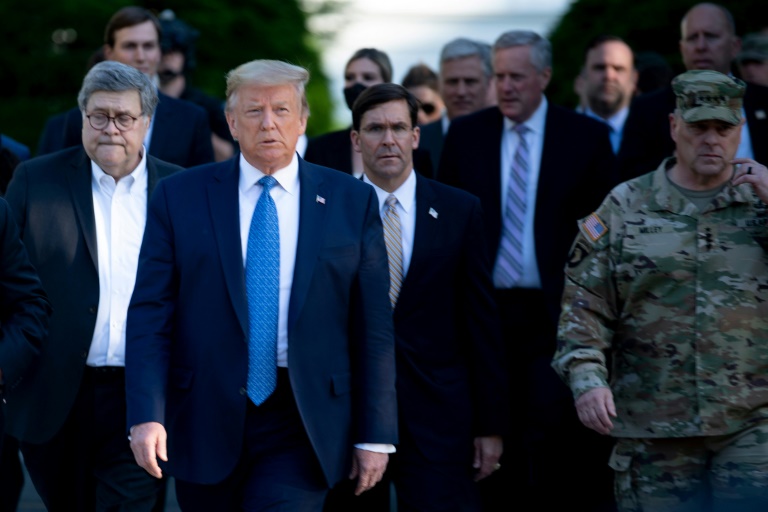
In one incident, Trump had then-defense secretary Mark Esper and General Mark Milley, who is still the chairman of the Joint Chiefs of Staff, walk alongside him in front of the White House after police cleared the street of people protesting the murder of Black man George Floyd by police.

Both later expressed regrets they took part in what was widely labelled a political “photo op” for the president.

Under President Joe Biden, the military has been forced to undertake a haphazard and deadly withdrawal from Afghanistan that senior Pentagon leaders did not agree with.

And Biden was widely criticized last week for giving a deeply political speech attacking Trump’s supporters while two Marine guards stood behind him.

The officials stressed that the military leadership must accept orders even when they disagree with them, but said the orders must be legal.

“Regardless of the process, it is the responsibility of senior military and civilian leaders to ensure that any order they receive from the president is legal.”

The statement was signed by defense chiefs under both Democratic and Republican administrations, including Robert Gates, Leon Panetta, Mark Esper and James Mattis. The latter two served under Trump and were both fired after they clashed with the president.

Close Bitnami banner
Bitnami