AFP

100% compostable coffee balls bid to take on Nespresso

Switzerland’s biggest retailer launched a new coffee machine invention on Tuesday — fully compostable coffee balls which it hopes will shake up the global market and take on Nespresso’s global dominance.

The Migros supermarket chain hopes its innovation will cash in on consumers’ environmental concerns by eliminating the aluminium and plastic waste of regular coffee capsules.

Rather than capsules, the new pods are balls of compressed coffee covered with a thin film made from algae. 

With its new system, which took five years to develop, Migros is parking its tanks on the lawns of its Swiss compatriot Nestle, the giant in the coffee pod sector with its Nespresso brand.

The machines and coffee balls went on sale in Switzerland and France from Tuesday, but interest in other countries is “already huge”, chief executive Fabrice Zumbrunnen said at the launch in Zurich, eyeing a wider rollout.

There are other compostable coffee pods on the market but Migros believes that this is the first system to use biodegradable balls.

The balls have to be used in the Migros CoffeeB system and are not compatible with other coffee machines.

Switzerland’s largest employer said the new development was in response to the growing environmental consciousness of consumers, saying that some 63 billion coffee capsules are sold each year around the world, generating around 100,000 tonnes of waste.

Migros is currently a small player in the market.

According to market researchers Euromonitor International, the market share of its Cafe Royal brand was limited to 0.3 percent in western Europe in 2021, compared to 12.1 percent for Nespresso alone, while Nestle also owns the Nescafe and Dolce Gusto labels. 

But Migros is hoping its compostable coffee system will gain it some market share. 

It points out that the coffee beans used to make the biodegradale balls are sourced from sustainable crops, with fair trade and organic certification.

The cases the balls come in look like egg cartons and are made of recyclable materials. The coffee machines themselves are largely made from recycled materials, Migros said. 

100% compostable coffee balls bid to take on Nespresso

Switzerland’s biggest retailer launched a new coffee machine invention on Tuesday — fully compostable coffee balls which it hopes will shake up the global market and take on Nespresso’s global dominance.

The Migros supermarket chain hopes its innovation will cash in on consumers’ environmental concerns by eliminating the aluminium and plastic waste of regular coffee capsules.

Rather than capsules, the new pods are balls of compressed coffee covered with a thin film made from algae. 

With its new system, which took five years to develop, Migros is parking its tanks on the lawns of its Swiss compatriot Nestle, the giant in the coffee pod sector with its Nespresso brand.

The machines and coffee balls went on sale in Switzerland and France from Tuesday, but interest in other countries is “already huge”, chief executive Fabrice Zumbrunnen said at the launch in Zurich, eyeing a wider rollout.

There are other compostable coffee pods on the market but Migros believes that this is the first system to use biodegradable balls.

The balls have to be used in the Migros CoffeeB system and are not compatible with other coffee machines.

Switzerland’s largest employer said the new development was in response to the growing environmental consciousness of consumers, saying that some 63 billion coffee capsules are sold each year around the world, generating around 100,000 tonnes of waste.

Migros is currently a small player in the market.

According to market researchers Euromonitor International, the market share of its Cafe Royal brand was limited to 0.3 percent in western Europe in 2021, compared to 12.1 percent for Nespresso alone, while Nestle also owns the Nescafe and Dolce Gusto labels. 

But Migros is hoping its compostable coffee system will gain it some market share. 

It points out that the coffee beans used to make the biodegradale balls are sourced from sustainable crops, with fair trade and organic certification.

The cases the balls come in look like egg cartons and are made of recyclable materials. The coffee machines themselves are largely made from recycled materials, Migros said. 

Roots rock: Chimpanzees drum to their own signature beats

The drummers puff out their chests, let out a guttural yell, then step up to their kits and furiously pound out their signature beat so that everyone within earshot can tell who is playing.

The drum kit is the giant gnarled root of a tree in the Ugandan rainforest — and the drummer is a chimpanzee. 

A new study published Tuesday found that not only do chimpanzees have their own styles — some preferring straightforward rock beats while others groove to more freeform jazz — they can also hide their signature sound if they do not want to reveal their location.

The researchers followed the Waibira chimpanzee group in western Uganda’s Budongo Forest, recording the drum sessions of seven male chimps and analysing the intervals between beats. 

The chimps mostly use their feet, but also their hands to make the sound, which carries more than a kilometre through the dense rainforest. 

The drumming serves as a kind of social media, allowing travelling chimpanzees to communicate with each other, said Vesta Eleuteri, the lead author of the study published in the journal Animal Behaviour.

The PhD student said that after just a few weeks in the rainforest she was able to recognise exactly who was drumming.

“Tristan — the John Bonham of the forest — makes very fast drums with many evenly separated beats,” she said, referring to the legendarily hard-hitting drummer of rock band Led Zeppelin.

Tristan’s drumming “is so fast that you can barely see his hands”, Eleuteri said.

– Hiding their style –

But other chimps like Alf or Ila make a more syncopated rhythm using a technique in which both their feet hit a root at almost the same time, said British primatologist Catherine Hobaiter, the study’s senior author.

The research team was lead by scientists from Scotland’s University of St Andrews, and several of the chimpanzees are named after Scottish single malt whiskies, including Ila — for Caol Ila — and fellow chimp Talisker.

Hobaiter, who started the habituation of the Waibira group in 2011, said it long been known that chimpanzees drummed.

“But it wasn’t until this study that we understood they’re using these signature styles when they’re potentially looking for other individuals — when they’re travelling, when they’re on their own or in a small group,” she told AFP.

The researchers also discovered that the chimps sometimes choose not to drum in their signature beat, to avoid revealing their location or identity.

“They have this wonderful flexibility to express their identity and their style, but also to sometimes keep that hidden,” Hobaiter said.

– ‘A sense of music’ –

While plenty of animals produce sounds we think of as music — such as birdsong — the research could open the door to the possibility that chimpanzees enjoy music on a level generally thought to only be possible for humans. 

“I do think that chimpanzees, like us, potentially have a sense of rhythmicity, a sense of music, something that touches them on an almost emotional level, in the way that we might have a sense of awe when we hear an amazing drum solo or another kind of dramatic musical sound,” Hobaiter said.

Most research on the culture of chimpanzees has looked at their tools or food, she said.

“But if we think about human culture we don’t think about the tools we use — we think about how we dress, the music we listen to,” she added.

Next the researchers plan to investigate how neighbouring and far-off communities of chimpanzees drum in their own differing styles.

Hobaiter has already been looking at chimpanzees in Guinea, where there are very few trees to drum in the open savannah.

“We’ve got early hints that they might be throwing rocks against rocks” to make sound, she said.

“Literal rock music in this case.”

'I am innocent', mining magnate says at end of Swiss appeal

A French-Israeli businessman appealing against his conviction in one of the mining sector’s biggest-ever corruption cases insisted Tuesday on his innocence and hoped the Swiss court would give him justice.

Mining tycoon Beny Steinmetz was found guilty in 2021 of setting up a complex financial web to pay bribes to ensure his company could obtain permits in Guinea’s southeastern Simandou region, which is estimated to contain the world’s biggest untapped iron ore deposits.

“I am innocent,” the 66-year-old told AFP at the end of seven days of intense hearings.

The businessman, who made his fortune in diamonds, was sentenced by a Geneva court to five years in prison and ordered to pay 50 million Swiss francs ($52 million) in compensation.

But he insisted during the appeals court hearings that that verdict was deeply unfair, with his lawyers arguing the prosecution’s case was “very weak”.

“I have done nothing wrong,” Steinmetz said shortly before the court adjourned, telling the judges he had been “devastated” to hear how he was being portrayed.

Steinmetz — who lives in Israel and was granted a free-passage to attend the trial — is free to leave Switzerland but will be asked to return to serve his sentence if he loses.

He has not served any prison time due to the appeal process, with the judges expected to take weeks or even months to render their verdict. 

The prosecutors doubled down on the picture painted during the original trial, of Steinmetz leading the charge to bribe a wife of then-Guinean president Lansana Conte and others in order to win lucrative mining rights in Simandou.

Beny Steinmetz Group Resources (BSGR) obtained the rights — which had been stripped from mining giant Rio Tinto — shortly before Conte died in 2008, after about $10 million was allegedly paid in bribes over a number of years through different channels.

BSGR received the rights against an investment of $160 million, but 18 months later sold 51 percent of its stake in the concession to Vale of Brazil for $2.5 billion.

In 2013, Guinean president Alpha Conde reviewed the permits allotted under Conte and stripped the VBG consortium formed by BSGR and Vale of its permit.

Prosecutors claim Steinmetz and his associates entered a “pact of corruption” with Conte and his fourth wife Mamadie Toure to obtain the exploration rights — a charge he flatly rejects.

Toure, who has admitted to having received payments, has protected status in the United States as a state witness.

Steinmetz’s lawyer repeatedly complained that the defence had no access to Toure or insight into her US deal, and decried Tuesday that the prosecutor’s case relied heavily on “a witness who is not credible.”

The defence maintained there was nothing inappropriate about how BSGR obtained the permits, and that Rio Tinto lost half the concessions for failing to develop them.

Filtered ferry engines hailed for tackling air pollution

A French ferry company has launched what it claims is the first vessel that uses filters to capture almost all air pollutants from the boat’s exhaust fumes, sparking praise from campaigners and local authorities.

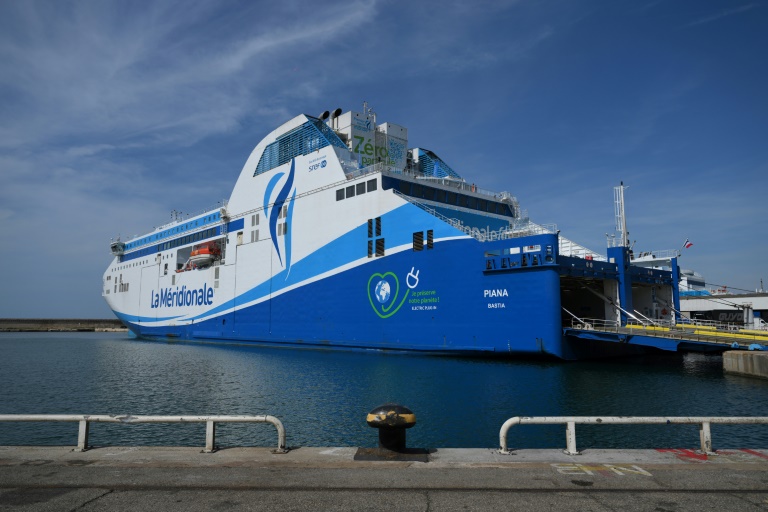
La Meridionale, based in the southern French port of Marseille, showed off its innovative ship on Monday to the media.

“It’s an unprecedented solution, a world first,” company chairman Marc Reverchon told reporters on board the blue-and white Piana which sails between Marseille and the French island of Corsica.

The company said the filters captured 99 percent of sulphur oxides emitted by the ferry’s four engines, as well as 99.9 percent of particulate matter created from the burning of its heavy fuel.

The filters use technology already found in power stations or incineration plants in which sodium bicarbonate is injected into the exhaust fumes, causing a chemical reaction with the tiny particles produced during the combustion process.

The pollutants can then be captured by a type of industrial air filter that has been around for more than 30 years, company technical director Christophe Seguinot told reporters.

“We didn’t have to look too far. We didn’t invent anything,” Seguinot explained. “The challenge for us was to make it suitable for a marine setting.”

The ferry group has an agreement with chemicals supplier Solvay, which will dispose of the toxic filter residue — with a view to recycling it in the future, Seguinot said.

Heavy fuel oil, also known as bunker fuel, is one of the cheapest but most polluting transportation fuels, resulting in the thick plumes of dirty brown smoke seen above most ships.

It is also high in sulphur which can cause respiratory problems and acid rain.

– Regulation –

Regulations on the amount of sulphur authorised vary, with ultra-clean fuel mandated in areas such as the North Sea and Baltic Sea in Europe, as well as around North American ports.

Marseille, which hosts cruise and container ships as well as ferries, has struggled with increased smog in recent years and the shipping sector is thought to be responsible for a large part of the problem.

“Let’s hope that the big polluters follow the example of La Meridionale,” Marseille’s Socialist mayor Benoit Payan tweeted on Monday after attending the company event.

He has been battling ship operators over the summer with a petition calling for the dirtiest vessels to be barred during peak pollution times.

Shipping companies are under pressure from regulators and tightening industry standards to tackle their emissions of greenhouse gases as well as atmospheric pollutants, but campaigners want faster action.

La Meridionale “is going much further than current regulations require by treating all of their particulate matter,” Damien Piga from Atmosud, a regional air quality surveillance group, told AFP. 

Some ship owners favour the use of so-called “scrubbing” technology which sees water sprayed into the exhaust fumes, which captures some of the pollutants.

Environmentalists point out that in many cases the water is then discharged into the sea, however.

Other groups are experimenting with engines that run on cleaner liquefied natural gas (LNG) or methanol, while electric and sail powered vessels are also being developed.

Filtered ferry engines hailed for tackling air pollution

A French ferry company has launched what it claims is the first vessel that uses filters to capture almost all air pollutants from the boat’s exhaust fumes, sparking praise from campaigners and local authorities.

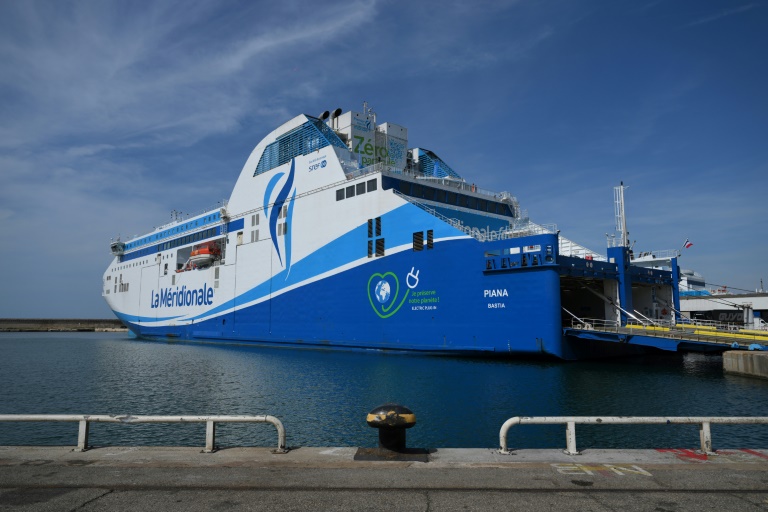
La Meridionale, based in the southern French port of Marseille, showed off its innovative ship on Monday to the media.

“It’s an unprecedented solution, a world first,” company chairman Marc Reverchon told reporters on board the blue-and white Piana which sails between Marseille and the French island of Corsica.

The company said the filters captured 99 percent of sulphur oxides emitted by the ferry’s four engines, as well as 99.9 percent of particulate matter created from the burning of its heavy fuel.

The filters use technology already found in power stations or incineration plants in which sodium bicarbonate is injected into the exhaust fumes, causing a chemical reaction with the tiny particles produced during the combustion process.

The pollutants can then be captured by a type of industrial air filter that has been around for more than 30 years, company technical director Christophe Seguinot told reporters.

“We didn’t have to look too far. We didn’t invent anything,” Seguinot explained. “The challenge for us was to make it suitable for a marine setting.”

The ferry group has an agreement with chemicals supplier Solvay, which will dispose of the toxic filter residue — with a view to recycling it in the future, Seguinot said.

Heavy fuel oil, also known as bunker fuel, is one of the cheapest but most polluting transportation fuels, resulting in the thick plumes of dirty brown smoke seen above most ships.

It is also high in sulphur which can cause respiratory problems and acid rain.

– Regulation –

Regulations on the amount of sulphur authorised vary, with ultra-clean fuel mandated in areas such as the North Sea and Baltic Sea in Europe, as well as around North American ports.

Marseille, which hosts cruise and container ships as well as ferries, has struggled with increased smog in recent years and the shipping sector is thought to be responsible for a large part of the problem.

“Let’s hope that the big polluters follow the example of La Meridionale,” Marseille’s Socialist mayor Benoit Payan tweeted on Monday after attending the company event.

He has been battling ship operators over the summer with a petition calling for the dirtiest vessels to be barred during peak pollution times.

Shipping companies are under pressure from regulators and tightening industry standards to tackle their emissions of greenhouse gases as well as atmospheric pollutants, but campaigners want faster action.

La Meridionale “is going much further than current regulations require by treating all of their particulate matter,” Damien Piga from Atmosud, a regional air quality surveillance group, told AFP. 

Some ship owners favour the use of so-called “scrubbing” technology which sees water sprayed into the exhaust fumes, which captures some of the pollutants.

Environmentalists point out that in many cases the water is then discharged into the sea, however.

Other groups are experimenting with engines that run on cleaner liquefied natural gas (LNG) or methanol, while electric and sail powered vessels are also being developed.

US services sector expands in August as prices ease: survey

The American services sector expanded at a slightly faster pace in August amid signs of easing supply issues and slowing price gains, according to an industry survey released Tuesday.

The Institute for Supply Management’s services index rose to 56.9 percent, just slightly above the July level, defying expectations of a slowdown.

The new orders index jumped 1.9 percentage points, and employment rose 1.1 points, ISM said, while prices slipped 0.8.

“The services sector had a slight uptick in growth for the month of August due to increases in business activity, new orders and employment,” ISM survey chair Anthony Nieves said in a statement.

Firms responding to the survey noted “some supply chain, logistics and cost improvements; however, material shortages remain a challenge,” he said.

On the plus side, “employment improved slightly despite a restricted labor market.”

The sector accounts for two-thirds of the US economy and comprises a wide variety of services, from education to IT to medicine.

Even amid soaring US inflation, the sector has grown steadily for 151 months, except for a two-month contraction as the United States grappled with the beginning of the coronavirus pandemic in April and May 2020.

In contrast, growth in the manufacturing sector was flat in August. 

The Federal Reserve is on an aggressive campaign to combat the highest US inflation in four decades, fueled by global supply chain challenges, raising interest rates to cool demand.

Rubeela Farooqi of High Frequency Economics said despite the upside surprise in the services sector, “momentum is likely to moderate as economic activity continues to adjust to Fed rate hikes.”

Stocks push higher, but yen and euro under pressure

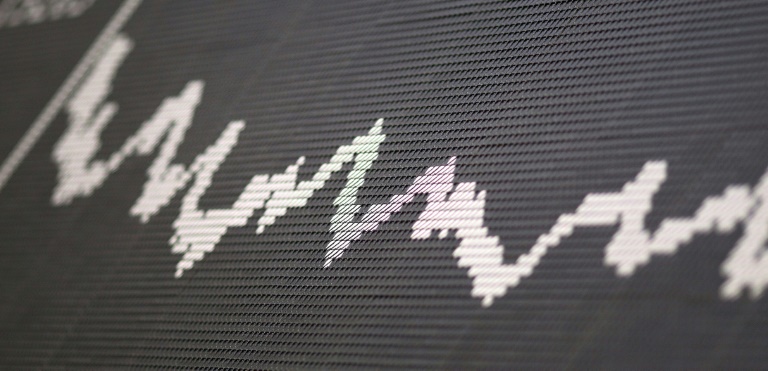
European and US stocks rose Tuesday, but gains were capped by economic slowdown fears and central bank efforts to contain surging inflation.

Frankfurt, London and Paris equities carved out gains despite poor German data, a day after tumultuous trading as Russia curbed gas supplies to Europe.

Wall Street stocks opened higher after a three-day holiday weekend, with the Dow adding 0.4 percent

The euro approached a 20-year low versus the dollar that it struck on Monday, while sterling was lifted by reports that new UK Prime Minister Liz Truss could freeze a looming surge in energy bills, and the yen struck a new 24-year dollar low.

– ‘Wait-and-see mood’ –

Briefing.com analyst Patrick O’Hare said the positive start on Wall Street was primarily due to the fact that main indices are down around 10 percent from the highs they struck on August 16.

There is “an expectation that it is due for a bounce from a short-term oversold condition.”

Nevertheless, traders are still wary.

“Investors remain cautious amid worries about the slowing global economy,” noted Hargreaves Lansdowne analyst Susannah Streeter.

“There is a wait-and-see mood hanging over markets.”

Frankfurt rebounded somewhat despite news that Germany’s industrial orders slumped for the sixth consecutive month in July.

That again raised the spectre that recession was looming in Europe’s biggest economy.

The European Central Bank is expected to hike interest rates on Thursday to tackle surging eurozone inflation.

Eurozone stocks had tumbled Monday on heightened energy concerns after Russia said it would not restart gas flows to Germany and effectively most of the continent.

– ‘Catch-22’ for euro –

Russia’s decision — in retaliation for sanctions over Ukraine — sent shock waves through trading floors as it ramped up expectations of a painful recession in major economies.

That continues to bedevil the euro, as well as the measures that European governments take to prop up their economies. 

City Index and FOREX.com analyst Fawad Razaqzada said these measures are likely to fuel inflation even further. This would require the ECB to hike interest rates even more aggressively, meaning a sharper recession.

“So, it is a catch-22 situation for the ECB,” he said.

“For this reason, traders are reluctant to buy the euro.”

In Asia on Tuesday, Shanghai advanced after China unveiled fresh economy-boosting measures, but the overall picture was mixed.

Sydney dipped after the Reserve Bank of Australia lifted interest rates to a near eight-year high and warned of more pain ahead.

– Key figures at around 1330 GMT –

London – FTSE 100: UP 0.4 percent at 7,312.85 points

Frankfurt – DAX: UP 1.0 percent at 12,891.67

Paris – CAC 40: UP 0.4 percent at 6,115.12

EURO STOXX 50: UP 0.5 percent at 3,505.67

New York – Dow: UP 0.4 percent at 31,428.94 

Tokyo – Nikkei 225: FLAT at 27,626.51 (close)

Hong Kong – Hang Seng Index: DOWN 0.1 percent at 19,202.73 (close)

Shanghai – Composite: UP 1.4 percent at 3,243.45 (close)

Euro/dollar: DOWN at $0.9899 from $0.9929 on Monday

Pound/dollar: UP at $1.1539 from $1.1517

Dollar/yen: UP at 142.46 yen from 140.60 yen

Euro/pound: DOWN at 85.79 pence from 86.21 pence

West Texas Intermediate: UP 1.0 percent at $87.71 per barrel

Brent North Sea crude: DOWN 1.9 percent at $93.91 per barrel

burs-rl/lth

Stocks push higher, but yen and euro under pressure

European and US stocks rose Tuesday, but gains were capped by economic slowdown fears and central bank efforts to contain surging inflation.

Frankfurt, London and Paris equities carved out gains despite poor German data, a day after tumultuous trading as Russia curbed gas supplies to Europe.

Wall Street stocks opened higher after a three-day holiday weekend, with the Dow adding 0.4 percent

The euro approached a 20-year low versus the dollar that it struck on Monday, while sterling was lifted by reports that new UK Prime Minister Liz Truss could freeze a looming surge in energy bills, and the yen struck a new 24-year dollar low.

– ‘Wait-and-see mood’ –

Briefing.com analyst Patrick O’Hare said the positive start on Wall Street was primarily due to the fact that main indices are down around 10 percent from the highs they struck on August 16.

There is “an expectation that it is due for a bounce from a short-term oversold condition.”

Nevertheless, traders are still wary.

“Investors remain cautious amid worries about the slowing global economy,” noted Hargreaves Lansdowne analyst Susannah Streeter.

“There is a wait-and-see mood hanging over markets.”

Frankfurt rebounded somewhat despite news that Germany’s industrial orders slumped for the sixth consecutive month in July.

That again raised the spectre that recession was looming in Europe’s biggest economy.

The European Central Bank is expected to hike interest rates on Thursday to tackle surging eurozone inflation.

Eurozone stocks had tumbled Monday on heightened energy concerns after Russia said it would not restart gas flows to Germany and effectively most of the continent.

– ‘Catch-22’ for euro –

Russia’s decision — in retaliation for sanctions over Ukraine — sent shock waves through trading floors as it ramped up expectations of a painful recession in major economies.

That continues to bedevil the euro, as well as the measures that European governments take to prop up their economies. 

City Index and FOREX.com analyst Fawad Razaqzada said these measures are likely to fuel inflation even further. This would require the ECB to hike interest rates even more aggressively, meaning a sharper recession.

“So, it is a catch-22 situation for the ECB,” he said.

“For this reason, traders are reluctant to buy the euro.”

In Asia on Tuesday, Shanghai advanced after China unveiled fresh economy-boosting measures, but the overall picture was mixed.

Sydney dipped after the Reserve Bank of Australia lifted interest rates to a near eight-year high and warned of more pain ahead.

– Key figures at around 1330 GMT –

London – FTSE 100: UP 0.4 percent at 7,312.85 points

Frankfurt – DAX: UP 1.0 percent at 12,891.67

Paris – CAC 40: UP 0.4 percent at 6,115.12

EURO STOXX 50: UP 0.5 percent at 3,505.67

New York – Dow: UP 0.4 percent at 31,428.94 

Tokyo – Nikkei 225: FLAT at 27,626.51 (close)

Hong Kong – Hang Seng Index: DOWN 0.1 percent at 19,202.73 (close)

Shanghai – Composite: UP 1.4 percent at 3,243.45 (close)

Euro/dollar: DOWN at $0.9899 from $0.9929 on Monday

Pound/dollar: UP at $1.1539 from $1.1517

Dollar/yen: UP at 142.46 yen from 140.60 yen

Euro/pound: DOWN at 85.79 pence from 86.21 pence

West Texas Intermediate: UP 1.0 percent at $87.71 per barrel

Brent North Sea crude: DOWN 1.9 percent at $93.91 per barrel

burs-rl/lth

Gender identity gets starring role at Venice Film Festival

Transgender issues have taken centre stage at the Venice Film Festival this year, with Italian director Emanuele Crialese, there to present his new film starring Penelope Cruz, even using the platform to reveal he was born a woman. 

The revelation by Crialese came at a press conference for his new film, “L’Immensita”, which is inspired by his difficult adolescence. 

“I am never going to be like any other man… I was born biologically a woman,” Crialese said. 

He added that, despite his transition, there was still a “huge part of my character that is female”. 

In the film, Cruz’s character attempts to protect her teenage daughter, who identifies as a boy, in a bourgeois household dominated by an abusive, unfaithful husband.

It is not alone at this year’s festival in embracing artists who reject traditional gender roles or tackle issues around sexual identity. 

Another film in the main competition, “Monica” by Italian director Andrea Pallaoro, stars a transgender actress in the leading role — a first in 79 editions of the festival. 

Trace Lysette, known for her role in Amazon Prime series “Transparent”, plays a transgender woman who returns to Ohio after a long absence to care for her dying mother. 

“It’s very rare that you see a script where there’s a trans character at the centre and the movie is told through her lens,” Lysette told reporters. 

“Usually trans characters are more a sidebar vehicle for someone else’s story.”

Besides exploring the title character’s emotional and psychological world, the movie reflects on “the precarious nature of each of our identities when faced with the need to survive and transform”, said Pallaoro.

– Struggling for decades –

Themes of gender identity are also the subject of various documentaries in the festival.

In “All the Beauty and the Bloodshed”, director Laura Poitras centres on the art and activism of US photographer Nan Goldin, whose early work focused on gay culture and volatile male-female relationships.

Meanwhile, a documentary by French director Sebastien Lifshitz, “Casa Susanna”, recounts the story of a clandestine community of cross-dressers in the conservative America of the 1950s and 1960s, relying on archival footage and surviving members of this “pre-queer” history.

“It’s been a struggle for decades to try to break out of the archetypes,” Lifshitz told AFP.  

Prejudice against homosexuals in 1960s Italy is the premise of Gianni Amelio’s film, based on true events and set to premiere on Tuesday.

“Il Signore delle Formiche” (The Lord of the Ants) tells the story of Aldo Braibanti, a playwright and poet convicted of submitting his student and lover to his will, a crime under the Fascist penal code that had never been invoked before and was later revoked.  

In “Three Nights a Week,” French director Florent Gouelou offers up “a declaration of love” to the art form of drag, with his protagonist Baptiste discovering the Parisian world of drag queens and falling in love with one of them, Cookie.

“Through the character of Baptiste you see my own fascination and through the character of Cookie you see my own experience as a drag queen,” said Gouelou.

Close Bitnami banner
Bitnami