AFP

Strong earthquake in southwest China kills 30

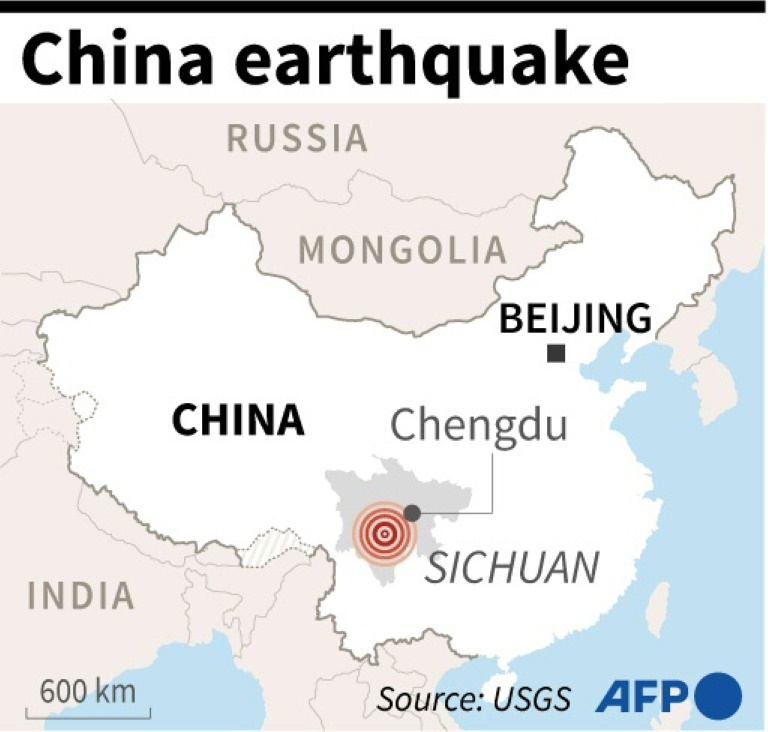
At least 30 people were killed when a strong earthquake struck southwestern China on Monday, state media reported, as violent tremors in a remote region damaged homes and left some areas without electricity.

The magnitude 6.6 quake hit about 43 kilometres (26 miles) southeast of the city of Kangding in Sichuan province at a depth of 10 kilometres, according to the US Geological Survey.

The death toll now stands at “more than 30 dead”, according to state broadcaster CCTV.

Tremors shook buildings in the provincial capital of Chengdu — where millions are confined to their homes under a strict Covid lockdown — and in the nearby megacity of Chongqing, local residents told AFP.

“I felt it quite strongly. Some of my neighbours on the ground floor said they felt it very noticeably,” said Chen, a resident of Chengdu.

“But because Chengdu is currently under epidemic management, people aren’t allowed to leave their residential compounds, so many of them rushed out into their courtyards,” she added.

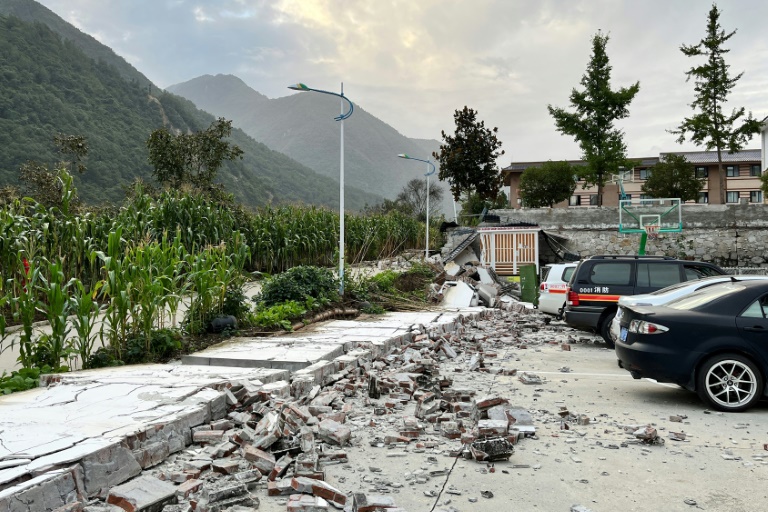
At least one town had suffered “severe damage” from landslides triggered by the quake, CCTV reported.

A road to another town was blocked and telecommunications lines in areas home to more than 10,000 people were severed, the broadcaster said, adding that shocks also forced some power stations offline in the areas of Garze and Ya’an.

Footage broadcast by CCTV appeared to show damaged buildings and a street strewn with fallen masonry in Garze.

A video posted online by the China Earthquake Networks Center showed boulders thundering down mountainsides in Luding county, kicking up clouds of dust as tremors swayed roadside telephone wires.

State media reported that several aftershocks were recorded in nearby areas. A smaller magnitude 4.6 tremor hit eastern Tibet less than an hour after the initial quake, according to the USGS.

Hundreds of rescue workers were dispatched to the epicentre, CCTV reported, alongside footage of firefighters in orange jumpsuits boarding trucks and navigating a highway littered with rocks and other debris.

The Sichuan seismological authority said more than 1,000 soldiers had been sent to help rescue workers.

Authorities also sent thousands of tents, blankets and foldable beds to the affected areas, according to the broadcaster.

Other state media photos showed officials in military fatigues heaving shovels and other equipment along a highway — all while wearing face masks as a Covid precaution.

President Xi Jinping called for local authorities to “make saving lives the first priority, go all out to rescue people in disaster-stricken areas, and minimise loss of life,” according to CCTV.

A resident of Chongqing said the quake was “pretty noticeable” and that it had shaken the lights and furniture in his fifth-floor apartment.

“I was pretty scared,” he told AFP, “but it didn’t seem to faze people here.”

– Summer of extremes –

Earthquakes are fairly common in China, especially in the country’s seismically active southwest.

A magnitude 8.0 quake in 2008 in Sichuan’s Wenchuan county left tens of thousands dead and caused enormous damage.

At least four people were killed and dozens more injured after two earthquakes in southwestern China in June.

That month a shallow 6.1-magnitude shock hit a sparsely populated area about 100 kilometres west of Chengdu.

It was followed three minutes later by a second quake of magnitude 4.5 in a nearby county, where the deaths and injuries occurred.

Authorities in Chengdu extended the city’s lockdown on Sunday as they fight a Covid flare-up with hundreds of cases.

The region has also suffered a summer of extreme weather, with a record-breaking heatwave noticeably drying rivers in Chongqing.

OPEC+ agrees oil output cut to prop up prices

The OPEC+ oil cartel agreed Monday to cut production for the first time in more than a year as it seeks to lift prices that have tumbled due to recession fears.

The move could irk the United States as it has pressed the group to increase output in order to bring down energy prices that have fuelled decades-high inflation.

OPEC+, a 23-nation coalition led by Saudi Arabia and Russia, had agreed to huge cuts in output in 2020 when the Covid pandemic sent oil prices crashing, but it began to increase production modestly again last year as the market improved.

Oil prices soared to almost $140 a barrel in March after Russia invaded Ukraine.

But they have since receded below $100 per barrel amid recession fears, Covid lockdowns in major consumer China and Iran nuclear talks that could bring Iranian crude back into the market.

While analysts had expected another modest increase at Monday’s ministerial meeting, OPEC+ said in a statement that it decided to reduce output by 100,000 barrels per day in October, returning to the production level of August.

The group also left the door open to holding talks prior to its next scheduled meeting on October 5 “to address market developments, if necessary”.

“First and foremost it is a clear message from the group: OPEC+ will not allow the oil price to slide. Further cuts will be initiated if necessary,” Bjarne Schieldrop, chief commodities analyst at SEB research group, told AFP.

While analysts said the cut was mostly symbolic, oil prices rose by more than three percent following the announcement, with the international benchmark, Brent, exceeding $96 per barrel while the US contract, WTI, reached almost $90.

At its last meeting, OPEC+ agreed to a small rise of 100,000 barrels per day for September after US President Joe Biden travelled to Saudi Arabia to plead for a production bump — although it was six times lower than its previous decisions. 

Energy Minister Abdulaziz bin Salman last month had appeared to open the door to the idea of cutting output, which has since received the support of several member states and the cartel’s joint technical committee.

He said “volatility and thin liquidity send erroneous signals to markets at times when clarity is most needed”.

Craig Erlam, analyst at OANDA trading platform, said the cut was “also a blow to President Biden as the hike last month was viewed as a token gesture after his visit.”

“Now it’s clear how valuable that actually was, or wasn’t as it turns out. The political damage it caused was a waste and if anything, it looks worse than if nothing had changed in the first place,” Erlam said.

– Iran talks –

Caroline Bain, commodities expert at Capital Economics, said the cut was not a total surprise and “little more than symbolic” as OPEC+ has struggled to meet its quotas due to lacklustre production in some of its member countries.

“The bigger picture is that OPEC+ is producing well below its output target and this looks unlikely to change given that Angola and Nigeria, in particular, appear unable to return to pre-pandemic levels of production,” Bain said.

In efforts to curb rising oil prices, the United States and its allies have released crude from their emergency reserves.

And in a bid to curb Russia’s war funding, the G7 group of industrialised powers agreed Friday to move “urgently” towards capping the price of Russian oil. 

Moscow has warned that it will no longer sell oil to countries that adopt the unprecedented mechanism.

Another geopolitical issue is clouding the outlook.

Negotiations aimed at reviving a landmark nuclear deal between Tehran and world powers could lead to an easing of oil sanctions in return for curbs to the atomic activities.

However, Washington said Thursday that Tehran’s latest response to a European Union draft was “unfortunately… not constructive”. 

Floods cripple Indian tech hub Bangalore

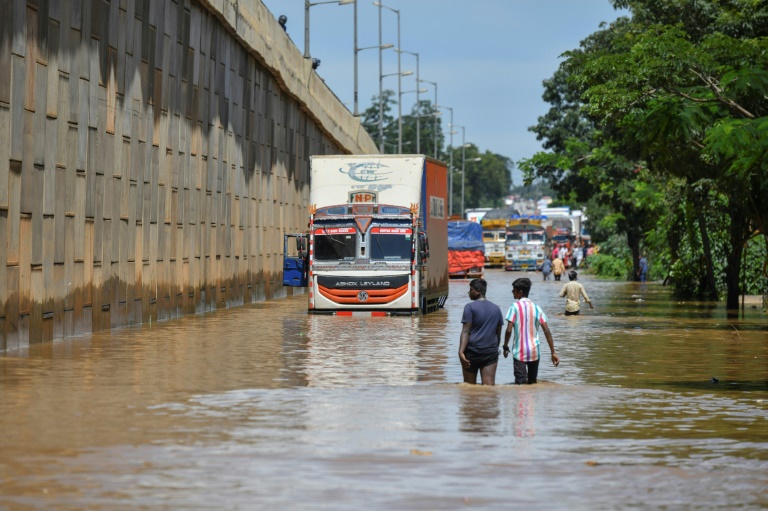
Floods blamed on shoddy infrastructure crippled Indian IT hub Bangalore on Monday, with employees in the huge tech sector told to work from home and dozens of areas reportedly left without drinking water.

The southern metropolis of around 8.5 million people boomed in the 1990s, with its myriad outsourcing and software companies now employing millions in the “back office of the world”.

But the city’s companies have complained that infrastructure development has not kept up, with perennial traffic jams and unplanned construction on the dried-up beds of lakes leading to frequent flooding even after moderate rainfall.

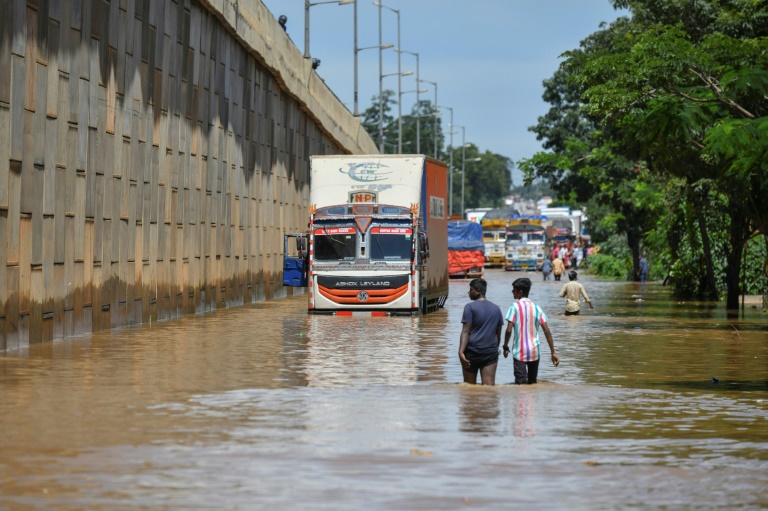
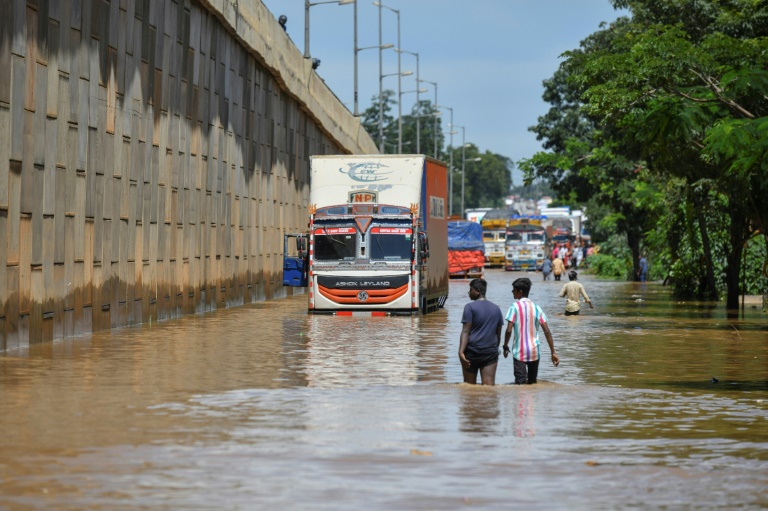
On Monday large parts of the city were under water, with authorities deploying rubber dinghies to ferry people around and footage on social media showing tractors being used to transport travellers from the airport.

The umbrella group for the IT sector, the Outer Ring Road Companies Association (ORRCA), advised employees to work from home while many schools and colleges were shut.

The supply of drinking water to more than 50 areas of the city was halted for two days after a pumping station was inundated, media reports said, as more rain was forecast.

“Honestly, the traffic situation in Bangalore is always bad but this is now another level,” said one back-office employer for food delivery company Swiggy, requesting to stay anonymous.

“It’s worse than ever before because of how many people have rushed back to the city after Covid. The infrastructure can’t take the strain,” he told AFP.

str-ash-ng-stu/dva

Floods cripple Indian tech hub Bangalore

Floods blamed on shoddy infrastructure crippled Indian IT hub Bangalore on Monday, with employees in the huge tech sector told to work from home and dozens of areas reportedly left without drinking water.

The southern metropolis of around 8.5 million people boomed in the 1990s, with its myriad outsourcing and software companies now employing millions in the “back office of the world”.

But the city’s companies have complained that infrastructure development has not kept up, with perennial traffic jams and unplanned construction on the dried-up beds of lakes leading to frequent flooding even after moderate rainfall.

On Monday large parts of the city were under water, with authorities deploying rubber dinghies to ferry people around and footage on social media showing tractors being used to transport travellers from the airport.

The umbrella group for the IT sector, the Outer Ring Road Companies Association (ORRCA), advised employees to work from home while many schools and colleges were shut.

The supply of drinking water to more than 50 areas of the city was halted for two days after a pumping station was inundated, media reports said, as more rain was forecast.

“Honestly, the traffic situation in Bangalore is always bad but this is now another level,” said one back-office employer for food delivery company Swiggy, requesting to stay anonymous.

“It’s worse than ever before because of how many people have rushed back to the city after Covid. The infrastructure can’t take the strain,” he told AFP.

str-ash-ng-stu/dva

Floods cripple Indian tech hub Bangalore

Floods blamed on shoddy infrastructure crippled Indian IT hub Bangalore on Monday, with employees in the huge tech sector told to work from home and dozens of areas reportedly left without drinking water.

The southern metropolis of around 8.5 million people boomed in the 1990s, with its myriad outsourcing and software companies now employing millions in the “back office of the world”.

But the city’s companies have complained that infrastructure development has not kept up, with perennial traffic jams and unplanned construction on the dried-up beds of lakes leading to frequent flooding even after moderate rainfall.

On Monday large parts of the city were under water, with authorities deploying rubber dinghies to ferry people around and footage on social media showing tractors being used to transport travellers from the airport.

The umbrella group for the IT sector, the Outer Ring Road Companies Association (ORRCA), advised employees to work from home while many schools and colleges were shut.

The supply of drinking water to more than 50 areas of the city was halted for two days after a pumping station was inundated, media reports said, as more rain was forecast.

“Honestly, the traffic situation in Bangalore is always bad but this is now another level,” said one back-office employer for food delivery company Swiggy, requesting to stay anonymous.

“It’s worse than ever before because of how many people have rushed back to the city after Covid. The infrastructure can’t take the strain,” he told AFP.

str-ash-ng-stu/dva

OPEC+ agrees oil output cut to prop up prices

The OPEC+ oil cartel agreed Monday to cut production for the first time in more than a year as it seeks to lift prices that have tumbled due to recession fears.

The move could irk the United States as it has pressed the group to increase output in order to bring down energy prices that have fuelled decades-high inflation.

OPEC+, a 23-nation coalition led by Saudi Arabia and Russia, had agreed to huge cuts in output in 2020 when the Covid pandemic sent oil prices crashing, but it began to increase production modestly again last year as the market improved.

Oil prices soared to almost $140 a barrel in March after Russia invaded Ukraine.

But they have since receded below $100 per barrel amid recession fears, Covid lockdowns in major consumer China and Iran nuclear talks that could bring Iranian crude back into the market.

While analysts had expected another modest increase at Monday’s ministerial meeting, OPEC+ said in a statement that it decided to reduce output by 100,000 barrels per day in October, returning to the production level of August.

“An output cut won’t make them any friends at a time when the world is facing a cost-of-living crisis already and the group has failed to keep up with demand this year,” Craig Erlam, analyst at OANDA trading platform, warned prior to the OPEC+ announcement.

Oil prices rose by more than three percent following the announcement, with the international benchmark, Brent, exceeding $96 per barrel while the US contract, WTI, reached almost $90.

At its last meeting, OPEC+ agreed to a small rise of 100,000 barrels per day for September after US President Joe Biden travelled to Saudi Arabia to plead for a production bump — although it was six times lower than its previous decisions. 

Energy Minister Abdulaziz bin Salman last month had appeared to open the door to the idea of cutting output, which has since received the support of several member states and the cartel’s joint technical committee.

He said “volatility and thin liquidity send erroneous signals to markets at times when clarity is most needed”.

– Iran talks –

Caroline Bain, commodities expert at Capital Economics, said the cut was not a total surprise a “little more than symbolic” as OPEC+ has struggled to meet its quotas due to lacklustre production in some of its member countries.

“The bigger picture is that OPEC+ is producing well below its output target and this looks unlikely to change given that Angola and Nigeria, in particular, appear unable to return to pre-pandemic levels of production,” Bain said.

In efforts to curb rising oil prices, the United States and its allies have released crude from their emergency reserves.

And in a bid to curb Russia’s war funding, the G7 group of industrialised powers agreed Friday to move “urgently” towards capping the price of Russian oil. 

Moscow has warned that it will no longer sell oil to countries that adopt the unprecedented mechanism.

Another geopolitical issue is clouding the outlook.

Negotiations aimed at reviving a landmark nuclear deal between Tehran and world powers could lead to an easing of oil sanctions in return for curbs to the atomic activities.

However, Washington said Thursday that Tehran’s latest response to a European Union draft was “unfortunately… not constructive”. 

New UK PM Truss inherits economy headed for recession

New UK Prime Minister Liz Truss inherits an economy set to enter recession before the end of the year, with double-digit inflation forecast to soar further.

– Cost of living – 

With inflation at a 40-year high above 10 percent, fuelled by rocketing energy and food prices, Truss promised during her campaign to cut taxes.

She pledged also to reverse a recent increase in workers’ National Insurance contributions that fund the public health service and welfare payments.

Truss is also proposing to axe taxes on fuel that pay for the transition to cleaner energy but she has rejected “sticking plaster” solutions to the cost-of-living crisis such as direct government aid.

An emergency budget is expected within weeks, as the Bank of England (BoE) predicts that the UK will enter a year-long recession by the end of 2022.

Before then, Truss is expected to present a plan to tackle soaring energy bills.

“If I’m elected prime minister, I will act immediately on bills and on energy supply,” Truss, who steps up from her role as foreign minister, told the BBC on Sunday.

British households are facing an eye-watering 80-percent average hike in electricity and gas bills from next month, in a dramatic worsening of the cost-of-living crisis before winter.

“Some of the promises Liz Truss has scattered on the campaign trail may flutter away once she takes office and the cold reality of the monumental crisis the government faces becomes clear,” noted Susannah Streeter, senior investment and markets analyst at Hargreaves Lansdown.

– Energy –

Truss, 47, has backed the UK’s ambition to achieve carbon neutrality by 2050.

She favours all-out investment in energy including controversial fracking technology where it is backed by locals.

Truss also wants more energy to come from the North Sea and backs current UK government policy on investment in nuclear power and renewables.

Boris Johnson last week pledged £700 million ($815 million) in funding for the new Sizewell C nuclear power station, as he prepared to hand over power as UK prime minister and Conservative party leader.

Sizewell C in eastern England is expected to be constructed in partnership with French energy firm EDF and could power the equivalent of about six million homes.

The UK is seeking to safeguard energy security after key producer Russia sent prices rocketing with its invasion of Ukraine.

– Brexit –

Truss backed remaining in the European Union before the 2016 referendum on membership of the bloc, switching sides after the public voted to leave.

Now unashamedly pro-Brexit, she has spearheaded proposed legislation to override parts of the Northern Ireland Protocol the UK signed with the EU governing current trade in the province.

She has promised to take all EU law off the UK statute book to help “turbocharge” growth.

Truss has made no proposals to address chronic post-Brexit labour shortages in the UK, particularly of seasonal workers.

– Financial regulation –

Truss has called for an overhaul of regulators in the City of London financial district.

Notably she wants to merge the Financial Conduct Authority, the Prudential Regulation Authority which oversees banks and is part of the Bank of England, and the Payment Systems Regulator.

Truss has been critical of the BoE’s response to rising inflation and has proposed examining the statute that gave it operational independence over monetary policy in 1997.

Governor Andrew Bailey has noted in response that the UK’s financial credibility was dependent on the bank’s independence from government.

In a bid to cool soaring global inflation, the BoE and other major central banks have hiked interest rates several times this year.

Strong earthquake in southwest China kills 21

At least 21 people were killed when a strong earthquake struck southwestern China on Monday, state media reported, as violent tremors in a remote region damaged homes and left some areas without electricity.

The magnitude 6.6 quake hit about 43 kilometres (26 miles) southeast of the city of Kangding in Sichuan province at a depth of 10 kilometres, according to the US Geological Survey.

Fourteen people lost their lives in Sichuan’s Shimian county and seven died in nearby Luding county, while more than 30 were injured, according to state broadcaster CCTV.

Tremors shook buildings in the provincial capital of Chengdu — where millions are confined to their homes under a strict Covid lockdown — and in the nearby megacity of Chongqing, local residents told AFP.

“I felt it quite strongly. Some of my neighbours on the ground floor said they felt it very noticeably,” said Chen, a resident of Chengdu.

“But because Chengdu is currently under epidemic management, people aren’t allowed to leave their residential compounds, so many of them rushed out into their courtyards,” she added.

At least one town had suffered “severe damage” from mountain landslides triggered by the quake, CCTV reported.

A road to another town was blocked and telecommunications lines in areas home to more than 10,000 people were severed, the broadcaster said, adding that shocks also forced some power stations offline in the areas of Garze and Ya’an.

Footage broadcast by CCTV appeared to show damaged buildings and a street strewn with fallen masonry in Garze.

A video posted online by the China Earthquake Networks Center showed boulders thundering down mountainsides in Luding county, kicking up clouds of dust as tremors swayed roadside telephone wires.

State media reported that several aftershocks were recorded in nearby areas. A smaller magnitude 4.6 tremor hit eastern Tibet less than an hour after the initial quake, according to the USGS.

Hundreds of rescue workers were dispatched to the epicentre, CCTV reported, alongside footage of firefighters in orange jumpsuits boarding trucks and navigating a highway littered with rocks and other debris.

The Sichuan seismological authority said more than 1,000 soldiers had been sent to help rescue workers.

Authorities also sent thousands of tents, blankets and foldable beds to the affected areas, according to the broadcaster.

Other state media photos showed officials in military fatigues heaving shovels and other equipment along a highway — all while wearing face masks as a Covid precaution.

President Xi Jinping called for local authorities to “make saving lives the first priority, go all out to rescue people in disaster-stricken areas, and minimise loss of life,” according to CCTV.

A resident of Chongqing said the quake was “pretty noticeable” and that it had shaken the lights and furniture in his fifth-floor apartment.

“I was pretty scared,” he told AFP, “but it didn’t seem to faze people here.”

– Summer of extremes –

Earthquakes are fairly common in China, especially in the country’s seismically active southwest.

A magnitude 8.0 quake in 2008 in Sichuan’s Wenchuan county left tens of thousands dead and caused enormous damage.

At least four people were killed and dozens more injured after two earthquakes in southwestern China in June.

That month a shallow 6.1-magnitude shock hit a sparsely populated area about 100 kilometres west of Chengdu.

It was followed three minutes later by a second quake of magnitude 4.5 in a nearby county, where the deaths and injuries occurred.

Authorities in Chengdu extended the city’s lockdown on Sunday as they fight a Covid flare-up with hundreds of cases.

The region has also suffered a summer of extreme weather, with a record-breaking heatwave noticeably drying rivers in Chongqing.
Engineers breach Pakistan lake as flood misery grows for millions

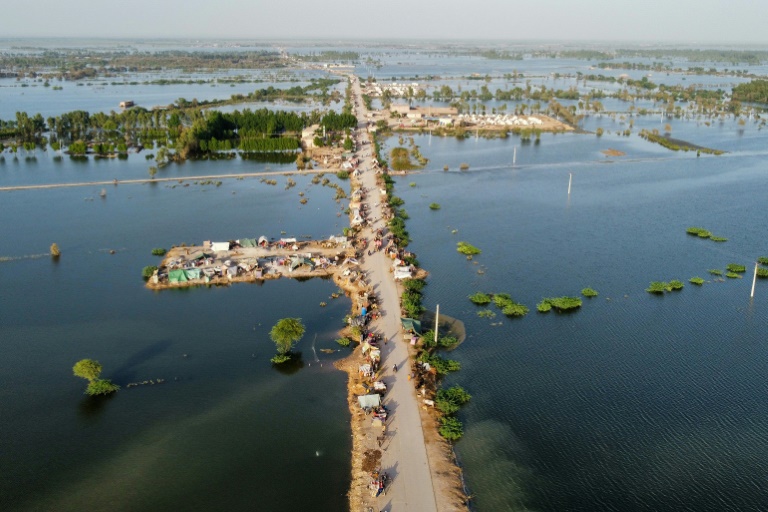
Engineers breached Pakistan’s biggest freshwater lake to drain water threatening nearby towns, officials said Monday, as heavy rain poured misery on millions affected by the country’s worst floods in history.

Nearly a third of Pakistan is under water — an area the size of the United Kingdom — following months of record monsoon rains that have killed 1,300 people and washed away homes, businesses, roads and bridges.

Officials say the repair bill will top $10 billion for a country already in the grip of economic crisis, with hundreds of thousands homeless as the monsoon draws to an end and winter approaches.

“There is nowhere to shower or go to the bathroom,” said Zebunnisa Bibi, sheltering near Fazilpur, in Punjab province, where 65 tents are now home to more than 500 people who fled their inundated villages for higher land. 

Similar tent camps have mushroomed across much of the south and west of Pakistan, where rain has nowhere to drain because rivers are already in full flow as a result of torrential downpours in the north.

Sindh province Information minister Sharjeel Inam Memon told AFP Monday that engineers had to cut a channel into Lake Manchar to drain water that was threatening the towns of Sehwan and Bhan Saeedabad, with a combined population of nearly half a million.

– Lake Manchar bigger than ever –

Still, thousands had to be evacuated from smaller settlements submerged by the newly directed channel.

“The flood water was diverted but the threat is still far from over,” Memon said.

“We are trying our best to stop the inundation of more villages.”

Lake Manchar, which lies west of the Indus River, varies in size according to the season and rainfall, but is currently spread over as wide an area as anyone can recall.

Much of Sindh and parts of Balochistan have become a vast landscape of water, with displaced locals huddled miserably on elevated roads, rail tracks and other high ground.

Human and animal waste in the fetid water attracts swarms of flies, while outbreaks of dengue are being reported from mosquitos breeding in the swamplands.

One pregnant woman at a camp in Punjab said she was desperate for medical attention for a baby due any day now.

The mother-of-five knows it could be a difficult birth, as the baby has not shifted from the breech position.

“I need a doctor or a midwife. What if something happens to my child?” said Fahmidah Bibi.

The United Nations Population Fund said at the weekend there were at least 128,000 pregnant women in flood-hit areas who urgently need care — with 42,000 expected to give birth in the next three months.

– Climate change blamed –

Pakistan receives heavy — often destructive — rains during its annual monsoon season, which are crucial for agriculture and water supplies.

But such intense downpours have not been seen for decades.

Pakistani officials blame climate change, which is increasing the frequency and intensity of extreme weather around the world.

Pakistan is responsible for less than one percent of global greenhouse gas emissions, but is eighth on a list compiled by the NGO Germanwatch of countries deemed most vulnerable to extreme weather caused by climate change.

A massive army-led relief operation is in full swing, but the country’s leaders have admitted being overwhelmed by the scale of the crisis and appealed for international help.

The latest figures from the National Disaster Management Authority show nearly 6,000 kilometres (4,000 miles) of roads have been washed away, 246 bridges demolished, and 1.6 million homes either destroyed or badly damaged since June, when the monsoon started.

European stocks, euro tumble as Russia fuels energy crisis

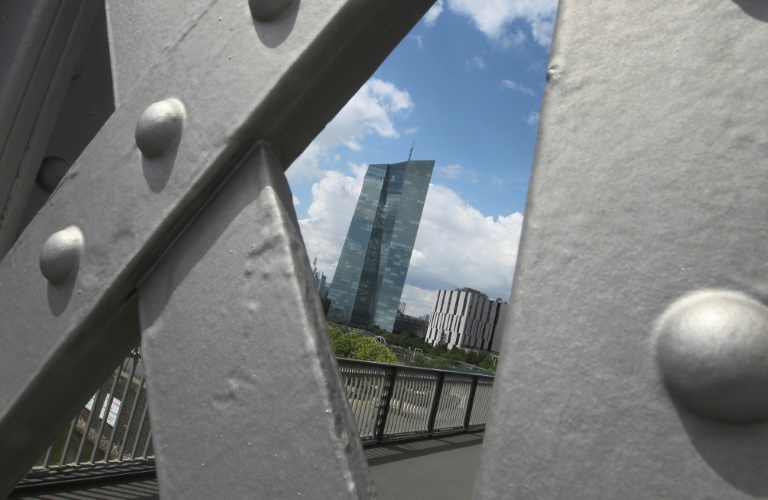
European stocks tumbled Monday and the euro hit a new 20-year dollar low on energy crisis fears, after Russia said it would not restart gas flows to Germany and effectively most of the continent.

Natural gas prices spiked almost a third, while oil rallied on expectations OPEC and its Russia-led allies could decide at a meeting Monday to lower crude output in a bid to lift prices.

Europe’s fast-moving gas crisis sent Frankfurt equities slumping more than three percent before trimming losses, while Paris shed two percent at one stage.

London stocks also lost ground before the much-anticipated announcement of Britain’s next prime minister at around 1130 GMT.

– ‘Weaponization of energy’ –

“Russia’s ongoing weaponization of energy supplies continues to increase downside risks for European economies and the euro,” said Lee Hardman, currency analyst at financial services group MUFG. 

The euro sank Monday to $0.9878, its lowest since December 2002, despite expectations the European Central Bank will hike interest rates again Thursday to combat soaring inflation.

The shared eurozone unit has collapsed by about 13 percent against the dollar since the start of the year, hit also by the US Federal Reserve’s more aggressive monetary tightening.

State gas giant Gazprom announced late Friday the key Nord Stream pipeline would remain shut indefinitely, blaming leaks.

Gazprom’s announcement came the same day as the G7 nations said they would work to quickly implement a price cap on Russian oil exports, a move that would starve the Kremlin of critical revenue for its war on Ukraine.

Resumption of deliveries via the pipeline, which runs from near Saint Petersburg to Germany under the Baltic Sea, had been due to resume on Saturday after what Gazprom had described as three days of maintenance work.

– ‘Grim shadow before winter’ –

The news intensified an energy crisis caused by Europe’s sanctions on Moscow for its invasion of Ukraine in February.

Investors are fearful of an energy supply crunch during the peak-demand northern hemisphere winter.

That could potentially lead to a painful recession.

“Russia’s decision to turn off Europe’s gas hangs over the continent like a grim shadow ahead of winter,” said AJ Bell investment director Russ Mould.

At the same time, governments worldwide are grappling with the impact of rocketing domestic energy costs.

Germany on Sunday unveiled a new 65-billion-euro ($65-billion) package to help households cope with soaring prices, and eyed windfall profits from energy companies to help fund the move.

That took Berlin’s total relief to almost 100 billion euros since the start of the Ukraine war.

Elsewhere on Monday, Asian bourses experienced mixed trade as last week’s upbeat US jobs report partly offset fears over Europe’s outlook — and China’s new Covid lockdowns.

– Key figures at around 1000 GMT –

London – FTSE 100: DOWN 0.6 percent at 7,234.88 points

Frankfurt – DAX: DOWN 2.3 percent at 12,747.73

Paris – CAC 40: DOWN 1.6 percent at 6,071.27

EURO STOXX 50: DOWN 1.9 percent at 3,478.13

Tokyo – Nikkei 225: DOWN 0.1 percent at 27,619.61 (close)

Hong Kong – Hang Seng Index: DOWN 1.2 percent at 19,225.70 (close)

Shanghai – Composite: UP 0.4 percent at 3,199.91 (close)

New York – Dow: DOWN 1.1 percent at 31,318.44 (close)

Euro/dollar: DOWN at $0.9927 from $0.9954 on Friday

Dollar/yen: UP at 140.43 yen from 140.20 yen

Pound/dollar: UP at $1.1515 from $1.1509

Euro/pound: DOWN at 86.20 pence from 86.48 pence

West Texas Intermediate: UP 2.7 percent at $89.17 per barrel

Brent North Sea crude: UP 2.7 percent at $95.52 per barrel

burs-rfj/bcp/cdw

Close Bitnami banner
Bitnami