AFP

Cuban peso at weakest in decades as economic crisis persists

The Cuban peso is at its weakest against the US dollar since the 1990s, a currency tracker said Sunday, as the communist island struggles through its worst economic crisis since the fall of the Soviet bloc.

It now takes 150 Cuban pesos to buy a US dollar — and the same to buy a euro — on the informal currency market, according to independent journal El Toque, which publishes a daily listing of unofficial exchange rates. 

“The exchange rate is a reflection of the contraction in national productive activity, of scarcity, of monetary imbalances and of despair,” Colombia-based Cuban economist Pavel Vidal told AFP. 

Cuba is undergoing its worst economic crisis since the 1990s, with food and medicine shortages and daily blackouts.

The island’s currency hit its low point of 150 at week’s end, slipping slightly from the previous rate of 148 pesos to the dollar. 

The island’s central bank, trying to put the brakes on peso devaluation, last month began trading at a fixed parity of 120 pesos in state exchange houses — the same rate then prevailing in the informal market.

The dollar’s value skyrocketed in January 2021 after the central government in Havana announced financial reform measures and set the official exchange rate at 24 pesos.

That unleashed a spiral in costs, with the inflation rate hitting 70 percent by the end of 2021.

Vidal said the government’s “desperate” effort to obtain foreign currency to pay for imports and support productive activity was understandable.

“However,” he said, “the exchange market is not the way.”

A fixed rate of 120 pesos to the dollar “is not going to work in an economy that continues to suffer a balance-of-payments crisis” and where an aging electricity system results in regular blackouts.

Judge again dismisses Nirvana baby album cover lawsuit

A US federal judge has again dismissed the child pornography lawsuit filed by the man who as a baby was photographed naked for the cover of Nirvana’s “Nevermind” album.

Spencer Elden was seeking $150,000 in damages from defendants including the surviving former members of the band, Dave Grohl and Krist Novoselic, as well as the estate of the late lead singer Kurt Cobain, and the photographer, Kirk Weddle.

In dismissing the suit on Friday, Judge Fernando Olguin said the plaintiff failed “to allege that he knew of a violation that occurred while he was a minor or an injury that forms the basis of the claim within 10 years of filing this action,” as required by the statute under which he sued.

“Because plaintiff had an opportunity to address the deficiencies in his complaint regarding the statute of limitations, the court is persuaded that it would be futile to afford plaintiff a fourth opportunity to file an amended complaint,” the judge wrote.

Olguin had previously dismissed the case in January 2022 after Elden’s attorneys missed a deadline, but they refiled it later that month.

In 1991, when he was four months old, Elden was photographed naked in a swimming pool reaching for a dollar bill on a fish hook, an image that became one of the most iconic album covers of all time.

The album went on to sell 30 million copies, with songs such as “Smells Like Teen Spirit” becoming American pop cultural touchstones.

But neither Elden nor his legal guardians “ever signed a release authorizing the use of any images of Spencer or of his likeness, and certainly not of commercial child pornography depicting him,” the lawsuit said.

The suit said Elden had suffered “extreme and permanent emotional distress,” as well as “lifelong loss of income earning capacity.”

Weddle, the photographer, was a friend of Elden’s father, the family told NPR in 2008.

They held a pool party during which Elden was photographed underwater for the then-unknown band. Elden’s parents were paid $200 for the original shoot.

Pakistan floods wash away a family's marriage hopes

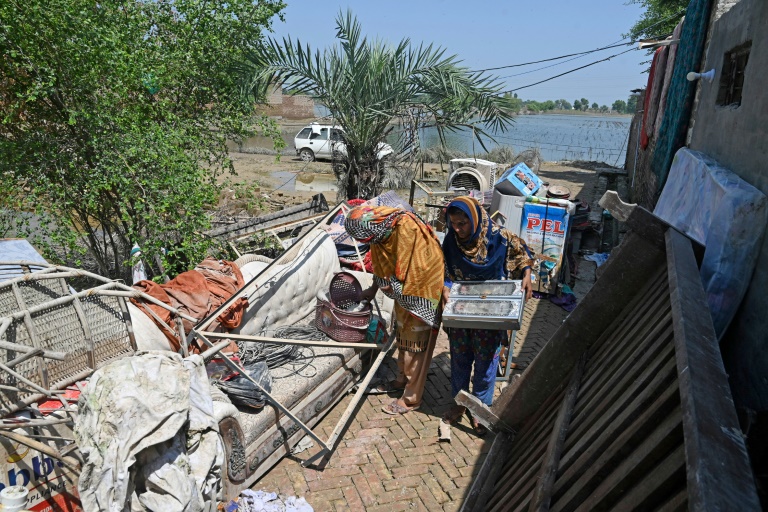
Truck driver and father-of-seven Mureed Hussain was planning for his daughter’s October wedding when floodwater inundated his home, taking away the entire back wall and, with it, her hard-earned dowry.

“I had been collecting her dowry for almost three years,” Hussain told AFP from the courtyard of his four-room house, which he shares with his brother’s family.

“I would provide for the house and also spend a little on her dowry.” 

Record monsoon rains have caused devastating floods across Pakistan since June, killing more than 1,200 people and leaving almost a third of the country under water, affecting the lives of 33 million.

The hardest hit are the poor in rural parts of the country, who have seen their homes, belongings, life savings, and crops washed away.

Hussain’s village in Punjab province was badly affected, with floodwater destroying or damaging scores of buildings.

Also washed away are marriage plans for Hussain’s daughter, Nousheen.

Each month Hussain would put away a couple of thousand rupees for her dowry from the 17,000 rupee salary ($80) he makes driving trucks.

It is customary for families in patriarchal Pakistan to provide extravagant dowries when a daughter is married. 

In many areas, parents are expected to start saving up for their daughters’ dowries from the day they are born.

While demanding a large dowry is officially banned by law, it is still a practice observed by many.

The families of grooms frequently present the parents of their future daughter-in-law with an extensive list of demands — including furniture, household goods and clothing.

In the case of wealthy families, it can even include cars and homes.

Failing to come up with the goods is considered shameful, and the bride-to-be often faces ill-treatment by her in-laws if a decent dowry is not provided.

– Shock and tears –

“I wanted to marry off my other two daughters after her and one remaining son,” Hussain said.

“I had thought I would be able to do it gradually.”

When the floods reached his home, Hussain fled with his wife and family to a nearby railway station on elevated land.

When the waters receded, Hussain trudged through mud two days ago and returned to his home with his wife and daughters.

“They started crying when they saw the damage,” he said.

His wife, Sughra Bibi, teared up again as she recalled her shock at the condition of the home — and her daughter’s dowry.

Over the years, Sughra had bought a custom-made bed set and dressing table, as well as a juicer, washing machine, iron, bedsheets, and quilts.

Everything was badly damaged by the floodwater.

“It’s blackened, so whoever sees it will say we have given her old things,” Sughra said.

With the wedding called off, Nousheen is putting on a brave face.

“It was supposed to be a happy time for my family, and I was very excited,” the 25-year-old told AFP.

“I have seen how difficult it was for my parents to put this dowry together for me. Now they have to do it all over again.”

“It’s such a big problem for us now,” father Hussain said.

“Should we rebuild our house, sow wheat or get our children married? All three things are so important for us.”

NASA unsure next Moon rocket launch attempt possible this month

After scrapping a second attempt to get its new 30-story lunar rocket off the ground due to a fuel leak, NASA officials said Saturday it may not be possible to try again this month.

The current launch window for NASA’s Artemis 1 mission to the Moon ends Tuesday and is “definitely off the table,” said Jim Free, associate administrator for Exploration Systems Development, at a press conference Saturday.

The next possible launch window is September 19 to October 4, and failing that, October 17 to 31, NASA said.

The ability to take off during those windows “will really depend on the options that the team comes back with likely on Monday or early Tuesday morning,” said Free.

Millions around the globe tuned in to live coverage and crowds gathered on beaches in Florida on Saturday hoping to witness the historic blastoff of the Space Launch System (SLS).

But a leak near the base of the rocket was found as ultra-cold liquid hydrogen was being pumped in, forcing a halt.

The Artemis 1 space mission hopes to test the SLS as well as the unmanned Orion capsule that sits atop, in preparation for future Moon-bound journeys with humans aboard.

The first launch attempt on Monday had also been halted after engineers detected a fuel leak and a sensor showed that one of the rocket’s four main engines was too hot.

“This is a whole new vehicle, a whole new technology, a whole new purpose of going back to the moon and preparation to go to Mars,” said NASA administrator Bill Nelson. “Yes, it’s hard.”

Artemis mission manager Mike Sarafin described the hydrogen leak as “large,” and said one of their “leading suspects” was a seal on a fueling tube.

Engineering teams believe they will have to replace the seal, either directly on the launch pad or after taking the rocket back to its assembly building a few miles away.

It was “too early” to entirely rule out a launch before the end of September, said Sarafin, who promised a status update next week.

NASA has previously said that the early October period would be complicated to coordinate because a crew of astronauts will be using the Kennedy Space Center for a rocket launch to the International Space Station.

In addition to the leak, another problem facing the SLS is its emergency self-destruct system.

Designed to explode in case the rocket deviates off course, the system will likely need to be reexamined before the next launch, which can only be done in the assembly building.

Bringing the rocket in and out of the building will take “several weeks,” Sarafin said.

– Apollo’s twin sister –

Once launched by SLS, the Orion capsule will take several days to reach the Moon, flying around 60 miles (100 kilometers) at its closest approach.

The capsule will fire its engines to get to a distant retrograde orbit (DRO) of 40,000 miles beyond the Moon, a record for a spacecraft rated to carry humans.

Mannequins equipped with sensors are standing in for astronauts on the Artemis 1 mission and will record acceleration, vibration and radiation levels.

The trip is expected to last around six weeks and one of its main objectives is to test the capsule’s heat shield, which at 16 feet in diameter is the largest ever built.

On its return to Earth’s atmosphere, the heat shield will have to withstand speeds of 25,000 miles per hour and a temperature of 5,000 degrees Fahrenheit (2,760 degrees Celsius) — roughly half as hot as the Sun.

Artemis is named after the twin sister of the Greek god Apollo, after whom the first Moon missions were named.

Unlike the Apollo missions, which sent only white men to the Moon between 1969 and 1972, Artemis missions will see the first person of color and the first woman step foot on the lunar surface.

A successful Artemis 1 mission would come as a huge relief to the US space agency, after years of delays and cost overruns.

The cost of the Artemis program is estimated to reach $93 billion by 2025, with each of its first four missions clocking in at a whopping $4.1 billion per launch, according to a government audit.

The next mission, Artemis 2, will take astronauts to the Moon without landing on its surface.

The crew of Artemis 3 is to land on the Moon in 2025 at the earliest, with later missions envisaging a lunar space station and a sustainable presence on the lunar surface.

A crewed trip to the red planet aboard Orion, which would last several years, could be attempted by the end of the 2030s.

NASA unsure next Moon rocket launch attempt possible this month

After scrapping a second attempt to get its new 30-story lunar rocket off the ground due to a fuel leak, NASA officials said Saturday it may not be possible to try again this month.

The current launch window for NASA’s Artemis 1 mission to the Moon ends Tuesday and is “definitely off the table,” said Jim Free, associate administrator for Exploration Systems Development, at a press conference Saturday.

The next possible launch window is September 19 to October 4, and failing that, October 17 to 31, NASA said.

The ability to take off during those windows “will really depend on the options that the team comes back with likely on Monday or early Tuesday morning,” said Free.

Millions around the globe tuned in to live coverage and crowds gathered on beaches in Florida on Saturday hoping to witness the historic blastoff of the Space Launch System (SLS).

But a leak near the base of the rocket was found as ultra-cold liquid hydrogen was being pumped in, forcing a halt.

The Artemis 1 space mission hopes to test the SLS as well as the unmanned Orion capsule that sits atop, in preparation for future Moon-bound journeys with humans aboard.

The first launch attempt on Monday had also been halted after engineers detected a fuel leak and a sensor showed that one of the rocket’s four main engines was too hot.

“This is a whole new vehicle, a whole new technology, a whole new purpose of going back to the moon and preparation to go to Mars,” said NASA administrator Bill Nelson. “Yes, it’s hard.”

Artemis mission manager Mike Sarafin described the hydrogen leak as “large,” and said one of their “leading suspects” was a seal on a fueling tube.

Engineering teams believe they will have to replace the seal, either directly on the launch pad or after taking the rocket back to its assembly building a few miles away.

It was “too early” to entirely rule out a launch before the end of September, said Sarafin, who promised a status update next week.

NASA has previously said that the early October period would be complicated to coordinate because a crew of astronauts will be using the Kennedy Space Center for a rocket launch to the International Space Station.

In addition to the leak, another problem facing the SLS is its emergency self-destruct system.

Designed to explode in case the rocket deviates off course, the system will likely need to be reexamined before the next launch, which can only be done in the assembly building.

Bringing the rocket in and out of the building will take “several weeks,” Sarafin said.

– Apollo’s twin sister –

Once launched by SLS, the Orion capsule will take several days to reach the Moon, flying around 60 miles (100 kilometers) at its closest approach.

The capsule will fire its engines to get to a distant retrograde orbit (DRO) of 40,000 miles beyond the Moon, a record for a spacecraft rated to carry humans.

Mannequins equipped with sensors are standing in for astronauts on the Artemis 1 mission and will record acceleration, vibration and radiation levels.

The trip is expected to last around six weeks and one of its main objectives is to test the capsule’s heat shield, which at 16 feet in diameter is the largest ever built.

On its return to Earth’s atmosphere, the heat shield will have to withstand speeds of 25,000 miles per hour and a temperature of 5,000 degrees Fahrenheit (2,760 degrees Celsius) — roughly half as hot as the Sun.

Artemis is named after the twin sister of the Greek god Apollo, after whom the first Moon missions were named.

Unlike the Apollo missions, which sent only white men to the Moon between 1969 and 1972, Artemis missions will see the first person of color and the first woman step foot on the lunar surface.

A successful Artemis 1 mission would come as a huge relief to the US space agency, after years of delays and cost overruns.

The cost of the Artemis program is estimated to reach $93 billion by 2025, with each of its first four missions clocking in at a whopping $4.1 billion per launch, according to a government audit.

The next mission, Artemis 2, will take astronauts to the Moon without landing on its surface.

The crew of Artemis 3 is to land on the Moon in 2025 at the earliest, with later missions envisaging a lunar space station and a sustainable presence on the lunar surface.

A crewed trip to the red planet aboard Orion, which would last several years, could be attempted by the end of the 2030s.

Norway's future CO2 cemetery takes shape

On the shores of an island off Norway’s North Sea coast, engineers are building a burial ground for unwanted greenhouse gas.

The future terminal is to pump tonnes of liquefied carbon dioxide captured from the top of factory chimneys across Europe into cavities deep below the seabed.

The project in the western municipality of Oygarden aims to prevent the gas from entering the atmosphere and contributing to global warming. 

It “is the world’s first open-access transport and storage infrastructure, allowing any emitter that has captured his CO2 emissions to deliver that CO2 for safe handling, transport and then permanent storage,” project manager Sverre Overa told AFP.

As the planet struggles to meet its climate targets, some climate experts see the technique, called carbon capture and storage, or CCS, as a means to partially reduce emissions from fossil-fuel-based industries.

Norway is the biggest hydrocarbon producer in Western Europe, but it also boasts the best CO2 storage prospects on the continent, especially in its depleted North Sea oil fields.

The government has financed 80 percent of the infrastructure, putting 1.7 billion euros ($1.7 billion) on the table as part of a wider state plan to develop the technology.

A cement factory and a waste-to-energy plant in the Oslo region are set to send their CO2 to the site.

But the most original feature of the project is on the commercial side: inviting foreign firms to send their CO2 pollution to be buried out of harm’s way.

– Pipeline plans –

Using CCS to curb carbon pollution is not a new idea, but despite generous subsidies the technology has never taken off, mainly because it is so costly. 

One of the world’s largest carbon capture facilities, at the Petra Nova coal-fired plant in Texas, was mothballed in 2020 because it was not economical.  

There are only a couple of dozen operational CCS projects around the world, according to the industry-run Global CCS Institute.

But the failure to reduce greenhouse gas emissions in line with Paris Agreement goals and a massive influx of government subsidies have breathed new life into the technology. 

Energy giants Equinor, TotalEnergies and Shell have set up a partnership — dubbed Northern Lights — which will be the world’s first cross-border CO2 transport and storage service at its scheduled launch in 2024.

A pipeline will inject the liquefied CO2 into geological pockets 2,600 metres below the ocean floor, and the idea is that it will remain there for good.

On Monday, the Northern Lights partners announced a first cross-border commercial agreement.

From 2025, it is to ensure 800,000 tonnes of CO2 are captured each year at a plant in the Netherlands owned by Norwegian fertiliser manufacturer Yara, then shipped to Oygarden and stored there.

On Tuesday, two energy firms — Norway’s oil and gas giant Equinor and Germany’s Wintershall Dea — announced a project to take carbon dioxide captured in Germany to the Norwegian offshore storage site.

If confirmed, the partnership between Equinor and Wintershall Dea could involve building a 900-kilometre (560-mile) pipeline connecting a CO2 collection facility in northern Germany with storage sites in Norway by 2032.

A similar project with Belgium is already in the works.

– Not a ‘proper solution’ –

In its first phase, the Northern Lights scheme will be able to process 1.5 million tonnes of CO2 per year, then later between five and six million tonnes.

But that is just a tiny fraction of annual carbon emissions across Europe.

The European Union emitted 3.7 billion tonnes of greenhouse gases in 2020, according to the European Environment Agency.

Many climate experts warn carbon capture is no silver bullet for the climate crisis.

Critics caution that CCS could prolong fossil fuel extraction just as the world is trying to turn toward clean and renewable energy.

Greenpeace Norway’s Halvard Raavand said the campaign group had always opposed the practice.

“In the beginning it was very easy to oppose all kinds of CCS (carbon capture and storage) and now because of the lack of climate action it’s of course a more difficult debate to be in,” he said.

“This money should instead be spent on developing (a) proper solution that we know (works) and that could reduce the electricity bills for regular people, such as insulating homes or solar panels”.

Norway's future CO2 cemetery takes shape

On the shores of an island off Norway’s North Sea coast, engineers are building a burial ground for unwanted greenhouse gas.

The future terminal is to pump tonnes of liquefied carbon dioxide captured from the top of factory chimneys across Europe into cavities deep below the seabed.

The project in the western municipality of Oygarden aims to prevent the gas from entering the atmosphere and contributing to global warming. 

It “is the world’s first open-access transport and storage infrastructure, allowing any emitter that has captured his CO2 emissions to deliver that CO2 for safe handling, transport and then permanent storage,” project manager Sverre Overa told AFP.

As the planet struggles to meet its climate targets, some climate experts see the technique, called carbon capture and storage, or CCS, as a means to partially reduce emissions from fossil-fuel-based industries.

Norway is the biggest hydrocarbon producer in Western Europe, but it also boasts the best CO2 storage prospects on the continent, especially in its depleted North Sea oil fields.

The government has financed 80 percent of the infrastructure, putting 1.7 billion euros ($1.7 billion) on the table as part of a wider state plan to develop the technology.

A cement factory and a waste-to-energy plant in the Oslo region are set to send their CO2 to the site.

But the most original feature of the project is on the commercial side: inviting foreign firms to send their CO2 pollution to be buried out of harm’s way.

– Pipeline plans –

Using CCS to curb carbon pollution is not a new idea, but despite generous subsidies the technology has never taken off, mainly because it is so costly. 

One of the world’s largest carbon capture facilities, at the Petra Nova coal-fired plant in Texas, was mothballed in 2020 because it was not economical.  

There are only a couple of dozen operational CCS projects around the world, according to the industry-run Global CCS Institute.

But the failure to reduce greenhouse gas emissions in line with Paris Agreement goals and a massive influx of government subsidies have breathed new life into the technology. 

Energy giants Equinor, TotalEnergies and Shell have set up a partnership — dubbed Northern Lights — which will be the world’s first cross-border CO2 transport and storage service at its scheduled launch in 2024.

A pipeline will inject the liquefied CO2 into geological pockets 2,600 metres below the ocean floor, and the idea is that it will remain there for good.

On Monday, the Northern Lights partners announced a first cross-border commercial agreement.

From 2025, it is to ensure 800,000 tonnes of CO2 are captured each year at a plant in the Netherlands owned by Norwegian fertiliser manufacturer Yara, then shipped to Oygarden and stored there.

On Tuesday, two energy firms — Norway’s oil and gas giant Equinor and Germany’s Wintershall Dea — announced a project to take carbon dioxide captured in Germany to the Norwegian offshore storage site.

If confirmed, the partnership between Equinor and Wintershall Dea could involve building a 900-kilometre (560-mile) pipeline connecting a CO2 collection facility in northern Germany with storage sites in Norway by 2032.

A similar project with Belgium is already in the works.

– Not a ‘proper solution’ –

In its first phase, the Northern Lights scheme will be able to process 1.5 million tonnes of CO2 per year, then later between five and six million tonnes.

But that is just a tiny fraction of annual carbon emissions across Europe.

The European Union emitted 3.7 billion tonnes of greenhouse gases in 2020, according to the European Environment Agency.

Many climate experts warn carbon capture is no silver bullet for the climate crisis.

Critics caution that CCS could prolong fossil fuel extraction just as the world is trying to turn toward clean and renewable energy.

Greenpeace Norway’s Halvard Raavand said the campaign group had always opposed the practice.

“In the beginning it was very easy to oppose all kinds of CCS (carbon capture and storage) and now because of the lack of climate action it’s of course a more difficult debate to be in,” he said.

“This money should instead be spent on developing (a) proper solution that we know (works) and that could reduce the electricity bills for regular people, such as insulating homes or solar panels”.

Money transfer firms replace banks in crisis-hit Lebanon

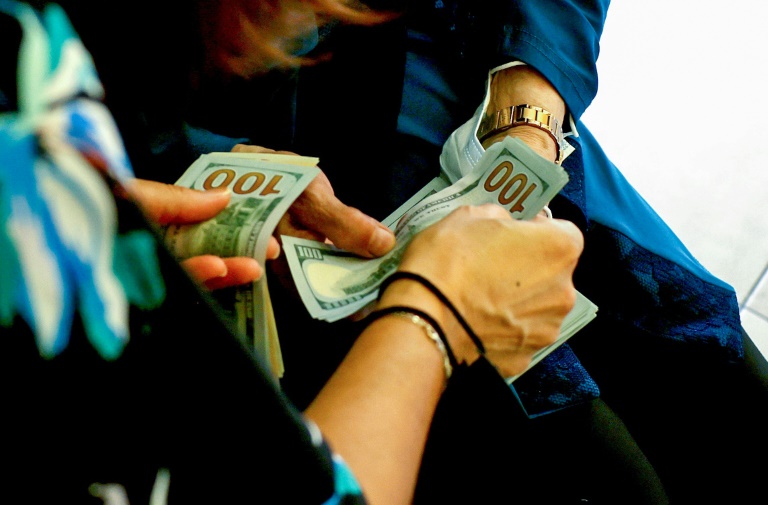
Like many people in crisis-hit Lebanon, Elias Skaff used to wait for hours to withdraw cash at the bank but now prefers money transfer companies as trust in lenders has evaporated.

Anyone who relies on traditional banks to receive their money “will die 100 times before cashing it”, said Skaff, 50, who has survived Lebanon’s three-year-old economic downturn with the help of US dollar payments from a relative abroad. 

Once the flagship of Lebanon’s economy, the banking sector is now widely despised and avoided after banks barred depositors from accessing their savings, stopped offering loans and closed hundreds of branches and slashed thousands of jobs.

Last month, a local man was widely cheered as a folk hero after he stormed a Beirut bank with a rifle and held employees and customers hostage for hours to demand some of his $200,000 in frozen savings to pay hospital bills for his sick father.

Increasingly, as Lebanon’s deep crisis shows no sign of abating, money transfer agencies are filling the gap, also offering currency exchange, credit card and tax payment services and even setting up wedding gift registries.

Skaff said he now receives his money via a Beirut branch of Western Union’s Lebanese agent OMT, which says it operates more than 1,200 branches nationwide and handles 80 percent of money transfers outside the Lebanese banking sector.

“We create services similar to those that banks provide at the request of our customers,” said OMT spokesman Naji Abou Zeid.

Lebanon has been battered by its worst-ever economic crisis since the financial sector went into meltdown in 2019. The local currency has lost more than 90 percent of its value on the black market, as poverty and unemployment have soared.

Angry protesters have often targeted banks, trashing their ATM machines with rocks and spray cans.

“We can’t even withdraw a penny” from the bank, said 45-year-old Alaa Sheikhani, a customer standing in line at an OMT branch.

“How are we supposed to trust them with our money?”

– Surviving on remittances –

Elie, 36, who recently got married, said he used Whish Money, a Lebanese money transfer firm, to set up his wedding gift registry, something he said saved wedding guests time, hassle and money in fees.

“Rather than waiting for hours at the bank, which is often crowded, they can hand over the money to an agency,” said the man who asked not to be fully named. “In terms of time saved and costs, it’s incomparable.”

Whish Money’s marketing director Dina Daher said the company is winning customers by charging “zero fees” on Lebanese pound transfers.

Some companies are now even paying salaries through money transfer companies instead of banks.

“When the crisis began, we were forced to pay salaries in cash, and it was a waste of time,” because accountants had to count out large bundles of banknotes, said Rachelle Bou Nader, a human resources manager.

But now her firm, sporting goods retailer Mike Sport, pays its employees through Whish, allowing them to “withdraw their salary easily, in instalments, and free of charge”, said Bou Nader.

Sami Nader, director of the Levant Institute for Strategic Affairs, said remittances from the Lebanese diaspora have become crucial to help families weather the crushing economic crisis.

“Today, a young Lebanese employee living abroad won’t hesitate to send $100 to his parents because this sum now makes a difference,” he said. 

Lebanese banks have drastically increased fees on the few services they still offer — including foreign currency transfers, now their only meaningful source of income — said Nader, who added that this has further fuelled the exodus to money transfer companies. 

About 250,000 residents of Lebanon received remittances in the first half of 2022, according to OMT, up eight percent from the same period last year. 

The World Bank has reported that Lebanon received $6.6 billion in remittances in 2021, one of the highest levels in the Middle East and North Africa.

Barack Obama: president, Nobel laureate, and now an Emmy winner

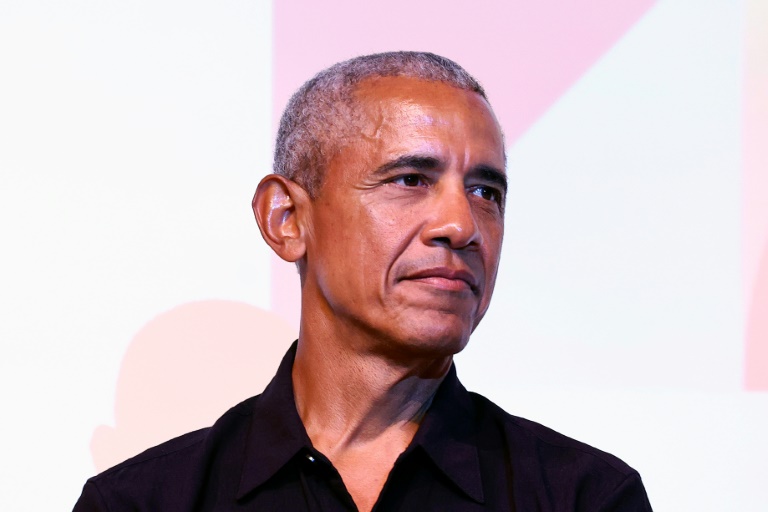
Hollywood newcomer Barack Obama was awarded an Emmy for narrating his Netflix documentary series “Our Great National Parks,” the Television Academy announced Saturday.

The former two-term US president had already won a pair of Grammy Awards — for audio versions of his memoirs “The Audacity of Hope” and “Dreams from My Father” — so he now only needs an Oscar and a Tony to complete the estimable EGOT.

According to an Entertainment Weekly tracker, only 17 people have achieved an EGOT, including Mel Brooks, Whoopie Goldberg, Audrey Hepburn and — most recently — Jennifer Hudson.

One other president had already been awarded an Emmy — Dwight D. Eisenhower in 1956 — although his was an honorary award.

After leaving office in 2017, both Obama and his wife Michelle have each written best-selling memoirs, and in addition to their non-profit foundation, have established a production company which has inked a major deal with Netflix, reportedly worth tens of millions of dollars.

Their company’s first documentary for the streaming service, “American Factory,” won the Oscar for best documentary feature and an Emmy for directing, though the awards went to the filmmakers and not to the Obamas themselves.

Obama’s successor to the presidency, Donald Trump, did not win an Emmy for his reality competition show “The Apprentice,” although he was nominated twice.

Other nominees in Obama’s narrator category included former NBA star Kareem Abdul-Jabbar (“Black Patriots: Heroes Of The Civil War”), Oscar-winning actress Lupita Nyong’o (“Serengeti II) and veteran naturalist David Attenborough (“The Mating Game”).

Obama also received the Nobel Peace Prize after his 2008 presidential election win, for his “extraordinary efforts to strengthen international diplomacy and cooperation between peoples.”

K-pop, K-drama… K-art. Frieze fair lands in Seoul

The art world landed in Seoul this week for the inaugural edition of Frieze in Asia, as the vibrant South Korean capital looks to position itself as the region’s next art hub.

Previous Frieze fairs have been held in traditional art capitals like London, Paris and New York, but industry experts say Seoul was a natural pick for the first Asian edition of the prestigious event.

South Korea has emerged as a cultural powerhouse in recent years with the global success of the Oscar-winning film “Parasite” and the Netflix series “Squid Game”, and with K-pop superstars BTS sweeping the Billboard music charts.

“Frieze looks to cities where there is a vast appreciation of culture,” Patrick Lee, the inaugural director of Frieze Seoul, told AFP.

Seoul boasts a rich art scene, he added, with “incredibly talented artists, world-class museums, corporate collections, non-profits, biennales and galleries, which make it an ideal location for an art fair”.

The fair also takes place at a time when the art world is turning away from Hong Kong — long considered the hub of the lucrative Asian art market — over looming financial and political uncertainties, as well as quarantine restrictions still imposed on visitors. 

“Seoul is definitely the most vibrant and exciting market in Asia for now,” said Alice Lung, director of Galerie Perrotin, which opened its second Seoul gallery last month.

Tim Schneider, art business editor of Artnet News, said the openings by major Western galleries like Pace, Lehmann Maupin, Perrotin and Thaddaeus Ropac, followed by Frieze, confirmed that Seoul had “levelled up” on the international art stage.

“Frieze Seoul is just the final confirmation that the demand has been here,” he told AFP.

– Covid boost –

The local art market has seen explosive growth since the start of the Covid-19 pandemic, with local art fairs seeing record foot traffic and sales figures last year.

“When the borders were closed for a while, people focused on online viewing,” Lung of Galerie Perrotin told AFP.

“This helped Korean artists and galleries grow faster without any physical limitation, bringing in new collectors,” especially millennials and Generation Z, she said.

During this time, skyrocketing housing prices prompted many young South Koreans to seek alternate investment options, such as stocks, cryptocurrency and, for some, artworks.

“Many young people tasted bitter losses from stock and crypto investments and artwork appeared a safe bet, especially after high-profile success cases,” said Hwang Dal-seung, president of the Galleries Association of Korea.

The late Samsung chairman Lee Kun-hee left a trove of antiques and artworks — including works by Claude Monet, Salvador Dali and Pablo Picasso — reportedly worth two to three trillion won ($1.5-2.2 billion) which had soared in value during his decades-long ownership, Hwang added.

Schneider said South Korea was a “microcosm of Asia” in terms of the rise of collectors born after 1980, who now exercise heavy influence on the market.

“Buyers from this age group and this region have been reshaping the hierarchy of which artists are most in demand internationally, as well as significantly ramping up the speed at which artists can transition from the emerging level to blue-chip prices and global fame,” he added.

The country’s art market was estimated to be worth around 532.9 billion won in the first half of 2022, according to a July report from the state-run Korea Arts Administration Service — more than the whole of 2021.

– Fresh approach –

Thaddaeus Ropac, who opened his Seoul gallery last year, said South Korea offered a balanced demographic of collectors.

“You have very established collectors who are not too young anymore and who have incredible experience and who collect art for 30 years or 40 years and you see the results, which I think is quite astonishing in its quality,” Ropac told AFP.

“But then you also feel a very fresh new approach to art” from younger collectors, he added.

The Austrian gallerist, who began working with South Korean artists nearly two decades ago, said the country’s art scene — artists, curators, collectors — had been “built for generations”.

The arrival of Frieze Seoul would certainly open new doors for South Korea’s art market, he said, but it was “also a result of what Seoul has become”.

Schneider added: “Historically, anytime a grade-A international fair sets up shop in a new city, it simultaneously confirms that the art-market infrastructure there is sustainable.”

But he dismissed framing Seoul’s rise in terms of Hong Kong’s potential fall.

“I think it’s misguided to act as if Asia –– a massive continent composed of numerous countries with unique cultural histories and tremendous wealth –– can’t support two legitimate art-market hubs,” he said.


Close Bitnami banner
Bitnami