AFP

Asian markets mixed as US jobs offset by recession fears

Asian markets were mixed Monday as the positive vibes from a US jobs report were offset by growing fears about an energy crisis in Europe, Chinese Covid lockdowns and geopolitical tensions.

The closely watched payrolls for August showed employment growth moderating and unemployment ticking higher, easing pressure on the Federal Reserve to sharply lift interest rates. 

In response to the figures, traders lowered their expectations for a third successive three-quarter point hike this month, with many now predicting 50 basis points.

“The increase in the participation rate and a softening in average hourly earnings may be a tentative sign that intense labour market tightness is starting to ease slightly,” said National Australia Bank’s Tapas Strickland.

He added that it “eases some of the fears stemming from other indicators such as job openings. Markets interpreted the print as lessening the chances of a 75 basis point hike”.

The news helped send European markets surging and provided a boost to Wall Street.

However, all three main indexes in New York reversed after Russia’s Gazprom said it would not restart gas supplies to Europe citing problems with a pipeline.

The announcement came the same day as the G7 nations said they would work to quickly implement a price cap on Russian oil exports, a move that would starve the Kremlin of critical revenue for its war effort.

The news, which came after European trading ended, ramped up an energy crisis in the continent caused by sanctions on Moscow for its invasion of Ukraine in February.

It has sent shockwaves through the eurozone economy and fanned expectations it will sink into recession, while sending the euro tanking to a 20-year low against the dollar.

The issue has given the European Central Bank a huge headache — it is forced to lift interest rates as it struggles to contain runaway inflation.

Policymakers are due to announce a second straight lift at its meeting this week, with some observers betting on a 0.75 percentage point rise.

“The outlook is poor for Europe — it started to get choppy at the tail end of last week, and it is almost certainly going to get worse,” Gordon Shannon, of TwentyFour Asset Management, said.

“The ECB had only just started to catch up with the Fed in terms of hiking rates, but if we are going into a prolonged recession, I think this slows down their attempts.”

– ‘Challenging time’ for China –

The Gazprom move helped lift oil prices Monday, with buying also supported by talk that OPEC and other major producers are considering cutting output at their meeting later Monday.

Investors were also dealing with more bad news out of China, where tens of millions of people across several cities have been thrown into lockdown as part of officials’ zero-Covid strategy.

The measures follow an extended shutdown in Shanghai earlier in the year that battered the world’s number two economy.

Observers said Chinese authorities were unlikely to budge ahead of a key Communist Party meeting in October, where Xi Jinping is expected to be handed a third five-year term as president.

“Following this, it is unclear whether China will start to pivot away from its zero-Covid policy,” said NAB’s Strickland.

“For as long as the policy exists, any stimulus measures are unlikely to gain traction, amid a challenging time for the Chinese property market and the economy in general.”

In early Asian trade on Monday, Hong Kong was the biggest loser, with tech firms hit by reports that the United States was considering imposing fresh limits on investments in Chinese firms.

Shanghai, Tokyo, Taipei, Manila and Wellington also fell but there were gains in Sydney, Seoul, Singapore and Jakarta.

– Key figures at around 0230 GMT –

Tokyo – Nikkei 225: DOWN 0.1 percent at 27,610.75 (break)

Hong Kong – Hang Seng Index: DOWN 1.8 percent at 19,109.68

Shanghai – Composite: DOWN 0.1 percent at 3,184.25

Dollar/yen: UP at 140.32 yen from 140.16 yen on Friday

Euro/dollar: DOWN at $0.9908 from $0.9957

Pound/dollar: DOWN at $1.1470 from $1.1515

Euro/pound: DOWN at 86.37 pence from 86.45 pence

West Texas Intermediate: UP 1.6 percent at $88.24 per barrel

Brent North Sea crude: UP 1.5 percent at $94.41 per barrel

New York – Dow: DOWN 1.1 percent at 31,318.44 (close)

London – FTSE 100: UP 1.9 percent at 7,281.19 (close)
Asian markets mixed as US jobs offset by recession fears

Asian markets were mixed Monday as the positive vibes from a US jobs report were offset by growing fears about an energy crisis in Europe, Chinese Covid lockdowns and geopolitical tensions.

The closely watched payrolls for August showed employment growth moderating and unemployment ticking higher, easing pressure on the Federal Reserve to sharply lift interest rates. 

In response to the figures, traders lowered their expectations for a third successive three-quarter point hike this month, with many now predicting 50 basis points.

“The increase in the participation rate and a softening in average hourly earnings may be a tentative sign that intense labour market tightness is starting to ease slightly,” said National Australia Bank’s Tapas Strickland.

He added that it “eases some of the fears stemming from other indicators such as job openings. Markets interpreted the print as lessening the chances of a 75 basis point hike”.

The news helped send European markets surging and provided a boost to Wall Street.

However, all three main indexes in New York reversed after Russia’s Gazprom said it would not restart gas supplies to Europe citing problems with a pipeline.

The announcement came the same day as the G7 nations said they would work to quickly implement a price cap on Russian oil exports, a move that would starve the Kremlin of critical revenue for its war effort.

The news, which came after European trading ended, ramped up an energy crisis in the continent caused by sanctions on Moscow for its invasion of Ukraine in February.

It has sent shockwaves through the eurozone economy and fanned expectations it will sink into recession, while sending the euro tanking to a 20-year low against the dollar.

The issue has given the European Central Bank a huge headache — it is forced to lift interest rates as it struggles to contain runaway inflation.

Policymakers are due to announce a second straight lift at its meeting this week, with some observers betting on a 0.75 percentage point rise.

“The outlook is poor for Europe — it started to get choppy at the tail end of last week, and it is almost certainly going to get worse,” Gordon Shannon, of TwentyFour Asset Management, said.

“The ECB had only just started to catch up with the Fed in terms of hiking rates, but if we are going into a prolonged recession, I think this slows down their attempts.”

– ‘Challenging time’ for China –

The Gazprom move helped lift oil prices Monday, with buying also supported by talk that OPEC and other major producers are considering cutting output at their meeting later Monday.

Investors were also dealing with more bad news out of China, where tens of millions of people across several cities have been thrown into lockdown as part of officials’ zero-Covid strategy.

The measures follow an extended shutdown in Shanghai earlier in the year that battered the world’s number two economy.

Observers said Chinese authorities were unlikely to budge ahead of a key Communist Party meeting in October, where Xi Jinping is expected to be handed a third five-year term as president.

“Following this, it is unclear whether China will start to pivot away from its zero-Covid policy,” said NAB’s Strickland.

“For as long as the policy exists, any stimulus measures are unlikely to gain traction, amid a challenging time for the Chinese property market and the economy in general.”

In early Asian trade on Monday, Hong Kong was the biggest loser, with tech firms hit by reports that the United States was considering imposing fresh limits on investments in Chinese firms.

Shanghai, Tokyo, Taipei, Manila and Wellington also fell but there were gains in Sydney, Seoul, Singapore and Jakarta.

– Key figures at around 0230 GMT –

Tokyo – Nikkei 225: DOWN 0.1 percent at 27,610.75 (break)

Hong Kong – Hang Seng Index: DOWN 1.8 percent at 19,109.68

Shanghai – Composite: DOWN 0.1 percent at 3,184.25

Dollar/yen: UP at 140.32 yen from 140.16 yen on Friday

Euro/dollar: DOWN at $0.9908 from $0.9957

Pound/dollar: DOWN at $1.1470 from $1.1515

Euro/pound: DOWN at 86.37 pence from 86.45 pence

West Texas Intermediate: UP 1.6 percent at $88.24 per barrel

Brent North Sea crude: UP 1.5 percent at $94.41 per barrel

New York – Dow: DOWN 1.1 percent at 31,318.44 (close)

London – FTSE 100: UP 1.9 percent at 7,281.19 (close)
Nile islanders face eviction to make way for Egypt's latest grand plan

Residents of a Nile island in greater Cairo woke up in recent weeks to find officials taking measurements of their houses — a final step before enforcing demolition orders.

Since then, people from Warraq — some of whom have been on the working-class, agricultural island for generations — have renewed efforts to oppose a mega development project that would see the island’s character and their homes erased.

“Just give us a part of the island, even if it is behind a wall,” one resident in his thirties told AFP, requesting anonymity due to security concerns.

“We will not leave,” he added, insisting he has all the proper documentation for his house.

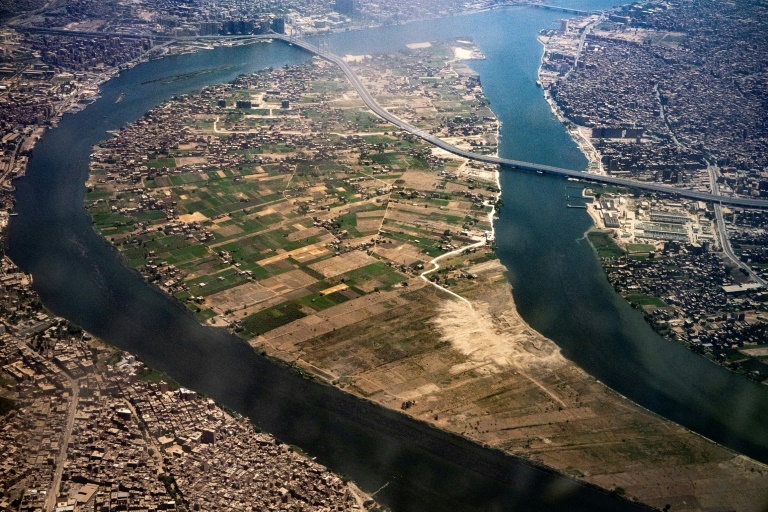
With its green fields, red-brick buildings, irrigation canals and livestock farming, Warraq — located in Giza governorate and home to around 100,000 people — is just a ferry ride away from Cairo’s traffic-choked streets. 

The government in late July evoked images of Manhattan as it unveiled an almost billion-dollar plan for the six-square-kilometre (over two-square-mile) island’s redevelopment, featuring glittering skyscrapers, helipads and marinas.

Minister of Housing Assem al-Gazzar has labelled those who oppose the redevelopment as “divisive forces of evil”, calling the old buildings “dilapidated”.

But residents like the man in his thirties remain defiant.

“We pay our taxes, our water and power bills, why can’t we benefit from the development of our island?” he said.

– ‘Ridiculous’ –

Authorities “gave some residents four days to leave their homes” in late July, a resident in his fifties told AFP, also requesting anonymity for security reasons.

The move triggered demonstrations, clashes and arrests the following month as the years-long fight against the project kicked off again.

The government has been promising massive returns on the redevelopment of Warraq since the administration of longtime president Hosni Mubarak, who was deposed in 2011.

The project for the capital’s largest island was reactivated under current President Abdel Fattah al-Sisi, whose other “mega projects” include a sparkling new capital rising from the sands 50 kilometres (30 miles) east of Cairo.

The general-turned-president has entrusted military engineers with the Warraq project — dubbed “Horus City” after the ancient Egyptian sky god.

In 2017, authorities moved to demolish “illegal” buildings on Warraq as part of a campaign aimed at restoring state-owned land.

At least one person was killed after the operation triggered clashes between residents and security forces.

Anti-eviction advocates defended residents’ legal rights to the land, with lawyer Khaled Ali sharing copies of residents’ property deeds on social media, as well as the birth certificate of one islander born there “100 years ago”.

But two years later, a committee of experts found the evictions to be “in the public interest”.

The Warraq resident in his fifties, who works in the agriculture sector, said he was not against relocating but demanded fair compensation, calling a recent government offer “ridiculous”.

“They proposed 1,400 Egyptian pounds ($73) per square metre,” he said. “You can’t buy anything off the island with that.”

– ‘Gentrification’ –

Residents of other islands fear the Warraq project is just the beginning.

This year, 17 Nile islands including Warraq were handed over to the army and subsequently lost their nature reserve status.

Opposing urban development projects can come at a cost.

Warraq activist Ramy Kamel spent more than two years in pre-trial detention on “terrorism” charges before being released in January.

“Kamel was one of the most committed activists in tracking state violations against Coptic displacement due to security concerns or urban development initiatives,” historian Amy Fallas told AFP, referring to Egypt’s main Christian minority.

While state bulldozers have recently targeted more affluent neighbourhoods, urban planner Ahmed Zaazaa said low socio-economic districts were the first to be razed.

“It’s a gentrification process — the city centre is being emptied of poverty to make way for investment,” he told AFP.

One-third of Egypt’s 103 million people live in poverty, according to World Bank figures, with another third vulnerable to becoming destitute.

Zaazaa says the Cairo redevelopments aim to prepare the city “to accommodate the new capital”.

“Historic and traditional districts of Cairo are being destroyed” so workers can reach the new area, he said. 

Some residents have been relocated to “mega public housing projects on the periphery”, but most find “other informal areas a better solution”, he added.

Using official statements, media reports and satellite imagery, Zaazaa has estimated that “15,000 buildings have been demolished” in Cairo since Sisi took power in 2013.

Residents of Warraq fear displacement will irrevocably rupture their tight-knit community, which is already feeling the pressure as development plans progress.

“Non-residents are not allowed on the island,” said the resident in his thirties.

“One of the ferries was recently closed,” he said, and the remaining two “are monitored by security services around the clock”.

'Social' investment strategies under fire in Republican-led US states

Republican-led US states such as Texas and West Virginia are piling pressure on firms including giant asset manager BlackRock for supposedly boycotting oil and gas companies as part of “responsible” investment strategies.

But the companies say the fossil fuel boycott claims are false and rules barring states from dealing with major financial firms could potentially backfire on taxpayers.

Basing investments partly on a company’s environmental, social and governance (ESG) practices is a sign of an unacceptable “ideological agenda,” says Florida Governor Ron DeSantis, who is seen as a potential 2024 Republican presidential nominee. 

Late last month, he ordered bankers managing the state’s huge pension fund to ignore those criteria and instead prioritize “the financial security of the people of Florida over whimsical notions of a utopian tomorrow.”

The state controller of Texas has, meanwhile, published a list of companies — including BlackRock and several European banks — deemed to be “boycotting” petroleum firms. State officials were instructed to no longer sign contracts with firms on the list.

West Virginia, a smaller state but one rich in coal and natural gas, similarly singled out not just BlackRock, but also such Wall Street pillars as JPMorgan Chase, Wells Fargo, Goldman Sachs and Morgan Stanley.

“Any institution with policies aimed at weakening our energy industries, tax base and job market has a clear conflict of interest in handling taxpayer dollars,” that state’s treasurer, Riley Moore, said in a statement.

– ‘Disconnected from reality’ –

The banks targeted, however, deny they are engaging in any such boycott.

While some of them have decided to stop financing oil exploration projects in the Arctic, for example, they are continuing to lend money to the industry.

JP Morgan decried West Virginia’s rule as “shortsighted and disconnected from the facts.”

BlackRock, the world’s biggest asset manager, says it has invested more than $108 billion in Texas oil companies, including ExxonMobil.

Referring to Texas’s new rule, the Wall Street firm said in a statement that “elected and appointed public officials have a duty to act in the best interests of the people they serve. Politicizing state pension funds, restricting access to investments, and impacting the financial returns of retirees, is not consistent with that duty.”

Joshua Lichtenstein, whose law firm Ropes & Gray tracks the way states are regulating ESG investments, said that the Republican-led attacks may be misguided.

“The political rhetoric is addressing a world that doesn’t exist,” he said.

The choice is not really between directing “investment capital towards ESG or investment capital towards returns,” Lichtenstein told AFP. “It’s really more about investing towards funds that are using ESG as part of a risk-mitigation strategy.”

And investors are pushed in that direction by a growing number of clients, not only in Democratic-led US states but in Europe and Japan.

The northeastern state of Maine in 2021 adopted a law requiring the state’s pension system to divest itself of shares in fossil fuel companies.

– A cost to taxpayers –

The new rules in Republican states could come at a cost to those states’ taxpayers, said Ben Cushing, a financial specialist with the environmental advocacy group the Sierra Club.

Texas, for example, last year adopted a law banning its cities from signing new contracts with banks that limit investment in petroleum companies or gun manufacturers. 

The result: the number of establishments participating in municipal bond issues in Texas has declined and negotiated rates have risen — costing taxpayers millions in extra interest — according to a June study by researchers at the University of Pennsylvania and the US Federal Reserve.

Lichtenstein said it is too early to know the broader impact of the Republican campaign.

He said it would not necessarily threaten an already well-established trend: clients are increasingly sensitive to climate change, for example, and investment managers still must take all risks into account.

But “the red states are probably the loudest,” Lichtenstein added, and if Republican states such as Florida actively enforce their new rules, fund managers may seek to avoid conflict. 

Ultimately, said the Sierra Club’s Cushing, that could compel financial establishments to slow their ESG efforts just as they “belatedly are beginning to address the climate crisis and recognize the very real financial implications of climate change.”

'Social' investment strategies under fire in Republican-led US states

Republican-led US states such as Texas and West Virginia are piling pressure on firms including giant asset manager BlackRock for supposedly boycotting oil and gas companies as part of “responsible” investment strategies.

But the companies say the fossil fuel boycott claims are false and rules barring states from dealing with major financial firms could potentially backfire on taxpayers.

Basing investments partly on a company’s environmental, social and governance (ESG) practices is a sign of an unacceptable “ideological agenda,” says Florida Governor Ron DeSantis, who is seen as a potential 2024 Republican presidential nominee. 

Late last month, he ordered bankers managing the state’s huge pension fund to ignore those criteria and instead prioritize “the financial security of the people of Florida over whimsical notions of a utopian tomorrow.”

The state controller of Texas has, meanwhile, published a list of companies — including BlackRock and several European banks — deemed to be “boycotting” petroleum firms. State officials were instructed to no longer sign contracts with firms on the list.

West Virginia, a smaller state but one rich in coal and natural gas, similarly singled out not just BlackRock, but also such Wall Street pillars as JPMorgan Chase, Wells Fargo, Goldman Sachs and Morgan Stanley.

“Any institution with policies aimed at weakening our energy industries, tax base and job market has a clear conflict of interest in handling taxpayer dollars,” that state’s treasurer, Riley Moore, said in a statement.

– ‘Disconnected from reality’ –

The banks targeted, however, deny they are engaging in any such boycott.

While some of them have decided to stop financing oil exploration projects in the Arctic, for example, they are continuing to lend money to the industry.

JP Morgan decried West Virginia’s rule as “shortsighted and disconnected from the facts.”

BlackRock, the world’s biggest asset manager, says it has invested more than $108 billion in Texas oil companies, including ExxonMobil.

Referring to Texas’s new rule, the Wall Street firm said in a statement that “elected and appointed public officials have a duty to act in the best interests of the people they serve. Politicizing state pension funds, restricting access to investments, and impacting the financial returns of retirees, is not consistent with that duty.”

Joshua Lichtenstein, whose law firm Ropes & Gray tracks the way states are regulating ESG investments, said that the Republican-led attacks may be misguided.

“The political rhetoric is addressing a world that doesn’t exist,” he said.

The choice is not really between directing “investment capital towards ESG or investment capital towards returns,” Lichtenstein told AFP. “It’s really more about investing towards funds that are using ESG as part of a risk-mitigation strategy.”

And investors are pushed in that direction by a growing number of clients, not only in Democratic-led US states but in Europe and Japan.

The northeastern state of Maine in 2021 adopted a law requiring the state’s pension system to divest itself of shares in fossil fuel companies.

– A cost to taxpayers –

The new rules in Republican states could come at a cost to those states’ taxpayers, said Ben Cushing, a financial specialist with the environmental advocacy group the Sierra Club.

Texas, for example, last year adopted a law banning its cities from signing new contracts with banks that limit investment in petroleum companies or gun manufacturers. 

The result: the number of establishments participating in municipal bond issues in Texas has declined and negotiated rates have risen — costing taxpayers millions in extra interest — according to a June study by researchers at the University of Pennsylvania and the US Federal Reserve.

Lichtenstein said it is too early to know the broader impact of the Republican campaign.

He said it would not necessarily threaten an already well-established trend: clients are increasingly sensitive to climate change, for example, and investment managers still must take all risks into account.

But “the red states are probably the loudest,” Lichtenstein added, and if Republican states such as Florida actively enforce their new rules, fund managers may seek to avoid conflict. 

Ultimately, said the Sierra Club’s Cushing, that could compel financial establishments to slow their ESG efforts just as they “belatedly are beginning to address the climate crisis and recognize the very real financial implications of climate change.”

ECB poised for big rate hike in face of record inflation

After raising interest rates for the first time in over a decade at their last meeting, European Central Bank policymakers are poised to deliver another bumper hike on Thursday in a show of determination to tame soaring inflation.

Steep increases in the price of energy in the wake of the Russian invasion of Ukraine have heaped pressure on households and sent the pace of consumer price rises to new highs. 

Eurozone inflation hit 9.1 percent in August, a record in the history of the single currency and well above the two-percent rate targeted by the ECB.

The “only question” for the ECB’s meeting was “whether it will be a 50 or 75 basis point hike,” said Carsten Brzeski, head of macro at the ING bank.

Speaking at the annual Jackson Hole central banking symposium at the end of August, ECB board member Isabel Schnabel said the ECB needed to show “determination” to tame price rises.

Under this approach, the central bank would respond “more forcefully to the current bout of inflation, even at the risk of lower growth and higher unemployment”, she said.

– ‘Only question’ –

The ECB’s 25-member governing council surprised with a 50-basis-point hike at its last meeting in July, bringing an end to eight years of negative interest rates in one fell swoop.

In her speech in the United States, Schnabel stressed the need for the people to “trust” that the ECB will restore their purchasing power.

The Frankfurt-based institution is already playing catch up with other central banks in the US and Britain that started raising rates harder and faster in response to inflation.

So-called forward guidance issued by the ECB, which limited its scope for action, has been ditched. Policymakers would now take their decisions “meeting-by-meeting”, the ECB President Christine Lagarde announced in July.

With that, the door has been opened for the ECB to follow in the footsteps of the US Federal Reserve and raise rates by a 75 basis points.

Following August’s red-hot inflation numbers, the influential head of the German central bank, Joachim Nagel, said the ECB needed a “strong rise in interest rates in September”.

– ‘Steady pace’ –

“Further interest rate steps are to be expected in the following months,” the Bundesbank president predicted.

But the ECB’s chief economist, Philip Lane, has counselled colleagues to follow a “steady pace” of interest rate rises.

Hiking at a rate that was “neither too slow nor too fast” was important due to the “high uncertainty” around the economy and the future path of inflation.

Alongside its policy decisions, the ECB will also share an updated set of economic forecasts for the eurozone.

In its last estimates, published in June, the ECB said it expected inflation to sit at 6.8 percent in 2022 before falling to 3.5 percent next year, while growth would slow from 2.8 percent this year to 2.1 in 2023.

But a more severe energy shock as Russia reduces gas deliveries to Europe could push the eurozone into a “deeper winter recession” and hold growth to zero percent in 2023, said Frederik Ducrozet, head of macroeconomic research at Pictet.

At the same time, the soaring cost of energy would drive inflation close to double digits by the end of the year, he predicted.

The ECB had “no choice but to commit to faster monetary tightening as long as inflation keeps rising” even as a recession loomed, said Ducrozet. 

Film legend Paul Schrader is seriously ill but on a roll

Few thought Paul Schrader would ever match the success of his early scripts for “Taxi Driver” and “Raging Bull” — but suddenly, in his seventies, the writer-director is back at the top of his game.

His fear now, as he appeared at the Venice Film Festival with his latest movie “Master Gardener”, starring Sigourney Weaver and Joel Edgerton, is whether he will ever be able to make another. 

“I can’t breathe,” the 76-year-old bluntly told AFP at the festival, visibly struggling. “I couldn’t direct a game of miniature golf right now.”

The mysterious illness — doctors are unsure whether it is his lungs or his heart — came on earlier this year just as he was finishing “Master Gardener”. 

“When I got to hospital, it turned out I’d been directing for a week with influenza — at night in Louisiana,” he said. “I could be back in hospital tomorrow.”

The film follows a gardener with an extremely dark past, trapped in a love triangle with powerful racial overtones. 

“We don’t think of Paul Schrader as writing big parts for women. But he’s created, at this time in his life, two very red-blooded, sexual women,” Weaver told AFP. 

“It’s exciting but also difficult to watch,” she added. 

“Master Gardener” completes a loose trilogy of films about tough, damaged men seeking redemption, which began in 2017 with “First Reformed” (amazingly, his first to earn an Oscar nomination) followed by “The Card Counter”, which also premiered at Venice last year to strong reviews. 

Edgerton, an Australian who has quietly become one of the most sought-after actors of the moment, said he was a huge fan of “First Reformed” when it came out.

“Certain directors as they get older, you feel their better work is behind them. But I was watching a guy who had one of his greatest works right there,” he told AFP.

“Like a lot of guys in my generation, we all wanted to be De Niro, Pacino… and Paul was very much one of the centres of that era. He’s an important guy to me, and then I get to work with him and that felt very special,” Edgerton added.

– ‘Forgiveness and rebirth’ –

The other star — relative newcomer Quintessa Swindell — said “Master Gardener” challenged her ideas about cancel culture. 

“I didn’t think it would have such an intense theme of forgiveness and rebirth,” she told AFP. 

“Playing her gave me the emotion of how it truly feels to move on from someone’s past, and that was the most insane feeling.” 

Schrader knows the film’s racial politics — which gradually emerge through the film — could cause controversy in “our woke era where everything is examined as to whom it gives offence.

“Maybe it’s not realistic, maybe it could never happen, but that’s what art is for — to create hypotheticals,” he said. 

He added that he never planned to make a trilogy. 

“When I started writing the third one, a friend said it’s a trilogy and I said no, no, it’s not. But then I saw it is.”

Schrader went through his share of commercial and critical flops until his recent run, and credits new technology with allowing to work more cheaply and therefore free from studio interference.

But the film industry is still in a tough spot, he said.

“The good news is that anyone can make a film now,” he said.

“But no one can make a living.”

OPEC+ to meet amid economic downturn fears

Faced with recession fears, the OPEC+ countries are expected to agree a modest increase in oil production at a meeting on Monday, with some experts even forecasting a cut to support prices. 

The 13 members of the Organization of the Petroleum Exporting Countries (OPEC) cartel, led by Saudi Arabia, and their 10 partners, led by Russia, are meeting to adjust their quotas for October. Talks are due to start at 1100 GMT. 

Far from their highs near $140 a barrel, Brent North Sea crude and US WTI crude prices suffered their third consecutive monthly decline in August amid a gloomy global economic outlook. 

That’s enough to fuel speculation.

“It is not entirely clear whether OPEC+ will agree another 100,000 barrels per day increase,” as in September, Caroline Bain of Capital Economics wrote in a note. 

“In light of the recent slide in oil prices… we wouldn’t rule out no change or even a cut.” 

Saudi Energy Minister Abdulaziz bin Salman last month appeared to open the door to the idea, which has since received the support of several member states and the cartel’s joint technical committee. 

He said “volatility and thin liquidity send erroneous signals to markets at times when clarity is most needed”.

– Eyes on Iran deal –

OPEC+ is resisting Western calls to open its taps more widely to contain soaring prices.  

“The group clearly wants to keep prices high,” said Craig Erlam, an analyst at Oanda. 

“They may fear that Iranian crude could tip the balance in the market in favour of supply and therefore lower prices,” he added. 

Matthew Holland of Energy Aspects said a cut in production — which would be the first since the drastic cuts made to cope with moribund demand during the coronavirus pandemic — would come up at the next meeting in October. 

Everything will depend on the progress of Iranian nuclear negotiations aimed at reviving a landmark agreement between Tehran and world powers that gave Iran sanctions relief in exchange for curbs on its nuclear programme.

Hopes for a deal, which would be accompanied by an easing of US sanctions notably on oil, have been revived recently. 

However Washington said Thursday Tehran’s latest response to a European Union draft was “unfortunately… not constructive”. 

Amena Bakr, an analyst at Energy Intelligence, warned against over-interpreting the Saudi energy minister’s comments, saying only that “volatility is bad for the market”. 

“It’s a message to all Western governments that have been intervening in the market and trying to manage the market” since the start of the war in Ukraine, she said. 

In the latest announcement, the seven most industrialised countries decided Friday to “urgently” cap the price of Russian oil, in order to limit Moscow’s earnings from the sale of hydrocarbons. 

But Russia has warned that it will no longer sell oil to countries that have adopted the unprecedented mechanism.  

Supply would then be reduced, contributing to a new surge in prices which, despite the recent decline, remain historically high and extremely volatile. 

Germany agrees 65bn-euro inflation relief package

The German government on Sunday unveiled a new multi-billion-euro plan to help households cope with soaring prices, and said it was eyeing windfall profits from energy companies to help fund the relief.

German businesses and consumers are feeling the pain from sky-high energy prices, as Europe’s biggest economy seeks to extricate itself from reliance on Russian supplies in the wake of Moscow’s invasion of Ukraine.

Rapid measures to prepare for the coming cold season will ensure that Germany would “get through this winter”, Chancellor Olaf Scholz said at the unveiling of the 65-billion-euro ($65-billion) package. 

The latest agreement, which brings total relief to almost 100 billion euros since the start of the Ukraine war, was hammered out overnight into Sunday by Germany’s three-way ruling coalition of Scholz’s Social Democrats, the Greens, and the liberal FDP.

Among the headline measures are one-off payments to millions of vulnerable pensioners and a plan to skim off energy firms’ windfall profits.

The government’s latest relief package came two days after Russian energy giant Gazprom said it would not restart gas deliveries via the Nord Stream 1 pipeline on Saturday as planned after a three-day maintenance.

Ukraine’s President Volodymyr Zelensky late Sunday said his country had foreseen the energy complications.

“Ukraine has repeatedly warned Europe that maintaining Nord Stream ties with Russia would be a problem that could turn into disaster at any moment. That is exactly what has happened,” he said.

– Third package –

Scholz said the German government had made “timely decisions” to avoid a winter crisis, including filling gas stores and restarting coal power plants.

But preventative measures, including a drive to reduce consumption, have done little to break a sharp increase in household bills.

The latest announcement follows two previous relief packages totalling 30 billion euros, which included a reduction in the tax on petrol and a popular heavily subsidised public transport ticket.

But with the expiration of many of those measures at the end of August and consumer prices still on an upward march, the government has been under pressure to provide new support.

Inflation rose again to 7.9 percent in August, after falling for two straight months thanks to previous government relief measures.

Scholz said however that not everyone was suffering from the high consumer prices. 

Some energy companies which may not be using gas to generate electricity could “simply use the fact that the high price of gas determines the price of electricity and are therefore making a lot of money,” he said.

“We have therefore resolved to change the market organisation in such a way that these random profits no longer occur or that they are skimmed off.”

The trimming of windfall profits would create “financial headroom that should be used specifically to relieve the burden for consumers in Europe,” the government said in its policy paper.

The move could potentially bring “double-digit billions” of euros in relief, Finance Minister Christian Lindner estimated in the press conference.

The government said it would seek to implement the measure through a reform of the European energy market in the first instance, before forging ahead on its own.

Energy companies were earning “insane amounts of money” under the current system, Economy Minister Robert Habeck said in a statement. 

Brussels on Monday said it would prepare “emergency” action to reform the electricity market and bring prices under control.

– ‘Never walk alone’ –

Repeating his mantra that Germans will “never walk alone” through the energy crisis, the chancellor unveiled a raft of measures, including a one-off payment of 300 euros to millions of pensioners to help them cover rising power bills.

The government will similarly target students with a smaller one-time transfer of 200 euros, and a heating cost payment for people receiving housing benefits.

Berlin also set aside 1.5 billion euros for work on a successor to the wildly popular nine-euro monthly ticket on local and regional transport networks. 

The relief package as a whole should be financed without planning to take on further debt, Lindner said.

“These measures are included within the government’s existing budget plans,” covering 2022 and 2023, he said, with the remainder covered by the windfall energy profit measures.

burs-ah/jj

Judge again dismisses Nirvana baby album cover lawsuit

A US federal judge has again dismissed the child pornography lawsuit filed by the man who as a baby was photographed naked for the cover of Nirvana’s “Nevermind” album.

Spencer Elden was seeking $150,000 in damages from defendants including the surviving former members of the band, Dave Grohl and Krist Novoselic, as well as the estate of the late lead singer Kurt Cobain, and the photographer, Kirk Weddle.

In dismissing the suit on Friday, Judge Fernando Olguin said the plaintiff failed “to allege that he knew of a violation that occurred while he was a minor or an injury that forms the basis of the claim within 10 years of filing this action,” as required by the statute under which he sued.

“Because plaintiff had an opportunity to address the deficiencies in his complaint regarding the statute of limitations, the court is persuaded that it would be futile to afford plaintiff a fourth opportunity to file an amended complaint,” the judge wrote.

Olguin had previously dismissed the case in January 2022 after Elden’s attorneys missed a deadline, but they refiled it later that month.

In 1991, when he was four months old, Elden was photographed naked in a swimming pool reaching for a dollar bill on a fish hook, an image that became one of the most iconic album covers of all time.

The album went on to sell 30 million copies, with songs such as “Smells Like Teen Spirit” becoming American pop cultural touchstones.

But neither Elden nor his legal guardians “ever signed a release authorizing the use of any images of Spencer or of his likeness, and certainly not of commercial child pornography depicting him,” the lawsuit said.

The suit said Elden had suffered “extreme and permanent emotional distress,” as well as “lifelong loss of income earning capacity.”

Weddle, the photographer, was a friend of Elden’s father, the family told NPR in 2008.

They held a pool party during which Elden was photographed underwater for the then-unknown band. Elden’s parents were paid $200 for the original shoot.

Close Bitnami banner
Bitnami