AFP

Starbucks names outgoing Reckitt leader as next CEO

Starbucks named Laxman Narasimhan, a veteran of PepsiCo and other consumer brands, as its next chief executive on Thursday.

Narasimhan, who was most recently chief executive of Anglo-Dutch multinational Reckitt, will relocate to Seattle from London and join Starbucks on October 1, the company said in a news release.

Following a stretch working with longtime Starbucks CEO and interim boss Howard Schultz, Narasimhan will take over the top spot on April 1, 2023.

The transition comes as Starbucks navigates a burgeoning US unionization push following a difficult stretch for workers during Covid-19.

Starbucks has responded to the drive by boosting investments in worker pay and stores as Schultz has undertaken a “listening tour” to hear out employee concerns.

Narasimhan “is uniquely positioned to shape this work and lead the company forward with his partner-centered approach,” Schultz said, calling him “the right leader to take Starbucks into its next chapter.”

Starbucks Workers United organizing member Michelle Eisen called on Narasimhan to end the company’s “scorched earth union-busting campaign and work with all Starbucks partners to make Starbucks a better company and better place to work.”

Neil Saunders, analyst at GlobalData Retail, said the appointment was a “good move” in light of  Narasimhan’s record in overseas markets and experience in retail operations.

“One of Mr Narasimhan’s tasks will be to ensure that Starbucks remains on the front foot. Howard Schultz has already set out some embryonic plans for doing this,” Saunders said. 

“Given that Mr Schultz has been involved in the recruitment process we believe the transition will be relatively seamless as Starbucks moves to its next chapter.”

Reckitt had announced Narasimhan’s departure earlier Thursday, saying he had been motivated to relocate back to the United States for “personal and family reasons.”

Yen tumbles to 24-year low against dollar as stocks mostly fall

Global stock markets mostly fell Thursday, while the yen tumbled to a 24-year low against the dollar as markets grappled with inflation fears and another major Chinese city went into lockdown.

Frankfurt, London and Paris equities closed down between 1.5 and two percent as record-high eurozone inflation fueled fears that borrowing costs are set to climb even higher even as the region faces rocketing winter energy costs due to Russia’s war on Ukraine.

The European Central Bank will announce its latest monetary policy decision next Thursday, after delivering its first rate hike in a decade in July.

“More pain is likely for investors as Europe’s energy crunch gets worse,” said City Index analyst Fawad Razaqzada.

US monetary policy was also expected to remain in focus Friday with the release of the August jobs report, data expected to strengthen the Federal Reserve’s commitment to raising interest rates.

Analysts expect the US economy added a solid 300,000 jobs in August and that unemployment remained 3.5 percent.

“We’re in this world where we’re afraid that good news is going to embolden the Fed to be even more aggressive,” said Art Hogan, chief market strategist at B Riley Wealth Management.

After a downcast open, US stocks rallied later in the day, to lift the Dow and S&P 500 higher, snapping a four-day losing streak.

Meanwhile the yen plunged to a new 24-year low against the dollar on Thursday as Japan sticks with its long-standing monetary easing policies in contrast to tightening by the Fed.

One dollar was worth more than 140 yen for the first time since 1998 in afternoon deals in Europe, as the greenback also strengthened against other currencies.

The greenback was also at its strongest level against the pound since the height of the pandemic in 2020, with sterling buying less than $1.16.

Asian equities weakened further Thursday as traders continued to digest shrinking factory activity in powerhouse economy China.

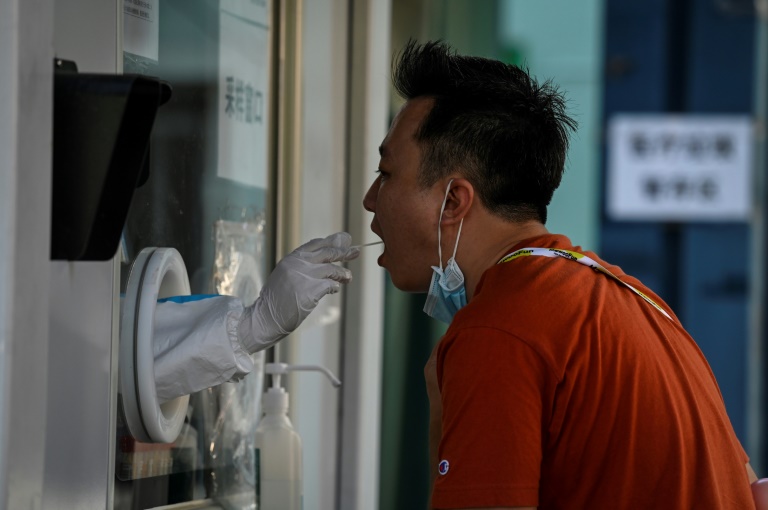
Shanghai also dropped after news that the Chinese city of Chengdu would effectively lock down around 16 million people in a bid to contain a Covid-19 outbreak, likely dealing another blow to a stuttering economy.

“With Covid outbreaks unlikely to diminish as we head into winter, the prospects for a China rebound this side of next year have virtually disappeared, raising concerns over a prolonged global slowdown,” said CMC Markets analyst Michael Hewson.

Oil prices slumped more than three percent on growth worries as well as concerns easing about a possible decision by OPEC+ members to cut production to support prices that Saudi officials had posited last month.

“I’m not sure Saudi Arabia expected markets to test their nerve so quickly but it seems the suggestion that a reduction next week won’t be considered has removed the production cut risk for now,” said analyst Craig Erlam at OANDA trading platform.

– Key figures at around 2030 GMT –

New York – Dow: UP 0.5 percent at 31,656.42 (close)

New York – S&P 500: UP 0.3 percent at 3,966.85 (close)

New York – Nasdaq: DOWN 0.3 percent at 11,785.13 (close)

London – FTSE 100: DOWN 1.9 percent at 7,148.50 (close)

Frankfurt – DAX: DOWN 1.6 percent at 12,630.23 (close)

Paris – CAC 40: DOWN 1.5 percent at 6,034.31 (close)

EURO STOXX 50: DOWN 1.7 percent at 3,456.70 (close)

Tokyo – Nikkei 225: DOWN 1.5 percent at 27,661.47 (close)

Hong Kong – Hang Seng Index: DOWN 1.8 percent at 19,597.31 (close)

Shanghai – Composite: DOWN 0.5 percent at 3,184.98 (close)

Euro/dollar: DOWN at $0.9947 from $1.0054 on Wednesday

Pound/dollar: DOWN at $1.1542 from $1.1622

Euro/pound: DOWN at 86.16 pence from 86.50 pence

Dollar/yen: UP at 140.20 yen from 138.96 yen

West Texas Intermediate: DOWN 3.2 percent at $86.69 per barrel

Brent North Sea crude: DOWN 3.4 percent at $92.36 per barrel

burs-jmb/bfm

The investigations involving Donald Trump

Donald Trump’s legal team argued in court for the first time Thursday about the search of his Florida residence for government secrets removed from the White House — asking for an independent watchdog to review the documents seized last month by FBI agents.

It was the latest development in multiple criminal, civil and congressional probes into the former president’s role in last year’s US Capitol attack and plot to overturn the 2020 US election, as well as his family firm’s business practices.

Here are some of the key investigations weighing on the one-term president as he eyes a third run for the White House in 2024.

– Capitol assault –

A series of explosive hearings by the House of Representatives panel probing the attack on the US Capitol by Trump supporters on January 6, 2021 offered a roadmap for potentially charging the ex-president with a crime.

The lawmakers leading the hearings presented their case that Trump knew he lost the 2020 presidential election to Joe Biden, yet pressed his claims of fraud and ultimately brought his supporters to Washington for a rally that ended with a violent assault on Congress.

The House select committee has also uncovered dramatic evidence of Trump’s alleged misconduct leading up to the insurrection, including his attempt to co-opt government departments into his bid to overturn the election.

The lawmakers’ work is separate from the criminal probe that the Justice Department has launched into the unrest and the events leading up to it.

Former White House counsel Pat Cipollone — a key witness to Trump’s behavior during his last days in office, is expected to appear Friday before a grand jury in Washington.

Besides the legal ramifications, an unprecedented prosecution of a former chief executive would likely cause a political earthquake in a country already starkly divided along partisan Democratic and Republican lines.

– ‘Find’ the votes –

Trump is being investigated for pressuring officials in the southern swing state of Georgia to overturn Joe Biden’s 2020 victory — including a now-infamous taped phone call in which he asked them “find” enough votes to reverse the result.

Fulton County’s top prosecutor Fani Willis has assembled a special grand jury as part of a potentially year-long process that could end in Trump facing a raft of solicitation and conspiracy charges connected to election fraud and interference.

Willis has already amassed significant testimony from Trump’s inner circle, including his former personal lawyer, ex-New York mayor Rudy Giuliani, who has been informed he is the target of criminal investigators.

The former president’s Senate ally Lindsey Graham, who denies accusations that he improperly suggested Georgia toss out lawful mail-in ballots, has failed in a legal bid to avoid testifying.

– The Trump Organization –

Authorities in New York state have been looking into the business practices of the Trump Organization, including whether the firm misled lenders and tax authorities on the value of the company’s real estate holdings.

However, in March the prosecutor leading a probe into the former president’s finances quit over the decision by new Manhattan district attorney Alvin Bragg not to move ahead with prosecution of the Republican billionaire. 

The investigation had probed whether Trump fraudulently overvalued multiple assets to secure loans and then undervalued them to minimize taxes.

It was launched by Bragg’s predecessor Cyrus Vance, with Bragg taking over the case when he took office in January.

The prosecutor Mark Pomerantz alleged Trump is “guilty of numerous felony violations,” according to his resignation letter published by the New York Times.

New York state Attorney General Letitia James is also pushing ahead with a civil probe of the Trump family firm’s practices on property valuations and tax reporting.

– ‘Raid’ on Florida residence –

An FBI search of Trump’s Florida home in August turned up top secret documents improperly taken to Trump’s Mar-a-Lago estate when he left office in January 2021.

Government officials said in a filing Tuesday they had evidence of efforts to hide classified documents despite a grand jury demand in May that Trump produce records removed from the White House.

The filing also stated that FBI agents located classified documents in Trump’s desk drawers with his passports.

The August 8 raid was triggered by a review of “highly classified” records that Trump finally surrendered to authorities in January this year — after months of back and forth with the National Archives.

The Justice Department began investigating after the 15 boxes were found to contain national defense information, including 184 documents marked as confidential, secret or top secret, a government affidavit showed.

The former president has taken legal action to seek the appointment of an independent party, or “special master,” to screen the seized files for materials protected by law from being investigated.

A judge in southern Florida said Thursday she would consider the request “in due course” after the federal government opposed the move. 

Wildfire rages as California bakes under heat dome

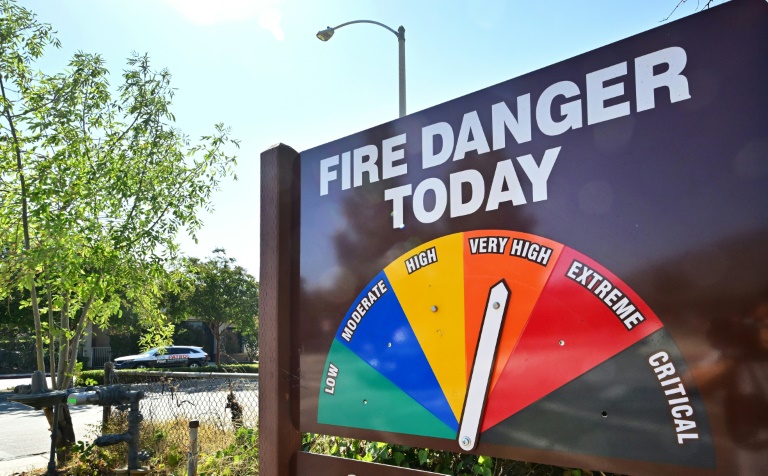
Hundreds of firefighters endured triple-digit temperatures Thursday battling against a wildfire along a major highway, as the western United States bakes under a fearsome heat dome.

Super Scooper water-spraying aircraft were assisting the attack on the 5,000 acre (2,000 hectare) blaze that took hold of a swath of countryside near Los Angeles in California.

Seven firefighters had to be taken to hospital after suffering heat-related injuries in their bid to contain the Route Fire, which erupted on Wednesday.

All of them have been discharged, and none is seriously hurt, fire chiefs said.

The inferno came as California and parts of Nevada and Arizona broiled under another day of blistering temperatures.

A stubborn bubble of high pressure sitting over the region has sent the mercury soaring, with a temperature of 109 degrees Fahrenheit (43 Celsius) forecast around the fire area Thursday.

The heat dome is expected to last well into next week, with thermometers set to peak at 116F in some densely populated areas around Los Angeles over the upcoming Labor Day holiday weekend.

Angeles National Forest Fire Chief Robert Garcia, who is overseeing the fight against the Route Fire, said the sudden growth of the blaze on Wednesday was “a wake-up call,” with “very rapid fire growth and very, very explosive fire behavior” expected over the next few days.

“The days ahead are going to be very challenging,” he told reporters. 

Fire officials said that while they had a portion of the perimeter contained, they were a long way from out of the woods.

“Excessive heat, low humidity and steep terrain will continue to pose the biggest challenge for firefighters,” an incident statement said.

“This combination has the potential for large plume growth, uphill runs and short-range spotting.”

The blaze, which shuttered the I5 interstate for several hours, came as Californians were being asked again to conserve energy on Thursday.

– Flex Alert –

The California Independent System Operator (ISO), which runs the state’s power grid, issued a second consecutive Flex Alert, calling on households to limit power consumption between 4:00 pm and 9:00 pm, to avoid straining the over-burdened system.

That typically means turning up the thermostat on air conditioning systems, avoiding using major appliances and not charging electric vehicles in this time.

“Reducing energy use during a Flex Alert can help stabilize the power grid during tight supply conditions and prevent further emergency measures, including rotating power outages,” California ISO said.

California has abundant solar installations, including on homes, which typically provide for around a third of the state’s power requirements during daylight.

But when the sun goes down, that supply falls quickly, leaving traditional generation to plug the gap. The problem is particularly acute in the early evening when temperatures are still high, but solar starts dropping out of the power grid mix.

California Governor Gavin Newsom on Wednesday declared a state of emergency that temporarily relaxes pollution controls on fossil fuel power plants to allow them to generate more electricity.

The National Weather Service has issued an “excessive heat warning” for most of California, as well as parts of Arizona and Nevada, warning of “dangerously hot conditions” over the next several days.

Nighttime temperatures are not expected to offer much relief, with lows struggling to get below 80 degrees Fahrenheit in many places.

It is not unusual for southern California to experience heat waves in September, but temperatures above 100 degrees Fahrenheit are considered hot even for a place almost perpetually baked by sunshine.

Scientists say global warming, which is being driven chiefly by the unchecked burning of fossil fuels, is making natural weather variations more extreme.

Heat waves are getting hotter and more intense, while storms are getting wetter and, in many cases, more dangerous.

Treatment improves cognition in Down Syndrome patients

A new hormone treatment improved the cognitive function of six men with Down Syndrome by 10-30 percent, scientists said Thursday, adding the “promising” results may raise hopes of improving patients’ quality of life.

However the scientists emphasised the small study did not point towards a cure for the cognitive disorders of people with Down Syndrome and that far more research is needed.

“The experiment is very satisfactory, even if we remain cautious,” said Nelly Pitteloud of Switzerland’s Lausanne University Hospital and co-author of a new study in the journal Science.

Down Syndrome is the most common genetic form of intellectual disability, occurring in around one in 1,000 people, according to the World Health Organization.

Yet previous research has failed to significantly improve cognition when applied to people with the condition, which is why the latest findings are “particularly important”, the study said.

Recent discoveries have suggested that how the gonadotropin-releasing hormone (GnRH) is produced in the brain can affect cognitive functioning such as memory, language and learning.

GnRH hormones regulate how much testosterone and estrogen is produced and increased levels of it help spur puberty.

“We wondered if this hormone could play any role in establishing the symptoms of people with Down Syndrome,” said Vincent Prevot, study co-author and head of neuroscience research at France’s INSERM institute. 

– Mice research –

The team first established that five strands of microRNA regulating the production of GnRH were dysfunctional in mice specifically engineered for Down Syndrome research.

They then demonstrated that cognitive deficiencies — as well as loss of smell, a common symptom of Down Syndrome — were linked to dysfunctioning GnRH secretion in the mice.

The team then gave the mice a GnRH medication used to treat low testosterone and delayed puberty in humans, finding that it restored some cognitive function and sense of smell.

A pilot study was conducted in Switzerland involving seven men with Down Syndrome aged 20 to 50.

They each received the treatment through  their arm every two hours over a period of six months, with the drug delivered in pulses to mimic the hormone’s frequency in people without Down Syndrome.

Cognition and smell tests were carried out during the treatment, as were MRI scans.

Six of the seven men showed improvement in cognition with no significant side effects — however none showed a change in their sense of smell.

“We have seen an improvement of between 10-30 percent in cognitive functions, in particular with visuospatial function, three-dimensional representation, understanding of instructions as well as attention,” Pitteloud said.

The patients were asked to draw a simple 3D bed at several stages throughout the therapy. Many struggled at the beginning but by the end the efforts were noticeably better.

– ‘Improve quality of life’ –


The authors acknowledged some limitations of the study, including its size and that the choice of patients was “pushed by their parents”.

“The clinical trial only focused on seven male patients — we still have a lot of work to do to prove the effectiveness of GnRH treatment for Down Syndrome,” Pitteloud said.

A larger study involving a placebo and 50 to 60 patients, a third of them women, is expected to begin in the coming months.

“We are not going to cure the cognitive disorders of people with Down Syndrome, but the improvement seen in our results already seems fundamental enough to hope to improve their quality of life,” Pitteloud said.

Fabian Fernandez, an expert in cognition and Down Syndrome at the University of Arizona who was not involved in the research, hailed the “tour de force study”.

He told AFP that while it is “difficult to envision” how such an intensive treatment could be used for young people, it might be better suited to delay the Alzheimer’s disease-related dementia suffered by many adults with Down Syndrome.

It was also difficult to predict how such an improvement could impact the lives of people with the condition, he said.

“For some, it could be significant, however, as it would enable them to be more independent with daily living activities such as maintaining and enjoying hobbies, finding belongings, using appliances in the home, and travelling alone.”

IAEA chief says integrity of Ukraine nuclear plant 'violated'

The head of the UN nuclear agency on Thursday said the “physical integrity” of a Russian-held Ukrainian nuclear plant had been “violated” following frequent shelling, on his team’s first visit to the facility.

Russian forces seized control of the Zaporizhzhia nuclear plant in southern Ukraine, Europe’s largest, and the surrounding region shortly after the February 24 invasion.

Both sides have traded blame for recent shelling near the plant lying on the frontline, sparking fears of a nuclear disaster. 

A 14-strong team of inspectors from the International Atomic Energy Agency arrived at the facility on Thursday to conduct “security and safeguards activities” after a risky journey across the frontline and early-morning shelling of the area.

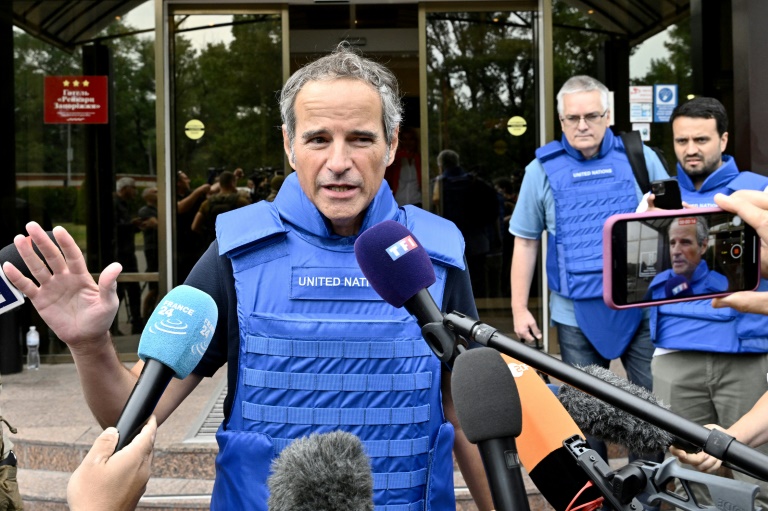
“It is obvious that the plant and physical integrity of the plant has been violated several times,” IAEA head Rafael Grossi told reporters after returning to Ukrainian-controlled territory.

Grossi said part of the IAEA mission will stay at Zaporizhzhia “until Sunday or Monday” to continue the assessment, without specifying their number.

The Argentine described the visit as productive and said he gathered lots of information.

Wearing bright blue flak jackets and helmets, the IAEA team crossed into Russian-held territory, reaching the facility at around 1200 GMT. 

After the inspection, in a video released by the Russian RIA Novosti news agency, Grossi said: “We have achieved something very important today and the important thing is the IAEA is staying here.”

A dawn shelling attack on the area had forced one of the plant’s six reactors to close.

Energoatom, Ukraine’s nuclear agency, said it was “the second time in 10 days” that Russian shelling had forced the closure of a reactor. 

It said the plant’s emergency protection system kicked in shortly before 5:00 am (0200 GMT), shutting reactor five, with the attack damaging a back-up power supply. 

– ‘Stop playing with fire’ –

“It is high time to stop playing with fire and instead take concrete measures to protect this facility… from any military operations,” Robert Mardini, chief of the International Committee of the Red Cross, told reporters in Kyiv.

He warned the consequences of hitting the plant could be “catastrophic”, saying “the slightest miscalculation could trigger devastation that we will regret for decades.”

After Russian forces seized the plant on March 4, Energoatom shut two reactors, followed by a third after shelling on August 5. With a fourth undergoing repairs, Thursday’s incident leaves only one of the six reactors working. 

Mardini said it was “encouraging” the IAEA team was inspecting the plant because the stakes were “immense”.

On leaving Zaporizhzhia, Grossi said his team would be travelling through areas where “the risks are significant” but had decided to go ahead anyway due to the “very important mission to accomplish”. 

– Shelling and saboteurs –

The neighbouring town of Energodar came under sustained attack at dawn, with Russian troops firing “mortars and using automatic weapons and rockets”, its mayor Dmytro Orlov said. 

But Moscow accused Kyiv of smuggling in up to 60 military “saboteurs” who reached the area near the plant at dawn, prompting Russian troops to take “measures to annihilate the enemy”. 

Ukraine has accused Russia of deploying hundreds of soldiers and storing ammunition at the plant. 

Kyiv also suspects that Moscow intends to divert power from the plant to the nearby Crimean peninsula, annexed by Russia in 2014 — a view held by other international figures including British Prime Minister Boris Johnson. 

Meanwhile, Ukrainian troops pressed ahead with a counter-offensive in the nearby region of Kherson to retake areas seized by Russia at the start of the invasion.

In its morning update, the presidency said “heavy explosions continued for the last 24 hours” across Kherson, while five people were killed and 12 others wounded in the eastern Donetsk region. 

– Back-to-school gunfire soundtrack –

Despite the conflict, now in its seventh month, September 1 marked the start of a new school year for children across Ukraine.

In the southern Mykolaiv region, children were back in front of screens for online classes as all school attendance was cancelled due to the ongoing fighting.

On her first day back, nine-year-old Antonina Sidorenko, who lives in a hamlet near the frontline, was doing her online lessons with the distant crackle of gunfire in the background. 

“I’m happy to be back at school but I would be even happier if there was no war because I miss my teacher and my friends,” she told AFP, saying her best friend had fled to Poland. 

Four-year-old takes gun to school in Texas

A four-year-old in Texas brought a loaded handgun to school, officials said, as the end of summer vacation in America reignites fears of school shootings.

The scare on Wednesday in Corpus Christi came two days after a similar incident in Arizona, that time involving a child aged seven. 

In the Texas case, an off-duty police officer working at the school “called in for assistance advising that a four-year-old student was in possession of a loaded handgun on campus,” police said in a statement.

The officer took possession of the weapon.

The parents of the child were identified as the owners of the gun and the father, aged 30, was arrested and charged with making a firearm accessible to children and abandoning or endangering a child.

Americans have become tragically accustomed to periodic mass shootings at schools. In May, 19 small children and two teachers were killed at a massacre at an elementary school in Uvalde, Texas.

On Monday in Arizona a seven-year-old child was found to have a non-loaded gun, along with a fully-loaded magazine in their backpack at a school in the town of Cochise, the sheriff’s office said.

Alerted to the incident, the child’s father went home from work to check on his guns — and found a second one was also missing.

The second weapon was discovered in the administrative offices of the school, where the child apparently hid it while waiting for the authorities.

“The parents were interviewed and advised that the weapons had been placed in what they believed to be a secure location away from the children after a recent camping trip, but it appears that the second grader was able to gain access and take the handguns to school,” the sheriff’s office statement added.

The child faces disciplinary proceedings under laws for dealing with juveniles.

Nearly 400 million guns are in circulation in the United State, more than its population.

Africa's oldest dinosaur found in Zimbabwe

Scientists in Zimbabwe have discovered the remains of Africa’s oldest dinosaur, which roamed the earth around 230 million years ago. 

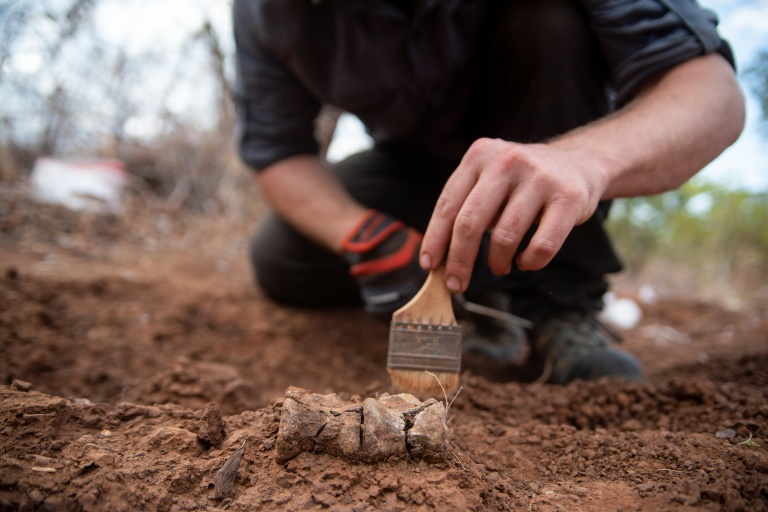
The dinosaur, named Mbiresaurus raathi, was only about one metre (3.2 feet) tall, with a long tail, and weighed up to 30 kilograms (66 pounds), according to the international team of palaeontologists that made the discovery. 

“It ran around on two legs and had a fairly small head,” Christopher Griffin, the scientist who unearthed the first bone, told AFP on Thursday.

Probably an omnivore that ate plants, small animals and insects, the dinosaur belongs to the sauropodomorph species, the same linage that would later include giant long-necked dinosaurs, said Griffin, a 31-year-old researcher at Yale University.

The skeleton was found during two expeditions in 2017 and 2019 by a team of researchers from Zimbabwe, Zambia, and the United States. 

“I dug out the entire femur and I knew in that moment, that it was a dinosaur and I was holding Africa’s oldest known dinosaur fossil,” said Griffin, who at the time was a PhD candidate at Virginia Tech University.

His team’s findings were first published in journal Nature on Wednesday.

Dinosaurs’ remains from the same era had previously been found only in South America and India. 

The palaeontologists selected the Zimbabwe site for digging after calculating that when all continents were connected in a single land mass known as Pangea, it laid roughly at the same latitude of earlier findings in modern day South America. 

“Mbiresaurus raathi is remarkably similar to some dinosaurs of the same age found in Brazil and Argentina, reinforcing that South America and Africa were part of continuous landmass during the Late Triassic,” said Max Langer of the University of Sao Paulo in Brazil. 

The dinosaur is named after the Mbire district, northeast of Zimbabwe, where the skeleton was found, and palaeontologist Michael Raath, who first reported fossils in this region.

“What this (discovery) does is it broadens the range that we knew the very first dinosaurs lived in,” Griffin said.

Other specimens were discovered in the area, and all are reposited in the Natural History Museum of Zimbabwe, in the second largest city, Bulawayo. 

“The discovery of the Mbiresaurus is an exciting and special find for Zimbabwe and the entire palaeontological field,” said museum curator Michel Zondo.

“The fact that the Mbiresaurus skeleton is almost complete, makes it a perfect reference material for further finds.”

Brazilian Amazon records worst August for fires in 12 years

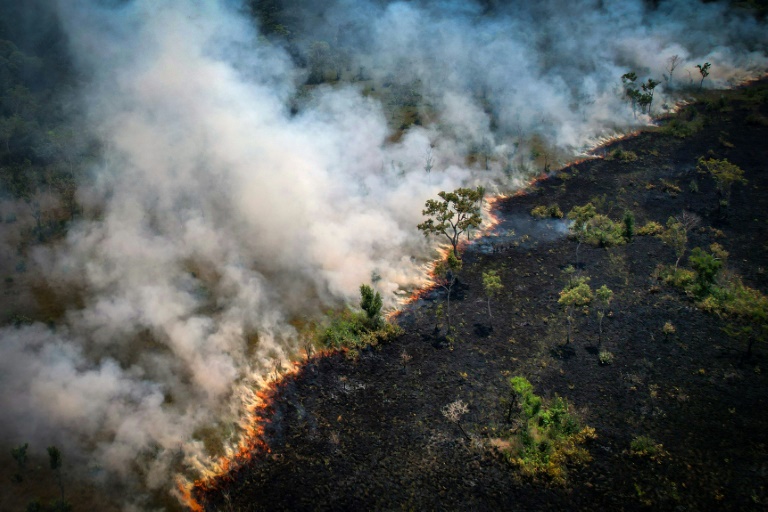
The Brazilian Amazon recorded its worst month of August for forest fires since 2010, with an 18 percent rise from a year ago, according to official data released Thursday.

The Brazilian INPE space agency said its satellites had recorded 33,116 fires in the rainforest, a key buffer against global warming, in August this year, compared to 28,060 in the same month last year.

At least 3,358 fires were recorded on August 22 alone, the highest number for any 24-hour period since September 2007, it said.

The number was nearly triple that recorded on the so-called “Day of Fire” — August 10, 2019 — when farmers launched a coordinated plan to burn huge amounts of felled rainforest in the northern state of Para.

Then, fires sent thick, gray smoke all the way to Sao Paulo, some 2,500 kilometers (1,500 miles) away, and triggered a global outcry over one of Earth’s most vital resources burning.

Between January and August, the INPE recorded 46,022 fires — a 16 percent rise from the same period in 2021.

The Amazon had not burnt more in a month of August — usually the worst for fires in the Brazilian dry season — since 2010, when 45,018 were recorded.

All the worst August figures since then — 30,900 fires in 2019, 29,307 in 2020, 28,060 in 2021 and 33,116 in 2022 — happened during the four-year term of far-right President Jair Bolsonaro, who will be seeking re-election next month.

“This uncontrolled increase in fires in the last four years is closely related to the increase in deforestation,” said Mariana Napolitano of WWF Brazil.  

“The Amazon is a humid rainforest and, contrary to what happens in other biomes, fire does not arise spontaneously. Fires are always linked to human action,” she added.

According to experts, fires are mainly caused by farmers who illegally clear land by burning vegetation. 

Deforestation in Brazil is also at an historic high: in the first half of 2022 some 3,988 km2 were lost, a record since INPE’s Deter satellite monitoring system began collecting data in 2016.

Bolsonaro, an agribusiness ally, faces international criticism for a surge in Amazon destruction on his watch.

But he rejects the censure.

“None of those who are attacking us have the right. If they wanted a pretty forest to call their own, they should have preserved the ones in their countries,” he wrote on Twitter last month.

“The Amazon belongs to Brazilians, and always will,” said Bolsonaro.

England's drought-hit summer 2022 joint hottest on record

England had its joint hottest summer on record this year, tied with 2018, the country’s meteorological agency said Thursday as it unveiled provisional mean temperature statistics for the three-month period.

The announcement comes with most of England and Wales gripped by drought after exceptionally high temperatures and several heatwaves alongside minimal rainfall, mirroring conditions seen across northwest Europe.

England also smashed its all-time temperature record in July, when the mercury topped 40 degrees Celsius (104 degrees Fahrenheit) for the first time ever, while July was the driest on record across the south.

“It is too early to speculate on how the year overall will finish, but the persistent warm conditions are certainly notable and have certainly been made more likely by climate change,” Mark McCarthy of the National Climate Information Centre said.

“For many this summer’s record-breaking heat in July… will be the season’s most memorable aspect,” he added in a statement.

“However, for England to achieve its joint warmest summer takes more than extreme heat over a couple of days, so we shouldn’t forget that we experienced some persistently warm and hot spells through June and August too.”

Detailing the seasonal period starting in June, the Met Office — whose records date back to 1884 — confirmed England’s mean temperature of 17.1 degree Celsius was the joint warmest ever, equalling the summer of four years ago.

The hottest and driest areas relative to average were in the east, with East Anglia and parts of northeast England seeing their warmest summer on record. 

– ‘Human-induced climate change’ –

Across the entire UK — which also includes Scotland, Wales and Northern Ireland — it was provisionally the fourth warmest summer. 

The top British summers, all in the last two decades, were all very close in temperature, with the two hottest ever averaging 15.8 degrees and the two second hottest 15.7 degrees.

“This means that four of the five warmest summers on record for England have occurred since 2003, as the effects of human-induced climate change are felt on England’s summer temperatures,” the Met Office noted.

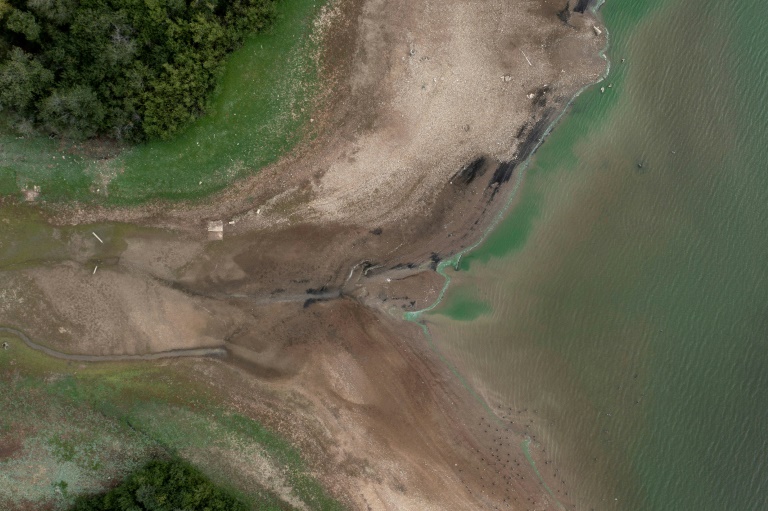
This year’s parched conditions have had an impact across England, notably with the source of the River Thames drying up and shifting several miles downstream.

Satellite imagery has shown the nation’s traditionally green and lush countryside turning to various shades of yellow and brown, as huge swathes of southern, central and eastern England dried out.

Some water companies have imposed restrictions on water use, including hosepipe bans, with the lack of rainfall and punishing heat depleting rivers, reservoirs and groundwater levels.

Thames Water, which supplies 15 million people in London and some surrounding areas, introduced a hosepipe ban in its area from August 24 in the first such restriction in the British capital in a decade.

Severe heatwaves — made hotter and more frequent by climate change — are already being felt beyond Britain and across the world, threatening human health, wildlife and crop yields. 

Outside western Europe, which has seen devastating wildfires this summer, half of China has been crippled by drought as some regions experience the longest continuous period of high temperatures since records began there more than 60 years ago.

Close Bitnami banner
Bitnami