AFP

S.African court confirms Shell seismic exploration ban

A South African court on Thursday upheld a ban imposed on energy giant Shell from using seismic waves to explore for oil and gas off the Indian Ocean coast.

The judgement was a major victory for environmentalists who had argued the technique would affect whales and other marine life.

In a ruling seen by AFP, the high court in the southern city of Makhanda said authorisation granted in 2014 to search for oil and gas in the Transkei and Algoa areas “is reviewed and set aside.”

Last December the same court had issued an interim order prohibiting Shell from going ahead with its plans.

Civil rights organisations and civilians celebrated outside the courthouse, according to local media. 

“We live off the land and the ocean. The government tells us that oil and gas will bring job opportunities, but we know full well that it will destroy our livelihoods,” Nonhle Mbuthuma from the local environmental lobby group Amadiba said in a statement.

A Shell spokesperson told AFP they “respect the court’s decision” and would review the judgment to “determine our next steps”.

Shell did not say if it would appeal the judgment.

“We remain committed to South Africa and our role in the just energy transition,” he said.

Green Connection, one of the environmental and rights groups which had filed the case, said in a statement “civil society, traditional communities and small-scale (fishermen) have once again been vindicated by the courts”.

Shell planned to map more than 6,000 square kilometres (2,300 square miles) by bouncing sonic waves off the sea floor and using the reflection to build up a 3D image.

The area lies off South Africa’s so-called Wild Coast. The 300-kilometre (185-mile) stretch boasts rich waters housing exquisite marine life and natural reserves.

Campaigners argued that the research would have sent an “extremely” loud shockwaves every 10 seconds, 24 hours a day for five months, potentially harming migration, feeding and other routines for marine mammals and other species.

“This court victory shows that the fossil-fuel companies are required to follow the law, include all affected people in public participation processes and consider all the harms to the environment,” Pooven Moodly of Natural Justice said in a statement.

South Africa’s energy ministry had backed the scheme, and lashed those who opposed it as thwarting investment in the country’s development.

Nearly 150 oil and gas projects are underway in Africa. Greenpeace Africa’s programme chief Melita Steele expressed the hope that Thursday’s “victory will reverse the trend”.

'Cosmoss': Supermodel Kate Moss launches wellness brand

British supermodel Kate Moss on Thursday launched a website selling her own beauty and lifestyle products called Cosmoss, becoming the latest star to venture into branded e-commerce.

Moss follows celebrities such as US actress Gwyneth Paltrow who has forged a second career marketing wellness products on her Goop website.

With her sculpted cheek bones, grungy style and famous boyfriends including US actor Johnny Depp and British musician Pete Doherty, Moss epitomised the 1990s-era fashion scene and its hard-partying lifestyle.

But in an interview on BBC radio’s “Desert Island Discs” in July, Moss said that she now prefers trips to the garden centre and meditation to clubbing, and is “not into being out of control anymore”.

Vogue magazine reported that Moss, 48, spent two-and-a-half years developing the products for her new brand.

So far the Cosmossbykatemoss.com website sells a small range of vegan-friendly products including tins of herbal teabags for £20 ($23), facial oil containing CBD (£105) — an active ingredient in cannabis — and perfume with essential oils (£120).

Moss recommends using the products in combination in “rituals” that “balance body and soul with the natural environment and the circadian cycles”.

Cosmoss is not Moss’s first venture into personal branding.

She designed a line of clothing for teen fashion chain Topshop — which closed its physical stores during the pandemic — and gave her name to lipsticks by Rimmel.

In 2016 she launched a talent agency, Kate Moss Agency, signing her own daughter, Lila Moss, as well as other offspring of stars such as Ella Richards (granddaughter of Keith) and artists such as Rita Ora.

In May, Moss testified at former boyfriend Depp’s defamation trial against his ex-wife Amber Heard.

The model said that reports that Depp once threw her down a flight of stairs were untrue.

Yen sinks to new 24-year low against dollar

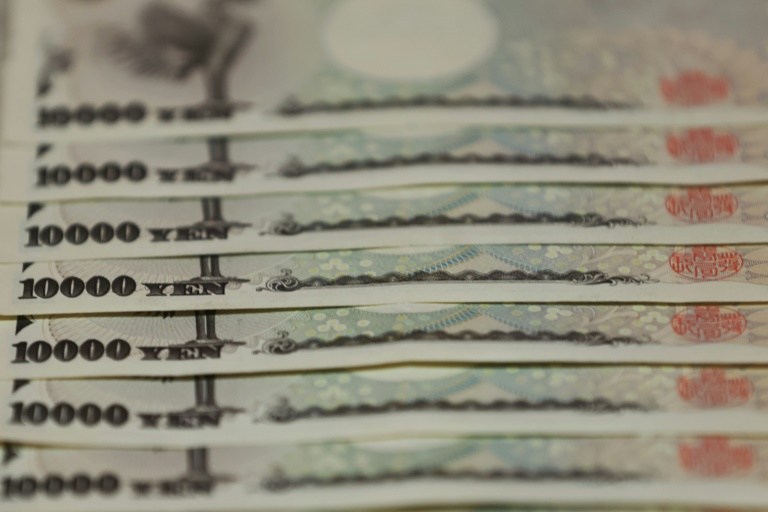
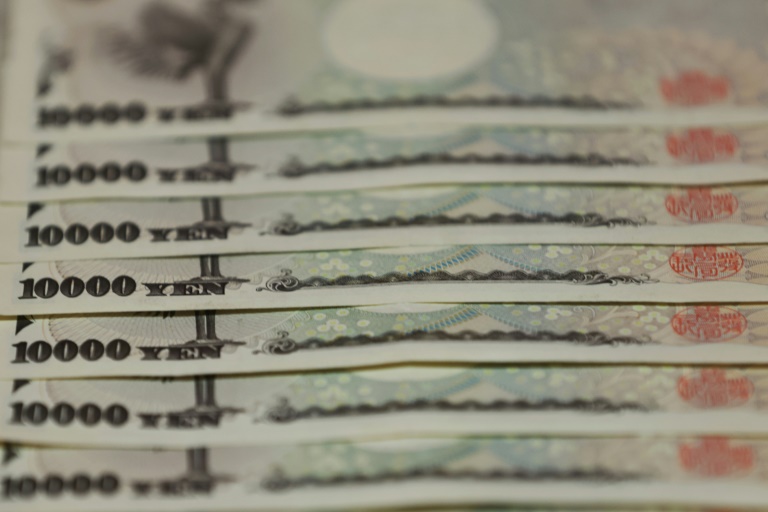
The yen plunged to a new 24-year low against the dollar on Thursday as Japan sticks with its long-standing monetary easing policies in contrast to tightening by the US Federal Reserve.

One dollar was more worth more than 140 yen for the first time since 1998 in European afternoon deals, as the greenback also strengthened against other currencies.

The yen has been falling against the dollar from around 115 in March, prompting analysts to point to the possibility of government intervention.

The steep decline has mainly been driven by the differing approaches of the Bank of Japan and other central banks including the Fed, which have raised interest rates to tackle soaring inflation fuelled by the Ukraine war.

David Forrester, senior FX strategist at Credit Agricole CIB in Hong Kong, said breaching 140 yen per dollar marked an “important technical level”.

“Previously, if you look at when the Bank of Japan has intervened to buy the yen, it’s usually been around these levels,” he told AFP.

The Japanese currency fell 0.6 percent to hit 140.13 yen per dollar at around 1425 GMT.

Earlier on Thursday, Japan’s top government spokesman repeated comments about the importance of stability in forex markets, saying that “rapid changes are undesirable”.

But he did not give any indication that special measures, like the finance ministry instructing the BoJ to buy the yen against other currencies to bolster its value, were on the cards.

With volatility increasing, “the government plans to monitor the trend of the foreign exchange market carefully with a high sense of urgency,” Hirokazu Matsuno told reporters.

– Government intervention? –

Last week, Fed Chair Jerome Powell declared his commitment to aggressive rate hikes, eliminating hope that the US central bank may soften its position to avoid an economic slowdown.

But policymakers at the Bank of Japan have refused to abandon easy-money measures put in place a decade ago, aimed at generating growth in the world’s third-largest economy and sustained price rises of around two percent.

Also, “higher energy prices throughout the year have been a big weight on Japan’s trade balance and current account balance… but that has eased a little bit recently,” Forrester said.

Inflation in Japan is at its highest in seven years, and prices for items excluding fresh products rose 2.4 percent on-year in July — but the BoJ sees these increases as temporary, and says it is committed to its current policy.

“Inflation in Japan is not only accelerating but broadening out beyond just food and energy price inflation,” which is starting to indicate “that maybe the BoJ does have to shift its stance a little”, Forrester said. 

“If they’re stubborn on that front, then the ministry of finance may have to intervene, to reduce imported inflation due to the weaker yen,” he added.

Although it makes imported goods more expensive in Japan, a weaker yen can also inflate the profits of Japanese companies selling products overseas, including major firms such as Toyota and Nintendo.

On Wednesday, Prime Minister Fumio Kishida announced a further relaxation of the country’s strict border rules to allow tourists on package tours, but without a guide.

The decision was made partly “from the viewpoint of taking advantage of a cheap yen”, he told reporters.

js-kaf-hih-lth/rl

Yen sinks to new 24-year low against dollar

The yen plunged to a new 24-year low against the dollar on Thursday as Japan sticks with its long-standing monetary easing policies in contrast to tightening by the US Federal Reserve.

One dollar was more worth more than 140 yen for the first time since 1998 in European afternoon deals, as the greenback also strengthened against other currencies.

The yen has been falling against the dollar from around 115 in March, prompting analysts to point to the possibility of government intervention.

The steep decline has mainly been driven by the differing approaches of the Bank of Japan and other central banks including the Fed, which have raised interest rates to tackle soaring inflation fuelled by the Ukraine war.

David Forrester, senior FX strategist at Credit Agricole CIB in Hong Kong, said breaching 140 yen per dollar marked an “important technical level”.

“Previously, if you look at when the Bank of Japan has intervened to buy the yen, it’s usually been around these levels,” he told AFP.

The Japanese currency fell 0.6 percent to hit 140.13 yen per dollar at around 1425 GMT.

Earlier on Thursday, Japan’s top government spokesman repeated comments about the importance of stability in forex markets, saying that “rapid changes are undesirable”.

But he did not give any indication that special measures, like the finance ministry instructing the BoJ to buy the yen against other currencies to bolster its value, were on the cards.

With volatility increasing, “the government plans to monitor the trend of the foreign exchange market carefully with a high sense of urgency,” Hirokazu Matsuno told reporters.

– Government intervention? –

Last week, Fed Chair Jerome Powell declared his commitment to aggressive rate hikes, eliminating hope that the US central bank may soften its position to avoid an economic slowdown.

But policymakers at the Bank of Japan have refused to abandon easy-money measures put in place a decade ago, aimed at generating growth in the world’s third-largest economy and sustained price rises of around two percent.

Also, “higher energy prices throughout the year have been a big weight on Japan’s trade balance and current account balance… but that has eased a little bit recently,” Forrester said.

Inflation in Japan is at its highest in seven years, and prices for items excluding fresh products rose 2.4 percent on-year in July — but the BoJ sees these increases as temporary, and says it is committed to its current policy.

“Inflation in Japan is not only accelerating but broadening out beyond just food and energy price inflation,” which is starting to indicate “that maybe the BoJ does have to shift its stance a little”, Forrester said. 

“If they’re stubborn on that front, then the ministry of finance may have to intervene, to reduce imported inflation due to the weaker yen,” he added.

Although it makes imported goods more expensive in Japan, a weaker yen can also inflate the profits of Japanese companies selling products overseas, including major firms such as Toyota and Nintendo.

On Wednesday, Prime Minister Fumio Kishida announced a further relaxation of the country’s strict border rules to allow tourists on package tours, but without a guide.

The decision was made partly “from the viewpoint of taking advantage of a cheap yen”, he told reporters.

js-kaf-hih-lth/rl

Global stocks selloff intensifies on recession fears

Global stock markets sank Thursday, propelled by rampant inflation and growing recession fears as another major Chinese city went into lockdown.

Frankfurt, London and Paris equities closed down between 1.5 and two percent as record-high eurozone inflation fuelled fears that borrowing costs are set to climb even higher even as the region faces rocketing winter energy costs due to Russia’s war on Ukraine.

The European Central Bank will announce its latest monetary policy decision next Thursday, after delivering its first rate hike in a decade in July.

“More pain is likely for investors as Europe’s energy crunch gets worse”, said City Index analyst Fawad Razaqzada.

Meanwhile the yen plunged to a new 24-year low against the dollar on Thursday as Japan sticks with its long-standing monetary easing policies in contrast to tightening by the US Federal Reserve.

One dollar was more worth more than 140 yen for the first time since 1998 in afternoon deals in Europe, as the greenback also strengthened against other currencies.

The greenback was also at its strongest level against the pound since the height of the pandemic in 2020, with sterling buying less than $1.16.

On Wall Street, the Dow was down 0.5 percent at 31,358.97 points in late morning trading.

– ‘Outlook is poor’ –

“Markets remain unable to snap their recent losing streak, with investors still positioning for tougher times ahead,” said Interactive Investor analyst Richard Hunter.

“Central to current concerns are recessionary fears in the US and a beleaguered China. 

“With the world’s two largest economies under pressure, the immediate outlook is poor.”

Asian equities weakened further Thursday as traders continued to digest shrinking factory activity in powerhouse economy China.

Shanghai also dropped after news that the Chinese city of Chengdu would effectively lock down around 16 million people in a bid to contain a Covid-19 outbreak, likely dealing another blow to a stuttering economy.

“With Covid outbreaks unlikely to diminish as we head into winter, the prospects for a China rebound this side of next year have virtually disappeared, raising concerns over a prolonged global slowdown”, said CMC Markets analyst Michael Hewson. 

Meanwhile on Wall Street the tech-heavy Nasdaq was down around two percent, with investors taking a fright over the fortunes of NVIDIA, a California-based maker of high-performance graphics cards popular with gamers.

Shares in the company were down 11.4 percent nearing midday trading.

“NVIDIA shares have slumped sharply on the open after the US government ordered the company to halt sales of its top AI chips to China and Russia, with the company saying it cost them up to $400m in the current quarter”, Hewson said.

“With Chengdu also going into lockdown and China being one of its biggest markets, the next quarter is likely to be a big headwind for the rest of the sector,” he added.

Oil prices slumped more than two percent on growth worries as well as concerns easing about a possible decision by OPEC+ members to cut production to support prices that Saudi officials had posited last month.

“I’m not sure Saudi Arabia expected markets to test their nerve so quickly but it seems the suggestion that a reduction next week won’t be considered has removed the production cut risk for now,” said analyst Craig Erlam at OANDA trading platform.

– Key figures at around 1530 GMT –

New York – Dow: DOWN 0.5 percent at 31,358.97 points

EURO STOXX 50: DOWN 1.7 percent at 3,456.70 

London – FTSE 100: DOWN 1.9 percent at 7,148.50 (close)

Frankfurt – DAX: DOWN 1.6 percent at 12,630.23 (close)

Paris – CAC 40: DOWN 1.5 percent at 6,034.31 (close)

Tokyo – Nikkei 225: DOWN 1.5 percent at 27,661.47 (close)

Hong Kong – Hang Seng Index: DOWN 1.8 percent at 19,597.31 (close)

Shanghai – Composite: DOWN 0.5 percent at 3,184.98 (close)

Euro/dollar: DOWN at $0.9940 from $1.0054 on Wednesday

Pound/dollar: DOWN at $1.1534 from $1.1622

Euro/pound: DOWN at 86.13 pence from 86.50 pence

Dollar/yen: UP at 139.95 yen from 138.96 yen

West Texas Intermediate: DOWN 2.7 percent at $87.14 per barrel

Brent North Sea crude: DOWN 2.5 percent at $93.12

burs-lcm/rl

Global stocks selloff intensifies on recession fears

Global stock markets sank Thursday, propelled by rampant inflation and growing recession fears as another major Chinese city went into lockdown.

Frankfurt, London and Paris equities closed down between 1.5 and two percent as record-high eurozone inflation fuelled fears that borrowing costs are set to climb even higher even as the region faces rocketing winter energy costs due to Russia’s war on Ukraine.

The European Central Bank will announce its latest monetary policy decision next Thursday, after delivering its first rate hike in a decade in July.

“More pain is likely for investors as Europe’s energy crunch gets worse”, said City Index analyst Fawad Razaqzada.

Meanwhile the yen plunged to a new 24-year low against the dollar on Thursday as Japan sticks with its long-standing monetary easing policies in contrast to tightening by the US Federal Reserve.

One dollar was more worth more than 140 yen for the first time since 1998 in afternoon deals in Europe, as the greenback also strengthened against other currencies.

The greenback was also at its strongest level against the pound since the height of the pandemic in 2020, with sterling buying less than $1.16.

On Wall Street, the Dow was down 0.5 percent at 31,358.97 points in late morning trading.

– ‘Outlook is poor’ –

“Markets remain unable to snap their recent losing streak, with investors still positioning for tougher times ahead,” said Interactive Investor analyst Richard Hunter.

“Central to current concerns are recessionary fears in the US and a beleaguered China. 

“With the world’s two largest economies under pressure, the immediate outlook is poor.”

Asian equities weakened further Thursday as traders continued to digest shrinking factory activity in powerhouse economy China.

Shanghai also dropped after news that the Chinese city of Chengdu would effectively lock down around 16 million people in a bid to contain a Covid-19 outbreak, likely dealing another blow to a stuttering economy.

“With Covid outbreaks unlikely to diminish as we head into winter, the prospects for a China rebound this side of next year have virtually disappeared, raising concerns over a prolonged global slowdown”, said CMC Markets analyst Michael Hewson. 

Meanwhile on Wall Street the tech-heavy Nasdaq was down around two percent, with investors taking a fright over the fortunes of NVIDIA, a California-based maker of high-performance graphics cards popular with gamers.

Shares in the company were down 11.4 percent nearing midday trading.

“NVIDIA shares have slumped sharply on the open after the US government ordered the company to halt sales of its top AI chips to China and Russia, with the company saying it cost them up to $400m in the current quarter”, Hewson said.

“With Chengdu also going into lockdown and China being one of its biggest markets, the next quarter is likely to be a big headwind for the rest of the sector,” he added.

Oil prices slumped more than two percent on growth worries as well as concerns easing about a possible decision by OPEC+ members to cut production to support prices that Saudi officials had posited last month.

“I’m not sure Saudi Arabia expected markets to test their nerve so quickly but it seems the suggestion that a reduction next week won’t be considered has removed the production cut risk for now,” said analyst Craig Erlam at OANDA trading platform.

– Key figures at around 1530 GMT –

New York – Dow: DOWN 0.5 percent at 31,358.97 points

EURO STOXX 50: DOWN 1.7 percent at 3,456.70 

London – FTSE 100: DOWN 1.9 percent at 7,148.50 (close)

Frankfurt – DAX: DOWN 1.6 percent at 12,630.23 (close)

Paris – CAC 40: DOWN 1.5 percent at 6,034.31 (close)

Tokyo – Nikkei 225: DOWN 1.5 percent at 27,661.47 (close)

Hong Kong – Hang Seng Index: DOWN 1.8 percent at 19,597.31 (close)

Shanghai – Composite: DOWN 0.5 percent at 3,184.98 (close)

Euro/dollar: DOWN at $0.9940 from $1.0054 on Wednesday

Pound/dollar: DOWN at $1.1534 from $1.1622

Euro/pound: DOWN at 86.13 pence from 86.50 pence

Dollar/yen: UP at 139.95 yen from 138.96 yen

West Texas Intermediate: DOWN 2.7 percent at $87.14 per barrel

Brent North Sea crude: DOWN 2.5 percent at $93.12

burs-lcm/rl

Trump confronts US government in court battle over seized secrets

An increasingly high-stakes standoff between Donald Trump and federal investigators lands in court Thursday, after days of headline-grabbing revelations surrounding highly classified documents seized by the FBI from the former president’s Florida home.

Trump’s lawyers are asking that an outside party — a “special master” — be named to reassess the government’s screening of sensitive documents to determine if any were “highly personal information” that should be returned or protected by claims of privilege. 

The federal court has already indicated its “preliminary intent” to agree to the independent review, meaning there is little intrigue with respect to the stated purpose of the hearing.

But the request has significantly upped the ante.

Some analysts see the move as an attempt by Team Trump to complicate the probe.

It also prompted a searing disclosure by the Justice Department of the evidence against the Republican former president recovered from the search of his Mar-a-Lago residence in south Florida last month. 

Government officials said in a filing Tuesday they had evidence of efforts to hide classified documents despite a grand jury demand in May that Trump produce records removed from the White House in January 2021.

Some of the files were so sensitive, they noted, that federal agents and Justice Department personnel needed their security clearances elevated to even look at the material.

The filing also stated that FBI agents located classified documents in Trump’s desk drawers with his passports.

“The location of the passports is relevant evidence in an investigation of unauthorized retention and mishandling of national defense information,” the department said.

The filing provided the most detailed account yet of a year-and-a-half long effort to recover hundreds of classified files that were improperly taken to Mar-a-Lago when Trump left office.

And the claim of obstructing the FBI search piles further legal pressure on the former president, who denies all wrongdoing.

– ‘Give-and-take’ –

The two sides are expected to wrangle over the scope of the review and whether it will determine if parts of the cache are covered by “privilege” that can shield some presidential and attorney-client communications from investigation.

Prosecutors say Trump “has no property interest in any presidential records (including classified records) seized from the premises” and that he cannot assert executive privilege against the executive branch itself.

But the real drama could emerge in US District Judge Aileen Cannon’s questioning of the 76-year-old billionaire’s attorneys, when she will have the opportunity to quiz them over whether he declassified some of the documents, as he has claimed.

Trump’s latest legal filing on Wednesday didn’t address the most damaging aspects of the government’s potential obstruction case and did not claim that he declassified the documents while he was in office. 

Cannon, a Trump appointee, may also scrutinize the certification that his lawyers delivered to the Justice Department on June 3, falsely stating that all files with classified markings had been returned. 

Trump appeared to admit in a posting on his online platform Truth Social on Wednesday that he knew sensitive documents were contained in boxes at Mar-a-Lago at the time of the FBI’s August 8 search. 

His legal team says the raid was unnecessary and occurred in “the midst of the standard give-and-take” between Trump and the National Archives about the material he was allowed to take with him. 

The Justice Department “gratuitously” made public information including a photograph of classified documents seized from the residence, the former president’s lawyers argue.   

Semiconductor giant Micron to invest $15 bn in Idaho

Semiconductor giant Micron announced Thursday it will invest $15 billion over the next decade to expand its operations in the US state of Idaho to build memory capacity for automotive and other sectors.

The plan, part of a Micron global investment strategy to invest $150 billion, will create 17,000 new jobs, the Boise, Idaho-based company said.

The initiative, which Micron called the “largest private investment ever made in Idaho,” follows a Micron pledge last month to spend $40 billion in “leading-edge memory manufacturing” in the United States.

The project will tap into state funds that are part of the $52 billion to promote production of microchips included in the Chips and Science Act, which President Joe Biden signed into law on August 9. 

“Today’s announcement by Micron is another big win for America,” Biden said  Thursday in a statement that also highlighted announcements in recent days from Toyota to ramp up the production of batteries for electric vehicles, as well as plans unveiled by First Solar, Honda and Corning.

“In our future, we will make (electric vehicles), chips, fiber optics and other critical components here in America, and we will have an economy built from the bottom up and middle out,” Biden said.

Semiconductor giant Micron to invest $15 bn in Idaho

Semiconductor giant Micron announced Thursday it will invest $15 billion over the next decade to expand its operations in the US state of Idaho to build memory capacity for automotive and other sectors.

The plan, part of a Micron global investment strategy to invest $150 billion, will create 17,000 new jobs, the Boise, Idaho-based company said.

The initiative, which Micron called the “largest private investment ever made in Idaho,” follows a Micron pledge last month to spend $40 billion in “leading-edge memory manufacturing” in the United States.

The project will tap into state funds that are part of the $52 billion to promote production of microchips included in the Chips and Science Act, which President Joe Biden signed into law on August 9. 

“Today’s announcement by Micron is another big win for America,” Biden said  Thursday in a statement that also highlighted announcements in recent days from Toyota to ramp up the production of batteries for electric vehicles, as well as plans unveiled by First Solar, Honda and Corning.

“In our future, we will make (electric vehicles), chips, fiber optics and other critical components here in America, and we will have an economy built from the bottom up and middle out,” Biden said.

Afghanistan: one year later, US relies on drones to battle jihadists

One year after US forces retreated from Afghanistan, Washington now counts only on its drones to continue the fight against the Islamic extremist groups that drew it to invade the country 21 years ago.

But experts say that is not going to be enough to counter the resurgence of Al-Qaeda, or its jihadist rival Islamic State, inside the country now back under the rule of the Islamist Taliban.

US forces entered Afghanistan on October 7, 2011, to remove the Taliban government from power over its protection of Al-Qaeda and its founder Osama bin Laden, responsible for the September 11 attacks on the United States.

Criticized for the decision to end the US military presence in the country, President Joe Biden promised that the American military and intelligence agencies would be able to keep up the war on the two jihadist groups via “over-the-horizon” operations.

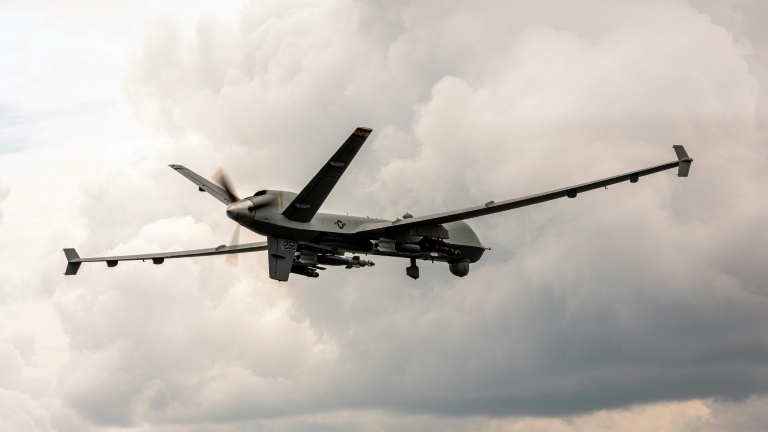
That was a reference to the ability of the US military and CIA to surveil the country via high-flying unmanned aircraft operated from distant locations and, when necessary, to use drones to strike targets, as the US did on July 31 when it fired two rockets that killed Al-Qaeda leader Ayman al-Zawahiri in his home in Kabul.

But besides that, there are few signs that the over-the-horizon approach can prevent the jihadists from reestablishing Afghanistan as a base from which to carry out attacks around the globe, as Al-Qaeda did up to 2001.

For retired general Frank McKenzie, who as commander of the US Central Command oversaw the operations in Afghanistan through last year’s pullout, the presence of Zawahiri in Taliban-controlled Kabul illustrates how hard it is to fight the Islamic extremists without a US presence on the ground there.

“I’ve said publicly in testimony that counterterrorism operations from over the horizon in Afghanistan would be very hard but not impossible,” McKenzie told the BBC in a recent interview.

“We are going to have to continue to apply pressure, and that’s going to be very difficult,” he said.

– Not safer after withdrawal – 

McKenzie’s predecessor at Central Command, retired general Joseph Votel, said the Zawahiri strike shows that the US does have the capability to pressure Qaeda and Islamic State from outside Afghanistan.

Nevertheless, he told the Voice of America, “I think that we’re not in a safer place.”

“Whether we find ourselves back in Afghanistan, like we found ourselves back in Iraq just literally three-plus years after we left, I don’t know. I hope not,” he said.

“But I think we have to be prepared for that.”

The Pentagon maintains that it does not share those worries.

“At this stage, it would be our assessment that in terms of external planning, operations external to Afghanistan, I think we are in a safe situation,” said the Pentagon spokesman Brigadier General Pat Ryder.

“We absolutely have the means to respond wherever and whenever we need, around the world, to any counterterrorism threat,” he said.

Without forces inside Afghanistan, Ryder said, it is “more of a challenge,” but it is “not something that is insurmountable,” he said.

Under Secretary of Defense Colin Kahl said that US intelligence believes both Al-Qaeda and Islamic State’s Afghanistan arm intend to undertake external attacks, including against the United States, but currently lack the capacity to do so.

However, he told Congress, Islamic State could developed that capability “in somewhere between 6 or 12 months.”

Doug London, a former official at the CIA, which is believed to have executed the Zawahiri strike, “America neglects Afghanistan at its peril.”

London, now a professor at Georgetown University, wrote on the Just Security website that instead of relying wholly on the over-the-horizon drone strategy, Washington needs to communicate more directly with the Taliban.

“There is always something to gain being on the ground and talking to your adversaries, regardless of their intentions,” he said.

Close Bitnami banner
Bitnami