AFP

Global stocks selloff intensifies on recession fears

Global stock markets sank Thursday, propelled by rampant inflation and growing recession fears.

Frankfurt, London and Paris equities each slid about 1.5 percent, while oil prices tumbled on demand worries.

That followed losses across Asia as investors braced for more interest rate hikes, which seek to quell runaway inflation yet could derail economic activity.

Europe’s stocks also fell Wednesday as record-high eurozone inflation fuelled fears that borrowing costs are set to climb even higher, as the region faces rocketing winter energy costs due to Russia’s war on Ukraine.

The European Central Bank will announce its latest monetary policy decision next Thursday, after delivering its first rate hike in a decade in July.

– ‘Tougher times ahead’ –

“Markets remain unable to snap their recent losing streak, with investors still positioning for tougher times ahead,” said Interactive Investor analyst Richard Hunter.

“Central to current concerns are recessionary fears in the US and a beleaguered China. 

“With the world’s two largest economies under pressure, the immediate outlook is poor.”

Asian equities weakened further Thursday as traders continued to digest shrinking factory activity in powerhouse economy China.

Shanghai also dropped after news that the Chinese city of Chengdu would effectively lock down around 16 million people in a bid to contain a Covid-19 outbreak, likely dealing another blow to a stuttering economy.

Wall Street slid Wednesday as Treasury yields — a key gauge of future interest rates — rose further, as a broadly healthy report on US private jobs showed there was room for the Federal Reserve to continue tightening monetary policy.

Another top Fed official signalled the bank was determined to keep lifting borrowing costs, mirroring recent comments by the US central bank’s head Jerome Powell that there would be no let-up in the fight against inflation.

US interest rates are currently at 2.25-2.5 percent, and there is a growing expectation they will be hiked by a bumper 75 basis points for a third successive meeting later this month.

A government jobs report Friday will be closely watched by traders hoping for an idea about the next move by the bank.

The prospect of more US rate hikes continued to push the dollar higher, with 140 yen within reach for the first time since 1998.

The greenback was also at its strongest level against the pound since the height of the pandemic in 2020, with sterling buying less than $1.16.

– Key figures at around 1040 GMT –

London – FTSE 100: DOWN 1.5 percent at 7,175.82 points

Frankfurt – DAX: DOWN 1.3 percent at 12,673.46

Paris – CAC 40: DOWN 1.5 percent at 6,032.09

EURO STOXX 50: DOWN 1.4 percent at 3,467.88

Tokyo – Nikkei 225: DOWN 1.5 percent at 27,661.47 (close)

Hong Kong – Hang Seng Index: DOWN 1.8 percent at 19,597.31 (close)

Shanghai – Composite: DOWN 0.5 percent at 3,184.98 (close)

New York – Dow: DOWN 0.9 percent at 31,510.43 (close)

Euro/dollar: DOWN at $1.0011 from $1.0054 on Wednesday

Pound/dollar: DOWN at $1.1564 from $1.1622

Euro/pound: UP at 86.56 pence from 86.50 pence

Dollar/yen: UP at 139.34 yen from 138.96 yen

West Texas Intermediate: DOWN 2.1 percent at $87.64 per barrel

Brent North Sea crude: DOWN 2.5 percent at $93.22

burs-rfj/rl

Global stocks selloff intensifies on recession fears

Global stock markets sank Thursday, propelled by rampant inflation and growing recession fears.

Frankfurt, London and Paris equities each slid about 1.5 percent, while oil prices tumbled on demand worries.

That followed losses across Asia as investors braced for more interest rate hikes, which seek to quell runaway inflation yet could derail economic activity.

Europe’s stocks also fell Wednesday as record-high eurozone inflation fuelled fears that borrowing costs are set to climb even higher, as the region faces rocketing winter energy costs due to Russia’s war on Ukraine.

The European Central Bank will announce its latest monetary policy decision next Thursday, after delivering its first rate hike in a decade in July.

– ‘Tougher times ahead’ –

“Markets remain unable to snap their recent losing streak, with investors still positioning for tougher times ahead,” said Interactive Investor analyst Richard Hunter.

“Central to current concerns are recessionary fears in the US and a beleaguered China. 

“With the world’s two largest economies under pressure, the immediate outlook is poor.”

Asian equities weakened further Thursday as traders continued to digest shrinking factory activity in powerhouse economy China.

Shanghai also dropped after news that the Chinese city of Chengdu would effectively lock down around 16 million people in a bid to contain a Covid-19 outbreak, likely dealing another blow to a stuttering economy.

Wall Street slid Wednesday as Treasury yields — a key gauge of future interest rates — rose further, as a broadly healthy report on US private jobs showed there was room for the Federal Reserve to continue tightening monetary policy.

Another top Fed official signalled the bank was determined to keep lifting borrowing costs, mirroring recent comments by the US central bank’s head Jerome Powell that there would be no let-up in the fight against inflation.

US interest rates are currently at 2.25-2.5 percent, and there is a growing expectation they will be hiked by a bumper 75 basis points for a third successive meeting later this month.

A government jobs report Friday will be closely watched by traders hoping for an idea about the next move by the bank.

The prospect of more US rate hikes continued to push the dollar higher, with 140 yen within reach for the first time since 1998.

The greenback was also at its strongest level against the pound since the height of the pandemic in 2020, with sterling buying less than $1.16.

– Key figures at around 1040 GMT –

London – FTSE 100: DOWN 1.5 percent at 7,175.82 points

Frankfurt – DAX: DOWN 1.3 percent at 12,673.46

Paris – CAC 40: DOWN 1.5 percent at 6,032.09

EURO STOXX 50: DOWN 1.4 percent at 3,467.88

Tokyo – Nikkei 225: DOWN 1.5 percent at 27,661.47 (close)

Hong Kong – Hang Seng Index: DOWN 1.8 percent at 19,597.31 (close)

Shanghai – Composite: DOWN 0.5 percent at 3,184.98 (close)

New York – Dow: DOWN 0.9 percent at 31,510.43 (close)

Euro/dollar: DOWN at $1.0011 from $1.0054 on Wednesday

Pound/dollar: DOWN at $1.1564 from $1.1622

Euro/pound: UP at 86.56 pence from 86.50 pence

Dollar/yen: UP at 139.34 yen from 138.96 yen

West Texas Intermediate: DOWN 2.1 percent at $87.64 per barrel

Brent North Sea crude: DOWN 2.5 percent at $93.22

burs-rfj/rl

Volkswagen shifts gears with Oliver Blume taking wheel

Volkswagen on Thursday hands over the reins to new CEO Oliver Blume, tasked with steering the German automotive giant through challenging economic conditions after four turbulent years under his predecessor, Herbert Diess.

Blume, nurtured in house at Volkswagen and the current CEO of premium sports brand Porsche, is unlikely to signal a significant departure from the electric strategy laid out by his predecessor.

The board under “Herbert Diess has done a good job strategically and technologically,” Blume said at a conference Thursday. “We will keep up the current pace and where possible, increase it.”

The success of a business is “always the product of a strong team”, said Blume, who will head up a trimmed nine-person board.

Diess owed his exit in part to tensions with workers’ representatives, riled by his uncompromising leadership style.

As such, Blume takes the wheel at a “really difficult time” for Volkswagen, said Matthias Schmidt, an analyst specialising in electric cars.

Russia’s invasion of Ukraine has not only compounded supply chain problems unleashed by the coronavirus pandemic, but introduced uncertainties over energy supplies across Europe.

The economic turmoil comes as Volkswagen is ploughing tens of billions into an ambitious switch to electric vehicles, opening a clutch of battery factories across Europe.

Meanwhile, the new boss will also be tasked with sorting out persistent setbacks at the group’s software arm and guiding premium brand Porsche to a tricky stock market entry. 

– Electric strategy –

Diess took over at Volkswagen in 2018 with a mandate to turn the page on the “dieselgate” emissions-cheating scandal.

The Austrian’s response was to launch Volkswagen on a headlong drive into electric vehicles, but his often combative style ruffled feathers at the legacy auto manufacturer.

The 63-year-old finally lost the confidence of Volkswagen’s main shareholders — the Porsche-Piech family — as problems mounted in the group’s software division, headed by the CEO himself.

His successor, Blume, a 28-year Volkswagen veteran, is set to cut a more conciliatory figure than Diess, hired as an outsider from rival BMW.

“Blume is not known as someone who wages wars. He takes less risk than Diess,” Ferdinand Dudenhoeffer, head of the Center of Automotive Research, told AFP.

Following Diess’s exit, Volkswagen’s chief financial officer, Arno Antlitz, was sent out to stress that there would be “continuity” at the manufacturer.

But Blume has signalled that he could be more open to extending the life of old combustion engines with alternative fuels. 

In a recent interview with weekly Automobilwoche, Blume said he saw synthetic fuels as a “sensible complement of electric mobility”.

In theory, such “e-fuels”, made from carbon dioxide using renewable electricity, allow traditional engines to be run with almost no net carbon emissions. 

While Diess remained unconvinced by the alternative to petrol and diesel, synthetic fuels would allow Volkswagen to keep working on a future for combustion engines. 

Blume was unlikely to perform a full U-turn on the electrification plan laid out by Diess, Dudenhoeffer said. 

But the carmaker could “move a little further away from the purely electric strategy” given the risks of an abrupt move to battery-powered vehicles, he said.

– Legacies –

In the end, the issue is likely to be decided in Brussels, where lawmakers have backed a ban on new non-electric vehicles from 2035.

Blume may also chart a different course in the area of software. Where Diess led an ambitious drive to bring development almost completely in-house, Blume could be open to using more external suppliers.

“It’s a massive profit centre, that’s the reason they want to keep it all in-house,” said Schmidt, but the analyst pointed out that “you need software people to run a software company, not car people”.

Meanwhile, Blume was likely to support Volkswagen’s renewed emphasis on the American market, following years of struggles in the wake of dieselgate.

The move would mesh with a decision for Volkswagen to invest massively in developing and making its own batteries, thereby reducing its reliance on suppliers in China. 

“That could be Diess’s legacy in a way, that and getting the electrification post-dieselgate in motion, those are probably the two biggest legacies to leave behind,” said Schmidt.

Angola's leader faces uphill battle after narrow win

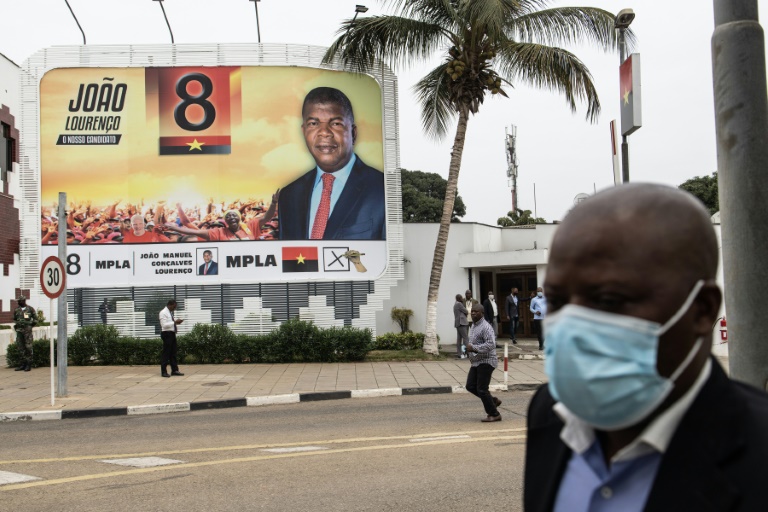
President Joao Lourenco faces Herculean tasks of fixing Angola’s economy and winning over its disillusioned youth as he enters his second term with decimated support, analysts say.

Lourenco’s Movement for the Liberation of Angola (MPLA), which has been in power for nearly half century, won 51.17 percent of the vote in the August 24 elections for the National Assembly.

The leader of the winning party automatically ascends to the presidency, which means Lourenco has earned a second spell at the helm.

But it was also the MPLA’s poorest showing since the first democratic vote in the former Portuguese colony in 1992. In 2017, it picked up 61 percent of the ballot.

The falloff will hike pressure on Lourenco to deliver on touted economic reforms and will reinvigorate the opposition, Augusto Santana of the non-profit Democracy Works Foundation predicted.

He could face possible street protests and dissent from within the MPLA, Santana told AFP by phone from Luanda, the capital.

“He faces quite a lot of challenges,” he said.

Lourenco, 68, came to power in 2017 when he took over from long-time ruler Jose Eduardo dos Santos, who bequeathed a country deep in recession and riddled by corruption and nepotism.

The former general embarked on an ambitious reform programme to tackle graft, attract foreign investors and diversify the oil-dependent economy. 

– ‘No quick fix’ –

The country eventually emerged from a five-year slump in 2021, but reforms have not translated into better living conditions for most Angolans.

Analyst Justin Pearce said that, because of the economic crisis, Lourenco’s government had so far not “been able to address the immediate demands from the poor in society”.

Now the president will be expected to deliver long-promised economic diversification away from oil.

But “there’s no quick fix,” said the Angola expert at South Africa’s Stellenbosch University.

The economic crisis, compounded by the coronavirus pandemic and a drought, has squeezed most people, pushing them into the arms of the opposition.

The leading opposition party and former rebel movement, the National Union for the Total Independence of Angola (UNITA), gained 43.95 percent of the vote, up from 26.67 percent in 2017, also winning the capital, Luanda.  

Its charismatic leader Adalberto Costa Junior, 60, has proved popular in urban areas and among youth disaffected with a ruling party many think has run out of ideas.

Turnout was low, with only about 45 percent of those registered bothering to cast their ballots. 

On Tuesday, large numbers of angry onlookers heckled a motorcade of MPLA supporters celebrating the victory in Luanda — something unthinkable only a few years ago, Santana said. 

“There will be more protests, because this time people think that there’s nothing else that the MPLA can still do, that the MPLA should just go and leave space for others to try,” he said.

– Dialogue or oppression? –

UNITA is contesting the vote’s outcome, alleging discrepancies in the count, but similar attempts have failed in the past. 

Still, it will have more lawmakers, which will give the opposition more leverage in parliament.

They could also make further gains in local elections set to be held within the next two years.

Lourenco struck a conciliatory tone in his inaugural address, pledging to promote “dialogue” and pay particular attention “to the expectations of young people”. 

But resources to turn things around are limited. 

Angola is Africa’s second largest crude producer, but it has to import back fuel to cover most of its needs, having developed only limited refining capacity over the past decades.

And while the war in Ukraine has pushed up oil prices it also raised food costs, partially offsetting gains from crude sales, said Pearce.

As this should be Lourenco’s last term, Santana added, he will also have to deal with growing internal opposition, as party cadres jostling to replace him are likely to become more vocal in their criticism of his leadership.

Alex Vines, of the UK-based think tank Chatham House, said all eyes were on the president.

“Will Lourenco really have heard what the electorate is saying? Will he… try and grow the economy, reduce inequality and provide more jobs?” he asked.

“Or will there be a… posture of increased oppression and defensiveness?”

Europe's fiery summer: a climate 'reality check'?

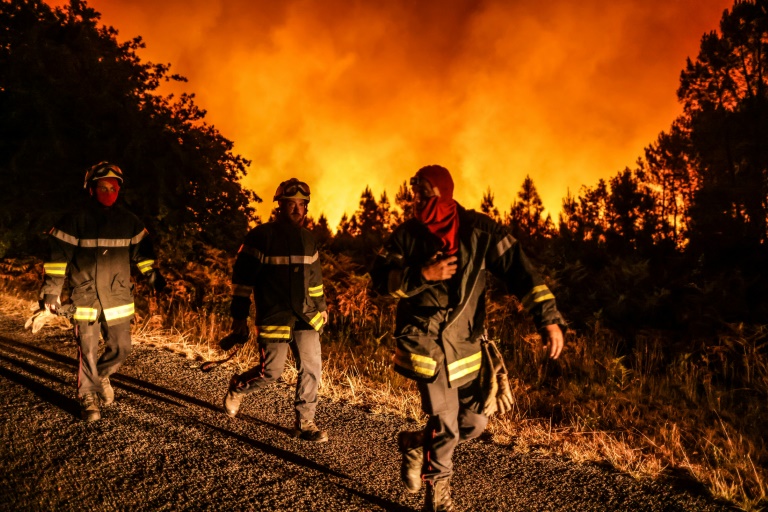
Wildfires and storms. Rivers at record lows. Parched crops withering in the fields. For many Europeans, this year’s scorching summer means climate change is increasingly hard to ignore. 

After months of cloudless days and drought, the weather has been one of the major themes of media coverage — and discussions during family gatherings — over the annual August holiday period.

“This summer has seen a series of extreme weather events,” French government spokesman Olivier Veran told a first press conference after he and the government returned to the office last week.

It had been a “complete reality check, even for the most sceptical,” he said.

France experienced its second-hottest summer on record, its driest one since 1976 and the worst in terms of the loss of forestry to wildfires since 2003, he said.

In recent months, some French villages have needed to be supplied with water trucks as their usual sources have dried up. Fires have repeatedly ravaged pine forests near Bordeaux.

Even in the normally verdant Alps, cheese makers complain that their cows are producing less milk than usual because their pastures are dried up. 

The picture is similar across Europe.

In Italy, the collapse of the country’s largest Alpine glacier in July sparked an avalanche that killed 11 people.

“The year 2022 in terms of extreme climate events is code red,” said the head of environmental group Legambiente, Stefano Ciafani, in an August report.

After a punishing drought, around 400 Spanish wildfires destroyed 290,000 hectares (72,000 acres) of forest — way above the recent average of 67,000 hectares a year.

As reservoir water levels plunged, a previously flooded centuries-old church and a huge megalithic complex emerged from their depths.

And a year after shocking major floods that claimed more than 180 lives in Germany, the country saw the Rhine river — a crucial trade route — shrink to levels that were barely navigable.

– Jets and steak – 

The question for experts and campaigners is how much the sweltering summer of 2022 will translate into political change and lifestyle shifts from consumers.

As people return to work, France’s green EELV party has been setting the news agenda with eye-catching proposals to crack down on executive jets as well as private swimming pools.

“We’ve just lived through a summer when we’ve seen the real impact of climate change for the first time and what are we doing? What are we prepared to do?” said leading MP Sandrine Rousseau.

She found herself at the centre of a national furore this week after suggesting men needed to cut down on emissions-heavy barbecued steak which they saw as a “symbol of virility.”

“What has become quite obvious is that climate impacts and climate hazards are happening throughout Europe to differing degrees and with differing hazards,” Carolina Cecilio from the E3G think-tank told AFP.

“It’s not limited to southern Europe, which is more used to periods of drought and forest fires,” she added.  

Greater awareness in big EU member states such as France, Germany and Italy could help “shape the political agenda,” Cecilio said. 

– Energy crisis – 

Some campaigners see an opportunity for real change in the energy crisis that has gripped Europe since Russia began turning off its gas deliveries following its invasion of Ukraine.

“I think that the scale and the coming together of overlapping crises should drive us to really question our use of energy,” Lola Vallejo from the IDDRI think-tank told AFP.

“We can only hope that the summer we’ve just lived through will play a role in accelerating our collective will,” said Vallejo.

But a working paper from the Organisation for Economic Cooperation and Development in June laid bare the scale of the challenge.

Analysing survey results from 20 mostly rich countries, its experts concluded that climate change awareness was high, with 60-90 percent of people understanding it was caused by human activity.

The problem was their willingness to change.

“Respondents were generally unwilling to limit their beef or meat consumption significantly. Few are willing to limit driving or heating or cooling their homes by a lot,” the authors wrote.

Italy’s elections on September 25 will be a test of how much climate change has really hit home, with campaigning so far dominated by worries about the cost of living. 

Polls suggests that the next government could be a coalition of far-right and right-wing parties who have put it low on their agenda.

UN team heads to Ukraine nuclear plant despite shelling

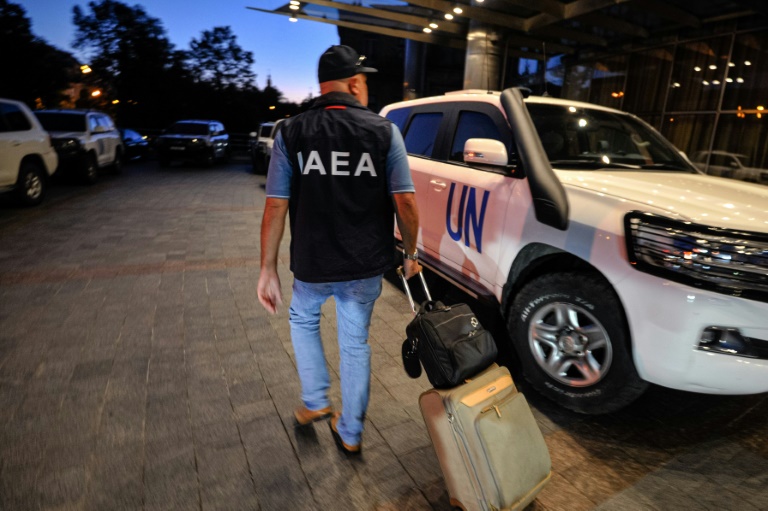
UN inspectors pressed on towards a Russian-held nuclear plant in southern Ukraine Thursday despite an early shelling attack, as the ICRC warned the consequences of a strike on the facility could be “catastrophic”.

Just before the 14-strong team from International Atomic Energy Agency (IAEA) left for the Zaporizhzhia nuclear plant, Ukraine said Russian troops had shelled the town next door.

The area around the plant — Europe’s largest nuclear facility — has suffered repeated shelling, with both sides accusing the other of responsibility, sparking global concern over the risk of an accident. 

“It is high time to stop playing with fire and instead take concrete measures to protect this facility.. from any military operations,” ICRC chief Robert Mardini told reporters in Kyiv. 

“The slightest miscalculation could trigger devastation that we will regret for decades.”

Ukraine’s nuclear agency Energoatom said later that one of the six reactors at the Russian-held nuclear plant was shut down Thursday as an emergency protection measure following the shelling in the area.

“Today at 4:57 am (0157 GMT), due to another mortar shelling by the Russian occupying forces at the Zaporizhzhya nuclear power plant site, the emergency protection was activated and operating power unit 5 was shut down,” it said.

Mardini said it was “encouraging” that the IAEA team was en route to inspect the plant because the stakes were “immense”.

“When hazardous sites become battlegrounds, the consequences for millions of people and the environment can be catastrophic and last many years,” he said.

Just before leaving the southern city of Zaporizhzhia, IAEA chief Rafael Grossi said his team had been updated about the shelling but would press on anyway.

“We are not stopping,” he vowed, despite being aware there that in crossing the frontline into Russian-held territory, there was a security “grey area.. where the risks are significant”. 

“I believe we have to proceed with this. We have a very important mission to accomplish.”

– Fresh shelling attack –

Earlier, the mayor of Energodar, the town next to the plant, said it had come under sustained attack early on Thursday. 

In an 8:00 am (0500 GMT) update on Telegram, Mayor Dmytro Orlov said that since dawn, Russian troops had “shelled Energodar with mortars and used automatic weapons and rockets,” posting images of damaged buildings and spiralling smoke.

But Moscow accused Kyiv of smuggling in up to 60 military “saboteurs”, saying they reached the area near the plant just after dawn and that Russian troops had taken “measures to annihilate the enemy”. 

Grossi on Wednesday said the IAEA would seek to establish a “permanent presence” at the plant to avoid a nuclear disaster at the facility which is located on the frontline of the fighting.

“My mission is… to prevent a nuclear accident and preserve the largest nuclear power plant in Europe,” he said. 

– ‘Explicit safety guarantees’ –

Although Zaporizhzhia is normally about a two-hour drive from the plant, it was not immediately long it would take the IAEA team to get there after crossing the frontline into Russian-held areas.

The plant has been occupied by Russian troops since March and Ukraine has accused Russia of deploying hundreds of soldiers and storing ammunition there.

Both Moscow and Kyiv have accused each other of staging “provocations” aimed at disrupting the work of the IAEA mission. 

“Sadly, Russia is not stopping its provocations precisely in the direction the mission needs to travel to reach the plant,” President Volodymyr Zelensky said late Tuesday after meeting Grossi.

And in Moscow, the Russian defence ministry accused Kyiv of “continued provocations aimed at disrupting the work of the IAEA mission” saying it had shelled the area around the plant on Tuesday hitting a building containing “the solid radioactive waste processing complex”.

– Counteroffensive in the south –

Meanwhile, intensive fighting raged across the nearby southern region of Kherson where Ukraine began a counteroffensive on Monday. 

Most of the region and its provincial capital of the same name were seized by Russian forces at the start of the invasion six months ago.

With the war in the eastern Donbas region largely stalled, analysts have said for weeks that combat is likely to shift south to break the stalemate before winter comes.

Meanwhile, a British medic volunteering in Ukraine died in the fighting, the foreign ministry in London said on Thursday. It said he had died on August 24 but gave no further details. 

Asian investors step up selling as rate hikes loom

Investors further unloaded equities in Asia on Thursday as they girded themselves for more interest rate hikes aimed at quelling runaway inflation, with some analysts warning that markets could retest the lows touched in June.

Data showing prices rose at a record clip in the eurozone in August reinforced fears that central banks have a long road to run before they win their battle, which has fanned warnings of a recession in the world’s leading economies.

Another drop on Wall Street came as Treasury yields — a key gauge of future interest rates — rose further as a broadly healthy report on US private jobs showed there was still plenty of wiggle room for the Fed to continue tightening monetary policy.

Meanwhile, another top Fed official signalled the bank was determined to keep lifting borrowing costs, mirroring comments by head Jerome Powell last week that there would be no let-up in the fight against inflation.

“My current view is that it will be necessary to move the Fed funds rate up to somewhat above four percent by early next year and hold it there,” said Cleveland Fed President Loretta Mester in remarks prepared ahead of an event for the Dayton Area Chamber of Commerce.

“I do not anticipate the Fed cutting the Fed funds rate target next year.”

Interest rates are currently at 2.25-2.5 percent, and there is a growing expectation they will be hiked by a bumper 75 basis points for a third successive meeting later this month.

A government jobs report Friday will be closely watched by traders hoping for an idea about the next move by the bank, which has said it will make its decision based on data.

In a further warning that policymakers had a win-at-all-costs mentality, Mester later told the audience: “Even if the economy were to go into a recession, we have to get inflation down.”

The hawkish remarks out of the Fed have dealt a hefty blow to a rally in markets from their June lows.

And some have warned that more pain could be on the way, with Frances Stacy, of Optimal Capital Advisors, telling Bloomberg Radio: “I don’t think we’ve seen the bottom for this year.”

CMC markets analyst Michael Hewson added: “When you have the likes of a typical Fed dove like Minneapolis Fed President Neel Kashkari talk about the unlikely prospect of rate cuts in 2023, it’s hard to envisage a scenario of anything other than a 75-basis-point rate hike later this month, as the Fed continues to insist that their priority is to keep going on rates until the job is done.”

The downbeat mood in New York and Europe, which is also being buffeted by a major energy crisis, spread to Asia.

Tokyo, Hong Kong, Sydney, Seoul, Mumbai, Bangkok and Taipei were all deep in the red, though Singapore, Wellington, Manila and Jakarta eked out small gains.

Shanghai gave up an early advance following news that the Chinese city of Chengdu would effectively lock down around 16 million people in a bid to contain a Covid-19 outbreak, likely dealing another blow to an already stuttering economy.

London, Paris and Frankfurt fell further in early trade.

The prospect of more US rate hikes continued to press the dollar higher against all other currencies, with the psychological 140 yen mark well within sight for the first time since 1998.

And analysts are speculating that a breach of that barrier could see the Bank of Japan intervene, though they also warned it was unlikely to make much difference owing to Tokyo’s refusal to tighten its own monetary policy despite rising prices.

“There will likely be some sort of verbal intervention as 140 approaches,” said David Lu, of NBC Financial Markets Asia.

“But an actual intervention is likely to be ineffective at this point where the dollar is rising broadly on US monetary policy prospects while there is no support for the yen from the Bank of Japan.”

The greenback was also at its strongest level against the pound since the height of the pandemic in 2020, with sterling buying less than $1.16 in afternoon Asian trade.

– Key figures at around 0810 GMT –

Tokyo – Nikkei 225: DOWN 1.5 percent at 27,661.47 (close)

Hong Kong – Hang Seng Index: DOWN 1.8 percent at 19,597.31 (close)

Shanghai – Composite: DOWN 0.5 percent at 3,184.98 (close)

London – FTSE 100: DOWN 1.0 percent at 7,212.26

Euro/dollar: DOWN at $1.0026 from $1.0054 on Wednesday

Pound/dollar: DOWN at $1.1590 from $1.1619

Euro/pound: DOWN at 86.46 pence from 86.50 pence

Dollar/yen: UP at 139.40 yen from 138.98 yen

West Texas Intermediate: DOWN 0.6 percent at $88.99 per barrel

Brent North Sea crude: DOWN 0.6 percent at $95.09 per barrel

New York – Dow: DOWN 0.9 percent at 31,510.43 (close)

Asian investors step up selling as rate hikes loom

Investors further unloaded equities in Asia on Thursday as they girded themselves for more interest rate hikes aimed at quelling runaway inflation, with some analysts warning that markets could retest the lows touched in June.

Data showing prices rose at a record clip in the eurozone in August reinforced fears that central banks have a long road to run before they win their battle, which has fanned warnings of a recession in the world’s leading economies.

Another drop on Wall Street came as Treasury yields — a key gauge of future interest rates — rose further as a broadly healthy report on US private jobs showed there was still plenty of wiggle room for the Fed to continue tightening monetary policy.

Meanwhile, another top Fed official signalled the bank was determined to keep lifting borrowing costs, mirroring comments by head Jerome Powell last week that there would be no let-up in the fight against inflation.

“My current view is that it will be necessary to move the Fed funds rate up to somewhat above four percent by early next year and hold it there,” said Cleveland Fed President Loretta Mester in remarks prepared ahead of an event for the Dayton Area Chamber of Commerce.

“I do not anticipate the Fed cutting the Fed funds rate target next year.”

Interest rates are currently at 2.25-2.5 percent, and there is a growing expectation they will be hiked by a bumper 75 basis points for a third successive meeting later this month.

A government jobs report Friday will be closely watched by traders hoping for an idea about the next move by the bank, which has said it will make its decision based on data.

In a further warning that policymakers had a win-at-all-costs mentality, Mester later told the audience: “Even if the economy were to go into a recession, we have to get inflation down.”

The hawkish remarks out of the Fed have dealt a hefty blow to a rally in markets from their June lows.

And some have warned that more pain could be on the way, with Frances Stacy, of Optimal Capital Advisors, telling Bloomberg Radio: “I don’t think we’ve seen the bottom for this year.”

CMC markets analyst Michael Hewson added: “When you have the likes of a typical Fed dove like Minneapolis Fed President Neel Kashkari talk about the unlikely prospect of rate cuts in 2023, it’s hard to envisage a scenario of anything other than a 75-basis-point rate hike later this month, as the Fed continues to insist that their priority is to keep going on rates until the job is done.”

The downbeat mood in New York and Europe, which is also being buffeted by a major energy crisis, spread to Asia.

Tokyo, Hong Kong, Sydney, Seoul, Mumbai, Bangkok and Taipei were all deep in the red, though Singapore, Wellington, Manila and Jakarta eked out small gains.

Shanghai gave up an early advance following news that the Chinese city of Chengdu would effectively lock down around 16 million people in a bid to contain a Covid-19 outbreak, likely dealing another blow to an already stuttering economy.

London, Paris and Frankfurt fell further in early trade.

The prospect of more US rate hikes continued to press the dollar higher against all other currencies, with the psychological 140 yen mark well within sight for the first time since 1998.

And analysts are speculating that a breach of that barrier could see the Bank of Japan intervene, though they also warned it was unlikely to make much difference owing to Tokyo’s refusal to tighten its own monetary policy despite rising prices.

“There will likely be some sort of verbal intervention as 140 approaches,” said David Lu, of NBC Financial Markets Asia.

“But an actual intervention is likely to be ineffective at this point where the dollar is rising broadly on US monetary policy prospects while there is no support for the yen from the Bank of Japan.”

The greenback was also at its strongest level against the pound since the height of the pandemic in 2020, with sterling buying less than $1.16 in afternoon Asian trade.

– Key figures at around 0810 GMT –

Tokyo – Nikkei 225: DOWN 1.5 percent at 27,661.47 (close)

Hong Kong – Hang Seng Index: DOWN 1.8 percent at 19,597.31 (close)

Shanghai – Composite: DOWN 0.5 percent at 3,184.98 (close)

London – FTSE 100: DOWN 1.0 percent at 7,212.26

Euro/dollar: DOWN at $1.0026 from $1.0054 on Wednesday

Pound/dollar: DOWN at $1.1590 from $1.1619

Euro/pound: DOWN at 86.46 pence from 86.50 pence

Dollar/yen: UP at 139.40 yen from 138.98 yen

West Texas Intermediate: DOWN 0.6 percent at $88.99 per barrel

Brent North Sea crude: DOWN 0.6 percent at $95.09 per barrel

New York – Dow: DOWN 0.9 percent at 31,510.43 (close)

Villagers brave snakes and hunger to protect land in flooded Pakistan

The southern Pakistan village of Karim Bakhsh is almost entirely under muddy water after catastrophic monsoon rains — hardly any stable buildings are left for shelter, the wheat silos are empty and venomous snakes are a constant threat.

But unlike the tens of thousands of people who have fled their flooded homes, villages and towns across the country, several families here have refused to leave.

Without formal property deeds, many residents are worried that if they take off opportunists will seize their land, where their families have lived for generations.

“We had ownership papers from the British colonial government,” Intizar Ahmed, a 55-year-old farmer, told AFP Wednesday while standing on an elevated patch of land near his mostly submerged homestead in Sindh province.

“But we lost them many years ago in a flood like this… (besides) we have no place to go.”

Others said they worried about the fate of their livestock — a resource far too valuable for poor villagers to leave behind.

“We have buffaloes, cows and goats… if we leave the cattle behind they would be stolen,” said Shah Mohammad, 35.

Mohammad and others were scrambling to find food not just for themselves, but for their animals too.

There was enough for the animals to eat for now, he said, but villagers have been struggling to replenish empty wheat bins.

– Cut off from the world –

Aid delivered by boat by charities is the only lifeline for those who can’t or don’t want to leave Karim Bakhsh.

The village has been besieged by murky floodwaters extending for more than a kilometre in some spots.

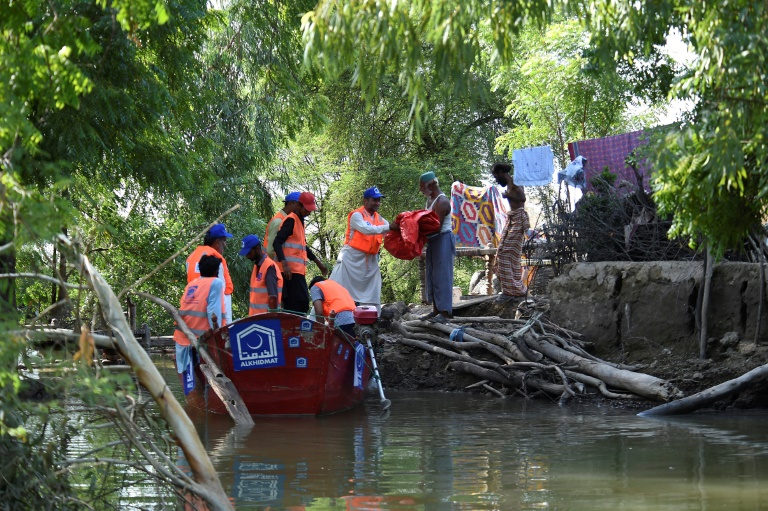
Villagers gathered on the few dry patches of land to wait for a boat operated by the Alkhidmat Foundation — a Pakistan-based humanitarian organisation — as it puttered through the waist-deep water in the streets.

It was the first aid delivery in days.

The boat made multiple stops in the village so relief workers could hand out tents, food packages and other supplies.

An aid worker said the charity had decided to make the deliveries after it found out that some families did not want to leave.

At every stop, there was evidence of the destruction wrought by the torrential rains and floods — the worst in decades.

Most homes and structures were ruined, and villagers were desperate for any material that might help build temporary shelter from both the rain and — when it came out — the scorching sun.

“Our homes fell… We cut down the trees and used that wood to hold up whatever was left of our walls,” said Gul Badshah, 70.

Maqbool Ahmed, another resident, prepared to face a different local threat especially common during floods: venomous snakes.

He connected a small lamp to a car battery, placing the setup on an earthen mound.

“We light it up in the night to guard against snakes,” he told AFP.

“Sometimes, cobras and vipers sneak into our place.”

Villagers brave snakes and hunger to protect land in flooded Pakistan

The southern Pakistan village of Karim Bakhsh is almost entirely under muddy water after catastrophic monsoon rains — hardly any stable buildings are left for shelter, the wheat silos are empty and venomous snakes are a constant threat.

But unlike the tens of thousands of people who have fled their flooded homes, villages and towns across the country, several families here have refused to leave.

Without formal property deeds, many residents are worried that if they take off opportunists will seize their land, where their families have lived for generations.

“We had ownership papers from the British colonial government,” Intizar Ahmed, a 55-year-old farmer, told AFP Wednesday while standing on an elevated patch of land near his mostly submerged homestead in Sindh province.

“But we lost them many years ago in a flood like this… (besides) we have no place to go.”

Others said they worried about the fate of their livestock — a resource far too valuable for poor villagers to leave behind.

“We have buffaloes, cows and goats… if we leave the cattle behind they would be stolen,” said Shah Mohammad, 35.

Mohammad and others were scrambling to find food not just for themselves, but for their animals too.

There was enough for the animals to eat for now, he said, but villagers have been struggling to replenish empty wheat bins.

– Cut off from the world –

Aid delivered by boat by charities is the only lifeline for those who can’t or don’t want to leave Karim Bakhsh.

The village has been besieged by murky floodwaters extending for more than a kilometre in some spots.

Villagers gathered on the few dry patches of land to wait for a boat operated by the Alkhidmat Foundation — a Pakistan-based humanitarian organisation — as it puttered through the waist-deep water in the streets.

It was the first aid delivery in days.

The boat made multiple stops in the village so relief workers could hand out tents, food packages and other supplies.

An aid worker said the charity had decided to make the deliveries after it found out that some families did not want to leave.

At every stop, there was evidence of the destruction wrought by the torrential rains and floods — the worst in decades.

Most homes and structures were ruined, and villagers were desperate for any material that might help build temporary shelter from both the rain and — when it came out — the scorching sun.

“Our homes fell… We cut down the trees and used that wood to hold up whatever was left of our walls,” said Gul Badshah, 70.

Maqbool Ahmed, another resident, prepared to face a different local threat especially common during floods: venomous snakes.

He connected a small lamp to a car battery, placing the setup on an earthen mound.

“We light it up in the night to guard against snakes,” he told AFP.

“Sometimes, cobras and vipers sneak into our place.”

Close Bitnami banner
Bitnami