AFP

Brazil economy grows 1.2% in Q2, beating expectations

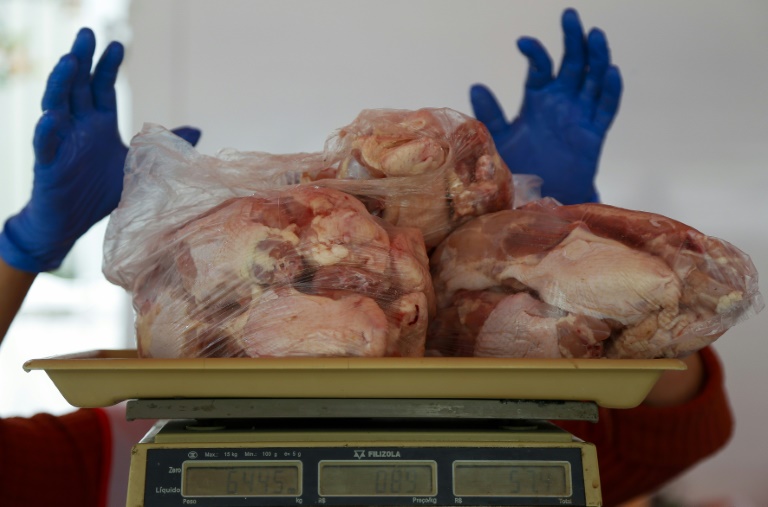
Brazil’s economy posted higher-than-expected growth of 1.2 percent in the second quarter, official data showed Thursday, giving President Jair Bolsonaro a boost ahead of elections next month.

The result beat analyst expectations for 0.9 percent growth in Latin America’s largest economy. It was the fourth straight quarter of expansion for the Brazilian economy as it rebounds from the effects of the coronavirus pandemic.

This latest spurt of growth was fueled by rises in manufacturing (up 2.2 percent) and the service sector (1.3 percent), the state statistics agency IBGE said.

Compared to the second quarter of last year, the expansion was 3.2 percent.

Accumulated growth in the first half of the year was 2.5 percent compared to projections of close to stagnation.

The figures are good news for Bolsonaro, who is fighting to narrow a 15-point deficit in public opinion polls as he takes on leftist ex-president Luiz Inacio Lula da Silva.

On Wednesday, the government reported a decline in unemployment to fewer than 10 million people for the first time since 2016.

Claudia Moreno, an economist at digital bank C6, pointed to a “recovery in investments (4.8 percent) and family consumption (2.6 percent) in the second quarter compared to the previous one” despite high inflation as significant drivers.

The improved performance of the economy has led analysts to revise their 2022 growth predictions from under 0.3 percent in January to 2.1 percent, according to the latest central bank survey.

Even so, economists expect growth to slow in the third quarter due to the delayed effect of the central bank’s hike in interest rates in a bid to slow down inflation.

Interest rates have risen from a historic low of two percent in March 2021 to 13.75 percent last month.

Inflation, which is one of the main issues worrying voters, was over 10 percent in the 12 months to July, with Bolsonaro’s government cutting utility rates and fuel prices in a bid to put the brakes on.

Moreno believes another reason for slowing growth over the second half of the year is that the service sector has now recovered from the pandemic.

She says the economy will also be affected by “a drop in the price of raw materials and the global slowdown.”

Analysts believe there will be an injection of cash into the economy thanks to a 50 percent increase in social assistance to 20 million vulnerable families from 400 to 600 reais ($80 to $120).

Brazil ended 2021 with 4.6 percent growth compared to the previous year, when the economy shrank by 3.9 percent due to the pandemic.


Global stocks selloff intensifies on recession fears

Global stock markets sank Thursday, propelled by rampant inflation and growing recession fears as another major Chinese city went into lockdown.

Frankfurt, London and Paris equities each slid about 1.5 percent in afternoon trading as record-high eurozone inflation fuelled fears that borrowing costs are set to climb even higher, as the region faces rocketing winter energy costs due to Russia’s war on Ukraine.

On Wall Street, the Dow opened down 0.5 percent at 31,359.86 points.

Asian markets posted losses as investors braced for more interest rate hikes, which seek to quell runaway inflation but could derail economic activity, while oil prices tumbled on demand worries.

“More pain is likely for investors as Europe’s energy crunch gets worse”, said City Index analyst Fawad Razaqzada.

The European Central Bank will announce its latest monetary policy decision next Thursday, after delivering its first rate hike in a decade in July.

– ‘Tougher times ahead’ –

“Markets remain unable to snap their recent losing streak, with investors still positioning for tougher times ahead,” said Interactive Investor analyst Richard Hunter.

“Central to current concerns are recessionary fears in the US and a beleaguered China. 

“With the world’s two largest economies under pressure, the immediate outlook is poor.”

Asian equities weakened further Thursday as traders continued to digest shrinking factory activity in powerhouse economy China.

Shanghai also dropped after news that the Chinese city of Chengdu would effectively lock down around 16 million people in a bid to contain a Covid-19 outbreak, likely dealing another blow to a stuttering economy.

It was a “morose session with a flight to the dollar”, said Swissquote Bank analyst Ipek Ozkardeskaya.

Wall Street had slid Wednesday as Treasury yields — a key gauge of future interest rates — rose further as a broadly healthy report on US private jobs showed there was room for the Federal Reserve to continue tightening monetary policy.

A government jobs report Friday will be closely watched by traders hoping for an idea about the next move by the bank.

“Rising Treasury yields, reports that China has locked down Chengdu (city of 21.2 million residents) for Covid testing, a litany of manufacturing PMI readings for August around the globe that were sub-50.0 (i.e. indicative of contraction), and some disappointing earnings guidance … are among the headline catalysts contributing to the weak disposition of the futures market,” Briefing.com analyst Patrick J. O’Hare wrote to clients ahead of the start of trading in New York.

PMIs, which are surveys of executives about current business conditions and the outlook for the future, are valued by the market as providing near real-time indications about the condition of the economy.

However Fed officials have made clear they are willing to tolerate an economic slowdown in order to bring interest rates down. 

The prospect of more US rate hikes continued to push the dollar higher, with 140 yen within reach for the first time since 1998.

The greenback was also at its strongest level against the pound since the height of the pandemic in 2020, with sterling buying less than $1.16.

– Key figures at around 1330 GMT –

New York – Dow: DOWN 0.5 percent at 31,359.86 points

London – FTSE 100: DOWN 1.7 percent at 7,163.46

Frankfurt – DAX: DOWN 1.3 percent at 12,669.90

Paris – CAC 40: DOWN 1.6 percent at 6,029.01

EURO STOXX 50: DOWN 1.4 percent at 3,466.46

Tokyo – Nikkei 225: DOWN 1.5 percent at 27,661.47 (close)

Hong Kong – Hang Seng Index: DOWN 1.8 percent at 19,597.31 (close)

Shanghai – Composite: DOWN 0.5 percent at 3,184.98 (close)

Euro/dollar: DOWN at $0.9982 from $1.0054 on Wednesday

Pound/dollar: DOWN at $1.1565 from $1.1622

Euro/pound: UP at 86.31 pence from 86.50 pence

Dollar/yen: UP at 139.55 yen from 138.96 yen

West Texas Intermediate: DOWN 2.1 percent at $87.65 per barrel

Brent North Sea crude: DOWN 2.0 percent at $93.73

burs-lcm/rl

Global stocks selloff intensifies on recession fears

Global stock markets sank Thursday, propelled by rampant inflation and growing recession fears as another major Chinese city went into lockdown.

Frankfurt, London and Paris equities each slid about 1.5 percent in afternoon trading as record-high eurozone inflation fuelled fears that borrowing costs are set to climb even higher, as the region faces rocketing winter energy costs due to Russia’s war on Ukraine.

On Wall Street, the Dow opened down 0.5 percent at 31,359.86 points.

Asian markets posted losses as investors braced for more interest rate hikes, which seek to quell runaway inflation but could derail economic activity, while oil prices tumbled on demand worries.

“More pain is likely for investors as Europe’s energy crunch gets worse”, said City Index analyst Fawad Razaqzada.

The European Central Bank will announce its latest monetary policy decision next Thursday, after delivering its first rate hike in a decade in July.

– ‘Tougher times ahead’ –

“Markets remain unable to snap their recent losing streak, with investors still positioning for tougher times ahead,” said Interactive Investor analyst Richard Hunter.

“Central to current concerns are recessionary fears in the US and a beleaguered China. 

“With the world’s two largest economies under pressure, the immediate outlook is poor.”

Asian equities weakened further Thursday as traders continued to digest shrinking factory activity in powerhouse economy China.

Shanghai also dropped after news that the Chinese city of Chengdu would effectively lock down around 16 million people in a bid to contain a Covid-19 outbreak, likely dealing another blow to a stuttering economy.

It was a “morose session with a flight to the dollar”, said Swissquote Bank analyst Ipek Ozkardeskaya.

Wall Street had slid Wednesday as Treasury yields — a key gauge of future interest rates — rose further as a broadly healthy report on US private jobs showed there was room for the Federal Reserve to continue tightening monetary policy.

A government jobs report Friday will be closely watched by traders hoping for an idea about the next move by the bank.

“Rising Treasury yields, reports that China has locked down Chengdu (city of 21.2 million residents) for Covid testing, a litany of manufacturing PMI readings for August around the globe that were sub-50.0 (i.e. indicative of contraction), and some disappointing earnings guidance … are among the headline catalysts contributing to the weak disposition of the futures market,” Briefing.com analyst Patrick J. O’Hare wrote to clients ahead of the start of trading in New York.

PMIs, which are surveys of executives about current business conditions and the outlook for the future, are valued by the market as providing near real-time indications about the condition of the economy.

However Fed officials have made clear they are willing to tolerate an economic slowdown in order to bring interest rates down. 

The prospect of more US rate hikes continued to push the dollar higher, with 140 yen within reach for the first time since 1998.

The greenback was also at its strongest level against the pound since the height of the pandemic in 2020, with sterling buying less than $1.16.

– Key figures at around 1330 GMT –

New York – Dow: DOWN 0.5 percent at 31,359.86 points

London – FTSE 100: DOWN 1.7 percent at 7,163.46

Frankfurt – DAX: DOWN 1.3 percent at 12,669.90

Paris – CAC 40: DOWN 1.6 percent at 6,029.01

EURO STOXX 50: DOWN 1.4 percent at 3,466.46

Tokyo – Nikkei 225: DOWN 1.5 percent at 27,661.47 (close)

Hong Kong – Hang Seng Index: DOWN 1.8 percent at 19,597.31 (close)

Shanghai – Composite: DOWN 0.5 percent at 3,184.98 (close)

Euro/dollar: DOWN at $0.9982 from $1.0054 on Wednesday

Pound/dollar: DOWN at $1.1565 from $1.1622

Euro/pound: UP at 86.31 pence from 86.50 pence

Dollar/yen: UP at 139.55 yen from 138.96 yen

West Texas Intermediate: DOWN 2.1 percent at $87.65 per barrel

Brent North Sea crude: DOWN 2.0 percent at $93.73

burs-lcm/rl

Twitter says it is actively testing edit button

Twitter said Thursday it has begun actively testing an edit button, after months of publicly discussing such a tweak.

The trial of “Edit Tweet” will begin with internal employees, then be expanded out to the platform’s “Twitter Blue” subscription population, the company said.

“Edit Tweet is a feature that lets people make changes to their Tweet after it’s been published,” the company said on its blog. “Think of it as a short period of time to do things like fix typos, add missed tags, and more.”

Under the revision being studied, users could edit a tweet “a few times” in the 30 minutes after the initial posting, in ways that transparently note the changes to “help protect the integrity of the conversation and create a publicly accessible record of what was said,” the company said.

Tesla Chief Executive Elon Musk, who is locked in a lawsuit with Twitter over a potential acquisition of the micro-blogging platform, had backed an edit button shortly before the company said in April it was studying the change.

Users of Twitter Blue — the subscription offering now available in the United States, Canada, Australia and New Zeeland– “receive early access to features and help us test them before they come to Twitter,” the company said.

An aim of the tweak is that “Tweeting will feel more approachable and less stressful, Twitter said. “You should be able to participate in the conversation in a way that makes sense to you, and we’ll keep working on ways that make it feel effortless to do just that.”

However, a Twitter spokesperson said the test will not necessarily be employed universally on the platform.

EU watchdog approves first Omicron jabs

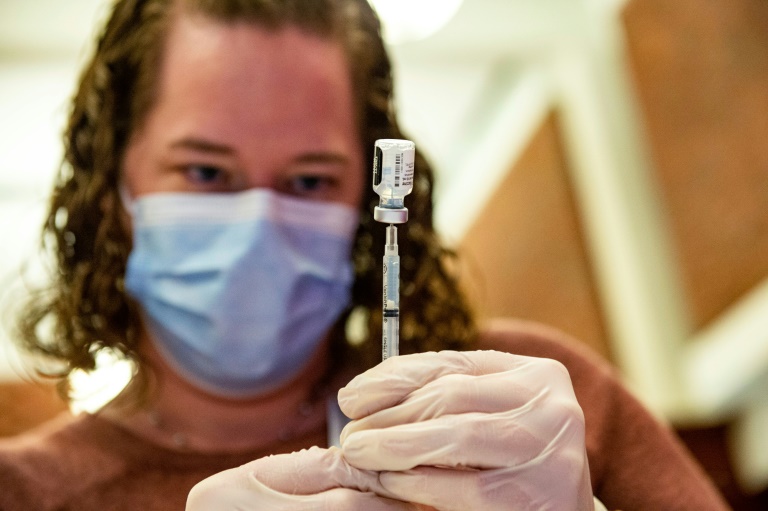
The EU’s drug regulator on Thursday approved Covid-19 vaccines by Pfizer/BioNTech and Moderna adapted for the Omicron variant, paving the way for a booster campaign this winter.

The so-called “bivalent” jabs target both the original virus that emerged in the Chinese city of Wuhan in 2019 and the BA.1 subvariant of Omicron, the European Medicines Agency (EMA) said.

The vaccines are not updated for the newer and more infectious BA.4 and BA.5 types that have become dominant worldwide, with a decision on a jab to counter those variants expected within weeks.

The Amsterdam-based EMA said that the two jabs backed for people aged 12 and above on Thursday were the “first adapted Covid-19 booster vaccines recommended for approval in the EU”.

“These vaccines are adapted versions of the original vaccines Comirnaty (Pfizer/BioNTech) and Spikevax (Moderna) to target the Omicron BA.1 subvariant in addition to the original strain of SARS-CoV-2,” it said.

European nations have been keen to rush through the new generation of jabs so they can start booster campaigns ahead of a feared Covid surge in the latter part of this year.

EU Health Commissioner Stella Kyriakides hailed the decision as “important to protect Europeans against the likely risk of autumn and winter waves of infections.”

“We need to be ready to face another winter with Covid-19,” she said in a statement.

The EMA said that studies showed that the new jabs could “trigger strong immune responses” against Covid. 

It said that “in particular, they were more effective at triggering immune responses against the BA.1 subvariant than the original vaccines.”

– New strains –

The EU’s Kyriakides said she expected the EMA to rule on vaccines adapted for the now-dominant BA.4 and 5 strains “in the coming weeks.”

Pfizer recently applied for authorisation for a vaccine adapted against the two newer types.

The United States authorised its first anti-Omicron vaccines on Wednesday, approving Pfizer and Moderna jabs for the BA.4 and BA.5 strains.

Britain authorised the Moderna vaccine for the BA.1 type in mid-August.

The 27-nation EU is currently still using the same coronavirus vaccines that were approved nearly two years ago for use against the original strain.

While they offer some protection against newer variants, the race has been on to produce jabs that also target the milder but more infectious Omicron strains.

While previous “variants of concern” like Alpha and Delta eventually petered out, Omicron and its sublineages have dominated throughout 2022.

The BA.4 and BA.5 types have in particular helped to drive a wave of new cases of the disease in Europe and the United States in recent months.

Health authorities have therefore been keen to get updated vaccines as soon as possible ahead of a feared new wave of the disease later this year.

All Omicron variants tend to have a milder disease course as they settle less in the lungs and more in the upper nasal passages, causing symptoms like fever, tiredness and loss of smell.

On risky mission, UN team reaches Ukraine nuclear plant

UN inspectors arrived at a Russian-held nuclear plant in southern Ukraine Thursday despite an early shelling attack, as the ICRC warned the consequences of a strike on the facility could be “catastrophic”.

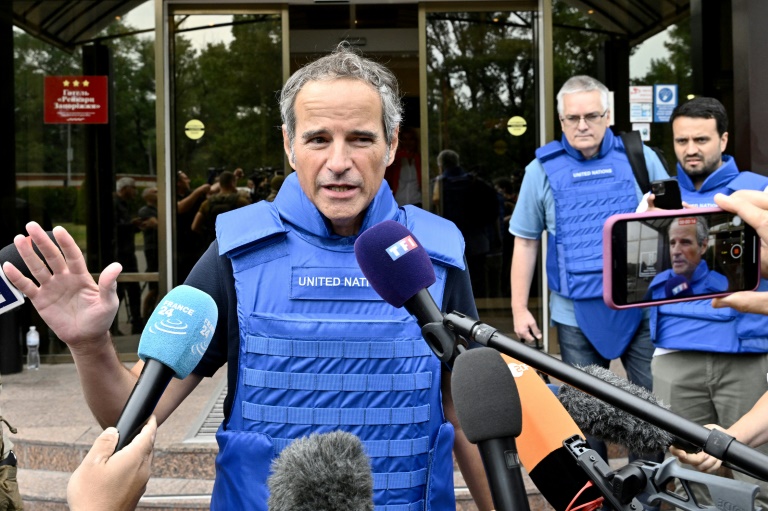
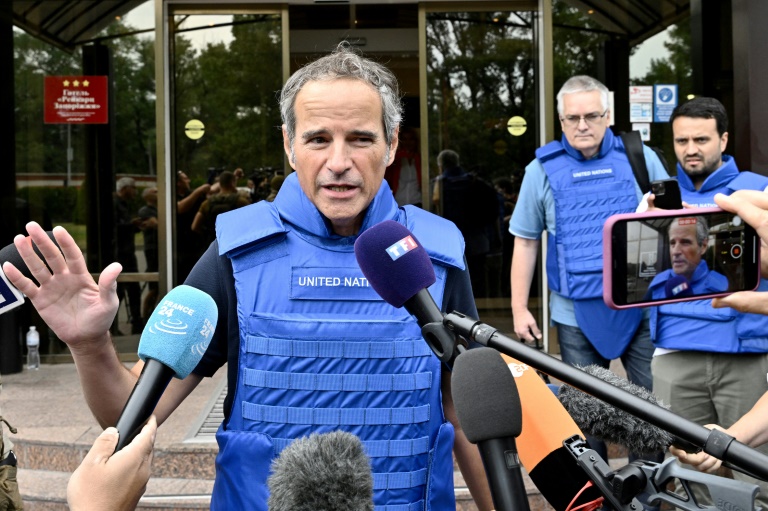
After crossing the frontline into Russian-held territory, the 14-strong team from the International Atomic Energy Agency (IAEA) reached the facility around 3:00 pm, the agency said on Twitter. 

“IAEA’s support and assistance mission to #Zaporizhzhya (ISAMZ) led by Director General Rafael Grossi has just arrived at Zaporizhzhya nuclear power plant to conduct indispensable nuclear safety and security and safeguards activities,” it said.

Wearing bright blue flak jackets and helmets, they had vowed to press ahead to reach Europe’s biggest nuclear facility despite early-morning shelling in the area that forced the closure of one of its six reactors.

Energoatom, Ukraine’s nuclear agency, said it was “the second time in 10 days” that Russian shelling had forced the closure of a reactor. 

It said the plant’s emergency protection system kicked in shortly before 5:00 am (0200 GMT), shutting reactor five, “due to another (Russian) mortar shelling” and that a backup power supply “was damaged” in the attack. 

The area around the plant, which lies on the southern banks of the Dnipro River, has suffered repeated shelling, with both sides blaming the other, sparking global concern over the risk of an accident.

– ‘Stop playing with fire’ –

“It is high time to stop playing with fire and instead take concrete measures to protect this facility… from any military operations,” ICRC chief Robert Mardini told reporters in Kyiv. 

“The slightest miscalculation could trigger devastation that we will regret for decades.”

After Russian forces seized the plant on March 4, Energoatom shut two reactors, followed by a third after shelling on August 5. With a fourth in repairs, Thursday’s incident leaves only one of the six reactors working. 

Mardini said it was “encouraging” the IAEA team was going to inspect the plant because the stakes were “immense”.

“When hazardous sites become battlegrounds, the consequences for millions of people and the environment can be catastrophic and last many years,” he said.

On leaving Zaporizhzhia, the IAEA chief said his team  would be travelling through areas where “the risks are significant” but had decided to go ahead anyway. 

“We have to proceed with this. We have a very important mission to accomplish.”

– Shelling, saboteurs and back-to-school –

The town of Energodar which is located next to the plant came under sustained attack at dawn, with Russian troops firing “mortars and using automatic weapons and rockets”, its mayor Dmytro Orlov said on Telegram. 

But Moscow accused Kyiv of smuggling in up to 60 military “saboteurs”, saying they reached the area near the plant at dawn and that Russian troops had taken “measures to annihilate the enemy”. 

Grossi has said the IAEA will seek to establish a “permanent presence” at the facility “to prevent a nuclear accident and preserve the largest nuclear power plant in Europe”.

Ukraine has accused Russia of deploying hundreds of soldiers and storing ammunition at the plant. 

Meanwhile, Ukrainian troops pressed ahead with a counter-offensive in the nearby region of Kherson to retake areas seized by Russia at the start of the invasion.

In its morning update, the presidency said “heavy explosions continued for the last 24 hours” across Kherson, while five people were killed and 12 others wounded in the eastern Donetsk region. 

Despite the conflict, now in its seventh month, September 1 marked the start of a new school year for children across Ukraine. 

Figures from Ukraine’s education ministry show 2,199 educational institutions have been damaged in the fighting, with 225 completely destroyed.

Just over half of the 23,000 institutions surveyed by the ministry are equipped with bomb shelters, meaning they can physically reopen, while those without will only offer online learning. 

But in Kharkiv, Ukraine’s second city, all learning will be online due to constant Russian shelling, the mayor said last month, with a British charity charging Thursday that dozens of its schools had been “targeted”. 

An investigation by the Centre for Information Resilience found 41 institutions had been “partially or completely destroyed” with researchers finding the shelling “was targeted, rather than a by-product of indiscriminate attacks on civilian infrastructure”.

Meanwhile, the Kremlin denounced as “ridiculous” the decision by EU foreign ministers to suspend a 2007 visa facilitation deal with Russia over the Ukraine conflict.

Ministers agreed the measure on Wednesday but stopped short of closing its borders to all Russians, as demanded by Ukraine. 

On risky mission, UN team reaches Ukraine nuclear plant

UN inspectors arrived at a Russian-held nuclear plant in southern Ukraine Thursday despite an early shelling attack, as the ICRC warned the consequences of a strike on the facility could be “catastrophic”.

After crossing the frontline into Russian-held territory, the 14-strong team from the International Atomic Energy Agency (IAEA) reached the facility around 3:00 pm, the agency said on Twitter. 

“IAEA’s support and assistance mission to #Zaporizhzhya (ISAMZ) led by Director General Rafael Grossi has just arrived at Zaporizhzhya nuclear power plant to conduct indispensable nuclear safety and security and safeguards activities,” it said.

Wearing bright blue flak jackets and helmets, they had vowed to press ahead to reach Europe’s biggest nuclear facility despite early-morning shelling in the area that forced the closure of one of its six reactors.

Energoatom, Ukraine’s nuclear agency, said it was “the second time in 10 days” that Russian shelling had forced the closure of a reactor. 

It said the plant’s emergency protection system kicked in shortly before 5:00 am (0200 GMT), shutting reactor five, “due to another (Russian) mortar shelling” and that a backup power supply “was damaged” in the attack. 

The area around the plant, which lies on the southern banks of the Dnipro River, has suffered repeated shelling, with both sides blaming the other, sparking global concern over the risk of an accident.

– ‘Stop playing with fire’ –

“It is high time to stop playing with fire and instead take concrete measures to protect this facility… from any military operations,” ICRC chief Robert Mardini told reporters in Kyiv. 

“The slightest miscalculation could trigger devastation that we will regret for decades.”

After Russian forces seized the plant on March 4, Energoatom shut two reactors, followed by a third after shelling on August 5. With a fourth in repairs, Thursday’s incident leaves only one of the six reactors working. 

Mardini said it was “encouraging” the IAEA team was going to inspect the plant because the stakes were “immense”.

“When hazardous sites become battlegrounds, the consequences for millions of people and the environment can be catastrophic and last many years,” he said.

On leaving Zaporizhzhia, the IAEA chief said his team  would be travelling through areas where “the risks are significant” but had decided to go ahead anyway. 

“We have to proceed with this. We have a very important mission to accomplish.”

– Shelling, saboteurs and back-to-school –

The town of Energodar which is located next to the plant came under sustained attack at dawn, with Russian troops firing “mortars and using automatic weapons and rockets”, its mayor Dmytro Orlov said on Telegram. 

But Moscow accused Kyiv of smuggling in up to 60 military “saboteurs”, saying they reached the area near the plant at dawn and that Russian troops had taken “measures to annihilate the enemy”. 

Grossi has said the IAEA will seek to establish a “permanent presence” at the facility “to prevent a nuclear accident and preserve the largest nuclear power plant in Europe”.

Ukraine has accused Russia of deploying hundreds of soldiers and storing ammunition at the plant. 

Meanwhile, Ukrainian troops pressed ahead with a counter-offensive in the nearby region of Kherson to retake areas seized by Russia at the start of the invasion.

In its morning update, the presidency said “heavy explosions continued for the last 24 hours” across Kherson, while five people were killed and 12 others wounded in the eastern Donetsk region. 

Despite the conflict, now in its seventh month, September 1 marked the start of a new school year for children across Ukraine. 

Figures from Ukraine’s education ministry show 2,199 educational institutions have been damaged in the fighting, with 225 completely destroyed.

Just over half of the 23,000 institutions surveyed by the ministry are equipped with bomb shelters, meaning they can physically reopen, while those without will only offer online learning. 

But in Kharkiv, Ukraine’s second city, all learning will be online due to constant Russian shelling, the mayor said last month, with a British charity charging Thursday that dozens of its schools had been “targeted”. 

An investigation by the Centre for Information Resilience found 41 institutions had been “partially or completely destroyed” with researchers finding the shelling “was targeted, rather than a by-product of indiscriminate attacks on civilian infrastructure”.

Meanwhile, the Kremlin denounced as “ridiculous” the decision by EU foreign ministers to suspend a 2007 visa facilitation deal with Russia over the Ukraine conflict.

Ministers agreed the measure on Wednesday but stopped short of closing its borders to all Russians, as demanded by Ukraine. 

UN team pushes ahead with risky mission to Ukraine nuclear plant

UN inspectors pressed on towards a Russian-held nuclear plant in southern Ukraine Thursday despite an early shelling attack, as the ICRC warned the consequences of a strike on the facility could be “catastrophic”.

As the 14-strong team from the International Atomic Energy Agency (IAEA) left for the Zaporizhzhia nuclear plant, Ukraine said Russian troops had shelled the area, forcing the closure of one of its six reactors.

Energoatom, Ukraine’s nuclear agency, said it was “the second time in 10 days” that shelling had forced the closure of a reactor. 

The area around the plant — Europe’s largest nuclear facility — has suffered repeated shelling, with both sides accusing the other of responsibility, sparking global concern over the risk of an accident. 

“It is high time to stop playing with fire and instead take concrete measures to protect this facility… from any military operations,” ICRC chief Robert Mardini told reporters in Kyiv. 

“The slightest miscalculation could trigger devastation that we will regret for decades.”

Energoatom said the plant’s emergency protection system kicked in shortly before 5:00 am (0200 GMT) “due to another (Russian) mortar shelling” and that “operating power unit five was shut down”. 

But the backup power supply “was damaged” in the attack, it said. 

After Russian forces seized the plant on March 4, Energoatom shut two of the reactors, followed by a third after shelling on August 5. 

With a fourth in repairs, Thursday’s incident means only one of the six is functioning.

– ‘The stakes are immense’ –

Mardini said it was “encouraging” that the IAEA team was en route to inspect the plant because the stakes were “immense”.

“When hazardous sites become battlegrounds, the consequences for millions of people and the environment can be catastrophic and last many years,” he said.

On leaving Zaporizhzhia, IAEA chief Rafael Grossi said his team had been updated about the shelling but would press on anyway.

“We are not stopping,” he vowed, despite being aware that in crossing the frontline into Russian-held territory, there was a security “grey area… where the risks are significant”. 

“We have to proceed with this. We have a very important mission to accomplish.”

By early afternoon, the team had crossed into the grey zone after waiting for “several hours at a checkpoint” for permission to cross, Ukraine’s Interfax news agency reported, saying “gunfire could be heard” along the road. 

– Shelling, saboteurs and back-to-school –

Earlier, Energodar Mayor Dmytro Orlov said his town had come under sustained attack at dawn on Thursday, saying Russian troops had fired “mortars and used automatic weapons and rockets”.

Energodar town is located next to the plant on the southern banks of the Dnipro River.

But Moscow accused Kyiv of smuggling in up to 60 military “saboteurs”, saying they reached the area near the plant just after dawn and that Russian troops had taken “measures to annihilate the enemy”. 

Grossi on Wednesday said the IAEA would seek to establish a “permanent presence” at the plant to avoid a nuclear disaster at the facility which is located on the frontline of the fighting.

“My mission is… to prevent a nuclear accident and preserve the largest nuclear power plant in Europe,” he said. 

Ukraine has accused Russia of deploying hundreds of soldiers and storing ammunition at the plant. 

Both Moscow and Kyiv have accused each other of staging “provocations” aimed at disrupting the work of the IAEA mission. 

Meanwhile, Ukrainian troops pressed ahead with a counteroffensive in the nearby southern region of Kherson that began on Monday to retake areas seized by Russian forces at the start of the invasion.

In its morning update, the presidency said “heavy explosions continued for the last 24 hours” across Kherson region, while five people had been killed and 12 others wounded in fighting in the eastern Donetsk region. 

Despite the conflict, now in its seventh month, September 1 marked the start of a new school year for children across Ukraine. 

Figures from Ukraine’s education ministry show 2,199 educational institutions have been damaged in the fighting, with 225 of them completely destroyed.

Just over half of the 23,000 schools surveyed by the ministry are equipped with bomb shelters, meaning they can physically reopen, while those without will only offer online learning. 

But in Kharkiv, Ukraine’s second city, all learning will be online due to constant Russian shelling, its mayor said last month, with a British charity charging Thursday that dozens of its schools had been “targeted”. 

An investigation by the Centre for Information Resilience found 41 institutions had been “partially or completely destroyed” in the northeastern city, with researchers finding the shelling “was targeted, rather than a by-product of indiscriminate attacks on civilian infrastructure”.

Elsewhere, the foreign ministry in London said a British medic volunteering in Ukraine had died in the fighting on August 24 but gave no further details on the circumstances of his death. 

10 times normal rainfall drove vast Pakistan flooding: ESA

Rainfall 10 times heavier than usual caused Pakistan’s devastating floods, the European Space Agency said Thursday, as it released satellite images of a vast lake created by the overflowing Indus river.

Rains, described by UN chief Antonio Guterres as a “monsoon on steroids” have claimed hundreds of lives since June, unleashing powerful floods that have washed away swathes of vital crops and damaged or destroyed more than a million homes.

Data from the EU’s Copernicus satellite has been used to map the scale of the deluge from space to help the rescue efforts, the ESA said in a statement. 

“Heavy monsoon rainfall — ten times heavier than usual — since mid-June have led to more than a third of the country now being underwater,” it said. 

The agency released images from the satellite showing an area where the Indus River has overflowed “effectively creating a long lake, tens of kilometres wide”, between the cities of Dera Murad Jamali and Larkana.  

Officials say more than 33 million people are affected — one in every seven Pakistanis — and reconstruction work will cost more than $10 billion.

Guterres has called the floods a “climate catastrophe” and launched an appeal for $160 million in emergency funding.

While it is too early to quantify the contribution of global warming in the floods, scientists say the rains are broadly consistent with expectations that climate change will make the Indian monsoon wetter. 

A recent study, based on climate models, predicted that exceptionally wet monsoons in the Indian subcontinent would become six times more likely during the 21st century, even if humanity rachets down carbon emissions.

Russian firm Lukoil says chairman dies after 'serious illness'

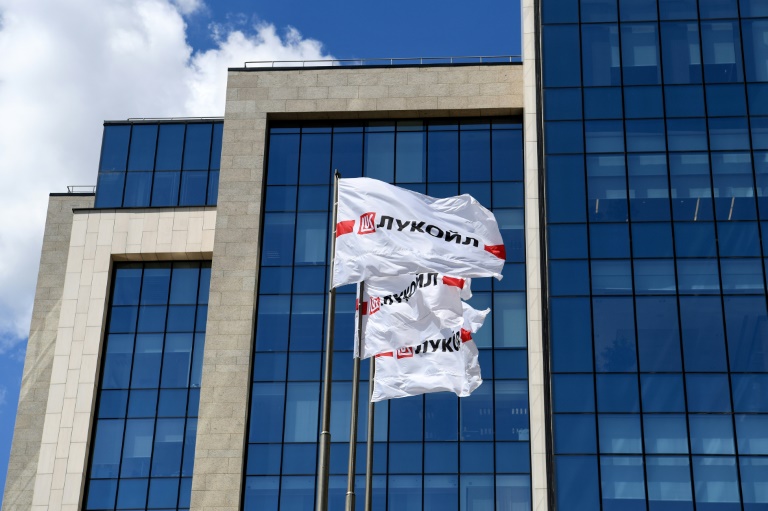
Russian energy firm Lukoil said Thursday its chairman Ravil Maganov had passed away following a “serious illness”, after Russian media reports said he died after falling out of a hospital window.

Lukoil was one of the few major Russian companies to call for end of fighting in Ukraine after Moscow sent its troops to the pro-Western country in February.

In a statement at the time, the Lukoil board called for an “immediate” end to the fighting, expressing its sympathy to those affected by the “tragedy”. 

“We deeply regret to announce that Ravil Maganov… passed away following a serious illness,” Lukoil said on Thursday without providing further details about his death. 

Several Russian media had earlier reported that Maganov died after falling out of a window of the Central Clinical Hospital in Moscow. 

It is often called the Kremlin Hospital because it counts Russia’s political and business elites among its patients.

“This morning Maganov fell out of a window of the Central Clinical Hospital. He died from his injuries,” Interfax news agency reported quoting an “informed” source.

According to a police source of RBC business daily, Maganov fell from the sixth-floor window of the hospital.

President Vladimir Putin’s spokesman Dmitry Peskov told reporters on Thursday that Maganov’s death was not a matter for the Kremlin. 

Maganov was born in 1954. He had worked at Lukoil since 1993 and was also the company’s president. 

He was among the first leaders of Lukoil and, according to the company, came up with its present name.

Maganov was appointed chairman in 2020.

In its statement on Thursday, Lukoil said Maganov “immensely contributed” to the company and the Russian oil and gas sector.

It credited Maganov’s “managerial talent” with making Lukoil one of the world’s leading energy companies.

In April, Lukoil announced the resignation of its billionaire chief executive Vagit Alekperov after he was hit by UK sanctions over the Ukraine offensive.

Close Bitnami banner
Bitnami