AFP

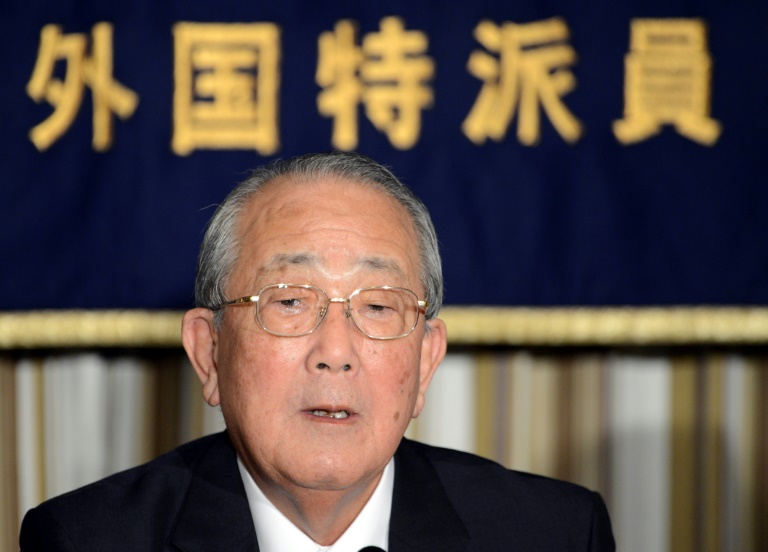
Japan business leader and monk Inamori dies at 90

Kazuo Inamori, a business guru and ordained Buddhist monk who reversed the fortunes of debt-ridden Japan Airlines, has died aged 90, a company he founded said Tuesday.

The entrepreneur was one of Japan’s most respected executives, having established electric components maker Kyocera and another firm that later became part of telecoms group KDDI.

He died “of old age” at his Kyoto home on August 24 and a family funeral has since been held, Kyocera said in a statement.

Japan’s government convinced Inamori to come out of retirement in 2010 to head Japan Airlines (JAL) after the ailing carrier filed for bankruptcy.

The businessman — who was 78 at the time — said he was a “complete amateur” in the transport industry, but promised to “do my best”.

His overhaul was successful and JAL shares were relisted on the stock exchange in 2012, less than three years after the airline was forced to delist.

Inamori was an advocate of reducing government interference in business and he was known for his “amoeba management” theory, which grants autonomy to each unit of a company while group members pool their knowledge.

He was also a philanthropist whose close work with Alfred University in the US state of New York led it to rename its engineering department after him.

After stepping down from an active role at Kyocera, he earned the status of Buddhist monk in 1997 at a Kyoto temple, but he did not live a reclusive religious lifestyle.

Kyocera said it planned to hold a separate memorial for Inamori but details had not yet been decided.

China state support for economy this year exceeds 2020, premier says

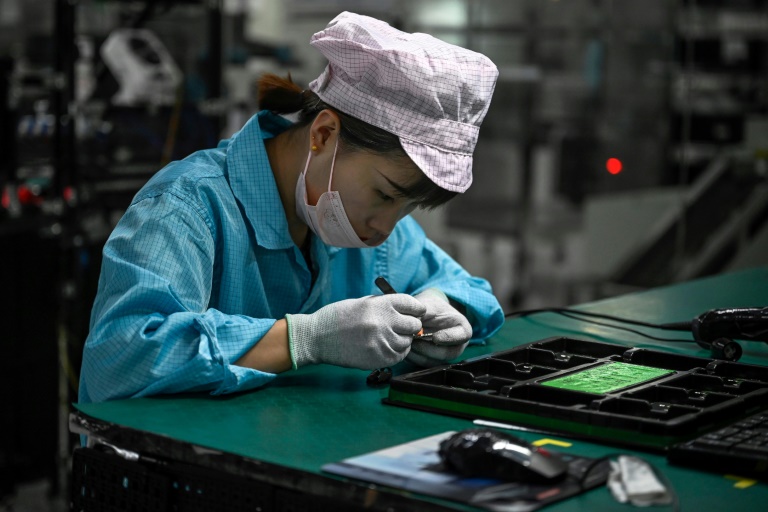
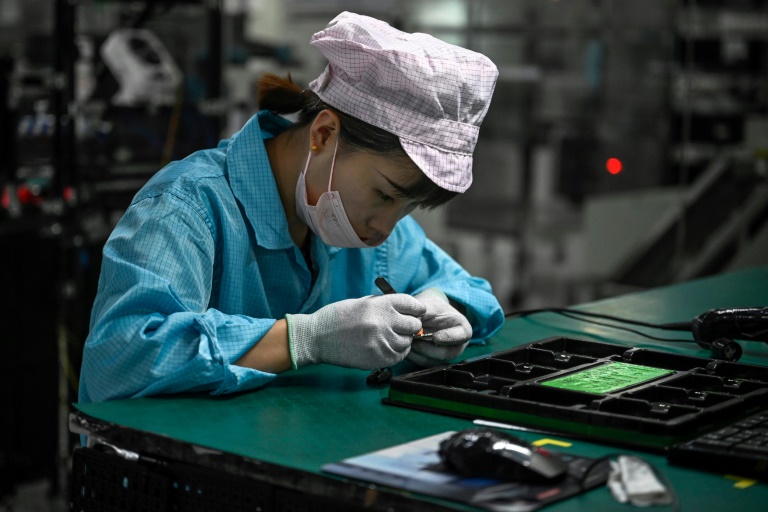
State support for China’s economy this year is now greater than it was in 2020, Beijing’s premier has said, surpassing help given at the height of the coronavirus pandemic as the country grapples with the impacts of its zero-Covid policy and a property sector crisis.

Economists have widely predicted that China will fail to meet its 5.5 percent GDP growth target, blaming record youth unemployment, ballooning developer debt and manufacturing disruptions from frequent Covid lockdowns.

“In response to new challenges, (we have) decisively launched a package of policies to stabilise the economy. Their strength surpasses those of 2020,” Premier Li Keqiang said during a Monday State Council conference.

China’s economy has also been battered by the two-month lockdown of Shanghai, a nationwide mortgage boycott, and a severe drought and heatwave which shut down manufacturing hubs and severely impacted the agricultural sector.

The grim economic outlook underscores the difficulty of balancing economic growth with the country’s strict zero-Covid policy, with targeted lockdowns, travel restrictions and mass testing depleting fiscal revenues and causing disruption to everyday life.

Li hinted at this fact earlier in August, telling officials “the number of people in difficulty has seen an increase” due to the virus and recent natural disasters.

Real estate sales, a major economic driver, fell 22 percent in August, year on year, while new home prices have fallen for 11 months straight, according to data released earlier this month.

China’s economic growth came in at just 0.4 percent on-year in the second quarter — its slowest rate since the pandemic began in 2020.

Beijing has taken a number of steps to help revive its economy, including a ramping-up of infrastructure investment, tax credits and loan facilities for SMEs. 

China’s banks last week lowered their benchmark lending rates, including on mortgage loans, for the second time this year.

Beijing also announced last week that it would allow local governments to issue more bonds.

But Ting Lu, an analyst at Nomura, wrote these measures would likely not be “game changers” due to the continued zero-Covid policy and the persistent distress affecting the property sector. 

China state support for economy this year exceeds 2020, premier says

State support for China’s economy this year is now greater than it was in 2020, Beijing’s premier has said, surpassing help given at the height of the coronavirus pandemic as the country grapples with the impacts of its zero-Covid policy and a property sector crisis.

Economists have widely predicted that China will fail to meet its 5.5 percent GDP growth target, blaming record youth unemployment, ballooning developer debt and manufacturing disruptions from frequent Covid lockdowns.

“In response to new challenges, (we have) decisively launched a package of policies to stabilise the economy. Their strength surpasses those of 2020,” Premier Li Keqiang said during a Monday State Council conference.

China’s economy has also been battered by the two-month lockdown of Shanghai, a nationwide mortgage boycott, and a severe drought and heatwave which shut down manufacturing hubs and severely impacted the agricultural sector.

The grim economic outlook underscores the difficulty of balancing economic growth with the country’s strict zero-Covid policy, with targeted lockdowns, travel restrictions and mass testing depleting fiscal revenues and causing disruption to everyday life.

Li hinted at this fact earlier in August, telling officials “the number of people in difficulty has seen an increase” due to the virus and recent natural disasters.

Real estate sales, a major economic driver, fell 22 percent in August, year on year, while new home prices have fallen for 11 months straight, according to data released earlier this month.

China’s economic growth came in at just 0.4 percent on-year in the second quarter — its slowest rate since the pandemic began in 2020.

Beijing has taken a number of steps to help revive its economy, including a ramping-up of infrastructure investment, tax credits and loan facilities for SMEs. 

China’s banks last week lowered their benchmark lending rates, including on mortgage loans, for the second time this year.

Beijing also announced last week that it would allow local governments to issue more bonds.

But Ting Lu, an analyst at Nomura, wrote these measures would likely not be “game changers” due to the continued zero-Covid policy and the persistent distress affecting the property sector. 

Pakistan floods fuel 'back-breaking' food inflation

Catastrophic monsoon floods in Pakistan have sent food prices skyrocketing, putting many staples out of the reach of the poor as the cash-strapped nation battles shortages.

The floods have submerged a third of the country, killing more than 1,100 people and affecting over 33 million.

Recovery could cost more than $10 billion, according to the planning minister.

The rains — which began in June, and whose unusual intensity has been blamed on climate change — have also damaged vast swathes of rich agricultural land and crops. Parts of the mountainous north and breadbasket south have been cut off because roads and bridges have been washed away.

“Things are so expensive because of this flood that we can’t buy anything,” said Zahida Bibi, who had come to a market in the central city of Lahore to get vegetables for dinner.

She told AFP she had to forego some items on her shopping list because inflation had put them out of reach.

“What can we do? We don’t make enough money to buy things at such high prices.”

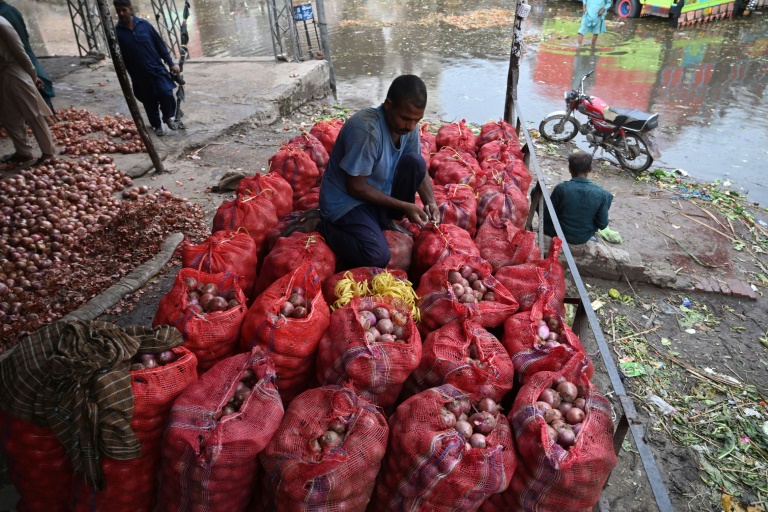
Onions and tomatoes — common ingredients in most Pakistani meals — have been affected the most.

The prices of both had increased by 40 percent, the Pakistan Bureau of Statistics said Friday.

But on Monday, Finance Minister Miftah Ismail said the price of onions had shot up by more than five times, and that the government was trying to quickly implement policies to stabilise food prices — including importing from arch-rival India.

“We need to consider getting some vegetables over the land border,” he told broadcaster Geo News.

“We have to do it because of the kind of prices and shortages we are experiencing… Inflation has broken people’s backs.”

– Out of reach –

With millions of acres of farmland still under water and certain roads inaccessible, prices are expected to climb further.

“About 80 percent of the tomato crop in Pakistan has been damaged in the floods, and onion supply has been badly hit as well,” Shahzad Cheema, secretary of the Lahore Market Committee, told AFP.

“These are basic items, and ultimately it is the average buyer who will be most affected.”

Vegetable seller Muhammad Owais at a market in Lahore was struggling to find buyers at the current high prices.

“Prices have increased so much because of (the flood) that many customers leave without buying anything,” he told AFP.

Pakistan was struggling with record high inflation even before the floods, because of rising global oil prices and a balance of payments crisis.

The government found some room to manoeuvre Monday when the International Monetary Fund approved the resumption of a massive loan programme for Pakistan, releasing $1.1 billion immediately.

In shadow of abandoned US airbase, Bagram's economy withers

For years, the sprawling military base at Bagram, just north of Kabul, was a potent symbol of the United States’ two decades of war in Afghanistan.

The sprawling complex included an air base that was the linchpin of the US invasion; a prison where rights groups allege widespread violations occurred; and a residential area that featured swimming pools, cinemas and spas.

But weeks before Washington officially ended its military presence in Afghanistan last August, US troops left the airbase in the dead of night.

Today, the military base is occupied by the Taliban, who took over the country in a swift offensive as US forces were exiting.

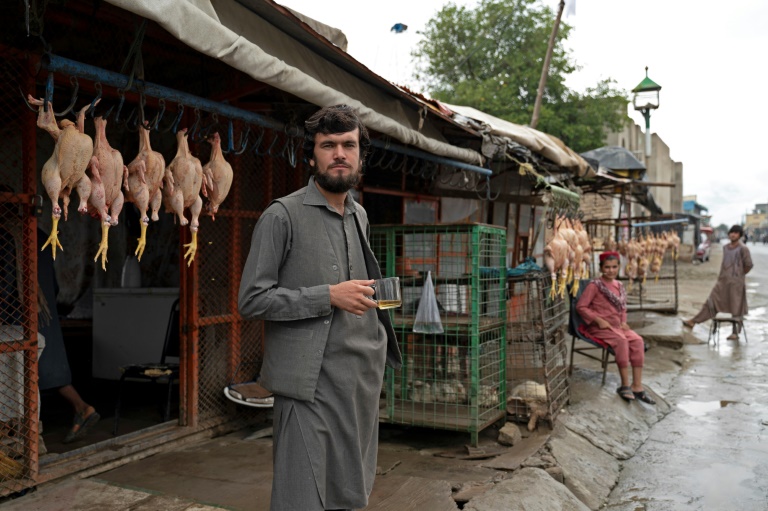
The US departure from Bagram has also seen the collapse of the economy in the nearby town of the same name, an illustration of how Afghanistan’s fortunes were so heavily tied to the war and foreign aid.

“Today, I’m jobless. I don’t know much about politics, but the exit of US forces from the base is a big economic loss,” said Saifulrahman Faizi, one of the town’s 80,000 residents.

Faizi earned $30 a day when he was employed at the base, at a time when hundreds would queue for hours outside the compound in the hope of getting work.

“Now, nobody goes there. Everything has just crashed, everybody is struggling”, he said.

– Shuttered shops –

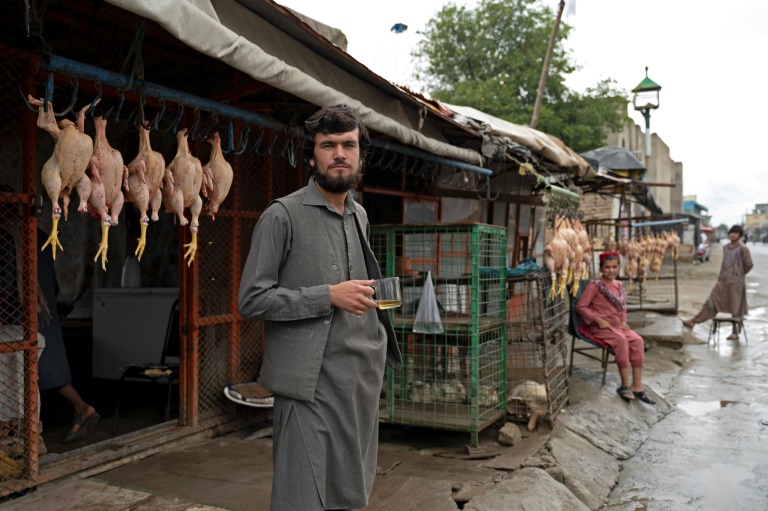
Nowhere is the town’s economic collapse more evident than in the main market.

It is marked by rows of shuttered shops and warehouses, and those that remain open have seen sales plummet. 

Shah Wali, a 46-year-old grocery store keeper, said he used to earn an income of between 20,000 and 30,000 Afghanis ($230 and $340). 

Today, he can barely pay his rent.

“With the Islamic Emirate (Taliban) coming to power, peace has returned but business has gone,” Wali told AFP, clutching his prayer beads.

At the peak of the US invasion, Bagram was home to tens of thousands of troops and contractors, with the town serving as a hub for tons of supplies that would service the base.

The airfield was first built by the Americans for their Afghan ally during the Cold War in the 1950s.

The Soviet Union vastly expanded it after the Red Army invaded Afghanistan in 1979.

After their withdrawal, the base was controlled by the Moscow-backed government, and later by the shaky mujahideen administration during the 1990s civil war.

With the Taliban seizing power last year, the airfield is now under their control.

– ‘Empty town’ –

When the US military pulled out, it took much of its military hardware home, but tons of civilian equipment was left behind. 

For several months, the town managed to thrive on a booming scrap business, but residents say that now that, too, is dying.

Shops that sold used gym equipment, generators, air conditioners and spare car parts are either shut or receive few orders.

Several houses are now deserted, their residents having moved to Kabul or elsewhere in search of work.

Many who had worked at the base have also fled the country, fearing reprisals from the Taliban.

“Half the people have gone, the town feels so empty,” said Faizi.

In shadow of abandoned US airbase, Bagram's economy withers

For years, the sprawling military base at Bagram, just north of Kabul, was a potent symbol of the United States’ two decades of war in Afghanistan.

The sprawling complex included an air base that was the linchpin of the US invasion; a prison where rights groups allege widespread violations occurred; and a residential area that featured swimming pools, cinemas and spas.

But weeks before Washington officially ended its military presence in Afghanistan last August, US troops left the airbase in the dead of night.

Today, the military base is occupied by the Taliban, who took over the country in a swift offensive as US forces were exiting.

The US departure from Bagram has also seen the collapse of the economy in the nearby town of the same name, an illustration of how Afghanistan’s fortunes were so heavily tied to the war and foreign aid.

“Today, I’m jobless. I don’t know much about politics, but the exit of US forces from the base is a big economic loss,” said Saifulrahman Faizi, one of the town’s 80,000 residents.

Faizi earned $30 a day when he was employed at the base, at a time when hundreds would queue for hours outside the compound in the hope of getting work.

“Now, nobody goes there. Everything has just crashed, everybody is struggling”, he said.

– Shuttered shops –

Nowhere is the town’s economic collapse more evident than in the main market.

It is marked by rows of shuttered shops and warehouses, and those that remain open have seen sales plummet. 

Shah Wali, a 46-year-old grocery store keeper, said he used to earn an income of between 20,000 and 30,000 Afghanis ($230 and $340). 

Today, he can barely pay his rent.

“With the Islamic Emirate (Taliban) coming to power, peace has returned but business has gone,” Wali told AFP, clutching his prayer beads.

At the peak of the US invasion, Bagram was home to tens of thousands of troops and contractors, with the town serving as a hub for tons of supplies that would service the base.

The airfield was first built by the Americans for their Afghan ally during the Cold War in the 1950s.

The Soviet Union vastly expanded it after the Red Army invaded Afghanistan in 1979.

After their withdrawal, the base was controlled by the Moscow-backed government, and later by the shaky mujahideen administration during the 1990s civil war.

With the Taliban seizing power last year, the airfield is now under their control.

– ‘Empty town’ –

When the US military pulled out, it took much of its military hardware home, but tons of civilian equipment was left behind. 

For several months, the town managed to thrive on a booming scrap business, but residents say that now that, too, is dying.

Shops that sold used gym equipment, generators, air conditioners and spare car parts are either shut or receive few orders.

Several houses are now deserted, their residents having moved to Kabul or elsewhere in search of work.

Many who had worked at the base have also fled the country, fearing reprisals from the Taliban.

“Half the people have gone, the town feels so empty,” said Faizi.

In shadow of abandoned US airbase, Bagram's economy withers

For years, the sprawling military base at Bagram, just north of Kabul, was a potent symbol of the United States’ two decades of war in Afghanistan.

The sprawling complex included an air base that was the linchpin of the US invasion; a prison where rights groups allege widespread violations occurred; and a residential area that featured swimming pools, cinemas and spas.

But weeks before Washington officially ended its military presence in Afghanistan last August, US troops left the airbase in the dead of night.

Today, the military base is occupied by the Taliban, who took over the country in a swift offensive as US forces were exiting.

The US departure from Bagram has also seen the collapse of the economy in the nearby town of the same name, an illustration of how Afghanistan’s fortunes were so heavily tied to the war and foreign aid.

“Today, I’m jobless. I don’t know much about politics, but the exit of US forces from the base is a big economic loss,” said Saifulrahman Faizi, one of the town’s 80,000 residents.

Faizi earned $30 a day when he was employed at the base, at a time when hundreds would queue for hours outside the compound in the hope of getting work.

“Now, nobody goes there. Everything has just crashed, everybody is struggling”, he said.

– Shuttered shops –

Nowhere is the town’s economic collapse more evident than in the main market.

It is marked by rows of shuttered shops and warehouses, and those that remain open have seen sales plummet. 

Shah Wali, a 46-year-old grocery store keeper, said he used to earn an income of between 20,000 and 30,000 Afghanis ($230 and $340). 

Today, he can barely pay his rent.

“With the Islamic Emirate (Taliban) coming to power, peace has returned but business has gone,” Wali told AFP, clutching his prayer beads.

At the peak of the US invasion, Bagram was home to tens of thousands of troops and contractors, with the town serving as a hub for tons of supplies that would service the base.

The airfield was first built by the Americans for their Afghan ally during the Cold War in the 1950s.

The Soviet Union vastly expanded it after the Red Army invaded Afghanistan in 1979.

After their withdrawal, the base was controlled by the Moscow-backed government, and later by the shaky mujahideen administration during the 1990s civil war.

With the Taliban seizing power last year, the airfield is now under their control.

– ‘Empty town’ –

When the US military pulled out, it took much of its military hardware home, but tons of civilian equipment was left behind. 

For several months, the town managed to thrive on a booming scrap business, but residents say that now that, too, is dying.

Shops that sold used gym equipment, generators, air conditioners and spare car parts are either shut or receive few orders.

Several houses are now deserted, their residents having moved to Kabul or elsewhere in search of work.

Many who had worked at the base have also fled the country, fearing reprisals from the Taliban.

“Half the people have gone, the town feels so empty,” said Faizi.

China arrests hundreds over banking scandal that sparked rare protests

Chinese police have arrested more than 200 suspects linked to one of the country’s biggest banking scandals that triggered rare mass protests and dealt a major blow to confidence in the country’s financial system.

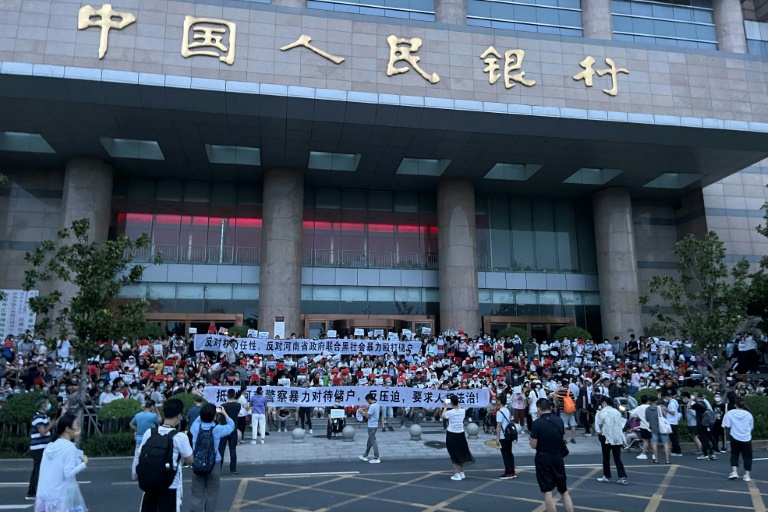
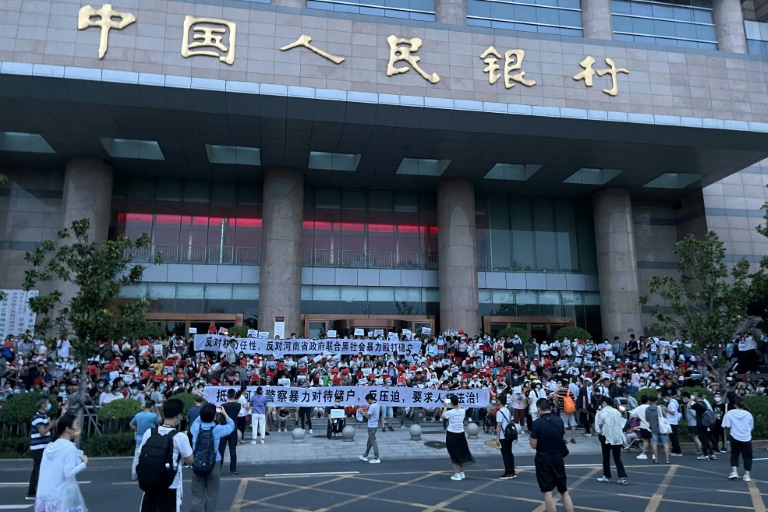
Four banks in China’s central Henan province suspended cash withdrawals in April as regulators cracked down on mismanagement, freezing the funds of hundreds of thousands of customers and sparking protests that at times ended in violence.

Police in the city of Xuchang said Monday they had now arrested 234 people in connection with the scandal and that progress was being made in recovering stolen funds.

They said in a statement that a “gang” had taken control of a number of local banks, attracting depositors with interest rates as high as 18 percent.

Large amounts of funds, they said, were then “exploited by financial brokers”.

Authorities previously said the gang had effectively controlled the banks since 2011.

China’s rural banking sector has been hit hard by Beijing’s efforts to rein in a property bubble and spiraling debt, in a financial crackdown that has had ripple effects across the world’s second-largest economy.

The size and scale of the fraud dealt an unprecedented blow to public confidence in China’s financial system, analysts have said, with the banks involved allegedly operating illegally for more than a decade.

Beijing is desperate to avoid disruptions to social stability just months away from a major meeting of the ruling Communist Party, where President Xi Jinping is expected to secure an unprecedented third term in power. 

A July 10 mass demonstration by depositors in Henan’s provincial capital Zhengzhou was violently quashed, with demonstrators forced onto buses by police and beaten, according to eyewitness accounts given to AFP and verified photos on social media.

Regulators have been gradually offering repayments to depositors since mid-April.

On Monday, the Henan banking and insurance regulator promised to repay those who had deposited between 400,000 and 500,000 yuan ($57,900 to $72,300) starting this week. 

Depositors who owed smaller amounts had been repaid.

China arrests hundreds over banking scandal that sparked rare protests

Chinese police have arrested more than 200 suspects linked to one of the country’s biggest banking scandals that triggered rare mass protests and dealt a major blow to confidence in the country’s financial system.

Four banks in China’s central Henan province suspended cash withdrawals in April as regulators cracked down on mismanagement, freezing the funds of hundreds of thousands of customers and sparking protests that at times ended in violence.

Police in the city of Xuchang said Monday they had now arrested 234 people in connection with the scandal and that progress was being made in recovering stolen funds.

They said in a statement that a “gang” had taken control of a number of local banks, attracting depositors with interest rates as high as 18 percent.

Large amounts of funds, they said, were then “exploited by financial brokers”.

Authorities previously said the gang had effectively controlled the banks since 2011.

China’s rural banking sector has been hit hard by Beijing’s efforts to rein in a property bubble and spiraling debt, in a financial crackdown that has had ripple effects across the world’s second-largest economy.

The size and scale of the fraud dealt an unprecedented blow to public confidence in China’s financial system, analysts have said, with the banks involved allegedly operating illegally for more than a decade.

Beijing is desperate to avoid disruptions to social stability just months away from a major meeting of the ruling Communist Party, where President Xi Jinping is expected to secure an unprecedented third term in power. 

A July 10 mass demonstration by depositors in Henan’s provincial capital Zhengzhou was violently quashed, with demonstrators forced onto buses by police and beaten, according to eyewitness accounts given to AFP and verified photos on social media.

Regulators have been gradually offering repayments to depositors since mid-April.

On Monday, the Henan banking and insurance regulator promised to repay those who had deposited between 400,000 and 500,000 yuan ($57,900 to $72,300) starting this week. 

Depositors who owed smaller amounts had been repaid.

Liberia's Weah under pressure over 'corrupt' allies

Liberian President George Weah is facing a backlash over his handling of corruption accusations made by the United States against three of his close allies.

Washington imposed sanctions on top officials including Liberia’s chief prosecutor and Weah’s chief of staff earlier this month over corruption allegations tied to multi-million-dollar contracts and at least $1.5 million in diverted public funds.

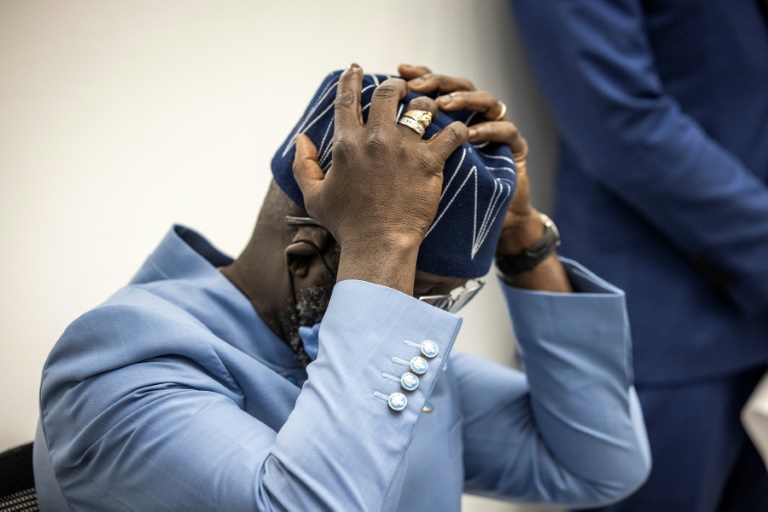
Weah — a former football star — suspended the officials, but the affair has continued to dominate headlines in the West African nation, threatening his support ahead of next year’s election. 

Opposition leaders and human rights groups are demanding the officials’ dismissal — and a wider corruption probe into other members of the government.

Alexander Cummings, the leader of the opposition ANC party, said the “mere suspension” of the officials was “not good enough… nor is it enough to exonerate the president from growing public impression of his participation” in the “high crimes”.

“This is not the time for bogus suspensions, coverups, and fake investigations,” he said.

The Liberian NGO Regional Watch for Human Rights also urged Weah to sack the officials. 

“This should not be business as usual. Enough is enough,” the group said.

The former AC Milan, Chelsea and Manchester City star, who has been criticised for lacking political experience and formal education, has not directly commented on the allegations. 

“President Weah views the allegations against the officials contained in the report as grave,” his office said.

– ‘Pervasive’ corruption –

Fighting corruption was one of Weah’s major commitments before taking office in 2018. 

In his inaugural speech as president, he promised to prosecute corrupt officials “to the full extent of the law”.

But he has struggled to fulfil his election promise.

Corruption remains endemic, with the watchdog Transparency International ranking Liberia 136th of 180 countries in its 2021 corruption perceptions index.

In a 2022 report, the US State Department cited widespread and “pervasive government corruption” in Liberia as a constraint to investment and development.

On August 15, the US Treasury’s Office of Foreign Assets Control slapped sanctions on Nathaniel McGill, the Minister for Presidential Affairs who serves as chief of staff to the president, and two other senior officials.

It accused McGill of having “bribed business owners, received bribes from potential investors (and government office seekers), and accepted kickbacks for steering contracts to companies in which he has an interest”.

It said he misappropriated government assets “for his personal gain” and “organized warlords to threaten political rivals”.

Sayma Syrenius Cephus, Liberia’s solicitor general and chief prosecutor, is accused of having “developed close relationships with suspects of criminal investigations” and “received bribes from individuals in exchange for having their cases dropped”, including money laundering cases. 

The head of the National Port Authority (NPA), Bill Twehway, “orchestrated the diversion” of $1.5 million in vessel storage funds into a private account, according to the US.

It said he “secretly formed a private company” to which he “unilaterally awarded” a contract.

McGill and Cephus have responded with letters to President Weah, with McGill denying some accusations and decrying others as “vague”. 

Cephus said he rejected and denied all accusations.

With long historical links and a significant diaspora in the US, American authorities have played an important role in holding Liberians accountable both for corruption and crimes tied to the country’s two civil wars.

Given the strong relationship, the US actions are likely to have a real impact in Liberia.

– Upcoming election –

The corruption accusations come just over a year ahead of Liberia’s presidential election, slated for October 10, 2023.

Facing criticism over his inaction on key election promises, Weah blames the lack of progress on the difficult situation he inherited from predecessors.

But Victor Bright, a political analyst, told AFP that until the sanctions were announced, the president had been “in good posture” compared to other potential candidates.

“Though the economy has been bad since his ascendancy to power, he has been doing some infrastructural developments that have not passed unnoticed,” Bright said. 

He said Weah should dismiss the officials in order to put the issue to bed.

“President Weah needs to listen to the voice of the masses if he does not want to lose some of his potential voters,” he said.

Close Bitnami banner
Bitnami