
AFP

Pakistan floods a 'crisis of unimaginable proportions', says minister

A third of Pakistan is under water as a result of flooding caused by record monsoon rains, Climate Change Minister Sherry Rehman said Monday, calling it a “crisis of unimaginable proportions”.

Officials say at least 33 million people — one in every seven Pakistanis — have been affected by the floods, which have killed 1,136 people since the monsoon began in June.

Vast parts of farmland in southern Sindh and western Balochistan provinces are now just landscapes of water, while in the north, roads and bridges have been washed away by raging mountain rivers.

“To see the devastation on the ground is really mind-boggling,” Rehman told AFP in an interview.

“When we send in water pumps, they say ‘Where do we pump the water?’ It’s all one big ocean, there’s no dry land to pump the water out.”

Rehman said “literally a third” of Pakistan was under water, describing it as akin to a dystopian movie.

– Appeal for help –

She also expected the death toll to rise as many areas in the north of the country, where dozens of rivers are still in full flood, remain cut off.

Rehman renewed the government’s appeal for international assistance, while also blaming major industrialised countries for their role in global warming.

Pakistan is responsible for less than one percent of global greenhouse gas emissions, but is eighth on a list compiled by the NGO Germanwatch of countries deemed most vulnerable to extreme weather caused by climate change.

“It’s time for the big emitters to review their policies. We have crossed what is clearly a threshold,” she said.

“The multilateral forum pledges or ambitions voiced by other countries — the rich countries, that have gotten rich on the back of fossil fuels — they don’t really come through.”

Rehman said Pakistan’s economy, already in crisis, would be badly hit by the flooding.

“Sindh is half of Pakistan’s breadbasket and will not be able to grow anything at all next season,” she predicted.

“Not only will our exports be impacted, but our food security will take a hit.”

Rehman said a proper assessment of the damage caused by the flooding would take time.

“Right now, after everyone is actually rescued, we will be feeding and providing cooked meals and shelter,” she said.

“We need to also look for the spread of medical camps, because disease is always the next predator in such an environment.”

The International Monetary Fund board was meeting later Monday to decide whether to green-light the resumption of a $6 billion loan programme, but it is already clear it will take much more to repair and rebuild after this monsoon.

“We are in touch with our big donors… let’s hope they can come up with something that can really assist one of the most climate-impacted countries of the world in its time of need,” Rehman said.
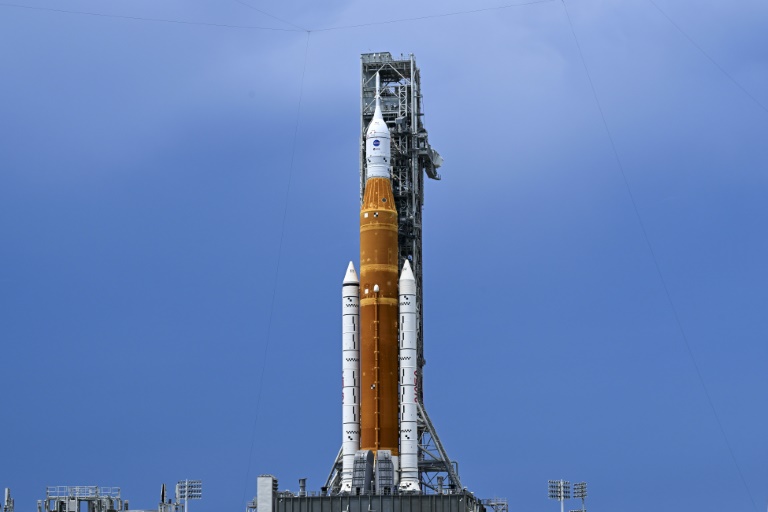
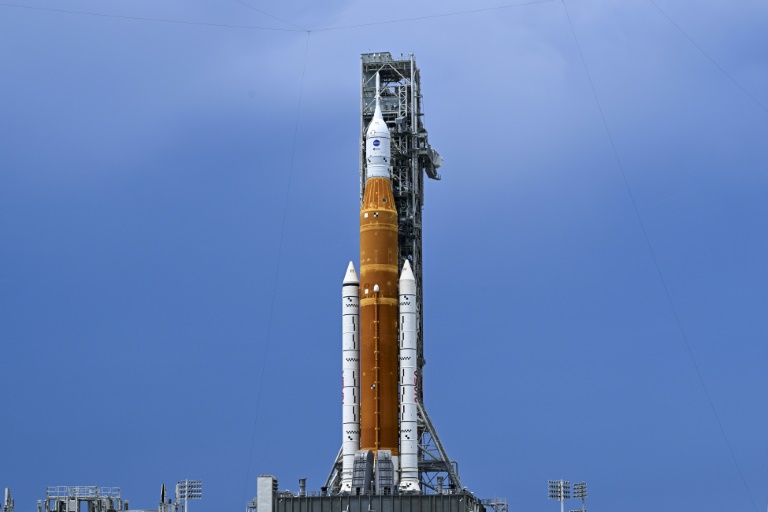
Engine issue forces NASA to scrub launch of giant Moon rocket

NASA called off a test flight on Monday of its largest-ever rocket in a setback to the ambitious program to send humans back to the Moon and eventually to Mars.

“We don’t launch until it’s right,” NASA administrator Bill Nelson said after an engine temperature issue forced liftoff from Kennedy Space Center to be scrubbed.

“This is a very complicated machine,” Nelson said. “You don’t want to light the candle until it’s ready to go.”

Alternative dates for launch of the US space agency’s uncrewed Artemis 1 mission are Friday and next Monday.

Blastoff had been planned for 8:33 am (1233 GMT) but was cancelled because of a temperature problem with one of the four RS-25 engines on the 322-foot (98-meter) Space Launch System (SLS) rocket.

NASA said a test to get one of the engines to the proper temperature range for liftoff was not successful.

It said the SLS rocket and Orion crew capsule which sits on top “remain in a safe and stable configuration.”

Nelson said delays were “just part of the space business” and expressed confidence that NASA engineers will “get it fixed and then we’ll fly.”

Tens of thousands of people — including US Vice President Kamala Harris — had gathered near the Kennedy Space Center in Florida to watch the launch, which comes 50 years after Apollo 17 astronauts last set foot on the Moon.

The goal of the flight is to test the SLS and Orion crew capsule. Mannequins equipped with sensors are standing in for a crew for the mission.

Overnight operations to fill the orange-and-white rocket with more than three million liters of ultra-cold liquid hydrogen and oxygen were briefly delayed by a high risk of lightning.

Around 3:00 am, another hiccup emerged: a potential leak was detected during the filling of the main stage with hydrogen, causing a pause. After tests, the flow resumed.

NASA engineers later detected the engine temperature problem and put a hold on the countdown before eventually scrubbing the launch.

The rocket’s Orion capsule is to orbit the Moon to see if the vessel is safe for people in the near future. At some point, Artemis aims to put a woman and a person of color on the Moon for the first time.

– Extreme temperatures –

During the 42-day trip, the Orion capsule will orbit the Moon, coming within 60 miles (100 kilometers) at its closest approach, and then fire its engines to shoot out 40,000 miles — a record for a spacecraft rated to carry humans.

One of the mission’s primary objectives is to test the capsule’s heat shield, which at 16 feet in diameter is the largest ever built.

On its return to Earth’s atmosphere, the heat shield will have to withstand speeds of 25,000 miles per hour and a temperature of 5,000 degrees Fahrenheit (2,760 degrees Celsius) — roughly half as hot as the Sun.

The dummies aboard the spacecraft will record acceleration, vibration and radiation levels.

The craft will also deploy small satellites to study the lunar surface.

A complete failure would be devastating for a program costing $4.1 billion per launch that is already years behind schedule.

– Life on the Moon –

The next mission, Artemis 2, will take astronauts into orbit around the Moon without landing on its surface. The crew of Artemis 3 is to land on the Moon in 2025 at the earliest.

And since humans have already visited the Moon, Artemis has its sights set on another lofty goal: a crewed mission to Mars.

The Artemis program is to establish a lasting human presence on the Moon with an orbiting space station known as Gateway and a base on the surface.

Gateway would serve as a staging and refueling station for a voyage to Mars that would take a minimum of several months.

Engine issue forces NASA to scrub launch of giant Moon rocket

NASA called off a test flight on Monday of its largest-ever rocket in a setback to the ambitious program to send humans back to the Moon and eventually to Mars.

“We don’t launch until it’s right,” NASA administrator Bill Nelson said after an engine temperature issue forced liftoff from Kennedy Space Center to be scrubbed.

“This is a very complicated machine,” Nelson said. “You don’t want to light the candle until it’s ready to go.”

Alternative dates for launch of the US space agency’s uncrewed Artemis 1 mission are Friday and next Monday.

Blastoff had been planned for 8:33 am (1233 GMT) but was cancelled because of a temperature problem with one of the four RS-25 engines on the 322-foot (98-meter) Space Launch System (SLS) rocket.

NASA said a test to get one of the engines to the proper temperature range for liftoff was not successful.

It said the SLS rocket and Orion crew capsule which sits on top “remain in a safe and stable configuration.”

Nelson said delays were “just part of the space business” and expressed confidence that NASA engineers will “get it fixed and then we’ll fly.”

Tens of thousands of people — including US Vice President Kamala Harris — had gathered near the Kennedy Space Center in Florida to watch the launch, which comes 50 years after Apollo 17 astronauts last set foot on the Moon.

The goal of the flight is to test the SLS and Orion crew capsule. Mannequins equipped with sensors are standing in for a crew for the mission.

Overnight operations to fill the orange-and-white rocket with more than three million liters of ultra-cold liquid hydrogen and oxygen were briefly delayed by a high risk of lightning.

Around 3:00 am, another hiccup emerged: a potential leak was detected during the filling of the main stage with hydrogen, causing a pause. After tests, the flow resumed.

NASA engineers later detected the engine temperature problem and put a hold on the countdown before eventually scrubbing the launch.

The rocket’s Orion capsule is to orbit the Moon to see if the vessel is safe for people in the near future. At some point, Artemis aims to put a woman and a person of color on the Moon for the first time.

– Extreme temperatures –

During the 42-day trip, the Orion capsule will orbit the Moon, coming within 60 miles (100 kilometers) at its closest approach, and then fire its engines to shoot out 40,000 miles — a record for a spacecraft rated to carry humans.

One of the mission’s primary objectives is to test the capsule’s heat shield, which at 16 feet in diameter is the largest ever built.

On its return to Earth’s atmosphere, the heat shield will have to withstand speeds of 25,000 miles per hour and a temperature of 5,000 degrees Fahrenheit (2,760 degrees Celsius) — roughly half as hot as the Sun.

The dummies aboard the spacecraft will record acceleration, vibration and radiation levels.

The craft will also deploy small satellites to study the lunar surface.

A complete failure would be devastating for a program costing $4.1 billion per launch that is already years behind schedule.

– Life on the Moon –

The next mission, Artemis 2, will take astronauts into orbit around the Moon without landing on its surface. The crew of Artemis 3 is to land on the Moon in 2025 at the earliest.

And since humans have already visited the Moon, Artemis has its sights set on another lofty goal: a crewed mission to Mars.

The Artemis program is to establish a lasting human presence on the Moon with an orbiting space station known as Gateway and a base on the surface.

Gateway would serve as a staging and refueling station for a voyage to Mars that would take a minimum of several months.

Stocks extend losses after Fed chief's rates warning

Stocks slid further Monday and the dollar rallied as traders continued to digest Federal Reserve chief Jerome Powell’s warning of more interest rate hikes to fight inflation.

Wall Street’s main indices opened lower, extending losses of between three and four percent on Friday immediately following Powell’s speech where he clearly stated his priority is bringing inflation down from four-decade highs, even at the expense of economic growth.

“Restoring price stability will take some time and requires using our tools forcefully to bring demand and supply into better balance,” he told the Jackson Hole gathering of global monetary policymakers.

The comments dealt a blow to markets, which had in recent weeks enjoyed a bounce from June lows as weak economic data and a slowdown in price rises fanned hopes the Fed would temper its interest rate hike drive and bring down rates next year.

Powell “didn’t splash some cold water on the stock market’s face,” said market analyst Patrick O’Hare at Briefing.com. “He dumped a whole bucket of ice water on it and the stock market wasn’t ready for the ice bucket challenge.”

Yanxi Tan of Malayan Banking said: “The game of assessing the Fed outlook has shifted from guessing how high the peak rate might be to also understanding how long it might stay there for.” 

Analysts said the chances of a third successive 75 basis-point increase next month had risen, with US Treasury yields — a gauge of future interest rates — surging. That in turn helped propel the dollar higher.

The dollar closed in on the 140 yen mark not seen since 1998, but an easing in European gas prices helped the euro recup its losses.

“Powell sent the dollar rallying … on the back of a solid divergence between the decidedly hawkish Fed, and more hawkish, but increasingly worried other central banks,” said Swissquote Bank analyst Ipek Ozkardeskaya.  

“Other major central banks are also hawkish, but they are less aggressive than the Fed,” she added.

Asian stocks ended sharply lower save for Shanghai, which eked out a small gain.

In afternoon European trading Paris and Frankfurt were also nursing losses. London was closed for a holiday.

European gas prices retreated from record highs set last week after Germany said Sunday that it is replenishing its gas stocks more quickly than expected and should meet an October target early despite drastic Russian supply cuts.

An emergency meeting of EU energy ministers was called for next week, with European Commission chief Ursula von der Leyen saying the bloc is working on an “emergency intervention” to rein in electricity prices sent soaring by Russia’s war in Ukraine as well as a structural reform of the market.

Oil prices extended gains despite talk that surging interest rates could choke off the economic recovery as traders focused on supply concerns.

The commodity has fallen in recent weeks on bets that demand will be hit by an expected drop in economic output, particularly from China as it continues to battle a Covid-19 outbreak with lockdowns.

But fresh unrest in Libya, warnings that an Iran nuclear deal was not imminent and a possible OPEC output cut kept prices elevated.


– Key figures at around 1330 GMT –

New York – Dow: DOWN 0.8 percent at 32,039.07 points 

EURO STOXX 50: DOWN 1.1 percent at 3,562.85

Frankfurt – DAX: DOWN 0.9 percent at 12,858.66

Paris – CAC 40: DOWN 1.2 percent at 6,199.37

London – FTSE 100: Closed for a holiday

Tokyo – Nikkei 225: DOWN 2.7 percent at 27,878.96 (close)

Hong Kong – Hang Seng Index: DOWN 0.7 percent at 20,023.22 (close)

Shanghai – Composite: UP 0.1 percent at 3,240.73 (close)

Euro/dollar: UP at $1.0002 from $0.9964 Friday

Pound/dollar: DOWN at $1.1713 from $1.1743

Euro/pound: UP at 85.40 pence from 84.85 pence

Dollar/yen: UP at 138.46 yen from 137.38 yen

West Texas Intermediate: UP 1.7 percent at $94.65 per barrel

Brent North Sea crude: UP 1.5 percent at $102.51

burs-rl/lth

Stocks extend losses after Fed chief's rates warning

Stocks slid further Monday and the dollar rallied as traders continued to digest Federal Reserve chief Jerome Powell’s warning of more interest rate hikes to fight inflation.

Wall Street’s main indices opened lower, extending losses of between three and four percent on Friday immediately following Powell’s speech where he clearly stated his priority is bringing inflation down from four-decade highs, even at the expense of economic growth.

“Restoring price stability will take some time and requires using our tools forcefully to bring demand and supply into better balance,” he told the Jackson Hole gathering of global monetary policymakers.

The comments dealt a blow to markets, which had in recent weeks enjoyed a bounce from June lows as weak economic data and a slowdown in price rises fanned hopes the Fed would temper its interest rate hike drive and bring down rates next year.

Powell “didn’t splash some cold water on the stock market’s face,” said market analyst Patrick O’Hare at Briefing.com. “He dumped a whole bucket of ice water on it and the stock market wasn’t ready for the ice bucket challenge.”

Yanxi Tan of Malayan Banking said: “The game of assessing the Fed outlook has shifted from guessing how high the peak rate might be to also understanding how long it might stay there for.” 

Analysts said the chances of a third successive 75 basis-point increase next month had risen, with US Treasury yields — a gauge of future interest rates — surging. That in turn helped propel the dollar higher.

The dollar closed in on the 140 yen mark not seen since 1998, but an easing in European gas prices helped the euro recup its losses.

“Powell sent the dollar rallying … on the back of a solid divergence between the decidedly hawkish Fed, and more hawkish, but increasingly worried other central banks,” said Swissquote Bank analyst Ipek Ozkardeskaya.  

“Other major central banks are also hawkish, but they are less aggressive than the Fed,” she added.

Asian stocks ended sharply lower save for Shanghai, which eked out a small gain.

In afternoon European trading Paris and Frankfurt were also nursing losses. London was closed for a holiday.

European gas prices retreated from record highs set last week after Germany said Sunday that it is replenishing its gas stocks more quickly than expected and should meet an October target early despite drastic Russian supply cuts.

An emergency meeting of EU energy ministers was called for next week, with European Commission chief Ursula von der Leyen saying the bloc is working on an “emergency intervention” to rein in electricity prices sent soaring by Russia’s war in Ukraine as well as a structural reform of the market.

Oil prices extended gains despite talk that surging interest rates could choke off the economic recovery as traders focused on supply concerns.

The commodity has fallen in recent weeks on bets that demand will be hit by an expected drop in economic output, particularly from China as it continues to battle a Covid-19 outbreak with lockdowns.

But fresh unrest in Libya, warnings that an Iran nuclear deal was not imminent and a possible OPEC output cut kept prices elevated.


– Key figures at around 1330 GMT –

New York – Dow: DOWN 0.8 percent at 32,039.07 points 

EURO STOXX 50: DOWN 1.1 percent at 3,562.85

Frankfurt – DAX: DOWN 0.9 percent at 12,858.66

Paris – CAC 40: DOWN 1.2 percent at 6,199.37

London – FTSE 100: Closed for a holiday

Tokyo – Nikkei 225: DOWN 2.7 percent at 27,878.96 (close)

Hong Kong – Hang Seng Index: DOWN 0.7 percent at 20,023.22 (close)

Shanghai – Composite: UP 0.1 percent at 3,240.73 (close)

Euro/dollar: UP at $1.0002 from $0.9964 Friday

Pound/dollar: DOWN at $1.1713 from $1.1743

Euro/pound: UP at 85.40 pence from 84.85 pence

Dollar/yen: UP at 138.46 yen from 137.38 yen

West Texas Intermediate: UP 1.7 percent at $94.65 per barrel

Brent North Sea crude: UP 1.5 percent at $102.51

burs-rl/lth

France taxman deploys AI spy to spot hidden swimming pools

France’s tax authority said Monday that a new artificial intelligence system had found thousands of undeclared swimming pools, allowing it to collect millions of euros from homeowners who failed to report the facilities.

Developed by Google and Capgemini, the AI software learned how to spot pools on aerial images of nine French departments during a trial run last year, which were then cross-checked with land registry databases.

Since pools boost property values, they usually lead to higher property and residency taxes — unless the owner neglects to notify tax authorities.

Private pool sales had already been booming in France before the Covid pandemic, which saw a surge in installations as millions of employees began working from home more often.

According to the Parisien newspaper, which reported the results of the AI test, an average pool of 30 square metres (320 square feet) would be taxed at 200 euros ($200) a year.

In the nine test departments, the software detected more than 20,000 pools, which led to the collection of some 10 million euros in tax revenue last year.

The DGFiP public finances authority said the programme would now be rolled out nationwide, potentially leading to 40 million euros in new levies in 2023.

It could also eventually be used to find undeclared home extensions, patios or gazebos, which are also used to factor property taxes, the authority said.

Skeleton of huge dinosaur unearthed in Portugal

Palaeontologists in Portugal have unearthed the fossilised skeleton of what could be the largest dinosaur ever found in Europe.

The remains are thought to be those of a sauropod, a herbivorous dinosaur 12 metres (39 feet) tall and 25 metres long that roamed the Earth around 150 million years ago.

“It’s one of the biggest specimens discovered in Europe, perhaps in the world,” palaeontologist Elisabete Malafaia, from the Faculty of Sciences at Lisbon University, told AFP on Monday.

The bones were uncovered by Portuguese and Spanish scientists in the garden of a house near Pombal in central Portugal at the beginning of August.

Among the bones collected, they found the remains of a rib about three metres long, Malafaia said.

Fossil fragments were first noticed at the site in 2017, when the owner was digging up his garden to make way for an extension.

He contacted palaeontologists, who unearthed part of the dinosaur skeleton earlier this month and have been examining it ever since.

Sauropods have characteristically long necks and tails and are among the largest animals to have ever lived.

The fossils discovered at the Monte Agudo site in Pombal are thought to be those of a brachiosaurid who lived during the Upper Jurassic period.

The fact that the vertebrae and ribs were found at the same location and in the position they would have been in the dinosaur’s anatomy is “relatively rare”, Malafaia said.

The team may conduct more digs in the coming months at the site and in the surrounding area.

Engine issue threatens delay of NASA Moon rocket

An engine problem threatened to delay the launch on Monday of NASA’s most powerful rocket yet on an uncrewed test flight to take humans back to the Moon and eventually to Mars.

Blastoff, which had been planned for 8:33 am (1233 GMT), was put on hold because of a temperature issue with one of the four engines on the 322-foot (98-meter) Space Launch System (SLS) rocket, the US space agency said.

Tens of thousands of people — including US Vice President Kamala Harris — have gathered along the beach near the Kennedy Space Center in Florida to watch the launch, which comes 50 years after Apollo 17 astronauts last set foot on the Moon.

The goal of the flight, dubbed Artemis 1, is to test the SLS and the Orion crew capsule that sits atop the rocket. Mannequins equipped with sensors are standing in for a crew for the mission.

Overnight operations to fill the rocket with more than three million liters of ultra-cold liquid hydrogen and oxygen were briefly delayed by a high risk of lightning, though it was a “go” after an hour. 

Around 3:00 am, another hiccup emerged: a potential leak was detected during the filling of the main stage with hydrogen, causing a pause. 

After tests, the flow resumed.

“The leak is at an acceptable level and we have returned to fast fill operations,” NASA tweeted. 

But NASA engineers later detected a problem with the temperature in one of the four engines and put a hold on the countdown. NASA has a two-hour window Monday in which to carry out the launch.

The massive orange-and-white rocket, which has been sitting on the space center’s Launch Complex 39B for more than a week, is not able to take off in case of rains and storms. 

If Monday’s launch is scrubbed, September 2 and 5 have been penciled in as alternative flight dates.

The rocket’s Orion capsule is set to orbit the Moon to see if the vessel is safe for people in the near future. At some point, Artemis aims to put a woman and a person of color on the Moon for the first time.

“This mission goes with a lot of hopes and dreams of a lot of people. And we now are the Artemis generation,” NASA Administrator Bill Nelson said.

In another first, a woman — Charlie Blackwell-Thompson — will give the final green light for liftoff. 

Women now account for 30 percent of the control room staff, compared to one for the Apollo 11 mission — the first time astronauts landed on the moon in 1969.

– Extreme temperatures –

During the 42-day trip, the Orion capsule will orbit the Moon, coming within 60 miles (100 kilometers) at its closest approach, and then fire its engines to shoot out 40,000 miles — a record for a spacecraft rated to carry humans.

One of the mission’s primary objectives is to test the capsule’s heat shield, which at 16 feet in diameter is the largest ever built.

On its return to Earth’s atmosphere, the heat shield will have to withstand a speed of 25,000 miles per hour and a temperature of 5,000 degrees Fahrenheit (2,760 degrees Celsius) — or half as hot as the Sun.

The dummies aboard the spacecraft will record acceleration, vibration and radiation levels.

The craft will deploy small satellites to study the lunar surface.

A complete failure would be devastating for a program costing $4.1 billion per launch that is already years behind schedule.

– Life on the Moon –

Monday’s launch is “not a near-term sprint, but a long-term marathon to bring the solar system and beyond into our sphere,” said Bhavya Lal, NASA associate administrator for technology, policy and strategy.

The next mission, Artemis 2, will take astronauts into orbit around the Moon without landing on its surface. The crew of Artemis 3 is to land on the Moon in 2025 at the earliest.

And since humans have already visited the Moon, Artemis has its sights set on another lofty goal: a crewed mission to Mars.

The Artemis program is to establish a lasting human presence on the Moon with an orbiting space station known as Gateway and a base on the surface.

Gateway would serve as a staging and refueling station for a voyage to Mars that would take a minimum of several months.

Engine issue threatens delay of NASA Moon rocket

An engine problem threatened to delay the launch on Monday of NASA’s most powerful rocket yet on an uncrewed test flight to take humans back to the Moon and eventually to Mars.

Blastoff, which had been planned for 8:33 am (1233 GMT), was put on hold because of a temperature issue with one of the four engines on the 322-foot (98-meter) Space Launch System (SLS) rocket, the US space agency said.

Tens of thousands of people — including US Vice President Kamala Harris — have gathered along the beach near the Kennedy Space Center in Florida to watch the launch, which comes 50 years after Apollo 17 astronauts last set foot on the Moon.

The goal of the flight, dubbed Artemis 1, is to test the SLS and the Orion crew capsule that sits atop the rocket. Mannequins equipped with sensors are standing in for a crew for the mission.

Overnight operations to fill the rocket with more than three million liters of ultra-cold liquid hydrogen and oxygen were briefly delayed by a high risk of lightning, though it was a “go” after an hour. 

Around 3:00 am, another hiccup emerged: a potential leak was detected during the filling of the main stage with hydrogen, causing a pause. 

After tests, the flow resumed.

“The leak is at an acceptable level and we have returned to fast fill operations,” NASA tweeted. 

But NASA engineers later detected a problem with the temperature in one of the four engines and put a hold on the countdown. NASA has a two-hour window Monday in which to carry out the launch.

The massive orange-and-white rocket, which has been sitting on the space center’s Launch Complex 39B for more than a week, is not able to take off in case of rains and storms. 

If Monday’s launch is scrubbed, September 2 and 5 have been penciled in as alternative flight dates.

The rocket’s Orion capsule is set to orbit the Moon to see if the vessel is safe for people in the near future. At some point, Artemis aims to put a woman and a person of color on the Moon for the first time.

“This mission goes with a lot of hopes and dreams of a lot of people. And we now are the Artemis generation,” NASA Administrator Bill Nelson said.

In another first, a woman — Charlie Blackwell-Thompson — will give the final green light for liftoff. 

Women now account for 30 percent of the control room staff, compared to one for the Apollo 11 mission — the first time astronauts landed on the moon in 1969.

– Extreme temperatures –

During the 42-day trip, the Orion capsule will orbit the Moon, coming within 60 miles (100 kilometers) at its closest approach, and then fire its engines to shoot out 40,000 miles — a record for a spacecraft rated to carry humans.

One of the mission’s primary objectives is to test the capsule’s heat shield, which at 16 feet in diameter is the largest ever built.

On its return to Earth’s atmosphere, the heat shield will have to withstand a speed of 25,000 miles per hour and a temperature of 5,000 degrees Fahrenheit (2,760 degrees Celsius) — or half as hot as the Sun.

The dummies aboard the spacecraft will record acceleration, vibration and radiation levels.

The craft will deploy small satellites to study the lunar surface.

A complete failure would be devastating for a program costing $4.1 billion per launch that is already years behind schedule.

– Life on the Moon –

Monday’s launch is “not a near-term sprint, but a long-term marathon to bring the solar system and beyond into our sphere,” said Bhavya Lal, NASA associate administrator for technology, policy and strategy.

The next mission, Artemis 2, will take astronauts into orbit around the Moon without landing on its surface. The crew of Artemis 3 is to land on the Moon in 2025 at the earliest.

And since humans have already visited the Moon, Artemis has its sights set on another lofty goal: a crewed mission to Mars.

The Artemis program is to establish a lasting human presence on the Moon with an orbiting space station known as Gateway and a base on the surface.

Gateway would serve as a staging and refueling station for a voyage to Mars that would take a minimum of several months.

Ambani commits $25 bn to launch 5G in India

Indian billionaire Mukesh Ambani on Monday announced an investment of $25 billion to launch 5G networks in India, aiming to strengthen his grip on one of the world’s fastest-growing smartphone markets.

In his annual speech delivered virtually to shareholders of Reliance Industries — India’s most valuable company — Asia’s second-richest person said he believes “digital freedom is the birthright of every Indian”.

Ambani’s multi-billion-dollar empire was built on oil and petrochemicals, but he has diversified into new areas including telecoms, retail and renewable energy in recent years.

The launch of telecom arm Jio — offering ultra-cheap data at high speeds — in 2016 sparked a brutal price war, forcing competitors into years of losses.

Earlier this month, Jio swept up more than a third of the available spectrum in India’s first-ever 5G airwave auction, bidding 881 billion rupees ($11 billion).

Announcing an investment of two trillion rupees ($25 billion), Ambani said Jio will launch 5G services in major cities including Delhi, Mumbai, Kolkata and Chennai in time for the Indian festival of Diwali in late October.

A pan-India roll-out will follow, Ambani said, with an aim to cover every district in the country by December 2023 — an area of 3.3 million square kilometres.

“We are committed to make India the largest data-powered economy in the world, even ahead of China and the United States. Jio 5G will be the world’s largest and most advanced 5G network,” Ambani said.

Global tech giants such as Google, Facebook owner Meta, Intel and Qualcomm have invested billions of dollars into Reliance’s digital unit Jio Platforms in recent years.

A newly-launched collaboration between Meta and Jio will allow users to shop for groceries via instant messaging app WhatsApp, Ambani said.

“This is our first-ever end-to-end shopping experience on WhatsApp — people can now buy groceries from JioMart right in a chat,” Facebook founder and Meta CEO Mark Zuckerberg said in a Facebook post.

In June, Ambani’s 30-year-old son Akash was appointed chairman of Jio Infocomm, a subsidiary of Jio Platforms, sparking speculation about succession planning.

Ambani stopped short of announcing leadership changes at Monday’s AGM, instead asking shareholders to extend their blessings to his three children Isha, Akash and Anant.

The 65-year-old business tycoon was until this year Asia’s richest person but was unseated by fellow Indian billionaire Gautam Adani.

India is home to the second-highest number of smartphone users after China. 

The country’s long-delayed 5G push comes as the world’s sixth-largest economy tries to bridge a technology gap with rivals such as South Korea, China and the United States.

Shares in Reliance Industries closed 0.69 percent lower in Mumbai following the announcements.

Close Bitnami banner
Bitnami