AFP

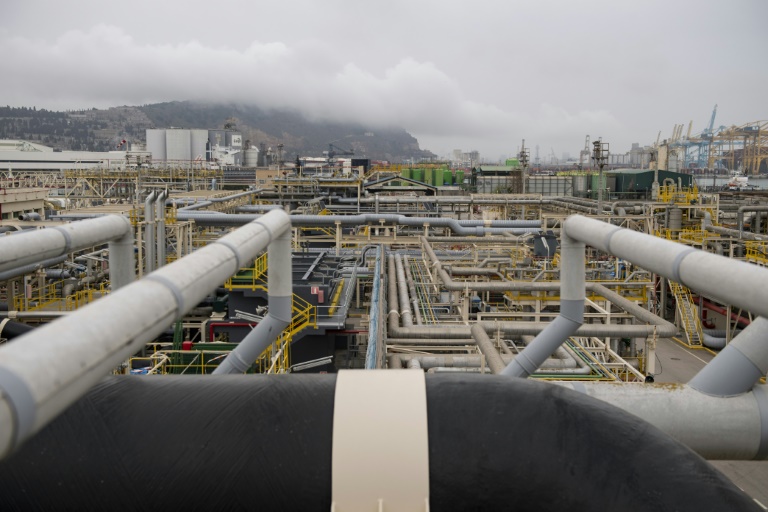
As crisis bites, Spain pushes to become EU energy hub

With Europe facing a major energy crisis, Spain wants to become the new gateway for gas through an ambitious trans-Pyrenees pipeline and is hoping supply-starved Germany will pressure a reluctant France.

Madrid has long been hoping for the revival of plans to build a pipeline connecting the Iberian Peninsula via France to central Europe, which was abandoned in 2019 over regulatory and funding issues. 

But Russia’s war on Ukraine and its reduction of gas deliveries to Europe has revived interest in the project, notably from Germany, with Chancellor Olaf Scholz saying such a pipeline could make “a massive contribution” to easing the supply crisis.

He has invited Spain’s Pedro Sanchez for talks on Tuesday with energy likely to be a key issue.

Beyond the gas crisis, Spain is hoping that improving its connectivity with the rest of Europe will open the way for it to become the European Union’s new hub for green hydrogen — a key energy source of the future.

And for that, a pipeline across the Pyrenees would be crucial. 

– France obstacles –

In 2013, work began on the so-called MidCat project, a pipeline linking Spain’s northeastern region of Catalonia to the south of France through the Pyrenees, aimed at connecting Spain and Portugal to central Europe’s gas network.

Six years later it was dropped by regulators in France and Spain over its environmental impact and lack of economic viability.

And despite the current energy crisis, France has been decidedly unenthusiastic about reviving the project.

But that has done little to cool the ardour of the Spanish premier, who is determined it will go ahead — even if it means resorting to “plan B”: building an underwater connection to Italy, he said in Bogota last week.

Ecology Minister Teresa Ribera told Antena 3 television last week the Italian alternative was being studied, but admitted it would be best to go for “the easiest option… across the Pyrenees”, saying such a pipeline “could be operational by late 2023 or early 2024”.

“It’s not a bilateral issue between Spain and France,” added Ribera in an interview published Monday in Spanish daily El Mundo. 

“It’s about the European project. I wonder where is France’s European ideal.”

Germany is already onboard. 

“I have been very active in talks with… the French president and the president of the European Commission in advocating that we take on such a project,” Scholz said on August 11.

It could make “a massive contribution” to easing the supply crisis, he added.

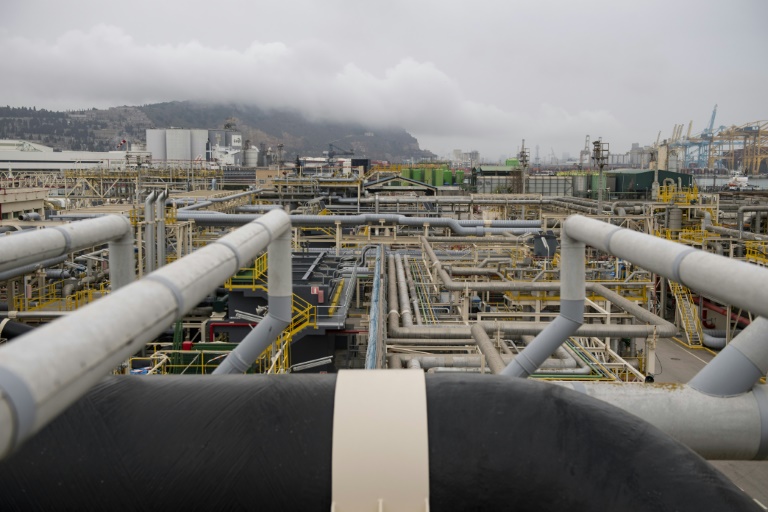
Spain has six liquefied natural gas (LNG) terminals for converting deliveries made by sea into gas, making it the country with the biggest regasification capacity in the EU. 

Portugal also has a plant, meaning the Iberian peninsula has the capacity to become a hub for gas shipped in from the United States while the transition to renewable energies is being completed. 

– Hydrogen hub –

Spain and Portugal want the EU to foot the bill for building such a connection, estimated at some 440 million euros ($440 million). 

Such a pipeline could never be ready in time to ease the anticipated shortages this winter, but could be a key conduit for exporting green hydrogen, an area in which Spain is already taking a lead. 

Green hydrogen is produced by passing an electric current through water to split it between hydrogen and oxygen, a process called electrolysis. It is considered green because the electricity comes from renewable energy sources that don’t create harmful emissions.

When fossil fuels burn, they emit harmful greenhouse gases, but hydrogen only emits harmless water vapour.

“Spain is going to become the world’s leading hub for the transport of green hydrogen which is the future of the European economy,” Josep Sanchez Llibre, head of Catalonia’s Foment del Treball business confederation, told Spain’s public television this month.

Visiting Paris last week, Felix Bolanos, a cabinet minister and close ally of the Spanish premier, said MidCat was “a long-term project”.

“The idea is that over the medium- to long-term, it will be able to transport green hydrogen as well as blue hydrogen,” he said.

Blue hydrogen is produced by using methane in natural gas. 

“Spain must take the lead in making us the great European and global gas and hydrogen interconnection,” said Sanchez Llibre. 
As crisis bites, Spain pushes to become EU energy hub

With Europe facing a major energy crisis, Spain wants to become the new gateway for gas through an ambitious trans-Pyrenees pipeline and is hoping supply-starved Germany will pressure a reluctant France.

Madrid has long been hoping for the revival of plans to build a pipeline connecting the Iberian Peninsula via France to central Europe, which was abandoned in 2019 over regulatory and funding issues. 

But Russia’s war on Ukraine and its reduction of gas deliveries to Europe has revived interest in the project, notably from Germany, with Chancellor Olaf Scholz saying such a pipeline could make “a massive contribution” to easing the supply crisis.

He has invited Spain’s Pedro Sanchez for talks on Tuesday with energy likely to be a key issue.

Beyond the gas crisis, Spain is hoping that improving its connectivity with the rest of Europe will open the way for it to become the European Union’s new hub for green hydrogen — a key energy source of the future.

And for that, a pipeline across the Pyrenees would be crucial. 

– France obstacles –

In 2013, work began on the so-called MidCat project, a pipeline linking Spain’s northeastern region of Catalonia to the south of France through the Pyrenees, aimed at connecting Spain and Portugal to central Europe’s gas network.

Six years later it was dropped by regulators in France and Spain over its environmental impact and lack of economic viability.

And despite the current energy crisis, France has been decidedly unenthusiastic about reviving the project.

But that has done little to cool the ardour of the Spanish premier, who is determined it will go ahead — even if it means resorting to “plan B”: building an underwater connection to Italy, he said in Bogota last week.

Ecology Minister Teresa Ribera told Antena 3 television last week the Italian alternative was being studied, but admitted it would be best to go for “the easiest option… across the Pyrenees”, saying such a pipeline “could be operational by late 2023 or early 2024”.

“It’s not a bilateral issue between Spain and France,” added Ribera in an interview published Monday in Spanish daily El Mundo. 

“It’s about the European project. I wonder where is France’s European ideal.”

Germany is already onboard. 

“I have been very active in talks with… the French president and the president of the European Commission in advocating that we take on such a project,” Scholz said on August 11.

It could make “a massive contribution” to easing the supply crisis, he added.

Spain has six liquefied natural gas (LNG) terminals for converting deliveries made by sea into gas, making it the country with the biggest regasification capacity in the EU. 

Portugal also has a plant, meaning the Iberian peninsula has the capacity to become a hub for gas shipped in from the United States while the transition to renewable energies is being completed. 

– Hydrogen hub –

Spain and Portugal want the EU to foot the bill for building such a connection, estimated at some 440 million euros ($440 million). 

Such a pipeline could never be ready in time to ease the anticipated shortages this winter, but could be a key conduit for exporting green hydrogen, an area in which Spain is already taking a lead. 

Green hydrogen is produced by passing an electric current through water to split it between hydrogen and oxygen, a process called electrolysis. It is considered green because the electricity comes from renewable energy sources that don’t create harmful emissions.

When fossil fuels burn, they emit harmful greenhouse gases, but hydrogen only emits harmless water vapour.

“Spain is going to become the world’s leading hub for the transport of green hydrogen which is the future of the European economy,” Josep Sanchez Llibre, head of Catalonia’s Foment del Treball business confederation, told Spain’s public television this month.

Visiting Paris last week, Felix Bolanos, a cabinet minister and close ally of the Spanish premier, said MidCat was “a long-term project”.

“The idea is that over the medium- to long-term, it will be able to transport green hydrogen as well as blue hydrogen,” he said.

Blue hydrogen is produced by using methane in natural gas. 

“Spain must take the lead in making us the great European and global gas and hydrogen interconnection,” said Sanchez Llibre. 

Elon Musk says the planet needs more oil … and babies

Billionaire tech entrepreneur Elon Musk, who has fathered 10 children, said on Monday the world needs to “make more babies” — and keep digging for oil.

The richest man on the planet, who has repeatedly warned that low birth rates posed a “danger” to civilization, said ahead of an energy conference in Norway that the world is facing a “baby crisis”.

Asked about the greatest challenges facing the world, Musk cited the transition to renewable energies but also said the birth rate was “one of my favourite… things to be concerned about.”

“We don’t want the population to drop so low that we’ll just eventually die,” Musk, founder of American electric car manufacturer Tesla and SpaceX, told reporters in Stavanger, southwest Norway.

“At least make enough babies to sustain the population,” he added.

Many Western societies and populated countries such as China are facing declining birth rates and ageing societies.

“They say civilization might die with a bang or with a whimper,” added Musk. “If we don’t have enough kids, then we will die with a whimper in adult diapers. And that will be depressing.”

He also said the planet still needed new fossil fuel sources.

“I think realistically we do need to use oil and gas in the short term, because otherwise civilization would crumble,”  he said, adding that “some additional exploration is warranted at this time”.

Musk, who has been divorced three times, is the father of 10 children, one of whom died at 10 weeks old.

Earlier this year one of his children, who recently turned 18, filed a petition in a California court to change her name and gender identity to female.

Court documents said that she did not want “to be related to my biological father in any way, shape or form” as one of the reasons for the name change.

Musk also has two children with the musician Grimes, a girl they named Exa Dark Sideræl Musk — although the parents said they will mostly call her Y — and a boy born in May 2020 called “X Æ A-12”, or more simply, X.

Musk announced last fall that he was “semi-separated” from the singer. 

The American press recently revealed that he also had twins in November with an executive at Neuralink, Musk’s brain-implant maker, a few weeks before the birth of Exa Dark Sideræl Musk.

Pakistan floods: South Asia's monsoon explained

Floods in Pakistan have killed more than 1,000 people after what its climate change minister called a record unbroken cycle of monsoon rains with “8 weeks of non-stop torrents”.

AFP explains what the monsoon is, why it is so important and yet so dangerous, and how climate change and other man-made effects may be altering the vast life-giving but destructive annual weather system.

What is the South Asian monsoon?

The Southwest or the Asian Summer Monsoon is essentially a colossal sea breeze that brings South Asia 70-80 percent of its annual rainfall between June and September every year.

It occurs when summer heat warms the landmass of the subcontinent, causing the air to rise and sucking in cooler Indian Ocean winds which then produce enormous volumes of rain.

Why it is important?

The monsoon is vital for agriculture and therefore for the livelihoods of millions of farmers and for food security in the poor region of around two billion people.

But it brings destruction every year in landslides and floods. Melting glaciers add to the volume of water while unregulated construction in flood-prone areas exacerbates the damage.

Is it the same every year?

Despite being heavily studied, the monsoon is relatively poorly understood. Exactly where and when the rain will fall is hard to forecast and varies considerably.

This year, for example, while Pakistan has seen a deluge, eastern and northeastern India reportedly had the lowest amounts of July rainfall in 122 years.

What explains the variability?

Fluctuations are caused by changes in global atmospheric and oceanic conditions, such as the El Nino effect in the Pacific and a phenomenon called the Equatorial Indian Ocean Oscillation (EQUINOO) only discovered in 2002.

Other factors are thought to include local effects such as aerosols, clouds of dust blowing in from the Sahara desert, air pollution and even irrigation by farmers.

What about climate change?

India is getting hotter and in recent years has seen more cyclones but scientists are unclear on how exactly a warming planet is affecting the highly complex monsoon.

A study last year by the Potsdam Institute for Climate Impact Research (PIK) tracking monsoon shifts from the mid-20th century suggested that it was becoming stronger and more erratic.

Initially, aerosol pollution reflecting sunlight subdued rainfall, but from the 1980s the warming effects of greenhouse gases began to drive stronger and more volatile rainy seasons, the study said.

Do other studies bear this out?

Broadly yes. The Indian government’s first ever climate change assessment, released in 2020, said that overall monsoon precipitation fell around six percent from 1951 to 2015.

It said that there was an “emerging consensus” that this was down to aerosol pollution considerably offsetting the expected rise in rainfall from global warming.

With continued warming and lower aerosol emissions, it projected more rain and greater variability by the end of this century, together with “substantial increases” in daily precipitation extremes.

What will this mean for people?

India’s 2021 monsoon was a case in point: June rain was above normal, in July it fell, August was nearly a drought and in September precipitation returned with a vengeance.

Several hundred died in floods in Maharashtra in July and in Gujarat in September. The same month a cloudburst turned the streets of Hyderabad into raging rivers in just two hours.

But by October farmers in parts of northern and north-eastern India were reeling from drought while elsewhere the monsoon took longer than usual to withdraw.

“More chaos in the Indian monsoon rainfall will make it harder to adapt,” Anders Levermann from PIK and Columbia University told AFP last year.

Diamond magnate appeals Swiss bribery verdict

French-Israeli diamond magnate Beny Steinmetz was back in court in Switzerland on Monday to appeal his conviction in what has been described as the mining sector’s biggest-ever corruption case.

The 66-year-old businessman was convicted in January 2021 of setting up a complex financial web to pay bribes to ensure his company could obtain permits in Guinea’s southeastern Simandou region, which is estimated to contain the world’s biggest untapped deposits of iron ore.

He was sentenced by a Geneva court to five years in prison and also ordered to pay 50 million Swiss francs ($52 million) in compensation.

Steinmetz, wearing a dark blue suit, arrived at the court house as a free man. He has not begun serving his sentence, since he was issued a legal free-passage guarantee to attend the first trial, and was permitted to leave Switzerland after it ended. 

He has been issued another free-passage for the appeal, which is expected to last until September 7, with the verdict set to fall later.

Steinmetz maintained his innocence throughout the original trial and immediately appealed against the ruling, decrying it as a “big injustice”.

He changed his legal team for the appeal, and his new lead lawyer Daniel Kinzer presented an impassioned defence on Monday’s first day, detailing a long line of alleged missteps, errors and misunderstandings in the trial.

– ‘No bribes’ –

“I am confident the appeals court can be convinced,” he told AFP in an email before the hearings, adding a deeper look at the case revealed “a totally different picture than the one painted by the first verdict”.

“We expect that the tribunal recognises that Beny Steinmetz did not bribe anyone.”

During the first trial, Swiss prosecutors convinced the court that Steinmetz and two partners had bribed a wife of the then Guinean president Lansana Conte and others in order to win lucrative mining rights in Simandou.

The prosecutors said Steinmetz obtained the rights shortly before Conte died in 2008 after about $10 million was paid in bribes over a number of years.

Conte’s military dictatorship ordered global mining giant Rio Tinto to relinquish two concessions which were subsequently granted to Beny Steinmetz Group Resources (BSGR) for around $170 million in 2008.

Just 18 months later, BSGR sold 51 percent of its stake in the concession to Brazilian mining giant Vale for $2.5 billion.

But in 2013, Guinea’s first democratically-elected president Alpha Conde launched a review of permits allotted under Conte and later stripped the VBG consortium formed by BSGR and Vale of its permit.

– ‘Pact of corruption’ –

To secure the initial deal, prosecutors claimed Steinmetz and representatives in Guinea entered a “pact of corruption” with Conte and his fourth wife Mamadie Toure.

Toure, who has admitted to having received payments, has protected status in the United States as a state witness. 

Before the court, Kinzer decried that much of the prosecutor’s case relied on her testimony, despite no insight into the opaque US deal and that the defence had never been given access to her.

He asked for all her testimony to be deemed inadmissable.

“One cannot legitimately rely on prosecution witnesses who have secret agreements with law enforcement, whose testimony has not been fully disclosed and who were not cross-examined on trial,” he told AFP.

His co-counsel Christian Luscher highlighted significant concerns around the handling of the case by Claudio Mascotto, the prosecutor initially in charge of the investigation, suggesting he had struck a deal with another witness in the case, and asking that he be questioned in court.

Steinmetz’s team also rejects the narrative that corruption was behind the transfer of mining rights from Rio Tinto to BSGR, insisting that Rio Tinto had lost half of its concessions for failing to develop them, in line with Guinea’s mining laws.

“The mining rights were withdrawn from a competitor because it was hoarding them and then awarded to BSGR on the basis of a solid and convincing business case, with no need to bribe a public official,” Kinzer told AFP.

Heatwave-hit Chinese province resumes power to factories

The southwestern Chinese province of Sichuan downgraded emergency energy supply measures on Monday, restoring power to some factories after weeks of rolling blackouts due to a heatwave-induced shortage.

Parts of Sichuan province and neighbouring Chongqing saw rainfall and lower temperatures beginning Sunday, after weeks of record temperatures higher than 40 Celsius (104 Fahrenheit) and a crippling drought that strained hydropower generators throughout the region.

“Reservoir water levels are gradually increasing and the power supply capacity has improved,” the Sichuan government announced Monday, adding that the power supply crisis had been “alleviated to a certain extent”.

The provincial emergency energy supply response was downgraded from the highest level starting Monday, the notice said, allowing power to be gradually restored to factories.

The region is home to major auto manufacturers, including Toyota in Sichuan and Honda in Chongqing, which said they resumed operations Monday. Apple iPhone manufacturer Foxconn also restarted work at its Sichuan plant, Nikkei reported.

State broadcaster CCTV reported Sunday that the “general industrial and commercial power consumption in Sichuan province has been fully restored”, adding that energy-intensive industries would resume production once hydropower reservoir levels rose further.

The lower temperatures have also lessened electricity demand from households, whose use of air conditioners had increased during the heatwave.

Authorities have forecast intense rains in the region for the next ten days, with the China Meteorological Association on Sunday issuing an orange alert for mountain torrents in Sichuan and Shaanxi provinces.

Southern China has recorded its longest continuous period of high temperatures since records began more than 60 years ago, forcing power cuts that have hit the agricultural sector particularly hard.

Power shortages also forced malls in parts of Sichuan and Chongqing to shorten their opening hours, while landscape and subway lighting was switched off and some households experienced rolling blackouts. 

IAEA chief taking team to Ukraine's Zaporizhzhia nuclear plant

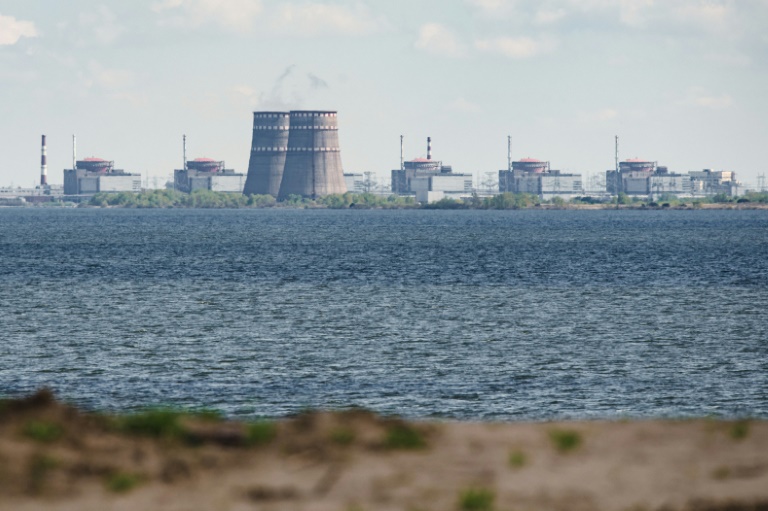
International Atomic Energy Agency chief Rafael Grossi said on Monday he was en route to inspect Ukraine’s Zaporizhzhia nuclear plant, which has been targeted by fresh shelling over the past day, according to its operator.

The Zaporizhzhia plant — Europe’s largest atomic facility — has been occupied by Russian troops since the start of the war.

Moscow and Kyiv are trading blame for shelling around the complex of six Soviet-designed nuclear reactors in the city of Energodar, in southern Ukraine.

Last week the plant was briefly cut off from the national grid for the first time in its four-decade history owing to Russian shelling of the last working power line, Ukrainian President Volodymyr Zelensky said.

Over the weekend, Ukrainian nuclear agency Energoatom, which operates the plant, warned of the risk of a radiation leak.

Nevertheless, “during the last day, the Russian military continued to fire at Energodar and the site of the Zaporizhzhia nuclear power plant”, the agency said on Monday morning.

Ten people were injured, including four plant workers, and as of 10:00 am (0700 GMT) the plant “operates with the risk of violating radiation and fire safety standards”, Energoatom said on Telegram.

“The occupiers, preparing for the arrival of the IAEA mission, increased pressure on the personnel of the plant to prevent them from disclosing evidence of the occupiers’ crimes at the plant and its use as a military base,” it added. 

– Long-awaited visit –

The International Atomic Energy Agency (IAEA) has for months been asking to visit the site, warning of “the very real risk of a nuclear disaster”.

On Monday Grossi said “the day has come” and that an IAEA support and assistance mission is “now on its way”.

On Twitter the IAEA director general said the team from the UN nuclear watchdog would arrive at the power plant “later this week”.

In a photograph accompanying his tweet, Grossi posed with a team of 13 people wearing caps and sleeveless jackets bearing the IAEA logo.

The United Nations has called for an end to all military activity in the area surrounding the complex.

Ukraine initially feared an IAEA visit would legitimise the Russian occupation of the site before finally supporting the idea of a mission.

The G7 industrial powers on Monday demanded access “without impediment” for the IAEA team.

They must be allowed to “engage directly, and without interference, with the Ukrainian personnel responsible for operating these facilities”, the G7 Non-Proliferation Directors Group said in a statement.

But Ukraine’s foreign minister, Dmytro Kuleba, said in Stockholm: “This mission will be the hardest in the history of the IAEA, given the active combat activities undertaken by the Russian federation on the ground and also the very blatant way that Russia is trying to legitimise its presence”.

Last week the advisor to the Ukrainian energy minister said she was sceptical the team would even reach the plant.

Advisor Lana Zerkal told Ukraine’s Radio NV that Russia was “artificially creating all the conditions so that the mission will not reach the site”, despite formally agreeing to the inspection.

Ukraine was the site of the world’s worst nuclear catastrophe in 1986, when a reactor at the northern Chernobyl plant exploded and spewed radiation into the atmosphere.

Experts say any leak at Zaporizhzhia would more likely be on the scale of the 2011 Fukushima disaster in Japan.

Energoatom warned on Monday that any leak would scatter radiation over swathes of southern Ukraine and south-western regions of Russia.

– Counter-accusations –

Kyiv suspects Moscow intends to divert power from the Zaporizhzhia plant to the Crimean Peninsula, annexed by Russia in 2014.

But Russia insists Ukraine is responsible for shelling around the complex.

Russia’s defence ministry said on Saturday that Ukrainian forces had “shelled the territory of the station three times” from the town of Marganets across the Dnipro River.

The ministry accused Kyiv of “nuclear terrorism” and said shells had landed near areas storing fresh nuclear fuel and radioactive waste.

Radiation levels at the plant “remain normal”, it said. 

But residents in the Ukraine-held areas around the plant are being equipped with iodine pills to reduce the medical risk of radiation in the event of a disaster.

Tens of millions battle Pakistan floods as death toll rises

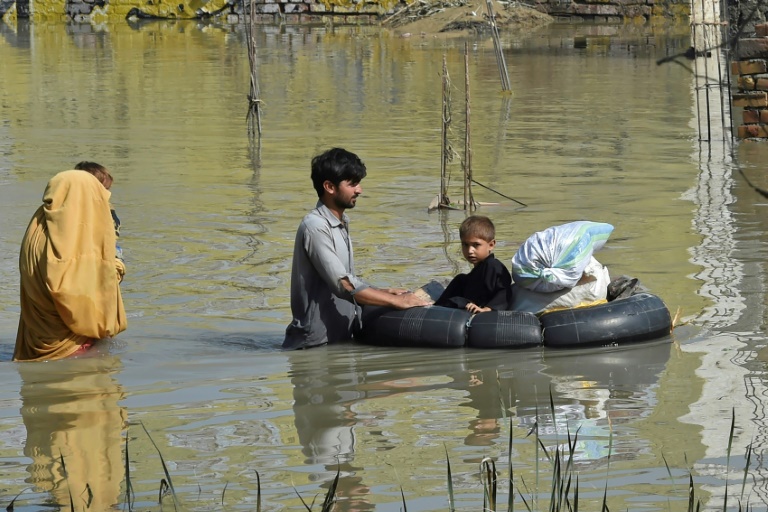
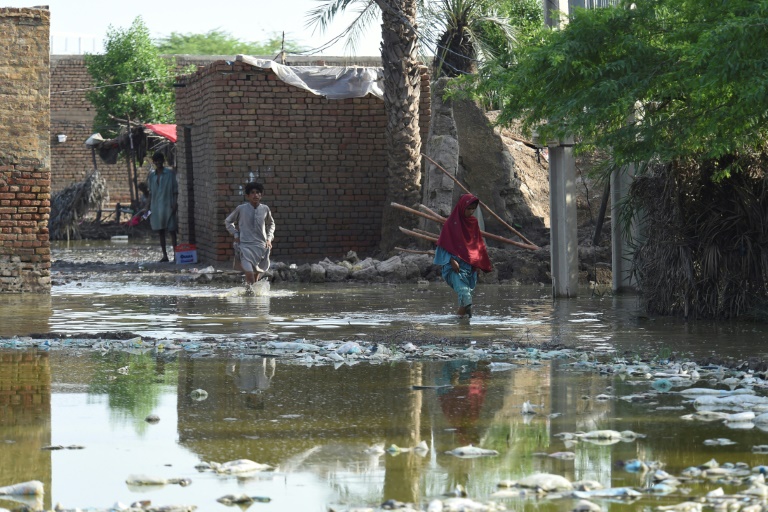
Tens of millions of people across swathes of Pakistan were Monday battling the worst monsoon floods in a decade, with countless homes washed away, vital farmland destroyed, and the country’s main river threatening to burst its banks.

Officials say 1,061 people have died since June when the seasonal rains began, but the final toll could be higher as hundreds of villages in the mountainous north have been cut off after flood-swollen rivers washed away roads and bridges.

The annual monsoon is essential for irrigating crops and replenishing lakes and dams across the Indian subcontinent, but it can also bring destruction.

This year’s flooding has affected more than 33 million people — one in seven Pakistanis — said the National Disaster Management Authority.

“What we see now is an ocean of water submerging entire districts,” Climate Minister Sherry Rehman told AFP Monday.

“This is very far from a normal monsoon — it is climate dystopia at our doorstep.”

This year’s floods are comparable to those of 2010 — the worst on record — when more than 2,000 people died and nearly a fifth of the country was under water.

Prime Minister Shehbaz Sharif, on a tour of the north to oversee relief operations, said the monsoon rains were “unprecedented in the last 30 years”.

Near Sukkur, a city in southern Sindh province and home to an ageing colonial-era barrage on the Indus River that is vital to preventing further catastrophe, one farmer lamented the devastation wrought on his rice fields.

Millions of acres of rich farmland have been flooded by weeks of non-stop rain, but now the Indus is threatening to burst its banks as torrents of water course downstream from tributaries in the north.

“Our crop spanned over 5,000 acres on which the best quality rice was sown and is eaten by you and us,” Khalil Ahmed, 70, told AFP.

“All that is finished.”

– Landscape of water –

Much of Sindh is now an endless landscape of water, hampering a massive military-led relief operation.

“There are no landing strips or approaches available… our pilots find it difficult to land,” one senior officer told AFP.

The army’s helicopters were also struggling to pluck people to safety in the north, where soaring mountains and deep valleys make for treacherous flying conditions.

Many rivers in Khyber Pakhtunkhwa province — which boasts some of Pakistan’s best tourist spots — have burst their banks, demolishing scores of buildings including a 150-room hotel that crumbled into a raging torrent.

The government has declared an emergency and appealed for international help, and on Sunday the first aid flights began arriving — from Turkey and the UAE.

It could not have come at a worse time for Pakistan, where the economy is in free fall.

In Washington later Monday, the International Monetary Fund executive board was scheduled to meet to decide whether to green-light the resumption of a $6 billion loan programme essential for the country to service its foreign debt, but it is already clear the country will need more to repair and rebuild after this monsoon.

Prices of basic goods — particularly onions, tomatoes and chickpeas — are soaring as vendors bemoan a lack of supplies from the flooded breadbasket provinces of Sindh and Punjab.

The met office said the country as a whole had received twice the usual monsoon rainfall, but Balochistan and Sindh had more than four times the average of the last three decades.

Padidan, a small town in Sindh, was drenched by more than 1.2 metres (47 inches) of rain since June, making it the wettest place in the country.

– More arriving daily –

Across Sindh, thousands of displaced people are camped alongside elevated highways and railway tracks — often the only dry spots as far as the eye can see.

More are arriving daily at Sukkur’s city ring road, belongings piled on boats and tractor trollies, looking for shelter until the floodwaters recede.

Sukkur Barrage supervisor Aziz Soomro told AFP the main headway of water was expected to arrive around September 5, but was confident the 90-year-old sluice gates would cope.

The barrage diverts water from the Indus into 10,000 km of canals that make up one of the world’s biggest irrigation schemes, but the farms it supplies are now mostly under water.

The only bright spark was the latest weather report.

“Dry weather is forecasted for this week and there is no chance of significant rains,” said met office spokesman Zaheer Ahmed Babar.

NASA shoots for the Moon, on its way to Mars

NASA’s most powerful rocket yet is set to blast off Monday on the maiden voyage of a mission to take humans back to the Moon, and eventually to Mars.

Fifty years after the last time astronauts set foot on the moon in 1972 as part of the Apollo 17 mission, the space program called Artemis is to get under way with the blast off of the uncrewed 322-foot (98-meter) Space Launch System (SLS) rocket at 8:33 am (1233 GMT) from the Kennedy Space Center in Florida.

Tens of thousands of people — including US Vice President Kamala Harris — are expected to gather along the beach to watch the launch, which has been decades in the making.

Hotels around Cape Canaveral are booked solid with between 100,000 and 200,000 spectators expected to attend the launch.

The goal of the flight, dubbed Artemis 1, is to test the SLS and the Orion crew capsule that sits atop the rocket.

The capsule will orbit the Moon to see if the vessel is safe for people in the near future. At some point, Artemis will see a woman and a person of color walk on the Moon for the first time.

“This mission goes with a lot of hopes and dreams of a lot of people. And we now are the Artemis generation,” NASA administrator Bill Nelson said Saturday.

The massive orange-and-white rocket has been sitting on the space center’s Launch Complex 39B for more than a week.

Its fuel tanks began to be filled overnight Sunday to Monday, with NASA’s Exploration Ground Systems tweeting that they have been given a “go” for tanking. 

But there was a brief delay of about an hour because of a high risk of lightning when the fueling operations were set to begin.

The process will continue for several hours, until the rocket is filled with more than three million liters of liquid hydrogen and oxygen. 

NASA said there is an 80 percent chance of acceptable weather for a liftoff on time at the beginning of a launch window lasting two hours.

For the first time a woman — Charlie Blackwell-Thompson — will give the final green light for liftoff. 

Women now account for 30 percent of the staff in the control room; there was just one for the Apollo 11 mission, the first time astronauts landed on the moon in 1969.

Cameras will capture every moment of the 42-day trip, including a picture of the spacecraft with the Moon and Earth in the background.

The Orion capsule will orbit around the Moon, coming within 60 miles (100 kilometers) at its closest approach and then firing its engines to get to a distance 40,000 miles beyond, a record for a spacecraft rated to carry humans.

– Extreme temperatures –

Besides the weather, any kind of technical snafu could delay the liftoff at the last minute, NASA officials have said, stressing that this is a test flight.

If the rocket is unable to take off on Monday, September 2 and 5 have been penciled in as alternative flight dates.

One of the primary objectives of the mission is to test the capsule’s heat shield, which at 16 feet in diameter is the largest ever built.

On its return to the Earth’s atmosphere, the heat shield will have to withstand a speed of 25,000 miles per hour and a temperature of 5,000 degrees Fahrenheit (2,760 degrees Celsius). That is half as hot as the Sun.

Dummies fitted with sensors will take the place of real crew members, recording acceleration, vibration and radiation levels.

The craft will deploy small satellites to study the lunar surface.

A complete failure would be devastating for a program that is costing $4.1 billion per launch and is already running years behind schedule.

– Life on the Moon –

Monday’s launch is “not a near-term sprint, but a long-term marathon to bring the solar system and beyond into our sphere,” said Bhavya Lal, NASA associate administrator for technology, policy and strategy.

The next mission, Artemis 2, will take astronauts into orbit around the Moon without landing on its surface. The crew of Artemis 3 is to land on the Moon in 2025 at the earliest.

And since humans have already visited the Moon, Artemis has its sights set on another lofty goal — an eventual crewed mission to Mars.

The Artemis program is to establish a lasting human presence on the Moon with an orbiting space station known as Gateway and a base on the surface.

Gateway would serve as a staging and refueling station for a voyage to Mars that would take a minimum of several months.

NASA shoots for the Moon, on its way to Mars

NASA’s most powerful rocket yet is set to blast off Monday on the maiden voyage of a mission to take humans back to the Moon, and eventually to Mars.

Fifty years after the last time astronauts set foot on the moon in 1972 as part of the Apollo 17 mission, the space program called Artemis is to get under way with the blast off of the uncrewed 322-foot (98-meter) Space Launch System (SLS) rocket at 8:33 am (1233 GMT) from the Kennedy Space Center in Florida.

Tens of thousands of people — including US Vice President Kamala Harris — are expected to gather along the beach to watch the launch, which has been decades in the making.

Hotels around Cape Canaveral are booked solid with between 100,000 and 200,000 spectators expected to attend the launch.

The goal of the flight, dubbed Artemis 1, is to test the SLS and the Orion crew capsule that sits atop the rocket.

The capsule will orbit the Moon to see if the vessel is safe for people in the near future. At some point, Artemis will see a woman and a person of color walk on the Moon for the first time.

“This mission goes with a lot of hopes and dreams of a lot of people. And we now are the Artemis generation,” NASA administrator Bill Nelson said Saturday.

The massive orange-and-white rocket has been sitting on the space center’s Launch Complex 39B for more than a week.

Its fuel tanks began to be filled overnight Sunday to Monday, with NASA’s Exploration Ground Systems tweeting that they have been given a “go” for tanking. 

But there was a brief delay of about an hour because of a high risk of lightning when the fueling operations were set to begin.

The process will continue for several hours, until the rocket is filled with more than three million liters of liquid hydrogen and oxygen. 

NASA said there is an 80 percent chance of acceptable weather for a liftoff on time at the beginning of a launch window lasting two hours.

For the first time a woman — Charlie Blackwell-Thompson — will give the final green light for liftoff. 

Women now account for 30 percent of the staff in the control room; there was just one for the Apollo 11 mission, the first time astronauts landed on the moon in 1969.

Cameras will capture every moment of the 42-day trip, including a picture of the spacecraft with the Moon and Earth in the background.

The Orion capsule will orbit around the Moon, coming within 60 miles (100 kilometers) at its closest approach and then firing its engines to get to a distance 40,000 miles beyond, a record for a spacecraft rated to carry humans.

– Extreme temperatures –

Besides the weather, any kind of technical snafu could delay the liftoff at the last minute, NASA officials have said, stressing that this is a test flight.

If the rocket is unable to take off on Monday, September 2 and 5 have been penciled in as alternative flight dates.

One of the primary objectives of the mission is to test the capsule’s heat shield, which at 16 feet in diameter is the largest ever built.

On its return to the Earth’s atmosphere, the heat shield will have to withstand a speed of 25,000 miles per hour and a temperature of 5,000 degrees Fahrenheit (2,760 degrees Celsius). That is half as hot as the Sun.

Dummies fitted with sensors will take the place of real crew members, recording acceleration, vibration and radiation levels.

The craft will deploy small satellites to study the lunar surface.

A complete failure would be devastating for a program that is costing $4.1 billion per launch and is already running years behind schedule.

– Life on the Moon –

Monday’s launch is “not a near-term sprint, but a long-term marathon to bring the solar system and beyond into our sphere,” said Bhavya Lal, NASA associate administrator for technology, policy and strategy.

The next mission, Artemis 2, will take astronauts into orbit around the Moon without landing on its surface. The crew of Artemis 3 is to land on the Moon in 2025 at the earliest.

And since humans have already visited the Moon, Artemis has its sights set on another lofty goal — an eventual crewed mission to Mars.

The Artemis program is to establish a lasting human presence on the Moon with an orbiting space station known as Gateway and a base on the surface.

Gateway would serve as a staging and refueling station for a voyage to Mars that would take a minimum of several months.

Close Bitnami banner
Bitnami