AFP

Honda, LG to invest $4.4 bn in US battery plant

Japanese auto giant Honda and South Korean battery maker LG Energy Solution announced a joint venture Monday to invest $4.4 billion in a new US electric car battery plant.

The move comes after California last week ruled that all new cars sold in America’s most populous state must be zero-emission from 2035, with other US states expected to follow suit.

In a joint statement, the firms said they expected construction of the plant to begin next year, aiming for “mass production of advanced lithium-ion battery cells by the end of 2025”.

The tie-up was decided “based on the shared belief that expanding local electric vehicle production and ensuring the timely supply of batteries would put them in the best position to target the rapidly-growing North American EV market”, the companies added.

Last month, Japanese electronics giant and Tesla supplier Panasonic announced its own $4 billion investment to build a new battery factory in the United States for electric vehicles.

Panasonic CEO Kazuo Tadanobu said the new plant, the company’s second electric battery operation in the United States, was “critical to help meet demand”.

Earlier this year, Honda said it planned to invest nearly $40 billion in electric vehicle technology over the next decade as it works towards switching all sales away from traditional fuel cars.

It wants to launch 30 EV models by 2030, with an annual production volume of more than two million units, and aim to have electric and fuel cell vehicles account for 100 percent of all sales by 2040.

The success of Elon Musk’s Tesla, built solely on electric vehicles, and growing government pressure to move away from cars with combustion engines, are pushing traditional automakers to speed up the transition to electric.

Washington state’s governor has backed a move similar to California, while the European Union has taken steps to ban the sale of gas- or diesel-fuelled cars — and even hybrids — by 2035.

China wants at least half of all new cars to be electric, plug-in hybrid or hydrogen-powered by that time.

Honda, LG to invest $4.4 bn in US battery plant

Japanese auto giant Honda and South Korean battery maker LG Energy Solution announced a joint venture Monday to invest $4.4 billion in a new US electric car battery plant.

The move comes after California last week ruled that all new cars sold in America’s most populous state must be zero-emission from 2035, with other US states expected to follow suit.

In a joint statement, the firms said they expected construction of the plant to begin next year, aiming for “mass production of advanced lithium-ion battery cells by the end of 2025”.

The tie-up was decided “based on the shared belief that expanding local electric vehicle production and ensuring the timely supply of batteries would put them in the best position to target the rapidly-growing North American EV market”, the companies added.

Last month, Japanese electronics giant and Tesla supplier Panasonic announced its own $4 billion investment to build a new battery factory in the United States for electric vehicles.

Panasonic CEO Kazuo Tadanobu said the new plant, the company’s second electric battery operation in the United States, was “critical to help meet demand”.

Earlier this year, Honda said it planned to invest nearly $40 billion in electric vehicle technology over the next decade as it works towards switching all sales away from traditional fuel cars.

It wants to launch 30 EV models by 2030, with an annual production volume of more than two million units, and aim to have electric and fuel cell vehicles account for 100 percent of all sales by 2040.

The success of Elon Musk’s Tesla, built solely on electric vehicles, and growing government pressure to move away from cars with combustion engines, are pushing traditional automakers to speed up the transition to electric.

Washington state’s governor has backed a move similar to California, while the European Union has taken steps to ban the sale of gas- or diesel-fuelled cars — and even hybrids — by 2035.

China wants at least half of all new cars to be electric, plug-in hybrid or hydrogen-powered by that time.

Asian, European markets tumble after Powell's rates warning

Markets sank Monday and the dollar rallied after Fed boss Jerome Powell warned of more interest rate hikes to fight inflation and poured cold water on the prospects of a cut in the new year.

The hefty selling tracked a painful day on Wall Street, where all three main indexes tanked between three and four percent as investors contemplated an extended period of monetary tightening.

In a much-anticipated speech to global finance chiefs Friday, Federal Reserve Chair Powell said his priority was bringing inflation down from four-decade highs, even at the expense of economic growth, adding that failure to act now would cause more pain later.

“Restoring price stability will take some time and requires using our tools forcefully to bring demand and supply into better balance,” he told the symposium at Jackson Hole, Wyoming.

The comments dealt a blow to markets, which had in recent weeks enjoyed a bounce from June lows as weak economic data and a slowdown in price rises fanned hopes the Fed would temper its interest rate hike drive.

Analysts said the chances of a third successive 75 basis-point increase next month had risen, with US Treasury yields — a gauge of future interest rates — surging.

“The game of assessing the Fed outlook has shifted from guessing how high the peak rate might be to also understanding how long it might stay there for,” Yanxi Tan, of Malayan Banking, said.

In Asian trade, investors ran for the hills as they contemplated an era of high borrowing costs with Charles Schwab & Co’s Liz Ann Sonders saying that once the Fed gets to “whatever the final hike is, they’re going to stay there for a while”.

“The market had trouble digesting that,” she told Bloomberg Television.

Tokyo, Hong Kong, Sydney, Seoul, Mumbai, Taipei, Singapore, Manila, Bangkok, Jakarta and Wellington were all well down, though Shanghai eked out a small gain.

Paris and Frankfurt were sharply lower in the morning. London was closed for a holiday.

The dollar jumped against its major peers, closing in on the 140 yen mark not seen since 1998, while an energy crisis in Europe kept the euro depressed.

Still, oil prices extended gains as talk that surging interest rates could choke off the economic recovery was not enough to offset supply concerns.

The commodity has fallen in recent weeks on bets that demand will be hit by an expected drop in economic output, particularly from China as it continues to battle a Covid-19 outbreak with lockdowns.

But fresh unrest in Libya, warnings that an Iran nuclear deal was not imminent and a possible OPEC output cut kept prices elevated.


– Key figures at around 0810 GMT –

Tokyo – Nikkei 225: DOWN 2.7 percent at 27,878.96 (close)

Hong Kong – Hang Seng Index: DOWN 0.7 percent at 20,023.22 (close)

Shanghai – Composite: UP 0.1 percent at 3,240.73 (close)

Dollar/yen: UP at 138.72 yen from 137.38 yen Friday

Euro/dollar: DOWN at $0.9941 from $0.9964

Pound/dollar: DOWN at $1.1672 from $1.1743

Euro/pound: UP at 85.17 pence from 84.85 pence

West Texas Intermediate: UP 1.1 percent at $94.06 per barrel

Brent North Sea crude: UP 0.8 percent at $101.81

New York – Dow: DOWN 3.0 percent at 32,283.4 points (close)

London – FTSE 100: Closed for a holiday

Asian, European markets tumble after Powell's rates warning

Markets sank Monday and the dollar rallied after Fed boss Jerome Powell warned of more interest rate hikes to fight inflation and poured cold water on the prospects of a cut in the new year.

The hefty selling tracked a painful day on Wall Street, where all three main indexes tanked between three and four percent as investors contemplated an extended period of monetary tightening.

In a much-anticipated speech to global finance chiefs Friday, Federal Reserve Chair Powell said his priority was bringing inflation down from four-decade highs, even at the expense of economic growth, adding that failure to act now would cause more pain later.

“Restoring price stability will take some time and requires using our tools forcefully to bring demand and supply into better balance,” he told the symposium at Jackson Hole, Wyoming.

The comments dealt a blow to markets, which had in recent weeks enjoyed a bounce from June lows as weak economic data and a slowdown in price rises fanned hopes the Fed would temper its interest rate hike drive.

Analysts said the chances of a third successive 75 basis-point increase next month had risen, with US Treasury yields — a gauge of future interest rates — surging.

“The game of assessing the Fed outlook has shifted from guessing how high the peak rate might be to also understanding how long it might stay there for,” Yanxi Tan, of Malayan Banking, said.

In Asian trade, investors ran for the hills as they contemplated an era of high borrowing costs with Charles Schwab & Co’s Liz Ann Sonders saying that once the Fed gets to “whatever the final hike is, they’re going to stay there for a while”.

“The market had trouble digesting that,” she told Bloomberg Television.

Tokyo, Hong Kong, Sydney, Seoul, Mumbai, Taipei, Singapore, Manila, Bangkok, Jakarta and Wellington were all well down, though Shanghai eked out a small gain.

Paris and Frankfurt were sharply lower in the morning. London was closed for a holiday.

The dollar jumped against its major peers, closing in on the 140 yen mark not seen since 1998, while an energy crisis in Europe kept the euro depressed.

Still, oil prices extended gains as talk that surging interest rates could choke off the economic recovery was not enough to offset supply concerns.

The commodity has fallen in recent weeks on bets that demand will be hit by an expected drop in economic output, particularly from China as it continues to battle a Covid-19 outbreak with lockdowns.

But fresh unrest in Libya, warnings that an Iran nuclear deal was not imminent and a possible OPEC output cut kept prices elevated.


– Key figures at around 0810 GMT –

Tokyo – Nikkei 225: DOWN 2.7 percent at 27,878.96 (close)

Hong Kong – Hang Seng Index: DOWN 0.7 percent at 20,023.22 (close)

Shanghai – Composite: UP 0.1 percent at 3,240.73 (close)

Dollar/yen: UP at 138.72 yen from 137.38 yen Friday

Euro/dollar: DOWN at $0.9941 from $0.9964

Pound/dollar: DOWN at $1.1672 from $1.1743

Euro/pound: UP at 85.17 pence from 84.85 pence

West Texas Intermediate: UP 1.1 percent at $94.06 per barrel

Brent North Sea crude: UP 0.8 percent at $101.81

New York – Dow: DOWN 3.0 percent at 32,283.4 points (close)

London – FTSE 100: Closed for a holiday

From bus routes to gutters, tech-savvy youth map Mali's capital

Under a blazing sun in Mali’s capital, Amadou Menta leant over to measure a gutter then jotted down the results on a mapping app on his smartphone.

“We’re collecting data,” said the 27-year-old geography student, helping to chart the roadside drains of central Bamako with two friends.

Until recently Mali’s capital was largely uncharted on the web.

With street names or fixed public transport routes often missing in the city of some two million, people tend to ask for directions to find their way.

But the lack of maps is a major obstacle to developing its infrastructure — whether to prevent traffic jams, collect wastewater and rubbish, or prevent flooding.

Tech-savvy young Malians are striving to change this, cataloguing the city’s features in the hope it will improve the lives of its residents.

Armed with smartphones, dozens of volunteers have been collecting data for the local branch of OpenStreetMap, a free, online geographic database — which is then used by sites including Google Maps.

Menta and fellow mappers have been charting the channels collecting waste and rainwater in Daoudabougou, a central district often hit by floods.

The gutter project is receiving financial support from the World Bank, and has been welcomed by the authorities.

But it’s just one of the avenues the group is exploring — and there is plenty more work to do.

Founder Nathalie Sidibe said there was previously “no freely available data in Mali”. 

“We saw mapping as a concrete way to contribute to developing the area,” she said.

“We need to change habits here — and to do that, we need to encourage people to use digital tools.”

– Data to ‘get ahead’ –

Mobile data access is still poor in Mali.

Countrywide, only one in 10 women is connected to mobile broadband, compared to one in five men, a World Bank report found last year.

But the OpenStreetMap Mali team has been busy.

So far, its volunteers have drawn up a map of Bamako’s public minibus routes, household waste collection points, and basic social services.

Adama Konate, deputy mayor in charge of sanitation, said the group’s efforts had helped Bamako.

“We only had basic knowledge before this project,” Konate said.

“Now we know that this place needs drainage, and that place needs a rubbish dump.”

Mahamadou Wadidie, director of the Regional Development Agency in Bamako, said the youth mapping project had made his job much easier.

On the agency’s website, he showed off a regularly updated map of all the health centres and schools in Bamako drawn up from OpenStreetMap data.

“Instead of taking two months to find out about these things, mayors can now get this information from their computer,” he said.

“Digitisation is allowing us to get ahead, to lose less time.”

Mali — an impoverished country with severe governance challenges that has been battling a decade-long jihadist insurgency — does not have many resources to devote to digitising data, he said.

But Menta and his young colleagues, he said, have shown it is possible to launch ambitious mapping projects “without spending a lot of money”.

Diamond magnate's appeal of Swiss bribery verdict opens

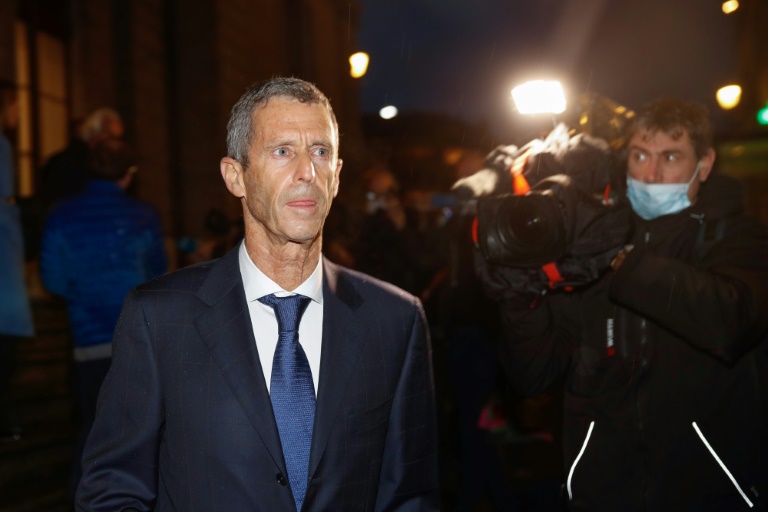
French-Israeli diamond magnate Beny Steinmetz will be back in court in Switzerland on Monday to appeal against a corruption verdict linked to mining rights in Guinea.

The 66-year-old businessman was convicted in January 2021 of setting up a complex financial web to pay bribes to ensure his company could obtain permits in an area estimated to contain the world’s biggest untapped deposits of iron ore.

He was sentenced by a Geneva court to five years in prison and also ordered to pay 50 million Swiss francs ($52 million) in compensation.

Steinmetz, who maintained his innocence throughout that trial, has changed his legal team for the appeal.

“We expect that the tribunal recognises that Beny Steinmetz did not bribe anyone,” his new lawyer Daniel Kinzer told AFP in an email. 

“I am confident the appeals court can be convinced,” he said, adding a deeper look at the case revealed “a totally different picture than the one painted by the first verdict”.

Far from being corrupt, Beny Steinmetz Group Resources (BSGR) had legitimately obtained the mining rights in question, and had striven in difficult and complex circumstances to set up an operation that would have benefited Guinea’s national interests, his team said.

– ‘Pact of corruption’ –

Swiss prosecutors however accuse Steinmetz and two partners of bribing a wife of the then Guinean president Lansana Conte and others in order to win mining rights in the southeastern Simandou region.

The prosecutors said Steinmetz obtained the rights shortly before Conte died in 2008 after about $10 million was paid in bribes over a number of years.

Conte’s military dictatorship ordered global mining giant Rio Tinto to relinquish two concessions to BSGR for around $170 million in 2008.

Just 18 months later, BSGR sold 51 percent of its stake in the concession to Brazilian mining giant Vale for $2.5 billion.

But in 2013, Guinea’s first democratically-elected president Alpha Conde launched a review of permits allotted under Conte and later stripped the VBG consortium formed by BSGR and Vale of its permit.

To secure the initial deal, prosecutors claimed Steinmetz and representatives in Guinea entered a “pact of corruption” with Conte and his fourth wife Mamadie Toure.

Toure, who has admitted to having received payments, has protected status in the United States as a state witness. 

– ‘No crystal ball’ –

She and several other key witnesses in the case failed to appear in the first trial, and Kinzer said he had “no crystal ball as to what they will do for the appeals trial”.

Steinmetz, who lived in Geneva during the years when the bribes were allegedly paid, continues to insist the bribery allegations are “totally false”, according to a document released by his team.

It stresses that Rio Tinto had lost the rights to half of its concessions in Simandou for failing to develop them, and BSGR later legitimately bid for and obtained exploration rights.

“The mining rights were withdrawn from a competitor because it was hoarding them and then awarded to BSGR on the basis of a solid and convincing business case with no need to bribe a public official,” Kinzer said.

Steinmetz, who was granted a legal free-passage guarantee in order to participate in the first trial, left Switzerland without serving his sentence.

He is back in Geneva to argue his case after receiving another free-passage.

The appeal hearings are due to last through September 7. The verdict will come at a later date.

'They made me feel like nothing': Britney Spears addresses conservatorship

Britney Spears on Sunday released a lengthy audio message concerning the controversial guardianship that kept her primarily under her father’s control for more than 13 years.

A Los Angeles judge in November 2021 dissolved the conservatorship long overseen by Spears’ father — an arrangement the singer said had prevented her from having a contraceptive IUD removed despite her desire for more kids.

The audio message was originally tweeted by Spears without comment but the link was then deleted. The 22 minutes of audio of Spears’ voice remain available online, however.

“I woke up this morning and I realized there’s a lot going on in my head that I haven’t shared with anyone,” Spears says in the raw, emotional recording.

She then details the conservatorship, echoing what she told a California court in a bombshell hearing last summer.

The now 40-year-old describes being forced to work and tour, and barred from seeing friends or driving her own car.

Spears says that her phone was tapped, and she felt unsafe asking for help.

“They made me feel like nothing, and I went along with it,” Spears says, describing being fat-shamed.

“It was demoralizing,” Spears says. 

“You also have to understand, it was like 15 years of touring and doing shows. And I’m 30 years old, living under my dad’s rules. And while all of this is going on, my mom’s witnessing this, my brother, my friends — they all go along with it.”

Spears rocketed to fame in her teens on hits like “…Baby One More Time,” becoming one of the world’s reigning pop stars.

But she suffered a highly publicized 2007 breakdown, which included attacking a paparazzo’s car at a gas station.

The conservatorship began in 2008. It didn’t formally end until November 2021, after the pop phenom’s father Jamie Spears was removed from his position in charge of her finances and estate at a hearing in September.

Since gaining her freedom, Spears has married her boyfriend Sam Asghari.

On Friday she released her first new music in six years, a duet with Elton John called “Hold Me Closer,” a dance-inflected take on John’s ballad “Tiny Dancer.”

IAEA chief leading team to Ukraine's Zaporizhzhia nuclear plant

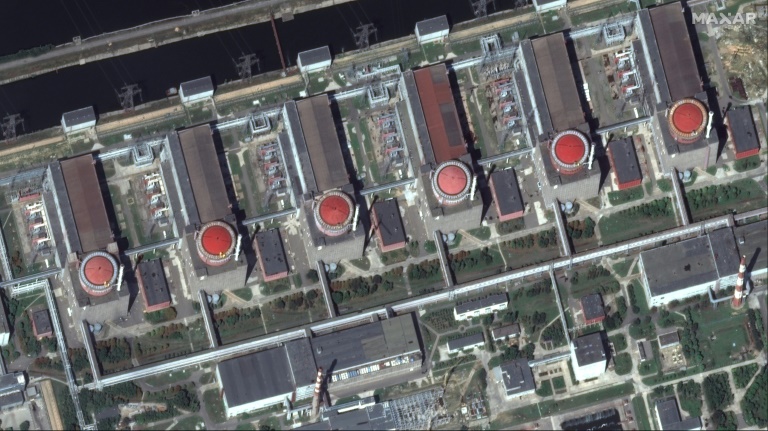
International Atomic Energy Agency chief Rafael Grossi said Monday he was on his way to Ukraine’s Zaporizhzhia nuclear plant, which has been the target of strikes in recent weeks.

“The day has come, IAEA’s Support and Assistance Mission to Zaporizhzhya is now on its way,” Grossi tweeted, saying the team from the UN atomic watchdog would arrive at Europe’s largest nuclear power plant “later this week”.

In a photograph accompanying his tweet, the IAEA chief posed with a team of 13 people wearing caps and sleeveless jackets bearing the nuclear watchdog’s logo.

Grossi has for months been asking to be able to visit the site, warning of “the very real risk of a nuclear disaster”.

The Zaporizhzhia plant, which has six of Ukraine’s reactors, has been occupied by Russian troops since shortly after Moscow launched its invasion on February 24, and has remained on the frontlines ever since.

Moscow and Kyiv have traded blame for shelling around the complex, near the city of Energodar.

Its Ukraine operator Energoatom warned on Saturday of the risk of radioactive leaks and fire after new strikes.

The United Nations has called for an end to all military activity in the area surrounding the complex.

Ukraine initially feared an IAEA visit would legitimise the Russian occupation of the site before finally supporting the idea of a mission.

Ukrainian President Volodymyr Zelensky on Friday urged the watchdog to send a team as soon as possible.

Between Thursday and Friday, the plant was cut off from Ukraine’s national power grid for the first time in its four-decade history due to “actions of the invaders”, Energoatom said.

It came back online Friday afternoon.

Russian President Vladimir Putin had agreed that a team of independent inspectors could travel to the Zaporizhzhia nuclear plant via Ukraine, the French presidency said on August 20 after a call with Emmanuel Macron.

Huge relief operation under way as Pakistan flood death toll rises

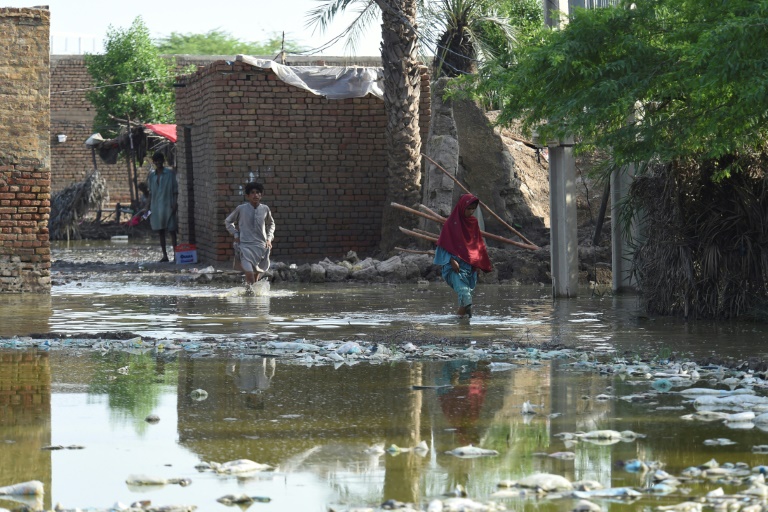
A huge relief operation was under way Monday and international aid began trickling in as Pakistan struggled to deal with monsoon flooding that has affected more than 33 million people.

Officials said 1,061 people have died since June when the seasonal rains began, but the final toll could be higher as hundreds of villages in the mountainous north have been cut off by flood-swollen rivers washing away roads and bridges.

The annual monsoon is essential for irrigating crops and replenishing lakes and dams across the Indian subcontinent, but it can also bring destruction.

Officials said this year’s flooding has affected more than 33 million people — one in seven Pakistanis — destroying or badly damaging nearly a million homes.

Climate Change Minister Sherry Rehman called it “the monster monsoon of the decade”.

This year’s floods are comparable to 2010 — the worst on record — when more than 2,000 people died and nearly a fifth of the country was under water.

Near Sukkur, a city in southern Sindh province and home to an ageing colonial-era barrage on the Indus River that is vital to preventing further catastrophe, one farmer lamented the devastation wrought on his rice fields.

Millions of acres of rich farmland have been flooded by weeks of non-stop rain, but now the Indus is threatening to burst its banks as a result of torrents of water coursing downstream from tributaries in the north.

“Our crop spanned over 5,000 acres on which the best quality rice was sown and is eaten by you and us,” Khalil Ahmed, 70, told AFP.

“All that is finished.”

Much of Sindh is now an endless landscape of water, hampering a massive military-led relief operation.

“There are no landing strips or approaches available… our pilots find it difficult to land,” one senior officer told AFP.

The army’s helicopters were also struggling to pluck people to safety in the north, where steep hills and valleys make for treacherous flying conditions.

Many rivers in the area — a picturesque tourist destination — have burst their banks, demolishing scores of buildings including a 150-room hotel that crumbled into a raging torrent.

The government has declared an emergency and appealed for international help

On Sunday, the first aid flights began arriving — from Turkey and the UAE.

The flooding could not have come at a worse time for Pakistan, where the economy is in free fall.

Japanese bath houses find new ways to stay afloat

Just before it opens each afternoon, elderly residents gather outside one of Tokyo’s last remaining old-style bath houses carrying flannels, soap and shampoo for their regular soak.

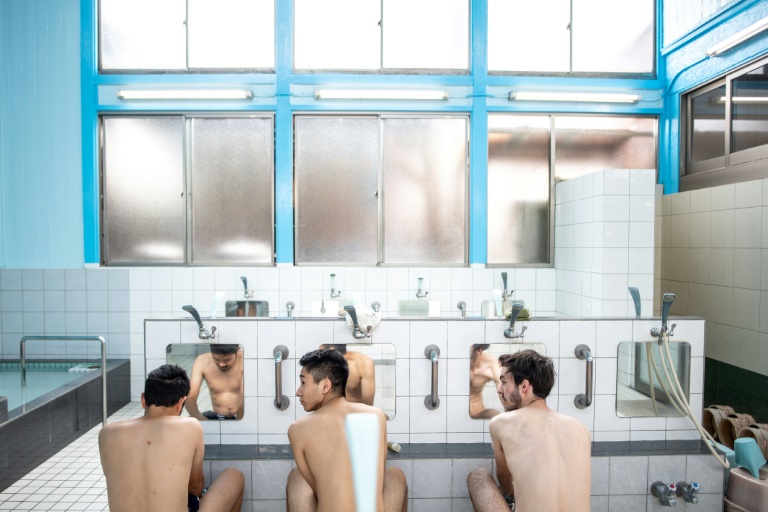
With its communal naked tubs, bright mural of Mount Fuji and sliding wooden entrance under a pointed roof, Inariyu is a classic example of a Japanese public bath, or sento.

Once ubiquitous in crowded urban areas, sentos are now closing quickly as more people take baths at home and owners struggle with faltering machinery, high gas prices and a lack of successors, tempting them to sell their valuable land.

Nationwide, the number of bath houses has plunged to around 1,800 from a peak of nearly 18,000 in the late 1960s.

But some such as Inariyu have been given a new lease on life through renovations, while others are reinventing themselves as trendy hangouts or using data analysis to boost business.

One person pushing to save neighbourhood baths is Yasuko Okuno, who discovered them as a way to unwind after working late.

“Day after day, my mind was tired. Even when I went home, I couldn’t forget about work,” said the 36-year-old writer for the Tokyo Sento Association.

“Then I went to a sento for the first time in a while, and it felt like a weight had lifted. There was a large bath, and the regulars greeted me kindly,” she told AFP.

Over time, “it began to feel like a home from home.”

Japan has never imposed a strict Covid-19 lockdown, and places such as gyms and sentos remained open even when many offices switched to home working and restaurants shortened opening hours.

Masks are commonly worn on trains and in other public places, but there is no requirement to wear them in sentos, although social distancing and quiet bathing are encouraged.

For many elderly people, it is a “daily routine” that they did not want to stop during the pandemic, and some feel safer taking a bath with others around in case they fall, Yasuko said.

– ‘Sense of urgency’ –

Bathhouse closures can erode community ties, said Sam Holden, whose organisation Sento & Neighborhood used a grant of around $200,000 from the World Monuments Fund to renovate Inariyu.

The group strived to keep the cosy, welcoming atmosphere of the bathhouse — built in 1930 in a low-rise area of northern Tokyo where narrow walkways snake between homes.

Inariyu has customers of all ages, including “a lot of elderly people, many of whom might live alone and be prone to isolation”, said Holden, a 32-year-old American who has lived in the capital for nearly a decade.

“My colleagues and I had a sense of urgency in wanting to preserve some of these historic structures before they were redeveloped into apartment complexes and other things.”

Bathers pay 500 yen ($3.70) to enter the men’s or women’s bath, a fee set by the Tokyo government.

Leaving their shoes in a small locker, they strip off in the changing room and take a shower before climbing into the tubs for a relaxing soak.

Unlike Japan’s hot springs, known as onsen, the water in sentos is usually heated with gas.

Shunji Tsuchimoto, who runs Inariyu with his wife, told AFP that the bathhouse is paying 50 percent more for energy than it did last year.

But he hopes that holding events in the renovated buildings will raise revenue by drawing younger customers. 

“I want them to know this sento culture,” he said.

– ‘Trendy and modern’ –

One sento that has managed to draw a youthful clientele is Koganeyu in eastern Tokyo, which reopened in 2020 after a full makeover.

On a recent Saturday, the bath house was packed with young customers drinking craft beer and listening to vinyl records.

Tech worker Kohei Ueda, 25, travelled an hour to use Koganeyu’s sauna with a friend.

“I do have the image of sentos being where grandpas and grandmas gather,” he said.

“But a sento like this that’s more trendy and modern is not like that… I feel more comfortable coming here.”

Kom-pal, another sento, may not have hipster appeal, but 36-year-old owner Fumitaka Kadoya has managed to increase footfall using data-crunching skills he acquired in his previous job as a technician for optical equipment maker Olympus.

Kadoya’s family has run the sento since the 1950s and when he took over three years ago, he set up a database to track information about customers and the timing of their visits.

The data has allowed him to make targeted business decisions, such as hiring female staff to encourage more women to visit and opening on Sunday mornings to ease crowds.

“Sentos have always been a part of Japanese culture,” Kadoya told AFP, and nowadays, leaving everything in a locker while you soak can be a kind of “digital detox”.

“That’s exactly what I think young people need these days.”

Close Bitnami banner
Bitnami