AFP

Asia, Europe stocks up ahead of Fed chair speech

Asian and European markets rose Friday after a Wall Street rally ahead of a speech by Federal Reserve boss Jerome Powell that is expected to reiterate his plan to ramp up interest rates to fight inflation.

Adding to the strong buying sentiment were signs of progress in talks between US and Chinese regulators that could see tech titans including Alibaba and JD.com avoid a delisting in New York.

Global equities have staggered in recent weeks after a near two-month rally from their June lows as a string of Fed officials lined up to reaffirm their commitment to tighten monetary policy, despite some promising economic data.

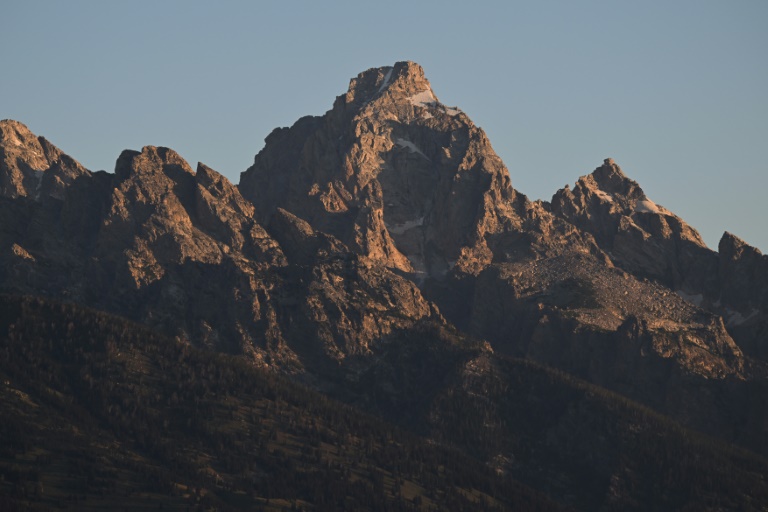
All eyes are now on Powell’s remarks later Friday at the annual symposium of top bankers and finance chiefs at Jackson Hole, Wyoming.

Most expect him to confirm that more hikes are on the way as officials try to bring inflation down from painful highs not seen in four decades.

Analysts said that while a number of board members have lined up this week, the hawkish tilt has largely been baked into market prices.

The key issue now is how much the bank will tighten over the coming months, with expectations for a half-point lift next month, after two three-quarter moves in June and July.

Wall Street’s three main indexes ended well up Thursday, with the Nasdaq and S&P 500 up more than one percent.

And Asia followed the lead, with Tokyo, Hong Kong and Sydney closing higher. There were also gains in Seoul, Singapore and Taipei.

Shanghai, however, ended lower.

In early European trade, London, Frankfurt and Paris all rose.

– US-China tech boost –

Hong Kong enjoyed a surge in tech shares thanks to news that China-US regulatory talks were progressing.

More than 200 Chinese firms have for months had the threat of a New York delisting hanging over them as they are caught in a wide-ranging row between the world’s two biggest economies.

But reports said Thursday that Beijing had called on top accounting firms to prepare to bring US-listed companies’ audit papers to Hong Kong, to be reviewed by US officials.

US lawmakers set a 2024 deadline for the removal of businesses that do not comply with listing rules and the latest move could provide a big step in avoiding that.

“To see that both sides are communicating, it is a good thing,” said Daisy Li, at EFG Asset Management. 

“Still, we will need to see if the US side is actually willing to accept the disclosure. If this can be resolved, it could help lower some (of the) China market’s geopolitical risk premium.”

The reports came as China announced plans to boost its flagging economy by pumping in tens of billions of dollars to kickstart lending, consumption and investment.

However, analysts have warned that while the cash injection will be welcomed, investors were more keen to see China ease Covid-19 policies that have led to the lockdown of major cities and battered industries.

– Key figures at around 0815 GMT –

Tokyo – Nikkei 225: UP 0.6 percent at 28,641.38 (close)

Hong Kong – Hang Seng Index: UP 1.0 percent at 20,170.04 (close)

Shanghai – Composite: DOWN 0.3 percent at 3,236.22 (close)

London – FTSE 100: UP 0.5 percent at 7,513.96

Euro/dollar: UP at 0.9977 from 0.9968 Thursday

Pound/dollar: DOWN at $1.1780 from $1.1826

Euro/pound: UP at 84.71 pence from 84.28 pence

Dollar/yen: UP at 136.96 yen from 136.36 yen

West Texas Intermediate: UP 1.1 percent at $93.52 per barrel

Brent North Sea crude: UP 1.0 percent at $100.33

New York – Dow: UP nearly 1.0 percent at 33,291.78 (close)
Asia, Europe stocks up ahead of Fed chair speech

Asian and European markets rose Friday after a Wall Street rally ahead of a speech by Federal Reserve boss Jerome Powell that is expected to reiterate his plan to ramp up interest rates to fight inflation.

Adding to the strong buying sentiment were signs of progress in talks between US and Chinese regulators that could see tech titans including Alibaba and JD.com avoid a delisting in New York.

Global equities have staggered in recent weeks after a near two-month rally from their June lows as a string of Fed officials lined up to reaffirm their commitment to tighten monetary policy, despite some promising economic data.

All eyes are now on Powell’s remarks later Friday at the annual symposium of top bankers and finance chiefs at Jackson Hole, Wyoming.

Most expect him to confirm that more hikes are on the way as officials try to bring inflation down from painful highs not seen in four decades.

Analysts said that while a number of board members have lined up this week, the hawkish tilt has largely been baked into market prices.

The key issue now is how much the bank will tighten over the coming months, with expectations for a half-point lift next month, after two three-quarter moves in June and July.

Wall Street’s three main indexes ended well up Thursday, with the Nasdaq and S&P 500 up more than one percent.

And Asia followed the lead, with Tokyo, Hong Kong and Sydney closing higher. There were also gains in Seoul, Singapore and Taipei.

Shanghai, however, ended lower.

In early European trade, London, Frankfurt and Paris all rose.

– US-China tech boost –

Hong Kong enjoyed a surge in tech shares thanks to news that China-US regulatory talks were progressing.

More than 200 Chinese firms have for months had the threat of a New York delisting hanging over them as they are caught in a wide-ranging row between the world’s two biggest economies.

But reports said Thursday that Beijing had called on top accounting firms to prepare to bring US-listed companies’ audit papers to Hong Kong, to be reviewed by US officials.

US lawmakers set a 2024 deadline for the removal of businesses that do not comply with listing rules and the latest move could provide a big step in avoiding that.

“To see that both sides are communicating, it is a good thing,” said Daisy Li, at EFG Asset Management. 

“Still, we will need to see if the US side is actually willing to accept the disclosure. If this can be resolved, it could help lower some (of the) China market’s geopolitical risk premium.”

The reports came as China announced plans to boost its flagging economy by pumping in tens of billions of dollars to kickstart lending, consumption and investment.

However, analysts have warned that while the cash injection will be welcomed, investors were more keen to see China ease Covid-19 policies that have led to the lockdown of major cities and battered industries.

– Key figures at around 0815 GMT –

Tokyo – Nikkei 225: UP 0.6 percent at 28,641.38 (close)

Hong Kong – Hang Seng Index: UP 1.0 percent at 20,170.04 (close)

Shanghai – Composite: DOWN 0.3 percent at 3,236.22 (close)

London – FTSE 100: UP 0.5 percent at 7,513.96

Euro/dollar: UP at 0.9977 from 0.9968 Thursday

Pound/dollar: DOWN at $1.1780 from $1.1826

Euro/pound: UP at 84.71 pence from 84.28 pence

Dollar/yen: UP at 136.96 yen from 136.36 yen

West Texas Intermediate: UP 1.1 percent at $93.52 per barrel

Brent North Sea crude: UP 1.0 percent at $100.33

New York – Dow: UP nearly 1.0 percent at 33,291.78 (close)
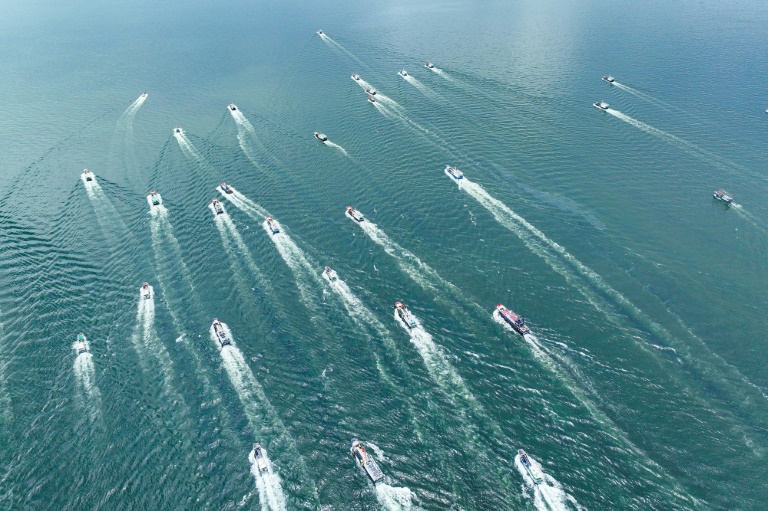
UN high-seas biodiversity treaty struggles to leave port

A two-week negotiating session on a treaty to protect the high seas wraps up Friday, with UN observers holding their breath that the long-stalled deal can cross the finish line.

After 15 years, including four prior formal sessions, negotiators have yet to reach a legally binding agreement to address the growing environmental and economic challenges involving the high seas, also known as international waters — a zone which encompasses almost half the planet.

Many had hoped that this fifth session, which began on August 15 at the United Nations headquarters in New York, would be the last and yield a final text on “the conservation and sustainable use of marine biodiversity beyond national jurisdiction,” or BBNJ for short.

The High Ambition Coalition, a group of some 50 countries led by the European Union, had even called for a comprehensive BBNJ deal to be finalized by the end of the year.

But according to international environmental group Greenpeace, the talks are on the brink of failure because of what it considers “the greed of countries in the High Ambition Coalition and others like Canada and the United States.”

One of the most sensitive issues revolves around the sharing of possible profits gained from developing genetic resources in international waters, where pharmaceutical, chemical and cosmetic companies hope to find miracle drugs, products or cures.

Such costly research at sea is largely the prerogative of rich nations, but developing countries do not want to be left out of potential windfall profits drawn from marine resources that belong to no one.

A draft text published a few days ago seemed to side with the developing nations, with a requirement that two percent of all future sales be redistributed.

But since then, there has been “a big step backwards,” said Greenpeace’s Will McCallum, who accuses the EU of rejecting the proposal. 

“It’s not even real money. It’s just hypothetical money one day. That is why it is really frustrating,” he told AFP.

The EU pushed back on that characterization, with one European negotiator telling AFP: “We are willing to contribute to the BBNJ agreement through various funding sources, which in our view shall include a fair sharing of benefits from marine genetic resources globally.”

Similar issues of equity between the Global North and South arise in other international negotiations, such as on climate change, where developing nations feel outsized harms of global warming and try in vain to get wealthier nations to help pay to offset those impacts.

– ‘Too close to fail’ –

Though Greenpeace might be very pessimistic, others still hope for an agreement on Friday.

“It is slow but there is still a lot of will inside the room to get it done,” said Liz Karan with the NGO Pew Charitable Trusts.

“I wouldn’t call it a failure yet but the clock is ticking,” she added.

Jihyun Lee, a youth ambassador with conservation group the High Seas Alliance, said a deal was possible, but added it would be necessary for countries, “especially those who claim themselves as ocean champions, to show more ambitions and flexibility so we can get the treaty done.”

“We cannot afford to water down the high seas treaty and we don’t have any time to waste,” she told a press conference. “We’re too close to fail.”

The high seas begin at the border of nations’ exclusive economic zones (EEZs) — which by international law reach no more than 200 nautical miles (370 kilometers) from each country’s coast — and are under no state’s jurisdiction.

Sixty percent of the world’s oceans fall under this category.

And while healthy marine ecosystems are crucial for the future of humanity, particularly to limit global warming, only one percent of international waters are protected.

One of the key pillars of an eventual BBNJ treaty is to allow the creation of marine protected areas, which many nations hope will cover 30 percent of the Earth’s ocean by 2030.

“Without establishing protections in this vast area, we will not be able to meet our ambitious and necessary 30 by 30 goal,” said US State Department official Maxine Burkett at a press conference.

But delegations still disagree on the process for creating these protected areas, as well as on how to implement a requirement for environmental impact assessments before new activity on the high seas.

“I think they have made a lot of progress in the last two weeks on issues that were very controversial,” said Klaudija Cremers, a researcher at the IDDRI think tank, which like multiple other NGOs has a seat with observer status at the negotiations.

She told AFP that the final talks Friday “could be the push to get an agreement.”

UN high-seas biodiversity treaty struggles to leave port

A two-week negotiating session on a treaty to protect the high seas wraps up Friday, with UN observers holding their breath that the long-stalled deal can cross the finish line.

After 15 years, including four prior formal sessions, negotiators have yet to reach a legally binding agreement to address the growing environmental and economic challenges involving the high seas, also known as international waters — a zone which encompasses almost half the planet.

Many had hoped that this fifth session, which began on August 15 at the United Nations headquarters in New York, would be the last and yield a final text on “the conservation and sustainable use of marine biodiversity beyond national jurisdiction,” or BBNJ for short.

The High Ambition Coalition, a group of some 50 countries led by the European Union, had even called for a comprehensive BBNJ deal to be finalized by the end of the year.

But according to international environmental group Greenpeace, the talks are on the brink of failure because of what it considers “the greed of countries in the High Ambition Coalition and others like Canada and the United States.”

One of the most sensitive issues revolves around the sharing of possible profits gained from developing genetic resources in international waters, where pharmaceutical, chemical and cosmetic companies hope to find miracle drugs, products or cures.

Such costly research at sea is largely the prerogative of rich nations, but developing countries do not want to be left out of potential windfall profits drawn from marine resources that belong to no one.

A draft text published a few days ago seemed to side with the developing nations, with a requirement that two percent of all future sales be redistributed.

But since then, there has been “a big step backwards,” said Greenpeace’s Will McCallum, who accuses the EU of rejecting the proposal. 

“It’s not even real money. It’s just hypothetical money one day. That is why it is really frustrating,” he told AFP.

The EU pushed back on that characterization, with one European negotiator telling AFP: “We are willing to contribute to the BBNJ agreement through various funding sources, which in our view shall include a fair sharing of benefits from marine genetic resources globally.”

Similar issues of equity between the Global North and South arise in other international negotiations, such as on climate change, where developing nations feel outsized harms of global warming and try in vain to get wealthier nations to help pay to offset those impacts.

– ‘Too close to fail’ –

Though Greenpeace might be very pessimistic, others still hope for an agreement on Friday.

“It is slow but there is still a lot of will inside the room to get it done,” said Liz Karan with the NGO Pew Charitable Trusts.

“I wouldn’t call it a failure yet but the clock is ticking,” she added.

Jihyun Lee, a youth ambassador with conservation group the High Seas Alliance, said a deal was possible, but added it would be necessary for countries, “especially those who claim themselves as ocean champions, to show more ambitions and flexibility so we can get the treaty done.”

“We cannot afford to water down the high seas treaty and we don’t have any time to waste,” she told a press conference. “We’re too close to fail.”

The high seas begin at the border of nations’ exclusive economic zones (EEZs) — which by international law reach no more than 200 nautical miles (370 kilometers) from each country’s coast — and are under no state’s jurisdiction.

Sixty percent of the world’s oceans fall under this category.

And while healthy marine ecosystems are crucial for the future of humanity, particularly to limit global warming, only one percent of international waters are protected.

One of the key pillars of an eventual BBNJ treaty is to allow the creation of marine protected areas, which many nations hope will cover 30 percent of the Earth’s ocean by 2030.

“Without establishing protections in this vast area, we will not be able to meet our ambitious and necessary 30 by 30 goal,” said US State Department official Maxine Burkett at a press conference.

But delegations still disagree on the process for creating these protected areas, as well as on how to implement a requirement for environmental impact assessments before new activity on the high seas.

“I think they have made a lot of progress in the last two weeks on issues that were very controversial,” said Klaudija Cremers, a researcher at the IDDRI think tank, which like multiple other NGOs has a seat with observer status at the negotiations.

She told AFP that the final talks Friday “could be the push to get an agreement.”

UN high-seas biodiversity treaty struggles to leave port

A two-week negotiating session on a treaty to protect the high seas wraps up Friday, with UN observers holding their breath that the long-stalled deal can cross the finish line.

After 15 years, including four prior formal sessions, negotiators have yet to reach a legally binding agreement to address the growing environmental and economic challenges involving the high seas, also known as international waters — a zone which encompasses almost half the planet.

Many had hoped that this fifth session, which began on August 15 at the United Nations headquarters in New York, would be the last and yield a final text on “the conservation and sustainable use of marine biodiversity beyond national jurisdiction,” or BBNJ for short.

The High Ambition Coalition, a group of some 50 countries led by the European Union, had even called for a comprehensive BBNJ deal to be finalized by the end of the year.

But according to international environmental group Greenpeace, the talks are on the brink of failure because of what it considers “the greed of countries in the High Ambition Coalition and others like Canada and the United States.”

One of the most sensitive issues revolves around the sharing of possible profits gained from developing genetic resources in international waters, where pharmaceutical, chemical and cosmetic companies hope to find miracle drugs, products or cures.

Such costly research at sea is largely the prerogative of rich nations, but developing countries do not want to be left out of potential windfall profits drawn from marine resources that belong to no one.

A draft text published a few days ago seemed to side with the developing nations, with a requirement that two percent of all future sales be redistributed.

But since then, there has been “a big step backwards,” said Greenpeace’s Will McCallum, who accuses the EU of rejecting the proposal. 

“It’s not even real money. It’s just hypothetical money one day. That is why it is really frustrating,” he told AFP.

The EU pushed back on that characterization, with one European negotiator telling AFP: “We are willing to contribute to the BBNJ agreement through various funding sources, which in our view shall include a fair sharing of benefits from marine genetic resources globally.”

Similar issues of equity between the Global North and South arise in other international negotiations, such as on climate change, where developing nations feel outsized harms of global warming and try in vain to get wealthier nations to help pay to offset those impacts.

– ‘Too close to fail’ –

Though Greenpeace might be very pessimistic, others still hope for an agreement on Friday.

“It is slow but there is still a lot of will inside the room to get it done,” said Liz Karan with the NGO Pew Charitable Trusts.

“I wouldn’t call it a failure yet but the clock is ticking,” she added.

Jihyun Lee, a youth ambassador with conservation group the High Seas Alliance, said a deal was possible, but added it would be necessary for countries, “especially those who claim themselves as ocean champions, to show more ambitions and flexibility so we can get the treaty done.”

“We cannot afford to water down the high seas treaty and we don’t have any time to waste,” she told a press conference. “We’re too close to fail.”

The high seas begin at the border of nations’ exclusive economic zones (EEZs) — which by international law reach no more than 200 nautical miles (370 kilometers) from each country’s coast — and are under no state’s jurisdiction.

Sixty percent of the world’s oceans fall under this category.

And while healthy marine ecosystems are crucial for the future of humanity, particularly to limit global warming, only one percent of international waters are protected.

One of the key pillars of an eventual BBNJ treaty is to allow the creation of marine protected areas, which many nations hope will cover 30 percent of the Earth’s ocean by 2030.

“Without establishing protections in this vast area, we will not be able to meet our ambitious and necessary 30 by 30 goal,” said US State Department official Maxine Burkett at a press conference.

But delegations still disagree on the process for creating these protected areas, as well as on how to implement a requirement for environmental impact assessments before new activity on the high seas.

“I think they have made a lot of progress in the last two weeks on issues that were very controversial,” said Klaudija Cremers, a researcher at the IDDRI think tank, which like multiple other NGOs has a seat with observer status at the negotiations.

She told AFP that the final talks Friday “could be the push to get an agreement.”

UN high-seas biodiversity treaty struggles to leave port

A two-week negotiating session on a treaty to protect the high seas wraps up Friday, with UN observers holding their breath that the long-stalled deal can cross the finish line.

After 15 years, including four prior formal sessions, negotiators have yet to reach a legally binding agreement to address the growing environmental and economic challenges involving the high seas, also known as international waters — a zone which encompasses almost half the planet.

Many had hoped that this fifth session, which began on August 15 at the United Nations headquarters in New York, would be the last and yield a final text on “the conservation and sustainable use of marine biodiversity beyond national jurisdiction,” or BBNJ for short.

The High Ambition Coalition, a group of some 50 countries led by the European Union, had even called for a comprehensive BBNJ deal to be finalized by the end of the year.

But according to international environmental group Greenpeace, the talks are on the brink of failure because of what it considers “the greed of countries in the High Ambition Coalition and others like Canada and the United States.”

One of the most sensitive issues revolves around the sharing of possible profits gained from developing genetic resources in international waters, where pharmaceutical, chemical and cosmetic companies hope to find miracle drugs, products or cures.

Such costly research at sea is largely the prerogative of rich nations, but developing countries do not want to be left out of potential windfall profits drawn from marine resources that belong to no one.

A draft text published a few days ago seemed to side with the developing nations, with a requirement that two percent of all future sales be redistributed.

But since then, there has been “a big step backwards,” said Greenpeace’s Will McCallum, who accuses the EU of rejecting the proposal. 

“It’s not even real money. It’s just hypothetical money one day. That is why it is really frustrating,” he told AFP.

The EU pushed back on that characterization, with one European negotiator telling AFP: “We are willing to contribute to the BBNJ agreement through various funding sources, which in our view shall include a fair sharing of benefits from marine genetic resources globally.”

Similar issues of equity between the Global North and South arise in other international negotiations, such as on climate change, where developing nations feel outsized harms of global warming and try in vain to get wealthier nations to help pay to offset those impacts.

– ‘Too close to fail’ –

Though Greenpeace might be very pessimistic, others still hope for an agreement on Friday.

“It is slow but there is still a lot of will inside the room to get it done,” said Liz Karan with the NGO Pew Charitable Trusts.

“I wouldn’t call it a failure yet but the clock is ticking,” she added.

Jihyun Lee, a youth ambassador with conservation group the High Seas Alliance, said a deal was possible, but added it would be necessary for countries, “especially those who claim themselves as ocean champions, to show more ambitions and flexibility so we can get the treaty done.”

“We cannot afford to water down the high seas treaty and we don’t have any time to waste,” she told a press conference. “We’re too close to fail.”

The high seas begin at the border of nations’ exclusive economic zones (EEZs) — which by international law reach no more than 200 nautical miles (370 kilometers) from each country’s coast — and are under no state’s jurisdiction.

Sixty percent of the world’s oceans fall under this category.

And while healthy marine ecosystems are crucial for the future of humanity, particularly to limit global warming, only one percent of international waters are protected.

One of the key pillars of an eventual BBNJ treaty is to allow the creation of marine protected areas, which many nations hope will cover 30 percent of the Earth’s ocean by 2030.

“Without establishing protections in this vast area, we will not be able to meet our ambitious and necessary 30 by 30 goal,” said US State Department official Maxine Burkett at a press conference.

But delegations still disagree on the process for creating these protected areas, as well as on how to implement a requirement for environmental impact assessments before new activity on the high seas.

“I think they have made a lot of progress in the last two weeks on issues that were very controversial,” said Klaudija Cremers, a researcher at the IDDRI think tank, which like multiple other NGOs has a seat with observer status at the negotiations.

She told AFP that the final talks Friday “could be the push to get an agreement.”

UK nearly doubles energy price cap in cost-of-living crisis

Britain announced Friday a vast 80-percent hike in electricity and gas bills, in a dramatic worsening of the cost-of-living crisis before winter as the UK awaits a new leader.

Regulator Ofgem said its energy price cap, which sets prices for consumers who are not on a fixed deal with their supplier, will in October increase to an average £3,549 ($4,197) per year from the current £1,971, blaming soaring wholesale gas costs after Russia’s invasion of Ukraine.

“The increase (in the cap) reflects the continued rise in global wholesale gas prices, which began to surge as the world unlocked from the Covid pandemic and have been driven still higher to record levels by Russia slowly switching off gas supplies to Europe,” Ofgem said in a statement.

The news sparked outcry from charities who said families faced one of the “bleakest Christmases” for years, with UK inflation already in double-digits and forecast to strike 13 percent in the coming months due to runaway energy bills.

The near-doubling in the cap will likely tip millions into fuel poverty, forced to choose between heating or eating, according to anti-poverty experts.

Britain is already suffering from its highest inflation rate since 1982 and is predicted to enter recession later this year. 

“We know the massive impact this price cap increase will have on households across Britain and the difficult decisions consumers will now have to make,” added Ofgem boss Jonathan Brearley on Friday.

“I talk to customers regularly and I know that today’s news will be very worrying for many.”

– ‘Zombie’ government –

Britain’s rampant cost-of-living has dominated the race to succeed Conservative Prime Minister Boris Johnson, with political opponents accusing him of leading a zombie government as inflation escalates.

Both front-runner Liz Truss and rival leadership contender Rishi Sunak are grappling with how to address the crisis.

Gas comprises a major part of Britain’s energy mix, with tens of millions of homes relying on gas-powered boilers for their heating.

Household and business consumers, energy suppliers and opposition politicians are clamouring for urgent government action to do more to avoid putting the most vulnerable in desperate situations.

The University of York has estimated 58 percent of UK households are at risk of fuel poverty by next year. 

The crisis is forecast to worsen from next January, when average bills could top £5,000 according to some projections as Ofgem updates the cap every three months, rather than the previous norm of twice a year. 

The leader of the main opposition Labour party, Keir Starmer, has called for a freeze in energy bills at the current cap level.

Outgoing premier Johnson has vowed to leave major fiscal decisions to his successor, who will be announced on September 5 following a summer-long leadership contest. 

Lights out? Swiss brace for looming power shortages

Switzerland is among the world’s wealthiest countries, but its reliance on Russian gas and French nuclear power — both in short supply — has it bracing for power shortages and even blackouts this winter.

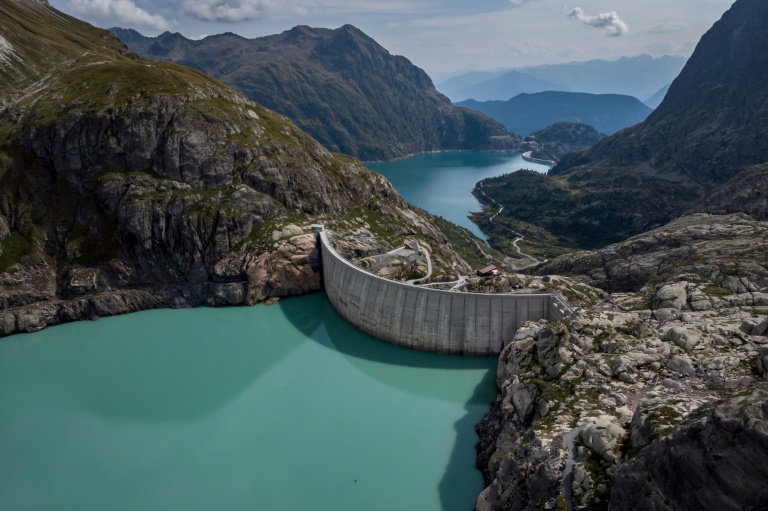
With hundreds of hydropower plants spread across the Alps, Switzerland produces more than enough power in the summer months. However, the landlocked nation is forced to turn to imports when the cold sets in.

That is not usually a problem, but this year, with the war in Ukraine, and Russia slashing gas deliveries to much of Europe, the threat of severe power shortages is looming.

While other European countries are also feeling the sting, the situation is particularly precarious in Switzerland, which lacks its own gas storage installations.

It usually depends on imports from the surrounding European Union, and especially of gas-derived electricity from Germany, but with the bloc wary about its own power supply, non-member Switzerland finds itself at the back of the queue.

Compounding the problem, neighbouring France has been forced to halt production at half of its reactors, mainly due to corrosion problems, Stephane Genoud, an energy management professor at the Swiss HES-SO university, told AFP.

Bern has been working to build up Switzerland’s energy production and storage systems, but even the grand opening next month of a new, powerful pumped-storage hydroelectric plant is unlikely to help avoid problems this winter.

– ‘Giant battery’ –

The Nant de Drance plant is located in a cavern 600 metres (2,000 feet) below ground at an altitude of 1,700 metres (5,600 feet), just a few kilometres from Mont Blanc, Western Europe’s highest peak.

Unlike typical hydropower systems, which create power by releasing water from a reservoir through turbines, pumped-storage systems do not run out of juice as the reservoir empties out.

Instead, the Nant de Drance plant, situated between two reservoirs, functions “like a giant battery,” said Robert Gleitz, of Swiss energy company Alpiq, a key shareholder in the facility.

It produces energy in the traditional way during demand peaks by sending water from the higher Vieux-Emosson reservoir plunging down into the Emosson reservoir below.

But when solar and wind power production is high and there is less demand for electricity from the plant, the water from Emosson is pumped back to the higher reservoir, storing the excess electricity generated.

“When there is too much electricity in the grid, we store the water in the upper reservoir,” Gleitz told AFP during a tour of the facility.

It can thus boost production during times of higher demand, as in winter, reducing the need to import power.

– ‘High risk’ –

But Gleitz warned that while the new plant will help Switzerland better withstand brief consumption peaks, it would help little in the face of long-term shortages.

The plant “usefully supplements a renewable electricity production that remains too low,” said Nicolas Wuthrich of nature preservation group Pro Natura.

That organisation and others have long lamented that Switzerland, which has vowed to decommission its ageing nuclear reactors, is dragging its feet on transitioning to renewables.

The country counted only 37 wind turbines in 2020, while experts say some 750 would be needed to reach the government’s 2050 renewable energy target.

– Blackouts –

The Swiss organisation in charge of ensuring energy access in times of crisis warned in late 2021 that there was a “high risk of a power shortage emerging.”

Geopolitical events since then have only increased the likelihood.

Bern has cautioned against exaggerating the risks, but has also acknowledged it is preparing for power shortages, with the head of the federal electricity commission, Werner Luginbuhl, warning of repeated, hours-long power cuts.

Retailers across the country are reporting a consumer rush on solar panels and generators.

There is still a chance to avoid outages, said Genoud.

“If the French manage to restart their reactors and if Putin doesn’t make things too difficult and if it doesn’t get too cold, we could avoid shortages or a blackout.”

Christie's to auction Microsoft co-founder Allen's $1bn-plus art collection

Christie’s announced plans on Thursday to auction the art collection of late Microsoft co-founder Paul Allen, which it estimated to be worth more than $1 billion.

The November sale of more than 150 pieces spanning 500 years of art will be “the largest and most exceptional art auction in history,” Christie’s said in a statement.

The works will include “La montagne Sainte-Victoire” by French painter Paul Cezanne, valued at more than $100 million, the auction house said.

It is holding the auction with the late billionaire’s estate. Christie’s said all proceeds will go to charitable causes, as per the wishes of Allen, who was an avid art collector, innovator and philanthropist.

Allen, who died in 2018 at the age of 65, co-founded Microsoft with Bill Gates in 1975. Together, they came up with the PC operating system that made a fortune for the US technology giant.

Allen left the company in 1983, due to health problems and a deteriorating relationship with Gates, who remained in charge of Microsoft until 2000.  

The auction record for a private collection was set this spring by the US couple Harry and Linda Macklowe, with $922 million fetched in auctions conducted by Sotheby’s.

Other than the work by Cezanne, the Allen collection features a work entitled “Small False Start” by American painter Jasper Johns, valued at more than $50 million, The New York Times reported.

Christie’s did not detail what else is in the collection, but a traveling exhibit in 2016 gave a glimpse of the richness of the Allen art trove.

It features works by Monet, Manet, Klimt and others.

This year is shaping up as one of the biggest ever in the art market.

Besides the Macklowe auction, an Andy Warhol portrait of Marilyn Monroe sold in May for $195 million — a record for a piece of 20th-century art. 

Christie’s CEO Guillaume Cerutti said the Allen auction will be like no other.

“The inspirational figure of Paul Allen, the extraordinary quality and diversity of works, and the dedication of all proceeds to philanthropy, create a unique combination that will make the sale of the Paul G. Allen Collection an event of unprecedented magnitude,” Cerutti said.

“To Paul, art was both analytical and emotional. He believed that art expressed a unique view of reality –- combining the artist’s inner state and inner eye –- in a way that can inspire us all,” said Jody Allen, the executor of the estate.

“His collection reflects the diversity of his interests, with their own mystique and beauty.”

Christie's to auction Microsoft co-founder Allen's $1bn-plus art collection

Christie’s announced plans on Thursday to auction the art collection of late Microsoft co-founder Paul Allen, which it estimated to be worth more than $1 billion.

The November sale of more than 150 pieces spanning 500 years of art will be “the largest and most exceptional art auction in history,” Christie’s said in a statement.

The works will include “La montagne Sainte-Victoire” by French painter Paul Cezanne, valued at more than $100 million, the auction house said.

It is holding the auction with the late billionaire’s estate. Christie’s said all proceeds will go to charitable causes, as per the wishes of Allen, who was an avid art collector, innovator and philanthropist.

Allen, who died in 2018 at the age of 65, co-founded Microsoft with Bill Gates in 1975. Together, they came up with the PC operating system that made a fortune for the US technology giant.

Allen left the company in 1983, due to health problems and a deteriorating relationship with Gates, who remained in charge of Microsoft until 2000.  

The auction record for a private collection was set this spring by the US couple Harry and Linda Macklowe, with $922 million fetched in auctions conducted by Sotheby’s.

Other than the work by Cezanne, the Allen collection features a work entitled “Small False Start” by American painter Jasper Johns, valued at more than $50 million, The New York Times reported.

Christie’s did not detail what else is in the collection, but a traveling exhibit in 2016 gave a glimpse of the richness of the Allen art trove.

It features works by Monet, Manet, Klimt and others.

This year is shaping up as one of the biggest ever in the art market.

Besides the Macklowe auction, an Andy Warhol portrait of Marilyn Monroe sold in May for $195 million — a record for a piece of 20th-century art. 

Christie’s CEO Guillaume Cerutti said the Allen auction will be like no other.

“The inspirational figure of Paul Allen, the extraordinary quality and diversity of works, and the dedication of all proceeds to philanthropy, create a unique combination that will make the sale of the Paul G. Allen Collection an event of unprecedented magnitude,” Cerutti said.

“To Paul, art was both analytical and emotional. He believed that art expressed a unique view of reality –- combining the artist’s inner state and inner eye –- in a way that can inspire us all,” said Jody Allen, the executor of the estate.

“His collection reflects the diversity of his interests, with their own mystique and beauty.”

Close Bitnami banner
Bitnami