AFP

Long Covid costs Australia millions of working days

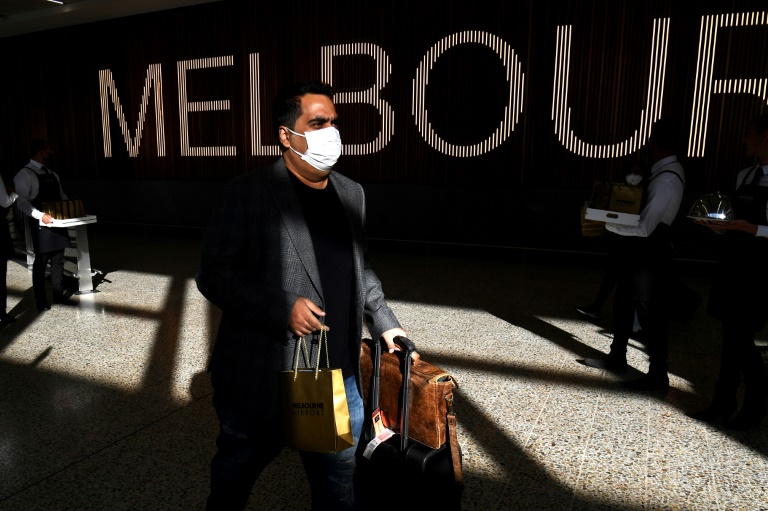
Long Covid has already cost the Australian economy three million working days this year, according to a government analysis seen by AFP Friday, significantly worsening the country’s acute labour shortages.

The treasury report found that lingering effects of the coronavirus have been keeping some 31,000 Australians away from work every day.

Treasurer Jim Chalmers said Friday that Australia’s “labour market has been absolutely smashed by Covid, and Long Covid increasingly”.

“The thousands of workdays the economy is losing to Long Covid is just one part of a complex picture, and gives a sense of what we are all up against,” he said.

The treasury analysis defined Long Covid as someone experiencing symptoms four weeks or more after becoming infected.

This mirrors how Long Covid is characterised by the US Centers for Disease Control (CDC), which lists a wide variety of respiratory, heart, digestive and even neurological symptoms.

These include fatigue, heart palpitations, lightheadedness, stomach pain and difficulty concentrating — known as “brain fog”.

A comprehensive study published in the Lancet this month found that one in eight people who get Covid develop at least one Long Covid symptom.

The findings of the Australian treasury analysis were in line with this study — with 12 percent of Covid-related absenteeism attributed to Long Covid.

Australia is facing serious labour market constraints after its borders were closed to international arrivals for nearly two years during the pandemic.

The nation is experiencing the second-worst labour market shortage of any developed country, trailing only Canada, according to the OECD.

This and other issues — including years of stagnant wage growth — will be the subject of a “jobs summit” the new Labor government plans to hold next week.

Chalmers said challenges with skills shortages, wages and flatlining productivity would all be “front and centre at the summit”.

Long Covid costs Australia millions of working days

Long Covid has already cost the Australian economy three million working days this year, according to a government analysis seen by AFP Friday, significantly worsening the country’s acute labour shortages.

The treasury report found that lingering effects of the coronavirus have been keeping some 31,000 Australians away from work every day.

Treasurer Jim Chalmers said Friday that Australia’s “labour market has been absolutely smashed by Covid, and Long Covid increasingly”.

“The thousands of workdays the economy is losing to Long Covid is just one part of a complex picture, and gives a sense of what we are all up against,” he said.

The treasury analysis defined Long Covid as someone experiencing symptoms four weeks or more after becoming infected.

This mirrors how Long Covid is characterised by the US Centers for Disease Control (CDC), which lists a wide variety of respiratory, heart, digestive and even neurological symptoms.

These include fatigue, heart palpitations, lightheadedness, stomach pain and difficulty concentrating — known as “brain fog”.

A comprehensive study published in the Lancet this month found that one in eight people who get Covid develop at least one Long Covid symptom.

The findings of the Australian treasury analysis were in line with this study — with 12 percent of Covid-related absenteeism attributed to Long Covid.

Australia is facing serious labour market constraints after its borders were closed to international arrivals for nearly two years during the pandemic.

The nation is experiencing the second-worst labour market shortage of any developed country, trailing only Canada, according to the OECD.

This and other issues — including years of stagnant wage growth — will be the subject of a “jobs summit” the new Labor government plans to hold next week.

Chalmers said challenges with skills shortages, wages and flatlining productivity would all be “front and centre at the summit”.

In risky recycling venture, Gazans burn plastic for fuel

Living in one of the poorest parts of the Middle East and facing some of the region’s highest fuel costs, Palestinians in Gaza are burning plastic to make affordable diesel.

It’s an economic and practical solution in a territory blockaded by Israel for 15 years, but one which poses serious environmental and health risks, experts say.

Standing before rusty metal machinery and fuel containers, Mahmoud al-Kafarneh described how he and his brothers came up with their plastic recycling project.

“We started experimenting to implement the project in 2018, through searching the internet,” he told AFP, at the site in the Jabalia area of northern Gaza.

“We failed a few times; after eight months we succeeded in extracting the fuel.”

The distilling setup features a series of crude-looking tanks and connecting pipes set up outside on the dirt.

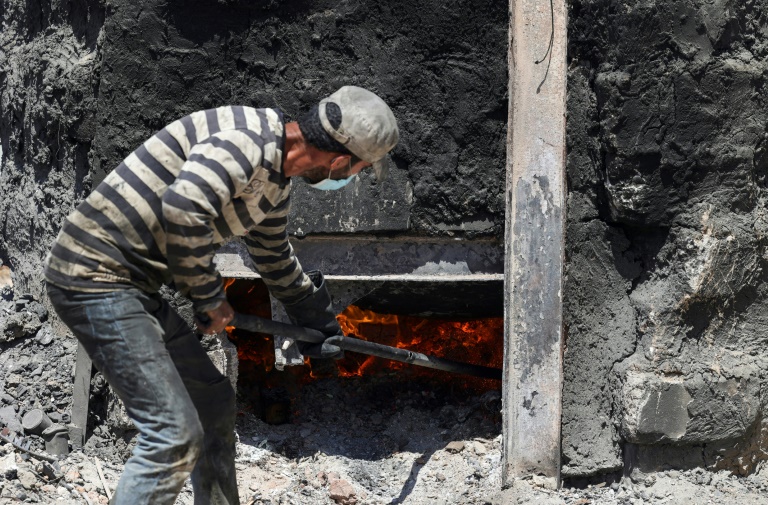
The process starts with the burning of wood in a furnace below a large mud-covered tank holding up to 1.5 tonnes (tons) of shredded plastic. When the plastic melts, the vapours flow through a pipe into a water tank where they cool and drip as fuel into containers, ready to be sold.

Black-grey smoke pours from several pipes extending above the furnace and the tank holding the plastic.

Only a few of the workers wear face masks and gloves as they melt bagfuls of shredded plastic. Their clothing is stained black.

Kafarneh said no-one has experienced health problems since starting work at the site, which sits beside olive trees and away from residential buildings.

“We follow all safety procedures at work”, he said. 

But Ahmed Hillis, director of Gaza’s National Institute for the Environment and Development, fears an environmental catastrophe from this unregulated industry.

“The method used is rudimentary and very harmful to the workers,” mainly because they inhale toxic fumes, he told AFP.

Burning plastic releases dioxins, mercury and other toxic gases which pose “a threat to vegetation, human and animal health”, according to the United Nations Environment Programme.

Hillis adds another danger of burning plastic, which is derived from petroleum hydrocarbons.

The tank is “a time bomb because it could explode” from the heat, he says.

In Gaza, where exchanges of fire between Palestinian militants and Israel for three days earlier this month killed at least 49 Palestinians, health risks are outweighed by economic reality.

– ‘Same quality’ –

Kafarneh, 25, said he would ideally upgrade their kit to a safer tank operated by electricity.

“But it’s unavailable due to the Israeli blockade,” he said. 

Since 2007, when the Islamist movement Hamas seized control of the Gaza Strip, Israel has severely restricted the flow of people and goods in and out of the coastal enclave where 2.3 million people live.

The territory is increasingly impoverished.

Unemployment has hit 47 percent and the average daily wage is around 60 shekels ($18), according to the Palestinian Central Bureau of Statistics.

Petrol delivered from Israel shot up to eight shekels ($2.40) a litre in Gaza, after Russia’s invasion of Ukraine sent global fuel prices spiking, before a pullback.

That sent demand soaring for Kafarneh’s fuel, with fishermen and farmers among the top customers.

At the portside in Gaza City, Abd al-Muti al-Habil is using a hose to fill the tank of his fishing boat.

“We use this diesel because it’s half the cost of the Israeli equivalent,” he said.

“There are no disadvantages. It’s the same quality, it doesn’t affect the motor and it’s working efficiently.”

The only problem for Habil is the shortage of supply, with around 10 boats currently using diesel made from recycled plastic. 

“Unfortunately the quantities are not enough. I barely get 500 litres (132 gallons) every two days,” he said.

Habil’s boat burns through 900 litres (237 gallons) of fuel during 12 hours at sea, quantities which are unaffordable if he relies solely on imported fuel.

One tankful of plastic can produce 1,000 litres (264 gallons) of fuel every 12-14 hours, but Kafarneh’s team must wait eight hours for the equipment to cool before they can restart the process. 

The amount produced also depends on the availability of raw materials.

At a sorting facility near the distilling site, six men are combing through a towering heap of baskets, bowls, buckets and other plastic waste.

“We get the plastic from workers who collect it from the street. We buy it from them, then we separate it and grind it through a special machine,” said Imad Hamed, whose hands are stained black from the work.

With the grinder relying on electricity, Hamed said they are frequently interrupted by Gaza’s chronic power cuts.

“We have to work at night sometimes, to coincide with the availability of electricity,” he said.

Asia stocks up before Powell speech, China tech adds support

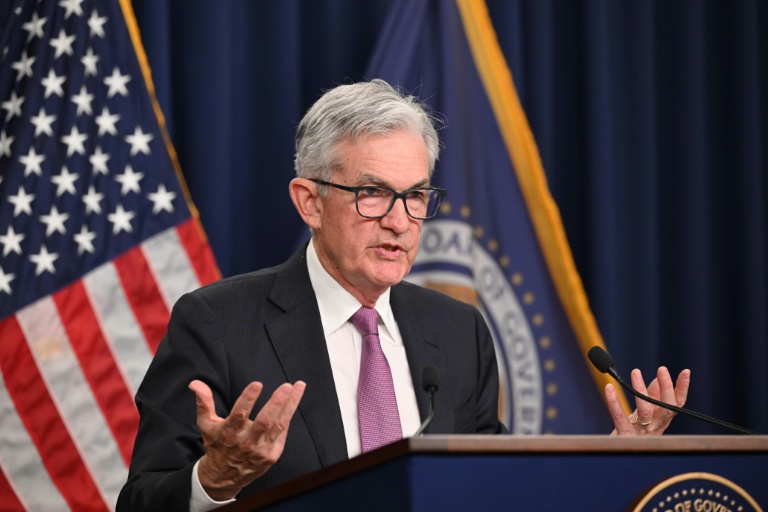
Asian markets rose Friday after a Wall Street rally ahead of a speech by Federal Reserve boss Jerome Powell that is expected to reiterate his plan to ramp up interest rates to fight inflation.

Adding to the strong buying sentiment were signs of progress in talks between US and Chinese regulators that could see tech titans including Alibaba and JD.com avoid a delisting from New York.

Global equities have staggered in recent weeks after a near two-month rally from their June lows as a string of Fed officials lined up to reaffirm their commitment to tighten monetary policy, despite some promising economic data.

All eyes are now on Powell’s remarks later Friday at the annual symposium of top bankers and finance chiefs at Jackson Hole, Wyoming.

Most expect him to confirm that more hikes are on the way as officials try to bring inflation down from painful highs not seen in four decades.

Analysts said that while a number of board members have lined up this week, the hawkish tilt has largely been baked into market prices.

The key issue now is by how much the bank will tighten over the coming months, with expectations for a half-point lift in next month, after two three-quarter moves in June and July.

Wall Street’s three main indexes ended well up Thursday, with the Nasdaq and S&P 500 more than one percent to the good.

And Asia followed the lead, with Tokyo, Sydney, Seoul, Singapore, Taipei and Wellington all well up.

– US-China tech boost –

Hong Kong and Shanghai were among the best performers with a surge in tech companies thanks to news that China-US regulatory talks were progressing.

More than 200 Chinese firms have for months had the threat of New York delisting hanging over them as they are caught in a wide-ranging row between the superpowers.

But reports said Thursday that Beijing had called on top accounting firms to prepare to bring US-listed companies’ audit papers to Hong Kong, to be reviewed by US officials.

US lawmakers set a 2024 deadline for the removal of businesses that do not comply with listing rules and the latest move could provide a big step in avoiding that.

“To see that both sides are communicating, it is a good thing,” said Daisy Li, at EFG Asset Management. 

“Still, we will need to see if the US side is actually willing to accept the disclosure. If this can be resolved, it could help lower some (of the) China market’s geopolitical risk premium.”

The reports came as China announced plans to boost its flagging economy by pumping in tens of billions of dollars to kickstart lending, consumption and investment.

However, analysts have warned that while the cash injection will be welcomed, investors were more keen to see an easing of the zero-Covid policies that have led to the lockdown of major cities and battered industries.

– Key figures at around 0230 GMT –

Tokyo – Nikkei 225: UP 0.9 percent at 28,745.42 (break)

Hong Kong – Hang Seng Index: UP 0.7 percent at 20,100.06

Shanghai – Composite: UP 0.5 percent at 3,260.75

Euro/dollar: UP at 0.9970 from 0.9968 Thursday

Pound/dollar: DOWN at $1.1823 from $1.1826

Euro/pound: UP at 84.33 pence from 84.28 pence

Dollar/yen: UP at 136.76 yen from 136.36 yen

West Texas Intermediate: UP 1.0 percent at $93.41 per barrel

Brent North Sea crude: UP 1.0 percent at $100.34

New York – Dow: UP nearly 1.0 percent at 33,291.78 (close)

London – FTSE 100: UP 0.1 percent at 7,479.74 (close)

Asia stocks up before Powell speech, China tech adds support

Asian markets rose Friday after a Wall Street rally ahead of a speech by Federal Reserve boss Jerome Powell that is expected to reiterate his plan to ramp up interest rates to fight inflation.

Adding to the strong buying sentiment were signs of progress in talks between US and Chinese regulators that could see tech titans including Alibaba and JD.com avoid a delisting from New York.

Global equities have staggered in recent weeks after a near two-month rally from their June lows as a string of Fed officials lined up to reaffirm their commitment to tighten monetary policy, despite some promising economic data.

All eyes are now on Powell’s remarks later Friday at the annual symposium of top bankers and finance chiefs at Jackson Hole, Wyoming.

Most expect him to confirm that more hikes are on the way as officials try to bring inflation down from painful highs not seen in four decades.

Analysts said that while a number of board members have lined up this week, the hawkish tilt has largely been baked into market prices.

The key issue now is by how much the bank will tighten over the coming months, with expectations for a half-point lift in next month, after two three-quarter moves in June and July.

Wall Street’s three main indexes ended well up Thursday, with the Nasdaq and S&P 500 more than one percent to the good.

And Asia followed the lead, with Tokyo, Sydney, Seoul, Singapore, Taipei and Wellington all well up.

– US-China tech boost –

Hong Kong and Shanghai were among the best performers with a surge in tech companies thanks to news that China-US regulatory talks were progressing.

More than 200 Chinese firms have for months had the threat of New York delisting hanging over them as they are caught in a wide-ranging row between the superpowers.

But reports said Thursday that Beijing had called on top accounting firms to prepare to bring US-listed companies’ audit papers to Hong Kong, to be reviewed by US officials.

US lawmakers set a 2024 deadline for the removal of businesses that do not comply with listing rules and the latest move could provide a big step in avoiding that.

“To see that both sides are communicating, it is a good thing,” said Daisy Li, at EFG Asset Management. 

“Still, we will need to see if the US side is actually willing to accept the disclosure. If this can be resolved, it could help lower some (of the) China market’s geopolitical risk premium.”

The reports came as China announced plans to boost its flagging economy by pumping in tens of billions of dollars to kickstart lending, consumption and investment.

However, analysts have warned that while the cash injection will be welcomed, investors were more keen to see an easing of the zero-Covid policies that have led to the lockdown of major cities and battered industries.

– Key figures at around 0230 GMT –

Tokyo – Nikkei 225: UP 0.9 percent at 28,745.42 (break)

Hong Kong – Hang Seng Index: UP 0.7 percent at 20,100.06

Shanghai – Composite: UP 0.5 percent at 3,260.75

Euro/dollar: UP at 0.9970 from 0.9968 Thursday

Pound/dollar: DOWN at $1.1823 from $1.1826

Euro/pound: UP at 84.33 pence from 84.28 pence

Dollar/yen: UP at 136.76 yen from 136.36 yen

West Texas Intermediate: UP 1.0 percent at $93.41 per barrel

Brent North Sea crude: UP 1.0 percent at $100.34

New York – Dow: UP nearly 1.0 percent at 33,291.78 (close)

London – FTSE 100: UP 0.1 percent at 7,479.74 (close)

Trump social media platform faces money woes, modest following

Signs are growing that Donald Trump’s social media platform Truth Social is in financial trouble, with just a modest following six months after launching.

Fox Business Network reported Thursday that the platform has halted payments to the company that hosts it, RightForge, and owes $1.6 million.

The platform’s parent company, Trump Media and Technology Group, did not respond to a request for comment.

A RightForge spokesman would not comment on the reports that Trump Social is not paying its bills.

“RightForge was on the ground floor of building Truth Social and will continue to support president Trump in his endeavors,” the company said.

Meanwhile the parent company’s merger with Digital World Acquisition Corp — a blank check company formed specifically to carry out a merger — has yet to take place, 10 months after the announcement that it would happen. This fusion is supposed to bring in fresh funding for the Trump platform.

DWAC published Thursday a call for a special shareholders meeting September 6 at which investors will be asked to approve a one-year delay for carrying out the merger, until Sept 8 of 2023.

Without a favorable vote for an extension the blank check company said it will be forced to dissolve.

Financial data published Thursday said that as of late June, DWAC had only $3,000 in cash on hand.

Truth Social bills itself as Trump’s answer to platforms like Twitter, which the former president used as a loud political bullhorn until he was ejected from it after a mob he had egged on assaulted the US Capitol in January 2021.

But six months later it is in 30th place in an Apple ranking of social media apps downloaded onto iPhones.

The Statista data base says Truth Social is downloaded only around 50,000 times per week.

Trump’s account on Truth Social has 3.91 million followers; on Twitter he had 79.5 million when he was booted.

Shares in DWAC have fallen 71 percent since hitting their peak in early March.

Trump social media platform faces money woes, modest following

Signs are growing that Donald Trump’s social media platform Truth Social is in financial trouble, with just a modest following six months after launching.

Fox Business Network reported Thursday that the platform has halted payments to the company that hosts it, RightForge, and owes $1.6 million.

The platform’s parent company, Trump Media and Technology Group, did not respond to a request for comment.

A RightForge spokesman would not comment on the reports that Trump Social is not paying its bills.

“RightForge was on the ground floor of building Truth Social and will continue to support president Trump in his endeavors,” the company said.

Meanwhile the parent company’s merger with Digital World Acquisition Corp — a blank check company formed specifically to carry out a merger — has yet to take place, 10 months after the announcement that it would happen. This fusion is supposed to bring in fresh funding for the Trump platform.

DWAC published Thursday a call for a special shareholders meeting September 6 at which investors will be asked to approve a one-year delay for carrying out the merger, until Sept 8 of 2023.

Without a favorable vote for an extension the blank check company said it will be forced to dissolve.

Financial data published Thursday said that as of late June, DWAC had only $3,000 in cash on hand.

Truth Social bills itself as Trump’s answer to platforms like Twitter, which the former president used as a loud political bullhorn until he was ejected from it after a mob he had egged on assaulted the US Capitol in January 2021.

But six months later it is in 30th place in an Apple ranking of social media apps downloaded onto iPhones.

The Statista data base says Truth Social is downloaded only around 50,000 times per week.

Trump’s account on Truth Social has 3.91 million followers; on Twitter he had 79.5 million when he was booted.

Shares in DWAC have fallen 71 percent since hitting their peak in early March.

Taiwan fruit, fish farmers feel squeeze of China's sanctions

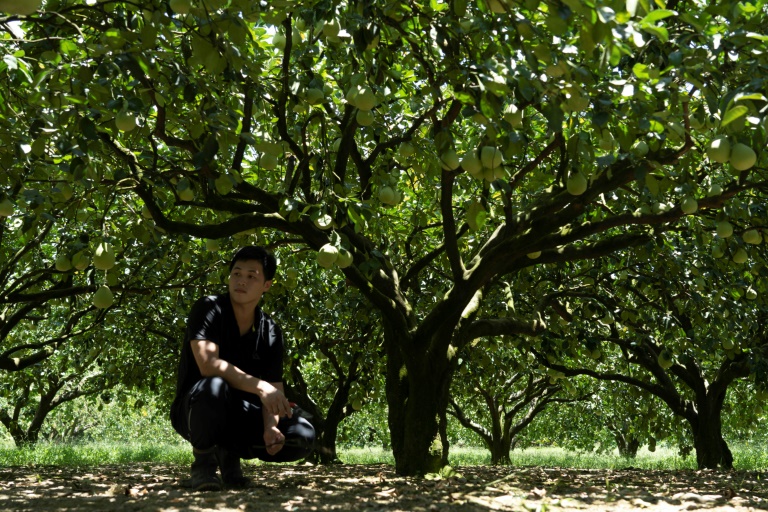
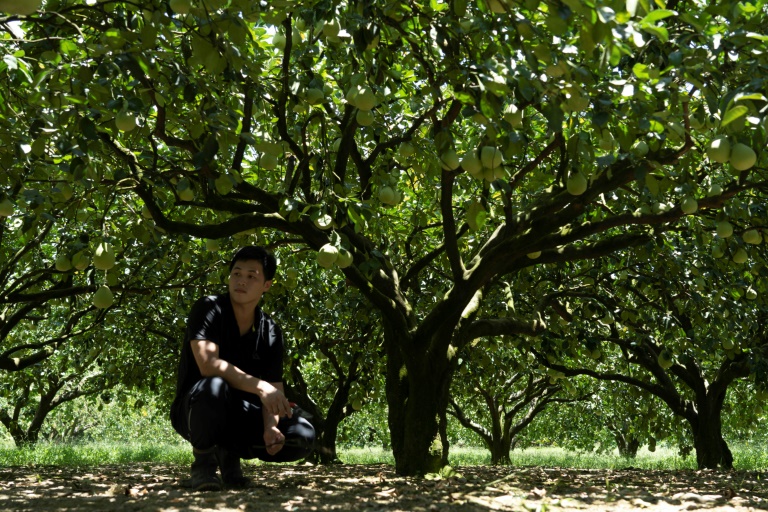
As a Taiwanese fighter jet screamed over the lush green fields of eastern Hualien county last week, pomelo farmer Mulin Ou sat in his orchard counting the cost of China’s latest push to squeeze the island.

Cross-strait tensions have risen to their highest level in decades as China rages over a visit by United States House Speaker Nancy Pelosi earlier this month.

Beijing, which claims democratic Taiwan as its own, launched drills in response, sending missiles into waters around the island — and it torpedoed exports of certain fruit and fish products to China with fresh import bans.

The overall impact of China’s latest economic sanctions is limited. But producers like Ou are paying a painful price.

“Our mainland orders have all been cancelled. Our pomelos have no way of getting there,” he said.

His farm in Hualien’s Ruisui township has dispatched about 180,000 kilogrammes (397,000 pounds) of the citrus fruit to the mainland every year for several decades.

“The clients are waiting for the pomelos, but there’s nothing we can do, it’s a political problem,” he shrugged.

– Grouper gap –

Taiwanese farmers and producers have increasingly had to get used to import bans from China — with Beijing authorities typically citing sudden regulatory discrepancies rather than a direct link to politics.

After Pelosi’s visit, China announced bans on Taiwanese citrus fruit and some mackerel, while halting its own exports to the island of natural sand used in construction.

The month before her visit, it targeted grouper fish, the vast majority of which had previously gone to Chinese consumers.

Taipei said the move was politically motivated, while China claimed it found some fish to be contaminated by banned chemicals.

A year earlier, pineapple imports were halted after Chinese authorities claimed to have discovered pests in shipments, just as the annual harvest was under way.

At a grouper facility in Pingtung, Taiwan’s southernmost county, third-generation farmer Hans Chen of the Lijia Green Energy and Biotechnology Company said he would be “severely impacted” if the sanctions were not lifted by the end of the year.

Chen, 35, manages a farm of some 500,000 groupers, and 90 percent of its exports go to China. 

He said the ban was imposed without any warning and came at the worst time for producers already bruised by the coronavirus pandemic.

The fish farmer says his business and others are relying too much on the lucrative China market and need to diversify away from their aggressive neighbour after the surprise ban.

“Everyone felt the Covid-19 situation was slowly improving and the China market is slowly stabilising and prices will rise again, so there will be… some profit to make up for the previous losses,” he said.

“That’s why everyone’s anxiety and (the sanctions’) impact are very big.”

– Symbolic and limited –

China remains Taiwan’s largest trading partner, with the mainland accounting for 28 percent of total exports.

But Taiwan’s government and businesses have also pushed economic diversification in response to Beijing’s increased aggression under President Xi Jinping, China’s most authoritarian leader in a generation.

Since 2016, Taiwanese President Tsai Ing-wen has pursued a “New Southbound Policy” to grow trade with the rest of Southeast and East Asia.

Taiwan is also seeing a surge of sympathy from like-minded democracies in the region. 

Much of last year’s pineapple harvest was saved when Japanese consumers rushed to purchase “freedom pineapples” in an act of solidarity.

And China has so far been careful with what it targets.

Taiwan is one of the world’s largest producers of semiconductor chips, and Beijing has steered clear of hitting a market it leans on to satisfy demand at home.

“China is highly selective in choosing the instruments of economic sanctions against Taiwan,” Christina Lai, a research fellow at Taiwan’s government-run Academia Sinica told AFP.

“It has always refrained from damaging its domestic economy and technology industries. Beijing cannot afford to ban the most crucial imports from Taiwan — semiconductors, high-end instruments, or machinery,” she added.

The overall impact on Taiwan’s economy is therefore “very limited”, said National Taiwan Normal University professor Fan Shih-ping.

“It is a political manipulation, as China wants to show it is calling the shots and has control over Taiwan,” he added.

But for farmers who have become the victims of the latest uptick in tensions, the scale of the sanctions feels seismic.

“We are looking for help from the government, if there’s any way they can help us,” said Ou. 

“We have to start to find some sales within the country. This is a big headache.”

Taiwan fruit, fish farmers feel squeeze of China's sanctions

As a Taiwanese fighter jet screamed over the lush green fields of eastern Hualien county last week, pomelo farmer Mulin Ou sat in his orchard counting the cost of China’s latest push to squeeze the island.

Cross-strait tensions have risen to their highest level in decades as China rages over a visit by United States House Speaker Nancy Pelosi earlier this month.

Beijing, which claims democratic Taiwan as its own, launched drills in response, sending missiles into waters around the island — and it torpedoed exports of certain fruit and fish products to China with fresh import bans.

The overall impact of China’s latest economic sanctions is limited. But producers like Ou are paying a painful price.

“Our mainland orders have all been cancelled. Our pomelos have no way of getting there,” he said.

His farm in Hualien’s Ruisui township has dispatched about 180,000 kilogrammes (397,000 pounds) of the citrus fruit to the mainland every year for several decades.

“The clients are waiting for the pomelos, but there’s nothing we can do, it’s a political problem,” he shrugged.

– Grouper gap –

Taiwanese farmers and producers have increasingly had to get used to import bans from China — with Beijing authorities typically citing sudden regulatory discrepancies rather than a direct link to politics.

After Pelosi’s visit, China announced bans on Taiwanese citrus fruit and some mackerel, while halting its own exports to the island of natural sand used in construction.

The month before her visit, it targeted grouper fish, the vast majority of which had previously gone to Chinese consumers.

Taipei said the move was politically motivated, while China claimed it found some fish to be contaminated by banned chemicals.

A year earlier, pineapple imports were halted after Chinese authorities claimed to have discovered pests in shipments, just as the annual harvest was under way.

At a grouper facility in Pingtung, Taiwan’s southernmost county, third-generation farmer Hans Chen of the Lijia Green Energy and Biotechnology Company said he would be “severely impacted” if the sanctions were not lifted by the end of the year.

Chen, 35, manages a farm of some 500,000 groupers, and 90 percent of its exports go to China. 

He said the ban was imposed without any warning and came at the worst time for producers already bruised by the coronavirus pandemic.

The fish farmer says his business and others are relying too much on the lucrative China market and need to diversify away from their aggressive neighbour after the surprise ban.

“Everyone felt the Covid-19 situation was slowly improving and the China market is slowly stabilising and prices will rise again, so there will be… some profit to make up for the previous losses,” he said.

“That’s why everyone’s anxiety and (the sanctions’) impact are very big.”

– Symbolic and limited –

China remains Taiwan’s largest trading partner, with the mainland accounting for 28 percent of total exports.

But Taiwan’s government and businesses have also pushed economic diversification in response to Beijing’s increased aggression under President Xi Jinping, China’s most authoritarian leader in a generation.

Since 2016, Taiwanese President Tsai Ing-wen has pursued a “New Southbound Policy” to grow trade with the rest of Southeast and East Asia.

Taiwan is also seeing a surge of sympathy from like-minded democracies in the region. 

Much of last year’s pineapple harvest was saved when Japanese consumers rushed to purchase “freedom pineapples” in an act of solidarity.

And China has so far been careful with what it targets.

Taiwan is one of the world’s largest producers of semiconductor chips, and Beijing has steered clear of hitting a market it leans on to satisfy demand at home.

“China is highly selective in choosing the instruments of economic sanctions against Taiwan,” Christina Lai, a research fellow at Taiwan’s government-run Academia Sinica told AFP.

“It has always refrained from damaging its domestic economy and technology industries. Beijing cannot afford to ban the most crucial imports from Taiwan — semiconductors, high-end instruments, or machinery,” she added.

The overall impact on Taiwan’s economy is therefore “very limited”, said National Taiwan Normal University professor Fan Shih-ping.

“It is a political manipulation, as China wants to show it is calling the shots and has control over Taiwan,” he added.

But for farmers who have become the victims of the latest uptick in tensions, the scale of the sanctions feels seismic.

“We are looking for help from the government, if there’s any way they can help us,” said Ou. 

“We have to start to find some sales within the country. This is a big headache.”

Fed's Powell to hammer home inflation-fighting message

With US inflation at a 40-year high, economists say there is no doubt about the Federal Reserve’s policy course: Interest rates will continue to rise.

Against the backdrop of the majestic Grand Teton mountains, Fed Chair Jerome Powell is expected to once again send a clear message at the annual gathering of central bankers in Jackson Hole, Wyoming on Friday that the fight against inflation is not over.

Modest signs of slowing in the world’s largest economy and easing price pressures spurred hope in financial markets that the central bank might ease up on its aggressive rate hikes, and perhaps even start to reverse course next year.

But former Bank of England board member Adam Posen called that view “nonsense.”

“I think there’s wishful thinking on the part of the markets,” said Posen, who leads the Peterson Institute for International Economics in Washington.  

“Right now there’s no debate,” he told reporters. “They’ve got no choice but to hike.”

Until and unless there is a recession that also pushes down inflation expectations, “nothing else matters” besides bringing down prices.

A succession of Fed officials, even those like Posen who are considered to be “doves” on inflation, have repeated the same message.

Kansas City Fed President Esther George, host of the Jackson Hole conference, did so Thursday, telling Fox Business Network that rates are likely to rise through the end of the year until “inflation begins to meaningfully decelerate.”

Posen said he expects the benchmark lending rate will reach four percent by February, and will be “willing to go further if needed, with the chances of a reversal in 2023 year “very, very low.”

– New price data –

Economist Tim Duy of SGH Macro Advisors agreed, and said Powell will “push the story… they will do what they need to get inflation under control.” 

“What that means is pushing rates into restrictive territory,” he told AFP.

But he said the Fed chief will have to be “humble” about any forecasts on the path of the economy or inflation, after telling the conference last year that price spikes would be transitory.

Powell’s speech last year “didn’t age well, to say the least,” Duy said.

Supply chain issues have continued, worsened by a series of Covid lockdowns in China, and have combined with Russia’s war in Ukraine, to send prices soaring worldwide.

In the battle to contain red-hot US inflation, which topped nine percent in June, the Fed has hiked rates four times, including massive, three-quarter point increases in June and July — steep moves unheard of since the early 1980s — to the current level of a range of 2.25 to 2.5 percent.

But recent data has shown signs of a slowing in price increases. 

Before his speech, Powell will get a look at the latest report on the Fed’s preferred inflation measure, the personal consumption expenditures price index.

That is expected to show a dramatic slowdown from the 1.0 percent surge in June, although central bankers may not take much comfort since it is likely to reflect the recent sharp retreat in global oil prices.

Avoiding a recession as interest rates rise remains a tough job for central bankers everywhere.

“The post-pandemic economy globally will have more constraints that we faced for the last 25 years,” Duy warned.

Close Bitnami banner
Bitnami