AFP

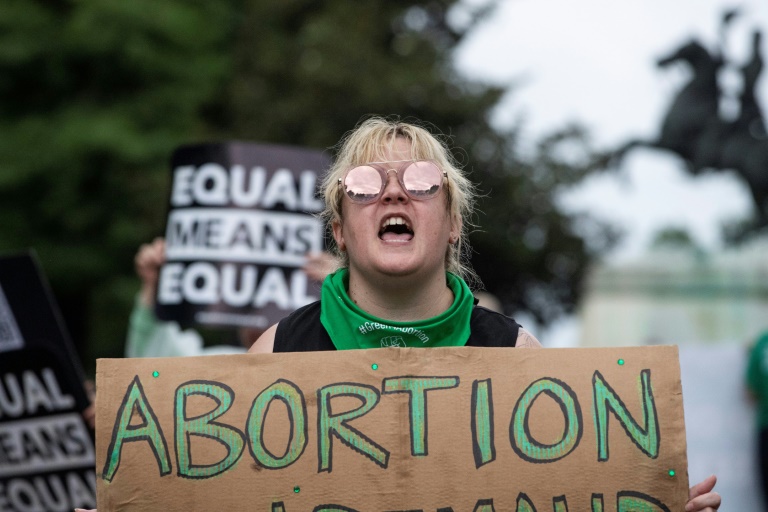
More US states ban abortion as Democrats push back

Abortion became illegal in three more US states on Thursday, further restricting access to elective terminations for millions of women despite some signs of popular and judicial pushback.

Two months after the Supreme Court struck down the constitutional right to abortion, nearly 21 million women have already lost access to the procedure in their home states, according to an analysis by The Washington Post. 

And with Idaho, Tennessee and Texas joining 10 other Republican-controlled states on Thursday in implementing near-total bans on abortion, that number is set to rise. Another dozen states are expected to follow suit with their own restrictions.

The laws in Idaho, Tennessee and Texas were “triggered” after the Supreme Court on June 24 overturned the landmark 1973 “Roe v. Wade” decision enshrining a woman’s right to an abortion and allowed states to set their own laws.

In Texas, under the new law, doctors could face life in prison and a fine of no less than $100,000 for performing an abortion. Texas and Tennessee make no exceptions for rape or incest, though Idaho does.

State restrictions range from total bans on elective abortions to bans after six weeks, when many women do not even know they are pregnant. Many women have already been forced to travel hundreds of miles to obtain the procedure in other states.

Democratic President Joe Biden condemned the ruling by the conservative-dominated Supreme Court and has pledged to do everything within his power to ensure access to abortion.

The Biden administration notched up a narrow victory in Idaho on Wednesday when a judge ruled that federal law requires doctors to provide abortions to women suffering medical emergencies at hospitals that receive Medicare funding from the government.

In an illustration of the complicated legal landscape, however, a judge in Texas, an appointee of Republican Donald Trump, issued a contrary ruling in a similar case, setting the stage for further court battles.

White House Press Secretary Karine Jean-Pierre welcomed the outcome in Idaho but called the Texas ruling a “devastating decision for women in that state, who can now be denied the same life-saving care.” 

Besides battling in the courts, Democrats are hoping abortion will be a galvanizing issue for their candidates in the upcoming midterm elections.

US voters will decide control of Congress in November, with all 435 House seats up for grabs, as well as 35 of the 100 Senate seats and the governor’s mansion in 36 out of 50 states.

– ‘Health care is on the ballot’ –

“More women today are living with fewer freedoms thanks to Republicans’ relentless war to ban abortion in their states,” Democratic National Committee chairman Jaime Harrison said.

“Make no mistake: No matter what state you live in, reproductive health care is on the ballot this November, and GOP candidates will be held accountable for their extreme anti-choice agenda,” Harrison said.

A Democratic candidate notched up a victory in a special election in New York on Tuesday seen as a bellwether of the public mood on abortion ahead of November’s midterms.

According to political data firm Target Smart, women have been outpacing men in new voter registrations in numerous states.

In a Pew Research Center poll, 56 percent of registered voters said the abortion issue will be very important in their midterm vote, up from 43 percent in March.

Abortion rights advocates also recently celebrated a victory in a referendum in Kansas that would have removed the right to the procedure from the constitution of the conservative midwestern state.

The state is a Republican stronghold, but Kansans, by a 59 to 41 percent margin amid unusually heavy turnout, rejected the amendment that would have scrapped language in the state constitution guaranteeing the right to abortion.

Planned Parenthood, which lobbies for abortion access and plans to reportedly spend $50 million on the midterms, called the Kansas vote “a clear warning to anti-abortion politicians.”

While some two dozen Republican-led states are restricting access to abortion, a number of Democratic-controlled states, including giants California and New York, are putting protections in place.
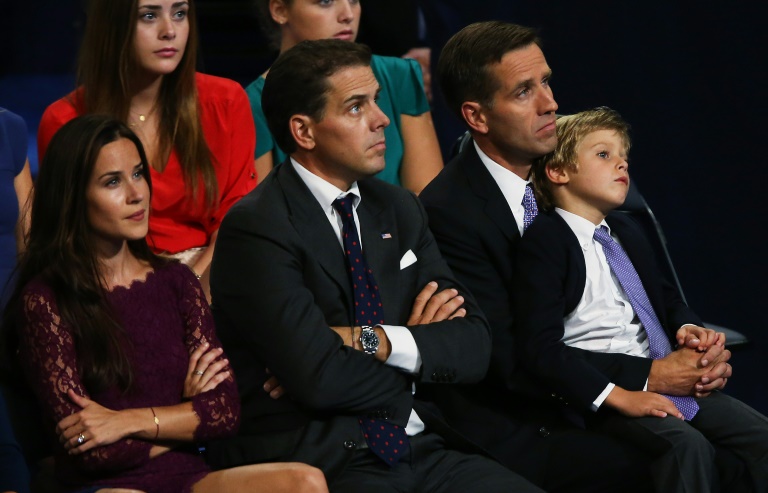

Two plead guilty to stealing, selling Biden daughter's diary

Two people pleaded guilty Thursday to stealing and selling for $40,000 the private diary of President Joe Biden’s daughter Ashley Biden, when he was running for office against Donald Trump in 2020. 

The Justice Department announced the guilty pleas by Aimee Harris and Robert Kurlander in court filings that refer to the victim as the daughter of “Candidate-1” — widely understood to be Biden.

According to the filings, the pair first sought to sell the diary to Trump’s campaign — named as “Candidate-2” — and when rebuffed they took it to a conservative activist group.

That group, previously identified as Project Veritas, offered them each $20,000 and allegedly encouraged them to return to steal other items, like digital files of family photographs, that Ashley Biden, 41, had left at a friend’s home in Florida, the department said.

Project Veritas is a Republican-aligned independent operation that has a record of seeking to infiltrate and trick progressive groups into actions that can be used to embarrass them politically.

While the organization never published the diary, a conservative website named National File did so — saying they obtained it from someone at Project Veritas, which sparked an FBI investigation.

The Justice Department said Harris and Kurlander pleaded guilty in a deal that requires them to forfeit the money they were paid and cooperate in the ongoing investigation.

They each face up to five years in prison on one count of conspiracy to transport stolen property.

Project Veritas defended itself in a statement, saying its “news gathering was ethical and legal.”

“A journalist’s lawful receipt of material later alleged to be stolen is routine, commonplace, and protected by the First Amendment” of the US Constitution, they said.

The FBI has also reportedly looked into the issue of the contents of a laptop owned by Biden’s son Hunter and left in a computer repair shop that were allegedly shared with conservative groups and mainstream media.

Emails that purportedly suggest Hunter Biden and his father were involved in shady dealings in Ukraine were published by the New York Post just before the November 2020 election.

Since then The Washington Post, The New York Times and others have also reported on some of the computer’s contents, which included 129,000 emails.

The files continue to be used in efforts to politically damage the president, and are reportedly part of an ongoing FBI investigation of Hunter Biden’s financial dealings.

Gas prices approach record peak on Russian supply fears

European natural gas prices climbed Thursday towards a record peak on heightened fears over Russian supplies, while equities rose on the eve of a key speech from Federal Reserve Chair Jerome Powell.

Europe’s benchmark Dutch TTF gas contract advanced to 322 euros per megawatt hour, not far from the record high 345 euros struck in March shortly after key gas producer Russia invaded Ukraine.

Prices have spiked in recent days as a three-day halt in Russian deliveries to Germany via the Nord Stream 1 pipeline approaches amid fears that Moscow will not turn the taps back on afterwards.

At the same time, one-year forward contracts for electricity prices in both France and Germany surged on Thursday to record pinnacles on worries over a winter energy crunch.

– ‘Unstoppable march upwards’ –

“Gas is on a seemingly unstoppable march upwards again, a dramatic move which will intensify the energy crisis,” said Hargreaves Lansdown analyst Susannah Streeter.

“Already plans are being brought in to save energy which will darken streets across Germany and make public buildings colder, but much tougher measures may have to be enforced given dwindling gas reserves.”

In stock market trade, European equities mostly advanced, with Frankfurt drawing some strength from news that the German economy expanded by an anemic 0.1 percent in the second quarter.

That was upgraded from the prior projection of zero growth, but analysts remain downbeat.

“I’m trying to find a reason to be optimistic on the back of that, but in reality it just means the economy may take a little longer to fall into recession,” warned OANDA analyst Craig Erlam.

“With the energy crisis unlikely to improve, this likely means another quarter of flat growth at best before the economy falls into recession later this year.”

Wall Street also pushed higher as traders looked to central banking symposium in Jackson Hole, Wyoming this week.

All eyes are on Powell’s speech Friday where he is expected to reiterate the message the Fed will continue to hike interest rates to tame high inflation.

Central banks around the world are trying to find a delicate balance between curbing inflation and avoiding recessions.

The challenge has been compounded this year by Russia’s invasion of Ukraine, which has sent energy and food prices skyrocketing.

There are concerns that the Fed’s fight against soaring inflation could lead to a recession in the United States, which could, in turn, hit a global economy that is still recovering from the Covid pandemic.

But the latest data out Thursday initial applications for unemployment benefits unexpectedly fell last week, dispelling concerns about a weakening job market, while GDP in the second quarter contracted by 0.6 percent, much less than first reported.

– China stimulus –

Asian indices rose after China unveiled fresh measures to boost its economy.

The moves to shore up the economy were announced by China’s State Council on Wednesday, including steps to encourage lending, consumption and investment, according to the official Xinhua news agency.

They also included support for electricity producers and agriculture, two sectors hit especially hard by the heatwave, though Xinhua’s readout of the State Council meeting did not mention the extreme weather.

– Key figures at around 2030 GMT –

New York – Dow: UP nearly 1.0 percent at 33,291.78 points (close)

New York – S&P 500: UP 1.4 percent at 4,199.12 (close)

New York – Nasdaq: UP 1.7 percent at 12,639.27 (close)

EURO STOXX 50: UP 0.2 percent at 3,674.02

London – FTSE 100: UP 0.1 percent at 7,479.74 (close)

Frankfurt – DAX: UP 0.4 percent at 13,271.96 (close) 

Paris – CAC 40: DOWN less than 0.1 percent at 6,381.56 (close)

Tokyo – Nikkei 225: UP 0.6 percent at 28,479.01 (close)

Hong Kong – Hang Seng Index: UP 3.6 percent at 19,968.38 (close)

Shanghai – Composite: UP 1.0 percent at 3,246.25 (close)

Euro/dollar: DOWN at 0.9968 from $0.9970

Pound/dollar: UP at $1.1826 from $1.1799

Euro/pound: DOWN at 84.28 pence from 84.47 pence

Dollar/yen: UP at 136.49 yen from 136.36 yen

West Texas Intermediate: DOWN 2.5 percent at $92.52 per barrel

Brent North Sea crude: DOWN 1.6 percent at $99.34

burs-rl/kjm/hs/mdl

Brazil records worst day for Amazon fires in 15 years

The number of forest fires in the Brazilian Amazon hit a nearly 15-year high this week, according to official figures that provided the latest warning on the advancing destruction of the world’s biggest rainforest.

Satellite monitoring detected 3,358 fires on Monday, August 22, the highest number for any 24-hour period since September 2007, according to the Brazilian space agency, INPE.

The number was nearly triple that recorded on the so-called “Day of Fire” — August 10, 2019 — when farmers launched a coordinated plan to burn huge amounts of felled rainforest in the northern state of Para.

Then, fires sent thick gray smoke all the way to Sao Paulo, some 2,500 kilometers (1,500 miles) away, and triggered a global outcry over images of one of Earth’s most vital resources burning.

There is no indication that Monday’s fires were coordinated, said Alberto Setzer, head of INPE’s fire monitoring program.

Rather, they appear to fit a pattern of increasing deforestation and burning, he said.

Experts say Amazon fires are caused mainly by illegal farmers, ranchers and speculators clearing land and torching the trees.

In Brazil, the so-called “arc of deforestation” has been advancing.

“The regions where the most fires are occurring are moving farther and farther north,” Setzer told AFP.

“The ‘arc of deforestation’ is undoubtedly evolving.”

August is typically when fire season starts in earnest in the Amazon, with the arrival of drier weather.

This has been a worrying year so far for the forest, a key buffer against global warming: INPE detected 5,373 fires last month, up eight percent from July last year.

And with 24,124 fires so far this month, it is on track to be the worst August under President Jair Bolsonaro — though well below the 63,764 fires detected in August 2005, the worse for the month since records began in 1998.

Bolsonaro, an agribusiness ally, faces international criticism for a surge in Amazon destruction on his watch. Since he took office in January 2019, average annual deforestation in the Brazilian Amazon has increased by 75 percent compared to the previous decade.

The far-right president rejects that criticism.

“None of those who are attacking us have the right. If they wanted a pretty forest to call their own, they should have preserved the ones in their countries,” he wrote on Twitter Thursday.

“The Amazon belongs to Brazilians, and always will.”

But with Bolsonaro running for reelection in October, the destruction risks accelerating, said Ane Alencar, director of science at the Amazon Environmental Research Institute (IPAM).

“We know from previous years that there is a link between elections and deforestation,” with officials and enforcement agencies distracted by the campaign, she said.

This year, “we have high rates of deforestation… and there are still lots of felled trees waiting to burn.”

California says new cars must be zero emission by 2035

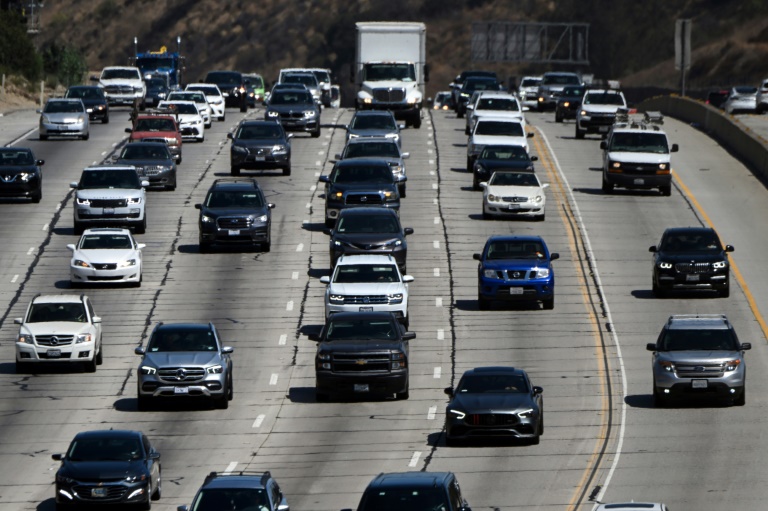
California ruled Thursday that all new cars sold in America’s most populous state must be zero emission from 2035, in what was billed as a nation-leading step to slash the pollutants that cause global warming.

The widely touted move has been hailed by environmentalists, who hope it will prod other parts of the United States to quicken the adoption of electric vehicles.

The rules demand an ever-increasing percentage of new cars sold to California’s 40 million inhabitants produce no tailpipe pollutants, until their total ban in 13 years’ time.

“The timeline is ambitious but achievable: by the time a child born this year is ready to enter middle school, only zero-emission vehicles or a limited number of plug-in hybrids (PHEVs) will be offered for sale new in California,” the California Air Resources Board said.

The board, which was tasked with finding a way to implement Governor Gavin Newsom’s order to transition the state’s automotive sector, said the health benefits would be significant.

“By 2037, the regulation delivers a 25 percent reduction in smog-causing pollution from light-duty vehicles.

“This benefits all Californians but especially the state’s most environmentally and economically burdened communities along freeways and other heavily traveled thoroughfares.”

From 2026 through 2040 the regulation is expected to result in 1,290 fewer cardiopulmonary deaths, 460 fewer hospital admissions for cardiovascular or respiratory illness, and 650 fewer emergency room visits for asthma, it said.

– Popularity –

California already accounts for the lion’s share of electric vehicles in the United States, with 1.13 million of them on the state’s roads — 43 percent of the nation’s total.

Their popularity has mushroomed in the years since they were seen as little more than novelty golf carts for tree-huggers content to drive no more than a few dozen miles (kilometers).

Ten years ago only two percent of new cars sold in the state were electric; that figure is now 16 percent, and Teslas and other premium offerings with a range of hundreds of miles are a common sight on roads around Los Angeles and San Francisco.

Still, the vehicles remain more expensive than their fossil fuel-powered equivalents and critics say only federal subsidies of up to $7,500 make them viable for many buyers.

But supporters say the incentives are necessary short-term supports that will fade away as increased adoption boosts economies of scale and drives down prices.

As the biggest auto market in the United States, one manufacturers cannot ignore, California has an outsized influence in effectively setting national standards.

Thursday’s ruling comes on the heels of a climate law signed last week by US President Joe Biden, which sets aside hundreds of millions of dollars in incentives for clean energy programs.

Biden and his Democratic Party are rushing to make up climate policy ground they feel was lost under former president Donald Trump, who yanked the United States out of the Paris Climate Accord and reversed what many environmentalists viewed as already-weak progress in reducing the fossil fuel emissions that drive global warming.

Newsom, a leading light in the Democratic Party, who is rumored to have presidential ambitions, welcomed the ruling.

– ‘Groundbreaking’ –

“California now has a groundbreaking, world-leading… roadmap to reducing dangerous carbon emissions and moving away from fossil fuels,” he said.

The reduction in the number of petrol and diesel-powered cars on the roads is equivalent to “915 million oil barrels’ worth of emissions that won’t pollute our communities.”

“With the historic $10 billion we’re investing to accelerate the transition… we’re making it easier and cheaper for all Californians to purchase electric cars.”

In recent years jurisdictions around the world, notably in Europe, have set their sights on the polluting automobile sector.

Norway is aiming to have all new cars produce zero tailpipe emissions by 2025.

The UK, Singapore and Israel are eyeing 2030, while the European Union wants to end the sale of new petrol and diesel cars by 2035. 

Human-caused global warming has already raised average temperatures around the planet, affecting weather patterns and worsening natural hazards like wildfires and storms.

Scientists say dramatic action is required to limit the damage, and point to curbing emissions from fossil fuels as key to the battle.

California says new cars must be zero emission by 2035

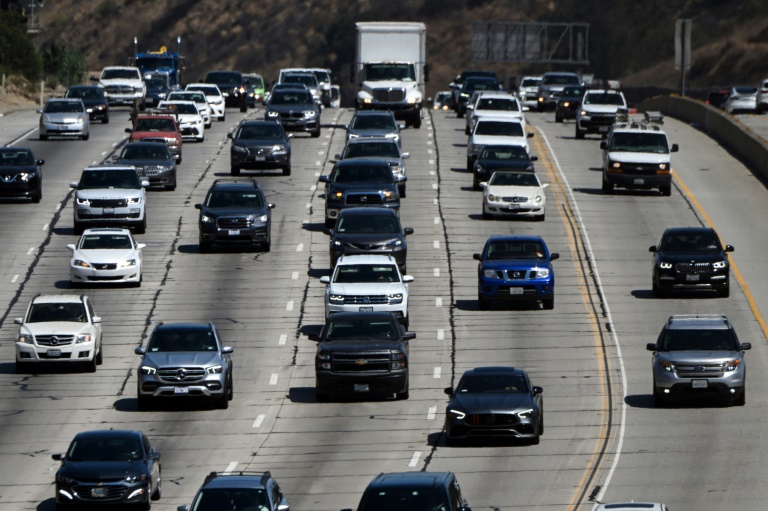
California ruled Thursday that all new cars sold in America’s most populous state must be zero emission from 2035, in what was billed as a nation-leading step to slash the pollutants that cause global warming.

The widely touted move has been hailed by environmentalists, who hope it will prod other parts of the United States to quicken the adoption of electric vehicles.

The rules demand an ever-increasing percentage of new cars sold to California’s 40 million inhabitants produce no tailpipe pollutants, until their total ban in 13 years’ time.

“The timeline is ambitious but achievable: by the time a child born this year is ready to enter middle school, only zero-emission vehicles or a limited number of plug-in hybrids (PHEVs) will be offered for sale new in California,” the California Air Resources Board said.

The board, which was tasked with finding a way to implement Governor Gavin Newsom’s order to transition the state’s automotive sector, said the health benefits would be significant.

“By 2037, the regulation delivers a 25 percent reduction in smog-causing pollution from light-duty vehicles.

“This benefits all Californians but especially the state’s most environmentally and economically burdened communities along freeways and other heavily traveled thoroughfares.”

From 2026 through 2040 the regulation is expected to result in 1,290 fewer cardiopulmonary deaths, 460 fewer hospital admissions for cardiovascular or respiratory illness, and 650 fewer emergency room visits for asthma, it said.

– Popularity –

California already accounts for the lion’s share of electric vehicles in the United States, with 1.13 million of them on the state’s roads — 43 percent of the nation’s total.

Their popularity has mushroomed in the years since they were seen as little more than novelty golf carts for tree-huggers content to drive no more than a few dozen miles (kilometers).

Ten years ago only two percent of new cars sold in the state were electric; that figure is now 16 percent, and Teslas and other premium offerings with a range of hundreds of miles are a common sight on roads around Los Angeles and San Francisco.

Still, the vehicles remain more expensive than their fossil fuel-powered equivalents and critics say only federal subsidies of up to $7,500 make them viable for many buyers.

But supporters say the incentives are necessary short-term supports that will fade away as increased adoption boosts economies of scale and drives down prices.

As the biggest auto market in the United States, one manufacturers cannot ignore, California has an outsized influence in effectively setting national standards.

Thursday’s ruling comes on the heels of a climate law signed last week by US President Joe Biden, which sets aside hundreds of millions of dollars in incentives for clean energy programs.

Biden and his Democratic Party are rushing to make up climate policy ground they feel was lost under former president Donald Trump, who yanked the United States out of the Paris Climate Accord and reversed what many environmentalists viewed as already-weak progress in reducing the fossil fuel emissions that drive global warming.

Newsom, a leading light in the Democratic Party, who is rumored to have presidential ambitions, welcomed the ruling.

– ‘Groundbreaking’ –

“California now has a groundbreaking, world-leading… roadmap to reducing dangerous carbon emissions and moving away from fossil fuels,” he said.

The reduction in the number of petrol and diesel-powered cars on the roads is equivalent to “915 million oil barrels’ worth of emissions that won’t pollute our communities.”

“With the historic $10 billion we’re investing to accelerate the transition… we’re making it easier and cheaper for all Californians to purchase electric cars.”

In recent years jurisdictions around the world, notably in Europe, have set their sights on the polluting automobile sector.

Norway is aiming to have all new cars produce zero tailpipe emissions by 2025.

The UK, Singapore and Israel are eyeing 2030, while the European Union wants to end the sale of new petrol and diesel cars by 2035. 

Human-caused global warming has already raised average temperatures around the planet, affecting weather patterns and worsening natural hazards like wildfires and storms.

Scientists say dramatic action is required to limit the damage, and point to curbing emissions from fossil fuels as key to the battle.

California says new cars must be zero emission by 2035

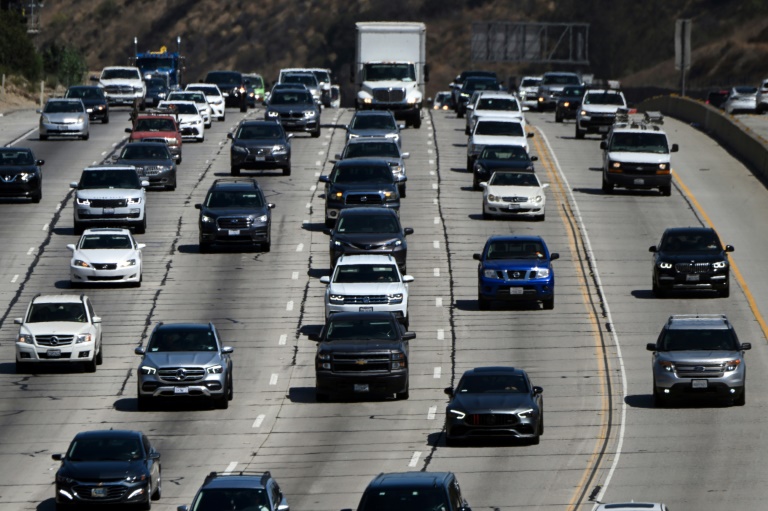
California ruled Thursday that all new cars sold in America’s most populous state must be zero emission from 2035, in what was billed as a nation-leading step to slash the pollutants that cause global warming.

The widely touted move has been hailed by environmentalists, who hope it will prod other parts of the United States to quicken the adoption of electric vehicles.

The rules demand an ever-increasing percentage of new cars sold to California’s 40 million inhabitants produce no tailpipe pollutants, until their total ban in 13 years’ time.

“The timeline is ambitious but achievable: by the time a child born this year is ready to enter middle school, only zero-emission vehicles or a limited number of plug-in hybrids (PHEVs) will be offered for sale new in California,” the California Air Resources Board said.

The board, which was tasked with finding a way to implement Governor Gavin Newsom’s order to transition the state’s automotive sector, said the health benefits would be significant.

“By 2037, the regulation delivers a 25 percent reduction in smog-causing pollution from light-duty vehicles.

“This benefits all Californians but especially the state’s most environmentally and economically burdened communities along freeways and other heavily traveled thoroughfares.”

From 2026 through 2040 the regulation is expected to result in 1,290 fewer cardiopulmonary deaths, 460 fewer hospital admissions for cardiovascular or respiratory illness, and 650 fewer emergency room visits for asthma, it said.

– Popularity –

California already accounts for the lion’s share of electric vehicles in the United States, with 1.13 million of them on the state’s roads — 43 percent of the nation’s total.

Their popularity has mushroomed in the years since they were seen as little more than novelty golf carts for tree-huggers content to drive no more than a few dozen miles (kilometers).

Ten years ago only two percent of new cars sold in the state were electric; that figure is now 16 percent, and Teslas and other premium offerings with a range of hundreds of miles are a common sight on roads around Los Angeles and San Francisco.

Still, the vehicles remain more expensive than their fossil fuel-powered equivalents and critics say only federal subsidies of up to $7,500 make them viable for many buyers.

But supporters say the incentives are necessary short-term supports that will fade away as increased adoption boosts economies of scale and drives down prices.

As the biggest auto market in the United States, one manufacturers cannot ignore, California has an outsized influence in effectively setting national standards.

Thursday’s ruling comes on the heels of a climate law signed last week by US President Joe Biden, which sets aside hundreds of millions of dollars in incentives for clean energy programs.

Biden and his Democratic Party are rushing to make up climate policy ground they feel was lost under former president Donald Trump, who yanked the United States out of the Paris Climate Accord and reversed what many environmentalists viewed as already-weak progress in reducing the fossil fuel emissions that drive global warming.

Newsom, a leading light in the Democratic Party, who is rumored to have presidential ambitions, welcomed the ruling.

– ‘Groundbreaking’ –

“California now has a groundbreaking, world-leading… roadmap to reducing dangerous carbon emissions and moving away from fossil fuels,” he said.

The reduction in the number of petrol and diesel-powered cars on the roads is equivalent to “915 million oil barrels’ worth of emissions that won’t pollute our communities.”

“With the historic $10 billion we’re investing to accelerate the transition… we’re making it easier and cheaper for all Californians to purchase electric cars.”

In recent years jurisdictions around the world, notably in Europe, have set their sights on the polluting automobile sector.

Norway is aiming to have all new cars produce zero tailpipe emissions by 2025.

The UK, Singapore and Israel are eyeing 2030, while the European Union wants to end the sale of new petrol and diesel cars by 2035. 

Human-caused global warming has already raised average temperatures around the planet, affecting weather patterns and worsening natural hazards like wildfires and storms.

Scientists say dramatic action is required to limit the damage, and point to curbing emissions from fossil fuels as key to the battle.

George Foreman sued for alleged sexual assault

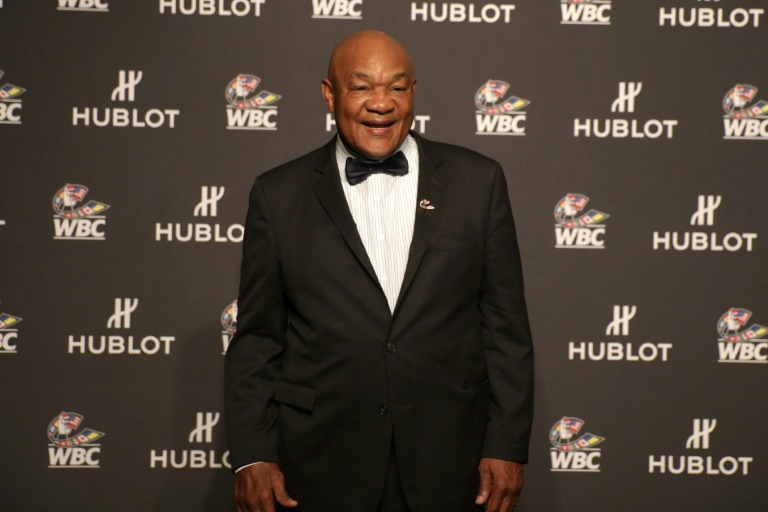
Former world heavyweight champion George Foreman was accused of sexual assault in the 1970s by two women who were teenagers, according to lawsuits filed in Los Angeles.

The lawsuits, obtained by People magazine and celebrity website TMZ, were filed by women identified as Denise S. and Gwen H.

Foreman was not identified by name but referred to as a former pro boxer who defeated Joe Frazier in 1973 to become heavyweight champion, as Foreman did.

Denise claimed to have met Foreman at age eight and said he raped her several times in 1976, including at a San Francisco hotel, with assaults taking place when she was 13-16 years old and Foreman was 24.

Gwen said she was 15 when Foreman began assaulting her. She said her father was employed by Foreman and the fighter threatened to fire her father is she was not cooperative.

The women seek a trial by jury saying they suffered physical and mental injuries at the hands of the fighter.

Foreman denied the lawsuit’s claims in a statement to the New York Times.

“Over the past six months, two women have been trying to extort millions of dollars each from me and my family,” Foreman said.

“They are falsely claiming that I sexually abused them over 45 years ago in the 1970s. I adamantly and categorically deny these allegations.”

Foreman, 73, was the 1968 Olympic heavyweight boxing champion and won the professional heavyweight boxing crown in 1973 by stopping Frazier in the second round.

He kept the crown until losing to Muhammad Ali in the famous “Rumble in the Jungle” fight in 1974 in what was then Zaire.

Foreman would become a pitchman after his boxing career, notably for a grill that carried his name.

In 1994, at age 45, Foreman reclaimed the heavyweight throne by knocking our Michael Moorer, becoming at the time the oldest fighter to ever win any boxing title.

Foreman ended his career at age 48 in 1997 with a loss to Shannon Briggs, his final record at 76-5 with 68 knockout triumphs.

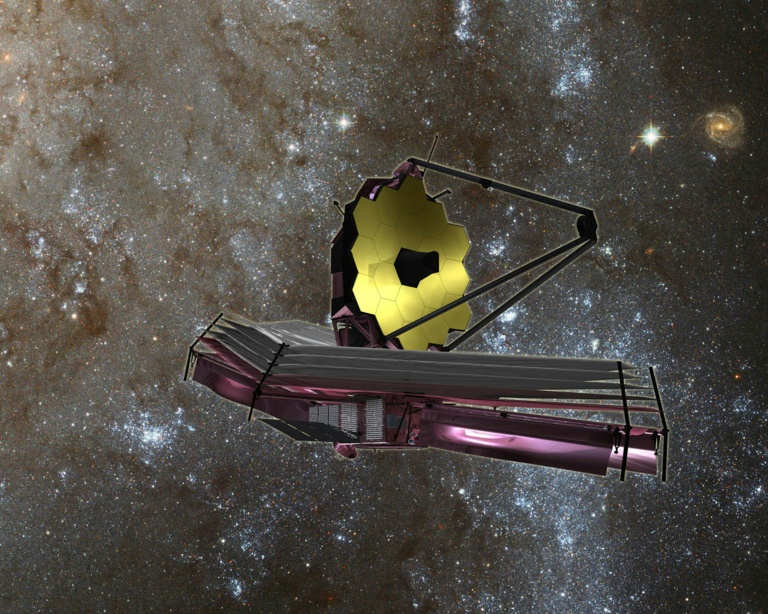
Webb telescope finds CO2 for first time in exoplanet atmosphere

The months-old James Webb Space Telescope has added another major scientific discovery to its growing list: detecting for the first time signs of carbon dioxide in the atmosphere of a planet outside our solar system.

Although the exoplanet would never be able to support life as we know it, the successful discovery of CO2 gives researchers hope that similar observations could be carried out on rocky objects more hospitable to life.

“My first thought: wow, we really do have a chance to detect the atmospheres of terrestrial-size planets,” tweeted Natalie Batalha, a professor at the University of California at Santa Cruz and one of hundreds who worked on the Webb project.

Their study of exoplanet WASP-39, a hot gas giant closely orbiting a star 700 light years away, will soon be published in the journal Nature.

“For me, it opens a door for future research on super-Earths (planets larger than Earth but smaller than Neptune), or even Earth-sized planets,” Pierre-Olivier Lagage, an astrophysicist with France’s Atomic Energy Commission (CEA), told AFP.

The detection of CO2 will also help scientists learn more about how WASP-39 formed, NASA said in a press release. The exoplanet, which orbits its star once every four Earth days, has a mass one-quarter that of Jupiter but a diameter 1.3 times bigger.

The frequency of its orbit and large atmosphere made WASP-39 an ideal candidate for an early test of Webb’s state-of-the-art infrared sensor, known as NIRSpec.

Each time the exoplanet crosses in front of its star, it blocks out an almost imperceptible amount of light.

But around the edges of the planet, a tiny amount of light passes through the atmosphere.

Webb’s highly sensitive NIRSpec can detect the small changes that the atmosphere has on the light, allowing scientists to determine its gas composition.

The Hubble and Spitzer telescopes had already detected water vapor, sodium and potassium in WASP-39’s atmosphere, but carbon dioxide can now be added to that list thanks to Webb and its NIRSpec instrument.

“It was a special moment, crossing an important threshold in exoplanet sciences,” said Zafar Rustamkulov, a Johns Hopkins University researcher, in the NASA press release.

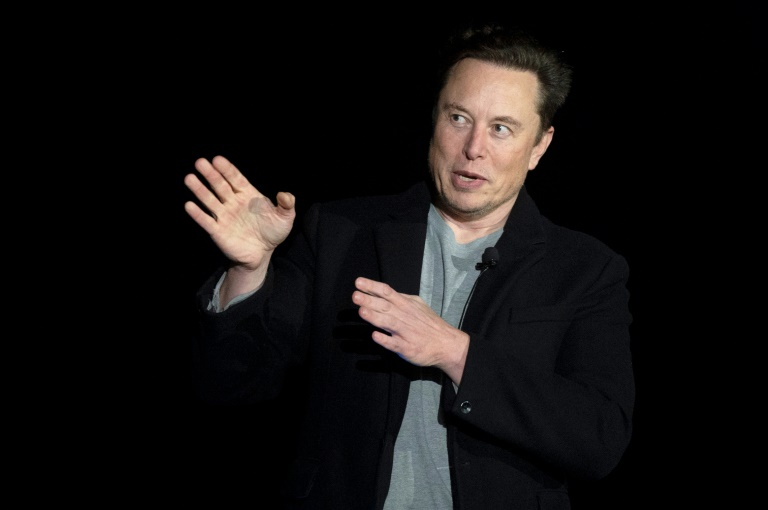
Twitter ordered to give Musk additional bot account data

A US judge told Twitter on Thursday to surrender more data to Elon Musk on fake accounts, a key issue the billionaire is using to try to cancel his buyout bid.

While Judge Kathaleen McCormick allowed the Tesla boss’s team an opening to bolster its argument that Musk was misled, she chastised them for “absurdly broad” requests for “trillions upon trillions of data points.”

The judge ordered Twitter to hand over data on 9,000 accounts the firm audited at the end of 2021, which opens the door for that information to be used in Musk’s effort to quit the $44 billion deal.

“Some additional data from plaintiff (Twitter) seems warranted,” McCormick wrote, without elaborating, in her four-page ruling.

Musk has argued Twitter was dishonest on the number of false or spam accounts, prompting strong denials and a lawsuit from the social media firm that has led to a trial set for mid-October.

Musk’s lawyers pushed hard in a hearing Wednesday to force the firm to turn over mountains of information, while seizing upon a freshly revealed Twitter whistleblower’s claims of serious flaws inside the company. 

Twitter lawyer Bradley Wilson countered that the company deceived nobody, and that Musk wants a “do-over” regarding questions he should have asked before he made his unsolicited buyout offer early this year.

The firm opposed handing over certain types of data for reasons including the potential to violate user privacy protected by law, its attorney Wilson argued.

Even if Musk’s experts come to a different conclusion about the number of spam accounts at Twitter, that would not amount to a breach significant enough to let him break the buyout contract, Twitter attorneys argue.

Whistleblower Peiter Zatko’s complaint to US authorities accuses Twitter of issuing untrue statements on account numbers because “if accurate measurements ever became public, it would harm the image and valuation of the company.”

It was not immediately clear whether the complaint, and its use by Musk’s attorneys, will significantly alter the course of the case.

Twitter’s lawyers had expressed concern that Musk could misuse sensitive data they turn over to his lawyers.

The judge said the billionaire’s team “have agreed to treat this data as highly confidential.”

Close Bitnami banner
Bitnami