AFP

Murdoch sues small Australian news outlet for defamation

Fox News boss Lachlan Murdoch has sued a small Australian media outlet for defamation over an opinion piece that linked his media empire to the US Capitol riots.

The scion of the Murdoch media empire is seeking damages, accusing Crikey staff of tarnishing his reputation and “covertly using another media organisation to harass” him.

Murdoch — whose Fox News Channel regularly rails at threats to free speech — also asked the court to permanently ban the site from publishing anything suggesting he “illegally conspired with Donald Trump” around the events of January 6.

The lawsuit was filed late Tuesday in Australia’s federal court, and came after Crikey published letters from Murdoch’s lawyers and dared him to sue. 

Crikey even took out an advertisement in the New York Times on Monday, publishing an open letter that welcomed the opportunity to “test this important issue of freedom of public interest journalism in a courtroom”.

Murdoch is chief executive of media behemoth Fox Corporation, which owns Fox News, and co-chairman of News Corp.

He is the eldest son of billionaire media tycoon Rupert Murdoch, owner of scores of outlets including The Wall Street Journal and the New York Post.

– ‘Unindicted co-conspirator’ –

The lawsuit was sparked by a June 29 article written by Crikey’s political editor Bernard Keane, headlined: “Trump is a confirmed unhinged traitor. And Murdoch is his unindicted co-conspirator”.

The original piece did not name the younger Murdoch directly, referring only to the “Murdochs and their slew of poisonous Fox News commentators”.

In legal correspondence with Murdoch, Crikey’s lawyers argued readers would more likely think the article referred to his father.

However, Murdoch’s lawyers argued in documents filed to the federal court Tuesday that their client was defamed 14 times by the article.

The legal filing also refers extensively to an article published in the Sydney Morning Herald — a major Australian newspaper — about Murdoch threatening to sue Crikey.

Murdoch’s lawyers alleged that Crikey tipped off the Sydney Morning Herald, and has since used the saga to drive subscriptions.

The Fox executive has retained high-profile barrister Sue Chrysanthou, who previously represented actor Geoffrey Rush in his defamation case against another Australian media organisation.

– Crikey stands by story –

The legal tussle pits an upstart website, with subscriber numbers in the low tens of thousands, against one of the world’s largest media empires.

Crikey editor-in-chief Peter Fray and chairman Eric Beecher said Wednesday that the site “stands by its story”.

“We look forward to defending our independent public interest journalism in court against the considerable resources of Lachlan Murdoch,” the pair said in a statement published by the site.

“We believe that coverage of the events of January 6 at the US Capitol, and the role of Fox News in those events, is absolutely legitimate.”

Murdoch’s representatives told AFP he would not be commenting as the matter was before the court.

– ‘The defamation capital’ –

The story has made waves in Australia, where the Murdoch family remains a major player in the local media despite its global expansion.

Former Australian Prime Minister Malcolm Turnbull weighed into the saga Wednesday, saying he was “very surprised” by Murdoch’s decision.

“I think it’s hypocritical,” he told public broadcaster ABC, adding that the Murdochs were “always bleating about freedom of speech, and how the defamation laws are too harsh”.

Australia’s tough libel laws offer few protections to the media and have earned the country the nickname “the defamation capital of the world”.

Murdoch sues small Australian news outlet for defamation

Fox News boss Lachlan Murdoch has sued a small Australian media outlet for defamation over an opinion piece that linked his media empire to the US Capitol riots.

The scion of the Murdoch media empire is seeking damages, accusing Crikey staff of tarnishing his reputation and “covertly using another media organisation to harass” him.

Murdoch — whose Fox News Channel regularly rails at threats to free speech — also asked the court to permanently ban the site from publishing anything suggesting he “illegally conspired with Donald Trump” around the events of January 6.

The lawsuit was filed late Tuesday in Australia’s federal court, and came after Crikey published letters from Murdoch’s lawyers and dared him to sue. 

Crikey even took out an advertisement in the New York Times on Monday, publishing an open letter that welcomed the opportunity to “test this important issue of freedom of public interest journalism in a courtroom”.

Murdoch is chief executive of media behemoth Fox Corporation, which owns Fox News, and co-chairman of News Corp.

He is the eldest son of billionaire media tycoon Rupert Murdoch, owner of scores of outlets including The Wall Street Journal and the New York Post.

– ‘Unindicted co-conspirator’ –

The lawsuit was sparked by a June 29 article written by Crikey’s political editor Bernard Keane, headlined: “Trump is a confirmed unhinged traitor. And Murdoch is his unindicted co-conspirator”.

The original piece did not name the younger Murdoch directly, referring only to the “Murdochs and their slew of poisonous Fox News commentators”.

In legal correspondence with Murdoch, Crikey’s lawyers argued readers would more likely think the article referred to his father.

However, Murdoch’s lawyers argued in documents filed to the federal court Tuesday that their client was defamed 14 times by the article.

The legal filing also refers extensively to an article published in the Sydney Morning Herald — a major Australian newspaper — about Murdoch threatening to sue Crikey.

Murdoch’s lawyers alleged that Crikey tipped off the Sydney Morning Herald, and has since used the saga to drive subscriptions.

The Fox executive has retained high-profile barrister Sue Chrysanthou, who previously represented actor Geoffrey Rush in his defamation case against another Australian media organisation.

– Crikey stands by story –

The legal tussle pits an upstart website, with subscriber numbers in the low tens of thousands, against one of the world’s largest media empires.

Crikey editor-in-chief Peter Fray and chairman Eric Beecher said Wednesday that the site “stands by its story”.

“We look forward to defending our independent public interest journalism in court against the considerable resources of Lachlan Murdoch,” the pair said in a statement published by the site.

“We believe that coverage of the events of January 6 at the US Capitol, and the role of Fox News in those events, is absolutely legitimate.”

Murdoch’s representatives told AFP he would not be commenting as the matter was before the court.

– ‘The defamation capital’ –

The story has made waves in Australia, where the Murdoch family remains a major player in the local media despite its global expansion.

Former Australian Prime Minister Malcolm Turnbull weighed into the saga Wednesday, saying he was “very surprised” by Murdoch’s decision.

“I think it’s hypocritical,” he told public broadcaster ABC, adding that the Murdochs were “always bleating about freedom of speech, and how the defamation laws are too harsh”.

Australia’s tough libel laws offer few protections to the media and have earned the country the nickname “the defamation capital of the world”.
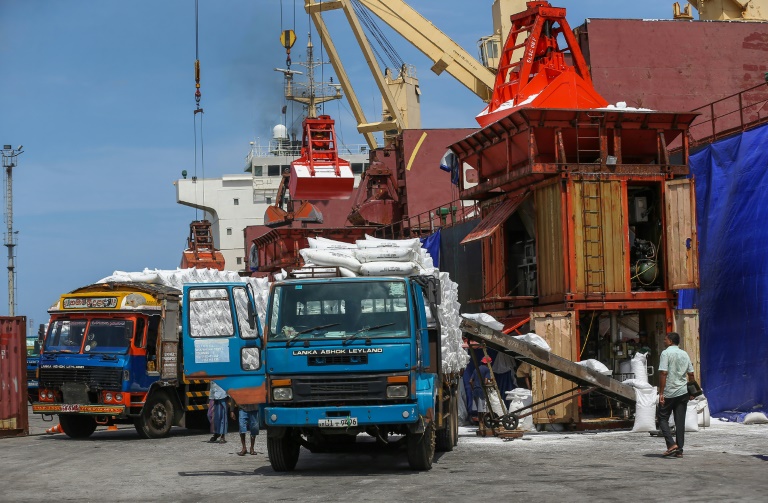
Sri Lanka widens import ban as economic crisis persists

Sri Lanka tightened import restrictions Wednesday with a ban on more than 300 additional items, as an economic crisis that has created months of shortages and toppled a president refuses to abate.

President Ranil Wickremesinghe, who replaced Gotabaya Rajapaksa after his ouster in July, slapped a ban on goods including home appliances, tools and sports gear.

The South Asian island nation of 22 million people has been suffering dire shortages of many essentials due to a lack of foreign currency.

The new bans come despite the central bank announcing last week that the foreign exchange shortage was easing thanks to better inflows.

However, Sri Lanka’s economy is projected to contract this year by a worse-than-expected 8.0 percent, according to the bank, with inflation forecast to peak at a record 65 percent by September.

The lack of foreign currency pushed Sri Lanka into defaulting on some of its $51 billion external debt pile in April.

A delegation from the International Monetary Fund was due on Wednesday to continue talks with Sri Lankan officials on a bailout.

But IMF assistance could be delayed if Sri Lanka’s creditors, the biggest being China, refuse to restructure some of their loans.

Beijing has not publicly shifted from its offer of issuing more loans rather than taking a haircut on existing credit.

Worker remittances, a key source of foreign exchange for Sri Lanka, have dropped by more than 50 percent to $1.6 billion in the six months to June compared to the same period last year.

Rajapaksa, 73, fled to Singapore after months of protests culminated in demonstrators storming his official residence in July. He has since flown to Thailand but wants to return home, according to his party.

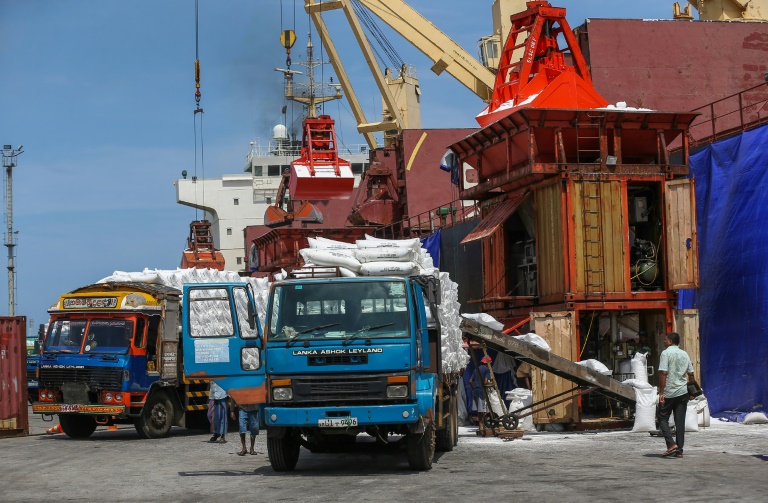
Sri Lanka widens import ban as economic crisis persists

Sri Lanka tightened import restrictions Wednesday with a ban on more than 300 additional items, as an economic crisis that has created months of shortages and toppled a president refuses to abate.

President Ranil Wickremesinghe, who replaced Gotabaya Rajapaksa after his ouster in July, slapped a ban on goods including home appliances, tools and sports gear.

The South Asian island nation of 22 million people has been suffering dire shortages of many essentials due to a lack of foreign currency.

The new bans come despite the central bank announcing last week that the foreign exchange shortage was easing thanks to better inflows.

However, Sri Lanka’s economy is projected to contract this year by a worse-than-expected 8.0 percent, according to the bank, with inflation forecast to peak at a record 65 percent by September.

The lack of foreign currency pushed Sri Lanka into defaulting on some of its $51 billion external debt pile in April.

A delegation from the International Monetary Fund was due on Wednesday to continue talks with Sri Lankan officials on a bailout.

But IMF assistance could be delayed if Sri Lanka’s creditors, the biggest being China, refuse to restructure some of their loans.

Beijing has not publicly shifted from its offer of issuing more loans rather than taking a haircut on existing credit.

Worker remittances, a key source of foreign exchange for Sri Lanka, have dropped by more than 50 percent to $1.6 billion in the six months to June compared to the same period last year.

Rajapaksa, 73, fled to Singapore after months of protests culminated in demonstrators storming his official residence in July. He has since flown to Thailand but wants to return home, according to his party.

All systems go for Artemis 1 mission to Moon

Fifty years after the last Apollo mission, the Artemis program is poised to take up the baton of lunar exploration with a test launch on Monday of NASA’s most powerful rocket ever.

The goal is to return humans to the Moon for the first time since the last Apollo mission in 1972 — and eventually to Mars.

The 322-foot (98-meter) Space Launch System (SLS) rocket is scheduled to blast off at 8:33 am (1233 GMT) from the Kennedy Space Center (KSC) in Florida.

The mission, more than a decade in the planning, may be uncrewed, but is highly symbolic for NASA, which has been under pressure from China and private rivals such as SpaceX.

Hotels around Cape Canaveral are booked solid with between 100,000 and 200,000 spectators expected to attend the launch.

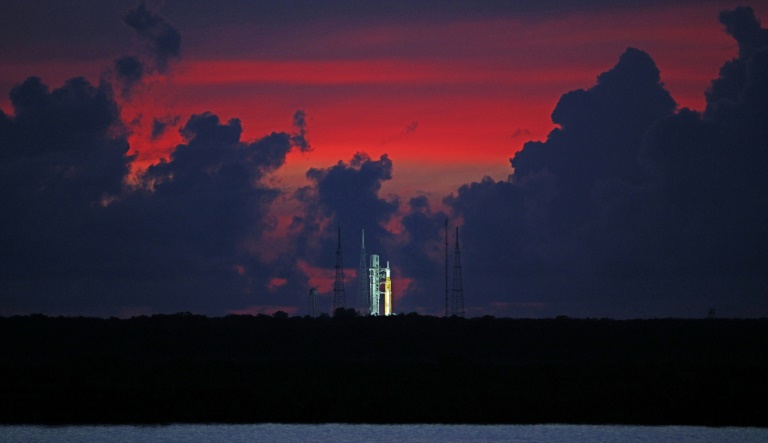
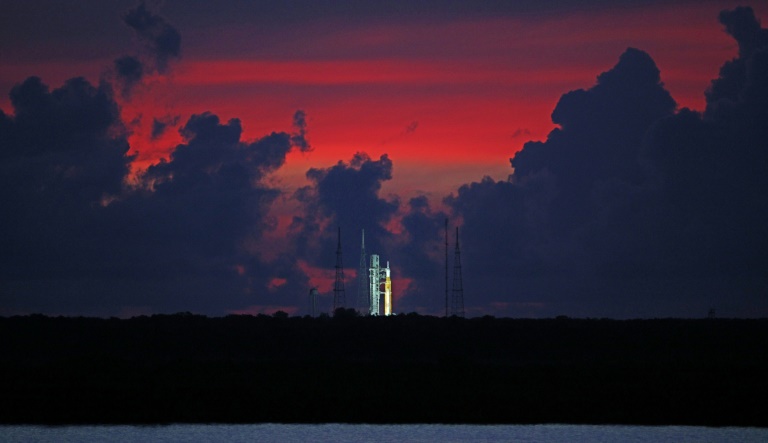
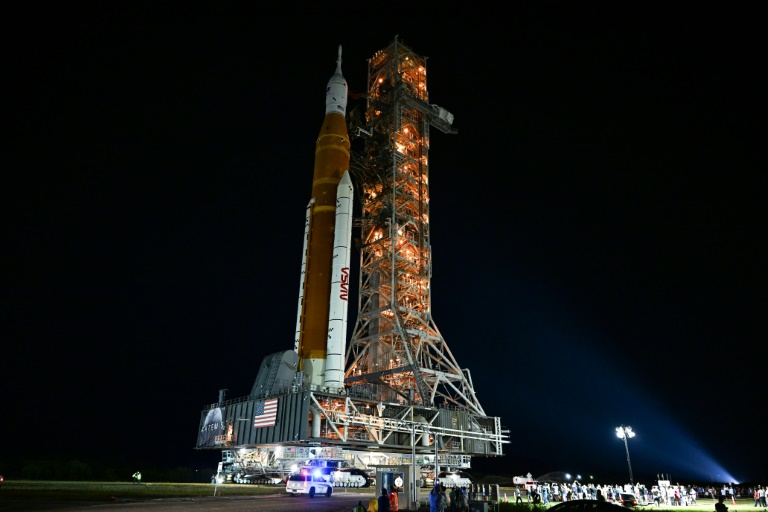
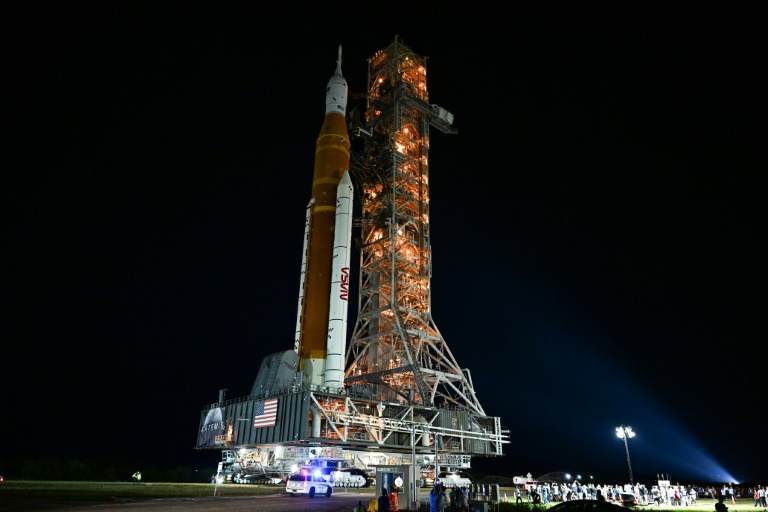
The massive orange-and-white rocket has been sitting on KSC’s Launch Complex 39B for a week.

“Ever since we rolled out to the pad last week, you can feel the excitement, the energy,” said Janet Petro, director of KSC. “It’s really, really palpable.”

The objective of the flight, baptized Artemis 1, is to test the SLS and the Orion crew capsule that sits atop the rocket.

Mannequins equipped with sensors will take the place of crew members, recording acceleration, vibration and radiation levels.

Cameras will capture every moment of the 42-day trip and include a selfie of the spacecraft with the Moon and Earth in the background.

– Splashdown in Pacific –

The Orion capsule will orbit around the Moon, coming within 60 miles (100 kilometers) at its closest approach and then firing its engines to get to a distance 40,000 miles beyond, a record for a spacecraft rated to carry humans.

One of the primary objectives of the mission is to test the capsule’s heat shield, which at 16 feet in diameter is the largest ever built.

On its return to the Earth’s atmosphere, the heat shield will have to withstand a speed of 25,000 miles per hour and a temperature of 5,000 degrees Fahrenheit (2,760 degrees Celsius).

Orion, its descent slowed by parachutes, will end its voyage with a splashdown off the coast of San Diego in the Pacific.

Monday’s liftoff will be at the mercy of the weather, which can be unpredictable in Florida at this time of year, and NASA has built in a two-hour launch window.

If the rocket is unable to take off on Monday, September 2 and 5 have been penciled in as alternative flight dates.

Otherwise, it’s all systems go.

NASA gave the green light for the mission on Tuesday after a detailed inspection known as a flight readiness review.

That doesn’t mean things can’t go wrong with a rocket and a capsule flying for the first time.

– ‘Inherent risk’ –

“We’re doing something that is incredibly difficult to do and does carry inherent risk in it,” said Mike Sarafin, the Artemis 1 mission manager.

Because it is an uncrewed flight, Sarafin said the mission will continue in conditions that would not be acceptable for a flight with astronauts.

“If we had a failed solar array deployment we would proceed, and that is something that we wouldn’t necessarily do on a crewed flight,” he said.

A complete failure would be devastating for a program that is costing $4.1 billion per launch and is already running years behind schedule.

The next mission, Artemis 2, will take astronauts into orbit around the Moon without landing on its surface. The crew of Artemis 3 is to land on the Moon in 2025 at the earliest.

While the Apollo astronauts who walked on the Moon were exclusively white men, the Artemis program plans to include the first woman and person of color.

And since humans have already visited the Moon, Artemis has its sights set on another lofty goal — an eventual crewed mission to Mars.

The Artemis program is to establish a lasting human presence on the Moon with an orbiting space station known as Gateway and a base on the surface.

Gateway would serve as a staging and refueling station for a voyage to Mars that would take a minimum of several months.

“I think it’s going to inspire even more than Apollo did,” Bob Cabana, associate NASA administrator and a former astronaut, said of Artemis. “It’s going to be absolutely outstanding.”

All systems go for Artemis 1 mission to Moon

Fifty years after the last Apollo mission, the Artemis program is poised to take up the baton of lunar exploration with a test launch on Monday of NASA’s most powerful rocket ever.

The goal is to return humans to the Moon for the first time since the last Apollo mission in 1972 — and eventually to Mars.

The 322-foot (98-meter) Space Launch System (SLS) rocket is scheduled to blast off at 8:33 am (1233 GMT) from the Kennedy Space Center (KSC) in Florida.

The mission, more than a decade in the planning, may be uncrewed, but is highly symbolic for NASA, which has been under pressure from China and private rivals such as SpaceX.

Hotels around Cape Canaveral are booked solid with between 100,000 and 200,000 spectators expected to attend the launch.

The massive orange-and-white rocket has been sitting on KSC’s Launch Complex 39B for a week.

“Ever since we rolled out to the pad last week, you can feel the excitement, the energy,” said Janet Petro, director of KSC. “It’s really, really palpable.”

The objective of the flight, baptized Artemis 1, is to test the SLS and the Orion crew capsule that sits atop the rocket.

Mannequins equipped with sensors will take the place of crew members, recording acceleration, vibration and radiation levels.

Cameras will capture every moment of the 42-day trip and include a selfie of the spacecraft with the Moon and Earth in the background.

– Splashdown in Pacific –

The Orion capsule will orbit around the Moon, coming within 60 miles (100 kilometers) at its closest approach and then firing its engines to get to a distance 40,000 miles beyond, a record for a spacecraft rated to carry humans.

One of the primary objectives of the mission is to test the capsule’s heat shield, which at 16 feet in diameter is the largest ever built.

On its return to the Earth’s atmosphere, the heat shield will have to withstand a speed of 25,000 miles per hour and a temperature of 5,000 degrees Fahrenheit (2,760 degrees Celsius).

Orion, its descent slowed by parachutes, will end its voyage with a splashdown off the coast of San Diego in the Pacific.

Monday’s liftoff will be at the mercy of the weather, which can be unpredictable in Florida at this time of year, and NASA has built in a two-hour launch window.

If the rocket is unable to take off on Monday, September 2 and 5 have been penciled in as alternative flight dates.

Otherwise, it’s all systems go.

NASA gave the green light for the mission on Tuesday after a detailed inspection known as a flight readiness review.

That doesn’t mean things can’t go wrong with a rocket and a capsule flying for the first time.

– ‘Inherent risk’ –

“We’re doing something that is incredibly difficult to do and does carry inherent risk in it,” said Mike Sarafin, the Artemis 1 mission manager.

Because it is an uncrewed flight, Sarafin said the mission will continue in conditions that would not be acceptable for a flight with astronauts.

“If we had a failed solar array deployment we would proceed, and that is something that we wouldn’t necessarily do on a crewed flight,” he said.

A complete failure would be devastating for a program that is costing $4.1 billion per launch and is already running years behind schedule.

The next mission, Artemis 2, will take astronauts into orbit around the Moon without landing on its surface. The crew of Artemis 3 is to land on the Moon in 2025 at the earliest.

While the Apollo astronauts who walked on the Moon were exclusively white men, the Artemis program plans to include the first woman and person of color.

And since humans have already visited the Moon, Artemis has its sights set on another lofty goal — an eventual crewed mission to Mars.

The Artemis program is to establish a lasting human presence on the Moon with an orbiting space station known as Gateway and a base on the surface.

Gateway would serve as a staging and refueling station for a voyage to Mars that would take a minimum of several months.

“I think it’s going to inspire even more than Apollo did,” Bob Cabana, associate NASA administrator and a former astronaut, said of Artemis. “It’s going to be absolutely outstanding.”

An overview of NASA's Artemis 1 mission to the Moon

NASA’s Artemis 1 mission, scheduled to take off on Monday, is a 42-day voyage beyond the far side of the Moon and back.

The meticulously choreographed uncrewed flight should yield spectacular images as well as valuable scientific data.

– Blastoff –

The giant Space Launch System rocket will make its maiden flight from Launch Complex 39B at Kennedy Space Center in Florida.

Its four RS-25 engines, with two white boosters on either side, will produce 8.8 million pounds (39 meganewtons) of thrust — 15 percent more than the Apollo program’s Saturn V rocket.

After two minutes, the thrusters will fall back into the Atlantic Ocean. 

After eight minutes, the core stage, orange in color, will fall away in turn, leaving the Orion crew capsule attached to the interim cryogenic propulsion stage.

This stage will circle the Earth once, put Orion on course for the Moon, and drop away around 90 minutes after takeoff.

– Trajectory –

All that remains is Orion, which will fly astronauts in the future and is powered by a service module built by the European Space Agency. 

It will take several days to reach the Moon, flying around 60 miles (100 kilometers) at closest approach.

“It’s going to be spectacular. We’ll be holding our breath,” said mission flight director Rick LaBrode. 

The capsule will fire its engines to get to a distant retrograde orbit (DRO) 40,000 miles beyond the Moon, a distance record for a spacecraft rated to carry humans.

“Distant” relates to high altitude, while “retrograde” refers to the fact Orion will go around the Moon the opposite direction to the Moon’s orbit around the Earth. 

DRO is a stable orbit because objects are balanced between the gravitational pulls of two large masses.

After passing by the Moon to take advantage of its gravitational assistance, Orion will begin the return journey.

– Journey home –

The mission’s primary objective is to test the capsule’s heat shield, the largest ever built, 16 feet (five meters) in diameter.

On its return to the Earth’s atmosphere, it will have to withstand a speed of 25,000 miles per hour and a temperature of 5,000 degrees Fahrenheit (2,760 degrees Celsius).

Slowed by a series of parachutes until it is traveling at less than 20 miles per hour, Orion will splashdown off the coast of San Diego in the Pacific.

Divers will attach cables to tow it in a few hours to a US Navy ship.

– The crew  –

The capsule will carry a mannequin called “Moonikin Campos,” named after a legendary NASA engineer who saved Apollo 13, in the commander’s seat, wearing the agency’s brand new uniform.

Campos will be equipped with sensors to record acceleration and vibrations, and will also be accompanied by two other dummies: Helga and Zohar, who are made of materials designed to mimic bones and organs.

One will wear a radiation vest while the other won’t, to test the impacts of the radiation in deep space.

– What will we see? –

Several on-board cameras will make it possible to follow the entire journey from multiple angles, including from the point of view of a passenger in the capsule.

Cameras at the end of the solar panels will take selfies of the craft with the Moon and Earth in the background.

– CubeSats –

Life will imitate art with a technology demonstration called Callisto, inspired by the Starship Enterprise’s talking computer.

It is an improved version of Amazon’s Alexa voice assistant, which will be requested from the control center to adjust the light in the capsule, or to read flight data.

The idea is to make life easier for astronauts in the future.

In addition, a payload of 10 CubeSats, shoebox-sized microsatellites, will be deployed by the rocket’s upper stage.

They have numerous goals: studying an asteroid, examining the effect of radiation on living organisms, searching for water on the Moon.

These projects, carried out independently by international companies or researchers, take advantage of the rare opportunity of a launch into deep space.

An overview of NASA's Artemis 1 mission to the Moon

NASA’s Artemis 1 mission, scheduled to take off on Monday, is a 42-day voyage beyond the far side of the Moon and back.

The meticulously choreographed uncrewed flight should yield spectacular images as well as valuable scientific data.

– Blastoff –

The giant Space Launch System rocket will make its maiden flight from Launch Complex 39B at Kennedy Space Center in Florida.

Its four RS-25 engines, with two white boosters on either side, will produce 8.8 million pounds (39 meganewtons) of thrust — 15 percent more than the Apollo program’s Saturn V rocket.

After two minutes, the thrusters will fall back into the Atlantic Ocean. 

After eight minutes, the core stage, orange in color, will fall away in turn, leaving the Orion crew capsule attached to the interim cryogenic propulsion stage.

This stage will circle the Earth once, put Orion on course for the Moon, and drop away around 90 minutes after takeoff.

– Trajectory –

All that remains is Orion, which will fly astronauts in the future and is powered by a service module built by the European Space Agency. 

It will take several days to reach the Moon, flying around 60 miles (100 kilometers) at closest approach.

“It’s going to be spectacular. We’ll be holding our breath,” said mission flight director Rick LaBrode. 

The capsule will fire its engines to get to a distant retrograde orbit (DRO) 40,000 miles beyond the Moon, a distance record for a spacecraft rated to carry humans.

“Distant” relates to high altitude, while “retrograde” refers to the fact Orion will go around the Moon the opposite direction to the Moon’s orbit around the Earth. 

DRO is a stable orbit because objects are balanced between the gravitational pulls of two large masses.

After passing by the Moon to take advantage of its gravitational assistance, Orion will begin the return journey.

– Journey home –

The mission’s primary objective is to test the capsule’s heat shield, the largest ever built, 16 feet (five meters) in diameter.

On its return to the Earth’s atmosphere, it will have to withstand a speed of 25,000 miles per hour and a temperature of 5,000 degrees Fahrenheit (2,760 degrees Celsius).

Slowed by a series of parachutes until it is traveling at less than 20 miles per hour, Orion will splashdown off the coast of San Diego in the Pacific.

Divers will attach cables to tow it in a few hours to a US Navy ship.

– The crew  –

The capsule will carry a mannequin called “Moonikin Campos,” named after a legendary NASA engineer who saved Apollo 13, in the commander’s seat, wearing the agency’s brand new uniform.

Campos will be equipped with sensors to record acceleration and vibrations, and will also be accompanied by two other dummies: Helga and Zohar, who are made of materials designed to mimic bones and organs.

One will wear a radiation vest while the other won’t, to test the impacts of the radiation in deep space.

– What will we see? –

Several on-board cameras will make it possible to follow the entire journey from multiple angles, including from the point of view of a passenger in the capsule.

Cameras at the end of the solar panels will take selfies of the craft with the Moon and Earth in the background.

– CubeSats –

Life will imitate art with a technology demonstration called Callisto, inspired by the Starship Enterprise’s talking computer.

It is an improved version of Amazon’s Alexa voice assistant, which will be requested from the control center to adjust the light in the capsule, or to read flight data.

The idea is to make life easier for astronauts in the future.

In addition, a payload of 10 CubeSats, shoebox-sized microsatellites, will be deployed by the rocket’s upper stage.

They have numerous goals: studying an asteroid, examining the effect of radiation on living organisms, searching for water on the Moon.

These projects, carried out independently by international companies or researchers, take advantage of the rare opportunity of a launch into deep space.

China warns of 'severe' threat to harvest from worst heatwave on record

China’s autumn harvest is under “severe threat” from high temperatures and drought, authorities have warned, urging action to protect crops in the face of the country’s hottest summer on record.

The world’s second-largest economy has been hit by record temperatures, flash floods and droughts this summer — phenomena that scientists have warned are becoming more frequent and intense due to climate change.

Southern China has recorded its longest sustained period of high temperatures and sparse rain since records began more than 60 years ago, the agriculture ministry said.

Four government departments issued a notice on Tuesday urging the conservation of “every unit of water” to protect crops.

“The rapid development of drought superimposed with high temperatures and heat damage has caused a severe threat to autumn crop production,” the statement said.

China produces more than 95 percent of the rice, wheat and maize it consumes, but a reduced harvest could mean increased demand for imports in the world’s most populous nation — putting further pressure on global supply already strained by the conflict in Ukraine.

Temperatures as high as 45 degrees Celsius (113 degrees Fahrenheit) have led multiple Chinese provinces to impose power cuts, as cities struggle to cope with a surge in demand for electricity that is partly driven by people cranking up the air conditioning to cope with the heat.

The megacities of Shanghai and Chongqing have cut outdoor decorative lighting, while authorities in Sichuan province have imposed industrial power cuts after water levels dropped at key hydroelectric plants.

More than 1,500 people were moved out of the area surrounding Chongqing on Monday after hot and dry conditions sparked multiple wildfires, according to state news agency Xinhua.

The searing heat is also drying up the critical Yangtze River, with water flow on its main trunk about 50 percent lower than the average over the last five years, state media outlet China News Service reported last week.

– ‘Worst heatwave ever’ –

The national meteorological service renewed its warnings for drought and high temperatures on Tuesday, calling for 11 provincial governments to activate emergency responses.

Authorities have already turned to cloud seeding — a method to induce rainfall — in parts of the country. 

State broadcaster CCTV published footage this month showing meteorological staff shooting catalyst rockets into the sky and firefighters transporting water to farmers in need.

“This is the worst heatwave ever recorded,” climate and energy expert Liu Junyan of Greenpeace East Asia told AFP.

“Climate science shows extreme heat is becoming exponentially worse,” she said.

“So it’s more likely that next year will have record-breaking heat.”

This year’s extreme weather is raising public awareness of climate change in China, with state media “now coming around to covering climate impacts” with unprecedented urgency, Liu said.

Government climate expert Zhou Bing warned over the weekend of mass displacement caused by climate change, describing extreme weather as nature’s “revenge” on humanity.

China has experienced three other episodes of intense heat so far this century — in 2003, 2013, 2017.

The gap between heatwaves is “significantly shortening”, Zhou said.

China warns of 'severe' threat to harvest from worst heatwave on record

China’s autumn harvest is under “severe threat” from high temperatures and drought, authorities have warned, urging action to protect crops in the face of the country’s hottest summer on record.

The world’s second-largest economy has been hit by record temperatures, flash floods and droughts this summer — phenomena that scientists have warned are becoming more frequent and intense due to climate change.

Southern China has recorded its longest sustained period of high temperatures and sparse rain since records began more than 60 years ago, the agriculture ministry said.

Four government departments issued a notice on Tuesday urging the conservation of “every unit of water” to protect crops.

“The rapid development of drought superimposed with high temperatures and heat damage has caused a severe threat to autumn crop production,” the statement said.

China produces more than 95 percent of the rice, wheat and maize it consumes, but a reduced harvest could mean increased demand for imports in the world’s most populous nation — putting further pressure on global supply already strained by the conflict in Ukraine.

Temperatures as high as 45 degrees Celsius (113 degrees Fahrenheit) have led multiple Chinese provinces to impose power cuts, as cities struggle to cope with a surge in demand for electricity that is partly driven by people cranking up the air conditioning to cope with the heat.

The megacities of Shanghai and Chongqing have cut outdoor decorative lighting, while authorities in Sichuan province have imposed industrial power cuts after water levels dropped at key hydroelectric plants.

More than 1,500 people were moved out of the area surrounding Chongqing on Monday after hot and dry conditions sparked multiple wildfires, according to state news agency Xinhua.

The searing heat is also drying up the critical Yangtze River, with water flow on its main trunk about 50 percent lower than the average over the last five years, state media outlet China News Service reported last week.

– ‘Worst heatwave ever’ –

The national meteorological service renewed its warnings for drought and high temperatures on Tuesday, calling for 11 provincial governments to activate emergency responses.

Authorities have already turned to cloud seeding — a method to induce rainfall — in parts of the country. 

State broadcaster CCTV published footage this month showing meteorological staff shooting catalyst rockets into the sky and firefighters transporting water to farmers in need.

“This is the worst heatwave ever recorded,” climate and energy expert Liu Junyan of Greenpeace East Asia told AFP.

“Climate science shows extreme heat is becoming exponentially worse,” she said.

“So it’s more likely that next year will have record-breaking heat.”

This year’s extreme weather is raising public awareness of climate change in China, with state media “now coming around to covering climate impacts” with unprecedented urgency, Liu said.

Government climate expert Zhou Bing warned over the weekend of mass displacement caused by climate change, describing extreme weather as nature’s “revenge” on humanity.

China has experienced three other episodes of intense heat so far this century — in 2003, 2013, 2017.

The gap between heatwaves is “significantly shortening”, Zhou said.

Close Bitnami banner
Bitnami