AFP

US says it is not delaying Iran nuclear talks

Washington denied Monday suggestions it is stalling a potential agreement to resurrect the Iran nuclear deal after a “final” draft was circulated, but said outstanding questions remain.

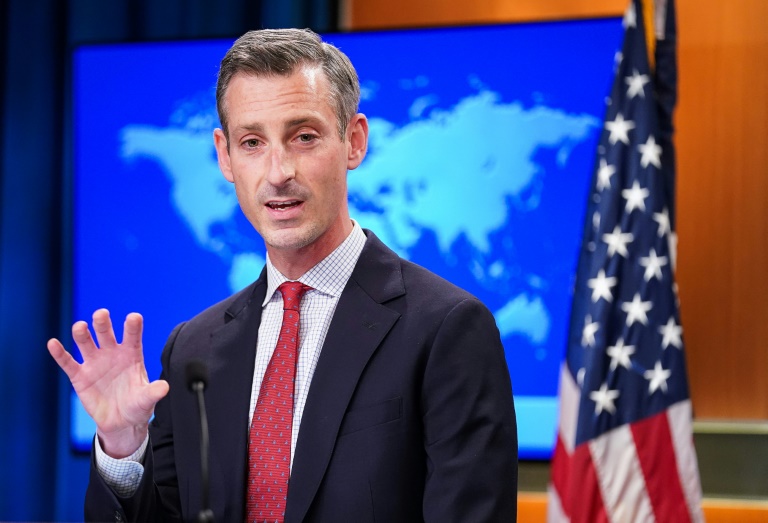
“The notion that we have delayed this negotiation in any way is just not true,” said State Department spokesman Ned Price.

After the EU sent the proposed text to both Tehran and Washington in late July, Iran “responded with several comments,” Price said, without being specific.

“This is why it has taken us some additional time to review those comments and to determine our response of our own,” he said.

“We are seriously reviewing those comments.”

Earlier Monday, EU foreign policy chief Josep Borrell, who is leading the effort to bring the United States and Iran together in agreement, suggested Washington was now slowing the process.

“There was an Iranian response that I considered reasonable to transmit to the United States,” he said.

“The United States has not formally replied yet. But we are waiting for their response and I hope that response will allow us to finish the negotiation — I hope so, but I can’t assure you of it.”

Price said Washington was “encouraged” by the fact that Tehran appeared to have dropped an earlier demand that, to complete a deal, the United States remove its formal designation of the Islamic Republican Guard Corps as an international terrorist organization.

That was one of the issues that has appeared to hold up progress on a final agreement that was sketched out in March.

However, Price added, “there are still some outstanding issues that must be resolved, some gaps that must be bridged, if we are able to get there.”

“We are working as quickly as we can to put together an appropriate response to the Iranian paper,” he said.

Iran and major global powers struck a deal in 2015 to limit Tehran’s nuclear program with the aim of preventing it from obtaining nuclear weapons.

But in 2018 US President Donald Trump, a strong critic of the so-called Joint Comprehensive Plan of Action (JCPOA), unilaterally pulled out and slapped heavier sanctions on Iran.

Since then Iran has accelerated its nuclear research and development activities, getting closer to where it would be able to create a nuclear bomb.

Since coming into office in January 2021, US President Joe Biden has pressed to revive the JCPOA in exchange for alleviating sanctions on Iran.

Kim Kardashian among celebrities flouting US drought rules: report

Kim Kardashian and celebrity neighbors including Sylvester Stallone have been handed warnings for repeatedly flouting water restrictions at their homes in drought-hit California, the Los Angeles Times reported Monday.

Strict water limits — imposed as the western United States endures its 23rd successive year of drought, worsened by human-caused climate change — are in place across swathes of southern California, including the affluent neighborhoods of Calabasas and Hidden Hills.

But more than 2,000 residents of the two glitzy enclaves north of Los Angeles, known for their sprawling green lawns and giant swimming pools, are continuing to breach the limits, often by eye-watering amounts.

Celebrity reality stars Kim and Kourtney Kardashian were among repeat offenders in June, the newspaper reported, citing notices obtained via a Public Records Act request.

A Hidden Hills home and adjacent lot owned by a trust linked to Kim Kardashian exceeded their water allowance by a combined 232,000 gallons (878,000 liters) for the month, while her sister Kourtney’s property in nearby Calabasas was around 100,000 gallons in excess.

“Rocky” star Stallone’s $18-million Hidden Hills property exceeded its June limits by 230,000 gallons, or 533 percent, having been 195,000 gallons over the limit the previous month, it said.

Repeat offenders are initially fined hundreds of dollars, but deep-pocketed homeowners who are still not dissuaded can eventually have their supplies physically reduced to a trickle.

Water authorities in Las Virgenes Municipal Water District, covering Calabasas and Hidden Hills, have already installed metal flow restrictor devices at around 20 properties’ main shutoff valves, the newspaper reported.

A representative for the Kardashians did not immediately respond to AFP request for comment.

Stallone’s lawyer told the Times that its report “could mischaracterize and misrepresent the situation” at a property sustaining around 500 mature trees, saying his clients had “proactively” installed a drip irrigation system and let certain lawns die.

Others named in the newspaper’s investigation included comedian Kevin Hart and former NBA basketball star Dwyane Wade.

Famous for its rows of palm trees, Los Angeles has also traditionally been known for its lush, green lawns, often maintained with automatic sprinklers.

Residents are increasingly replacing their thirsty lawns with plants native to this desert region, and Las Virgenes spokesman Mike McNutt said he hoped celebrities could set a positive example.

“People listen to you, people look at you, people value what you do,” he said.

“We need you to step up to the plate, to be examples and to be leaders so that other people will follow.”

Ford confirms cutting 3,000 jobs as it pushes towards electric

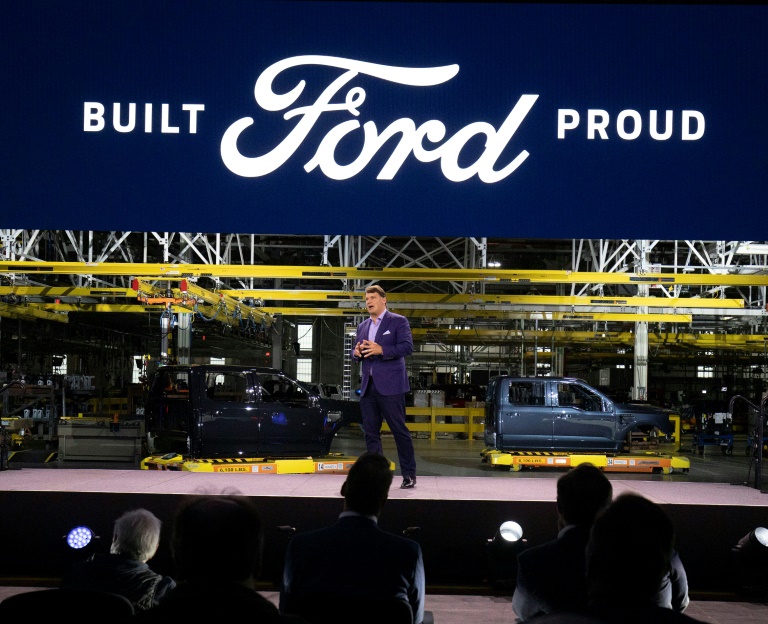
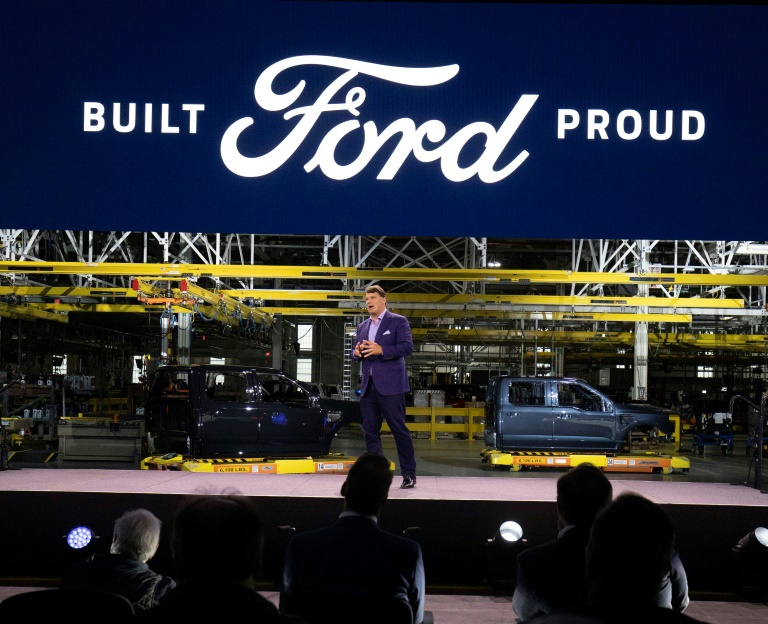
US auto giant Ford confirmed Monday it is eliminating around 3,000 jobs, mainly in North America and India, as the company pushes to accelerate its transition to electric vehicles.

Challenged by Tesla and other start-ups, traditional carmakers have accelerated production of their electric models in recent years.

The restructuring involves 2,000 salaried positions and 1,000 contractors mostly in the United States, Canada and India but does not affect factory workers, a spokesman told AFP.

US media had already reported in July that Ford, which has around 182,000 employees worldwide, was preparing to cut several thousand jobs.

“We absolutely have too many people in certain places, no doubt about it,” president and CEO Jim Farley said in a conference call in late July.

“We have skills that don’t work anymore… and we have jobs that need to change,” he said, without specifying the number of positions to be eliminated.

The automaker has previously said it plans to spend $50 billion on electric vehicle production by 2026.

And Ford announced in March that it aimed to cut spending on traditional vehicles by up to $3 billion a year.

The job cuts announced Monday are “consistent with what we have been describing for quite some time” and are intended at making Ford “more efficient,” the spokesman said.

Ford confirms cutting 3,000 jobs as it pushes towards electric

US auto giant Ford confirmed Monday it is eliminating around 3,000 jobs, mainly in North America and India, as the company pushes to accelerate its transition to electric vehicles.

Challenged by Tesla and other start-ups, traditional carmakers have accelerated production of their electric models in recent years.

The restructuring involves 2,000 salaried positions and 1,000 contractors mostly in the United States, Canada and India but does not affect factory workers, a spokesman told AFP.

US media had already reported in July that Ford, which has around 182,000 employees worldwide, was preparing to cut several thousand jobs.

“We absolutely have too many people in certain places, no doubt about it,” president and CEO Jim Farley said in a conference call in late July.

“We have skills that don’t work anymore… and we have jobs that need to change,” he said, without specifying the number of positions to be eliminated.

The automaker has previously said it plans to spend $50 billion on electric vehicle production by 2026.

And Ford announced in March that it aimed to cut spending on traditional vehicles by up to $3 billion a year.

The job cuts announced Monday are “consistent with what we have been describing for quite some time” and are intended at making Ford “more efficient,” the spokesman said.

US school shooter's lawyer urges against death penalty

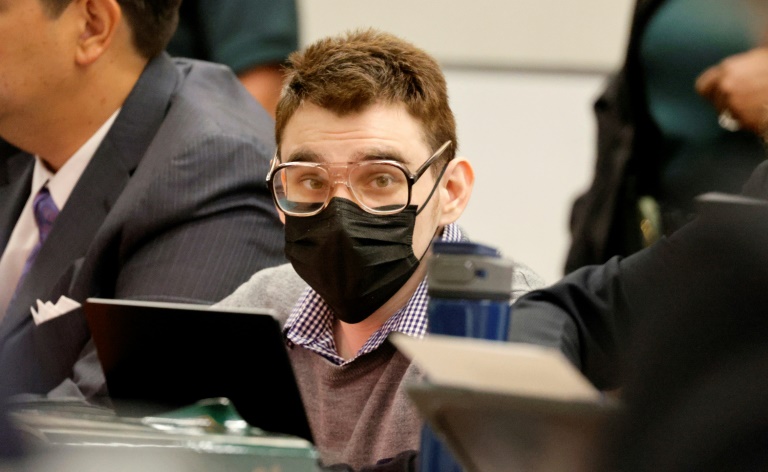
The defense attorney for Nikolas Cruz, who shot 17 people dead at a Florida school in 2018, told a jury Monday that as the child of an alcoholic birth mother his brain was “broken” and urged them not to sentence him to death.

Cruz has pleaded guilty to the mass shooting at the Marjory Stoneman Douglas high school in Parkland, Florida in 2018, and the jury is deciding only whether he should be executed or receive life in prison. 

Melisa McNeill, a public defender representing Cruz in Fort Lauderdale, Florida, told jurors that the 23-year-old was born to a “homeless, mentally ill” mother who was an addict who used alcohol and drugs during her pregnancy. 

“Because Nikolas was bombarded by all of those things, he was poisoned in the womb. Because of that, his brain was irretrievably broken, through no fault of his own,” she said. 

She said that throughout much of his life his developmental and behavioral problems were not addressed.

Yet even though teachers at Marjory Stoneman Douglas recognized he was a threat to himself and to others, he did not get adequate care, and any support he had disappeared after he was forced to drop out in 2017 aged 18.

One year later, on February 14, 2018, Cruz returned to the school with a high-powered assault rifle and killed 17 people, including 14 students.

McNeill said the circumstances of his birth and upbringing should mitigate the punishment, and that life in prison was more appropriate than execution.

“Nikolas Cruz’s decision to take an Uber to Marjory Stoneman Douglas High School and kill as many people as he could possibly kill is not where Nikolas Cruz’s story starts,” she said.

McNeill said Cruz was born with fetal alcohol stress disorder and assessed at three with antisocial personality disorder.

His birth mother gave him up in a brokered private adoption, she said — but his adoptive mother also became an alcoholic, and he grew up in a broken home.

After Cruz left school, McNeill said he ended up living with his brother and mother in a home where police and social services were called dozens of times after violent incidents.

“He didn’t stop being brain-damaged. He didn’t stop being emotionally handicapped. He didn’t stop having language impairment. He didn’t stop needing services. But they were all gone,” she said.

Jurors, who visited the scene of the school and were shown harrowing videos of the mass shooting by prosecutors in July, have to vote unanimously if he is to be executed.

Aiming to persuade just one juror otherwise, McNeill stressed that each jury member has to make “an individualized moral decision” on whether Cruz’s life story mitigates the punishment.

“We will tell you Nikolas’ life story so that we can give you reasons to vote for life,” she said.

Stocks slide as traders mull Fed outlook, gas price spike

World stocks sank Monday and the dollar rallied on concern the Federal Reserve will stick to its interest rate-hiking plans to combat runaway inflation.

Eurozone equities also tanked as spiking natural gas prices sparked fears that winter energy shortages could cause recession, which helped push the euro down to a 20-year low under parity against the greenback.

Oil slumped on speculation over an Iran nuclear deal that could ease a supply crunch caused by producer Russia’s invasion of Ukraine, as well as recession fears.

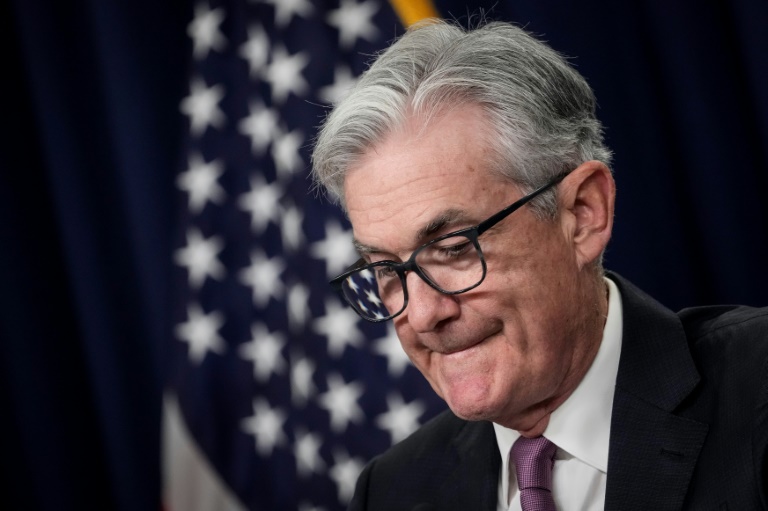
All eyes are on this week’s symposium in Jackson Hole, Wyoming, where Fed boss Jerome Powell will deliver a speech that traders will follow for an idea about the US central bank’s next moves.

– ‘Critical moment’ –

Stocks “began Monday in downbeat mood ahead of what could prove to be a critical moment for markets at the end of this week”, said AJ Bell investment director Russ Mould.

“The Jackson Hole summit of central bankers and finance ministers is widely expected to see Powell take to the floor — and puncture optimism which has built up over hopes the Fed may be nearing the point at which it pivots away from rate hikes.”

A dip in price rises and signs of economic slowdown had raised hopes policymakers would ease up — and possibly cut rates next year — after two successive, 75-basis-point hikes, helping equities rally globally.

But that optimism has slowly been eroded in recent weeks as Fed officials, including Powell, have warned that the battle against inflation was far from won, particularly as the jobs market remained resilient.

The euro is under additional pressure after Russia’s Gazprom said late Friday that the Nord Stream pipeline would be closed for maintenance at the end of the month, cutting Europe’s daily gas deliveries.

As a result, Europe’s Dutch TTF Gas Futures contract soared on Monday close to 300 euros per megawatt hour, not far from record struck after Russia launched its assault on Ukraine, amid worries that Russia will not resume supplies afterwards.

“It matters little whether Russia will decide to cut off flows completely,” said CMC Markets analyst Michael Hewson. “The market is behaving as if they will.”

– ‘Recessionary risk’ –

Rabobank analyst Jane Foley told AFP the rise in gas prices “focussed attention on recessionary risk for the eurozone. A clear break of parity risks a moves towards $0.95,” she added.

In early morning London deals, the euro dipped as low as $0.9990 before clawing its way back above the psychological barrier.

Surging energy prices have this year driven inflation to 40-year peaks in nations including Britain and the United States, in turn prompting tighter monetary policy.

US banking group Citi has forecast that UK inflation would peak at 18.6 percent next January on the back of rocketing domestic energy prices.

Asian equity markets mostly fell on Monday, although Shanghai stocks rose after China’s central bank cut prime loan rates as it tries to bolster the world’s second-biggest economy, which has been ravaged by lockdowns as part of a zero-Covid strategy.

In Europe, London shed 0.2 percent, but both Paris sank 1.8 percent and Frankfurt 2.3 percent on spiking as prices.

In late morning trading on Wall Street, both the Dow and S&P 500 were down more than one percent, while the tech-heavy Nasdaq fell more than two percent.

The prospect of more US hikes also sent the dollar rallying versus the yen, and it is nearing the 140 yen mark for the first time in 24 years.

– Key figures at around 1530 GMT –

New York – Dow: DOWN 1.4 percent at 33,236.26 points

EURO STOXX 50: DOWN 1.8 percent at 3,653.40

London – FTSE 100: DOWN 0.2 percent at 7,533.79 

Frankfurt – DAX: DOWN 2.3 percent at 13,230.57 

Paris – CAC 40: DOWN 1.8 percent at 6,378.74

Tokyo – Nikkei 225: DOWN 0.5 percent at 28,794.50 (close)

Hong Kong – Hang Seng Index: DOWN 0.6 percent at 19,656.98 (close)

Shanghai – Composite: UP 0.6 percent at 3,277.79 (close)

Euro/dollar: DOWN at $0.9941 from $1.0037 Friday

Pound/dollar: DOWN at $1.1758 from $1.1829

Euro/pound: DOWN at 84.49 pence from 84.86 pence

Dollar/yen: UP at 137.63 yen from 136.97 yen

West Texas Intermediate: DOWN 2.3 percent at $88.70 per barrel

Brent North Sea crude: DOWN 2.0 percent at $94.80

burs-rl/jj

Stocks slide as traders mull Fed outlook, gas price spike

World stocks sank Monday and the dollar rallied on concern the Federal Reserve will stick to its interest rate-hiking plans to combat runaway inflation.

Eurozone equities also tanked as spiking natural gas prices sparked fears that winter energy shortages could cause recession, which helped push the euro down to a 20-year low under parity against the greenback.

Oil slumped on speculation over an Iran nuclear deal that could ease a supply crunch caused by producer Russia’s invasion of Ukraine, as well as recession fears.

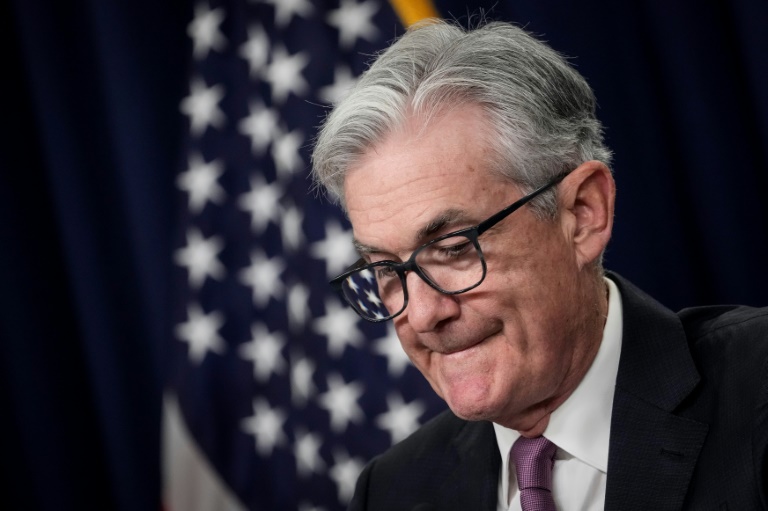
All eyes are on this week’s symposium in Jackson Hole, Wyoming, where Fed boss Jerome Powell will deliver a speech that traders will follow for an idea about the US central bank’s next moves.

– ‘Critical moment’ –

Stocks “began Monday in downbeat mood ahead of what could prove to be a critical moment for markets at the end of this week”, said AJ Bell investment director Russ Mould.

“The Jackson Hole summit of central bankers and finance ministers is widely expected to see Powell take to the floor — and puncture optimism which has built up over hopes the Fed may be nearing the point at which it pivots away from rate hikes.”

A dip in price rises and signs of economic slowdown had raised hopes policymakers would ease up — and possibly cut rates next year — after two successive, 75-basis-point hikes, helping equities rally globally.

But that optimism has slowly been eroded in recent weeks as Fed officials, including Powell, have warned that the battle against inflation was far from won, particularly as the jobs market remained resilient.

The euro is under additional pressure after Russia’s Gazprom said late Friday that the Nord Stream pipeline would be closed for maintenance at the end of the month, cutting Europe’s daily gas deliveries.

As a result, Europe’s Dutch TTF Gas Futures contract soared on Monday close to 300 euros per megawatt hour, not far from record struck after Russia launched its assault on Ukraine, amid worries that Russia will not resume supplies afterwards.

“It matters little whether Russia will decide to cut off flows completely,” said CMC Markets analyst Michael Hewson. “The market is behaving as if they will.”

– ‘Recessionary risk’ –

Rabobank analyst Jane Foley told AFP the rise in gas prices “focussed attention on recessionary risk for the eurozone. A clear break of parity risks a moves towards $0.95,” she added.

In early morning London deals, the euro dipped as low as $0.9990 before clawing its way back above the psychological barrier.

Surging energy prices have this year driven inflation to 40-year peaks in nations including Britain and the United States, in turn prompting tighter monetary policy.

US banking group Citi has forecast that UK inflation would peak at 18.6 percent next January on the back of rocketing domestic energy prices.

Asian equity markets mostly fell on Monday, although Shanghai stocks rose after China’s central bank cut prime loan rates as it tries to bolster the world’s second-biggest economy, which has been ravaged by lockdowns as part of a zero-Covid strategy.

In Europe, London shed 0.2 percent, but both Paris sank 1.8 percent and Frankfurt 2.3 percent on spiking as prices.

In late morning trading on Wall Street, both the Dow and S&P 500 were down more than one percent, while the tech-heavy Nasdaq fell more than two percent.

The prospect of more US hikes also sent the dollar rallying versus the yen, and it is nearing the 140 yen mark for the first time in 24 years.

– Key figures at around 1530 GMT –

New York – Dow: DOWN 1.4 percent at 33,236.26 points

EURO STOXX 50: DOWN 1.8 percent at 3,653.40

London – FTSE 100: DOWN 0.2 percent at 7,533.79 

Frankfurt – DAX: DOWN 2.3 percent at 13,230.57 

Paris – CAC 40: DOWN 1.8 percent at 6,378.74

Tokyo – Nikkei 225: DOWN 0.5 percent at 28,794.50 (close)

Hong Kong – Hang Seng Index: DOWN 0.6 percent at 19,656.98 (close)

Shanghai – Composite: UP 0.6 percent at 3,277.79 (close)

Euro/dollar: DOWN at $0.9941 from $1.0037 Friday

Pound/dollar: DOWN at $1.1758 from $1.1829

Euro/pound: DOWN at 84.49 pence from 84.86 pence

Dollar/yen: UP at 137.63 yen from 136.97 yen

West Texas Intermediate: DOWN 2.3 percent at $88.70 per barrel

Brent North Sea crude: DOWN 2.0 percent at $94.80

burs-rl/jj

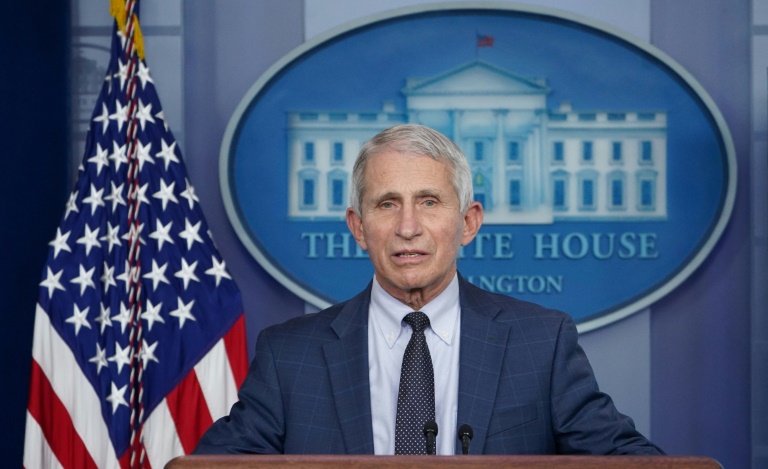
Biden's Covid advisor Anthony Fauci to step down in December

President Joe Biden’s Covid advisor Anthony Fauci, America’s top infectious disease expert who became the face of the country’s fight against the pandemic, announced Monday that he will step down in December.

Fauci said in a statement he would be leaving both his position as director of the National Institute of Allergy and Infectious Diseases (NIAID), and that of chief medical advisor to Biden — though he added: “I am not retiring.”

The 81-year-old, who previously disclosed plans to leave by the end of Biden’s current term, announced he would go in December to “pursue the next chapter of my career.” 

Biden extended his “deepest thanks” to Fauci in a White House statement.

“Because of Dr. Fauci’s many contributions to public health, lives here in the United States and around the world have been saved,” the president said, adding that the country is “is stronger, more resilient, and healthier because of him.”

Fauci has helmed the United States’ response to infectious disease outbreaks since the 1980s, from HIV/AIDS to Covid-19, and has served under seven presidents.

When Covid first spread globally from China in 2020, he became a trusted source of reliable information, reassuring the public with his calm and professorial demeanor during frequent media appearances. 

But his honest takes on America’s early failures to get to grips with the virus brought Fauci into conflict with former president Donald Trump, and turned the physician-scientist into a hated figure for some on the right.

Fauci now lives with security protection after his family received death threats and harassment.

Biden said that after winning the 2020 election, as he was trying to build a team to lead the Covid-19 response, Fauci was “one of my first calls.”

“In that role, I’ve been able to call him at any hour of the day for his advice as we’ve tackled this once-in-a-generation pandemic,” the president stated.

Markets looking for clarity but tuning out Fed message

US central bankers have been hammering home a single message: Interest rates will rise until inflation begins to come down. But financial markets keep hoping to hear a different tune, one indicating the pace of rate hikes will slow.

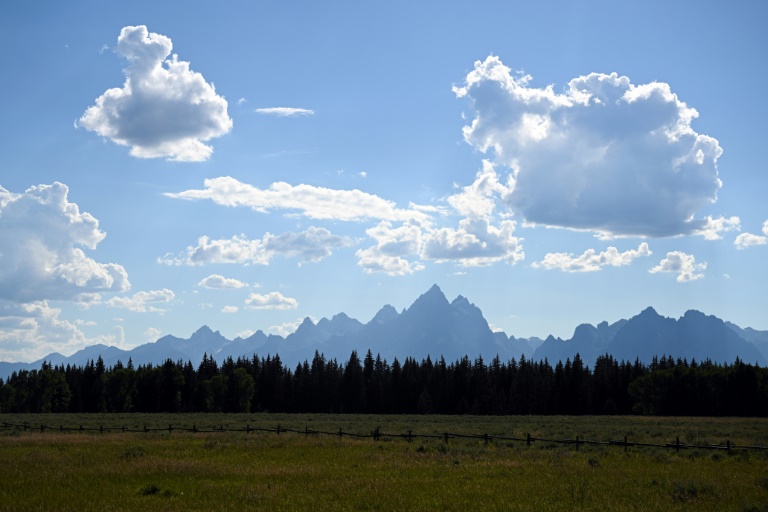
All eyes will be on this week’s annual gathering of policymakers in Jackson Hole, Wyoming to hear Federal Reserve Chair Jerome Powell explain his stance — again — with market watchers hoping to get something more to their liking.

The Fed could be a victim of its own success. 

After keeping the benchmark borrowing rate at zero throughout the pandemic, the steep spike in prices, which surged to a 40-year high following Russia’s invasion of Ukraine, prompted the central bank to take aggressive action.

In the battle to contain red-hot inflation, which topped nine percent in June, the Fed has hiked rates four times, including massive, three-quarter point increases in June and July — steep moves unheard of since the early 1980s.

But in recent weeks signs of easing price pressures and a slowing economy, along with falling energy costs and indications global supply chain snarls have lessened, caused financial markets to become optimistic the Fed will dial back or even pause rate increases — and even begin to cut next year.

Stocks on Wall Street have risen for four straight weeks, despite a string of officials repeating the message that rates will continue to rise, even though annual inflation slowed in July as oil prices fell.

While the annual gathering often becomes a place for global central bankers to signal shifting policy, Powell is expected to repeat that message Friday — though he may acknowledge that a slowdown will come later in the year.

“It does seem like what we’ve heard from Powell so far suggests there’s quite a high bar for them to transition from aggressive hikes” to a slower pace of 25 basis point steps, said Jonathan Millar of Barclays.

Millar, who served as a Fed economist and forecaster under four central bank chiefs, told AFP that markets are looking further ahead, anticipating the rate hikes will be successful in slowing inflation.

But for policymakers “One thing they definitely want to communicate is that they remain very much focused on issues with price stability and that they will react very cautiously to any signs of improvements in the inflation data.”

That means indications prices are coming down more broadly, not just because of falling oil.

Managing the market’s expectations “is really job one,” Millar said. “They have to enforce that credibility.”

But like other economists he believes the Fed’s policy-setting Federal Open Market Committee (FOMC) at its September meeting will step down to a 0.5 percentage point increase, taking the range of the key lending rate up to 2.75 to 3.0 percent, to be followed up with quarter-point hikes in November and December

– Walking a narrow line –

Kathy Bostjancic of Oxford Economics said the dilemma for Powell is to recognize the progress towards achieving a soft landing — bringing inflation back down towards the two percent target, without derailing economic growth — while confirming the Fed’s resolve.

He “continues to have to walk kind of a narrow line,” she told AFP. “You don’t want to be too pessimistic.”

And with housing prices and sales cooling from their torrid pace along with other encouraging data “he has the wind at his back.”

But she said, “The message he really has to give is that we’re still going to be looking to raise rates to a restrictive level to really make sure inflation is still our number one priority.”

The annual monetary policy symposium hosted by the Kansas City Federal Reserve Bank runs August 25-27. It often is a place for officials from around the world to come to discuss policy changes in the works, but Powell is virtually the only major global central bank chief confirmed to speak at the event.

European Central Bank chief Christine Lagarde is not planning to attend, Bank of England governor Andrew Bailey is expected to be there but not speak. Francois Villeroy de Galhau, governor of the Bank of France, is due to give a speech on Saturday.

Markets looking for clarity but tuning out Fed message

US central bankers have been hammering home a single message: Interest rates will rise until inflation begins to come down. But financial markets keep hoping to hear a different tune, one indicating the pace of rate hikes will slow.

All eyes will be on this week’s annual gathering of policymakers in Jackson Hole, Wyoming to hear Federal Reserve Chair Jerome Powell explain his stance — again — with market watchers hoping to get something more to their liking.

The Fed could be a victim of its own success. 

After keeping the benchmark borrowing rate at zero throughout the pandemic, the steep spike in prices, which surged to a 40-year high following Russia’s invasion of Ukraine, prompted the central bank to take aggressive action.

In the battle to contain red-hot inflation, which topped nine percent in June, the Fed has hiked rates four times, including massive, three-quarter point increases in June and July — steep moves unheard of since the early 1980s.

But in recent weeks signs of easing price pressures and a slowing economy, along with falling energy costs and indications global supply chain snarls have lessened, caused financial markets to become optimistic the Fed will dial back or even pause rate increases — and even begin to cut next year.

Stocks on Wall Street have risen for four straight weeks, despite a string of officials repeating the message that rates will continue to rise, even though annual inflation slowed in July as oil prices fell.

While the annual gathering often becomes a place for global central bankers to signal shifting policy, Powell is expected to repeat that message Friday — though he may acknowledge that a slowdown will come later in the year.

“It does seem like what we’ve heard from Powell so far suggests there’s quite a high bar for them to transition from aggressive hikes” to a slower pace of 25 basis point steps, said Jonathan Millar of Barclays.

Millar, who served as a Fed economist and forecaster under four central bank chiefs, told AFP that markets are looking further ahead, anticipating the rate hikes will be successful in slowing inflation.

But for policymakers “One thing they definitely want to communicate is that they remain very much focused on issues with price stability and that they will react very cautiously to any signs of improvements in the inflation data.”

That means indications prices are coming down more broadly, not just because of falling oil.

Managing the market’s expectations “is really job one,” Millar said. “They have to enforce that credibility.”

But like other economists he believes the Fed’s policy-setting Federal Open Market Committee (FOMC) at its September meeting will step down to a 0.5 percentage point increase, taking the range of the key lending rate up to 2.75 to 3.0 percent, to be followed up with quarter-point hikes in November and December

– Walking a narrow line –

Kathy Bostjancic of Oxford Economics said the dilemma for Powell is to recognize the progress towards achieving a soft landing — bringing inflation back down towards the two percent target, without derailing economic growth — while confirming the Fed’s resolve.

He “continues to have to walk kind of a narrow line,” she told AFP. “You don’t want to be too pessimistic.”

And with housing prices and sales cooling from their torrid pace along with other encouraging data “he has the wind at his back.”

But she said, “The message he really has to give is that we’re still going to be looking to raise rates to a restrictive level to really make sure inflation is still our number one priority.”

The annual monetary policy symposium hosted by the Kansas City Federal Reserve Bank runs August 25-27. It often is a place for officials from around the world to come to discuss policy changes in the works, but Powell is virtually the only major global central bank chief confirmed to speak at the event.

European Central Bank chief Christine Lagarde is not planning to attend, Bank of England governor Andrew Bailey is expected to be there but not speak. Francois Villeroy de Galhau, governor of the Bank of France, is due to give a speech on Saturday.

Close Bitnami banner
Bitnami