AFP

Poaching, horn trade declining but rhinos still threatened

The rhino’s survival remains in grave danger despite Covid-related drops in poaching and the illegal trade in their horns, a conservation body said on Monday.

The International Union for Conservation of Nature (IUCN) said that poaching was still “an acute threat” to the survival of the species.

A total of 2,707 rhinos were poached in Africa between 2018 and 2021, according to the IUCN, the vast majority of which were killed in South Africa, mainly in the Kruger National Park.

South Africa is home to nearly 80 percent of the world’s rhinos.

Rhino poaching rates in Africa have declined from a peak of 5.3 percent of the total population in 2015 to 2.3 percent in 2021, the Swiss-based organisation said.

“The overall decline in poaching of rhinos is encouraging, yet this remains an acute threat to the survival of these iconic animals,” said Sam Ferreira, scientific officer with the IUCN African Rhino Specialist Group.

He told AFP there was no formal analysis into why poaching rates were declining.

“A number of factors could lead to this slowing, including improved local cooperation in law enforcement, international collaboration between range and consumer states, as well as changes in the demand for rhino horn”, said Ferreira.

– 2020 blip –

The IUCN said 2020 was an abnormal year, with lockdowns and restrictions due to the Covid pandemic seeing several African countries witnessing dramatically-reduced poaching rates.

South Africa lost 394 rhinos to poaching in 2020, while Kenya recorded no rhino poaching at all that year, it said.

However, as Covid-19 travel restrictions were lifted, some countries reported new increases in poaching activities: 451 rhinos were poached in South Africa and six in Kenya.

“These numbers are still significantly lower than during the peak in 2015, when South Africa alone lost 1,175 rhinos to poaching,” IUCN said.

The rhino population in Africa has fallen by 1.6 percent annually, from 23,562 in 2018 to 22,137 at the end of last year.

IUCN said the number of white rhinos — which it classifies as vulnerable on its Red List of Threatened Species — declined by almost 12 percent from 18,067 to 15,942 during this period.

However, the number of black rhinos — deemed critically-endangered — rose by 12 percent to 6,195.

“It is essential to continue active population management and anti-poaching activities for all subspecies across different range states,” the IUCN said.

Data also suggests that, on average, between 575 and 923 rhino horns entered illegal trade markets each year between 2018 and 2020, compared to approximately 2,378 per year between 2016 and 2017.

However, in 2019, before the pandemic, the reported seized weight of illegal rhino specimens reached its highest point of the decade, possibly due to increased regulations and law enforcement efforts.

– Javan, Sumatran rhinos –

IUCN said the numbers of one-horned rhino, found mainly in India and Nepal, and the critically-endangered Javan rhino, had increased since 2017.

Their numbers in India and Nepal increased from an estimated 3,588 in 2018 to 4,014 at the end of 2021, it said.

This was “thanks to conservation efforts, including strengthened law enforcement”, it added. 

The population of Javan rhinos increased from between 65 and 68 individuals in 2018 to 76 at the end of 2021.

But the number of Sumatran rhinos fell to an estimated 34 to 47 in 2021, compared with between 40 and 78 individuals in 2018.

The IUCN classifies the Sumatran rhino, the smallest of all rhino species, as critically endangered.

The World Wild Fund for Nature estimates that fewer than 80 Sumatran rhinos remain in the world, mainly in Indonesia on the islands of Sumatra and Borneo.

The IUCN report said 11 rhino poaching incidents were recorded in Asia — 10 in India and one in Nepal — since the beginning of 2018, all of which involved greater one-horned rhinos. 

British cinema chain mulls US bankruptcy filing

British-based cinema chain Cineworld confirmed Monday that a US bankruptcy filing is among options for the debt-laden group, which has been slammed by dwindling audience numbers.

The group, which operates hundreds of cinemas mainly in the United States, revealed last week that it was “evaluating various strategic options” to boost liquidity and potentially restructure, with demand below expectations since reopening from the pandemic.

Cineworld said in an update on Monday that those options “include a possible voluntary Chapter 11 filing in the United States and associated ancillary proceedings in other jurisdictions”.

The London-listed group added it was holding talks with “many of its major stakeholders including its secured lenders”.

A Chapter 11 filing “would be expected to allow the group to access near-term liquidity and support the orderly implementation of” debt reduction, it noted.

Cineworld would maintain its normal operations with “no significant impact” on staff, under such an outcome.

However, it also warned of a “very significant dilution of existing equity interests”.

Further announcements would be made when appropriate, it added.

Cineworld’s share price has collapsed since the start of this year to stand at just three pence on Monday.

Analysts argue that its 2018 takeover of American peer Regal left it saddled with too much debt.

The chain, whose second biggest market is Britain, was then hit hard by pandemic fallout and the booming popularity of streaming.

“Cineworld’s problems stem from an overly aggressive growth strategy which relied on using huge amounts of debt to buy US chain Regal,” said AJ Bell analyst Russ Mould.

“This may have made Cineworld one of the largest cinema operators in the world, but bigger isn’t necessarily better — and the pandemic swiftly exposed the company’s strained balance sheet.”

Swiss glaciers shrink in half since 1931: study

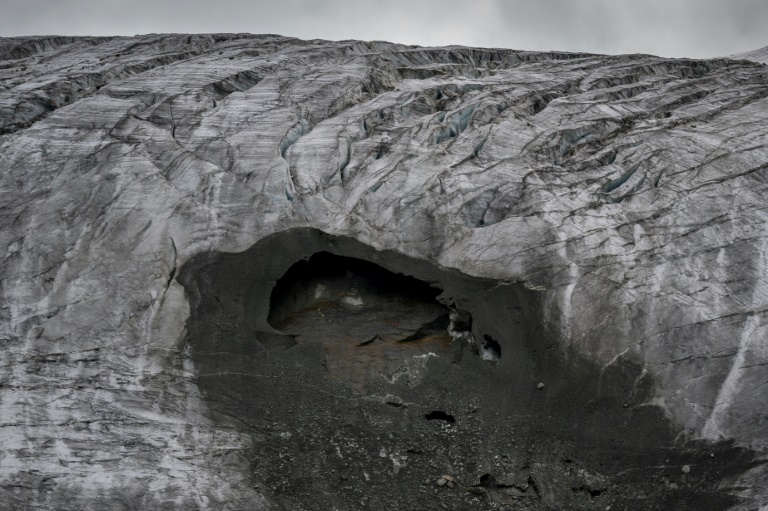
Swiss glaciers have shed half their volume since 1931, Swiss researchers said Monday, following the first reconstruction of the country’s ice loss in the 20th century.

Rapid glacier melt in the Alps and elsewhere, which scientists say is driven by climate change, has been increasingly closely monitored since the early 2000s. However, until now there has been little insight into how glaciers changed prior to that during the 20th century, with only a handful of individual glaciers tracked over time, and with different models for estimating their volume.

But Swiss researchers from the ETH Zurich technical university and the Swiss Federal Institute for Forest, Snow and Landscape Research WSL say they had now reconstructed the topography of all Swiss glaciers in 1931, making it possible to show how they have evolved.

“Based on these reconstructions and comparisons with data from the 2000s, the researchers conclude that the glacier volume halved between 1931 and 2016,” they said in a statement.

Their study, published in the scientific journal The Cryosphere, used material from the TerrA image archive, which covers about 86 percent of Switzerland’s glacierised area, analysing around 21,700 photographs taken between 1916 and 1947.

– Dramatic change –

For their reconstruction, the glaciologists used so-called stereophotogrammetry — a technique used to determine the nature, shape and position of any object on the basis of image pairs.

“If we know the surface topography of a glacier at two different points in time, we can calculate the difference in ice volume,” lead study author Erik Schytt Mannerfelt said in the statement.

The researchers presented side-by-side picture pairs showing the same spot nearly a century apart, indicating the dramatic change that has taken place.

The Fiescher Glacier, for instance, resembled a massive sea of ice in 1928, but in 2021, a few tiny specs of white were all that remained on the lush green mountainside. 

Since the images used for the reconstruction were taken in different years, the study used the mean year 1931 as a reference and reconstructed the surface topography of all glaciers for that year, the statement said.

In their statement, the researchers stressed that glaciers did not continuously recede over the past century, pointing out that there was even sporadic mass glacier growth in the 1920s and 1980s.

But while there may have been growth over short-term periods, Daniel Farinotti, a glaciology professor at ETH Zurich and WSL and co-author of the study, said it was “important to keep the big picture in mind.”

“Our comparison between the years 1931 and 2016 clearly shows that there was significant glacial retreat during this period,” he said in the statement.

And the total glacier volume is decreasing at an ever faster rate.

While Swiss glaciers lost half their volume in the 85 years leading up to 2016, the Swiss glacier monitoring network, GLAMOS indicates that they lost a further 12 percent in the following six years alone.

Farinotti said the evidence was clear: “Glacier retreat is accelerating.” 

UK dock workers' union threatens further strikes

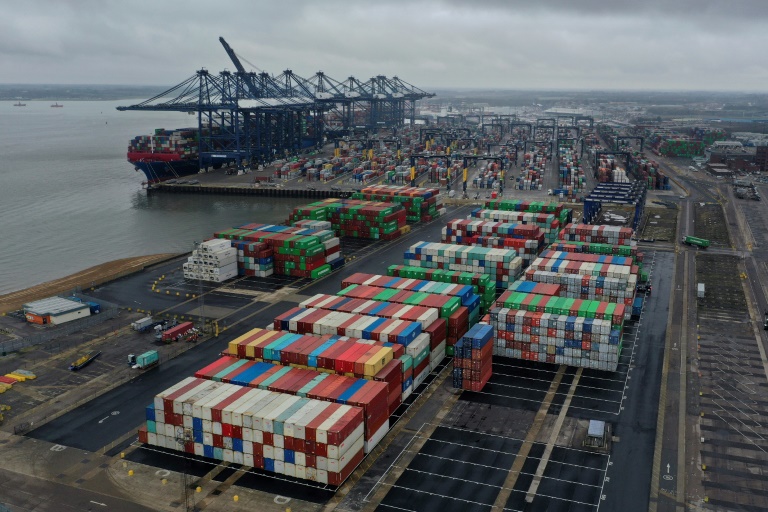
A trade union on Monday warned of more strikes at the UK’s largest container port if pay demands are not met, threatening to cause further disruptions to the supply chain.

Workers at Felixstowe port in southeastern England began an eight-day strike over pay on Sunday, in the latest industrial action as decades-high inflation intensifies the country’s cost-of-living crisis.

They say the pay offer they received does not keep up with inflation — which has surged above 10 percent — and includes a one-off lump sum payment.

“If we don’t achieve what we’re trying to achieve, there will be more strikes,” Robert Morton, national officer for the Unite union, told Sky News.

“We’ve been asking for a minimum of the rate of inflation,” Morton said.

Nearly 2,000 unionised employees at the port in eastern England, including crane drivers, machine operators and stevedores, are involved in the first strike at Felixstowe since 1989.

It comes amid stoppages over pay and working conditions across various UK industries, with railway workers just the latest to strike on Thursday and Saturday this week.

The strike comes after Covid and post-Brexit labour shortages have already hit the UK supply chain.

Morton said he accepted that further strikes at Felixstowe would mean “the supply chain will be severely disrupted”, while saying the strike will end as soon as the port agrees to meet for negotiations.

The Port of Felixstowe said in a statement Friday that it was “disappointed” the walkout had gone ahead and called its offer of salary increases of on average eight percent “fair”.

It said it “regrets the impact this action will have on UK supply chains”.

Pal Davey, head of corporate affairs at the port, told Sky News on Monday that average pay at the port is “40 percent higher than national average” and workers had been given a “very fair offer”.

“Our workers have been much better placed to weather the cost-of-living storm than the majority of workers in the rest of the country,” he said.

Strike action over pay matching inflation is taking place in a wide range of sectors.

Even criminal lawyers who represent clients in court have launched strike action.

On Monday, their union, The Criminal Bar Association announced its members had voted to escalate their action and will stop taking on any new cases indefinitely from September 6.

Markets mostly drop as traders mull Fed outlook, gas price spike

World stocks mostly sank Monday and the dollar rallied on concern the Federal Reserve will stick to its interest rate-hiking plans to combat runaway inflation.

Eurozone equities also tanked as spiking natural gas prices sparked fears that winter energy shortages could spark recession, helping push the euro back under parity against the greenback.

Oil dipped on speculation over an Iran nuclear deal that could ease a supply crunch caused by producer Russia’s invasion of Ukraine.

All eyes are on this week’s symposium in Jackson Hole, Wyoming, where Fed boss Jerome Powell will deliver a speech that traders will follow for an idea about the US central bank’s next moves.

– ‘Critical moment’ –

Stocks “began Monday in downbeat mood ahead of what could prove to be a critical moment for markets at the end of this week”, said AJ Bell investment director Russ Mould.

“The Jackson Hole summit of central bankers and finance ministers is widely expected to see Powell take to the floor — and puncture optimism which has built up over hopes the Fed may be nearing the point at which it pivots away from rate hikes.”

A dip in price rises and signs of economic slowdown had raised hopes policymakers would ease up — and possibly cut rates next year — after two successive, 75-basis-point hikes, helping equities rally globally.

But that optimism has slowly been eroded in recent weeks as Fed officials, including Powell, have warned that the battle against inflation was far from won, particularly as the jobs market remained resilient.

The euro is under additional pressure after Russia’s Gazprom said late Friday that the Nord Stream pipeline would be closed for maintenance at the end of the month, cutting Europe’s daily gas deliveries.

As a result, Europe’s Dutch TTF Gas Futures contract soared on Monday to almost 293 euros per megawatt hour, not far from record highs hit after Russia launched its assault on Ukraine.

– ‘Recessionary risk’ –

“European gas prices pushed higher again … on renewed concerns about flows through Nord Stream 1,” Rabobank analyst Jane Foley told AFP.

“This focussed attention on recessionary risk for the eurozone. A clear break of parity risks a moves towards $0.95,” she added.

In early morning London deals, the euro dipped as low as $0.9990 before clawing its way back above the psychological barrier.

Surging energy prices have this year driven inflation to 40-year peaks in nations including Britain and the United States, in turn prompting tighter monetary policy.

US banking group Citi has forecast that UK inflation would peak at 18.6 percent next January on the back of rocketing domestic energy prices.

Before the weekend, all three main Wall Street indices had fallen and Asia mostly followed suit on Monday.

However, Shanghai stocks rose after China’s central bank cut prime loan rates as it tries to bolster the world’s second-biggest economy, which has been ravaged by lockdowns as part of a zero-Covid strategy.

The prospect of more US hikes also sent the dollar rallying versus the yen, and it is nearing the 140 yen mark for the first time in 24 years.

– Key figures at around 1100 GMT –

London – FTSE 100: DOWN 0.3 percent at 7,530.80 points

Frankfurt – DAX: DOWN 1.6 percent at 13,327.85 

Paris – CAC 40: DOWN 1.2 percent at 6,418.13

EURO STOXX 50: DOWN 1.3 percent at 3,680.84

Tokyo – Nikkei 225: DOWN 0.5 percent at 28,794.50 (close)

Hong Kong – Hang Seng Index: DOWN 0.6 percent at 19,656.98 (close)

Shanghai – Composite: UP 0.6 percent at 3,277.79 (close)

New York – Dow: DOWN 0.9 percent at 33,706.74 points (close)

Euro/dollar: DOWN at $1.0009 from $1.0037 Friday

Pound/dollar: DOWN at $1.1808 from $1.1829

Euro/pound: DOWN at 84.76 pence from 84.86 pence

Dollar/yen: DOWN at 136.91 yen from 136.97 yen

West Texas Intermediate: DOWN 0.1 percent at $90.68 per barrel

Brent North Sea crude: DOWN 0.2 percent at $96.53

Markets mostly drop as traders mull Fed outlook, gas price spike

World stocks mostly sank Monday and the dollar rallied on concern the Federal Reserve will stick to its interest rate-hiking plans to combat runaway inflation.

Eurozone equities also tanked as spiking natural gas prices sparked fears that winter energy shortages could spark recession, helping push the euro back under parity against the greenback.

Oil dipped on speculation over an Iran nuclear deal that could ease a supply crunch caused by producer Russia’s invasion of Ukraine.

All eyes are on this week’s symposium in Jackson Hole, Wyoming, where Fed boss Jerome Powell will deliver a speech that traders will follow for an idea about the US central bank’s next moves.

– ‘Critical moment’ –

Stocks “began Monday in downbeat mood ahead of what could prove to be a critical moment for markets at the end of this week”, said AJ Bell investment director Russ Mould.

“The Jackson Hole summit of central bankers and finance ministers is widely expected to see Powell take to the floor — and puncture optimism which has built up over hopes the Fed may be nearing the point at which it pivots away from rate hikes.”

A dip in price rises and signs of economic slowdown had raised hopes policymakers would ease up — and possibly cut rates next year — after two successive, 75-basis-point hikes, helping equities rally globally.

But that optimism has slowly been eroded in recent weeks as Fed officials, including Powell, have warned that the battle against inflation was far from won, particularly as the jobs market remained resilient.

The euro is under additional pressure after Russia’s Gazprom said late Friday that the Nord Stream pipeline would be closed for maintenance at the end of the month, cutting Europe’s daily gas deliveries.

As a result, Europe’s Dutch TTF Gas Futures contract soared on Monday to almost 293 euros per megawatt hour, not far from record highs hit after Russia launched its assault on Ukraine.

– ‘Recessionary risk’ –

“European gas prices pushed higher again … on renewed concerns about flows through Nord Stream 1,” Rabobank analyst Jane Foley told AFP.

“This focussed attention on recessionary risk for the eurozone. A clear break of parity risks a moves towards $0.95,” she added.

In early morning London deals, the euro dipped as low as $0.9990 before clawing its way back above the psychological barrier.

Surging energy prices have this year driven inflation to 40-year peaks in nations including Britain and the United States, in turn prompting tighter monetary policy.

US banking group Citi has forecast that UK inflation would peak at 18.6 percent next January on the back of rocketing domestic energy prices.

Before the weekend, all three main Wall Street indices had fallen and Asia mostly followed suit on Monday.

However, Shanghai stocks rose after China’s central bank cut prime loan rates as it tries to bolster the world’s second-biggest economy, which has been ravaged by lockdowns as part of a zero-Covid strategy.

The prospect of more US hikes also sent the dollar rallying versus the yen, and it is nearing the 140 yen mark for the first time in 24 years.

– Key figures at around 1100 GMT –

London – FTSE 100: DOWN 0.3 percent at 7,530.80 points

Frankfurt – DAX: DOWN 1.6 percent at 13,327.85 

Paris – CAC 40: DOWN 1.2 percent at 6,418.13

EURO STOXX 50: DOWN 1.3 percent at 3,680.84

Tokyo – Nikkei 225: DOWN 0.5 percent at 28,794.50 (close)

Hong Kong – Hang Seng Index: DOWN 0.6 percent at 19,656.98 (close)

Shanghai – Composite: UP 0.6 percent at 3,277.79 (close)

New York – Dow: DOWN 0.9 percent at 33,706.74 points (close)

Euro/dollar: DOWN at $1.0009 from $1.0037 Friday

Pound/dollar: DOWN at $1.1808 from $1.1829

Euro/pound: DOWN at 84.76 pence from 84.86 pence

Dollar/yen: DOWN at 136.91 yen from 136.97 yen

West Texas Intermediate: DOWN 0.1 percent at $90.68 per barrel

Brent North Sea crude: DOWN 0.2 percent at $96.53

Poaching, horn trade declining but rhinos still threatened

Poaching and the illegal trade in horns have fallen in recent years but remain grave threats for the rhino’s survival, the International Union for Conservation of Nature (IUCN) said Monday.

The Switzerland-based body said 2,707 rhinos were poached in Africa between 2018 and 2021, of which 90 percent were killed in South Africa, mainly in the Kruger National Park.

South Africa is home to nearly 80 percent of the world’s rhinos.

“Rhino poaching rates in Africa have continued to decline from a peak of 5.3 percent of the total population in 2015 to 2.3 percent in 2021,” it said in a report. 

“The overall decline in poaching of rhinos is encouraging, yet this remains an acute threat to the survival of these iconic animals,” said Sam Ferreira, Scientific Officer with the IUCN SSC African Rhino Specialist Group.

The IUCN said 2020 was an abnormal year for rhino poaching with Covid confinement and curbs on trade and movement.

“Global lockdowns and restrictions due to the Covid-19 pandemic saw several African countries experience dramatically reduced poaching rates in 2020 compared to previous years. 

“South Africa lost 394 rhinos to poaching in 2020, while Kenya recorded no rhino poaching that year. However, as COVID-19 travel restrictions lifted, some range states reported new increases in poaching activities – for example, South Africa reported 451 and Kenya six poached rhinos in 2021,” it said.

“These numbers are still significantly lower than during the peak in 2015, when South Africa alone lost 1175 rhinos to poaching.”

The population of rhinos in Africa has fallen by 1.6 percent annually, from 23,562 in 2018 to 22,137 at the end of last year.

IUCN said the number of white rhinos — which it classifies as vulnerable on its Red List of Threatened Species — declined by almost 12 percent from 18,067 to 15,942 during this period.

However, the number of black rhinos — deemed critically endangered by the body — rose by 12 percent to 6,195.

“To support the growth of rhino numbers, it is essential to continue active population management and anti-poaching activities for all subspecies across different range states,” the IUCN said.

Alongside the decline in poaching, data analysed for range and consumer states suggests that, on average, between 575 and 923 rhino horns entered illegal trade markets each year between 2018 and 2020, compared to approximately 2,378 per year between 2016 and 2017.

– 2020 an ‘abnormal’ year –

However, in 2019, before the COVID-19 outbreak, the reported seized weight of illegal rhino specimens reached its highest point of the decade, perhaps due to increased regulations and law enforcement efforts.

“2020 did represent an abnormal year with low levels of reported illegal activity, law enforcement, and government reporting,” said Sabri Zain, TRAFFIC Director of Policy. 

IUCN said the numbers of the one-horned rhino, found mainly in India and Nepal, and the critically endangered Javan rhino had increased since 2017.

“Thanks to conservation efforts including strengthened law enforcement, the number of greater one-horned rhinos in India and Nepal increased from an estimated 3,588 in 2018 to 4,014 at the end of 2021, while the total population of Javan rhinos increased from between 65 and 68 individuals in 2018 to 76 at the end of 2021,” it said.

But the number of Sumatran rhinos fell to an estimated 34 from 47 in 2021, compared with 40 to 78 individuals in 2018.

The IUCN classifies the Sumatran rhino, the smallest of all rhino species, as critically endangered. 

The World Wide Fund for Nature estimates fewer than 80 Sumatran rhinos remain in the world, mainly on the Indonesian island of Sumatra and Borneo.

The IUCN report said 11 rhino poaching incidents were recorded in Asia — 10 in India and one in Nepal —  since the beginning of 2018, all of which involved greater one-horned rhinos. 
“Detection of carcasses in dense rainforests remains a challenge, and there were no reports of illegal killings of Sumatran rhinos despite the substantial population declines recorded,” it added.

Shanghai's Bund to go dark as China heatwave prompts power cuts

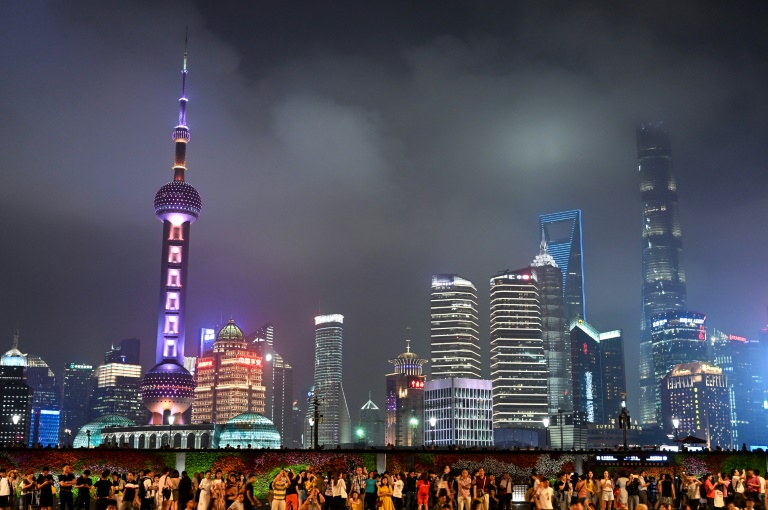
Shanghai will switch off decorative lights along its famed Bund riverfront for two days from Monday, city authorities said, in response to a nationwide heatwave that has sent power demands soaring.

Multiple provinces have announced power cuts to cope with a surge in demand, driven partly by people cranking up the air conditioning to cope with temperatures as high as 45 degrees Celsius (113 degrees Fahrenheit).

China has been hit by extreme weather this summer, including record temperatures, flash floods and droughts — phenomena that scientists have warned are becoming more frequent and intense due to climate change.

To save power, Shanghai authorities said in a notice Sunday that they would switch off “landscape lighting” at the Bund, the city’s most famous landmark.

Ornamental lights, billboards and video screens on both sides of the Huangpu River would be turned off on Monday and Tuesday, according to the notice.

The heatwave has reduced stretches of the Yangtze River, China’s most vital inland waterway, to unprecedented drought levels, according to official data.

That has resulted in high pressure on hydroelectric plants that supply power to some of the country’s key economic zones.

In the southwestern megacity of Chongqing, home to 31 million, authorities on Monday declared that all shopping malls must only operate between 4:00pm and 9:00pm daily to cut power costs until the “temperature and supply-demand situation” changes.

The city last week announced industrial power cuts lasting until Wednesday and reduced scenic lighting at tourist attractions.

In neighbouring Sichuan, authorities on Sunday extended industrial power cuts and activated their highest level of emergency response to deal with the heatwave.

“Since July this year, the province has faced the most extreme high temperatures, the lowest rainfall in the corresponding period in history… (and) the highest power load in history,” local authorities said.

Some of the world’s biggest automakers — including Japanese giant Toyota and Elon Musk’s Tesla — operate factories in Sichuan.

The province is also home to parts manufacturers that are crucial to global auto supply chains.

Many major factories were forced to halt work because of the Sichuan power cuts, which were supposed to end on Saturday but were extended to Thursday, Chinese news outlet Caixin reported.

Analysts have warned that Sichuan’s power woes could have ripple effects on the wider Chinese economy and international supply chains.

Hydropower generated in the province supplies domestic consumers and factories, but also industrial powerhouse provinces Jiangsu and Zhejiang.

Shanghai's Bund to go dark as China heatwave prompts power cuts

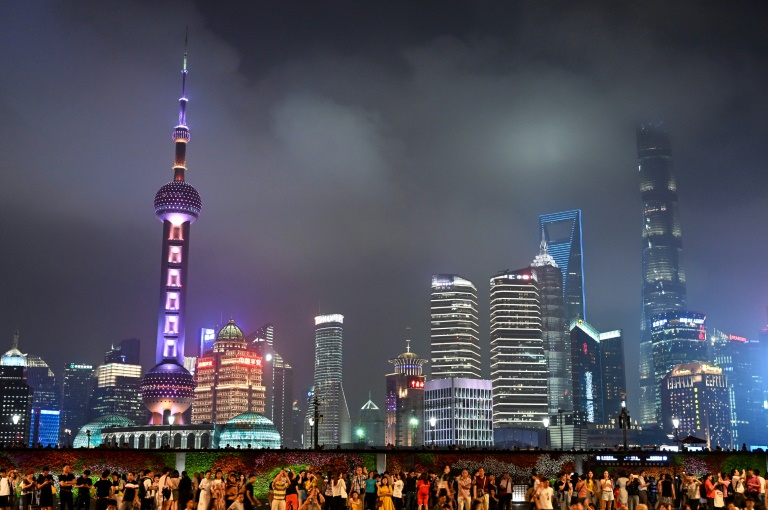
Shanghai will switch off decorative lights along its famed Bund riverfront for two days from Monday, city authorities said, in response to a nationwide heatwave that has sent power demands soaring.

Multiple provinces have announced power cuts to cope with a surge in demand, driven partly by people cranking up the air conditioning to cope with temperatures as high as 45 degrees Celsius (113 degrees Fahrenheit).

China has been hit by extreme weather this summer, including record temperatures, flash floods and droughts — phenomena that scientists have warned are becoming more frequent and intense due to climate change.

To save power, Shanghai authorities said in a notice Sunday that they would switch off “landscape lighting” at the Bund, the city’s most famous landmark.

Ornamental lights, billboards and video screens on both sides of the Huangpu River would be turned off on Monday and Tuesday, according to the notice.

The heatwave has reduced stretches of the Yangtze River, China’s most vital inland waterway, to unprecedented drought levels, according to official data.

That has resulted in high pressure on hydroelectric plants that supply power to some of the country’s key economic zones.

In the southwestern megacity of Chongqing, home to 31 million, authorities on Monday declared that all shopping malls must only operate between 4:00pm and 9:00pm daily to cut power costs until the “temperature and supply-demand situation” changes.

The city last week announced industrial power cuts lasting until Wednesday and reduced scenic lighting at tourist attractions.

In neighbouring Sichuan, authorities on Sunday extended industrial power cuts and activated their highest level of emergency response to deal with the heatwave.

“Since July this year, the province has faced the most extreme high temperatures, the lowest rainfall in the corresponding period in history… (and) the highest power load in history,” local authorities said.

Some of the world’s biggest automakers — including Japanese giant Toyota and Elon Musk’s Tesla — operate factories in Sichuan.

The province is also home to parts manufacturers that are crucial to global auto supply chains.

Many major factories were forced to halt work because of the Sichuan power cuts, which were supposed to end on Saturday but were extended to Thursday, Chinese news outlet Caixin reported.

Analysts have warned that Sichuan’s power woes could have ripple effects on the wider Chinese economy and international supply chains.

Hydropower generated in the province supplies domestic consumers and factories, but also industrial powerhouse provinces Jiangsu and Zhejiang.

Shanghai's Bund to go dark as China heatwave prompts power cuts

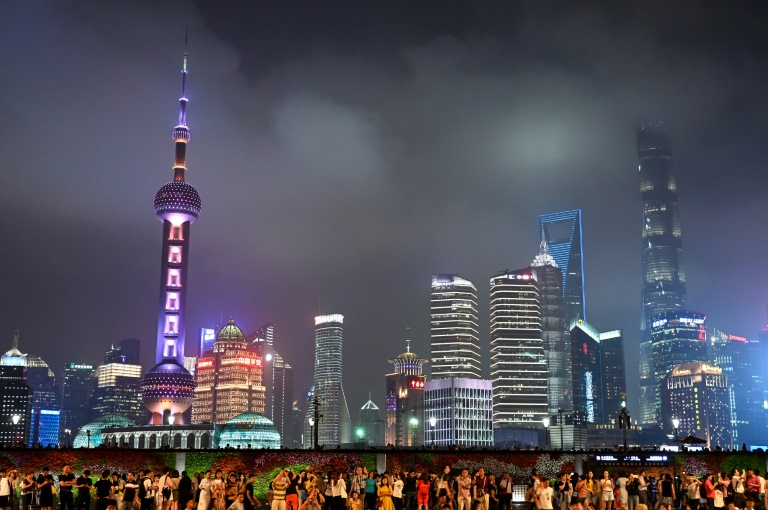
Shanghai will switch off decorative lights along its famed Bund riverfront for two days from Monday, city authorities said, in response to a nationwide heatwave that has sent power demands soaring.

Multiple provinces have announced power cuts to cope with a surge in demand, driven partly by people cranking up the air conditioning to cope with temperatures as high as 45 degrees Celsius (113 degrees Fahrenheit).

China has been hit by extreme weather this summer, including record temperatures, flash floods and droughts — phenomena that scientists have warned are becoming more frequent and intense due to climate change.

To save power, Shanghai authorities said in a notice Sunday that they would switch off “landscape lighting” at the Bund, the city’s most famous landmark.

Ornamental lights, billboards and video screens on both sides of the Huangpu River would be turned off on Monday and Tuesday, according to the notice.

The heatwave has reduced stretches of the Yangtze River, China’s most vital inland waterway, to unprecedented drought levels, according to official data.

That has resulted in high pressure on hydroelectric plants that supply power to some of the country’s key economic zones.

In the southwestern megacity of Chongqing, home to 31 million, authorities on Monday declared that all shopping malls must only operate between 4:00pm and 9:00pm daily to cut power costs until the “temperature and supply-demand situation” changes.

The city last week announced industrial power cuts lasting until Wednesday and reduced scenic lighting at tourist attractions.

In neighbouring Sichuan, authorities on Sunday extended industrial power cuts and activated their highest level of emergency response to deal with the heatwave.

“Since July this year, the province has faced the most extreme high temperatures, the lowest rainfall in the corresponding period in history… (and) the highest power load in history,” local authorities said.

Some of the world’s biggest automakers — including Japanese giant Toyota and Elon Musk’s Tesla — operate factories in Sichuan.

The province is also home to parts manufacturers that are crucial to global auto supply chains.

Many major factories were forced to halt work because of the Sichuan power cuts, which were supposed to end on Saturday but were extended to Thursday, Chinese news outlet Caixin reported.

Analysts have warned that Sichuan’s power woes could have ripple effects on the wider Chinese economy and international supply chains.

Hydropower generated in the province supplies domestic consumers and factories, but also industrial powerhouse provinces Jiangsu and Zhejiang.

Close Bitnami banner
Bitnami