AFP

Rodman planning Russia trip for jailed Griner: report

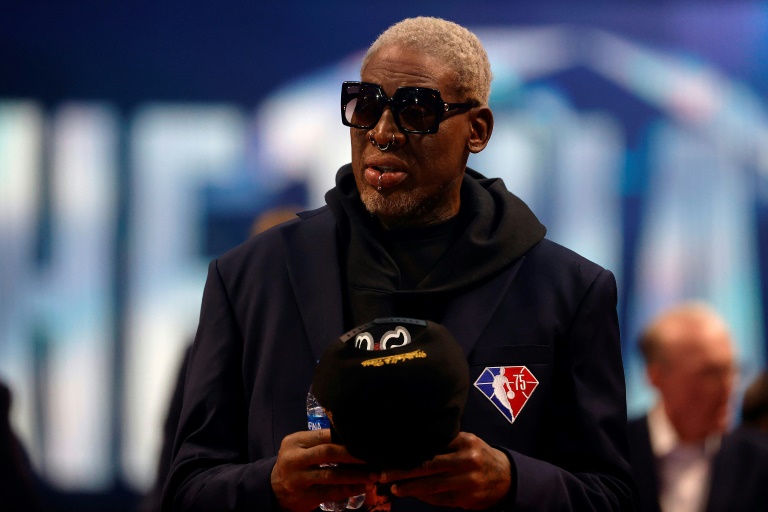
Eccentric former NBA star Dennis Rodman is planning a trip to Russia in an effort to seek the release of imprisoned WNBA player Brittney Griner, NBC News reported on Sunday.

The network quoted Rodman as saying that he was hoping to fly to Russia this week in an attempt to help basketball superstar Griner, who was sentenced to nine years in jail by a Moscow court earlier this month on a drug charge.

“I got permission to go to Russia to help that girl,” Rodman told NBC. “I’m trying to go this week.”

No further details were provided by Rodman, who was speaking at a restaurant in Washington where he was attending a sports apparel convention, according to NBC.

A senior official for US President Joe Biden’s administration said in a statement to AFP, “it is public information that the Administration has made a significant offer to the Russians and anything other than negotiating further through the established channel is likely to complicate and hinder release efforts.”

Rodman, 61, a five-time former NBA champion, has a record of unorthodox forays into geopolitics.

He has formed a relationship with North Korean leader Kim Jong-Un over the past decade, and has made several trips to the reclusive state. He traveled to Singapore in 2018 when Kim famously met former US President Donald Trump.

Rodman has also spoken approvingly of Russian President Vladimir Putin in the past. In 2014 he described Putin as “actually cool” after meeting the Russian leader in Moscow.

Two-time Olympic basketball gold medalist and Women’s NBA champion Griner was arrested at a Moscow airport in February for possessing vape cartridges with a small amount of cannabis oil.

The 31-year-old, who was in Russia to play for the professional Yekaterinburg team during her off-season from the Phoenix Mercury, was charged with smuggling narcotics and was sentenced to nine years in a penal colony in early August.

Griner pleaded guilty to the charges, but said she did not intend to use the banned substance in Russia.

Since her arrest, Moscow and Washington have been in talks about a potential prisoner exchange, despite soaring tensions over Russia’s military intervention in Ukraine.

Anime 'Dragon Ball' roars to top of N.American box office

Computer-animated martial arts film “Dragon Ball Super: Super Hero,” the 21st in the Japanese franchise, seized control of the North American box office this weekend with an estimated take of $20.1 million, industry watcher Exhibitor Relations reported Sunday.

That impressive result for the film from Crunchyroll — which called it the best global opening ever for an anime movie — proved a bright spot in a tepid August, easily outshining the $11.6 million take of another new release, Universal’s “Beast.” 

“This is another outstanding Crunchyroll anime opening,” said analyst David A Gross of Franchise Entertainment Research. He said Crunchyroll, 95 percent owned by Sony, now “dominates the genre.”

Gross rated “Beast,” meantime, as having only a “fair opening” for the Friday-through-Sunday period — at least “for an action adventure film featuring a beast.”

The beast, in this case, is a huge rogue lion that pursues a recently widowed man (Idris Elba) and his daughters when they go on safari. Iceland’s Baltasar Kormakur directs.

Sony’s action-thriller “Bullet Train,” which topped the box office the last two weekends, slid to third at $8 million. Brad Pitt plays a paid assassin on a train seemingly loaded with them.

In fourth was the still high-flying “Top Gun: Maverick,” which took in a substantial $5.9 million in its 13th week out. The Tom Cruise vehicle has pulled in $683 million domestically and $703 million overseas. 

And in fifth, down three spots from last weekend, was Warner Bros.’s animation “DC League of Super-Pets,” at $5.8 million. 

August is always slow at the box office, “but with no big releases during the last two weeks, business has dropped more than normal, to roughly -40 percent below August 2019,” Gross said, “and that’s how it will continue until October.”

Rounding out the weekend’s top 10 were:

“Thor: Love and Thunder” ($4 million)

“Nope” ($3.6 million)

“Minions: The Rise of Gru” ($3.5 million)

“Where the Crawdads Sing” ($3.2 million)

“Bodies Bodies Bodies” ($2.4 million)

First Lady Jill Biden tests negative for Covid: W.House

US First Lady Jill Biden has tested negative for Covid-19 twice and will come out of isolation Sunday, the White House said.

The 71-year-old wife of President Joe Biden tested positive on August 16, nearly two weeks after her husband contracted the virus for a second time. 

She is double vaccinated and twice boosted, and experienced mild symptoms. She was prescribed a course of the oral antiviral pill Paxlovid.

“After isolating for five days and receiving negative results from two consecutive COVID-19 tests, the First Lady will depart South Carolina later today for Delaware,” her communications director Elizabeth Alexander said in a statement. 

Jill Biden had tested positive while on holiday in South Carolina, where she stayed at a private residence.

President Biden, who turns 80 in November, has recently recovered from two separate bouts of the coronavirus.

He first tested positive on July 21 and continued to carry out his duties while isolating at the White House.

After four days of negative tests he again received a positive result on July 30 and entered isolation a second time, before coming out, having recovered fully, on August 7.

Art market pushes on with rocky crypto romance

The closest most people get to owning a world-famous artwork is to buy a cheap poster from a gallery, but art dealers are determined to harness technology to draw in new collectors.

Anaida Schneider, a former banker based in Switzerland, is among those promoting new ownership schemes — for a small fee, investors can buy a digital chunk of a painting and share in the profits when she sells.

“Not everyone has $1 million to invest,” she told AFP. “So I came up with the idea to split, to make like a mutual fund but on the blockchain.”

Each buyer gets an NFT, the unique digital tokens created and stored on the blockchain, the computer code that underpins cryptocurrencies.

Although cryptoassets have been routed this year with plunging values, collapsing projects and widening scandals, the NFT art sector has weathered the storm better than other parts of the crypto world.

NFT artworks accounted for some $2.8 billion in sales last year and the rate has declined only slightly in the first half of this year, according to analyst firm NonFungible.

Collectors and artists are among the most eager experimenters with the technology, even if it means owning only a slice of a digital copy of a painting.

A fifth of 300 collectors surveyed by the website Art+Tech Report said they had already engaged in so-called fractional ownership.

Schneider’s Liechtenstein-based company Artessere offers squares of paintings by Soviet artists including Oleg Tselkov and Shimon Okshteyn for 100 or 200 euros ($100 or $200) a piece.

She is giving herself 10 years to resell them. 

Schneider owns the paintings she sells, thus avoiding legal complications, but attempts to offer novel digital ownership schemes for publicly owned works is proving more tricky.

– ‘Complex and unregulated’ –

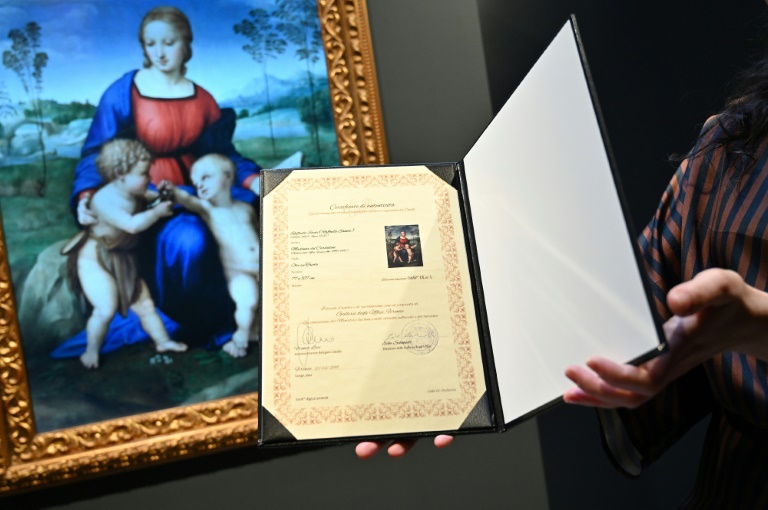
Thirteen Italian museums recently signed deals with Cinello, a firm that sells limited edition digital reproductions, to offer ownership of digital replicas of masterworks.

The buyer gets a unique, high-resolution digital copy to project onto a screen and a certificate from the museum, which gets half the proceeds.

The company held a splashy London show in February displaying digitised works by Renaissance masters including Raphael, Leonardo and Caravaggio. It has since sold a handful of them.

But the Italian culture ministry was reportedly irked that a replica of Michelangelo’s “Doni Tondo” sold for around 240,000 euros but Florence’s Uffizi gallery got less than a third of the proceeds.

A spokesman for the ministry was quoted in several outlets last month as saying the issue was “complex and unregulated” and asked museums not to sign any new contracts around NFTs.

Cinello boss Francesco Losi was not pleased with the characterisation, telling AFP: “We don’t sell NFTs.”

Buyers can ask for an NFT to go with their image, but the firm said they had their own patented system to secure ownership, which they call DAW.

– Mixed blessing –

Cinello said it had digitised more than 200 works and its sales had generated 296,000 euros in extra revenue for Italian museums.

But the firm’s difficulties in Italy underline the mixed blessing of NFTs — they bring publicity but also suspicion.

The NFT sector — which covers anything from avatars in computer games to million-dollar cartoon apes — is replete with scams, counterfeit works, thefts and wash trading.

Losi said he was well aware that NFTs could be used “in the wrong way” and was unsure what future they had in the art world. 

Anaida Schneider stressed that her project was protected by law in Liechtenstein, the tiny principality being among the first jurisdictions to pass a law regulating blockchain companies in 2019.

Beyond that, she said her insurance would cover damage to the artworks and she had also factored in the possibility that the paintings would fall in value, though she declined to give exact details.

“I hope it never happens,” she said. “For me, it’s very important to put this idea in the market.”

J Lo and Ben Affleck hold lavish estate wedding

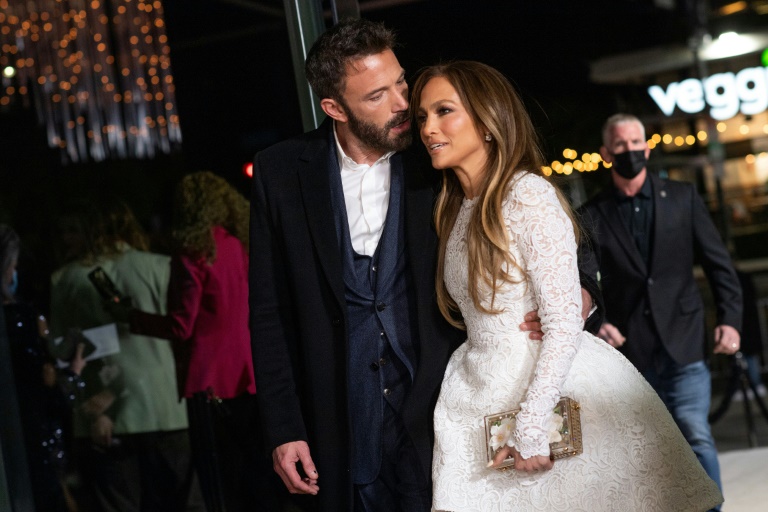
Celebrity couple Jennifer Lopez and Ben Affleck tied the knot Saturday — for the second time in just over a month — in a lavish ceremony at the “Good Will Hunting” star’s estate, US media reported.

The A-list lovebirds already wed in Las Vegas in mid-July, but made it official again, this time in front of friends and family at Affleck’s 87-acre (35-hectare) waterfront compound in the southeastern US state of Georgia.

Among the Hollywood types in attendance at the three-day affair were longtime Affleck pal Matt Damon and director Kevin Smith, People magazine reported.

Guests wore all-white while Lopez donned a Ralph Lauren dress made in Italy, according to Fox News.

Images posted by celebrity gossip site TMZ ahead of the wedding showed dinner seating being arranged on what appeared to be a large, covered dock, with a substantial barge for pyrotechnics floating nearby.

The pair — he is 50 and she is 53 — first met on the set of the widely panned movie “Gigli” in 2002.

They became a media sensation as they dated but postponed their planned 2003 nuptials, then announced their relationship was over in early 2004.

“Bennifer” — the couple’s public nickname from their first highly publicized relationship — set the internet alight last year when photos of them together again began circulating. 

Lopez and Affleck announced their engagement in April.

Lopez posted a video of herself appearing emotional and admiring a green ring in her newsletter, “On The JLo.” US media reported that the ring was an emerald-cut pale green diamond.

This is the fourth marriage for Lopez and the second for Affleck.

Lopez discussed her renewed relationship with Affleck in an interview with People in February.

“It’s a beautiful love story that we got a second chance,” she said.

Rat race: What rodent drivers can teach us about mental health

The girls can’t hide their excitement as they’re brought out to the racing arena.

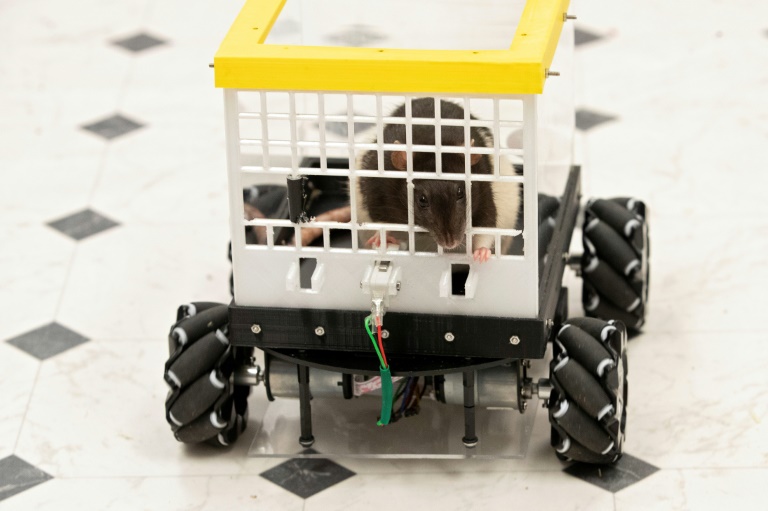
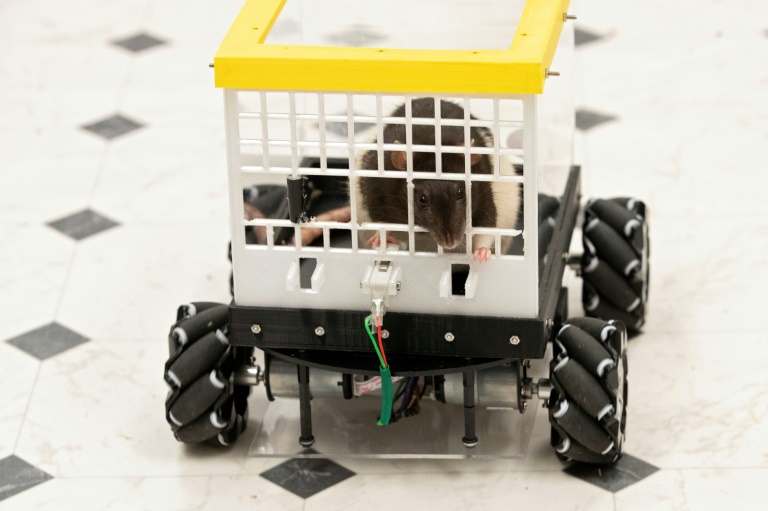
“Black Tail” is up first, taking a few seconds to sniff her surroundings before placing her paw on a lever and zooming away. 

After storming to the finish line, she devours a well-earned Froot Loop hanging on a “treat tree.”

Black Tail is one of the University of Richmond’s rat drivers — a group that first dazzled the world with their ability to operate tiny cars back in 2019. 

Now, the rodents serve as ambassadors for the school’s Behavioral Neuroscience Laboratory, headed by Professor Kelly Lambert.

“It gets people’s attention about how clever and teachable these animals are,” explained Lambert, who has to balance her affection for the furry speedsters with the need for scientific detachment — naming them only by the Sharpie colors that mark their tails.

The idea of racing rodents started out as a playful challenge from a colleague. 

But far from being a novelty act, the animals are part of a boundary-pushing project exploring the ways in which environmental enrichment sculpts the brain — and could in turn hold potential for solving human mental health challenges.

For Lambert, one of the great failings of modern medicine has been its inability to cure mental illness through drugs, even as pharmaceutical companies have reaped in huge profits.

These pharmaceutical approaches have faced increasing scrutiny since a landmark study published in July questioned the theory that chemical imbalances, especially a lack of serotonin, cause depression.

– Froots of their labor –

Instead, Lambert sees behavior therapy as the key to treating the mind, which is where studying fellow mammals comes in.

“Our brains are changing, from the womb to the tomb,” she said. “If we have some type of engaging life, this is probably important and related to depression.” 

A previous experiment of hers had split rats into groups of “workers,” who were assigned an effort-based reward task of digging through dirt mounds for a Froot Loop — or a control group of “trust fund” rats that were simply handed over treats.

When challenged with stressful tasks, the worker rats persisted longer than those conditioned to remain in a state of what psychologists call “learned helplessness.”

And when tasked with swimming, the worker rats showed greater emotional resilience, as shown by a higher ratio of the hormone dehydroepiandrosterone to cortisol in their droppings. 

Rats that learned to drive also had biomarkers of greater resilience and lowered stress — which Lambert suggests might be linked to the satisfaction of acquiring a new skill, like a human mastering a new piano piece.

“They make pathways that they take over and over again in the wild, and we wanted to see if they could continue to have this great navigational skill in a vehicle,” explained research lab specialist Olivia Harding.

Training wasn’t simple: the team first tried having the rats nudge the driving control with their snouts, before finding the animals preferred to stand on their hind legs and use their front paws.

Early car models required the rats to touch wiring placed in the front, left or right of the car, completing a mild electric circuit that corresponded to movement direction. 

Now, though, they get around in fancier rides with levers designed by a roboticist. 

Even when their cars were placed in an unfamiliar spot, pointed away from the treat, the rats learned to turn their vehicles and navigate toward the reward, indicating advanced cognitive processing at work.

Today’s driving ladies, Black Tail and Multicolored Tail, show clear signs of “anticipatory” behavior when humans enter the room, pacing back and forth and trying to climb their walls.

However, just like people, not all rats have similar interests: while certain individuals seemed eager to drive just for the fun of it, others did so just for treats, while still others couldn’t be coaxed into participating at all.

– Into the wild –

Female rats in particular were long ignored by science, because earlier generations of researchers thought their four-day estrous cycles muddied research results.

This potentially deprived scientists of female-specific insights, a trend Lambert has been adamant to reverse in her experiments — and is also now a required condition for federal grants.

Lambert recognized early in her career that studying rats living “non-enriched” lives inside cages without obstacle courses and activities was of limited use, akin to studying humans in solitary confinement.

In her driving study, rats raised in enriched cages fared far better at driving tasks.

Her most recent paper focused on differences between lab rats and those caught in the wild — finding the latter had larger brains, more brain cells, larger spleens to fight disease, and much higher stress levels than their captive cousins.

“It kind of blows my mind” that there had been so little interest in understanding these differences, given their possible impact on human medicine, she said.

It also raises an intriguing philosophical question: are we more like the caged lab rats, the enriched-setting lab rats, or the wild rats?

“I’m feeling a little bit closer to the provisioned lab rat rather than the wild rat,” muses Lambert.

But the wild rats, who have to scavenge for food and avoid predators every day of their lives — much like our own ancestors — might have something to teach us about mental resilience.

Rat race: What rodent drivers can teach us about mental health

The girls can’t hide their excitement as they’re brought out to the racing arena.

“Black Tail” is up first, taking a few seconds to sniff her surroundings before placing her paw on a lever and zooming away. 

After storming to the finish line, she devours a well-earned Froot Loop hanging on a “treat tree.”

Black Tail is one of the University of Richmond’s rat drivers — a group that first dazzled the world with their ability to operate tiny cars back in 2019. 

Now, the rodents serve as ambassadors for the school’s Behavioral Neuroscience Laboratory, headed by Professor Kelly Lambert.

“It gets people’s attention about how clever and teachable these animals are,” explained Lambert, who has to balance her affection for the furry speedsters with the need for scientific detachment — naming them only by the Sharpie colors that mark their tails.

The idea of racing rodents started out as a playful challenge from a colleague. 

But far from being a novelty act, the animals are part of a boundary-pushing project exploring the ways in which environmental enrichment sculpts the brain — and could in turn hold potential for solving human mental health challenges.

For Lambert, one of the great failings of modern medicine has been its inability to cure mental illness through drugs, even as pharmaceutical companies have reaped in huge profits.

These pharmaceutical approaches have faced increasing scrutiny since a landmark study published in July questioned the theory that chemical imbalances, especially a lack of serotonin, cause depression.

– Froots of their labor –

Instead, Lambert sees behavior therapy as the key to treating the mind, which is where studying fellow mammals comes in.

“Our brains are changing, from the womb to the tomb,” she said. “If we have some type of engaging life, this is probably important and related to depression.” 

A previous experiment of hers had split rats into groups of “workers,” who were assigned an effort-based reward task of digging through dirt mounds for a Froot Loop — or a control group of “trust fund” rats that were simply handed over treats.

When challenged with stressful tasks, the worker rats persisted longer than those conditioned to remain in a state of what psychologists call “learned helplessness.”

And when tasked with swimming, the worker rats showed greater emotional resilience, as shown by a higher ratio of the hormone dehydroepiandrosterone to cortisol in their droppings. 

Rats that learned to drive also had biomarkers of greater resilience and lowered stress — which Lambert suggests might be linked to the satisfaction of acquiring a new skill, like a human mastering a new piano piece.

“They make pathways that they take over and over again in the wild, and we wanted to see if they could continue to have this great navigational skill in a vehicle,” explained research lab specialist Olivia Harding.

Training wasn’t simple: the team first tried having the rats nudge the driving control with their snouts, before finding the animals preferred to stand on their hind legs and use their front paws.

Early car models required the rats to touch wiring placed in the front, left or right of the car, completing a mild electric circuit that corresponded to movement direction. 

Now, though, they get around in fancier rides with levers designed by a roboticist. 

Even when their cars were placed in an unfamiliar spot, pointed away from the treat, the rats learned to turn their vehicles and navigate toward the reward, indicating advanced cognitive processing at work.

Today’s driving ladies, Black Tail and Multicolored Tail, show clear signs of “anticipatory” behavior when humans enter the room, pacing back and forth and trying to climb their walls.

However, just like people, not all rats have similar interests: while certain individuals seemed eager to drive just for the fun of it, others did so just for treats, while still others couldn’t be coaxed into participating at all.

– Into the wild –

Female rats in particular were long ignored by science, because earlier generations of researchers thought their four-day estrous cycles muddied research results.

This potentially deprived scientists of female-specific insights, a trend Lambert has been adamant to reverse in her experiments — and is also now a required condition for federal grants.

Lambert recognized early in her career that studying rats living “non-enriched” lives inside cages without obstacle courses and activities was of limited use, akin to studying humans in solitary confinement.

In her driving study, rats raised in enriched cages fared far better at driving tasks.

Her most recent paper focused on differences between lab rats and those caught in the wild — finding the latter had larger brains, more brain cells, larger spleens to fight disease, and much higher stress levels than their captive cousins.

“It kind of blows my mind” that there had been so little interest in understanding these differences, given their possible impact on human medicine, she said.

It also raises an intriguing philosophical question: are we more like the caged lab rats, the enriched-setting lab rats, or the wild rats?

“I’m feeling a little bit closer to the provisioned lab rat rather than the wild rat,” muses Lambert.

But the wild rats, who have to scavenge for food and avoid predators every day of their lives — much like our own ancestors — might have something to teach us about mental resilience.

On track: Cairo metro employs Egypt's first women train drivers

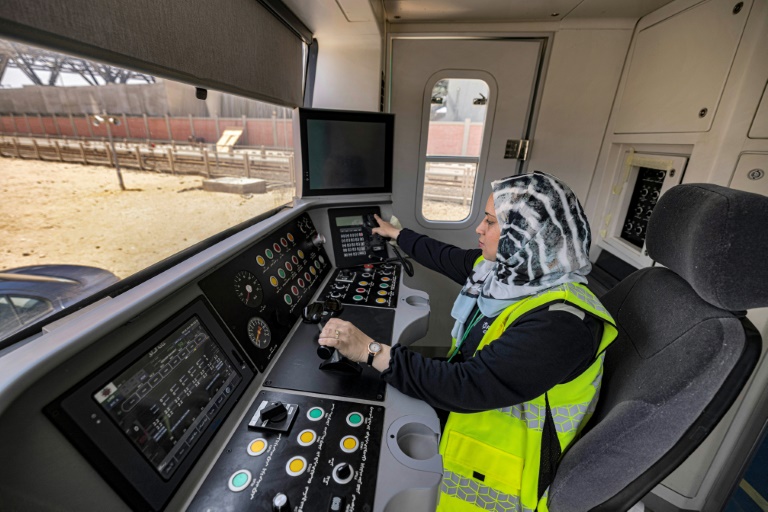
As it prepares to expand to serve a population now exceeding 20 million, the Cairo metro has recruited Egypt’s first female train drivers, a novelty in a country where few women have formal jobs.

Since April, commuters on the network’s newest line have seen women take the controls in the driver’s cab, with reactions ranging from raised eyebrows to outright disapproval, according to the two pioneers.

Egyptian women have had the right to vote and stand for office since 1956, but patriarchal legislation and a male-dominated culture have severely limited personal rights.

The Cairo metro itself provides reserved carriages for women who do not wish to ride with men in an attempt to provide protection against sexual harassment.

Business graduate and mother of two Hind Omar said she had rushed to apply to be a train driver, eager to be a pioneer in a country where only 14.3 percent of women are in formal employment, according to 2020 figures.

“I have several thousand lives in my hands every day,” the 30-year-old told AFP, proudly wearing a fluorescent jacket emblazoned with the RATP-Dev logo of the foreign operations arm of the Paris metro beneath her black and white headscarf.

Omar acknowledged that she had been lucky to have the support of her family.

“My parents found it strange at first but they ended up supporting me,” she said.

“My husband was enthusiastic from the start and always encouraged me.”

A key factor had been the exemption from night shifts offered to women drivers, she said.

Omar said the tests for would-be drivers had been gruelling, requiring candidates to demonstrate their “attention span” and “endurance”.

She said drivers had to remain “extremely vigilant for long hours” during a six-day working week.

– ‘Some passengers were afraid’ –

Omar was one of two women accepted for the training programme run by Egypt’s National Authority for Tunnels in cooperation with RATP-Dev.

The other, Suzanne Mohamed, 32, recalled the first time commuters on the platform saw her in the driver’s cab.

She said she could understand “they were surprised” in a country where women have limited access to many careers.

“Some passengers were afraid,” she told AFP. “They doubted my skills and said they didn’t feel safe with a woman at the controls.”

Launched in 1987, the Cairo metro is the oldest in the Arab world but it has fallen behind other Arab countries in providing employment opportunities for women.

Moroccan Saida Abad became the first female train driver in Africa and the Arab world in 1999.

Even in Saudi Arabia, where until recently women were banned from driving cars, a first group of women is currently in training to be drivers on the railways.

With the Cairo metro planning to add three new lines as well as Egypt’s first monorail system, Omar said she hoped her example would help “pave the way for other women” to become train drivers and ensure “that there’s a lot of us”.

In normally tranquil New York town, shock over Rushdie attack persists

When Emily Sack saw a young man leap at Salman Rushdie on the stage of a cultural center in western New York state, it happened so suddenly that she barely realized she was witnessing an attack on the author’s life.

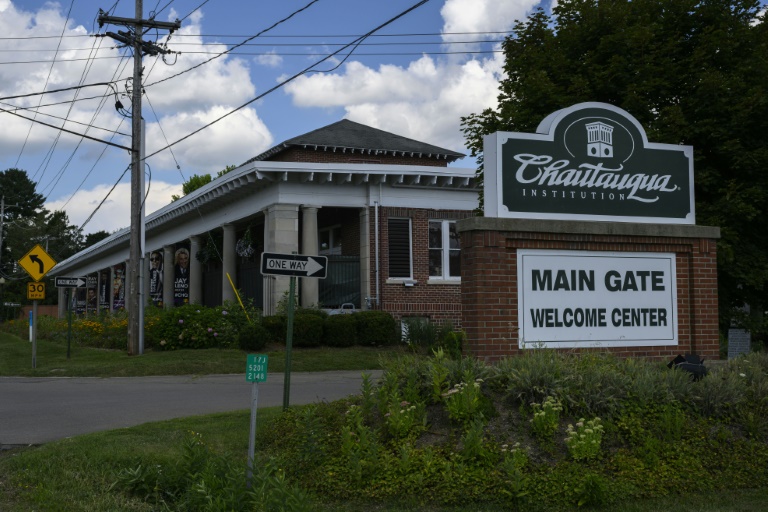
Like many other residents of the Chautauqua Institution — a retreat that hosts educational and cultural programs in a huge park dotted with quaint colonial homes and perched on the shores of gorgeous Lake Chautauqua — her memory of the attack is a bit of a blur.

And yet, she was there on August 12 in the open-air amphitheater for a conference featuring Rushdie when police say Hadi Matar, a 24-year-old from New Jersey with roots in Lebanon, launched the attack that shocked much of the world.

“It was so fast,” the woman in her eighties told AFP. “You know, it was almost over before it began.”

Afterward, the Chautauqua Institution canceled its events for the rest of the day. 

“Everybody here was totally bummed out, including me,” Sack said, tears in her eyes. 

– Reputation for tolerance –

The Chautauqua Institution presents itself as a beacon of diversity, tolerance and cultural, communal and religious life in the northern United States.

Founded in 1874 by two Methodist clergy, the institution became a celebrated venue for contemplative activities and conferences in the arts, education and religion.

The center’s website says it is “dedicated to exploring the best in humanity.”

US president Franklin Roosevelt delivered a famed speech there in 1936, just a few years before the outbreak of World War II, offering “every nation of the world the handclasp of the good neighbor.”

The non-profit Chautauqua Institution operates with the support of its members and the 100,000 — mostly older — visitors who attend its summer festival. 

Residents and visitors stroll or ride bikes across its verdant grounds through a village-like community that features its own streets and homes, magnificently maintained gardens and even its own police department and postal service.

“Indeed, it was a shock to our entire community, and I think the entire region and anyone who knows Chautauqua Institution,” said Emily Morris, the center’s senior vice president, fighting back sobs. 

“We’ve been around for almost 150 years and have never had anything like this happen.”

Resident David Wilson said: “It’s a shame, and unfortunately I think it’s emblematic of what’s going on all over the world. A shame it happened here.” 

– Security in question –

For most people in this peaceful and scenic area — including county seat Mayville, where Matar appeared in court on Thursday for a hearing on charges of assault and attempted murder — no one expected an attack that would stun the world.

Prosecutor Jason Schmidt is building the case over the assault on Rushdie, who has lived since 1989 under an Iranian threat of death over his book “The Satanic Verses.” 

But Schmidt acknowledged to the press that his office lacked the resources to handle such a case, which is also being probed by the Federal Bureau of Investigation.   

Sack had never imagined such a thing could happen in Chautauqua. 

“I hadn’t thought about it before,” she said. “But you know, it happens all over the world. Well, why not here? I mean, horrible as it is.” 

Barbara Warner, a retired Chautauqua resident also in her 80s, agreed. 

“Unfortunately, these things are happening in lots of different places in the country,” she said.

Wilson called the attack “quite a shock,” but said he feels no less safe, as the institution continues its remaining lineup of summer activities.

The center has been criticized in US media for the apparent lack of security measures for someone as obvious a potential target as Rushdie, who is slowly recovering from his wounds in a hospital in Erie, Pennsylvania.

Morris, the Chautauqua vice president, said the center had deployed security measures around the amphitheater, including metal detectors and a ban on bags.

Guards now visibly patrol around the structure, with strict controls at entry points.

Security around Rushdie had grown less stringent during his 20 years living in the United States. 

But Morris said the institution “would not have proceeded if we didn’t think we had a plan appropriate to that event.”

“And we’re taking a very close look at that.” 

EU fiscal oversight of Greece ends after 12 years

Greece on Saturday concluded 12 years of European Union fiscal surveillance that was imposed in return for bailouts after a crushing debt crisis.

In November 2009, Athens revealed a sharp rise in its public deficit that eventually led to a financial crisis across the eurozone and wreaked havoc on Greek finances for a decade.

In exchange for bailout cash of 289 billion euros and to stop Greece from crashing out of the eurozone, a “troika”, made up of the International Monetary Fund, EU and the European Central Bank, demanded across-the-board reforms from Athens.

These included deep state spending and salary cuts, tax hikes, privatisations and other sweeping reforms aimed at righting public finances. 

The economy contracted by more than a quarter, unemployment spiked to almost 28 percent and skilled professionals emigrated in droves.

“A cycle of 12 years which brought pain to citizens, led to economic stagnation and divided society,” has ended, Prime Minister Kyriakos Mitsotakis said. 

“A new horizon filled with growth, unity and prosperity emerges for all,” he said. “The Greece of today is a different Greece.

“We have recorded strong growth and a significant slide in unemployment of three percent since last year and 5 percent since 2019,” he added. 

Ending the oversight will strengthen Greece’s international market position by increasing its attractiveness to investors. Athens will also now have greater control over its domestic economic policy.

“The end of enhanced surveillance for Greece also marks the symbolic conclusion of the most challenging period the euro area has experienced,” Paolo Gentiloni, the European Commissioner for Economy, said in a statement. 

“The sovereign debt crisis that defined the first years of the previous decade was a steep learning curve for our Union. 

“Our strong collective response to the pandemic indicated that Europe had learned the lessons of that crisis. We must show the same solidarity and unity as we navigate the troubled waters our economies are now entering.”

Greece — like fellow bailed-out EU members Spain, Portugal, Cyprus and Ireland — will still be monitored by its creditors while paying back its debts. 

In Greece’s case, that will take another two generations, with the last loans due for repayment in 2070.

According to European Commission projections, the Greek economy will grow by 4 percent this year, much higher than the eurozone average of 2.6 percent.

However, Greece’s unemployment rate is one of the highest in the monetary union, its minimum wage one of the lowest and the country’s debt is 180 percent of gross domestic product.   

Close Bitnami banner
Bitnami