AFP

UK dock workers' union threatens further strikes

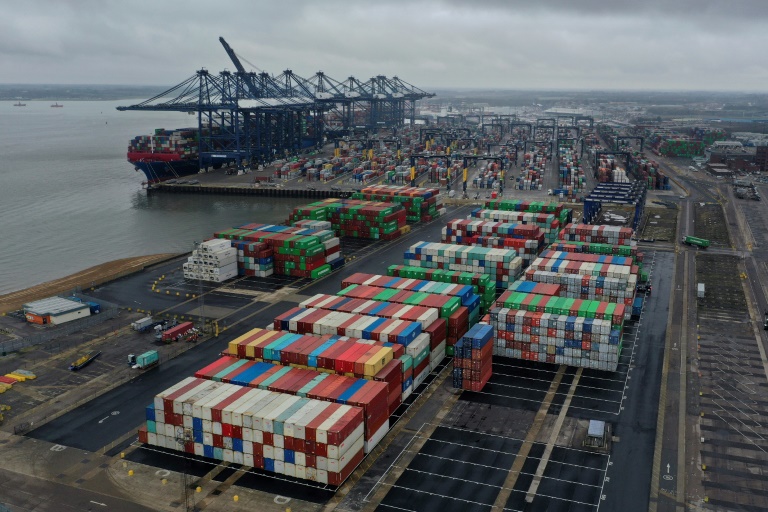
A trade union on Monday warned of more strikes at the UK’s largest container port if pay demands are not met, threatening to cause further disruptions to the supply chain.

Workers at Felixstowe port in southeastern England began an eight-day strike over pay on Sunday, in the latest industrial action as decades-high inflation intensifies the country’s cost-of-living crisis.

They say the pay offer they received does not keep up with inflation — which has surged above 10 percent — and includes a one-off lump sum payment.

“If we don’t achieve what we’re trying to achieve, there will be more strikes,” Robert Morton, national officer for the Unite union, told Sky News.

“We’ve been asking for a minimum of the rate of inflation,” Morton said.

Nearly 2,000 unionised employees at the port in eastern England, including crane drivers, machine operators and stevedores, are involved in the first strike at Felixstowe since 1989.

It comes amid stoppages over pay and working conditions across various UK industries, with railway workers just the latest to strike on Thursday and Saturday this week.

The strike comes after Covid and post-Brexit labour shortages have already hit the UK supply chain.

Morton said he accepted that further strikes at Felixstowe would mean “the supply chain will be severely disrupted”, while saying the strike will end as soon as the port agrees to meet for negotiations.

The Port of Felixstowe said in a statement Friday that it was “disappointed” the walkout had gone ahead and called its offer of salary increases of on average eight percent “fair”.

It said it “regrets the impact this action will have on UK supply chains”.

Pal Davey, head of corporate affairs at the port, told Sky News on Monday that average pay at the port is “40 percent higher than national average” and workers had been given a “very fair offer”.

“Our workers have been much better placed to weather the cost-of-living storm than the majority of workers in the rest of the country,” he said.

Strike action over pay matching inflation is taking place in a wide range of sectors.

Even criminal lawyers who represent clients in court have launched strike action.

On Monday, their union, The Criminal Bar Association announced its members had voted to escalate their action and will stop taking on any new cases indefinitely from September 6.

Most markets down as traders eye key Powell speech

Stocks sank Monday and the dollar rallied on renewed concerns about Federal Reserve plans to ramp up interest rates to combat runaway inflation.

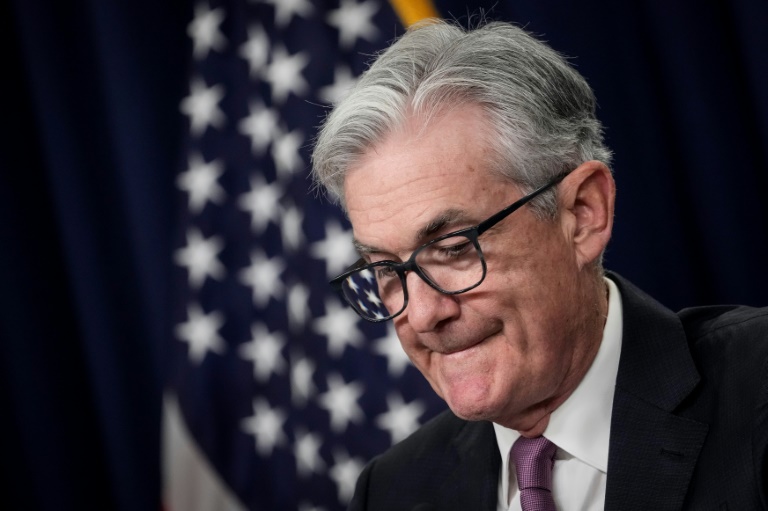
All eyes are on a symposium in Jackson Hole, Wyoming where Fed boss Jerome Powell will deliver a speech that traders will follow for an idea about the bank’s next moves.

A dip in price rises and signs of economic slowdown had raised hopes policymakers would ease up — and possibly cut rates next year — after two successive, 75-basis-point hikes, helping equities rally globally.

But that optimism has slowly been eroded in recent weeks as Fed officials, including Powell, have warned that the battle against inflation was far from won, particularly as the jobs market remained resilient.

One of the latest was Richmond Fed boss Thomas Barkin, who reasserted his commitment to bringing inflation back to two percent from the four-decade high of around nine percent.

He said on Friday the policy board would “do what it takes to get there”, but warned: “There’s a path to getting inflation under control but a recession could happen in the process.”

Jonathan Millar of Barclays said it was unlikely Powell would signal a slowdown in rate hikes this week.

“It does seem like what we’ve heard from Powell so far suggests there’s quite a high bar for them to transition from aggressive hikes” to 25 basis points.

“One thing they definitely want to communicate is that they remain very much focused on issues with price stability and that they will react very cautiously to any signs of improvements in the inflation data.”

And National Australia Bank’s Rodrigo Catril added that the Fed chief will likely say that “while we may be close to the end of the beginning of the current tightening cycle, we are still a long way from the end”.

All three main indexes on Wall Street fell Friday and Asia followed suit.

Hong Kong, Tokyo, Sydney, Seoul, Mumbai, Taipei, Manila and Jakarta dropped.

But Shanghai rose after China’s central bank cut prime loan rates as it tries to bolster the world’s second-biggest economy, which has been ravaged by lockdowns as part of a zero-Covid strategy.

Singapore, Bangkok and Wellington also edged up.

London, Paris and Frankfurt all fell in early trade.

The prospect of more US hikes to come has given another boost to the dollar, which rallied against the yen and is approaching the 140 yen mark for the first time in 24 years. 

It also broke parity with the euro again — after having done so last month for the first time in nearly 20 years.

The stronger greenback was helping to keep oil prices down, while downward pressure was being enhanced by speculation rising about a possible Iran nuclear deal that could ease a supply crisis caused by Russia’s invasion of Ukraine.

Both main contracts tumbled Monday and wiped out all the gains seen in reaction to the start of conflict in eastern Europe.

“The global balance for the remainder of the year is not as tight as many were expecting, with Russian supply holding up well,” said Warren Patterson, of ING Groep NV.

“While it may take several months for Iran to get production back to pre-sanction levels in the event of a deal, in the short term, they should still be able to boost exports by relying on storage.”

– Key figures at around 0810 GMT –

Tokyo – Nikkei 225: DOWN 0.5 percent at 28,794.50 (close)

Hong Kong – Hang Seng Index: DOWN 0.6 percent at 19,656.98 (close)

Shanghai – Composite: UP 0.6 percent at 3,277.79 (close)

London – FTSE 100: DOWN 0.6 percent at 7,508.61

Euro/dollar: DOWN at $0.9994 from $1.0034 Friday

Pound/dollar: DOWN at $1.1790 from $1.1827

Euro/pound: DOWN at 84.80 pence from 84.81 pence

Dollar/yen: UP at 136.77 yen from 136.93 yen

West Texas Intermediate: DOWN 2.0 percent at $89.00 per barrel

Brent North Sea crude: DOWN 1.8 percent at $95.01 per barrel

New York – Dow: DOWN 0.9 percent at 33,706.74 points (close)

Most markets down as traders eye key Powell speech

Stocks sank Monday and the dollar rallied on renewed concerns about Federal Reserve plans to ramp up interest rates to combat runaway inflation.

All eyes are on a symposium in Jackson Hole, Wyoming where Fed boss Jerome Powell will deliver a speech that traders will follow for an idea about the bank’s next moves.

A dip in price rises and signs of economic slowdown had raised hopes policymakers would ease up — and possibly cut rates next year — after two successive, 75-basis-point hikes, helping equities rally globally.

But that optimism has slowly been eroded in recent weeks as Fed officials, including Powell, have warned that the battle against inflation was far from won, particularly as the jobs market remained resilient.

One of the latest was Richmond Fed boss Thomas Barkin, who reasserted his commitment to bringing inflation back to two percent from the four-decade high of around nine percent.

He said on Friday the policy board would “do what it takes to get there”, but warned: “There’s a path to getting inflation under control but a recession could happen in the process.”

Jonathan Millar of Barclays said it was unlikely Powell would signal a slowdown in rate hikes this week.

“It does seem like what we’ve heard from Powell so far suggests there’s quite a high bar for them to transition from aggressive hikes” to 25 basis points.

“One thing they definitely want to communicate is that they remain very much focused on issues with price stability and that they will react very cautiously to any signs of improvements in the inflation data.”

And National Australia Bank’s Rodrigo Catril added that the Fed chief will likely say that “while we may be close to the end of the beginning of the current tightening cycle, we are still a long way from the end”.

All three main indexes on Wall Street fell Friday and Asia followed suit.

Hong Kong, Tokyo, Sydney, Seoul, Mumbai, Taipei, Manila and Jakarta dropped.

But Shanghai rose after China’s central bank cut prime loan rates as it tries to bolster the world’s second-biggest economy, which has been ravaged by lockdowns as part of a zero-Covid strategy.

Singapore, Bangkok and Wellington also edged up.

London, Paris and Frankfurt all fell in early trade.

The prospect of more US hikes to come has given another boost to the dollar, which rallied against the yen and is approaching the 140 yen mark for the first time in 24 years. 

It also broke parity with the euro again — after having done so last month for the first time in nearly 20 years.

The stronger greenback was helping to keep oil prices down, while downward pressure was being enhanced by speculation rising about a possible Iran nuclear deal that could ease a supply crisis caused by Russia’s invasion of Ukraine.

Both main contracts tumbled Monday and wiped out all the gains seen in reaction to the start of conflict in eastern Europe.

“The global balance for the remainder of the year is not as tight as many were expecting, with Russian supply holding up well,” said Warren Patterson, of ING Groep NV.

“While it may take several months for Iran to get production back to pre-sanction levels in the event of a deal, in the short term, they should still be able to boost exports by relying on storage.”

– Key figures at around 0810 GMT –

Tokyo – Nikkei 225: DOWN 0.5 percent at 28,794.50 (close)

Hong Kong – Hang Seng Index: DOWN 0.6 percent at 19,656.98 (close)

Shanghai – Composite: UP 0.6 percent at 3,277.79 (close)

London – FTSE 100: DOWN 0.6 percent at 7,508.61

Euro/dollar: DOWN at $0.9994 from $1.0034 Friday

Pound/dollar: DOWN at $1.1790 from $1.1827

Euro/pound: DOWN at 84.80 pence from 84.81 pence

Dollar/yen: UP at 136.77 yen from 136.93 yen

West Texas Intermediate: DOWN 2.0 percent at $89.00 per barrel

Brent North Sea crude: DOWN 1.8 percent at $95.01 per barrel

New York – Dow: DOWN 0.9 percent at 33,706.74 points (close)

'We are divided': lake upends life for tiny Kenyan tribe

At first light, children from one of Kenya’s smallest and most isolated tribes put on life jackets and board a fishing boat for the journey across the lake to school.

Until recently, they could walk the distance. A road connected the El Molo with the world beyond their tiny village, a lifeline for a secluded community of fishers and craftspeople subsisting on the shores of Lake Turkana.

But three years ago the lake started rising dramatically, lapping at the El Molo’s dome-shaped huts draped in dry fish, then pushing inland, forcing villagers to higher ground.

As the tide reached levels not seen in living memory, the El Molo watched their only freshwater pipeline slip beneath the surface, as well as the burial mounds of their ancestors.

Eventually, the road to the mainland disappeared completely, marooning the El Molo on an island in a lake so large and imposing it is sometimes called the “Jade Sea”.

“There never used to be water here,” said El Molo fisherman Julius Akolong as he crossed the wide channel that today separates his community from the rest of far northern Kenya.

“You could drive a jeep across.”

Turkana, already the world’s largest desert lake, stretching 250 kilometres (155 miles) tip to tip, grew 10 percent in the decade to 2020, according to a government study published last year.

That expansion submerged nearly 800 additional square kilometres (about 300 square miles) of land including around El Molo Bay, where the tribespeople live on Turkana’s eastern shores.

Extreme rainfall over catchment areas -– a climatic event linked to global warming — greater soil runoff from deforestation and farming, and tectonic activity were all cited as contributing causes.

– Blessings and curses –

The phenomenon has profoundly impacted the El Molo, whose distinct Cushitic culture was already under serious threat.

Barely numbering 1,100 in the last census, the El Molo are dwarfed by Kenya’s larger and more prosperous ethnic groups that dominate a country of around 50 million people.

Known as “the people who eat fish” by the livestock-rearing tribes of northern Kenya, the El Molo are believed to have migrated from Ethiopia to Turkana around 1,000 BC.

But few today speak a word of their mother tongue, and ancient customs have evolved or vanished entirely through generations of intermarriage with neighbouring ethnic groups.

The lake’s unexpected rise fragmented the remaining El Molo still following the old ways of life.

Some displaced in the disaster made the wrenching decision to relocate to the mainland, erecting a squatter camp on the opposite shore.

The cluster of shanties on a barren and wind-swept clearing is nearer to the school and other facilities, but a world away from their tight-knit community and its traditions.

“It was very difficult… We had to go and discuss this with the elders so they could permit or bless us to go with no curses,” said Akolong, a 39-year-old father of two.

For those who stayed, life on the island has become a struggle.

The El Molo are skilled fishers, but as Turkana rose higher their people went hungry.

The fishing nets and baskets used for millennia, hand-woven with reeds and doum palm fibre, proved less effective in the deeper water, reducing catch. 

No longer able to access freshwater, the El Molo were forced to drink from Turkana, the most saline lake in Africa.

Children in the village suffer chalky teeth and bleached hair, a side effect of the lake’s high fluoride content.

“We often get diarrhoea… we have no other clean water. This is all we have. It is salty, and corrodes our teeth and hair,” said Anjela Lenapir, a 31-year-old mother of three who decided to stay.

– Disappearing culture – 

School attendance has fallen sharply because parents cannot afford the boat fare, said David Lesas, deputy head teacher at El Molo Bay Primary School.

“Most of them remain at home,” he lamented.

The local government and World Vision, an aid group, are assisting but resources are scarce and needs many in the region, which is experiencing a once-in-a-generation drought.

The school has suffered too: the perimeter fence and toilet block are underwater, and crocodiles have taken over part of the playground.

But the real damage to the El Molo is indelible.

Separated from his people, Akolong has missed initiation rites, naming ceremonies, and funerals — rituals that strengthen tribal identity and community.

“We are now divided,” he said bitterly.

Stone cairns marking the resting place of El Molo’s dead have been swept away, erasing memories of the past, while the lake threatens venerated shrines to tribal deities.

“It is a place that is deeply respected in our culture. With the water rising, we will lose that tradition too,” said Lenapir.

China central bank cuts lending rates to boost economy

China’s central bank on Monday cut benchmark loan rates in an attempt to boost an economy battered by the government’s strict zero-Covid policy and a slump in the property market.

The world’s second-biggest economy saw an improvement after some coronavirus restrictions eased in June, but consumer and business sentiment remains weaker than usual.

The one-year Loan Prime Rate, which serves as a benchmark for corporate loans, was reduced from 3.7 percent to 3.65 percent, the People’s Bank of China (PBOC) said in a statement.

The five-year LPR, which is used to price mortgages, was cut from 4.45 percent to 4.3 percent, it added.

The PBOC slashed key interest rates last week, bringing its seven-day reverse repurchase rate — a key rate at which it provides short-term liquidity to banks — to a new low.

Analysts had expected cuts to the LPR rates, but said they may not be enough to rescue the property sector — which is estimated to account for as much as a quarter of China’s GDP.

“The much larger cut to the five-year rate suggests the PBOC is particularly concerned about problems in the housing market,” Capital Economics said in a note on Monday.

“However, homebuyers with existing mortgages will have to wait until the start of next year for the change to affect them.”

China’s housing market was shaken by frustrated homebuyers in dozens of cities who boycotted mortgage payments as cash-strapped developers struggled to complete the units they had sold in advance.

With property firms struggling to manage mountains of debt, fears have swirled since last year that the sector’s troubles could spread to the rest of the economy.

“Most home mortgages are linked to the (five-year) loan prime rate. So this rate cut is obviously to reduce the burden on borrowers,” Iris Pang, chief economist for Greater China at ING, in a note.

“When the market sees progress in the construction of uncompleted projects, we may see an improvement in home buying sentiment and home prices should stabilise.”

China’s economic growth came in at just 0.4 percent on-year in the second quarter — its slowest rate since the Covid crisis began in 2020.

China central bank cuts lending rates to boost economy

China’s central bank on Monday cut benchmark loan rates in an attempt to boost an economy battered by the government’s strict zero-Covid policy and a slump in the property market.

The world’s second-biggest economy saw an improvement after some coronavirus restrictions eased in June, but consumer and business sentiment remains weaker than usual.

The one-year Loan Prime Rate, which serves as a benchmark for corporate loans, was reduced from 3.7 percent to 3.65 percent, the People’s Bank of China (PBOC) said in a statement.

The five-year LPR, which is used to price mortgages, was cut from 4.45 percent to 4.3 percent, it added.

The PBOC slashed key interest rates last week, bringing its seven-day reverse repurchase rate — a key rate at which it provides short-term liquidity to banks — to a new low.

Analysts had expected cuts to the LPR rates, but said they may not be enough to rescue the property sector — which is estimated to account for as much as a quarter of China’s GDP.

“The much larger cut to the five-year rate suggests the PBOC is particularly concerned about problems in the housing market,” Capital Economics said in a note on Monday.

“However, homebuyers with existing mortgages will have to wait until the start of next year for the change to affect them.”

China’s housing market was shaken by frustrated homebuyers in dozens of cities who boycotted mortgage payments as cash-strapped developers struggled to complete the units they had sold in advance.

With property firms struggling to manage mountains of debt, fears have swirled since last year that the sector’s troubles could spread to the rest of the economy.

“Most home mortgages are linked to the (five-year) loan prime rate. So this rate cut is obviously to reduce the burden on borrowers,” Iris Pang, chief economist for Greater China at ING, in a note.

“When the market sees progress in the construction of uncompleted projects, we may see an improvement in home buying sentiment and home prices should stabilise.”

China’s economic growth came in at just 0.4 percent on-year in the second quarter — its slowest rate since the Covid crisis began in 2020.

Most Asian markets down as traders eye key Powell speech

Asian markets were broadly lower Monday as the rally from June’s lows runs out of steam owing to renewed concerns about Federal Reserve plans to ramp up interest rates to combat runaway inflation.

All eyes are on a symposium in Jackson Hole, Wyoming where Fed boss Jerome Powell will deliver a speech that will be followed for an idea about the bank’s next moves.

A dip in price rises and signs of economic slowdown had raised hopes policymakers would ease up — and possibly cut next year — after two successive, 75-basis-point hikes, helping equities rally globally.

But that optimism has slowly been eroded in recent weeks as Fed officials, including Powell, have warned that the battle against inflation was far from won, particularly as the jobs market remained resilient.

One of the latest was Richmond Fed boss Thomas Barkin, who reasserted his commitment to bringing inflation back to two percent from the four-decade high of around nine percent.

He said on Friday the policy board would “do what it takes to get there”, but warned: “There’s a path to getting inflation under control but a recession could happen in the process.”

Jonathan Millar of Barclays said it was unlikely Powell would signal a slowdown in rate hikes this week.

“It does seem like what we’ve heard from Powell so far suggests there’s quite a high bar for them to transition from aggressive hikes” to 25 basis points.

“One thing they definitely want to communicate is that they remain very much focused on issues with price stability and that they will react very cautiously to any signs of improvements in the inflation data.”

And National Australia Bank’s Rodrigo Catril added that the Fed chief will likely say that “while we may be close to the end of the beginning of the current tightening cycle, we are still a long way from the end”.

All three main indexes on Wall Street fell Friday and Asia followed suit in early trade.

Hong Kong, Tokyo, Sydney, Seoul, Taipei, Manila and Jakarta dropped.

However, Shanghai rose after China’s central bank cut prime loan rates as it tries to bolster the world’s second-biggest economy, which has been ravaged by lockdowns across the country as part of leaders’ zero-Covid strategy.

Singapore and Wellington also edged up.

The prospect of more US hikes to come has given another boost to the dollar, which rallied against the yen and is approaching the 140 yen mark for the first time in 24 years.

The stronger greenback was helping to keep oil prices down, while downward pressure was being enhanced by speculation rising about a possible Iran nuclear deal that could ease a supply crisis caused by Russia’s invasion of Ukraine.

“The global balance for the remainder of the year is not as tight as many were expecting, with Russian supply holding up well,” said Warren Patterson, of ING Groep NV.

“While it may take several months for Iran to get production back to pre-sanction levels in the event of a deal, in the short term, they should still be able to boost exports by relying on storage.”

– Key figures at around 0230 GMT –

Tokyo – Nikkei 225: DOWN 0.4 percent at 28,805.52 (break)

Hong Kong – Hang Seng Index: DOWN 0.1 percent at 19,755.48

Shanghai – Composite: UP 0.4 percent at 3,270.83

Euro/dollar: DOWN at $1.0032 from $1.0034 Friday

Pound/dollar: DOWN at $1.1822 from $1.1827

Euro/pound: UP at 84.86 pence from 84.81 pence

Dollar/yen: UP at 137.30 yen from 136.93 yen

West Texas Intermediate: DOWN 1.2 percent at $89.69 per barrel

Brent North Sea crude: DOWN 1.1 percent at $95.68 per barrel

New York – Dow: DOWN 0.9 percent at 33,706.74 points (close)

London – FTSE 100: UP 0.1 percent at 7,550.37 (close)

Most Asian markets down as traders eye key Powell speech

Asian markets were broadly lower Monday as the rally from June’s lows runs out of steam owing to renewed concerns about Federal Reserve plans to ramp up interest rates to combat runaway inflation.

All eyes are on a symposium in Jackson Hole, Wyoming where Fed boss Jerome Powell will deliver a speech that will be followed for an idea about the bank’s next moves.

A dip in price rises and signs of economic slowdown had raised hopes policymakers would ease up — and possibly cut next year — after two successive, 75-basis-point hikes, helping equities rally globally.

But that optimism has slowly been eroded in recent weeks as Fed officials, including Powell, have warned that the battle against inflation was far from won, particularly as the jobs market remained resilient.

One of the latest was Richmond Fed boss Thomas Barkin, who reasserted his commitment to bringing inflation back to two percent from the four-decade high of around nine percent.

He said on Friday the policy board would “do what it takes to get there”, but warned: “There’s a path to getting inflation under control but a recession could happen in the process.”

Jonathan Millar of Barclays said it was unlikely Powell would signal a slowdown in rate hikes this week.

“It does seem like what we’ve heard from Powell so far suggests there’s quite a high bar for them to transition from aggressive hikes” to 25 basis points.

“One thing they definitely want to communicate is that they remain very much focused on issues with price stability and that they will react very cautiously to any signs of improvements in the inflation data.”

And National Australia Bank’s Rodrigo Catril added that the Fed chief will likely say that “while we may be close to the end of the beginning of the current tightening cycle, we are still a long way from the end”.

All three main indexes on Wall Street fell Friday and Asia followed suit in early trade.

Hong Kong, Tokyo, Sydney, Seoul, Taipei, Manila and Jakarta dropped.

However, Shanghai rose after China’s central bank cut prime loan rates as it tries to bolster the world’s second-biggest economy, which has been ravaged by lockdowns across the country as part of leaders’ zero-Covid strategy.

Singapore and Wellington also edged up.

The prospect of more US hikes to come has given another boost to the dollar, which rallied against the yen and is approaching the 140 yen mark for the first time in 24 years.

The stronger greenback was helping to keep oil prices down, while downward pressure was being enhanced by speculation rising about a possible Iran nuclear deal that could ease a supply crisis caused by Russia’s invasion of Ukraine.

“The global balance for the remainder of the year is not as tight as many were expecting, with Russian supply holding up well,” said Warren Patterson, of ING Groep NV.

“While it may take several months for Iran to get production back to pre-sanction levels in the event of a deal, in the short term, they should still be able to boost exports by relying on storage.”

– Key figures at around 0230 GMT –

Tokyo – Nikkei 225: DOWN 0.4 percent at 28,805.52 (break)

Hong Kong – Hang Seng Index: DOWN 0.1 percent at 19,755.48

Shanghai – Composite: UP 0.4 percent at 3,270.83

Euro/dollar: DOWN at $1.0032 from $1.0034 Friday

Pound/dollar: DOWN at $1.1822 from $1.1827

Euro/pound: UP at 84.86 pence from 84.81 pence

Dollar/yen: UP at 137.30 yen from 136.93 yen

West Texas Intermediate: DOWN 1.2 percent at $89.69 per barrel

Brent North Sea crude: DOWN 1.1 percent at $95.68 per barrel

New York – Dow: DOWN 0.9 percent at 33,706.74 points (close)

London – FTSE 100: UP 0.1 percent at 7,550.37 (close)

Europe huddles down for a winter without Russian gas

Woolly socks and thermostats turned down a notch: Europeans are preparing for a difficult winter without gas supplies from Russia, part of the fallout from the war in Ukraine.

Latvians have been adjusting since the end of July, when Russia stopped supplying gas to the Baltic former Soviet state.

They know what to expect in the coming months.

“Energy prices are so exorbitant that we already cut off the hot water from the city pipeline and installed our own hot water boiler,” said Juons Ratiniks, who lives in the city of Rezekne, near the Russian border.

“It is cheaper to use it when we actually need it than pay for constantly heated hot water,” supplied centrally, the retired border guard explained.

Politicians need to understand that people expected help when their energy bill started shooting up, said Ratiniks. 

With elections due in October, he warned, “they better support heating for us — otherwise we’ll give heat to them!”

Bulgaria, Denmark, Finland, the Netherlands and Poland have also already had their gas cut, while other countries have seen their supply reduced drastically.

Deliveries of Russian gas to Germany via the Nord Stream pipeline will be halted for several days at the end of this month, the second stoppage this summer. While ostensibly for maintenance, Berlin has accused Moscow of halting supplies over Western sanctions imposed over Russia’s invasion of Ukraine. 

Overall, supply was down in July by around 70 percent, year on year, according to several experts consulted by AFP.

– ‘Global energy crisis’ –

Governments around Europe are not relishing the prospect of cold radiators and factories forced to stop operating.

Many believe Russian President Vladimir Putin is using energy supplies as a strategic weapon to put pressure on nations that have applied sanctions against Moscow for its invasion of Ukraine.

The cut in supply has pushed the price of gas — and electricity — through the roof given that is what many power stations run on.

A surge in oil prices has further complicated matters, even if its value has fallen back somewhat recently.

“The world is experiencing the first truly global energy crisis in history,” Fatih Birol, executive director of the International Energy Agency, wrote last month. 

“The situation is especially perilous in Europe, which is at the epicentre of the energy market turmoil.”

Natural gas is so important to so many countries — particularly Germany, which needs it for its heavy industries — that it was exempted from European sanctions against Russia.

Coal, in contrast, is subject to a total embargo, while for oil, a progressive embargo applies.

– ‘Operation Thermostat’ –

The gas supply from Russia to Germany from the Nord Stream 1 pipeline has already been drastically cut back.

“We now assume that Russian gas flows to Europe via Nord Stream 1 will fluctuate between zero and 20 percent capacity in the coming months,” said Matt Oxenford of the Economist Intelligence Unit.

And that, he added, would lead to a recession in Europe in the winter of 2022-2023.

“Given current gas infrastructure, Germany cannot compensate for an 80 percent cut in Russian gas without a drastic reduction in demand, leading to a recession over the winter,” he added.

And with Germany a centre of industrial supply chains, that would have a knock-on effect across Europe, wrote Oxenford.

Businesses will suffer cuts before households, and the governments in France and Germany are already looking at who will have to suffer first.

But ordinary people are also being told they will have to adjust to the new reality.

The European Union has told its 27 member countries that they will have to cut their gas consumption by 15 percent.

Italy launched earlier this year what it called “Operation Thermostat” to try to lower heating and cut back on air conditioning in schools and public buildings. Spain and Germany have followed suit.

Germany’s summer campaign focussed on lowering the air conditioning on public transport and buying more water-efficient shower heads. Several cities have lowered the temperature in their swimming pools and made cuts in urban lighting.

– Coal and LNG –

France has frozen gas prices for individuals, but in Germany, the bills for householders will rise by several hundred euros a year.

Given what threatens to be a hard winter, the consumer advice centre in the state of North Rhine-Westphalia says it has never been so busy in its 40-year history.

Many people say they are worried they will be cut off because they cannot pay the bills, said spokesman Udo Sieverding.

Some were looking at replacing their oil or gas supply with solar panels, while others were turning to coal, he added.

Tenants needed to put money aside early and talk to their landlords, he advised.

“Nevertheless, there will be many households that cannot pay the rising energy prices.”

France, meanwhile, is reviving an anti-waste campaign first rolled out in the 1970s.

Shops that use air conditioning, for example, must keep their doors closed — or face a fine.

Here too there has been a rush towards coal despite the fact that it is highly polluting.

France’s government has reconsidered a decision to close down a coal-fired station, despite an outcry from environmental campaigners.

burs-jmi/jj/rl/smw

Markets looking for clarity but tuning out Fed message

US central bankers have been hammering home a single message: Interest rates will rise until inflation begins to come down. But financial markets keep hoping to hear a different tune, one indicating the pace of rate hikes will slow.

All eyes will be on this week’s annual gathering of policymakers in Jackson Hole, Wyoming to hear Federal Reserve Chair Jerome Powell explain his stance — again — with market watchers hoping to get something more to their liking.

The Fed could be a victim of its own success. 

After keeping the benchmark borrowing rate at zero throughout the pandemic, the steep spike in prices, which surged to a 40-year high following Russia’s invasion of Ukraine, prompted the central bank to take aggressive action.

In the battle to contain red-hot inflation, which topped nine percent in June, the Fed has hiked rates four times, including massive, three-quarter point increases in June and July — steep moves unheard of since the early 1980s.

But in recent weeks signs of easing price pressures and a slowing economy, along with falling energy costs and indications global supply chain snarls have lessened, caused financial markets to become optimistic the Fed will dial back or even pause rate increases — and even begin to cut next year.

Stocks on Wall Street have risen for four straight weeks, despite a string of officials repeating the message that rates will continue to rise, even though annual inflation slowed in July as oil prices fell.

While the annual gathering often becomes a place for global central bankers to signal shifting policy, Powell is expected to repeat that message Friday — though he may acknowledge that a slowdown will come later in the year.

“It does seem like what we’ve heard from Powell so far suggests there’s quite a high bar for them to transition from aggressive hikes” to a slower pace of 25 basis point steps, said Jonathan Millar of Barclays.

Millar, who served as a Fed economist and forecaster under four central bank chiefs, told AFP that markets are looking further ahead, anticipating the rate hikes will be successful in slowing inflation.

But for policymakers “One thing they definitely want to communicate is that they remain very much focused on issues with price stability and that they will react very cautiously to any signs of improvements in the inflation data.”

That means indications prices are coming down more broadly, not just because of falling oil.

Managing the market’s expectations “is really job one,” Millar said. “They have to enforce that credibility.”

But like other economists he believes the Fed’s policy-setting Federal Open Market Committee (FOMC) at its September meeting will step down to a 0.5 percentage point increase, taking the range of the key lending rate up to 2.75 to 3.0 percent, to be followed up with quarter-point hikes in November and December

– Walking a narrow line –

Kathy Bostjancic of Oxford Economics said the dilemma for Powell is to recognize the progress towards achieving a soft landing — bringing inflation back down towards the two percent target, without derailing economic growth — while confirming the Fed’s resolve.

He “continues to have to walk kind of a narrow line,” she told AFP. “You don’t want to be too pessimistic.”

And with housing prices and sales cooling from their torrid pace along with other encouraging data “he has the wind at his back.”

But she said, “The message he really has to give is that we’re still going to be looking to raise rates to restrictive level to really make sure inflation is still our number one priority.”

The annual monetary policy symposium hosted by the Kansas City Federal Reserve Bank runs August 25-27. It often is a place for officials from around the world to come to discuss policy changes in the works, but so far no major global central bank chief has confirmed they speak at the event other than Powell.

Close Bitnami banner
Bitnami