
AFP

Asian markets drift as investors assess Fed outlook

Stocks swung in Asia on Friday as investors tried to assess the Federal Reserve’s plans for lifting interest rates to fight inflation, with mixed data and differing opinions by bank officials providing little clarity.

The rally across markets from their June lows appears to have run out of steam this week after minutes from the Fed’s most recent meeting showed it was determined to keep lifting borrowing costs until prices were brought under control. 

The gains have come in the face of a number of problems that have caused unease on trading floors, including China-US tensions, the Ukraine war, supply chain snarls and extreme weather across much of the northern hemisphere.

A statement by policymakers and comments from Fed boss Jerome Powell after last month’s board meeting suggested they could be considering slowing the pace of rate hikes as the economy slows.

That was followed by a drop in inflation, which lifted markets, but was followed by several officials reasserting the need to continue to tighten monetary policy to get inflation down from four-decade highs.

This week’s minutes and comments from a number of Fed top brass reinforced that view, with some pouring cold water on hopes for possible rate cuts in the new year.

All eyes are now on next week’s central bankers symposium in Jackson Hole, Wyoming, where finance chiefs and central bankers will speak with all attention on the utterances of Powell.

“We don’t see how the Fed can pivot when they haven’t achieved anything pretty much,” said Marco Pirondini, of Amundi US. “The market will have to become more realistic on this.”

Still, Wall Street’s three main indexes edged up after Wednesday’s losses.

But Asian traders moved a little more cautiously.

Tokyo, Hong Kong, Sydney, Taipei, Manila and Jakarta rose but Shanghai, Singapore, Seoul and Wellington were down.

The prospect of tighter US monetary policy for an extended period lifted the dollar back up to multi-year highs against its peers.

And OANDA’s Edward Moya warned that markets would remain wobbly for a while.

“Stocks will most likely struggle for direction for the rest of the summer as Wall Street is still uncertain with how aggressive the Fed will be in September,” he said in a note.

“Traders however will continue to pay close attention to developments with the war in Ukraine.

“Turkish President (Recep Tayyip) Erdogan noted that he discussed ways on ending the war with (Ukrainian) President (Volodymyr) Zelensky. An imminent end to the war seems unlikely, but any de-escalations or improved passages for Ukraine grain exports would be welcome news for risk appetite.

However, others remained optimistic that the recent gains could be maintained.

Lewis Grant, of Federated Hermes, added: “We remain optimistic that the current rally will build into a longer term bull market, but cognisant that geopolitical risks remain elevated and it is too early to dismiss the possibility that we are witnessing a bear market rally.

“Investor risk appetite remains fragile.”

– Key figures at around 0230 GMT –

Tokyo – Nikkei 225: UP 0.1 percent at 28,967.64 (break)

Hong Kong – Hang Seng Index: UP 0.4 percent at 19,834.61

Shanghai – Composite: DOWN 0.1 percent at 3,273.79

Euro/dollar: DOWN at $1.0078 from $1.0095 Thursday

Pound/dollar: DOWN at $1.1917 from $1.1937

Euro/pound: DOWN at 84.54 pence from 84.56 pence

Dollar/yen: UP at 136.16 yen from 135.88 yen

West Texas Intermediate: DOWN 0.2 percent at $90.34 per barrel

Brent North Sea crude: DOWN 0.2 percent at $96.40 per barrel

New York – Dow: UP 0.1 percent at 33,999.04 (close)

London – FTSE 100: UP 0.4 percent at 7,541.85 (close) 

— Bloomberg News contributed to this story —

Asian markets drift as investors assess Fed outlook

Stocks swung in Asia on Friday as investors tried to assess the Federal Reserve’s plans for lifting interest rates to fight inflation, with mixed data and differing opinions by bank officials providing little clarity.

The rally across markets from their June lows appears to have run out of steam this week after minutes from the Fed’s most recent meeting showed it was determined to keep lifting borrowing costs until prices were brought under control. 

The gains have come in the face of a number of problems that have caused unease on trading floors, including China-US tensions, the Ukraine war, supply chain snarls and extreme weather across much of the northern hemisphere.

A statement by policymakers and comments from Fed boss Jerome Powell after last month’s board meeting suggested they could be considering slowing the pace of rate hikes as the economy slows.

That was followed by a drop in inflation, which lifted markets, but was followed by several officials reasserting the need to continue to tighten monetary policy to get inflation down from four-decade highs.

This week’s minutes and comments from a number of Fed top brass reinforced that view, with some pouring cold water on hopes for possible rate cuts in the new year.

All eyes are now on next week’s central bankers symposium in Jackson Hole, Wyoming, where finance chiefs and central bankers will speak with all attention on the utterances of Powell.

“We don’t see how the Fed can pivot when they haven’t achieved anything pretty much,” said Marco Pirondini, of Amundi US. “The market will have to become more realistic on this.”

Still, Wall Street’s three main indexes edged up after Wednesday’s losses.

But Asian traders moved a little more cautiously.

Tokyo, Hong Kong, Sydney, Taipei, Manila and Jakarta rose but Shanghai, Singapore, Seoul and Wellington were down.

The prospect of tighter US monetary policy for an extended period lifted the dollar back up to multi-year highs against its peers.

And OANDA’s Edward Moya warned that markets would remain wobbly for a while.

“Stocks will most likely struggle for direction for the rest of the summer as Wall Street is still uncertain with how aggressive the Fed will be in September,” he said in a note.

“Traders however will continue to pay close attention to developments with the war in Ukraine.

“Turkish President (Recep Tayyip) Erdogan noted that he discussed ways on ending the war with (Ukrainian) President (Volodymyr) Zelensky. An imminent end to the war seems unlikely, but any de-escalations or improved passages for Ukraine grain exports would be welcome news for risk appetite.

However, others remained optimistic that the recent gains could be maintained.

Lewis Grant, of Federated Hermes, added: “We remain optimistic that the current rally will build into a longer term bull market, but cognisant that geopolitical risks remain elevated and it is too early to dismiss the possibility that we are witnessing a bear market rally.

“Investor risk appetite remains fragile.”

– Key figures at around 0230 GMT –

Tokyo – Nikkei 225: UP 0.1 percent at 28,967.64 (break)

Hong Kong – Hang Seng Index: UP 0.4 percent at 19,834.61

Shanghai – Composite: DOWN 0.1 percent at 3,273.79

Euro/dollar: DOWN at $1.0078 from $1.0095 Thursday

Pound/dollar: DOWN at $1.1917 from $1.1937

Euro/pound: DOWN at 84.54 pence from 84.56 pence

Dollar/yen: UP at 136.16 yen from 135.88 yen

West Texas Intermediate: DOWN 0.2 percent at $90.34 per barrel

Brent North Sea crude: DOWN 0.2 percent at $96.40 per barrel

New York – Dow: UP 0.1 percent at 33,999.04 (close)

London – FTSE 100: UP 0.4 percent at 7,541.85 (close) 

— Bloomberg News contributed to this story —
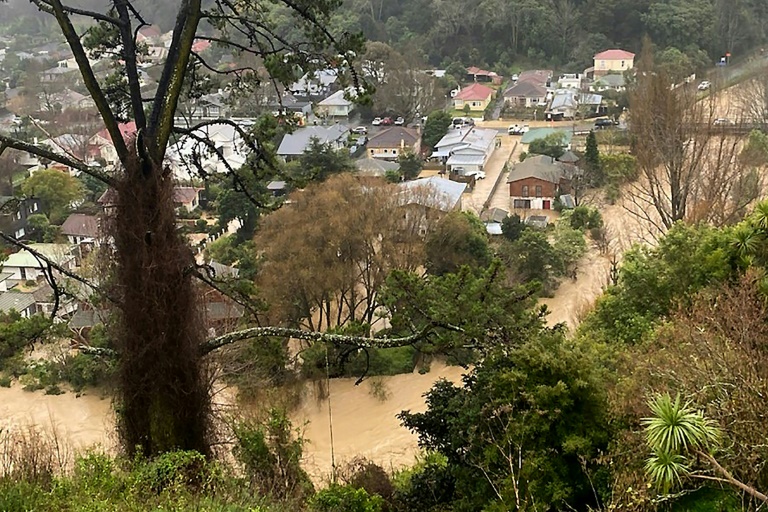
New Zealand flood recovery estimated to take 'years'

A New Zealand city devastated by flooding will take years to recover, the mayor said on Friday, as hundreds more homes were evacuated.

The Pacific nation has been lashed by wild weather with the Nelson-Tasman district on the South Island bearing the brunt after 75 centimetres (29 inches) of rain reportedly fell over three days.

Several streets in the city of Nelson were flooded after the local river, the Maitai, burst its banks.  

Nelson Mayor Rachel Reese said the damage to roads and the city’s infrastructure will “take years, not months” to repair.

She added that it was “critical” Nelson’s residents conserve water as the city’s supply was disrupted by a landslide that damaged the main line from the local reservoir.

On a visit to witness the damage, New Zealand’s Minister for Emergency Management Kieran McAnulty pledged $200,000 ($125,000) of aid and confirmed more than 400 homes have now been evacuated in Nelson, where a state of emergency remains in place.

He added that flooding and landslides have made 60 homes potentially uninhabitable.

McAnulty told reporters one of the most striking things he saw was a street on a housing development “where the road had just been washed out, (leaving) a crater deeper than I am tall”.

Nelson resident Paul Maskell said a neighbour alerted him to the rising water on his street.

“By the time I got back, it was a foot deep in water with boulders running down the road. It was surreal,” he told the New Zealand Herald.

An elderly resident recovering after an operation had to be winched to safety by firefighters late Thursday night, after his home was threatened by flooding.

New Zealand’s South Island was bracing for another lashing of heavy rain, but other regions did not escape the extreme weather.

The nearby city of New Plymouth endured it’s wettest August day since records began with 10 centimetres falling in 12 hours.

“More than a metre of rain has fallen causing significant flows down all rivers,” said Taranaki Civil Defence controller Todd Velvin with flooding, road closures and fallen trees creating problems.

Kaitaia, a town near the top of North Island, was cut off by flooding and landslides, and around 400 homes were left without power in the far north.

Experts say climate change driven by human activity is boosting the intensity and frequency of extreme weather events, such as heatwaves, droughts and flooding.

Daniel Kingston, senior geography lecturer at the University of Otago, attributed the heavy rain to an “atmospheric river” — a narrow band of water vapour high in the atmosphere over New Zealand.

“It’s safe to say that with respect to the influence of climate change, it is more than likely playing a role,” Kingston told AFP.

Academy unearths long-lost 'race films' in Black cinema exhibit

Long before Denzel Washington, Spike Lee or even Sidney Poitier, generations of pioneering and revolutionary Black US filmmakers played a key role in shaping early American cinema and dispelling pejorative stereotypes, a major new Hollywood exhibition argues.

“Regeneration: Black Cinema 1898–1971,” opening at the Academy Museum of Motion Pictures in Los Angeles on Sunday, charts key moments in Black film history that were either ignored by mainstream Hollywood studios and audiences in their day, or have been long forgotten.

Starting with a recently re-discovered 1898 reel of two Black vaudeville performers embracing, the exhibition tells the largely unknown history of “race films” — hundreds of pre-1960s independent movies made with Black casts specifically for Black audiences, at a time when theaters were racially segregated.

“Are you ready for the secret? That we Black folks have always been present in American film, right from the start,” said Oscar-nominated filmmaker Ava DuVernay, at a press preview this week.

“Present not as caricatures and stereotypes, but as creators and producers and innovators and eager audiences.

She added: “We should have seen it long before now. But this is the day it begins.”

“Regeneration” is only the second major temporary exhibit to be presented at the Academy Museum, which was opened by the organization behind the Oscars last September after years of delays.

It displays Poitier’s historic Oscar — loaned by his widow, from his 1964 best actor win for “Lilies of the Field” — as well as tap shoes worn by the Nicholas Brothers, a trumpet played by Louis Armstrong, and a costume worn by Sammy Davis Jr in “Porgy and Bess.”

Planning for the exhibition began back in 2016, as curators delved into the Academy’s extensive archives, and found early promotional posters for movies with blurbs boasting of “An All-Negro Cast” and a “Stupendous All-Star Negro Motion Picture.”

“I was surprised because I did not know about these films before we started to work on this exhibition,” co-curator Doris Berger told AFP.

“I asked myself ‘why don’t we know about this? We should know about this!’

“They are really exciting films and great proof that African-American performers had roles in all characters, and there were many story lines.

“And plus, they just look really cool!”

– ‘Harlem on the Prairie’ – 

Audiences can watch carefully restored footage of these movies, now known as “race films,” including a Western-musical called “Harlem on the Prairie,” gangster flick “Dark Manhattan,” and horror-comedy “Mr Washington Goes To Town.”

Many others have been lost forever, though their posters serve as “a sort of an imprint that they existed,” said co-curator Rhea Combs.

While mainstream Hollywood cast Black actors at the time as “butlers and mammies, in supporting roles,” this independent genre saw minority performers play “lawyers, and doctors, and nurses, and cowboys,” said Berger.

“So this is proof that (Hollywood) could have been so much richer and more exciting.”

The gallery ends with the early 1970s rise of the Blaxploitation genre, pioneered by Melvin Van Peebles who, like Poitier, died months before the exhibition could open.

“I hope that they would be very proud of this exhibition,”  Combs told AFP.

– ‘Overdue’ –

The exhibition is a major event for the Academy, which in recent years has had to navigate accusations of a lack of racial diversity in its ranks.

The group was also pummeled with criticism for a dearth of Black Oscar nominees during the #OscarsSoWhite movement, which emerged in 2015. 

It has since fulfilled a pledge to double the number of women and minority members by 2020.

In addition to educating the public at large, the works unearthed by “Regeneration” have even surprised leading contemporary Black filmmakers.

“I was more than surprised… I didn’t know about this,” said director Charles Burnett.

“If I knew about this — about the actresses, and things like that — I would have had a different whole notion and probably approach to film.”

DuVernay added: “This work had to happen. It’s overdue. It’s important, it’s crucial work.

“This exhibition showcases the generations of Black artists [on] whose shoulders we stand.”

Islamic State 'Beatle' faces life sentence for US hostage deaths

A member of the notorious Islamic State kidnap-and-murder cell known as the “Beatles,” is to be sentenced in a US court on Friday for the deaths of four American hostages in Syria.

El Shafee Elsheikh, 34, faces a mandatory sentence of life in prison after being convicted in Alexandria, Virginia, in April of hostage-taking, conspiracy to murder US citizens and supporting a terrorist organization.

The grueling two-week trial of the former British national, which featured emotional testimony from former hostages and parents of the victims, was the most significant prosecution of an IS militant in the United States.

The 12-person federal jury deliberated for less than six hours over two days before finding Elsheikh guilty for his role in the deaths of four Americans — journalists James Foley and Steven Sotloff and aid workers Peter Kassig and Kayla Mueller.

Elsheikh and another former “Beatle,” Alexanda Amon Kotey, were captured by a Kurdish militia in Syria in January 2018 and handed over to US forces in Iraq.

They were flown to the United States in 2020 to face trial.

Kotey, 38, pleaded guilty in September 2021 and was sentenced to life in prison in April by US District Court Judge T.S. Ellis, who will also deliver the sentence on Friday against Elsheikh.

Another alleged “Beatle,” Aine Davis, 38, was deported to Britain last week from Turkey and was remanded in custody on terrorism charges.

The fourth “Beatle,” executioner Mohammed Emwazi, was killed by a US drone in Syria in 2015.

The hostage-takers, who grew up and were radicalized in London, were nicknamed the “Beatles” by their captives because of their distinctive British accents.

Active in Syria from 2012 to 2015, they are accused of abducting more than two dozen journalists and relief workers from the United States and other countries.

Ten former European and Syrian hostages testified at Elsheikh’s trial accusing the “Beatles” of months of brutal treatment including beatings, electric shocks, waterboarding and mock executions.

Foley, Sotloff and Kassig were beheaded by Emwazi, and videos of their deaths were released by IS for propaganda purposes.

Mueller was initially held by the “Beatles” but was later turned over to IS leader Abu Bakr al-Baghdadi, who reportedly raped her repeatedly.

IS announced Mueller’s death in February 2015. The group said she was killed in a Jordanian airstrike, a claim disputed by US authorities.

Baghdadi died during a US special forces raid in 2019.

Ahead of Elsheikh’s sentencing, British police revealed details on Wednesday of the years-long effort to identify the hostage-takers and bring them to justice.

Richard Smith, the head of London police’s counter-terrorism unit, compared it to “putting together very small pieces of a jigsaw” and following a “trail of breadcrumbs.”

3 charged in prison death of notorious Boston mobster Whitey Bulger

Three men have been indicted in connection with the 2018 killing of notorious Boston gangster James “Whitey” Bulger, who was beaten to death in a West Virginia prison, federal prosecutors said Thursday.

Fotios “Freddy” Geas, 55, Paul “Pauly” DeCologero, 48, and Sean McKinnon, 36, were charged on Wednesday with conspiracy to commit first degree murder by the US Attorney’s Office for the Northern District of West Virginia, according to a statement.

The three were imprisoned at Hazelton prison in Bruceton Mills, West Virginia, where the 89-year-old Bulger was also serving out his life sentence for a string of brutal crimes.

“Geas and DeCologero are accused of striking Bulger in the head multiple times and causing his death in October of 2018,” the statement said.

Geas and DeCologero have also been charged with aiding and abetting first degree murder, along with assault, while Geas faces a separate charge as well for murder by a federal inmate serving a life sentence.

McKinnon, who was on federal supervised release and was arrested on Thursday in Florida, was charged with making false statements to a federal agent. Geas and DeCologero were still imprisoned at the time of the indictment.

Bulger ruled the Boston underworld with an iron fist for nearly 30 years in the 1970s and ’80s while also working as an informant for the FBI.

Arrested in 2011 after 16 years on the run, a 12-person federal jury later found Bulger guilty on 31 separate charges.

He was found dead a day after he was transferred to the high-security Hazelton facility to serve the remainder of two life sentences for 11 murders, racketeering, extortion, money laundering, possession of firearms and other crimes.

Bulger’s life of crime has been the subject of several books and movies including “Black Mass,” a biopic featuring Johnny Depp as the Irish-American mobster.

Bulger also provided the inspiration for Jack Nicholson’s mob boss character in Martin Scorsese’s Oscar-winning 2006 gangster film “The Departed.”

Huge complex of 500 standing stones found in Spain

A huge megalithic complex of more than 500 standing stones has been discovered in southern Spain which could be one of the largest in Europe, archaeologists told AFP Thursday. 

The stones were discovered on a plot of land in Huelva, a province which flanks the southernmost part of Spain’s border with Portugal, near the Guadiana River. 

Spanning some 600 hectares (1,500 acres), the land had been earmarked for an avocado planation. 

But before granting the permit, the regional authorities requested a survey in light of the site’s possible archaeological significance — and revealed the presence of the stones. 

“This is the biggest and most diverse collection of standing stones grouped together in the Iberian peninsula,” said Jose Antonio Linares, a researcher at Huelva University and one of the project’s three directors. 

It is likely that the oldest standing stones at the La Torre-La Janera site were erected during the second half of the sixth or fifth millennium BC, he said. 

“It is a major megalithic site in Europe,” he said. 

At the site, they found a large number of various types of megaliths, including standing stones, dolmens, mounds, coffin-like stone boxes called cists and various enclosures. 

“Standing stones were the most common finding, with 526 of them still standing or lying on the ground,” said the researchers in an article published in Trabajos de Prehistoria, a prehistoric archaeology journal in the Iberian Peninsula.

The height of the stones was between one and three metres (3-10 feet). 

– ‘Excellently conserved’ –

At Carnac in northwestern France, which is one of the most famous megalithic sites in the world, there are some 3,000 standing stones. 

One of the most striking things was finding such diverse megalithic elements grouped together in one location and how well preserved they were, said Primitiva Bueno, co-director of the project and a prehistory professor at Alcala University near Madrid. 

“Finding alignments and dolmens on one site is not very common,” she told AFP.

“Here you find everything all together: alignments, cromlechs and dolmens and that is very striking,” she said, hailing the site’s “excellent conservation”. 

An alignment is a linear arrangement of upright standing stones along a common axis, while a cromlech is a stone circle and a dolmen is a type of megalithic tomb usually made of two or more standing stones with a large flat ‘capstone’ on top. 

Most of the menhirs were grouped into 26 alignments and two cromlechs, both located on hilltops with a clear view to the east for viewing the sunrise during the summer and winter solstices and the spring and autumn equinoxes, the researchers said. 

Many of the stones are buried deep in the earth.

They will need to be carefully excavated with the work scheduled to run until 2026 but “between this year’s campaign and the start of next year’s, there will be a part of the site that can be visited”, Bueno said. 

Scientists find simple, safe method to destroy 'forever chemicals'

“Forever chemicals” used in daily items like nonstick pans have long been linked to serious health issues –- a result of their toxicity and extreme resistance to being broken down as waste products.

Chemists in the United States and China on Thursday said they had finally found a breakthrough method to degrade these polluting compounds, referred to as PFAS, using relatively low temperatures and common reagents.

Their results were published in the journal Science, potentially offering a solution to a longstanding source of harm to the environment, livestock and humans.

“It really is why I do science — so that I can have a positive impact on the world,” senior author William Dichtel of Northwestern University told reporters during a news conference.

PFAS, or per- and polyfluoroalkyl substances, were first developed in the 1940s and are now found in a variety of products, including nonstick pans, water-resistant textiles and fire suppression foams.

Over time, the pollutants have accumulated in the environment, entering the air, soil, groundwater and lakes and rivers as a result of industrial processes and from leaching through landfills.

A study published last week by Stockholm University scientists found rainwater everywhere on the planet is unsafe to drink because of PFAS contamination. 

Chronic exposure to even low levels has been linked to liver damage, high cholesterol, reduced immune responses, low birth weights and several kinds of cancer.

Although PFAS chemicals can be filtered out of water, there are few good solutions for how to dispose of them once they have been removed.

– 10 down, thousands to go –

Current methods to destroy PFAS require harsh treatments, such as incineration at extremely high temperatures or irradiating them with ultrasonic waves.

And incineration isn’t always foolproof, with one New York plant found to still be releasing some of the compounds into the air through smoke.

PFAS’ indestructability comes from their carbon-flouride bonds, one of the strongest types of bonds in organic chemistry. 

Fluorine is the most electronegative element and wants to gain electrons, while carbon is keen to share them.

PFAS molecules contain long chains of these bonds, but the research team was able to identify a glaring weakness common to a certain class of PFAS.

At one end of the molecule, there is a group of charged oxygen atoms which can be targeted using a common solvent and reagent at mild temperatures of 80-120 degrees Celsius, decapitating the head group and leaving behind a reactive tail.

“Once that happens, that provides access to previously unrecognized pathways that cause the entire molecule to fall apart in a cascade of complex reactions,” said Dichtel, ultimately making benign end products.

A second part of the study involved using powerful computational methods to map out the quantum mechanics behind the chemical reactions the team performed to destroy the molecules. 

The new knowledge could eventually guide further improvements to the method.

The current study focused on 10 PFAS chemicals including a major pollutant called GenX, which for example has contaminated the Cape Fear River in North Carolina, a water source for 350,000 people.

But it represents just the tip of the iceberg, since the US Environmental Protection Agency has identified more than 12,000 PFAS chemicals.

“There are other classes that don’t have the same Achilles’ heel, but each one will have its own weakness,” said Dichtel in a statement. 

“If we can identify it, then we know how to activate it to destroy it.”

Scientists find simple, safe method to destroy 'forever chemicals'

“Forever chemicals” used in daily items like nonstick pans have long been linked to serious health issues –- a result of their toxicity and extreme resistance to being broken down as waste products.

Chemists in the United States and China on Thursday said they had finally found a breakthrough method to degrade these polluting compounds, referred to as PFAS, using relatively low temperatures and common reagents.

Their results were published in the journal Science, potentially offering a solution to a longstanding source of harm to the environment, livestock and humans.

“It really is why I do science — so that I can have a positive impact on the world,” senior author William Dichtel of Northwestern University told reporters during a news conference.

PFAS, or per- and polyfluoroalkyl substances, were first developed in the 1940s and are now found in a variety of products, including nonstick pans, water-resistant textiles and fire suppression foams.

Over time, the pollutants have accumulated in the environment, entering the air, soil, groundwater and lakes and rivers as a result of industrial processes and from leaching through landfills.

A study published last week by Stockholm University scientists found rainwater everywhere on the planet is unsafe to drink because of PFAS contamination. 

Chronic exposure to even low levels has been linked to liver damage, high cholesterol, reduced immune responses, low birth weights and several kinds of cancer.

Although PFAS chemicals can be filtered out of water, there are few good solutions for how to dispose of them once they have been removed.

– 10 down, thousands to go –

Current methods to destroy PFAS require harsh treatments, such as incineration at extremely high temperatures or irradiating them with ultrasonic waves.

And incineration isn’t always foolproof, with one New York plant found to still be releasing some of the compounds into the air through smoke.

PFAS’ indestructability comes from their carbon-flouride bonds, one of the strongest types of bonds in organic chemistry. 

Fluorine is the most electronegative element and wants to gain electrons, while carbon is keen to share them.

PFAS molecules contain long chains of these bonds, but the research team was able to identify a glaring weakness common to a certain class of PFAS.

At one end of the molecule, there is a group of charged oxygen atoms which can be targeted using a common solvent and reagent at mild temperatures of 80-120 degrees Celsius, decapitating the head group and leaving behind a reactive tail.

“Once that happens, that provides access to previously unrecognized pathways that cause the entire molecule to fall apart in a cascade of complex reactions,” said Dichtel, ultimately making benign end products.

A second part of the study involved using powerful computational methods to map out the quantum mechanics behind the chemical reactions the team performed to destroy the molecules. 

The new knowledge could eventually guide further improvements to the method.

The current study focused on 10 PFAS chemicals including a major pollutant called GenX, which for example has contaminated the Cape Fear River in North Carolina, a water source for 350,000 people.

But it represents just the tip of the iceberg, since the US Environmental Protection Agency has identified more than 12,000 PFAS chemicals.

“There are other classes that don’t have the same Achilles’ heel, but each one will have its own weakness,” said Dichtel in a statement. 

“If we can identify it, then we know how to activate it to destroy it.”

Scientists find simple, safe method to destroy 'forever chemicals'

“Forever chemicals” used in daily items like nonstick pans have long been linked to serious health issues –- a result of their toxicity and extreme resistance to being broken down as waste products.

Chemists in the United States and China on Thursday said they had finally found a breakthrough method to degrade these polluting compounds, referred to as PFAS, using relatively low temperatures and common reagents.

Their results were published in the journal Science, potentially offering a solution to a longstanding source of harm to the environment, livestock and humans.

“It really is why I do science — so that I can have a positive impact on the world,” senior author William Dichtel of Northwestern University told reporters during a news conference.

PFAS, or per- and polyfluoroalkyl substances, were first developed in the 1940s and are now found in a variety of products, including nonstick pans, water-resistant textiles and fire suppression foams.

Over time, the pollutants have accumulated in the environment, entering the air, soil, groundwater and lakes and rivers as a result of industrial processes and from leaching through landfills.

A study published last week by Stockholm University scientists found rainwater everywhere on the planet is unsafe to drink because of PFAS contamination. 

Chronic exposure to even low levels has been linked to liver damage, high cholesterol, reduced immune responses, low birth weights and several kinds of cancer.

Although PFAS chemicals can be filtered out of water, there are few good solutions for how to dispose of them once they have been removed.

– 10 down, thousands to go –

Current methods to destroy PFAS require harsh treatments, such as incineration at extremely high temperatures or irradiating them with ultrasonic waves.

And incineration isn’t always foolproof, with one New York plant found to still be releasing some of the compounds into the air through smoke.

PFAS’ indestructability comes from their carbon-flouride bonds, one of the strongest types of bonds in organic chemistry. 

Fluorine is the most electronegative element and wants to gain electrons, while carbon is keen to share them.

PFAS molecules contain long chains of these bonds, but the research team was able to identify a glaring weakness common to a certain class of PFAS.

At one end of the molecule, there is a group of charged oxygen atoms which can be targeted using a common solvent and reagent at mild temperatures of 80-120 degrees Celsius, decapitating the head group and leaving behind a reactive tail.

“Once that happens, that provides access to previously unrecognized pathways that cause the entire molecule to fall apart in a cascade of complex reactions,” said Dichtel, ultimately making benign end products.

A second part of the study involved using powerful computational methods to map out the quantum mechanics behind the chemical reactions the team performed to destroy the molecules. 

The new knowledge could eventually guide further improvements to the method.

The current study focused on 10 PFAS chemicals including a major pollutant called GenX, which for example has contaminated the Cape Fear River in North Carolina, a water source for 350,000 people.

But it represents just the tip of the iceberg, since the US Environmental Protection Agency has identified more than 12,000 PFAS chemicals.

“There are other classes that don’t have the same Achilles’ heel, but each one will have its own weakness,” said Dichtel in a statement. 

“If we can identify it, then we know how to activate it to destroy it.”

Close Bitnami banner
Bitnami