AFP

UN chief to meet Ukraine, Turkey leaders in Lviv

UN chief Antonio Guterres will meet with the leaders of Ukraine and Turkey this week, officials announced Tuesday, as Kyiv reported an “unprecedented” cyberattack on its nuclear energy agency’s website.

A deal brokered by the United Nations and Turkey last month has allowed a tentative restart of grain exports from Ukraine after Russia’s invasion blocked essential global supplies.

Guterres will hold talks in the western Ukrainian city of Lviv with President Volodymyr Zelensky and Turkish counterpart Recep Tayyip Erdogan on Thursday.

They will discuss “the need for a political solution to this conflict,” UN spokesman Stephane Dujarric said.

Guterres will then visit the Ukrainian port city of Odessa on Friday — one of three ports being used in the deal to export grain — before heading to Turkey.

As the diplomatic efforts to end the war continue, Ukraine’s nuclear agency Energoatom reported a major cyberattack on its website, but said its operations had not been disrupted.

“The most powerful cyberattack since the start of the Russian invasion occurred against Energoatom’s website,” the agency said on Telegram, adding that it “was attacked from Russian territory”.

– Crimea blasts –

Also Tuesday, Russia claimed explosions at a military facility on the Kremlin-controlled Crimean peninsula that damaged power infrastructure were the result of “sabotage”.

Fire erupted at a military site where ammunition was being stored and black smoke billowed into the air, images on social media showed.

“As a result of an act of sabotage, a military storage facility near the village of Dzhankoi was damaged,” Russian news agencies reported the defence ministry as saying.

The blasts — caused by the fire, which led ammunition to detonate — damaged civilian infrastructure, “including power lines, a power plant, a railway track” and residential buildings, the ministry said.

The explosions come one week after at least one person was killed in similar explosions at a Russian airbase in Crimea.

Ukraine has not directly claimed responsibility for either incident, but senior officials and the military have implied Ukrainian involvement.

Ukrainian presidential aide Mykhailo Podolyak said the blasts had likely damaged infrastructure supplying power from the Russian-controlled Zaporizhzhia nuclear plant to Crimea.

Kyiv and Moscow have traded accusations over a series of strikes this month on Zaporizhzhia — Europe’s largest nuclear power plant.

UN spokesman Dujarric said he had “no doubt that the issue of the nuclear power plant” would be raised at Thursday’s meeting in Lviv.

Russia annexed Crimea from Ukraine in 2014 and has used the Black Sea region as a staging ground for its 2022 invasion, which has killed thousands, displaced millions and ravaged swathes of the country.

Moscow launched the offensive in February, anticipating little military resistance and hoping for a lightning takeover that would topple the government in Kyiv within hours.

But after failing to capture the capital, its forces have become entrenched in a war of attrition along a sprawling front line in the east and south.

– US precision artillery –

“The situation in Ukraine shows that the US is trying to prolong this conflict,” Russian President Vladimir Putin said.

The United States is “using the people of Ukraine as cannon fodder”, he added.

Washington has provided key backing to Kyiv, in particular supplying long-range, precision artillery that has allowed Ukraine to strike Russian supply facilities deep inside Moscow-controlled territory.

Meanwhile, in the eastern Donbas region, which has seen most of the fighting, Ukraine said Russia had launched an offensive from an oil refinery in the recently captured city of Lysychansk in Lugansk province.

Ukraine’s presidency said one woman was killed in Donetsk province, which together with Lugansk makes up the industrial Donbas region now mostly controlled by Russian forces.

As the grain deal comes into force, the first UN-chartered vessel departed on Tuesday from the Ukrainian port of Pivdennyi heading to Ethiopia, Ukraine’s infrastructure ministry said.

The MV Brave Commander, carrying 23,000 tonnes of wheat, was able to leave after the deal established safe corridors through the naval mines laid by Kyiv.

Ukraine has said it is hoping two or three similar shipments will follow soon.

Russia’s invasion has driven an economic, political and cultural wedge between Moscow and European capitals.

The prime minister of former Soviet satellite Estonia said Tuesday her government had decided to remove all Soviet-era monuments from public spaces in the country.

Finland, meanwhile, announced plans to limit Russian tourist visas to 10 percent of current volumes beginning in September, due to rising discontent over Russian tourism as the war rages on.

burs-ach/bgs/sst

Biden signs major climate change, health care law

President Joe Biden on Tuesday signed into law a big climate change and health care spending bill, giving Democrats another boost ahead of midterm elections in which Republicans are suddenly less certain of their predicted crushing victory.

The law, dubbed the Inflation Reduction Act, was touted by the White House as the biggest commitment to mitigating climate change in US history, as well as targeting long sought changes in the way medicines are priced, while adding fairness to the tax system, with a minimum 15 percent tax for corporations.

“A nation can be transformed. That’s what’s happening now,” Biden said in a White House speech likely to form the basis of his campaign ahead of the November polls, where Republicans have hoped to end Democrats’ narrow control of Congress.

“It’s about tomorrow,” Biden said. “It’s about delivering progress and prosperity to American families. It’s about showing America and the American people that democracy still works in America.”

While the sprawling bill is a fraction of the gargantuan package Biden originally tried and failed to get through Congress, the fact he was able to sign even the scaled-back version marked a political resurrection — a success Democrats now hope might fuel a comeback at the ballot box later this year.

Under the plan, the government will spend about $370 billion on green energy initiatives while also allowing the state-run Medicare system to negotiate prices for prescription drugs, a popular measure designed to cut the often ruinous prices Americans are forced to pay.

Although the Republican National Committee called a provision to subsidize electric vehicle purchases a “scam,” the Sierra Club, an environmental lobbying group, praised what it called a bold step in the struggle against an overheating planet.

“This day will be remembered by future generations as the turning of the tide against the fossil fuel industry and toward a healthier, cleaner, and more just future for all people across this country,” Sierra Club president Ramon Cruz said.

The law’s massive cost will be covered in large part by closing numerous tax loopholes and enforcing a new 15 percent minimum tax on corporations — a measure Biden has long promised to his base as a way to get the wealthy to “pay part of their fair share.”

– Democratic resurgence, Republican disarray? –

Battered by outrage over the chaotic final exit of US troops from Afghanistan, stubborn Covid waves, and the highest inflation in 40 years, the Biden administration has had a rough last 12 months.

Adding to the left’s gloom, opposition from just two center-right Democratic senators has repeatedly doomed party attempts to make use of a razor thin advantage in the Senate.

Opinion polls show Republicans likely to get a healthy majority in the House of Representatives and possibly also win the Senate.

This could effectively turn Biden into a lame duck for the rest of his first term, with Republicans shutting down his legislative agenda and subjecting government officials to aggressive probes by congressional committees.

The last few weeks, however, have seen a momentum shift.

Republicans are embroiled in the scandal over former president Donald Trump’s alleged illegal hoarding of top secret documents at his Florida golf club.

Meanwhile, Biden has scored a series of victories, allowing the White House to project a message that Democrats are focused on helping ordinary people.

In addition to the Inflation Reduction Act, Congress has passed the first meaningful gun safety legislation in three decades, a government-financed plan to rebuild the anemic US microchip industry, and a bill expanding health care for military veterans exposed to toxic smoke.

Coming on top of wins early in his presidency to pour billions of dollars into supporting the pandemic-hit economy and transforming national infrastructure spending, this amounts to a serious legacy, Biden argued.

“I know there are those here today who hold a dark and despairing view of this country. I’m not one of them,” he said.

The new climate and health care law — opposed by every single Republican member of Congress — meant “the American people won and the special interests lost,” Biden said.

“That’s the choice we face: we can protect the already powerful or show the courage to build a future where everybody has an even shot. That’s the America I believe in.”

Election defeat looms for Trump's biggest Republican critic Cheney

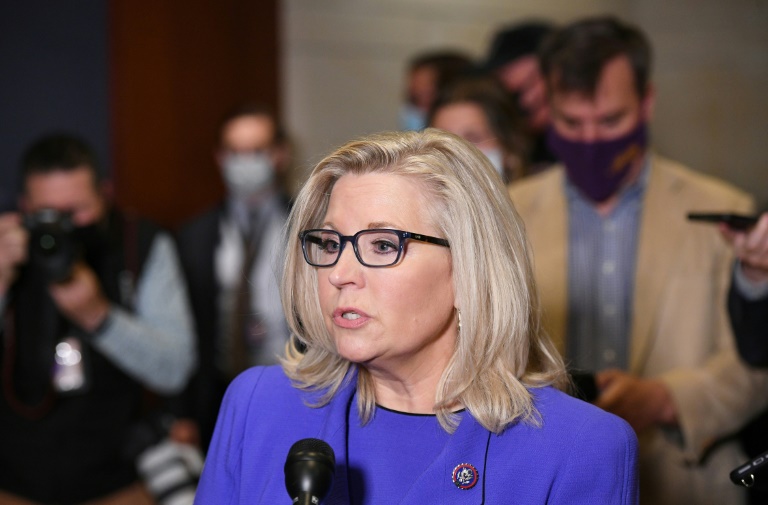
Republican rebel Liz Cheney braced Tuesday to lose her seat in the US Congress to an election conspiracy theorist, in the latest sign of her party’s break with traditional conservatism to embrace Donald Trump’s hardline “America First” agenda.

Once considered Republican royalty, the lawmaker from Wyoming has become a pariah in the party over her role on the congressional panel investigating the January 6 assault on the US Capitol — and Trump’s role in fanning the flames.

All eyes are on the primary in Wyoming, where defeat for the 56-year-old elder daughter of former vice president Dick Cheney would mark the end of the family’s four-decade political association with one of America’s most conservative states.

Even her loyal backers have privately accepted that Cheney will likely lose the Republican nomination for November’s midterms to 59-year-old lawyer Harriet Hageman — Trump’s hand-picked candidate who has amplified his false claims of a “rigged” 2020 election.

The latest survey from the local Casper Star-Tribune has Cheney with just 30 percent support compared with 52 percent for Hageman, reflecting all recent polling.

Yet there is already speculation that Cheney may challenge Trump for the Republican presidential nomination in 2024 — or even run as an independent — and insiders are expecting her to deliver a concession speech that will double up as the launchpad for her political future.

– ‘We will win’ –

“No matter how long we must fight, this is a battle we will win,” she said in a video message posted before the weekend.

“Millions of Americans across our nation — Republicans, Democrats, independents — stand united in the cause of freedom.”

Cheney has framed her campaign as a battle for the soul of a party she is trying to save from the anticonstitutional forces of Trumpism.

She is the last of 10 Republicans in the House of Representatives who backed Trump’s second impeachment to face primary voters. 

Four retired rather than seek reelection, three lost to Trump-backed opponents, and only two — California’s David Valadao and Dan Newhouse of Washington state — have made it through to November’s midterm elections.

Cheney, a tax-cutting, gun-loving right-winger, voted in line with Trump’s positions 93 percent of the time when he was president but that hasn’t blunted his retaliation for her role in the House committee probe.

Trump has made Cheney his bete noire, calling her “disloyal” and a “warmonger,” prompting death threats that have forced her to travel with a police escort.

The blonde, bespectacled former attorney has been made persona non grata by the Wyoming Republican Party, whose chairman himself participated in the protests on the day of the US Capitol assault.

– Palin comeback bid –

In her state — the first to grant women the right to vote, in 1869 — the congresswoman has been forced to run a kind of shadow campaign, with no rallies or public events.

She even avoided the traditional election day photo op Tuesday, eschewing media at her local polling station to instead cast her ballot in nearby Jackson.

“Liz is representing the constituents that are in her mind, and they aren’t the constituents of Wyoming,” said Mary Martin, chairwoman of the Republican Party in Teton County — Cheney’s Wyoming base.

Leaning on his red motorcycle, Bill Gonzales, 59, is one of the few voters who spoke to AFP in Cheyenne to defend Cheney’s record, saying she “has stood up for what is proper within the country.”

There are also elections on Tuesday in Alaska, where 2008 Republican vice presidential candidate Sarah Palin’s comeback battle — to complete the term of a congressman who died in office — is dividing locals.

Fourteen years after rising to international fame on the losing Republican presidential ticket headed by John McCain, Palin remains popular among women as the “soccer mom” who pioneered the ultra-conservative “Tea Party” movement that paved the way for Trumpism.

But many voters blame her for abandoning her single term as governor halfway through, amid ethics complaints, and a recent poll showed her to be viewed unfavorably by 60 percent of Alaskans.

Boy loses part of leg to shark bite off Florida coast

A 10-year-old boy had part of his leg amputated after being bitten by a shark while snorkeling on vacation in the Florida Keys, his family has said.

Jameson Reeder Jr. was attacked on Saturday at Looe Key Reef, the Florida Fish and Wildlife Conservation Commission said in a statement.

A Facebook post by his uncle Joshua Reeder said Jameson had gone on a boat trip with his parents and three other siblings and was snorkeling in a shallow reef when he “took a crushing blow below his knee,” by what they believed was an eight-foot-long bull shark.

Jameson was able to hold on to a noodle float and was rescued by his father, who applied a tourniquet to the leg and flagged down another, faster boat that raced the family ashore. 

The boy was then airlifted to the Miami Children’s Hospital where a medical team saved his life but was forced to amputate the leg below the knee.

“He is now out of surgery and resting,” wrote Joshua Reeder, crediting Jameson’s strong religious faith for helping him to survive the ordeal.

A GiveSendGo appeal by the family for financial assistance had surpassed its target of $50,000 as of Tuesday afternoon.

While a higher than normal number of shark encounters off the coast of New York this summer have attracted attention, the overall risk of being bitten by a shark remains low.

Global trends are now roughly stable after rising slightly over the past 30 years, partly due to increased recreational activity by humans, and recovery of vulnerable shark populations.  

Last year, there were 73 unprovoked attacks globally, according to the Florida Museum. Nearly every attack is a result of mistaken identity as sharks do not intentionally target humans.

Most attacks in the United States occur off the Atlantic coast of Florida, home to choppy waters and bait fish that several shark species feed on.

Boy loses part of leg to shark bite off Florida coast

A 10-year-old boy had part of his leg amputated after being bitten by a shark while snorkeling on vacation in the Florida Keys, his family has said.

Jameson Reeder Jr. was attacked on Saturday at Looe Key Reef, the Florida Fish and Wildlife Conservation Commission said in a statement.

A Facebook post by his uncle Joshua Reeder said Jameson had gone on a boat trip with his parents and three other siblings and was snorkeling in a shallow reef when he “took a crushing blow below his knee,” by what they believed was an eight-foot-long bull shark.

Jameson was able to hold on to a noodle float and was rescued by his father, who applied a tourniquet to the leg and flagged down another, faster boat that raced the family ashore. 

The boy was then airlifted to the Miami Children’s Hospital where a medical team saved his life but was forced to amputate the leg below the knee.

“He is now out of surgery and resting,” wrote Joshua Reeder, crediting Jameson’s strong religious faith for helping him to survive the ordeal.

A GiveSendGo appeal by the family for financial assistance had surpassed its target of $50,000 as of Tuesday afternoon.

While a higher than normal number of shark encounters off the coast of New York this summer have attracted attention, the overall risk of being bitten by a shark remains low.

Global trends are now roughly stable after rising slightly over the past 30 years, partly due to increased recreational activity by humans, and recovery of vulnerable shark populations.  

Last year, there were 73 unprovoked attacks globally, according to the Florida Museum. Nearly every attack is a result of mistaken identity as sharks do not intentionally target humans.

Most attacks in the United States occur off the Atlantic coast of Florida, home to choppy waters and bait fish that several shark species feed on.

Polish firemen pull tonnes of dead fish from Oder river

Polish firefighters said Tuesday they had recovered 100 tonnes of dead fish from the Oder river running through Germany and Poland, deepening concerns of an environmental disaster.

“We’d never had an operation of this scope on a river before,” said Monika Nowakowska-Drynda from the national firefighter press office.

She confirmed that around 100 tonnes (220,500 pounds) of dead fish had been recovered since Friday. 

The cause of death is uncertain, though officials believe the fish are likely to have been poisoned. 

“Probably enormous quantities of chemical waste was dumped into the river in full knowledge of the risk and consequences,” Polish Prime Minister Mateusz Morawiecki said last week.

But Climate and Environment Minister Anna Moskwa said on Tuesday that “none of the samples tested so far has shown the presence of toxic substances”.

She said the government was also looking into possible natural causes and in particular higher concentrations of pollutants and salinity as a result of lower water levels and high temperatures.

A third hypothesis being examined is that industrial waste water with a high chlorine content was poured into the river, she said.

Water samples have also been sent to laboratories in the Czech Republic, the Netherlands and Britain in the hopes of finding the cause.

The first reports of mass fish deaths were made by Polish locals and anglers as early as July 28.

German officials have accused Polish authorities of failing to inform them about the deaths, and were taken by surprise when the wave of lifeless fish came floating into view.

In Poland, the government has also come under heavy criticism for failing to take swift action.

The Oder has over the last years been known as a relatively clean river, and 40 domestic species of fish are found in the waterway.

But now, dead fish — some reaching up to 40 centimetres (16 inches) — can be seen across the river.

Nowakowska-Drynda said more than 500 firefighters have been recovering the dead fish in Poland with the help of dams, boats, quad bikes and even a drone. 

Water levels on Italy's Lake Garda drop to 15-year low

The pedalos lie far from the water’s edge and the flat stone slabs around the Sirmione peninsula are exposed after drought reduced the level of Italy’s Lake Garda to a 15-year low.

Italy’s largest lake, a major tourist destination nestled among mountains in the north of the country, is suffering like many others from months without rain.

“We are currently at 30 centimetres (12 inches) above the (benchmark) hydrographic level,” compared to an average for this time of year of between 80 and 100, said Gianluca Ginepro, head of Garda Unico, which promotes the lake.

It is the lowest since 2007, when levels dropped to 9.9 cm, according to official data.

“It’s a situation to keep an eye on, even if from the point of view of using the lake — like wind surfing, sailing — there is no problem,” Ginepro told AFP.

Tourism was holding up well, he said, although operators of trips across the lake had switched from hydrofoils to catamarans.

He also said that “the possibility of providing water for agriculture has dropped”.

Farmers have also been hit by a lack of water in the River Po, which stretches across northern Italy and is suffering its worst drought for 70 years.

But the issue goes beyond Italy, with land across Europe parched by a lack of rainfall and sweltering temperatures, driven by climate change.

Several other European countries, as well as reporting record temperatures during recent heatwaves, have also reported low levels of water in rivers.

Walmart results top estimates as inflation alters consumer behavior

Walmart scored a big jump in revenues partly driven by inflation but the retail giant faces increasing evidence of shifting consumer behavior due to rising prices, according to quarterly results released Tuesday.

The big-box retailer, which stunned Wall Street three weeks ago by cutting its profit forecast, ended up reporting better-than-expected results for the latest three months, following a late-July improvement in business.

The chain even tweaked its latest profit forecast in a positive way as ebbing gasoline prices and a rise in back-to-school shopping boosted activity.

The news sent shares higher, however, executives continued to signal they expect the headwinds facing customers to persist.

“I think this inflationary environment is going to last for a while,” Chief Executive Doug McMillon said on a conference call with analysts. “So people are going to be value conscious, which plays to our strength.”

Revenues for the second fiscal quarter ending July 31 rose to $152.9 billion, an 8.4 percent increase from the same period of last year.

Profits jumped 20.4 percent to $5.1 billion, though some of the increase was connected to the accounting for an asset sale in Brazil.

– ‘Trading down’ –

Walmart’s US comparable store sales rose 6.5 percent from a year ago, but the company expects the pace to slow to about three percent growth in the second half of 2022.

Higher gasoline prices, along with elevated costs for grocery staples have prompted more consumers to “trade down” to lower-priced goods.

An example has been in a shift from deli meats at higher prices to purchases of hot dogs, and canned tuna and chicken, said Chief Financial Officer John Rainey. 

In general, as consumers have to spend more on groceries, demand has fallen for apparel, electronics and home products, leading to more promotions in these areas.

Rainey said the company also had to cancel “billions of dollar” in orders to address inventory gluts.

“The swings we’ve seen in consumer behavior through the pandemic shifting from in-store to online, along with big swings in the purchase of goods versus services and then the reversion back to pre-pandemic norms have been sharp and difficult to predict,” Rainey said.

“These trends have been exacerbated by inflationary pressure on the consumer that many of us have not experienced in our lifetime.”

On July 25, Walmart cut its earnings forecast, saying shifting consumer behavior was denting sales of merchandise with higher profit margins.

The company now projects its full-year adjusted profit will decline nine to 11 percent. That is still worse than the May outlook but, a smaller drop than the 11 to 13 percent plunge expected three weeks ago.

Neil Saunders of GlobalData Retail said Walmart’s results demonstrate the advantages of its position at a time when consumers are worried about higher prices, but the company also faces challenges.

“Walmart is fighting a battle on two fronts,” Saunders said in an analysis. “One is to retain its position as a price leader and grow its food business. Here, we are optimistic about its prospects. 

“The other is to punch out better operating profit numbers. This will be more challenging as the business is facing higher costs and unfavorable sales mix trends.”

Walmart is trying to boost its non-retail business, most recently unveiling a venture with the Paramount+ streaming service, which will be included in the company’s Walmart+ subscription program.

The new benefit will launch in September, according to a joint news release announcing the venture.

Shares of Walmart rose 5.6 percent to $140.04 in mid-morning trading.

Oil majors' climate visions 'inconsistent' with Paris targets

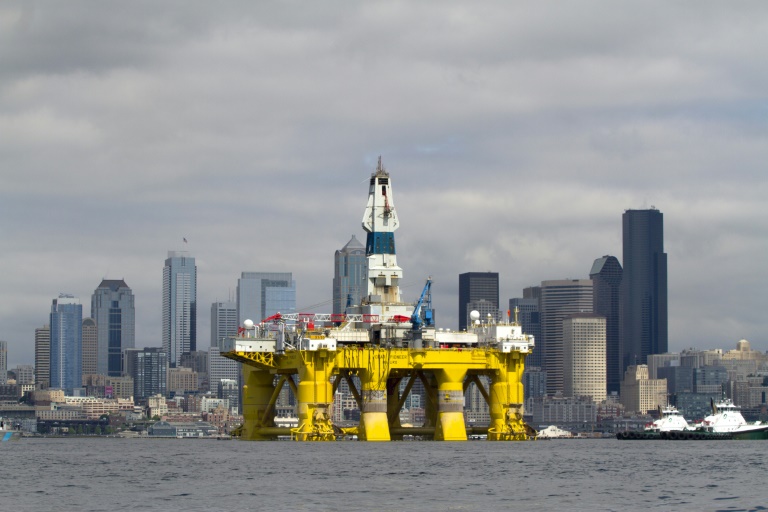
Global decarbonisation scenarios envisioned by oil and gas majors are incompatible with the Paris climate deal temperature goals aimed at averting devastating heating, according to research published Tuesday.

The landmark 2015 accord saw nations commit to limit planetary heating to “well below” two degrees Celsius (3.6 Farenheit) above pre-industrial levels and to work towards a safer 1.5-C warming cap. 

Writing in the journal Nature Communications, an international team of experts analysed six emissions scenarios from three European energy giants — Equinor, BP and Shell — as well as those produced by the International Energy Agency.

They then compared the analysed pathways to scenarios outlined in a special report from the Intergovernmental Panel on Climate Change on 1.5C of warming. 

The team used these to evaluate peak and end-of-century temperatures under each scenario, noting that average global temperatures may decline by 2100 in some scenarios after peaking.

They also assessed the underlying energy system changes that drive emissions and could lead to a given scenario meeting — or failing to meet — the Paris temperature goals.

“Most of the scenarios we evaluated would be classified as inconsistent with the Paris Agreement as they fail to limit warming to ‘well below 2C’, let alone 1.5C, and would exceed the 1.5C warming limit by a significant margin,” said Robert Brecha of the Climate Analytics think tank and co-lead author of the study. 

“Energy system transformation is critical to reaching the Paris Agreement warming limit, and decision makers need sound and transparent scientific assessments. This paper adds to that transparency.”

– ‘Catastrophic impacts’ –

The analysis found that Shell’s Sky scenario would lead to warming of 1.81C by 2069 — a far cry from 1.5C.

A Shell spokeswoman told AFP that the Sky pathway was just one of several envisaged by the company.

The team responsible for modelling scenarios “makes assessments based on plausible assumptions and quantifications, which are not intended to be predictions of likely future events or outcomes, let alone our energy transition plan”, she added.

Equinor’s Rebalance scenario would see warming peak at 1.73C above pre-industrial levels by 2060, according to the study.

BP’s Rapid scenario would see peak warming of 1.73C by 2058, while its Net Zero scenario would see median warming peak at 1.65C, the analysis found. 

Equinor declined to comment, while BP did not respond to a comment request.

Only the IEA’s Net Zero 2050 pathway is fully aligned with the Paris agreement’s 1.5C goal, the authors concluded. 

“Fossil fuel companies claim that we can continue to burn oil and gas while keeping to the 1.5C warming limit, and they cite their own scenarios as justification,” said Bill Hare, CEO and Senior Scientist at Climate Analytics. 

“But our research shows that their pathways would bust the Paris Agreement. Even temporarily exceeding the 1.5C warming would lead to catastrophic impacts and severely weaken our ability to adapt to climate change.”

Oil majors' climate visions 'inconsistent' with Paris targets

Global decarbonisation scenarios envisioned by oil and gas majors are incompatible with the Paris climate deal temperature goals aimed at averting devastating heating, according to research published Tuesday.

The landmark 2015 accord saw nations commit to limit planetary heating to “well below” two degrees Celsius (3.6 Farenheit) above pre-industrial levels and to work towards a safer 1.5-C warming cap. 

Writing in the journal Nature Communications, an international team of experts analysed six emissions scenarios from three European energy giants — Equinor, BP and Shell — as well as those produced by the International Energy Agency.

They then compared the analysed pathways to scenarios outlined in a special report from the Intergovernmental Panel on Climate Change on 1.5C of warming. 

The team used these to evaluate peak and end-of-century temperatures under each scenario, noting that average global temperatures may decline by 2100 in some scenarios after peaking.

They also assessed the underlying energy system changes that drive emissions and could lead to a given scenario meeting — or failing to meet — the Paris temperature goals.

“Most of the scenarios we evaluated would be classified as inconsistent with the Paris Agreement as they fail to limit warming to ‘well below 2C’, let alone 1.5C, and would exceed the 1.5C warming limit by a significant margin,” said Robert Brecha of the Climate Analytics think tank and co-lead author of the study. 

“Energy system transformation is critical to reaching the Paris Agreement warming limit, and decision makers need sound and transparent scientific assessments. This paper adds to that transparency.”

– ‘Catastrophic impacts’ –

The analysis found that Shell’s Sky scenario would lead to warming of 1.81C by 2069 — a far cry from 1.5C.

A Shell spokeswoman told AFP that the Sky pathway was just one of several envisaged by the company.

The team responsible for modelling scenarios “makes assessments based on plausible assumptions and quantifications, which are not intended to be predictions of likely future events or outcomes, let alone our energy transition plan”, she added.

Equinor’s Rebalance scenario would see warming peak at 1.73C above pre-industrial levels by 2060, according to the study.

BP’s Rapid scenario would see peak warming of 1.73C by 2058, while its Net Zero scenario would see median warming peak at 1.65C, the analysis found. 

Equinor declined to comment, while BP did not respond to a comment request.

Only the IEA’s Net Zero 2050 pathway is fully aligned with the Paris agreement’s 1.5C goal, the authors concluded. 

“Fossil fuel companies claim that we can continue to burn oil and gas while keeping to the 1.5C warming limit, and they cite their own scenarios as justification,” said Bill Hare, CEO and Senior Scientist at Climate Analytics. 

“But our research shows that their pathways would bust the Paris Agreement. Even temporarily exceeding the 1.5C warming would lead to catastrophic impacts and severely weaken our ability to adapt to climate change.”

Close Bitnami banner
Bitnami