AFP

Germany's Russian gas crisis sparks coal rush

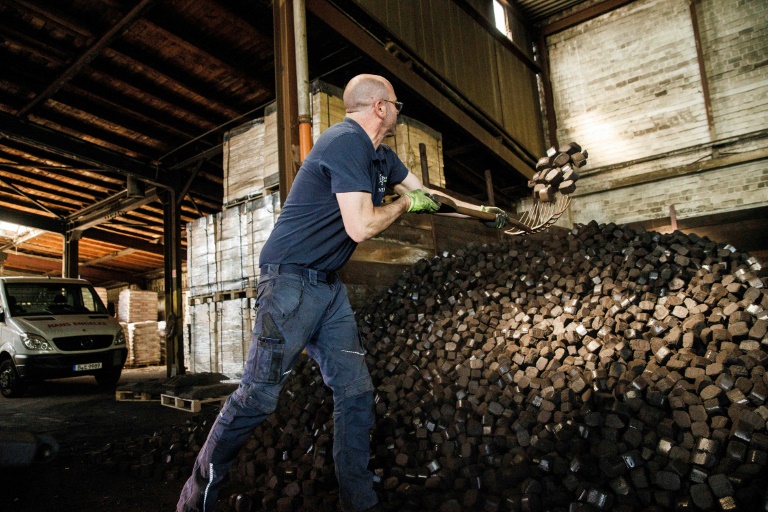
“A rush like this in the summertime, it’s unheard of — everybody wants coal,” says Frithjof Engelke, a supplier of the briquettes which have become a hot commodity in the German capital.

A looming shortage of Russian gas in the wake of the Ukraine war has reignited enthusiasm for this method of heating private homes despite its sooty residue and heavy carbon footprint.

Engelke, 46, head of the century-old Berlin business Hans Engelke Energie, says it’s brought a bonanza for his family business: “My holidays will have to wait.”

He and his team are frenziedly taking orders, organising deliveries by truck — now booked out until October, and getting supplies ready for those who come directly to pick up coal from his warehouse.  

On a hot summer’s day, he weighs and bags loose coal amid the dust and din of his filling machine, then arranges the bags on pallets, awaiting customers. 

In Berlin, 5-6,000 homes still heat with coal — only a fraction of the city’s 1.9 million homes, say municipal authorities.

Engelke’s customers are often elderly people, sometimes entirely dependent on coal and living in old dwellings that have never been renovated.

Others are lovers of the “cosy” heat emanating from often ornate old ceramic stoves. 

But this year, new customers have arrived “en masse”, says Engelke, whose medium-sized company has also diversified into wood pellets and fuel oil.

“Those who heat with gas but who still have a stove at home now all want to have coal,” he said, citing a phenomenon seen throughout Germany as winter approaches.

– ‘Better than being cold’ –

Jean Blum is one of the new converts. 

The 55-year-old man with tousled hair and a bushy white beard loads 25-kilogram (55-pound) bags filled with precious black briquettes in his trailer. 

“I’m buying coal for the first time in years,” he tells AFP.

Since his home is equipped with gas heating, he sometimes lights his stove, but only with wood.

With the jump in gas prices, which will be exacerbated this autumn when operators will be able to pass on the increase in energy levies to the consumer, Blum wants to make sure he has a safety net. 

“Even if it’s bad for your health, it’s still better than being cold,” he says.

Although coal prices have soared 30 percent this season, it remains cheaper than wood, whose price has more than doubled. 

“I worry when I wonder if there will be enough gas for everyone,” he adds, noting that Russian President Vladimir Putin has already partially closed the gas tap on Germany after Western nations imposed new sanctions on Moscow.

– ‘Renaissance’ –

The black fuel is experiencing a comeback on several fronts in Europe’s top economy. 

The German government had already resolved to increase the use of coal-fuelled power plants to satisfy the enormous appetites of several industries. 

However Berlin insists it will keep its pledge to phase out the heavily polluting energy source by 2030 and rules out a “renaissance of fossil fuels, in particular coal,” as Chancellor Olaf Scholz recently vowed.

However with new private customers coming out of the woodwork, production has a hard time keeping up, and many small coal merchants in the capital are running out of supplies. 

“We produce at full capacity during the summer, with three shifts, seven days a week,” Thoralf Schirmer, spokesman for LEAG, a mining site in the Lusatia basin, told AFP. 

The company supplies DIY stores and fuel sellers with coal briquettes.

Production has jumped 40 percent since January, he said, but demand is strong everywhere and the situation is expected to remain tense at least until this winter.

Adding to the pressure is the fact that the other factory supplying the market in Germany, based in the Rhine valley, will cease production at the end of the year, reducing supply.

“I dread the winter a bit,” Engelke, the coal seller, admits. 

Currently, people are relatively relaxed when they learn that they will have to wait at least two months before getting deliveries, he says. 

“Things will be radically different when it starts to get cold outside.”
Germany's Russian gas crisis sparks coal rush

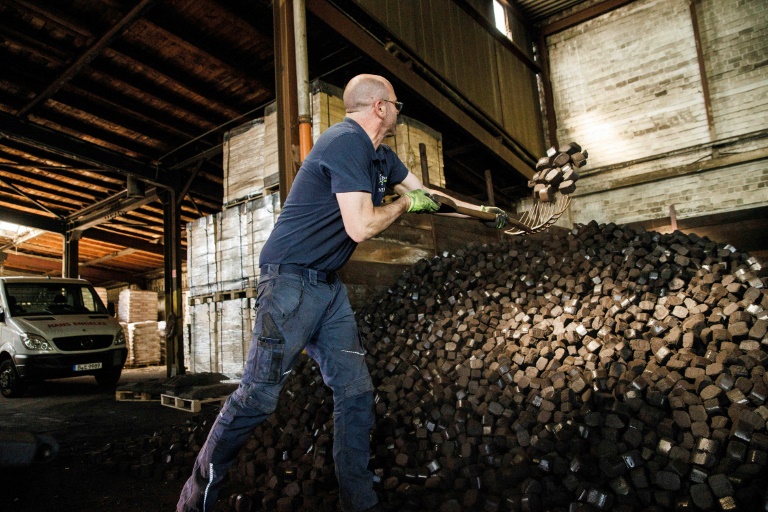
“A rush like this in the summertime, it’s unheard of — everybody wants coal,” says Frithjof Engelke, a supplier of the briquettes which have become a hot commodity in the German capital.

A looming shortage of Russian gas in the wake of the Ukraine war has reignited enthusiasm for this method of heating private homes despite its sooty residue and heavy carbon footprint.

Engelke, 46, head of the century-old Berlin business Hans Engelke Energie, says it’s brought a bonanza for his family business: “My holidays will have to wait.”

He and his team are frenziedly taking orders, organising deliveries by truck — now booked out until October, and getting supplies ready for those who come directly to pick up coal from his warehouse.  

On a hot summer’s day, he weighs and bags loose coal amid the dust and din of his filling machine, then arranges the bags on pallets, awaiting customers. 

In Berlin, 5-6,000 homes still heat with coal — only a fraction of the city’s 1.9 million homes, say municipal authorities.

Engelke’s customers are often elderly people, sometimes entirely dependent on coal and living in old dwellings that have never been renovated.

Others are lovers of the “cosy” heat emanating from often ornate old ceramic stoves. 

But this year, new customers have arrived “en masse”, says Engelke, whose medium-sized company has also diversified into wood pellets and fuel oil.

“Those who heat with gas but who still have a stove at home now all want to have coal,” he said, citing a phenomenon seen throughout Germany as winter approaches.

– ‘Better than being cold’ –

Jean Blum is one of the new converts. 

The 55-year-old man with tousled hair and a bushy white beard loads 25-kilogram (55-pound) bags filled with precious black briquettes in his trailer. 

“I’m buying coal for the first time in years,” he tells AFP.

Since his home is equipped with gas heating, he sometimes lights his stove, but only with wood.

With the jump in gas prices, which will be exacerbated this autumn when operators will be able to pass on the increase in energy levies to the consumer, Blum wants to make sure he has a safety net. 

“Even if it’s bad for your health, it’s still better than being cold,” he says.

Although coal prices have soared 30 percent this season, it remains cheaper than wood, whose price has more than doubled. 

“I worry when I wonder if there will be enough gas for everyone,” he adds, noting that Russian President Vladimir Putin has already partially closed the gas tap on Germany after Western nations imposed new sanctions on Moscow.

– ‘Renaissance’ –

The black fuel is experiencing a comeback on several fronts in Europe’s top economy. 

The German government had already resolved to increase the use of coal-fuelled power plants to satisfy the enormous appetites of several industries. 

However Berlin insists it will keep its pledge to phase out the heavily polluting energy source by 2030 and rules out a “renaissance of fossil fuels, in particular coal,” as Chancellor Olaf Scholz recently vowed.

However with new private customers coming out of the woodwork, production has a hard time keeping up, and many small coal merchants in the capital are running out of supplies. 

“We produce at full capacity during the summer, with three shifts, seven days a week,” Thoralf Schirmer, spokesman for LEAG, a mining site in the Lusatia basin, told AFP. 

The company supplies DIY stores and fuel sellers with coal briquettes.

Production has jumped 40 percent since January, he said, but demand is strong everywhere and the situation is expected to remain tense at least until this winter.

Adding to the pressure is the fact that the other factory supplying the market in Germany, based in the Rhine valley, will cease production at the end of the year, reducing supply.

“I dread the winter a bit,” Engelke, the coal seller, admits. 

Currently, people are relatively relaxed when they learn that they will have to wait at least two months before getting deliveries, he says. 

“Things will be radically different when it starts to get cold outside.”

Asian markets fluctuate as traders weigh economic outlook

Markets drifted in Asia on Wednesday, with investors trying to navigate an uncertain economic landscape as central banks hike interest rates to fight runaway inflation, in turn fuelling fears of a possible recession.

But while officials at the Federal Reserve and its peers are expected to keep tightening monetary policy for the rest of the year, talk is building that they will be able to ease up in 2023 — and maybe even cut rates — if the pace of price rises comes down.

Minutes from the Fed’s July meeting will be pored over when they are released later in the day, with investors hoping for some insight into policymakers’ thinking and an idea of its plan for next month’s gathering.

“We expect the … minutes to have a hawkish tilt,” Carol Kong, at Commonwealth Bank of Australia, said. “We would not be surprised if the minutes show (officials) considered a 100 basis points increase in July.”

The bank lifted rates by 75 points in both June and July.

Forecast-beating earnings from retail titans Walmart and Home Depot provided optimism that US consumers remain resilient even as inflation remains elevated and borrowing costs are going up.

However, Asia struggled to match the positive lead from Wall Street, with concerns about China’s economy dampening appetite.

The country’s central bank announced a surprise interest rate cut Monday and a report Tuesday said Premier Li Keqiang called on six key provinces — accounting for about 40 percent of the economy — to bolster pro-growth policies.

However, analysts said markets are more concerned about the debilitating impact of lockdowns and other strict containment measures implemented as part of the government’s zero-Covid strategy.

“Visibility over the evolution of China’s zero-Covid policy is low and recent messaging has suggested virus containment remains a top policy priority of the country,” said Adam Montanaro, investment director of global emerging markets equities at abrdn.

“Not only do investors hate uncertainty, but the negative economic impact of this policy is increasingly visible.”

Hong Kong was flat and Shanghai slipped, while there were also losses in Seoul and Wellington.

Tokyo, Singapore, Taipei and Manila rose.

Equities have enjoyed several weeks of gains since hitting their June lows, and while the initial bounce was broadly seen as a bear market rally there is a hope that they may have already reached their nadir.

“It looks like a bottom, acts like a bottom, and trades like a bottom, then it probably is a bottom,” said OANDA’s Edward Moya in a note.

“Bear market rally calls are suddenly becoming quiet these days. The risks of the Fed sending the economy into a recession are easing as inflation is slowly coming down.

“The Fed’s soft landing seems achievable and that has allowed this rally to continue.”

– Key figures at around 0230 GMT –

Tokyo – Nikkei 225: UP 0.8 percent at 29,101.33 (break)

Hong Kong – Hang Seng Index: FLAT at 19,837.16

Shanghai – Composite: DOWN 0.4 percent at 3,263.71

West Texas Intermediate: UP 0.3 percent at $86.78 per barrel

Brent North Sea crude: UP 0.2 percent at $92.51 per barrel

Euro/dollar: UP at $1.0174 from $1.0166 Tuesday

Pound/dollar: UP at $1.2108 from $1.2092

Euro/pound: DOWN at 84.01 pence from 84.04 pence

Dollar/yen: DOWN at 134.06 yen from 134.21 yen

New York – Dow: UP 0.7 percent at 34,152.01 (close)

London – FTSE 100: UP 0.4 percent at 7,536.06 (close)

— Bloomberg News contributed to this story —

Asian markets fluctuate as traders weigh economic outlook

Markets drifted in Asia on Wednesday, with investors trying to navigate an uncertain economic landscape as central banks hike interest rates to fight runaway inflation, in turn fuelling fears of a possible recession.

But while officials at the Federal Reserve and its peers are expected to keep tightening monetary policy for the rest of the year, talk is building that they will be able to ease up in 2023 — and maybe even cut rates — if the pace of price rises comes down.

Minutes from the Fed’s July meeting will be pored over when they are released later in the day, with investors hoping for some insight into policymakers’ thinking and an idea of its plan for next month’s gathering.

“We expect the … minutes to have a hawkish tilt,” Carol Kong, at Commonwealth Bank of Australia, said. “We would not be surprised if the minutes show (officials) considered a 100 basis points increase in July.”

The bank lifted rates by 75 points in both June and July.

Forecast-beating earnings from retail titans Walmart and Home Depot provided optimism that US consumers remain resilient even as inflation remains elevated and borrowing costs are going up.

However, Asia struggled to match the positive lead from Wall Street, with concerns about China’s economy dampening appetite.

The country’s central bank announced a surprise interest rate cut Monday and a report Tuesday said Premier Li Keqiang called on six key provinces — accounting for about 40 percent of the economy — to bolster pro-growth policies.

However, analysts said markets are more concerned about the debilitating impact of lockdowns and other strict containment measures implemented as part of the government’s zero-Covid strategy.

“Visibility over the evolution of China’s zero-Covid policy is low and recent messaging has suggested virus containment remains a top policy priority of the country,” said Adam Montanaro, investment director of global emerging markets equities at abrdn.

“Not only do investors hate uncertainty, but the negative economic impact of this policy is increasingly visible.”

Hong Kong was flat and Shanghai slipped, while there were also losses in Seoul and Wellington.

Tokyo, Singapore, Taipei and Manila rose.

Equities have enjoyed several weeks of gains since hitting their June lows, and while the initial bounce was broadly seen as a bear market rally there is a hope that they may have already reached their nadir.

“It looks like a bottom, acts like a bottom, and trades like a bottom, then it probably is a bottom,” said OANDA’s Edward Moya in a note.

“Bear market rally calls are suddenly becoming quiet these days. The risks of the Fed sending the economy into a recession are easing as inflation is slowly coming down.

“The Fed’s soft landing seems achievable and that has allowed this rally to continue.”

– Key figures at around 0230 GMT –

Tokyo – Nikkei 225: UP 0.8 percent at 29,101.33 (break)

Hong Kong – Hang Seng Index: FLAT at 19,837.16

Shanghai – Composite: DOWN 0.4 percent at 3,263.71

West Texas Intermediate: UP 0.3 percent at $86.78 per barrel

Brent North Sea crude: UP 0.2 percent at $92.51 per barrel

Euro/dollar: UP at $1.0174 from $1.0166 Tuesday

Pound/dollar: UP at $1.2108 from $1.2092

Euro/pound: DOWN at 84.01 pence from 84.04 pence

Dollar/yen: DOWN at 134.06 yen from 134.21 yen

New York – Dow: UP 0.7 percent at 34,152.01 (close)

London – FTSE 100: UP 0.4 percent at 7,536.06 (close)

— Bloomberg News contributed to this story —

Amazon tribe go behind the camera in Nat Geo film 'The Territory'

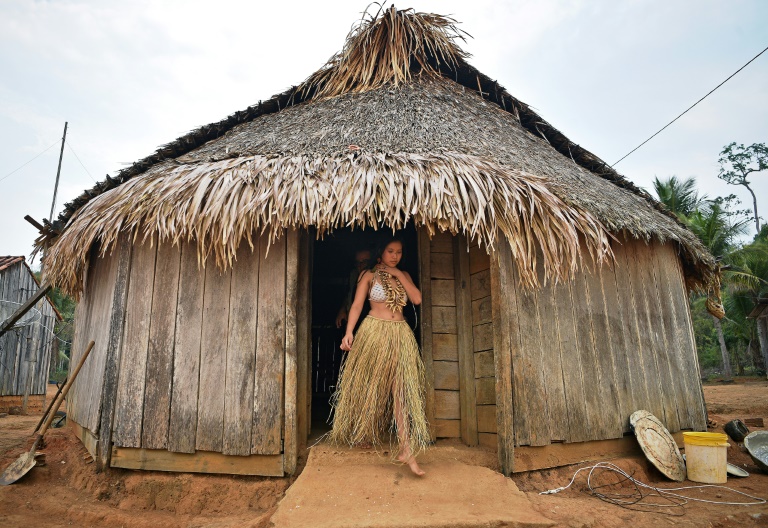
When Covid-19 reached Brazil’s Amazon, and an indigenous tribe sealed off its borders, director Alex Pritz found an innovative way to finish his documentary — he handed the cameras over to the Uru-eu-wau-wau themselves.

“The Territory,” to be released by National Geographic on Friday, follows the plight of some 200 hunter-gatherers who live in a protected area of rainforest, surrounded and encroached upon by aggressive and illegal settlers, farmers and loggers.

While shown in the movie dressed in traditional garb and honoring ancient customs, the Uru-eu-wau-wau and their young leader Bitate — the film’s main subject — were more than happy to use modern technology to fight back.

“When Covid happened, Bitate made the really bold decision to say ‘Okay, no more journalists coming into our territory, no more filmmakers, no more Alex, no more documentary crew, nobody,'” said Pritz.

“We had to have a conversation with him like, ‘Okay, are we done with the film? Do we have everything we need? Is there more? Should we start editing?’

“Bitate was really clear: ‘No, we’re not done. We still have a lot left to do. You guys weren’t done before, why should you be done now?

“‘Just send us better cameras, send us audio equipment, and we’ll shoot and produce the last part of the movie.'”

The result was a “co-production model” in which an Uru-eu-wau-wau filmmaker is credited as cinematographer, and the community more broadly acted as producers with a share of profits and a say in business decisions about the film’s distribution.

Besides enabling filming to continue into the pandemic, Pritz believes the decision to provide equipment and training directly to the Uru-eu-wau-wau benefited the film by adding a “firsthand perspective” on the group’s activities, which include patrolling the land to arrest interlopers.

“I shot a bunch of surveillance missions myself. None of them made the cut!” said Pritz.

“Not because we wanted to transfer the filmmaking… it was more raw, it was more urgent.”

– ‘Digital children’ –

Even before Pritz’s crew arrived, the Uru-eu-wau-wau had become adept at using the power of modern technology and media to champion their cause, positioning themselves on the global stage as guardians of a forest whose survival is bound up in issues of climate change and biodiversity.

“Bitate and this younger generation within the Uru-eu-wau-wau are digital children. He’s born in the late 90s. He’s on Instagram. And that’s part of how he engages with the world,” said Pritz.

When drones capturing stunning and harrowing footage of vast deforestation appear early in the documentary, many audiences assume they belong to the filmmakers, said Pritz. 

But in fact, the flying cameras were bought and are operated by the Uru-eu-wau-wau themselves.

“Whereas it would have taken four days to walk over a mountain range of thick, dense, old-growth rainforest… with the drone, you’re there in 30 minutes, you have images tagged with metadata,” said Pritz.

“People can’t argue with that.”

It is a stark contrast to the farmers and settlers, who are also central subjects of the film.

In astonishing footage, the documentary follows one group as they brazenly chainsaw and set ablaze protected forest, illegally clearing space for roads to territory they one day wish to settle and claim as their own.

Access was possible because many settlers see themselves as heroic pioneers, speaking in interviews to Pritz about opening up the rainforest for the good of their nation — a heady mix of “Wild West” cowboy culture borrowed from American movies, and nationalist propaganda stoked by Brazilian President Jair Bolsonaro.

“The settlers were these naive people who had no understanding of the historical context of their actions, the ecological consequences, what they were doing for the rest of the planet,” said Pritz.

For the settlers, many of whom lack education or any other economic opportunities, “it was just about ‘me and mine,’ ‘just this one little plot,’ ‘if only I can get this.'”

“Whereas Bitate has this expansive outlook. He’s thinking about climate change. He’s thinking about the planet. He’s politically savvy, media-oriented.”

Spain, Portugal battle to control huge wildfires

Spain and neighbouring Portugal fought against large wildfires on Tuesday, while three people were badly injured after their train hurtled into a smaller Spanish blaze.

Some 300 firefighters spent a difficult night battling a huge wildfire in southeastern Spain that has burnt through nearly 10,000 hectares in an area notoriously difficult to access, officials said Tuesday.

The fire began when lightning hit the Vall de Ebo area in Valencia late Saturday and has since spread rapidly, fuelled by strong winds, forcing the evacuation of more than 1,500 people, regional authorities said.

“At the moment, we are talking about more than 9,500 hectares (235,000 acres) burnt with a perimeter of 65 kilometres (40 miles),” regional president Ximo Puig said late Monday, describing the blaze as “absolutely huge”.

“It’s a very complicated situation… The fire is creating enormous difficulties that are absolutely impossible to tackle with the speed we would like.”

Regional interior minister Gabriela Bravo told Antena 3 television some 300 firefighters were battling the flames, backed by 24 planes and helicopters.

Firefighters elsewhere in the region were also battling two other wildfires north of Valencia city, with hundreds of firefighters and at least 10 firefighting planes engaged in the operation, officials said.

Three people were badly wounded after the train they were riding on ran into flames.

“Three people suffered bad burn injuries,” the regional health authorities said, adding one had to be evacuated by helicopter to hospital. More than eight others were lightly injured, they added.

Further north, firefighters in the Aragon region were battling another major blaze that broke out Saturday and has burnt more than 6,000 hectares of land, forcing at least 1,500 people from their homes.

Meanwhile, a huge wildfire in central Portugal that raged for a week in a UNESCO-designated natural park and was finally brought under control on Friday night, flared up again Tuesday, the civil protection authority said. 

More than 1,200 firefighters had been drafted in to tackle the blaze, which has already consumed some 15,000 hectares and was “burning fiercely” with the flames whipped up by strong winds, the authority said.

– Worse than 2021 –

So far this year, Spain has suffered 391 wildfires, fuelled by scorching temperatures and drought conditions, which have destroyed a total of 271,020 hectares of land, according to the latest figures from the European Forest Fire Information System (EFFIS).

This year’s fires in Spain have been particularly devastating, destroying more than three times the area consumed by wildfires in the whole of 2021, which amounted to 84,827 hectares, the figures show.

Portugal has suffered 195 wildfires so far this year, which have ravaged 84,717 hectares of land, EFFIS figures show. 

Scientists say human-induced climate change is making extreme weather events, including heatwaves and droughts, more frequent and intense. They in turn increase the risk of fires, which emit climate-heating greenhouse gases.

Fires have blazed across Europe, particularly in France, Greece and Portugal, making 2022 a record year for wildfires on the continent.

The blaze in Portugal’s Serra da Estrela natural park started on August 6 outside the central town of Covilha and authorities have deployed 373 fire engines and 12 planes and helicopters to bolster firefighters’ attempts to tame it.

The blaze has so far left three people seriously hurt and 19 others less seriously while 45 people have been evacuated as a precaution since Monday as Portugal battles its worst forest fires since 2017 when some 100 lives were lost.  

Portugal’s civil protection agency head Andre Fernandes warned of the probability the fire would spread and said attempts to stabilise it were liable to be hampered by wind.

Cuba authorizes foreign investment in wholesale, retail

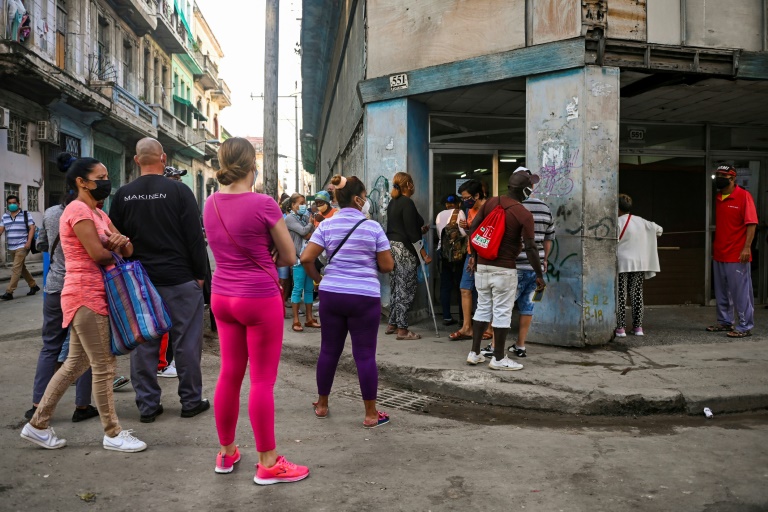
The Cuban government has announced it will allow foreign investment in domestic wholesale and retail trade for the first time in 60 years, in a move aimed at addressing critical shortages of goods.

The decision could also give a boost to local industry, all without relinquishing state control over foreign trade.

“Foreign investment in wholesale and retail trade, with state regulation, will allow the expansion and diversification of supply to the population and will contribute to the recovery of domestic industry,” Economy Minister Alejandro Gil tweeted Tuesday, expanding on an announcement made late the previous night.

Foreign investors would be allowed to fully own Cuban wholesalers for the first time since Fidel Castro’s 1959 revolution, while retailers could enter into public-private ventures, according to deputy trade minister Ana Gonzalez Fraga.

Until now, foreign investment has been allowed only in the domestic production of goods and in the services sector.

The move to open up a sector hitherto controlled by the communist government is indicative of the difficulty state companies face in accessing foreign currency and raw materials.

This has aggravated severe shortages in basic goods such as food, medicine and fuel, and triggered rising discontent with the government that has prompted repeated protests in recent months.

There has also been rapid growth of informal trade in essential products, triggering consumer inflation which closed some 70 percent higher at the end of last year.

– Raw materials needed –

According to Cuban economist Mauricio Miranda Parrondo, “the state monopoly on foreign trade and retail is responsible for the shortage of consumer goods in the domestic market.”

Gonzalez Fraga told state TV late Monday that the latest measure sought to ensure investment in “raw materials, inputs, equipment and other goods that can contribute to the development of domestic production.”

Under US sanctions since 1962, Cuba began timidly opening up to private capital in the 1990s before fuller authorization in 2010 followed by a boom after a warming of ties with Washington under then-president Barack Obama.

In August last year, Havana gave the green light for small and medium enterprises to start operating on the island.

Months earlier, it had authorized private enterprise for the first time — though that was limited to individual entrepreneurs, not businesses.

The reforms represent a major ideological shift in a country where the government and its affiliate companies have monopolized most of the economy for decades. 

The country is battling its worst economic crisis in 30 years, fueled by toughened sanctions under the administration of Donald Trump and the fallout from the coronavirus crisis, which has hit Cuba’s crucial tourism sector hard.

US cuts water supply for some states, Mexico as drought bites

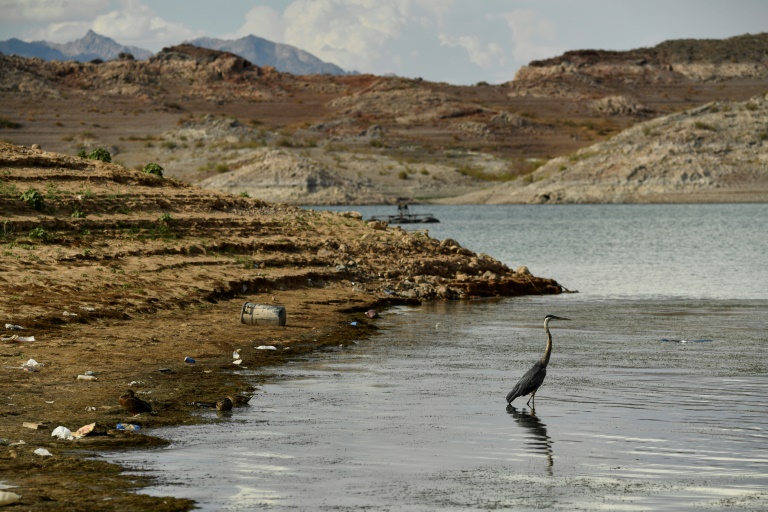
Water supplies to some US states and Mexico will be cut to avoid “catastrophic collapse” of the Colorado River, Washington officials said Tuesday, as a historic drought bites.

More than two decades of well below average rainfall have left the river — the lifeblood of the western United States — at critical levels, as human-caused climate change worsens the natural drought cycle.

Despite years of warnings and a deadline imposed by Washington, states that depend on the river have not managed to agree on a plan to cut their usage, and on Tuesday, the federal government said it was stepping in.

“In order to avoid a catastrophic collapse of the Colorado River System and a future of uncertainty and conflict, water use in the Basin must be reduced,” said Tanya Trujillo, assistant secretary for water and science at the US Interior Department.

Arizona’s allocation from the river will fall by 21 percent in 2023, while Nevada will get eight percent less. Mexico’s allotment will drop by seven percent.

California, the biggest user of the river’s water and the most populous of the western states, will not be affected next year.

The Colorado River rises in the Rocky Mountains and snakes its way through Colorado, Utah, Arizona, Nevada, California and northern Mexico, where it empties into the Gulf of California.

It is fed chiefly by snowpack at high altitudes, which melts slowly throughout the warmer months.

But reduced precipitation and the higher temperatures caused by humanity’s unchecked burning of fossil fuels means less snow is falling, and what snow exists, is melting faster.

As a consequence, there is not as much water in the river that supplies tens of millions of people and countless acres of farmland.

The states that use the water have been locked in negotiations over how to slash usage, but missed a Monday deadline to cut a deal, so Washington stepped in.

Officials in upstream states hit out Tuesday at what they saw as an unfair settlement, with California exempted from any cuts.

“It is unacceptable for Arizona to continue to carry a disproportionate burden of reductions for the benefit of others who have not contributed,” said a statement by Tom Buschatzke, director of the state’s Department of Water Resources and Ted Cooke, general manager of the Central Arizona Project. 

– Climate change –

Deputy Interior Secretary Tommy Beaudreau said his department — which oversees US water supplies — was “using every resource available to conserve water and ensure that irrigators, Tribes and adjoining communities receive adequate assistance.”

“The worsening drought crisis impacting the Colorado River Basin is driven by the effects of climate change, including extreme heat and low precipitation,” he said.

“In turn, severe drought conditions exacerbate wildfire risk and ecosystems disruption, increasing the stress on communities and our landscapes.”

The western United States is suffering under a drought that is now in its 23rd year, the worst episode in more than 1,000 years.

That drought has left swathes of the country dry and vulnerable to hotter, faster and more destructive wildfires.

Communities served by the Colorado River, including Los Angeles, have been ordered to save water, with unpopular restrictions in place on outdoor watering.

Those restrictions are unevenly adhered to, with some lawns — especially in the plushest parts of Los Angeles and its surroundings — still remarkably green.

US cuts water supply for some states, Mexico as drought bites

Water supplies to some US states and Mexico will be cut to avoid “catastrophic collapse” of the Colorado River, Washington officials said Tuesday, as a historic drought bites.

More than two decades of well below average rainfall have left the river — the lifeblood of the western United States — at critical levels, as human-caused climate change worsens the natural drought cycle.

Despite years of warnings and a deadline imposed by Washington, states that depend on the river have not managed to agree on a plan to cut their usage, and on Tuesday, the federal government said it was stepping in.

“In order to avoid a catastrophic collapse of the Colorado River System and a future of uncertainty and conflict, water use in the Basin must be reduced,” said Tanya Trujillo, assistant secretary for water and science at the US Interior Department.

Arizona’s allocation from the river will fall by 21 percent in 2023, while Nevada will get eight percent less. Mexico’s allotment will drop by seven percent.

California, the biggest user of the river’s water and the most populous of the western states, will not be affected next year.

The Colorado River rises in the Rocky Mountains and snakes its way through Colorado, Utah, Arizona, Nevada, California and northern Mexico, where it empties into the Gulf of California.

It is fed chiefly by snowpack at high altitudes, which melts slowly throughout the warmer months.

But reduced precipitation and the higher temperatures caused by humanity’s unchecked burning of fossil fuels means less snow is falling, and what snow exists, is melting faster.

As a consequence, there is not as much water in the river that supplies tens of millions of people and countless acres of farmland.

The states that use the water have been locked in negotiations over how to slash usage, but missed a Monday deadline to cut a deal, so Washington stepped in.

Officials in upstream states hit out Tuesday at what they saw as an unfair settlement, with California exempted from any cuts.

“It is unacceptable for Arizona to continue to carry a disproportionate burden of reductions for the benefit of others who have not contributed,” said a statement by Tom Buschatzke, director of the state’s Department of Water Resources and Ted Cooke, general manager of the Central Arizona Project. 

– Climate change –

Deputy Interior Secretary Tommy Beaudreau said his department — which oversees US water supplies — was “using every resource available to conserve water and ensure that irrigators, Tribes and adjoining communities receive adequate assistance.”

“The worsening drought crisis impacting the Colorado River Basin is driven by the effects of climate change, including extreme heat and low precipitation,” he said.

“In turn, severe drought conditions exacerbate wildfire risk and ecosystems disruption, increasing the stress on communities and our landscapes.”

The western United States is suffering under a drought that is now in its 23rd year, the worst episode in more than 1,000 years.

That drought has left swathes of the country dry and vulnerable to hotter, faster and more destructive wildfires.

Communities served by the Colorado River, including Los Angeles, have been ordered to save water, with unpopular restrictions in place on outdoor watering.

Those restrictions are unevenly adhered to, with some lawns — especially in the plushest parts of Los Angeles and its surroundings — still remarkably green.

'The Flash' star Ezra Miller seeking treatment for mental health

Ezra Miller, the troubled star of Warner Bros’ major upcoming superhero movie “The Flash,” is seeking treatment for mental health issues after a string of high-profile controversies, the actor said.

The 29-year-old, who has already appeared as the key DC Comics character in several blockbuster films including “Justice League,” was charged this month with felony burglary in Vermont, and earlier this year was charged with disorderly conduct following two arrests in Hawaii.

Those incidents — and further allegations of choking a woman in an Icelandic bar, which did not result in charges — have raised questions in Hollywood over the future of “The Flash” and Miller’s career more broadly.

“Having recently gone through a time of intense crisis, I now understand that I am suffering complex mental health issues and have begun ongoing treatment,” Miller, who identifies as non-binary, said in a statement sent to AFP by their representative on Tuesday.

“I want to apologize to everyone that I have alarmed and upset with my past behavior.

“I am committed to doing the necessary work to get back to a healthy, safe and productive stage in my life.”

Despite the controversies, Warner Bros earlier this month signaled it intends to go ahead with releasing “The Flash,” which is due in theaters next summer.

Filming has already been completed on the movie, which has a reported $200 million budget.

It is the first standalone movie for Miller’s character in the “DC Extended Universe” of inter-connected movies owned by Warner, a rival franchise to the Disney-owned and record-breaking Marvel superhero films.

Miller shot to early success with lead roles in acclaimed dramas “Afterschool,” “We Need to Talk About Kevin” and “The Perks of Being a Wallflower.”

They were first cast as Barry Allen, aka The Flash, in 2016’s “Batman v Superman: Dawn of Justice,” reprising the role in “Suicide Squad” (2016) and “Justice League” (2017).

On an earnings call with investors this month, David Zaslav, CEO of parent company Warner Bros Discovery, appeared to confirm “The Flash” will still be released, along with two other superhero titles.

“We have seen ‘The Flash,’ ‘Black Adam’ and ‘Shazam 2.’ We are very excited about them,” he said.

“We’ve seen them. We think they are terrific, and we think we can make them even better.”

The timing of Zaslav’s comments angered some fans, as the company days earlier announced it was dropping “Batgirl,” a nearly-completed $90 million superhero film starring a Latina actress in its lead role.

Close Bitnami banner
Bitnami