AFP

Kurdish Iraqi farmer sprouts online advice, green awareness

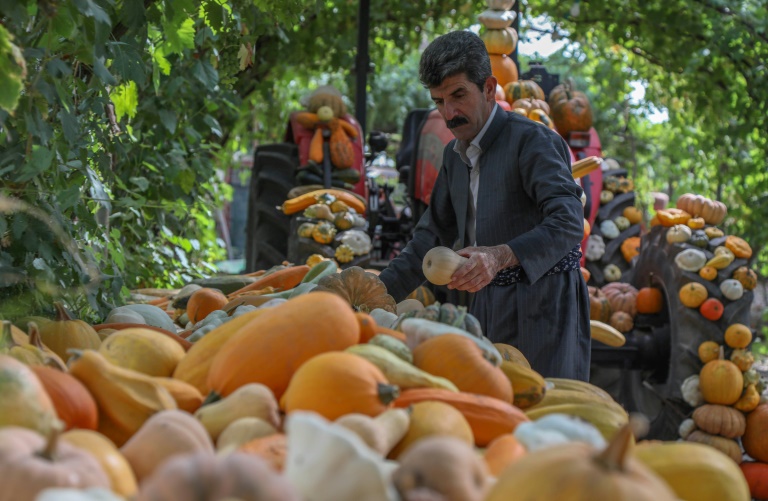
Kurdish Iraqi farmer Azad Muhamad has become a social media star by sharing tips on growing fresh fruit and vegetables in the sun-parched country that is highly vulnerable to climate change.  

The moustachioed 50-year-old with almost half a million Facebook followers posts weekly videos on topics such as protecting fruit trees, dealing with insects and helping people get more from their farms and gardens.

“They should make you agriculture minister,” one of his fans, Ahmed Hassan, commented on a recent video.

Muhamad also uses his popular online platform to raise awareness about protecting the environment and the need to support local farmers, in his native Kurdistan region and beyond.

“Developed-country farmers have government support and harvesting machines,” said Muhamad. 

“Our farmers do everything themselves with their own sweat — and when they lose money at the end of the year, they start over with the same passion and energy.”

He also has a message for authorities in Iraq, which the UN classifies as the world’s fifth most vulnerable country to climate change and where many are mired in poverty despite Iraq’s oil wealth.

“Our land is fertile, and our earth is like gold,” Muhamad told AFP.

Therefore, he said, the government should “focus on agriculture rather than oil, for a sustainable economy”.

– ‘Preserve environment’ –

From his farm near Halabja, Muhamad squats among grape vines and other plants, wearing traditional Kurdish clothing as a friend uses a mobile phone to film him.

Many of his followers, he said, are not farmers but people who “have transformed their roof into gardens — and that’s a way to better preserve the environment”.

He invites his Facebook followers to post their questions, and says some farmers have sent him videos of their crops, thanking him for his help.

“That makes me very happy,” he said.

In one video, he advises farmers to space their trees out by just two metres (six feet) instead of four to keep the soil shady and damp, protecting it from the scorching summer heat.

“With desertification, and low rainfall, we must change how we plant trees,” he said.

“Look at these tomatoes,” he added, gesturing at a group of plants. “Because they are in the shade, they are juicy and perfect — whereas these that are in the direct sun have been burned.”

Iraq’s northern Kurdistan region has been spared the worst effects of desertification, water scarcity and drought that have ravaged other parts of the country.

“The region has high rainfall precipitation compared to the rest of Iraq,” said a 2019 study involving United Nations agencies and the autonomous Kurdistan regional government.

But the report warned that “local agricultural production is in severe competition with foreign goods with largely lower prices” … “mainly from Turkey and Iran, whose products have flooded Iraqi markets”.

It urged “more investments” to improve irrigation, along with water management to promote sustainability, to ensure the efficient use of resources and “mitigate the effects of climate change”.

– ‘Fresh and organic’ –

Hamid Ismail Abdulrahman, a fellow farmer in Halabja, said low water levels in wells had impacted agricultural development.

Twice a week, the 47-year-old opens his farm to families who can buy “fresh and organic products”, from tomatoes to corn and eggplant.

He said climate change had greatly affected agriculture all over Iraq, though “southern Iraq has the lion’s share of this impact, while in the north the effect is less”.

With Iraq already witnessing record low rainfall and high temperatures in recent years, Muhamad warned that “if the government doesn’t act now and present a concrete plan… the damage will be done”.

Muhamad has recently opened a small educational area on his farm, and now also receives visits from university students.

He says he hopes his initiatives will have a longer-term impact.

“Some people leave behind a mosque” when they die, he said, but “I want to leave behind my agricultural knowledge.”


Asian markets mixed as focus turns to inflation data

Asian equities were mixed Tuesday as investors await US inflation data later in the week, after a jobs report suggested the Federal Reserve would likely need to continue its sharp interest rate hikes to tame runaway prices.

A rally across global markets from June lows appears to have hit the buffers after Friday’s forecast-busting employment reading showed the world’s top economy remained resilient but meant more monetary tightening was on the cards.

There had been a hope that recent weak data — including one showing the economy contracted for two straight quarters — would allow the bank to take its foot off the pedal in lifting borrowing costs, and possibly begin cutting in 2023.

Now, investors are on edge ahead of Wednesday’s figures, with some observers warning that an above-estimate reading on inflation, which is already at a four-decade high, could spur another sharp market sell-off.

There is a growing expectation that central bank interest rate hikes will go too far and tip the global economy into recession.

Saira Malik, at investment manager Nuveen, told Bloomberg Television said the losses could kick in when investors realise “the Fed is not going to pivot on interest-rate hikes in early 2023, inflation should remain pretty persistent and rate hikes should continue”.

Wall Street provided a glum lead as tech firms took a hit following a disappointing earnings report from chip giant Nvidia caused by lower-than-expected gaming income.

“Nvidia is one of those companies that does things right and has the majority of analysts backing their stock,” said OANDA’s Edward Moya, adding that  its “warning is reminding traders of how severe the macro impacts might be on tech for the rest of the year”. 

In early exchanges, Asian equities fluctuated.

Tokyo, Hong Kong, Seoul, Taipei and Manila were in the red, while Shanghai, Sydney, Wellington and Jakarta edged up.

Oil prices edged down and remain around six-month lows as recession fears mount and traders fret over the impact on demand. They are also keeping tabs on Iran nuclear talks after the European Union submitted a “final text” at talks to salvage a 2015 deal.

An agreement could open the way for Tehran to resume sales of crude on international markets, partly helping to plug a hole left by the ban of Russian exports following its invasion of Ukraine. 

However, Moya added that “it seems unlikely a breakthrough will happen anytime soon. Tehran seems like they are willing to negotiate, but an imminent decision to agree to the EU’s proposal seems unlikely”.

– Key figures at around 0230 GMT –

Tokyo – Nikkei 225: DOWN 0.9 percent at 28,009.35 (break)

Hong Kong – Hang Seng Index: DOWN 0.4 percent at 19,976.74

Shanghai – Composite: UP 0.3 percent at 3,245.31

Euro/dollar: DOWN at $1.0192 from $1.0194 Monday

Pound/dollar: DOWN at $1.2077 from $1.2079

Euro/pound: UP at 84.39 pence from 84.35 pence

Dollar/yen: DOWN at 134.78 yen from 134.98 yen

West Texas Intermediate: DOWN 0.6 percent at $90.23 per barrel

Brent North Sea crude: DOWN 0.5 percent at $96.13 per barrel

New York – Dow: UP 0.1 percent at 32,832.54 (close)

London – FTSE 100: UP 0.6 percent at 7,482.37 (close)

Asian markets mixed as focus turns to inflation data

Asian equities were mixed Tuesday as investors await US inflation data later in the week, after a jobs report suggested the Federal Reserve would likely need to continue its sharp interest rate hikes to tame runaway prices.

A rally across global markets from June lows appears to have hit the buffers after Friday’s forecast-busting employment reading showed the world’s top economy remained resilient but meant more monetary tightening was on the cards.

There had been a hope that recent weak data — including one showing the economy contracted for two straight quarters — would allow the bank to take its foot off the pedal in lifting borrowing costs, and possibly begin cutting in 2023.

Now, investors are on edge ahead of Wednesday’s figures, with some observers warning that an above-estimate reading on inflation, which is already at a four-decade high, could spur another sharp market sell-off.

There is a growing expectation that central bank interest rate hikes will go too far and tip the global economy into recession.

Saira Malik, at investment manager Nuveen, told Bloomberg Television said the losses could kick in when investors realise “the Fed is not going to pivot on interest-rate hikes in early 2023, inflation should remain pretty persistent and rate hikes should continue”.

Wall Street provided a glum lead as tech firms took a hit following a disappointing earnings report from chip giant Nvidia caused by lower-than-expected gaming income.

“Nvidia is one of those companies that does things right and has the majority of analysts backing their stock,” said OANDA’s Edward Moya, adding that  its “warning is reminding traders of how severe the macro impacts might be on tech for the rest of the year”. 

In early exchanges, Asian equities fluctuated.

Tokyo, Hong Kong, Seoul, Taipei and Manila were in the red, while Shanghai, Sydney, Wellington and Jakarta edged up.

Oil prices edged down and remain around six-month lows as recession fears mount and traders fret over the impact on demand. They are also keeping tabs on Iran nuclear talks after the European Union submitted a “final text” at talks to salvage a 2015 deal.

An agreement could open the way for Tehran to resume sales of crude on international markets, partly helping to plug a hole left by the ban of Russian exports following its invasion of Ukraine. 

However, Moya added that “it seems unlikely a breakthrough will happen anytime soon. Tehran seems like they are willing to negotiate, but an imminent decision to agree to the EU’s proposal seems unlikely”.

– Key figures at around 0230 GMT –

Tokyo – Nikkei 225: DOWN 0.9 percent at 28,009.35 (break)

Hong Kong – Hang Seng Index: DOWN 0.4 percent at 19,976.74

Shanghai – Composite: UP 0.3 percent at 3,245.31

Euro/dollar: DOWN at $1.0192 from $1.0194 Monday

Pound/dollar: DOWN at $1.2077 from $1.2079

Euro/pound: UP at 84.39 pence from 84.35 pence

Dollar/yen: DOWN at 134.78 yen from 134.98 yen

West Texas Intermediate: DOWN 0.6 percent at $90.23 per barrel

Brent North Sea crude: DOWN 0.5 percent at $96.13 per barrel

New York – Dow: UP 0.1 percent at 32,832.54 (close)

London – FTSE 100: UP 0.6 percent at 7,482.37 (close)

Russia to launch Iranian satellite amid Ukraine war concerns

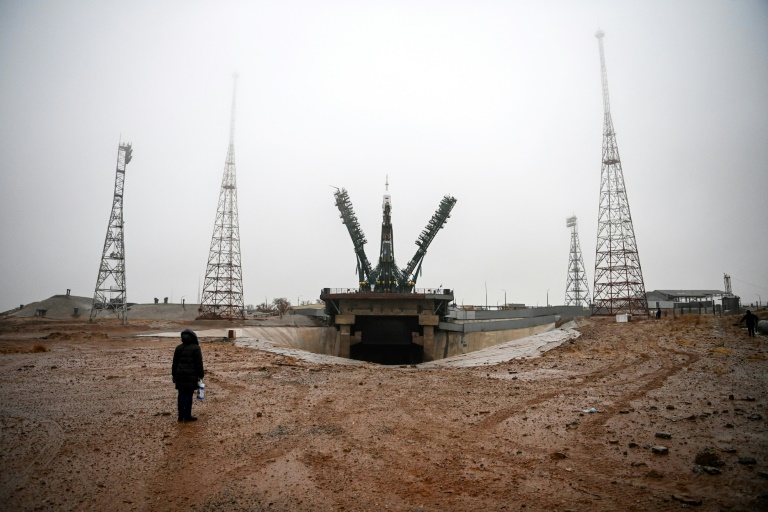
Russia is scheduled to launch an Iranian satellite into orbit on Tuesday, but Tehran brushed off fears that Moscow might use it in the war against Ukraine.

Iran’s “Khayyam” satellite is scheduled to take off from the Moscow-operated Baikonur cosmodrome in Kazakhstan at 0552 GMT, three weeks after Russian President Vladimir Putin met Iranian counterpart Ebrahim Raisi and Supreme Leader Ayatollah Ali Khamenei in Tehran.

Iran has sought to deflect suspicions that Moscow could use Khayyam to improve its surveillance of military targets in Ukraine.

Last week, US daily The Washington Post quoted anonymous Western intelligence officials as saying that Russia “plans to use the satellite for several months or longer” to assist its war efforts before allowing Iran to take control.

But the Iranian Space Agency said on Sunday that the Islamic republic would control the Khayyam satellite “from day one.”

“No third country is able to access the information” sent by the satellite due to its “encrypted algorithm,” it said.

The purpose of Khayyam is to “monitor the country’s borders”, enhance agricultural productivity and monitor water resources and natural disasters, the space agency said.

Khayyam is being taken into orbit by a Soyuz-2.1b rocket, Russia’s space agency Roscosmos said last week.

As Moscow’s international isolation grows under the weight of Western sanctions over Ukraine, Putin is seeking to pivot Russia towards the Middle East, Asia and Africa and find new clients for the country’s embattled space programme.

– ‘Long-term cooperation’ –

Khayyam, apparently named after the 11th-century Persian polymath Omar Khayyam, will not be the first Iranian satellite that Russia has put into space — in 2005, Iran’s Sina-1 satellite was deployed from Russia’s Plesetsk cosmodrome.

Iran is currently negotiating with world powers, including Moscow, to salvage a 2015 deal aimed at reining in Tehran’s nuclear ambitions.

The United States — which quit the landmark Joint Comprehensive Plan of Action or JCPOA under then-president Donald Trump in 2018 — has accused Iran of effectively supporting Russia’s war against Ukraine while adopting a “veil of neutrality”. 

During his meeting with Putin last month, Iran’s Khamenei called for “long-term cooperation” with Russia, and Tehran has refused to join international condemnation of Moscow’s invasion of its pro-Western neighbour.

Iran insists its space programme is for civilian and defence purposes only, and does not breach the 2015 nuclear deal, or any other international agreement. 

Western governments worry that satellite launch systems incorporate technologies interchangeable with those used in ballistic missiles capable of delivering a nuclear warhead, something Iran has always denied wanting to build.

Iran successfully put its first military satellite into orbit in April 2020, drawing a sharp rebuke from the United States.

In New York, renters desperate as soaring rents exacerbate housing crisis

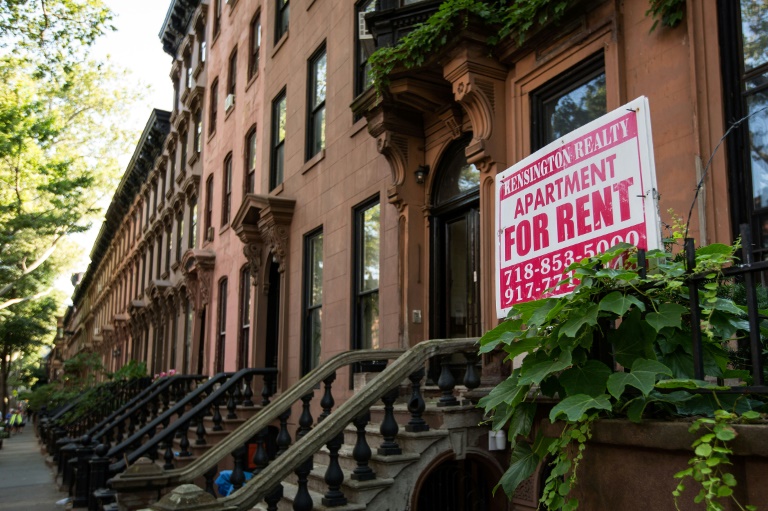
In mid-May, Paula Sevilla and her roommates joined the many New Yorkers suffering under the city’s crushing housing crisis, which has seen rents soar in the pandemic’s wake.

The tenants argued their landlord had violated rules requiring sufficient notice but ultimately were told if they would have to pay an additional $800 per month if they wanted to stay at their Brooklyn rental.

Sevilla and one roommate began a grueling search for new housing in a market that over the past year has spawned countless apartment search horror stories.

After two months of searching, some 30 apartment visits and constant stress, they finally found a two-bedroom spot for $3,000 dollars per month.

Renting in New York has long been a struggle, but recently costs have skyrocketed, jumping an average 20.4 percent in the second quarter of this year alone, according to the housing search website StreetEasy.

And finding a home increasingly takes longer, with long lines of applicants vying for space.

“One time we lost an apartment because we turned in an application four minutes too late,” recounted Sevilla, a 26-year-old originally from Spain. 

– Boiling point –

Draconian prerequisites to rent in New York aren’t new: earn income 40 times the monthly rent, have perfect credit history, present the last two years of tax returns and current bank balances.

And the city’s housing crisis has been simmering for years, with construction of units lagging behind a growing population. 

Now, as hundreds of thousands of people who fled the city during the pandemic’s early days return — along with the normal flow of transplants to America’s cultural and economic nexus — the situation is growing untenable.

There are “too many clients and not enough apartments,” said Miguel Urbina, a real estate agent.

In some cases, it’s not even enough to arrive first or offer more than the asking price to owners, which are often large firms or investment funds, especially in Manhattan.

Sevilla makes $75,000 annually, slightly more than the average salary in New York — but it’s not enough to rent on her own.

In New York, renters must often also pay significant broker fees to rental agents, generally at least between one month and 15 percent of the annual rental cost.

Many people who stayed in the city in 2020 and 2021 signed leases at a discount, but now many landlords are bumping those prices back up — pushing out more than a third of tenants who can’t afford the increases, according to StreetEasy.

Even New Yorkers lucky enough to live in rent-stabilized apartments — approximately one million units and two million tenants, according to city data — are not immune to the increases.

Those rents can only be raised based on a vote by the city’s rent guidelines board, whose members are appointed by the mayor. 

For eight years under Bill de Blasio, the highest increases were 1.5 percent for one-year leases — but under the board appointed by new mayor Eric Adams, rents are set to see their sharpest rise in nearly a decade.

In June, the board approved a 3.25 percent increase for one-year contracts and five percent for two years, which will affect many of the city’s residents with limited means and triggered outrage among housing rights advocates.

– ‘Staggering financial burden’ –

Manhattan families spend some 55 percent of their income on rent, a figure that is 43 percent in Queens and 60 percent in Brooklyn, according to StreetEasy data.

“Rent is becoming a staggering financial burden,” read a recent report from the online real estate portal.

Gia Elika, the owner of a real estate agency, says average rent in Manhattan is some $5,000 a month — but in a city of stark class division, some agencies are offering monthly rents of $140,000 on Fifth Avenue.

The shocking price tags are driving more middle-class families and young people like Sevilla to seek housing in neighborhoods historically occupied by immigrants, Latinos and African Americans, fostering relentless gentrification.

Elika told AFP that while “there is always a shortage of housing” in New York, “now it’s magnifying” with unprecedented prices.

According to the Washington-based policy research group Up For Growth, in 2019, the New York metropolitan area needed some 340,000 more units.

Rising interest rates in the face of rampant inflation has aggravated the crisis by pushing would-be buyers to rent, in a market “hampered by historically low inventory,” according to Lee’s report.

Decades-old zoning restrictions limit building size in some areas is one barrier, along with construction costs, limited public housing and legislative foot-dragging that has seen state and local politicians largely put off solving an increasingly pressing problem.

And the outlook is grim: much of the skyscraper boom in Manhattan has been for luxury and commercial purposes, and despite high-rise construction in Brooklyn, Queens and New Jersey, agents don’t foresee prices to quit rising any time soon.

In New York, renters desperate as soaring rents exacerbate housing crisis

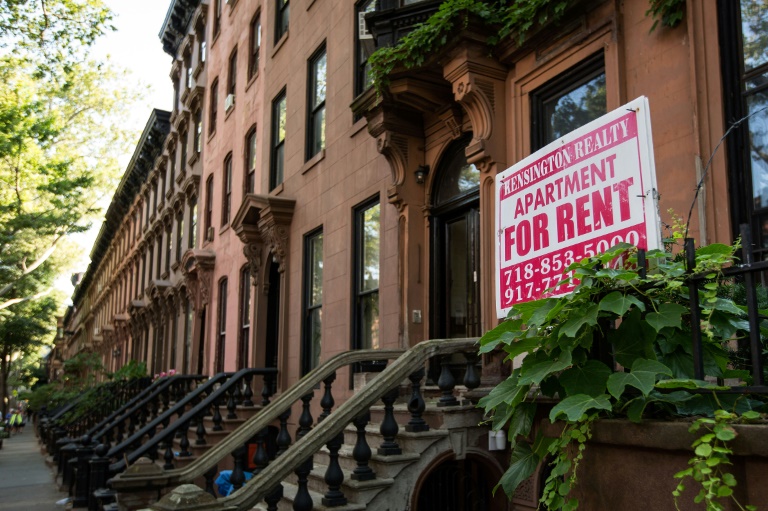
In mid-May, Paula Sevilla and her roommates joined the many New Yorkers suffering under the city’s crushing housing crisis, which has seen rents soar in the pandemic’s wake.

The tenants argued their landlord had violated rules requiring sufficient notice but ultimately were told if they would have to pay an additional $800 per month if they wanted to stay at their Brooklyn rental.

Sevilla and one roommate began a grueling search for new housing in a market that over the past year has spawned countless apartment search horror stories.

After two months of searching, some 30 apartment visits and constant stress, they finally found a two-bedroom spot for $3,000 dollars per month.

Renting in New York has long been a struggle, but recently costs have skyrocketed, jumping an average 20.4 percent in the second quarter of this year alone, according to the housing search website StreetEasy.

And finding a home increasingly takes longer, with long lines of applicants vying for space.

“One time we lost an apartment because we turned in an application four minutes too late,” recounted Sevilla, a 26-year-old originally from Spain. 

– Boiling point –

Draconian prerequisites to rent in New York aren’t new: earn income 40 times the monthly rent, have perfect credit history, present the last two years of tax returns and current bank balances.

And the city’s housing crisis has been simmering for years, with construction of units lagging behind a growing population. 

Now, as hundreds of thousands of people who fled the city during the pandemic’s early days return — along with the normal flow of transplants to America’s cultural and economic nexus — the situation is growing untenable.

There are “too many clients and not enough apartments,” said Miguel Urbina, a real estate agent.

In some cases, it’s not even enough to arrive first or offer more than the asking price to owners, which are often large firms or investment funds, especially in Manhattan.

Sevilla makes $75,000 annually, slightly more than the average salary in New York — but it’s not enough to rent on her own.

In New York, renters must often also pay significant broker fees to rental agents, generally at least between one month and 15 percent of the annual rental cost.

Many people who stayed in the city in 2020 and 2021 signed leases at a discount, but now many landlords are bumping those prices back up — pushing out more than a third of tenants who can’t afford the increases, according to StreetEasy.

Even New Yorkers lucky enough to live in rent-stabilized apartments — approximately one million units and two million tenants, according to city data — are not immune to the increases.

Those rents can only be raised based on a vote by the city’s rent guidelines board, whose members are appointed by the mayor. 

For eight years under Bill de Blasio, the highest increases were 1.5 percent for one-year leases — but under the board appointed by new mayor Eric Adams, rents are set to see their sharpest rise in nearly a decade.

In June, the board approved a 3.25 percent increase for one-year contracts and five percent for two years, which will affect many of the city’s residents with limited means and triggered outrage among housing rights advocates.

– ‘Staggering financial burden’ –

Manhattan families spend some 55 percent of their income on rent, a figure that is 43 percent in Queens and 60 percent in Brooklyn, according to StreetEasy data.

“Rent is becoming a staggering financial burden,” read a recent report from the online real estate portal.

Gia Elika, the owner of a real estate agency, says average rent in Manhattan is some $5,000 a month — but in a city of stark class division, some agencies are offering monthly rents of $140,000 on Fifth Avenue.

The shocking price tags are driving more middle-class families and young people like Sevilla to seek housing in neighborhoods historically occupied by immigrants, Latinos and African Americans, fostering relentless gentrification.

Elika told AFP that while “there is always a shortage of housing” in New York, “now it’s magnifying” with unprecedented prices.

According to the Washington-based policy research group Up For Growth, in 2019, the New York metropolitan area needed some 340,000 more units.

Rising interest rates in the face of rampant inflation has aggravated the crisis by pushing would-be buyers to rent, in a market “hampered by historically low inventory,” according to Lee’s report.

Decades-old zoning restrictions limit building size in some areas is one barrier, along with construction costs, limited public housing and legislative foot-dragging that has seen state and local politicians largely put off solving an increasingly pressing problem.

And the outlook is grim: much of the skyscraper boom in Manhattan has been for luxury and commercial purposes, and despite high-rise construction in Brooklyn, Queens and New Jersey, agents don’t foresee prices to quit rising any time soon.

Trump says Florida home 'raided' by FBI

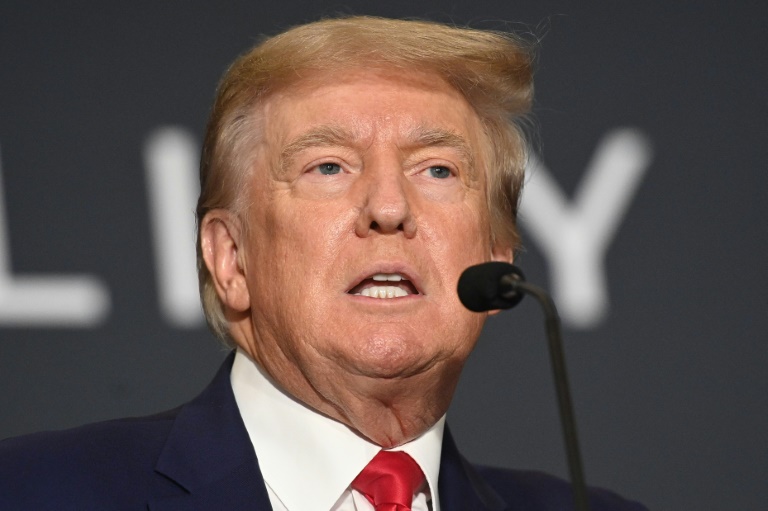
Former US president Donald Trump said Monday that his Mar-A-Lago residence in Florida was being “raided” by FBI agents in what he called an act of “prosecutorial misconduct.”

The FBI declined to comment on whether the search was happening or what it might be for, nor did Trump give any indication of why federal agents were at his home — a situation that adds to the legal pressure on the ex-president.

“These are dark times for our Nation, as my beautiful home, Mar-A-Lago in Palm Beach, Florida, is currently under siege, raided, and occupied by a large group of FBI agents,” Trump said in a statement posted on his Truth Social network.

Aerial footage of Mar-a-Lago showed police cars outside the property.

“It is prosecutorial misconduct, the weaponization of the Justice System, and an attack by Radical Left Democrats who desperately don’t want me to run for President in 2024,” said the former president, who was not present during the raid, according to The New York Times.

“Such an assault could only take place in broken, Third-World Countries. Sadly, America has now become one of those Countries,” Trump said, adding: “They even broke into my safe!”

Multiple US media outlets cited sources close to the investigation as saying that agents were conducting a court-authorized search related to the potential mishandling of classified documents that had been sent to Mar-a-Lago.

The National Archives said in February it had recovered 15 boxes of documents from Trump’s Florida estate, which The Washington Post reported included highly classified texts, taken with him when he left Washington following his reelection defeat.

The documents and mementos — which also included correspondence from ex-US president Barack Obama — should by law have been turned over at the end of Trump’s presidency but instead ended up at his Mar-a-Lago resort.

The recovery of the boxes raised questions about Trump’s adherence to presidential records laws enacted after the 1970s Watergate scandal that require Oval Office occupants to preserve records related to administration activity.

The Archives had requested then that the Justice Department open a probe into Trump’s practices.

– ‘Accountable’ –

White House staff also regularly discovered wads of paper clogging toilets, leading them to believe Trump was trying to get rid of certain documents, according to a forthcoming book by New York Times reporter Maggie Haberman.

Since taking his last Air Force One flight from Washington to Florida on January 20 last year, Trump has remained the country’s most polarizing figure, continuing his unprecedented campaign to sow falsehoods that he actually won the 2020 election.

For weeks, Washington has been riveted by hearings in Congress about the January 6 storming of the Capitol by a mob of Trump supporters and his attempts to overturn the election.

The US Department of Justice is also investigating the January 6 attack.

While Attorney General Merrick Garland has declined to comment on growing speculation that Trump could face criminal charges, he has insisted that “no person is above the law” and that he intends to “hold accountable every person who is criminally responsible for trying to overturn a legitimate election.”

Trump is also being investigated for his efforts to alter the 2020 voting results in the state of Georgia, while his business practices are being probed in New York in separate cases, one civil and the other criminal.

The real estate mogul has not yet officially declared his candidacy for the 2024 presidential election, though he has dropped strong hints over the past few months.

With President Joe Biden’s approval rating currently below 40 percent and Democrats forecast to lose control of Congress in November midterm elections, Trump is apparently bullish that he could ride the Republican wave all the way to the White House in 2024.

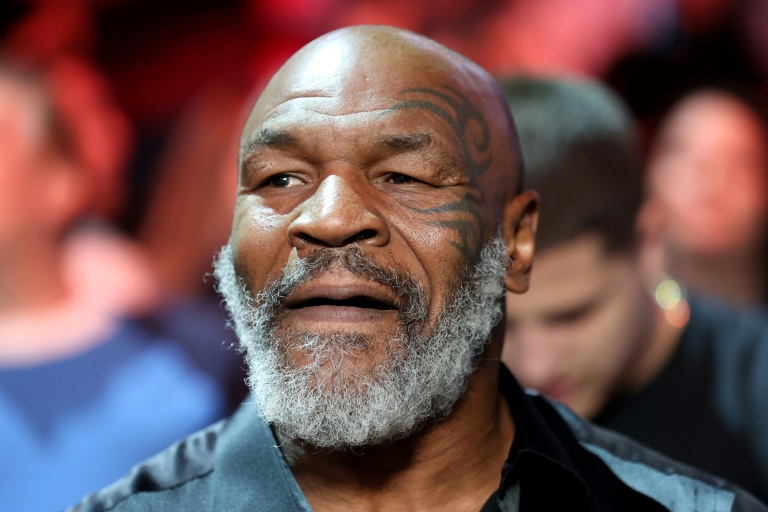
Mike Tyson slams 'slave master' Hulu series for 'stealing' life story

Former heavyweight boxing champion Mike Tyson has accused an unauthorized television drama of stealing his life story, comparing the streaming platform behind the upcoming series to a “slave master.”

“Mike,” which premieres on US streamer Hulu August 25, is a scripted drama that re-enacts moments from the controversial fighter’s life, from his early childhood and through his 1992 rape conviction.

“Hulu is the streaming version of the slave master. They stole my story and didn’t pay me,” wrote Tyson on Instagram.

He added: “I don’t support their story about my life. It’s not 1822. It’s 2022. They stole my life story and didn’t pay me.”

“To Hulu executives I’m just a n****r they can sell on the auction block,” he wrote, using asterisks in place of letters.

Hulu, which is only available in the United States, is majority-owned by Disney.

The show depicts Tyson being bullied as a young child with a lisp, his teenage years in and out of prison after joining a Brooklyn street gang, and his early start in boxing.

While the eight-part limited series shows Tyson in the ring during various famous bouts, it concentrates on his turbulent private life.

One episode focuses on Desiree Washington, the 18-year-old beauty pageant contestant who accused Tyson of rape in 1991. He was convicted the following year, and jailed for three years. 

The episode tells the events of the rape in an Indianapolis hotel room, and the ensuing trial, from Washington’s perspective and with her narration.

Creator and screenwriter Steven Rogers said the filmmakers actually “couldn’t talk to” Tyson because “his life rights were already taken” by another project.

But he also pointed to the benefits of an unauthorized take on Tyson’s life, saying “I don’t like to be reliant on just one source.”

“I really like to do the research, and get all these different opinions, and then put a story around all of that,” he told a recent Television Critics Association panel.

“I don’t like to be beholden to just one person.”

Trevante Rhodes, who plays Tyson in the eight-part limited series, said “it feels best at least to detach yourself as much as you can.”

Asked if he was worried about angering Tyson — considered one of the best heavyweights of all time, who infamously bit off a piece of Evander Holyfield’s ear in a 1997 bout — Rhodes simply replied: “Nah.”

– ‘Baddest man on the planet’ –

While confronting allegations of domestic violence, the show also contextualizes the violence Tyson suffered as a child, the early loss of his mother to cancer, his drug addiction issues, and efforts by establishment figures to take advantage of Tyson’s lucrative success in the ring.

“When I was researching it, I found that a lot of the issues that we’re struggling with today — like Black Lives Matter, and MeToo, and prison reform and addiction and mental health issues all the stuff that we’re struggling with — have their roots in this one man’s story,” said showrunner Karin Gist.

“So it felt like a really good time to tell it, through the lens of the baddest man on the planet.”

Rogers added: “I would hope that if he watches it, that he would change his opinion.”

Biden tries to heal Kentucky flood victims — and country

In Lost Creek, Kentucky, Joe Biden promised flood victims Monday that their shattered lives will be restored — a message of optimism he hopes to beam right through a divided America three months before elections that will decide the fate of his presidency.

A disaster zone, where floods have killed at least 37 people, might seem an odd place for optimism.

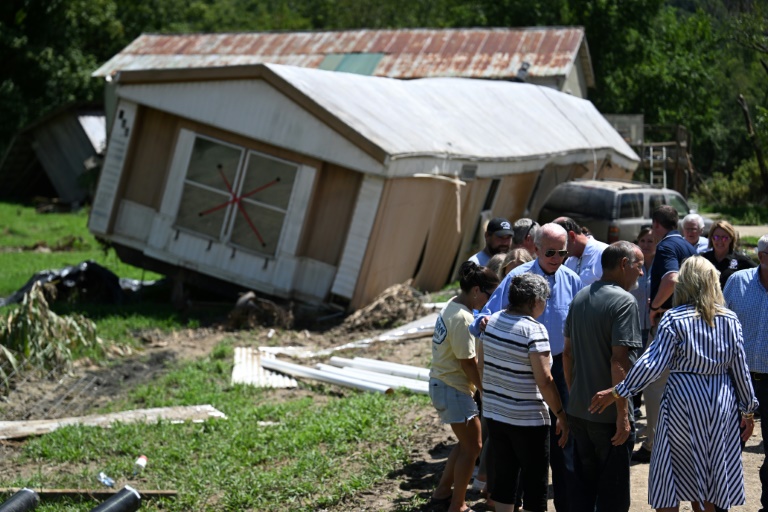
The presidential motorcade rolled past scenes of savage natural violence — trees torn to pieces, yellow school buses tossed like toys, and fragments of people’s houses and belongings festooning the banks of a minor creek that had transformed into a sort of tsunami.

But after visiting victims, including one family whose mobile home had floated clean off its foundations before being wrecked up the street, the Democrat said the natural calamity was a moment to recall deep bonds.

“Everyone has an obligation to help,” Biden said. “I promise you, we’re staying, the federal government, along with the state and county and the city, we’re staying until everybody’s back to where they were. Not a joke.”

Championing unity in an era when Democrats and Republicans are barely able to talk might also seem like fantasy.

But Biden is on a roll.

If he was being written off as a lame duck only a few weeks ago, the 79-year-old is now celebrating a string of successes, including likely passage of the biggest climate change bill in US history and an extraordinary intelligence operation culminating in the killing of the last top Al-Qaeda leader involved in 9/11.

His administration has even delivered several landmark bills, including on infrastructure spending and gun ownership reforms, that won Republican support — something earlier considered all but impossible.

And the Democrat is clearly bursting to get back into the country after spending nearly two weeks in isolation due to Covid-19 and a rebound infection.

With November midterms rapidly approaching and Republicans, who are threatening to scuttle what’s left of Biden’s first term, forecast to take control of Congress, the sense of urgency is growing.

– Empathy, unity –


So in Lost Creek, Biden did one thing he has long been known for doing well: he comforted the grieving. A man with a long history of his own family tragedies, Biden rarely seems more at ease than with fellow sufferers.

He hugged adults, high-fived a toddler, and joked with a small boy whose home had been smashed that he would become president himself one day.

Then in a speech delivered in searing heat, with sweat gathering through his blue shirt, Biden broadened to a political message he wants the entire angry — many say broken — country to hear.

Recounting how one of the survivors had modestly told him that “Kentuckians don’t want to ask for too much,” he insisted that Americans across the 50 states should not even wait to be asked.

“They’re Americans,” he said of the stricken locals. “This happened in America, it’s an American problem. We’re all Americans.”

“So, I don’t want any Kentuckian telling me, ‘You don’t have to do this for me,'” he said. “Oh yeah we do. You’re an American citizen. We never give up, we never stop, we never bow, we never bend — we just go forward.”

This was the centrist, unity platform that got Biden elected to replace Donald Trump after just one term. It’s a message he hopes voters will embrace again in the midterms, maybe even saving Democrats’ control of Congress.

Kentucky’s Governor Andy Beshear echoed Biden, saying the tragedy has seen the people of his state “lean on one another in times of need — neither red nor blue, Democratic or Republican.”

Beshear may be a rare Democratic official in the heavily Republican state, which voted overwhelmingly for Trump in 2020.

But Kentucky’s veteran Republican congressman Hal Rogers, who also attended the disaster zone visit, warmly praised Biden, calling him someone “doing what he can to ease the pain.”

Is the rest of America listening?

With Biden’s approval ratings stuck below 40 percent, it doesn’t seem so.

“The fact is we’ve been divided for a long time,” Biden responded, when asked by AFP why his message hasn’t got through.

Then, the eternal optimist, he added: “I think you’re going to see a lot of change.”

US returns 30 stolen antique artworks to Cambodia

The United States on Monday returned 30 stolen works of art and antiquities to Cambodia that had been looted from the southeast Asian nation, including from an ancient Khmer city, and illegally trafficked around the world for decades.

Manhattan federal prosecutor Damian Williams officially handed over the looted antiquities to Cambodia’s ambassador to the United States, Keo Chhea, in front of press.

“We celebrate the return of Cambodia’s cultural heritage to the Cambodian people, and reaffirm our commitment to reducing the illicit trafficking of art and antiquities,” Williams said.

Among the 30 works was a 10th-century sculpture of the Hindu deity Skanda, seated on a peacock, as well as a 10th-century sculpture of the Hindu god Ganesha. Both were stolen from Koh Ker, the ancient Khmer capital located 80 kilometers (50 miles) from the renowned temples of Angkor, Williams’s office said in a statement.

The antiquities, which range from the Bronze Age to the 12th century, had been stolen along with thousands of others during the wars in Cambodia in the 1970s and when the country reopened in the 1990s.

The federal prosecutor’s office said that thousands of Khmer statues and sculptures that were trafficked out of Cambodia over the course of decades to antique dealers in Bangkok, before being illegally exported to collectors, businessmen and even museums in Asia, Europe and the United States.

One of the dealers, American Douglas Latchford, was charged in 2019 with art trafficking, but the case was tabled after his death.

The New York prosecutor’s office is involved in the restitution of a vast array of works. From the summer of 2020 to the end of 2021, at least 700 pieces have been returned to 14 different countries, including Cambodia, India, Pakistan, Egypt, Iraq, Greece and Italy.

In 2021, American collector Michael Steinhardt returned about 180 antiquities stolen from around the world in recent decades as part of a deal with the government.

The pieces had a total value of $70 million.

The agreement between the US judicial system and Steinhardt, 80, allowed him to escape an indictment but prohibits him from acquiring works on the legal art market for the rest of his life.

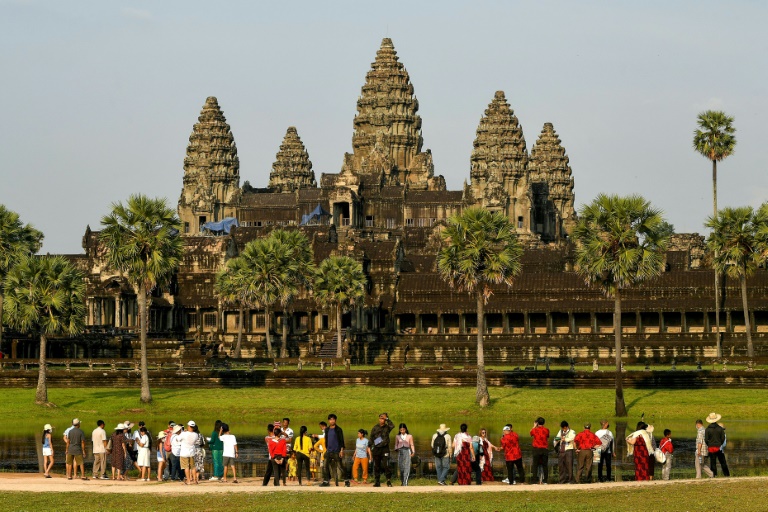
Angkor, which at 400 square kilometers (154 square miles) is the largest archaeological site in the world, was the capital of the Khmer empire, which lasted from the ninth to 14th centuries.

The site, which recently reopened to tourists after a two-year pandemic-induced closure, was designated as a UNESCO World Heritage Site in 1992.

Close Bitnami banner
Bitnami