AFP

Stock markets mostly drop on eve of US inflation

Stock markets mostly retreated and the dollar dropped Tuesday on the eve of key US inflation data.

Investors are on edge ahead of Wednesday’s figures, with some observers warning that an above-estimate reading on inflation, which is already at a four-decade high, could spur another sharp market sell-off.

There is a growing expectation also that central bank interest rate hikes aimed at curbing soaring prices will go too far and tip the global economy into recession.

Swissquote Bank analyst Ipek Ozkardeskaya said the recent drop in energy and commodity prices “should have a cooling effect on inflation, yet, higher labour costs could keep inflation sticky at undesirably high levels”.

Oil prices rose but remain around six-month lows as recession fears mount and traders fret over the impact on demand. 

They are keeping tabs also on Iran nuclear talks after the European Union submitted a “final text” at negotiations to salvage a 2015 deal.

An agreement could open the way for Tehran to resume sales of crude on international markets, partly helping to plug a hole left by the ban on Russian exports following the invasion of Ukraine. 

Edward Moya, analyst at OANDA trading group, said “it seems unlikely a breakthrough will happen anytime soon. 

“Tehran seems like they are willing to negotiate, but an imminent decision to agree to the EU’s proposal seems unlikely”, he added.

European and Asian stock markets mainly retreated after Wall Street provided a glum lead overnight.

Tech firms took a hit following a disappointing earnings report from chip giant Nvidia, seen as a warning that the end of the downturn was still some way off.

“While it’s tempting to buy into the narrative that we’ve seen the lows of the year, none of the price action thus far serves to support that conclusion,” said CMC Markets analyst Michael Hewson.

“Nvidia’s profit warning merely serves to underline the challenges facing, not only the tech sector, but the wider global economy.”

Hong Kong reversed a morning rally after its government denied claims it was considering removing an extra stamp duty for mainland Chinese buying property in the city.

– Key figures at around 1100 GMT –

London – FTSE 100: FLAT at 7,480.32 points

Frankfurt – DAX: DOWN 0.9 percent at 13,565.22

Paris – CAC 40: DOWN 0.4 percent at 6,499.55

EURO STOXX 50: DOWN 0.7 percent at 3,729.89

Tokyo – Nikkei 225: DOWN 0.9 percent at 27,999.96 (close)

Hong Kong – Hang Seng Index: DOWN 0.2 percent at 20,003.44 (close)

Shanghai – Composite: UP 0.3 percent at 3,247.43 (close)

New York – Dow: UP 0.1 percent at 32,832.54 (close)

Euro/dollar: UP at $1.0227 from $1.0194 Monday

Pound/dollar: UP at $1.2101 from $1.2079

Euro/pound: UP at 84.51 pence from 84.35 pence

Dollar/yen: DOWN at 134.91 yen from 134.98 yen

Brent North Sea crude: UP 1.0 percent at $97.65 per barrel

West Texas Intermediate: UP 1.0 percent at $91.68 per barrel

Stock markets mostly drop on eve of US inflation

Stock markets mostly retreated and the dollar dropped Tuesday on the eve of key US inflation data.

Investors are on edge ahead of Wednesday’s figures, with some observers warning that an above-estimate reading on inflation, which is already at a four-decade high, could spur another sharp market sell-off.

There is a growing expectation also that central bank interest rate hikes aimed at curbing soaring prices will go too far and tip the global economy into recession.

Swissquote Bank analyst Ipek Ozkardeskaya said the recent drop in energy and commodity prices “should have a cooling effect on inflation, yet, higher labour costs could keep inflation sticky at undesirably high levels”.

Oil prices rose but remain around six-month lows as recession fears mount and traders fret over the impact on demand. 

They are keeping tabs also on Iran nuclear talks after the European Union submitted a “final text” at negotiations to salvage a 2015 deal.

An agreement could open the way for Tehran to resume sales of crude on international markets, partly helping to plug a hole left by the ban on Russian exports following the invasion of Ukraine. 

Edward Moya, analyst at OANDA trading group, said “it seems unlikely a breakthrough will happen anytime soon. 

“Tehran seems like they are willing to negotiate, but an imminent decision to agree to the EU’s proposal seems unlikely”, he added.

European and Asian stock markets mainly retreated after Wall Street provided a glum lead overnight.

Tech firms took a hit following a disappointing earnings report from chip giant Nvidia, seen as a warning that the end of the downturn was still some way off.

“While it’s tempting to buy into the narrative that we’ve seen the lows of the year, none of the price action thus far serves to support that conclusion,” said CMC Markets analyst Michael Hewson.

“Nvidia’s profit warning merely serves to underline the challenges facing, not only the tech sector, but the wider global economy.”

Hong Kong reversed a morning rally after its government denied claims it was considering removing an extra stamp duty for mainland Chinese buying property in the city.

– Key figures at around 1100 GMT –

London – FTSE 100: FLAT at 7,480.32 points

Frankfurt – DAX: DOWN 0.9 percent at 13,565.22

Paris – CAC 40: DOWN 0.4 percent at 6,499.55

EURO STOXX 50: DOWN 0.7 percent at 3,729.89

Tokyo – Nikkei 225: DOWN 0.9 percent at 27,999.96 (close)

Hong Kong – Hang Seng Index: DOWN 0.2 percent at 20,003.44 (close)

Shanghai – Composite: UP 0.3 percent at 3,247.43 (close)

New York – Dow: UP 0.1 percent at 32,832.54 (close)

Euro/dollar: UP at $1.0227 from $1.0194 Monday

Pound/dollar: UP at $1.2101 from $1.2079

Euro/pound: UP at 84.51 pence from 84.35 pence

Dollar/yen: DOWN at 134.91 yen from 134.98 yen

Brent North Sea crude: UP 1.0 percent at $97.65 per barrel

West Texas Intermediate: UP 1.0 percent at $91.68 per barrel
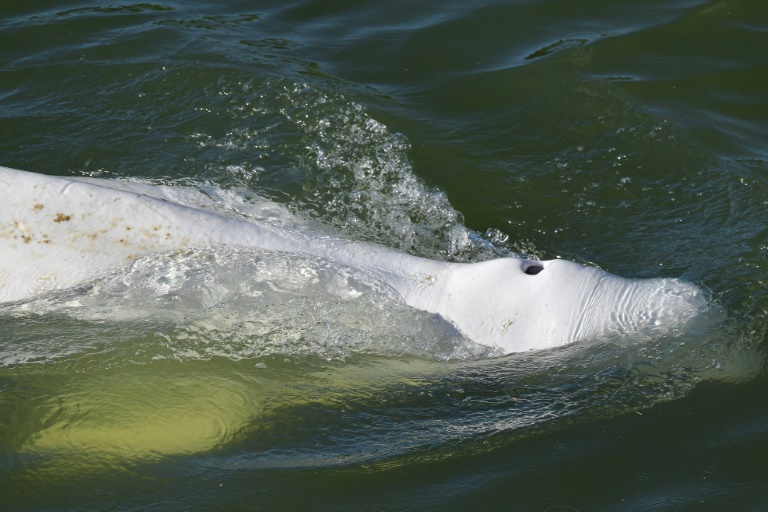
France readies 'exceptional' rescue of beluga astray in Seine

French officials are moving ahead with a delicate plan to transport a beluga whale back to the ocean after it swam far up the Seine river toward Paris, putting its life in danger, a marine expert said Tuesday.

The four-metre (13-foot) cetacean was discovered a week ago and appears sick and underweight but its condition is “satisfactory,” Isabelle Brasseur of the Marineland sea animal park in southern France, Europe’s biggest, told AFP.

“As of this morning we have an idea of something that could work, we’re going to explain and refine it with the people who are going to help us,” she said.

Belugas are a protected species that cannot survive long in fresh water. 

This one is currently around 130 kilometres (80 miles) inland from the English Channel at Saint-Pierre-La-Garenne in Normandy.

“What’s exceptional is that here the banks of the Seine are not accessible for vehicles… everything is going to have to be done by hand,” Brasseur said.

It is stuck behind a lock and unable to move further inland — it’s now some 80 kilometres from the French capital — but is not turning around, and officials warn that attempts to “nudge” the beluga back toward the sea are not viable.

The idea is to take the beluga by road to an undisclosed seawater basin where it can be treated before being released. 

But the challenges are considerable and the journey is likely to further stress an animal weighing 800 kilogrammes (nearly 1,800 pounds).

The Sea Shepherd France NGO, which is assisting the operation, said in a statement Tuesday that tranquilisation was not an option, since belugas are so-called “voluntary breathers” that need to be awake to inhale air.

– Appeal for donations –

“In any case, we have to get it out of there… and try to figure out what is wrong,” Brasseur said.

Veterinarians will keep constant surveillance during the move.

“There may be internal problems that we can’t see,” she said despite the fact that belugas are “extremely hardy” as a species.

Sea Shepherd has issued an appeal for donations of heavy-duty ropes, nets, mattresses and other equipment. 

Belugas are normally found only in cold Arctic waters, and while they migrate south in the autumn to feed as ice forms, they rarely venture so far.

According to France’s Pelagis Observatory, specialised in sea mammals, the nearest beluga population is off the Svalbard archipelago, north of Norway, 3,000 kilometres from the Seine.

Russia launches Iranian satellite amid Ukraine war concerns

An Iranian satellite launched by Russia blasted off from Kazakhstan Tuesday and reached orbit amid controversy that Moscow might use it to boost its surveillance of military targets in Ukraine.

As Russia’s international isolation grows following Western sanctions over its invasion of Ukraine, the Kremlin is seeking to pivot Russia towards the Middle East, Asia and Africa and find new clients for the country’s embattled space programme.

Russian space chief Yury Borisov hailed “an important milestone in Russian-Iranian bilateral cooperation, opening the way to the implementation of new and even larger projects”, speaking at the Moscow-controlled Baikonur cosmodrome in the Kazakh steppe. 

Iran’s Telecommunications Minister Issa Zarepour, who also attended the launch, called the launch of the Khayyam satellite “historic” and “a turning point for the start of a new interaction in the field of space between our two countries”.

Iran, which has maintained ties with Moscow and refrained from criticism of the Ukraine invasion, has sought to deflect suspicions that Moscow could use Khayyam to spy on Ukraine.

Last week, The Washington Post quoted anonymous Western intelligence officials as saying that Russia “plans to use the satellite for several months or longer” to assist its war efforts before allowing Iran to take control.

But the Iran Space Agency (ISA) said, less than two hours after the satellite was launched on a Soyuz-2.1b rocket, that “ground stations of the Iran Space Agency” had already received “first telemetric data”. 

The space agency stressed on Sunday that the Islamic republic would control the satellite “from day one” in an apparent reaction to the Post’s report.

“No third country is able to access the information” sent by the satellite due to its “encrypted algorithm”, it said.

The purpose of Khayyam is to “monitor the country’s borders”, enhance agricultural productivity and monitor water resources and natural disasters, according to the space agency.

– ‘Long-term cooperation’ –

Khayyam, apparently named after the 11th-century Persian polymath Omar Khayyam, will not be the first Iranian satellite that Russia has put into space. 

In 2005, Iran’s Sina-1 satellite was deployed from Russia’s Plesetsk cosmodrome.

Iran is currently negotiating with world powers, including Moscow, to salvage a 2015 deal aimed at reining in Tehran’s nuclear ambitions.

The United States — which quit the landmark Joint Comprehensive Plan of Action or JCPOA in 2018 under then-president Donald Trump — has accused Iran of effectively supporting Russia’s war against Ukraine while adopting a “veil of neutrality”. 

Russian President Vladimir Putin met Iranian counterpart Ebrahim Raisi and Supreme Leader Ayatollah Ali Khamenei in Tehran last month — one of his few trips abroad since Moscow’s February 24 invasion. 

Iran’s Khamenei called for “long-term cooperation” with Russia during their meeting, and Tehran has refused to join international condemnation of Moscow’s invasion of its pro-Western neighbour.

Iran insists its space programme is for civilian and defence purposes only, and does not breach the 2015 nuclear deal, or any other international agreement. 

Western governments worry that satellite launch systems incorporate technologies interchangeable with those used in ballistic missiles capable of delivering a nuclear warhead, something Iran has always denied wanting to build.

Iran successfully put its first military satellite into orbit in April 2020, drawing a sharp rebuke from the United States.

In a statement on the eve of the Khayyam launch, ISA praised “the high reliability factor of the Soyuz launcher”.

Borisov, who last month replaced bombastic nationalist Dmitry Rogozin as head of the Russian space agency Roscosmos, has acknowledged that the national space industry is in a “difficult situation” amid tensions with the West.

Russia will continue its space programme but end activities at the International Space Station — an outlier of cooperation between Moscow and the West — after 2024, he said.

US lifts policy requiring asylum-seekers to wait in Mexico

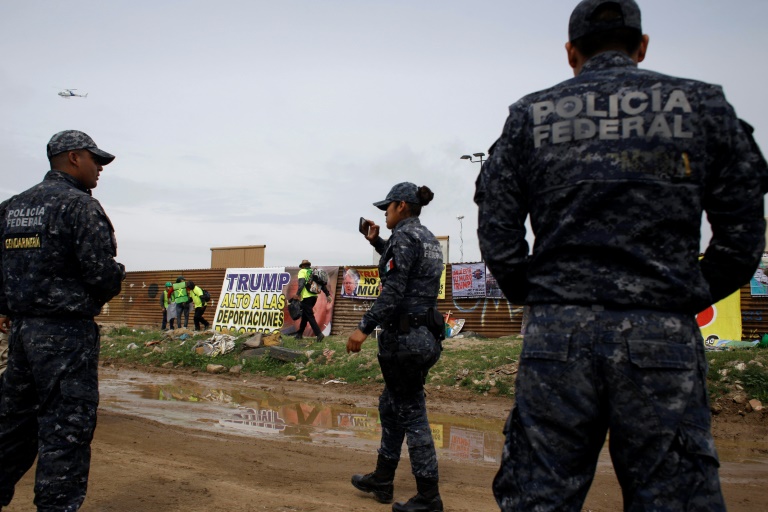
The US Department of Homeland Security announced Monday night it will end a Trump-era policy requiring asylum-seekers to wait in Mexico while their applications play out in court.

The DHS announcement comes hours after a judge lifted an injunction that had prevented US President Joe Biden’s administration from ending the so-called “Remain in Mexico” policy.

Under the policy, instituted in 2019 under former president Donald Trump, tens of thousands of asylum-seekers were sent across the border until required to appear in the United States for their immigration hearings. 

Critics called the program cruel and dangerous, with vulnerable people sometimes forced to wait in border towns the United States had advised its own citizens against visiting due to violence. 

The policy will be rolled back “in a quick, and orderly, manner,” the department wrote in a statement. 

No one else will be enrolled and those who cross the border for their court dates will no longer be sent back to Mexico afterwards, the DHS added.

The Migrant Protection Protocols (MPP), as the policy is officially called, “has endemic flaws, imposes unjustifiable human costs, and pulls resources and personnel away from other priority efforts to secure our border,” DHS said. 

Soon after taking office, Biden attempted to fulfill a campaign promise to end the border measure as part of what he called a more humane approach to immigration. 

But a group of Republican-governed states led by Texas sued the administration and a US District Court ordered the policy to be reinstated.

The case eventually ended up before the Supreme Court, which ruled on June 30 that Biden had the authority to end the program. 

From the start of the policy in January 2019 until its initial suspension under Biden, at least 70,000 people were sent to Mexico, according to the American Immigration Council. 

Human Rights First said there were 1,544 publicly documented cases of murder, rape, torture, kidnapping or other assaults of individuals sent across the border under Remain in Mexico between January 2019 and 2021, with multiple people, including at least one child, dying.

The Trump administration had argued a “zero tolerance” approach was needed to stem illegal immigration to the United States.

Under the resurrected policy, from December 2021 until June 2022, 9,563 people were enrolled in the policy, most of whom were not from Mexico but Nicaragua.

During Biden’s tenure, more than 200,000 people attempting to enter the country illegally have been stopped at the border each month and sent back, either under Remain in Mexico or a separate, Covid-related policy blocking people at the border.

Markets mostly up as focus turns to inflation data

Most markets rose Tuesday but investors moved cautiously ahead of US inflation data later in the week, after a jobs report suggested the Federal Reserve would likely need to continue its sharp interest rate hikes to tame runaway prices.

A rally across global markets from June lows appeared to have hit the buffers after Friday’s forecast-busting employment reading showed the world’s top economy remained resilient but meant more monetary tightening was on the cards.

There had been a hope that recent weak data — including one showing the economy contracted for two straight quarters — would allow the bank to take its foot off the pedal in lifting borrowing costs, and possibly begin cutting in 2023.

Now, investors are on edge ahead of Wednesday’s figures, with some observers warning that an above-estimate reading on inflation, which is already at a four-decade high, could spur another sharp market sell-off.

There is a growing expectation that central bank interest rate hikes will go too far and tip the global economy into recession.

Saira Malik, at investment manager Nuveen, told Bloomberg Television the losses could kick in when investors realise “the Fed is not going to pivot on interest-rate hikes in early 2023, inflation should remain pretty persistent and rate hikes should continue”.

Wall Street provided a glum lead as tech firms took a hit following a disappointing earnings report from chip giant Nvidia caused by lower-than-expected gaming income, which was seen as a warning that the end of the downturn was still some way off.

“While it’s tempting to buy into the narrative that we’ve seen the lows of the year, none of the price action thus far serves to support that conclusion,” said CMC Markets analyst Michael Hewson.

“Nvidia’s profit warning merely serves to underline the challenges facing, not only the tech sector, but the wider global economy.”

Asian equities fluctuated in the morning but improved as the day progressed.

Shanghai, Sydney, Seoul, Wellington, Taipei, Bangkok, Jakarta and Manila were in positive territory but Tokyo fell.

Hong Kong reversed a morning rally led by developers after the government denied claims it was considering removing an extra stamp duty for mainland Chinese buying property in the city.

London was slightly higher in the morning, though Paris and Frankfurt edged down.

Oil prices fell and remain around six-month lows as recession fears mount and traders fret over the impact on demand. They are also keeping tabs on Iran nuclear talks after the European Union submitted a “final text” at negotiations to salvage a 2015 deal.

An agreement could open the way for Tehran to resume sales of crude on international markets, partly helping to plug a hole left by the ban on Russian exports following the invasion of Ukraine. 

However, OANDA’s Edward Moya said that “it seems unlikely a breakthrough will happen anytime soon. Tehran seems like they are willing to negotiate, but an imminent decision to agree to the EU’s proposal seems unlikely”.

– Key figures at around 0810 GMT –

Tokyo – Nikkei 225: DOWN 0.9 percent at 27,999.96 (close)

Hong Kong – Hang Seng Index: DOWN 0.2 percent at 20,003.44 (close)

Shanghai – Composite: UP 0.3 percent at 3,247.43 (close)

London – FTSE 100: UP 0.1 percent at 7,486.01

Euro/dollar: UP at $1.0209 from $1.0194 Monday

Pound/dollar: UP at $1.2083 from $1.2079

Euro/pound: UP at 84.49 pence from 84.35 pence

Dollar/yen: DOWN at 134.94 yen from 134.98 yen

West Texas Intermediate: DOWN 0.8 percent at $90.01 per barrel

Brent North Sea crude: DOWN 0.8 percent at $95.93 per barrel

New York – Dow: UP 0.1 percent at 32,832.54 (close)

Markets mostly up as focus turns to inflation data

Most markets rose Tuesday but investors moved cautiously ahead of US inflation data later in the week, after a jobs report suggested the Federal Reserve would likely need to continue its sharp interest rate hikes to tame runaway prices.

A rally across global markets from June lows appeared to have hit the buffers after Friday’s forecast-busting employment reading showed the world’s top economy remained resilient but meant more monetary tightening was on the cards.

There had been a hope that recent weak data — including one showing the economy contracted for two straight quarters — would allow the bank to take its foot off the pedal in lifting borrowing costs, and possibly begin cutting in 2023.

Now, investors are on edge ahead of Wednesday’s figures, with some observers warning that an above-estimate reading on inflation, which is already at a four-decade high, could spur another sharp market sell-off.

There is a growing expectation that central bank interest rate hikes will go too far and tip the global economy into recession.

Saira Malik, at investment manager Nuveen, told Bloomberg Television the losses could kick in when investors realise “the Fed is not going to pivot on interest-rate hikes in early 2023, inflation should remain pretty persistent and rate hikes should continue”.

Wall Street provided a glum lead as tech firms took a hit following a disappointing earnings report from chip giant Nvidia caused by lower-than-expected gaming income, which was seen as a warning that the end of the downturn was still some way off.

“While it’s tempting to buy into the narrative that we’ve seen the lows of the year, none of the price action thus far serves to support that conclusion,” said CMC Markets analyst Michael Hewson.

“Nvidia’s profit warning merely serves to underline the challenges facing, not only the tech sector, but the wider global economy.”

Asian equities fluctuated in the morning but improved as the day progressed.

Shanghai, Sydney, Seoul, Wellington, Taipei, Bangkok, Jakarta and Manila were in positive territory but Tokyo fell.

Hong Kong reversed a morning rally led by developers after the government denied claims it was considering removing an extra stamp duty for mainland Chinese buying property in the city.

London was slightly higher in the morning, though Paris and Frankfurt edged down.

Oil prices fell and remain around six-month lows as recession fears mount and traders fret over the impact on demand. They are also keeping tabs on Iran nuclear talks after the European Union submitted a “final text” at negotiations to salvage a 2015 deal.

An agreement could open the way for Tehran to resume sales of crude on international markets, partly helping to plug a hole left by the ban on Russian exports following the invasion of Ukraine. 

However, OANDA’s Edward Moya said that “it seems unlikely a breakthrough will happen anytime soon. Tehran seems like they are willing to negotiate, but an imminent decision to agree to the EU’s proposal seems unlikely”.

– Key figures at around 0810 GMT –

Tokyo – Nikkei 225: DOWN 0.9 percent at 27,999.96 (close)

Hong Kong – Hang Seng Index: DOWN 0.2 percent at 20,003.44 (close)

Shanghai – Composite: UP 0.3 percent at 3,247.43 (close)

London – FTSE 100: UP 0.1 percent at 7,486.01

Euro/dollar: UP at $1.0209 from $1.0194 Monday

Pound/dollar: UP at $1.2083 from $1.2079

Euro/pound: UP at 84.49 pence from 84.35 pence

Dollar/yen: DOWN at 134.94 yen from 134.98 yen

West Texas Intermediate: DOWN 0.8 percent at $90.01 per barrel

Brent North Sea crude: DOWN 0.8 percent at $95.93 per barrel

New York – Dow: UP 0.1 percent at 32,832.54 (close)

Russia launches Iranian satellite amid Ukraine war concerns

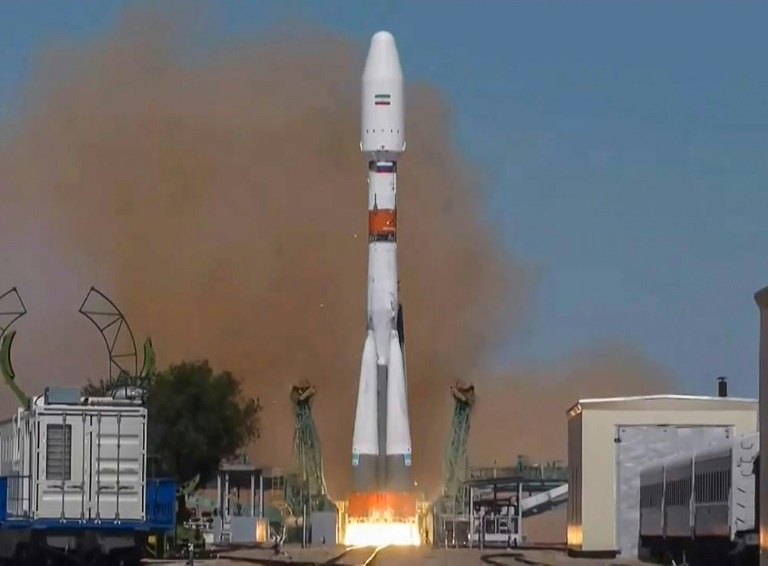
An Iranian satellite launched by Russia blasted off from Kazakhstan early Tuesday and went into orbit amid controversy that Moscow might use it to improve its surveillance of military targets in Ukraine.

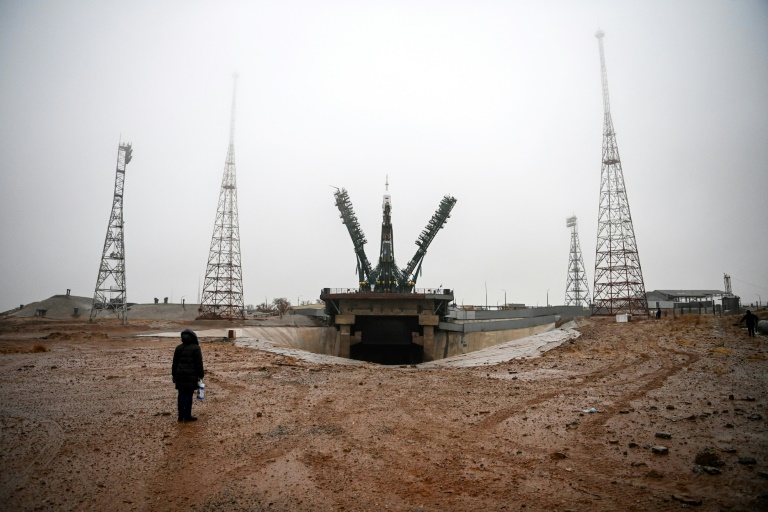
A live feed from Russian space agency Roscosmos showed the launch of the Soyuz-2.1b rocket carrying the Khayyam satellite from the Russia-controlled Baikonur cosmodrome at the scheduled time of 0552 GMT.

The Russian mission control confirmed its subsequent entry into orbit. 

Iran, which has maintained ties with Moscow and refrained from criticism of the Ukraine invasion, has sought to deflect suspicions that Moscow could use Khayyam to spy on Ukraine.

Last week, US daily The Washington Post quoted anonymous Western intelligence officials as saying that Russia “plans to use the satellite for several months or longer” to assist its war efforts before allowing Iran to take control.

But the Iranian Space Agency said on Sunday that the Islamic republic would control the Khayyam satellite “from day one”.

“No third country is able to access the information” sent by the satellite due to its “encrypted algorithm,” it said.

The purpose of Khayyam is to “monitor the country’s borders”, enhance agricultural productivity and monitor water resources and natural disasters, the space agency said.

In a pre-launch statement on Monday ISA praised “the high reliability factor of the Soyuz launcher”.

“Due to Khayyam satellite’s weight of more than half a ton and the very high success rate of the Soyuz launcher, the launch of the Khayyam satellite has been entrusted to Russia,” the statement on the space agency’s website noted. 

As Moscow’s international isolation grows under the weight of Western sanctions over Ukraine, the Kremlin is seeking to pivot Russia towards the Middle East, Asia and Africa and find new clients for the country’s embattled space programme.

Russian President Vladimir Putin met Iranian counterpart Ebrahim Raisi and Supreme Leader Ayatollah Ali Khamenei in Tehran last month — one of his few trips abroad since the invasion began. 

– ‘Long-term cooperation’ –

Khayyam, apparently named after the 11th-century Persian polymath Omar Khayyam, will not be the first Iranian satellite that Russia has put into space — in 2005, Iran’s Sina-1 satellite was deployed from Russia’s Plesetsk cosmodrome.

Iran is currently negotiating with world powers, including Moscow, to salvage a 2015 deal aimed at reining in Tehran’s nuclear ambitions.

The United States — which quit the landmark Joint Comprehensive Plan of Action or JCPOA under then-president Donald Trump in 2018 — has accused Iran of effectively supporting Russia’s war against Ukraine while adopting a “veil of neutrality”. 

During his meeting with Putin last month, Iran’s Khamenei called for “long-term cooperation” with Russia, and Tehran has refused to join international condemnation of Moscow’s invasion of its pro-Western neighbour.

Iran insists its space programme is for civilian and defence purposes only, and does not breach the 2015 nuclear deal, or any other international agreement. 

Western governments worry that satellite launch systems incorporate technologies interchangeable with those used in ballistic missiles capable of delivering a nuclear warhead, something Iran has always denied wanting to build.

Iran successfully put its first military satellite into orbit in April 2020, drawing a sharp rebuke from the United States.

At a Jakarta crosswalk, Indonesian teens take to the catwalk

A pedestrian crossing turned viral catwalk has become a site for Jakarta’s young fashionistas to express themselves, while attracting the disapproval of police in the traffic-clogged Indonesian capital.

The informal downtown gathering has drawn sartorial adventurists from across the suburbs of the metropolis, including from Citayam, leading it to be dubbed “Citayam Fashion Week”.

And with their poses and struts all being shared on TikTok and Instagram, some Citayam pioneers have found instant fame, earning modelling jobs, endorsements and an army of adoring fans.

“I feel like this is the place where I can express my style and create content. It is so much fun because there are so many people and I can meet new friends here. I don’t even want to go home,” 18-year-old student Ricat Al Fendri told AFP.

He and some friends had taken a morning train to the central meeting spot, tucked between sleek skyscrapers and trendy cafes, to flaunt their outfits for the day.

Police, who previously moved to ban the use of the crosswalk as a runway, now regularly shout through a loudspeaker to ward the crowd off the street.

But that does not deter girls who don wide-legged jeans and colourful sunglasses — and boys in leather jackets, stylish sneakers and faux-fur coats — from filming their struts for social media.

Some of the more enthusiastic teenagers have been caught sleeping on the area’s sidewalks at night after missing the last train home.

“We have the right to hang out here. It’s a public space and for me, it’s a great stress reliever from school exams,” said Al Fendri. 

– Copycat crowds –

The outfits on display have begun to draw crowds, with news of the phenomenon spreading by word of mouth in the megacity of 30 million people.

Saera Wulan Sari, a 15-year-old school dropout from North Jakarta who makes a living selling clams, comes to watch the crowds with her friends.

“I am always amazed by other people’s outfits, they are so much cooler than me and their clothes are very stylish,” Sari said. 

The gathering has been likened to a smaller version of Tokyo’s famed Harajuku fashion district.

The movement has become so popular that copycat gatherings have spread elsewhere in Java –- Indonesia’s most populous island -– in cities such as Semarang and Bandung.

And its viral fame has attracted attention from celebrities and influencers, as well as public officials including President Joko Widodo, who said young people should be able to express themselves creatively.

– ‘It’s beautiful’ –

Local brands are now starting to take note and capitalise on the momentum by advertising their products and endorsing the “stars” of the movement, providing free clothes, shoes, and publicity. 

“Teenagers are searching for their identity and they need recognition and validation. These teens saw that the quick and easy way to earn them is through likes and shares,” Devie Rahmawati, a social affairs expert from the University of Indonesia told AFP. 

“Marginalised teenagers used to resort to violence or illegal racing, now they choose fashion instead. This is a positive thing and I think it’s beautiful.”

For many, the booming street fashion scene has also become an affordable arena for fashionable experimentation, set against the backdrop of the city’s most affluent district. 

Teenagers from poor households who cannot afford designer outfits can join the gathering without judgement, Khairul Badmi, a 22-year-old aspiring actor, told AFP. 

“To be a part of Citayam Fashion Week, you don’t have to wear certain outfits or brands that empty your wallet,” he said. 

Trump says Florida home 'raided' by FBI

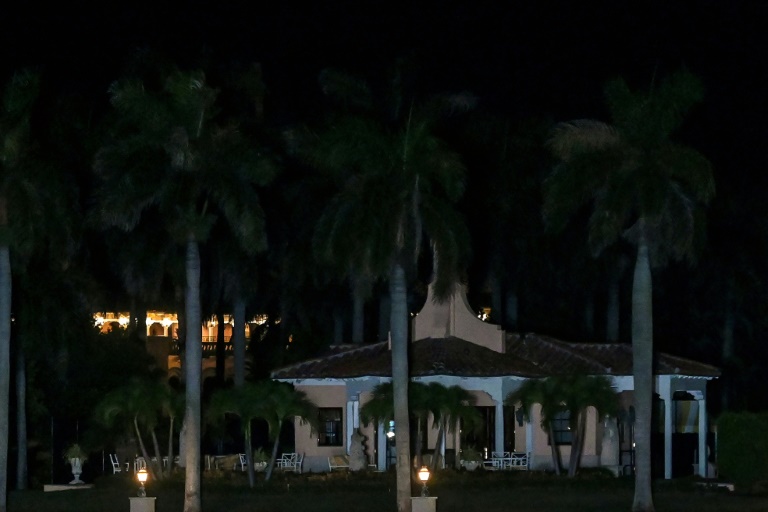
Former US president Donald Trump said Monday that his Mar-a-Lago residence in Florida was being “raided” by FBI agents in what he called an act of “prosecutorial misconduct.”

The FBI declined to comment on whether the search was happening or what it might be for, nor did Trump give any indication of why federal agents were at his home — a situation that adds to the legal pressures on the ex-president.

Multiple US media outlets cited sources close to the investigation as saying that agents were conducting a court-authorized search related to the potential mishandling of classified documents that had been sent to Mar-a-Lago.

In a statement posted on his Truth Social network, Trump said his “beautiful home, Mar-A-Lago in Palm Beach, Florida, is currently under siege, raided, and occupied by a large group of FBI agents.”

Aerial footage of Mar-a-Lago showed police cars outside the property. Supporters of the ex-US leader also gathered outside, waving banners with Trump’s name or American flags emblazoned with his face.

“It is prosecutorial misconduct, the weaponization of the Justice System, and an attack by Radical Left Democrats who desperately don’t want me to run for President in 2024,” said Trump, who was not present during the raid, according to The New York Times.

“Such an assault could only take place in broken, Third-World Countries. Sadly, America has now become one of those Countries,” he said, adding: “They even broke into my safe!”

Some senior Republicans also took to social media to criticize the raid and accuse the Justice Department of overreach.

The National Archives said in February it had recovered 15 boxes of documents from Trump’s Florida estate, which The Washington Post reported included highly classified texts, taken with him when he left Washington following his reelection defeat.

The documents and mementos — which also included correspondence from ex-US president Barack Obama — should by law have been turned over at the end of Trump’s presidency but instead ended up at his Mar-a-Lago resort.

The recovery of the boxes raised questions about Trump’s adherence to presidential records laws enacted after the 1970s Watergate scandal that require Oval Office occupants to preserve records related to administration activity.

The Archives had requested then that the Justice Department open a probe into Trump’s practices.

– ‘Accountable’ –

White House staff also regularly discovered wads of paper clogging toilets, leading them to believe Trump was trying to get rid of certain documents, according to a forthcoming book by New York Times reporter Maggie Haberman.

Since taking his last Air Force One flight from Washington to Florida on January 20 last year, Trump has remained the country’s most polarizing figure, continuing his unprecedented campaign to sow falsehoods that he actually won the 2020 election.

For weeks, Washington has been riveted by hearings in Congress about the January 6 storming of the Capitol by a mob of Trump supporters and his attempts to overturn the election.

The US Department of Justice is also investigating the January 6 attack.

While Attorney General Merrick Garland has declined to comment on growing speculation that Trump could face criminal charges, he has insisted that “no person is above the law” and that he intends to “hold accountable every person who is criminally responsible for trying to overturn a legitimate election.”

Trump is also being investigated for his efforts to alter the 2020 voting results in the state of Georgia, while his business practices are being probed in New York in separate cases, one civil and the other criminal.

The real estate mogul has not yet officially declared his candidacy for the 2024 presidential election, although he has dropped strong hints over the past few months.

With President Joe Biden’s approval rating currently below 40 percent and Democrats forecast to lose control of Congress in November’s midterm elections, Trump is apparently bullish that he could ride the Republican wave to the White House in 2024.

Close Bitnami banner
Bitnami