AFP

Japan's SoftBank reports record quarterly net loss

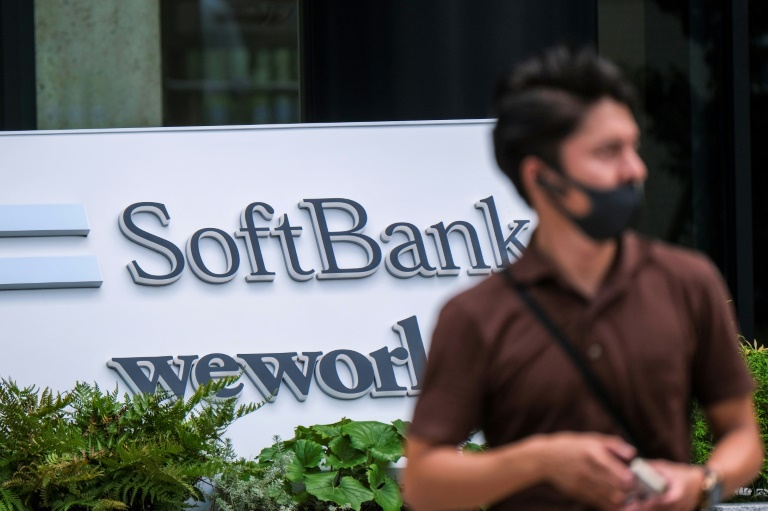
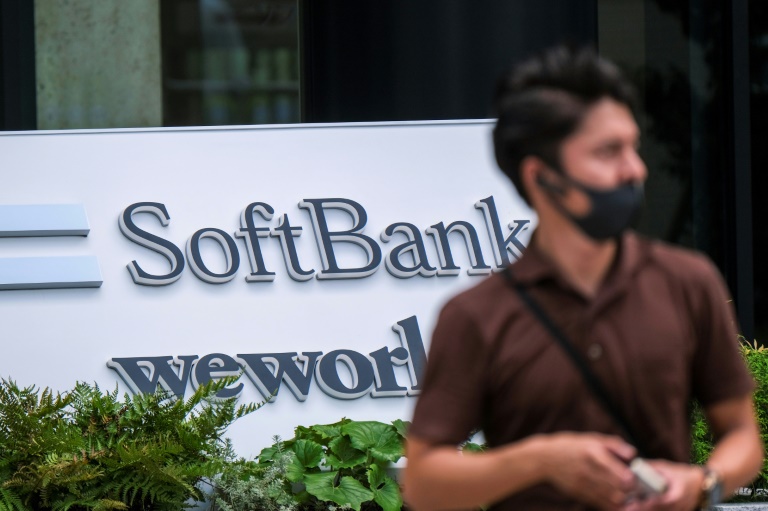
Japan’s SoftBank Group on Monday reported a record quarterly net loss of $23.4 billion, after central bank interest rate hikes caused tech shares to tank.

The telecoms firm that has turned into an investment behemoth posted a net loss of 3.16 trillion yen, nose-diving from a net profit of 761.5 billion yen in the same April-June period the previous year.

A weaker yen and the “global downward trend in share prices due to growing concerns over economic recession driven by inflation and rising interest rates” contributed to the slump, it said.

Among its portfolio companies that suffered large losses for the quarter were South Korean e-commerce giant Coupang and US meal delivery platform DoorDash, SoftBank added.

SoftBank’s big stakes in global tech giants and volatile new ventures have made for unpredictable earnings, and it has lurched between record highs and lows in recent years.

In May, it reported its worst-ever full-year net loss — and a then-record quarterly loss for Q4 — after a bruising year in 2021-22 that saw its assets hit by a US tech share rout and a regulatory crackdown in China.

That came after logging Japan’s biggest-ever annual net profit in 2020-21, after people moved their lives online during the pandemic, sending tech stocks soaring.

And in 2019-20, SoftBank Group reported a then-record annual net loss of 961.6 billion yen, as the emergence of Covid-19 compounded woes caused by its investment in troubled office-sharing start-up WeWork.

Hideki Yasuda, senior analyst at Toyo Securities, told AFP the company “cannot help” big losses, “because the market is down”.

The company “faces a very tough situation in the immediate term”, Yasuda said before the earnings announcement.

“They have to wait for the market to rebound. You have to look at the company through the lens of long-term investment. It may experience one or two bad years, but over a decade or more, the world economy will keep growing and it could grow further.”

The US Federal Reserve and many other central banks have announced aggressive rate increases aimed at battling sky-high inflation linked to the Ukraine war and Covid-related supply chain woes.

But going against the grain, the Bank of Japan has stuck to its long-held monetary easing policies because it sees the latest price hikes as temporary.

This has pushed Japan’s currency down to 24-year lows against the dollar in recent months, driving down the yen value of SoftBank’s investments.
Japan's SoftBank reports record quarterly net loss

Japan’s SoftBank Group on Monday reported a record quarterly net loss of $23.4 billion, after central bank interest rate hikes caused tech shares to tank.

The telecoms firm that has turned into an investment behemoth posted a net loss of 3.16 trillion yen, nose-diving from a net profit of 761.5 billion yen in the same April-June period the previous year.

A weaker yen and the “global downward trend in share prices due to growing concerns over economic recession driven by inflation and rising interest rates” contributed to the slump, it said.

Among its portfolio companies that suffered large losses for the quarter were South Korean e-commerce giant Coupang and US meal delivery platform DoorDash, SoftBank added.

SoftBank’s big stakes in global tech giants and volatile new ventures have made for unpredictable earnings, and it has lurched between record highs and lows in recent years.

In May, it reported its worst-ever full-year net loss — and a then-record quarterly loss for Q4 — after a bruising year in 2021-22 that saw its assets hit by a US tech share rout and a regulatory crackdown in China.

That came after logging Japan’s biggest-ever annual net profit in 2020-21, after people moved their lives online during the pandemic, sending tech stocks soaring.

And in 2019-20, SoftBank Group reported a then-record annual net loss of 961.6 billion yen, as the emergence of Covid-19 compounded woes caused by its investment in troubled office-sharing start-up WeWork.

Hideki Yasuda, senior analyst at Toyo Securities, told AFP the company “cannot help” big losses, “because the market is down”.

The company “faces a very tough situation in the immediate term”, Yasuda said before the earnings announcement.

“They have to wait for the market to rebound. You have to look at the company through the lens of long-term investment. It may experience one or two bad years, but over a decade or more, the world economy will keep growing and it could grow further.”

The US Federal Reserve and many other central banks have announced aggressive rate increases aimed at battling sky-high inflation linked to the Ukraine war and Covid-related supply chain woes.

But going against the grain, the Bank of Japan has stuck to its long-held monetary easing policies because it sees the latest price hikes as temporary.

This has pushed Japan’s currency down to 24-year lows against the dollar in recent months, driving down the yen value of SoftBank’s investments.
Drought forces water use rethink in Spain

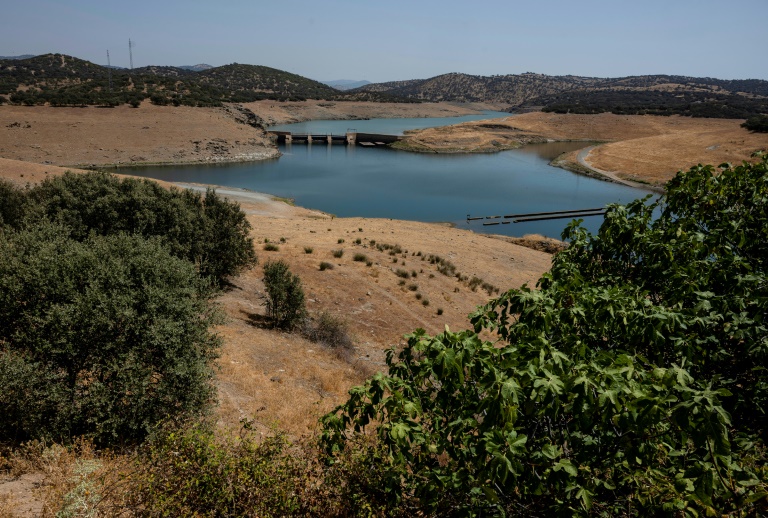
Faced with a historic drought and threatened by desertification, Spain is rethinking how it spends its water resources, which are used mainly to irrigate crops.

“We must be extremely careful and responsible instead of looking the other way,” Spain’s Minister for the Ecological Transition Teresa Ribera said recently, about the impact of the lack of rain.

Like France and Italy, Spain has been gripped by several extreme heatwaves this summer after an unusually dry winter.

That has left the country’s reservoirs at 40.4 percent of their capacity in August, 20 percentage points below the average over the last decade for this time of the year.

Officials have responded by limiting water use, especially in the southern region of Andalusia, which grows much of Europe’s fruits and vegetables.

Reservoir water levels in the region are particularly low, just 25 percent at most of their capacity.

“The situation is dramatic,” said University of Jaen hydrology professor Rosario Jimenez, adding both underground aquifers and surface bodies of water were running low.

The situation is especially worrying since it is part of a long-term trend linked to climate change, she added.

Parts of Spain are the driest they have been in a thousand years due to an atmospheric high-pressure system driven by climate change, according to a study published last month in the journal, Nature Geoscience.

Greenpeace estimates that 75 percent of the country is susceptible to desertification.

– ‘Overexploitation’ –

Spain has built a vast network of dams to provide water for its farms and towns.

During the 20th century, 1,200 large dams were built in the country, the highest number in Europe per capita.

This has allowed Spain to increase the amount of irrigated land it has from 900,000 hectares (2,224,000 acres) to 3,400,000 hectares, according to the ecological transition ministry’s website, which calls the country’s water management system “an example of success”.

But many experts say the system is now showing its limits.

The dams “had their use” but they have also encouraged the “overexploitation” of water and the decline in its quality by blocking the natural course of rivers, said Julio Barea, a water expert at Greenpeace Spain.

For the scientific council of the Rhone-Mediterranean Basin Committee, a French body which groups hydrology specialists, Spain is nearing the “physical limits” of its water management model.

Spain’s network of dams relies on sufficient rainfall to replenish its many reservoirs, it said.

But “the climate changes already under way, which will continue in the decades to come, will increase the risk of failures,” the body said in a recent report.

Experts say the way Spain uses water is also a major problem.

“Consumption has not stopped increasing while water is becoming increasingly scarce. It’s an aberration,” said Barea.

– ‘Europe’s vegetable garden’ –

Spain is the second most visited country in the world and significant amounts of water are used in tourism infrastructure like swimming pools and golf courses.

But agriculture absorbs the bulk — over 80 percent — of the country’s water resources.

It is sometimes used to grow crops that are not suitable for a dry climate — such as strawberries or avocados — for export to other European countries.

Spain’s use of irrigation “is irrational,” said Julia Martinez, biologist and director of the FNCA Water Conservation Foundation.

“We cannot be Europe’s vegetable garden” while “there are water shortages for the inhabitants,” she added.

Socialist Prime Minister Pedro Sanchez’s government adopted a strategic plan last month to adapt Spain’s water management system to “the impacts of global warming”.

It includes measures to promote water recycling and “efficient and rational” uses of resources.

But specialists say that reforms remain timid, with many regions continuing to increase the amount of irrigated land.

“We need more drastic measures,” said Barea, who called for a restructuring of the agriculture system.

Martinez shares this view, saying Spain is currently the European nation “exerting the most pressure on its water resources.”

“Today there are decisions that no one wants to take. We can’t continue to blindly forge ahead,” she said.

Markets struggle as strong US jobs boost Fed rate hike bets

Asian markets struggled Monday and the dollar held big gains as a blockbuster US jobs report ramped up bets that the Federal Reserve will announce more sharp interest rate hikes as it tries to tame runaway inflation.

While the employment reading — which was more than twice as high as expected — indicated the world’s top economy remained resilient despite rising prices and borrowing costs, it will complicate the bank’s plans to tighten monetary policy.

Traders have hoped that with several indicators pointing to a slowdown, including GDP figures showing a technical recession, policymakers could begin to ease back on their pace of rate hikes.

Now, speculation is growing that the Fed will have to announce a third successive 75 basis-point increase next month, particularly as officials have said their decisions will be data-dependent.

“Friday’s payroll report indicates an overheated labour market that continues to tighten further,” said SPI Asset Management’s Stephen Innes.

“Hence at minimum, the markets expect another 100 basis points of Fed funds rate increases over the next three meetings… with risks skewed towards significant increases.”

All eyes are now on the release this week of US July inflation data, which is expected to show a slight slowdown from June but still at four-decade highs.

The “report seems very unlikely to offer ‘compelling evidence’ of a slowdown needed for the Fed to pull away from its aggressive inflation-fighting mode.” Innes added.

The jobs figures left Wall Street’s main indexes mixed Friday, and Asia followed suit with markets fluctuating in early trade.

However, there was some relief that tensions had calmed since Nancy Pelosi’s visit to Taiwan last week sparked a furious reaction from China that saw it conduct days of live-fire military drills around the island.

Hong Kong dipped along with Sydney, Seoul, Singapore, Taipei, Manila, Jakarta and Wellington.

Tokyo edged up and Shanghai was flat, with better-than-expected Chinese trade data offset by fresh worries about Covid lockdowns in the country that threaten the economic recovery.

The prospect of higher interest rates sent the dollar surging, and it held on to those gains in Asia.

Bets on a recession across leading economies continued to weigh on oil prices as investors worry about the impact on demand — figures last week indicated Americans were driving less now than in summer 2020 at the height of the pandemic.

A rise in US stockpiles was partly responsible for a 10 percent drop in the commodity last week, pushing WTI below $90 for the first time since February.

Both main contracts have lost all the gains seen in the wake of Vladimir Putin’s invasion of Ukraine, which led the United States and Europe to ban imports of Russian crude, hammering already thin supplies.

– Key figures at around 0230 GMT –

Tokyo – Nikkei 225: UP 0.2 percent at 28,241.09 (break)

Hong Kong – Hang Seng Index: DOWN 0.6 percent at 20,072.68

Shanghai – Composite: FLAT at 3,227.00

Euro/dollar: DOWN at $1.0181 from $1.0184 Friday

Pound/dollar: DOWN at $1.2071 from $1.2075

Euro/pound: UP at 84.35 pence from 84.32 pence

Dollar/yen: UP at 135.32 yen from 135.00 yen

West Texas Intermediate: DOWN 0.2 percent at $88.87 per barrel

Brent North Sea crude: DOWN 0.3 percent at $94.68 per barrel

New York – Dow: UP 0.2 percent at 32,803.47 (close)

London – FTSE 100: DOWN 0.1 percent at 7,439.74 (close)

Markets struggle as strong US jobs boost Fed rate hike bets

Asian markets struggled Monday and the dollar held big gains as a blockbuster US jobs report ramped up bets that the Federal Reserve will announce more sharp interest rate hikes as it tries to tame runaway inflation.

While the employment reading — which was more than twice as high as expected — indicated the world’s top economy remained resilient despite rising prices and borrowing costs, it will complicate the bank’s plans to tighten monetary policy.

Traders have hoped that with several indicators pointing to a slowdown, including GDP figures showing a technical recession, policymakers could begin to ease back on their pace of rate hikes.

Now, speculation is growing that the Fed will have to announce a third successive 75 basis-point increase next month, particularly as officials have said their decisions will be data-dependent.

“Friday’s payroll report indicates an overheated labour market that continues to tighten further,” said SPI Asset Management’s Stephen Innes.

“Hence at minimum, the markets expect another 100 basis points of Fed funds rate increases over the next three meetings… with risks skewed towards significant increases.”

All eyes are now on the release this week of US July inflation data, which is expected to show a slight slowdown from June but still at four-decade highs.

The “report seems very unlikely to offer ‘compelling evidence’ of a slowdown needed for the Fed to pull away from its aggressive inflation-fighting mode.” Innes added.

The jobs figures left Wall Street’s main indexes mixed Friday, and Asia followed suit with markets fluctuating in early trade.

However, there was some relief that tensions had calmed since Nancy Pelosi’s visit to Taiwan last week sparked a furious reaction from China that saw it conduct days of live-fire military drills around the island.

Hong Kong dipped along with Sydney, Seoul, Singapore, Taipei, Manila, Jakarta and Wellington.

Tokyo edged up and Shanghai was flat, with better-than-expected Chinese trade data offset by fresh worries about Covid lockdowns in the country that threaten the economic recovery.

The prospect of higher interest rates sent the dollar surging, and it held on to those gains in Asia.

Bets on a recession across leading economies continued to weigh on oil prices as investors worry about the impact on demand — figures last week indicated Americans were driving less now than in summer 2020 at the height of the pandemic.

A rise in US stockpiles was partly responsible for a 10 percent drop in the commodity last week, pushing WTI below $90 for the first time since February.

Both main contracts have lost all the gains seen in the wake of Vladimir Putin’s invasion of Ukraine, which led the United States and Europe to ban imports of Russian crude, hammering already thin supplies.

– Key figures at around 0230 GMT –

Tokyo – Nikkei 225: UP 0.2 percent at 28,241.09 (break)

Hong Kong – Hang Seng Index: DOWN 0.6 percent at 20,072.68

Shanghai – Composite: FLAT at 3,227.00

Euro/dollar: DOWN at $1.0181 from $1.0184 Friday

Pound/dollar: DOWN at $1.2071 from $1.2075

Euro/pound: UP at 84.35 pence from 84.32 pence

Dollar/yen: UP at 135.32 yen from 135.00 yen

West Texas Intermediate: DOWN 0.2 percent at $88.87 per barrel

Brent North Sea crude: DOWN 0.3 percent at $94.68 per barrel

New York – Dow: UP 0.2 percent at 32,803.47 (close)

London – FTSE 100: DOWN 0.1 percent at 7,439.74 (close)

US Senate adopts sweeping climate and health plan, in major victory for Biden

After 18 months of arduous negotiations and a marathon night of debate, the US Senate on Sunday passed Joe Biden’s ambitious climate, tax and health care plan — a significant victory for the president ahead of crucial midterm elections.

Voting as a unified bloc and with the tie-breaking vote cast by Vice President Kamala Harris, Democrats approved the $430-billion spending plan, which will go to the House of Representatives next week, where it is expected to pass before being signed into law by Biden.

The plan, crafted in sensitive talks with members on the right wing of his Democratic Party, would include the biggest US investment ever on climate — $370 billion aimed at effecting a 40 percent drop in greenhouse gas emissions by 2030.

That would give Biden a clear victory on one of his top agenda items and go some way toward restoring US leadership in meeting the global climate challenge.

Biden hailed the passage of the bill, highlighting the work that went into it — and acknowledging that not everyone is happy with the final result.

“It required many compromises. Doing important things almost always does. The House should pass this as soon as possible and I look forward to signing it into law,” the president said in a statement.

The bill — officially known as the “Inflation Reduction Act” — passed the Senate with no Republicans voting in favor.

Conservative lawmakers have criticized the bill as wasteful spending, with top Republican Senator Mitch McConnell accusing Democrats of voting to “double down on their economic disaster.”

– ‘Change America for decades’ –

The bill would provide Americans with a tax credit of up to $7,500 when purchasing an electric car, plus a 30 percent discount when they install solar panels on their roofs.

But the Alliance for Automotive Innovation, a group representing major automakers, on Sunday said that most cars would not meet the bill’s electric vehicle tax credit requirements, calling it a “missed opportunity.”

The legislation would also provide millions to help protect and conserve forests — which have been increasingly ravaged in recent years by wildfires during record heat waves that scientists say are linked to global warming.

Billions of dollars in tax credits would also go to some of the country’s worst-polluting industries to help their transition to greener methods — a measure bitterly opposed by some liberal Democrats who have, however, accepted this as a least-bad alternative after months of frustration.

Biden, who came to office with promises of sweeping reforms, has seen his hopes dashed, then revived, then dashed again. 

Democrats’ narrow edge in the Senate has given a virtual veto to moderates such as Joe Manchin of West Virginia, who earlier had used that power to block Biden’s much more expansive Build Back Better plan.

But in late July, Senate Democratic leader Chuck Schumer managed to engineer a compromise with the West Virginian, whose state’s economy depends heavily on coal mining.

“This bill is gonna change America for decades,” Schumer said after its passage, while Manchin tweeted that it “will lower the inflation taxes that have been so hurtful for West Virginian and American families.”

– ‘Vote-a-rama’ –

Senators finally opened debate on the text on Saturday, with final passage not until Sunday afternoon.

Late Saturday, they began working through a marathon procedure known as a “vote-a-rama,” in which members can propose dozens of amendments and demand a vote on each one.

That allowed both Republicans, who view Biden’s plan as too costly, and liberal Democrats, who say it does not reach far enough, to make their opposition clear.

Influential progressive Senator Bernie Sanders used that platform through the evening to propose several amendments aimed at strengthening social planks in the legislation, which were considerably weakened during the months of negotiation.

The bill would provide $64 billion for health care initiatives and ensure a lowering of some drug costs — which can be 10 times more expensive in the United States than in some other rich countries.

But progressive Democrats long ago had to give up their ambitions for free preschool and community colleges and expanded health care for the elderly.

“Millions of seniors will continue to have rotten teeth and lack the dentures, hearing aids or eyeglasses that they deserve,” Sanders said from the Senate floor. “This bill, as currently written, does nothing to address it.”

But fellow Democrats, eager to pass the legislation ahead of November midterms when control of Congress is at stake, have rejected any change in the text.

To help offset the plan’s massive spending, it would reduce the US deficit through a new 15-percent minimum tax on companies with profits of $1 billion or more — a move targeting some that now pay far less.

That measure could generate more than $258 billion in tax receipts for the government over the next 10 years, by some estimates.

US Senate adopts sweeping climate and health plan, in major victory for Biden

After 18 months of arduous negotiations and a marathon night of debate, the US Senate on Sunday passed Joe Biden’s ambitious climate, tax and health care plan — a significant victory for the president ahead of crucial midterm elections.

Voting as a unified bloc and with the tie-breaking vote cast by Vice President Kamala Harris, Democrats approved the $430-billion spending plan, which will go to the House of Representatives next week, where it is expected to pass before being signed into law by Biden.

The plan, crafted in sensitive talks with members on the right wing of his Democratic Party, would include the biggest US investment ever on climate — $370 billion aimed at effecting a 40 percent drop in greenhouse gas emissions by 2030.

That would give Biden a clear victory on one of his top agenda items and go some way toward restoring US leadership in meeting the global climate challenge.

Biden hailed the passage of the bill, highlighting the work that went into it — and acknowledging that not everyone is happy with the final result.

“It required many compromises. Doing important things almost always does. The House should pass this as soon as possible and I look forward to signing it into law,” the president said in a statement.

The bill — officially known as the “Inflation Reduction Act” — passed the Senate with no Republicans voting in favor.

Conservative lawmakers have criticized the bill as wasteful spending, with top Republican Senator Mitch McConnell accusing Democrats of voting to “double down on their economic disaster.”

– ‘Change America for decades’ –

The bill would provide Americans with a tax credit of up to $7,500 when purchasing an electric car, plus a 30 percent discount when they install solar panels on their roofs.

But the Alliance for Automotive Innovation, a group representing major automakers, on Sunday said that most cars would not meet the bill’s electric vehicle tax credit requirements, calling it a “missed opportunity.”

The legislation would also provide millions to help protect and conserve forests — which have been increasingly ravaged in recent years by wildfires during record heat waves that scientists say are linked to global warming.

Billions of dollars in tax credits would also go to some of the country’s worst-polluting industries to help their transition to greener methods — a measure bitterly opposed by some liberal Democrats who have, however, accepted this as a least-bad alternative after months of frustration.

Biden, who came to office with promises of sweeping reforms, has seen his hopes dashed, then revived, then dashed again. 

Democrats’ narrow edge in the Senate has given a virtual veto to moderates such as Joe Manchin of West Virginia, who earlier had used that power to block Biden’s much more expansive Build Back Better plan.

But in late July, Senate Democratic leader Chuck Schumer managed to engineer a compromise with the West Virginian, whose state’s economy depends heavily on coal mining.

“This bill is gonna change America for decades,” Schumer said after its passage, while Manchin tweeted that it “will lower the inflation taxes that have been so hurtful for West Virginian and American families.”

– ‘Vote-a-rama’ –

Senators finally opened debate on the text on Saturday, with final passage not until Sunday afternoon.

Late Saturday, they began working through a marathon procedure known as a “vote-a-rama,” in which members can propose dozens of amendments and demand a vote on each one.

That allowed both Republicans, who view Biden’s plan as too costly, and liberal Democrats, who say it does not reach far enough, to make their opposition clear.

Influential progressive Senator Bernie Sanders used that platform through the evening to propose several amendments aimed at strengthening social planks in the legislation, which were considerably weakened during the months of negotiation.

The bill would provide $64 billion for health care initiatives and ensure a lowering of some drug costs — which can be 10 times more expensive in the United States than in some other rich countries.

But progressive Democrats long ago had to give up their ambitions for free preschool and community colleges and expanded health care for the elderly.

“Millions of seniors will continue to have rotten teeth and lack the dentures, hearing aids or eyeglasses that they deserve,” Sanders said from the Senate floor. “This bill, as currently written, does nothing to address it.”

But fellow Democrats, eager to pass the legislation ahead of November midterms when control of Congress is at stake, have rejected any change in the text.

To help offset the plan’s massive spending, it would reduce the US deficit through a new 15-percent minimum tax on companies with profits of $1 billion or more — a move targeting some that now pay far less.

That measure could generate more than $258 billion in tax receipts for the government over the next 10 years, by some estimates.

Biden denounces killings of four Muslims in US city

President Joe Biden on Sunday deplored the killings of four Muslim men in New Mexico, which police say may be linked.

“I am angered and saddened by the horrific killings of four Muslim men in Albuquerque,” the US president said on Twitter. 

“While we await a full investigation, my prayers are with the victims’ families, and my Administration stands strongly with the Muslim community. These hateful attacks have no place in America.”

Police in Albuquerque, New Mexico’s largest city, said Saturday they are investigating the murders of three Muslim men that they now suspect are related to a fourth homicide from last year.

The Albuquerque police department said in a statement they had discovered the latest victim overnight Friday.

His body was discovered near a Lutheran Family Services office that provides assistance to refugees, TV station KOB4 reported.

Police did not identify the man but said he was in his mid-20s, Muslim and “a native from South Asia.”

“Investigators believe Friday’s murder may be connected to three recent murders of Muslim men also from South Asia,” the statement said.

Two of the previous victims were Muslim Pakistani men, a 27-year-old whose body was found on August 1 and a 41-year-old who was found on July 26.

Detectives are now investigating whether these murders are connected to the death of a Muslim man from Afghanistan who was killed on November 7, 2021, outside of the business he ran with his brother in Albuquerque, the statement said.

The police urged anyone with information to call a tip line and said the FBI was assisting with the investigation.

New Mexico Governor Michelle Lujan Grisham expressed outrage at the killings, calling them “wholly intolerable,” and said she was sending additional state police officers to Albuquerque to aid in the investigation.

She said she was sending additional state police officers to Albuquerque to help with the investigation.

“We will continue to do everything we can to support to the Muslim community of Albuquerque and greater New Mexico,” she said.

The Council on American-Islamic Relations (CAIR), the largest US Muslim civil rights group, has offered a $10,000 reward to whoever provides information leading to the killer or killers’ arrest.

Tensions have risen sharply in the city’s Muslim community.

“Now, people are beginning to panic,” Tahir Gauba, the director of public affairs with the Islamic Center of New Mexico, told the Albuquerque Journal.

'Bullet Train' speeds to top of N.America box office

Sony’s “Bullet Train,” the last major studio release of the summer, sped to solid ticket sales of $30.1 million this weekend to top the North American box office, industry watcher Exhibitor Relations estimated Sunday.

It was a “solid opening for an action thriller,” said analyst David A. Gross, adding that the presence of lead star Brad Pitt “is going to ensure international success.”

Pitt, who plays a professional assassin on a Japanese train seemingly loaded with them, heads a cast that includes Joey King, Aaron Taylor-Johnson and Latin music star Bad Bunny, as well as Sandra Bullock and Channing Tatum in bit roles.

Helming “Bullet Train” is Pitt’s former stunt double, David Leitch, who has earned a name directing action films. 

Last weekend’s box-office leader, Warner Bros.’ animated “DC League of Super-Pets,” slipped a notch to second, taking in $11.2 million for the Friday-through-Sunday period. 

Third place went to Universal’s horror flick “Nope,” at $8.5 million. The sci-fi flick, boosted by the involvement of popular writer/director Jordan Peele, stands just shy of a $100 million gross domestically. Daniel Kaluuya stars. 

In fourth was Disney’s action comedy “Thor: Love and Thunder,” at $7.6 million. Chris Hemsworth stars as the uber-muscular space Viking, who pines for his ex-girlfriend (Natalie Portman).

And in fifth was Universal’s family-friendly animation “Minions: The Rise of Gru.” This latest episode in the “Despicable Me” franchise took in $7.1 million.

Overall, the summer season has been good for Hollywood, Gross said. “Audiences have been doing everything they’ve been asked… and business has been very good for all types of films.”

Rounding out the weekend’s top 10 were:

“Top Gun: Maverick” ($7 million)

“Where the Crawdads Sing” ($5.7 million)

“Easter Sunday” ($5.3 million)

“Elvis” ($4 million)

“The Black Phone” ($1.5 million)

Ex-US envoy Richardson 'optimistic' Griner will be freed

Former US diplomat Bill Richardson said Sunday that he was “optimistic” about efforts to negotiate a “two for two” prisoner swap with Russia that would free US basketball star Brittney Griner and another American.

Richardson, a former ambassador to the UN, has negotiated the release of several Americans held in other countries. Reports last month said he was expected to travel to Russia for talks over Griner, who on Thursday was sentenced to nine years in prison on a drug charge.

While insisting Sunday that he is only a “catalyst” in any negotiations, Richardson’s mention of a “two-for-two” swap including Griner suggested inside knowledge.

“My view is, I’m optimistic,” he told ABC’s “This Week.”

“I think she’s going to be freed, I think she has the right strategy of contrition, there’s going to be a prisoner swap — though I think it will be two for two, involving Paul Whelan.”

Whelan is a former US Marine who was convicted of espionage in June 2020 and sentenced to 16 years in prison. He has insisted on his innocence.

His case and Griner’s have been enmeshed in the deep US-Russia tensions since Russian troops invaded Ukraine in February.

But recent comments from both sides — including from US Secretary of State Antony Blinken and his Russian counterpart, Sergei Lavrov — have suggested signs of movement, and US President Joe Biden has faced repeated calls to arrange a deal.

Reports suggested that Russian arms trafficker Viktor Bout, known as the “Merchant of Death,” might be freed in exchange for Griner and Whelan. The Kremlin has long sought his release. 

But Richardson’s mention of a “two for two” swap raises questions about who the second Russian in the equation might be. 

And some Americans have asked why Marc Fogel, a US citizen serving a 14-year sentence in Russia on marijuana charges — which he said he had for medicinal purposes — has not been mentioned. 

Griner was sentenced Thursday to nine years in a Russian penal colony and ordered to pay a fine of one million rubles ($16,590) for smuggling narcotics.

She was arrested at a Moscow airport for possessing vape cartridges with a small amount of cannabis oil. 

The 31-year-old, who was in Russia to play for the professional Yekaterinburg team during her off-season from the Phoenix Mercury, said the substance was prescribed by a US doctor to relieve pain.

The two-time Olympic gold medalist and Women’s NBA champion pleaded guilty but said she did not intend to break the law.

Richardson is a prominent Democrat, having served in the US Congress, as governor of New Mexico, and both as UN envoy and energy secretary in the Bill Clinton administration.

Since then, he has worked as a discreet go-between in several sensitive hostage talks with foreign countries, including North Korea. In November 2021 he helped secure the release of US journalist Danny Fenster from a prison in Myanmar.

Close Bitnami banner
Bitnami