AFP

'Little hope' of saving beluga whale stranded in France's Seine river

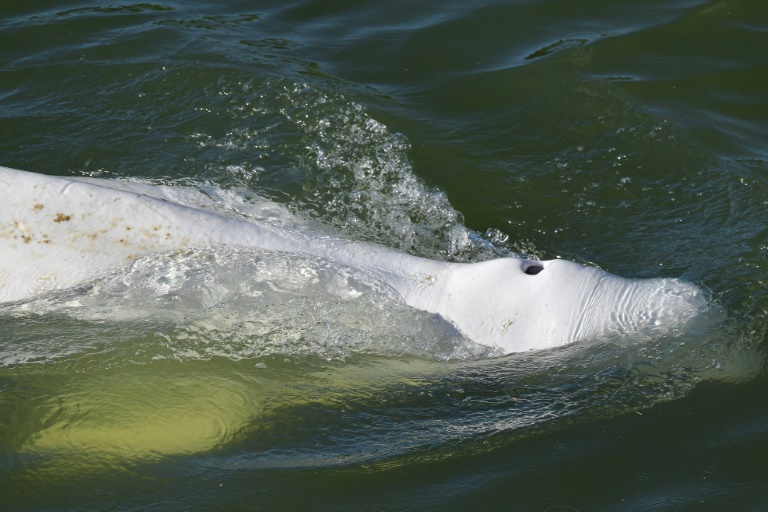
Hopes of saving a malnourished beluga whale that has swum up the Seine river were receding on Sunday, as rescuers said they were in a race against the clock to find a solution.

The whale was first spotted on Tuesday in the river that runs through Paris to the English Channel. Since Friday it has been between two locks some 70 kilometres (44 miles) north of the French capital.

But leaving it in the warm stagnant water between the lock gates is no longer an option.

“He has to be moved in the coming 24-48 hours, these conditions are not good for him,” Sea Shepherd France head Lamya Essemlali told AFP.

Specialists held out “little hope” for the visibly underweight whale as they were “in a race against the clock” to save the creature, Essemlali said.

“We are all doubtful about its own ability to return to the sea,” she said. “Even if we ‘drove’ it with a boat, that would be extremely dangerous, if not impossible”.

Before swimming between the two locks, “he had the tendency to be heading toward Paris. It would be catastrophic if he reached there,” Essemlali said.

However, “the euthanasia option has been ruled out for the moment, because at this stage it would be premature”, she said.

The whale still has “energy … turns its head, reacts to stimuli”, she said after a meeting of experts and French officials.

Although rescuers have tried feeding it frozen herring and then live trout, the animal was refusing the food.

“His lack of appetite is surely a symptom of something else… an illness. He is malnourished and this dates back weeks, if not months. He was no longer eating at sea,” Essemlali said.

On Saturday veterinarians had administered “vitaminsand products to stimulate its appetite,” said a statement on Sunday by the police in Normandy’s Eure department, which is overseeing the rescue effort.

The small spots that were reported on its pale skin on Saturday were due to the fresh water, it said.

Another option under consideration would be to take it out of the water, give it vitamins, check the cause of the illness and eventually ship it out to sea once it regains its strength.

Another is “to let it end its life peacefully, like someone who is very ill and who does not have much chance to live”, said Isabelle Dorliat-Pouzet, a senior police official in Evreux.

– Rare sighting –

Belugas are normally found only in cold Arctic waters, and while they migrate south in the autumn to feed as ice forms, they rarely venture so far.

An adult can reach up to four metres (13 feet) in length.

According to France’s Pelagis Observatory, specialised in sea mammals, the nearest beluga population is off the Svalbard archipelago, north of Norway, 3,000 kilometres (1,800 miles) from the Seine.

It is only the second recorded sighting of a beluga in a French river since 1948, when a fisherman in the estuary of the Loire river found one in his nets.

The sighting comes just a few months after a killer whale — also known as an orca, but technically part of the dolphin family — became stranded in the Seine and was later found dead between Le Havre and Rouen in late May.

A post-mortem found the animal, more than four metres long, had likely suffered exhaustion after being unable to feed.

Officials said they had also discovered a bullet lodged in the base of its skull — though it was far from clear that the wound played a role in its death.
No recession in Switzerland this year: chief economist

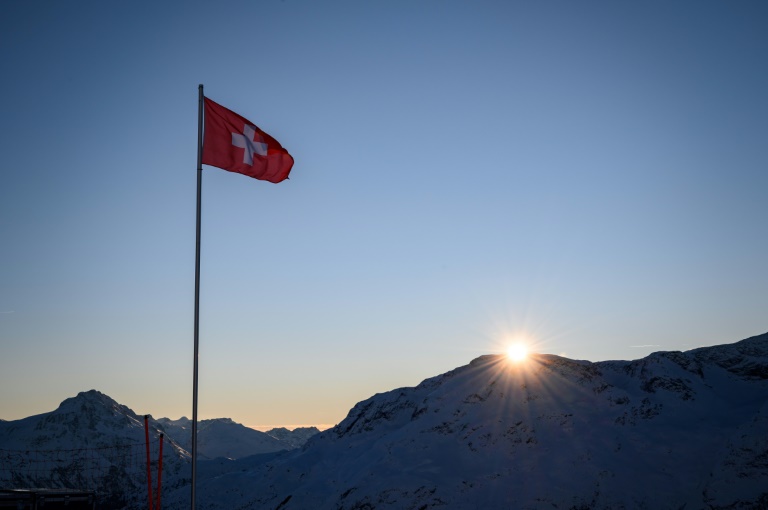
Switzerland does not expect to dip into recession this year despite the threat of an energy supply squeeze, the government’s chief economist said Sunday.

The Swiss economy is “doing well” despite the impact of the war in Ukraine on energy prices, Eric Scheidegger told the SonntagsZeitung newspaper.

He said it was down to companies to steel themselves for the possibility of power shortages in the winter months.

“We may have to revise our economic forecast downwards for next year. The revised forecast will be published on September 20. However, we do not expect a recession for this year,” Scheidegger said.

“We run the risk of an energy supply bottleneck in winter. If there are persistent production interruptions in the EU and we ourselves have a gas shortage, it becomes problematic.

“In our negative scenario, we expect zero growth for 2023 instead of growth of almost two percent.”

Despite the threat of power shortages and the effects of the war in Ukraine, Scheidegger does not see a serious economic crisis heading towards Switzerland.

“At present, the economy is still doing well. Current indicators show that the economy in this country also developed well in the second quarter — after the outbreak of the war in Ukraine,” he said.

“Economic support measures such as general perks or tax relief are currently therefore neither necessary nor helpful,” he added.

– ‘Foreseeable events’ –

Scheidegger said the Swiss economy was less susceptible to high energy prices than other European countries as gas accounted for only five percent of its total energy consumption.

He said the government would discuss possible measures to curb high energy prices in the coming weeks, which could involve reducing health insurance premiums for low-income households.

The State Secretariat for Economic Affairs official said the help for businesses during the Covid-19 pandemic could not become the norm during economic downturns.

“It’s been known since spring that there can be a power shortage in winter. Companies have time to prepare for this,” he said.

“Companies can, and must, take this operational risk into account… it is up to companies to prepare for foreseeable events.”

As for inflation, he said Switzerland was “an island of bliss” compared to the United States, and inflation was likely to fall before the end of the year.

“At 3.4 percent, inflation is much lower here than in other countries.  Core inflation — inflation excluding fresh food, energy and fuel — is at two percent,” he said.

US Senate poised to pass Biden's cornerstone climate and health bill

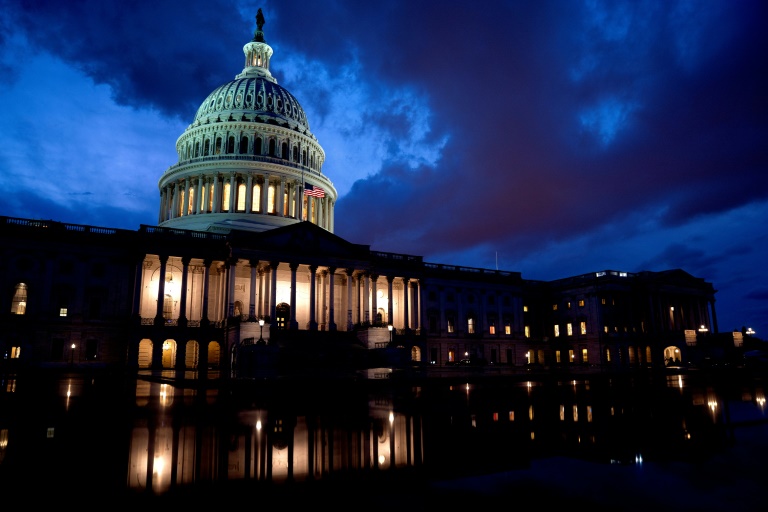
After months of negotiations, the US Senate looks poised to pass Joe Biden’s grand climate and health care plan, channeling billions toward ambitious clean energy goals in a hard-won victory for the president ahead of midterm elections.

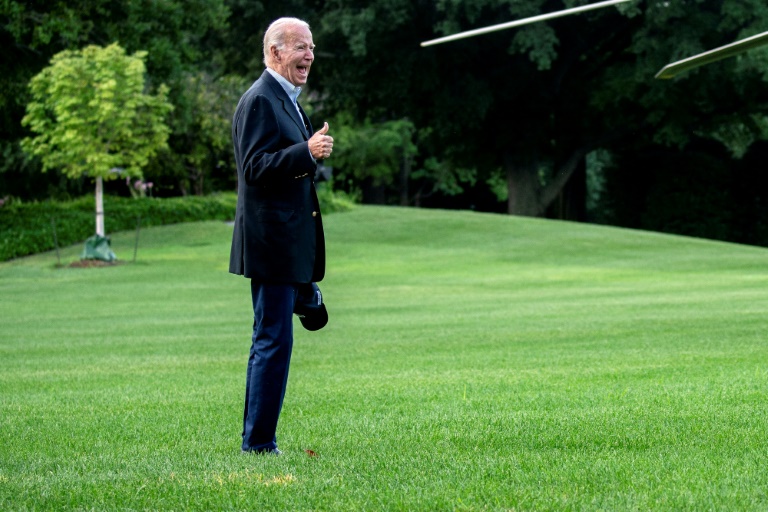
“I think it’s going to pass,” the Democratic president, who recently recovered from a second bout of Covid-19, told journalists Sunday morning in a brief appearance on the White House lawn. 

The $430 billion plan, crafted in arduous talks with members on the right wing of his Democratic Party, would include the biggest US investment ever on climate — $370 billion aimed at effecting a 40 percent drop in greenhouse gas emissions by 2030. 

That would give Biden a clear victory on one of his top agenda items and go some way toward restoring US leadership in meeting the global climate challenge.

Democrats hold a razor-thin majority in the Senate — just enough to pass spending bills like this with no Republican support.

If the package is approved, likely within days, it will move on Friday to the House of Representatives, where the majority Democrats expect to pass it. It would then go to Biden’s desk for his signature. 

– Electric cars –

The bill would provide ordinary Americans with a tax credit of up to $7,500 when purchasing an electric car, plus a 30 percent discount when they install solar panels on their roofs. 

It would also provide millions to help protect and conserve forests — which have been increasingly ravaged in recent years by wildfires during record heat waves that scientists say are linked to global warming.

Billions of dollars in tax credits would also go to some of the country’s worst-polluting industries to help their transition to greener methods — a measure bitterly opposed by some liberal Democrats who have, however, accepted this as a least-bad alternative after months of frustration.

Biden, who came to office with promises of sweeping — and expensive — reforms, has seen his hopes dashed, then revived, then dashed again. 

Democrats’ narrow edge in the Senate has given a virtual veto to moderates like Joe Manchin of West Virginia, who earlier had used that power to block Biden’s much more expansive Build Back Better plan. 

But in late July, Senate Democratic leader Chuck Schumer managed to wangle a compromise with the West Virginian, whose state’s economy depends heavily on coal mining. 

And on Saturday, senators finally opened their debate on the text.

– ‘Vote-a-rama’ –

Late in the day, senators kicked off a marathon procedure known as a “vote-a-rama,” in which members can propose dozens of amendments and demand a vote on each one.

That has allowed both Republicans, who view Biden’s plan as too costly, and liberal Democrats, who say it does not reach far enough, to make their opposition clear.

Influential progressive senator Bernie Sanders used that platform through the evening to propose several amendments aimed at strengthening social planks in the legislation, which were considerably weakened during the months of negotiation.

As it stands, the bill would provide $64 billion for health care initiatives and ensure a lowering of some drug costs — which can be 10 times more expensive in the US than in some other rich countries.

But progressive Democrats long ago had to give up their ambitions for free preschool and community colleges and expanded healthcare for the elderly.

“Millions of seniors will continue to have rotten teeth and lack the dentures, hearing aids or eyeglasses that they deserve,” Sanders said from the Senate floor. 

“This bill, as currently written, does nothing to address it.”

But fellow Democrats, eager to pass the legislation well ahead of November midterms when control of Congress is much at stake, have rejected any change in the text.

To help offset the plan’s massive spending, it would reduce the US deficit through a new 15-percent minimum tax on companies with profits of $1 billion or more — a move targeting some that now pay far less.

US Senate poised to pass Biden's cornerstone climate and health bill

After months of negotiations, the US Senate looks poised to pass Joe Biden’s grand climate and health care plan, channeling billions toward ambitious clean energy goals in a hard-won victory for the president ahead of midterm elections.

“I think it’s going to pass,” the Democratic president, who recently recovered from a second bout of Covid-19, told journalists Sunday morning in a brief appearance on the White House lawn. 

The $430 billion plan, crafted in arduous talks with members on the right wing of his Democratic Party, would include the biggest US investment ever on climate — $370 billion aimed at effecting a 40 percent drop in greenhouse gas emissions by 2030. 

That would give Biden a clear victory on one of his top agenda items and go some way toward restoring US leadership in meeting the global climate challenge.

Democrats hold a razor-thin majority in the Senate — just enough to pass spending bills like this with no Republican support.

If the package is approved, likely within days, it will move on Friday to the House of Representatives, where the majority Democrats expect to pass it. It would then go to Biden’s desk for his signature. 

– Electric cars –

The bill would provide ordinary Americans with a tax credit of up to $7,500 when purchasing an electric car, plus a 30 percent discount when they install solar panels on their roofs. 

It would also provide millions to help protect and conserve forests — which have been increasingly ravaged in recent years by wildfires during record heat waves that scientists say are linked to global warming.

Billions of dollars in tax credits would also go to some of the country’s worst-polluting industries to help their transition to greener methods — a measure bitterly opposed by some liberal Democrats who have, however, accepted this as a least-bad alternative after months of frustration.

Biden, who came to office with promises of sweeping — and expensive — reforms, has seen his hopes dashed, then revived, then dashed again. 

Democrats’ narrow edge in the Senate has given a virtual veto to moderates like Joe Manchin of West Virginia, who earlier had used that power to block Biden’s much more expansive Build Back Better plan. 

But in late July, Senate Democratic leader Chuck Schumer managed to wangle a compromise with the West Virginian, whose state’s economy depends heavily on coal mining. 

And on Saturday, senators finally opened their debate on the text.

– ‘Vote-a-rama’ –

Late in the day, senators kicked off a marathon procedure known as a “vote-a-rama,” in which members can propose dozens of amendments and demand a vote on each one.

That has allowed both Republicans, who view Biden’s plan as too costly, and liberal Democrats, who say it does not reach far enough, to make their opposition clear.

Influential progressive senator Bernie Sanders used that platform through the evening to propose several amendments aimed at strengthening social planks in the legislation, which were considerably weakened during the months of negotiation.

As it stands, the bill would provide $64 billion for health care initiatives and ensure a lowering of some drug costs — which can be 10 times more expensive in the US than in some other rich countries.

But progressive Democrats long ago had to give up their ambitions for free preschool and community colleges and expanded healthcare for the elderly.

“Millions of seniors will continue to have rotten teeth and lack the dentures, hearing aids or eyeglasses that they deserve,” Sanders said from the Senate floor. 

“This bill, as currently written, does nothing to address it.”

But fellow Democrats, eager to pass the legislation well ahead of November midterms when control of Congress is much at stake, have rejected any change in the text.

To help offset the plan’s massive spending, it would reduce the US deficit through a new 15-percent minimum tax on companies with profits of $1 billion or more — a move targeting some that now pay far less.

Ex-US envoy Richardson 'optimistic' Griner will be freed

Former US diplomat Bill Richardson said Sunday that he was “optimistic” about efforts to negotiate a “two for two” prisoner swap with Russia that would free US basketball star Brittney Griner and another American.

Richardson, a former ambassador to the UN, has negotiated the release of several Americans held in other countries. Reports last month said he was expected to travel to Russia for talks over Griner, who on Thursday was sentenced to nine years in prison on a drug charge.

While insisting Sunday that he is only a “catalyst” in any negotiations, Richardson’s mention of a “two-for-two” swap including Griner suggested inside knowledge.

“My view is, I’m optimistic,” he told ABC’s “This Week.”

“I think she’s going to be freed, I think she has the right strategy of contrition, there’s going to be a prisoner swap — though I think it will be two for two, involving Paul Whelan.”

Whelan is a former US Marine who was convicted of espionage in June 2020 and sentenced to 16 years in prison. He has insisted on his innocence.

His case and Griner’s have been enmeshed in the deep US-Russia tensions since Russian troops invaded Ukraine in February.

But recent comments from both sides — including from US Secretary of State Antony Blinken and his Russian counterpart, Sergei Lavrov — have suggested signs of movement, and US President Joe Biden has faced repeated calls to arrange a deal.

Reports suggested that Russian arms trafficker Viktor Bout, known as the “Merchant of Death,” might be freed in exchange for Griner and Whelan. The Kremlin has long sought his release. 

But Richardson’s mention of a “two for two” swap raises questions about who the second Russian in the equation might be. 

And some Americans have asked why Marc Fogel, a US citizen serving a 14-year sentence in Russia on marijuana charges — which he said he had for medicinal purposes — has not been mentioned. 

Griner was sentenced Thursday to nine years in a Russian penal colony and ordered to pay a fine of one million rubles ($16,590) for smuggling narcotics.

She was arrested at a Moscow airport for possessing vape cartridges with a small amount of cannabis oil. 

The 31-year-old, who was in Russia to play for the professional Yekaterinburg team during her off-season from the Phoenix Mercury, said the substance was prescribed by a US doctor to relieve pain.

The two-time Olympic gold medalist and Women’s NBA champion pleaded guilty but said she did not intend to break the law.

Richardson is a prominent Democrat, having served in the US Congress, as governor of New Mexico, and both as UN envoy and energy secretary in the Bill Clinton administration.

Since then, he has worked as a discreet go-between in several sensitive hostage talks with foreign countries, including North Korea. In November 2021 he helped secure the release of US journalist Danny Fenster from a prison in Myanmar.

Biden out of isolation after testing negative for Covid

US President Joe Biden was out of isolation on Sunday, after testing negative for Covid for a second day in a row, the first time he was able to leave the White House since July 20. 

Biden, 79, had tested positive for Covid and returned to isolation on July 30, in a result doctors attributed to “rebound” positivity from his earlier bout of the illness. 

“I’m feeling good,” the smiling president told pool reporters at the White House as he boarded a helicopter which then flew him to his beach home in Delaware.

He was also optimistic about a sweeping climate and health care bill that was being debated in the Senate overnight Sunday, telling reporters: “I think it’s going to pass.”

The president “will safely return to public engagement and presidential travel,” his physician Kevin O’Connor said in a statement announcing the negative test. 

According to Biden’s official schedule he is set to travel to the southern state of Kentucky, the scene of devastating floods, on Monday.

'Little hope' of saving beluga whale stranded in Seine river

Hopes of saving a malnourished beluga whale that has swum up the Seine river were receding on Sunday, but rescuers said they have ruled out “euthanasia” for now.

The whale was first spotted on Tuesday in the river that runs through Paris to the English Channel. Since Friday it has been between two locks some 70 kilometres (44 miles) north of the French capital.

But leaving it in the warm stagnant water between the lock gates is no longer an option.

“He has to be moved in the coming 24-48 hours, these conditions are not good for him,” Sea Shepherd France head Lamya Essemlali told AFP.

Specialists held out “little hope” for the visibly underweight whale, Essemlali said.

“We are all doubtful about its own ability to return to the sea,” she said. “Even if we ‘drove’ it with a boat, that would be extremely dangerous, if not impossible”.

However, “the euthanasia option has been ruled out for the moment, because at this stage it would be premature,” she said.

The whale still has “energy … turns its head, reacts to stimuli”, she said after a meeting of experts and French officials.

Although rescuers have tried feeding it frozen herring and then live trout, the animal was refusing the food.

“His lack of appetite is surely a symptom of something else… an illness. He is malnourished and this dates back weeks, if not months. He was no longer eating at sea,” Essemlali said.

Small spots that were reported on  its pale skin on Saturday were likely due to the fresh water, Sea Shepherd said.

Another option under consideration would be to take it out of the water, give it vitamins, check the cause of the illness and ship it out to sea to feed.

– Rare sighting –

Belugas are normally found only in cold Arctic waters, and while they migrate south in the autumn to feed as ice forms, they rarely venture so far.

An adult can reach up to four metres (13 feet) in length.

According to France’s Pelagis Observatory, specialised in sea mammals, the nearest beluga population is off the Svalbard archipelago, north of Norway, 3,000 kilometres (1,800 miles) from the Seine.

It is only the second recorded sighting of a beluga in a French river since 1948, when a fisherman in the estuary of the Loire river found one in his nets.

The sighting comes just a few months after a killer whale — also known as an orca, but technically part of the dolphin family — became stranded in the Seine and was later found dead between Le Havre and Rouen in late May.

An autopsy found the animal, more than four metres long, had likely suffered exhaustion after being unable to feed.

Officials said they had also discovered a bullet lodged in the base of its skull — though it was far from clear that the wound played a role in its death.
Syria more than doubles petrol prices: ministry

Syria’s internal commerce ministry has announced a petrol price hike of around 130 percent in the war-torn country facing fuel shortages and extended power cuts. 

The cost of a litre of subsidised fuel will rise to 2,500 Syrian pounds, from 1,100 previously, a rise of 127 percent, the ministry said in a statement quoted by the official SANA news agency late Saturday. 

The cost of non-subsidised petrol will rise from 3,500 to 4,000 Syrian pounds, the ministry added. 

The increases represent the third time this year that authorities have increased the price of fuel, as the Syrian pound continues to depreciate.

Syria’s currency is trading at around 4,250 to the dollar on the black market, compared to an official rate of 2,814. 

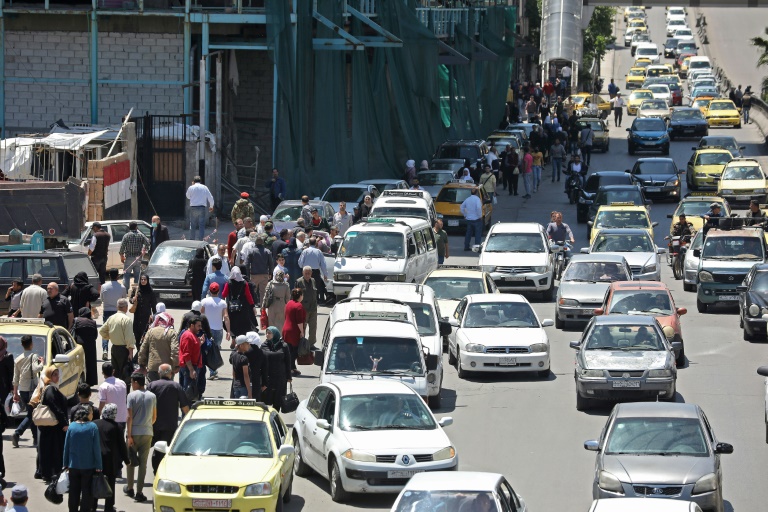
“This measure will hit everyone,” said Raed al-Saadi, a warehouse worker. “Our salary is now only enough to get us to the workplace, and not even enough to get us home again.” 

“Life has become very difficult and I don’t where this situation will lead us,” the 48-year-old added. 

Since the outbreak of war in 2011, Syria’s oil and gas sector has suffered losses amounting to tens of billions of dollars.

The economy has been hit hard by both the long-running war and sanctions imposed against Damascus. 

A UN commission in March called for a review of sanctions against President Bashar al-Assad’s regime because of concerns that the measures were hitting ordinary people too hard.

The conflict in Syria started in 2011 with the brutal repression of peaceful protests and escalated to pull in foreign powers and global jihadists. 

It has killed around 500,000 people and displaced around half of the country’s pre-war population.

Taiwan crisis: what we've learned so far

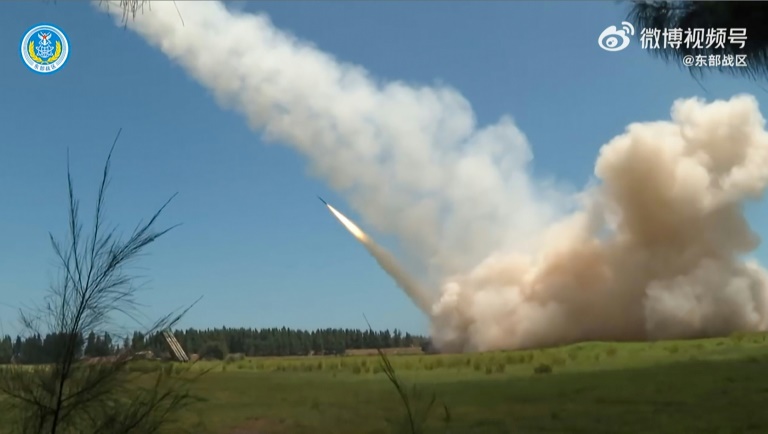
China’s live-fire drills around Taiwan –- which saw vessels encircle the democratically ruled island –- have offered an unprecedented insight into how Beijing may conduct a military campaign against its neighbour.

Beijing has also imposed economic sanctions and increased efforts to isolate Taiwan on the international stage, in a move that experts say will permanently alter the status quo on the Taiwan Strait.

AFP looks at what we learned from China’s largest-ever military exercise around Taiwan, which was conducted in retaliation to US House Speaker Nancy Pelosi’s visit to the self-ruled island this week.

Could China impose a blockade of Taiwan?

The Chinese military has conducted drills on Taiwan’s eastern flank, a strategically vital area for supplies to the island’s military forces — as well as any potential American reinforcements — for the first time.

This has sent an ominous signal that Beijing can now blockade the entire island and could prevent any entry or exit of commercial or military ships and aircraft.

Analysts have long speculated that this will be one of China’s preferred strategies in the event of a war to conquer Taiwan.

“This crisis will signal that Beijing has the ability to repeat — and intensify — similar responses at will,” said Christopher Twomey, a security scholar at the US Naval Postgraduate School in California. 

“But sustaining (a blockade) would be very costly, both for China’s reputation and in direct costs for its military.”

China’s current economic woes mean it is unlikely to risk a major disruption in the Taiwan Strait — one of the world’s busiest waterways — for now. 

Is the Chinese military battle-ready?

China has swiftly expanded and modernised its air, space and sea forces with the aim of projecting its power globally and narrowing the gap with the United States military. 

Beijing’s military capabilities still lag behind Washington’s but it aims to have the ability by 2027 to overcome any pushback to reclaiming Taiwan, according to the Pentagon.

These military drills around Taiwan have put the People’s Liberation Army’s (PLA) Eastern Theater Command, which spearheaded the exercises, to the test, said Collin Koh, a naval affairs expert at the S. Rajaratnam School of International Studies in Singapore.

They have shown how far reform of the Chinese military has come since the last Taiwan Strait crisis in 1995-96, demonstrating its “ability to pull in or to master a bigger range of capabilities”, he said.

“At least the tangible assets they put on the ground, as well as the ability for them to pull off an exercise on this scale, does show that they are much more capable than they used to be back in the 1990s.”

What’s changed about China-Taiwan relations?  

Taiwan’s 23 million people have long lived with the possibility of an invasion, but that threat has intensified under President Xi Jinping, China’s most assertive ruler in a generation.

China is now boycotting fruits and fish from Taiwan, economically harming the island in a move analysts say is designed to erode support from major voting blocs for the pro-independent government.

Beijing has put sanctions on companies that donate to the development assistance arm of Taiwan’s government — putting an end to what has been called Taiwan’s “cheque-book diplomacy” with allies.

But China will aim to keep its military and economic manoeuvres below the threshold of war to avoid a direct confrontation with the US, analysts said.

“I think prolonged tensions are unlikely,” said Bonnie Glaser, director of the Asia programme at the US-based German Marshall Fund think tank, told AFP.

“But certainly a major crisis would affect shipping, insurance rates, trade routes, and (global) supply chains.”

A new normal for Taiwan?

Taiwan may have to get used to China holding similar military exercises in the future, Koh said.

“It will become the norm to have exercises that are close to the main Taiwan island itself… this time it has set a new precedent that the PLA will conduct drills of this sort.”

“We’re looking at the bar being raised to another level for future exercises of this scale and intensity.”

China has periodically sent warships or planes across the median line — an unofficial but once largely adhered-to border that runs down the middle of the Taiwan Strait — during times of tension.

But Pelosi’s visit has “given them the excuse or justification to say that in the future they will just legitimately carry out exercises east of the median line without having to pay due regard to it at all,” Koh said.

Where do China-US relations go from here?

China has said it is ending cooperation with the United States on key issues including climate change and defence. 

Washington has decried the move as “fundamentally irresponsible” as relations between the two superpowers have nosedived over Taiwan.

Beijing separately announced that it would personally sanction Pelosi — third in line to the US presidency — in response to her “vicious” and “provocative” actions.

Tian Shichen, a Beijing-based security analyst, told Chinese state-run publication Global Times that the break in communications had raised the risk of conflict, but ascribed blame solely to the US. 

“At present, almost all the channels of mechanism communication between the Chinese and US militaries are interrupted, increasing the possibility of misunderstanding and unexpected incidents, all of which are the responsibility of the US,” he was quoted as saying.

“This is a moment in the US-China relationship where we are really at a very low point,” Glaser said in a discussion hosted by the Center for Strategic and International Studies in Washington DC.

“I hope our two governments will find a way forward to talk about their… redlines, their concerns and prevent a continuous downward spiral in the relationship.”

Austrian scientists race to reveal melting glaciers' secrets

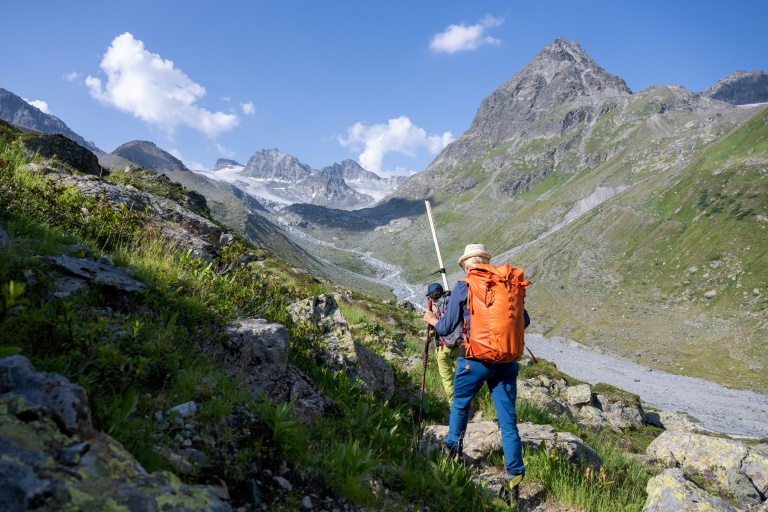
Jumping from rock to rock to rock over a creek formed off Austria’s Jamtal glacier,  scientist Andrea Fischer worries that precious scientific data will be irreversibly lost as the snow and ice melt faster than ever.

“I couldn’t have imagined that it would ever melt as dramatically as this summer… Our ‘archive’ is melting away,” says the glaciologist. 

Fischer — vice director of the Institute for Interdisciplinary Mountain Research at the Austrian Academy of Sciences — has spent more than 20 years surveying Jamtal and four other Alpine glaciers across Austria’s highest peaks for the oldest areas of ice.

For scientists looking to reconstruct the Earth’s climate in the distant past, such ice formations are a unique time capsule stretching back thousands of years.

The glaciers contain an invaluable treasure trove of data — as they grew, the ice encapsulated twigs and leaves, which can now be carbon-dated, Fischer explains.

And based on the age of such material and the depth where it was found, scientists can infer when ice grew during colder periods, or when warmer conditions caused it to melt. 

But now the glaciers are melting rapidly — including the one in the remote and narrow Jamtal valley, not far from where tourists found the stunningly preserved 5,300-year-old mummy of Oetzi, the Iceman, in the 1990s.

Temperatures in Europe’s highest mountains have risen by nearly two degrees Celsius in the past 120 years — almost double the global average, according to the International Commission for the Protection of the Alps (CIPRA). 

The Alps’ roughly 4,000 glaciers have since become one of the starkest signs of global warming.

– Disappear completely? –

The Jamtal glacier has been losing about one metre (three feet) from its surface annually, but this year it has already lost more than a metre, Fischer says.

“And we’ve got at least two months of summer left… where the glacier is entirely exposed to the sun,” she warns. 

Snow usually protects most of the glacial ice from the sun until September, but the little snow that fell last winter had already melted by early July.

“This year is outrageous compared to the average of the past 6,000 years,” says Fischer. 

“If this continues, in five years, Jamtal glacier won’t be a glacier anymore.”

By the end of the summer, Fischer fears that about seven metres of depth will have melted off the surface — or about 300 years of climate “archives”. 

“We need the data the glaciers hold to understand the climate of the past — and to create models of what awaits us in the future,” she says.

Fischer and her team have drilled on both the Jamtal and other nearby glaciers to extract data, taking out ice samples up to 14 metres deep.

As temperatures rise and the glaciers become more unstable, they are compelled to take additional safety precautions — 11 people died in a glacial ice avalanche in the Italian Dolomites in July, the day after temperatures there rose to new records. 

– ‘My heart is bleeding’ –

In Galtuer, the nearest village to Jamtal with 870 residents who are mostly dependent on tourism, the Alpine Club is already offering a “Goodbye, glacier!” tour through the once ice-filled valley to raise awareness about the effects of climate change.

Where the ice has retreated, scientists found that within three years about 20 species of plants, mostly mosses, have taken over. In some areas, larches are growing, according to Fischer.

“If the glacier is gone in five years, that’s a pity, because it’s part of the landscape,” says Sarah Mattle, who heads the Alpine Club.

“But then there’ll also be new paths, and maybe there’ll be an easier hike over the mountains than over the ice. It’ll all be a matter of adapting,” the 34-year-old adds.

Other locals like Gottlieb Lorenz, whose great-grandfather was the first manager of the 2,165-metre-high Jamtal cabin set up as a refuge for mountaineers, are heartbroken.

“My heart is bleeding when I think about how magnificent and mighty the glacier was and what a miserable tiny pile it is today,” the 60-year-old says.

He points at a black-and-white photo taken in 1882 showing a thick ice sheet flowing past the cabin.

Today, the ice is a 90-minute hike away.

Close Bitnami banner
Bitnami