AFP

When the sun switches off the solar panels

The more the sun shines in the southern German town of Aurach, the more likely it is that Jens Husemann’s solar panels will be disconnected from the grid — an exasperating paradox at a time when Germany is navigating an energy supply crisis.

“It’s being switched off every day,” Husemann told AFP during a recent sunny spell, saying there had been more than 120 days of forced shutdowns so far this year.

Husemann, who runs an energy conversion business near Munich, also owns a sprawling solar power system on the flat roof of a transport company in Aurach, Bavaria.

The energy generated flows into power lines run by grid operator N-Ergie, which then distributes it on the network.

But in sunny weather, the power lines are becoming overloaded — leading the grid operator to cut off supply from the solar panels.

“It’s a betrayal of the population,” said Husemann, pointing to soaring electricity prices and a continued push to install more solar panels across Germany.

Europe’s biggest economy is eyeing an ambitious switch to renewables making up 80 percent of its electricity from 2030 in a bid to go carbon neutral.

But Russia’s invasion of Ukraine has put a spanner in the works. 

Moscow has cut gas supplies to Germany by 80 percent, in what is believed to be a bid to weaken the European powerhouse’s resolve in backing Ukraine.

As a result, Berlin has been scrambling for alternative sources across the world to replace the shortfall.

This makes it all the more frustrating for Husemann, whose solar panels normally generate enough electricity for 50 households. With the repeated shutdowns, he suspects they will only supply half of their capacity by the end of the year.

– Grid bottlenecks –

Grid operator N-Ergie, which is responsible for harvesting electricity from Husemann’s panels, admits the situation is less than ideal. 

There were 257 days last year when it had to cut off supply from solar panels on parts of the grid.

“We are currently witnessing — and this is a good thing — an unprecedented boom in photovoltaic parks,” Rainer Kleedoerfer, head of N-Ergie’s development department, told AFP.

But while it takes just a couple of years to commission a solar power plant, updating the necessary infrastructure takes between five and 10 years, he said.

“The number of interventions and the amount of curtailed energy have increased continuously in recent years” as a result, according to N-Ergie spokesman Michael Enderlein. 

“The likelihood is that grid bottlenecks will actually increase in the coming years,” while resolving them will take several more years, Enderlein said.

According to Carsten Koenig, managing director of the German Solar Industry Association, the problem is not unique to solar power and also affects wind energy.

Solar bottlenecks tend to be regional and temporary, he said. “Occasionally, however, we hear that especially in rural areas in Bavaria, the shutdowns are more frequent.”

– 2.4 million households –

Koenig agrees the problem is likely to get worse before it gets better.

“This will be especially true if political measures aimed at sufficiently expanding the power grid in Germany… drag on for too long,” he said.

Some 6.1 terawatt hours of electricity from renewables had to be curtailed in 2020, according to the most recent figures available. 

With an average consumption of around 2,500 kilowatt hours per year in a two-person household, this would have been enough to power around 2.4 million households. 

A spokesman for Germany’s Federal Network Agency said it did not share the belief that “it will not be possible to expand the network in line with demand in the coming years”. 

Only some aspects of the expansion are seeing delays, the spokesman said — mainly due to slow approval procedures and a lack of specialist companies to do the work. 

According to Husemann there have also been delays to the payments he is supposed to receive in return for the solar power he supplies — or cannot supply.

He said he is already owed around 35,000 euros ($35,600) for electricity produced so far this year that has never found its way into a socket. 

When the sun switches off the solar panels

The more the sun shines in the southern German town of Aurach, the more likely it is that Jens Husemann’s solar panels will be disconnected from the grid — an exasperating paradox at a time when Germany is navigating an energy supply crisis.

“It’s being switched off every day,” Husemann told AFP during a recent sunny spell, saying there had been more than 120 days of forced shutdowns so far this year.

Husemann, who runs an energy conversion business near Munich, also owns a sprawling solar power system on the flat roof of a transport company in Aurach, Bavaria.

The energy generated flows into power lines run by grid operator N-Ergie, which then distributes it on the network.

But in sunny weather, the power lines are becoming overloaded — leading the grid operator to cut off supply from the solar panels.

“It’s a betrayal of the population,” said Husemann, pointing to soaring electricity prices and a continued push to install more solar panels across Germany.

Europe’s biggest economy is eyeing an ambitious switch to renewables making up 80 percent of its electricity from 2030 in a bid to go carbon neutral.

But Russia’s invasion of Ukraine has put a spanner in the works. 

Moscow has cut gas supplies to Germany by 80 percent, in what is believed to be a bid to weaken the European powerhouse’s resolve in backing Ukraine.

As a result, Berlin has been scrambling for alternative sources across the world to replace the shortfall.

This makes it all the more frustrating for Husemann, whose solar panels normally generate enough electricity for 50 households. With the repeated shutdowns, he suspects they will only supply half of their capacity by the end of the year.

– Grid bottlenecks –

Grid operator N-Ergie, which is responsible for harvesting electricity from Husemann’s panels, admits the situation is less than ideal. 

There were 257 days last year when it had to cut off supply from solar panels on parts of the grid.

“We are currently witnessing — and this is a good thing — an unprecedented boom in photovoltaic parks,” Rainer Kleedoerfer, head of N-Ergie’s development department, told AFP.

But while it takes just a couple of years to commission a solar power plant, updating the necessary infrastructure takes between five and 10 years, he said.

“The number of interventions and the amount of curtailed energy have increased continuously in recent years” as a result, according to N-Ergie spokesman Michael Enderlein. 

“The likelihood is that grid bottlenecks will actually increase in the coming years,” while resolving them will take several more years, Enderlein said.

According to Carsten Koenig, managing director of the German Solar Industry Association, the problem is not unique to solar power and also affects wind energy.

Solar bottlenecks tend to be regional and temporary, he said. “Occasionally, however, we hear that especially in rural areas in Bavaria, the shutdowns are more frequent.”

– 2.4 million households –

Koenig agrees the problem is likely to get worse before it gets better.

“This will be especially true if political measures aimed at sufficiently expanding the power grid in Germany… drag on for too long,” he said.

Some 6.1 terawatt hours of electricity from renewables had to be curtailed in 2020, according to the most recent figures available. 

With an average consumption of around 2,500 kilowatt hours per year in a two-person household, this would have been enough to power around 2.4 million households. 

A spokesman for Germany’s Federal Network Agency said it did not share the belief that “it will not be possible to expand the network in line with demand in the coming years”. 

Only some aspects of the expansion are seeing delays, the spokesman said — mainly due to slow approval procedures and a lack of specialist companies to do the work. 

According to Husemann there have also been delays to the payments he is supposed to receive in return for the solar power he supplies — or cannot supply.

He said he is already owed around 35,000 euros ($35,600) for electricity produced so far this year that has never found its way into a socket. 

Tonnes of fruit stranded in EU, S.Africa battle of oranges

Millions of boxes of oranges are spoiling in containers stranded at European ports as South Africa and the European Union lock horns in a dispute over import rules, citrus growers have said. 

South Africa, the world’s second largest exporter of fresh citrus after Spain, filed a complaint with the World Trade Organisation (WTO) last month after the EU introduced new plant and health safety requirements that orange farmers say threaten their survival.

The measures came into force in July as ships were already at sea carrying hundreds of containers full of South African fruit to Europe, resulting in them being held up on arrival, South Africa’s Citrus Growers’ Association (CGA) says. 

“It’s a complete and utter disaster,” CGA’s CEO Justin Chadwick told AFP by phone.

“Food that has fantastic quality and is safe is (just) sitting there — and this at a time when people are worried about food security.”

The EU rules aim at tackling the potential spread of an insect called the false codling moth, a pest native to sub-Saharan Africa that feeds on fruits including oranges and grapefruits.

The new measures require South African farmers to apply extreme cold treatment to all Europe-bound oranges and keep the fruits at temperatures of two degrees Celsius (35 degrees Fahrenheit) or lower for 25 days.

But the CGA says this measure is unnecessary as the country already has its own, more targeted way of preventing infestation. 

In its WTO complaint, South Africa argued that the EU requirements were “not based on science”, more restrictive than necessary and “discriminatory”.

South African citrus growers say the requirement puts undue extra pressure on an industry already in dire straits. 

“This is going to add a lot of costs… and at the moment, that is what no grower in the world can afford,” said Hannes de Waal, who heads of the almost 100-year-old farm Sundays River Citrus.

De Waal, whose company has orange, clementine and lemon trees straddling 7,000 hectares (17,000 acres) near the southeastern coast city of Gqeberha, said revenues were already squeezed by high shipping and fertiliser costs. 

Freight costs have rocketed since Covid-19 struck, and so has the price of fertilisers due to the war in Ukraine — Russia being one of the world’s largest producers.

– ‘Under pressure’ –

Europe is the largest market for South Africa’s almost $2 billion citrus industry, accounting for 37 percent of all exports, according to the CGA.

The new rules hit at the height of South Africa’s orange season, during the southern hemisphere’s winter, when export operations were in full swing.

This gave fruit growers too little time to adapt, said Chadwick. 

Some 3.2 million cartons of citrus worth about 605 million rand ($36 million) left port with paperwork that would be wrong on arrival.

The South African government was scrambling to issue new documents for shipments that met the new criteria, but hundreds of containers could be slated for destruction, said Chadwick. 

South Africa already has an effective anti-moth system, the CGA says. 

“Our system does involve cold treatment, but targeted at the risk, whereas the EU measure is a blanket measure that covers all oranges,” Chadwick said.

“The higher the risk, the more extreme the cold treatment,” he said, of the South African measures.

The dispute is now with the WTO. The parties have 60 days to negotiate a solution. Failing that, the complainant can request the matter be decided by a panel of experts.

The EU said it was confident of the “WTO-compatibility” of its measures.  

“The objective of the EU’s plant and health safety criteria is to protect the union territory from the potential significant impact on the agriculture and the environment, should this pest establish itself in the union,” a spokesperson for the EU Commission said in a statement. 

Chadwick hopes that “sense” will prevail and a quick fix can be found.

“Our industry is under pressure. It’s basically a year of survival,” he said. 

US police say killings of four Muslim men may be linked

Police in the US state of New Mexico said Saturday they are investigating the murders of three Muslim men that they suspect are related to a fourth homicide from last year.

The Albuquerque police department said in a statement they had found the latest victim overnight Friday.

They did not identify him but said he was in his mid-20s, Muslim and “a native from South Asia.”

“Investigators believe Friday’s murder may be connected to three recent murders of Muslim men also from South Asia,” the statement said.

Two of the previous victims were Muslim Pakistani men, a 27-year-old whose body was found on August 1 and a 41-year-old who was found on July 26.

Detectives are now investigating whether these murders are connected to the death of a Muslim man from Afghanistan who was killed on November 7, 2021, outside of the business he ran with his brother in Albuquerque, the statement said.

The police urged anyone with information to call a tip line and said the FBI was assisting with the investigation.

New Mexico Governor Michelle Lujan Grisham expressed outrage at the attacks and solidarity with the southwestern state’s Muslim community.

“The targeted killings of Muslim residents of Albuquerque is deeply angering and wholly intolerable,” Lujan Grisham said on Twitter.

She said she was sending additional state police officers to Albuquerque to help with the investigation.

“We will continue to do everything we can to support to the Muslim community of Albuquerque and greater New Mexico,” she said.

The Council on American-Islamic Relations (CAIR), the largest US Muslim civil rights group, said Saturday it would offer a $10,000 reward to whoever provides information leading to the killer’s arrest.

“This tragedy is impacting not only the Muslim community — but all Americans,” CAIR national executive director Nihad Awad said in a statement. 

“We must be united against hate and violence regardless of the race, faith or background of the victims or the perpetrators.”

Flight tracking exposure irks billionaires and baddies

How to upset Russian freight companies, Elon Musk, Chinese authorities and Kylie Jenner in one go? Track their jets. 

Flight following websites and Twitter accounts offer real-time views of air traffic –- and sometimes major news like Nancy Pelosi’s Taiwan trip –- but that exposure draws pushback ranging from complaints to gear seizures.

Whether Russian air freight firms, Saudi Arabian plane owners or others, Dan Streufert said his group gets dozens of “requests” each year to stop posting aircrafts’ whereabouts.

“We have not removed anything so far. This is all public information. And I don’t want to be the arbiter of who’s right and who’s wrong,” added Streufert, founder of the US-based flight tracking site ADS-B Exchange.

Limits do apply in some cases, but groups that piece together the flight paths note that the core information source is legally available and open to anyone with the right gear.

US rules require planes in designated areas be equipped with ADS-B technology that broadcasts aircraft positions using signals that relatively simple equipment can pick up.

A service like Sweden-based Flightradar24 has 34,000, mostly volunteer-operated receivers around the world to pick up the signals, a key source of information that’s routed back to a central network and combined with data on flight schedules and aircraft information.

Figuring out or confirming to whom a plane actually belongs can require some sleuthing, said jet tracker Jack Sweeney, who filed a public records request with the US government that yielded a form bearing the signature of a particular plane’s owner: Tesla boss Elon Musk.

Sweeney has gotten quite a bit of attention with his Twitter account that tracks the movements of the billionaire’s plane and even rejected Musk’s offer of $5,000 to shut down @ElonJet, which has over 480,000 followers.

“There’s so much traction, I’m doing something right. The celebrity thing –- people like seeing what celebrities are doing, that and the whole emissions thing,” he told AFP, referring to concerns over the planes’ greenhouse gas impact. 

“Putting it on Twitter makes it easier for people to access and understand,” Sweeney added.

– ‘We will track anything’ –

Another of Sweeney’s Twitter accounts, powered by data from ADS-B Exchange, showed in July that US model and celebrity Kylie Jenner’s plane took a flight in California that lasted just 17 minutes.

The internet was not pleased and she faced a torrent of criticism on social media over concerns about the message it sent regarding climate change.

“They tell us working class people to feel bad about our once a year flight to a much needed vacation while these celebs take private jets every other day as if it’s an Uber,” tweeted @juliphoria, in an example of the outrage.

Neither Sweeney nor Streufert evoked a distinct redline they were concerned could be crossed by publishing the flight data.

“We will track anything because honestly, if somebody really was a bad actor, and they wanted to know where this stuff is, you can build the electronics for $100 and just deploy receivers to pick up the same signals yourself,” said Streufert from ADS-B Exchange.

Sweeney said “the data is already out there. I’m just redistributing it.”

There is also money to be made, but it’s not clear how much –- Streufert acknowledged he makes a living but declined to provide specifics and Sweeney said his flight tracking work brought in about $100 a month. Flightradar24 didn’t provide its revenue.

The services’ information -– as recently shown by the hundreds of thousands watching whether Pelosi would defy China’s warnings –- has significant potential for impact far beyond embarrassment of celebrities or the rankling of billionaires.

For example, ADS-B Exchange’s data was cited in a non-profit group’s report alleging Europe’s border agency Frontex worked to prevent migrants from crossing the Mediterranean, while US media used it to show surveillance planes flew over racial justice protests in Washington in 2020.

In fact, dozens of US Congress members responded to the revelations by signing on to a letter urging the FBI and other government entities like the National Guard to “cease surveilling peaceful protests immediately and permanently.”

In some parts of the world, governments have made clear the technology and resulting information is not welcome.

Chinese state media reported in 2021 that the government had recently confiscated hundreds of receivers used in crowd-sourced flight tracking, citing the risk of “espionage.”

“In many cases, it’s authoritarian regimes that don’t like this exposure,” Streufert said.

Flight tracking exposure irks billionaires and baddies

How to upset Russian freight companies, Elon Musk, Chinese authorities and Kylie Jenner in one go? Track their jets. 

Flight following websites and Twitter accounts offer real-time views of air traffic –- and sometimes major news like Nancy Pelosi’s Taiwan trip –- but that exposure draws pushback ranging from complaints to gear seizures.

Whether Russian air freight firms, Saudi Arabian plane owners or others, Dan Streufert said his group gets dozens of “requests” each year to stop posting aircrafts’ whereabouts.

“We have not removed anything so far. This is all public information. And I don’t want to be the arbiter of who’s right and who’s wrong,” added Streufert, founder of the US-based flight tracking site ADS-B Exchange.

Limits do apply in some cases, but groups that piece together the flight paths note that the core information source is legally available and open to anyone with the right gear.

US rules require planes in designated areas be equipped with ADS-B technology that broadcasts aircraft positions using signals that relatively simple equipment can pick up.

A service like Sweden-based Flightradar24 has 34,000, mostly volunteer-operated receivers around the world to pick up the signals, a key source of information that’s routed back to a central network and combined with data on flight schedules and aircraft information.

Figuring out or confirming to whom a plane actually belongs can require some sleuthing, said jet tracker Jack Sweeney, who filed a public records request with the US government that yielded a form bearing the signature of a particular plane’s owner: Tesla boss Elon Musk.

Sweeney has gotten quite a bit of attention with his Twitter account that tracks the movements of the billionaire’s plane and even rejected Musk’s offer of $5,000 to shut down @ElonJet, which has over 480,000 followers.

“There’s so much traction, I’m doing something right. The celebrity thing –- people like seeing what celebrities are doing, that and the whole emissions thing,” he told AFP, referring to concerns over the planes’ greenhouse gas impact. 

“Putting it on Twitter makes it easier for people to access and understand,” Sweeney added.

– ‘We will track anything’ –

Another of Sweeney’s Twitter accounts, powered by data from ADS-B Exchange, showed in July that US model and celebrity Kylie Jenner’s plane took a flight in California that lasted just 17 minutes.

The internet was not pleased and she faced a torrent of criticism on social media over concerns about the message it sent regarding climate change.

“They tell us working class people to feel bad about our once a year flight to a much needed vacation while these celebs take private jets every other day as if it’s an Uber,” tweeted @juliphoria, in an example of the outrage.

Neither Sweeney nor Streufert evoked a distinct redline they were concerned could be crossed by publishing the flight data.

“We will track anything because honestly, if somebody really was a bad actor, and they wanted to know where this stuff is, you can build the electronics for $100 and just deploy receivers to pick up the same signals yourself,” said Streufert from ADS-B Exchange.

Sweeney said “the data is already out there. I’m just redistributing it.”

There is also money to be made, but it’s not clear how much –- Streufert acknowledged he makes a living but declined to provide specifics and Sweeney said his flight tracking work brought in about $100 a month. Flightradar24 didn’t provide its revenue.

The services’ information -– as recently shown by the hundreds of thousands watching whether Pelosi would defy China’s warnings –- has significant potential for impact far beyond embarrassment of celebrities or the rankling of billionaires.

For example, ADS-B Exchange’s data was cited in a non-profit group’s report alleging Europe’s border agency Frontex worked to prevent migrants from crossing the Mediterranean, while US media used it to show surveillance planes flew over racial justice protests in Washington in 2020.

In fact, dozens of US Congress members responded to the revelations by signing on to a letter urging the FBI and other government entities like the National Guard to “cease surveilling peaceful protests immediately and permanently.”

In some parts of the world, governments have made clear the technology and resulting information is not welcome.

Chinese state media reported in 2021 that the government had recently confiscated hundreds of receivers used in crowd-sourced flight tracking, citing the risk of “espionage.”

“In many cases, it’s authoritarian regimes that don’t like this exposure,” Streufert said.

'Decisive day' for trapped Mexican miners

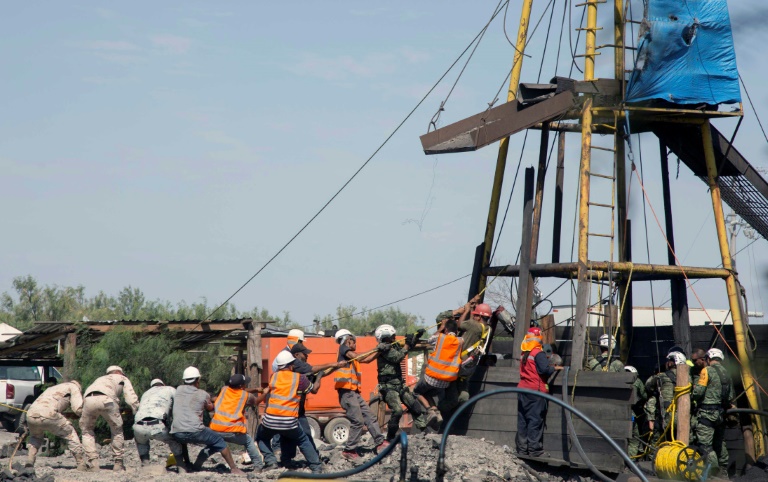
A major operation to rescue 10 trapped Mexican coal miners was approaching a crucial moment on Saturday, President Andres Manuel Lopez Obrador said, raising the hopes of desperate relatives.

“Today is a decisive day because, according to the experts, we’ll know if it’s possible for the divers to enter safely,” he tweeted.

More than 300 soldiers and other personnel, including six military scuba divers, have joined the rescue effort in the northern state of Coahuila following Wednesday’s accident, the government said.

A camera was lowered into one of the mine shafts to evaluate the conditions inside, civil defense authorities said, but there was no news of significant developments as nightfall approached.

Five workers managed to escape from the crudely constructed mine in the initial aftermath of the disaster, but since then, no survivors have been found.

The focus has been on pumping out water from the mine in Agujita in the municipality of Sabinas to make it safe enough to enter.

Authorities said that the three mine shafts descended 60 meters (200 feet) and on Friday the floodwater inside was reported to be 30 meters deep.

“The main problem is the flood, although the pumping equipment is sufficient,” said Lopez Obrador.

Coahuila’s state government said the miners had been carrying out excavation work when they hit an adjoining area full of water.

– ‘Trust in God’ –

Experts detected a leak coming from nearby mines and aim to find its exact location so they can stop water flowing into the area where the workers are trapped, Coahuila’s labor secretary, Nazira Zogbi, said.

A French company has provided equipment to assist in the task, she said, without naming the firm.

The arrival of more powerful pumping equipment was also a reason for optimism, Zogbi added.

“Major progress has been made. It looks like we’ll have better news,” she said.

Water was seen flowing from the mine through drainage channels, lifting the hopes of relatives who spent a third night waiting anxiously for news.

“The last two days we didn’t see any progress with the water, but now we see that a lot of water has come out,” Elva Hernandez, mother-in-law of one of the trapped workers, told AFP.

“We’re still hoping that they’re in a higher part (of the mine), although there’s too much water… but we trust in God,” the 71-year-old added.

The state prosecutor’s office said that it had conducted interviews with the five miners who managed to escape.

“Apparently they were expelled by a torrent of water,” Coahuila attorney general Gerardo Marquez told the press.

Prosecutors have requested information from the landowner and mine concession holder, he said.

Coahuila, Mexico’s main coal-producing region, has seen a series of fatal mining accidents over the years.

Last year, seven miners died when they were trapped in the region.

The worst accident was an explosion that claimed 65 lives at the Pasta de Conchos mine in 2006.

Only two bodies were retrieved after that tragedy.

Miners and their relatives painted a picture of a precarious profession fraught with risks due to lax safety standards.

“When everything’s fine, you don’t think about the danger, but when things happen you think about quitting,” said Luis Armando Ontiveros.

However, looking for a new job does not seem like a viable option for the 48-year-old, whose father taught him to dig for coal at an early age.

The father-of-three said he needed the monthly salary equivalent to about $500 to pay for his children’s education so they do not have to follow in his footsteps.

Biden's cornerstone climate and health bill back before the Senate

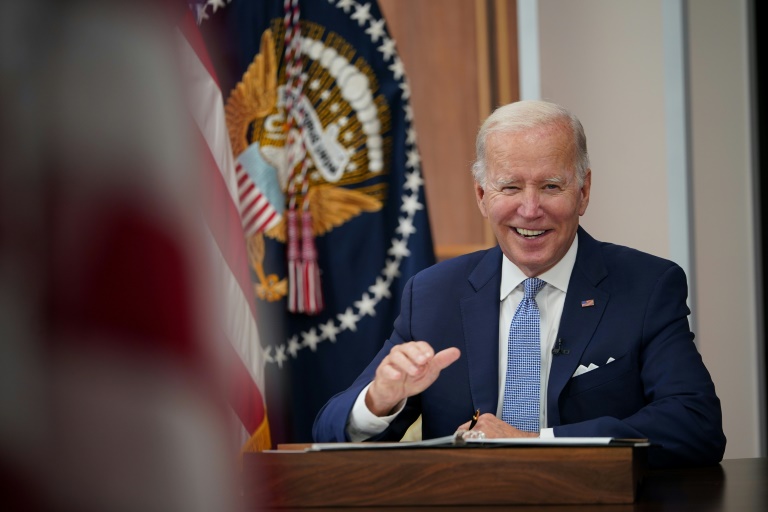
After 18 months, a possible victory for Joe Biden’s social and climate reform legislation seems within reach: Congress on Saturday began debating a revised version of the US president’s cornerstone bill, the fruit of numerous compromises with those on his party’s right.

Biden, who took office promising big reforms, is calling the bill “a game-changer for working families.”

The legislation — officially known as the Inflation Reduction Act — includes $370 billion toward ambitious climate goals and $64 billion for health care.

That would make it the largest investment yet in clean energy by the United States, something that Biden has called “historic.”

Despite yearly fires and deadly flooding in parts of the country, the climate crisis does not register high on the average household’s list of concerns, falling below issues such as inflation or unemployment.

To garner support for their climate initiatives, Democrats sweetened the legislation with tax credits for producers and consumers of wind, solar and nuclear power.

But the package also would make billions of dollars in tax credits available to some of the country’s worst polluters to help them in the transition to cleaner energy. That move has been sharply criticized by the party’s progressive wing, though most have accepted it as a necessary evil.

Funding would additionally be allocated toward protecting forests from the increasingly extreme wildfire seasons that have ravaged the US West in recent years, a phenomenon scientists say is directly linked to climate change.

– Tackling drug prices –

The bill additionally tackles exorbitant drug prices for medication such as insulin, in an attempt to ease the immense inequality that exists in US access to health care.

“The anguish of people not being able to pay for medicines that may save their lives will be greatly reduced,” Senate Democratic leader Chuck Schumer said.

A major reform in the bill would, for example, force pharmaceutical companies to offer rebates for certain drugs if the prices are rising faster than inflation.

And for the first time, the federal Medicare program would be empowered to directly negotiate the prices of certain drugs with those companies.  

The cost of some medication in the United States can be up to ten times more expensive than in other wealthy nations, a point regularly made by the Biden camp.

The bill also aims to reduce the federal deficit via a minimum corporate tax of 15 percent for all companies with profits exceeding $1 billion.

– ‘To rob American families’ –

The ambitious spending plan is popular among Americans, according to several polls, but has been strongly denounced by Republicans, who say Biden will stoke record-breaking inflation.

“Democrats have already robbed American families once through inflation,” said Republican Senate leader Mitch McConnell, “and now their solution is to rob American families a second time.”

But Republicans’ tools to block the legislation are limited: because it is a spending bill, Democrats can use a mechanism known as reconciliation to pass it without any votes from across the aisle. 

The Republicans could, however, try to slow the legislative process by presenting amendments during debate.

The Senate is expected to vote on the bill by early next week. After that, it will head to the House of Representatives, where Democrats have a narrow majority.

Biden, seeking a political win with fewer than 100 days before November’s midterm elections, is urging Congress to pass it without further delay.

Runners take on Swiss glacier race despite melt

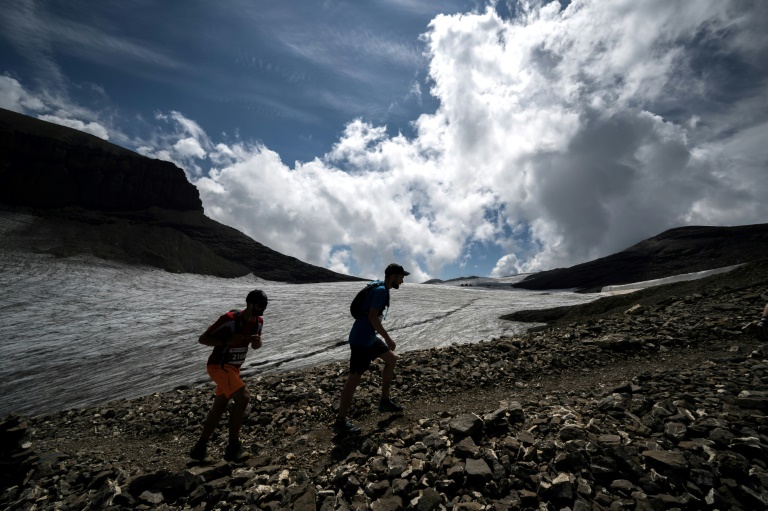
Hundreds of runners braved a lung-busting ascent into the Alps in Switzerland’s Glacier 3000 Run on Saturday, albeit on a shortened course due to summer heatwaves melting the ice.

The event’s 14th edition was back without limitations after being cancelled in 2020 due to Covid-19 and run in 2021 with restrictions imposed due to the pandemic.

The race is normally run over 26.2 kilometres but was contested on a slightly modified 25.2km course this year due to the glacier melting, with the last pass over its surface shortened.

“The accelerated melting of the top layer of the glacier has created an camber and a soft layer which the runner sinks into,” said race director Oliver Hermann.

“Rather than intervening to flatten the track, we preferred to deviate the course.”

The finish line is 1,886 metres higher than the start, at nearly 3,000 metres up in the mountains by the Scex Rouge peak.

The route begins in the jet set ski resort town of Gstaad, at 1,050 metres above sea level.

It passes through forests, green mountain pastures before heading into rocky lunar-like landscapes and taking in the Tsanfleuron Glacier.

The course follows the Saane river upstream for 15 km before climbing up 1,800 metres over the remaining 10 km to the finish line — at an altitude of 2,936 metres.

Some 311 men and 98 women completed the individual course, while 50 two-person teams also took part.

The first man to finish was Kenyan competitor Geoffrey Ndungu in two hours and 17 minutes. He had finished in second place last year.

He was followed by compatriot Abraham Ebenyo Ekwam in 2:21 and then Switzerland’s Jonathan Schmid in 2:23.

Victoria Kreuzer was the first woman to finish, in 2:46, ahead of Nicole Schindler and Pascale Rebsamen — a Swiss clean sweep.

President Biden tests negative after second bout of Covid-19

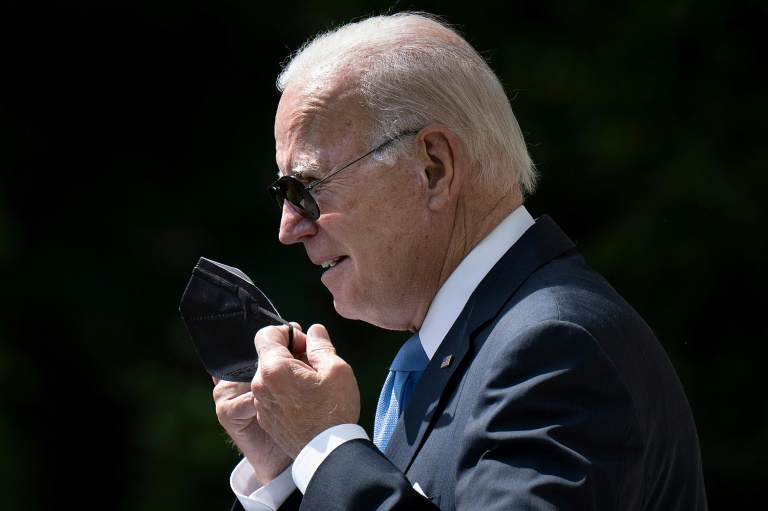
US President Joe Biden on Saturday tested negative for Covid-19, days after coming down with a second bout of the illness.

“The President continues to feel very well,” Biden’s physician Kevin O’Connor said in a statement. “This morning, his SARS-CoV-2 antigen testing was negative.”

Biden, who at 79 is the oldest person to hold the US presidency, has been in quarantine for the past week, after testing positive for the virus following an initial recovery in what is known as a “rebound” case.

O’Connor said Biden will continue to isolate pending a second negative test “in an abundance of caution.”

According to Biden’s official schedule he is set to travel to the southern state of Kentucky, the scene of devastating floods, on Monday.

Close Bitnami banner
Bitnami