AFP

Nuclear weapons a 'loaded gun', UN chief warns in Hiroshima

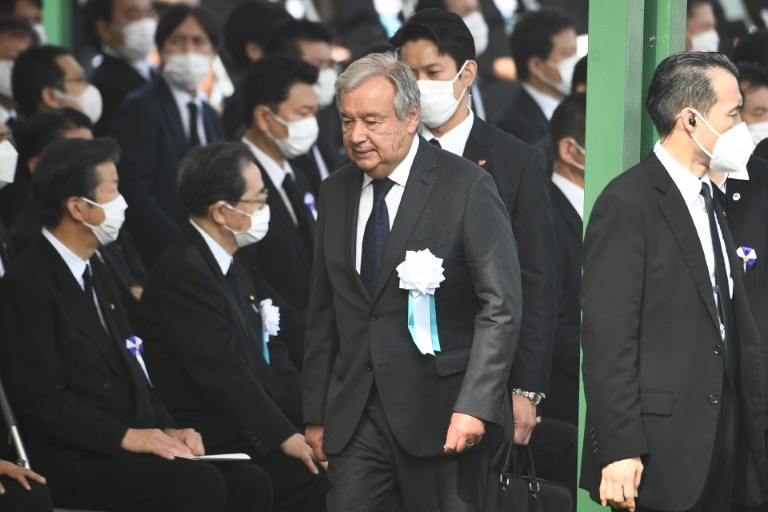
“Humanity is playing with a loaded gun” as crises with the potential for nuclear disaster proliferate worldwide, UN head Antonio Guterres said in Hiroshima on Saturday, the 77th anniversary of the first atomic bomb attack.

At an annual memorial, Guterres warned of the risk posed by crises in Ukraine, the Middle East and the Korean peninsula as he described the horrors endured by the Japanese city.

“Tens of thousands of people were killed in this city in the blink of an eye. Women, children and men were incinerated in a hellish fire,” he said.

Survivors were “cursed with a radioactive legacy” of cancer and other health problems.

“We must ask: What have we learned from the mushroom cloud that swelled above this city?”

Around 140,000 people died when Hiroshima was bombed by the United States on August 6, 1945 — a toll that includes those who perished after the blast from radiation exposure.

Today, “crises with grave nuclear undertones are spreading fast — the Middle East, to the Korean peninsula, to Russia’s invasion of Ukraine”, Guterres said, repeating warnings he made this week at a nuclear Non-Proliferation Treaty conference in New York.

“Humanity is playing with a loaded gun.”

Before dawn, survivors and their relatives began to gather at Hiroshima’s Peace Memorial Park to offer flowers and prayers.

A silent prayer was held at 8.15 am, the moment the bomb was dropped.

The Russian ambassador was not invited to the ceremony, but visited Hiroshima on Thursday to lay flowers at the memorial site.

Since Russia invaded Ukraine in February, President Vladimir Putin has made thinly veiled threats hinting at a willingness to deploy tactical nuclear weapons.

In a speech on Saturday, Hiroshima mayor Kazumi Matsui cited Leo Tolstoy, the Russian author of “War and Peace”, saying: “Never build your happiness on the misfortune of others, for only in their happiness can you find your own.”

Three days after the Hiroshima bombing, Washington dropped a plutonium bomb on the Japanese port city of Nagasaki, killing about 74,000 people and leading to the end of World War II.

The United States remains the only country ever to have used nuclear weapons in conflict.

But around 13,000 are now held in state arsenals worldwide, the UN head said.

Saturday was the first time Guterres attended the Hiroshima memorial in person, with a visit last year cancelled because of the Covid-19 pandemic.

Frozen US-China cooperation presents new hitch for global warming

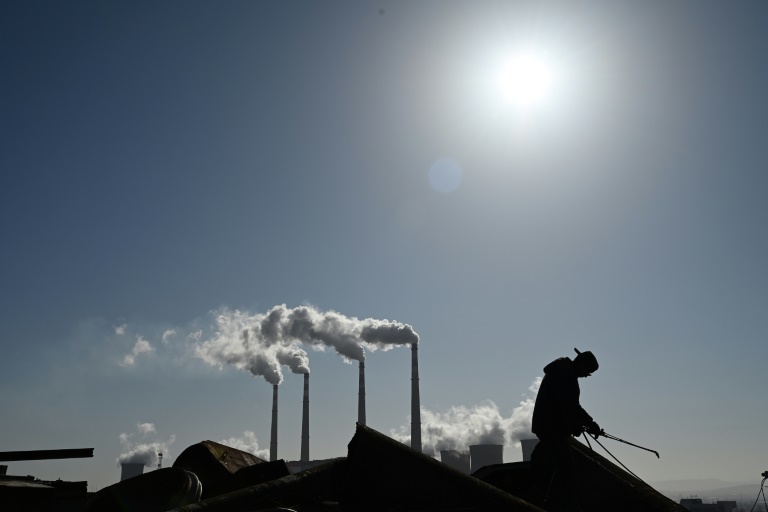
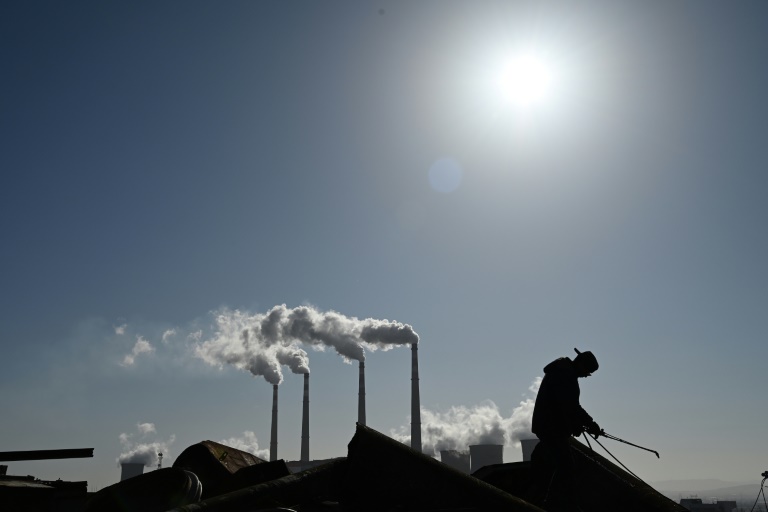
Beijing is freezing its cooperation with Washington on global warming, but experts are hoping that, for the sake of humanity, the cold spell between the world’s two largest emitters is only temporary.

The unraveling relationship comes not long after China and the United States announced a surprise agreement to strengthen climate action at the UN COP26 climate conference in Glasgow in 2021.

US House of Representatives Speaker Nancy Pelosi’s visit to Taiwan this week, however, has prompted Beijing to end cooperation with the United States on several key issues.

“It’s obviously worrying and raises concerns,” Alden Meyer, a senior associate at the E3G think tank told AFP.

It’s “impossible to address the climate emergency if the world’s number one and number two economies and number one and number two emitters are not taking action,” he said. “And it’s always preferable that they do that in a collaborative way.”

Cooperation between the two countries is essential on all of the world’s “most pressing problems,” UN Secretary-General Antonio Guterres’ press secretary told reporters on Friday.

Above all, China’s announcement raises questions, including what the consequences will be for the COP27 climate conference in Egypt in November.

“What are the conditions to re-open dialogues? Are these conditions climate or geopolitical?” Greenpeace’s Li Shuo asked on Twitter.

“Is this a tactical move or is it a longer term strategic move?” questioned Meyer. “Is China saying the cooperation is impossible as long as there are tensions between the US and China?”

– ‘Total disaster’ – 

Earth’s temperature has risen by an average of nearly 1.2 degrees Celsius from pre-industrial levels, multiplying heat waves, droughts, floods and storms on all continents.

However, the mercury could rise by 2.8 degrees Celsius by 2100 even if countries abide by their commitments, according to UN climate experts at the Intergovernmental Panel on Climate Change (IPCC).

Apart from the US-China spat, commitments have already been weakened by the economic crises stemming from the Covid-19 pandemic and Russia’s invasion of Ukraine, which notably led to the relaunch of coal-fired power stations.

IPCC author Francois Gemenne called China’s decision a “total disaster for the climate… comparable to the US withdrawal from the Paris agreement,” which aims to limit end-of-century warming to well below two degrees Celsius above pre-industrial levels — and preferably not beyond 1.5 degrees.

Former president Donald Trump withdrew the United States from the agreement, but his successor Joe Biden returned the country to the accord in 2021.

The temporary US withdrawal has nonetheless been accompanied by backtracking on domestic and foreign climate policy, experts say.

China’s announcement, on the other hand, is “certainly not a withdrawal from the world stage on climate issues or a rejection of climate action,” David Waskow, director of the World Resources Institute’s international climate initiative, told AFP.

Mohamed Adow, founder of the Power Shift Africa energy think tank echoed that sentiment, adding that “breaking off diplomacy doesn’t mean China is backtracking on its commitments,” particularly as, “in many respects, China is way ahead of the US when it comes to action on climate change.”

Biden has pledged to cut US emissions by 50 to 52 percent by 2030, compared with 2005 levels, and achieve carbon neutrality by 2050. 

But his ambitions have been thwarted by failure to push green energy projects and climate initiatives through Congress, although some progress has been made in recent days.

For its part, China, which is the leading emitter of greenhouse gases in absolute value but far behind the US in emissions per capita, has committed to reaching peak emissions in 2030 and carbon neutrality in 2060.

Meanwhile, even if it’s not cooperating with the United States, “there will be pressure on China from others including the EU, including vulnerable countries,” Meyer said.

Frozen US-China cooperation presents new hitch for global warming

Beijing is freezing its cooperation with Washington on global warming, but experts are hoping that, for the sake of humanity, the cold spell between the world’s two largest emitters is only temporary.

The unraveling relationship comes not long after China and the United States announced a surprise agreement to strengthen climate action at the UN COP26 climate conference in Glasgow in 2021.

US House of Representatives Speaker Nancy Pelosi’s visit to Taiwan this week, however, has prompted Beijing to end cooperation with the United States on several key issues.

“It’s obviously worrying and raises concerns,” Alden Meyer, a senior associate at the E3G think tank told AFP.

It’s “impossible to address the climate emergency if the world’s number one and number two economies and number one and number two emitters are not taking action,” he said. “And it’s always preferable that they do that in a collaborative way.”

Cooperation between the two countries is essential on all of the world’s “most pressing problems,” UN Secretary-General Antonio Guterres’ press secretary told reporters on Friday.

Above all, China’s announcement raises questions, including what the consequences will be for the COP27 climate conference in Egypt in November.

“What are the conditions to re-open dialogues? Are these conditions climate or geopolitical?” Greenpeace’s Li Shuo asked on Twitter.

“Is this a tactical move or is it a longer term strategic move?” questioned Meyer. “Is China saying the cooperation is impossible as long as there are tensions between the US and China?”

– ‘Total disaster’ – 

Earth’s temperature has risen by an average of nearly 1.2 degrees Celsius from pre-industrial levels, multiplying heat waves, droughts, floods and storms on all continents.

However, the mercury could rise by 2.8 degrees Celsius by 2100 even if countries abide by their commitments, according to UN climate experts at the Intergovernmental Panel on Climate Change (IPCC).

Apart from the US-China spat, commitments have already been weakened by the economic crises stemming from the Covid-19 pandemic and Russia’s invasion of Ukraine, which notably led to the relaunch of coal-fired power stations.

IPCC author Francois Gemenne called China’s decision a “total disaster for the climate… comparable to the US withdrawal from the Paris agreement,” which aims to limit end-of-century warming to well below two degrees Celsius above pre-industrial levels — and preferably not beyond 1.5 degrees.

Former president Donald Trump withdrew the United States from the agreement, but his successor Joe Biden returned the country to the accord in 2021.

The temporary US withdrawal has nonetheless been accompanied by backtracking on domestic and foreign climate policy, experts say.

China’s announcement, on the other hand, is “certainly not a withdrawal from the world stage on climate issues or a rejection of climate action,” David Waskow, director of the World Resources Institute’s international climate initiative, told AFP.

Mohamed Adow, founder of the Power Shift Africa energy think tank echoed that sentiment, adding that “breaking off diplomacy doesn’t mean China is backtracking on its commitments,” particularly as, “in many respects, China is way ahead of the US when it comes to action on climate change.”

Biden has pledged to cut US emissions by 50 to 52 percent by 2030, compared with 2005 levels, and achieve carbon neutrality by 2050. 

But his ambitions have been thwarted by failure to push green energy projects and climate initiatives through Congress, although some progress has been made in recent days.

For its part, China, which is the leading emitter of greenhouse gases in absolute value but far behind the US in emissions per capita, has committed to reaching peak emissions in 2030 and carbon neutrality in 2060.

Meanwhile, even if it’s not cooperating with the United States, “there will be pressure on China from others including the EU, including vulnerable countries,” Meyer said.

Amazon to buy Roomba-maker iRobot in $1.7 bn deal

Amazon on Friday announced a $1.7 billion deal to buy the maker of robotic vacuum Roomba in a merger that would play into the tech giant’s artificial intelligence and smart home ambitions.

US-based iRobot is a global company that builds robots and “intelligent home” innovations, having introduced Roomba self-operating vacuums a decade ago, Amazon said in a release.

“Over many years, the iRobot team has proven its ability to reinvent how people clean with products that are incredibly practical and inventive,” said Amazon senior vice president of devices Dave Limp.

Amazon’s deal to buy iRobot for $61 per share along with acquiring the company’s debt is subject to approval of shareholders and regulators.

Colin Angle is to remain chief executive of iRobot after the purchase.

The acquisition “reinforces Amazon’s interest and market position in robotics and home automation, and underscores the strategic value of AI,” Baird analyst Colin Sebastian said in a note to investors.

The Massachusetts-based company has a 30-year track record in robotics, and underlying software such as mapping and navigation, Sebastian said.

Amazon has been investing in smart home and automation technologies with acquisitions such as Ring doorbells, Kiva warehouse robots and self-driving startup Zoox.

“With Alexa and Amazon.com at the core, Amazon continues to prioritize opportunities to develop the smart home,” Sebastian said.

“MGM even fits as it powers more Prime Video on home entertainment devices.”

Amazon earlier this year closed an $8.45 billion deal to buy the storied MGM studios, boosting its streaming ambitions with a catalog including the James Bond and Rocky film franchises.

Amazon to buy Roomba-maker iRobot in $1.7 bn deal

Amazon on Friday announced a $1.7 billion deal to buy the maker of robotic vacuum Roomba in a merger that would play into the tech giant’s artificial intelligence and smart home ambitions.

US-based iRobot is a global company that builds robots and “intelligent home” innovations, having introduced Roomba self-operating vacuums a decade ago, Amazon said in a release.

“Over many years, the iRobot team has proven its ability to reinvent how people clean with products that are incredibly practical and inventive,” said Amazon senior vice president of devices Dave Limp.

Amazon’s deal to buy iRobot for $61 per share along with acquiring the company’s debt is subject to approval of shareholders and regulators.

Colin Angle is to remain chief executive of iRobot after the purchase.

The acquisition “reinforces Amazon’s interest and market position in robotics and home automation, and underscores the strategic value of AI,” Baird analyst Colin Sebastian said in a note to investors.

The Massachusetts-based company has a 30-year track record in robotics, and underlying software such as mapping and navigation, Sebastian said.

Amazon has been investing in smart home and automation technologies with acquisitions such as Ring doorbells, Kiva warehouse robots and self-driving startup Zoox.

“With Alexa and Amazon.com at the core, Amazon continues to prioritize opportunities to develop the smart home,” Sebastian said.

“MGM even fits as it powers more Prime Video on home entertainment devices.”

Amazon earlier this year closed an $8.45 billion deal to buy the storied MGM studios, boosting its streaming ambitions with a catalog including the James Bond and Rocky film franchises.

Conspiracy theorist Alex Jones ordered to pay $45 mn for false school shooting claims

A Texas jury ordered US conspiracy theorist Alex Jones on Friday to pay $45.2 million in punitive damages for falsely claiming that the deadly 2012 Sandy Hook elementary shooting was a “hoax.”

The verdict came a day after the same jury awarded a couple whose child died at Sandy Hook $4.1 million in compensatory damages for the emotional stress caused by Jones broadcasting falsehoods for years on his InfoWars online and radio talk shows. 

The huge sum ordered from Jones, who for years gathered a sizable following for his often outlandish conspiracy claims, vindicated the lawsuits against him by families of some of the 20 schoolchildren and six adults killed by a 20-year-old man in one of the country’s deadliest school shootings.

The $49.3 million total judgement was awarded to the plaintiffs in the Texas case, Neil Heslin and Scarlett Lewis, the parents of six-year-old son Jesse.

Jones, a vocal supporter of former president Donald Trump, claimed for years on InfoWars that the shooting in Newtown, Connecticut, was “staged” by gun control activists.

He has since acknowledged it was “100 percent real,” but the Sandy Hook families maintained that his denialism, coupled with his ability to influence the beliefs of thousands of followers, caused real emotional trauma.

He also was accused of pulling in massive profits from harmful lies and disinformation.

The judgement is not likely the end of legal woes for the 48-year-old Jones.

He has been found liable in multiple defamation lawsuits brought by parents of the Sandy Hook victims, and the Texas case was the first to reach the damages phase.

He is also under scrutiny for his participation in the January 6, 2021, assault on the US Capitol by Trump supporters.

During the hearing ahead of the decision Friday, Wesley Ball, attorney for the parents who brought the case, urged the jury to take a stand against misinformation.

“You have the ability to send a message for everyone in this country and perhaps this world to hear,” he said.

“And that is stop Alex Jones. Stop the monetization of misinformation and lies,” he added.

“Stopping Alex Jones stops the root of his message and the root of his message is fear and hate.”

The $45.2 million was close to the maximum allowed in relation to the original compensatory damages. 

InfoWars declared bankruptcy in April and another company owned by Jones, Free Speech Systems, filed for bankruptcy last week.

Kyiv, Moscow trade blame over nuclear plant

Kyiv and Moscow accused each other of striking Europe’s largest nuclear site on Friday, causing a reactor stoppage as three grain ships departed Ukraine under a deal to avert food shortages.

Russian troops have occupied the Zaporizhzhia nuclear plant in southern Ukraine since the early days of their invasion and Kyiv has accused them of storing heavy weapons there. Moscow, in turn, has accused Ukrainian forces of targeting the plant.

“Three strikes were recorded on the site of the plant, near one of the power blocks where the nuclear reactor is located,” Ukraine’s state-run nuclear power plant operator Energoatom said in a statement.

“There are risks of hydrogen leakage and radioactive spraying. The fire danger is high,” Energoatom said. It did not report any casualties.

It said staff of Russian nuclear operator Rosatom had hastily left the plant before the attacks, which damaged a power cable and forced one of the reactors to stop working.

Ukraine President Volodymyr Zelensky in his daily video address said Russia should “take responsibility for the very fact of creating a threat to a nuclear plant”. 

“Today, the occupiers have created another extremely risky situation for all of Europe: they struck the Zaporizhzhia nuclear power plant twice. Any bombing of this site is a shameless crime, an act of terror,” he said.

The Ukrainian foreign ministry earlier said the “possible consequences of hitting a working reactor are equivalent to using an atomic bomb”.

The defence ministry in Moscow denied the reports.

“Ukrainian armed units carried out three artillery strikes on the territory of the Zaporizhzhia nuclear power plant and the city of Energodar,” it said. 

The new spike in tensions came as Russian President Vladimir Putin was meeting his Turkish counterpart Recep Tayyip Erdogan in the Russian Black Sea resort of Sochi.

Putin thanked Erdogan for helping orchestrate the resumption of Ukrainian grain shipments, the first of which is due to arrive in Lebanon on Sunday according to Ukraine’s embassy in Beirut.

The Sierra Leone-flagged bulk carrier Razoni set sail from the Ukrainian port of Odessa on Monday carrying 26,000 tonnes of corn — the first departure under a UN-backed deal, brokered with Turkish help, to ease the global food crisis.

Kyiv said another three ships loaded with grain set sail from Ukraine on Friday, heading for Turkey and markets in Ireland and Britain. A further 13 are waiting to depart.

“Deliveries have already begun. I want to thank you, both for this and for the fact that at the same time an accompanying decision was made on uninterrupted supplies of Russian food and fertilisers to world markets,” Putin told Erdogan in Sochi.

Asli Aydintasbas, a fellow at the European Council on Foreign Relations, wrote in a report last week that the war in Ukraine had “restored Turkey’s self-image as a key geopolitical player” and given Erdogan a higher profile than at any time in recent years.

The Turkish leader wants to translate the success into truce talks in Istanbul between Putin and Zelensky.

– Extensive investigations –

Moscow meanwhile announced on Friday that it was imposing entry bans on 62 Canadian citizens including government officials.

The Russian foreign ministry said the list included figures known for “their malicious activity in the fight against the ‘Russian world’ and our traditional values”.

In Ukraine, a controversy has flared over accusations that it is violating international law and endangering civilians in its fight against the Russian invasion.

Amnesty International released a report on Thursday listing incidents in 19 cities and towns where Ukrainian forces appeared to have put civilians in harm’s way by establishing bases in residential areas.

President Zelensky equated the accusations to victim-blaming. In his evening address on Thursday, he said the rights group had sought to offer “amnesty (to) the terrorist state and shift the responsibility from the aggressor to the victim”.  

“There is no condition, even hypothetically, under which any Russian strike on Ukraine becomes justified. Aggression against our state is unprovoked, invasive and terrorist,” he added.  

“If someone makes a report in which the victim and the aggressor are supposedly equal in some way… then this cannot be tolerated.”  

Amnesty said a four-month investigation had found that the Ukrainian military had established bases in schools and hospitals, and launched attacks from populated areas. 

It said the tactics violated international humanitarian law and rebuffed criticism of its report.

“The findings… were based on evidence gathered during extensive investigations, which were subject to the same rigorous standards and due diligence processes as all of Amnesty International’s work,” secretary general Agnes Callamard told AFP in emailed comments.

– Counter-offensive –

On Friday, Zelensky’s office and local authorities reported overnight Russian bombardments targeting the southern city of Mykolaiv with widely-banned cluster bombs and heavy artillery — wounding 20 people, including a 14-year-old boy.

Mykolaiv is on the main route to Odessa, Ukraine’s biggest port on the Black Sea, and is the closest city to the southern front. 

Several missiles struck the city of Zaporizhzhia overnight and there was heavy bombardment of Ukraine’s second city Kharkiv, in the northeast.

Ukrainian forces are conducting a counter-offensive in the south, where they claim to have retaken more than 50 villages previously controlled by Moscow.

Where's Boris? UK's PM on leave as economic crisis deepens

A British cabinet member admitted Friday “I don’t know where Boris is” as the prime minister checked out on holiday, in a week that saw the Bank of England warn a year-long recession is coming.

Boris Johnson has since Wednesday been on a belated honeymoon with wife Carrie, according to Downing Street.

Aides said he still remained at the helm, rather than handing over temporarily to Deputy Prime Minister Dominic Raab, but refused to confirm the honeymoon destination. 

The UK embassy in Ljubljana confirmed that Johnson was on a private visit to Slovenia.

Johnson will have a lot more time on his hands after September 6, when he is due to hand over to either Liz Truss or Rishi Sunak as Conservative leader, but decided to take a break sooner.

Chancellor of the Exchequer Nadhim Zahawi is also on holiday this week, and the opposition Labour party accused the government’s two senior-most members of being “missing in action”.

“I don’t know where Boris is, but I’m in constant contact with him,” Business Secretary and Truss supporter Kwasi Kwarteng told Times Radio. 

He said he exchanges WhatsApp messages with both Johnson and Zahawi “all the time”, and insisted that criticism the government was doing nothing about the economic crisis was “false”.

Zahawi said he had remained in touch with Bank of England governor Andrew Bailey on Thursday after the central bank hiked interest rates from 1.25 to 1.75 percent, the biggest rise in 27 years.

The bank is trying to rein in surging inflation, which it warned could peak at 13.3 percent, as it forecast the UK economy would enter a recession in the fourth quarter that will last until late 2023.

“For me, like I’m sure lots of others, there is no such thing as a holiday and not working. I never had that in the private sector, not in government,” Zahawi said in a statement.

– ‘Magical solutions’ –

Foreign Secretary Truss and Sunak, Zahawi’s predecessor as chancellor, clashed anew over how to address the crisis in a televised debate late Thursday.

“The reality is we’re facing a recession if we carry on with our business-as-usual policies,” Truss, who is leading in surveys of Tory members, told reporters on Friday.

She plans an emergency budget to lower taxes immediately to combat the cost-of-living crisis, and to review the independent Bank of England’s inflation-fighting mandate.

But Sunak said tax cuts financed with more borrowing would force the bank to increase interest rates even more, insisting on the need to maintain fiscal rigour and tame the price pressures first.

Former cabinet minister Liam Fox, who supports Sunak, warned against “magical solutions” via debt-financed tax cuts as proposed by Truss.

The two candidates were due later Friday to host another hustings event in front of Tory members, who have until September 2 to vote. 

At Thursday’s Sky News debate, Truss was forced on the back foot after the moderator highlighted her shifting stances over the years, including a major policy U-turn this week on pay for public-sector workers.

But Sunak also faced embarrassment after video emerged of him telling grassroots Tories in wealthy Kent last week that, as chancellor, he had diverted government funds away from “deprived urban areas”.

His campaign said that in the video, obtained Friday by the New Statesman magazine, Sunak had merely stressed the need to shift the focus of government help to other towns and rural areas.

But senior Labour MP Lisa Nandy said: “This leadership race is revealing the Conservatives’ true colours. 

“It’s scandalous that Rishi Sunak is openly boasting that he fixed the rules to funnel taxpayers’ money to prosperous Tory shires.”

Surprise US job surge lifts employment back to pre-Covid levels

The US jobs market grew much faster than expected in July, lifting employment back to pre-pandemic levels, in news welcomed by President Joe Biden as he faces tough midterm elections — but which also fuels concerns over sky-high inflation.

Even the White House had predicted job gains would slow last month, which Biden had said was part of the natural downshift after the rapid rebound of the world’s largest economy from the pandemic downturn.

Instead, US job growth jumped in July, as the economy added a surprising 528,000 positions, more than double what economists were expecting, according to official data released Friday. That took the jobless rate back to the pre-pandemic level of February 2020.

“Today, the unemployment rate matches the lowest it’s been in more than 50 years: 3.5 percent,” Biden said in a statement.

“More people are working than at any point in American history… there’s more work to do, but today’s jobs report shows we are making significant progress for working families.”

On top of the hiring surge last month, the Labor Department report said the outsized job gain in June was revised higher, as was May, adding a total 28,000 positions to the initial data.

Other recent US economic data has stoked recession fears, but White House Press Secretary Karine Jean-Pierre called Friday’s employment report “one of the many economic indicators (that) shows us that we are not in a recession, that we are in a transition.”

Meanwhile, the closely watched report showed wages jumped in July — with average hourly earnings up 15 cents from June — stoking concerns about a possible wage-price spiral. Over the past 12 months, average hourly earnings have increased by 5.2 percent.

That’s good for families struggling to make ends meet as they face soaring prices for groceries and gas, but could drive firms to raise prices further.

With inflation topping nine percent, the highest in more than 40 years, the Federal Reserve has been raising interest rates aggressively to cool the economy, and economists now say a third consecutive three-quarter-point hike is likely in September.

Biden, in remarks at the White House, acknowledged “how hard it is to feel good about job creation when you already have a job and you’re dealing with rising prices, food, gas and so much more.”

The US president called for passage of his health and climate investment bill that has picked up momentum on Capitol Hill in recent days, calling it “a game changer for working families and our economy.”

– ‘Wow’ –

After recent data showed GDP contracted for the second consecutive quarter — causing many to say the economy is in recession — US stocks had been gaining ground due to investor optimism that the Fed would be able to dial back its inflation-fighting efforts.

But Wall Street opened lower following the jobs report and struggled throughout the session to shake early losses amid concerns about coming rate hikes.

With the latest increase, total non-farm employment recovered to its pre-pandemic level, the data showed, and hiring topped 430,000 in the past three months.

KPMG economist Diane Swonk’s initial reaction: “Wow.”

“This report pushes the Fed towards a 75 basis point move AGAIN in September,” she said on Twitter.

From zero at the start of the year, the Fed has raised the benchmark borrowing rate four times, and pledged to continue its war on inflation.

And central bankers this week have made it clear that investor optimism about a possible downshift was misplaced.

“Recession is now less of a worry. Inflation is more of a worry,” Harvard economist Jason Furman tweeted. “The Fed will likely need to do more.”

The central bank will get another employment report and multiple inflation reports before its next policy meeting in mid-September.

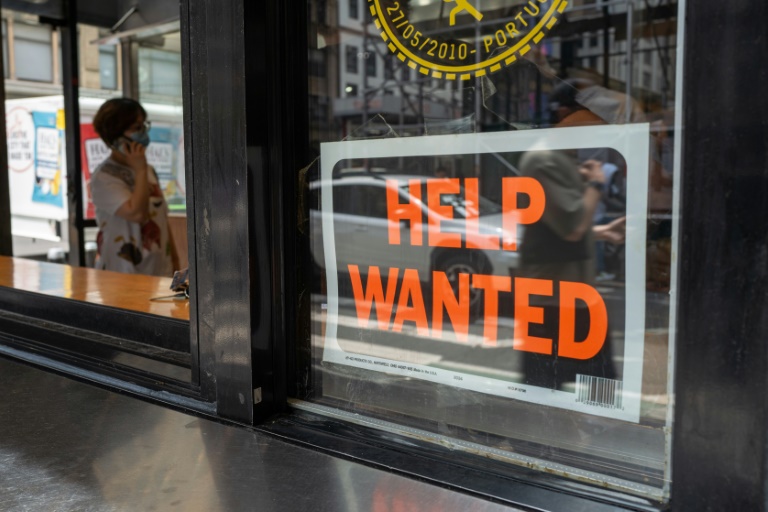
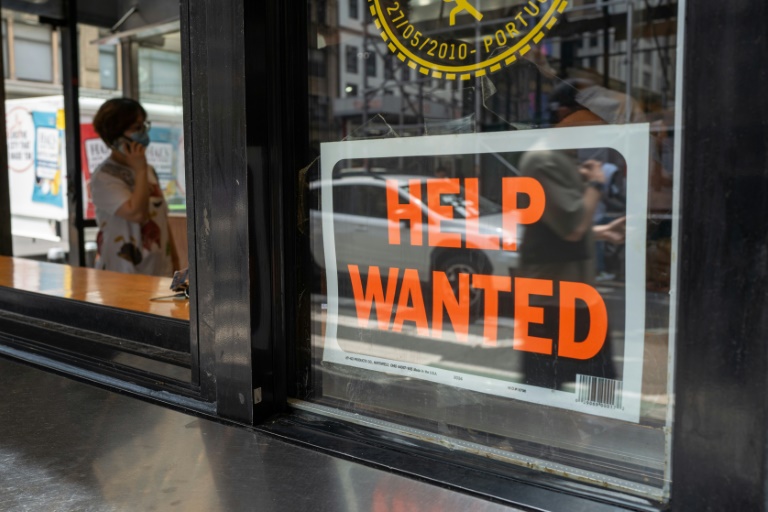
While employers for months have been struggling to find workers — with nearly two open positions for every unemployed person in the work force — job gains have continued.

Hiring was robust in leisure and hospitality and health care, which each adding 96,000 or more in july, while manufacturing and construction gained at least 32,000.

Builders in particular have been under pressure as the struggle to meet high demand for construction, especially homes, but employment in the sector is now back to its pre-pandemic level, the report said.

But there were signs of strains as well. The number of people working part time for economic reasons, which dropped sharply in June, rebounded in July. And a growing number of workers are taking on second jobs, including 403,000 with two full-time positions.

The share of people in the labor force has been stuck at around 62 percent, and some economists are pointing to the impact of long-Covid, which is keeping potential workers on the sidelines.

Kathryn Bach of the Brookings Institution said she believes there could be as many as four million people prevented from working due to the effects of Covid-19.

Surprise US job surge lifts employment back to pre-Covid levels

The US jobs market grew much faster than expected in July, lifting employment back to pre-pandemic levels, in news welcomed by President Joe Biden as he faces tough midterm elections — but which also fuels concerns over sky-high inflation.

Even the White House had predicted job gains would slow last month, which Biden had said was part of the natural downshift after the rapid rebound of the world’s largest economy from the pandemic downturn.

Instead, US job growth jumped in July, as the economy added a surprising 528,000 positions, more than double what economists were expecting, according to official data released Friday. That took the jobless rate back to the pre-pandemic level of February 2020.

“Today, the unemployment rate matches the lowest it’s been in more than 50 years: 3.5 percent,” Biden said in a statement.

“More people are working than at any point in American history… there’s more work to do, but today’s jobs report shows we are making significant progress for working families.”

On top of the hiring surge last month, the Labor Department report said the outsized job gain in June was revised higher, as was May, adding a total 28,000 positions to the initial data.

Other recent US economic data has stoked recession fears, but White House Press Secretary Karine Jean-Pierre called Friday’s employment report “one of the many economic indicators (that) shows us that we are not in a recession, that we are in a transition.”

Meanwhile, the closely watched report showed wages jumped in July — with average hourly earnings up 15 cents from June — stoking concerns about a possible wage-price spiral. Over the past 12 months, average hourly earnings have increased by 5.2 percent.

That’s good for families struggling to make ends meet as they face soaring prices for groceries and gas, but could drive firms to raise prices further.

With inflation topping nine percent, the highest in more than 40 years, the Federal Reserve has been raising interest rates aggressively to cool the economy, and economists now say a third consecutive three-quarter-point hike is likely in September.

Biden, in remarks at the White House, acknowledged “how hard it is to feel good about job creation when you already have a job and you’re dealing with rising prices, food, gas and so much more.”

The US president called for passage of his health and climate investment bill that has picked up momentum on Capitol Hill in recent days, calling it “a game changer for working families and our economy.”

– ‘Wow’ –

After recent data showed GDP contracted for the second consecutive quarter — causing many to say the economy is in recession — US stocks had been gaining ground due to investor optimism that the Fed would be able to dial back its inflation-fighting efforts.

But Wall Street opened lower following the jobs report and struggled throughout the session to shake early losses amid concerns about coming rate hikes.

With the latest increase, total non-farm employment recovered to its pre-pandemic level, the data showed, and hiring topped 430,000 in the past three months.

KPMG economist Diane Swonk’s initial reaction: “Wow.”

“This report pushes the Fed towards a 75 basis point move AGAIN in September,” she said on Twitter.

From zero at the start of the year, the Fed has raised the benchmark borrowing rate four times, and pledged to continue its war on inflation.

And central bankers this week have made it clear that investor optimism about a possible downshift was misplaced.

“Recession is now less of a worry. Inflation is more of a worry,” Harvard economist Jason Furman tweeted. “The Fed will likely need to do more.”

The central bank will get another employment report and multiple inflation reports before its next policy meeting in mid-September.

While employers for months have been struggling to find workers — with nearly two open positions for every unemployed person in the work force — job gains have continued.

Hiring was robust in leisure and hospitality and health care, which each adding 96,000 or more in july, while manufacturing and construction gained at least 32,000.

Builders in particular have been under pressure as the struggle to meet high demand for construction, especially homes, but employment in the sector is now back to its pre-pandemic level, the report said.

But there were signs of strains as well. The number of people working part time for economic reasons, which dropped sharply in June, rebounded in July. And a growing number of workers are taking on second jobs, including 403,000 with two full-time positions.

The share of people in the labor force has been stuck at around 62 percent, and some economists are pointing to the impact of long-Covid, which is keeping potential workers on the sidelines.

Kathryn Bach of the Brookings Institution said she believes there could be as many as four million people prevented from working due to the effects of Covid-19.

Close Bitnami banner
Bitnami